The Exasperated Historian
Menu
  • Home
  • The Women’s List (New)
  • The Men’s List
  • The Animal List
  • Collections
  • The Blog
  • Contact Us
  • FAQ
Menu

Category: Birth Locations

996) Raj Rajeshwari Devi

996: Maharani Raj Rajeshwari Devi

Queen Regent & Consort of Nepal

Birth Date Unknown, Kingdom of Nepal (Present-day Nepal)

Died: 5 May 1806 AD, Kingdom of Nepal (Present-day Sankhu, Nepal)

Raj is most remembered today because she was forced to commit sati (the cultural belief in a wife burning to death on her husband’s funeral pyre). While Sati is technically considered voluntary, research has shown most women do not go to their fiery graves through their own free will.

Unfortunately, most of the sources for Raj easily available on the internet have next to no actual information about her. Therefore, I feel it is fair to warn you ahead of time that my main sources for this entry are the book listed below (Bad Days in History) and a Wikipedia article.

After becoming regent for her son (Raj’s husband had abdicated the throne) she went into exile with her husband. At the time, Raj was one of three wives to her husband, and so one of the other two wives took over as regent after Raj, her husband, and son went away. In 1801, Raj returned and became regent again. With the other wife ousted from power, Raj retook her power as regent by having a political rival assassinated and the other wife put under house arrest.

Then her husband also returned to Nepal and resumed power himself in 1804.

Two years later Raj’s husband was murdered by his brother. Ten days after his death, Raj was forced to commit sati despite his two other wives not being forced to. The other two wives instead were allowed to continue ruling as regents.

Sati is a Hindu ritual, and while technically illegal in countries like India and Nepal (the latter of which actually celebrated 100 years of banning Sati in 2020), activists note that the ritual may still be taking place in rural parts of Hindu-majority countries. Despite Sati itself being banned, Nepal does still suffer from incredibly high abuse statistics in the country. A report from the United Nations Population Fund found forty-eight percent of Nepali women have suffered some form of violence or abuse in their lifetimes; with twenty-seven percent of women admitting to having suffered from physical violence. These numbers are even more telling when compounded with another report that estimates sixty-one percent of Nepalese women do not report whenever they are faced with domestic abuse situations.

Sadly because of the Covid-19 pandemic, the number of reports of violence against women and girls in the small country has steadily increased throughout 2020. According to Spotlight Nepal, “According to a report by a human rights NGO Informal Sector Service Center (INSEC), during the 54 days lockdown period, there were 269 reported cases of domestic violence in Nepal and 23 women have been killed by their own family members. On 5th of April, there was a news report from one online media about a man from Inaruwa, Sunsari trying to kill his wife and two minor daughters by setting fire on them. As per the police, the man had sprinkled kerosene, set fire on them and ran away and further investigation was being carried out by the police on the incident.”

Rape cases are also on the rise in the country. Women and girls are being attacked in the streets, on municipal trains, and even in quarantine facilities staffed by volunteers. To learn more, I will link the article from Spotlight Nepal below under this articles “Sources” tab.

So, while celebrating the fact that Sati “officially” ended in Nepal one hundred years ago is a good thing, its important to remember Nepal still has a long way to go to repair the damage being done to its female population. Sati may be gone, but the legal system still punishes widows in other ways. As of 2020, if a widow remarries in Nepal, there is no legal protection for her to keep an inheritance she received from her deceased spouse. Instead, the legal system of Nepal decrees that should a widow remarry, she must return her inheritance to her husband’s estate. On the flip side, a widower can remarry and take a new wife without any legal repercussions or threat of losing inheritance.

Maharani Raj Rajeshwari Devi was put to death over two hundred years ago, and today, the plight of women in her country staggers on. The best way for those of us in the Western world to help put an end to the violence faced by our Nepalese sisters is to spread the word and get involved. By staying silent, we allow this to continue happening. Stop Violence against Women and Girls. Its not complicated. Use your voice and tell the rest of the world this is unacceptable. Speak up for the victims who cannot speak for themselves.

To my Nepalese sisters, I dedicate this article to you. I want you to know I hear you and stand with you. Together, we can stop the violence and change the culture. Together, we can build a better world.

Badges Earned:

Find a Grave Marked

Located In My Personal Library:

Bad Days in History by Michael Farquhar

Sources:

Bad Days in History by Michael Farquhar

https://www.nhpr.org/post/tragic-tradition-day-history#stream/0

http://dbpedia.org/page/Raj_Rajeshwari_Devi

https://en.wikipedia.org/wiki/Raj_Rajeshwari_Devi

https://www.findagrave.com/memorial/194330987/maharani_raj-rajeshwari-devi

Spotlight Nepal Article: https://www.spotlightnepal.com/2020/07/15/100-years-abolition-sati-practice-and-still-huge-surge-gender-based-violence/ 
995) Lucy Mercer Rutherfurd

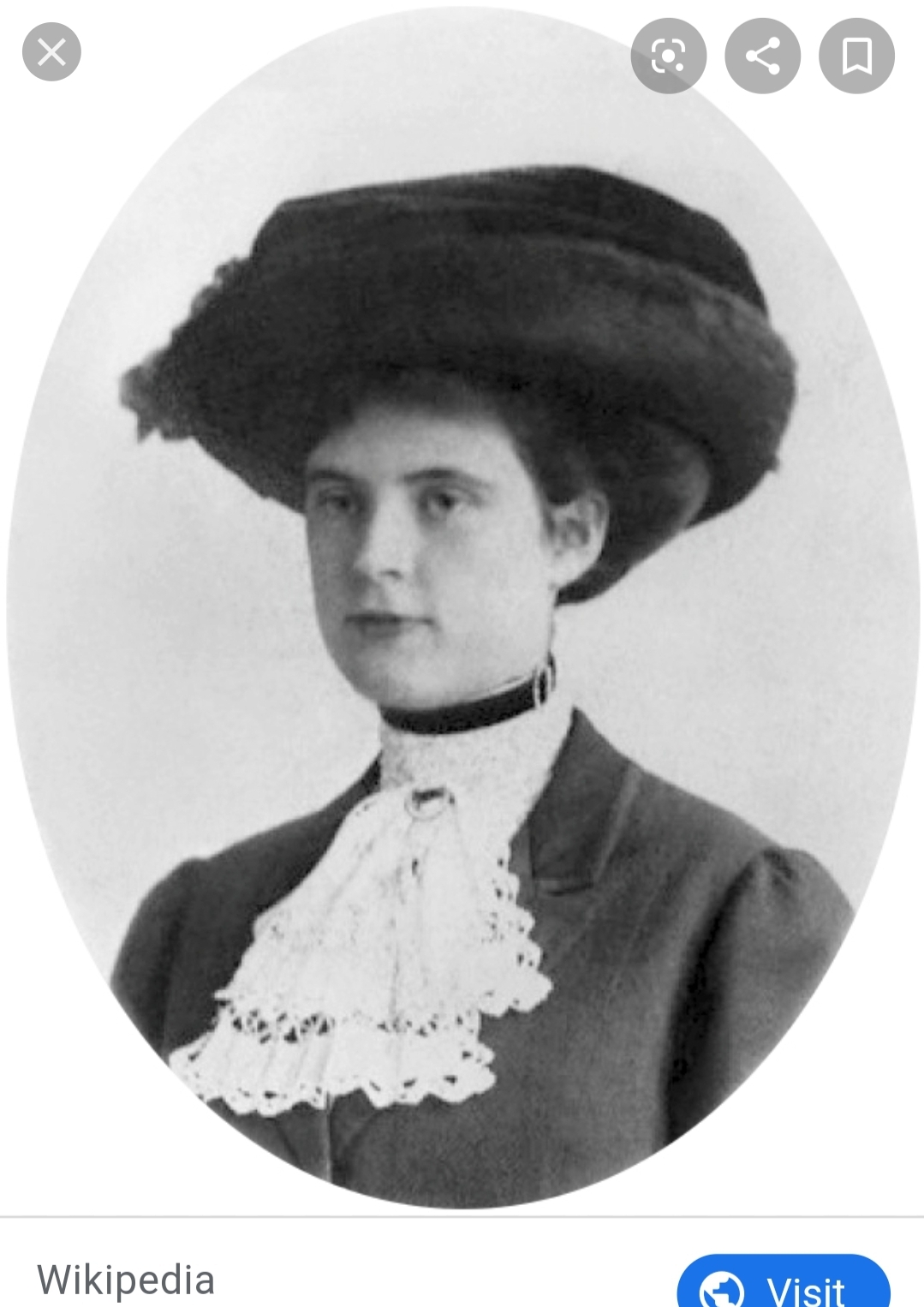
Courtesy of Wikipedia

995: Lucy Mercer Rutherfurd

President Franklin D Roosevelt’s Mistress and Longtime Companion

Born: 26 April 1891, Washington DC, United States of America

Died: 31 July 1948, Aiken, South Carolina, United States of America

Lucy was at the president’s side when he suffered a fatal cerebral hemorrhage at his second home in Warm Springs. Tellingly, Franklin’s wife Eleanor was absent at the time.

Lucy was born into a prominent family and attended private schools. However, the family’s prominence didn’t provide enough money to maintain the lifestyle, and Lucy had to begin working.

Lucy became Eleanor’s social secretary in 1914, jump starting her relationship with the future president. Lucy’s job required her to help Eleanor with all of the social requirements that came with being wife of the United States Secretary of the Navy (the position Franklin held at the time). Lucy would also attend dinner parties with the Roosevelts on occasion, and somewhere in the ensuing years, the friendly banter between Franklin and Lucy became something more.

Eleanor found out about the affair in 1918 and made her husband promise to never see Lucy again. Eleanor and Franklin stayed married, despite his infidelities, though it was clear to all who knew them the passion in the relationship was gone.

Two years later, in 1920, Lucy married an older widower with six children. Together they had one daughter, and Lucy remained married until her husband died in 1944.

In 1933, Franklin got Lucy a front row seat to his inauguration as President of the United States. Many believe they had cooled their relationship to more of a friendly partnership during the years of Lucy’s marriage, but after her husband died, Lucy and Franklin picked up where they had left off nearly twenty-five years before.

Franklin and Eleanor’s daughter Anna decided she didn’t mind her father’s affair. She helped Franklin and Lucy continue to see one another on and off under Eleanor’s nose in the last year of her father's life. When Eleanor found out about her daughter's actions, she was understandably upset.

Lucy died three years after the man she had devoted much of her adult life too. Today, she is simply remembered (by Time Magazine and many others) as one of the most famous mistresses in history.

Badges Earned:

Find a Grave Marked

Located In My Personal Library:

Confronting the Presidents: No Spin Assessments from Washington to Biden by Bill O'Reilly and Martin Dugard

The Roosevelts and the Royals by Will Smith

Sex With Presidents: The Ins and Outs of Love and Lust in the White House by Eleanor Herman

Sources:

https://www.nps.gov/people/lucy-mercer-rutherfurd.htm

http://www.fdrlibraryvirtualtour.org/page04-10.asp

http://content.time.com/time/specials/packages/article/0,28804,1908008_1908007_1907977,00.html

https://www.findagrave.com/memorial/8434159/lucy-page-rutherfurd

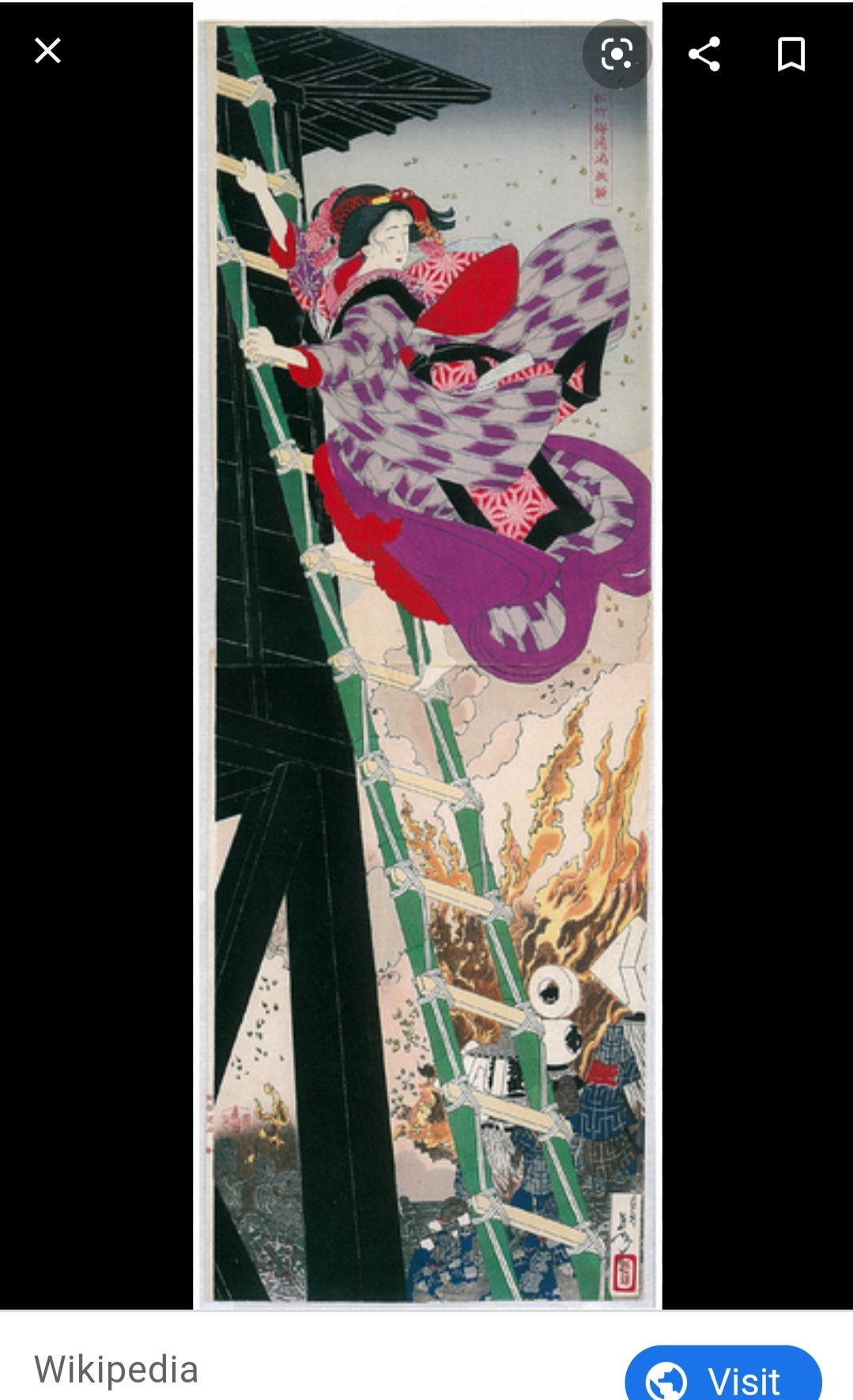
994) Yaoya Oshichi

Courtesy of Wikipedia

994: Yaoya Oshichi

Japanese Folk Tale on the Importance of Taking a Hint

Born: c.1667, Tokyo, Japan

Died: c.1682, Tokyo, Japan

Oshichi was burned at the stake for trying to commit arson and not understanding a way to get out of being punished for her crime.

Yes, this is a real story.

Oshichi’s father was a greengrocer. As the story goes, she fell in love with a temple boy during one of the many fires that ravaged Edo (Tokyo) at the time. Oshichi and her family had taken refuge in a temple to hide until the fire was over. With that fire gone, Oshichi had to leave the temple and missed the cute boy. So, she did what any rational sixteen-year-old would do (I’m using sarcasm here), and Oshichi set another fire in the hopes of meeting the cute temple boy again. The fire nearly destroyed the city, and to add insult to injury, instead of finding the cute boy, Oshichi was caught and sentenced to death.

At the time in Japan, youths aged fifteen and younger could not be put to death, so the magistrate tried to save Oshichi by asking “you are fifteen, aren’t you?” but she replied she was sixteen and was therefore burned at the stake.*

So, the morals of the story are: don’t set things on fire in the hopes of getting a date, and always listen carefully and take the hint when it’s given to you.

Oshichi’s story was immortalized in numerous plays and written works of her own time, and her grave is still visited at the Enji-ji Temple today.

*Note, all of the sources I have found have confirmed the basic details of Oshichi’s story, however, only Wikipedia notes the part of the story where the magistrate tried to save her life; so take that part of the story with a grain of salt.

Badges Earned:

Find a Grave Marked

Sources:

https://www.toshidama-japanese-prints.com/item_289/Kunichika-The-Story-of-Oshichi.htm

https://www.britishmuseum.org/collection/term/BIOG4768

https://en.wikipedia.org/wiki/Yaoya_Oshichi

https://www.findagrave.com/memorial/103870227/yaoya-oshichi

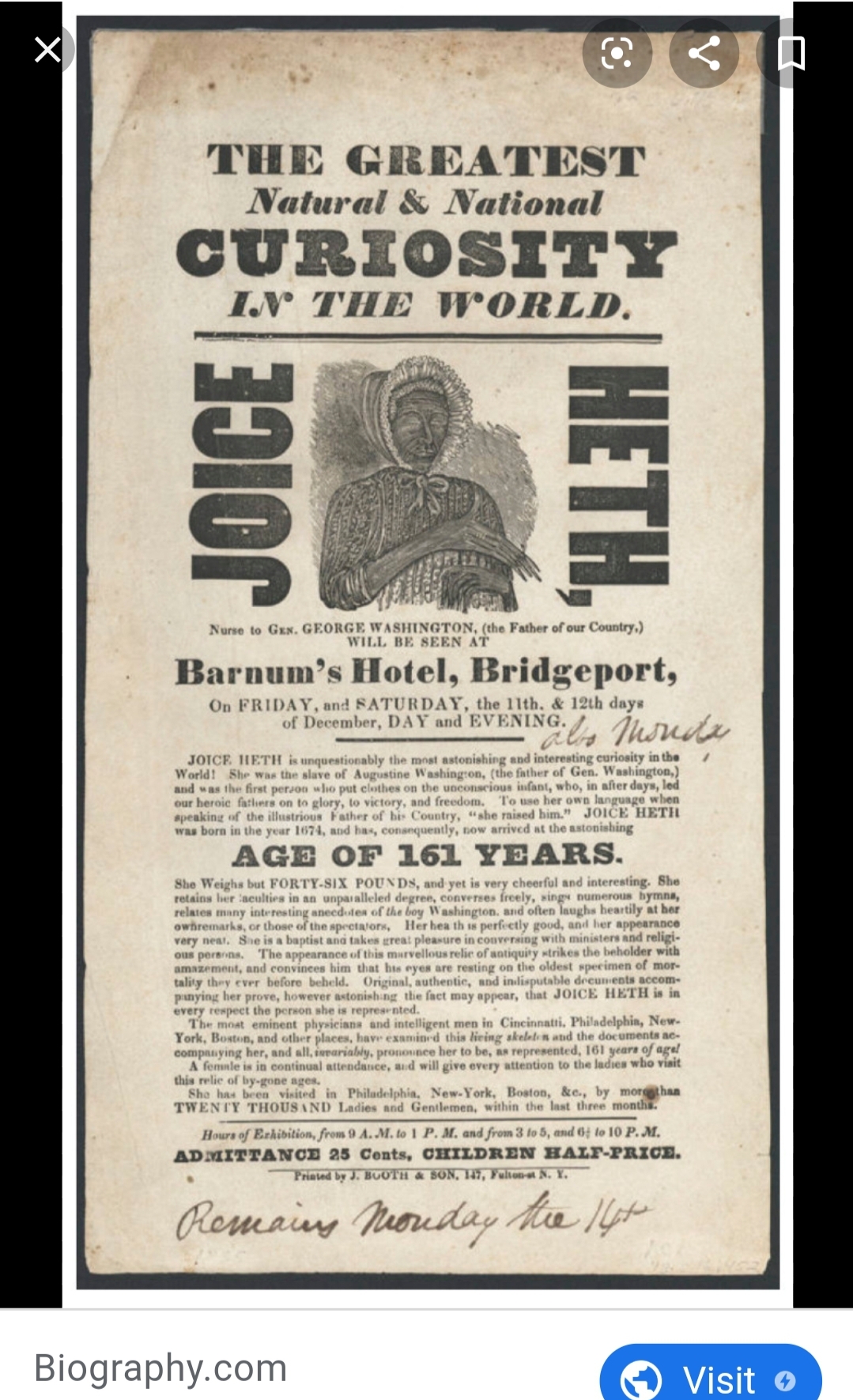
993) Joice Heth

Courtesy of Biography

993: Joice Heth

PT Barnum’s First Human Display

Born: c.1756, Possibly Madagascar

Died: 19 February 1836, New York, United States of America

Joice was already elderly when she first came across the man now associated with the moniker “The Greatest Showman.” Some believe Joice was born in Madagascar, before she was enslaved and brought to the United States. The only source for this claim comes from a single newspaper article published during her lifetime however, and so historians today can not validate with certainty that Joice was born on the African island.

PT lied, claiming on promotional marketing Joice was George Washington’s Nursing ‘Mammy’ and that she was 161 years old. In reality, Joice was born approximately twenty-five years after America’s first Constitutional President. Its also important to note, however, that PT didn’t come up with this story on his own. He bought Joice and the rights to her story that an earlier owner had devised. Most historians agree PT was actually the third of Joice’s owners to try and pass her off as being George Washington’s nanny.

Joice was so old by the time she took the stage she was blind and could only partially move one arm but for seven months she told people stories about “Little George.” Most consider it merciful Joice passed away less than a year after becoming a part of PT Barnum’s show. During the seven months she toured with the showman, it was estimated Joice was earning him around $1,500 a week.

To authenticate her age PT had her publicly autopsied in front of 1,500 people (in case you didn’t know that The Greatest Showman is almost 100% inaccurate, well, now you know!). PT charged each of the viewers $.50 to view the autopsy, so he profited off of her death just as much as he had when Joice was alive.

When the doctor said the woman he was autopsying was much, much younger than PT had claimed (he estimated her death between seventy-five and eighty years old), Barnum immediately had a reason to explain it away. According to PT, the corpse was of a completely different woman and that Joice herself was actually touring Europe. So yeah, that’s a thing that happened.

It wasn’t all terrible though. Before Joice died, early abolitionists in the United States decried her treatment and used the controversy around her story to further their own goals, to see slavery abolished in America. Some pastors and ministers also ordered their parishioners not to attend Joice’s shows on moral grounds; with some claiming it was a “grotesque spectacle.”

PT finally admitted it was all a hoax and that Joice had not actually lived to be over one hundred and fifty years old later on, after his own career had taken off.

Badges Earned:

Find a Grave Marked

Located in My Personal Library:

A Short History of the World in 50 Lies by Natasha Tidd

Sources:

https://lostmuseum.cuny.edu/archive/exhibit/heth

https://www.mountvernon.org/george-washington/facts/myths/joice-heth/

https://www.mountvernon.org/library/digitalhistory/digital-encyclopedia/article/joice-heth-c-1756-1836/

https://www.findagrave.com/memorial/40962205/joice-heth

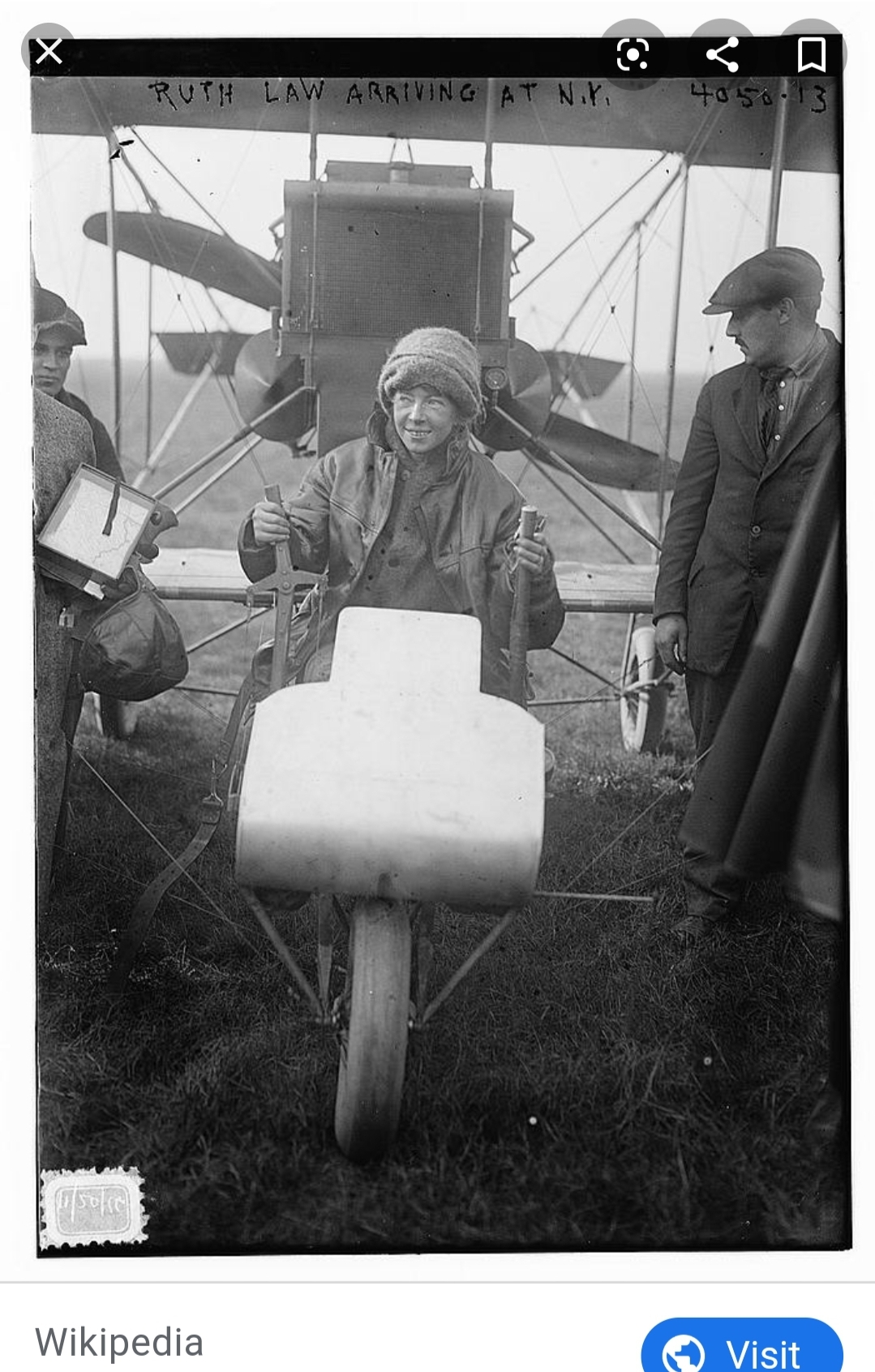
992) Ruth Law Oliver

Courtesy of Wikipedia

"I fly because I like to."

992: Ruth Law Oliver

Record Setting Aviatrix

Born: 21 March 1887, Lynn, Massachusetts, United States of America

Died: 1 December 1970, San Francisco, California, United States of America

Ruth is best remembered for breaking multiple flying records and for fighting to get women to be able to fly military planes during World War I.

Ruth bought her first plane from Orville Wright and received her pilot’s certificate in 1912. That same year, Ruth became the first woman to fly after nightfall.

She set the aviation distance record flying 590 miles nonstop in 1916 (the first person to fly from Chicago to New York in a single day. Ruth flew continuously from Chicago to Hornell, New York, stopped for fuel and then flew on to New York City the next morning [making the total distance flown 884 miles]). By the following year, she was earning around $9,000 every week from her exhibition shows (according to Smithsonian). In 1919, Ruth became the first person to fly official airmail to the Philippine islands.

During World War I she was dubbed “Uncle Sam’s only woman aviator.” Though Ruth had been granted the right to wear a military uniform by the United States armed forces in 1917, she was denied the right to fly combat missions. Instead, Ruth spent the war years flying in exhibition shows to raise money for the Red Cross and other organizations.

After the war, Ruth spent a few years performing with the “Ruth Law Flying Circus.” The circus was made up of three planes performing aerial stunts and other fun tricks. Ruth also became the first woman to fly the loop the loop.

However, in 1922 Ruth’s flying career came to an end. According to Smithsonian, she woke to read the morning newspaper and learned her husband had announced to the world she was retiring; without asking Ruth if she really wanted to stop flying. He died in 1947, while Ruth lived on to the ripe old age of eighty-three; dying over twenty years after her husband.

Badges Earned:

Find a Grave Marked

Sources:

https://airandspace.si.edu/explore-and-learn/topics/women-in-aviation/law.cfm

https://www.ninety-nines.org/ruth-law.htm

https://www.nytimes.com/1970/12/04/archives/ruthlaw-oliver-79-pioneer-flier-dies.html

https://www.earlyaviators.com/eoliver.htm

https://www.findagrave.com/memorial/39047459/ruth-bancroft-oliver

991) Bette Nesmith Graham

Courtesy of the New York Times

“Most men are ignorant — they don’t really understand. And so women have to just keep on with their determination and be relentless. We have to not relent.”

991: Bette Nesmith Graham

Invented Liquid Paper (Wite Out was Her Knockoff Competitor)

Born: 23 March 1924, Dallas, Texas, United States of America

Died: 12 May 1980, Richardson, Texas, United States of America

Bette later sold her company for $47.5 million to Gillette in 1979. And that's how its done ladies.

Bette’s mother was an artist and trained her daughter from a young age how to paint and sculpt various works. Bette’s mother also owned her own knitting store, and so Bette was also raised seeing a woman entrepreneur up close and personal. Though her passion was for the arts, Bette realized she could never make a career out of it, and transitioned to a secretarial job instead.

When she was seventeen, Bette dropped out of high school in order to enroll in secretarial school and marry her high school sweetheart. Unfortunately, the marriage wouldn’t last but Bette did have a son with her husband, Michael Nesmith (most known for being a member of the television/music group The Monkees). Bette raised Michael as a single mother for most of his childhood.

By 1951, Bette had climbed the ranks in order to become an executive secretary to a board member of the Texas Bank and Trust. Five years later, Bette had begun selling her newly invented product dubbed “Mistake Out”, a water based white paint that neatly covered any typing mistakes made on the new and widely used electric typewriters. Bette had come up with the idea for her invention after struggling through making multiple mistakes and having to constantly start an entire page over.

While the concept of Liquid Paper today may seem old-fashioned thanks to Word and other typing processors on computers, at the time, Bette was saving secretaries everywhere valuable time and money. They would no longer have to throw out an entire page because of one missed key, but instead the secretary could quickly apply a coat of paint, wait for it to dry, and continue on as though no mistake had been made in the first place.

Bette’s company grew quickly, and she found herself filling orders from her garage. Her son Michael and his friends pitched in as well; filling bottles and selling them as fast as they could make them. In 1958, Bette perfected her recipe and changed the name to the now familiar “Liquid Paper.” That same year, Bette also applied for and received a patent for her invention (Bette had first tried to get a patent while the product was still known as Mistake Out, but she had been unable to afford the $400 patent fee. Luckily she would eventually raise the money and succeed in receiving the patent after transitioning to the Liquid Paper name).

Bette had managed to hang onto her day job up until that point, but after mistakenly typing her new business model onto a memo for her job at the bank, Bette was fired. It all worked out in the end though, because this way Bette was able to focus her entire attention on her now nationally growing business. Bette was producing her paint formula in three different colors and shipping bottles across the country.

By 1967, the company had its own corporate headquarters and an automated plant to cover production’s needs. The new production plant allowed the company to go from producing 500 bottles of Liquid Paper a week up to 10,000 a day by 1968 (the company eventually peaked at creating 25 million bottles per year)! That same year, total sales for the company exceeded one million units and continued to grow from there. In 1975, Bette moved the corporate office to Dallas.

Twelve years earlier, in 1962, Bette married a failing frozen-food salesman. The marriage didn’t last long, but it did last long enough for the salesman to earn a place on the Liquid Paper board. With the divorce finalized, Bette’s ex made a move to bar her from making any corporate decisions for her own company. Bette decided to step down as chairman of the board, allowing her ex to take her place. With him in charge, the board stopped Bette from stepping foot on the premises of the building, refused to let any of the employees talk to her, and went so far as to change the formula for Liquid Paper. By changing the formula, the company cut most of Bette's income; she made her money off royalties from the sale of the Liquid Paper formula she had helped create all those years before.

Bette refused to give in and persevered well enough that she was able to regain control of the company she had grown from the ground up. Despite the fact her health was beginning to fail, Bette stayed the course and oversaw the sale of Liquid Paper to Gillette for $47.5 Million in 1979. Not only had Bette gotten the company back and then sold into competent hands, the sale also allowed her to regain her rightfully earned royalties. Sadly, Bette passed away from complications of a stroke a few months later.

She was only fifty-six years old.

Before her death, Bette was able to transition from businesswoman to philanthropist; founding two separate foundations to support artistic endeavors and female entrepreneurship. When she died, Bette left her fortune to her son. Michael vowed to carry on his mother’s vision, giving away large sums of her estate to support women and the arts. The money also allowed Michael to expand and pursue his own artistic endeavors. Three years before his mother's death, Michael had filmed a music video for his hit song "Rio." The music video was so popular (some claim it was the first music video ever created) when it played on Nickelodeon, the idea of music videos in general caught on and eventually led to the creation of MTV. 

So basically what historians are saying is, MTV wouldn't exist without Liquid Paper; and honestly that's one of my favorite little known facts from history of all time.

Badges Earned:

Find a Grave Marked

Sources:

http://www.women-inventors.com/Bette-Nesmith-Graham.asp

https://www.mentalfloss.com/article/76038/retrobituaries-how-inventor-liquid-paper-bette-nesmith-graham-helped-launch-mtv

https://www.nytimes.com/2018/07/11/obituaries/bette-nesmith-graham-overlooked.html

https://www.encyclopedia.com/women/encyclopedias-almanacs-transcripts-and-maps/graham-bette-nesmith-1924-1980

https://www.tshaonline.org/handbook/entries/graham-bette-clair-mcmurray

https://www.findagrave.com/memorial/13208394/bette-claire-nesmith_graham

990) Mary Page Handy

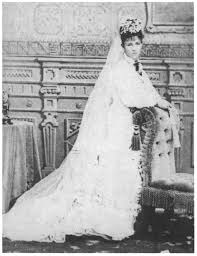
Mary on Her Wedding Day

990: Mary Page Handy

Her Husband is Remembered for Being the First Chancellor of the University of Arizona—Even Though He Also Horrifically Abused Her and Tried to Ruin Her Life

Born: c.1860-1861, Tucson, New Mexico Territory, (Present-day Tucson, Arizona, United States of America)*

Died: 1893, Tucson, Arizona Territory (Present-day Tucson, Arizona, United States of America)

Mary’s life was tragic from the start. Her father was killed by a band of Apache Native Americans while her mother was taken captive by them. Mary’s mother managed to escape and crawl through the wilderness for over a week (once source states sixteen days) before making her way back to Western Civilization.

When Mary was sixteen, she married a well-known physician who served Tucson residents as well as working for the US Army at Camp Thomas. The couple would eventually have five children.

In November of 1886, Mary’s husband was named the first chancellor of University of Arizona (though he was removed from office only a year later for being terrible at his job, shocker!). By then, he had already begun to torture his wife.

The good doctor would chain Mary to a bed in their home and forcibly inject her with morphine. His goal? To make her an addict. And he was eventually successful. After two years of this abuse, he filed for divorce (one source says he wanted to divorce Mary so his affair with a married woman wouldn't be as scandalous. I think he was just a horrible person). In the court filing, Mary’s husband accused her of being, “a morphine fiend and common slut.” She was a morphine addict, that was true, but she was only an addict because her husband had made her so.

I think we should refer to her ex from here on out as Dick. Sound good to the rest of you?

After filing for divorce, Dick publicly let it be made known that any lawyer who dared to defend Mary would be sorry. Nice guy, I know. Luckily one man was brave enough to step up and fight for her in the territorial court.

In 1889, Dick was successful in obtaining a divorce from Mary. He also managed to gain full custody of their five children. Once the kids were in his possession, Dick sent them away to live with his mother in California. Then Dick complained that he had been ordered to pay Mary $30 a month in alimony and tried to kick her out of the house the court had decided she could keep in the divorce settlement.

That’s right, Dick made Mary a morphine addict, smeared her name in the press, threatened any attorneys who might be brave enough to do the right thing, tried to evict her from her own rightfully obtained home, pissed and moaned about having to pay her alimony, and then he also took away Mary’s children and dumped them on his mother instead of caring for them himself.

The story doesn’t end there. But luckily this next bit should put a smile on your face.

On 24 September 1891, Dick attacked Mary’s attorney in the street. The attorney knew how nuts the good doctor was and shot him where he stood (I mean, Dick had been threatening to kill Mr. Heney, Mary's attorney, openly for anyone willing to listen to him so can you blame the guy?). Mary’s attorney got away with it with a successful (and in this case completely true) plea of self-defense. Dick got what was coming to him in the end.

Oh Karma, how we love you so so much.

Sadly, Mary didn’t live with her victory long. She passed away from cancer two years later. According to some sources, she asked for her children to be brought back to Arizona for her to see them before she died, but Dick's family refused to let them come see her.

According to an article I found online, one of Dick and Mary’s sons had sworn to kill Mary’s attorney in revenge for his father’s death. However, after meeting Mr. Heney, the two became lifelong friends instead. One final *expletive* you to the good doctor that I sincerely hope is true!

Oh and by the way, Mary is unfortunately in the ever-expanding collection of women I have found who were victims of a man in their life and the man has a Wikipedia article that pops up right away on Google search results while little appears for their victim (Mary does not have her own Wikipedia article). Other women in this unfortunate collection include Maria Milagro de Hoyos, Mary Phagan, Anna Aumuller, and Emily Mather. 

*Two Notes on Mary’s Early Life:

According to Mary’s headstone, she was born in 1860. However, according to genealogists on WikiTree, Mary’s father died in February 1861 while Mary’s mother was pregnant with their daughter, and so Mary would have to have been born later in 1861. The obituary printed at the time of her death also supports the 1861 date because it states she was “Thirty-one and a half years old” at the time of her death in 1893.

Note Two: On Mary’s Find a Grave profile, one of the flowers placed on her virtual grave is said to be from a distant relative. On the attached note, they said Mary made a long journey from Tennessee to Arizona. However, taking anything you see on the internet at face value is never a good idea and so I did a little more digging and found a copy of her obituary posted to a WikiTree profile for her (the same one I mentioned above). The obituary states Mary was born in Tucson, and so I have listed her birth location as Tucson, Arizona. This also makes sense if her mother was pregnant with her when she was taken captive by a band of Apache. The Apache people historically lived in the Southwestern United States--nowhere near Tennessee. If I ever find out different, I will update her profile accordingly, but for now I am listing Mary's birth location as Arizona.

Badges Earned:

Find a Grave Marked

Located In My Personal Library:

Southern Arizona Cemeteries by Jane Eppinga

Sources:

Southern Arizona Cemeteries by Jane Eppinga

https://commons.wikimedia.org/wiki/File:Mary_page_handy_1878.jpg

https://arizonahistoricalsociety.org/wp-content/uploads/2012/05/Cemetery_Evergreen_flyer_2012.pdf

http://tucsoncitizen.com/morgue/2006/10/14/29340-lookin-back-temper-proves-deadly-for-physician/

https://www.wikitree.com/wiki/Page-13076

https://www.findagrave.com/memorial/35086925/mary-handy

989) Hetepheres I

989: Hetepheres I

Ancient Egyptian Queen

Born: Before c. 2613 BC, Ancient Egypt

Died: Most Likely After 2589 BC, Ancient Egypt

One of her titles was “Daughter of God.”

Hetepheres was the wife of Pharaoh Snefru and was a member of the royal family during Egypt’s Fourth Dynasty (c.2575-c.2465 BC). The fourth dynasty is best known for containing the kings who built the Great Pyramids at Giza.

Snefru was not a direct member of the royal family, and so he married Hetepheres, who did carry royal blood, in order to legitimize his reign (many historians believe the couple were stepsiblings). Snefru was the first king of the fourth dynasty; while it is believed Hetepheres’s father was Huni, the last pharaoh of the third dynasty (though this is not known definitively. Hetepheres never claimed the title “Daughter of the King” as most Egyptian princesses did).

Hetepheres outlived her husband and was buried by her son Khufu (again with the Great Pyramids).

Hetepheres was the grandmother of Djedefre and Khafre (who also built great pyramids), as well as her namesake Hetepheres II.

She has two known gravesites, the second of which was uncovered nearly intact with a cache of grave goods that have given insight into the fourth dynasty. The second site, which was uncovered in 1925, is known today as Tomb G7000X on the Giza Plateau. According to Ancient Origins: “researchers discovered that the grave was looted in ancient times, but many spectacular treasures were still inside. The burial chamber included many beautiful objects made of gilded wood, including a portable pavilion, a carrying chair, a bed, several wooden boxes and two armchairs. The wooden artifacts were very well preserved.”

Also uncovered in the tomb were twenty silver bracelets (many inlaid with lapis lazuli, turquoise, and carnelian). There were also several copper tools, a case for walking sticks, a box of razors, and other small items. Within the tomb was a sealed sarcophagus, but when researchers opened it two years later, they found no mummy inside. The sarcophagus was empty.

Despite the fact no body has ever been found, inside the tomb were four Canopic Jars, some of the oldest ever uncovered. Canopic Jars were used to separately preserve four organs the Ancient Egyptians viewed as important: the liver, lungs, intestines, and stomach. As Egyptian mythology evolved, the four organs and the jars meaning evolved, until each organ and jar were protected by a specific deity.

But as I mentioned earlier, there are believed to be two gravesites for Hetepheres, so where is the other one?

Some archaeologists believe that after her death, Hetepheres was initially buried near her husband at Dahshur, however, soon after her death her tomb was looted (and the robbers may have stolen her mummy in order to take the gold amulets within her wrappings). Once the tomb was broken into, priests moved her grave goods to another location, the one uncovered in 1925 at the Giza Plateau.

If this theory is to be believed, then it is also believed the priests were afraid of Khufu’s wrath and so they told the Pharaoh his mother’s mummy was still intact and inside the sarcophagus, explaining why the empty coffin was placed, sealed, inside the new tomb.

Other theories state the Giza tomb was actually her first and that after it was looted her body was moved to another tomb at a smaller pyramid known as G1-a (however, her body has never been uncovered there either).

A third theory, backed by Zahi Hawass, states that the Giza Plateau burial was the first and that after it was robbed a new burial shaft was dug nearby, but it has never been located either.

Though little of Hetepheres as a person is known for certain, what is easily identifiable is how influential she must have been. Hetepheres helped craft the fourth dynasty and watched as the Pharaohs shifted their burial practices from the step-pyramids to the smooth sided beauties still surviving today. The Great Pyramids at Giza are the only Wonder of the Ancient World still standing today, and who knows; they very well may not have existed had it not been for Hetepheres.

Badges Earned:

Find a Grave Marked

Located In My Personal Library:

The Curse of the Pharaohs by Philipp Vandenberg

Daughters of Isis: Women of Ancient Egypt by Joyce Tyldesley

Temples, Tombs & Hieroglyphs: A Popular History of Ancient Egypt by Barbara Mertz

Sources:

https://www.britannica.com/biography/Hetepheres

http://www.ancient-egypt.org/who-is-who/h/hetepheres-i.html

https://www.ancient-origins.net/history-famous-people/queen-pyramids-powerful-hetepheres-i-and-her-magnificent-tomb-005234

https://www.findagrave.com/memorial/219431684/hetepheres-the_first

987) Neferneferuaten Tasherit

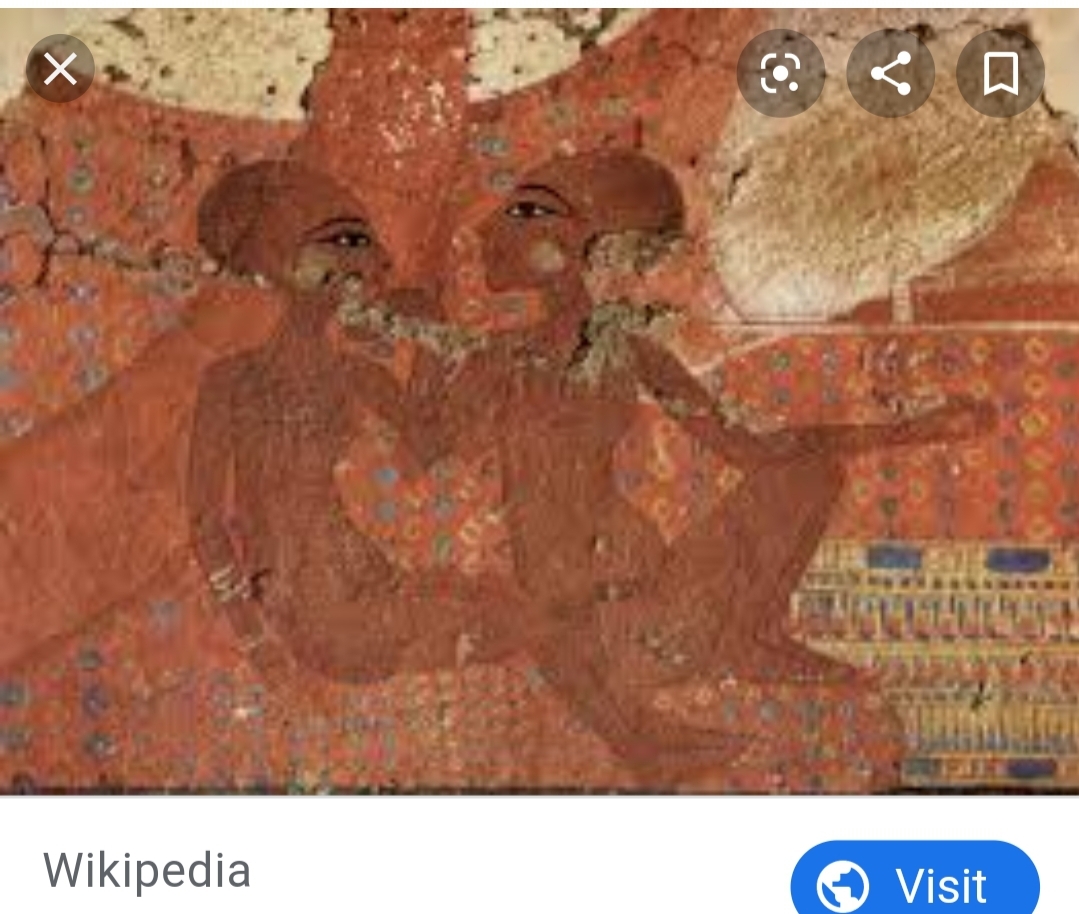
Neferneferuaten and Her Sister Neferneferure

987: Neferneferuaten Tasherit

Fourth Born of Nefertiti  and  Akhenaten’s Daughters

Born: c.1344 BC, Akhetaten, Ancient Egypt (Present-day Amarna, Egypt)

Died: Before c. 1333 BC, Possibly Akhetaten, Ancient Egypt (Present-day Amarna, Egypt)

Also Known As: Neferneferuaten The Younger

Her name has been translated as “Most Beautiful one of Aten, younger,” or “Beautiful of the Beauties of Aten, younger.” The reason why she has “younger” is because her mother’s full name was Neferneferuaten Nefertiti and so to distinguish between the queen and the princess, Neferneferuaten Tasherit was basically named “Neferneferuaten Junior.”

It is believed Neferneferuaten was born in either the eighth or ninth year of her father’s reign. These potential years mean the girl was either only months or maybe a year older than her sister Neferneferure, who is suspected to have been born in the eighth year of her father’s reign (meanwhile, Setepenre was estimated to have been born between the ninth and eleventh years—basically all three girls were very close in age, to say the least!).

The oldest image of Neferneferuaten ever located is the one included here in this article. The depiction shows Neferneferuaten sitting with her sister Neferneferure, and in it you can tell just how close in age they are to one another. Setepenre, the youngest baby in the family, is also depicted in the full image.

Neferneferuaten appears in various other images and depictions across the empire, including in a statue base that was moved from Amarna to Heliopolis. The princess is even shown in a tomb depiction for a member of her grandmother Tiye’s staff.

Another image of Neferneferuaten appears during the twelfth year of her father’s reign, in which all six daughters appear during the “Reception of Foreign Tributes” which took place in winter.

Neferneferuaten is also shown in the mourning scene of her sister Meketaten’s funeral, located in their father Akhenaten’s tomb. This meant Neferneferauten was still alive at the time, along with her sisters Meritaten and Ankhesenamun, though the three others, Meketaten, Neferneferure, and Setepenre had most likely died.

How and when Neferneferuaten died is unknown, though many historians believe she had died before her sister Ankhesenamun became queen of Egypt (as the wife of the Pharaoh Tutankhamun, who was most likely their half-brother).

To learn more about the Amarna Period, click the link to Meketaten's profile or on the words highlighted above.

Badges Earned:

Located In My Personal Library:

King Tutankhamun: The Treasures of the Tomb by Zahi Hawass

Secret Egypt by Zahi Hawass

Sources:

https://en.wikipedia.org/wiki/Neferneferuaten_Tasherit

https://www.geni.com/people/Neferneferuaten-Tasherit/6000000012803429503

https://ancientegypt.fandom.com/wiki/Neferneferuaten_Tasherit

986) Setepenre

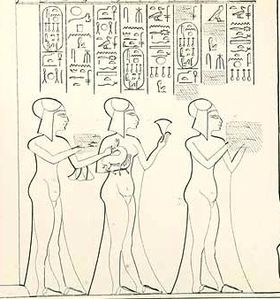
Setepenre with Neferneferure and Neferneferuaten Tasherit

Photo courtesy of Setepenre's Wikipedia Article

The carving depicts Setepenre (left) with Neferneferure and Neferneferuaten Tasherit

986: Setepenre

Sixth Born of Nefertiti and Akhenaten’s Daughters

Born: c.1343, Akhetaten, Ancient Egypt (Present-day Amarna, Egypt)

Died: c. 1338, Akhetaten, Ancient Egypt (Present-day Amarna, Egypt)

Also Spelled: Sotepenre

It is believed Setepenre was born between the ninth and eleventh years of her father’s reign.

The oldest image of Setepenre is a depiction of her as a baby sitting on her mother’s lap. The fresco is badly damaged and only a small portion of Setepenre’s image remains. The image is believed to date to the ninth year of Akhenaten’s reign, which is how historians have gathered Setepenre’s approximate birth year.

The next image of Setepenre appears during the twelfth year of her father’s reign, in which all six daughters appear during the “Reception of Foreign Tributes” which took place in winter.

On one wall of her father’s tomb, five of the royal princesses are named (though Neferneferure’s name was later plastered over) and only four are depicted. Historians take this to believe Setepenre had died before this image was struck, before her sister Neferneferure (though in close succession to one another). Setepenre is also missing from the depiction of Meketaten’s funeral, meaning she likely also predeceased a second of her sisters. Some believe Setepenre was both the youngest and first of the six royal daughters to die.

It is believed Setepenre died before her sixth birthday, around the thirteenth or fourteenth year of her father’s reign. Little else is known of her short life.

To learn more about the Amarna Period, click the link to Meketaten's profile or on the words highlighted above.

Badges Earned:

Located In My Personal Library:

Secret Egypt by Zahi Hawass

Sources:

https://en.wikipedia.org/wiki/Setepenre_(princess)

https://mummipedia.fandom.com/wiki/Setepenre

  • Previous
  • 1
  • …
  • 24
  • 25
  • 26
  • 27
  • 28
  • 29
  • 30
  • …
  • 159
  • Next

Categories

Archives

  • July 2025 (10)
  • July 2024 (1)
  • January 2024 (1)
  • August 2023 (1)
  • June 2023 (2)
  • October 2022 (1)
  • July 2022 (1)
  • June 2021 (3)
  • December 2020 (3)
  • August 2019 (1)
  • July 2019 (2)

Search

© 2026 The Exasperated Historian | Powered by Minimalist Blog WordPress Theme