The Exasperated Historian
Menu
  • Home
  • The Women’s List (New)
  • The Men’s List
  • The Animal List
  • Collections
  • The Blog
  • Contact Us
  • FAQ
Menu

Category: Birth Locations

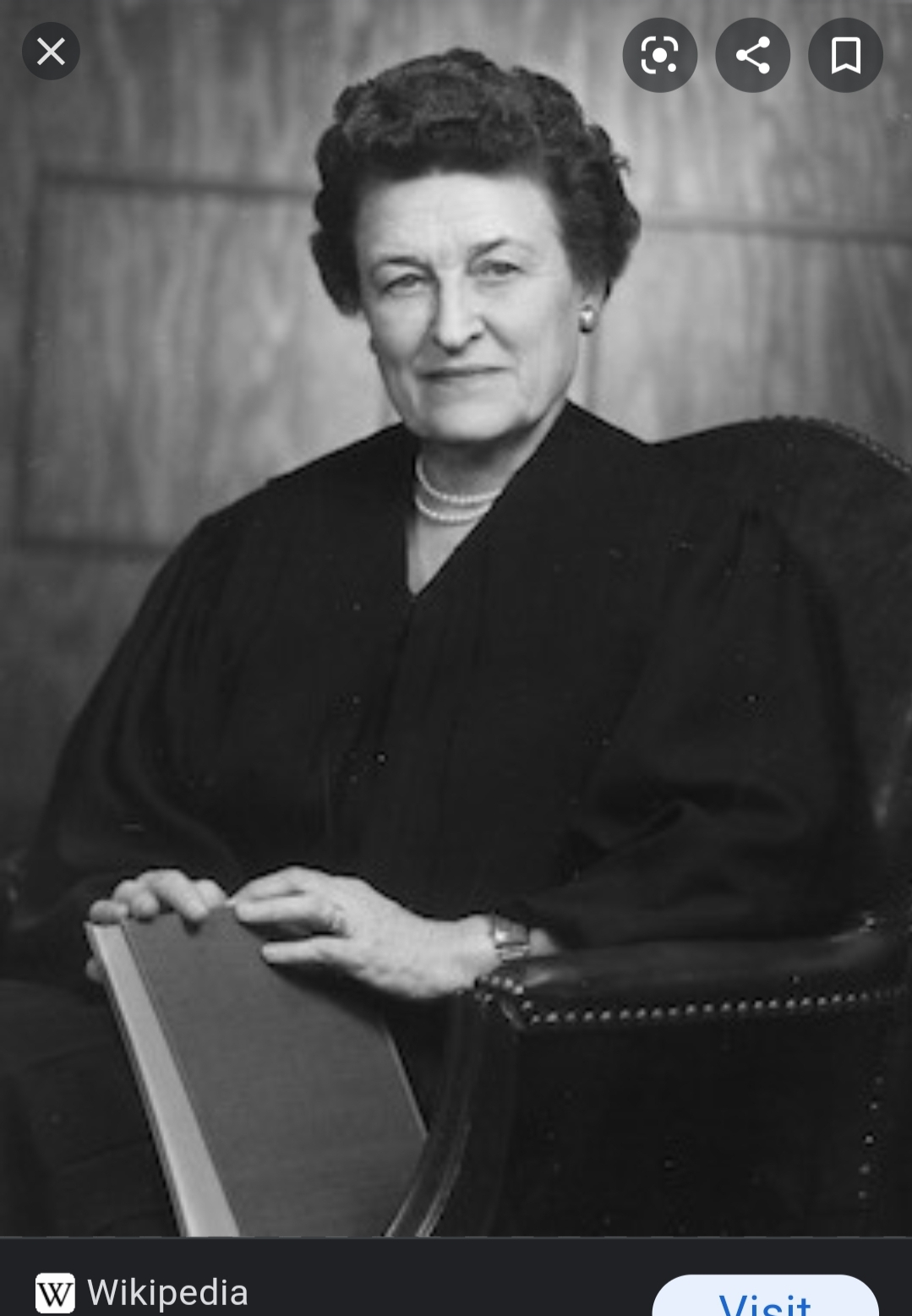
1013) Sarah T Hughes

Courtesy of Wikipedia
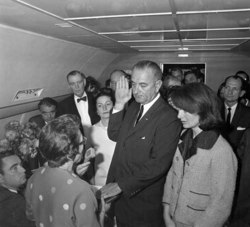
Judge Hughes delivering the Oath of Office to President Johnson, November 1963

Judge Hughes delivering the oath of office to incoming President Lyndon Johnson in the wake of President Kennedy's assassination, November 1963

1013: Sarah T Hughes

Lawyer and Judge

Born: 2 August 1896, Baltimore, Maryland, United States of America

Died: 23 April 1985, Dallas, Texas, United States of America

Sarah is most remembered for swearing in United States’ President Lyndon B Johnson aboard Air Force One after President John F Kennedy was assassinated.

Sarah worked previously for the Washington DC Police force. She was the first female state district judge in Texas (appointed in 1935 and elected in 1936. She was elected for the last time in 1960, serving six terms in all). When Sarah became a judge, women were not allowed to serve on juries in the state of Texas. Sarah recognized how horrible this was, and it was largely through her efforts that a 1954 amendment to the state constitution was added, allowing women to serve on juries in the state.

If all that’s not impressive enough, Sarah was also one of the first women to serve in the Texas House of Representatives (she served for three terms), and Sarah was the first woman to serve as a federal district judge for Texas in 1961 (appointed by John F Kennedy). In 1950, she also helped oversee the creation of Dallas’s first juvenile detention center.

Off the bench, Sarah was a women’s rights activist and United Nations supporter. She was married but had no children. Her last major accomplishment never actually came to fruition; but in 1952 Sarah’s name was a contender for the Vice Presidency nomination on the Democrat ticket. Sarah withdrew her name from the consideration, but she was the first woman to ever be considered for the Vice Presidency on the Democrat ticket.

Badges Earned:

Find a Grave Marked

Sources:

https://www.humanitiestexas.org/programs/tx-originals/list/sarah-t-hughes

https://www.womenintexashistory.org/biographies/sarah-t-hughes/

https://www.tshaonline.org/handbook/entries/hughes-sarah-tilghman

https://www.findagrave.com/memorial/18855/sarah-augusta-hughes

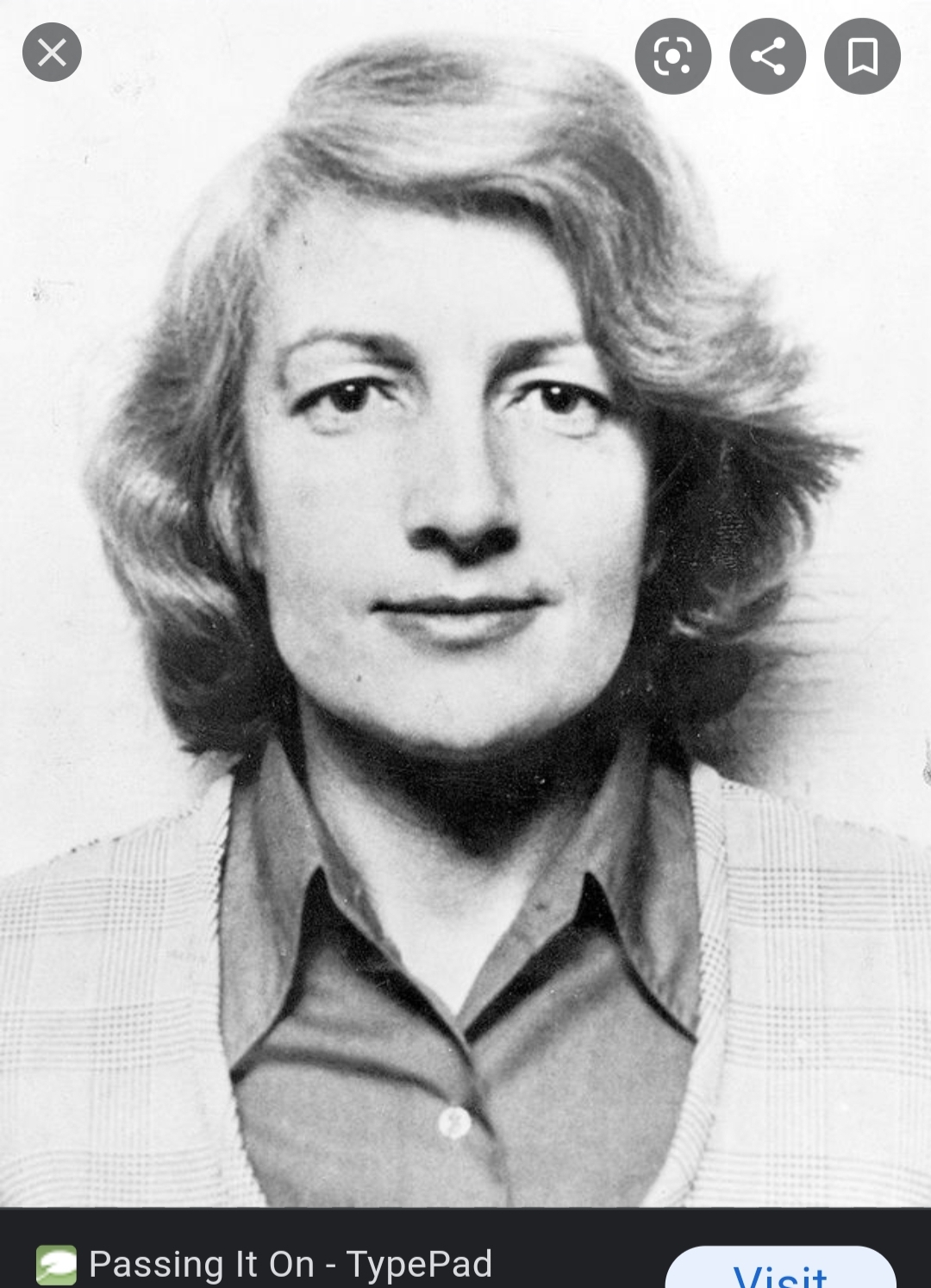
1012) Janet Parker

Courtesy of Passing it On -- Typepad

1012: Janet Parker

Medical Photographer

Born: March 1938, Birmingham, England, United Kingdom

Died: 11 September 1978, Solihull, England, United Kingdom

Janet was sadly the last known person to die of Smallpox after accidentally being exposed to a sample that was grown in a laboratory on an adjacent floor to where she was working at Birmingham University. Although the case against the University of Birmingham was dismissed in court, there are three prevailing theories for how Janet became infected; though none have been definitively proven. The most well-known theory (though widely discredited by the research community) was that the Smallpox sample that had been kept in the lab escaped and drifted through a vent, invading the air Janet was innocently breathing. Theory two is that Janet came into contact with a previously infected carrier; though if this were true that previously infected individual never showed symptoms and was never identified. The third theory is that Janet came into contact with an object on which a living sample of the virus rested and she contracted it that way. However Janet became infected, what we do know is that she became Smallpox’s last known victim; the last of an estimated 300 million in the twentieth century alone. Smallpox has been identified on the mummy of Egyptian Pharaoh Ramses V, who lived around 3,000 years ago!

Janet’s lonely death was eerily reminiscent of many stories surfacing in the wake of the Coronavirus Pandemic. For several weeks after falling ill, Janet wasted away in a hospital bed with only medical staff to keep her company and stay with her as she died.

Janet’s family and the man who had driven her ambulance to the hospital were put in quarantine; while the medical staff wore thick rubber gloves and masks to protect themselves. Officers and medical staff worked to trace every person Janet had been in contact with in the previous few days, placing all of them in quarantine as well and giving them emergency injections. In all, between 260 and 300 people were quarantined across Birmingham, including one woman who had to delay her wedding.

Janet was married to a postal worker. She had a happy marriage and a happy life; driving around town in her sportscar that the locals easily recognized as hers. Before becoming a medical photographer, Janet had previously worked as a photographer for the police and she often gave evidence in court.

Janet first began to feel ill a full month before she died. Originally diagnosed with chickenpox after red splotches appeared around her body, Janet’s mother didn’t believe the doctor’s diagnosis. Janet had had chickenpox as a child, and her mother knew the physical symptoms this time around were completely different. Nine days after beginning to feel unwell, Janet was admitted to the isolation hospital on August twentieth, where she later died. At the time she was admitted, no doctor in the UK believed any of their patients could develop Smallpox. The last natural case had cropped up the year before in Somalia, but after Janet was examined more thoroughly, the diagnosis came through.

After her infection, the professor from whom the Smallpox sample was believed to have leaked out of his lab was found with a self-inflicted wound. He passed away several days later after his life support machine was turned off (and in a subsequent court case, the professor was fully exonerated in the eyes of the law of any wrongdoing). Also, Janet’s father suffered what was suspected of being a cardiac arrest while in quarantine, and he died. No autopsy was performed for fear he had become infected and his body would spread the disease.

One mistake had cost three lives, but several hundred others were potentially saved after the City of Birmingham issued emergency vaccinations to protect the general populace from Smallpox. People waited in lines for hours to receive their shots, and remarkably, no one else died. One man, who received two double doses of the vaccine, almost died, but he managed to recover (thank goodness!).

After she finally died, Janet’s body was kept in isolation. The cemetery cancelled all other events the day of her burial, and fumigated the property once she was in the ground for her eternal rest according to one source. Janet’s mother missed both her husband and daughter’s funerals thanks to being left in quarantine, and some reports state she had developed a mild form of Smallpox but eventually recovered.

After Janet’s death, nearly all Smallpox samples were destroyed and labs shut down. Today, only researchers in Atlanta, Georgia in the United States (at the headquarters for the Centers for Disease Control) and in Moscow, Russia have access to the Smallpox virus. The World Health Organization officially declared Smallpox eradicated in 1980, two years after Janet’s death.

Badges Earned:

Find a Grave Marked

Sources:

https://janetparker.birminghamlive.co.uk/

https://www.bbc.com/news/uk-england-birmingham-45101091

https://www.historyofvaccines.org/content/smallpox-infection-lab

https://www.findagrave.com/memorial/185152529/janet-parker

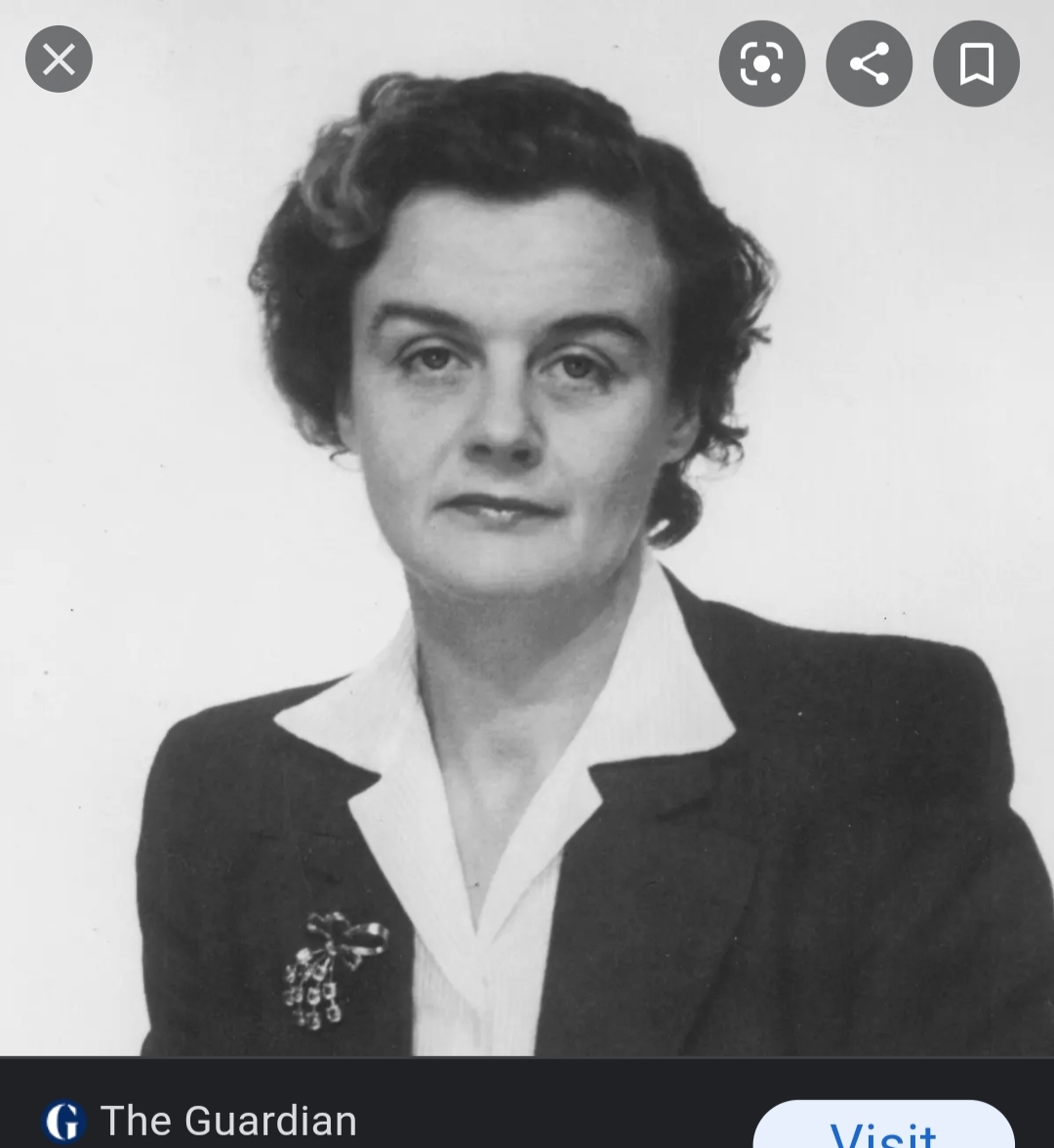
1011) Clare Hollingworth

Courtesy of The Guardian

“I must admit that I enjoy being in a war."

1011: Clare Hollingworth

Broke the News That World War II Had Begun

Born: 10 October 1911, Knighton, Leicestershire, England, United Kingdom

Died: 10 January 2017, Central, Hong Kong

Clare was working as a correspondent in Poland in 1939. Her reports on German troop movements on what would soon be considered the Eastern Front are seen as the first reports on the conflict that became World War II. One day, Clare was taking a short trip from Germany to Poland. The entire trip was only about twenty miles, but she never reached her destination. Instead, Clare looked over to the German side of the valley just in time to see a tarp flutter in the wind. When the fabric moved aside, Clare saw hundreds of tanks and other military equipment, an eyewitness view of what was easily identifiable as the German’s plan to advance into Poland.

Before breaking the news that World War II was upon the world, she did something even more remarkable. Clare was in Poland working for the League of United Nations union, a peacekeeping organization from her native Britain. While there, Clare helped thousands of refugees from the Sudetenland escape the recently annexed area to safety. This was just the first in a series of brave and remarkable actions she would take throughout her life.

Clare’s original story about the soon-to-be-started war was written August 29th. Two days later, September 1st, the Nazis invaded Poland. Clare telephoned her friend at the British Embassy in Warsaw, shouting into the receiver “The war has begun!” Her friend asked if she was sure, and in response Clare held her phone out the window so he could hear the sound of armored vehicles and tanks rolling by. Suffice to say, the employees in the embassy believed her.

Clare’s work was extremely dangerous for multiple reasons. Her life was often in jeopardy as she continued to report on troop movements and other activities by the German army. Clare was also working against censorship laws and a sexist society that did not want to see a female journalist succeed.

By 1941, Clare had been sent to Egypt alongside other (male) war correspondents to cover the North African campaign. Though Clare was there as an official journalist, she was denied the accreditation needed to allow her to move freely throughout the area that other male journalists easily received.

Though she lacked accreditation, Clare was chock full of bravery and the need to report on what was happening in front of her own eyes. She was often behind enemy lines, reporting on what life was like in the middle of a warzone for the troops and civilians both. Anything she could get her hands on; Clare wrote it up and sent it back to the Allied newspapers. Clare even managed to earn the ire of a notorious general who was known for despising any woman on the war front.

After the war, Clare began to report on the tense political climate in Algiers. She survived political assassins ransacking her hotel room and at another point even held off a group of armed gunmen with nothing more than a shoe. Throughout the 1960’s, Clare continued to report on the various political goings on throughout the Middle East and covered some stories out of the conflict in Vietnam as well. From 1963 to 1967, she even served as The Guardian’s first female Defense Correspondent.

Clare was married twice in her life but had no children. In the later years of her life, she began spending longer periods of time in Hong Kong and was visiting Beijing when the Tiananmen Square protests began. Clare viewed the demonstration from her hotel balcony and reported on it to newspapers in the West. The conflict in the Gulf was one of the few conflicts Clare missed during the second half of the twentieth century, and in the latter years of her life she had to be assisted by two helpers because of her failing eyesight. But this didn’t slow her down much; she lived to the ripe old age of 105!

Clare was also the author of five books.

Badges Earned:

Find a Grave Marked

Sources:

https://www.theguardian.com/media/2017/jan/10/clare-hollingworth-obituary

https://www.nytimes.com/2017/01/10/business/media/clare-hollingworth-reporter-who-broke-news-of-world-war-ii-dies-at-105.html

https://www.bbc.com/news/entertainment-arts-38573643

https://www.telegraph.co.uk/obituaries/2017/01/10/clare-hollingworth-legendary-telegraph-journalist-reported-outbreak/

https://www.findagrave.com/memorial/175162532/clare-hollingworth

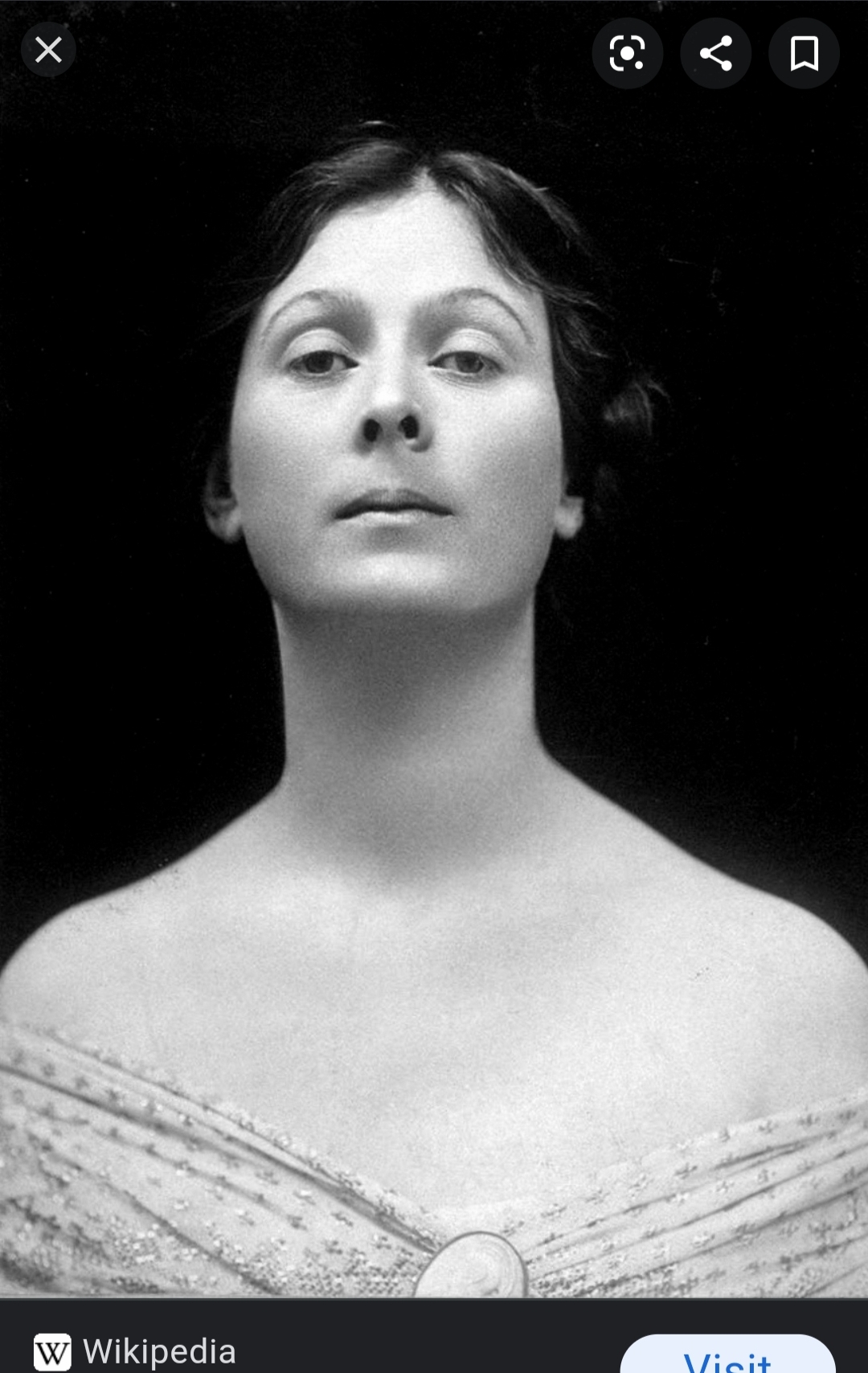
1010) Isadora Duncan

Courtesy of Wikipedia

 “Yes, I am a revolutionist...All true artists are revolutionists.”

1010: Isadora Duncan

Dancer dubbed the “Mother of Modern Dance”

Born: 26 May 1877-78*, San Francisco, California, United States of America

Died: 14 September 1927, Nice, France

Original Name: Angela Duncan

Isadora’s life was filled with tragedy.

Her two children and their nanny were killed after their car rolled into the Seine and the three of them all drowned.

Isadora herself then died when her silk scarf caught in the wheel well of a car. She was strangled instantly.

Before her untimely death, Isadora pioneered a new way to dance. She shed the rigidness of ballet and showed the world a new way to perform. Isadora’s ideas caught on quickly and spread across the world, traveling from the United States to Europe and even Russia.

Isadora used her new form of dance to fight for women’s equality. Isadora was dancing on stage, with long flowing hair and a Greek inspired outfit of loose cloth draped across the body, in a time when women still wore corsets and never showed their ankles.

Isadora was the youngest of four children and was raised by her single mother after her parents divorced when Isadora was about three years old. As a child, Isadora and her sister earned extra money for the family by teaching dance classes to other children in the area. She struggled to gain popularity and acceptance with audiences for many years, until finally in 1902, Isadora debuted onstage in Budapest. Her shows remained sold out for thirty straight days.

By 1905, Isadora was living in Germany and had opened her own dance school. Her star continued to shine throughout Europe and Isadora’s image was seen in sculpture work and her name was referenced in other types of art.

Isadora had vowed to never marry, but she still had her two children. Deirdre’s father was a man Isadora dated very seriously for many years, and the pair remained friends after the relationship ended. Isadora’s son, Patrick, was fathered by an heir to the Singer Sewing Fortune. Patrick’s father also helped fund Isadora’s second school, which opened in the years leading up to World War I, though neither school survived long term.

In 1913, Deirdre, Patrick, and their nanny were all killed after the car they were traveling in rolled into the Seine and they drowned. That same year (and again in 1924), Isadora was reportedly also injured in a car accident. Isadora continued to work after her children’s death, but as referenced above, her own mental health suffered greatly—which was completely understandable! Anyone who survived the loss of their children will be affected. Sadly, for Isadora, her battles were harder than most.

Between 1916 and 1920, Isadora continued to travel the world, performing choreographed shows. In 1921, she moved to Moscow in the hopes of influencing the new Soviet state with her artistic freethinking movement. The new government actually did fund a school for her, and Isadora continued to work.

A few years later, Isadora broke her previous vow and married a young poet. Reportedly, they only married so that her new husband would be able to travel across the United States with her while she toured. Upon arriving in the United States, both Isadora and her husband were lambasted and treated with suspicion by journalists who believed Isadora had gone fully Communist since living in the USSR. One source goes further to state her citizenship from the United States was also revoked around this time.

In 1925, Isadora’s husband—by then estranged from her, committed suicide.

In 1927, Isadora got into an early Bugatti sports car with a young driver in France. She climbed into the vehicle, waved goodbye to her friends, and died only moments later. The Bugatti was an open wheel car, and Isadora’s long scarf had become tangled around the wheel; instantly breaking her neck and dragging her body from the vehicle. Her dramatic life had come to a screeching halt; but then again, so do most artists’ lives.

*According to Encyclopedia Britannica, Isadora’s birth year is usually stated as 1878, but in 1976, a baptismal record was uncovered stating she was born a year earlier in 1877.

Badges Earned:

Find a Grave Marked

Located In My Personal Library:

The Oxford Encyclopedia of Women in World History Edited By Bonnie G Smith

Historical Heartthrobs: 50 Timeless Crushes from Cleopatra to Camus by Kelly Murphy and Hallie Fryd

The Book of Awesome Women: Boundary Breakers, Freedom Fighters, Sheroes, and Female Firsts by Becca Anderson

Sources:

https://isadoraduncan.org/foundation/isadora-duncan/
https://www.britannica.com/biography/Isadora-Duncan

https://www.history.com/this-day-in-history/dancer-isadora-duncan-is-killed-in-car-accident

https://www.findagrave.com/memorial/1444/isadora-duncan

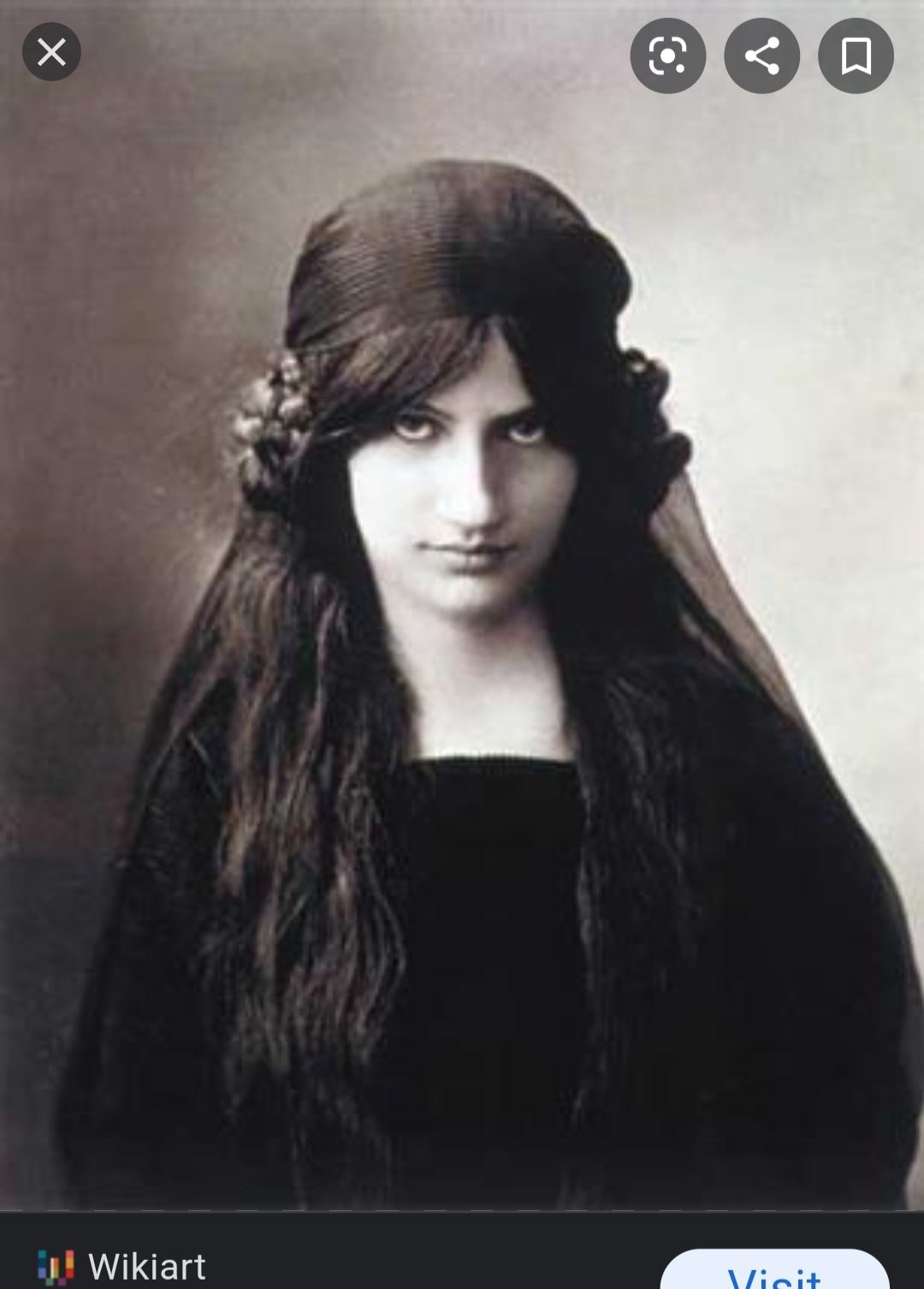
1009) Jeanne Hebuterne

Courtesy of WikiArt

1009: Jeanne Hébuterne

Artist, Model, and Common-Law Wife of Amedeo Modigliani

Born: 6 April 1898, Meaux, France

Died: 26 January 1920, Paris, France

Jeanne is most remembered for her tragic death.

Jeanne committed suicide by jumping out of a five-story window while heavily pregnant because she couldn’t deal with the grief of her lover Amedeo’s death.

Jeanne’s artwork is catalogued under the “Expressionist” genre. She was primarily a painter and had been introduced to the art world by her older brother who also painted. Unfortunately, outside of her relationship with Amedeo, little else of Jeanne’s life story survives.

In 1917, Jeanne decided to begin attending the Acadèmie Colarossi to further her studies of the art world. It was while learning there Jeanne met Amedeo Modigliani, and the pair would quickly become passionate lovers. For context, Amedeo was fifteen years older than Jeanne and so they were around thirty-three and nineteen respectively at the time. Jeanne became Amedeo’s muse, and they moved in together soon after beginning the affair despite Jeanne’s parents’ objections.

In the spring of the following year, their daughter, also named Jeanne, was born while the family lived in Nice. In 1919, the family returned to Paris. Jeanne was pregnant once again, and Amedeo had already begun to show signs of falling ill from tuberculosis. He was also known to have been addicted to drugs and alcohol, which likely helped mask and exacerbate his condition at the same time. In January of 1920, Amedeo died.

Two days after Amedeo’s death, Jeanne threw herself out of her fifth-floor apartment window. She had killed not only herself, but her unborn child as well. Jeanne’s epitaph on her headstone (She is now buried alongside Amedeo) reads, “Devoted Companion to the Supreme Sacrifice.” For the first ten or so years after her death, Jeanne’s family had her buried somewhere else before finally allowing her to lay in eternal peace beside the man she had devoted her life too.

Jeanne’s daughter was adopted by her paternal aunt (Amedeo’s sister) and was raised in Italy. As an adult, she began to research her parents’ history and wrote a biography about her father.

Jeanne’s works were lost to history for nearly eighty years after her death. Even after her heirs allowed Jeanne’s paintings to be seen by the public after a thirty year back and forth in the art world (her daughter died in 1984 according to Find a Grave), Jeanne remained an elusive figure. In 2000, several paintings, reportedly by Jeanne, were shown in a public exhibition focused on Amedeo’s works. However, in 2010, it was revealed that the paintings shown at the exhibition were forgeries and that the culprit behind the fakes had crafted seventy-seven paintings and drawings attributed to Jeanne. The forger was sentenced to a two-year suspended sentence and was fined 50,000€ by a French court.

Badges Earned:

Find a Grave Marked

Sources:

https://womennart.com/2020/06/24/who-was-jeanne-hebuterne/

https://www.dailyartmagazine.com/story-hebuterne-modigliani/

http://www.artnet.com/artists/jeanne-hebuterne/

https://www.findagrave.com/memorial/20252/jeanne-h%C3%A9buterne

Kuwait’s Own

These are the entries born in the country of Kuwait.

Entries:

  • Rania al-Abdullah, Queen Consort of the Hashemite Kingdom of Jordan

1008) Rania Al-Abdullah

Courtesy of Concordia Summit

1008: Rania al-Abdullah

Queen Consort of the Hashemite Kingdom of Jordan

Born: 31 August 1970, Kuwait City, Kuwait

Before becoming queen, Rania worked in the banking and private technology sectors. In 1991, she earned a bachelor’s degree in Business Administration from the American University in Cairo.

In 1993, Rania married the then-Prince of Jordan, Abdullah bin Al Hussein. In 1999, Rania’s husband assumed the Constitutional role of King of the Hashemite Kingdom of Jordan. Rania became Queen Consort at the same time. They have four children together.

According to her website, Rania, “Locally, she is committed to breathing new life into the public education system, empowering women and their communities, improving child and family protection services, and driving innovation, technology, and entrepreneurship through society, especially amongst young people.

“Internationally, Queen Rania is an advocate for tolerance, compassion, and promoting empathy between people of all cultures and backgrounds. Her efforts to challenge stereotypes of Arabs and Muslims and promote greater understanding and acceptance between people of all faiths and cultures have won her global recognition,” (View the top link under the sources tab for Queen Rania’s complete biography from her website).

Rania is particularly active in her role as advocate for Jordanian children and their education. The Queen Rania Foundation for Education and Development was set up by the queen specifically to help children and teachers access the technology and other needs they have within the scope of education. Rania’s focus on education moves beyond the borders of Jordan however; she has also received accommodations for her work with the United Nations to help children across the world receive an education.

Rania has also published several children’s books over the years and has received numerous awards and accommodations for her work in the education sector and for helping refugees and vulnerable groups around the world.

Sources:

https://www.queenrania.jo/en/rania

https://unfoundation.org/who-we-are/our-board/her-majesty-queen-rania-al-abdullah-jordan/

https://www.forbes.com/profile/queen-rania-al-abdullah/?sh=1e4f91f140d4

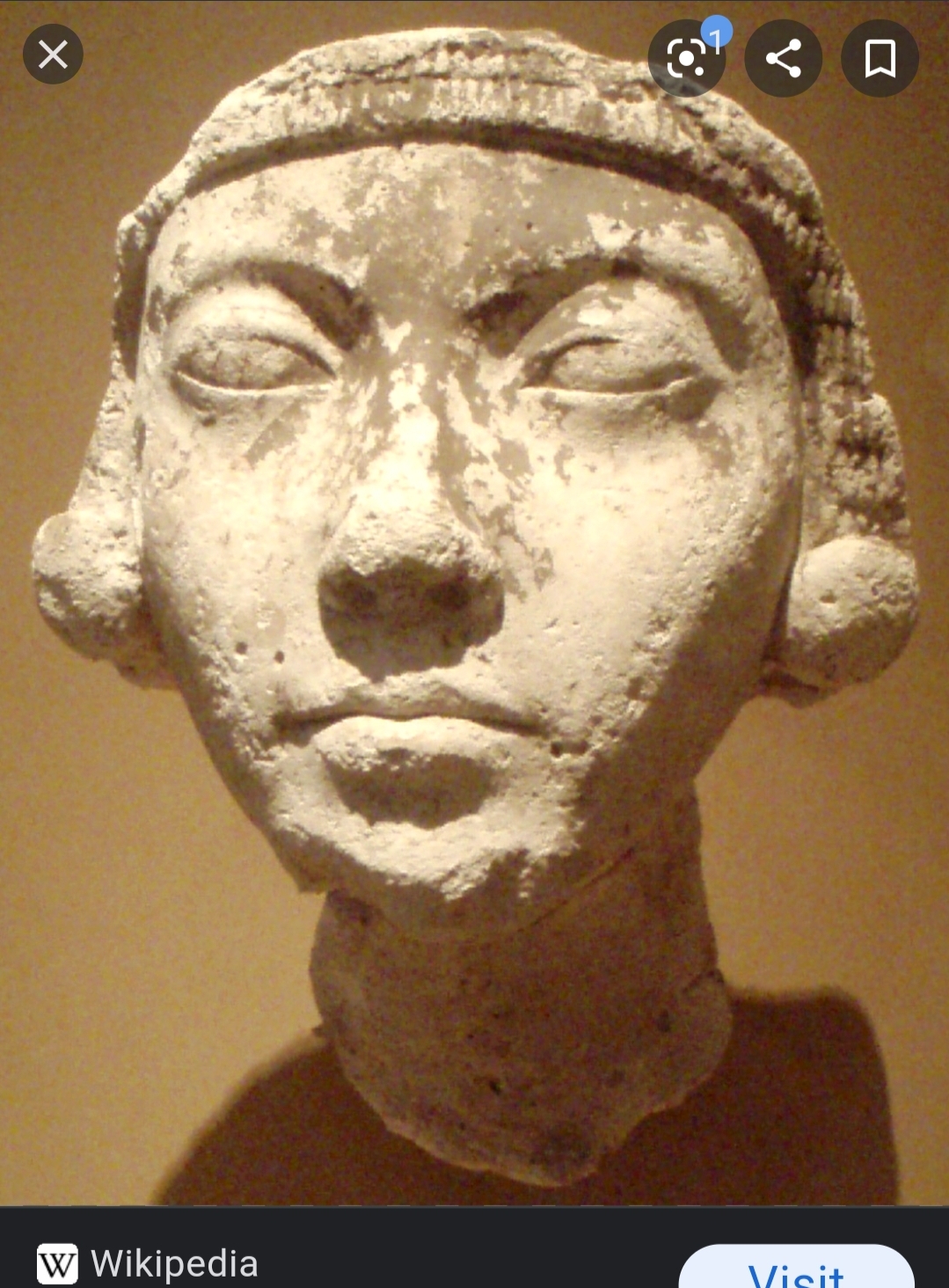
1007) Kiya

Courtesy of Wikipedia

1007: Kiya

Wife of Pharaoh Akhenaten

Born: Possibly Mitanni (Present-day Syria)

Died: Akhetaten, Ancient Egypt (Present-day Amarna, Egypt)

Very little is known about Kiya, especially in contrast with Akhenaten’s much more famous and principal wife Nefertiti.

Some scholars believe Kiya was from the Mitanni civilization, located in present-day Syria and Turkey, based on a known Mitanni wife of Akhenaten (Tadukhipa), who may have shortened her name upon arriving in Egypt to simply Kiya. However, this theory is just that, a theory, and is not a definitive historical fact.

Kiya’s official title was “The Great Beloved Wife.” Many believe this also proves she was not a Native Egyptian, or at the very least not related to the royal family. The majority of royal women received titles like “King’s Wife” “King’s Daughter” “King’s Mother” and so on, depending on how they were related to the king. Kiya, in contrast, was titled “The Great Beloved Wife” and also “The Favorite”, neither of which show any indication she was of Egyptian royal blood.

In some reliefs she is shown with a young girl, making many believe she had a daughter (and possibly two sons), but all of this is circumstantial. Some historians believe Kiya died in childbirth, because another relief in Amarna shows the death of a royal woman, while a nurse carries a newborn child away. However, this also has not been proven to have anything to do with Kiya.

Compounding the mysteries behind Kiya was the fact that many of her grave goods were repurposed for other members of the royal family. For example, Kiya’s coffin was used for the Princess Meritaten instead, while a secondary sarcophagus may have been repurposed for the Pharaoh himself.

According to Ancient Origins, the pieces of archaeological evidence from Kiya’s life that do survive are a jumbled mess of pieces or fragments of various items. Some images of carved reliefs survive as well; though most have been changed to represent the princess Meritaten instead of Kiya (which only adds more mystery to the already confusing story). One of the most important finds for Egyptologists was a set of four Canopic Jars. Canopic Jars were used by ancient embalmers to hold four organs after they were removed from a mummy. This particular set of jars has been split up; three remain in Cairo while a fourth resides at the Metropolitan Museum of Art in New York City. The lids of the jars have all been sculpted to show a woman’s face. Some believe the faces are of Nefertiti, while others have cited one of the six daughters shared by Nefertiti and Akhenaten. More still liken the image to that of Kiya herself, which would make one believe the jars belonged to her.

Kiya disappears from all historical records around the twelfth or thirteenth year of Akhenaten’s reign. Some believe Kiya died around this time, while others believe she was disgraced, and therefore her smashed artifacts, repurposed grave goods, and reimagined carvings all prove she lost her place within the court. However, none of this can be definitively proven (yet).

Recently, more research was done on two Egyptian mummies discovered lying in a tomb together. One, originally hailed “The Elder Lady”, is believed to be the powerful Queen Tiye. The woman beside her, deemed “The Younger Lady”, is believed by some to be Kiya. If the Younger Lady is in fact Kiya, that would mean Kiya is most likely Tutankhamun’s mother—but if this is true, then Kiya would not actually be from Mitanni at all. DNA analysis on The Younger Lady as well as the mummy believed to be the Pharaoh Akhenaten prove they are at the very least half-siblings. Meaning if Kiya is the Younger Lady, then she is also ethnically Egyptian.

I want to note however that the majority of Egyptologists do not believe Kiya and the Younger Lady are the same woman. Because so much of the circumstantial evidence seems to indicate Kiya was not Egyptian, and not Tutankhamun’s mother (she was never referred to as “King’s Mother” or in any way indicated to have given birth to the heir to the throne), I also personally believe Kiya and the Younger Lady are not the same woman. However, that is my opinion and at this point, neither theory can be proved. I just wanted to be clear on where I personally stand on the situation.

This probably all sounds very confusing if you aren’t interested in Egyptology or the genealogical studies of the Amarna Period. For that I’m sorry, but there isn’t really an easier way to sum it up nicely other than to say doing more research yourself might help.

Anyway, back to Kiya. Some historians and researchers believe Kiya and the Younger Lady are one and the same, but a great many others do not. If they are the same, then Kiya’s death was a violent one. The Younger Lady was a murder victim according to researchers.

The majority of Kiya’s grave goods were located in a grave called KV55, located in the Valley of the Kings. However, the grave was not adorned or decorated in any way to indicate it was her initial burial ground, and her mummy has not been (definitively) located today. Some historians believe her body was destroyed in antiquity, while others still hope the day when her tomb is uncovered somewhere. It could be in the Valley of the Kings or it could be somewhere near the burial ground at Amarna. Or who knows, Kiya’s final resting place may be somewhere else entirely.

Badges Earned:

Located In My Personal Library:

Daughters of Isis: Women of Ancient Egypt by Joyce Tyldesley

King Tutankhamun: The Treasures of the Tomb by Zahi Hawass

Scanning the Pharaohs by Zahi Hawass and Sahar Saleem

Secret Egypt by Zahi Hawass

The Pharaohs by Joyce Tyldesley

When Women Ruled the World: Six Queens of Egypt by Kara Cooney

Sources:

https://www.ancient-origins.net/history/kiya-most-mysterious-woman-amarna-005092

https://sites.google.com/site/historyofancientegypt/queens-of-egypt/kiya-wife-of-akhenaten

https://ib205.tripod.com/kiya.html

http://historytimeshistory.blogspot.com/2012/02/ancient-egyptian-queens-mystery-of-kiya.html

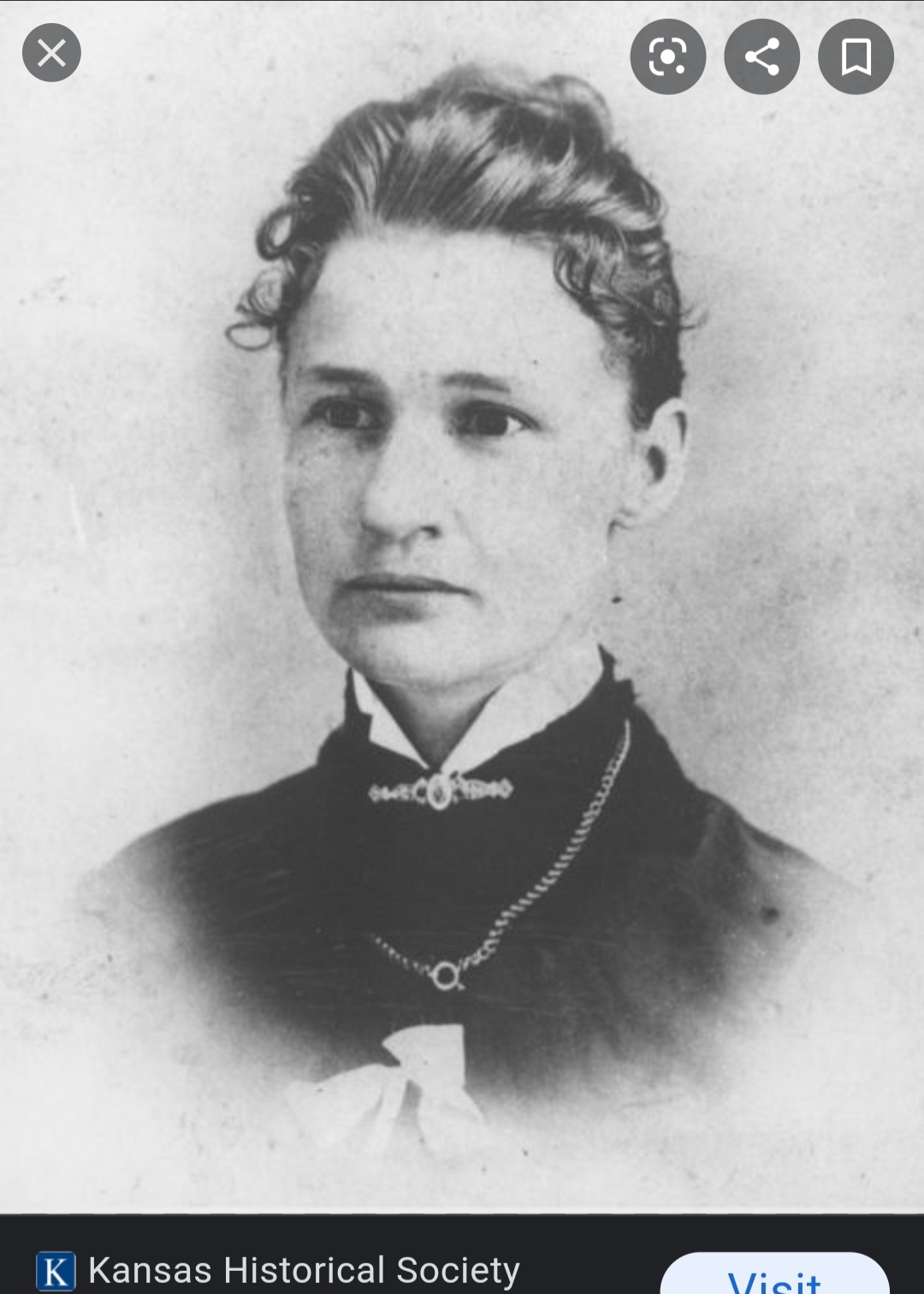
1006) Susanna Salter

Courtesy of the Kansas Historical Society
A Meme from Tumblr
A meme posted to Tumblr about Susanna Salter's story.

1006: Susanna Salter

The First Elected Female Mayor in United States History

Born: 2 March 1860, Belmont County, Ohio, United States of America

Died: 17 March 1961, Norman, Oklahoma, United States of America

Susanna served Argonia, Kansas after being elected in 1887. She was voted in thirty-two years before American women received universal suffrage with the passing of the nineteenth amendment.

Susanna attended college but had to leave six weeks before graduation after falling ill. She did meet her future husband while in school however, and they married in 1880.

Susanna and her husband moved to Argonia in 1882. Susanna’s father bought the hardware store where her husband worked to help out the growing family. Soon enough, Susanna’s husband began studying to pass the Kansas bar to practice as a lawyer.

Susanna’s father became the first mayor of Argonia, while her husband served as city clerk. Kansas voted to enfranchise women in certain cities and villages, including sleepy Argonia.

In 1884, Susanna became actively involved in politics. The local chapter of the Women’s Christian Temperance Union was interested in ensuring the already passed prohibition laws in Kansas were going to stay in enforcement. Susanna presided over the caucus for the WCTU as they decided who they would back in the local election.

Some of the men in town got a little miffed when they realized women were moving into the political sphere. In order to get back at those upstart women, these angry men decided to submit a list of candidates of their own for consideration. The men copied the WCTU’s list exactly; with one exception. The angry men placed Susanna’s name on the list for mayor. She was the only woman eligible to be a candidate from the WCTU because she was the only woman who lived within the town limits. The angry men assumed the women would vote the way the WCTU wanted, and that the other men would never dare vote for a woman.

The angry men were wrong.

Susanna had no idea her name had been placed on the ballots until the morning of the election. At the time, candidates didn’t actually have to be made aware they were literally up for political office. The angry men simply had ballots printed with her name on them, and come the morning of the election, the voters of Argonia were stunned to see Susanna’s name right there in black and white.

The Republican faction in Argonia spotted an opportunity when it was presented to them. A group of Republican men raced over to Susanna’s house, where they found her doing her family’s laundry. The Republicans asked Susanna if she would accept the mayoral position if she won the election. When she agreed to it, the Republicans vowed they would see Susanna elected to get back at the angry men who were trying to pull a dirty trick on her.

Susanna’s husband was incensed when he found out Susanna’s name was on the ballot. He was even more upset when she told him she was willing to serve if elected. Susanna refused to back down, and that afternoon she and her parents went down and voted. Susanna followed the rules of etiquette and refused to vote for herself, leaving the box for mayoral candidate blank.

The women of the WCTU decided to turn against their own candidate and voted for Susanna in droves. She ended up earning a two-thirds majority win for the position of mayor.

Now, to be fair, the entire population of Argonia was only around 500 to begin with, so its not like Susanna was bringing in thousands of votes, but even still, her win was remarkable.

Instead of embarrassing her and proving women had no place in politics, the angry men had just ensured the election of America’s first female mayor. Whoops.

Once her win was announced, Susanna’s husband checked his attitude and proudly announced he was the “Husband of the Mayor.”
Susanna’s term in office was one year and her salary one dollar (though she spent much more than her salary just answering fan mail). Instead of ruling over Argonia with an iron fist, Susanna reassured the council of men that she was merely their presiding officer.

Not much happened politically in Argonia that year. The council did arrest two men for refusing to purchase licenses and they warned a couple of teenagers to stop throwing rocks at vacant buildings. Otherwise Susanna managed to keep the town from spontaneously combusting, as I’m sure some of the angry men thought would happen if a woman ever rose to a place of political power.

Though not much actually happened in Argonia during that year Susanna was mayor, she did manage to capture the attention of reporters around the country. Correspondents from newspapers from coast to coast were sent to the sleepy town to interview residents and watch over council meetings, to see how Susanna conducted business. By and large, the country was impressed with how well Susanna kept everything together.

The newspapers were even more impressed when they learned America’s first female mayor had also managed to give birth to a child while in office. I know, hold everything people, a woman did something many many women around the world do—carried a child and given birth to it while still working at a day job. Shocking!

Susanna would actually have nine children in all (according to Wikipedia—seven are listed on Find a Grave). That to me is more impressive than giving birth while in office. She was also only twenty-seven when she was elected, only stood five feet three inches tall, only weighed one hundred and twenty-eight pounds, and most shocking of all (I’m using sarcasm here), some newspapers noted Susanna had never hired any domestic help for her household. Actually, the fact that she had nine kids and no help is really incredible, but that’s not actually why people were shocked as you can imagine.

Susanna wasn’t just famous in the United States. Her name and photo appeared in newspapers in South Africa, Sweden, and more. Susanna received congratulatory letters from people in Italy, France, Germany, Austria, and other places in Europe.

Susanna was even invited to speak at the Kansas Women’s Equal Suffrage Association. She was introduced at the event by Susan B Anthony, who introduced Susanna by saying, “Why, you look just like any other woman, don't you?"

After Susanna’s single year in office, she declined to run for re-election. Susanna and her family continued to live in Argonia until 1893, when they moved to Oklahoma. For ten years, the Salters homesteaded and farmed. After a decade of roughing it though, they moved to Augusta, where Susanna’s husband became a practicing lawyer and started a newspaper. In 1916, Susanna’s husband died, and the family moved closer to the state university so her younger children could continue going to school.

In 1933, Susanna returned to Argonia for a ceremony in which the citizens honored her with a bronze plaque. When Susanna turned ninety, she announced she would walk a mile on every birthday she had for the remainder of her life. At ninety-four, Susanna was still living alone in an apartment, cooking and cleaning up after herself. She had a hearing aid by then, but otherwise was unencumbered by her age.

Susanna passed away only days after her one hundred and first birthday. Now that’s a life worth celebrating.

Badges Earned:

Find a Grave Marked

Located In My Personal Library:

No Place for a Woman: The Struggle for Suffrage in the Wild West by Chris Enss

Who Knew? Women in History by Sarah Herman

Sources:

https://www.kshs.org/p/kansas-historical-quarterly-susanna-madora-salter/13106

https://www.kshs.org/kansapedia/susanna-madora-salter/12191

https://www.womenshistory.org/susanna-madora-salter

http://www.herhatwasinthering.org/biography.php?id=7639

https://kansasleadershipcenter.org/susanna-salter/

https://en.wikipedia.org/wiki/Susanna_M._Salter

https://www.findagrave.com/memorial/38837870/susanna-madora-salter

 

Historic Pinal Cemetery

Posted on December 30, 2020January 16, 2022 by nickssquire12
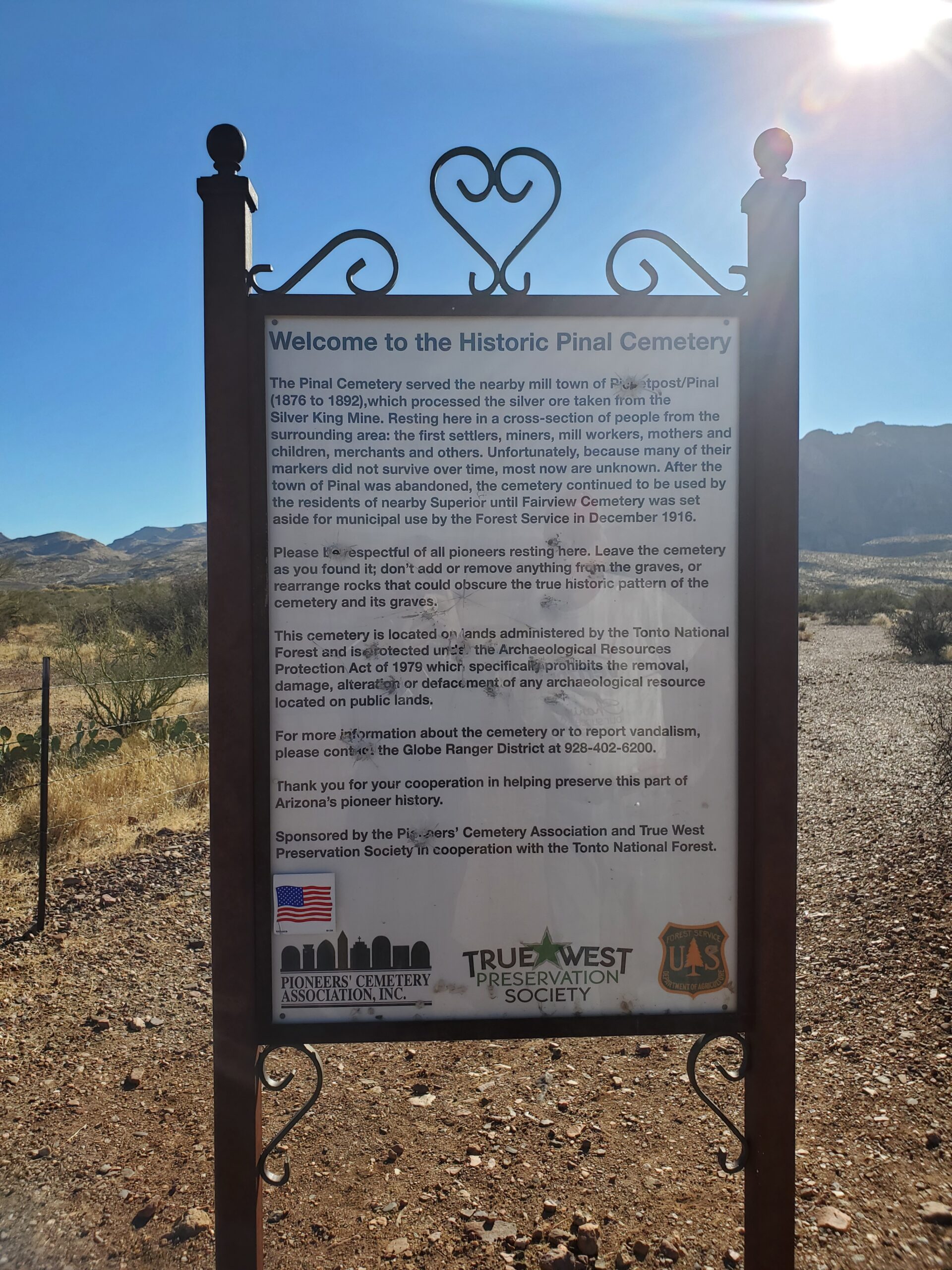
Informational Sign Near the Cemetery Entrance

Over the Christmas 2020 weekend, I hit the road once again, this time with my mom, dad, and brother with me.

Okay, to be fair, my dad drove while he and my brother took my mom and I out to the Historic Pinal Cemetery. This graveyard is located about forty miles from our house, just outside Superior, Arizona, and is definitely not as easy to find as our last stop at Adamsville/Butte View outside Florence. To get to Historic Pinal, you need a vehicle equipped to drive off road and some good old fashioned sense of direction. Google Maps gets you kind of close, but you need to know what you're looking for in order to actually find the spot.

My dad and brother last visited the cemetery around fifteen to seventeen years ago by their best estimation, but typical of my dad, he was able to find the cemetery after a quick five minute walk from where we parked.

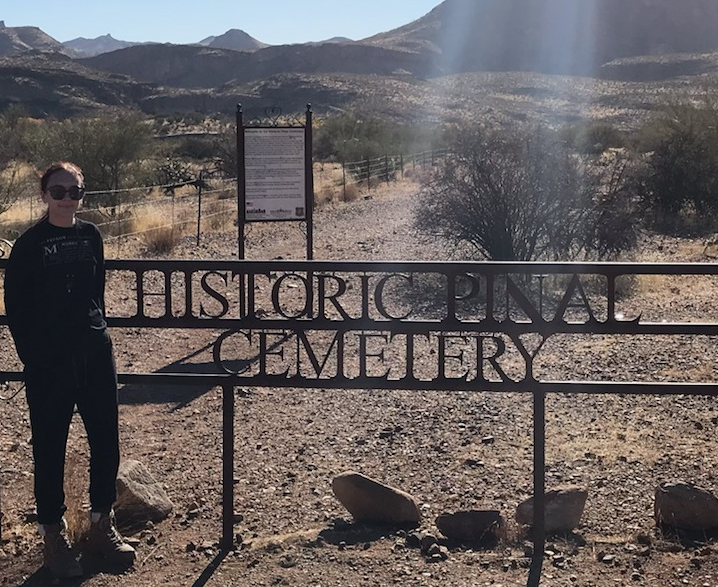
I took a quick reference photo for all of you, in case you need some help finding the place. For one thing, the entire cemetery is surrounded by a wire fence, and there is the one big metal sign at one end (see the top photo of me standing beside it). However, if you approach the cemetery from the opposite side, like my family did, you might not see the sign. Therefore, this image will probably be helpful. To find the cemetery, you first need to locate this:

Power Lines Near the Cemetery

If you see this power line juncture, you know you're close. You're literally within sight of the cemetery, by the way.

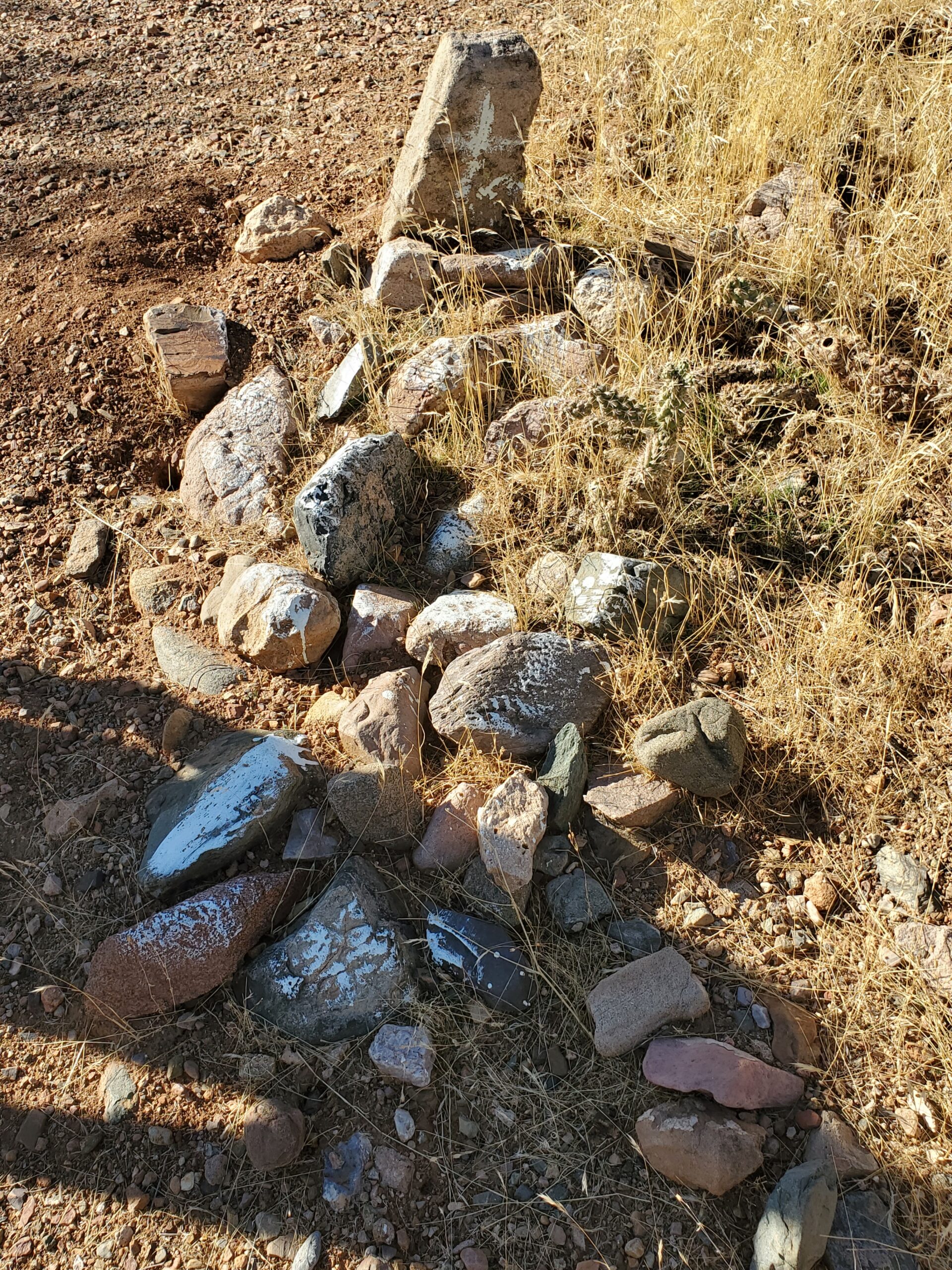
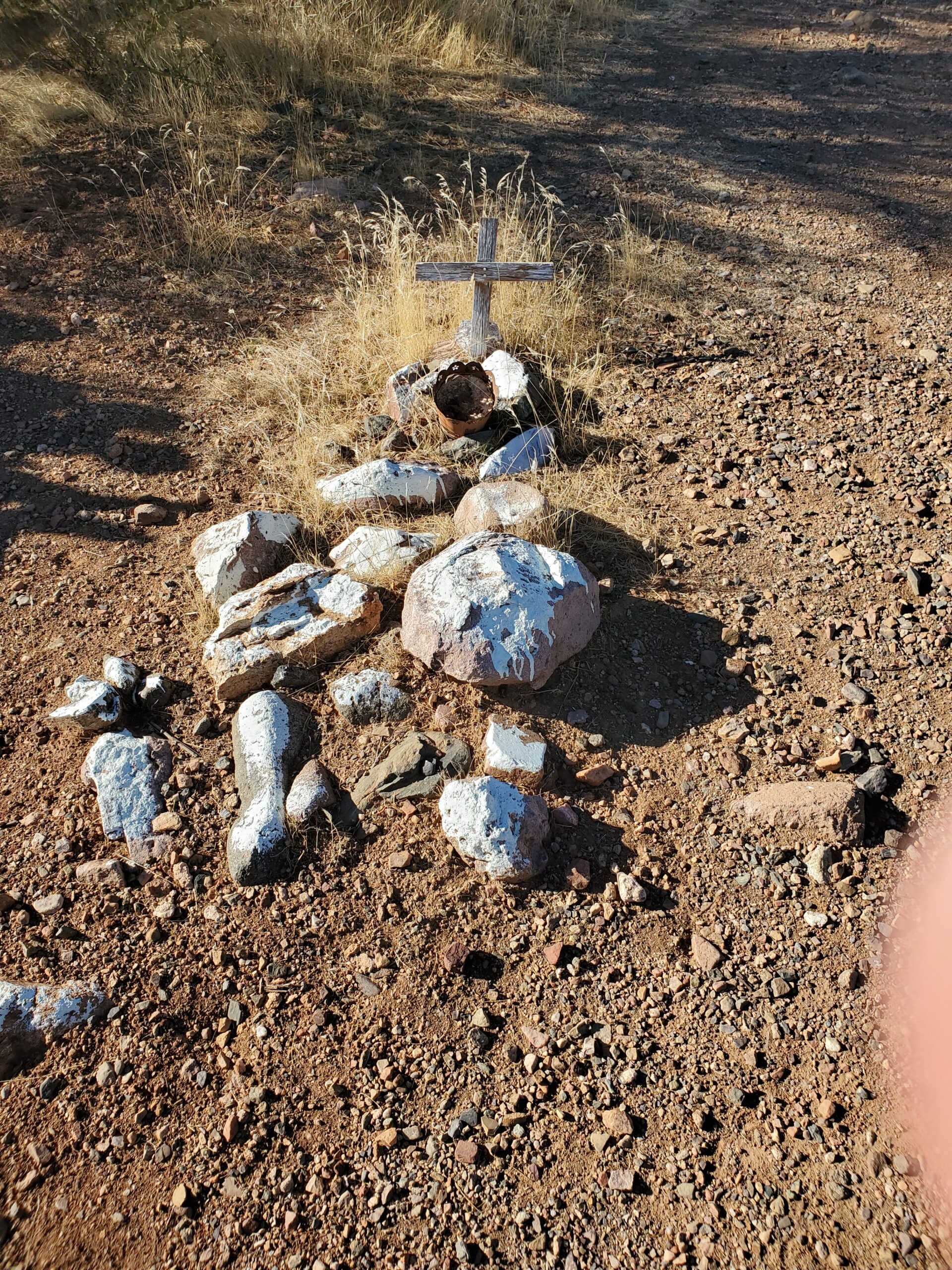
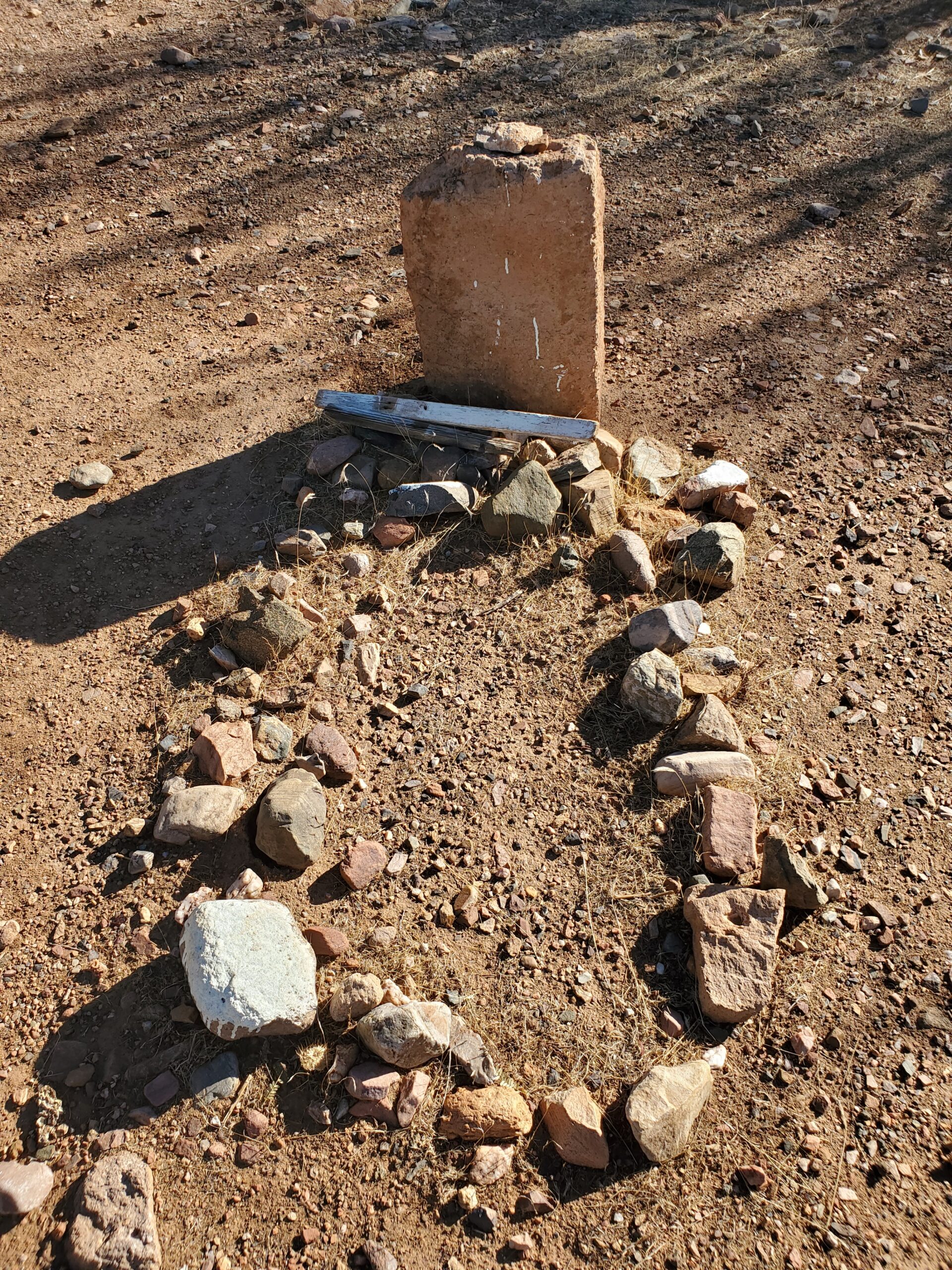
Once inside the actual graveyard, you'll quickly notice there are very few actual graves that are identifiable today. Most of the graves are only marked with a circle of stones, some of which are marked with white paint. The majority of those buried in the cemetery are women and children, and no one has been buried in the graveyard since 1916, when another cemetery opened in the actual city limits of Superior.

One of the graves at Historic Pinal

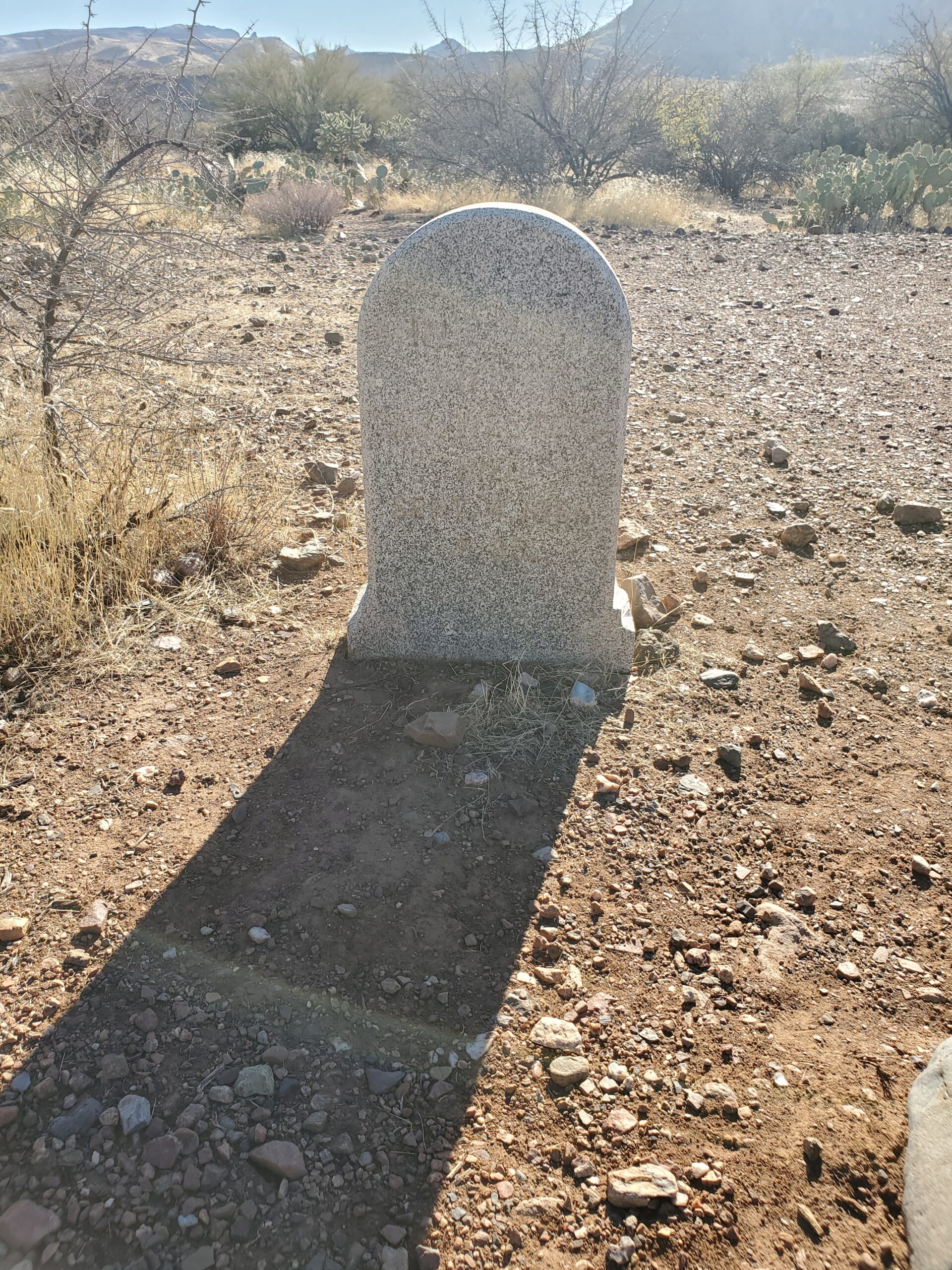
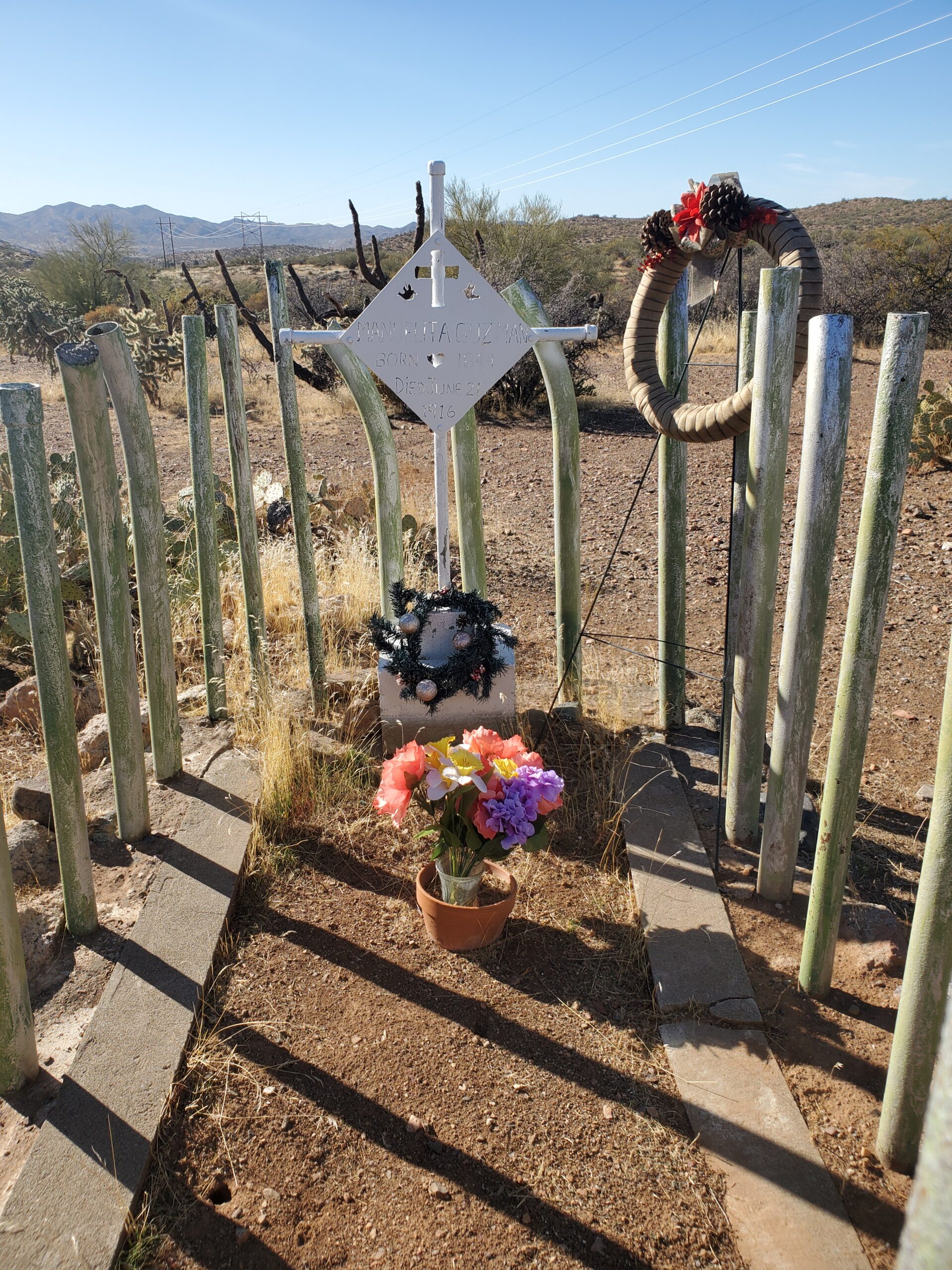
The following photos are all from within Historic Pinal. These are the graves I spotted that are better marked. Unfortunately this cemetery is less cared for than those outside Florence, but I am glad the limits are at least fenced off now.

One of the better marked Historic Pinal graves
Marked with a cross, Historic Pinal
A marked grave at Historic Pinal
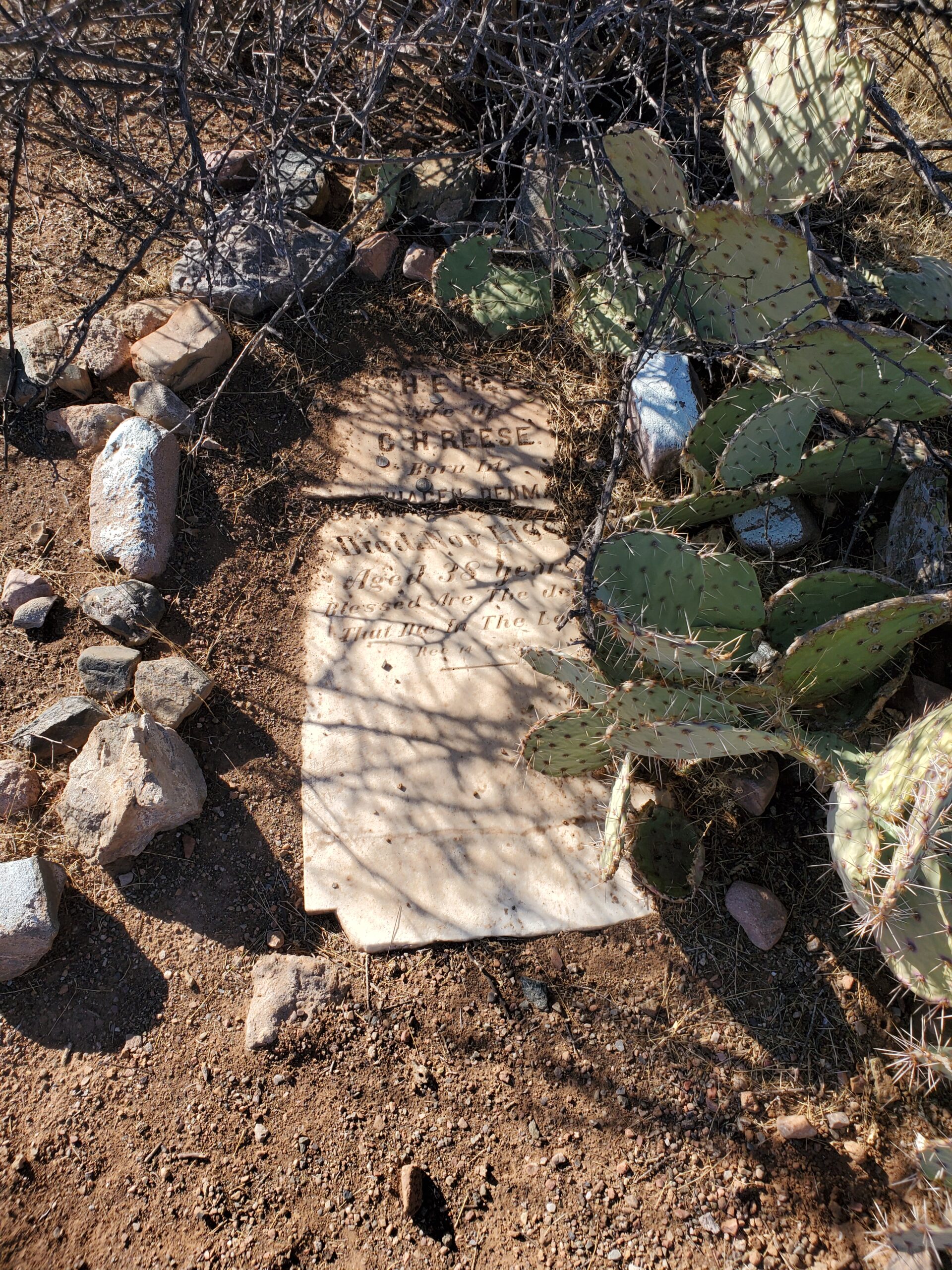
This marble grave marker is nearly impossible to read in the Arizona sun
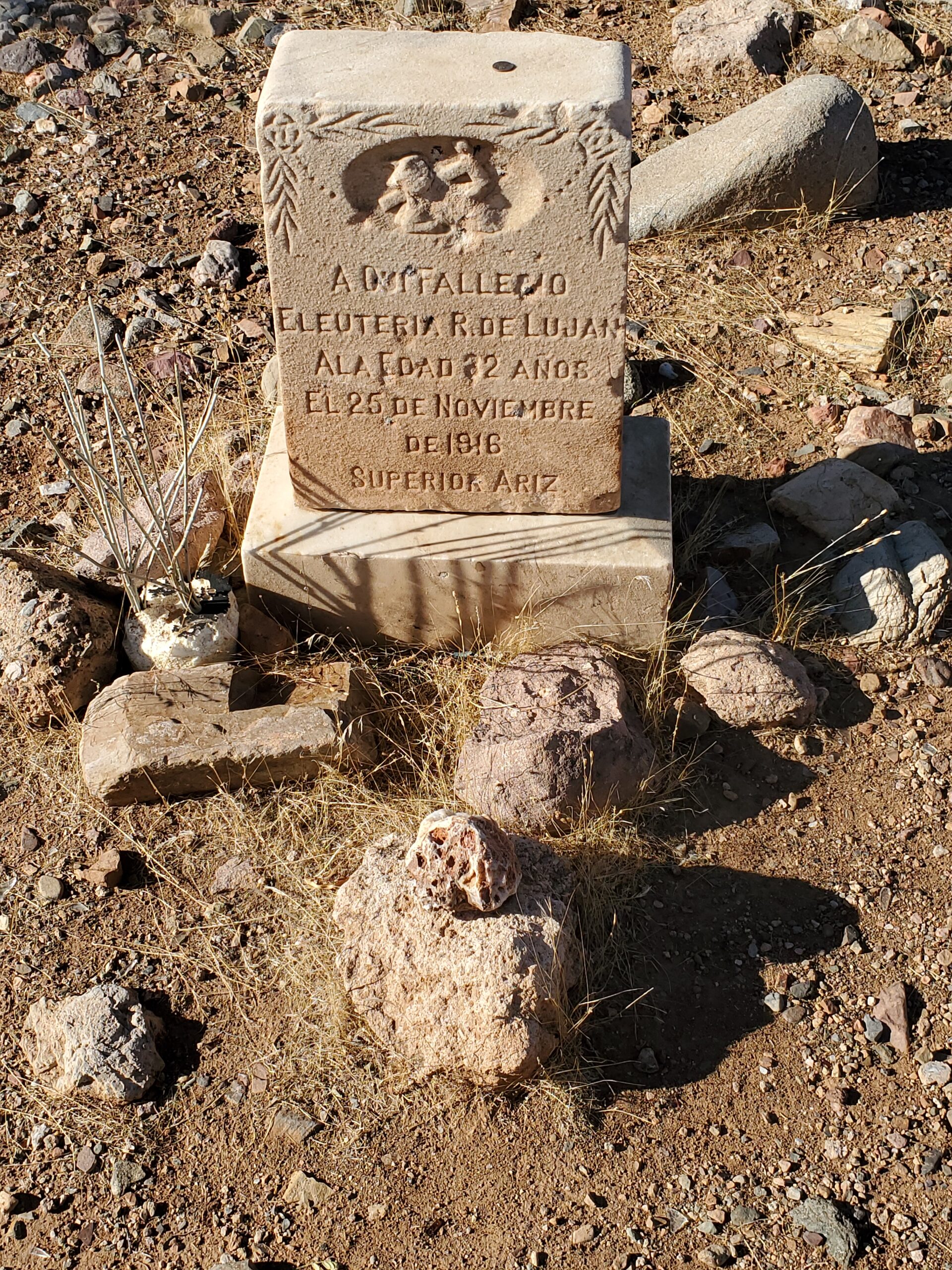
This is the most intricate marker in the cemetery as of 2020

Despite signage requesting no new additions or flowers being added to the cemetery, it is clear someone ignored that request with this marker.

This poor marker is cracked and hidden under a bush

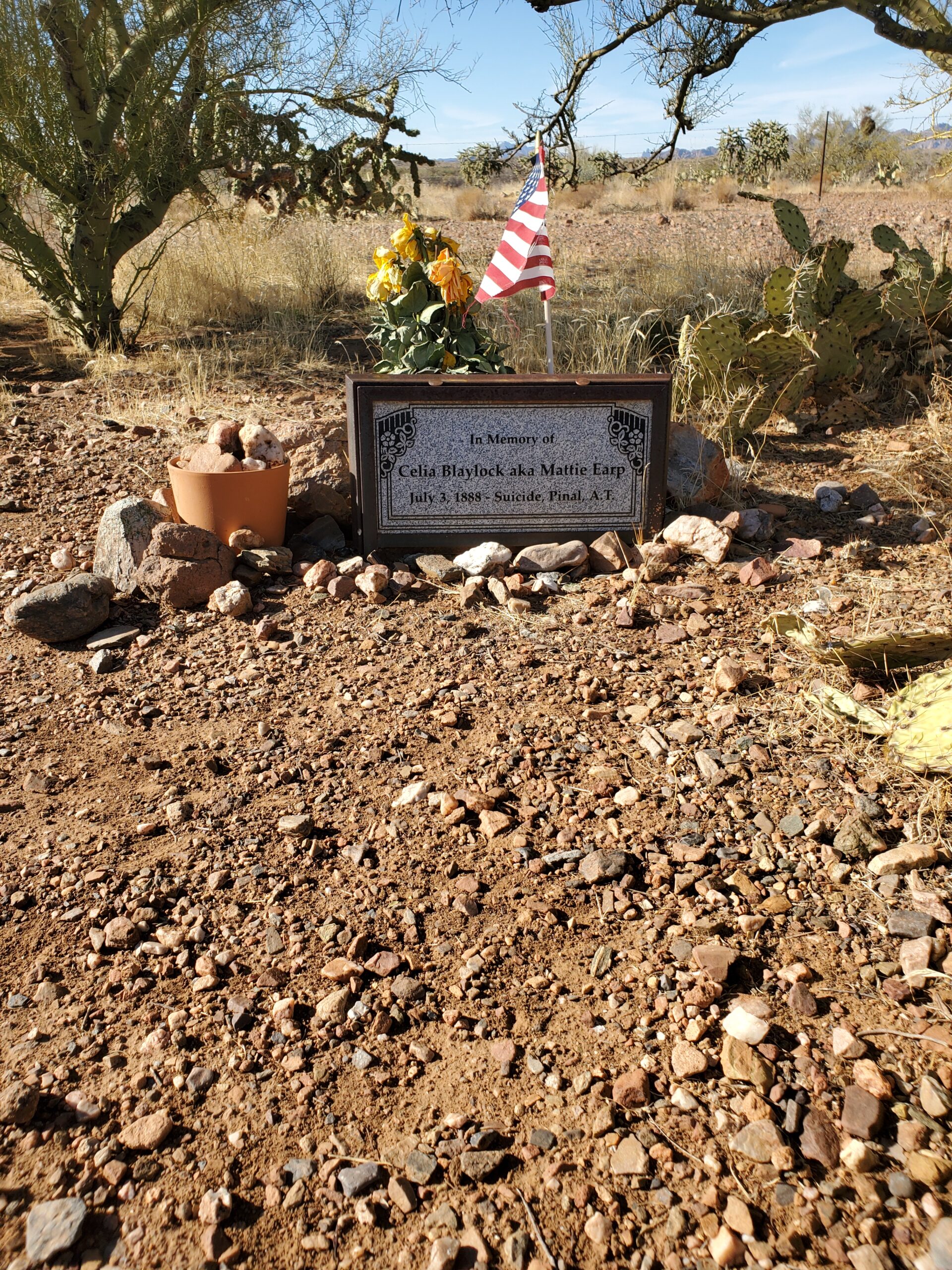
The vast majority of visitors to Historic Pinal are there for one reason: to see the grave of Mattie Blaylock, who was the girlfriend of famed gunslinger Wyatt Earp. Unfortunately, though Mattie is buried somewhere within the confines of Historic Pinal, her actual gravesite has been lost.

Today, a memorial cenotaph has been placed at the entrance to Historic Pinal, pictured below in a photograph I took while visiting.

This marker was placed by the overseers of the cemetery

Unfortunately that's about all there is to see at Historic Pinal. Maybe someday Mattie Blaylock's actual gravesite will be rediscovered. Maybe someday the little cemetery hidden behind the abandoned railroad tracks will be kept up better once again. For now though, this little graveyard really does belong under the banner of "Abandoned Cemetery of the Old West."

Hopefully soon we'll be able to take another trip to visit another burial ground. None of the others on our list are as close as Historic Pinal, Butte View, or Adamsville are to where we live, so we'll have to wait and see. For now though, I hope you enjoyed reading and virtually visiting this historic graveyard.

  • Previous
  • 1
  • …
  • 22
  • 23
  • 24
  • 25
  • 26
  • 27
  • 28
  • …
  • 159
  • Next

Categories

Archives

  • July 2025 (10)
  • July 2024 (1)
  • January 2024 (1)
  • August 2023 (1)
  • June 2023 (2)
  • October 2022 (1)
  • July 2022 (1)
  • June 2021 (3)
  • December 2020 (3)
  • August 2019 (1)
  • July 2019 (2)

Search

© 2026 The Exasperated Historian | Powered by Minimalist Blog WordPress Theme