The Exasperated Historian
Menu
  • Home
  • The Women’s List (New)
  • The Men’s List
  • The Animal List
  • Collections
  • The Blog
  • Contact Us
  • FAQ
Menu

Category: Birth Locations

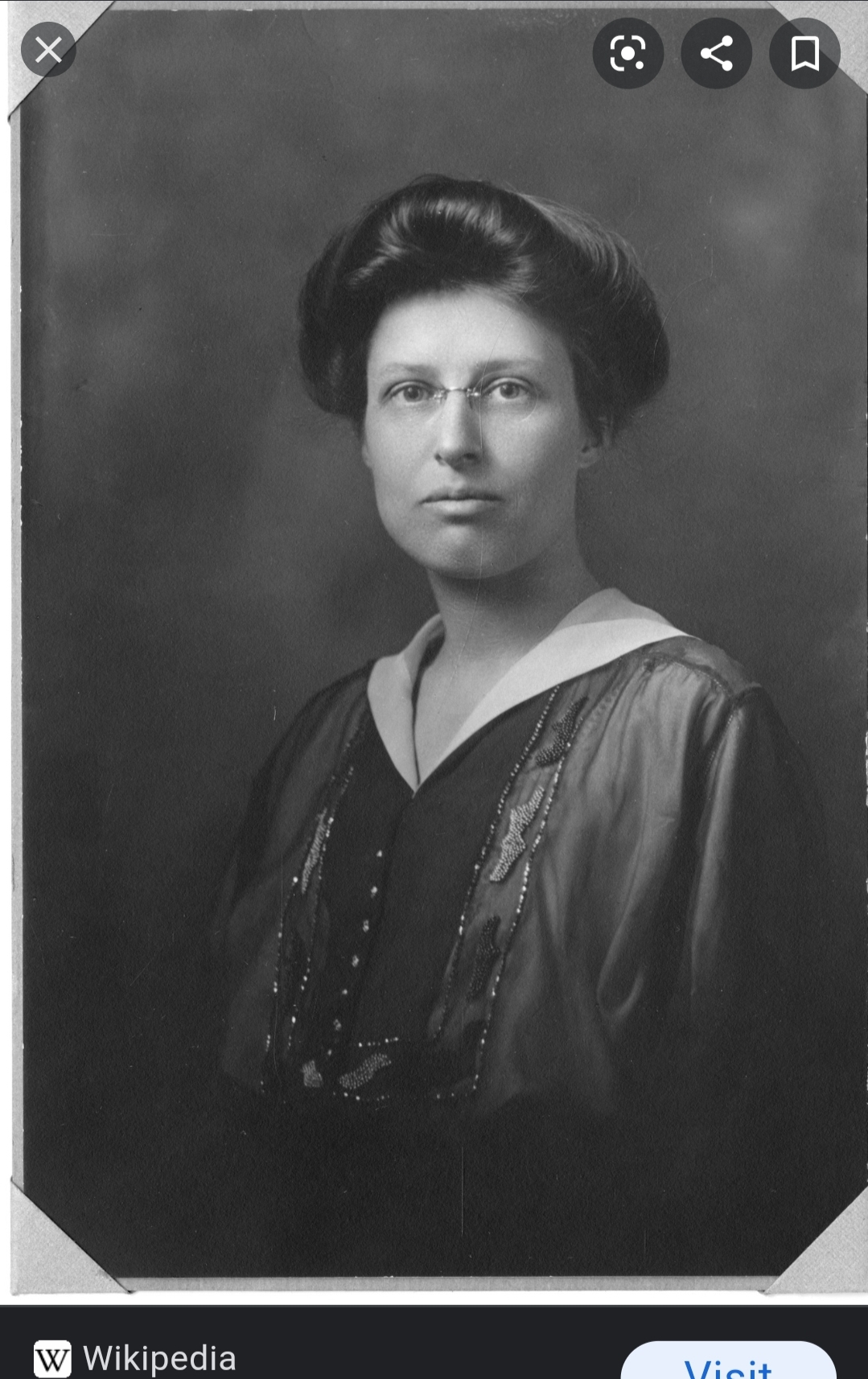
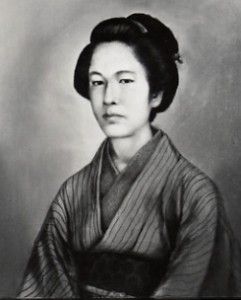
1023) Margaret Harwood

Courtesy of Wikipedia

1023: Margaret Harwood

The First Female Director of the Maria Mitchell Observatory

Born: 19 March 1885, Littleton, Massachusetts, United States of America

Died: 6 February 1979, Boston, Massachusetts, United States of America

Margaret was an astronomer focused on photometry (measuring variation in the light of stars and asteroids--most notably the asteroid Eros).

Margaret was the first woman in the United States to serve as director of an independent astronomical observatory. Beginning in 1961, Margaret served as director of the Maria Mitchell Observatory for forty-one years.

Margaret enrolled at Radcliffe College in 1903. Soon after, she began volunteering at the Harvard Observatory, where she became friends with Annie Jump Cannon, Henrietta Swan Leavitt, and Edward Pickering. After graduating in 1907, Margaret began working at the observatory as well as teaching classes at local schools to supplement her meagre income from the observatory.

Beginning in 1912, Margaret was awarded an astronomy fellowship by the Maria Mitchell Association. She was given the opportunity to run the small museum and library attached to the observatory and gave a series of lectures on astronomy. The Fellowship was supposed to be granted to a new female astronomer every year, but Margaret made such an impression on the association her fellowship was renewed in 1913 and again in 1914.

In 1915, Margaret was once again granted the $1,000 that went along with the Fellowship, but was given free reign to use her time as she pleased. Margaret traveled across the country and began working on earning a master’s degree in astronomy in California. While traveling, Margaret received an offer from Wellesley College to teach astronomy on their campus after finishing her degree. The Maria Mitchell Fellowship learned of this offer and decided they couldn’t lose Margaret. They not only matched Wellesley’s offer; they also gave Margaret the position of director of their observatory. As previously stated, this made Margaret the first woman to direct an observatory in the United States—and she was only thirty years old.

Margaret continued her work with the Harvard Observatory as well and became a kind of link between the two-star charting groups. Margaret was also given the opportunity to travel to Peru to further her studies there for a time. During her lifetime, she was the only female astronomer to have photographed three different solar eclipses.

After World War I came to an end, Margaret volunteered with the Red Cross’s Home Service. During World War II, Margaret taught the US Coast Guard different navigational techniques as well as teaching classes at MIT.

Margaret was also a member of the Royal Astronomical Society in London and the American Astronomical Society as well.

Margaret retired from the Maria Mitchell Observatory in 1957, and three years later a trio of astronomers named the asteroid they had just discovered Harwood in Margaret’s honor.

She passed away at the age of ninety-four. Margaret never married or had children of her own.

Badges Earned:

Find a Grave Marked

Located In My Personal Library:

The Glass Universe: How the Ladies of the Harvard Observatory Took the Measure of the Stars by Dava Sobel

Sources:

https://www.lindahall.org/margaret-harwood/

https://www.wickedlocal.com/article/20120410/NEWS/304109549

https://www.aavso.org/sites/default/files/jaavso/j305.pdf

https://www.si.edu/object/margaret-harwood-1885-1979%3Asiris_arc_297394

https://www.findagrave.com/memorial/19062779/margaret-harwood

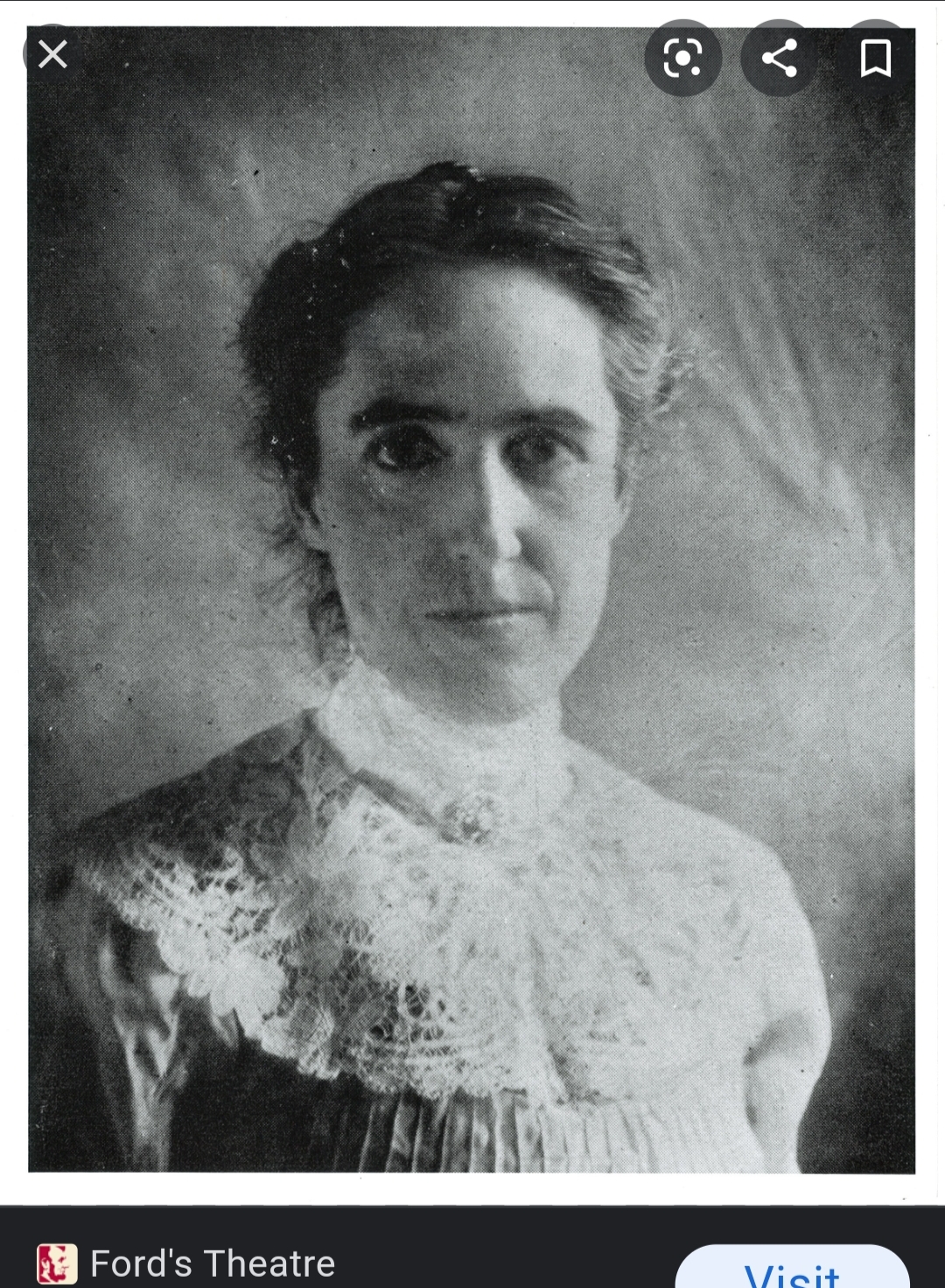
1022) Henrietta Swan Leavitt

Courtesy of Ford's Theatre

1022: Henrietta Swan Leavitt

The Woman Who Discovered How to Measure the Universe

Born: 4 July 1868, Lancaster, Massachusetts, United States of America

Died: 12 December 1921, Cambridge, Massachusetts, United States of America

She is most known for discovering the relation between Luminosity and Period in Cepheid Variables. Don’t worry if that makes no sense to you, I’ll try to explain it better in a minute.

Henrietta was one of seven children, two of whom died in infancy. She suffered from ill health throughout her relatively short life (she died when she was fifty-three), and Henrietta never married or had children of her own. She was devoutly religious; her father was a minister for the Congressional Church, and Henrietta kept up her faith throughout her life.

Henrietta studied at Oberlin College for two years before transferring to what would soon become Radcliffe College, where she graduated in 1892. Soon after, Henrietta fell ill and was left with permanent hearing damage as a result (she would slowly grow to become almost completely deaf over time) as well as suffering from eye issues and other illnesses. Henrietta never let any of this hold her back.

In 1895, Henrietta took on a position at the Harvard Observatory as a star cataloguer (in a purely voluntary position at first). She became a permanent staff member in 1902. While working at the observatory, Henrietta was employed alongside Williamina PS Fleming and Annie Jump Cannon.

Henrietta was so good at her job; she was promoted to Head of the Photographic Stellar Photometry department in 1907. Since all of this is way over my head, I’ll give credit to Henrietta’s Encyclopedic Britannica article who described her new position at the Observatory thusly:

A new phase of the work began in 1907 with Pickering’s ambitious plan to ascertain photographically standardized values for stellar magnitudes. The vastly increased accuracy permitted by photographic techniques, which unlike the subjective eye were not misled by the different colours of the stars, depended upon the establishment of a basic sequence of standard magnitudes for comparison. The problem was given to Leavitt, who began with a sequence of 46 stars in the vicinity of the north celestial pole. Devising new methods of analysis, she determined their magnitudes and then those of a much larger sample in the same region, extending the scale of standard brightnesses down to the 21st magnitude. These standards were published in 1912 and 1917.

She then established secondary standard sequences of from 15 to 22 reference stars in each of 48 selected “Harvard Standard Regions” of the sky, using photographs supplied by observatories around the world. Her North Polar Sequence was adopted for the Astrographic Map of the Sky, an international project undertaken in 1913, and by the time of her death she had completely determined magnitudes for stars in 108 areas of the sky. Her system remained in general use until improved technology made possible photoelectrical measurements of far greater accuracy.

Henrietta discovered around 2,400 variable stars (meaning they went from dim to bright and back quickly—and by quickly, I mean within a few days or weeks) which was half of all known variable stars until 1930, several years after her death. Her most important achievement came with her work of the aforementioned Cepheid Variables. Henrietta discovered that the period of time in which the Cepheid’s brightness changed was a regular period of time and determined by the star’s luminosity itself. This discovery led to author George Johnson (author of Mrs. Leavitt’s Stars) to describe Henrietta as “the woman who discovered how to measure the universe".

Henrietta’s work allowed for more well-known astronomers like Hubble and Shapley to determine distances between these Cepheid stars, as well as galaxies and clusters in which the Cepheids were observed.

In 1924, Edwin Hubble used Henrietta’s work to measure the distance to the great nebula located within Andromeda; the first time a distance was measured outside of the Milky Way Galaxy.

Sadly, according to one source Henrietta was not given proper credit for any of this work until many years later. In actuality, Professor Pickering, the man in charge of the Harvard Observatory, took credit for Henrietta’s work because she simply worked for him.

Henrietta worked at the Harvard Observatory until she died from cancer. According to one source, several years after her death, she was proposed for receiving a nomination for a Nobel Prize. Sadly, the Nobel is not awarded to those who have already died, and so the nomination never moved beyond the realm of possibility.

Badges Earned:

Find a Grave Marked

Located In My Personal Library:

The Glass Universe: How the Ladies of the Harvard Observatory Took the Measure of the Stars by Dava Sobel

Who Knew? Women in History by Sarah Herman

Sources:

https://www.britannica.com/biography/Henrietta-Swan-Leavitt

https://www.aavso.org/henrietta-leavitt-%E2%80%93-celebrating-forgotten-astronomer

https://www.famousscientists.org/henrietta-swan-leavitt/

https://www.findagrave.com/memorial/5852246/henrietta-swan-leavitt

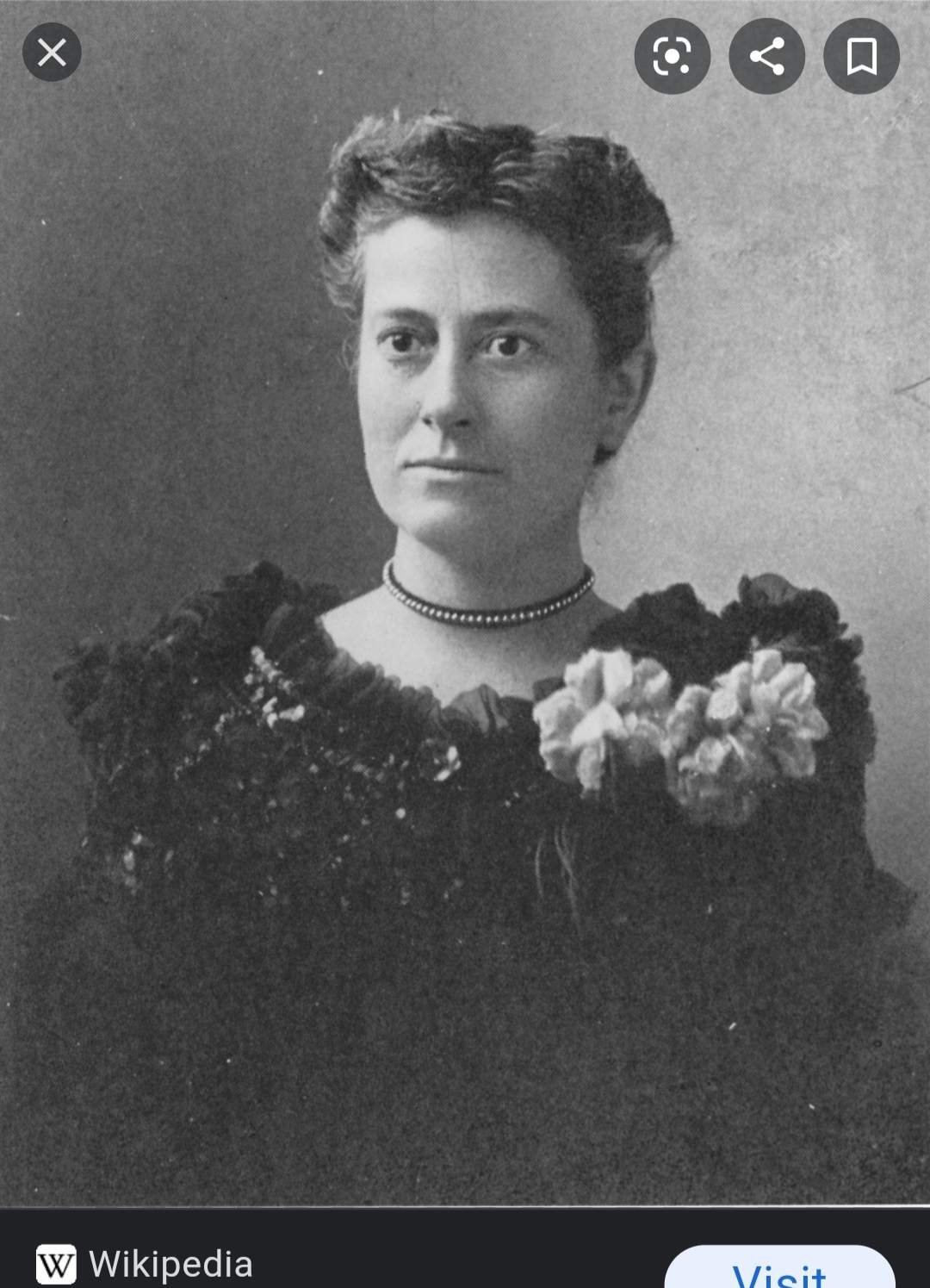
1021) Williamina Fleming

Courtesy of Wikipedia

“While we cannot maintain that in everything woman is man’s equal, yet in many things her patience, perseverance, and method make her his superior.”

“Labor honestly, conscientiously, and steadfastly, and recognition and success must crown your efforts in the end.”

1021: Williamina Paton Stevens Fleming

She Literally Did "Rewrite the Stars"

Born: 15 May 1857, Dundee, Scotland, United Kingdom

Died: 21 May 1911, Boston, Massachusetts, United States of America

Williamina was one of nine children, and her father died when she was only seven years old. When she was fourteen, Williamina left school in order to become a teacher herself.

Williamina married a widower when she was twenty years old and he was thirty-six. The couple moved to the United States together, and thereafter Williamina’s husband unceremoniously dumped her while she was still pregnant with their son. In order to support herself, Williamina took a job as a maid working for Professor Edward Pickering of Harvard University (she also named her son after her new boss, most likely out of gratitude and respect both).

Professor Pickering worked in observatory at the esteemed university, however, he had a problem. Professor Pickering was tired of his useless assistants in the observatory, all of whom also happened to be male. According to legend, Pickering angrily declared one day his maid, in this case Williamina, could do a better job.

The rest, as they say, is history.

Beginning in 1881, Professor Pickering hired Williamina to do clerical work for him in the observatory. This included examining plate photographs of stars to understand the breakdown of their spectra. Soon after, Williamina came up with her now-famous method for categorizing stars. Each star identified was given a letter classification according to how much hydrogen was observed in the star itself. Annie Jump Cannon later simplified the system by assigning the classification based on the recorded temperature of the star in question.

In just nine years, Williamina would catalog over 10,000 individual stars. She also discovered 310 variable stars, 10 novae, and 59 gaseous nebulae; all of which is incredibly impressive even for someone like me who has no idea what any of that means!

In 1888, alongside Professor Pickering’s brother, William Henry Pickering, Williamina discovered the Horsehead Nebula. William took the photo while Williamina described the nebula itself. Unfortunately, their discovery was soon attributed to Professor Pickering in publications because Williamina’s name entirely was removed and William was simply named as “Pickering.” It would take years before either of them received proper credit for their work.

After several years working at the Harvard Observatory, Williamina’s role was expanded and she was put in charge of an assortment of female astronomers who worked on sorting and cataloguing the stars, completing astronomical calculations, and editing the observatory’s various published works. Throughout her career, Williamina advocated for more women in the field of astronomy, as well as advocating for better wages for women astronomers.

In 1899, Williamina was awarded the title “Curator of Astronomical Photographs.” Seven years later, she was honored again by becoming the first American woman (by adoption in any case) to be awarded membership in the Royal Astronomical Society in London. She was also soon awarded an honorary fellowship in astronomy at Wellesley College. Williamina published two books on her work before she died from pneumonia.

Badges Earned:

Find a Grave Marked

Located In My Personal Library:

The Glass Universe: How the Ladies of the Harvard Observatory Took the Measure of the Stars by Dava Sobel

Who Knew? Women in History by Sarah Herman

Hypatia’s Heritage by Margaret Alic

Sources:

https://www.nls.uk/learning-zone/science-and-technology/women-scientists/williamina-fleming

https://www.britannica.com/biography/Williamina-Paton-Stevens-Fleming

https://harvardmagazine.com/2017/01/williamina-fleming

https://scientificwomen.net/women/fleming-williamina-37

https://www.sheisanastronomer.org/history/williamina-fleming

https://www.findagrave.com/memorial/58437055/williamina-paton-fleming

1020) Sumiko Iwamuro

Courtesy of Time Out

"I'd be perfectly happy to die in the DJ booth – or the kitchen."

1020: Sumiko Iwamuro

Japan’s DJ Grandma

Born: c.1935, Tokyo, Japan

Also Known As: DJ Sumirock

Sumiko works at a family restaurant during the day and moonlights as a DJ in a local club a few nights a week. This makes her the oldest actively working DJ in the world.

She has been working in the restaurant since she was a teenager when it belonged to her father. The restaurant focuses on dumplings and Sumiko runs it alongside her brother.

Sumiko went to DJ school for a time to learn to do it right after her husband died.

She is so well known for her DJ skills she even traveled to New Zealand for a gig there in 2018. Sadly, there seems to be little else known about Sumiko online, or at least readily available in the English language. None of these articles that talk about Sumiko date after the Covid 19 pandemic, so we can only hope she is still out there, maybe spinning the tables from the comfort of her own home instead.

Sources:

https://www.timeout.com/tokyo/news/meet-sumiko-iwamuro-the-eternal-dj-011218

https://english.newsnationtv.com/offbeat/news/granny-sumiko-iwamuro-from-tokyo-makes-dumplings-by-the-day-and-plays-sickest-beats-as-dj-at-night-220752.html

https://www.spotjapan.ph/things-to-do/678/meet-the-cool-club-dj-who-is-an-82-year-old-dumpling-maker-by-day-a00184-20190601

https://nicejapan.co.nz/%E6%9C%AA%E5%88%86%E9%A1%9E/introducing-82-year-old-sumiko-iwamuro-dumpling-chef-by-day-superstar-dj-by-night/

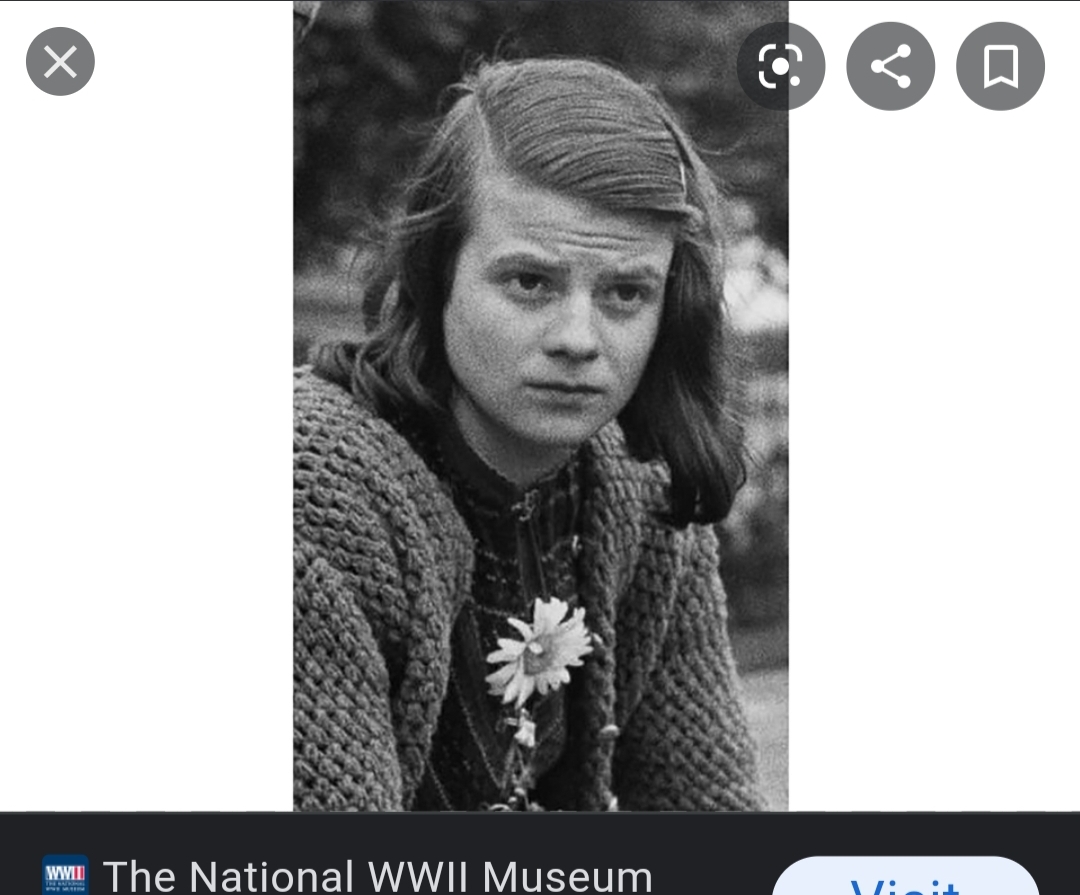
1019) Sophie Scholl

Courtesy of the National World War II Museum

“I am, now as before, of the opinion that I did the best that I could do for my nation. I therefore do not regret my conduct and will bear the consequences that result from my conduct.”

1019: Sophie Scholl

Activist and Member of the White Rose Resistance Group

Born: 9 May 1921, Forchtenberg, Baden-Württemberg, Germany

Died: 22 February 1943, Munich, Bavaria, Germany

The White Rose was a non-violent Anti-Nazi organization, organized and centered around the University of Munich.

Sophie was the fourth of six children in her family. As a child, Sophie watched as her father served as mayor of her hometown, and later as a tax consultant and auditor for the state. When she was a young teenager, the Nazis first rose to power, and Sophie, like most children and young adults in Germany, was excited by the prospect. She joined the League of German Girls and began to rise in the organization almost immediately. Sophie’s father however, was not pleased with his children’s involvement in Nazi youth organizations, and he wasn’t afraid to tell them so.

Sophie and her brother Hans were also interested in other activities, including nature organizations. They first began to see a disconnect with the Nazi regime after these other groups were banned in 1936. The following year, Sophie’s brother Hans and several other siblings were arrested after the government learned they had continued to participate in now banned organizations. Sophie’s distaste for the Nazis continued to grow, and when war was declared in 1939, several of her older brothers were sent off to fight.

In 1940, Sophie graduated high school and began training to become a kindergarten teacher. She wanted to study both biology and philosophy someday. In 1941, Sophie was informed she would have to work in the RAD or National Labor Service. She had hoped her training to be a teacher could be substituted for labor service, but this request was denied. Sophie was supremely unhappy in the RAD, both with the monotony of her life and with the fact her boyfriend was now fighting on the front lines as well. She spent six months with the RAD as a nursery teacher.

In May of 1942, Sophie was able to move to Munich to begin studying philosophy at the University. By then, her brother Hans was also attending classes there as a medical student. Hans and several friends had already started planning ways to thwart the Nazis, and Sophie was eager to join in. Hans and his friends had served on the Eastern front and had seen war crimes against Russians, Poles, and others committed before their own eyes, and they weren’t about to stand aside and let it continue.

In June that same year, 1942, Hans and his friends began writing and distributing leaflets with information about the Nazis and their horrific crimes. Four more leaflets were written by the fall semester. At first Sophie had simply read them and agreed with what the letter writers were saying, but once she learned the group was led by her brother, Sophie demanded to join. She did not help author the leaflets, but she did help ensure the maximum number of people possible read them.

The group was made up of several students as well as one professor at the University. At first, they distributed the leaflets through the mail, handwriting the addresses on each envelope. Eventually, their network spread all across Germany and even into Vienna.

By January 1943, The White Rose was hopeful that change was coming to Germany. The Nazis had been defeated at the fierce battle for Stalingrad and morale was faltering across the country. Members of the group became emboldened to pass leaflets out in person, and even graffitied lines like “Down with Hitler” on walls around the city of Munich. On the eighteenth of February, Sophie, Hans, and other members of the group distributed their sixth and final leaflet across campus. Sadly, Sophie was seen pushing a large stack of copies of the leaflet off a stair railing to spread them around further. A janitor spotted her and immediately reported Sophie and her brother.

Sophie and Hans were arrested, and soon after a third member named Christoph was also arrested after Nazis found the draft for the seventh leaflet in Hans’s bag. Though the three initially arrested would take credit for all of the activities pertaining to the White Rose, three others were also eventually arrested, and all six were executed after facing sham trials by the so-called “People’s Court.”

After Sophie, Hans, and Christoph were found guilty in a joint trial, they were brought to a prison to await their execution in a few hours. Hans and Sophie’s parents were allowed a final visit with their children, however, according to the Jewish Virtual Library, nobody came to visit Christoph. According to the JVL, Christoph’s wife was in hospital, having just given birth to their third child, and no one in his family even knew he was on trial, much less facing certain death. Hans was twenty-four, Sophie twenty-one, and Christoph twenty-two.

After their deaths, the sixth leaflet was smuggled out of Germany to England where it was quickly copied. Over the summer of 1943 many copies were air dropped over Germany. The New York Times and BBC covered the actions of the White Rose in Munich, and their story spread. Today, Sophie, Hans, and the other members of the White Rose are memorialized and remembered for the heroes that they truly were.

Badges Earned:

Find a Grave Marked

Located In My Personal Library:

Secret Heroes of World War II by Eric Chaline

Who Knew? Women in History by Sarah Herman

Sources:

https://www.nationalww2museum.org/war/articles/sophie-scholl-and-white-rose

https://www.jewishvirtuallibrary.org/the-white-rose-a-lesson-in-dissent

http://www.holocaustresearchproject.org/revolt/scholl.html

https://www.findagrave.com/memorial/20682/sophie-magdalena-scholl

1018) Nakano Takeko

Courtesy of Yamato Magazine

1018: Nakano Takeko

Female Samurai who Led a Squadron of Other Female Samurai

Born: April 1847, Edo, Japan (Present-day Tokyo, Japan)

Died: 10 October 1868, Near Aizu, Japan

Takeko was born to a family from Aizu, but was adopted at a young age by a master swordsman. Takeko was trained in martial arts and became an instructor herself, allowing her to become a female samurai.

Takeko died in the Boshin War (a civil war between the western backed Meiji government versus the old ways or Shogunate in Japan—if you want to see a whitewashed version of these events check out the movie The Last Samurai starring Tom Cruise). The battle was very bloody, and even after the Shogun surrendered his followers refused to. The war dragged on for another year after the Shogun’s surrender.

Aizu—the region Takeko was from—refused to surrender until the very end, with most women taking their own lives after killing their children instead of surrendering. Around twenty or thirty of the women who refused to surrender teamed up to form a squadron, or Joshitai. These women were led by the Nakano family; Takeko, her mother, and her younger sister.

At the time of the final battle, Kouko was in her forties, Takeko was about twenty-two, and Yuko was only sixteen or seventeen. The female samurai joined up with some of the men still fighting, and the battle dragged on. On the night before the Joshitai were to attack Yanagi bridge, Takeko and her mother Kouko debated on how to deal with Yuko. Takeko and her mother were rightfully afraid for Yuko’s future, and they didn’t want her to participate in the battle. They talked of placing her in the country with another family, and then wrestled with what might happen should she be discovered. The mother and daughter also spoke of how to avoid being captured and taken alive.

In the end, Kouko and Takeko decided to bring Yuko with them. As the day dawned, Takeko raced forward onto the bridge and was said to have killed five or six enemy soldiers by herself by eyewitnesses. The women warriors from Aizu were equipped with swords and long polearms, while the imperial soldiers had guns and other advanced weaponry. But this didn’t stop Takeko from taking down several soldiers all on her own. However, Takeko was not fated to survive the day. After being wounded in battle, Takeko called her sister to her side. With her dying breath, Takeko asked Yuko for one final gift—cut off her head to stop their enemies from using her body as a trophy.

Yuko tried to comply, but was too weak to finish the job herself. Yuko eventually received help, and Takeko’s final wish came true. Her body was never used as a trophy, and today the place where her head is buried is a shrine in Japan.

Aizu fell after another week of intense fighting. When the soldiers surrendered, more than one tenth of those who gave themselves up were women. Sadly, the fall of Aizu meant the end for the rebellion, and the age of the samurai ended with it.

Yuko survived the battle and took refuge in a temple, the same temple where she buried her sister’s head.

Badges Earned:

Find a Grave Marked

Rejected Princess

Sources:

https://www.rejectedprincesses.com/princesses/takeko-nakano

https://yamatomagazine.home.blog/2019/07/13/warrior-women-nakano-takeko/

http://thefemalesoldier.com/blog/nakano-takeko

https://www.badassoftheweek.com/nakano

https://www.smithsonianchannel.com/details/show/3420808

https://www.findagrave.com/memorial/194301723/takeko-nakano

1017) Sheila Abdus-Salaam

Courtesy of the New York Times

1017: Sheila Abdus-Salaam

Associate Judge for the New York Court of Appeals

Born: 14 March 1952, Washington DC, United States of America

Died: 12 April 2017, Harlem, New York, United States of America

Sheila was the first African American Woman to serve on New York’s highest court (the Court of Appeals). According to some reports, Sheila was also the first Muslim to serve as a judge on the US Court of Appeals, but this claim has been both disputed and confirmed by various sources. Sheila’s last name, Abdus-Salaam, was her first husband’s last name, and she retained it throughout her professional career despite being married four times throughout her life.

Sheila graduated with her Juris Doctorate from Columbia Law School in 1977. She spent the next forty years of her life involved in the law community, rising from a simple law student all the way to New York’s highest bench.

According to her website, “Among [Sheila’s] many memorable legal opinions was her 2016 Court of Appeals decision in Matter of Brooke S.B. vs. Elizabeth A.C., which expanded the legal definition of what it means to be a parent, effectively overturning a previous ruling in which the court had held that the non-biological parent in a same-sex couple relationship had no standing to seek custody or visitation rights following a breakup.”

Sadly, despite all of her accomplishments, Sheila chose to end her life by walking into the Hudson River and drowning. She was married at the time and was a stepmother. The explanation of suicide was given by the New York City medical examiner’s office. In a letter on Sheila’s personal website dating from 2019, her husband was reportedly still seeking more information from the medical examiner’s office because he does not believe his wife would kill herself. I hope answers are eventually given to him and that Sheila’s friends and loved ones find peace somehow.

Rest in peace, Sheila. Your work will never be forgotten.

Badges Earned:

Find a Grave Marked

Sources:

https://www.nytimes.com/2017/07/26/nyregion/judge-sheila-abdus-salaam-suicide.html

https://judgeabdussalaam.org/

https://www.nycourts.gov/ctapps/jasalaam.htm

https://www.findagrave.com/memorial/178367155/sheila-abdus-salaam

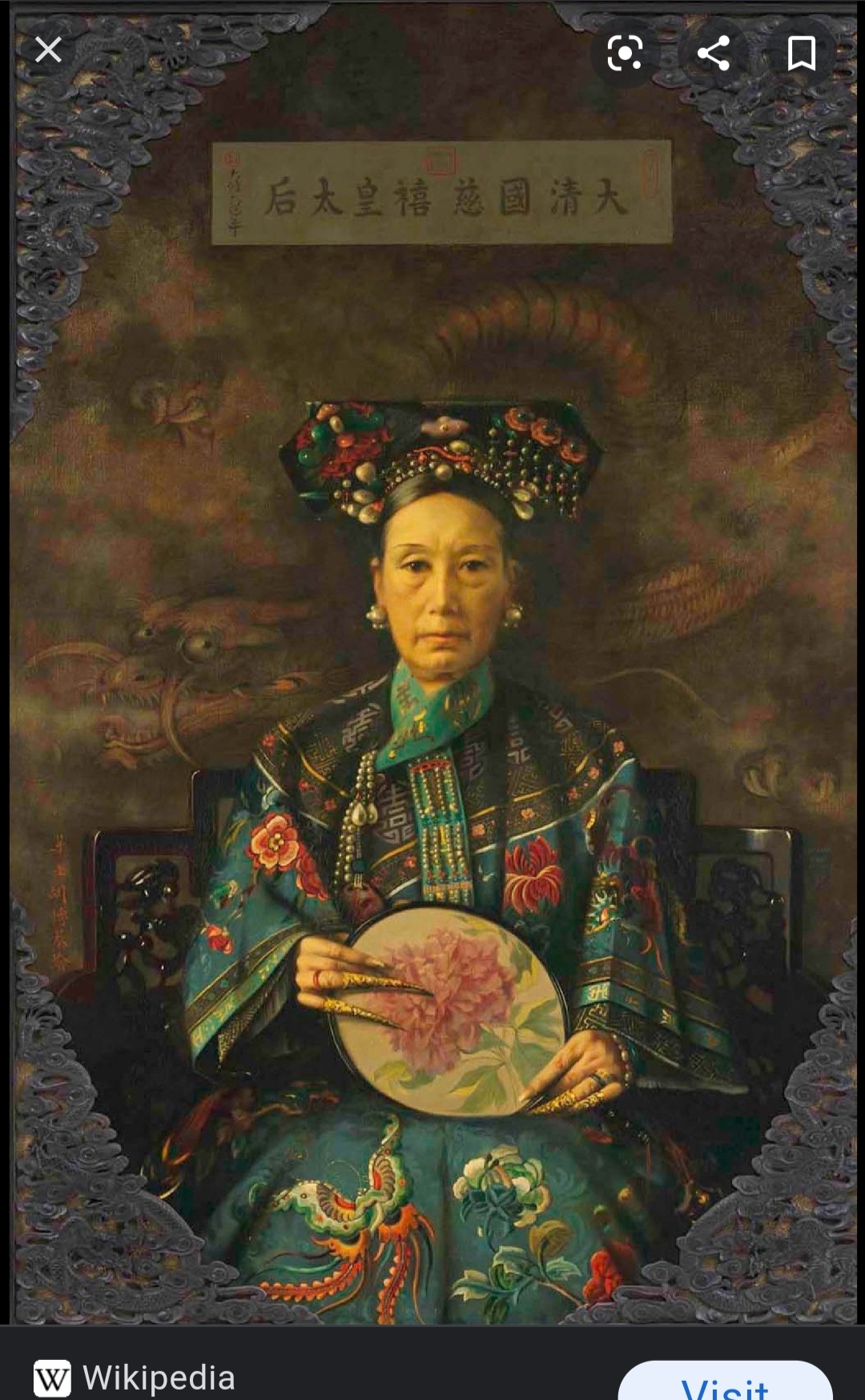
1016) Cixi

Courtesy of Wikipedia

"Whoever makes me unhappy for a day, I will make suffer a lifetime."

Photo sourced from "Empress Dowager Cixi" by Jung Chang

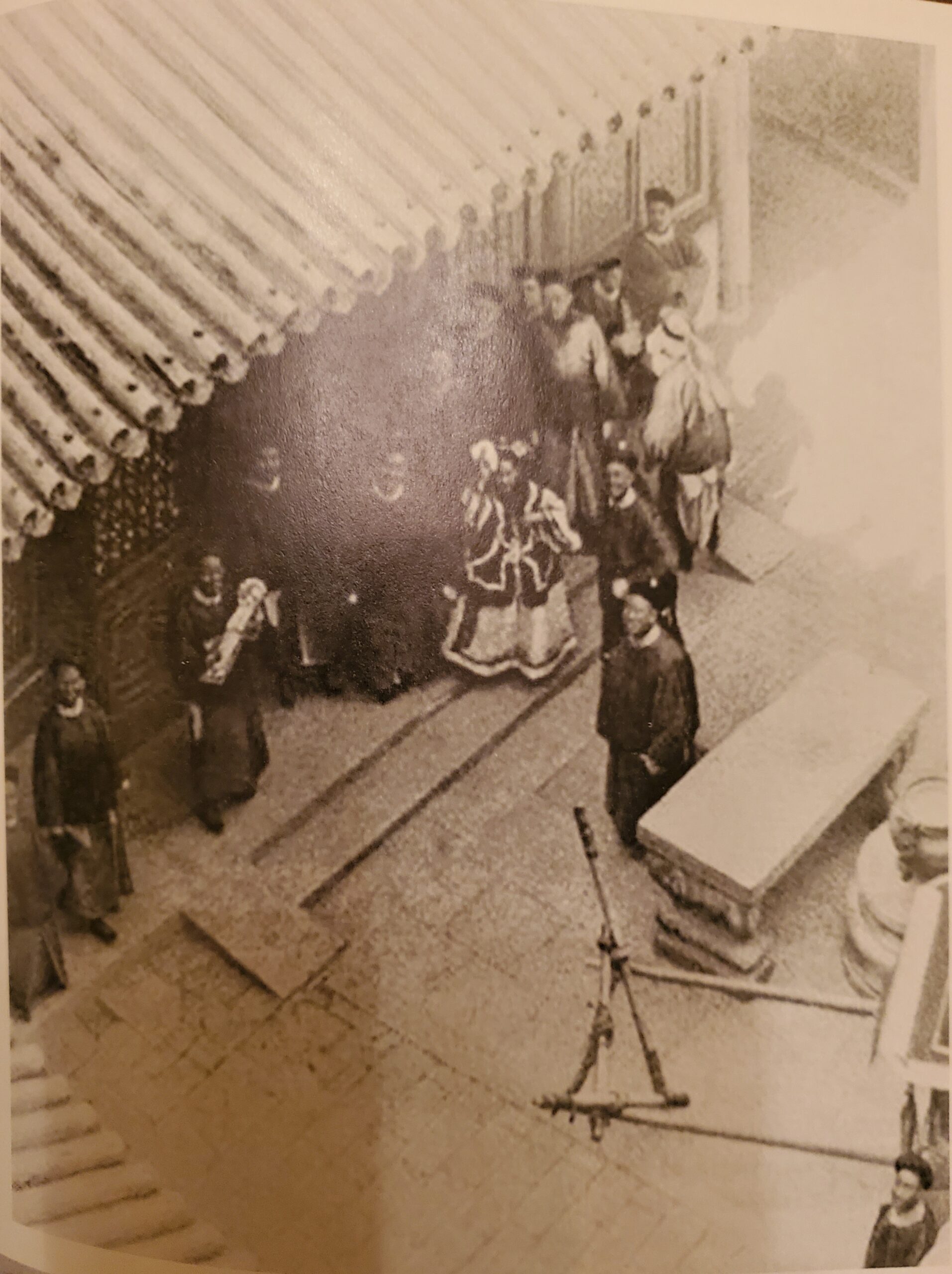
The Empress's triumphant return, photo sourced from Empress Dowager Cixi by Jung Chang

1016: Empress Dowager Cixi

The Empress who Dragged China into the Modern World

Born: 29 November 1835, Beijing, Imperial China (Present-day Beijing, People’s Republic of China)

Died: 15 November 1908, Zhongnanhai Imperial City, Imperial China (Present-day Zhongnanhai Imperial City, People's Republic of China)

Cixi was the consort of Emperor Xianfeng, mother of Emperor Tongzhi, and adoptive mother of Emperor Guangxu.

Cixi ruled over the Manchu Imperial House of the Qing Dynasty.

Cixi was born into a wealthy family and was the oldest daughter. Unfortunately for her family, they were subject to a crippling tax by the Imperial government and struggled for many years because of it. Some historians even say Cixi’s father sought her advice and counsel to help the family through their harder periods. Cixi was only semi-literate, but this isn’t surprising given that A) she was a girl, and B) the Chinese language back then and today is one of the hardest in the world to learn to read and write. She wasn’t stupid by any means, but she was far from a renowned Confucian scholar.

Because she was Manchu, the ethnic minority, and not Han, the ethnic majority, Cixi did not have to bind her feet in the "traditional" lotus foot.

Today, Cixi’s birth name has been lost to history (though some sources like Smithsonian claim her birth name was Yehenara), but what we do know is that she was brought to the Forbidden City as a teenager (around the age of sixteen) and selected to be a member of the emperor’s harem. Cixi was not one of the higher-ranking concubines, and stayed near the bottom of the ladder until she gave birth to the Emperor’s son, Tongzhi.

When Cixi’s son was still a young child, the emperor, Xianfeng, died. Xianfeng’s short rule had been blighted by a series of worsening crises for Imperial China. First, he had to deal with the brutal Taiping Rebellion, which left a third of the country under rebel control. Then Xianfeng watched as Britain and France invaded his country as part of the Second Opium War. In short, Xianfeng’s reign was short, disastrous (though this was only partially his fault, to be fair), and his death left China in an even bigger mess than he had first found it when he became emperor a decade before.

Before the emperor’s death, he had written up a will in which he stated for a select group of eight men from the court to rule over the country on behalf of his five-year-old son, until Tongzhi could reach his majority and rule in his own right.

By the time Xianfeng died, Cixi had become friends with Empress Zhen (also spelled Ci’an). In the Chinese imperial court system, one of the women selected for the harem was chosen to serve as the Emperor’s wife and Empress. In Xianfeng’s case, that woman was Zhen. Zhen had one daughter but no biological son. However, the Chinese Imperial system dictated that Cixi’s son, Tongzhi, was legally the empress’s son and not Cixi’s, despite the fact that Cixi had given birth to the child.

With Xianfeng dead, Cixi and Zhen decided they didn’t want to be forced into an early retirement. They also didn’t trust the group of men the emperor had selected to rule the empire on his son’s behalf. Working together, Cixi and Zhen managed to convince the court that the two of them should rule as equal ranking Empress Dowagers, serving as regent for Tongzhi until he was old enough to rule in his own right. They did this with the help and support of two of Xianfeng’s brothers, Prince Gong (who wanted to appease the west and stop the war), and Chun, who had married one of Cixi’s younger sisters.

Once Cixi and Zhen were in control, they ordered one of the eight men to be executed and two others to commit suicide. The other five men went free. With their power secure, Cixi changed her name (she had previously taken on the name Yi when entering court life) to Cixi “kindly and joyous” while Zhen changed her name to Ci’an “kindly and serene.” Today, most historians refer to the second Empress Dowager as either Zhen or Ci’an, somewhat interchangeably, and I will continue to use Zhen to try and make this less confusing to those of you reading this who aren’t ultra-familiar with Chinese history.

Cixi would rule imperial China, almost uninterrupted, from 1861 to 1908. Today, most people recognize the United Kingdom’s Queen Victoria (By the way, between 1861 and 1901, the two female rulers, Victoria and Cixi, effectively governed half of the world—now that’s a fun fact!) and remember Victoria's long reign, so why is the same not true for Empress Dowager Cixi, who also ruled for decades and managed to use her power for mostly good? Its true that Cixi never ruled in her own right. That title falls solely to Empress Wu Zetian, who ruled China on her own over one thousand years before Cixi. But even though Cixi always ruled as either regent or co-ruler alongside a man (first her biological son Tongzhi, and then her adopted son Guangxu), she still managed to oversee China’s modernization, from a sleepy farming society to a technological powerhouse.

Cixi is most widely credited with helping modernize China by bringing in the first railroad (though she took twenty years to finish building the line because she didn’t want to interrupt the countryside in which ancestral tombs had been built) and instituting electricity amongst other achievements. Cixi was also cautious however. She opposed the building of textile factories because she worried they would take jobs away from women who had been doing jobs by hand for centuries. Cixi also managed to oversee the creation of China’s first modern navy, helped stabilize the economy and eliminate the Taiping Rebels once and for all.

Two of the major shakeups from her reign to be noted were the decrees of 1902, which legalized marriages between Han and Manchu and also banned the foot binding practice which had been going on for centuries. Another improvement was the 1906 announcement that Cixi would make China a constitutional monarchy with elections. Unfortunately, her dream did not survive long, but more on that later.

Because Cixi suffered from the unfortunate birth defect of having two X chromosomes, she had to rule a bit differently than a man. For one thing, Cixi was never allowed to enter the entire front section of the imperial palace structure, aka the Forbidden City. She always had to enter through the back half of the complex and never set foot in the front portion, which was reserved for the Emperor. For another thing, Cixi had to speak with her ministers from behind a screen. Men were not allowed to see the Empresses (Cixi and Zhen, when Zhen was still around), and so for the vast majority of her reign, Cixi spoke from behind a screen and the ministers had to reply through that same screen.

In 1873, Tongzhi came of age and began to rule as emperor in his own right. By then, Empress Zhen and Cixi were forced into retirement, just like they’d been trying to avoid when Xianfeng died. However, two years later, Tongzhi died from smallpox. He had left no heir, and his empress, Xiaozheyi, was encouraged to starve herself to death by her birth family (I wish I was kidding about that).

With Tongzhi dead, the Empire was in crisis mode. Cixi decided to kill two birds with one stone, and swept back into power as Empress Dowager, serving as regent to her newly adopted son, Guangxu. Who was Guangxu? Oh, the three-year-old son of her sister and brother-in-law, Prince Chun. Remember him from earlier? In the years since Chun had helped Cixi secure power, he had turned against her for different political reasons. Now, Cixi took away his eldest son and forced him to retire, because Chun could not serve in the government of which his own son was the new Emperor. Think of it as a conflict-of-interest type thing. In any case, Cixi was back, the future of the dynasty was (hopefully) secure, and things could get back on track after the two-year lapse of nothing happening because Tongzhi couldn’t be bothered to actually rule most of the time.

A few years after Guangxu ascended the throne, Empress Zhen died. Zhen’s death was a serious blow to Cixi, who had come to view Zhen like a sister, an equal partner. With Zhen gone, Cixi was left with the sole reigns of power over Guangxu, who was still an impressionable child at the time. Unfortunately, the cracks in their relationship had already started to show by then. Zhen was usually able to bring Cixi and Guangxu back together after a time, but with her dead, Cixi and Guangxu were headed down a path of irreconcilable differences.

In 1889, Guangxu took over as sole ruler of China. Once again, Cixi was pushed back into retirement. However, Guangxu had been raised to be the perfect Confucian scholar, and this meant he opposed any and all things western, including most of Cixi’s modernization efforts. In 1895, after Guangxu had allowed the navy to slip into a shell of its former self, the empire was soundly defeated in a war with Japan. The crisis reached a point that the government and court brought Cixi back, knowing if they had any chance of living another day, they needed her wisdom and wit to save the empire.

Cixi retained control even after the crisis averted, and the tension between her and Guangxu continued to grow worse and worse. In 1898, a plot was uncovered to assassinate Cixi. The plot involved the emperor. If this knowledge came to the public forefront, the empire could be ruined. Guangxu was placed under house arrest, and ruled simply as a puppet while Cixi controlled the strings.

In 1901, Cixi and Guangxu were forced to flee the Forbidden City with the outbreak of the Boxer Rebellion. For over a year, Cixi ruled from a safe house outside Beijing. Once the Boxers were repelled, she returned to the Forbidden City triumphant. An iconic photo of Cixi dates from this time. A man on a rooftop shouted down to her. Cixi turned around and waved to the camera in one of the few, if not the only, photograph of her smiling. Cixi was an old woman by then, but she was still a bada** to say the least.

After her triumphant return, Cixi put into place the aforementioned reforms like allowing inter-ethnic marriages, banning foot binding, installing China’s first telegraph, and announcing China would become a constitutional monarchy, like the United Kingdom. Cixi also allowed for an expanded freedom of the Chinese press, something that would have been unheard of only a decade before. Cixi also fought to end brutal torture methods like Lingchi—death by a thousand cuts. Going even further, in 1907, the year before she died, Cixi also fought and saw the issuance of a decree that mandated women receive an education. This meant Chinese women saw scholarships to travel abroad to earn a higher degree for the first time, and other women were able to be educated at home thanks to multiple schools being opened across the country.

Despite all this success, Cixi was aware of her age, and knew the end was near. Guangxu had failed to have a legitimate heir in the years since becoming the emperor, meaning the throne had no clear path forward.

For obvious reasons, Cixi did not trust Guangxu or his ability to govern with her gone. Recent scientific studies have proven Cixi had him poisoned when she felt her own end approaching. Cixi died one day after Guangxu. Only one more emperor would rule after Cixi and Guangxu (Cixi’s grand-nephew), before he was forced to abdicate (the Emperor, named Puyi, was a child at the time and his mother and regent, Empress Longyu, signed the abdication documents), ending imperial China once and for all.

In 1928, Cixi’s tomb was bombed and damaged by the Kuomintang Army. Members of the army also stormed the tomb, tore open her sarcophagus, and pulled jewels off of Cixi’s corpse, including a large pearl from between her teeth. In 1949, the tomb was restored by the Communist government, and is a tourist attraction today. I highly doubt Cixi would have approved of the CCP, and not just because they turned her final resting place into a tourist trap.

Badges Earned:

Find a Grave Marked

Located In My Personal Library:

Empress Dowager Cixi: The Concubine who Launched Modern China by Jung Chang

Bad Days in History by Michael Farquhar

American Goddess at the Rape of Nanking: The Courage of Minnie Vautrin by Hua-Ling Hu

The Only Woman by Immy Humes

Pirate Women: The Princesses, Prostitutes, and Privateers Who Ruled the Seven Seas by Laura Sook Duncombe

Sources:

Empress Dowager Cixi: The Concubine who Launched Modern China by Jung Chang

https://www.nationalgeographic.com/history/magazine/2016/11-12/profiles-china-empress-dowager-cixi-emperor-guangxu/

https://www.si.edu/newsdesk/snapshot/cixi-last-empress-dowager-china

https://www.smithsonianmag.com/history/cixi-the-woman-behind-the-throne-22312071/

https://www.chinahighlights.com/travelguide/china-history/empress-cixi-facts.htm

https://www.findagrave.com/memorial/28149843/empress-dowager-cixi

1015) Catherine O’Leary

Courtesy of the Irish Times

1015: Catherine O’Leary

Had Her Life Ruined When People Blamed Her Cow for Starting the Great Chicago Fire

Born: March 1827, Ireland (Unknown whether Present-day Northern or Republic)

Died: 3 July 1895, Chicago, Illinois, United States of America

Yes, you’re reading that right. For over one hundred years now, Chicagoans have been blaming a poor hapless woman and her cow for burning down large swaths of the city and killing dozens of people. The only problem? None of its true.

There are no known images of Catherine O’Leary, at least none that survive today. As Smithsonian puts it, can you even blame her for turning away from the cameras?

Journalists made Catherine and her family’s lives hell after the fire. They called Catherine an assortment of colorful things and routinely showed up on the family’s doorstep. Catherine’s husband would send the dogs after the journalists and even throw bricks at them, but nothing deterred them! One story even says PT Barnum showed up and asked Catherine to join his circus (the story goes on to say Catherine chased him off with a broomstick!).

Catherine died twenty-four years after the fire. While the official cause was pneumonia, her neighbors reportedly claimed it was actually a broken heart. So how did Catherine, and her cow, become the sole party responsible for the deadliest days in Chicago history? And more importantly, why?

On the 8th of October, 1871, sparks began to shoot out of the O’Leary family barn. At the time, Catherine was sound asleep in the adjoining house. Unfortunately, the sparks soon turned to flames, and those flames were picked up and furthered by roaring winds. At some points, the fire was over one hundred feet high. The fire was finally put out on the morning of October 10th, when rain smothered the last of the surviving embers. In less than two days, three hundred people died, one hundred thousand were left homeless, and an estimated two hundred million dollars’ worth of property was damaged. No one argued where the fire had started; it was proven to have been sparked in the O’Leary Barn (though miraculously the family’s house was untouched). But how did it start, why, and how were Catherine and her cow blamed for the damage?

Catherine and her husband were both immigrants from Ireland. Her husband was a laborer while Catherine made a living by selling milk from her five cows’ door to door throughout the west side of Chicago. Catherine was illiterate and had several children (though I haven’t been able to find a number for exactly how many). Though the family was poor, Catherine and her husband made the decision to pay to have their children educated in the local Catholic church school, as surviving church records indicate. The O'Learys were poor, but they were surviving and thriving much better than they might have in their native Ireland.

Before the fire was even put out, children in the neighborhood began telling reporters the fire started when Catherine was milking her cows after dark (at least says Smithsonian, Irish Times says a reporter made the story up and later admitted he lied about the whole thing). As the story went, one of the cows was spooked by something, kicked over a kerosene lamp, and the fire started from there. The story spiraled from there, until the story took on another twist in the tale, alluding to Catherine’s ethnic heritage and status as an immigrant. The Chicago Times went so far as to say Catherine deliberately set the fire because of how native Chicagoans had treated her because she was from Ireland. The one thing all of these stories seem to forget is, it was miraculous that the O'Leary home was unharmed in the fire. Why would a poor woman deliberately light her barn, and possibly house, on fire and destroy everything she had? Because she didn't! Anyway...

After the fire was doused, the Chicago city government held an inquiry into what happened. Catherine testified at the hearing, and said she was in bed when her husband roused her by telling her the barn was on fire. Catherine went on to say a neighbor had held a party that night, and that other witnesses had seen a man going into her barn after nightfall. Another neighbor who lived across the street testified he saw the barn on fire and tried to free the cows, also telling Mr. O’Leary about the barn being on fire. The inquiry lasted nine days. They interviewed fifty people and went over one thousand pages of testimony; and in the end they decided the cause was…inconclusive. Catherine was found not responsible, but the public didn’t care. Even today people still smear her good name and state she was the sole reason for all that destruction and loss of life.

Catherine’s story doesn’t end after the inquiry though; not by a long shot. One of Catherine’s kids, Jim, was two years old at the time of the fire. Once he grew up, Jim became “Big Jim O’Leary”, a local gambling kingpin and saloon proprietor. Jim always insisted the fire was started by spontaneous combustion of wet hay (though this is unlikely given how hot and dry the air was at the time), and he was known to not take kindly to anyone insulting his mother in front of him.

In 1997, the city of Chicago finally did the right thing. The City Council exonerated Catherine and her cow of any and all blame for starting the fire. If only the public at large would get with the program.

Badges Earned:

Find a Grave Marked

Located In My Personal Library:

After the Fact: The Surprising Fates of American History's Heroes, Villains, and Supporting Characters by Owen Hurd

Sources:

https://www.smithsonianmag.com/history/what-or-who-caused-the-great-chicago-fire-61481977/

https://www.irishtimes.com/life-and-style/abroad/catherine-o-leary-the-irishwoman-blamed-for-starting-the-great-chicago-fire-1.2983646

https://www.chicagotribune.com/suburbs/daily-southtown/ct-sta-eisenberg-landmarks-st-1005-20201004-tj5fwteoy5azlesl4cem66ik2e-story.html

https://www.greatchicagofire.org/oleary-legend/

https://www.findagrave.com/memorial/2932/catherine-o'leary

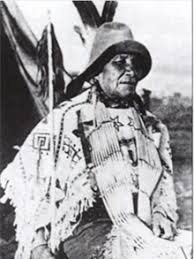
1014) Moving Robe Woman

Courtesy of Wikipedia

“I ran to a nearby thicket and got my black horse. I painted my face with crimson and braided my black hair. I was mourning. I was a woman, but I was not afraid.”

1014: Moving Robe Woman

Helped Defeat General Custer at the Battle of the Greasy Grass

Born: 1854, Most Likely the Sioux Tribal Lands (Present-day South Dakota, United States of America)

Died: 1935, Standing Rock Reservation, South Dakota, United States of America*

Also Known As: Tȟašína Máni, Mary Crawler, Her Eagle Robe, She Walks with Her Shawl, and Walking Blanket Woman

Most readers will know the battle better by its alternate name; the Battle of Little Bighorn.

Moving Robe Woman was of the Hunkpapa Sioux band. Her father was a chief, Crawler. Moving Robe Woman was only twenty-three that day, but she fought valiantly, and was honored as a warrior until the day she died.

She fought at Little Bighorn to avenge her fallen brother One Hawk (also called Deeds, he was killed in the initial skirmish). Moving Robe Woman reportedly killed Isaiah Dorman during the battle. Isaiah was the only man of African descent killed in the battle and was working as an interpreter for the US Army at the time (another source says it was actually a group of women that killed him). Its important to note Moving Robe Woman never took credit for Isaiah Dorman’s death, and instead said she did not boast of her actions that day. But in any case, obviously a woman or multiple women killed Isaiah Dorman; moral of the story? Don’t mess with warrior women.

Moving Robe Woman’s story is especially important, in that she actually recounted her story to be recorded many years after the battle. Her account is also heartbreaking to hear. Moving Robe Woman reminds us that after the battle ended, the Native Americans who had fought that day did not stage victory performances. They too were in deep mourning for all the people they had lost; their way of life, their culture, and their lands.

*Death date and place sourced from Wikipedia, however it should be noted that her Wikipedia article states the photo of her shown here in this article was taken two years after she reportedly died so...

Badges Earned:

Located In My Personal Library:

The Killing of Crazy Horse by Thomas Powers

Sources:

https://nickestes.blog/2017/06/25/lakota-victory-day-moving-robe-womans-account-of-the-battle-of-greasy-grass-june-25-1876/

http://www.american-tribes.com/Lakota/BIO/MaryCrawler.htm

https://www.astonisher.com/archives/museum/moving_robe_little_big_horn.html

https://www.geni.com/people/Moving-Robe-Woman-T%C8%9Fa%C5%A1%C3%ADna-M%C3%A1ni/6000000031182145889

https://en.wikipedia.org/wiki/Moving_Robe_Woman

  • Previous
  • 1
  • …
  • 21
  • 22
  • 23
  • 24
  • 25
  • 26
  • 27
  • …
  • 159
  • Next

Categories

Archives

  • July 2025 (10)
  • July 2024 (1)
  • January 2024 (1)
  • August 2023 (1)
  • June 2023 (2)
  • October 2022 (1)
  • July 2022 (1)
  • June 2021 (3)
  • December 2020 (3)
  • August 2019 (1)
  • July 2019 (2)

Search

© 2026 The Exasperated Historian | Powered by Minimalist Blog WordPress Theme