The Exasperated Historian
Menu
  • Home
  • The Women’s List (New)
  • The Men’s List
  • The Animal List
  • Collections
  • The Blog
  • Contact Us
  • FAQ
Menu

Category: Birth Locations

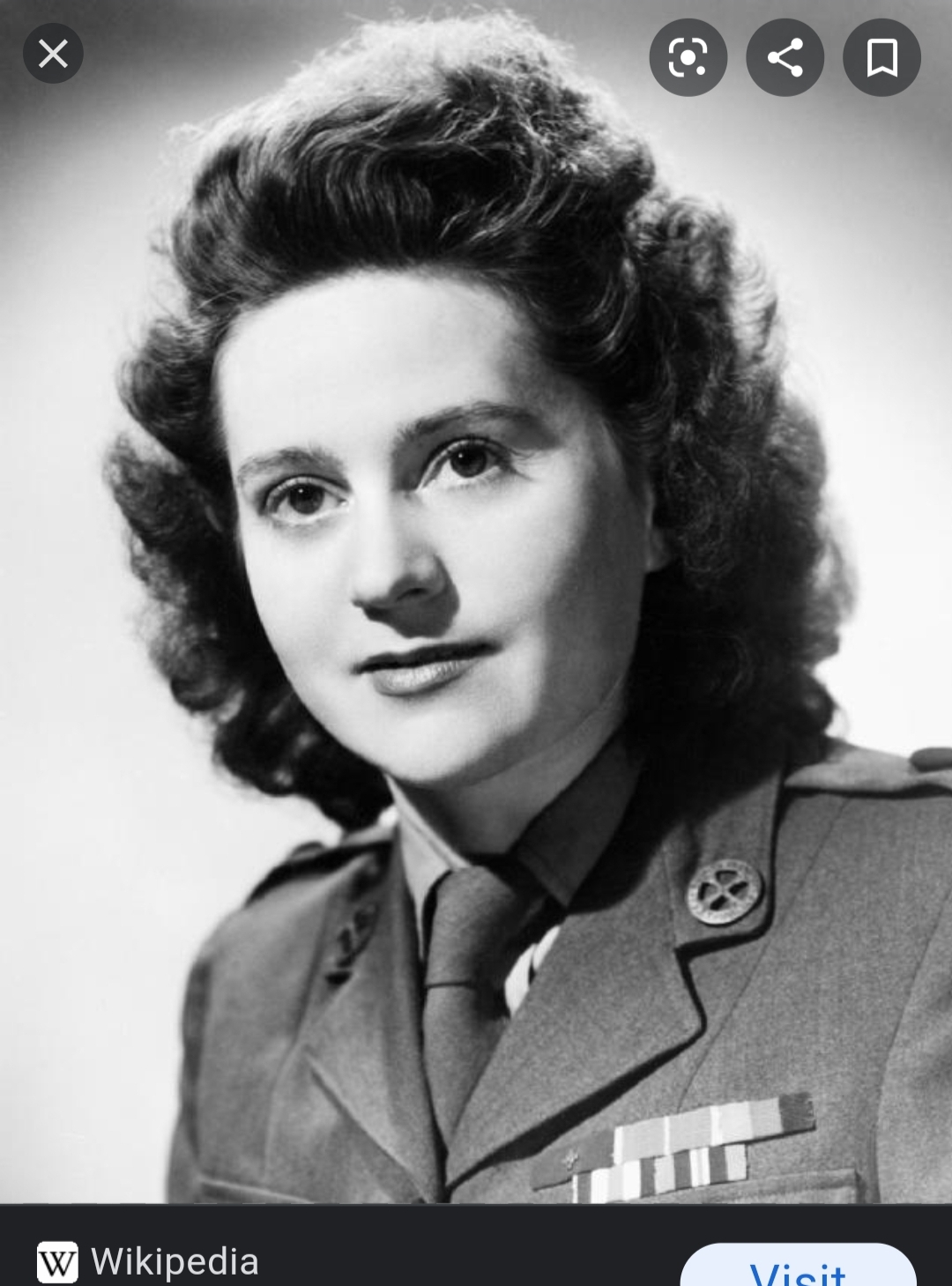
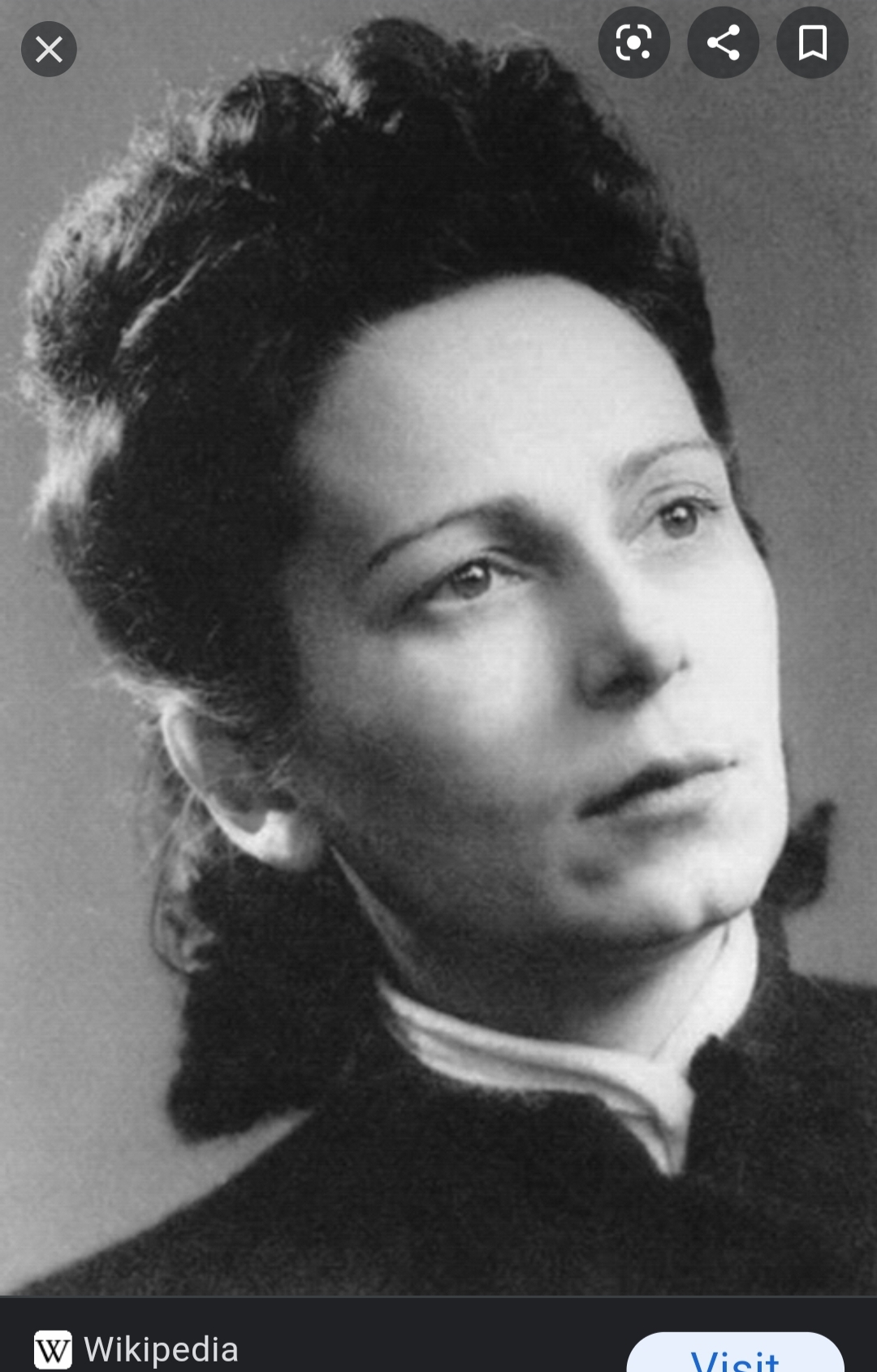
1052) Ariadna Scriabina

Courtesy of Wikipedia

1052: Ariadna Scriabina

Poet, French Resistance Fighter and co-founder of the Armée Juive

Born: 26 October 1905, Bogliasco, Italy

Died: 22 July 1944. Toulouse, France

Original Name: Regine-Ariane Scriabina

Her Preferred Name: Sarah Knut

Full Disclosure: The majority of easily accessible website articles about Ariadna are kind of sketchy and have lots of grammar/spelling mistakes. While Ariadna was definitely a real person, I’d like to put out there that the details should be taken with a grain of salt and that a more in-depth search of Ariadna’s story should be taken if you would like to use her story for a school project or anything like that.

With all that said…

Ariadna was born to Russian immigrant parents in Italy, but when they died while she was still young, she moved in with a relative in Paris (one source says an aunt while another says an uncle).

Ariadna’s father was the famed Russian composer, Alexander Scriabin. Because of her father’s early influence on her life, Ariadna spent her early adult years writing and publishing poetry.

Ariadna was married three times throughout her short life. According to Wikipedia, she had two daughters (as well as suffering a miscarriage) during her first marriage. Ariadna had one child with her second husband (but evidently lied and told him the child wasn’t his—he only learned the truth many years later). Finally with her third husband Ariadna had several more children, though Wikipedia doesn’t say exactly how many.

Ariadna was a devoted Zionist and was rightly angered and upset by the growing cases of anti-Semitism throughout Europe at the time. One source claims Ariadna was so devout in her beliefs, she went so far as to advocate for the forced removal of the Arab people from the land that would one day become Israel.

In 1939, Ariadna and her husband Dovid began publishing a Jewish themed newspaper in Paris. The paper advocated for their Zionist beliefs as well as covering the news of the growing anti-Semitism across Paris and the rest of Europe.

At the outbreak of World War II, Ariadna and Dovid officially registered their marriage (though they had been acting and living as a married couple for a few years already). Dovid was sent off to fight in the war, meaning the newspaper had to shut down. Ariadna officially converted to Judaism at this time, leaving her Christian roots behind, and changed her name to Sarah.

By then, Ariadna had several young children she was attempting to now raise as a single parent. Instead of fleeing France to an unoccupied country, she moved instead to meet up with her husband in Toulouse, bringing the children with her. Unfortunately, life was difficult in the city, and the anti-Semitic rhetoric was fierce. Ariadna and her husband stopped speaking Russian, even at home with the children, and switched to communicating in French instead. Around this time, they attempted to flee to South America, but their efforts were unsuccessful.

Around this time, Ariadna and Dovid founded the organization that would become the Armée Juive (Jewish Army). The group was created in order to help bolster Jewish aid in the occupied country, doing whatever they could to help the Jews in France, albeit secretly.

Ariadna created the oath all Armée Juive members had to take upon joining. By the end of the war, the organization had around 2,000 members. The Armée did everything from bringing food to Jewish prisoners, helping Jewish children and adults escape France to safety in other countries, and even helping stockpile weapons and sabotage the Nazi regime in any way they could.

Ariadna herself was involved in the transportation of Jewish children whose parents had been deported to camps. This was one of the most dangerous tasks the Armée carried out, but the work was rewarding for obvious reasons.

Ariadna continued to work with the Armée even after her husband was captured and deported; Ariadna was pregnant at the time.

In 1944, the Armée Juvie began working alongside the actual Allied forces in order to help with the liberation of occupied France. When representatives of Armée Juvie were attempting to travel to London to meet up with British government agents, they were captured by the Gestapo and tortured for information. Soon after, twenty-five Armée Juvie agents were subsequently captured.

Three weeks before the liberation of Toulouse, Ariadna was caught on a city street along with another Armée Juive agent. A struggle ensued and the Gestapo killed Ariadna in the midst of the fight. Her companion escaped and went on to tell the tale of how Ariadna was killed. At the time, Ariadna’s youngest child was only a year old.

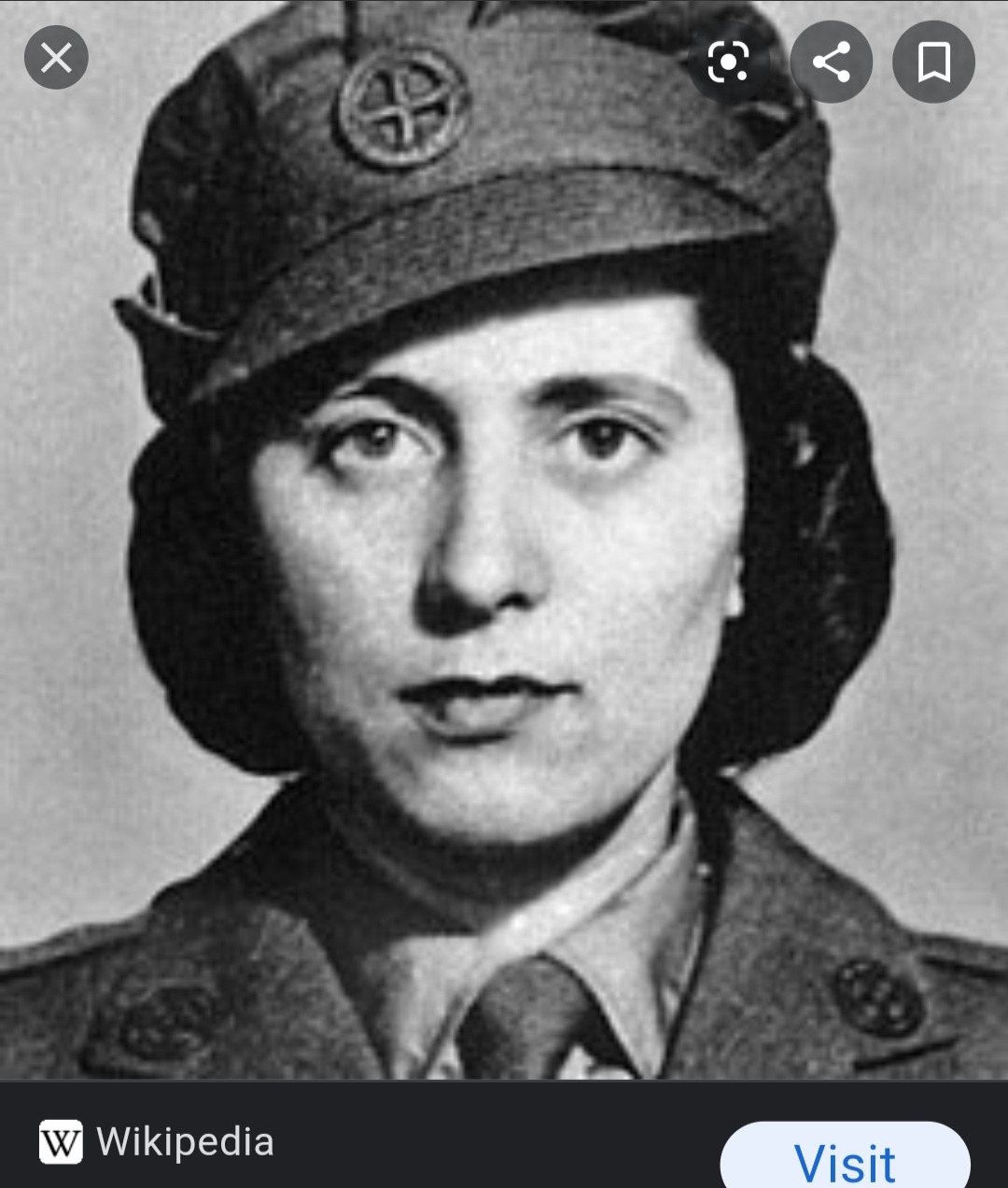
Ariadna was posthumously awarded the Croix de Guerre and the Médaille de la Résistance for her efforts in the war.

Badges Earned:

Located In My Personal Library:

Secret Heroes of World War II by Eric Chalene

Sources:

http://resistanceheroines.blogspot.com/2015/09/agriadna-aleksandrovna-scriabina-1905.html
https://moscowseasons.com/en/news/scriabins-daughter-in-the-french-resistance-and-pushkins-great-grandsons-fighting-at-the-front-five-wartime-stories-of-famous-families/

https://en.wikipedia.org/wiki/Ariadna_Scriabina

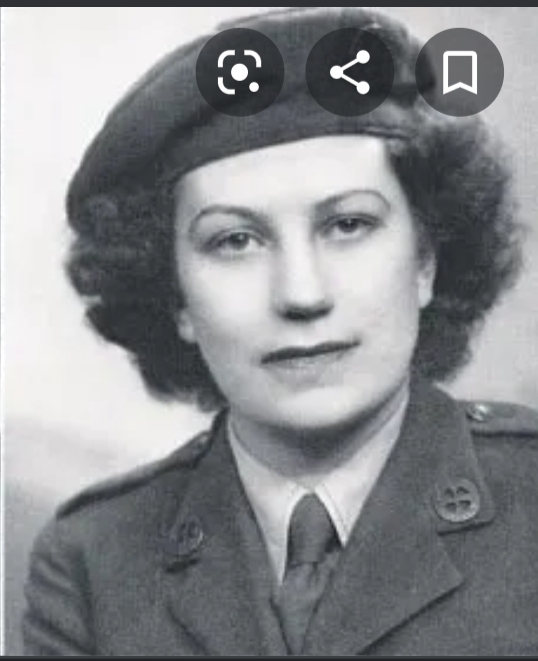
1051) Andree Borrel

Courtesy of Wikipedia

“I would jam a pencil through [a Nazi’s] brain. And he’d deserve it.”

1051: Andrée Raymonde Borrel

SOE Operative During World War II

Born: 19 November 1919, France

Died: 6 November 1942, Natzwiller, Alsace, France

Andrée was raised in a working-class family and was raised on the outskirts of Paris. When she was fourteen, she left school to become a dressmaker. She spent the next few years working in various shops around Paris, but moved with her mother to a town on the Mediterranean Sea at the outbreak of World War II.

Andrée trained as a nurse to volunteer with the Red Cross, and began to help treating soldiers from the French Army. After the government surrendered, Andrée and her friend Maurice, joined the French Resistance. Together, they helped the Resistance shuttle resistance forces across the border to Spain and Belgium, saving countless lives that would have been betrayed and possibly executed by the Nazis otherwise.

After their network was betrayed, Andrée spent some time working in Portugal, before making her way to London in 1942. Though Andrée was a known Socialist, she was recruited by the SOE anyway and was trained to be sent back to France.

Andrée was the one of the first female Special Operations Executive agents to be parachuted into occupied France in September of that same year, along with another woman named Lise. Technically speaking, they dropped in on the same night but Andrée stepped out of the plane first, making her the first female SOE agent to be air dropped into France.

Andrée’s code name was Denise.

Andrée worked with and became second in command of the ‘Prosper’ Network by March of the following year, despite her young age. Her boss described her to his commanders in London thusly, “[She] has a perfect understanding of security and an imperturbable calmness. Thank you very much for having sent her to me. She is the best of all of us.”

In June of that same year, 1943, the Prosper Network was compromised and Andrée was arrested. After being interrogated at Gestapo Headquarters, she was initially sent to Fresnes Prison.

Eventually, Andrée was sent to Natzweiler-Struthof (the only extermination camp in France). Andrée had been sent to the camp alongside three other female SOE agents, all of whom were placed under the “Nacht und Nable” directive, meaning “Night and Fog.” In other words, the four women were supposed to disappear from the Earth without a trace.

Andrée was supposed to die from lethal injection but, according to eyewitness testimony (one source claims anyway), she was still alive when her body was placed inside the crematoria, where she burned to death. Before they managed to toss her into the oven, Andrée reportedly scratched her executioner’s face. We can only hope she left a permanent scar.

She was only twenty-four years old.

Badges Earned:

Find a Grave Marked

Located In My Personal Library:

Women Wartime Spies by Ann Kramer

Sources:

https://spartacus-educational.com/SOEborrel.htm

https://windowstoworldhistory.weebly.com/soe-agent-andree-borrel-lived-several-lifetimes-in-her-24-years.html

https://www.militaryspouse.com/news/3-unsung-world-war-2-female-spies-who-helped-make-d-day-a-victory/

https://www.findagrave.com/memorial/50281598/andr%C3%A9e-raymonde-borrel

1050) Odette Sansom Hallowes

Courtesy of Wikipedia

"How strong the reserves upon which you draw you never realize until you need them, but believe me they do not fail you." 

1050: Odette Sansom Hallowes

SOE Operative During World War II

Born: 28 April 1912, Amiens, Picardie, France

Died: 13 March 1995, Walton-on-Thames, Surrey, England, United Kingdom

Odette worked as a radio operative for the SPINDLE network in occupied France.

In 1942, Odette was a Frenchwoman living in England with an English husband. She had three young daughters at home, but when the SOE came knocking, she signed up straight away, prepared to do whatever it took to win the war. Odette didn’t want to leave her daughters, but she did want to save her birth country and her family still living there from the Nazi occupying force.

At the end of October that same year, Odette arrived in France with her new codename “Lise” already in place. At the same time, Odette met another SOE Agent, Peter Churchill, codenamed “Raoul.” The following April, Odette and Peter were both arrested. Odette swore to her interrogators Peter was simply a pawn who knew nothing. In order to protect him, Odette claimed she was the actual ringleader and took full responsibility for the SPINDLE network’s operations. The Gestapo believed her, and decided to get every shred of information out of her they could possibly get.

Odette was repeatedly tortured, over and over again. Her toenails were pulled out, one by one, and hot pokers were placed on her bare skin. But to every question Odette was asked, she simply replied, “I have nothing to say.” Her bravery saved the lives of countless other SOE operatives and resistance fighters from being identified and arrested.

In July of 1944, Odette arrived at Ravensbruck Concentration Camp, where the torture continued. For one stretch that lasted over three months, Odette was locked in a darkened room by herself and left there to rot. The area she was held was appropriately called “The Bunker” by the prison’s staff.

In May of the following year, with American forces nearing, the camp commandant decided he wanted to survive his impending arrest. Odette promised to help him earn some leniency from the Americans by claiming she was related to Winston Churchill. She backed up this claim by reminding him she had first been arrested with one Peter Churchill (there was no actual relation between the two men).

The camp commandant took Odette with him, but when they arrived at the American camp, Odette told the Americans to arrest the commandant. The commandant was later hanged for war crimes, and Odette went on to testify against several other of the camp staff members at their own later trials.

In 1946, Odette was awarded the George Cross (the first woman ever so awarded) for her bravery and for refusing to break under torture. She earned several other accolades as well, including the Chevalier de la Légion d’Honneur from France in 1950. That same year, a film was made about her. But despite this, Odette didn’t want fame or fortune. She simply wanted to be left alone, to go back to the life she had lived before the war.

Odette was married three times throughout her life. Her second husband was Peter Churchill. They wed after her first husband passed in 1947. After Peter and Odette divorced, Odette married another former SOE agent, but her only children were her three daughters she shared with her first husband.

Odette spent the rest of her life asking for the world to remember those who didn’t make it home. In 2012, the UK’s Royal Mail service honored Odette by placing her image on a postage stamp.

Badges Earned:

Find a Grave Marked

Located In My Personal Library:

Women Wartime Spies by Ann Kramer

Secret Heroes of World War II by Eric Chalene

Who Knew? Women in History by Sarah Herman

Sources:

https://www.iwm.org.uk/history/odette-sansom-gc

https://time.com/5502645/decorated-wwii-spy-odette/

https://www.nytimes.com/1995/03/21/obituaries/odette-hallowes-82-a-british-agent-tortured-by-nazis.html

https://www.findagrave.com/memorial/63293111/odette-marie_celine-hallowes

1049) Eileen Nearne

Courtesy of Wikipedia

“The will to live. Willpower. That’s the most important. You should not let yourself go. It seemed that the end would never come, but I always believed in destiny, and I had a hope.”

“If you are a person who is drowning, you put all your efforts into trying to swim.”

1049: Eileen Nearne

Special Operations Executive Agent During World War II

Born: 15 March 1921, London, England, United Kingdom

Died: 2 September 2010, Torquay, Devon, England, United Kingdom

Her Codename was Rose, but her family knew her as Didi.

Eileen was born in the United Kingdom, but her family moved to France when she was a child. Her father was English, her mother Spanish, and she was one of four children. As a result of the move to France, she was raised and became fluent in French and English both. In 1940, the family fled to Spain ahead of the Nazi invasion, where Eileen, her brother, and her sister were all recruited by Britain’s Special Operations Executive.

Eileen worked as a radio operative, helping the Allies prepare for the D-Day Landings at Normandy. She initially received radio communications in London, but was eventually air-dropped into France in order to help set up the “Wizard” communication network; whose goal was to secure funding for the French resistance.

After being captured by the Gestapo in July of 1944, she was taken to Ravensbruck Concentration Camp, where the guards shaved her head for refusing to work. They also tortured her in an attempt to get her to reveal the secrets she knew. Eileen was stripped naked, beaten, and repeatedly dumped in ice cold baths, but she never broke. At the time, Eileen was twenty-three years old.

The story Eileen gave the Gestapo was that she was a gullible Frenchwoman named Jacqueline. According to her, a local businessman had asked her to transmit radio messages. How was she supposed to know they were secret coded transmissions?

In December of 1944, after being transported to several other camps, Eileen and two other Frenchwomen escaped. They were soon captured by the Americans who accused the women of being Nazi collaborators.

Eileen finally managed to convince the American GIs she was an actual SOE Agent after her story was confirmed by her bosses in London, and she was released. She survived the war, but the scars it left behind never went away.

After the war, Eileen often lived with her sister because of the lingering psychological effects of what she had seen. She also drew pictures to help deal with it all and trained to be a nurse.

Sadly, by the end of her life, Eileen was living alone. Her sister had died in 1982, and Eileen had never married or had children. When she passed away in her flat, her body went undiscovered for several days. After Eileen finally was discovered, local authorities originally planned to give her a civil burial; a more politically correct term for pauper’s grave. Her neighbors remembered Eileen as an incredibly private little old lady, who loved cats and just wanted to be left alone.

As the police looked through her belongings, they discovered Eileen’s Croix du Guerre, awarded to her by the French government for her actions in World War II. After this accidental find, Eileen’s story was rediscovered and broadcast around the world, finally giving her the credit she’d long been due.

According to the New York Times:

“On Tuesday, the anonymity that Ms. Nearne had cherished in life was denied her in death. A funeral service in Torquay featured a military bugler and piper and an array of uniformed mourners. A red cushion atop her coffin bore her wartime medals. Eulogies celebrated her as one of 39 British women who were parachuted into France as secret agents by the Special Operations Executive, a wartime agency known informally as “Churchill’s secret army,” which recruited more than 14,000 agents to conduct espionage and sabotage behind enemy lines.

Funeral costs were paid by the British Legion, the country’s main veterans’ organization, and by anonymous donors who came forward after the circumstances of Ms. Nearne’s death made front-page news in Britain.”

Badges Earned:

Find a Grave Marked

Located In My Personal Library:

Women Wartime Spies by Ann Kramer

Secret Heroes of World War II by Eric Chalene

Sources:

https://www.nytimes.com/2010/09/22/world/europe/22nearne.html

http://www.theheroinecollective.com/eileen-nearne/

https://www.warhistoryonline.com/instant-articles/eileen-nearne-british-heroine.html

https://www.findagrave.com/memorial/58799231/eileen-mary-nearne

1048) Sappho

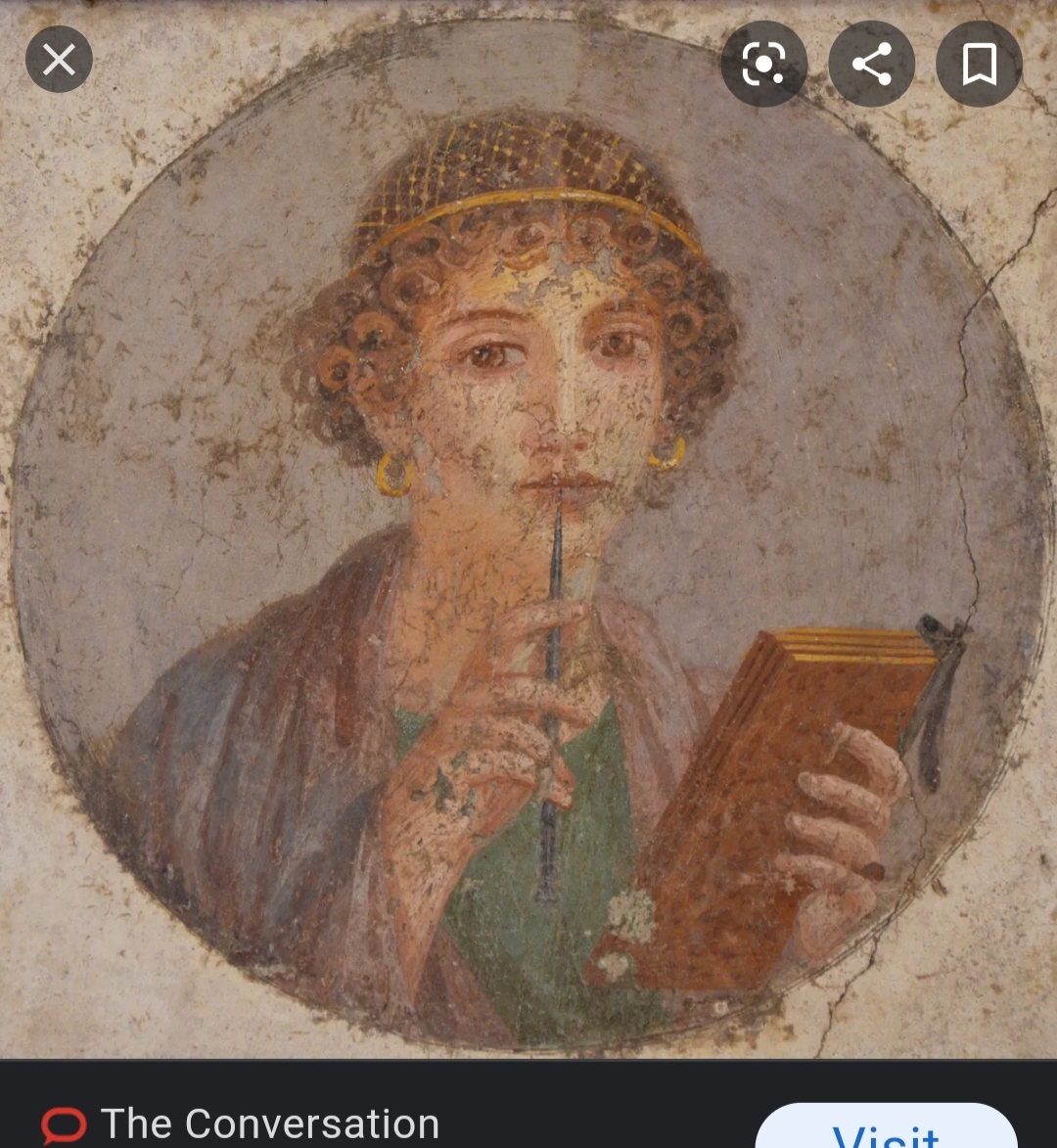
Courtesy of The Conversation
(Please note no contemporary image of Sappho survives today, the above image is simply an artist's interpretation of what she may have looked like)
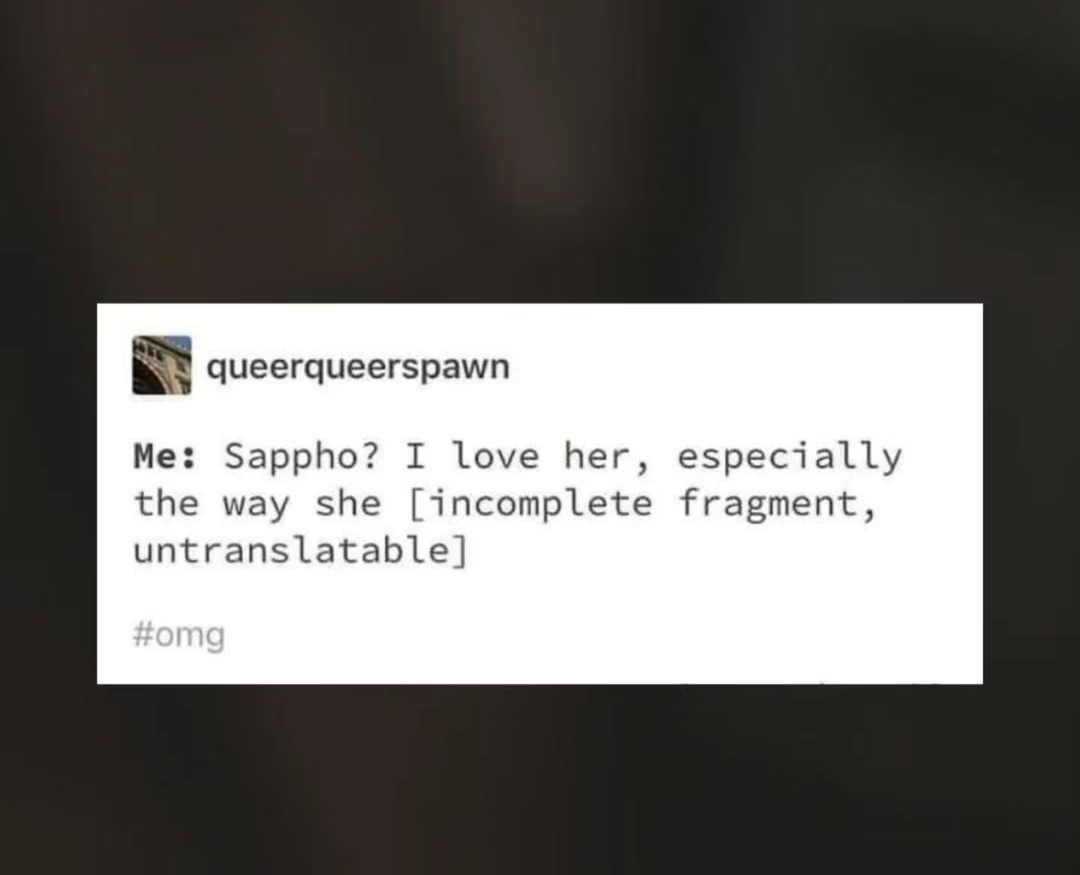
A Post About Sappho from Tumblr

1048: Sappho

Archaic Greek Poet

Born: c.616-630 BCE, Eressos or Mytilene, Lesbos, Ancient Greece (Present-day Lesbos, Greece)

Died: c.580-550 BCE, Lesbos, Ancient Greece (Present-day Lesbos, Greece)

You will often hear Sappho’s name in the same breath as, “And that’s why women who like other women are called Lesbians”, however, the actual documented proof of this rumor is—well it’s just that, a rumor.

What is known about Sappho’s life for certain is actually very little. She lived so many centuries ago; compound that with the fact that she was from Ancient Greece, of all places, which was never known for being pro-women’s rights by any means, and what we do “know” about Sappho is mostly conjecture or rumor.

Sappho might have married and she might have had a daughter. She ran an academy for unmarried young women in the city Mytilene on Lesbos; and she was obviously a poet. Her family was upper class and she was known to have several brothers. Sappho’s school was dedicated to the cults of Eros and Aphrodite both, and one rumor states that Sappho committed suicide after being spurned by a sailor, while others say she lived to a ripe old age.

Other than that, though? The details are very slim and vary greatly.

Only one of her poems survives completely intact, while others are found in scraps. According to Poets.com: “The history of her poems is as speculative as that of her biography. She was known in antiquity as a great poet: Plato called her "the tenth Muse" and her likeness appeared on coins. It is unclear whether she invented or simply refined the meter of her day, but today it is known as "Sapphic" meter. Her poems were first collected into nine volumes around the third century B.C., but her work was lost almost entirely for many years. Merely one twenty-eight-line poem of hers has survived intact, and she was known principally through quotations found in the works of other authors until the nineteenth century. In 1898 scholars unearthed papyri that contained fragments of her poems. In 1914 in Egypt, archeologists discovered papier-mâché coffins made from scraps of paper that contained more verse fragments attributed to Sappho.”

Today, only around two hundred and fifty such scraps of Sappho’s work survive. Of those, only around seventy contain a complete line, while some are literally a single word. There is no other poet in history who holds such a famous place in history and yet has so little of her work survive.

Harkening back to the earlier rumor; historians cannot definitively prove one way or another if Sappho was a lesbian, bisexual, or straight, but a Catholic Pope did have her work burned in 1073 because of these rumors.

The first known basis for the rumor stems from three hundred years after Sappho’s death. Several writers from that time decided to parody Sappho’s life, claiming she was overtly promiscuous and, surprise surprise, a lesbian! Supposedly this claim is where the term Lesbian originally comes from, the island of Lesbos helped coin the term, but the proof that Sappho herself was one…well it just doesn’t exist at this time. The other issue with this rumor is the fact that the original translation of lesbian (according to The New Yorker in any case), doesn’t mean what the word means today. Evidently to the Ancient Greeks, lesbian meant women who enjoyed, ehem, doing something to a man that involved the woman’s mouth and the man’s parts. I’m trying to keep this as PG as I can people, you can fill in the rest!

Badges Earned:

Find a Grave Marked

Located In My Personal Library:

The Book of Awesome Women: Boundary Breakers, Freedom Fighters, Sheroes, and Female Firsts by Becca Anderson

Goddesses, Whores, Wives, and Slaves: Women in Classical Antiquity by Sarah B Pomeroy

The Secret Library: A Book-Lovers' Journey Through Curiosities of History by Oliver Tearle

Women in Ancient Rome by Paul Chrystal

Sources:

https://poets.org/poet/sappho

https://www.newyorker.com/magazine/2015/03/16/girl-interrupted

https://www.poetryfoundation.org/poets/sappho

https://www.findagrave.com/memorial/10754953/sappho

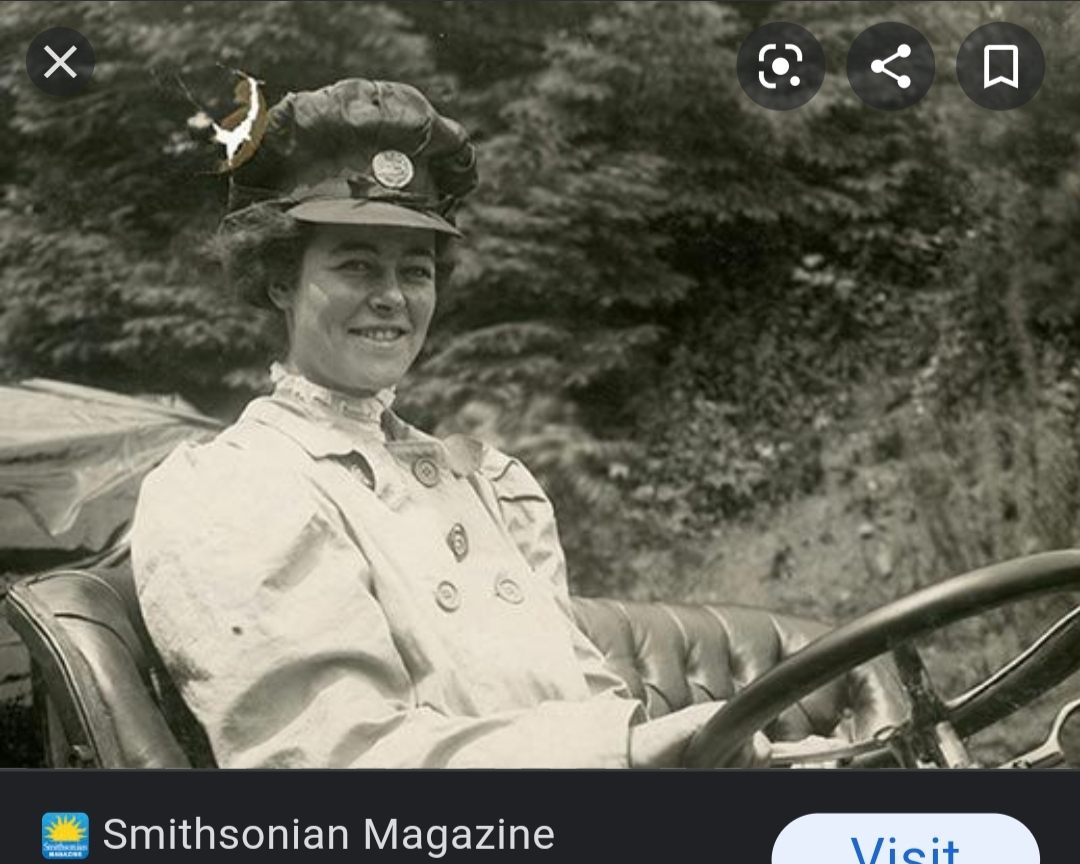
1047) Alice Huyler Ramsey

Courtesy of Smithsonian Magazine

1047: Alice Huyler Ramsey

The First Woman to Drive Across the United States from Coast to Coast

Born: 11 November 1886, Hackensack, New Jersey, United States of America

Died: 10 September 1983, Covina, California, United States of America

Alice’s drive was from New York to San Francisco in 1909 (the first male cross-country drive was first completed in 1903). The drive took fifty-nine days and stretched on for 3,800 miles. At the time, Alice was only twenty-two years old. Quite impressive given the time period. Her car itself was described by Smithsonian as being, “a dark-green, four-cylinder, 30-horsepower 1909 Maxwell DA, a touring car with two bench seats and a removable pantasote roof.” The car had also been retrofitted to contain a twenty-gallon fuel tank, specifically for the journey.

Even more impressive? The trip was undertaken by Alice and three female friends, alone. This was America’s first all-girl car trip; no boys allowed. To be fair, however, the trip was only made possible by two other men.

Alice’s husband bought Alice the car in the first place because he thought she would be safer driving than riding a horseback around the other cars suddenly on the road—while he himself never learned to drive. After Alice became proficient in driving around her home, she took a ride two hundred miles round trip to Montauk, New York. While there, Alice came across a representative of the automobile manufacturer who had crafted Alice’s vehicle. The man was so impressed with Alice’s ability to drive he offered her an all-expense paid trip across the United States, all she had to do was drive. The goal? Prove Maxwell-Briscoe vehicles were so easy to handle even a woman could traverse the United States behind the wheel of one.

Along for the ride were Alice’s two sisters-in-law, both of whom were in their forties, as well as a sixteen-year-old friend. The women wore helmets and goggles throughout the trip and Alice ensured the other three women all learned the basics of automobile safety before they hit the road.

Because there were few maps available at the time, Alice would often follow telegraph lines in the hopes of finding towns. The book that had been published that supposedly gave directions throughout the eastern half of the United States often gave directions like, “Turn left at the yellow barn,” not taking into account the owner might one day repaint the barn green! Things got so bad at times; Maxwell-Briscoe would have to hire pilot cars with drivers familiar with the area to help Alice navigate her way to the next town.

The women ate at restaurants but were very happy to accept home cooked meals when someone offered. They stayed in hotels, survived off canned food from general stores when nothing else was available, and kept on driving. Their top speed on the trip? A fantastic forty-two miles per hour.

Along the way, the car suffered from at least one tire blowout (the Automotive Hall of Fame claims there were actually eleven!), a broken engine coil, radiator issues, and they even ran out of gas at one point. Iowa proved particularly troublesome, and it took the women thirteen days to traverse the state’s three-hundred-and-sixty-mile trek of the road. The weather and uneven roads led to the car having to be towed at certain times, but eventually the women made it across. The Maxwell-Briscoe car company would later state the women experienced no trouble along the route, but this obviously wasn’t true.

After completing the historic trip, Alice returned home to her husband and raised two children. Her brush with fame was over, but she did continue to drive. Alice reportedly lost count of how many times she completed the cross-country trip after her thirtieth successful drive.

In 1960, the Automobile Manufacturers Association named Alice the “First Lady of Automotive Travel” for her historic trip. Alice published an account of her drive and went on to complete five of the six routes through the Swiss Alps. She would have covered the sixth too if not for her pacemaker. Alice kept her driver’s license valid until she was ninety-five.

In 2000, Alice was posthumously inducted into the Automotive Hall of Fame; the first woman to claim that honor.

Badges Earned:

Find a Grave Marked

Sources:

https://www.smithsonianmag.com/history/alice-ramseys-historic-cross-country-drive-29114570/

https://www.automotivehalloffame.org/honoree/alice-ramsey/

https://njwomenshistory.org/discover/biographies/alice-huyler-ramsey/

https://roadtrippers.com/magazine/alice-huyler-ramsey/

https://www.findagrave.com/memorial/6513826/alice-ramsey

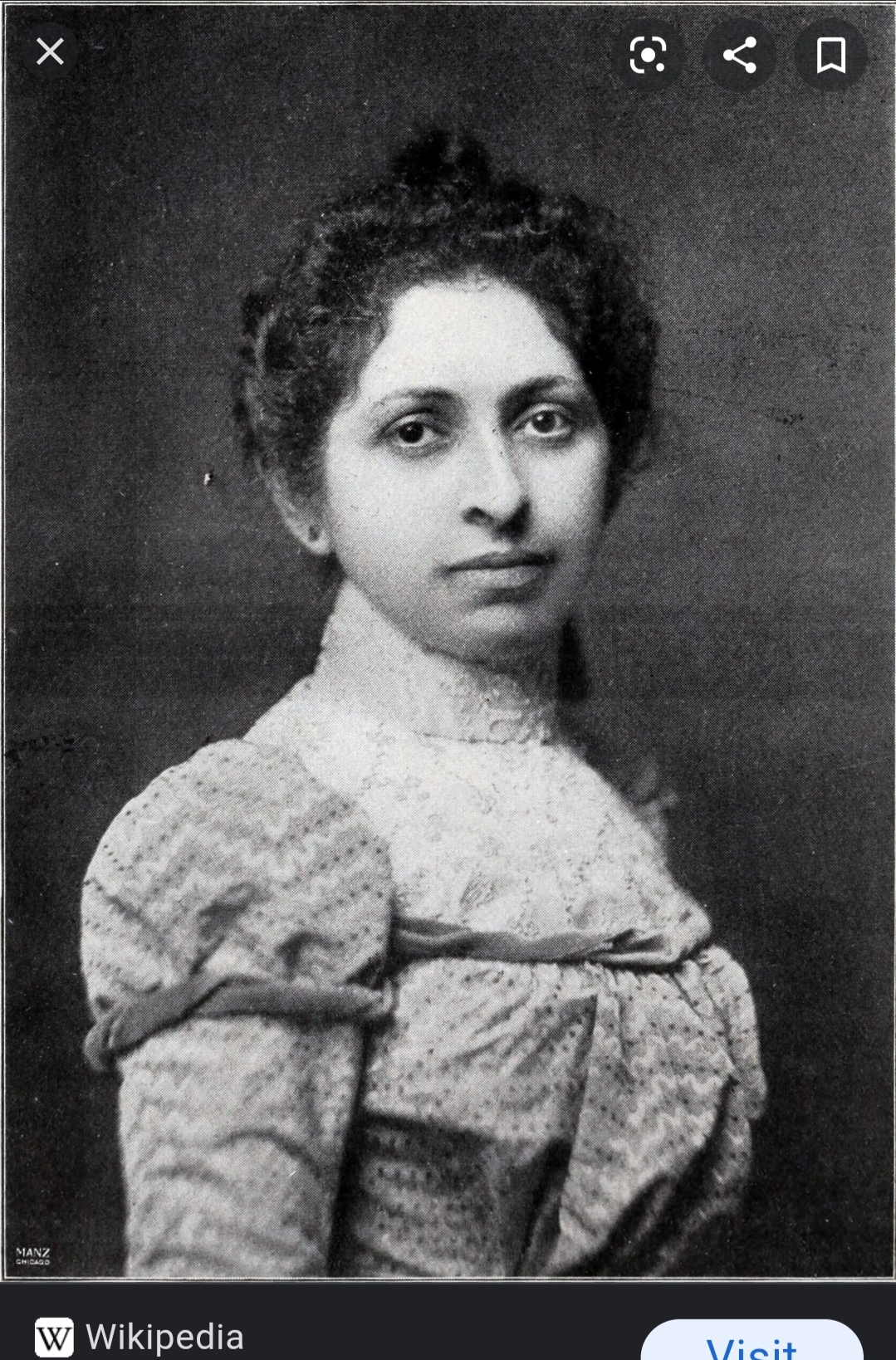
1046) Elizabeth Fleischman-Aschheim

Courtesy of Wikipedia

1046: Elizabeth Fleischman-Aschheim

X-Ray Pioneer

Born: c.1859-1867, El Dorado County, California, United States of America

Died: 3 August 1905, San Francisco, California, United States of America

Elizabeth is the first known woman to die from the effects of x-ray exposure due to her own studying of them.

Elizabeth’s parents were immigrants from of Jewish ancestry from Eastern Europe, and she herself was one of five or six children (sources differ).

Elizabeth was somewhat educated (though she never finished high school) and originally went to school to learn to be a bookkeeper. She first became interested in x-rays after her brother-in-law, who happened to be a doctor, piqued her interest the year x-rays were first discovered in 1894. Only six years later she was dubbed “The Woman who Takes the Best Radiographs” by the San Francisco Chronicle.

Elizabeth was one of, if not the first person in California to own a private x-ray apparatus and fluoroscope. In 1906 when she opened her own private x-ray laboratory, it was the first of its kind in the state of California.

Her accomplishments are extraordinary for multiple reasons, including: 1) the fact that she was a Jewish woman who owned her own business, especially in the scientific field, for her time period, 2) Elizabeth hyphenated her last name upon getting married (Fleischman-Aschheim) instead of eliminating her maiden name entirely, and 3) she publicly announced her business in the equivalent of the Yellow Pages and never tried to hide her activities as some women for her time period would have done. Elizabeth was ready and willing to work and wasn’t afraid of anyone knowing it.

Her career really took off when she was able to examine casualties from the Spanish/America War that were brought to her lab. The Army Surgeon General reportedly stated Elizabeth’s radiographs were the most detailed and accurate of any radiographer’s work available at the time.

After the war she switched to dental work and had to seek surgical treatment in 1904 or 1905 (sources differ) for the condition of the skin on her hands from repeat exposures to radium.

The treatment Elizabeth was given at the time was the amputation of her arm. Unfortunately, the cancer soon spread and she died in agony from the effects of radiation poisoning only a few months later.

Elizabeth was eulogized in the San Francisco Chronicle thusly, “[she died] after suffering for months from injuries sustained in the pursuit of her profession as a radiographer. In her demise the community loses one of the most admirable women of science and of the most ardent workers in the interests of afflicted humanity." Elizabeth had only been working with x-rays for eleven years. That quickly the dangerous work had taken her life, but an examination of her work tends to lead one to believe it was a willing sacrifice. Elizabeth’s work pushed the field of radiography and x-rays in general above and beyond what anyone else had ever dreamed of accomplishing. The fact that she is so rarely known or acknowledged today is the greatest tragedy of the entire story.

Elizabeth’s grave marker has the epitaph “I believe I have done some good in this world.”

Badges Earned:

Find a Grave Marked

Sources:

https://cla.purdue.edu/academic/rueffschool/waaw/palmquist/Photographers/FleischmannEssay.htm

https://www.foundsf.org/index.php?title=X-ray_Photographer:_Elizabeth_Fleischmann

http://www.jmaw.org/elizabeth-fleishman-aschheim-san-francisco/

https://www.findagrave.com/memorial/31945623/elizabeth-aschheim

1045) Mary Pinchot Meyer

Courtesy of the New York Times

1045: Mary Pinchot Meyer

Painter, Writer, DC Socialite, and One of President John F Kennedy’s Mistresses

Born: 14 October 1920, New York City, New York, United States of America

Died: 12 October 1964, Georgetown, Washington DC, United States of America

Mary was born into an upper-class family and had one younger sister. She counted high ranking members of DC society as personal friends, including Jackie Kennedy. Surprisingly Mary’s clandestine affair with the president didn’t interrupt her friendship with Jackie; seeing as Mary usually visited the president at the White House when Jackie was out of town. A few weeks before he died, the president wrote Mary a letter but never sent it. The letter sold at auction in 2016 for nearly $89,000!

Mary was married to a World War II vet who worked for the CIA, but at the time of her death her by then ex-husband was identified as an author. This small innocuous detail was one of many facts about the case that later led to conspiracy theories into what exactly happened the day Mary died.

Mary had three sons (one of whom was killed after being struck by a car eight years before Mary’s death) and lived with them in the DC suburb Georgetown at the time of her death. Mary also had an artist studio in her home and spent most of her time painting.

Mary was also a possible victim of the United States’ Central Intelligence Agency.

Two days before her fortieth birthday, Mary went for her usual lunchtime walk when she was shot twice and killed in broad daylight. An African American man was later arrested and charged with the crime, but was eventually acquitted due to lack of evidence. Mary’s murder has never officially been solved.

Some believe Mary was murdered by the CIA; the same people who believe John F Kennedy was also killed by the CIA. The reason? Because of her affair with the president, and her former marriage to a high-ranking agent, Mary knew things…too many things for her own good. Compound that with the fact she was liberally minded and had a lot of opinions about the United States’ foreign policy at the time and…yeah, you get the picture.

And the conspiracy isn’t nearly as far fetched as it may seem on first glance. It is known that the CIA was wiretapping Mary’s phone at the time of her death, and around the same time, an agent was caught attempting to break into her home in order to steal whatever evidence of her affair with President Kennedy could be found.

Badges Earned:

Find a Grave Marked

Located In My Personal Library:

Sex With Presidents: The Ins and Outs of Love and Lust in the White House by Eleanor Herman

Sources:

https://www.smithsonianmag.com/history/44-years-later-a-washington-dc-death-unresolved-93263961/

https://www.townandcountrymag.com/leisure/arts-and-culture/a32599090/mary-meyer-jfk-mistress-murder/

https://allthatsinteresting.com/mary-pinchot-meyer-murder

https://spartacus-educational.com/JFKmeyerM.htm

https://www.findagrave.com/memorial/6506826/mary-eno-meyer

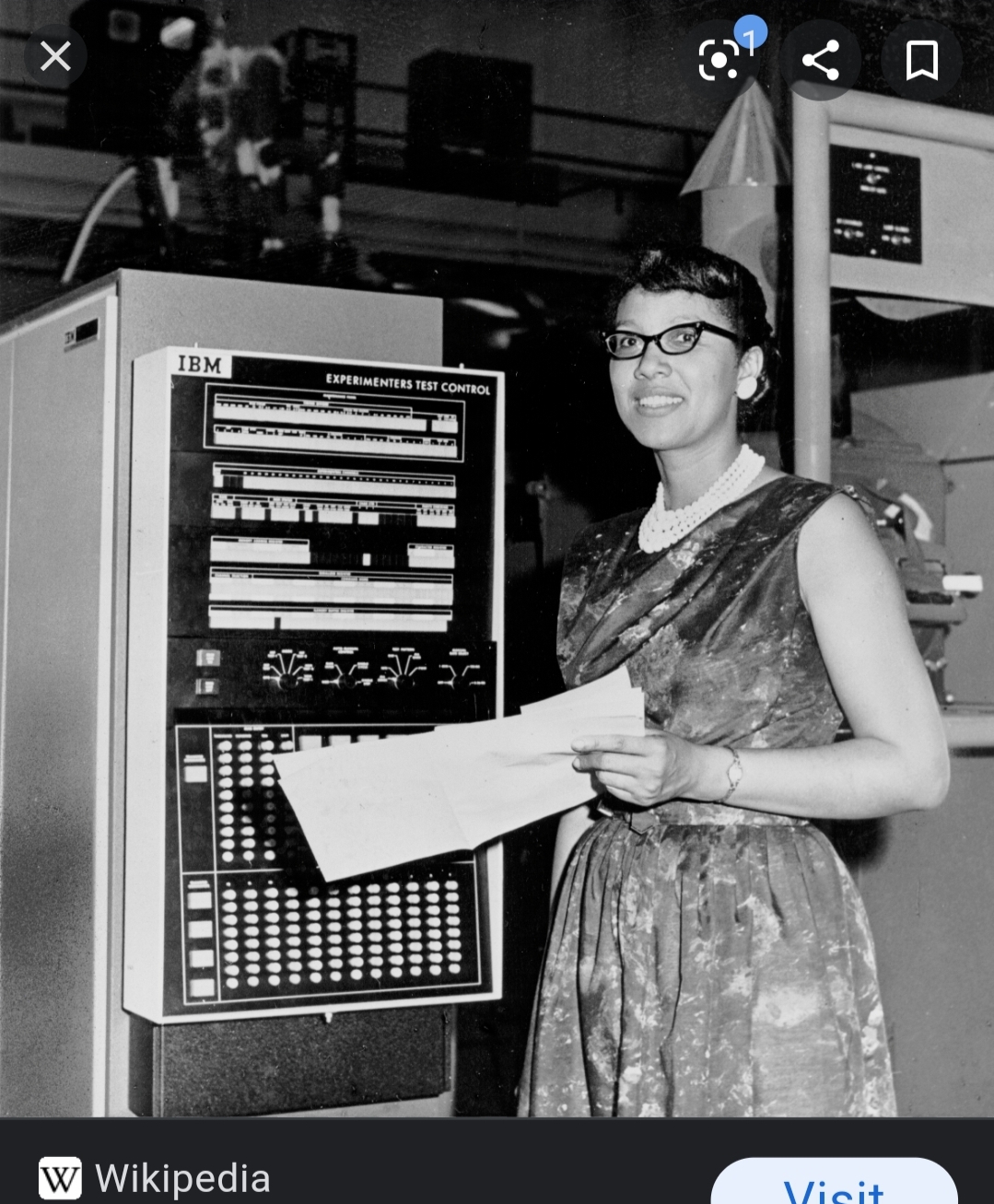
1044) Melba Roy Mouton

Courtesy of Wikipedia

1044: Melba Roy Mouton

Assistant Chief of Research Programs at NASA

Born: 1929, Fairfax, Virginia, United States of America

Died: 25 June 1990, Silver Spring, Maryland, United States of America

That’s right, Melba was another Hidden Figure, though her story wasn’t highlighted in the film.

In 1950, Melba graduated from Howard University with a master’s degree in mathematics.

Mebla oversaw work on the Echo Satellite Programs.

She worked for NASA from 1959 to 1973 before passing away from a brain tumor. Melba had been married twice and had three children.

Melba was honored with a Google Doodle. Little other information about Melba is readily available online, but her contributions to the Space Race, NASA, and scientific exploration should never be forgotten.

Sources:

http://blackwomenincomputing.org/who-we-are/

https://womenrockscience.tumblr.com/post/63037841816/meet-melba-roy-mouton-a-head-computer-programmer

https://artsandculture.google.com/entity/melba-roy-mouton/m0yns17n?hl=en

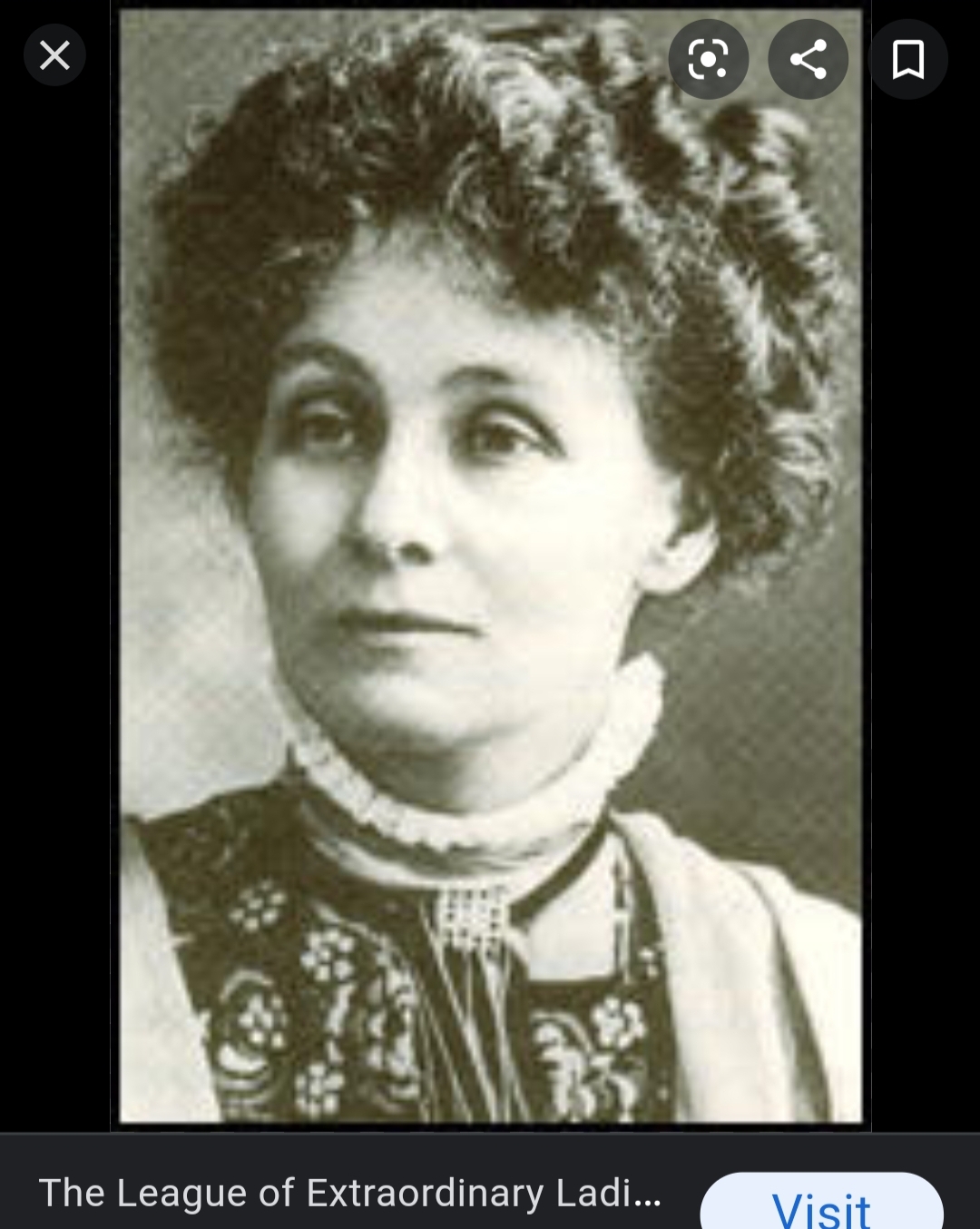
1043) Edith Garrud

Courtesy of the League of Extraordinary Ladies

"Woman is exposed to many perils nowadays, because so many who call themselves men are not worthy of that exalted title, and it is her duty to learn how to defend herself."

1043: Edith Garrud

The Original Teacher of Suffrajitsu

Born: 1872, Bath, United Kingdom

Died: 1971, Bromley, United Kingdom

Edith was a Suffragette; meaning she was a part of the more militant faction of women who advocated for the right to vote in the United Kingdom. Edith in particular was known to literally flip police officers over her shoulders during demonstrations. This is even more impressive when you consider she herself was only four feet eleven inches tall and police officers at the time had to be a minimum of five feet ten inches. Also, remember the fact that women at the time wore long dresses with big hats, all of which makes fighting that much harder.

Edith learned martial arts from her husband, who owned a studio that taught classes in jiu-jitsu as well as other physical activities. Because of William’s studio, Edith was able to teach other suffragettes how to better protect themselves on the streets. This made Edith one of, if not the first, female martial arts instructors in the Western World.

Edith was first introduced to the Suffragettes around 1908. Edith and her husband were set to teach a beginner’s class to a group of Suffragettes. At these classes, Edith’s husband William usually did all the talking, but that day he fell ill and was unable to attend. Emmeline Pankhurst, the leader of the Suffragettes, encouraged Edith to speak up and teach the class herself, and as they say the rest is history. Soon after Suffragettes were regularly spotted using the police and counter protestors’ energy against themselves in order to protect themselves. The press soon noticed the Suffragettes’ new skill and coined the term “Suffrajitsu” to satirize and further attack their efforts.

By 1910, Edith was teaching classes for Suffragettes alone, designed to help them further protect themselves from their enemies. She had also begun writing for the Suffragettes’ newspaper entitled Votes for Women, in which she rightfully stated jiu-jitsu was allowing the women to protect themselves and make their rivals “howl for mercy.”

On November 18th of that same year, around three hundred Suffragettes gathered outside Parliament in order to hold a demonstration. Instead, they were attacked en masse by a wall of police as well as counter protestors. Hundreds of the Suffragettes were injured while two actually died. Dozens more women reported they were groped or sexually harassed during the horrific attack. That day is now remembered as the Black Friday Protest, and to say the Suffragettes left that day with the realization they needed to train harder and learn to better protect themselves was an understatement.

Edith carried a wooden club under her dress and wore cardboard armor under the fabric to protect her from assaults from police officers and other counter protestors. Edith also trained thirty other suffragettes in jiu-jitsu to help beat the crap out of the police who tried to stop them from protesting. These women went on to become Emmeline Pankhurts’s personal bodyguards; nicknamed “Amazons” by the British press. And while this was also probably meant to degrade them, I personally think its bada**.

In 1914, Emmeline was set to give a speech from a balcony in Camden Square. When she emerged from the house, the woman who appeared was wearing a veil but still protected by The Bodyguard, as they called themselves. The police swarmed The Bodyguard and overwhelmed the ladies, knocking the veiled figure to the ground and dragging her away unconscious. When the police lifted the veil in the hopes of triumphantly arresting Emmeline, they discovered the woman underneath was actually a decoy and that the real Emmeline had escaped undetected because of the commotion. This experience was one of many Edith carefully choreographed in order to better protect Emmeline and the Suffragette movement as a whole.

During World War I, the Suffragettes put aside their picket signs and clubs and got to work supporting their country through the war effort. They were frustrated at not being able to focus on reclaiming their God-given right to vote, but recognized the survival of their country as a whole was more important in the moment.

After World War I ended and women were given the right to vote, Edith continued teaching (this time allowing cops to learn the techniques previously used against them).

Edith was also one of the first fight choreographers in the British Film Industry. She starred in the first British martial arts film (it was a silent one where a guy tries to take her purse so she beats the crap out of him). Other than teaching, Edith largely stayed out of the spotlight until she died aged ninety-nine. In one of the last interviews she gave when she was ninety-three, Edith gave her interviewer the recipe she’d used to make her last birthday cake. What an adorably bada** grandmother.

Edith’s home in Thornhill Square in London has been marked with a plaque in her honor. The plaque was unveiled by her great-granddaughter, meaning Edith had to have had at least one child, but no children are mentioned in any of the sources I have found for her online so I cannot say for certain how many children she had for certain.

In 2015, the film Suffragette was released, which focuses on the fight for women’s voting rights in the United Kingdom. While Edith does not appear in the film as a character, Helena Bonham Carter recognized Edith by changing the name of her fictional character from Caroline, as it originally appeared in the script, to Edith in order to honor the original practice of Suffrajitsu.

Badges Earned:

Located In My Personal Library:

Badass Bygone Broads by Mackenzi Lee

Sources:

https://www.bbc.com/news/magazine-34425615

https://www.theguardian.com/lifeandstyle/2012/jun/25/edith-garrud-suffragette-martial-arts

https://www.historyoffighting.com/edith-garrud.php

https://www.badassoftheweek.com/edith-garrud

https://londonist.com/london/history/islingtons-jiu-jitsu-suffragette

http://suffrajitsu.com/category/edith-garrud/

  • Previous
  • 1
  • …
  • 18
  • 19
  • 20
  • 21
  • 22
  • 23
  • 24
  • …
  • 159
  • Next

Categories

Archives

  • July 2025 (10)
  • July 2024 (1)
  • January 2024 (1)
  • August 2023 (1)
  • June 2023 (2)
  • October 2022 (1)
  • July 2022 (1)
  • June 2021 (3)
  • December 2020 (3)
  • August 2019 (1)
  • July 2019 (2)

Search

© 2026 The Exasperated Historian | Powered by Minimalist Blog WordPress Theme