The Exasperated Historian
Menu
  • Home
  • The Women’s List (New)
  • The Men’s List
  • The Animal List
  • Collections
  • The Blog
  • Contact Us
  • FAQ
Menu

Category: Birth Locations

Grand Canyon Pioneer Cemetery

Posted on June 25, 2021January 16, 2022 by nickssquire12

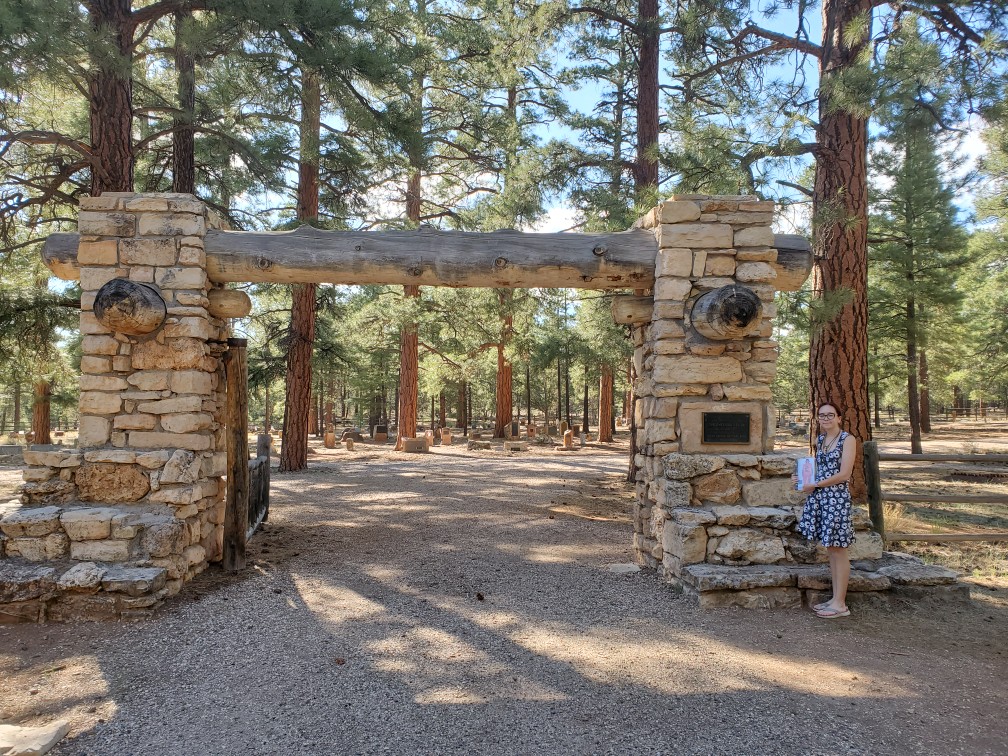
Tucked away from the road within Grand Canyon National Park is a small, tranquil graveyard that is open to the public, despite what Google will have you believe.

When my mother and I arrived at the park entrance today, we asked the ranger if the Pioneer Cemetery was in fact open to the public. The surprised ranger asked, "You mean the cemetery with the Shrine of the Angels?" When we said yes, that is in fact the place we were looking for, the ranger then asked if we were visiting anyone in particular. When we said no, that we just wanted to see the place, the polite ranger told us we were free to walk the grounds. When he asked if that's all we wanted to do in the park and we said yes, he seemed even more surprised. Then he handed us a map of the park and waved us through. Google brought us right to the parking lot attached to the cemetery, which lies adjacent to the Shrine of the Angels, which is used as a church for various congregations and religions today.
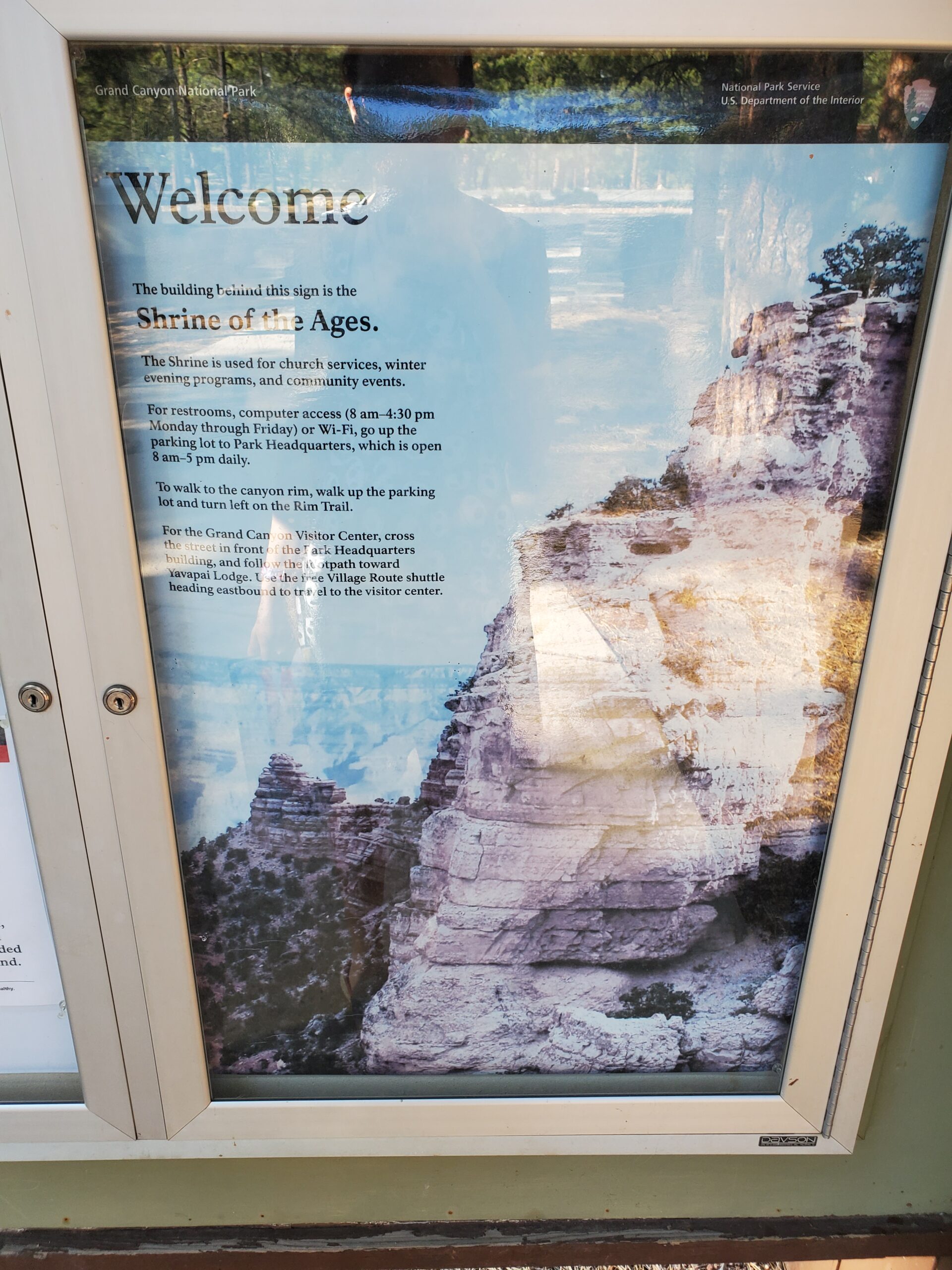
Shrine of the Ages Explanation
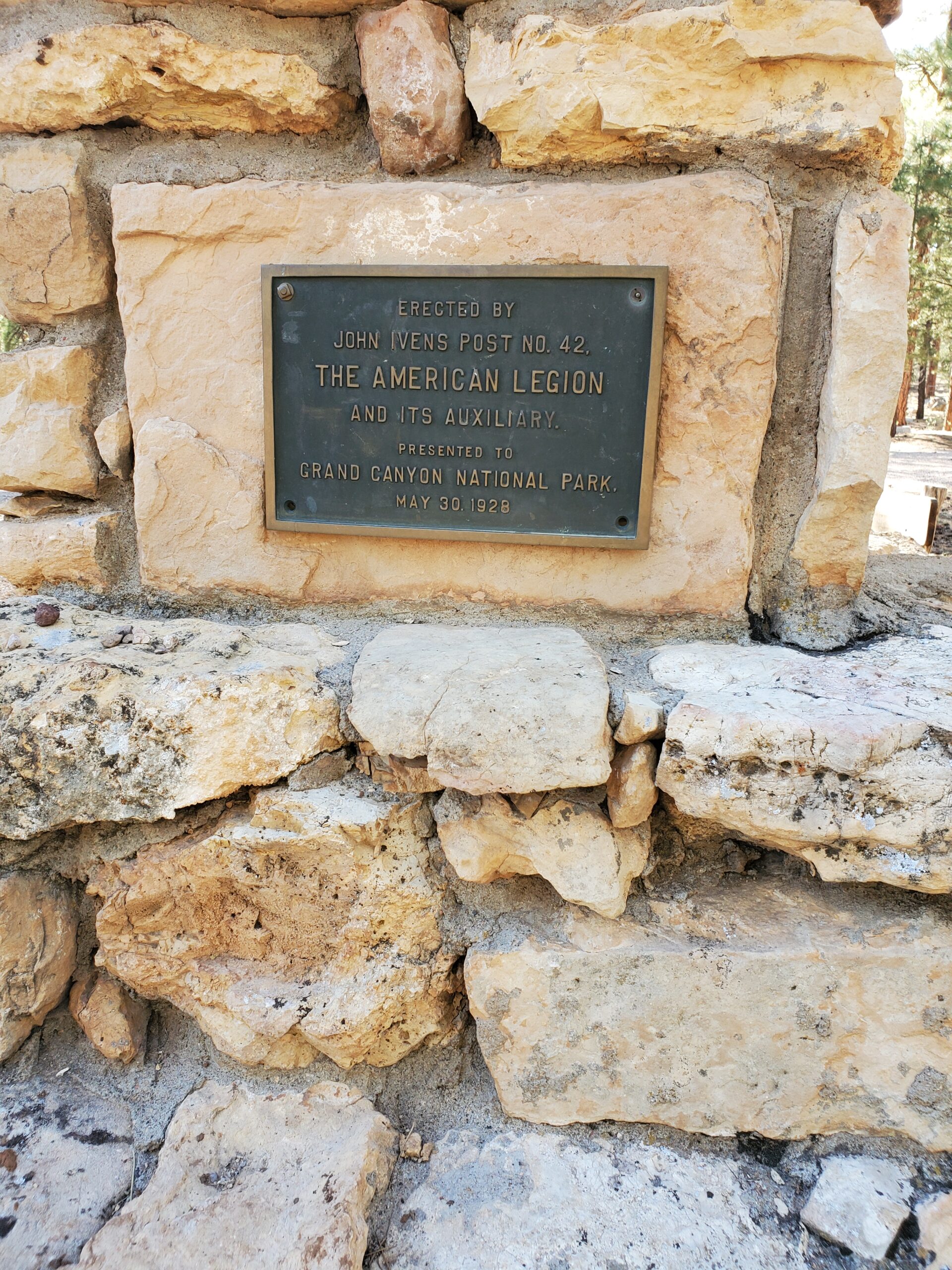
Cemetery Dedication

The cemetery closed to burials as of 2017, though there are a few newer graves within the boundaries of the graveyard today. Family members who have already purchased plots or are eligible to be buried alongside a spouse, parent, etc, are still allowed to be buried there.

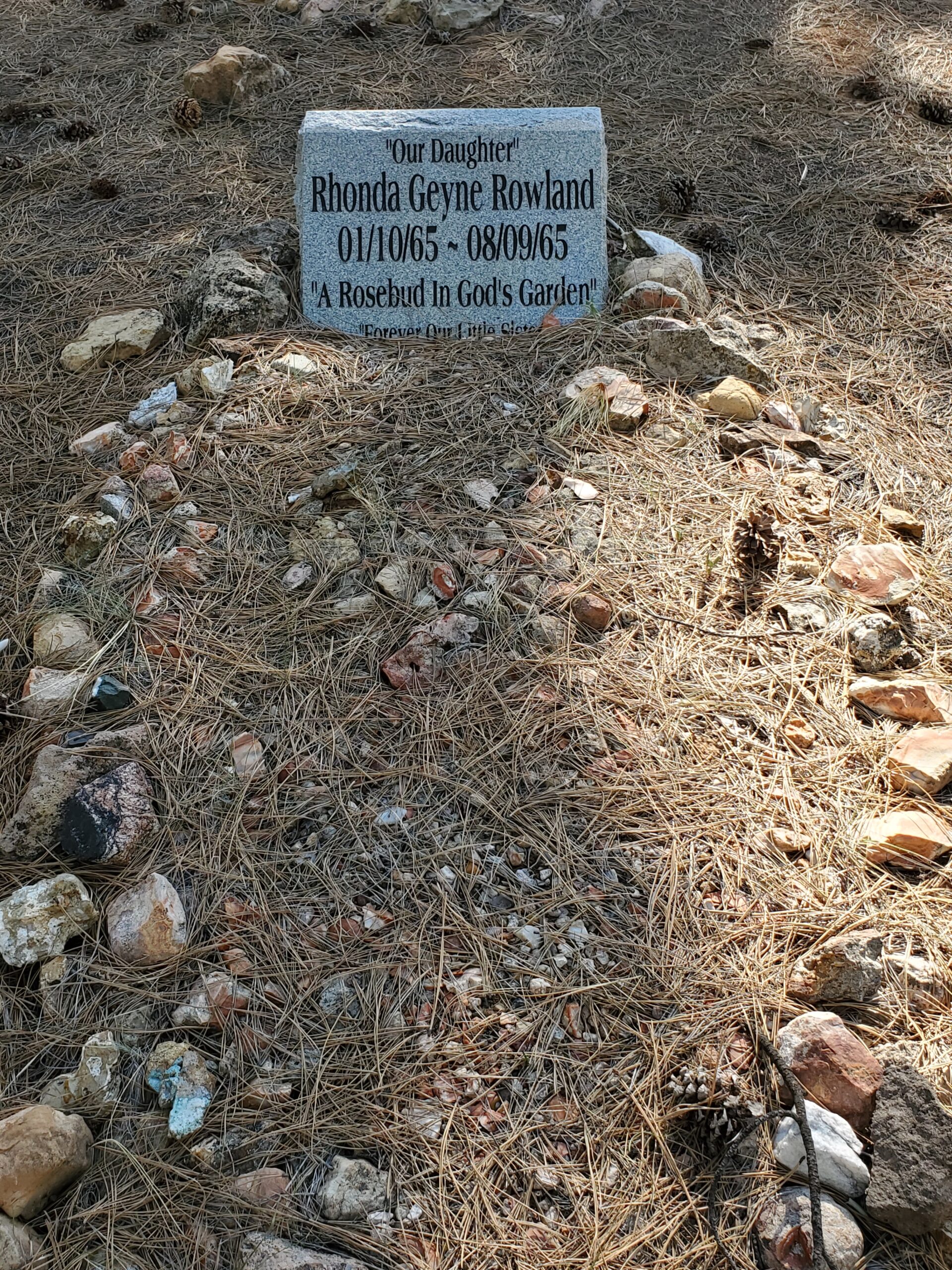
The most surprising fact of the cemetery, to my mother and I in any case, was the high number of young individuals buried there. Some of the graves date back to the beginning of the twentieth century, when white settlers first began to move to the rim, but many of the graves are far newer. And many are for babies, children, or young adults who died in their twenties.

The word I would use to describe the place is tranquil. In the fifteen or so minutes we spent walking around, no one else joined us in the cemetery itself. Judging by the ranger's reaction when we entered the park, the cemetery itself doesn't receive a lot of traction or interest from visitors. However, I would highly recommend a stop for anyone already visiting the canyon, or anyone interested in visiting cemeteries like my mother and I. The headstones are all unique, so very different from the standard rectangles we see at our normal city cemeteries like where the majority of my family is buried.

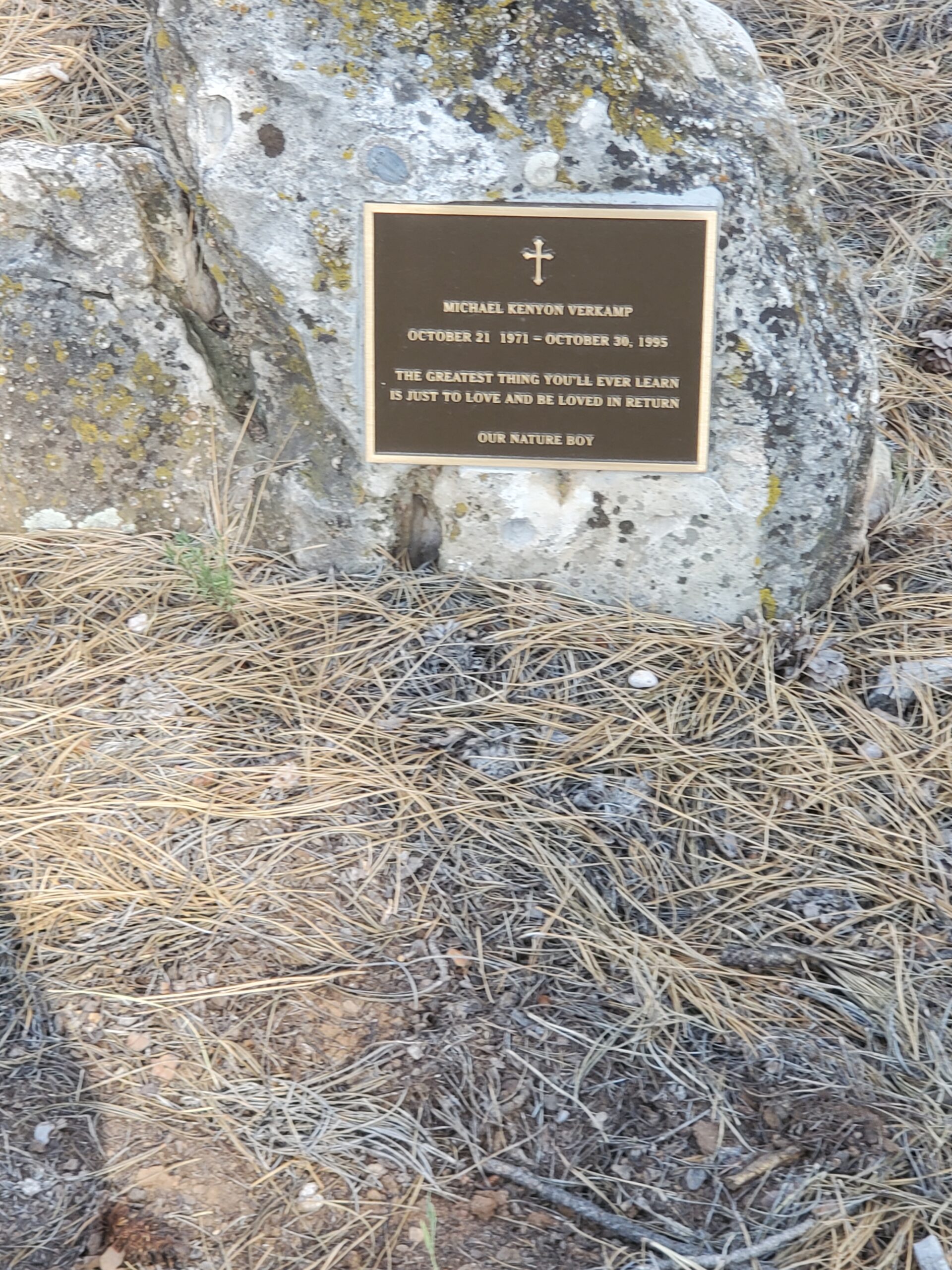
Here are some photos of the burials within the cemetery.
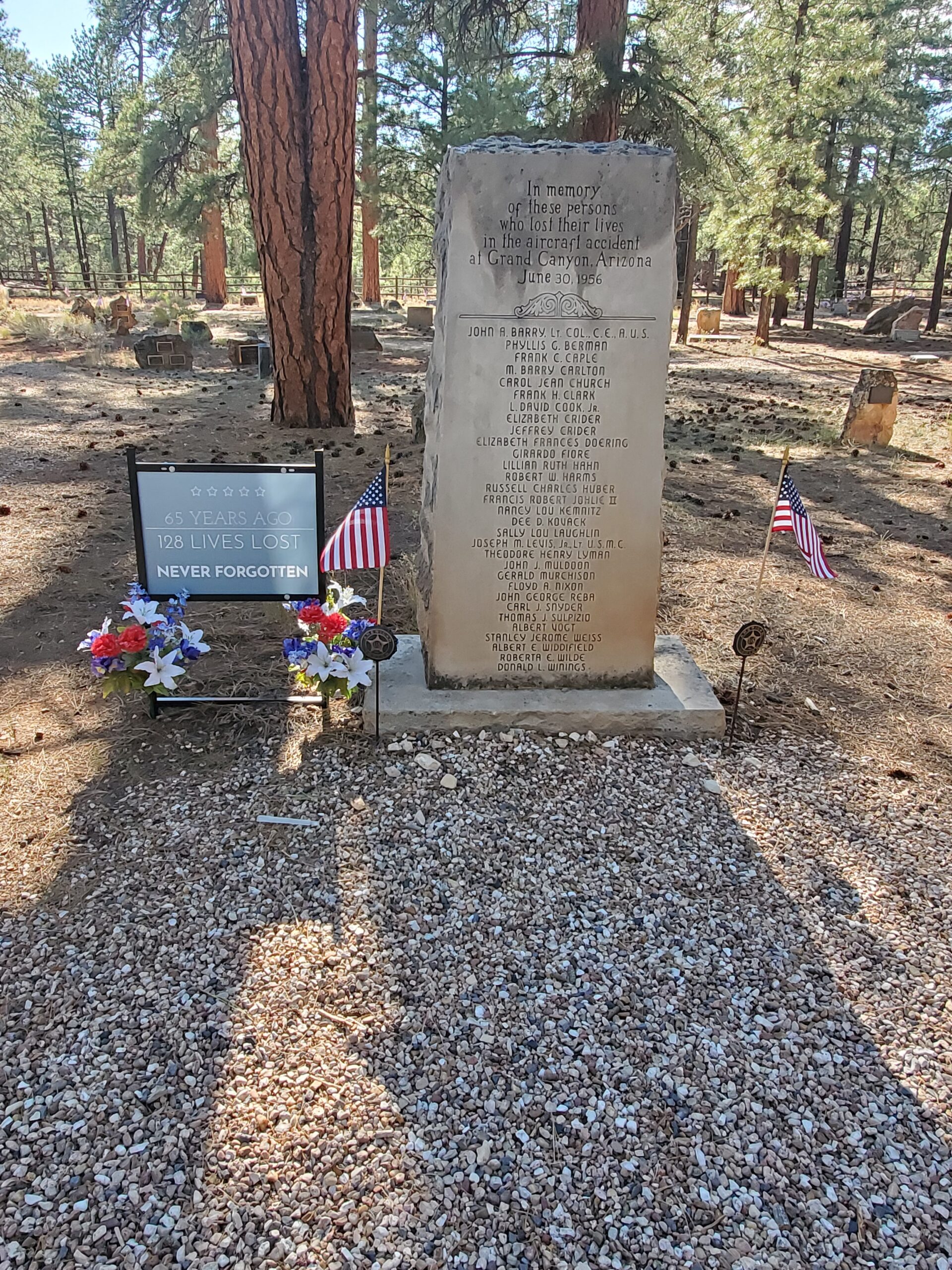
This memorial was dedicated to the 128 souls lost during the collision of two planes over the canyon in 1956

Memorial to those lost during the mid-air collision of two flights over the canyon in 1956.
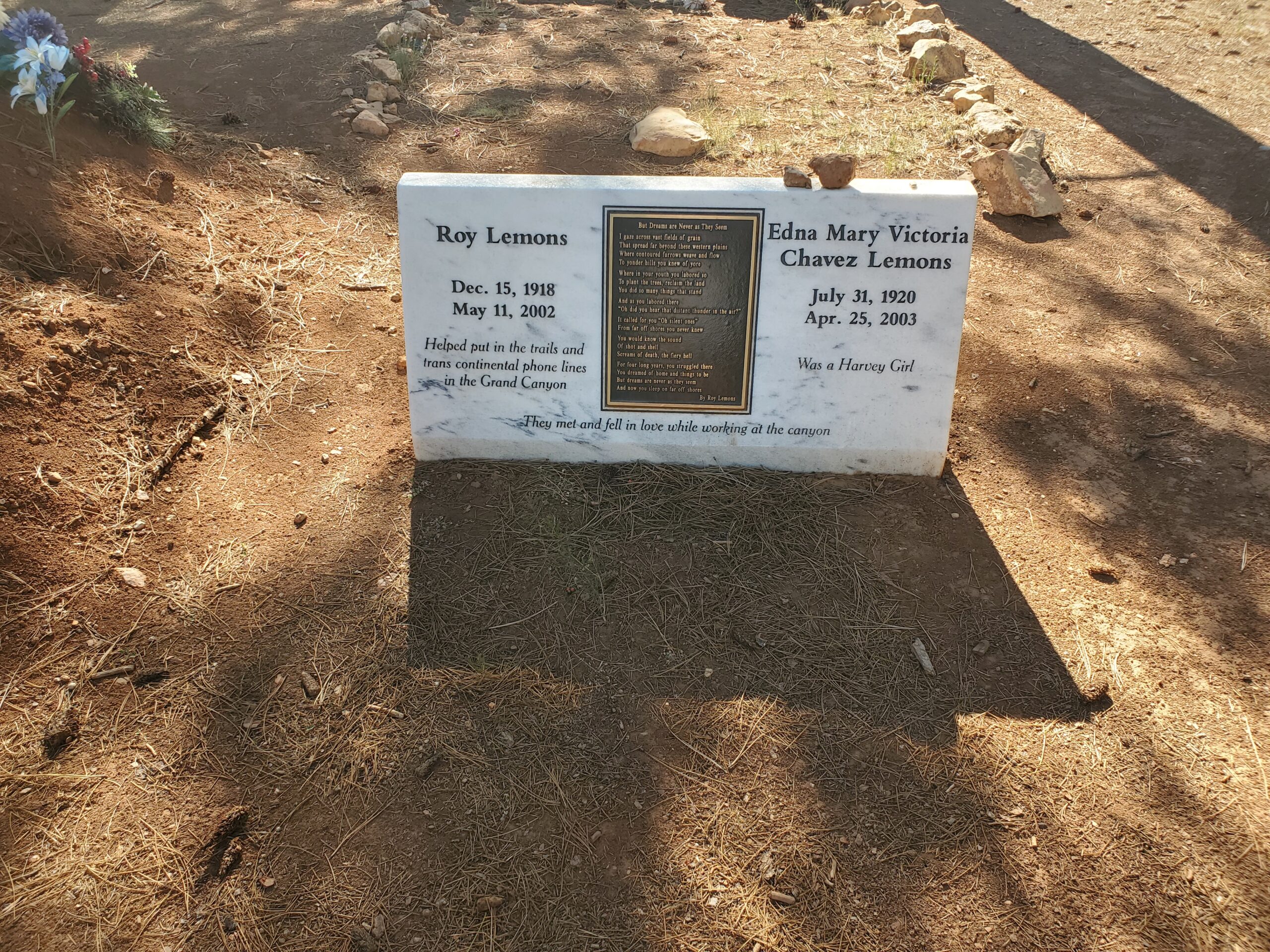
The Lemons' Double Headstone

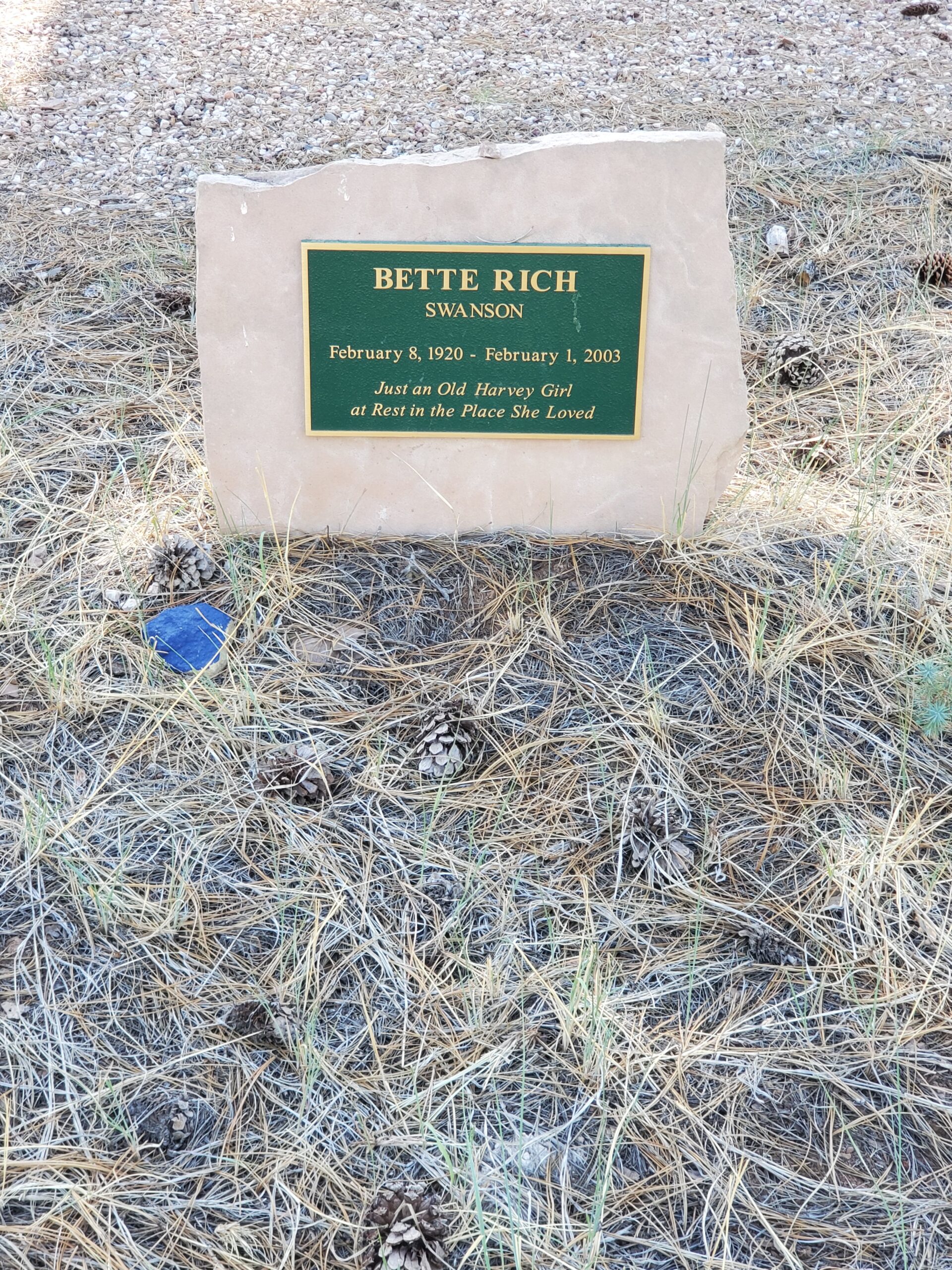
A double headstone for a couple united forever in death. Roy worked at the Canyon for many years, as did Edna. The Fred Harvey Company operated most of the buildings at the canyon for many years, and "Harvey Girls" were usually waitresses at the various restaurants and cafes around the canyon rims.
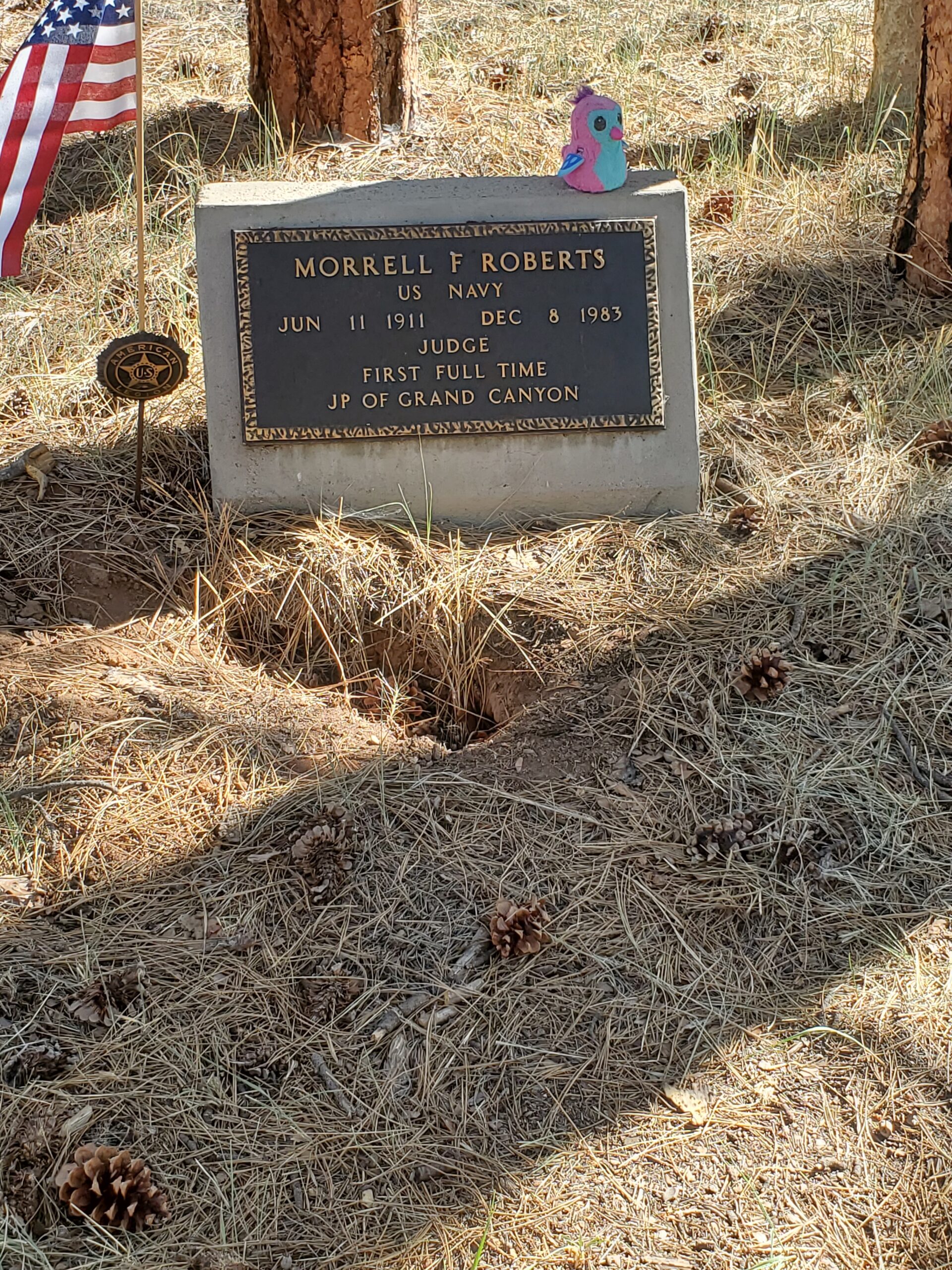
Morell Roberts Grave
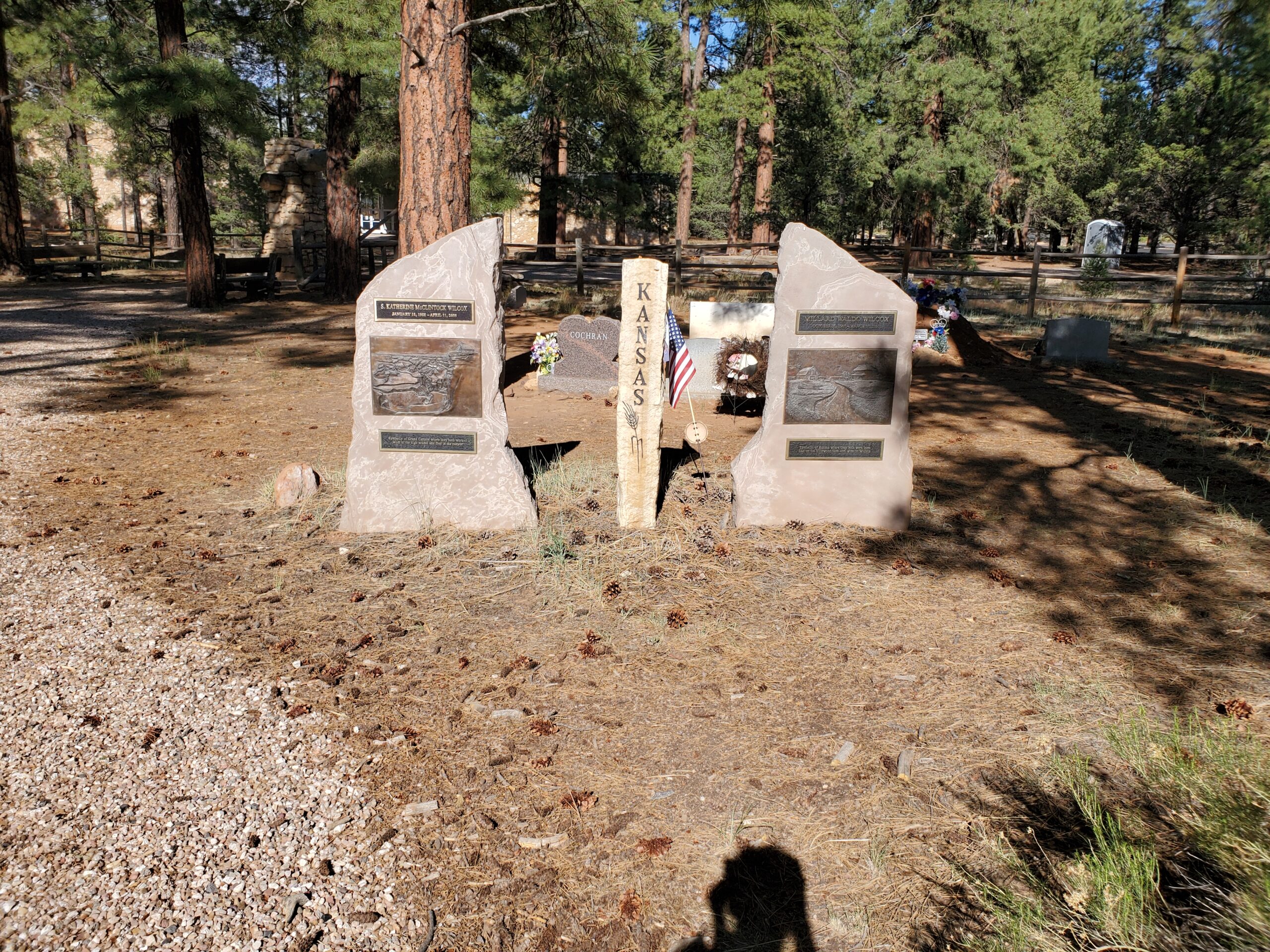
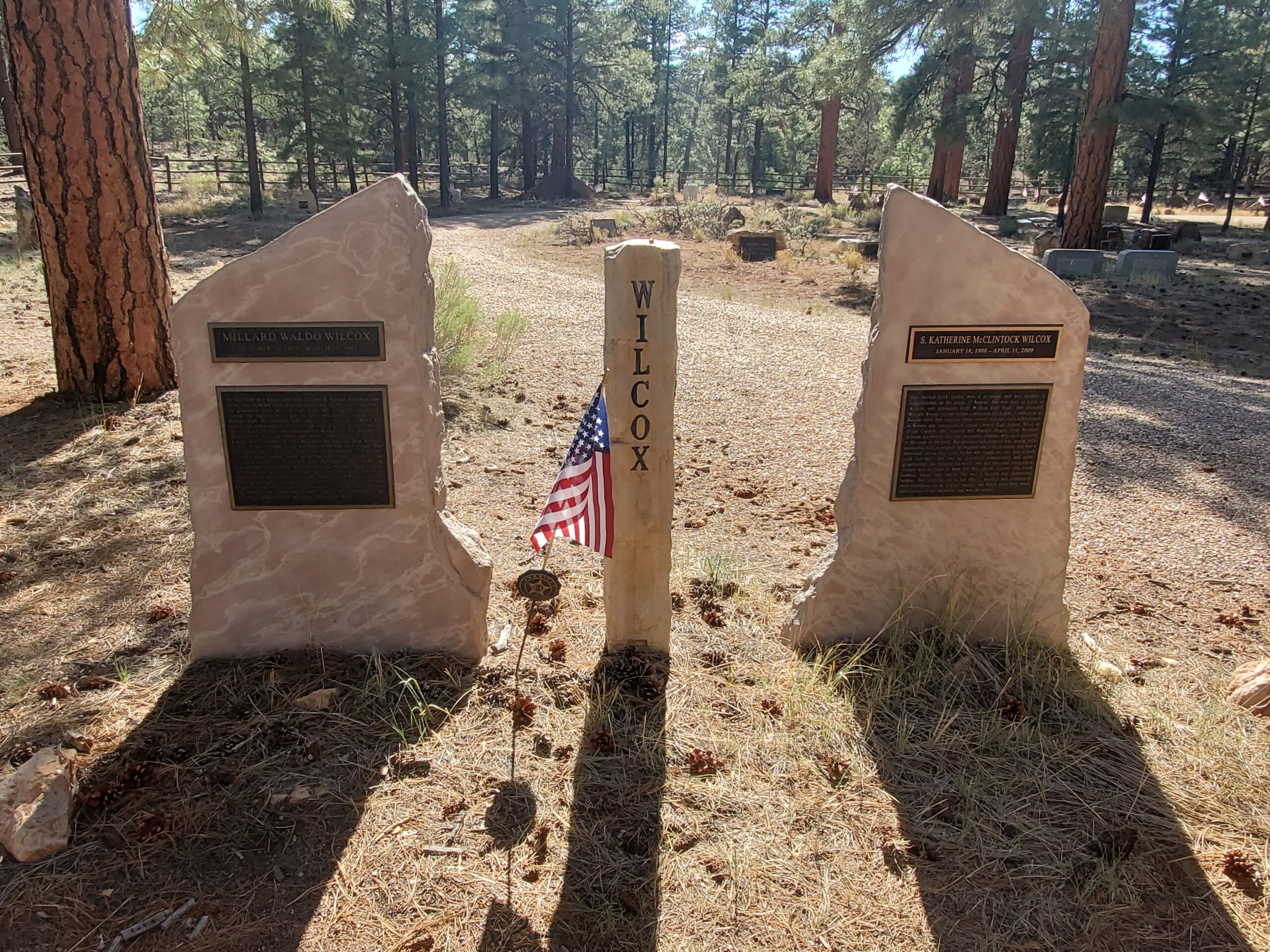
Wilcox Graves
Backside of the Wilcox Grave

The Wilcox's have very intricate headstones that are separate but united by their familiarity. The stones are decorated with epitaphs on the front and engravings on the back.
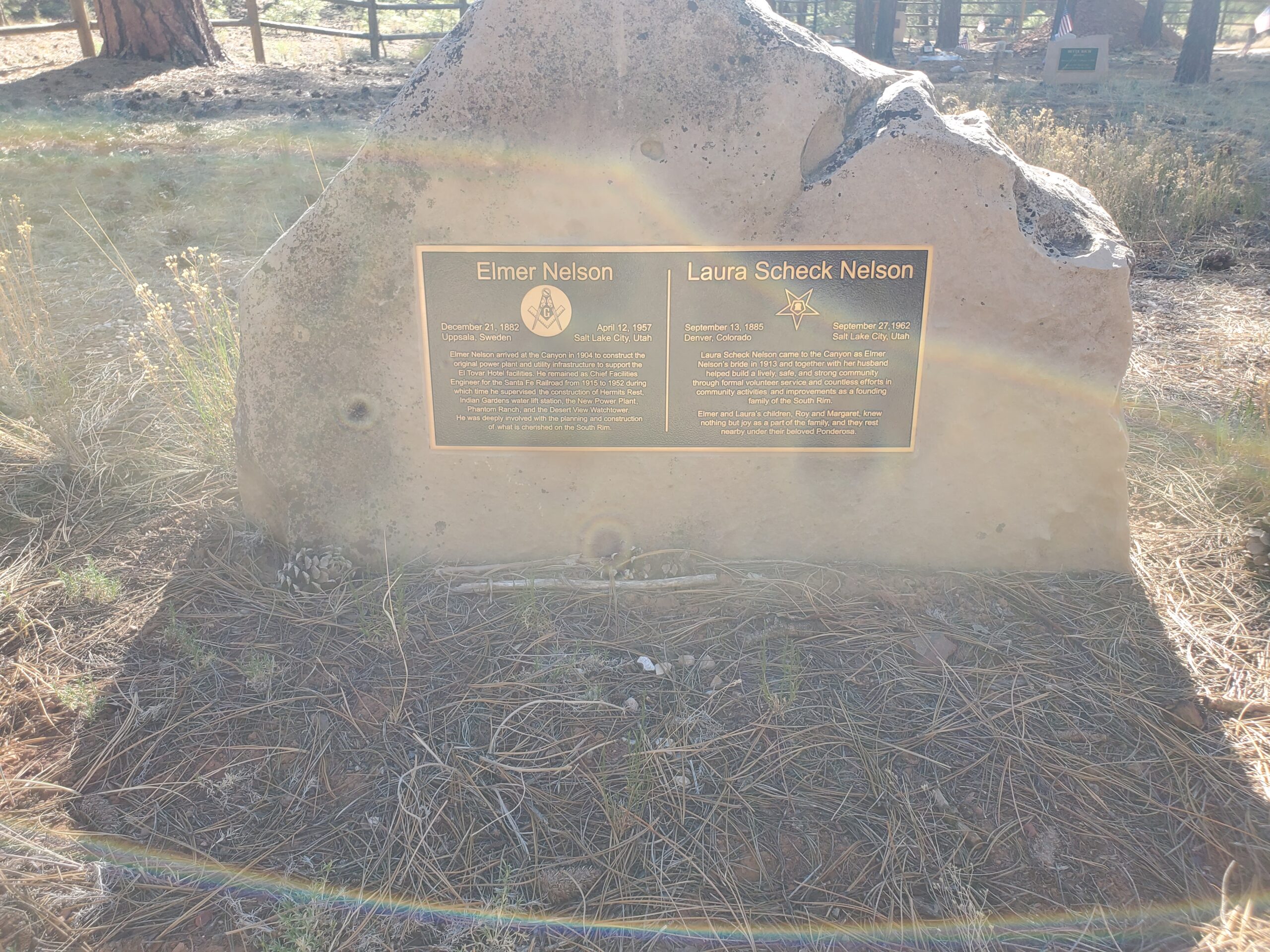
Nelson Double Headstone
Kolb Headstone

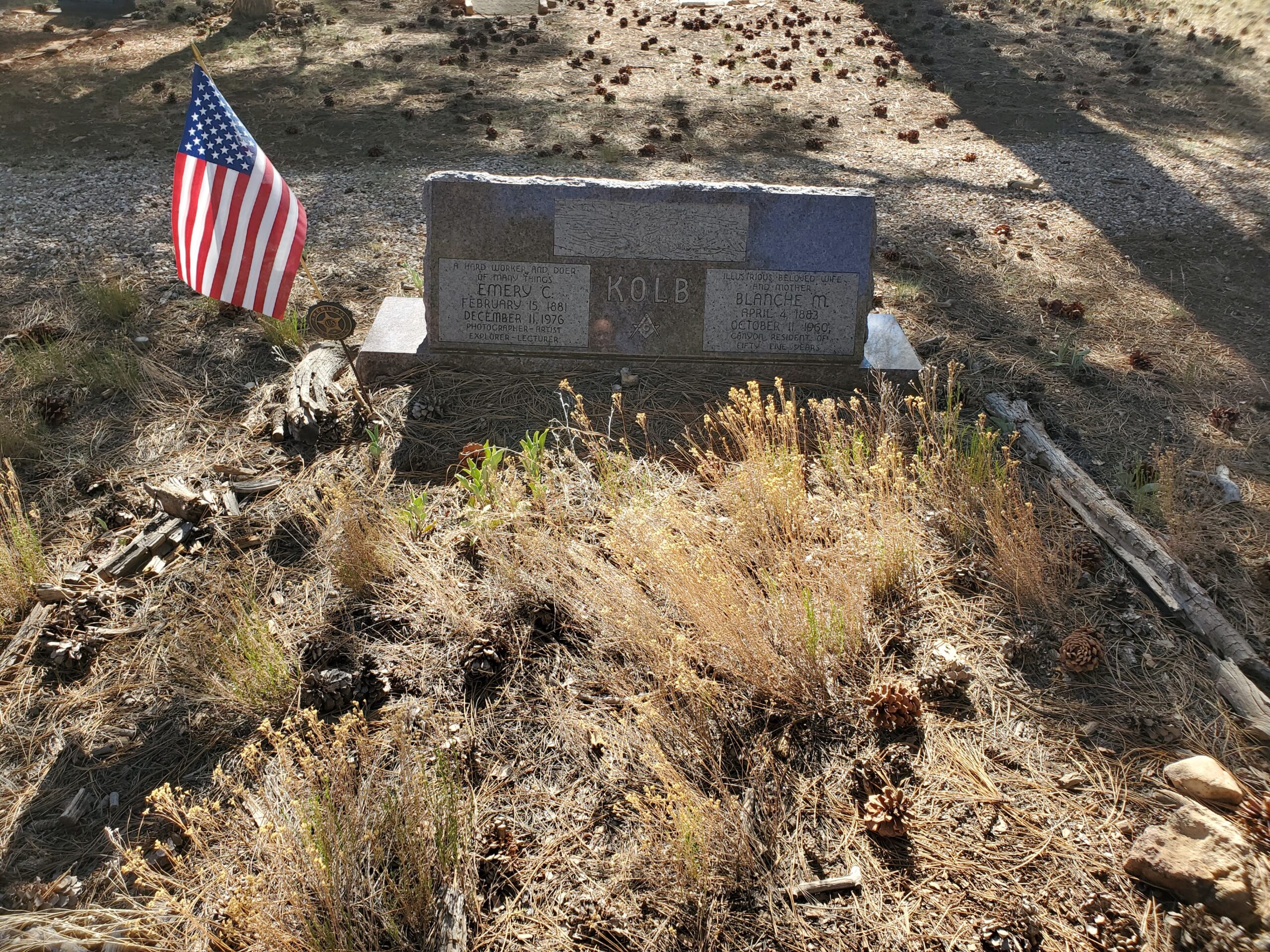
Emery Kolb and his brother have often been considered the true pioneers of Grand Canyon tourist attraction and excavation work. Emery's headstone here, shared with his wife, is simple and located just inside the gates of the cemetery to the left. Unfortunately during our visit his grave marker was directly in line with a port-a-potty outside the cemetery gates.
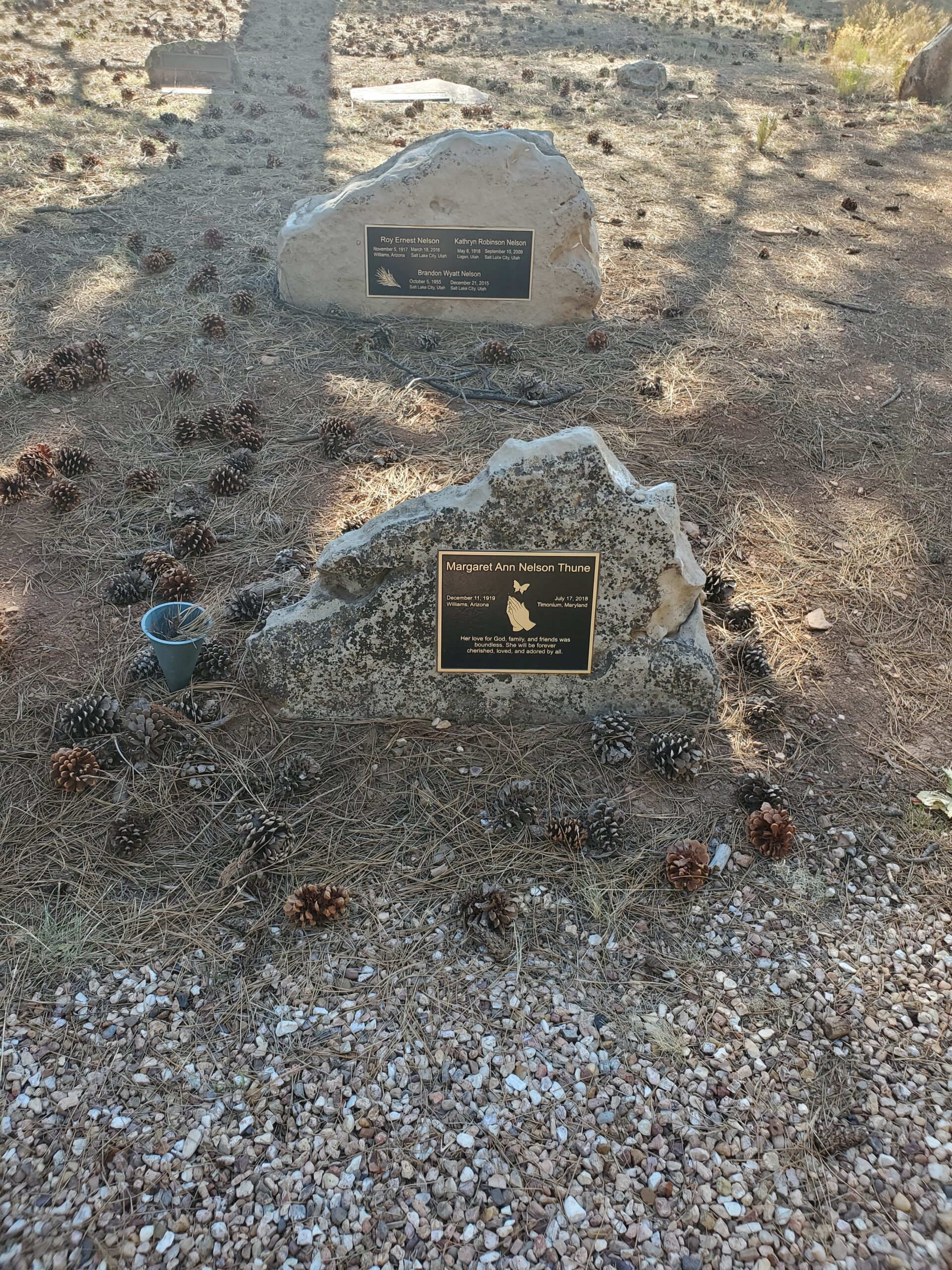
More Nelson Graves
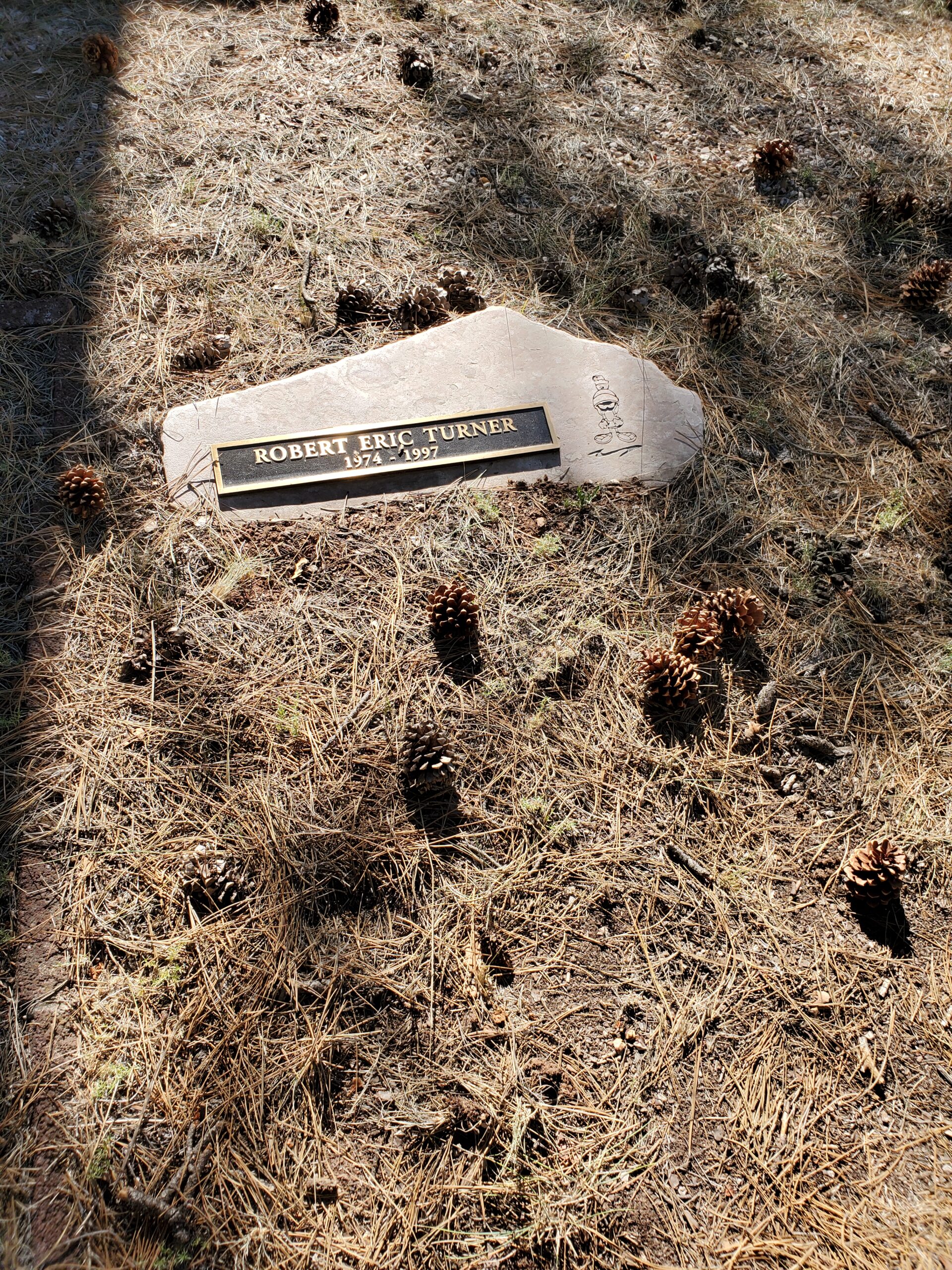
This young man's headstone features a Marvin the Martian engraving
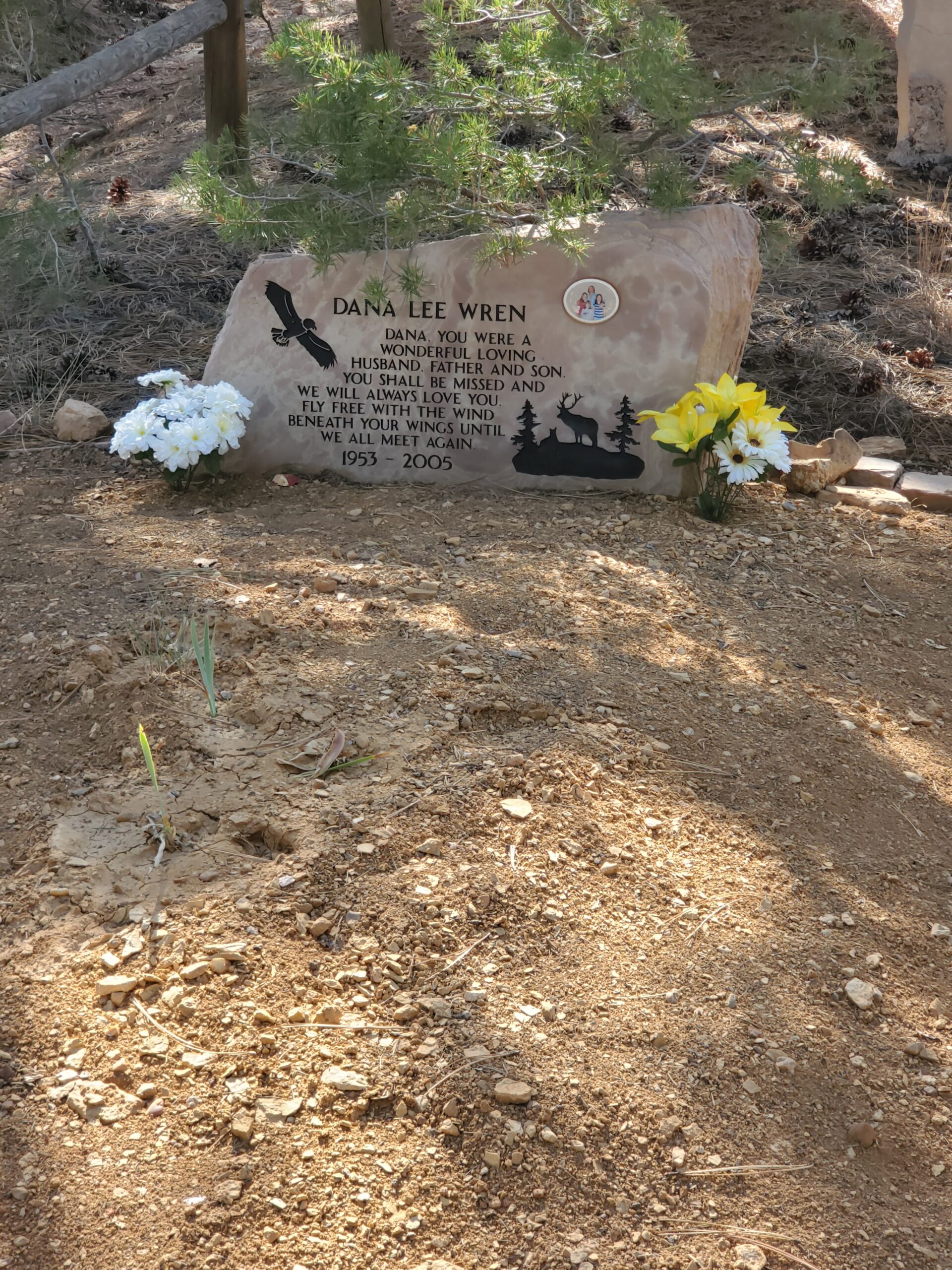
Dana Wren Headstone
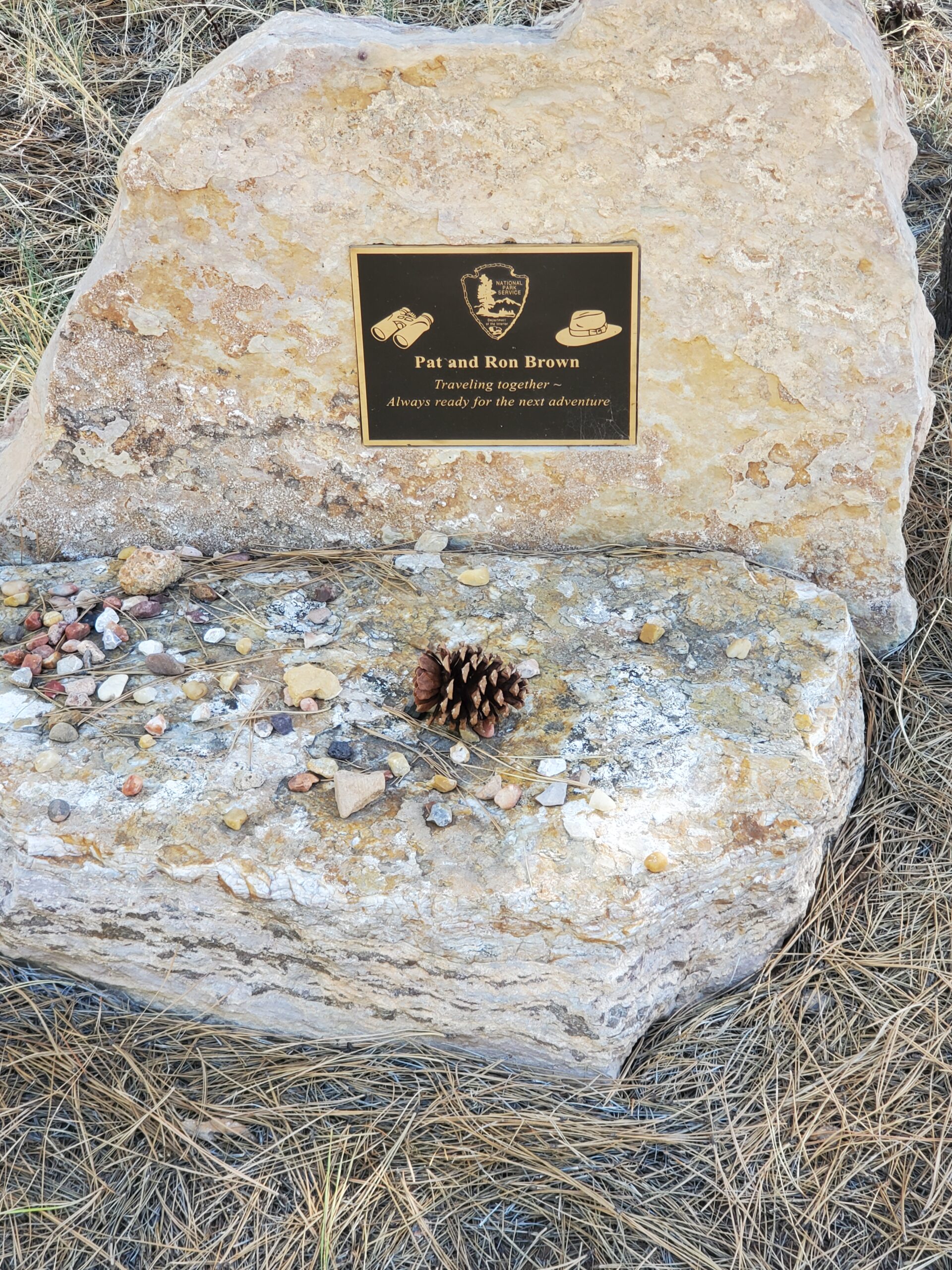
Pat and Ron Brown Headstone
Bette Rich Swanson Grave Marker
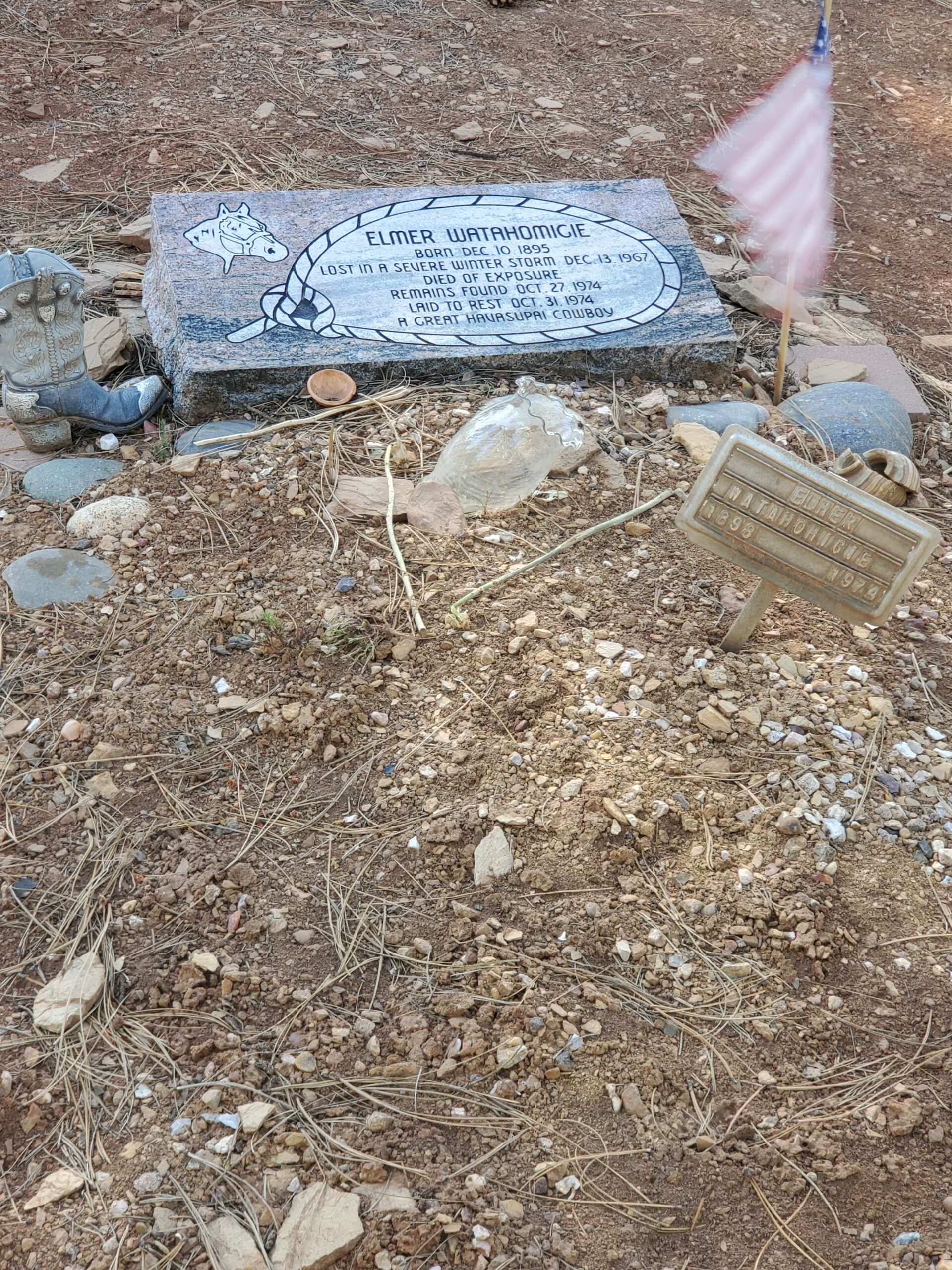
Elmer W Headstone

This poor soul was lost in the canyon for several years before his remains were identified and laid to rest in the cemetery. Several of his relatives are at rest nearby.
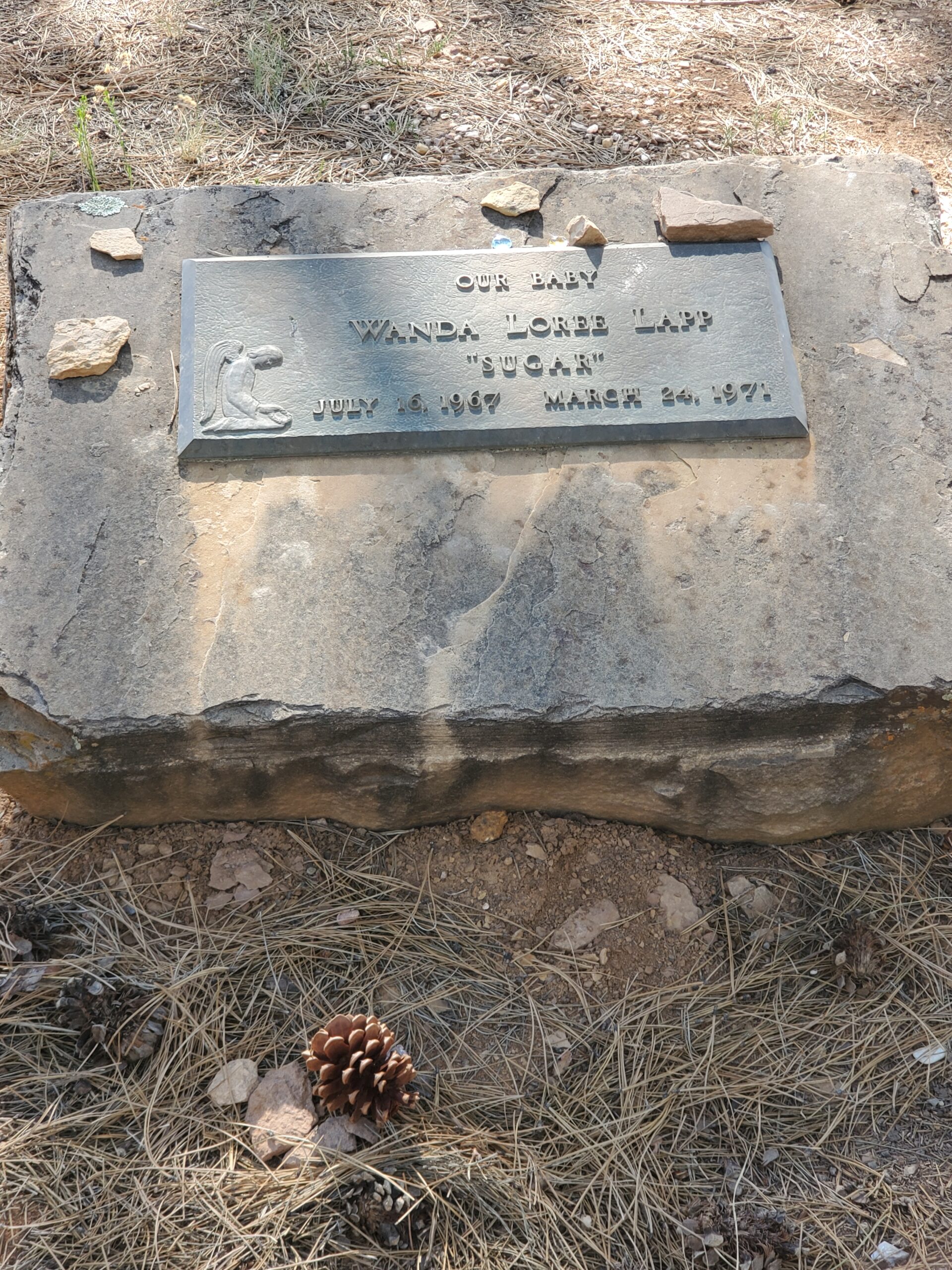
Child's Headstone
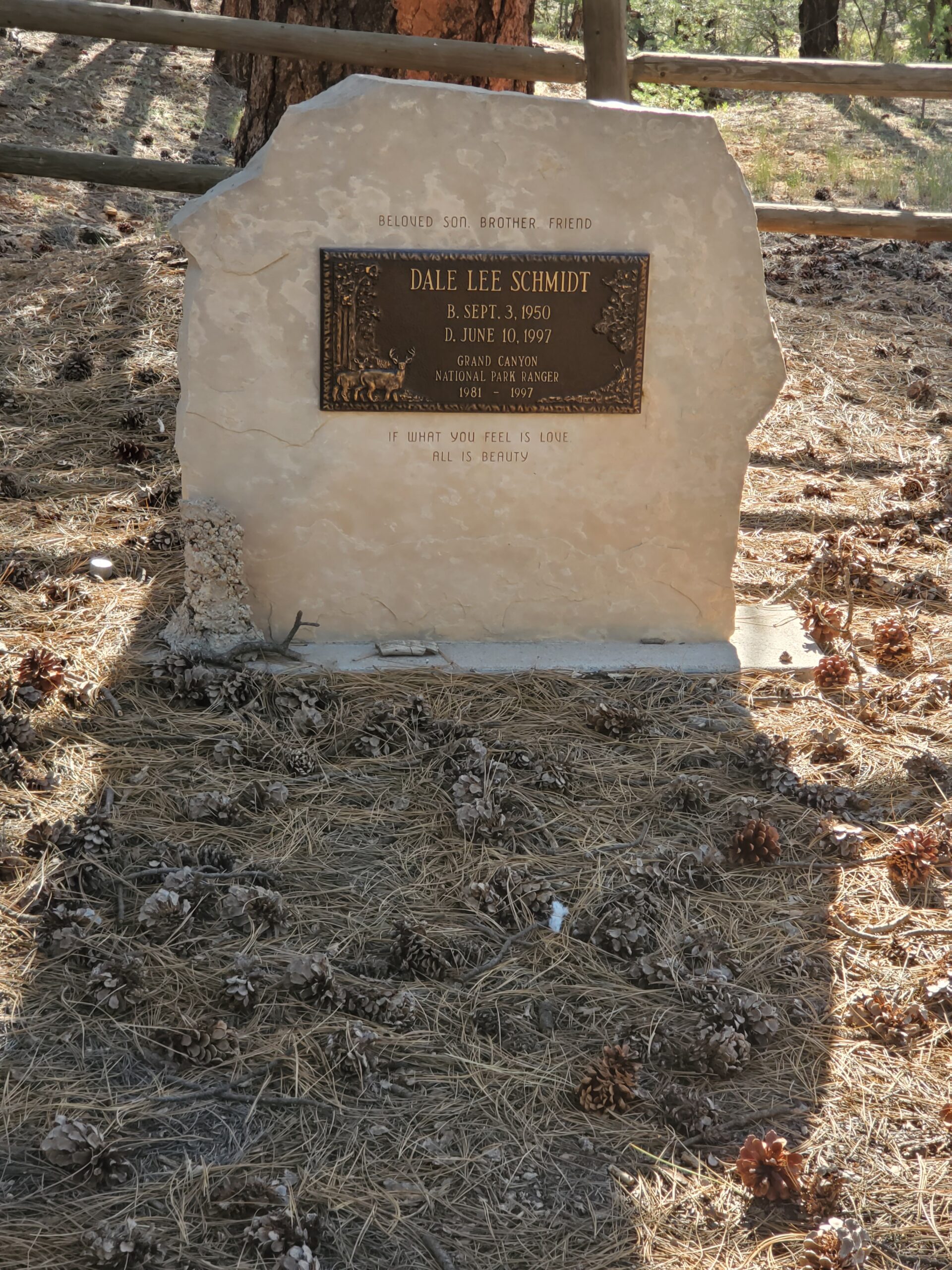
Dale Schmidt Grave
This headstone dates from 1928, one of the older markers in the cemetery
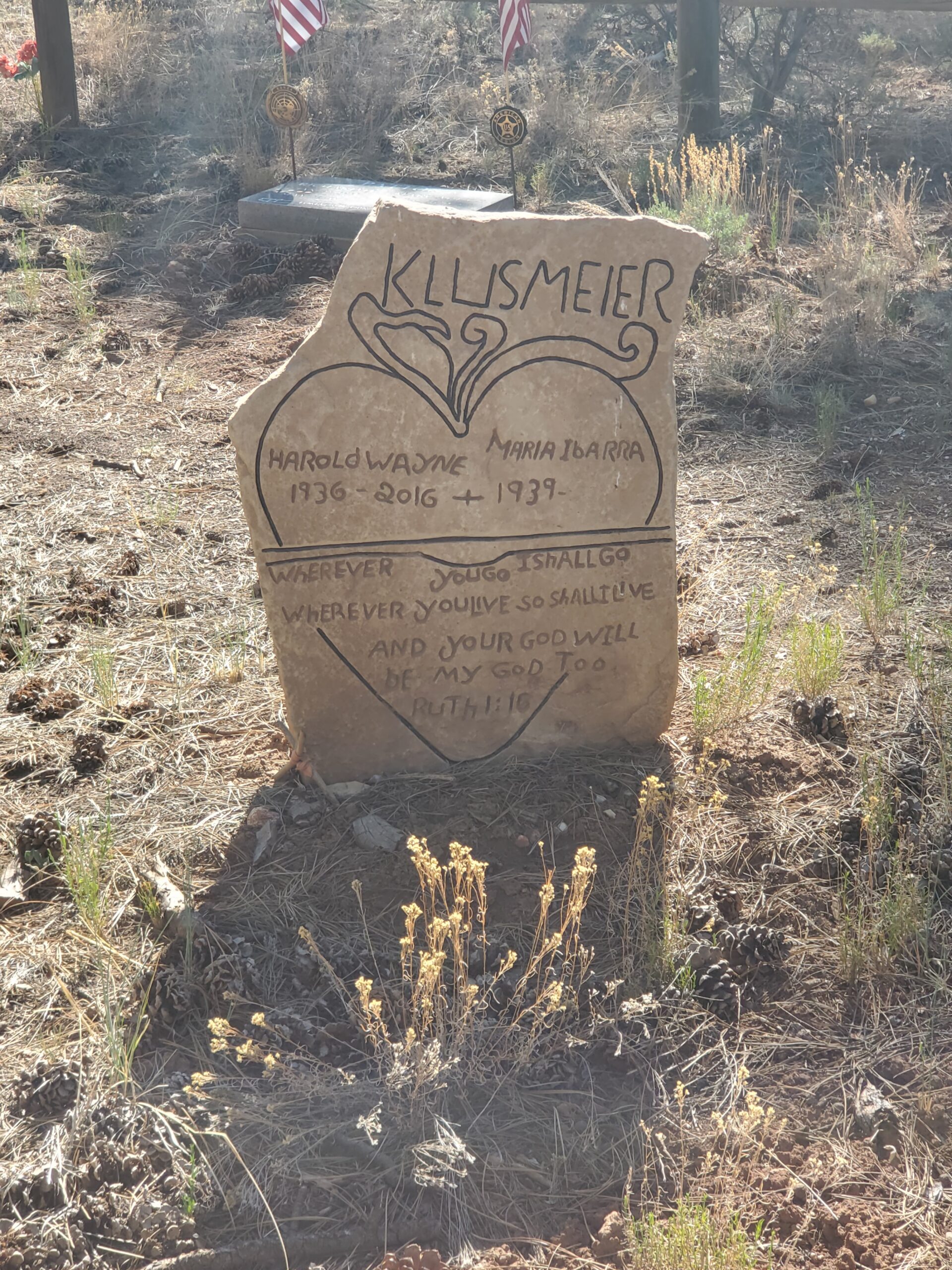
Hand Carved Headstone
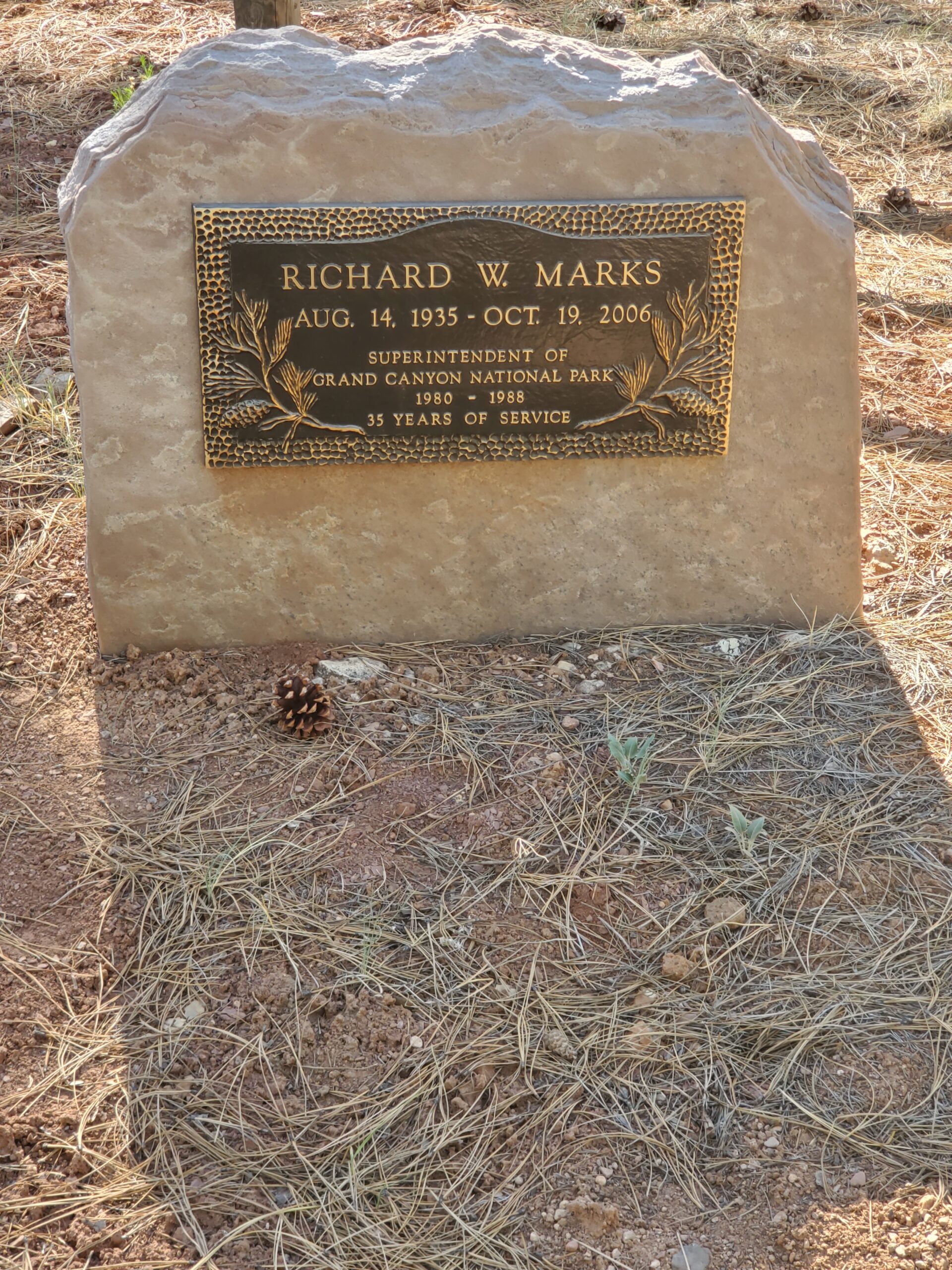
Richard Marks Headstone
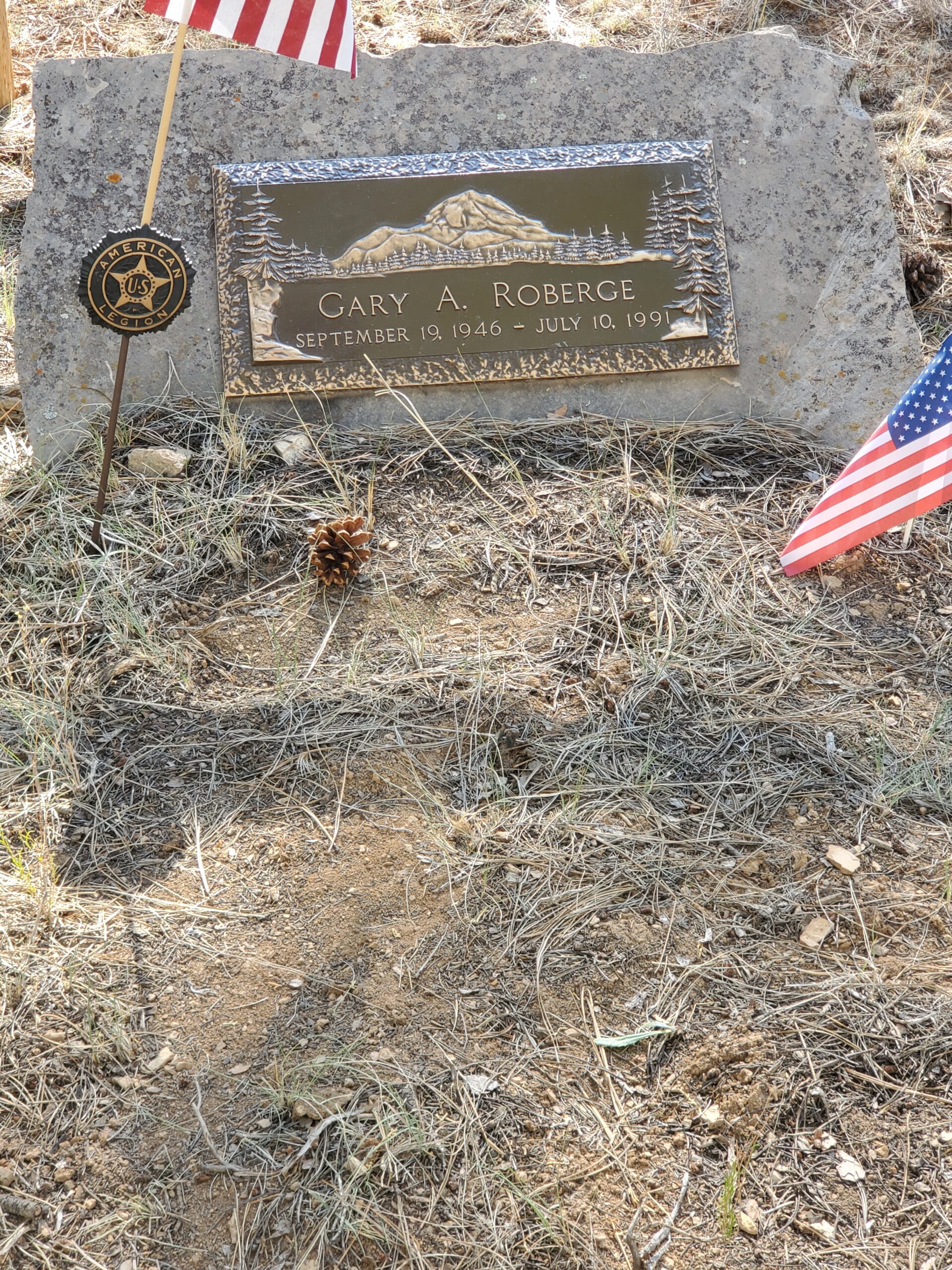
Gary Roberge Headstone
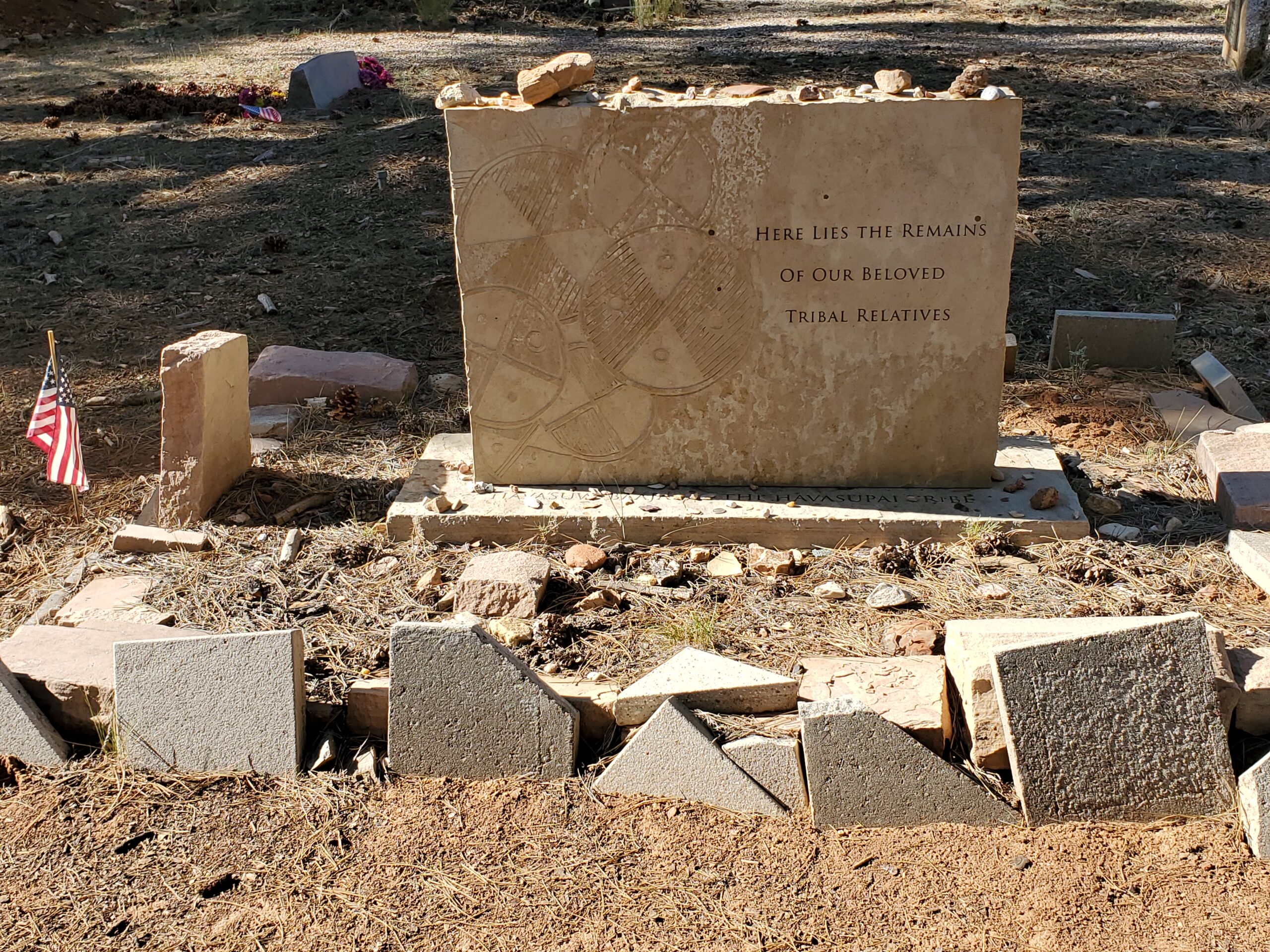
Tribal Grave
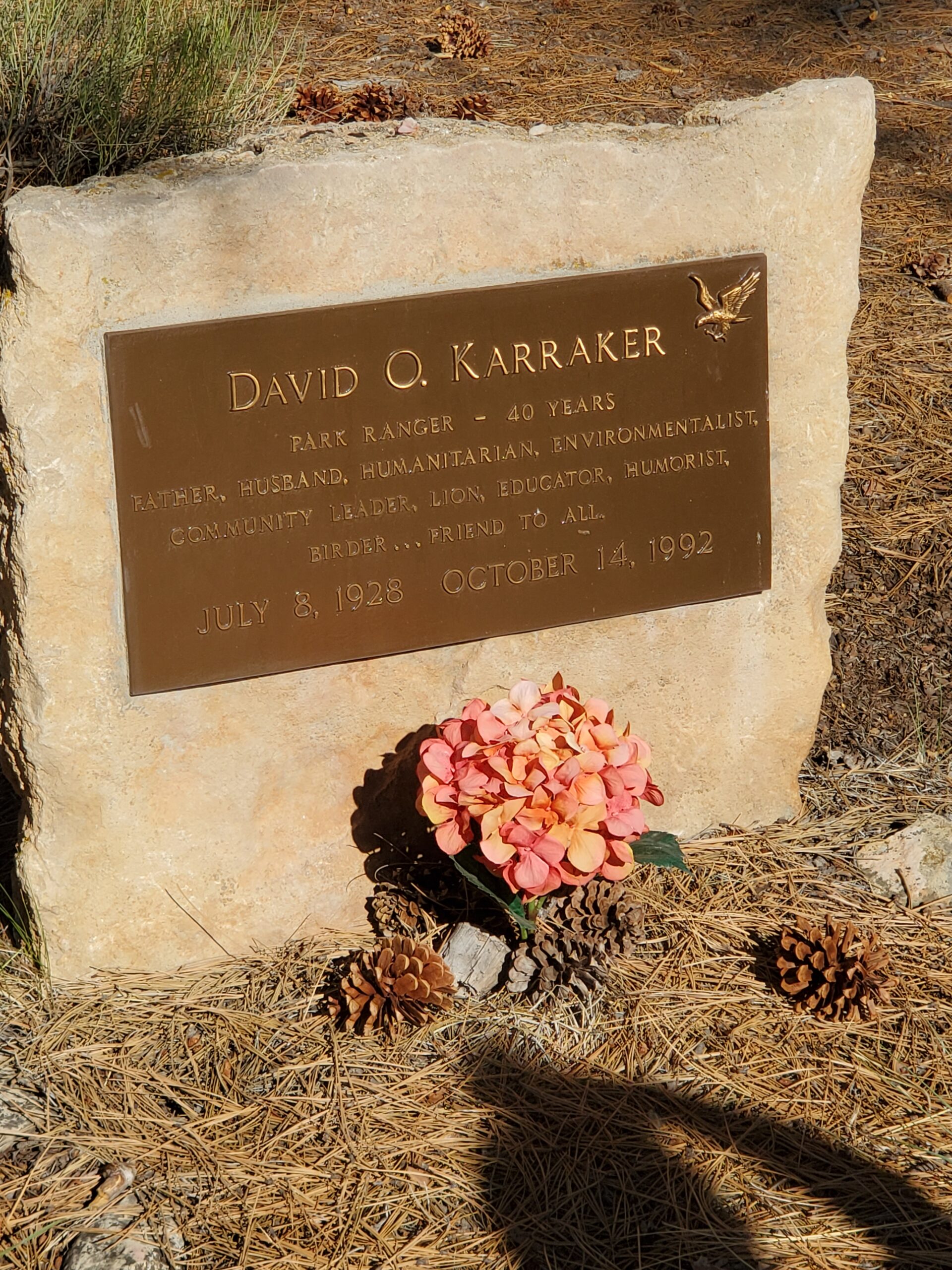
David Karraker Marker
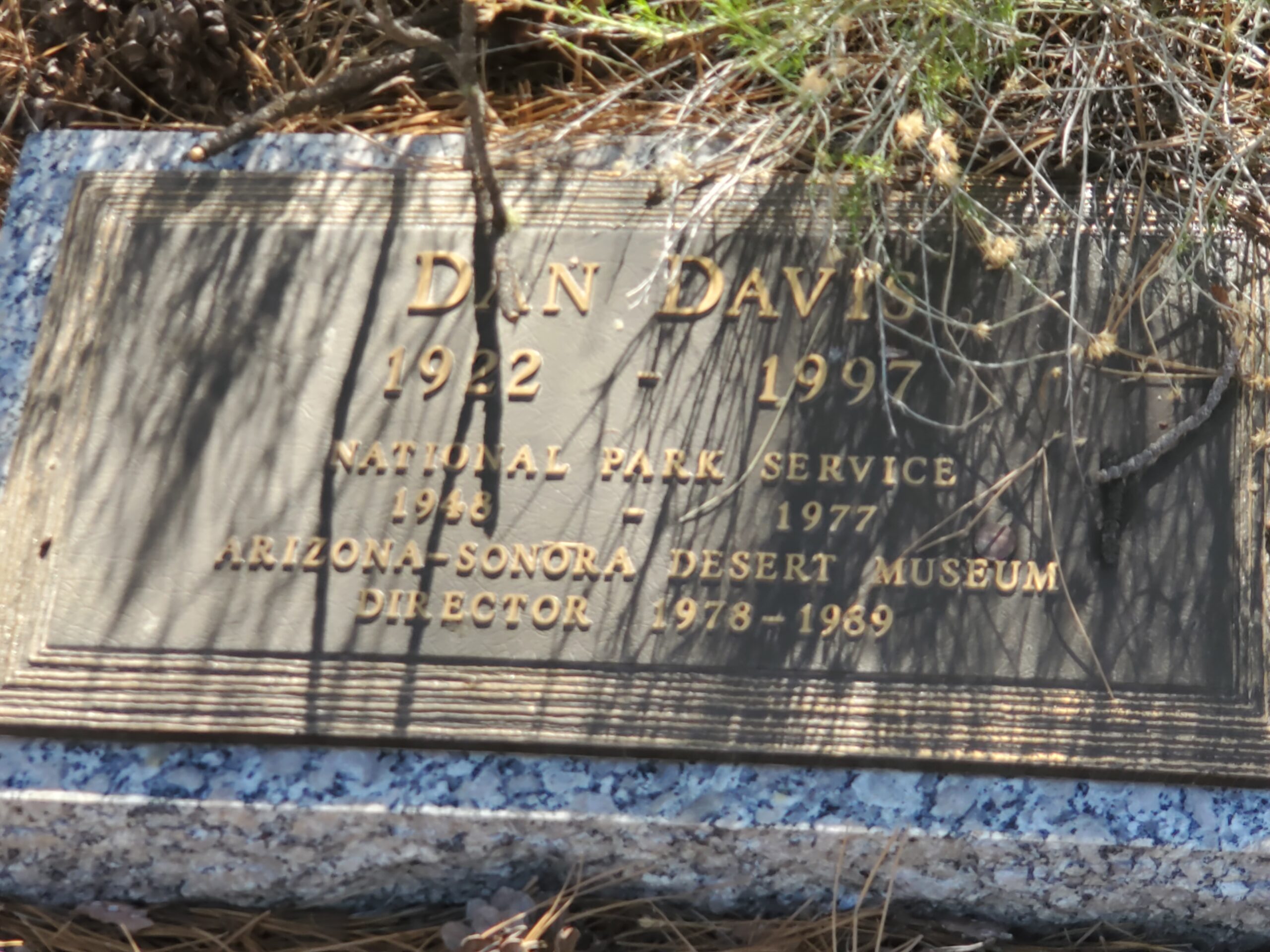
Dan Davis Headstone
Another young man taken from this world too soon
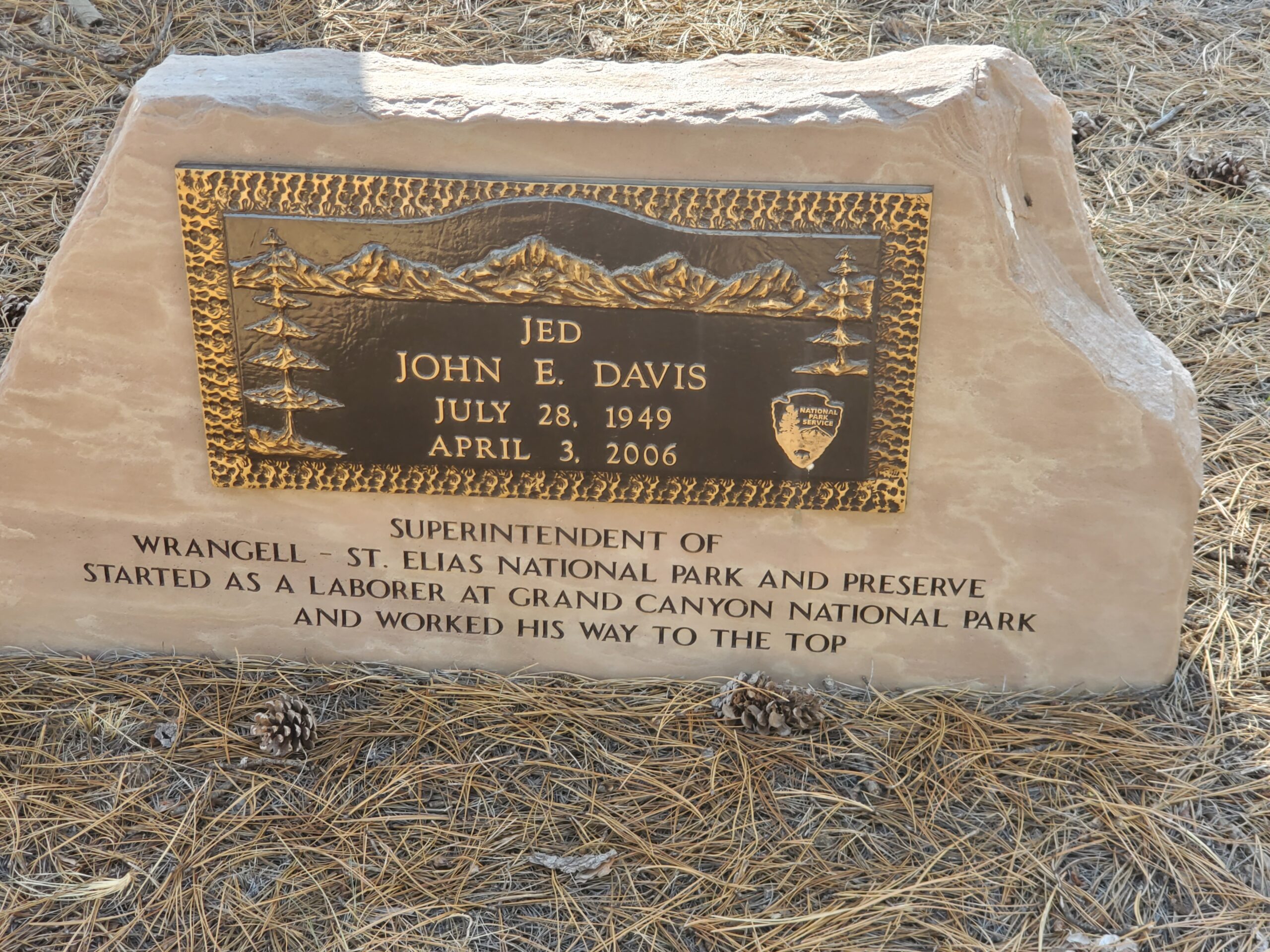
John Davis Marker
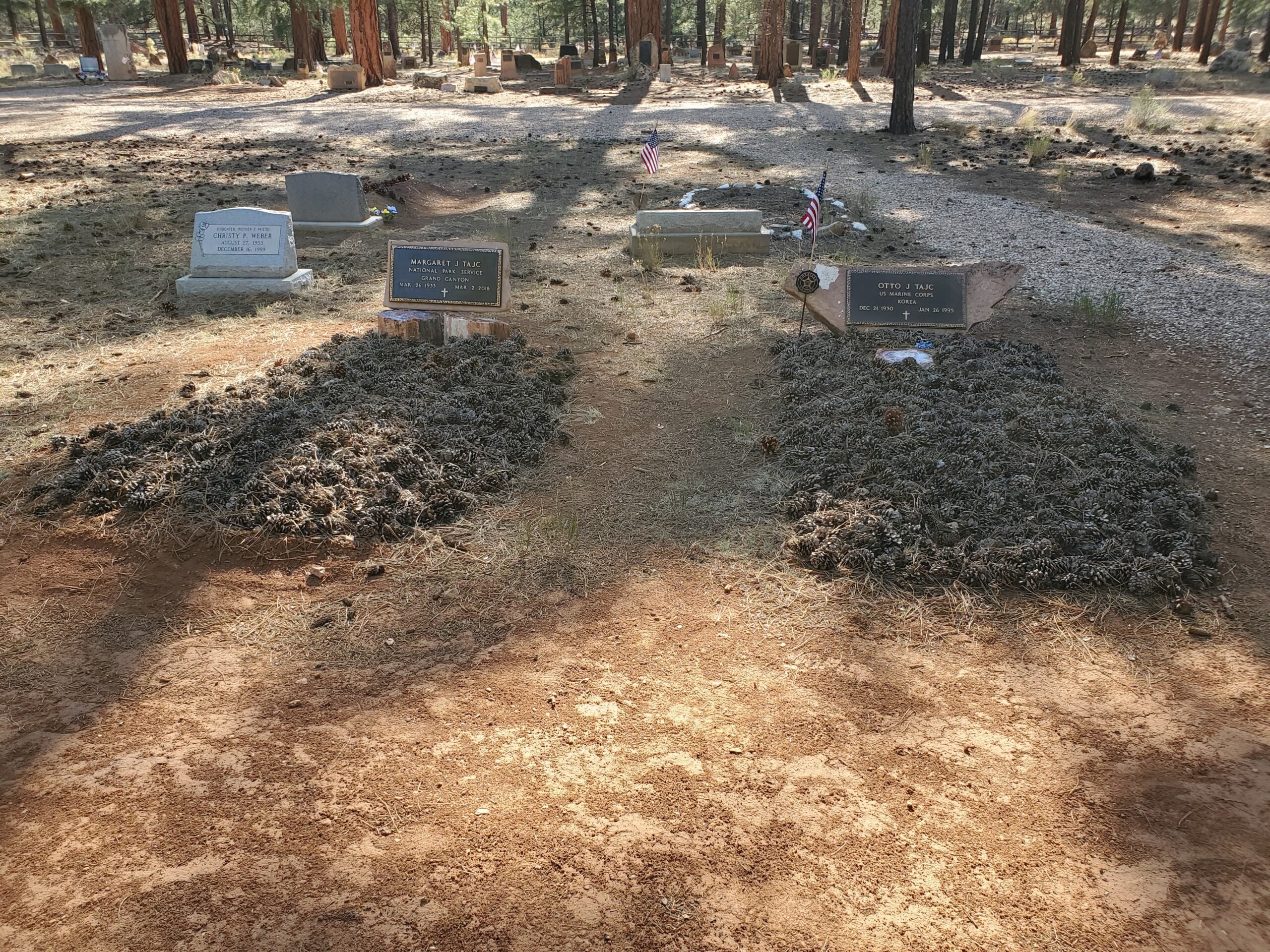
These two graves are littered with a bed of pine cones on each
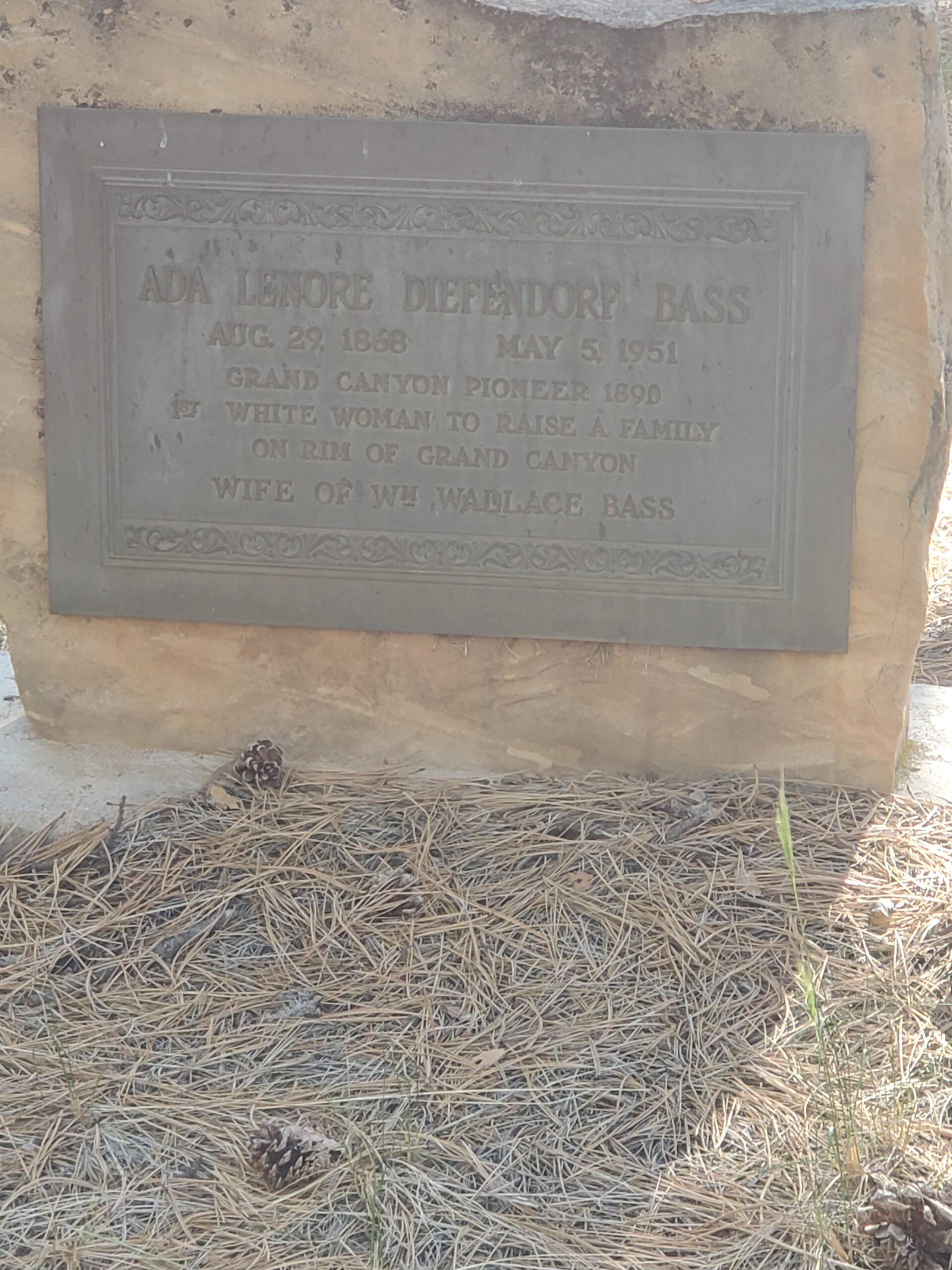
Ada's headstone claims she was the first white woman to raise a family on the canyon's rims
Another child taken too soon
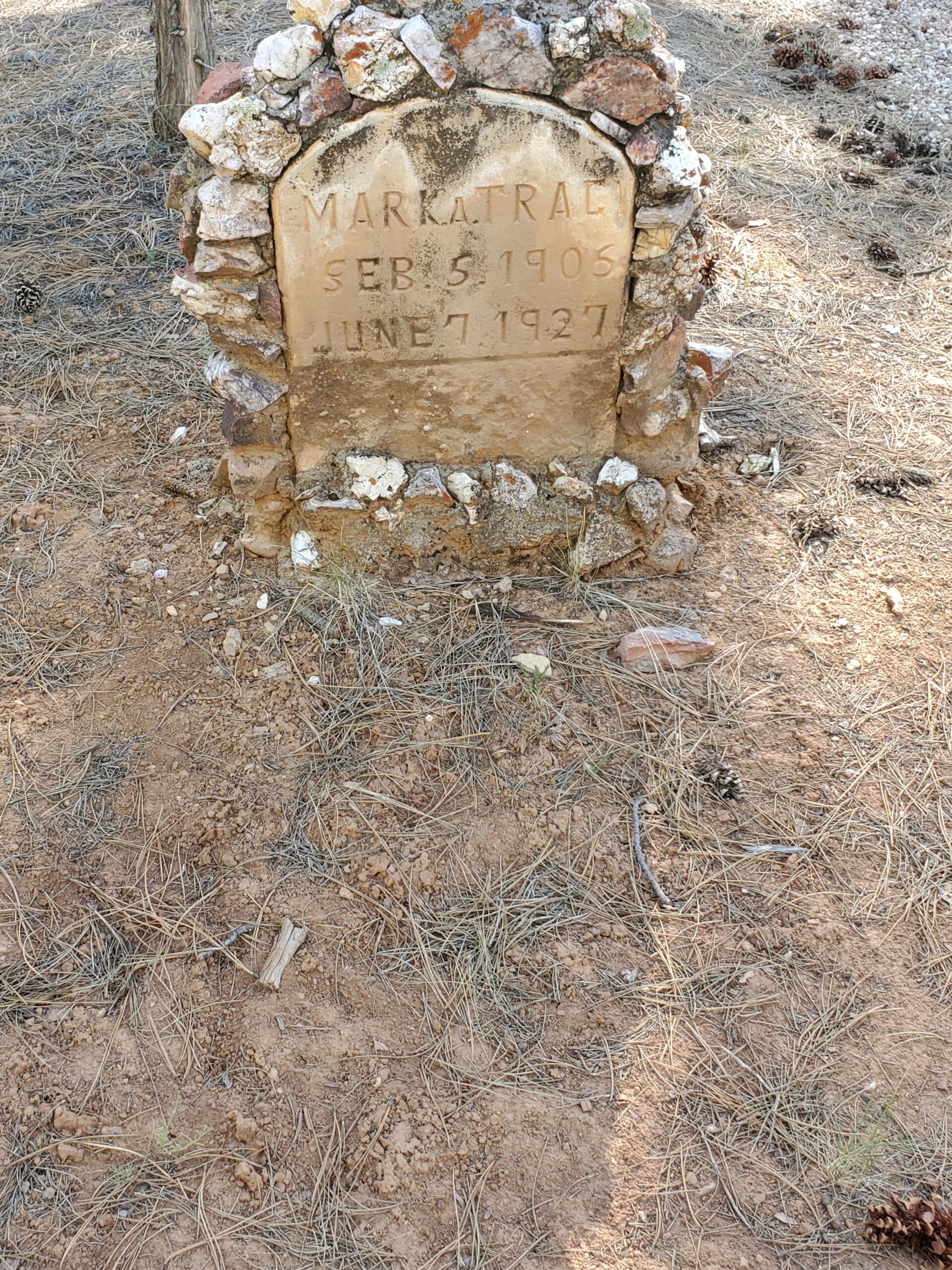
This headstone dates from 1927
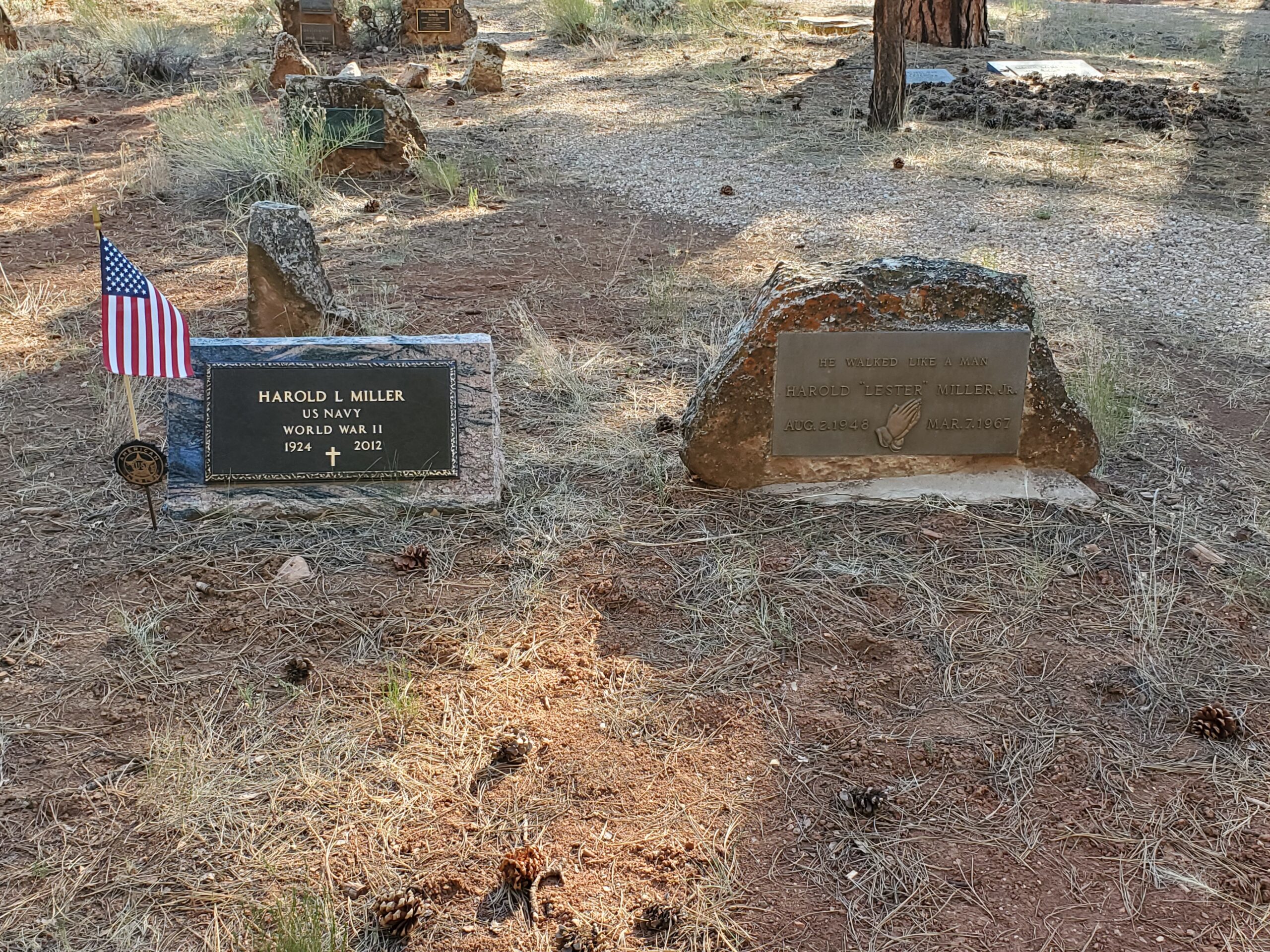
These two headstones are for a father and son buried side by side

As I mentioned above, the cemetery itself only takes about fifteen minutes to meander through. Whether or not you'll find a ranger willing to waive the fee to enter the park is a luck of the draw thing, but I was more than willing to pay the $35 single car entrance fee to visit the park. Of all the cemeteries we have visited so far, Grand Canyon Pioneer is the most tranquil and peaceful we have found yet.

Not enough visitors know about this place, but maybe that's secretly a good thing. The swarms of tourists who mob the rims of the canyon can be overwhelming at times, but the cemetery itself will always be there, waiting in the wings for those willing to find their way to it.


Tomorrow, my mother and I will continue on our road trip and head into the great state of Utah. It will be my first time visiting the state, and at the moment we plan on visiting two cemeteries tomorrow but we'll see if things go according to plan. My next cemetery update will likely be an amalgamation of the several stops we make throughout the state as opposed to focusing on one cemetery in particular. Until next morrow...
Boothill Graveyard

Posted on June 24, 2021January 16, 2022 by nickssquire12
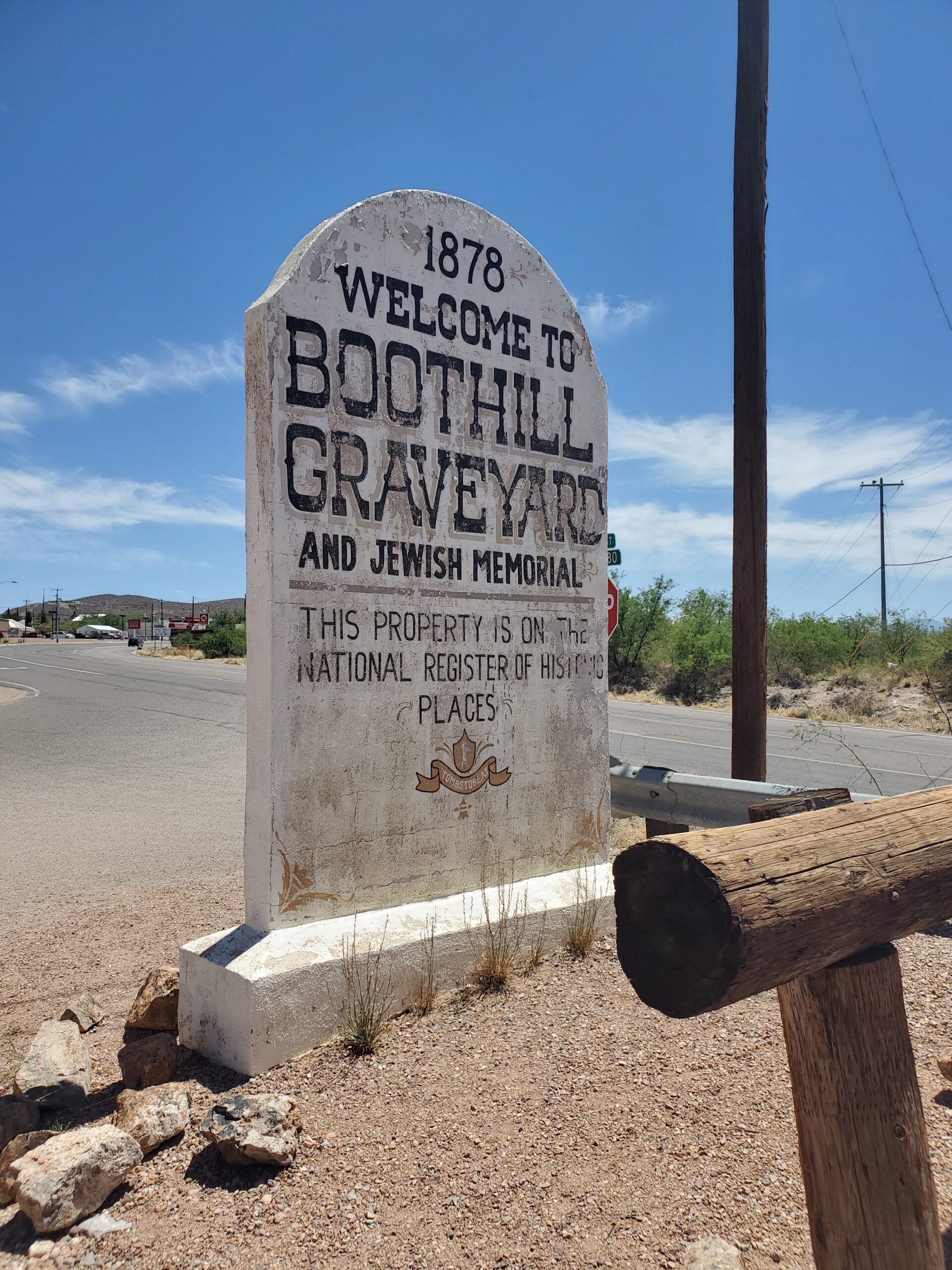
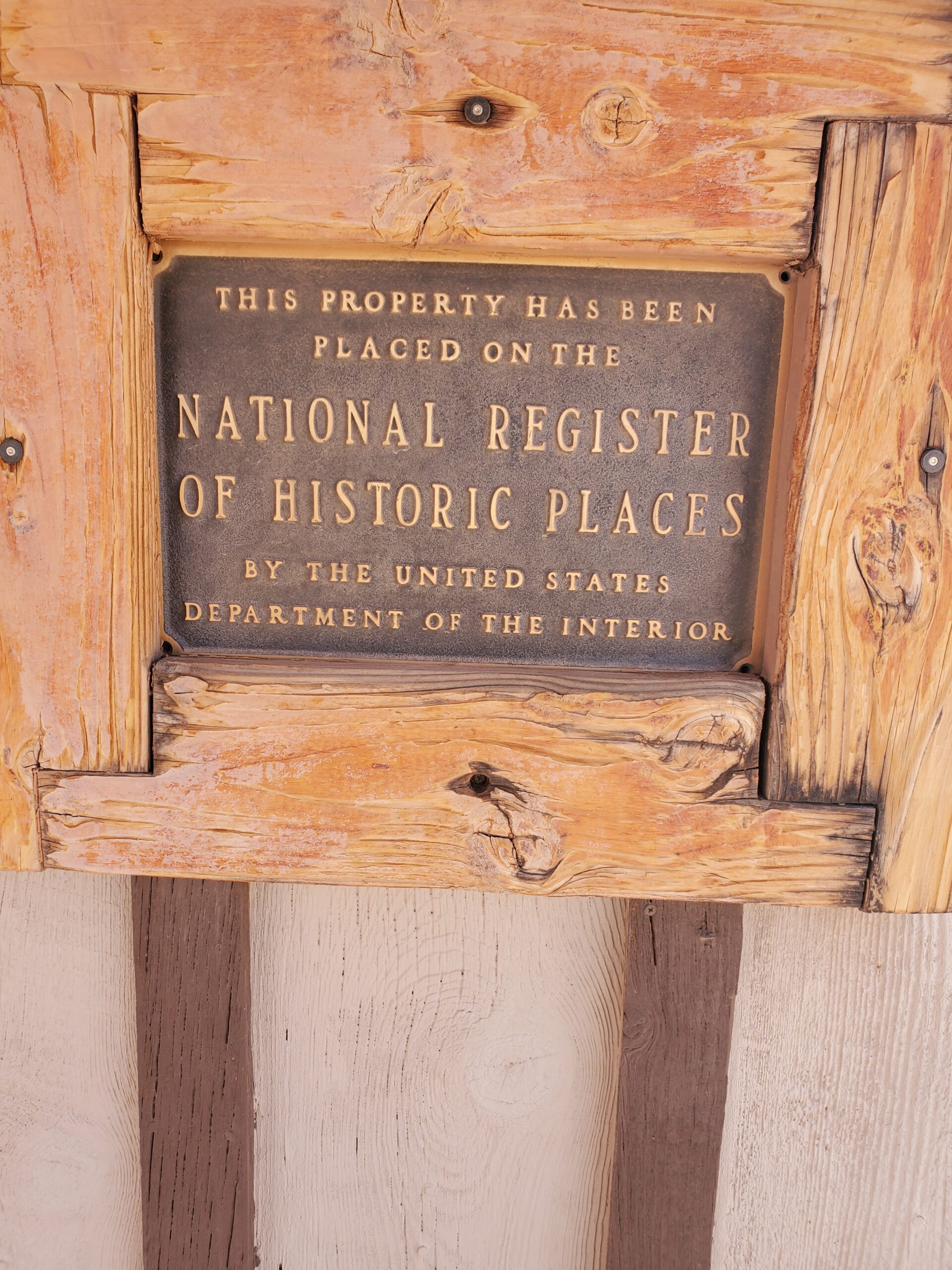
Boothill on the National Register

Ah Boothill, the most famous of Arizona's "Wild West Cemeteries."

Boothill claims that title for various reasons, including its proximity to Tombstone, arguably Arizona's most famous "Wild West Town", as well as the fact that many well known individuals are buried within the confines of Boothill Graveyard itself.

My family (and by family this time I mean myself, my mom, my brother, and my mom's boyfriend) visited Boothill Memorial Day weekend in 2021. Boothill is definitely a tourist trap; the exact opposite of Historic Pinal, Adamsville, and Butte View (the historic cemeteries I have previously visited and blogged about here on this site). First of all, there's an entrance fee to get into Boothill (don't worry--its only a couple bucks and kids are free), but visitors are also given a pamphlet with an explanation of all individuals buried within the graveyard and a bit of information about each of them.

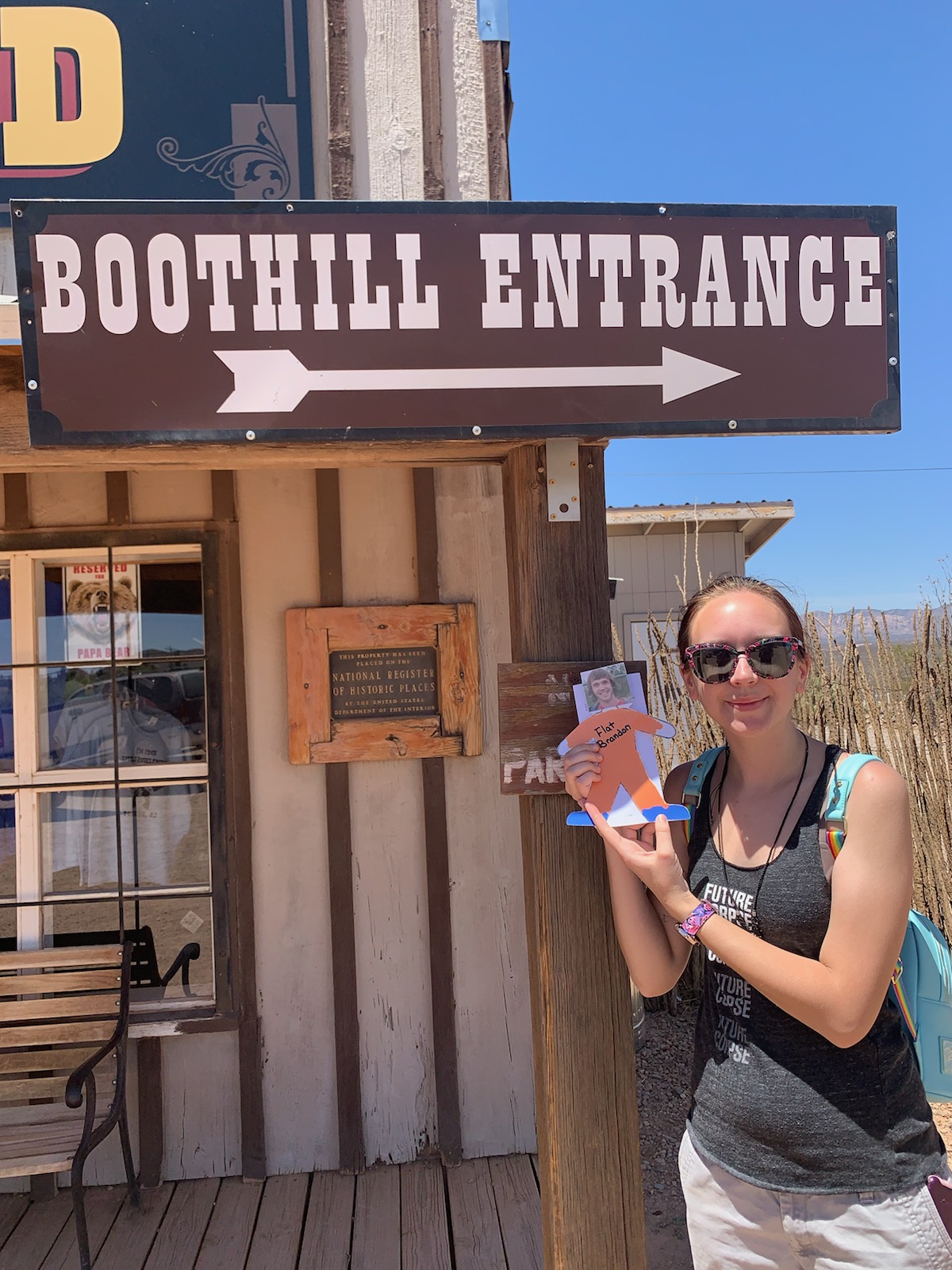
The Historian Outside the Entrance to Boothill

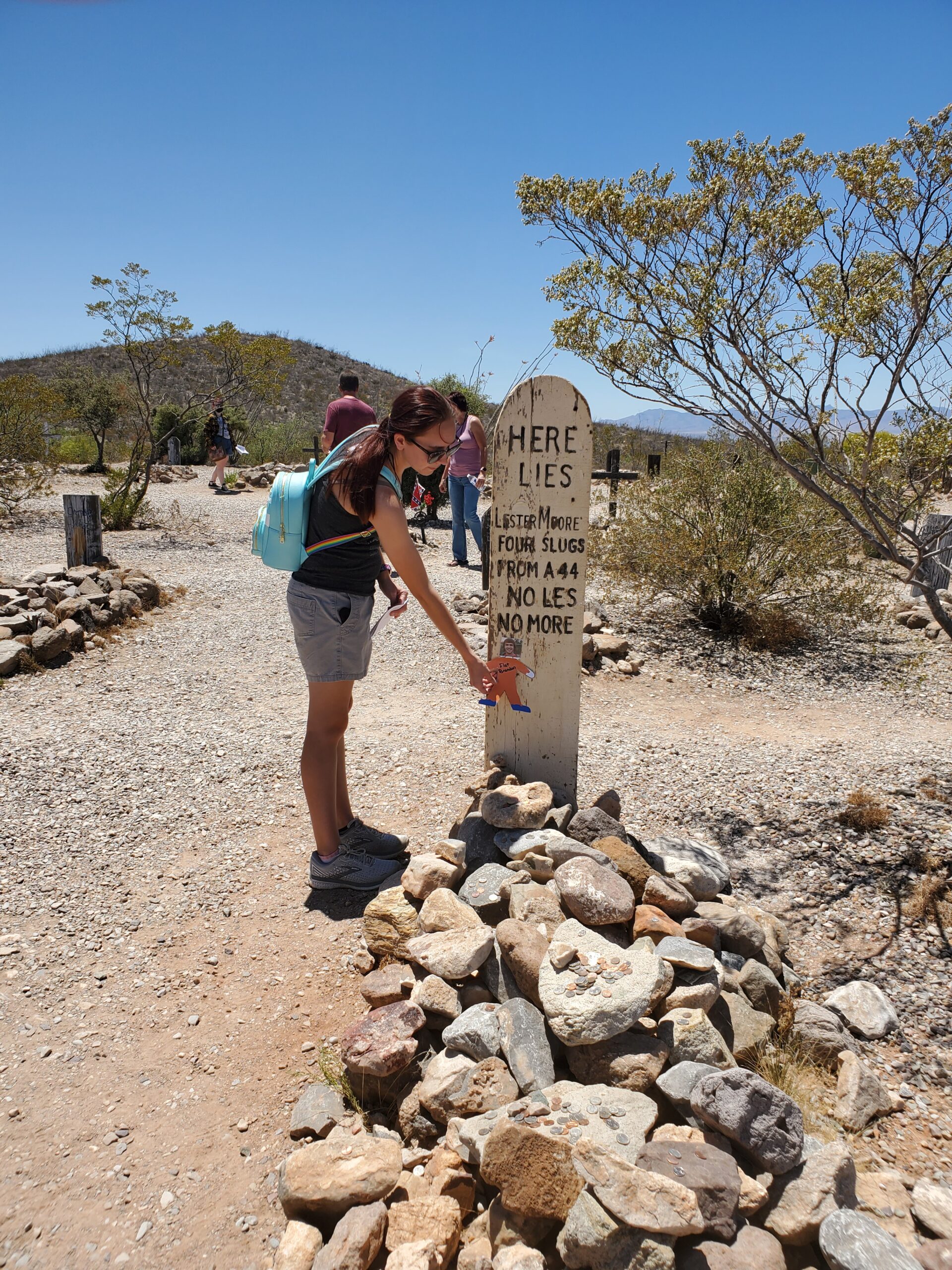
(In case you're wondering, the little dude I'm holding is "Flat Brandon"--its a long story and not really relevant to this blog post...so anyway moving on).

(PS, like my tank top? Its official merchandise from Caitlin Doughty's Etsy store--gotta represent the fact that one day we'll all be laid to rest somewhere, just like those in the graveyard).

The entrances to Boothill are well marked and Google Maps will bring you straight to it. Be warned, the parking lot is fairly small and you may have to park up the road and walk a ways on busy weekends like we had to.

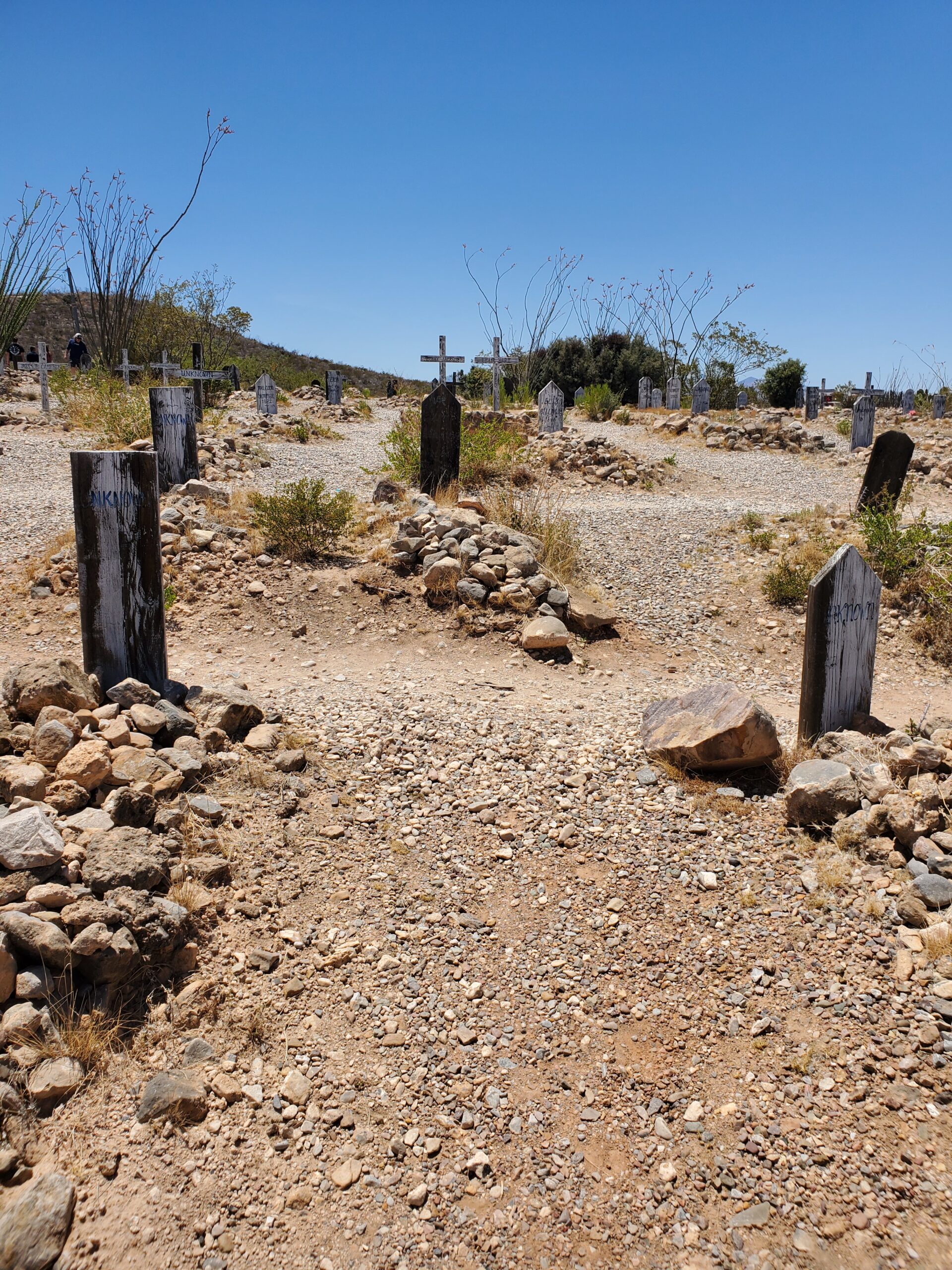
Once inside the cemetery, the burials are laid out in neat rows on a small hillside. The graveyard is gravel, so I recommend wearing closed toes shoes with some sort of grip to them in order to avoid slipping and sliding!

Here are some photos of some of the more interesting graves within the confines of Boothill.

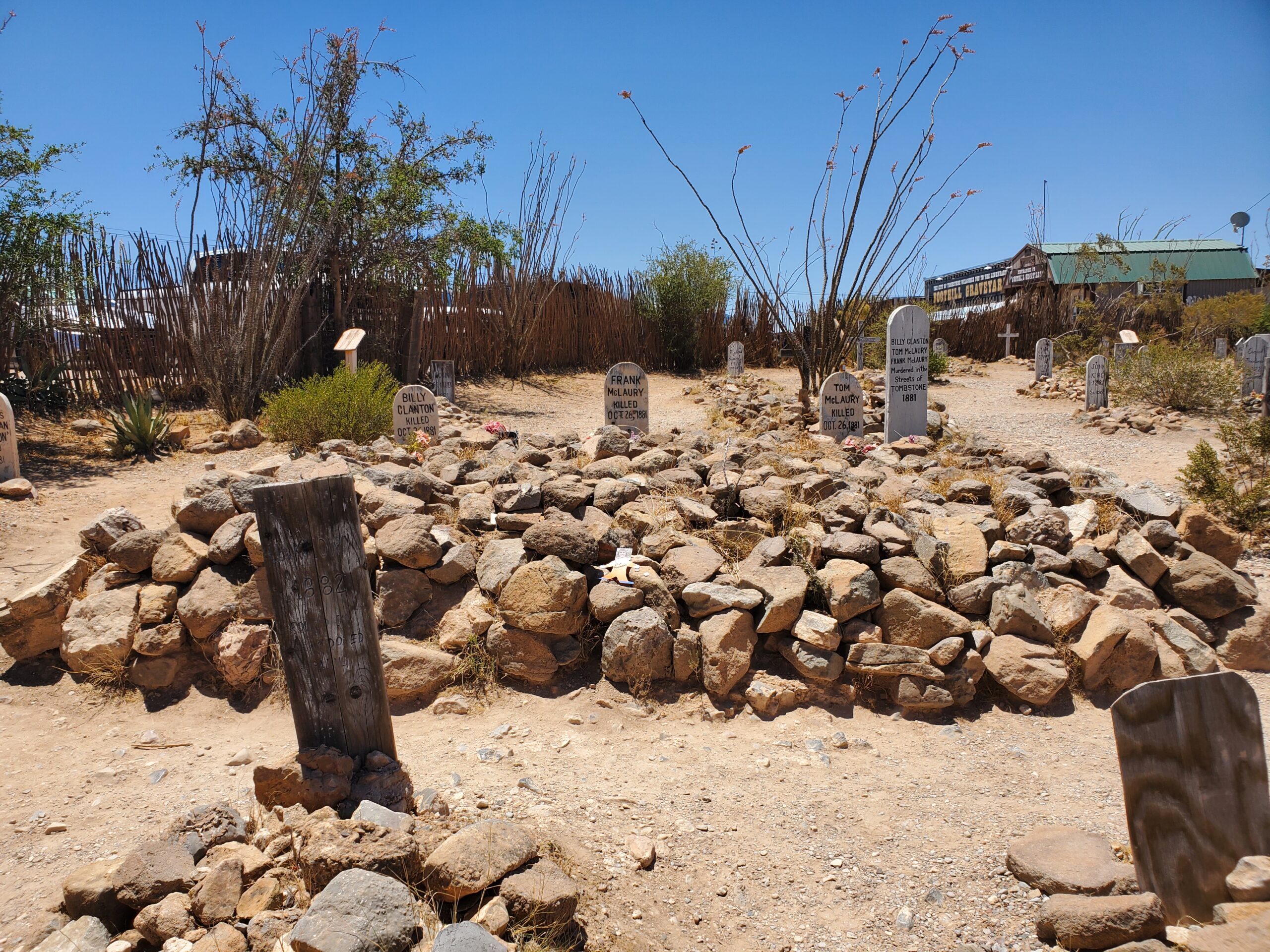
Here is the most famous gravesite within Boothill

The graves of the McLaury brothers and Billy Clanton, all of whom were killed in the infamous Gunfight at the OK Corral. These are the most visited and most famous burials within Boothill, and are tucked away in the corner, near the bottom of the burial portion of the hill.

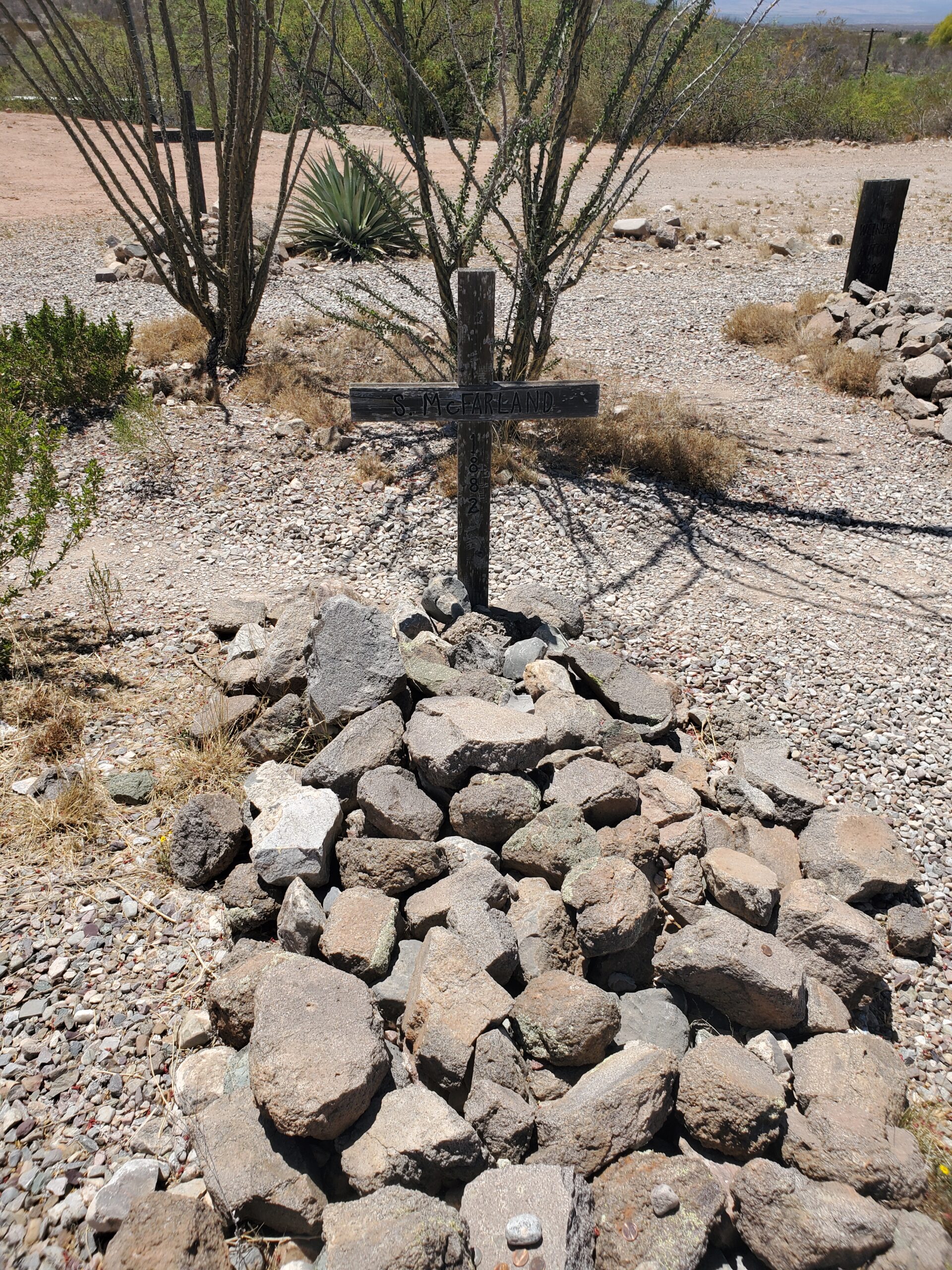
This simple cross grave marker is labeled as one "S McFarland"

No relation to the man who created Family Guy, American Dad, The Orville, and more.

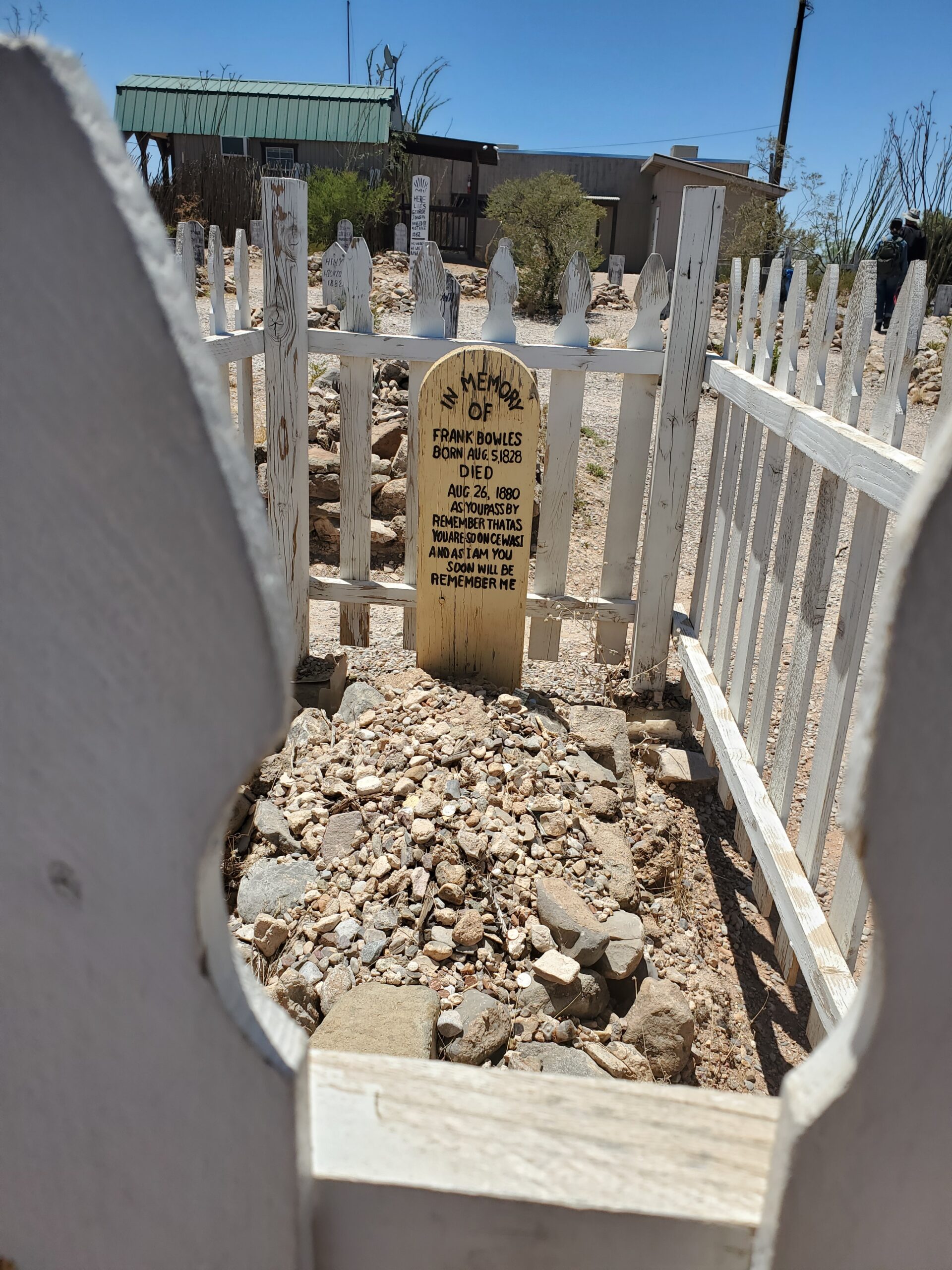
One of the wordier epitaphs in the graveyard
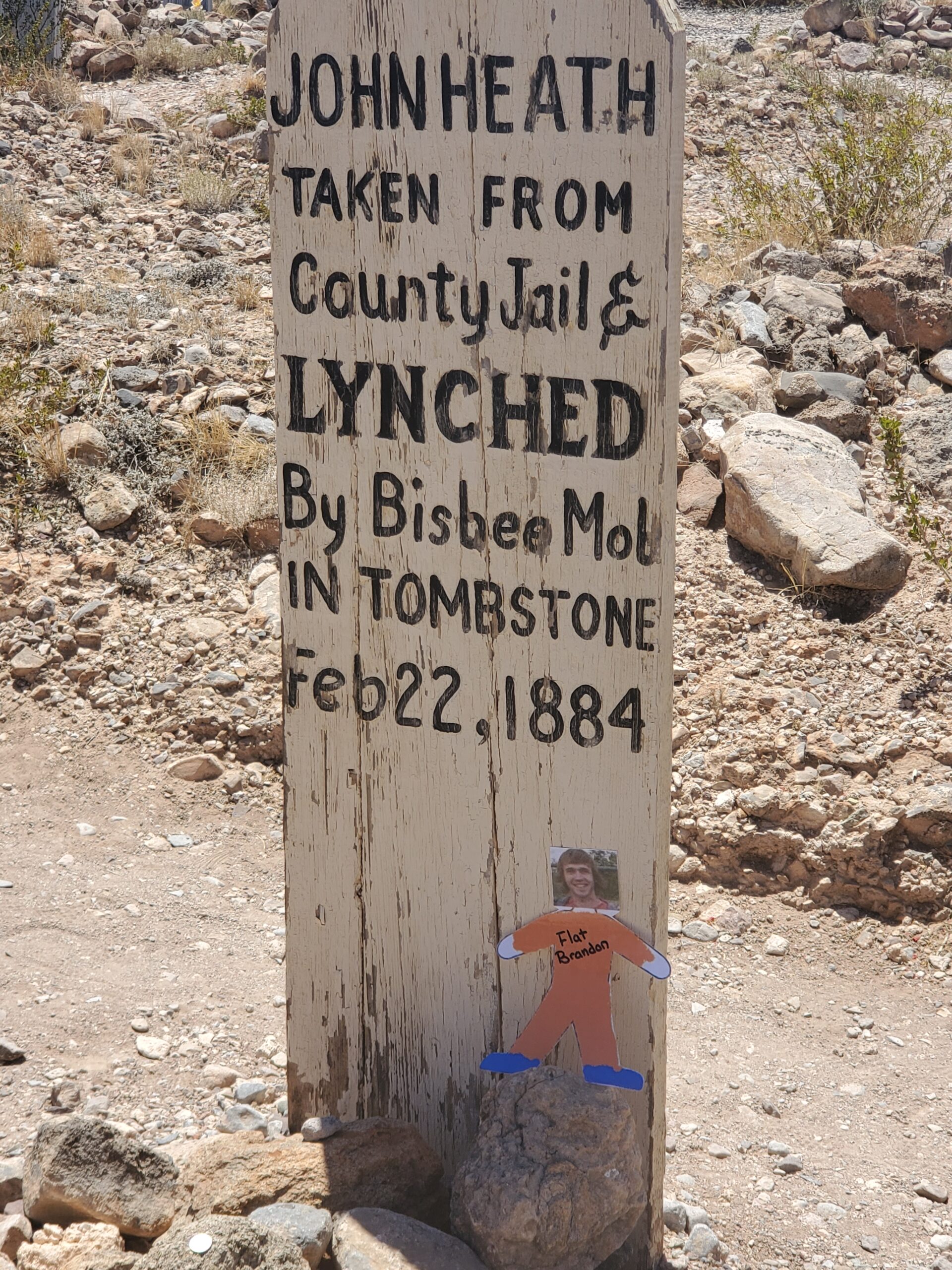
A man who was the victim of a lynch mob

(Please ignore Flat Brandon...)

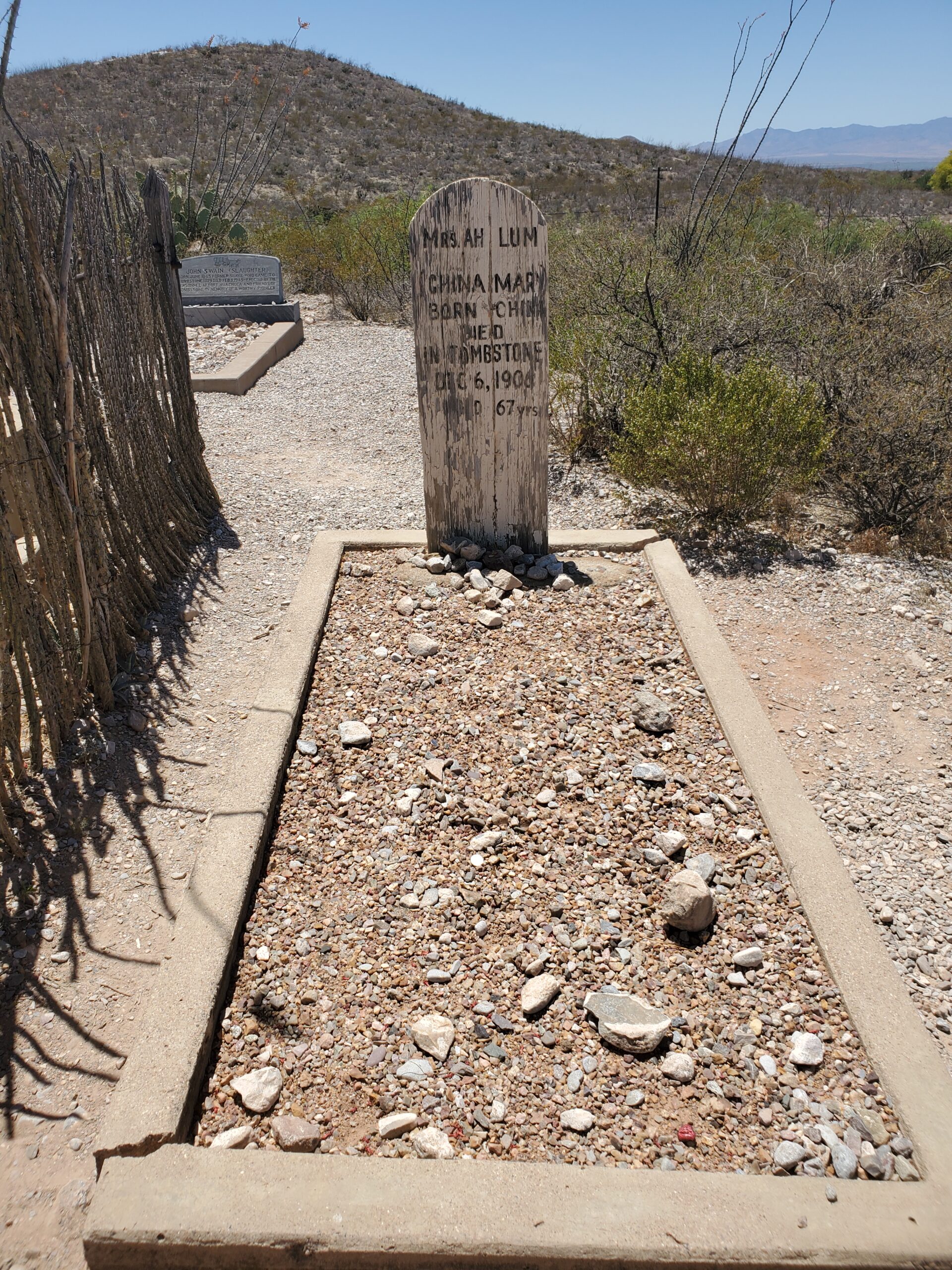
China Mary Grave

China Mary was one of the better known Chinese citizens in Tombstone. Considered the Godfather of the Chinese community by some, China Mary was generous and gave back to her community; opening various businesses and protecting the less prosperous citizens in Tombstone.

Lester More Grave
One of the more modern looking headstones
View from the Hill

Here is a view of how the cemetery is laid out near the bottom of the hill.

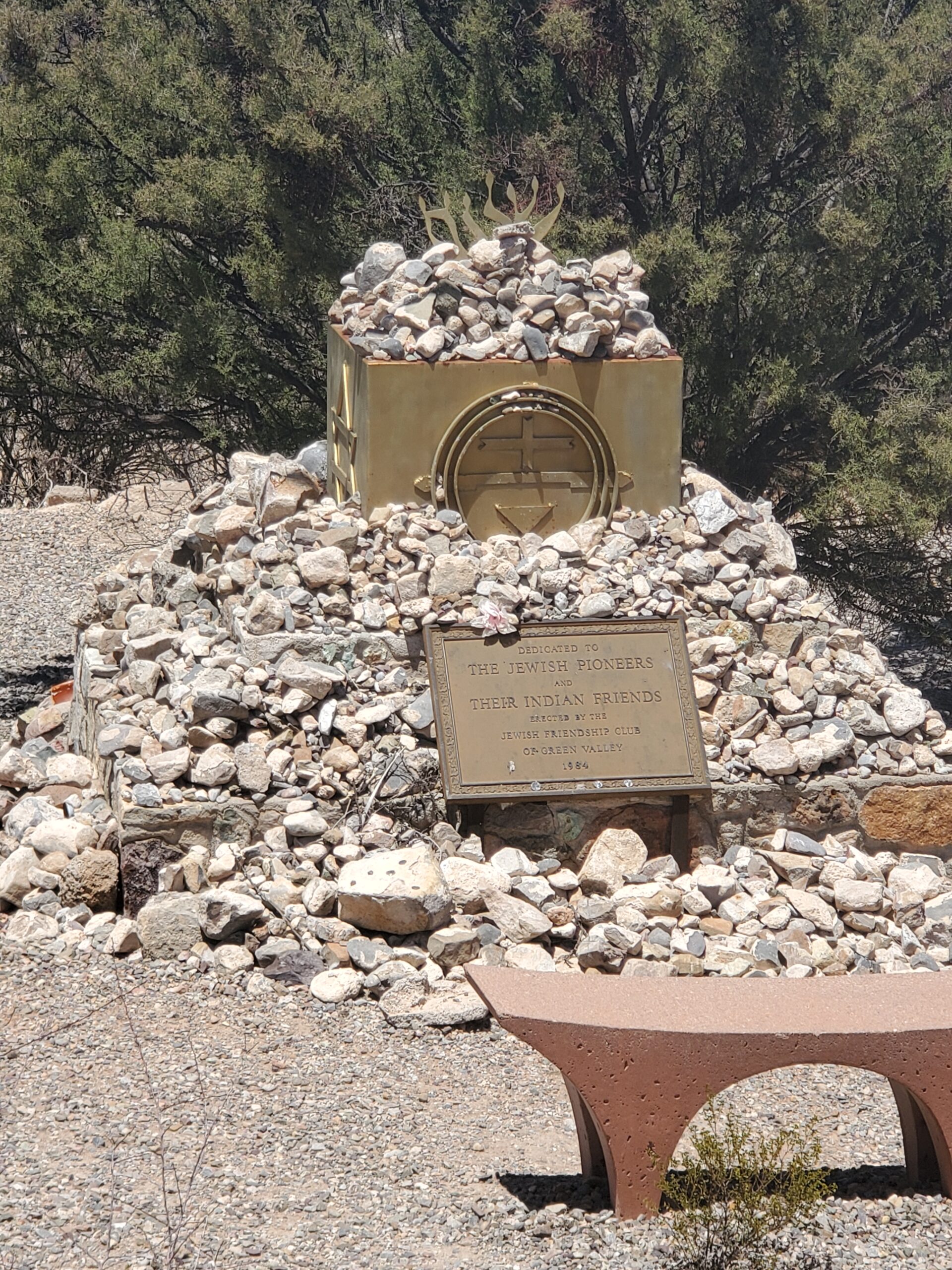
The Jewish Memorial

One of the more interesting aspects of Boothill Graveyard is the Jewish Memorial. Located at the very bottom of the hill, down a meandering path, travelers will find this tranquil moment to Jewish and "Indian" settlers. This area is set apart from the Gentile portion of the cemetery, but is the most intricate and well kept up portion of the entire graveyard. The entire area is fenced off, and in our short visit my family didn't see a way to get closer, so this photo was taken after zooming in on my camera for clarification.

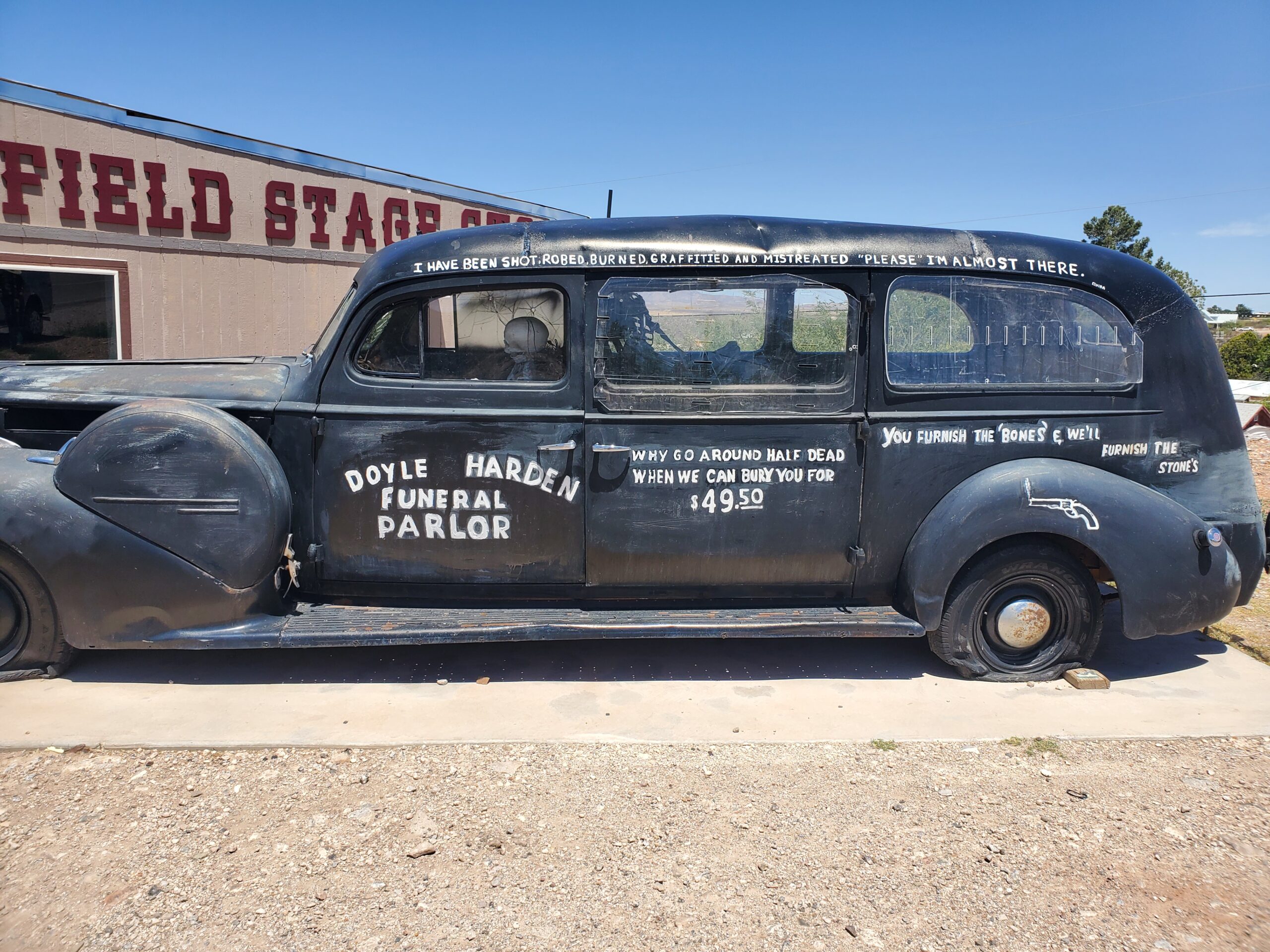
Old Timey Hearse
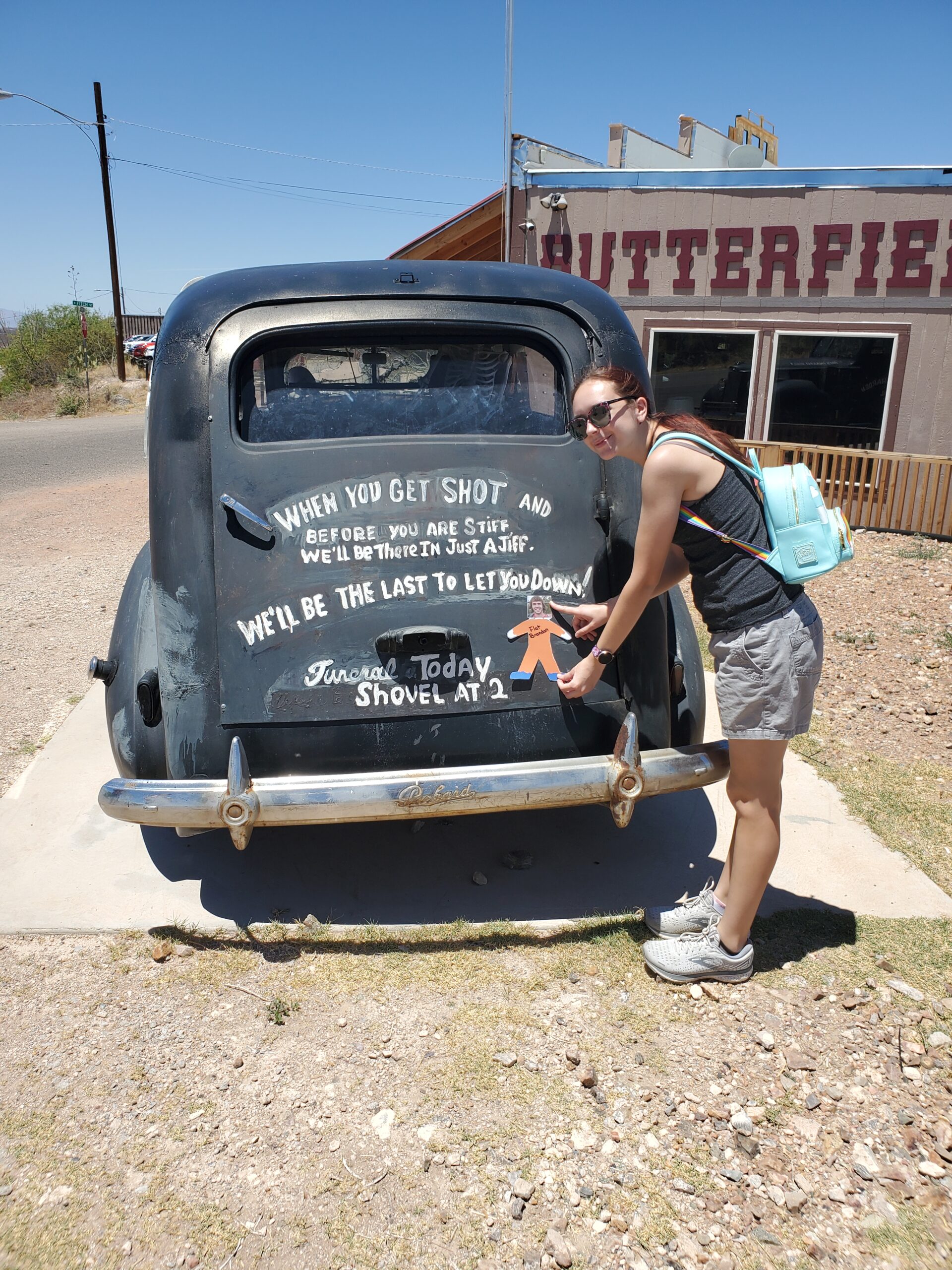
Backside of the Hearse

Parked on the street, before entering the graveyard, is this old hearse. I had to get a few photos with it! My dream car would honestly be a hearse, and the captioning on this one is hilarious. With phrases like "Why go around half-dead when we can bury you for $49.50?" "I have been shot, robbed, burned, graffitied, and mistreated. 'Please' I'm almost there," "You furnish the bones, we'll furnish the stones," "When you get shot and before you are stiff, we'll be there in just a jiff!" and my personal favorite, "We'll be the last to let you down!" this little hearse adds to the overall atmosphere and fun of the graveyard.

Wandering around Boothill only takes about fifteen to twenty minutes for the casual viewer, a bit longer for those more interested, but its still a fun stop if you're touring historic graveyards.

My family had a great time in southern Arizona over the Memorial Day weekend. We visited the Queen Mine in Bisbee, Kartchner Caverns, did the Bisbee Ghost Tour come nightfall, jaunted around Kent's Tools in Tucson, and also toured the Titan Missile in Green Valley. But out of everything we saw that weekend, my personal favorite stop was Boothill.

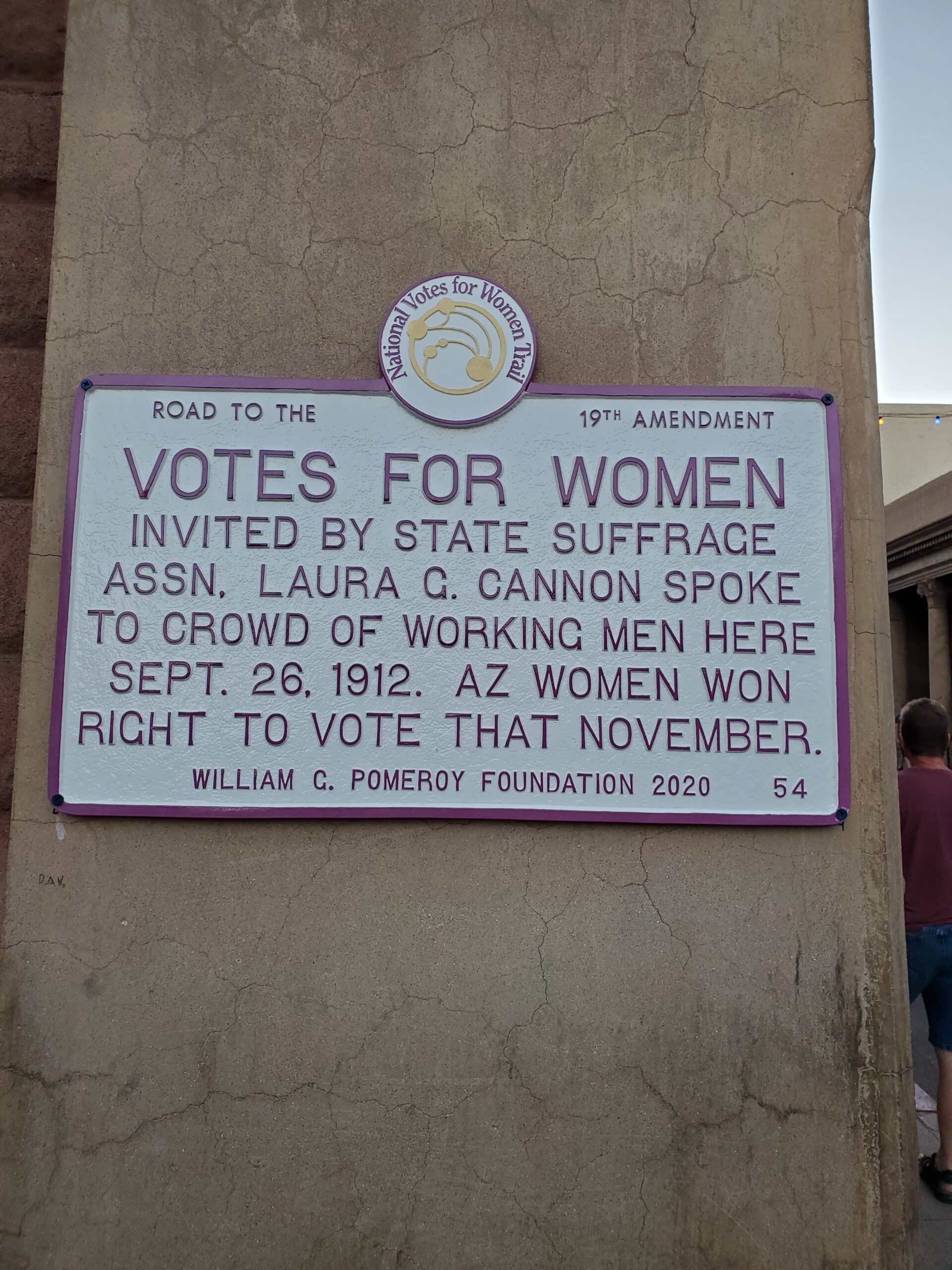
And just because I want to post this but had nowhere else to put it on my website, check out this cool sign that now hangs in downtown Bisbee; erected for the centennial celebration of the Nineteenth Amendment to the US Constitution:

Women Get the Vote, Bisbee

Did you know Arizona women won the right to vote in 1912, a full eight years before the federal government ratified the nineteenth amendment?


And that concludes our tour of Boothill Graveyard. I am heading out on a weeklong car trip starting tomorrow, so hopefully I'll have another historical post to add soon. Thanks for reading!

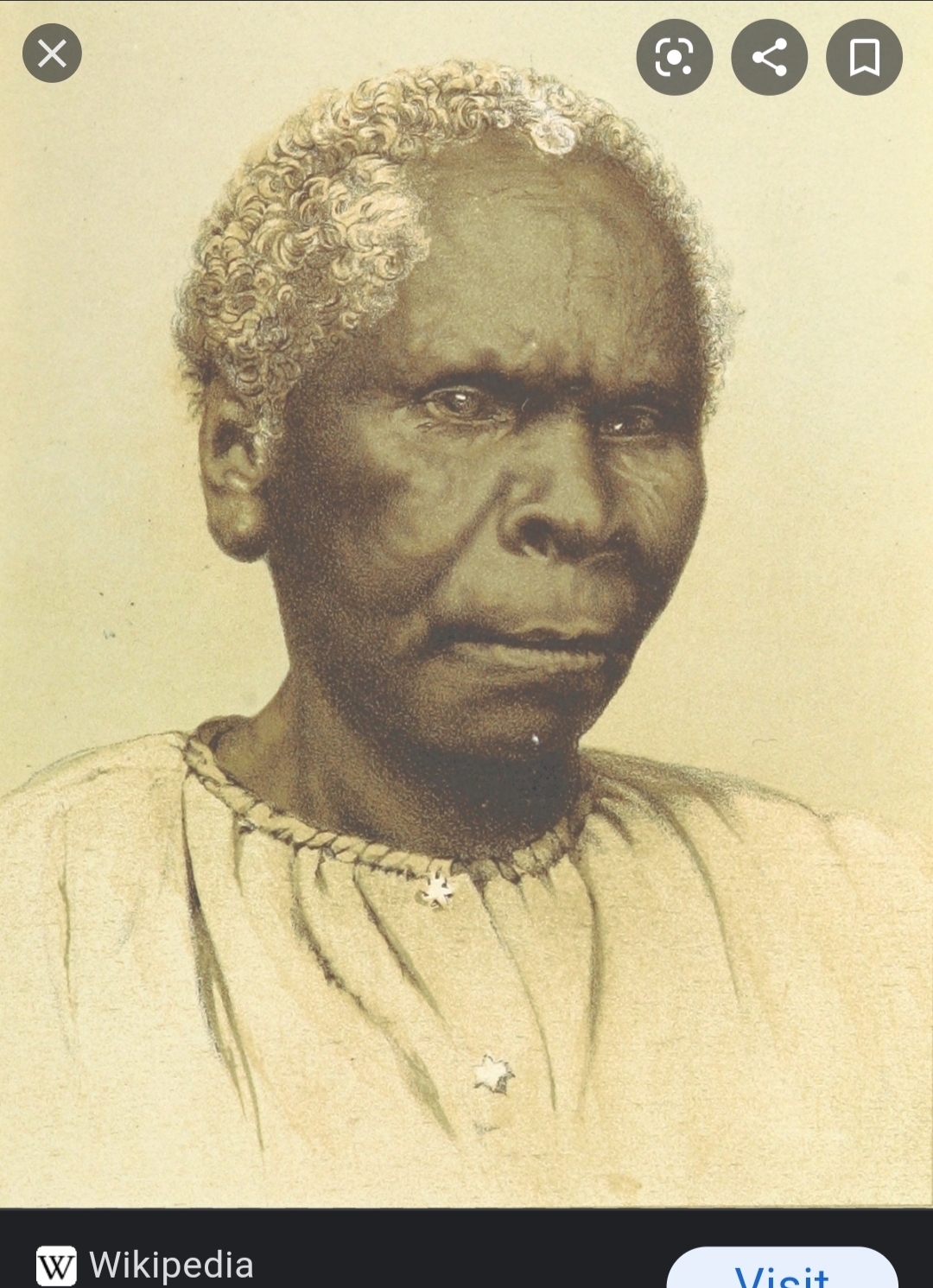
1070) Truganini

Courtesy of Wikipedia

"I know that when I die the Museum wants my body."

1070: Truganini

The Last Full Blooded Aboriginal Tasmanian

Born: c.1812, Tasmania, Australia

Died: 8 May 1876, Hobart, Tasmania, Australia

Also Known As: Trugernanner, Trukanini, or Trucanini

Truganini was one of the Palawa, and her father was a local tribal chieftain. Truganini’s childhood was spent surrounded by her people’s culture and traditions, but her people’s way of life was completely upended by the arrival of white settlers. By the time of her death, Truganini was the only Palawa still alive to have only other Palawa ancestry in her veins. Every other living member of her people had ancestors who had intertwined with other cultures; making Truganini truly the last of her kind.

According to the University of Tasmania (article linked below), “When Truganini met GA Robinson in 1829, her mother had been killed by sailors, her uncle shot by a soldier, her sister abducted by sealers, and her fiancé murdered by timber-getters.” Rejected Princess’s author Jason Porath takes this a step further, stating her sister’s kidnappers sold her into sexual slavery, and the men who killed Truganini’s fiancé also raped her.

Truganini's life was completely upended by the arrival of GA Robinson and the other white settlers in 1829. For the next five years (1830-1835) Truganini and her husband worked as guides for the white men, teaching the newcomers their people’s languages and customs. The copious notes GA Robinson collected during this time are invaluable to ethnographers attempting to reclaim the Palawa people's heritage and language, which had gone all but extinct by the time of Truganini's death.

During the time Truganini worked with GA Robinson, Truganini was renamed “Lallah Rookh” by him, but she refused to give up her people’s culture and way of life. Truganini did not yet know it, but she would spend the rest of her life under colonial observation.

She spent several years imprisoned on Flinders Island with other aboriginals (during which time her husband was killed), narrowly avoiding her own death on a number of occasions as the Palawa and the whites fought for control of Tasmania. Truganini’s story is similar to that of the Native Americans in the United States, in that she was promised again and again various things by the white colonialists, but over and over again those promises were broken.

Truganini spent the last few years of her life pleading with the colonialists to give her a private respectful burial upon her death, and for a little under two years that wish was respected. However, in 1878, the Royal Society of Tasmania was authorized and allowed to exhume Truganini’s body—with the express orders that her body could be studied but not put on public display. Unfortunately, in 1904, that edict was ignored as well, and Truganini’s skeleton spent the next forty-three years on public display. Her body was taken back off display in 1947, and spent the next twenty-nine years in the museum’s archive vault.

Finally in 1976, the Palawa people received her remains; cremating and releasing them into the D’Entrecasteaux Channel close to her birthplace.

Badges Earned:

Find a Grave Marked

Rejected Princess

Sources:

https://www.utas.edu.au/library/companion_to_tasmanian_history/T/Truganini.htm

https://adb.anu.edu.au/biography/trugernanner-truganini-4752

https://www.rejectedprincesses.com/princesses/truganini

https://www.findagrave.com/memorial/194277589/truganini


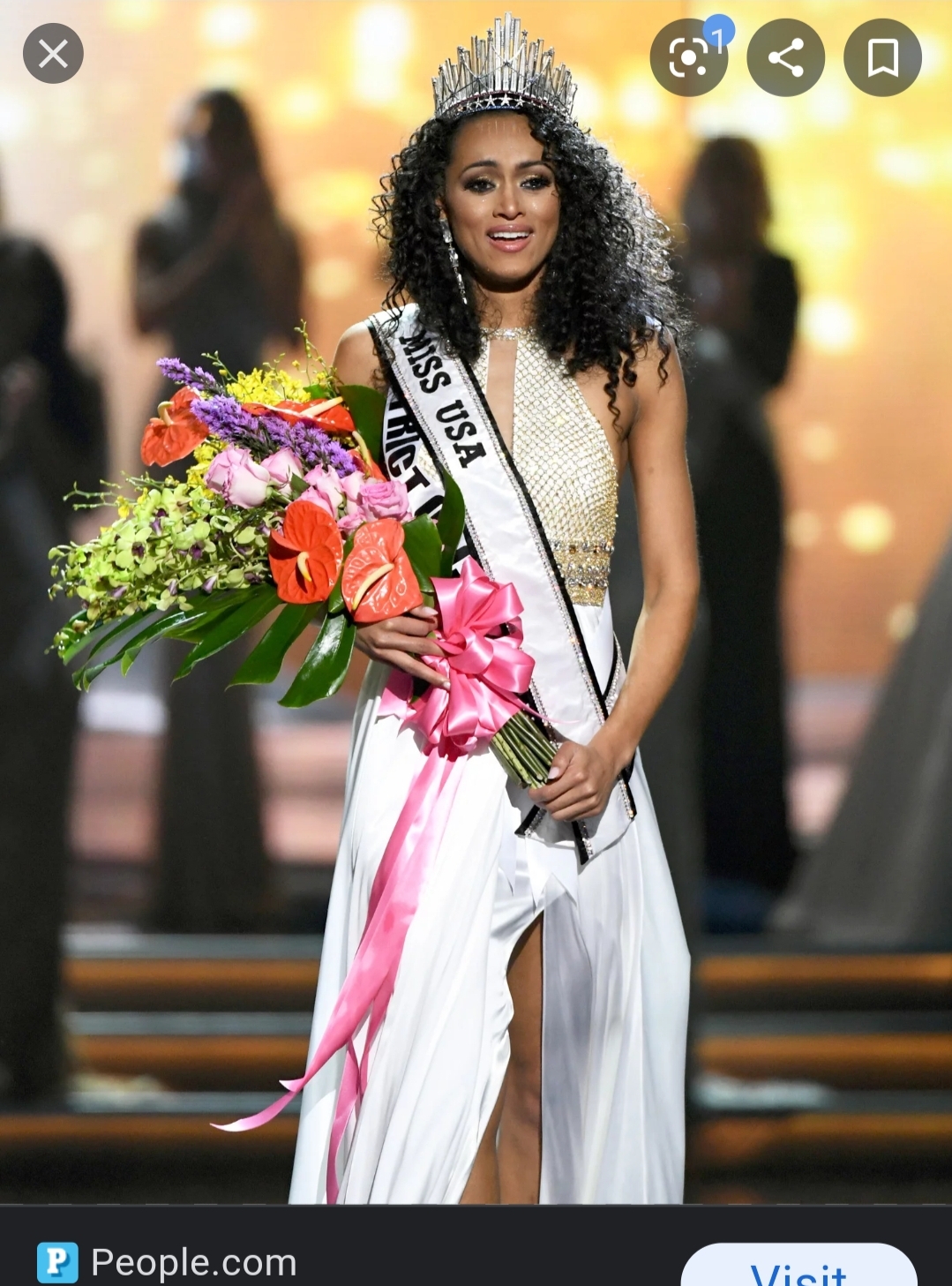
1069) Kara McCullough

Courtesy of People.com

1069: Kára McCullough Temple

Miss USA 2017

Born: 9 September 1991, Naples, Italy

Kára also finished in the top ten for Miss Universe 2017. Her focus and goal during her time as Miss USA was advocating for children to be more exposed to STEM fields. She went on to found SE4K, or Science Exploration For Kids, a program that helps kids become exposed to different scientific endeavors through various activities and games.

Kára is a physical scientist and previously worked as an Emergency Preparedness Specialist for the US Nuclear Regulatory Commission. As if she isn’t busy enough with her other work, Kára has also found the time to work as a girls’ basketball coach as well.

Her mother served in the United States Navy for twenty-three years; which meant Kára moved around a lot as a kid, from Italy to Japan and back.

Kára holds a bachelor’s degree in chemistry from HBCU South Carolina State University. According to Wikipedia, Kára has one child (born in 2020), and was engaged to her son’s father at the time of the birth.

As of 2023, Kára is married to Garrett Temple, a New Orleans Pelicans Basketball Player. They have two children together.

Sources:

https://www.karamccullough.info/new-index

https://www.diversitywoman.com/conference/portfolio_page/kara-mccullough/

https://en.wikipedia.org/wiki/K%C3%A1ra_McCullough

https://rickeysmileymorningshow.com/3068964/hbcu-scsu-kara-mccullough/ 

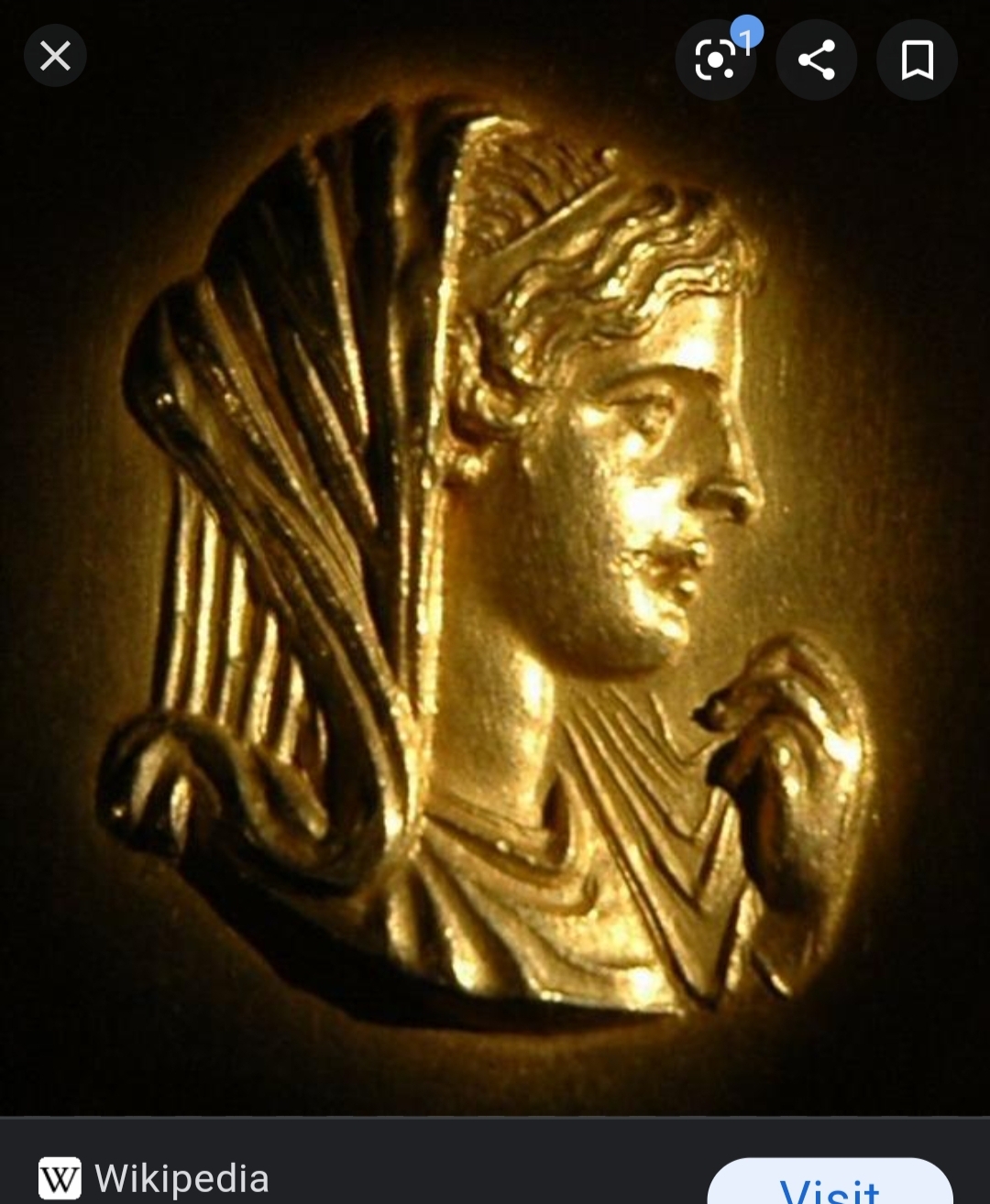
1068) Berenice III

Courtesy of Wikipedia

1068: Berenice III

Queen Regnant of Egypt During a Time of Political Turmoil

Born: c.120 BCE, Ptolemaic Egypt

Died: c.80 BCE, Ptolemaic Egypt

Also Known As: Cleopatra Berenice III

Berenice had previously served as Queen Consort to her uncle/husband Ptolemy X Alexander I of the Ptolemaic Dynasty and had one daughter with him. At the time of the marriage, she was between thirteen and fifteen years old.

The political climate of Egypt during her lifetime was turbulent to say the least, and Berenice’s first husband (Ptolemy X) was eventually murdered in a power ploy that was stirred up by his older brother (Berenice’s father) and his own mother (Berenice’s grandmother).

After his death, Berenice remarried—unfortunately becoming the first Ptolemaic Queen to marry her father, Ptolemy IX Soter. The identity of her mother is uncertain, but most historians believe her mother was either Cleopatra Selene or Cleopatra IV; both of whom were married to Ptolemy IX Soter.

Berenice became the first Ptolemaic woman to assume the name Cleopatra upon her ascension to the throne of Egypt. Thereafter, precedent was set and Ptolemaic women routinely used the name Cleopatra in their regnal name.

Berenice became Queen Regnant after the death of her father/husband and ruled on her own for six-months before marrying her stepson. Evidently Berenice was not at all enthused about the idea of marrying her stepson, but was forced into the matter.

They ruled jointly for eighteen or nineteen days (sources differ). However, once Berenice’s new husband realized she had no intention of giving up her own political power, he had her killed.

The people of Alexandria were so upset they murdered the king in return. Don’t mess with the Alexandrians!

Anyway, with Ptolemy XI now dead as well, the Egyptian world was nearly plunged into chaos. Ptolemy XI was the last legitimate male member of the family, and so the next pharaoh was actually the illegitimate son of Ptolemy IX. The Ptolemaic Dynasty would go on for fifty more years, finally ending with the reign of Cleopatra VII’s oldest son Ptolemy XV Caesar.

Badges Earned:

Located In My Personal Library:

One Bloody Thing After Another: The World's Gruesome History by Jacob F Field

The Pharaohs by Joyce Tyldesley

Sources:

https://www.britannica.com/biography/Berenice-III

https://www.livius.org/articles/person/berenice-iii/

https://www.encyclopedia.com/women/encyclopedias-almanacs-transcripts-and-maps/cleopatra-berenice-iii-c-115-80-bce

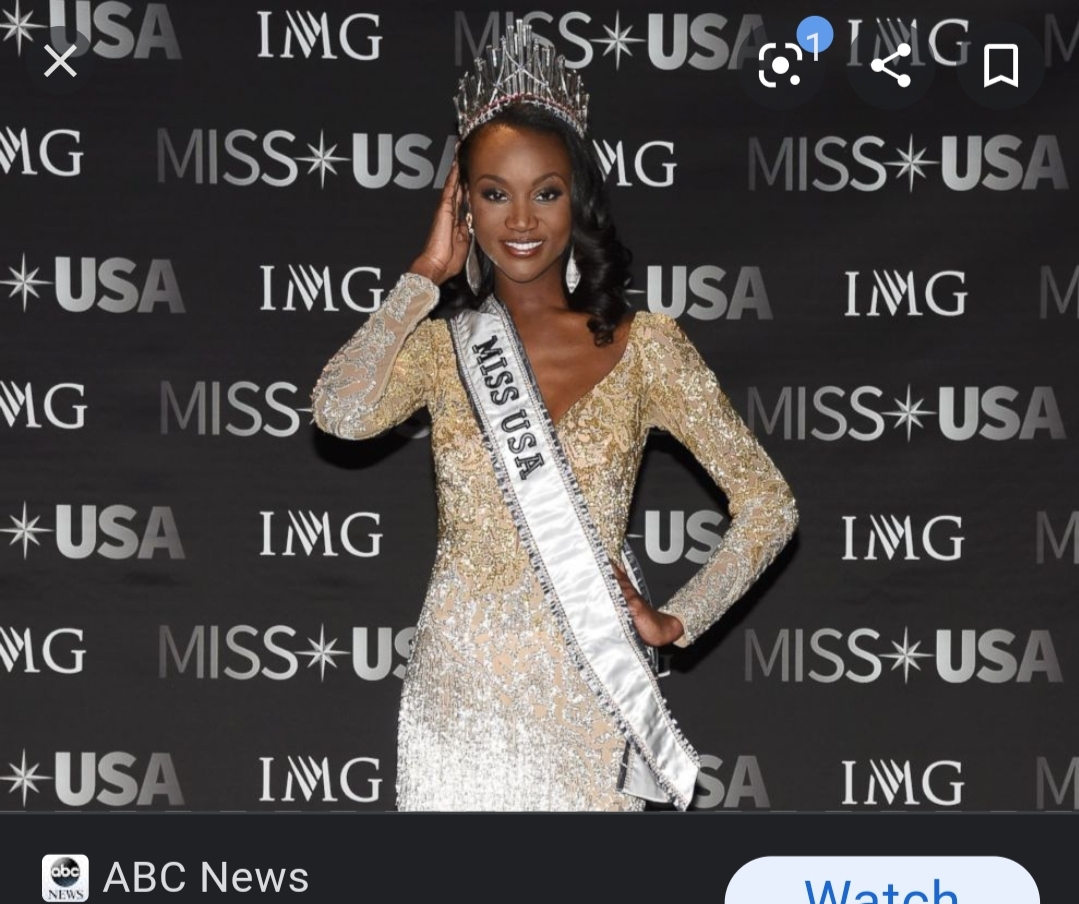
1067) Deshauna Barber

Courtesy of ABC News

1067: Deshauna Barber

She's Proof a Girl Can Rock a Tiara and a Uniform

Born: 6 December 1989, Columbus, Georgia, United States of America

Deshauna is a logistics commander in the US Army Reserve (joining the service when she was seventeen) and she is a motivational speaker. She uses her position as a speaker to raise awareness for PTSD as well as empowering sexual assault victims. Deshauna herself is a survivor from a childhood assault.

She has a bachelors degree in Business Management and a masters degree in Computer Information Systems and Services.

She was working as an IT Analyst for the United States Department of Commerce at the time she won the Miss USA competition in 2016.

Deshauna was the first Miss USA to ever be crowned while actively serving in the US Military. She went on to compete in the Miss Universe competition and placed among the top nine finalists.

Sources:

https://deshauna.com/

https://www.militaryspouse.com/military-life/military-branches/army/meet-miss-usa-army-captain-deshauna-barber/

https://www.wmespeakers.com/speaker/deshauna-barber

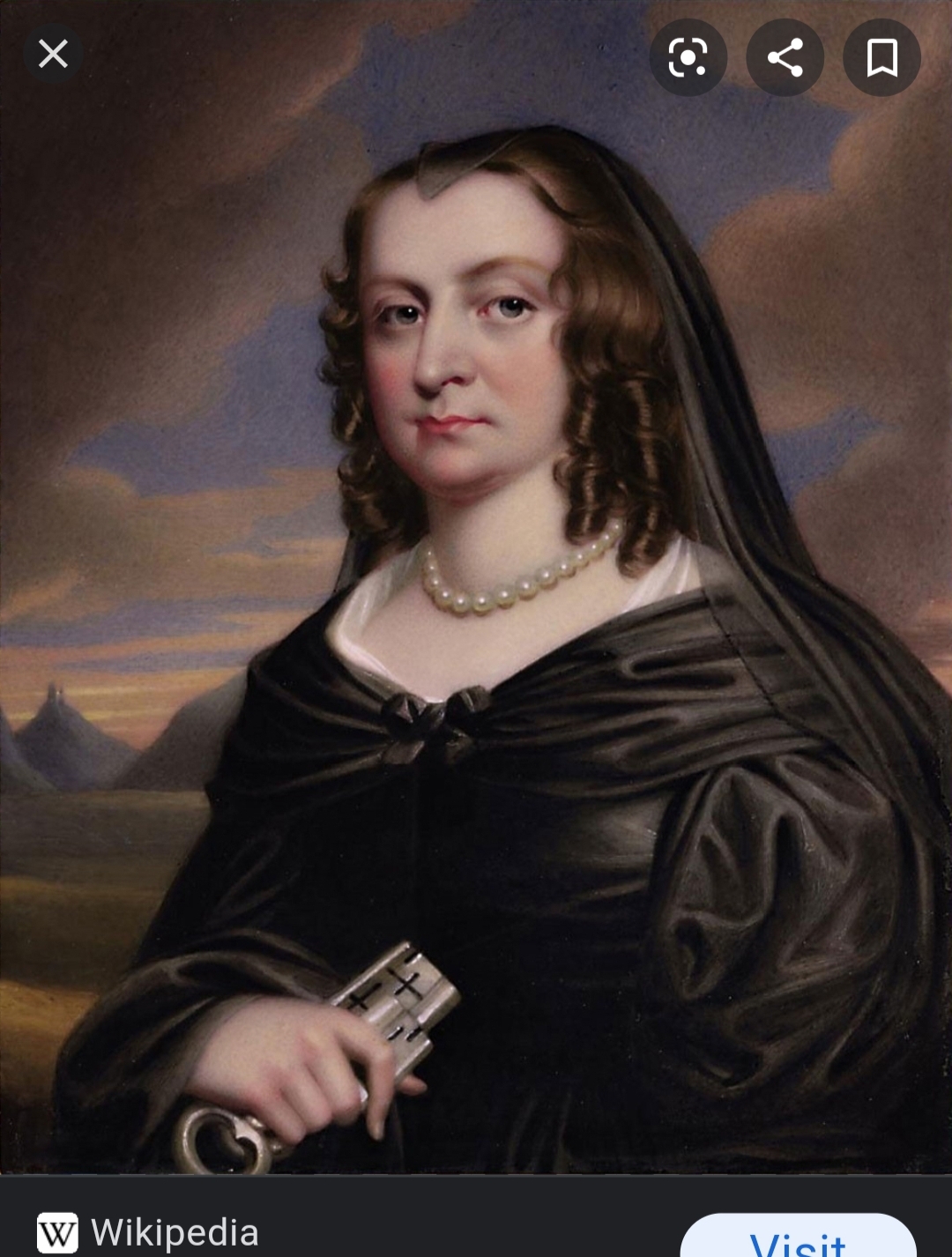
1066) Mary Bankes

Courtesy of Wikipedia

1066: Lady Mary Bankes

Now This is How You Defend Your House

Born: c.1598-1603, Present-day Ruislip, England, United Kingdom

Died: 11 April 1661, Present-day Blandford Forum, England, United Kingdom

Mary is most known for defending Corfe Castle during a three-year siege in the midst of the English Civil War. Her defense of the castle lasted from 1643 to 1645 and earned her the nickname “Brave Dame Mary.”

At the time, Parliament and England’s King Charles I were in the middle of a bloody war. Mary’s husband was loyal to the king, and left the castle to further assist him. With Mary’s husband gone, the task of defending the castle fell to her.

Mary’s husband purchased Corfe Castle and its surrounding land after he was elevated to the position of Attorney General to the king. The position was prestigious to say the least, and Mary’s family were well off because of it.

After Mary’s husband left to join the royalist forces, Mary decided to send her sons away to safety. She and her husband had between ten and fourteen children (sources differ), but the daughters stayed with Mary and helped defend their home from the Parliamentary forces. According to family legend, when the Parliamentary forces arrived and demanded Mary give up the castle, she decided instead to fight back. Mary and her maids unleashed a round of cannon fire at the soldiers, who decided the best choice would be to leave and come back later. With the soldiers gone, Mary sent word and requested reinforcements to help out. Eighty royalist soldiers answered the call to help defend Corfe Castle.

For six weeks, the Parliamentary forces attempted to drive the Royalists out. Apparently, Mary and her maids responded to this by throwing hot embers and stones over the castle walls and onto the men below, killing or wounding around one hundred of them. Eventually the Parliamentary soldiers gave up and left. Soon after they fled, Mary received word that her husband had been killed. Then the Parliamentary forces came back. This time, Mary lost her home—not because the rival soldiers were able to overwhelm her forces, but instead because Mary was betrayed. One of her soldiers allowed the Parliamentarians inside and they took control of Corfe. Mary and her family were removed from their home and the castle was promptly blown to smithereens. According to family legend, Mary had managed to throw the family jewels and treasures down a well first to prevent their enemies from gaining the wealth.

Some historians today believe that Mary and her daughters were not present at Corfe when the castle fell, but were instead actually in London attempting to petition for the protection of their family’s lands. But even if Mary wasn’t there when the castle fell, she had defended it well and had kept it in her family’s hands for three long years throughout the war.

After the restoration of the monarchy, when Charles II returned to the English throne, Mary’s son built the family a new home at Kingston Lacy, with a manor house called Eastcourt for Mary. The family would never live at Corfe again, but their legend lives on.

Today, Corfe Castle is a registered historic site and tourist center at which visitors can learn Mary’s story.

Badges Earned:

Find a Grave Marked

Sources:

https://historycollection.com/lady-mary-bankes-and-the-siege-of-corfe-castle/

https://www.nationaltrust.org.uk/corfe-castle/features/the-defiance-of-mary-bankes

https://www.dorsetlife.co.uk/2017/02/queen-of-the-castle/

https://www.thevintagenews.com/2016/08/14/priority-english-civil-war-lady-mary-bankes-defended-castle-200-attackers-five-men-initial-command/

https://www.encyclopedia.com/women/dictionaries-thesauruses-pictures-and-press-releases/bankes-mary-1598-1661

https://www.findagrave.com/memorial/60357306/mary-bankes

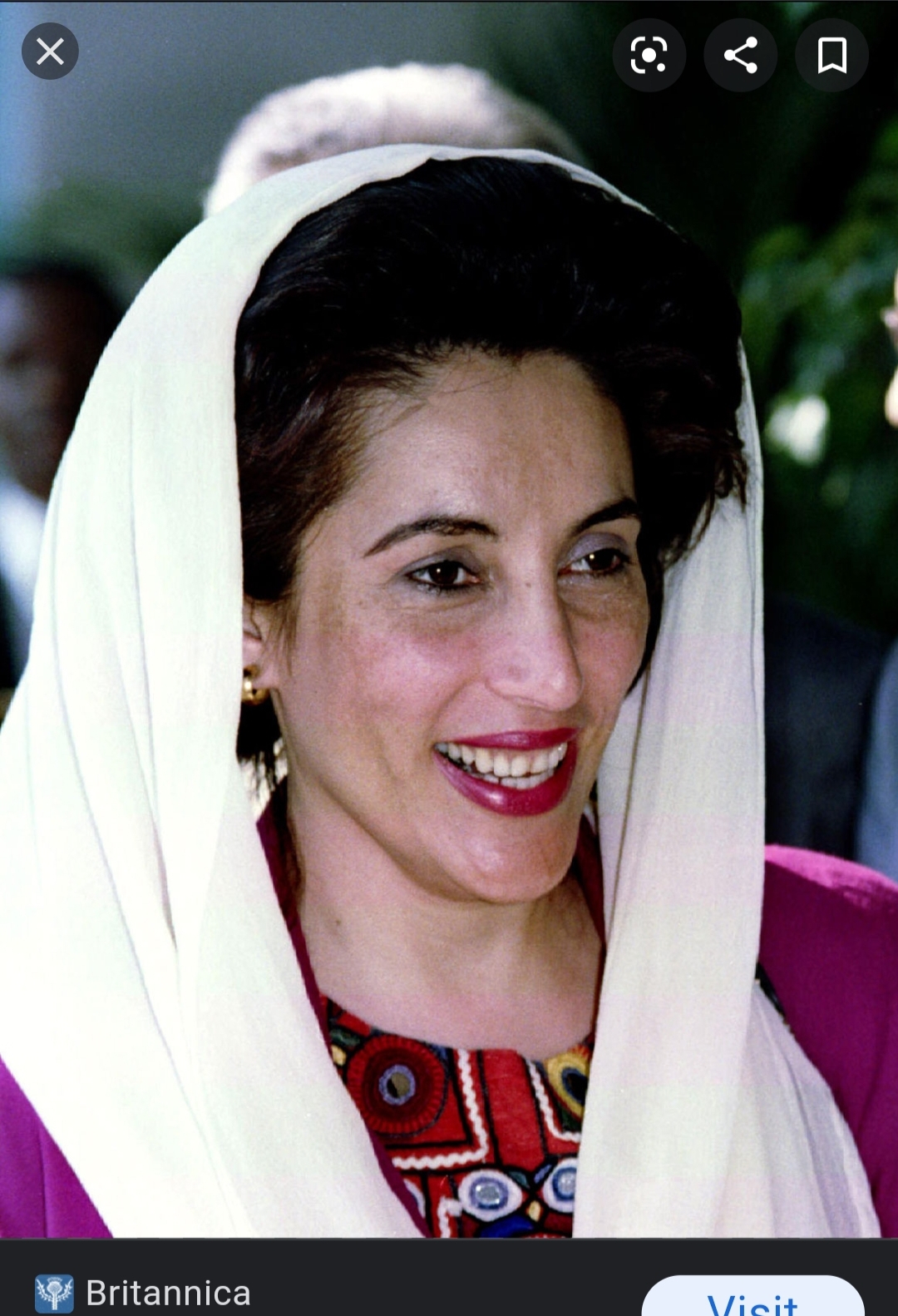
1065) Benazir Bhutto

Courtesy of Britannica

“You can imprison a man, but not an idea. You can exile a man, but not an idea. You can kill a man, but not an idea.”

“Democracy is the best revenge.”

1065: Benazir Bhutto

Former Prime Minister of Pakistan

Born: 21 June 1953, Karachi, Pakistan

Died: 27 December 2007, Rawalpindi, Pakistan

Benazir was the first woman to head a Muslim Majority Nation in the modern day, and the first woman to ever be democratically elected leader of a Muslim Majority country.

Benazir was educated at both Harvard and Oxford University, earning a bachelors degree at Harvard and completing several courses at Oxford.

She was the daughter of Zulfikar Ali Bhutto, a former Prime Minister himself. He served as the leader of Pakistan for six years. Sadly, in 1979 Benazir’s father was hung by the military dictator who had taken control of Pakistan; ironically on charges of authorizing the murder of a rival political leader. After her father’s death, Benazir became de facto leader of the party he had once headed, the PPP or Pakistan People’s Party (Benazir became the chair of the party in 1982). From 1979 to 1984, Benazir was put under house arrest several times, and beginning in 1984 she was actually exiled from her country for two years.

Tragedy continued to befall Benazir’s family. One of her brothers died mysteriously in 1980 (the family insisted he was poisoned but no one was ever charged in his death). A second brother was killed in a gun battle in 1996.

In 1987, Benazir married a wealthy landowner. The couple would eventually have three children: one son and two daughters. Benazir became prime minister three months after her first child was born.

After the death of Pakistan’s military dictator in 1988, Benazir became a leading force in Pakistani politics. During the elections that year, Benazir’s party won the largest majority of seats in Pakistan’s National Assembly, leading to her being selected as Prime Minister as the head of a coalition government.

Benazir served two terms (1988-1990 and 1993-1996). During her first administration, Benazir was forced to resign her position after charges of political corruption were leveled at her. She hadn’t managed to effect much change in her country during her time in office, and her party lost large swaths of the election later that year (1990).

Three years later, Benazir was back. The PPP won back a large piece of the government after elections in October, and Benazir was once again Prime Minister. Three years later however, her government was once again forced out of power after being accused of political corruption, decline of law and order, and economic mismanagement.

Things were so bad that Benazir and her husband were both convicted on multiple charges relating to government corruption in 1999. However, the convictions were overturned by the Pakistani Supreme Court in 2001 after it was discovered the rival political party, who was in power at the time, had had a hand in ensuring the couple were convicted. During this time Benazir was in a self-imposed exile, splitting her time between London and Dubai. Though her tenure away was initially indeed self-imposed, arrest warrants for her were eventually sworn out meaning she would be taken into custody if she returned home.

The government decided to take things a step further with Benazir. According to Encyclopedia Britannica (Article linked below): “Because of [the Pakistani president’s] 2002 decree banning prime ministers from serving a third term, Bhutto was not permitted to stand for elections that same year. In addition, legislation in 2000 that prohibited a court-convicted individual from holding party office hindered her party, as Bhutto’s unanimously elected leadership would have excluded the PPP from participating in elections. In response to these obstacles, the PPP split, registering a new, legally distinct branch called the Pakistan People’s Party Parliamentarians (PPPP). Legally separate and free from the restrictions brought upon the PPP by Bhutto’s leadership, the PPPP participated in the 2002 elections, in which it proceeded to earn a strong vote. However, Bhutto’s terms for cooperation with the military government—that all charges against her and against her husband be withdrawn—continued to be denied.”

In 2007, the president of Pakistan finally commuted the charges against Benazir, and granted her amnesty, allowing her to return home—just in time for another round of elections. Sadly, Benazir’s return was not welcomed by many in her country. 136 people were killed in a rally welcoming her back to Pakistan, though the plotters of the attack failed to kill Benazir, that day.

The plotters succeeded a few months later, however. In December, Benazir was assassinated and twenty-eight other bystanders were killed in the attack. Around one hundred more were wounded. The suicide bomber who was identified as the culprit behind the attack was fifteen years old.

In the weeks after her death, mass protests and riots broke out across the country, killing twenty-three more. Pakistan’s Interior Justice blamed Benazir’s death on Al Qaeda, but a spokesperson for the terrorist organization denied being involved.

Badges Earned:

Find a Grave Marked

Rejected Princess

Located In My Personal Library:

Historical Heartthrobs: 50 Timeless Crushes--From Cleopatra to Camus by Kelly Murphy

The Only Woman by Immy Humes

The Warrior Queens by Antonia Fraser

Tough Mothers by Jason Porath

Sources:

https://www.britannica.com/biography/Benazir-Bhutto

https://www.history.com/topics/womens-history/benazir-bhutto

https://www.bbc.com/news/world-asia-42409374

https://www.goodreads.com/author/quotes/471833.Benazir_Bhutto

https://www.findagrave.com/memorial/23574601/benazir-bhutto

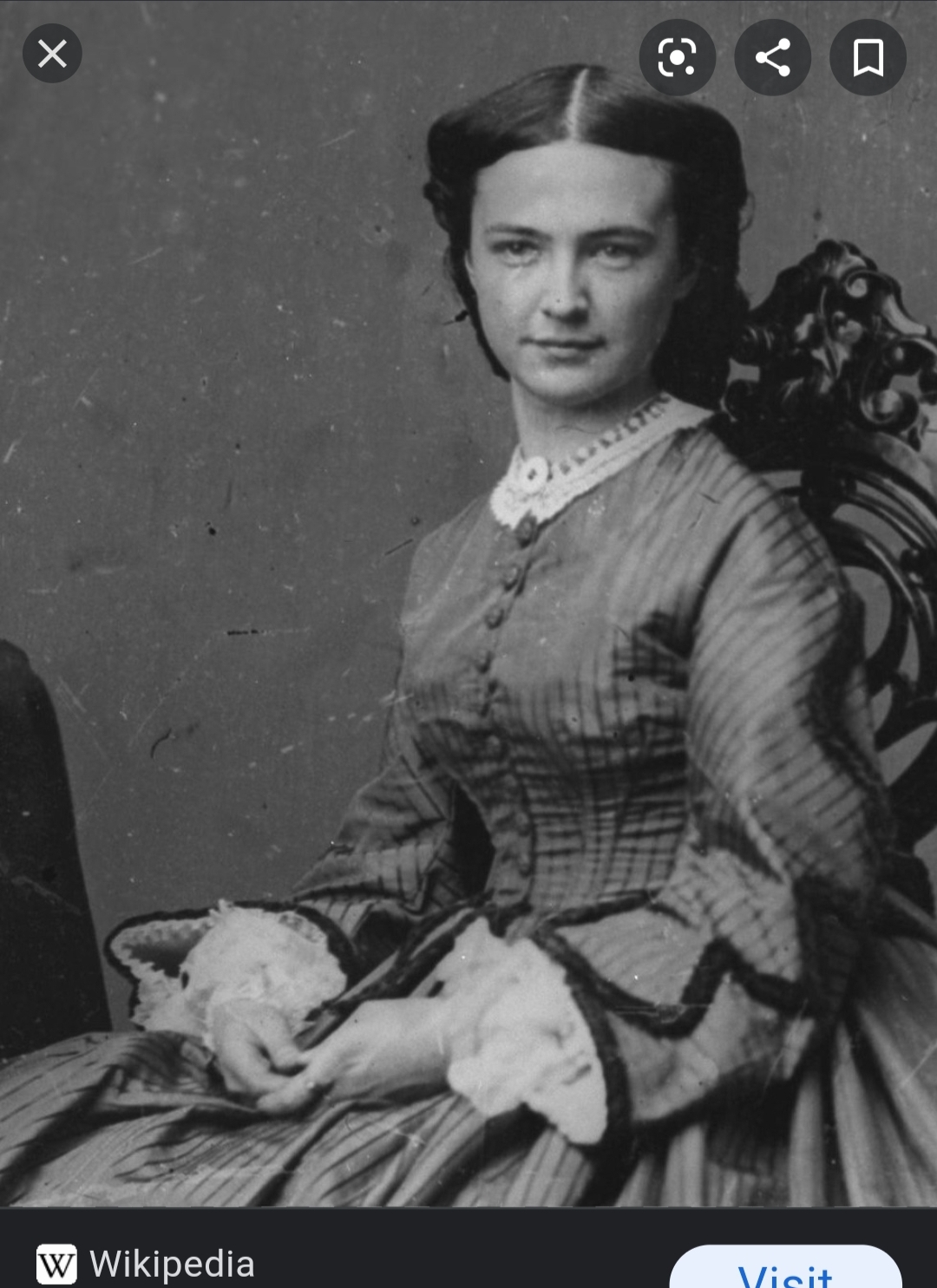
1064) Jessie Fremont

Courtesy of Wikipedia

“I am like a deeply built ship—I drive best under a strong wind.”

1064: Jessie Frémont

Author and Political Activist

Born: 31 May 1824, near Lexington, Virginia, United States of America

Died: 27 December 1902, Los Angeles, California, United States of America

Full Name: Jessie Ann Benton Frémont

Jessie is most known for being the wife of John C Frémont. John was a westward explorer and politician.

Jessie was the daughter of a senator. Her father educated her well, mainly at home, and she was known to have an adventurous and outgoing personality.

Jessie and John married in 1841, despite her father’s misgivings (Jessie was only seventeen at the time after all). Eventually Jessie’s father came around to the idea of his new son-in-law, and he used his position as a senator to further John’s career in his attempts to become a westward explorer.

Jessie published several accounts and memoirs of the time she spent with her husband and his friend and companion Kit Carson. It was Jessie’s writings that helped draw the national attention to John and Kit, making them both some of the most famous characters to come out of the West.

John was a polarizing figure in his own time. Most of America seemed to admire him, but he had his detractors as well. John was an Army officer, and his most well-known moment in history came when he managed to seize California from Mexican hands, giving the prosperous territory to the United States.

In 1856, Jessie became the first presidential candidate’s wife to play an active role in a campaign in United States history. John’s slogan was “Fremont and Jessie too.” Unfortunately for them, John’s candidacy did not result in a victory, but it was notable for one other reason as well: John was the first official presidential candidate for the newly formed Republican Party.

During the War Between the States, and according to The Atlantic (article linked below): “John Charles Frémont’s star gradually faded in later years, though his wife never stopped supporting him. When the Civil War came in 1861, President Abraham Lincoln appointed John as a general based in Missouri. John soon clashed with the commander in chief, issuing an order that freed some Missouri slaves before Lincoln was ready to do so. Refusing Lincoln’s request to modify the order, he instead sent his closest adviser to confer with the president: Jessie boarded an eastbound train to Washington. Standing face to face with the towering president, she tried to argue that John’s emancipation order was helpful in Missouri and would play well in Europe, too. “You are quite a female politician,” Lincoln replied. Jessie said afterward, “I felt the sneering tone and saw there was a foregone decision against all listening.” Lincoln soon relieved General Frémont of his command. He would not allow a general to make political decisions that belonged to him as the government’s civilian leader.” Jessie’s work also came under scrutiny. Detractors referred to her as “General Jessie” in the press and mocked her husband’s ineptitude as being her fault. John couldn’t keep up with his overbearing and energetic wife; hence the nickname.

Jessie spent the rest of the war, and most the rest of her life, trying to salvage her husband’s reputation through various publications. She also worked hard to improve the sanitation practices used by the Army to try and save the lives of as many men as possible.

Jessie and her husband John had at least two children, according to Find a Grave, though her Google page only lists one son.

Jessie was a member of the National Society Daughters of the American Revolution and is known as a “Dazzling Daughter” today.

Badges Earned:

Find a Grave Marked

Located In My Personal Library:

Uppity Women Speak Their Minds by Vicki Leon

The Old West by Stephen G Hyslop

Blood and Thunder: The Epic Story of Kit Carson and the Conquest of the American West by Hampton Sides

America's Women: 400 Years of Dolls, Drudges, Helpmates, and Heroines by Gail Collins

Sources:

https://www.britannica.com/biography/Jessie-Ann-Benton-Fremont

https://www.theatlantic.com/ideas/archive/2020/01/first-celebrity-first-lady/604003/

http://www.civilwarmo.org/educators/resources/info-sheets/jessie-benton-fremont

https://civilwar.vt.edu/jessie-benton-fremont-the-civil-war-stateswoman/

DAR Dazzling Daughter’s Fact Sheet (Provided during one of the classes new members can take. To see a copy please email me through the Contact Us page)

https://quotationsbywomen.com/authorq/10121/

https://www.findagrave.com/memorial/4963/jessie-fremont

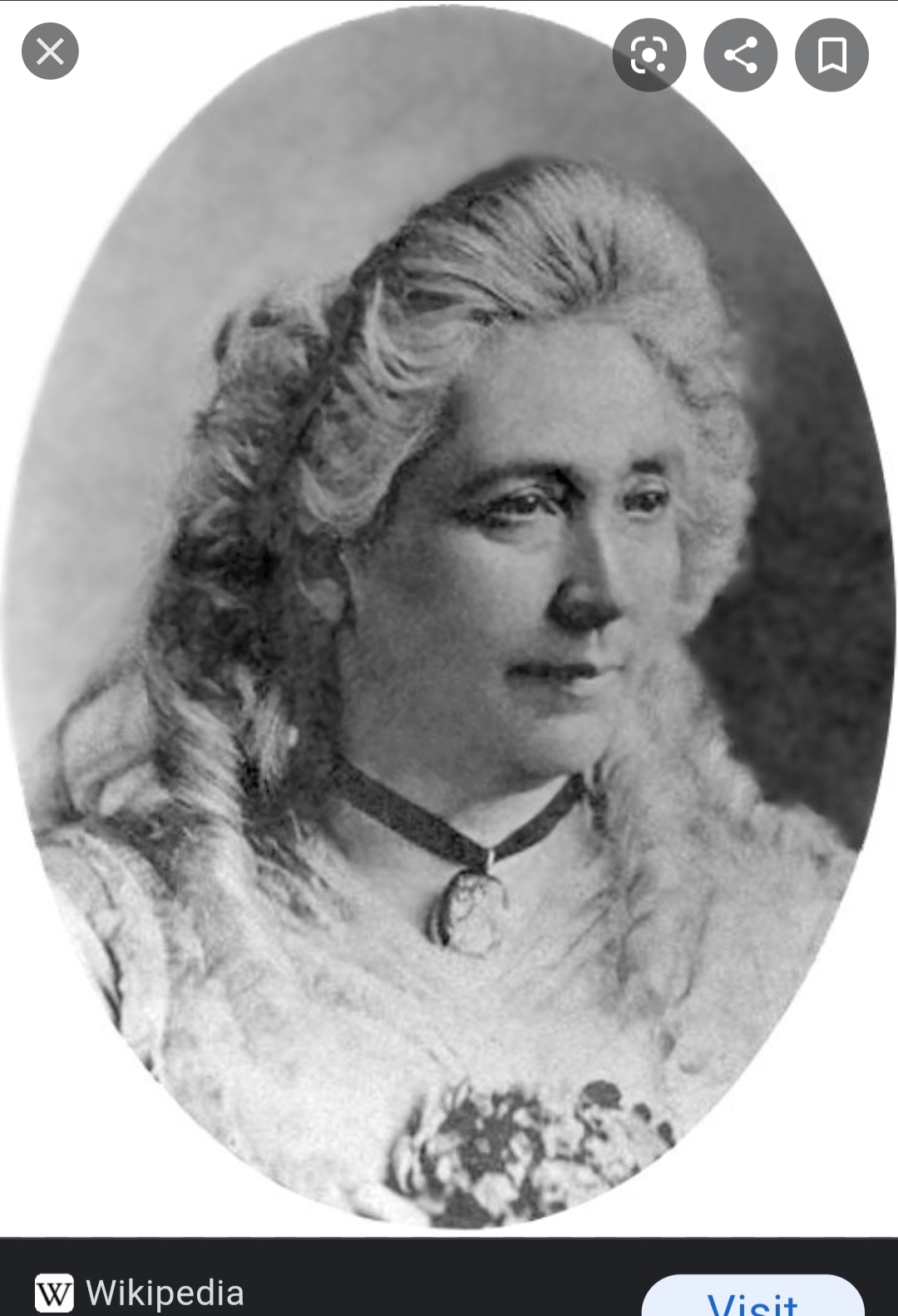
1063) Elizabeth Bacon Custer

Courtesy of Wikipedia

“Yes, I love him devotedly. Every other man seems so ordinary beside my own bright particular star.”

1063: Elizabeth Bacon Custer

Author and Public Speaker who Spent Decades Fighting to Preserve & Protect Her Husband’s Legacy

Born: 8 April 1842, Monroe, Michigan, United States of America

Died: 4 April 1933, New York City, New York, United States of America

That’s right, Elizabeth (or Libbie/Libby [spellings differ], as she was known to friends and family), was the wife of now infamous General George Armstrong Custer.

Elizabeth graduated valedictorian from her school. She met her future husband when she was only twenty, in the middle of the War Between the States. Elizabeth was immediately attracted to the West Point graduate, however, her father refused to allow the pair to marry because he didn’t believe George’s own family had a good enough standing in the community in comparison to his own. Another reason for her father’s overprotectiveness stemmed from the fact that Elizabeth’s mother as well as her sisters had all died when she was still just a child. When George was promoted to brevet brigadier general two years later, Elizabeth’s father finally agreed to the match; and Autie and Libbie, as they affectionately referred to one another, were married soon after.

Elizabeth followed George whenever possible, and spent many nights in the field as an army wife. However, the pair were often separated for long periods of time as well, much to their chagrin.

When George and the rest of the seventh cavalry left to head off to their destiny at the Little Bighorn River, Elizabeth watched them go while the band played “The Girl I Left Behind.” She would never see her husband alive again.

Elizabeth become a widow at only thirty-four and lived off her husband’s pension for a while but it wasn’t enough money to support herself. So, she took up writing and lecturing to support herself instead. Elizabeth nearly single-handedly created the bigger than life myth of “General Custer,” in an effort to bolster her late husband’s reputation. She wrote three books about her husband and his career as well as a children’s book. Elizabeth made her life mission to counter or even disprove President Grant’s insinuation that the 7th Cavalry’s loss at the Battle of Little Bighorn was solely General Custer’s fault.

At the time of her death, Elizabeth was attempting to get Congress to open a museum near the Little Bighorn Battlefield. She outlived her husband by fifty-seven years and never remarried. Elizabeth was buried alongside her husband at West Point’s cemetery.

Badges Earned:

Find a Grave Marked

Located In My Personal Library:

The Book of Awesome Women: Boundary Breakers, Freedom Fighters, Sheroes, and Female Firsts by Becca Anderson

The Killing of Crazy Horse by Thomas Powers

The Old West by Stephen G Hyslop

Tales Behind the Tombstones by Chris Enss

Sources:

https://www.monroenews.com/news/20170430/influential-women-elizabeth-bacon-custer

https://www.kshs.org/kansapedia/elizabeth-bacon-custer/12030

https://www.sdpb.org/blogs/images-of-the-past/the-life-of-libby-custer/

http://www.mandanhistory.org/biographiesac/elizabethcuster.html

https://www.findagrave.com/memorial/12920/elizabeth-custer

  • Previous
  • 1
  • …
  • 16
  • 17
  • 18
  • 19
  • 20
  • 21
  • 22
  • …
  • 159
  • Next

Categories

Archives

  • July 2025 (10)
  • July 2024 (1)
  • January 2024 (1)
  • August 2023 (1)
  • June 2023 (2)
  • October 2022 (1)
  • July 2022 (1)
  • June 2021 (3)
  • December 2020 (3)
  • August 2019 (1)
  • July 2019 (2)

Search

© 2026 The Exasperated Historian | Powered by Minimalist Blog WordPress Theme