The Exasperated Historian
Menu
  • Home
  • The Women’s List (New)
  • The Men’s List
  • The Animal List
  • Collections
  • The Blog
  • Contact Us
  • FAQ
Menu

Category: Birth Locations

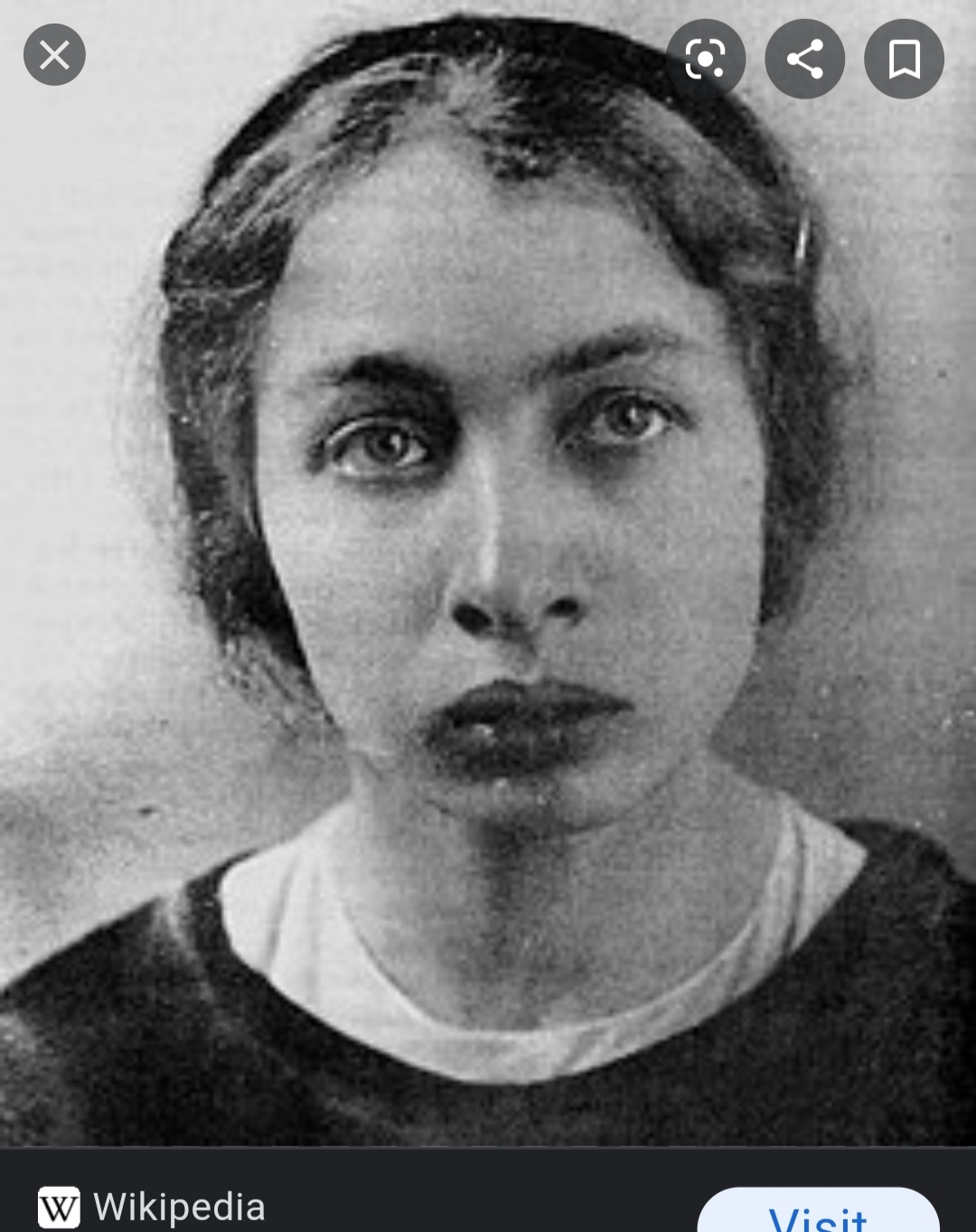
1099) Fanya Kaplan

Courtesy of Wikipedia

1099: Fanya Kaplan

Tried to Assassinate Vladimir Lenin

Born: 10 February 1890, Volhynian Governorate, Russian Empire (Present-day Northern Ukraine)

Died: 3 September 1918, Moscow, Bolshevik-Controlled Russia (Present-day Moscow, Russia)

Original Name: Feiga Chaimovna Roytblat

Fanya was one of six or seven children (sources differ) born into a peasant family. All of the children were educated at home. Fanya’s parents eventually emigrated to the United States.

In1906, Fanya was involved in an attempt to kill a Tsarist officer in Kiev after joining the radical Socialist Revolutionary Party. She was caught and sentenced to a life of hard labor in Siberia, becoming almost completely blind in the process.

After eleven years of backbreaking labor in the frozen north, Fanya was released after the February Revolution alongside other socialist prisoners.

Soon after, the Bolsheviks decided to shut down the Constituent Assembly, which had been gathered to form a constitution for the new Russian state. Fanya and other socialist groups were incensed by this news, and Fanya herself decided to protest the measure in a completely rational way.

That was sarcasm in case you couldn’t guess. Yeah, Fanya didn’t take the news lightly. She decided to protest the news by assassinating Vladimir Lenin, the leader of the Bolsheviks.

On 30 August 1918, Lenin arrived to give a speech. After the speech was over, Lenin was swarmed by a crowd while attempting to reach his car. He was unaccompanied by security or any other aides. As Lenin approached the car, Fanya asked him several questions about how he was running the country. Lenin turned to answer her questions when Fanya struck.

Fanya shot him two times at close range wounding Lenin in the neck and shoulder (she had hired three shots total but one missed). Lenin was driven back to the Kremlin by his chauffeur. Once back at the Kremlin, Lenin had the strength to stagger inside and walk upstairs before he collapsed. At first, others feared he would die from his wounds, but Lenin was eventually able to recover.

Fanya was captured soon after the shooting. In a statement to police, she spoke matter of factly about her actions, stating:

"My name is Fanya Kaplan. Today I shot at Lenin. I did it on my own. I will not say whom I obtained my revolver. I will give no details. I had resolved to kill Lenin long ago. I consider him a traitor to the Revolution. I was exiled to Akatui for participating in an assassination attempt against a Tsarist official in Kiev. I spent 11 years at hard labour. After the Revolution, I was freed. I favoured the Constituent Assembly and am still for it."

Fanya refused to give up other names or link herself to any other organizations. She was prepared to die for her cause, but wouldn’t allow the Bolsheviks to take anyone else with her.

On the third of September, Fanya was executed. She was shot by a fleet sailor and her remains were immediately destroyed. Fanya was denied a burial of any sort.

Lenin was not the only Bolshevik leader to be targeted for assassination around that time. In fact, so many of the Bolshevik leaders were targets of violence a crackdown was quickly organized to fight back. After urging from Josef Stalin, the Red Terror was quickly initiated. In the months after Fanya attempted to kill Lenin, over 800 socialist revolutionaries were arrested and executed without trial.

Lenin himself died prematurely in 1924 aged only fifty-three. His death was caused by multiple strokes as well as other health issues ranging from his bullet wounds from Fanya as well as a second assassination attempt a few months before hers. His body remains on display in a mausoleum in Moscow's Red Square.

Today, some historians and researchers doubt whether or not Fanya was actually the shooter that August afternoon. Reportedly she had never fired a gun before that day, and remember, she was mostly blind. Also, apparently the other witnesses standing around Lenin and Fanya that day all stated they could not verify that Fanya had actually fired her revolver. However, considering Fanya was clearly willing to die for her actions and was eventually executed for it, I think its more than clear that whether or not Fanya was the shooter, she wanted everyone to think she was.

Sources:

https://spartacus-educational.com/RUSkaplan.htm

https://alphahistory.com/russianrevolution/fanya-kaplan/

https://rupertcolley.com/2015/02/10/fanny-kaplan-the-woman-who-tried-to-kill-lenin/

https://www.history.com/this-day-in-history/vladimir-lenin-shot
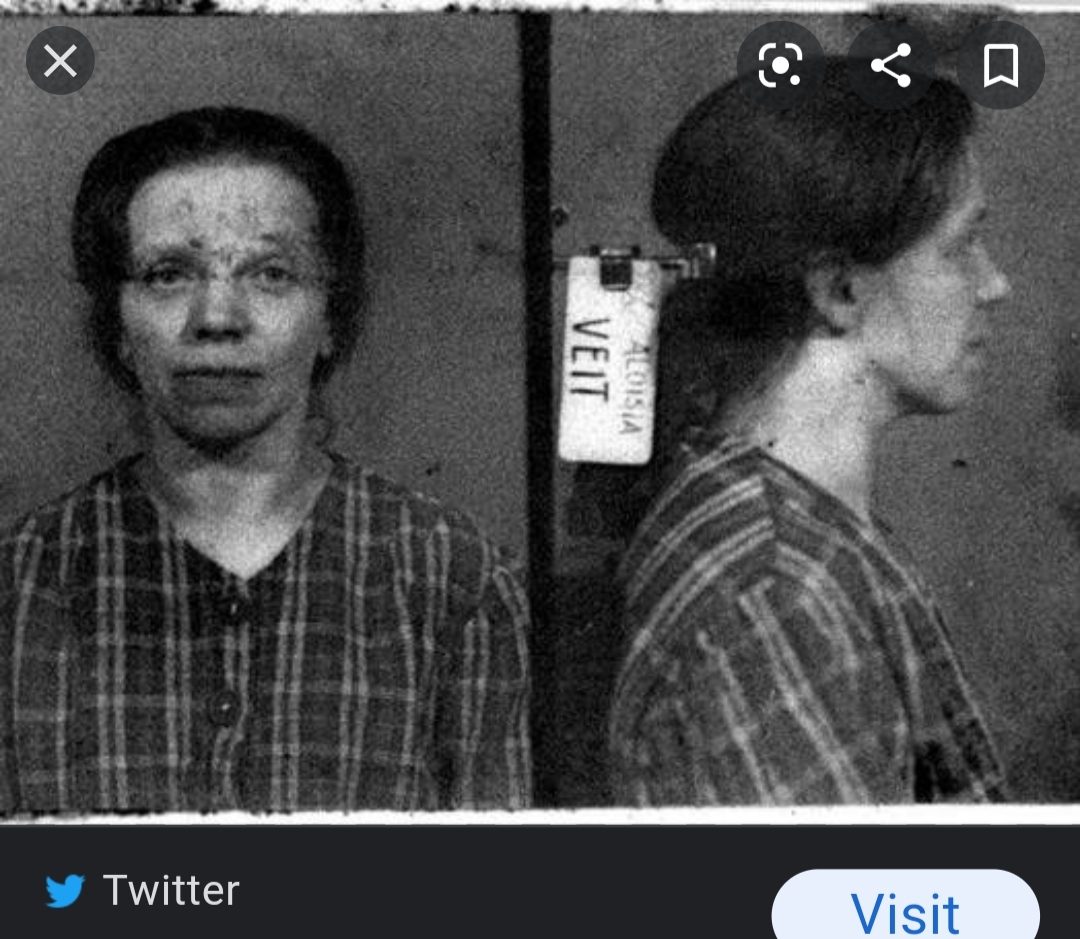
1098) Aloisia Veit

Courtesy of Twitter

1098: Aloisia Veit

Hitler’s Distant Cousin Who Became One of His Many Victims

Born: 18 July 1891, Pontafel, Austro-Hungarian Empire (Possibly Present-day Villach, Austria if I'm Reading Google Maps Correctly)

Died: 6 December 1940, Hartheim Euthenasia Center, Alkoven, Upper Austria (Present-day Alkoven, Austria)

Aloisia was related to the dictator through his Schicklegruber side for those interested in the genealogy. Her great-grandmother and his grandmother were sisters.

It is believed Aloisia suffered from schizophrenia or some other related mental illness. She was two years younger than her radicalized relative and was institutionalized in 1932. Before that, Aloisia had worked as a maid.

Her medical records list her as believing she was seeing visions of ghosts and a skull. Aloisia spent most of her time chained to an iron bed and a letter survives in which she begged for poison to kill herself with.

Aloisia was gassed early on for “Mental Defectiveness” as part of the Nazi Euthanasia Program at a medical facility in Austria.

Historians and researchers have not been able to prove whether or not Hitler was aware of her death. This is pretty much the entire sum of knowledge about Aloisia available online, and its little wonder that Hitler did his best to cover up her story.

Badges Earned:

Find a Grave Marked

Sources:

https://www.wikitree.com/wiki/Veit-204

http://www.fpp.co.uk/Hitler/docs/medical/Hitlers_cousin_mad.html

https://second.wiki/wiki/aloisia_veit

https://www.findagrave.com/memorial/229057336/aloisia-veit

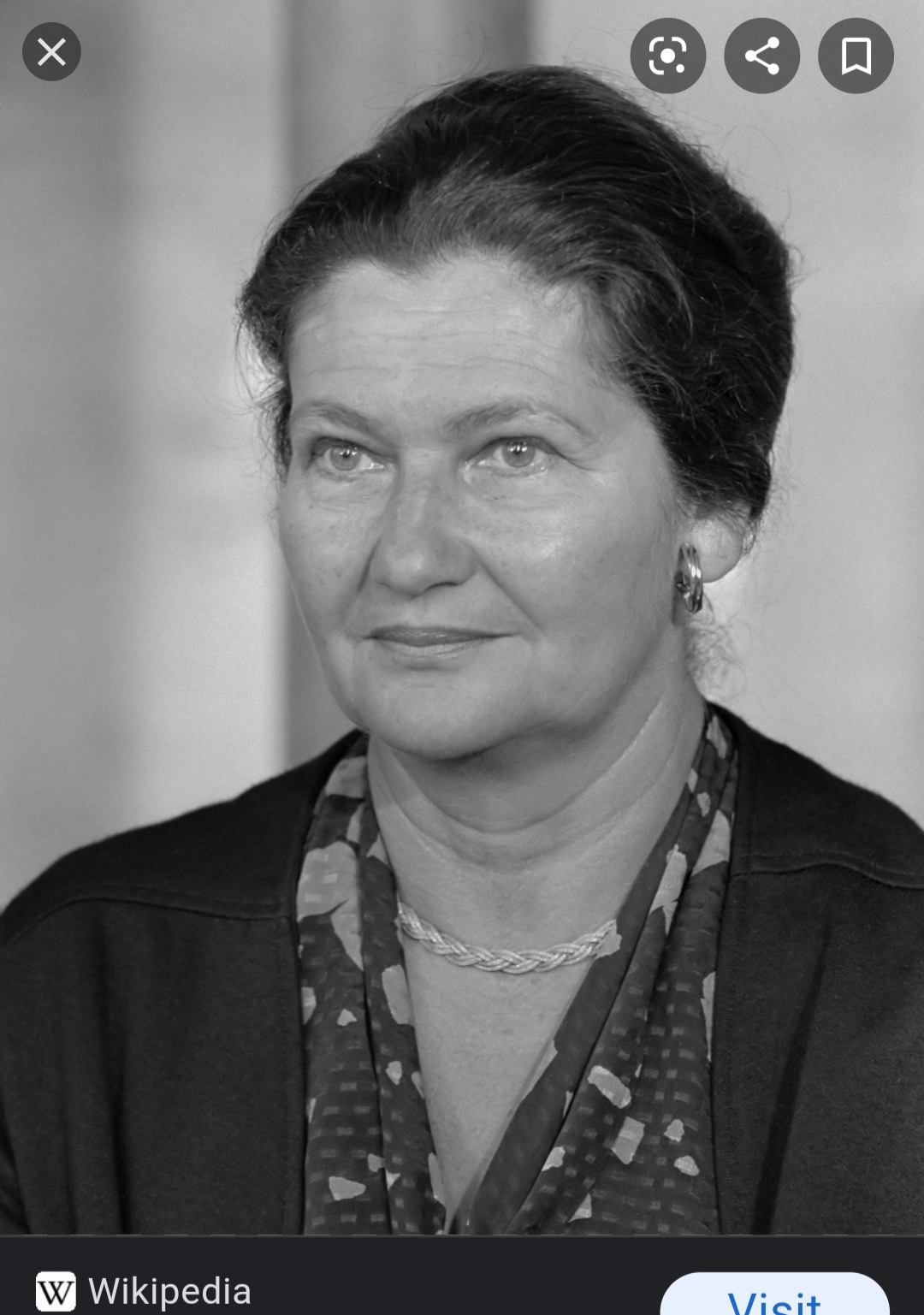
1097) Simone Veil

Courtesy of Wikipedia

1097: Simone Veil

It Takes a Special Person to Become an Immortal

Born: 13 July 1927, Nice, France

Died: 30 June 2017, Paris, France

Simone was a lawyer, magistrate, and politician. She also became a champion of women’s rights (today, she is most remembered in France for pushing through and succeeding in seeing abortion legalized in her country in 1974). While working for the Ministry of Justice, Simone fought to see French female prisoners be given better conditions in which to serve their sentences. While working as the Minister of Health, Simone fought for adoption rights and parental control equality between the sexes, as well as the aforementioned fight for legalized abortion.

Simone served in several government capacities, including the French Minister of Health (becoming only the second woman to hold a Minister position in the French government’s history), French under-secretary of Social Affairs, Health, and Urban Issues, President of the European Parliament, and was a member of the Constitutional Council of France. Simone was the first woman to lead the European Parliament.

Even more incredible? She did all of this after surviving The Shoah as a younger woman. Simone was incarcerated at Auschwitz Concentration Camp (and given the inmate number 78651). She and four members of her family were all deported from France for their Jewish heritage. Of the five, only Simone and her sister Madeleine would survive, although her sister would die in a car accident only seven years after the end of the war. Simone’s family were Jewish by heritage but did not actively practice the religion. Her sister Denise was a member of the Resistance in Lyon and would eventually be arrested herself and sent to Ravensbruck, but she too survived the war. When Simone and her sister Denise were set free at war’s end from Bergen-Belsen, Simone was still only seventeen years old. Simone’s parents and brother all perished in the course of the Shoah, her mother from Typhus while her father and brother’s fate after deportation is unknown.

Simone eventually became one of France’s so-called “Immortals” (only the sixth woman to ever earn that honor). The Immortals are members of the Académie française, which is responsible for updating and maintaining the French language. Each Immortal is given a sword that is engraved and customized for that individual. Simone’s sword had her Auschwitz number, the motto of the French Republic, and the motto of the European Union. As someone who took several French classes in college, I can say that my French teacher literally described the Immortals as “Gods” for the French people, so yeah—Simone was impressive to say the least.

Simone was also awarded one of the highest honors the French government can bestow, the Grande Croix de la Légion d’Honneur, in 2012. This was only one of the many awards and accommodations she received throughout her career.

Simone was married and had three sons.

Simone accomplished so much in her life; she became only the fifth woman to be buried in the Paris Panthéon. According to Google, her burial in the Panthéon took place one year and one day after her death, which is one of the fastest re-burials in the Panthéon’s history. As of the time of her burial, seventy-seven other individuals rest in the elite mausoleum. Simone rests alongside other greats like Marie Sklodowska Curie, Victor Hugo, Alexandre Dumas, and Jean-Jacques Rousseau.

Sadly in 2021, a memorial marker dedicated to Simone in France was vandalized and defaced with images of Swastikas. The memorial was defaced three times in the course of a week. Unfortunately as of the time of writing this article it does not seem as though the perpetrators have been caught.

In 2024, the French government announced they were redesigning their 10, 20, and 50 cent Euro coins with the images of Simone, Josephine Baker, and Marie Sklodowska Curie. The new coins will gradually be put into circulation beginning over the summer.

Badges Earned:

Find a Grave Marked

Sources:

https://webdoc.france24.com/obituary-simone-veil-holocaust-women-abortion-france/

https://jwa.org/encyclopedia/article/veil-simone

https://europa.eu/european-union/sites/default/files/foundingfathers-simoneveil-en-hd.pdf

https://www.theguardian.com/world/2021/aug/11/french-holocaust-survivor-simone-veil-memorial-vandalised

https://www.rfi.fr/en/france/20240310-veil-baker-and-curie-acclaimed-women-to-appear-on-new-french-coins

https://www.findagrave.com/memorial/180873872/simone-veil

1096) Joan Lee

Courtesy of The Hollywood Reporter

1096: Joan B Lee

Voice actress, Hat Model, and Stan Lee’s Wife

Born: 5 February 1922, Gosforth, Newcastle Upon Tyne, England, United Kingdom

Died: 6 July 2017, Los Angeles, California, United States of America

Joan was actually married twice. According to IMDb, her first marriage ended in divorce after four years and she then went on to marry comic book and pop culture icon Stan Lee. Joan and Stan had two children, but their second died only three days after she was born.

When Joan and Stan met, Joan was married to her first husband. Stan had been dared to go up and knock on the door of an apartment and ask out the attractive redhead living inside. Instead of a redhead answering the door, Joan did. At the time, Joan was working as a hat model in California after moving to the United States with her American husband.

They went out for a date despite Joan’s status as a married woman. Its not that she was particularly unhappy with her marriage, it was just—well, boring. Soon after, Joan was flying to Reno, Nevada to obtain a divorce. Stan followed her there, and they reportedly were married by the same judge that had authorized Joan’s divorce from her first husband. Apparently Joan and Stan were wed only six weeks after first meeting.

Joan would reportedly help inspire many of Stan’s female characters, including Mary Jane (Peter Parker’s girlfriend), as well as helping him to create the Fantastic Four series. Some reporters go so far as to say without Joan, Stan would have never stuck with comics or created so many of his now iconic characters. Had Stan not knocked on Joan’s door that one random day, the entire Marvel Cinematic Universe wouldn’t exist, nor would so many of the comics themselves. How crazy is that?

Joan made a cameo in X-Men Apocalypse (alongside her husband), and also did voiceover work in several animated series in the 1990’s.

Joan also wrote a novel in the 1980’s entitled The Pleasure Palace which was published. However, according to her daughter Joan wrote three more novels but never published them.

Joan passed away at the age of ninety-five after suffering complications from a stroke. At the time of her death, her and Stan’s seventieth wedding anniversary was only a few months away.

Her husband Stan passed only a year later.

Badges Earned:

Find a Grave Marked

Sources:

https://www.imdb.com/name/nm1643074/bio?ref_=nm_ov_bio_sm

https://historycollection.com/joan-and-stan-lees-marriage-is-the-love-story-the-world-didnt-know-it-needed/2/

https://www.dailymail.co.uk/news/article-9257249/Marvel-Comics-creator-Stan-Lee-berated-daughter-JC-70-ungrateful-b.html

https://www.findagrave.com/memorial/181079585/joan-clayton-lee

1095) Amanda Foreman

Courtesy of Twitter

1095: Amanda Foreman

Biographer and Historian

Born: June 1968, London, United Kingdom

Amanda wrote and starred in the 4 Part Docu-series “Ascent of Woman.” This series helped spur on my love of women’s history and helped provide several of the entries for my list of women, including the Ice Maiden of Pazyryk, Najat Vallaud-Belkacem, Alexandra Kollontai, Olympe de Gouges, Hildegard of Bingen, Enheduanna, Musasaki Shikibu, and Christine de Pisan. All of these women and many others are highlighted in the docu-series, and I highly recommend it to anyone who has not watched it. All four episodes are currently available on YouTube. I have linked the first in this article.

Amanda’s biography, Georgiana Duchess of Devonshire, inspired the later film and stage play about the famed duchess. The movie, The Duchess, stars Keira Knightley in the titular role.

Amanda is the founder of House of SpeakEasy—a literary nonprofit dedicated to helping authors publish outside of monopolies and censorship.

She also works as a columnist for the Wall Street Journal and has produced various other documentary works. Amanda is an Honorary Research Senior Fellow at the History Department of the University of Liverpool.

Amanda holds a doctorate in eighteenth century British history.

She is married and has five children.

Badges Earned:

Located In My Personal Library:

A World on Fire: Britain's Crucial Role in the American Civil War by Amanda Foreman

Georgiana, Duchess of Devonshire by Amanda Foreman

Sources:

https://www.dramandaforeman.com/biography/

https://www.houseofspeakeasy.org/about-us/amanda-foreman/

http://www.ascentofwoman.com/amanda-foreman

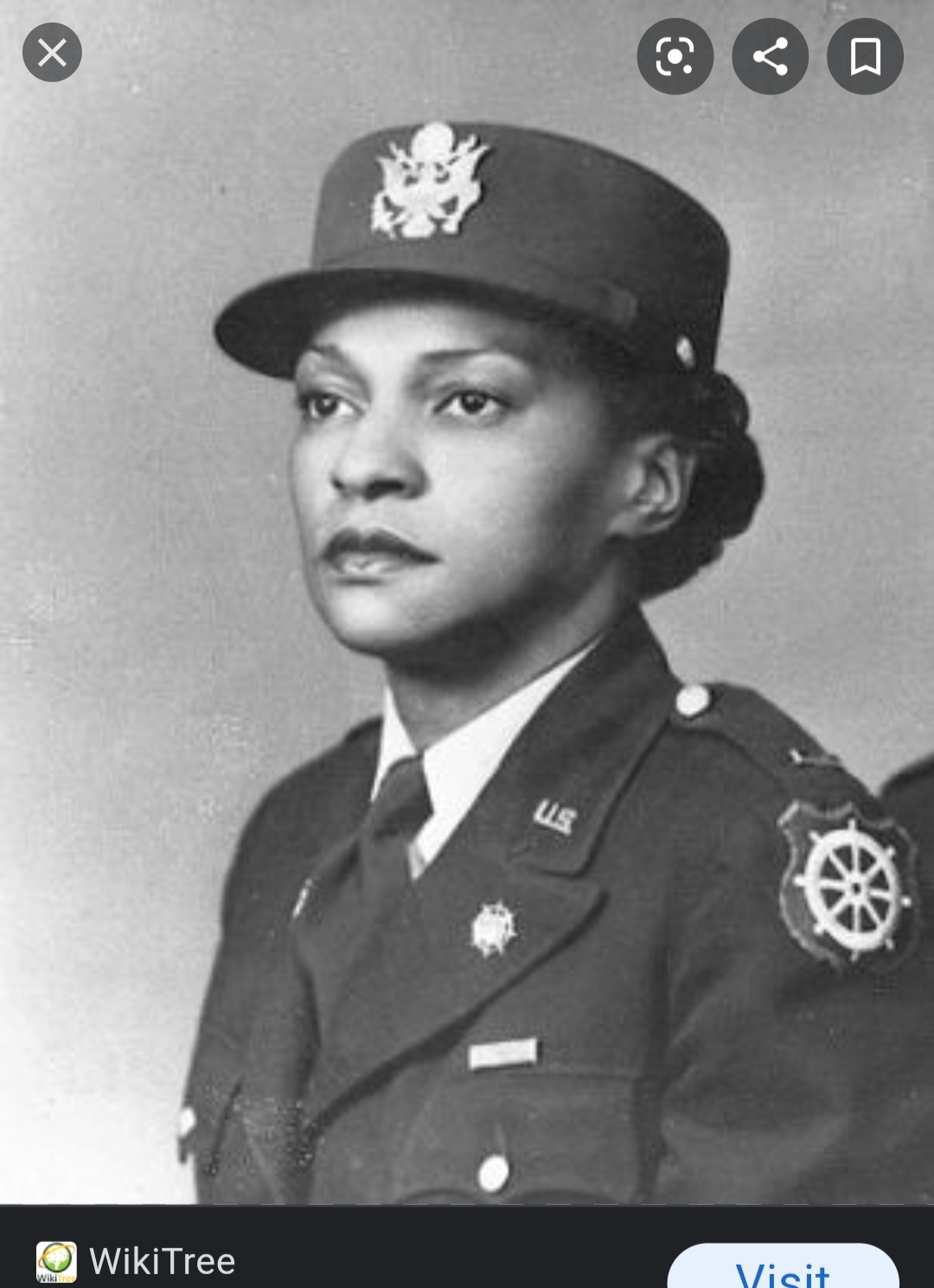
1094) Charity Earley

Courtesy of WikiTree

1094: Ltc. Charity Edna Adams Earley

The First African American Woman Officer in the Women’s Army Corps

Born: 5 December 1918, Kittrell, North Carolina, United States of America

Died: 13 January 2002, Dayton, Ohio, United States of America

Charity was also a Commanding Officer of the first battalion of African American women to serve overseas during World War II.

Charity was well-educated for a woman of her time; especially a woman of color. Her father was a minister and her mother was a former teacher, and as such Charity’s parents had encouraged all of their children to enjoy learning and earn an education. Charity went on to graduate valedictorian from her high school and move on to Wilburforce University in Ohio with a scholarship.

Charity graduated with a bachelor of arts degree in 1938 after majoring in physics, mathematics, and Latin, with a minor in history as well as taking additional education classes. She was devoted to learning to say the least, but also participated in the local NAACP chapter, Delta Sigma Theta sorority, and the Women’s Self-Government Association.

After graduation, Charity spent the next four years as a junior high teacher. She taught science and math, and spent her summers taking graduate courses after settling on a vocational psychology major.

In July of 1942, Charity enlisted in the Women’s Auxiliary Army Corps (WAAC)—later the Women’s Army Corps (WAC). Charity was sent to Fort Des Moines as part of the first officer candidate school. At the end of August, Charity graduated and was commissioned as an officer. She remained at the training center until 1944, but was promoted to Major in 1943, making her the highest-ranking officer at the center.

At the end of 1944, Charity received word she was to command the first unit of African American women of the WAC to serve overseas. Charity’s unit was tasked with identifying and delivering mail to US servicemembers that had not been delivered for whatever reason. This may not seem like a very exciting job, but to stray away from Charity’s story for a moment—my own grandfather (me, the historian writing this website for clarification)—served overseas in World War II, also helping sort mail in Germany. My grandfather had a number of health problems that stopped him from serving on the front lines, but he did his part to serve, as did Charity and the women serving in her battalion.

Alright, back to Charity. Charity was given six months to sort through the major backlog of undelivered mail that had been gathered in Birmingham, England. The women worked constantly, finishing three eight-hour shifts per day. Within three months, all of the mail had been sorted and sent off to its rightful recipient. Charity and her soldiers were next sent to Rouen and Paris, also sorting through the backlog of mail. Charity later said she estimated her ladies sorted through approximately 65,000 pieces of mail per day!

In December of 1945, Charity was promoted once again, this time to Lieutenant Colonel (Ltc). The rank of Lieutenant Colonel was the highest an officer in the WAC could attain, and this placed Charity directly beneath the woman overseeing the entire operation. The following March, Charity asked to be relieved from active duty and was subsequently discharged from the Women’s Army Corps.

Charity was asked to give many talks across the country and was also given many awards for her work. She finished her master’s degree in 1946 and went to work for the Veterans Administration in Cleveland as a registration officer. Charity’s job was to determine how much each veteran would be awarded for their education benefits or other accommodations under the GI Bill.

Charity left the Veterans Administration in 1947 and went on to work for several various colleges and schools throughout the American south. In 1949, Charity married and followed her husband to Zurich, Switzerland, where he was training to be a medial doctor. After studying for ten months to master the German language, Charity began taking classes at the University of Zurich but she did not pursue a degree.

Charity returned to the United States in the 1950’s, and spent the rest of her life working and serving on various boards for several companies. Charity even founded the Black Leadership Development Company, which helps educate and train African Americans to take on leadership positions within their community. She had two children.

Badges Earned:

Find a Grave Marked

Sources:

https://www.womenshistory.org/education-resources/biographies/charity-earley

https://www.scencyclopedia.org/sce/entries/earley-charity-edna-adams/

https://www.nytimes.com/2002/01/22/us/charity-adams-earley-black-pioneer-in-wacs-dies-at-83.html

https://scafricanamerican.com/honorees/lt-col-charity-edna-adams-earley/

https://www.findagrave.com/memorial/61205558/charity-edna-earley

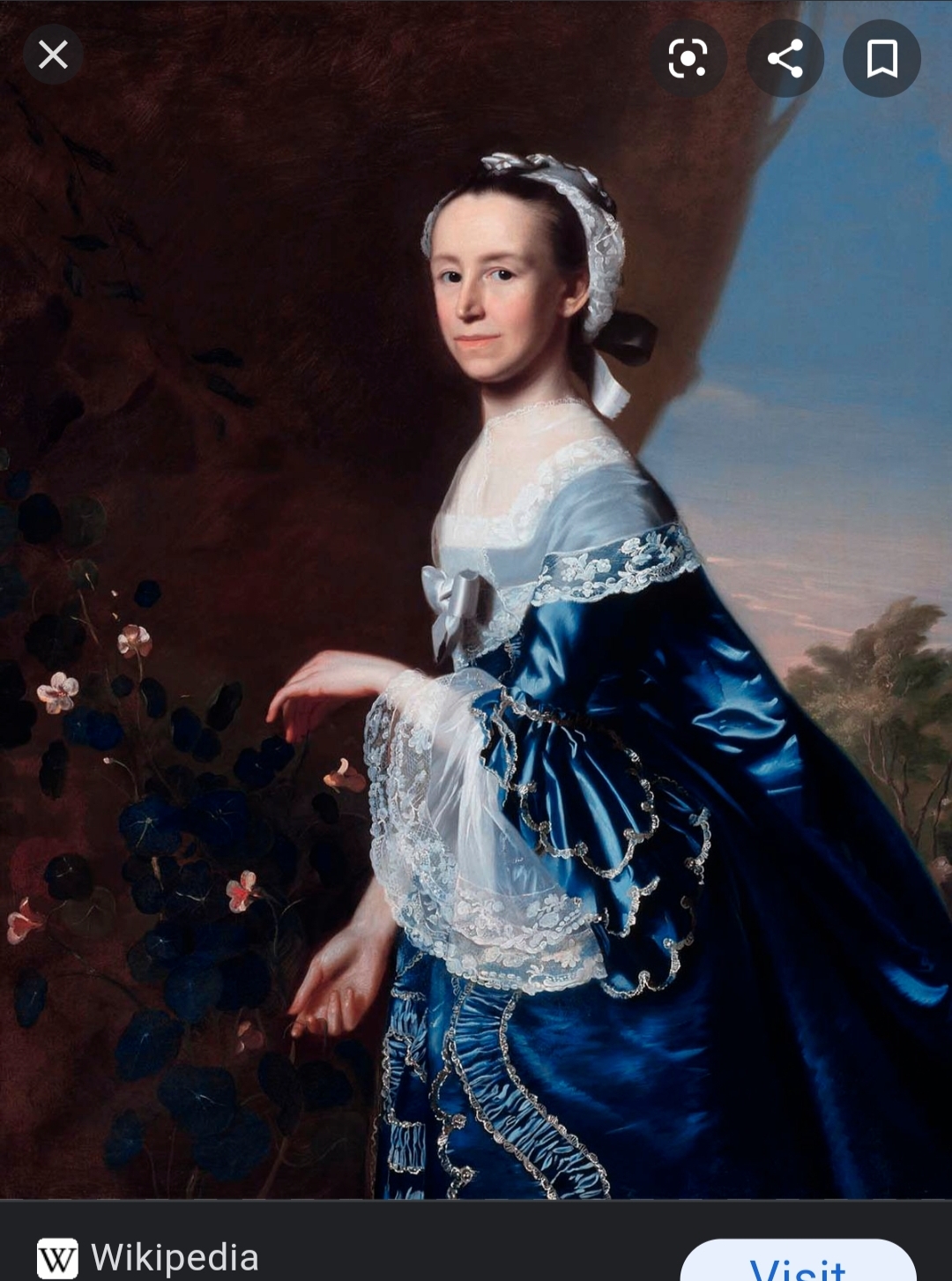
1093) Mercy Otis Warren

Courtesy of Wikipedia

“Every domestic enjoyment depends on the unimpaired possession of civil and religious liberty.”

1093: Mercy Otis Warren

A Woman of Many Words

Born: 14 September 1728, Barnstable, Massachusetts Bay Colony (Present-day Barnstable, Massachusetts, United States of America)

Died: 19 October 1814, Plymouth, Massachusetts, United States of America

Mercy was a Political Writer, Historian, and Propagandist during the Revolutionary War. She was also a poet and dramatist.

Mercy has been considered by some to be the first American woman to write primarily for the public rather than herself. She was also in frequent contact with John, Abigail, and Samuel Adams as well as a correspondent of George Washington, Patrick Henry, Thomas Jefferson, and many others.

Despite never receiving a formal education she listened in on her brother’s tutoring (except Latin and Greek, that she wasn’t allowed to know) and read wildly from her brother’s library. She was one of thirteen children and became interested in politics early, thanks to her father being elected to the Colony’s legislative body in 1745. One of Mercy’s brothers was the political firebrand James Otis, who was also an early advocate for revolution.

In 1754, Mercy married a man who actively encouraged her writing career—an amazing feat for her time period! Her husband, James Warren, was also politically active and had been in her brother’s class at Harvard. The couple would have five sons.

Mercy’s political writing began years before the Revolution first kicked off. In 1772, she anonymously published a satirical attack on the governor of Massachusetts’ policies. Mercy went on to publish two more political plays in 1773 and 1775 respectively, as well as actively supporting the Boston Tea Party and other boycotts against British goods.

Mercy took copious notes of the Revolution as it occurred, and published a history of the rise and culmination of the war in 1805. This work was one of the first non-fiction books published by an American woman, and Mercy was the third woman overall to publish a collection of poems in the United States (after Anne Bradstreet and Phillis Wheatley). Her historical account of the revolution featured Mercy’s own personal beliefs as well, which included her condemnation of the institution of slavery and her thoughts on the mistreatment of Native Americans. Also represented were her thoughts on leading political figures like George Washington. Mercy was equal parts critical and complimentary of the man, but the fact that she was willing to criticize him at all so soon after his death (only six years) proved Mercy was unafraid to speak her mind, no matter the cost to herself or her career.

After the war ended, Mercy rallied against the ratification of the Constitution without the inclusion of the Bill of Rights. Mercy was a believer in republicanism and believed the states should have more autonomy than the Constitution would allow, which put her at odds with her friend John Adams. As Federalism gained traction, Mercy continued to oppose the Constitution, publishing her thoughts for everyone to read.

Mercy was posthumously inducted into the National Women’s Hall of Fame.

Badges Earned:

Find a Grave Marked

Located In My Personal Library:

Revolutionary Women: Amazing Women of the United States From the 1600s through 1900s by Peter Pauper Press

Revolutionary Mothers by Carol Berkin

Founding Mothers: The Women Who Raised our Nation by Cokie Roberts

Affairs of State: The Untold History of Presidential Love, Sex, and Scandal (1789-1900) by Robert P Watson

Sources:

https://www.womenshistory.org/education-resources/biographies/mercy-otis-warren

https://www.battlefields.org/learn/biographies/mercy-otis-warren

https://www.britannica.com/biography/Mercy-Otis-Warren

https://www.mountvernon.org/library/digitalhistory/digital-encyclopedia/article/mercy-otis-warren-1728-1814/

https://www.womenofthehall.org/inductee/mercy-otis-warren/

https://www.findagrave.com/memorial/9768714/mercy-warren

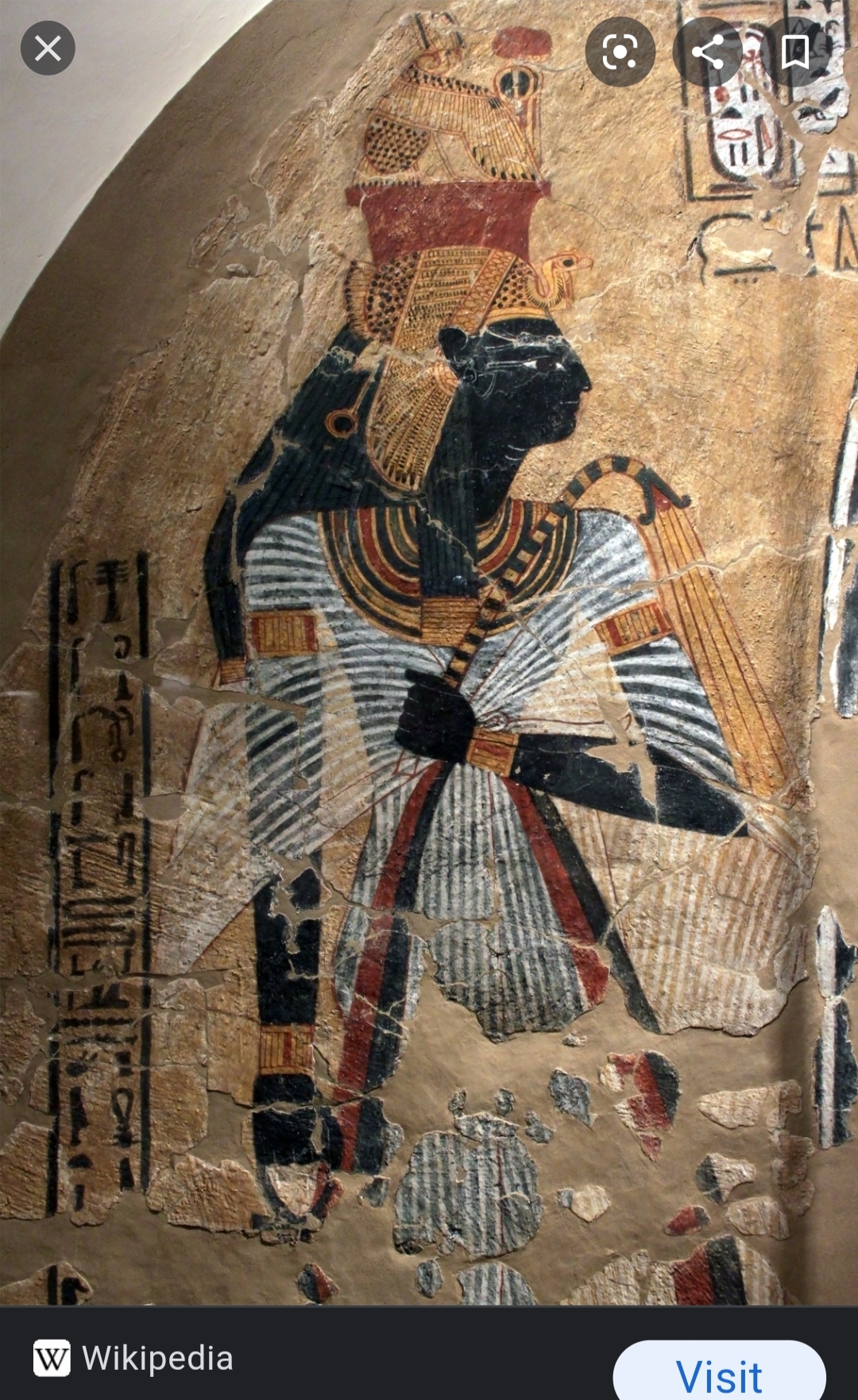
1092) Ahmose-Nefertari

Courtesy of Wikipedia

1092: Ahmose-Nefertari

Ancient Egyptian Queen

Born: c.1562 BC, Thebes, Ancient Egypt (Present-day Luxor, Egypt)

Died: c.1495 BC, Ancient Egypt

Ahmose-Nefertari was the daughter of Seqenenre Tao II and Queen Ahhotep. Her grandmother was Tetisheri, and she may have been the sister/wife of Kamose—the last Pharaoh of the 17th Dynasty who died in battle against the Hyksos.

Ahmose-Nefertari did definitely marry her brother Ahmose and became the First Queen of the 18th Dynasty as a result.

She was the first Egyptian woman to carry the title “God’s Wife of Amun” after her husband created the office. The God’s Wife was the most powerful priestess position in Ancient Egypt and was usually held by a woman of royal blood. The fact that Ahmose-Nefertari carried this title meant she was incredibly powerful and influential in her own right, and surviving carvings indicate she traveled across the lands fulfilling her role and was not simply a figurehead.

There is evidence Ahmose-Nefertari was involved in her husband’s building projects (for example, the Stela of King Ahmose) and she most likely acted as regent for her son Amenhotep I. She was also advisor to the next pharaoh Thutmose I (who was not related to her by blood). Ahmose-Nefertari and her son Amenhotep I were patrons of a village of builders, and those builders kept her cult following alive with continuous prayers into the New Kingdom as a result. There is even a carving of Ramses II invoking and offering prayers to Ahmose-Nefertari as well.

Ahmose-Nefertari also founded an order for Upper Class women called “The Divine Adoratrices of Karnak”. She died of old age, around seventy years old, and was given a part of her husband’s mortuary temple for her own cult.

Badges Earned:

Find a Grave Marked

Located In My Personal Library:

Daughters of Isis: Women of Ancient Egypt by Joyce Tyldesley

Scanning the Pharaohs by Zahi Hawass and Sahar Saleem

Secret Egypt by Zahi Hawass

King Tutankhamun: The Treasures of the Tomb by Zahi Hawass

Unwrapping a Mummy: The Life, Death, and Embalming of Horemkenesi by John H Taylor

Temples, Tombs & Hieroglyphs: A Popular History of Ancient Egypt by Barbara Mertz

National Geographic History Magazine Article “Three of a Kind, the Rebel Queens of Thebes” (July/August 2017 Edition).

National Geographic History Magazine Article "Children of Pharaoh: The Family of Ramses the Great" by Maite Mascort (January/February 2023 Edition)

National Geographic History Magazine Article "Underground Tomb of Nefertari" by Elisa Castel (July/August 2025 Edition)

Sources:

https://www.historyofroyalwomen.com/ahmose-nefertari/queen-ahmose-nefertari-first-gods-wife-amun/

https://ancientegyptonline.co.uk/ahmose-nefertari/

https://www.ucl.ac.uk/museums-static/digitalegypt/thebes/persons/ahmesnefer.html

https://www.findagrave.com/memorial/32257258/ahmose-nefertari

1091) Tetisheri

1091: Tetisheri

The Mother of Egypt’s New Kingdom

Birth and Death Dates Unknown; Ancient Egypt

Tetisheri was born to nobles (but not of royal blood) and was not related to her husband in any way, something that was practically unheard of in Egypt’s royal families. Her husband was Senakhtenre Ahmose and her son was Seqenenre Tao. It is believed Tetisheri was also the mother of Queen Ahhotep I.

As regent to her son, she exercised great military might and may have even helped actively recruit troops in order to fight the Hyksos. When Seqenenre Tao died fighting the Hyksos, Kamose became Pharaoh, but he too died in the fighting. This made Ahmose, son of Seqenenre Tao and Ahhotep, pharaoh. Ahhotep served as regent for her son, but both looked to Tetisheri for advice. Remember, Tetisheri was Ahhotep’s mother and the grandmother of the pharaoh, and some claim she also acted as regent for Ahmose as well. This would either mean Ahhotep and Tetisheri served as Regent, that they both served as regent at different intervals in time, or that one was regent and not the other. Unfortunately, the historical record for three thousand years ago is not known for its clarity and completeness.

Tetisheri was the first Queen to wear the vulture headdress of the Goddess Nekhbet. Tetisheri served as her husband’s “Great Wife”, a title granted to the highest ranking of the Pharaoh’s wives. Her title, combined with the vulture headdress, set a precedent for many Great Wives to follow throughout the rest of Egypt’s history.

It is believed Tetisheri lived to the grand age of seventy.

Tetisheri has a pyramid at Abydos and a lavish tomb at Thebes. Her mummy was discovered in tomb DB 320, which contained forty-six mummies from dynasty’s seventeen through twenty-two.

Badges Earned:

Located In My Personal Library:

Scanning the Pharaohs by Zahi Hawass and Sahar Saleem

When Women Ruled the World: Six Queens of Egypt by Kara Cooney

National Geographic History Article “Three of a Kind, the Rebel Queens of Thebes” (July/August 2017 Edition)

Sources:

https://ancientegyptonline.co.uk/qtetisheri/

https://www.brooklynmuseum.org/eascfa/dinner_party/heritage_floor/tetisheri

https://www.historyofroyalwomen.com/tetisheri/queen-tetisheri-mother-egypts-18th-dynasty/

https://mathstat.slu.edu/~bart/egyptianhtml/mummycaches/DB320%20Cache.htm

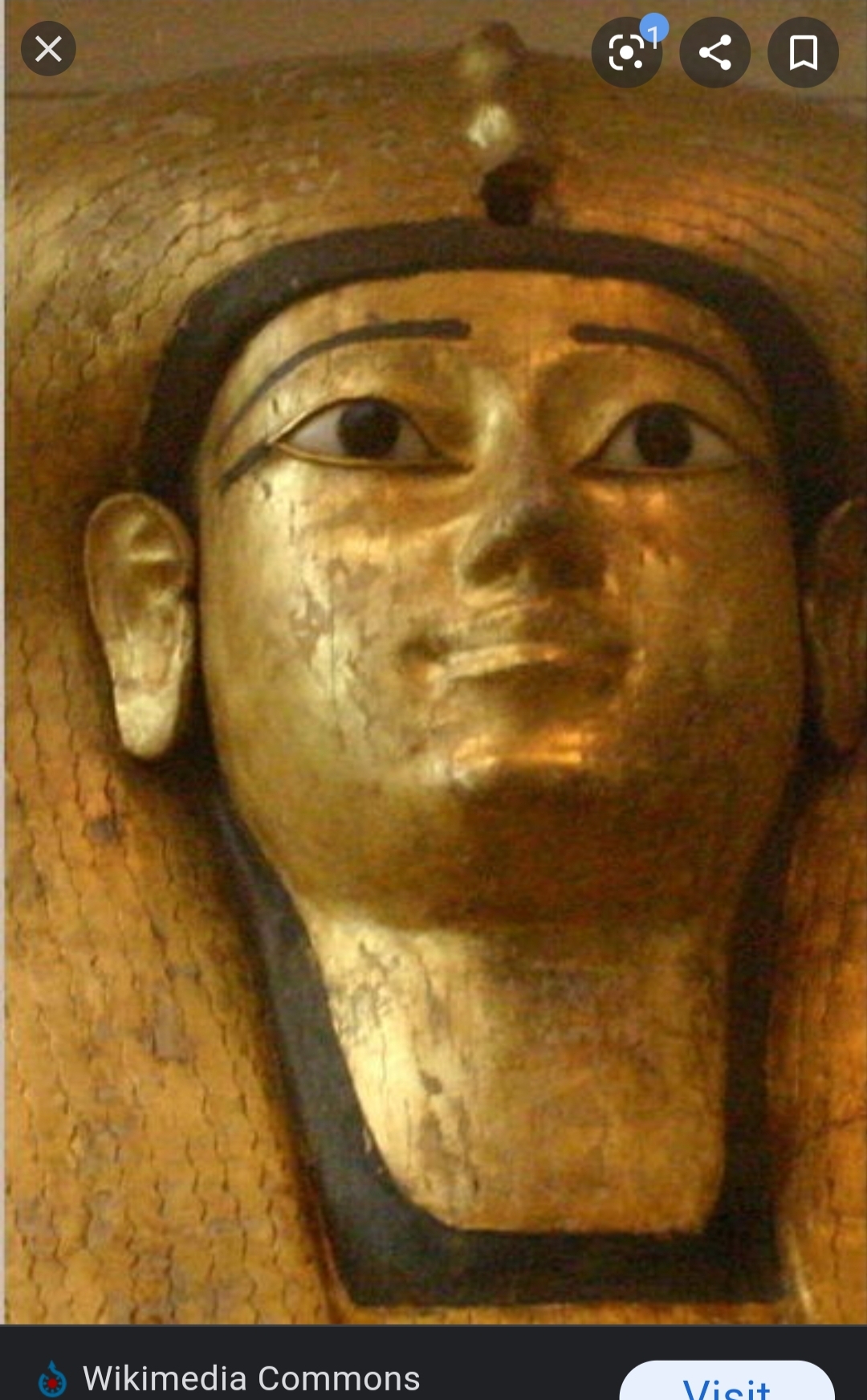
1090) Ahhotep I

Courtesy of Wikimedia Commons

1090: Ahhotep I

Egyptian Queen During the 17th Dynasty

Born: c.1560 BCE, Most Likely Thebes, Ancient Egypt (Present-day Luxor, Egypt)

Died: c.1530 BCE, Most Likely Thebes, Ancient Egypt (Present-day Luxor, Egypt)

Ahhotep was the daughter of Queen Tetisheri and Pharaoh Senakhtenre Ahmose. Ahhotep was married to her brother Seqenenre Taa II (at least, most historians believe they were siblings but this is not known for certain).

Ahhotep gave her brother/husband many children and had considerable influence after her husband's death as a result. Two of her children were the future pharaoh Ahmose I, as well as the future queen Ahmose-Nefertari.

Ahhotep’s husband, the pharaoh, was killed in battle fighting the Hyksos. After Seqenenre Taa’s death, a man known as Kamose came to the throne of Egypt. Originally believed to be Seqenenre Taa’s son, today some Egyptologists believe Kamose was actually his brother. However the two men were related, Kamose did not last long on the throne.

Kamose was also killed fighting the Hyksos. The heir to the throne, Ahhotep’s son Ahmose, was not yet old enough to rule on his own, so his mother worked as a regent for her son, ensuring Ahmose would one day be able to succeed to the throne. During the years of her regency, engravings that survive to this day relate that Ahhotep may have gone so far as to take up arms against the Hyksos.

Eventually, Ahmose came to the throne and was able to push their Hyksos rivals out of the Egyptian countryside entirely. Ahmose left to reclaim former Egyptian territories in Nubia, and during that time Hyksos sympathizers tried to take the throne by force. Ahhotep was able to protect her son’s throne and was awarded the golden flies of valor by the pharaoh as a result.

While this information seems relatively minimal today, when you consider the fact that Ahhotep lived over three thousand years ago, the fact that we know this much about her proves just how much of an impact Ahhotep made on Egypt's history.

Ahhotep’s original tomb has yet to be discovered, however one of her coffins was uncovered at Deir el-Bahri.

Her name meant the Moon is Satisfied.

Badges Earned:

Find a Grave Marked

Located In My Personal Library:

The Encyclopedia of Ancient Egypt by Helen Strudwick

The Pharaohs by Joyce Tyldesley

Warfare and Weaponry in Dynastic Egypt by Rebecca Dean

When Women Ruled the World: Six Queens of Egypt by Kara Cooney

Arsinoe of Egypt and Macedon: A Royal Life by Elizabeth Donnelly Carney

National Geographic History Article “Three of a Kind, the Rebel Queens of Thebes” (July/August 2017 Edition).

Sources:

https://ancientegyptonline.co.uk/qahhotepi/

https://www.encyclopedia.com/women/encyclopedias-almanacs-transcripts-and-maps/ahhotep-r-1570-1546-bce

https://en.wikipedia.org/wiki/Ahhotep_I

https://pantheon.world/profile/person/Ahhotep_I

https://www.findagrave.com/memorial/32219604/ahhotep_i 

  • Previous
  • 1
  • …
  • 13
  • 14
  • 15
  • 16
  • 17
  • 18
  • 19
  • …
  • 159
  • Next

Categories

Archives

  • July 2025 (10)
  • July 2024 (1)
  • January 2024 (1)
  • August 2023 (1)
  • June 2023 (2)
  • October 2022 (1)
  • July 2022 (1)
  • June 2021 (3)
  • December 2020 (3)
  • August 2019 (1)
  • July 2019 (2)

Search

© 2026 The Exasperated Historian | Powered by Minimalist Blog WordPress Theme