The Exasperated Historian
Menu
  • Home
  • The Women’s List (New)
  • The Men’s List
  • The Animal List
  • Collections
  • The Blog
  • Contact Us
  • FAQ
Menu

Category: Birth Locations

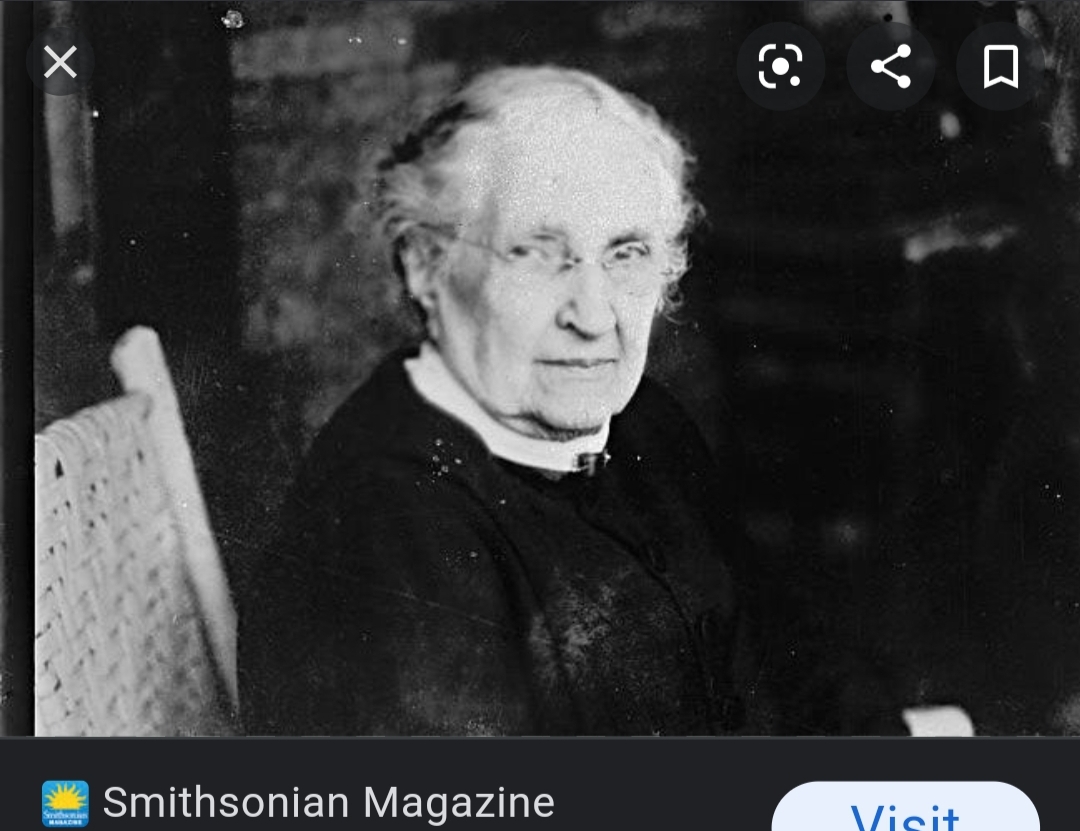
1107) Charlotte Pierce

Courtesy of Smithsonian Magazine

"I do not believe there was any community anywhere in which the souls of some women were not beating their wings in rebellion. . .  Every fiber of my being rebelled, although silently, for all the hours that I sat and sewed gloves for a miserable pittance which, after it was earned, could never be mine. I wanted to work, but I wanted to choose my task and I wanted to collect my wages."

1107: Charlotte Woodward Pierce

Suffragists Came From All Corners of the Country

Born: c.1830, Possibly Waterloo, New York, United States of America
Died: after 1921, Location Unknown

Charlotte was the only woman present at the Seneca Falls Convention still alive when the 19th Amendment to the United States Constitution (giving women the right to vote in federal elections) was passed.

If that fact isn’t sad enough, by the time the elections rolled around, Charlotte was too ill and infirm to leave her home, so she could not even vote in the election anyway.

Charlotte was one of sixty-eight women to sign the Declaration of the Rights of Sentiments at the Seneca Falls Convention. The amendment was passed seventy-two years after the convention.

Very little else of Charlotte’s life is known today. She was probably from a Quaker background and was around eighteen or nineteen when she attended the convention. Charlotte began working as a teacher when she was fifteen, but at the time of the convention was actually working from home, sewing gloves from pieces sent to her by merchant capitalists.

Charlotte and a few of her close neighborhood friends drove themselves across New York to the convention via a horse drawn cart. According to Census information takin in 1850, researchers believe Charlotte traveled farther than most of the women who signed the Declaration at the convention’s end. If the Charlotte Woodward listed in the 1850 Census is indeed our Charlotte (and it almost certainly must be as there was only one in New York State at the time), Charlotte traveled forty miles in order to attend the convention!

Charlotte eventually married but remained active in the Suffrage cause the rest of her life. She even knew Susan B Anthony. Sadly, the information on Charlotte pretty much ends there. She was ill during the 1920 elections and practically blind by 1921, so she could not participate in either year. After that, the information just stops. But no matter where she ended up, Charlotte still managed to make her mark on history by being brave in a time when girls were taught to be docile and keep their heads down. And that's worth celebrating.

Sources:

https://www.nps.gov/wori/learn/historyculture/charlotte-woodward.htm

https://www.smithsonianmag.com/smart-news/only-one-woman-who-was-seneca-falls-lived-see-women-win-vote-180964044/

https://unrememberedhistory.com/tag/charlotte-woodward/

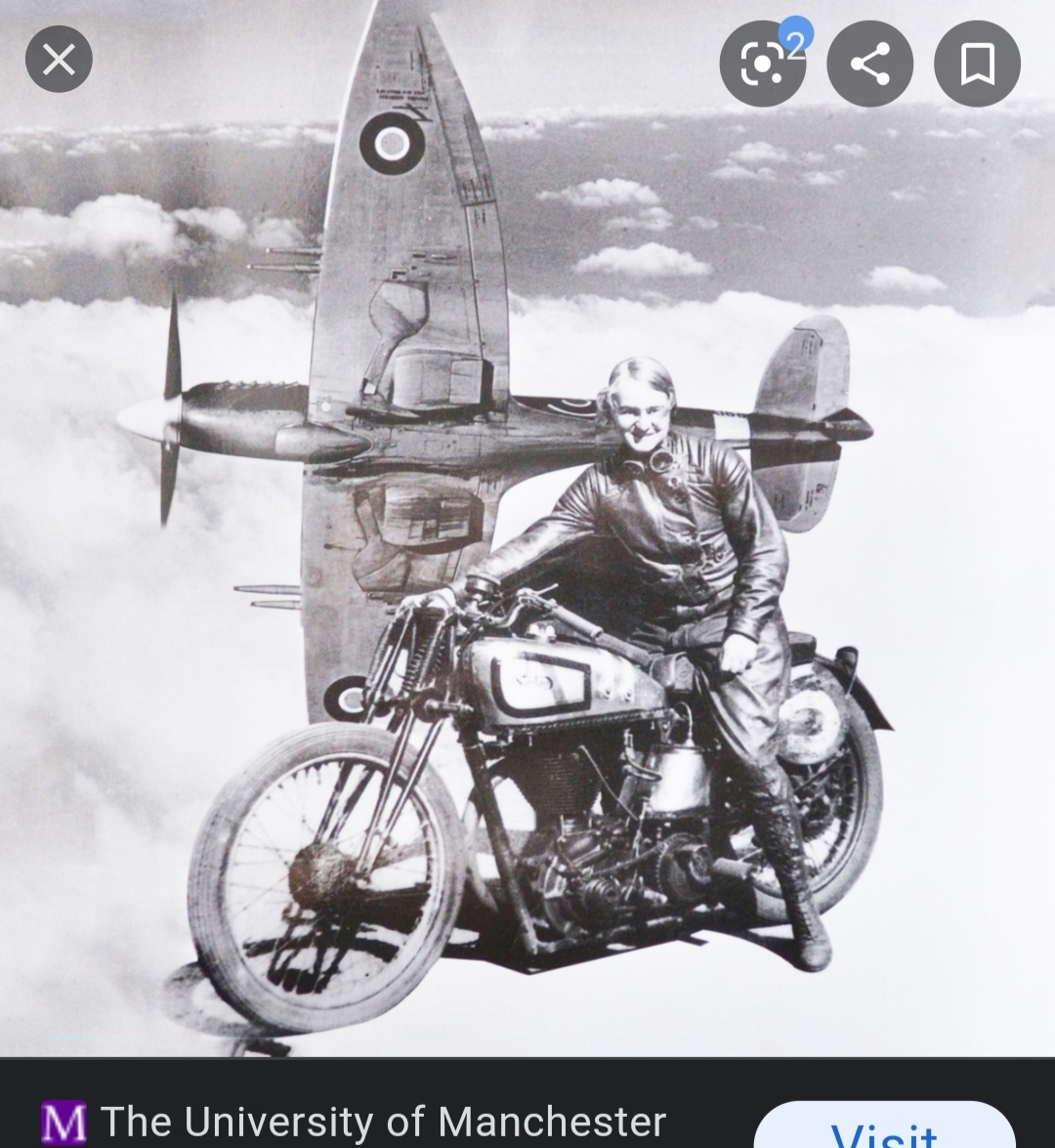
1106) Beatrice Shilling

Courtesy of The University of Manchester

1106: Beatrice Shilling Naylor

Aeronautical Engineer and Motorcycle Racer

Born: 8 March 1909, Waterlooville, England, United Kingdom

Died: 18 November 1990, England, United Kingdom

Beatrice was also the Inventor of ‘Miss Shilling’s Orifice’ a device that fixed engine failure during certain maneuverers in Hawker Hurricane and Supermarine Spitfire fighter planes, both of which used a Rolls-Royce Merlin Engine in their 1940 designs.

Beatrice was considered one of the greatest aeronautical engineers of her time.

As a child, Beatrice (or Tilly, as her friends and family knew her) spent her money on various tools to help her fix various mechanical objects she came across. Beatrice purchased her first motorcycle when she was only fourteen. When she was a teenager, Beatrice left school in order to become an apprentice at an electrical engineering company.

In 1932, the first year the University of Manchester allowed women to enroll in their engineering program, Beatrice became one of the first two women to sign up for classes. Beatrice held a bachelor’s degree in electrical engineering and a master’s in mechanical engineering.

After graduation, Beatrice became a motorcycle racer, eventually earning an award for reaching 106 miles per hour with a supercharged engine; a practically unheard-of speed for the time period.

In 1936, Beatrice was hired by the Royal Aircraft Establishment (RAE) to work as an engineer. It was while working for the RAE that Beatrice came up with her little device that helped prevent Merlin Engines from flooding the carburetor during a nose-dive maneuver. The official name for the part was the “RAE Restrictor”, however, given the fact that a woman was the inventor, and this was the 1940’s, the device quickly earned the nickname “Miss Shilling’s” or even “Tillie’s Orifice,” because the device was a small metal disk with a slight puncture hole in the center of the disk. Real mature guys, real mature.

After the restrictor was proven as an essential piece of the proper working of the Merlin Engine, the restrictors were widely installed and used. Thanks to Beatrice’s hard work, the Spitfires and Hurricanes went on to help secure victory for the Allied forces during World War II. Because of her hard work, Beatrice was awarded an Order of the British Empire title in 1948.

After the war, Beatrice continued to work as an aeronautical engineer. She focused on researching aircraft braking on a wet runway, solid-fuel rocket propulsion, and other extremely important and interesting things. Tilly was a bada**, let’s just say it like it is.

Beatrice continued to work with the RAE until she retired in 1969, and she remained active in the racing and engineering communities until she died. Beatrice was married to a fellow RAE employee, but they had no children. In 1969, she was awarded an honorary doctorate from the University of Surrey in honor of her work.

Sources:

https://www.kenleyrevival.org/content/history/women-at-war/beatrice-shilling-revolutionising-spitfire

https://www.wes.org.uk/sites/default/files/u82/Magnificent%20Women%20-%20Beatrice%20Shilling.pdf

https://physicstoday.scitation.org/do/10.1063/pt.6.6.20190308a/full/

1105) Folorunsho Alakija

Courtesy of Africa CEO Forum

1105: Folorunsho Alakija

Most Wealthy Nigerian Woman in the World

Born: 15 July 1951, Ikorodu, Nigeria

Folorunsho’s net worth was estimated at $2.5 Billion (USD) in 2014, but as of 2021 she is estimated to have a net worth of right around $1 Billion (USD).

She makes her money from fashion, oil, real estate, and printing industries and her money is largely self-made.

Folorunsho was born into a family with several children in Nigeria, but she was educated partly in the United Kingdom.

Folorunsho is vice-chair of Famfa Oil. Famfa’s partners include Chevron and Petrobas. Folorunshu is also vice chairman of other real estate and printing businesses as well.

Folorunsho was also the first woman to be appointed Chancellor of a public university in Africa. She has even authored various books including an autobiography.

She is married and has four children.

Sources:

https://www.forbes.com/profile/folorunsho-alakija/?sh=6bff2acf2ad9

https://www.theafricaceoforum.com/en/portraits/folorunso-alakija/

https://africa.harvard.edu/people/folorunso-alakija

https://nairametrics.com/2021/09/17/folorunsho-alakija-from-a-middle-class-home-to-becoming-nigerias-richest-woman/

Entries Born in Turkey

These are the entries born within the modern geographic area of Turkey.

Entries:

  1.  Mirhimah Sultan, Ottoman Princess
  2. Phile, The First Woman Elected Magistrate in the Ancient Greek City of Priene
  3. Puduhepa, Hittite Queen
  4. Theodora III, Byzantine Empress
  5. Zoe Porphyrogenita, Byzantine Empress

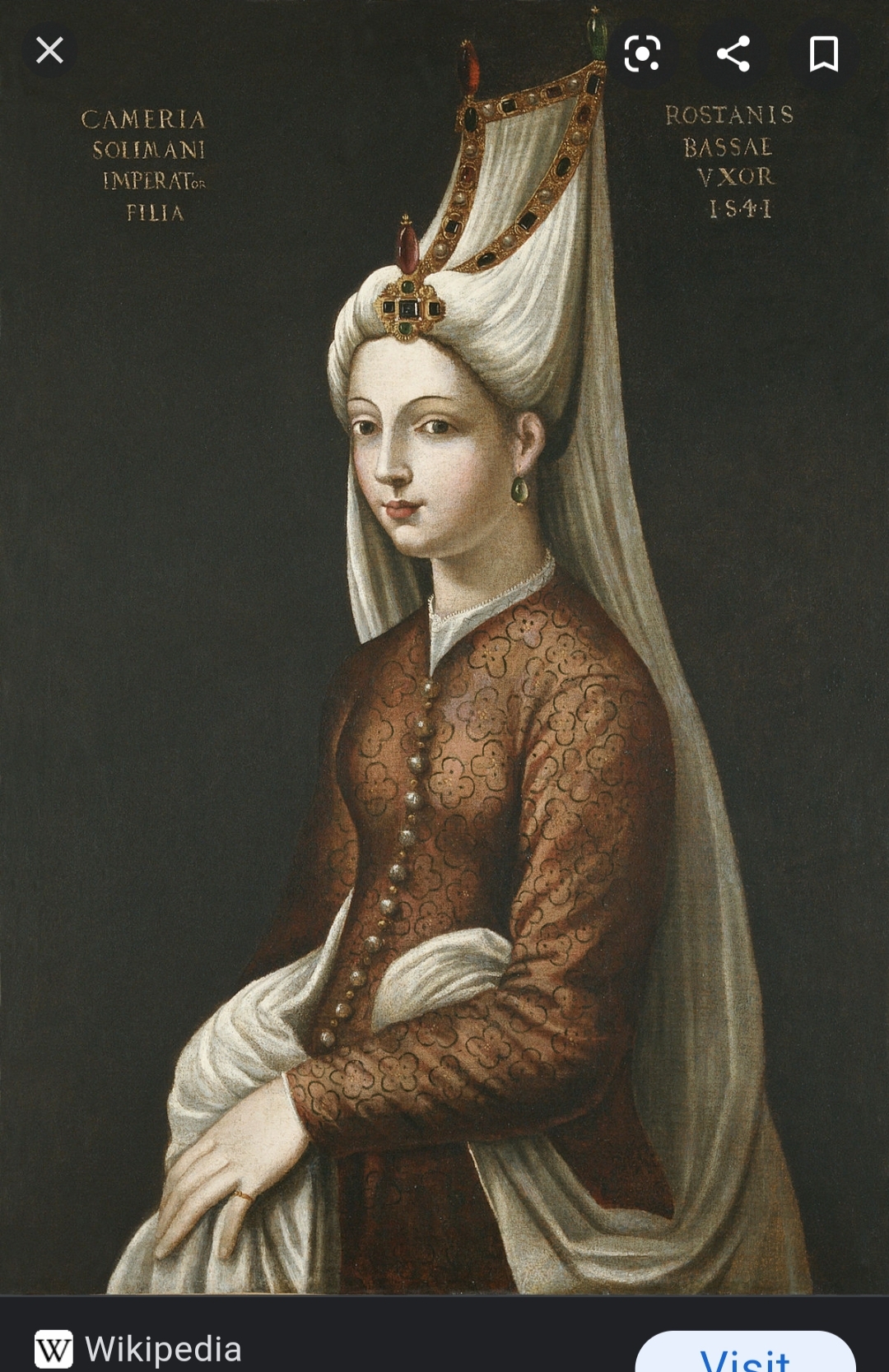
1104) Mirhimah Sultan

Courtesy of Wikipedia

1104: Mirhimah Sultan

Most Powerful Ottoman Princess in the History of the Empire

Born: c.1522, Constantinople, Ottoman Empire (Present-day Istanbul, Turkey)

Died: 25 January 1578, Constantinople, Ottoman Empire (Present-day Istanbul, Turkey)

Name Also Spelled: Mihrümah

Mirhimah was the daughter of Suleiman the Magnificent and Hürrem Sultan (also known as Roxelana).

Mihrimah married a grand vizier and served as an advisor to her father and brother both (during her brother’s reign, Mirhimah was given the title “Valide Sultan” or “Queen Mother”). She was the only surviving daughter between her parents, though she had five brothers. Mirhimah spent most of her adult life surviving with health issues from a disorder sounding like rheumatism, though she did have two children, a son and a daughter.

Several of Mirhimah’s letters survive, allowing historians and researchers to look into Mirhimah’s life and note she was well-educated, eloquent, and very smart. Like her mother, Mihrimah had a continuing correspondence with the king of Poland, and according to some sources her letters to him survive in Poland’s state archives to this day.

Mihrimah was the wealthiest woman in the empire and spent her money in various charitable fields. She also gave loans to the treasury at times. Mirhimah was so affluent she was able to purchase 400 ships to send to war with her father’s troops when he attacked Malta.

Mihrimah commissioned the building of two mosque complexes within modern-day Istanbul which still stand today. In the complexes were a soup kitchen, school, and clinic for the poor—some of which are also still used today. The mosques were damaged during various earthquakes in the ensuing centuries but were rebuilt over time.

Badges Earned:

Find a Grave Marked

Sources:

https://www.dailysabah.com/feature/2014/03/11/notable-life-of-mihrimah-sultan

http://www.wisemuslimwomen.org/muslim-woman/mihrimah-sultana-5/

https://www.findagrave.com/memorial/91962029/mihrimah-sultan

1103) Ban Zhao

1103: Ban Zhao

The First Known Female Chinese Historian

Born: c.45 CE, Anling, Fufeng (Present-day Xianyang, Shaanxi Province, China)

Died: c.116 CE, Present-day China

Also Known As: Huiban

Ban Zhao married at the age of fourteen and had at least one child; never remarrying after her husband died early on. Instead, Ban devoted the rest of her life to her own and her child’s education. Because she lived so long ago, the sources online are all over the place, with one stating Ban Zhao had one son, another stating she had multiple children including several daughters, and another saying no one knows how many kids and which gender they would have been. In any case, she was most likely probably a mother to at least one child.

Ban helped her brother Ban Gu finish their father’s work, a history of the Xi or Western Han Dynasty. After their father died, the emperor made Ban Zhao’s brother the empire’s official historian and ordered him to finish the work, but Ban Gu needed his sister’s help (one source says Zhao’s brother was actually executed for some bad political moves on his part—either way Ban Zhao finished the project!). The work was called Han Shu or Book of Han and is today recognized as one of the best Chinese histories ever written and a model for all Dynastic Histories later.

Ban was also the author of Lessons for Women, basically an etiquette guide, as well as several poems.

Ban was made a lady in waiting to the empress for her scholarly work. Reportedly, Ban Zhao was beloved by the court and royal family, known as “Mother Ban” even. And when she died, the empress and court openly mourned her loss, which was extremely uncommon to do for a commoner.

Little else is known of her life, but that isn’t surprising given the fact she lived almost two thousand years ago. The fact that her name survived at all is astonishing, and goes to show just how influential her works really were.

Sources:

https://www.britannica.com/biography/Ban-Zhao

https://www.newworldencyclopedia.org/entry/Ban_Zhao

https://www.encyclopedia.com/history/encyclopedias-almanacs-transcripts-and-maps/ban-zhao

Entries Born in Myanmar

These are the entries born in the country of Myanmar, also known as Burma.

Entries:

  • Aung San Suu Kyi, Former State Counsellor of Myanmar

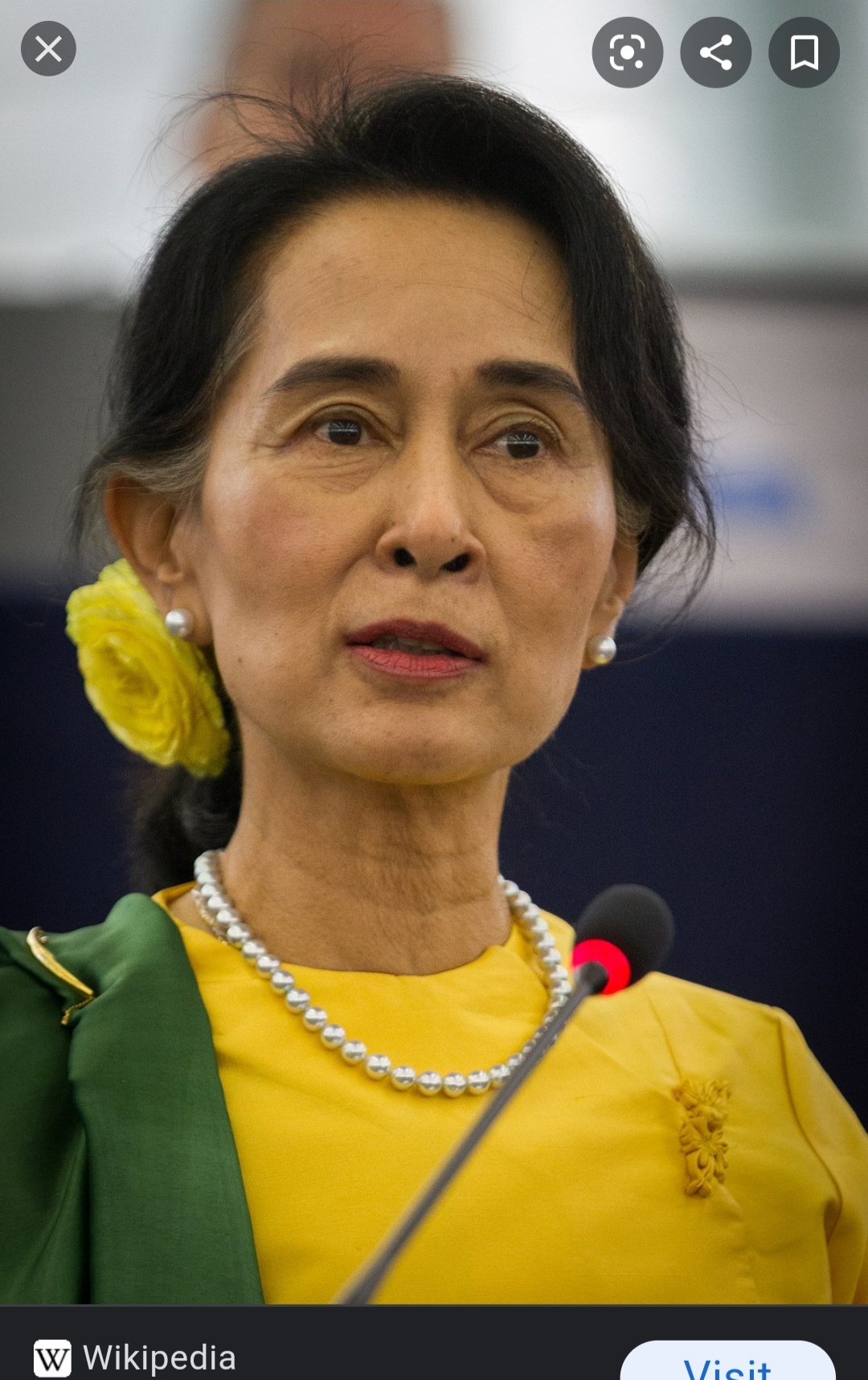
1102) Aung San Suu Kyi

Courtesy of Wikipedia


1102: Aung San Suu Kyi

The First State Counsellor of Myanmar

Born: 19 June 1945, Yangon, Myanmar

Aung is the daughter of Myanmar’s political democratic icon General Aung San. Just before Myanmar gained independence from the United Kingdom in 1948, the general was assassinated. Aung was only two years old when her father was killed. In 1960, Aung’s mother was named ambassador to India, and the pair moved to Delhi.

In 1964, Aung moved to the United Kingdom in order to study at Oxford. While there, she met her husband, a British citizen. The couple eventually had two children. In 1988, Aung moved back to Myanmar in order to care for her sick mother. Unfortunately, by then, Myanmar was in the midst of a major political upheaval. Within months, Aung had taken to the streets to lead those rising up and demanding democratic reform. The following year, Aung was arrested and placed under house arrest after the military seized control of the country.

In May 1990, elections were held. Aung’s party won fairly, but the military refused to hand over control. In 1991, Aung was awarded the Nobel Peace Prize while still under house arrest. Four years later she was set free, only to be placed under house arrest again in 2000 after defying travel restrictions she had been placed under. Her husband died of cancer in 1999, but Aung had not left Myanmar to be with him for fear the government would not allow her to return home after he had passed.

In May 2002, Aung was finally released from house arrest for the final time*. Sadly, a year later she was threatened all over again when a government backed mob attacked her convoy in the north of the country. Aung managed to escape thanks to her driver’s quick thinking, but many of her supporters were beaten and killed.

*Remember how I said the final time? Yeah, well that’s technically true. However, the government continued to force her to remain in her home or face consequences for several years onward still.

In 2010, Aung was not allowed to participate in her country’s election cycle, but she was released from house arrest six days later. One of her son’s was allowed to visit her for the first time in a decade that same year. In April 2012, her party managed to secure forty-three of the forty-five seats available. Aung was able to take a position as an MP and an opposition leader. She left Myanmar for the first time in twenty-four years the following year but was thankfully allowed to return after.

In 2015, Aung and her party won several prominent government positions during a new round of elections (the first since the military had relinquished control of the government entirely). Aung herself could not become president because of a clause in Myanmar’s constitution that bars someone from becoming president if they have children who are foreign nationals (Aung’s sons are British citizens). However, it was widely known that Aung was de-facto leader despite not holding the title; Aung instead was known officially as the State Counsellor. In 2020, Aung’s party once again won a landslide majority of votes in the country’s second round of elections.

Aung remains immensely popular with Myanmar’s majority Buddhist population, but her international appeal fell sharply after it was revealed how horribly she has handled the Rohingya Muslim migration crisis and genocide within her country. In 2017, hundreds of thousands of Rohingya Muslims fled to neighboring Bangladesh in order to escape military persecution. Because of the crisis, Myanmar is now under investigation for genocide and crimes against humanity by the International Justice Court and the International Criminal Court. Aung herself came under fire from the international community because of her refusal to speak out or do anything, say anything, to stop the military from committing these atrocities. Her international reputation only worsened when Aung actually defended the military’s actions at an ICJ hearing in the Hague.

Democratic progress in Myanmar slowed to a crawl by 2018. Aung and her government prosecuted journalists and cracked down on anyone speaking out against the military or her government. She also described the military generals in her cabinet as being “rather sweet.” Not exactly something you want to hear about a group that held the country—and Aung for that matter—literally hostage for decades.

In February of 2021 a military coup overthrew the government and imprisoned Aung. The military had continued to wield immense power ever since they stepped back in 2015, as evidenced by several members holding key positions in the cabinet. After the 2020 elections, the military claimed major fraud had taken place in the course of the election. On the day parliament was supposed to sit for the first time, Aung was arrested and the country was thrown into a state of emergency. As of October, it is believed the military has killed over eight hundred citizens and detained five thousand more.

In October 2021, Aung's lawyer announced he had been put under a gag order and could no longer offer any updates on his client or her wellbeing. Aung is being held in an undisclosed location and has been charged with several offenses, including: incitement to cause public alarm, violating the Official Secrets Act, illegally importing two-way radios, corruption, and breaking coronavirus protocols. If convicted of these charges, Aung could face decades in prison. For a woman her age, that’s basically a sentence of living out the remainder of her life in prison. And this time, it won’t be house arrest.

The military leaders have promised to hold an election in August of 2023. Several smaller political groups have banded together and may go to war against the military to try and win back control of their country.

As of June 2023, it is now being reported that the military regime has retained control of less than 50% of Myanmar's total land area. It was also reported that military leaders met with Aung in both late May and early June 2023 to try and negotiate a peaceful resolution to the country's civil war, but that the talks led to nothing. Aung is still being held as a prisoner by the regime.

It is now estimated that thousands of Myanmar civilians have died in the conflict, making the civil war the second deadliest conflict for Myanmar's citizens following World War II.

Badges Earned:

Located In My Personal Library:

Time Magazine's 100 Women of the Year (Aung appears in the 1990 article, "Aung San Suu Kyi")

Sources:

https://www.nbcnews.com/news/world/myanmar-bars-aung-san-suu-kyi-s-lawyer-speaking-about-n1281626

https://www.bbc.com/news/world-asia-pacific-11685977

https://www.bbc.com/news/world-asia-57449884

https://www.dw.com/en/myanmar-what-can-we-expect-from-aung-san-suu-kyi-trial/a-59364647

https://www.thaiexaminer.com/thai-news-foreigners/2023/06/14/hated-burmese-junta-regime-seeks-peace-talks-aung-san-suu-kyi/

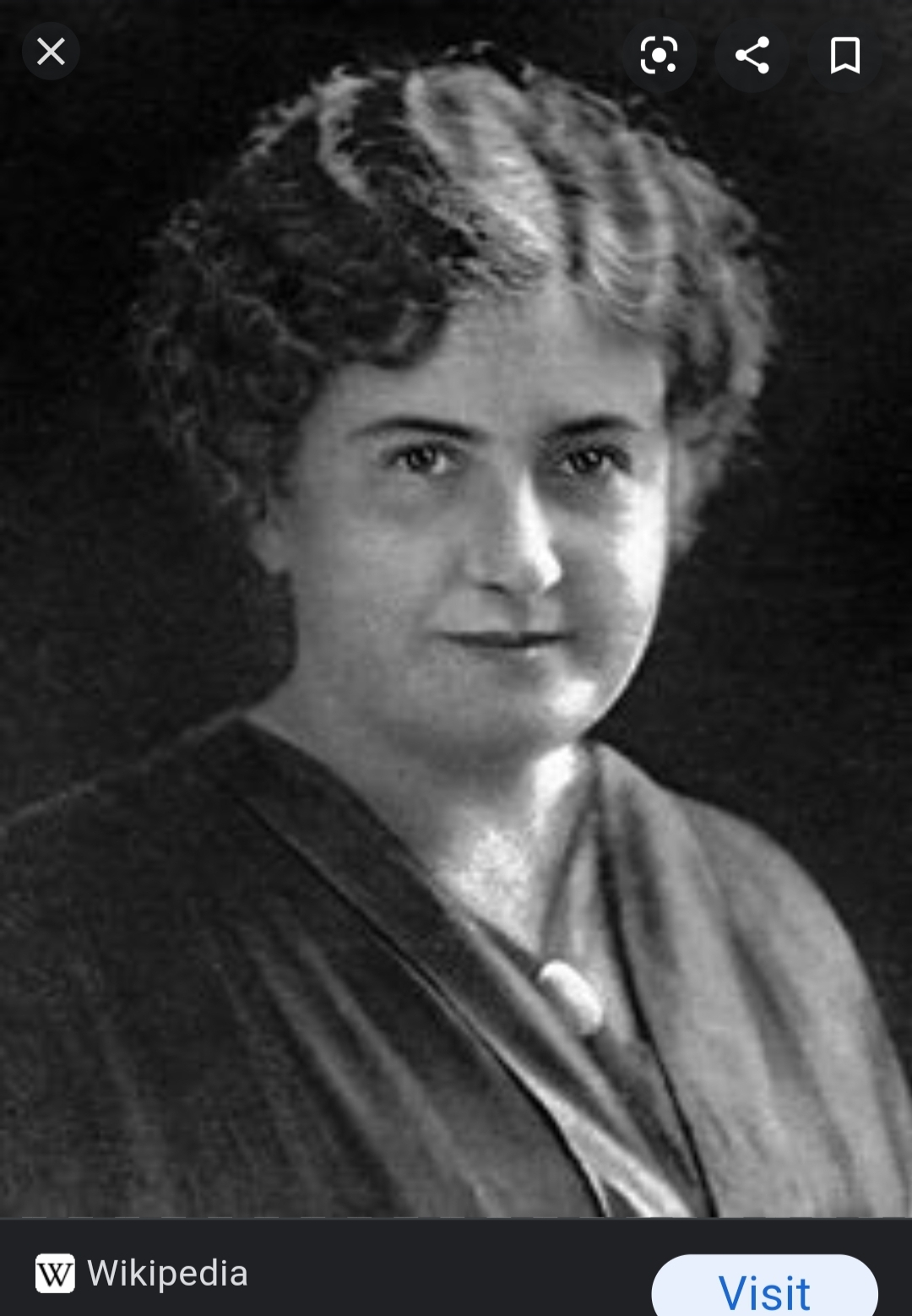
1101) Maria Montessori

Courtesy of Wikipedia

1101: Maria Montessori

Creator of the Montessori Learning Technique

Born: 31 August 1870, Chiaraville, Italy

Died: 6 May 1952, Noordwijk, Netherlands

Maria was a Pioneer in Scientific Pedagogy.

She was an educator, physician, and innovator who opened her first school in Rome in 1906. There are thousands of Montessori schools located in countries around the world today.

Maria was raised by parents who encouraged her to pursue her dreams of receiving a higher education. Despite it being the late 1800’s, Maria refused to let her gender hold her back. At the age of thirteen she enrolled in an all-boys technical school, determined to become an engineer. After a time though, Maria changed her mind and managed to enter medical school, another daunting task for a woman of her time.

In 1896, Maria graduated from medical school. She was not the first Italian woman to earn a medical degree, but she was among the first. Maria’s work as a physician was at first focused on the burgeoning field of psychology before shifting to education. Namely, Maria was interested in changing the way children with developmental and intellectual disabilities were being taught.

Within only a few years, Maria’s schools were spreading across Western Europe. The first opened in the United States in 1911. The Montessori Method focused on inviting children to learn in ways inspired by their own natural curiosities. Children learned how to cook, solve puzzles, and use other hands-on skills to thrive in their own day to day lives.

Throughout the rest of her life, Maria continued to champion her teaching method by writing books and articles and traveling around the world, giving speeches and demonstrations. Her work paid off. But Maria was focused on more than just education in her lifetime. She was also a leading feminist voice in her native Italy. In 1898, she gave birth to a son, Mario, out of wedlock. And though Mario was raised by another family, as an adult he learned Maria was his mother and they worked together to further the cause of children with disabilities.

Maria survived both world wars, spending the second in exile in India after being trapped there during the outbreak of World War II. Instead of spending the years goofing off or ignoring the world, she spent her time instructing Indian teachers in the Montessori Method. After the war, she returned to Europe and spent her final years in Amsterdam.

Badges Earned:

Find a Grave Marked

Located In My Personal Library:

Time Magazine's 100 Women of the Year (Maria appears in the 1931 article, "Maria Montessori")

Sources:

https://amshq.org/About-Montessori/History-of-Montessori/Who-Was-Maria-Montessori

https://montessori-ami.org/resource-library/facts/biography-maria-montessori

https://montessori.org.au/biography-dr-maria-montessori

https://www.findagrave.com/memorial/185210946/maria-montessori

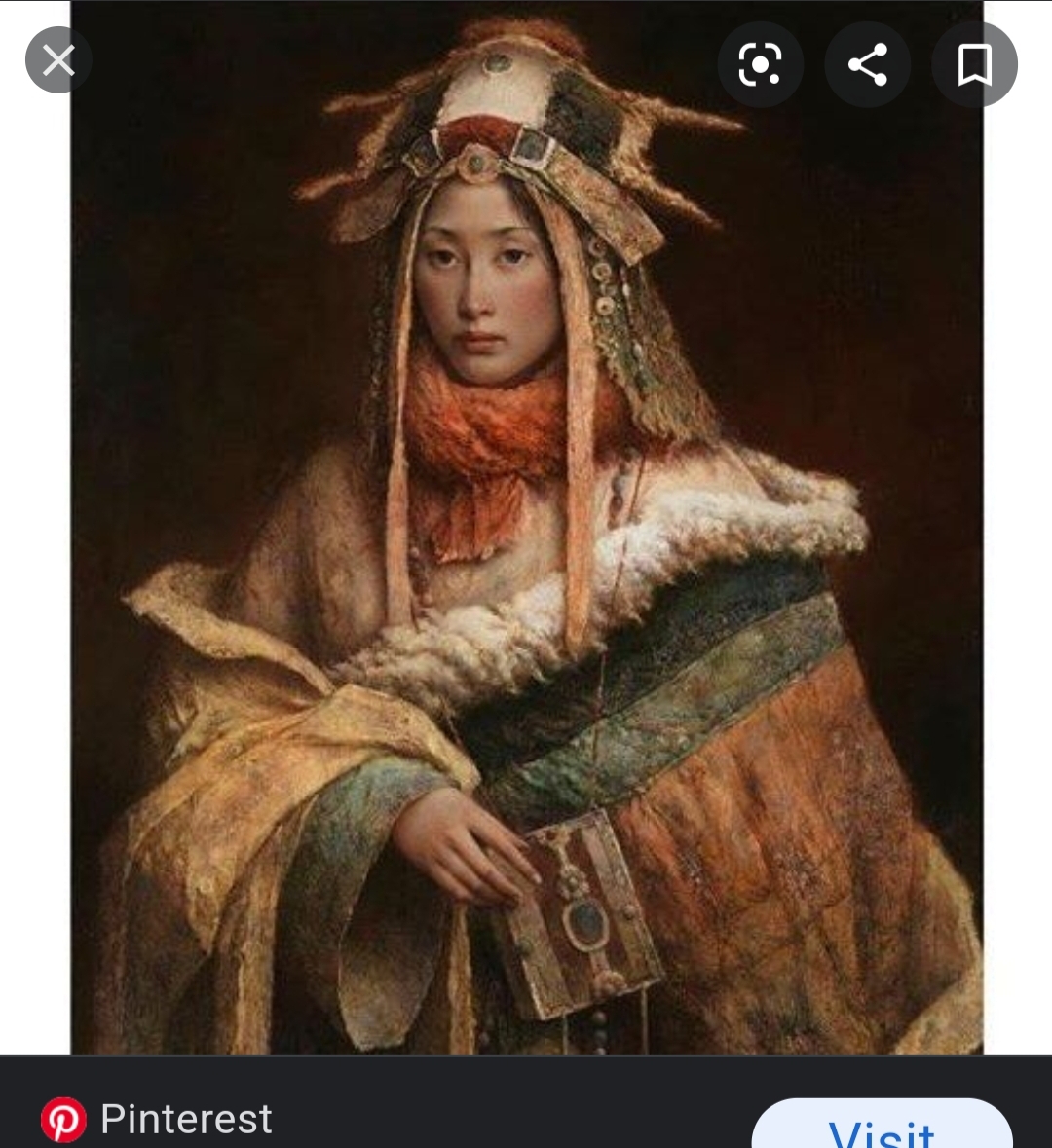
1100) Mandukhai Khatun

Courtesy of Pinterest

1100: Mandukhai Khatun

Empress of the Northern Yuan Dynasty (Also Known as Post-Imperial Mongolia)

Born: c.1449, Present-day Mongolia

Died: c.1510, Present-day Mongolia

Mandukhai was born into an aristocratic family and married the Emperor (or Khan) when she was eighteen years old, giving birth to a daughter. Mandukhai took precedence over the emperor’s first wife who had been childless as a result.

After her husband’s assassination, Mandukhai adopted the last living descendant of Genghis Khan to be her heir. Because the child had much less experience in politics or ruling as Mandukhai, she was able to retain her influence in the court, going so far as to be named effective ruler of the Mongolian Empire through this newly adopted child (he was seven years old at the time).

Mandukhai went to war and won, uniting the warring Mongolian tribes and forcing the warring tribe under loyalty codes to keep them in line.

Mandukhai then married her adopted son when he reached the age of nineteen and they raided China and the same warring tribe that was now rebelling against them. Ming China was so threatened by Mandukhai and her husband they had to expand the Great Wall in order to keep the Mongols out.

Mandukhai personally fought in some of the battles despite being pregnant with twins at the time. She gave birth to seven sons and three daughters in total, and yes, the twins were born apparently healthy despite their mother's strenuous actions while pregnant with them.

Mongol rulers for generations after were descended from her ten children. Today, Mandukhai is known as the Wise Queen. Her tomb has never been identified.

Badges Earned:

Rejected Princess

Located In My Personal Library:

Tough Mothers by Jason Porath

The Secret History of the Mongol Queens: How the Daughters of Genghis Khan Rescued His Empire by Jack Weatherford

Sources:

https://amazingwomeninhistory.com/queen-manduhai-wise/

http://thefemalesoldier.com/blog/mandukhai-khatun

https://military.wikia.org/wiki/Mandukhai_Khatun

  • Previous
  • 1
  • …
  • 12
  • 13
  • 14
  • 15
  • 16
  • 17
  • 18
  • …
  • 159
  • Next

Categories

Archives

  • July 2025 (10)
  • July 2024 (1)
  • January 2024 (1)
  • August 2023 (1)
  • June 2023 (2)
  • October 2022 (1)
  • July 2022 (1)
  • June 2021 (3)
  • December 2020 (3)
  • August 2019 (1)
  • July 2019 (2)

Search

© 2026 The Exasperated Historian | Powered by Minimalist Blog WordPress Theme