The Exasperated Historian
Menu
  • Home
  • The Women’s List (New)
  • The Men’s List
  • The Animal List
  • Collections
  • The Blog
  • Contact Us
  • FAQ
Menu

Category: Birth Locations

1136) Sophie Blanchard

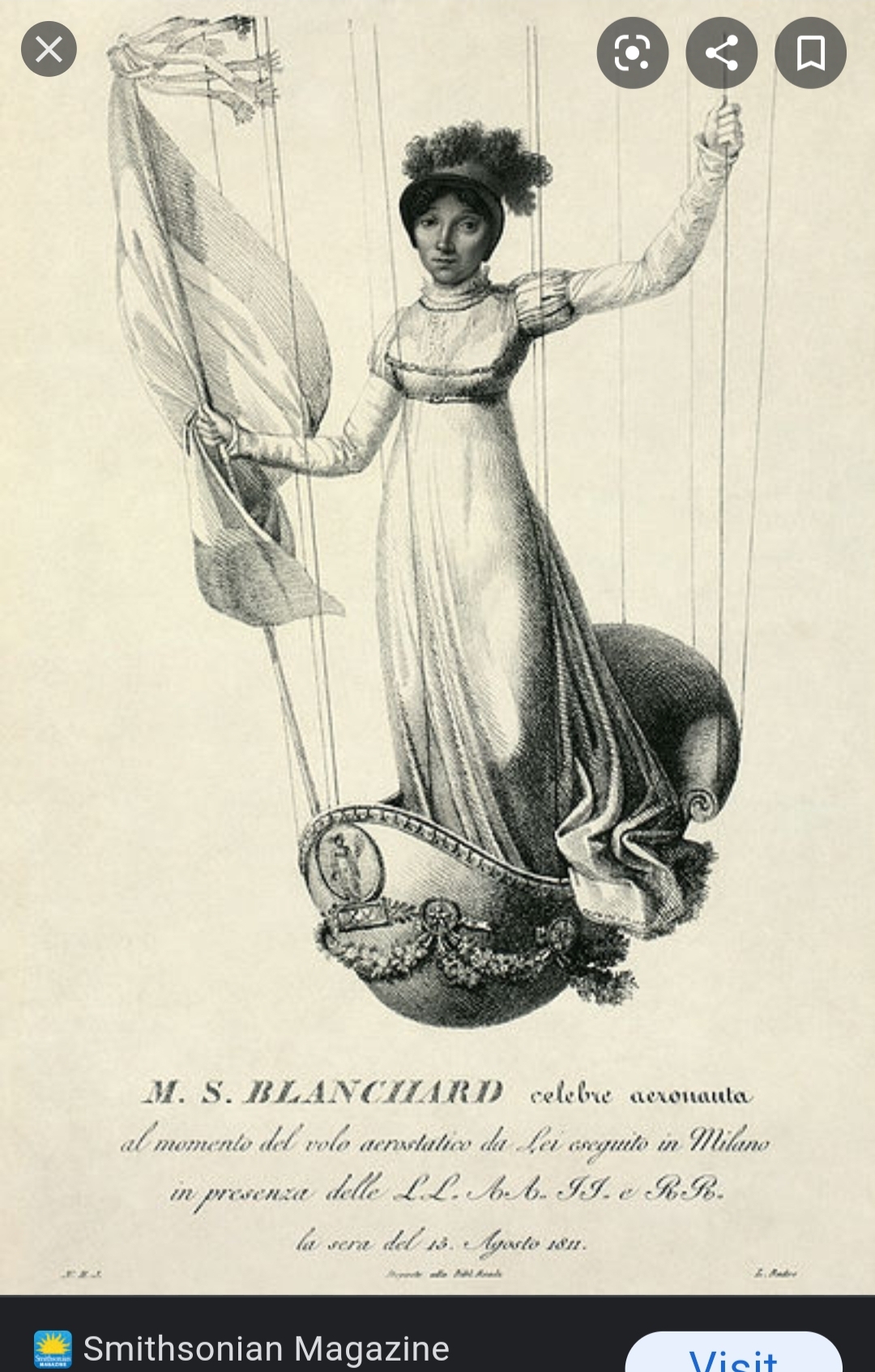
Courtesy of Smithsonian Magazine

1136: Sophie Blanchard

The First Professional Female Balloonist

Born: 25 March 1778, La Rochelle, Poitou-Charentes, France

Died: 6 July 1819, Paris, France

Birth Name: Marie Madeleine-Sophie Armant

According to some sources, Sophie was afraid of riding in a carriage and was very nervous when on the ground, but once she was in the air Sophie was fearless.

Sophie kept flying even after suffering a crash.

Sophie’s husband was much older than her, but how much older and when exactly they married has been lost to history. What is known is that Sophie was just five years old when her husband began experimenting with balloon flight. He had also abandoned his first wife and four children in order to pursue his ballooning dreams, and originally invited Sophie with him on flights in order to attract crowds.

In 1805, Sophie became the first woman to pilot a balloon on her own. In 1809, Sophie’s husband suffered a heart attack while flying with his wife. Sophie could do nothing but watch as her husband fell from the basket to his death far below. Laden with debt thanks to her husband’s financial ineptitude, Sophie continued to fly on her own.

Sophie flew for both Napoleon and the restored monarchy, becoming a favor of both emperor and king alike. According to Smithsonian Magazine (article linked below): “She had made long-distance trips in Italy, crossed the Alps and generally did everything her husband had hoped to do himself. She paid off his debts and made a reputation for herself. She seemed to accept, even amplify, the risks of her career. She preferred to fly at night and stay out until dawn, sometimes sleeping in her balloon. She once passed out and nearly froze at altitude above Turin after ascending to avoid a hailstorm. She nearly drowned after dropping into a swamp in Naples. Despite warnings of extreme danger, she set off pyrotechnics beneath her hydrogen balloon.”

Sophie was the first woman to die in an aviation related accident after her balloon got fire. While attempting to descend back to the ground, the basket hit the roof of a house and Sophie tumbled out and fell to the ground, dying instantly. She had made fifty-nine ascents over the course of her career.

Badges Earned:

Find a Grave Marked

Sources:

https://www.smithsonianmag.com/history/sophie-blanchard-the-high-flying-frenchwoman-who-revealed-the-thrill-and-danger-of-ballooning-89106237/

https://blog.library.si.edu/blog/2016/03/28/sophie-blanchard-pioneer-aeronaut/

https://www.brooklynmuseum.org/eascfa/dinner_party/heritage_floor/sophie_blanchard

https://www.findagrave.com/memorial/22976929/sophie-blanchard

Entries Born in Chile

These are the entries born in the country of Chile.

Entries:

  • Sophia Hayden, The First Female Graduate of MIT's Architectural Program

1135) Sophia Hayden

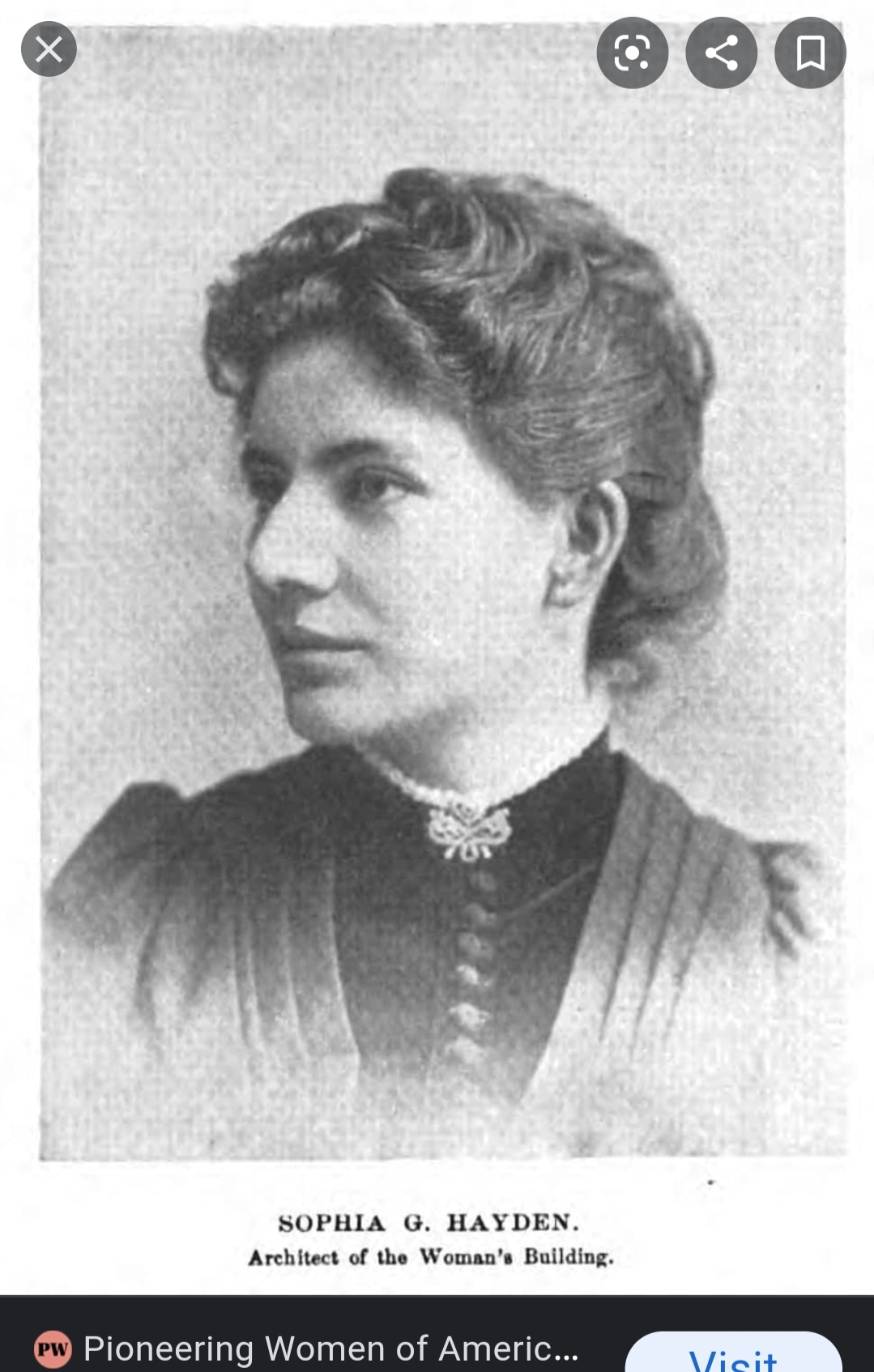
Courtesy of Pioneering Women of American History

1135: Sophia Hayden Bennett

Architect and Artist

Born: 17 October 1868, Santiago, Chile

Died: 3 February 1953, Winthrop, Massachusetts, United States of America

Sophia was born to a Peruvian mother and an American father. She spent her first six years in Chile, before moving to the United States to live with her paternal grandparents.

Sophia was the first Female Graduate of MIT’s Architectural four-year program. She was one of twenty-four female students enrolled at MIT at the time. Sophia graduated in 1890 but was unable to find work as an architect and took a job teaching mechanical drawing instead.

Sadly, she only designed one building after graduation that would eventually be built, for the 1893 Columbian Exposition in Chicago (specifically, it was the Woman’s Building). After the completion of the building, Sophia received a much smaller designer’s fee than her fellow male architects (although she was given a gold medal by a women’s society). Critics were especially patronizing, deeming the building to be dainty and graceful among other feminine attributes. When Sophia failed to appear at the building’s dedication ceremony, critics further stated that she must have been suffering from mental exhaustion, and that this was further proof women were not fit to be architects.

The building was demolished after the exposition closed in 1893.

Sophia spent the rest of her life working in various women’s societies in Massachusetts. She married an artist around the turn of the century but had no children.

Sophia appears as a character on an episode of NBC’s Timeless; specifically the episode "The World's Columbian Exposition."

Badges Earned:

Located In My Personal Library:

The Oxford Encyclopedia of Women in World History Edited By Bonnie G Smith

Sources:

https://www.britannica.com/biography/Sophia-Hayden

https://pioneeringwomen.bwaf.org/sophia-gregoria-hayden-bennett/

https://www.encyclopedia.com/women/encyclopedias-almanacs-transcripts-and-maps/hayden-sophia-1868-1953

https://timeless.fandom.com/wiki/Sophia_Hayden

1134) Puabi

Courtesy of the Penn Museum

1134: Puabi

Occupant of One of the Most Preserved Tombs in Mesopotamian History

Lived: c.2,600 BC, Ur, Sumer (Present-day Iraq)

Also Known As: Shub-Ad or Shudi-Ad

Her name means “Word of My Father” and her tomb was excavated in the mid 1920’s to mid 1930’s (the exact years are different in various sources). Her grave was one of approximately 1,800 excavated from the ancient royal cemetery.

Puabi’s tomb contained more wealth than any other excavated so far. It contained skeletons of five soldiers and twenty-three hand maidens, all potentially poisoned or bludgeoned to death to serve Puabi in the next life.

Puabi herself was buried in all her jewelry and queenly regalia. Items from the tomb which were recovered included: “ [a] golden comb, her wreaths and diadem, earrings and necklaces, amulets and garters, finger rings, pins and seals, the silver box with black stibium paint for her eyebrows, her golden cockle shells and the golden chalice full of the purple-blue of turquoise for her eyelids, the thirteen yards of golden ribbon wound about her hair, the stiletto, the tweezers, the ear-spoon, [and] the dainty implements of her vanity case,” (Quoted from an article from the Penn Museum, linked below).

Symbols on her tomb identify her as Queen and Priestess but this is disputed. The issue arises from the fact that imagery in her tomb would seem to denote that Puabi was a queen, priestess, or both, but there is no archaeological evidence linking her to any king from Sumerian times, either as her husband or father. Some believe this means that Puabi ruled in her own right, while others insist that instead she was a woman of upper-class society without being an actual ruler of any sort. Unfortunately, we may never know for certain.

Sources:

https://www.penn.museum/sites/journal/9246/

https://www.brooklynmuseum.org/eascfa/dinner_party/heritage_floor/shub_ad_of_ur

https://en.wikipedia.org/wiki/Puabi

1133) Rosana Chouteau

1133: Rosana Chouteau

The First Woman Elected Chief of the Osage Beaver Band

Birth and Death Dates Unknown (Most likely born in the Indian Territory, known today as Oklahoma, United States of America)

Very little information about Rosana is known for certain today. She was elected as chieftain after the death of her uncle in 1875.

If Wikipedia can be believed, Rosana reportedly was quoted as saying, "I think my band obey me better than they would a man."

The Osage Beaver Band were an offshoot of the Osage Nation of Oklahoma.

Sources:

https://www.brooklynmuseum.org/eascfa/dinner_party/heritage_floor/rosa_chouteau

https://en.wikipedia.org/wiki/Rosana_Chouteau

1132) Puduhepa

Courtesy of Wikipedia

1132: Puduhepa

Hittite Queen

Born: c.1289 BCE, Lawanzantiyas, Kizzuwatna (Present-day Adana Province, Turkey)

Died: after 1215 BCE, Most Likely Somewhere in the Hittite Empire

Also Known As: Tawananna

Puduhepa was married to Hattusili III and has been referred to as “one of the most influential women known from the Ancient Near East.” Unlike the vast majority of women who lived in her day, Puduhepa’s voice has survived to present-day thanks to the letters she wrote also surviving. The letters were preserved in the Hittite, Ugarit, and Ancient Egyptian archives.

Puduhepa’s father was the local head priest to the goddess Ishtar. After his death, Puduhepa became head priestess in his place. After the Battle of Qadesh (in present-day Syria), Hattusili III (who was not yet king of the Hittites) passed through Puduhepa’s hometown. While there, he married Puduhepa and brought her home to the Hittite Kingdom.

Puduhepa reigned as an equal alongside her husband, who was often ill and unable to govern in his own right.

Puduhepa was a frequent pen-pal with Nefertari, the queen of Ancient Egypt and wife of Ramses II. Together, Puduhepa and Nefertari helped create the world’s first peace treaty—The Treaty of Qadesh (and to be fair, Ramses was also involved in the crafting of the treaty, but Puduhepa’s husband? Not so much).

Puduhepa’s letters also survive in the Ugarit archives. Her letters to the Ugarit king (in present-day Syria) concern reimbursements for a sunken ship and other tax matters. Basically, all of this means that Puduhepa was unusually powerful for a woman of her era. Instead of being a subordinate to her husband, she ruled in her own right and was addressed as being an equal to her husband by rival kings and queens.

After her husband’s death, Puduhepa moved into the role of a queen mother during her son’s reign. A clay impression seal discovered in 1936 shows Puduhepa and her son ruling side by side. Though her death was not recorded, she is known to have lived several years into her son’s reign.

Badges Earned:

Located in My Personal Library:

Daughters of Isis: Women of Ancient Egypt by Joyce Tyldesley

Helen of Troy: The Story Behind the Most Beautiful Woman in the World by Bettany Hughes

Sources:

https://archive.archaeology.org/online/features/iron_ladies/puduhepa.html

https://www.brooklynmuseum.org/eascfa/dinner_party/heritage_floor/puduchepa

https://www.judithstarkston.com/2014/01/27/a-day-in-the-life-of-puduhepa-queen-of-the-hittites/

1131) Prudence Crandall

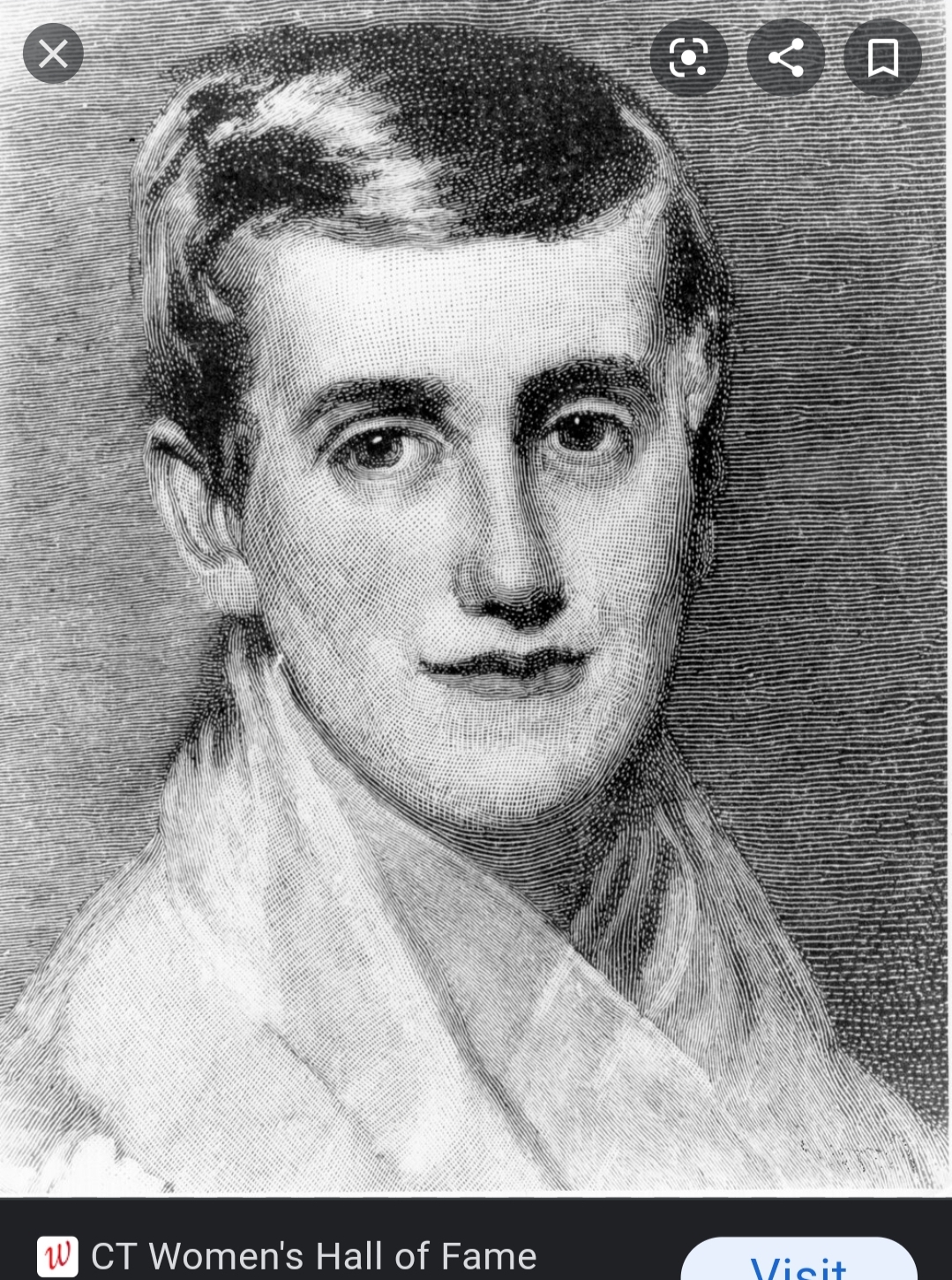
Courtesy of the Connecticut Women's Hall of Fame

"I contemplated for a while the manner in which I might best serve the people of color. As wealth was not mine, I saw no other means of benefiting them, than by imparting to those of my own sex that were anxious to learn, all the instruction I might be able to give, however small the amount."

1131: Prudence Crandall

Education Activist and Abolitionist

Born: 3 September 1803, Hopkinton, Rhode Island, United States of America

Died: 28 January 1890, Elk Falls, Kansas, United States of America

Prudence was raised under the Quaker belief in equal educational opportunities for girls, and so in school she studied Latin, arithmetic, and science. These fields of study in her youth allowed her to open her own school in 1831. At first, her private school was attended by upper class daughters of Canterbury, Connecticut’s white families.

The school’s curriculum was viewed so highly that the school quickly became seen in equal light as similar schools for boys. A year after opening her school, in 1832, Prudence enrolled Sarah Harris, an African American woman wanting to become a teacher. Suffice to say the parents of her other students were outraged to say the least.

In 1833, she transformed the school into one exclusively for African American girls after white parents pulled their daughters from her school in protest for Prudence not expelling Sarah Harris. But by that point it didn’t matter, Prudence had already made history seeing as her school was the first of its kind in the history of New England. According to the Connecticut Women’s Hall of Fame, among the subjects taught at Prudence’s school were, “reading, writing, arithmetic, grammar, geography, history, philosophy, chemistry, astronomy, painting, music, piano and French,” (article linked below).

Prudence’s school was advertised in William Lloyd Garrison’s newspaper (he was also an abolitionist and one of her biggest supporters). Many prominent African American families began to send their daughters to Prudence’s school, which brought further outrage and hostility her way. According to the other white families in the area, they feared more African American families in their town would lead to horrible things like—gasp—interracial marriage!

While we can look back on ridiculous examples of overt racism like this now and make jokes about it, it definitely wasn’t a joke at the time. Prudence was frequently targeted by violent white men in various ways, but she refused to back down or give in. The students were also harassed by people in the town. Some of the girls were hit with eggs, manure, or even stones if the girls dared venture off of the school property. At one point the water well was even laced with poison according to one source.

The same year Prudence transformed her school, 1833, Connecticut passed a ‘Black Law’ making it illegal to teach black students within the borders of Connecticut if they were from another state without the town the school was located in’s prior permission. The law was later repealed in 1838.

Prudence was arrested for breaking this law and put in jail. Her first trial ended in a hung jury, her second ended in Prudence being convicted. However, her conviction was later overturned by a higher court. Arguments from the two trials and later appeal were used by litigators during the Supreme Court’s landmark decision in Brown v Board of Education, which de-segregated schools across the United States once and for all (over one hundred and twenty years later no less, in 1955!).

Her school closed the following year after angry mobs smashed out the windows and destroyed most of the furniture. Prudence feared for the safety of her students, so she shut the doors to the school for the final time. Not because she was disheartened or no longer believed in her work, but purely because she wanted to keep her students safe.

In 1835, Prudence married and moved with her husband to Illinois. While in Illinois, Prudence continued teaching and participated in the women’s suffrage movement. After her husband’s death she moved in with her brother in Kansas, where she later passed away.

In 1886, urged on by now-repentant residents of Canterbury, as well as the resident author of the town Mark Twain, the Connecticut legislature awarded Prudence a small pension to help her financially for the last years of her life.

Prudence is now called the State Heroine of Connecticut. Her former school now houses the Prudence Crandall Museum. Prudence is also honored through the Prudence Crandall Center, which fights to help victims of domestic violence. Their mission statement on their website reads in part, “Today PCC is one of only a few programs in the country offering the full spectrum of shelter, housing and support services needed to offer practical, long-term solutions to the challenges faced by victims, helping them heal and move forward to safe, self-sufficient lives, free of violence.” Their website is linked below for more information.

Badges Earned:

Find a Grave Marked

Located In My Personal Library:

America's Women: 400 Years of Dolls, Drudges, Helpmates, and Heroines by Gail Collins

Uppity Women Speak Their Minds by Vicki Leon

Sources:

https://www.womenshistory.org/education-resources/biographies/prudence-crandall

https://www.cwhf.org/inductees/prudence-crandall

https://connecticuthistory.org/people/prudence-crandall/

https://prudencecrandall.org/

https://www.findagrave.com/memorial/9003590/prudence-crandall

1130) Pompeia Plotina

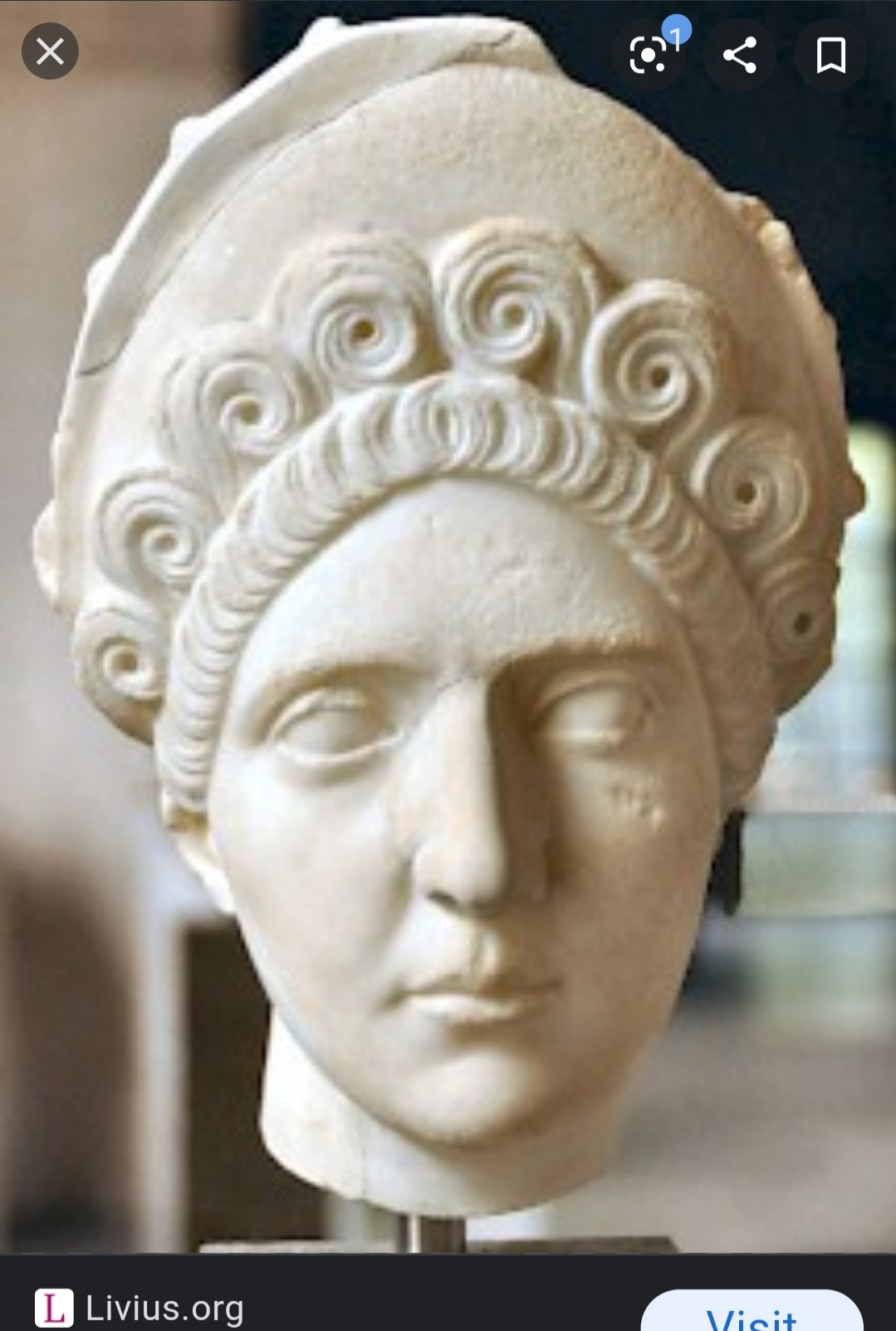
Courtesy of Livius

1130: Pompeia Plotina

Roman Empress and Wife of Trajan

Born: c.65 AD, Gallia Narbonensis, Roman Empire (Present-day Southwestern France)

Died: c.123 AD, Rome, Roman Empire (Present-day Rome, Italy)

Pompeia was renowned for interest in philosophy, dignity, virtue, and simplicity. She served as empress from 98 to 117 AD (though it took her a full seven years after his ascension to the throne to accept the title of Empress [Augusta in Latin]).

She was loved by the Roman people for her interest in what was best for them. According to legend, during Trajan’s ascension to the Roman throne, Pompeia turned around while walking up the palace steps in order to address the crowd. Reportedly, Pompeia told the people she always wanted to remain the same woman as she was in that moment, meaning she did not want to become like so many other Empresses before or after her in Roman history.

Pompeia never bore any children of her own, and so on her husband’s death bed, she implored him to adopt Hadrian as his heir. Trajan complied, and Hadrian became the next emperor.

As thanks for helping elevate him to emperor, Hadrian honored his adopted mother by having Pompeia deified after her death.

Coins with Pompeia’s image have survived to present day, as well as fragments of statuary.

Badges Earned:

Find a Grave Marked

Sources:

https://www.britannica.com/biography/Pompeia-Plotina

https://www.brooklynmuseum.org/eascfa/dinner_party/heritage_floor/plotina

https://www.encyclopedia.com/women/encyclopedias-almanacs-transcripts-and-maps/plotina-d-122

https://finds.org.uk/romancoins/emperors/emperor/id/137

https://www.findagrave.com/memorial/239378431/pompeia-plotina

1129) Princess Tarakanova

1129: Princess Tarakanova

Pretender to the Russian Throne

Born: c.1745-1753, Location Unknown

Died: 15 December 1775, St. Petersburg, Imperial Russia (Present-day St. Petersburg, Russia)

In 1772, while Catherine the Great ruled Russia, a woman whose true identity remains a mystery appeared and made a claim to the Russian imperial throne. First appearing in France, the woman who spoke with impeccable refinement and polished mannerisms was known for her beauty and grace. The woman claimed to be the illegitimate daughter of Empress Elizabeth, making her a cousin-in-law of Catherine and the legitimate heir, seeing as Catherine’s only claim came from being the widow of the former emperor.

According to the “Princess”, she was born in St. Petersburg in 1753 and was raised by tutors in Persia, one of whom discovered her true parentage and informed her of the facts.

While this may seem far-fetched, in actuality there was a real illegitimate daughter of Elizabeth living at the time. She spent her entire life in a convent, with her true identity hidden from her, but while “Sister Dofiya” did not know her real parentage, the rest of European society did. The fact that so many people did know a true Princess Augusta Tarakanova did exist helped the imposter princess gain support for her claim.

While still in Paris, the princess lived a lavish lifestyle paid for entirely by other members of the nobility and elite upper class—many of whom opposed Catherine’s reign for various political reasons. However, it soon became apparent that at least one of her friends—who claimed to be a baron—was in actuality nothing more than a merchant with debts beyond his ability to pay back. The princess began to move all across Europe, assuming various aliases including Fraulein Frank, Madame Tremouille, and Countess Selinski as she went.

Catherine was so threatened by the imposter’s claims, she had her locked up in the Peter and Paul Fortress in St. Petersburg. In order to catch the so-called Princess, Catherine had her lover’s brother set up an elaborate trap including faking his love for the princess. On the day of their wedding, instead of exchanging vows, the princess was arrested and taken to Russia.

After the princess was incarcerated, she was brutally tortured, however, the princess refused to admit to her real name or deny her royal parentage. The princess died in her cell in 1775, possible from tuberculosis, and was buried in the fortress graveyard without any ceremony.

At the time she was known as Princess Vladimir, but her name has been changed to Princess Tarakanova over time. Today, the so-called princess’s story is almost forgotten, but the painting of her by Konstantin Flavitsky is known in art circles around the world. Dating from 1864, Konstantin was forced by the Russian royal family to say the painting was based on a novel and not either of the possible Princess Tarakanova stories. The painting remains in a gallery in Russia today.

Badges Earned:

Located In My Personal Library:

National Geographic History Magazine Article: “Princess Tarakanova, Pretender to the Russian Throne” by Maria Pilar Queralt del Hierro (July/August 2019 Edition)

Sources:

https://www.nationalgeographic.co.uk/history-and-civilisation/2019/08/pretender-princess-who-tried-steal-catherine-greats-throne

https://www.britannica.com/biography/Yelizaveta-Alekseyevna-Tarakanova

https://galleryintell.com/artex/countess-tarakanova-by-konstantin-flavitsky/

1128) Xochitl

1128: Xochitl

Queen During the Toltec Empire

Lived: c.877-c.916 AD, Toltec Lands (Present-day Mexico)

She may be a legend, actual archaeological and historical documentation on her life does not exist for certain.

According to those legends, however, a civil war erupted, and Xochitl led a squadron of female warriors in the fighting, before dying in battle. Xochitl’s son was the last leader of the Toltec Empire and was also killed in battle.

Xochitl was also married to Tecpancaltzin Iztaccaltzin, the ninth ruler of the Toltec Empire.

Finding any sources online other than Wikipedia is easier said than done, so for now we’ll give her a spot of honor on this website and hope for more information to be uncovered someday.

According to Wikipedia, Xochitl’s legend was written down by indigenous historian Fernando de Alva Ixtlilxochitl. Unfortunately, Fernando is known today for his biases towards Mexico's indigenous culture, and so his writings have to be taken with a rather large grain of salt.

Sources:

https://artsandculture.google.com/entity/xochitl/m0j9qb3j?hl=en

https://en.wikipedia.org/wiki/Xochitl_(Toltec)

https://uapress.arizona.edu/book/fernando-de-alva-ixtlilxochitl-and-his-legacy

  • Previous
  • 1
  • …
  • 9
  • 10
  • 11
  • 12
  • 13
  • 14
  • 15
  • …
  • 159
  • Next

Categories

Archives

  • July 2025 (10)
  • July 2024 (1)
  • January 2024 (1)
  • August 2023 (1)
  • June 2023 (2)
  • October 2022 (1)
  • July 2022 (1)
  • June 2021 (3)
  • December 2020 (3)
  • August 2019 (1)
  • July 2019 (2)

Search

© 2026 The Exasperated Historian | Powered by Minimalist Blog WordPress Theme