
The Exasperated Historian
Menu
  • Home
  • The Women’s List (New)
  • The Men’s List
  • The Animal List
  • Collections
  • The Blog
  • Contact Us
  • FAQ
Menu

Category: Birth Locations

Pinal Cemetery

Posted on July 15, 2022July 23, 2022 by nickssquire12

In July of 2022, my boyfriend and I planned a trip up to the White Mountains to take a well-deserved vacation. On the way, I asked if we could stop off at Pinal Cemetery (not to be confused with Historic Pinal Cemetery, which I previously visited and covered in a different blog post!)

So, why stop off at Pinal Cemetery? Well, what other reason did I need other than the Bandit Queen of Arizona herself is buried there?

But before we visit Pearl Hart's final resting place, let me take you on a short tour. The cover photo for this blog post is from Find a Grave, but all other photos shown here were taken by me on my quick jaunt around the graveyard.

The Memorial Marker, Pinal Cemetery

Pinal Cemetery first opened in Central Heights (a small suburb of the historic city of Globe) and was operated by a local mortuary, but once the Spanish Flu struck the fledgling state in 1918, Gila County took over the operation and management of the cemetery in order to provide more burial accommodations for the flu's many victims.

However, the county did not care for the cemetery long, and it soon fell into disrepair. According to Globe Miami Times, "The property is no longer listed on tax rolls, so taxpayer money can’t be used to cut down the weeds, water trees and repair fences. And there have never been any maintenance funds set aside – as is mandated by state law when a cemetery is owned by a mortuary – because no mortuary owns it, and the law does not apply to fraternal/beneficial organizations."

Several times a year, volunteers like local members of the Elks Lodge and Boy Scouts come to the cemetery to support some clean up efforts, but nothing concrete has been done for the abandoned cemetery in many decades.

Some of the graves
More graves

It was too hot to stay long (probably around 95 degrees Fahrenheit that afternoon), but I did notice one thing that made Pinal Cemetery unique--at least from other cemeteries I have visited so far.

At Pinal, every grave, or at least every few graves, is surrounded by a concrete berm of some sort. Some of the graves have concrete covering the entire face as well as around the sides, while others have the concrete as siding with open dirt on top to provide a sort of flower bed in the desert. Why this cemetery is laid out this way I do not know, but it did provide a hint of uniqueness among the desert landscape.

Graves going into the distance
Grave with metal cross marker

The other surprising thing about the cemetery is just how large it is. From the front gate looking in, you would think the cemetery only encompasses an area directly in front of you. But once inside, you realize the graves actually cover a sprawling hillside. To your left are graves going up the hill, to your right is a concrete jungle going slightly downhill. Towards the center the graves are either in the dirt or have lots of gravel covering.

Graves Behind a Fenced Area
More fenced graves

Now, if you're visiting Pinal Cemetery in order to find Pearl Hart, the prospect might seem daunting when you first walk through those gates. However, I'm here to help you, because I felt the same way!

The easiest way to find Pearl is to pull up her Find a Grave profile (linked here) on your mobile device once you reach the cemetery. If you click the link on her profile that says "Show Map" (next to the name of the cemetery) your mapping system will bring you fairly close to her grave. Just keep in mind that she has the image of a burro with a cowboy and a cactus carved on the headstone and you'll find her fairly quickly, this is what I did! The image on her headstone is unique to the cemetery (at least from the graves I saw) and so it is much easier to look for the design rather than her name, which is a little worn by now.

If you don't have good enough cell signal to get the map to load it'll be a bit harder but still doable if you have enough time (and if you visit in the heat of the summer, remember to bring plenty of water to stay hydrated!!! As someone who has lived in Arizona most of my life I cannot stress the importance of water and staying hydrated in our heat enough. Please please please be careful when venturing outside in our summers!).

To find Pearl, once again keep in mind that her grave has that image of a burro (or possibly horse?) with a cowboy and a saguaro cactus. If you walk straight in through the front gates, her grave is on the right hand side in the middle of the area I dubbed the "concrete jungle" in my mind. It took me a few minutes of circling, but I did eventually find her. She is fairly close to the grave with the metal cross I showed a photo of earlier in this article.

Pearl Hart's Grave

Tah dah!! After only a few minutes of searching I found her, and I'm sure if you are ever in the area and want to look for her to visit you will too.

Last Look

Thank you for taking this virtual tour of Pinal Cemetery. To learn more about the cemetery click here. I don't know when I'll get out of town and able to visit another historic graveyard, but when I do I'll be sure to take plenty of pictures and mental notes to blog about here.

And remember, if you're exploring the great state of Arizona at any time, but especially in the summer, it does not matter what part of the state you're visiting, please pack plenty of water. We crack jokes about it being a "Dry Heat" around these parts, but that saying is very true. Stay hydrated, stay happy, and keep learning. Thanks for reading!
1145) Anne Askew

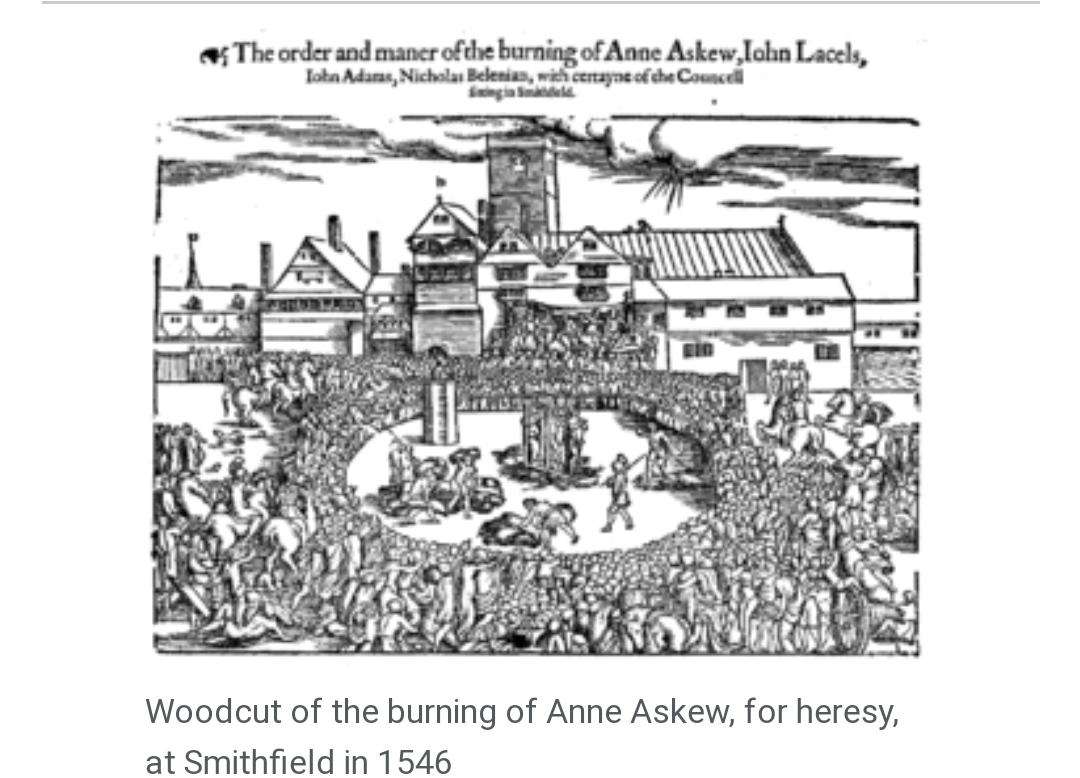
Woodcut of the Burning of Anne Askew

“I said that I would rather die than break my faith."

1145: Anne Askew

One of England’s Most Famous Martyrs

Born: 1521, England (Present-day Stallingborough, England, United Kingdom)

Died: 16 July 1546, London, England (Present-day London, England, United Kingdom)

Also Spelled: Anne Ayscough

Anne was raised in a fairly well-to-do English family. She was educated by tutors at home and at the age of fifteen was forcibly married off by her family, though she reportedly spited her husband by refusing to take his name (yet they still had two children together according to one source). Anne’s husband was devoutly Catholic, but Anne, who had read the Bible and knew the teachings of Martin Luther, was a Protestant. Anne also believed she had the right to divorce her husband.

In 1544, Anne traveled to London in order to appear before the king and request a divorce from her husband. This was obviously denied her, and spies were reportedly sent to watch Anne’s every move as she continued to live in London.

In March of 1545, Anne was arrested on the charge of heresy after she was found in possession of a book written by a Protestant reformer—who had been executed over a decade before for heresy. After twelve days, Anne sighed a confession and was released from prison. She moved back home, away from London and the intrigue of court.

In May of the following year, Anne was arrested again, alongside twenty-two other people suspected of heresy. This was all a part of a political plot to try and undermine Katherine Parr, the king’s sixth wife, who was also a prominent Protestant.

Anne was imprisoned and tortured in the Tower of London. The goal was to try and get Anne to admit the queen, Katherine Parr, was a heretic. Anne was placed upon the rack and tortured repeatedly, but she refused to name anyone who might also be a protestant. At the time, it was illegal to torture a woman in such a manner in England.

Anne survived her torture and was able to record her thoughts on the ordeal afterwards in an oral history. Two men would later write down versions of her tale. Sadly, her refusal to talk did not spare Anne’s life.

She was eventually burned at the stake for being a Heretic. Her body was so battered from the torture she had to be carried to the stake on a chair. She was then placed upon another chair and strapped to it in order for her to stay upright throughout the actual burning. The executioner took pity on Anne and hung a bag of gunpowder around her neck in order to help her die faster. Three other men were executed at the same time.

Badges Earned:

Find a Grave Marked

Located In My Personal Library:

The Wives of Henry VIII by Antonia Fraser

Sources:

https://spartacus-educational.com/TUDaskew.htm

https://thehistoryofengland.co.uk/resource/anne-askew-martyr-and-author/

https://localhistories.org/a-brief-biography-of-anne-askew/

https://www.findagrave.com/memorial/15118408/anne-askew

1144) Angelberga

1144: Angelberga

De-Facto Co-Ruler of the Holy Roman Empire

Born: c.840 AD, Present-day Germany

Died: c.890 AD, Present-day Piacenza, Italy

Also Known As: Engelberga

Angelberga was married to Louis II of Italy and served as Carolingian empress until her husband’s death. They had two daughters together. Angelberga would rule in her husband’s place when he traveled on campaigns, and she was very active politically during his life and after his death.

During his reign, documents were signed with both of their names, and coins were minted with both of their images. At times, the pair would go on campaign together, and Angelberga reportedly led troops into battle in central and southern Italy.

For reasons that do not survive in the historical record, Louis and Angelberga divorced around 872. However, despite him remarrying, Angelberga was reinstated as empress before Louis died in 875. After Louis’s death, the new emperor feared Angelberga’s influence and had her banished to Switzerland. She did not stay away long, however. Angelberga returned to Italy and lived out the end of her life in the convent she had founded in Piacenza, Italy.

Just remember that with historical figures, such as Angelberga, from a time period that is not as well-documented as historians would like are sometimes hard to research. Every source disagrees somewhat with something to do with Angelberga’s life story. So basically what I am trying to say is take all of this with a grain of salt, but she definitely ruled as Empress and was definitely a woman who went above and beyond what most were able to do in her time period, and for that she should always be remembered.

Sources:

https://www.brooklynmuseum.org/eascfa/dinner_party/heritage_floor/angelberga

https://epistolae.ctl.columbia.edu/woman/103.html

https://www.encyclopedia.com/women/encyclopedias-almanacs-transcripts-and-maps/engelberga-c-840-890

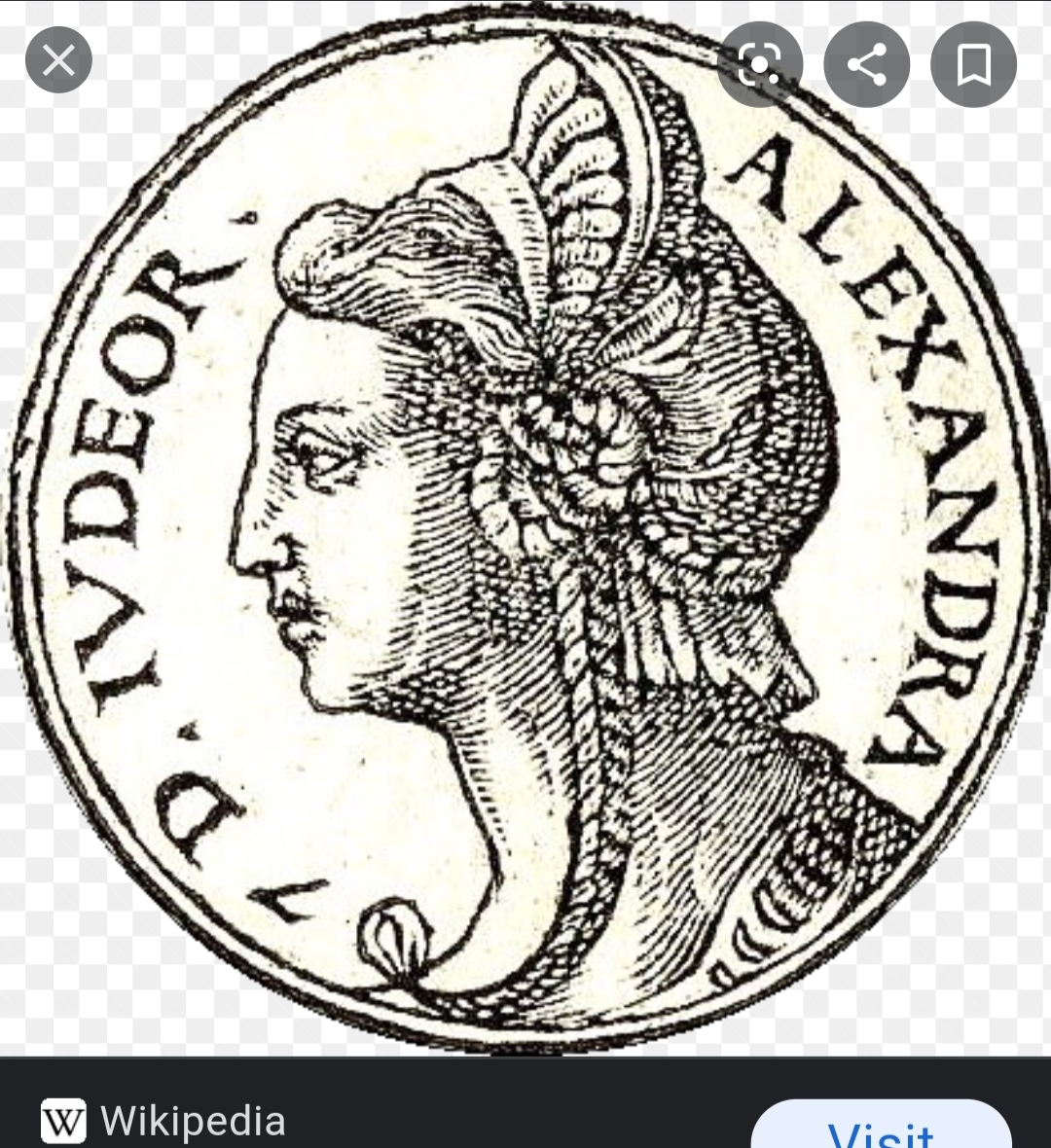
1143) Alexandra of Jerusalem

Courtesy of Wikipedia

1143: Alexandra of Jerusalem

One of Two Women Known to Have Ruled Over Judaea

Born: c.141 BC, Most Likely Ancient Judaea (Present-day Israel)

Died: c.67 BC, Most Likely Ancient Judaea (Present-day Israel)

Also Known As: Salome Alexandra

Hebrew Name: Shelamzion

Alexandra was the most powerful ruler of the Hasmonean Dynasty.

She was married to Alexander Jannai and had two sons. Before her husband died, he willed the secular learning position to his wife and gave the priesthood to his eldest son. The craziest part of this tale is that Alexandra’s accession to the throne was uncontested. No one tried to stop her, not her sons, not the rest of the nobility or court, no one. Alexandra was allowed to rule and rule she did.

Alexandra ruled for nine years, in a peaceful and prosperous reign for all involved. Part of her popularity stemmed from her support of the Pharisees, whom her husband had alienated during his own rule. She also gave gifts to the ruler of the Armenians in order to hold off an attack from his army.

Sadly, just before she died, her sons began a civil war against one another. Alexandra died soon after and did not live long enough to see her boys destroy the peace she had worked so long to achieve. Even worse, Alexandra’s sons eventually helped collapse the Jewish state entirely, ushering in the era of Roman rule over the Jewish people.

Sources:

https://www.myjewishlearning.com/article/salome-alexandra/

https://www.newworldencyclopedia.org/entry/Salome_Alexandra

https://www.brooklynmuseum.org/eascfa/dinner_party/heritage_floor/alexandra_of_jerusalem

https://jwa.org/encyclopedia/article/shelamziyyon-alexandra

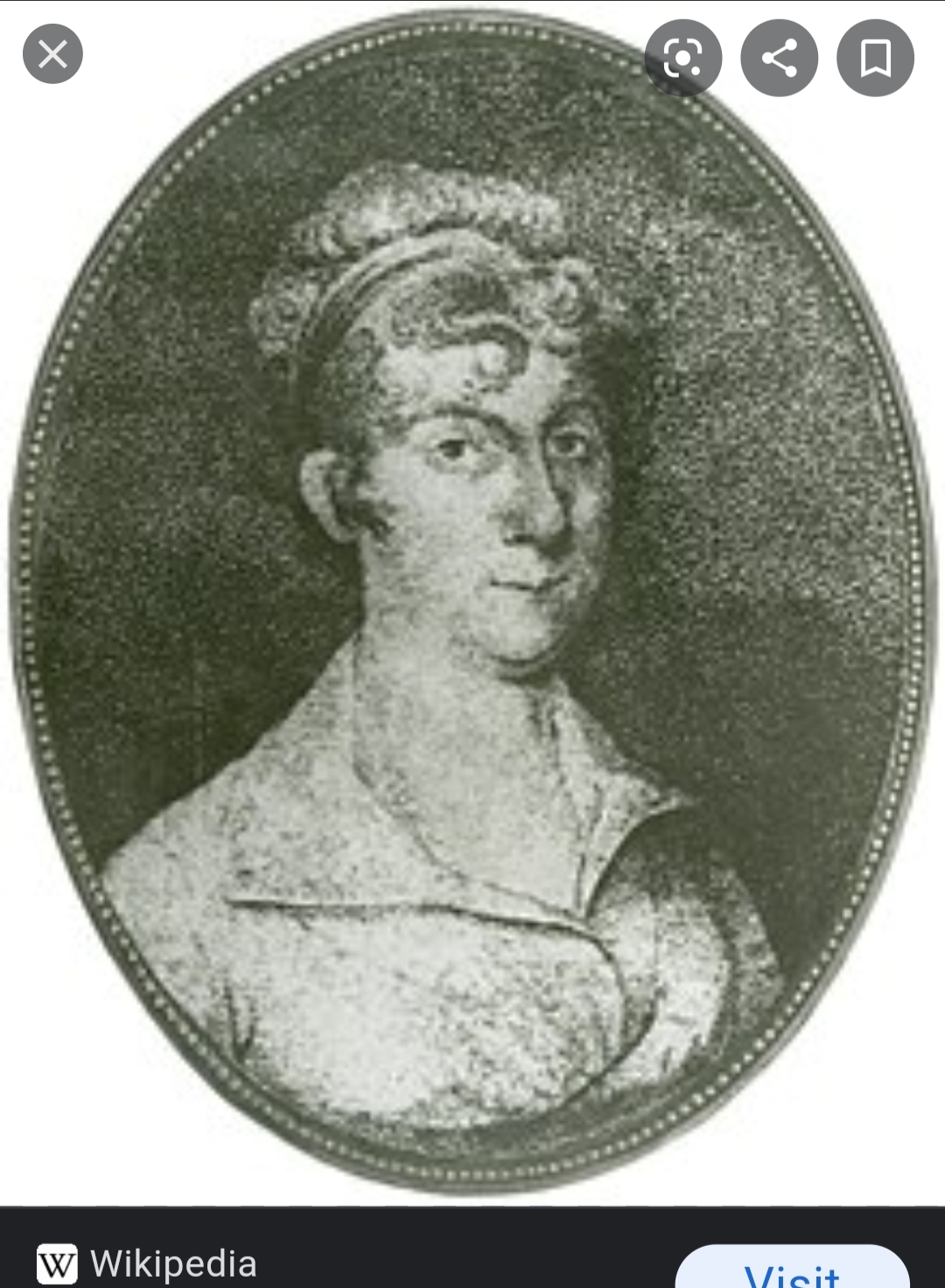
1142) Mary Katharine Goddard

Courtesy of Wikipedia

1142: Mary Katharine Goddard

The Second Person to Print Copies of the Declaration of Independence

Born: 16 June 1738, New London, The Colony of Connecticut (Present-day New London, Connecticut, United States of America)

Died: 12 August 1816, Baltimore, Maryland, United States of America

However, Mary was the first to print the document with the Signer’s Names included. She printed the document on orders from the Continental Congress in January 1777, and Mary included her own name at the bottom of the type face, her own way of signing the Declaration as well.

Mary was Postmaster General of the Baltimore Office from 1775 to 1789 and may have been the first female employee hired by the United States Government.

Mary also worked as a journalist in her own right, taking over her brother’s foundering newspaper and turning it into a successful publication.

Mary was taught to read and write at home by her mother, but was able to further study Latin, French, and science in a public school available to girls. After Mary’s father died, her mother started Rhode Island’s first newspaper, printing under her son’s name (Mary’s younger brother, aforementioned above).

Running a newspaper during the middle of a taxing war was far from easy. The paper was published irregularly throughout 1776, possibly due to paper shortages, and soon after Mary began accepting bartered goods in exchange for actual money. By 1779, Mary was bragging that her newspaper’s circulation spread throughout the entire newly created United States.

In January 1784, Mary’s brother returned with a vengeance and forced her out of the business she had worked so hard to grow. The two siblings then published competing almanacks, with Mary’s brother’s including scathing remarks towards his elder sister. Nice guy. There is no evidence the siblings ever spoke or communicated with one another again.

In October of 1789, Mary was forced out of her position as Postmaster General of Baltimore. The reason given was that the job was expanding, and the additional travel required to fulfill the post would be simply too much for a woman to handle.

Not wanting to take it lying down, Mary sent an appeal directly to President Washington and the US Senate in order to get her job back. Two hundred prominent Baltimore citizens also signed a petition in her favor. Washington refused to intervene, and the Senate never responded to Mary’s appeal.

Mary spent the last twenty years of her life selling books and dry goods in Baltimore. She never married nor did she have any children. When she died, Mary freed her slave, Belinda, and left all of her possessions to the woman.

Badges Earned:

Find a Grave Marked

Located In My Personal Library:

Revolutionary Women by Peter Pauper Press

Women Heroes of the American Revolution by Susan M Casey

Sources:

https://www.smithsonianmag.com/history/mary-katharine-goddard-woman-who-signed-declaration-independence-180970816/

https://www.britannica.com/biography/Mary-Katherine-Goddard

https://msa.maryland.gov/megafile/msa/speccol/sc3500/sc3520/002800/002809/html/2809bio.html

https://www.findagrave.com/memorial/51484099/mary-katherine-goddard

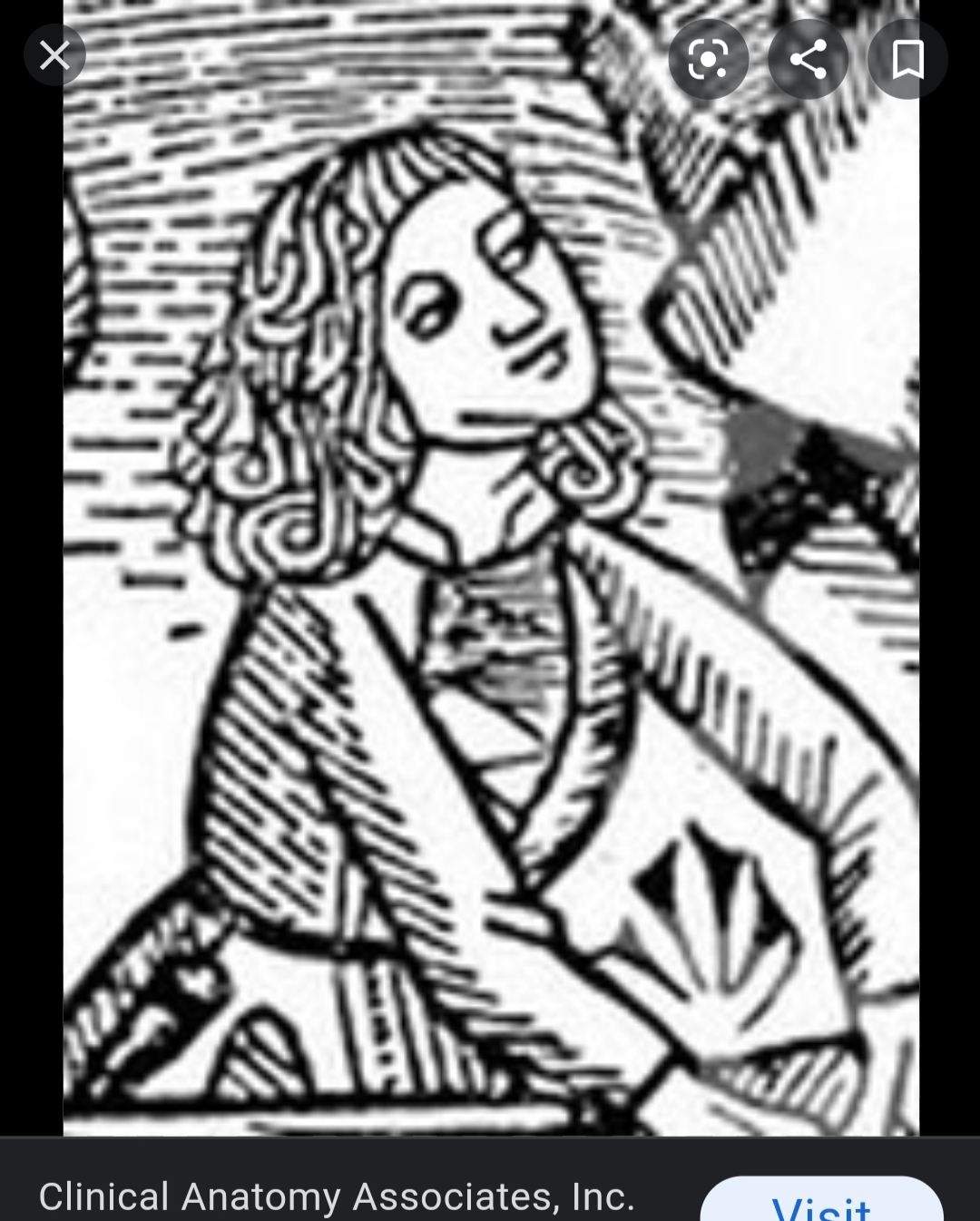
1141) Alessandra Giliani

Courtesy of Clinical Anatomy Associates Inc

1141: Alessandra Giliani

The First Known Female Practitioner of Anatomy and Pathology

Born: c. 1307, Persiceto, Italy

Died: c.1326, Bologna, Italy

Alessandra was a surgical assistant who was said to have excelled in dissections.

She may have invented a technique of injecting dye to see blood vessels throughout the human body.

Alessandra’s story first appears in a history of the Bolognese School of Anatomy written in 1857, which is slightly suspicious to say the least, so take this story with a grain of salt—especially if you believe the dates attributed to her life and death. If they are true, Alessandra was only around nineteen years old when she died.

Sources:

https://www.brooklynmuseum.org/eascfa/dinner_party/heritage_floor/alessandra_giliani

https://clinicalanatomy.com/mtd/519-alessandra-giliani

https://en.wikipedia.org/wiki/Alessandra_Giliani

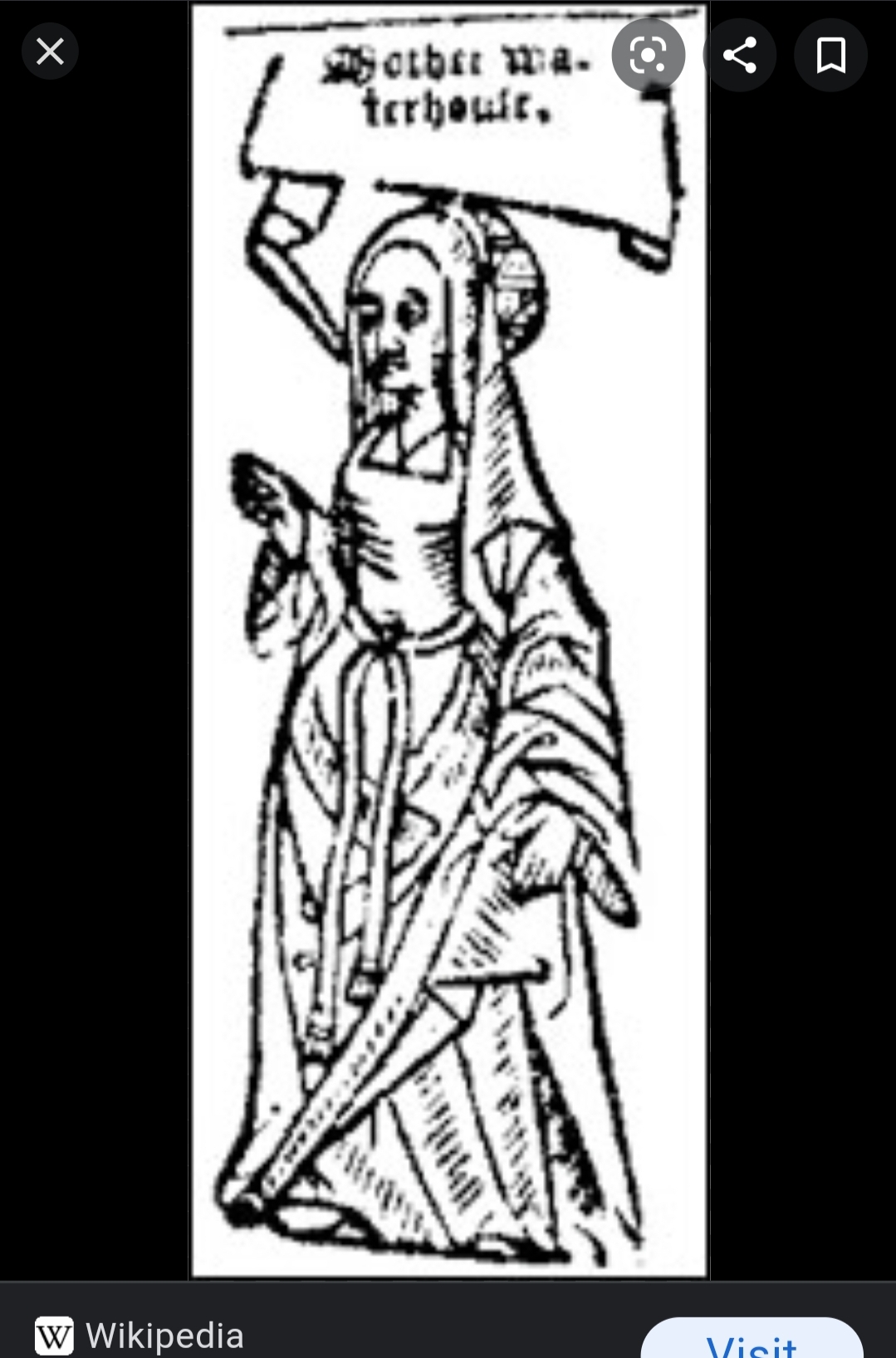
1140) Agnes Waterhouse

Courtesy of Wikipedia

1140: Agnes Waterhouse

The First Woman Executed for Witchcraft in England*

Born: c.1503, England

Died: 29 July 1566, Present-day Chelmsford Borough, Essex, England

Her sister and daughter were also accused. Agnes’s daughter was just eighteen.

Like most accused witches, Agnes was a widow. She was accused of murdering her neighbor through witchcraft. When questioned, Agnes admitted to harming farm animals and eventually to murdering her husband. Whether or not she actually killed him is up for debate.

Agnes was hung for the crime of witchcraft, but she managed to get her daughter Joan acquitted of all charges, which is exactly what Agnes had been hoping for all along.

*While Agnes is often given the title of first witch to be executed in England, in actuality witches had been executed in the British Isles for many years before Agnes was hung. Agnes just happened to be the first accused witch to become a media superstar as her story spread far and wide throughout the English countryside.

Badges Earned:

Find a Grave Marked

Located In My Personal Library:

Magic and Witchcraft: An Illustrated History by Ruth Clydesdale

Sources:

http://www.essexrecordofficeblog.co.uk/the-trial-of-agnes-waterhouse-witchcraft-in-essex-1566/

https://www.brooklynmuseum.org/eascfa/dinner_party/heritage_floor/agnes_waterhouse

https://www.findagrave.com/memorial/161944446/agnes-waterhouse

1139) Aglaonice

Courtesy of Ancient Pages

1139: Aglaonice

The First Female Astronomer of Ancient Greece

Lived: c. 3rd Century BC, Thessaly, Ancient Greece

Aglaonice was thought of as a Sorceress because she could predict when lunar eclipses would happen.

She is mentioned in the histories written by Plutarch and Apollonius of Rhodes. Little else of her life is known today. One of the craters on Venus is named in her honor.

Sources:

https://www.brooklynmuseum.org/eascfa/dinner_party/heritage_floor/aglaonice

https://scientificwomen.net/women/aglaonice--53

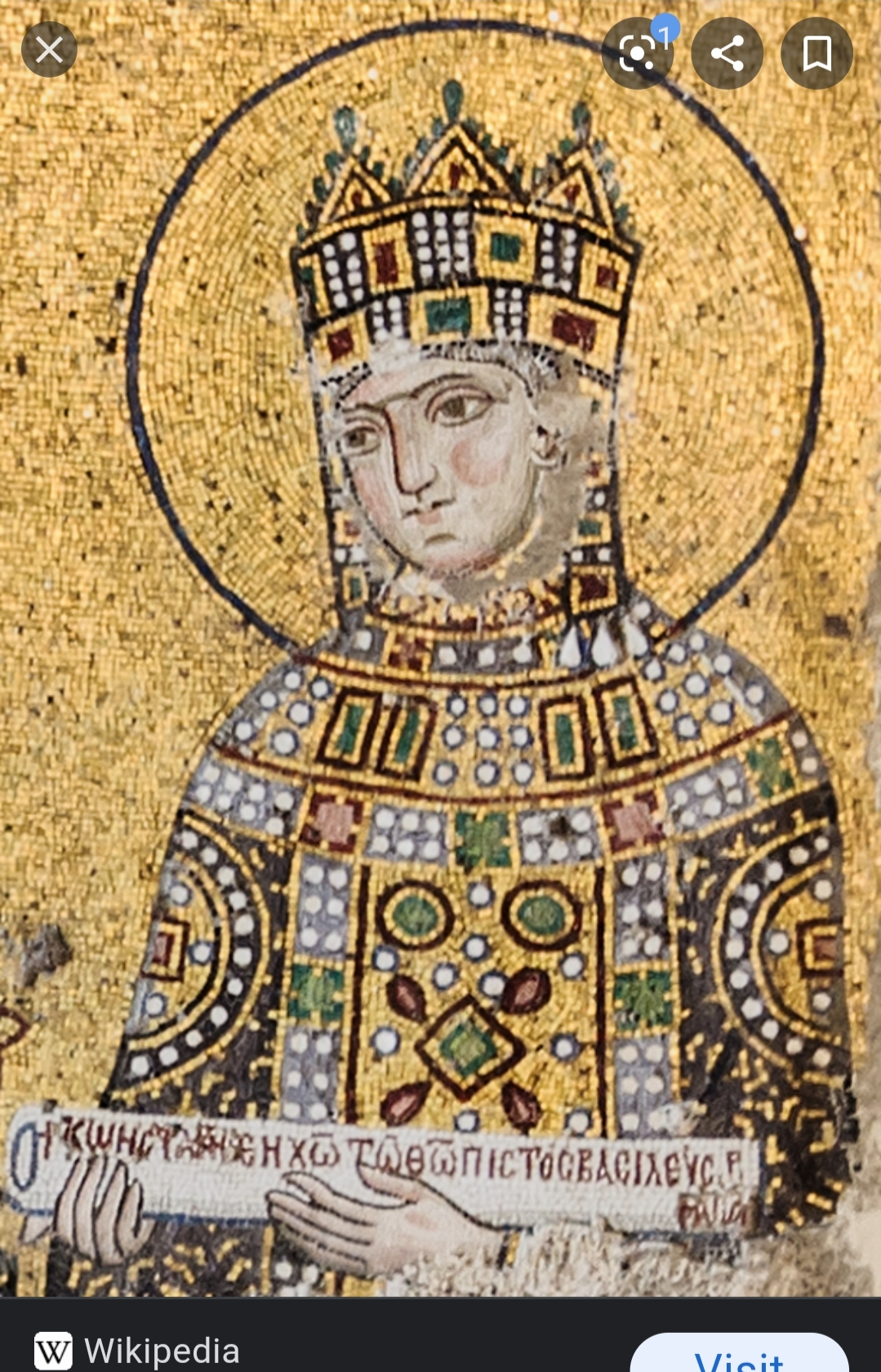
1138) Zoë Porphyrogenita

Courtesy of Wikipedia

1138: Zoë Porphyrogenita

Byzantine Empress

Born: c.978 AD, Constantine, Byzantine Empire (Present-day Istanbul, Turkey)

Died: c.1050 AD, Constantine, Byzantine Empire (Present-day Istanbul, Turkey)

Zoë was married to the heir presumptive, Romanus III Argyrus, and became the empress consort upon his ascension. However, Zoë didn’t really like her husband to say the least and became very jealous. She exiled her sister Theodora to a convent and (possibly) poisoned her husband (or had him drowned in a bath, no one knows for certain). After Romanus died, Zoë remarried Michael IV and ruled alongside him until he banished her to a monastery. This move was very unpopular with the people, who led a revolt to bring Zoë back to the throne.

Zoë was the adoptive mother of Michael V. After he fumbled with the throne and ended up blinded as an imperial punishment by Zoë, the empress and her sister Theodora ruled jointly for a time. Zoë also married for the third time—unfortunately granting hubby number three an equal share of the power with her and her sister. Zoë’s husband also brought his mistress into the palace, seemingly with the empress’s permission, which did little to endear the situation to the people.

In the last few years of her life, Zoë became increasingly pious and dedicated her life to building a church, pardoning criminals, forgiving debts, and creating church icons. She also spent time creating perfumes and cosmetics…and seemingly doing little in the way of ruling.

Zoë died a few years later, having never had a child of her own. Her dynasty died out with her sister Theodora six years later.

Badges Earned:

Find a Grave Marked

Sources:

https://www.britannica.com/biography/Zoe-Byzantine-empress

https://www.worldhistory.org/Empress_Zoe/

https://www.historyofroyalwomen.com/zoe-porphyrogenita/empress-zoe-porphyrogenita-how-two-sisters-ruled-the-byzantine-empire/

https://www.findagrave.com/memorial/47845084/zoe_the_macedonian

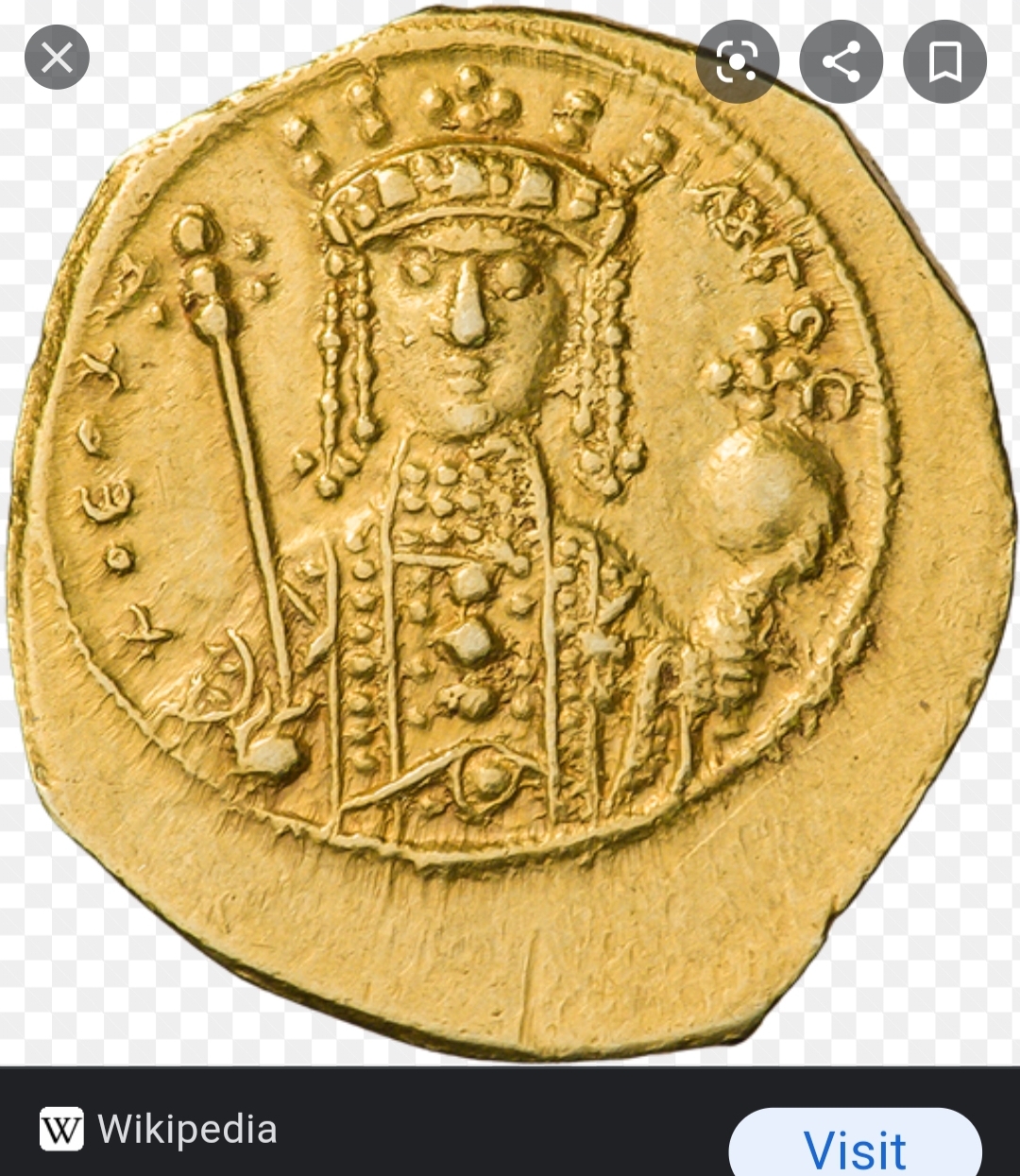
1137) Theodora III

Courtesy of Wikipedia

1137: Theodora III

Byzantine Empress

Born: c.984 AD, Constantinople, Byzantine Empire (Present-day Istanbul, Turkey)

Died: 1056 AD, Constantinople, Byzantine Empire (Present-day Istanbul, Turkey)

Also Known As: Theodora Porphyrogenita

Theodora was the daughter of Constantine VIII.

Theodora spent most of her life in and out of convents and was placed there by her own sister on at least one occasion. Theodora ruled twice in her lifetime, the first time as a co-regent with Zoë and the second time on her own. The second time she ruled, Theodora was around seventy years old.

Very little else of her life story is known.

Sources:

https://www.brooklynmuseum.org/eascfa/dinner_party/heritage_floor/theodora_iii

https://www.britannica.com/biography/Theodora-Byzantine-empress-981-1056

  • Previous
  • 1
  • …
  • 8
  • 9
  • 10
  • 11
  • 12
  • 13
  • 14
  • …
  • 159
  • Next

Categories

Archives

  • July 2025 (10)
  • July 2024 (1)
  • January 2024 (1)
  • August 2023 (1)
  • June 2023 (2)
  • October 2022 (1)
  • July 2022 (1)
  • June 2021 (3)
  • December 2020 (3)
  • August 2019 (1)
  • July 2019 (2)

Search

© 2026 The Exasperated Historian | Powered by Minimalist Blog WordPress Theme