The Exasperated Historian
Menu
  • Home
  • The Women’s List (New)
  • The Men’s List
  • The Animal List
  • Collections
  • The Blog
  • Contact Us
  • FAQ
Menu

Category: Birth Locations

1155) Ehyophsta

1155: Ehyophsta

Cheyenne Warrior who Fought in the Battle of Beecher Island

Born: c.1826, Possibly Colorado, United States of America

Died: c.1915, Cheyenne Reservation Lands

Her name meant “Yellow Haired Woman.”

The Americans won the battle, which took place in Colorado in 1868. The battle erupted after American army forces decided to press back against the Cheyenne, who had been raiding white settlements in the area.

Ehyophsta fought in other tribal skirmishes as well, including against the Shoshone.

She was the daughter of Stands in the Timber and niece of Bad Faced Bull. According to one source, Ehyophsta’s husband accidentally shot and killed himself the year before the Battle of Beecher Island.

Very little information about Ehyophsta’s life is readily available online, and the little information provided here has been pieced together from the sources provided below. What is without doubt is that Ehyophsta was a real woman, who fought in battle and was remembered for it.

Sources:

https://www.brooklynmuseum.org/eascfa/dinner_party/heritage_floor/ehyophsta

https://badassladiesofhistory.wordpress.com/2015/04/24/ehyophsta/

https://en-academic.com/dic.nsf/enwiki/1073491

https://womenarepersons.tumblr.com/post/84260066352/ehyophsta-the-cheyenne-woman-of-great-repute/amp

https://en.wikipedia.org/wiki/Ehyophsta

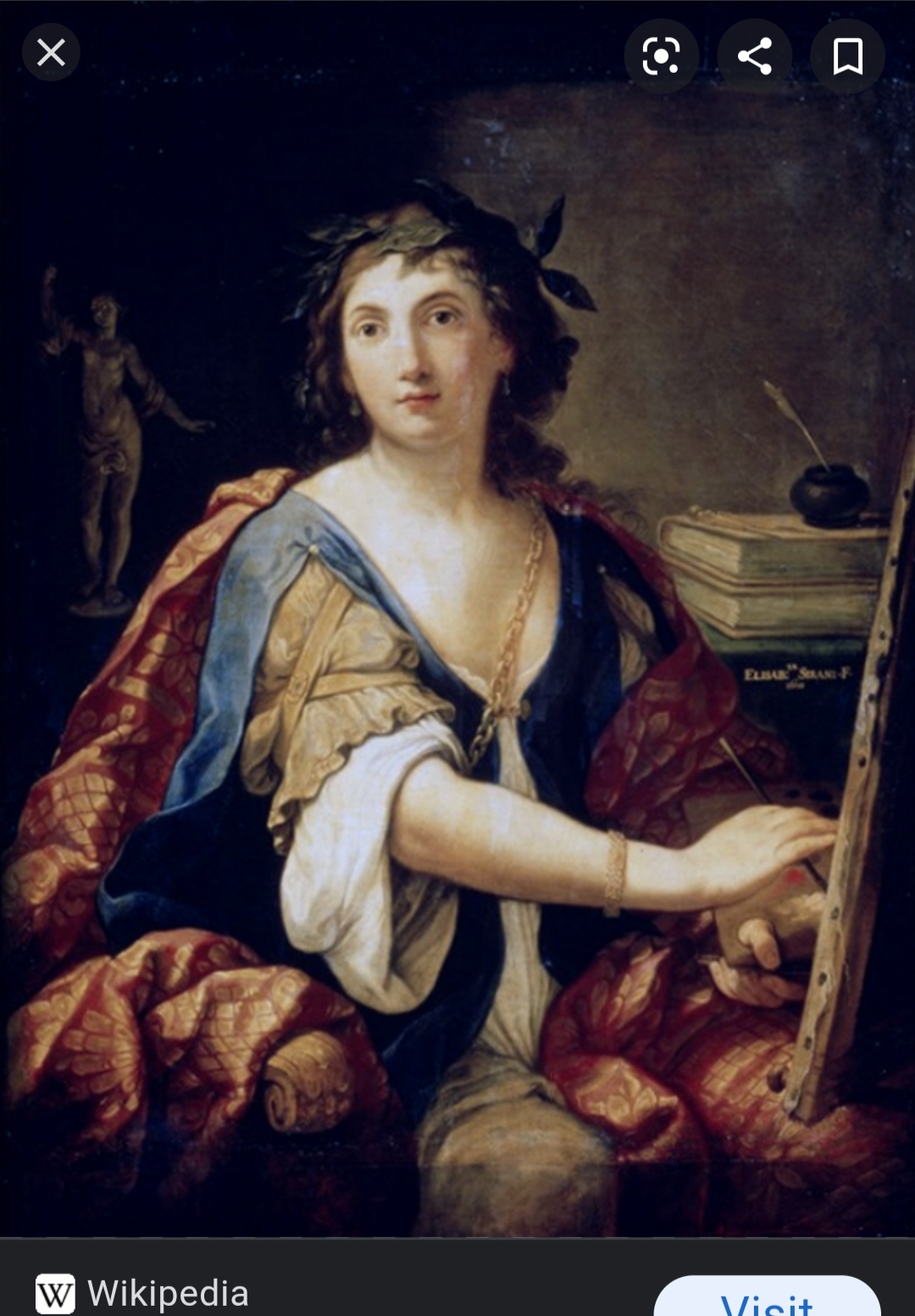
1154) Elisabetta Sirani

Courtesy of Wikipedia

1154: Elisabetta Sirani

Baroque Painter and Printmaker

Born: 8 January 1638, Bologna, Papal States (Present-day Bologna, Italy)

Died: 25 August 1665, Bologna, Papal States (Present-day Bologna, Italy)

Elisabetta was arguably the most famous female artist in early modern Bologna. In her day, Bolognese society was some of the most free-thinking and liberal in all of Europe and was one of the few places where women could attend schools and create professions for themselves outside of marriage or entering a convent. This fact, compounded with Elisabetta’s raw talent, meant she was given the path to stardom from an early age.

Elisabetta’s father was a renowned painter and printmaker who ran his own studio. From him, Elisabetta learned art theory as well as how to make prints drawings, and paintings. In fact, Elisabetta was one of the first women with the ability to work as a printmaker.

By the age of nineteen (or her mid-twenties, sources differ), Elisabetta was supporting herself, her parents, and her three siblings entirely through her art. She had taken over her father’s workshop after he began to suffer from gout. Elisabetta in particular was known for her ability to paint on canvas so quickly that others would come to her studio just to watch her paint. Her paintings were purchased by the nobility, the wealthy, and the royal families of several European monarchies. Everyone wanted a work by Elisabetta in their collection.

Elisabetta established an academy for other female artists, including two of her sisters and a dozen other young women. During her short career, Elisabetta was estimated to have created over 200 canvas paintings, 130 or so of which survive to present day.

According to Art Herstory (article linked below), “Elisabetta was thus one of the first women artists to be publicly acknowledged by colleagues and critics as a female “virtuoso,” possessing artistic genius and invention, which usually was considered beyond women’s capabilities.”

Elisabetta by far preferred women over men as subjects for her works. Whether they were mythological, historical, or Biblical, Elisabetta always researched the subject in her father’s extensive library before putting their image to canvas.

Elisabetta died suddenly at the age of only twenty-seven. The cause of her death is uncertain, but it was possibly from a ruptured peptic ulcer. She never married or had children, but her legacy lives on in her numerous paintings, prints, and drawings that survive to present day.

Badges Earned:

Find a Grave Marked

Sources:

https://nmwa.org/art/artists/elisabetta-sirani/

https://artherstory.net/elisabetta-sirani/

https://repainthistory.com/pages/elisabetta-sirani

https://www.findagrave.com/memorial/31882962/elisabetta-sirani

1153) Epicharis

1153: Epicharis

Well, That’s One Way to Make Your Mark

Died: c. 65 CE, Ancient Roman Empire

Epicharis was a freedwoman (former slave) living in Ancient Rome.

She is most known for being a part of the team attempting to assassinate Emperor Nero. The plot is known today as the Pisonian Conspiracy. Other conspirators included senators, a poet, soldiers, and more. Nero had that many enemies and was just that cruel.

Epicharis was caught when she grew impatient with the slow progress of the plan. She had attempted to hire a Roman officer to kill the emperor for her, but instead of following through on the plan, that officer informed the emperor of the plot, and Epicharis was arrested. Though she was tortured several times using various methods, Epicharis refused to divulge the names of her co-conspirators, and was sentenced to death.

Instead of allowing her captors to execute her, Epicharis ended her life on her own terms, strangling herself with her time’s equivalent of a bra according to most sources.

Little else of Epicharis’s story is known, especially considering the only source from Antiquity to mention her is in Tacitus’s Annals. Where she was from, what her family would have been like, and any other details of her life have been lost.

Sources:

https://www.brooklynmuseum.org/eascfa/dinner_party/heritage_floor/epicharis

https://brewminate.com/the-pisonian-conspiracy-the-beginning-of-the-end-for-nero/

https://engelsbergideas.com/portraits/epicharis-defiance-unbounded/

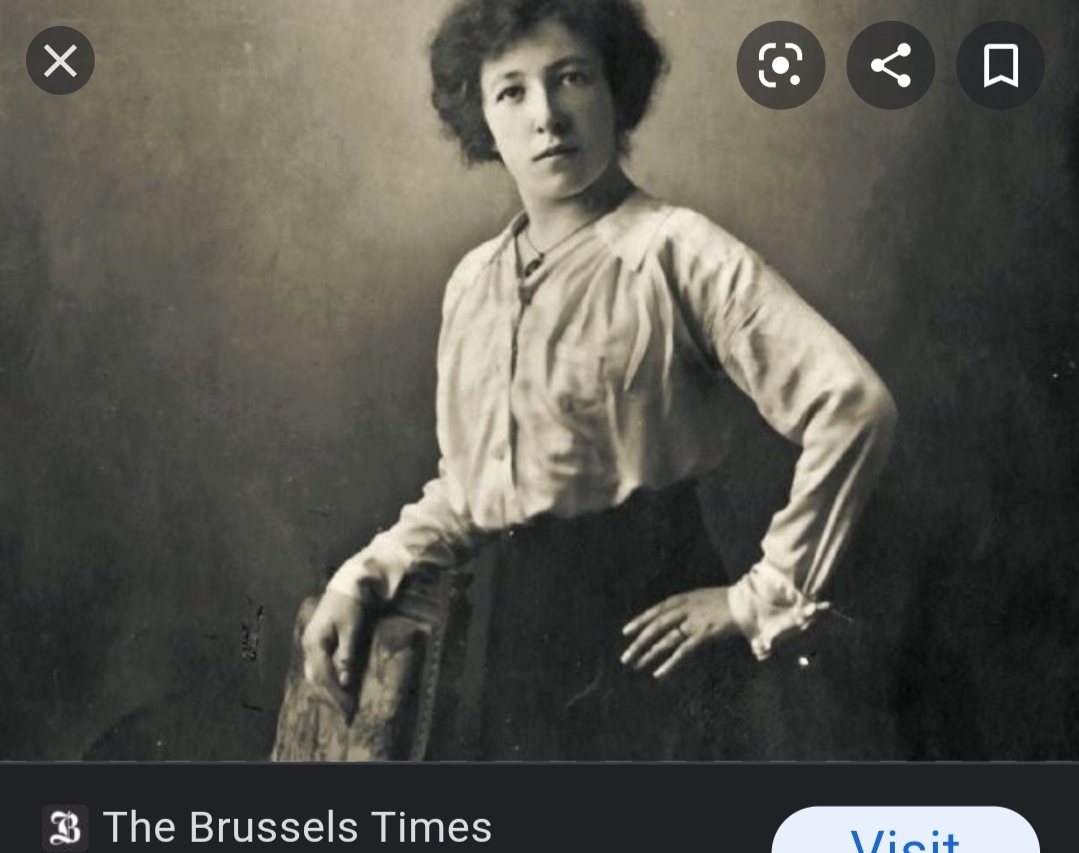
1152) Gabrielle Petit

Courtesy of the Brussels Times

“I will show them that a Belgian woman knows how to die.” Gabrielle’s Final Words

1152: Gabrielle Petit

British Secret Service Spy During World War I

Born: 20 February 1893, Tournai, Belgium

Died: 1 April 1916, Scharbeek, Belgium

Full Name: Gabrielle Alina Eugenia Maria Petit

Gabrielle was the middle child of three in a family that lived just north of the brink of destitution. When Gabrielle was only nine, her mother died at the age of thirty-two from various health issues. Three months later, Gabrielle and her elder sister were placed in an orphanage by their father. While living there, Gabrielle and her sister were forced to do backbreaking work like scrubbing floors and corridors, doing laundry, peeling potatoes, and so on.

Six years later, Gabrielle was asked to leave the orphanage, and she found a job as a live-in nanny and then at a pastry store and later at a place that sold furs. Basically, she moved all over, living in various rooms and, at one point, with a lover.

By 1914, Gabrielle was working as a waitress when she met a man in the Belgian Army. After the fall of Antwerp, this soldier went into hiding before fleeing across the border with Gabrielle’s help (according to one source, by this point the pair were engaged but that they later broke up). Because of her assistance, Gabrielle’s name appeared before the British Secret Service. The British asked Gabrielle if she would join a spy ring in occupied Belgium. They offered to pay her and gave her a short training course in London and so she agreed. Gabrielle chose the code name, “Mademoiselle Legrand”, which was the opposite of Petit.

In August of 1915, Gabrielle returned to Belgium and began her work as a spy. According to Discovering Belgium (article linked below), Gabrielle, “monitoring railway activities and troop movements in occupied Belgium, especially in the region of Tournai and Lille. She noted which troops arrived and departed, how many weapons were transported, and the positions of fuel and ammunition stocks, observation posts and anti-aircraft guns. She kept her notes on cigarette paper (if arrested, she could just smoke them) and used a multiplicity of disguises.”

Gabrielle was also involved in an underground mail shipment that smuggled letters from soldiers at the front back home to their families in the occupied territory. She also worked to help distribute the largest underground resistance magazine in her country.

Gabrielle was arrested in early February 1916 after being betrayed by a German man who had been masquerading as a Dutchman. During her several weeks of interrogation, Gabrielle refused to break or name her co-conspirators. She routinely bit her interrogators as well as insulting them. Gabrielle also liked to write patriotic slogans on the walls of her cell, which were removed each morning by guards only for Gabrielle to re-write them each night.

After a single day trial, Gabrielle was found guilty and sentenced to death.

Gabrielle was executed via firing squad by the German Army at the age of only twenty-three.

She was named one of Belgium’s National Heroines in 1919. In May of that year, she was exhumed from her unmarked grave at the execution grounds and reburied after a state funeral. When her statue was unveiled in 1923, it was notably given the distinction of being the first statue of a working-class woman dedicated in all of Europe.

Badges Earned:

Find a Grave Marked

Sources:

https://www.discoveringbelgium.com/gabrielle-petit/

https://encyclopedia.1914-1918-online.net/article/petit_gabrielle

https://www.brooklynmuseum.org/eascfa/dinner_party/heritage_floor/gabrielle_petit

https://www.warhistoryonline.com/world-war-i/gabrielle-petit-willing-heroine.html?chrome=1

https://www.tripadvisor.com/ShowUserReviews-g188644-d10437785-r707586718-Statue_Gabrielle_Petit_at_place_St_Jean-Brussels.html

https://www.findagrave.com/memorial/73861118/gabrielle-petit

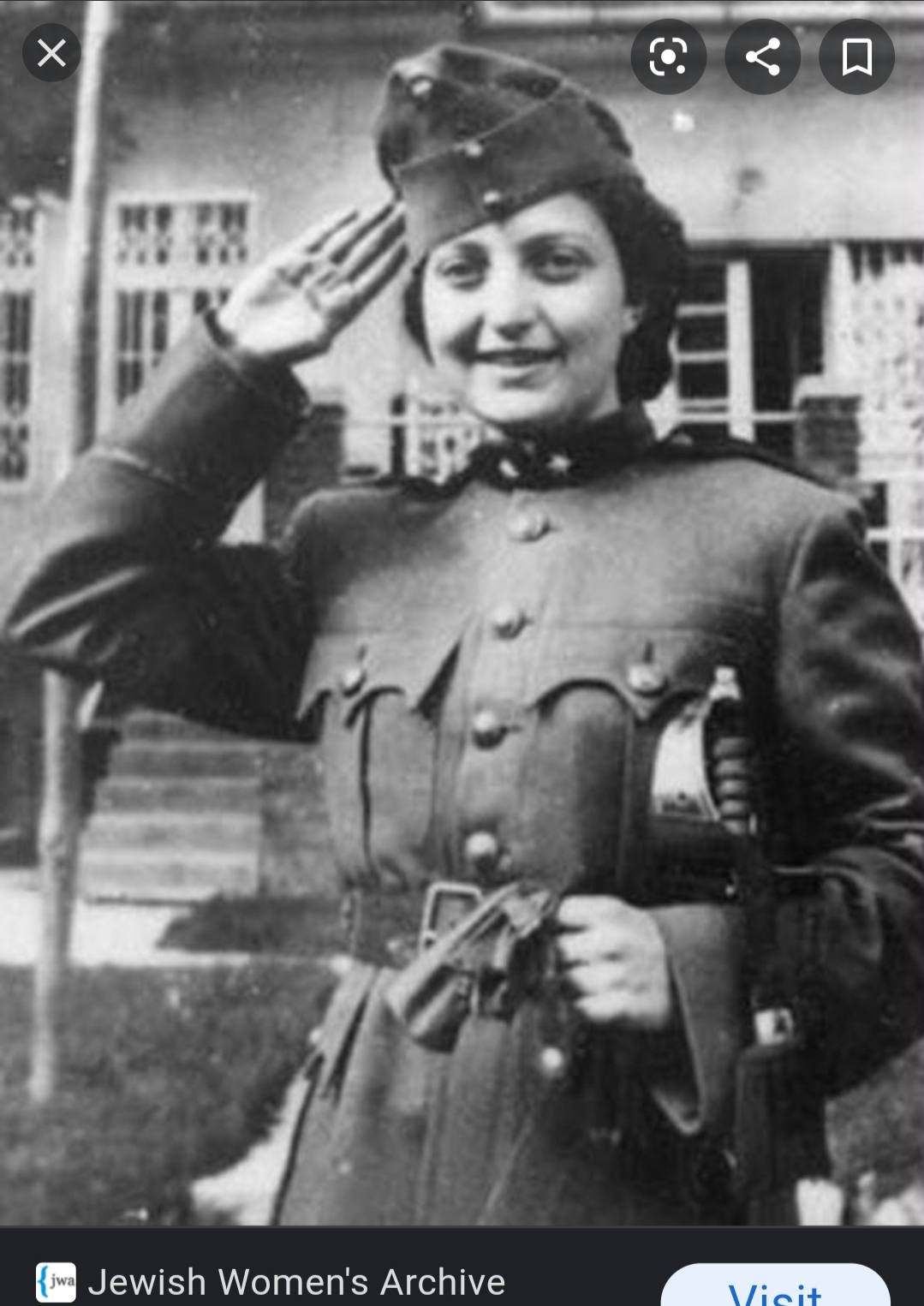
1151) Hannah Szenes

Courtesy of the Jewish Women's Archive

"Blessed is the match consumed in kindling flame.

Blessed is the flame that burns in the secret fastness of the heart.

Blessed is the heart with strength to stop its beating for honor’s sake.

Blessed is the match consumed in kindling flame."

1151: Hannah Szenes

Poet and Special Operations Executive Paratrooper During World War II

Born: 17 July 1921, Budapest, Kingdom of Hungary (Present-day Budapest, Hungary)

Died: 7 November 1944, Budapest, Kingdom of Hungary (Present-day Budapest, Hungary)

Hannah was raised in a well-to-do Hungarian-Jewish family and was educated well as a result. Her father died when she was a child.

In 1939, Hannah emigrated to Palestine to escape the Jewish persecution happening in Europe after she became a Zionist. However, four years later Hannah was approached by officials and asked to train as a wireless radio operator and paratrooper.

Hannah trained to rescue Jewish Shoah Victims. She was dropped into Yugoslavia in March but was captured the following June while trying to cross into Hungary. For months, Hannah was tortured but she refused to speak. Eventually her tormentors arrested Hannah’s mother, but both women continued to remain silent.

In November, Hannah was given the option to request a pardon. Instead, she chose the method of her own execution: death by firing squad. Hannah refused to wear a blindfold and stared her executioners’ down as they took her life. She was only twenty-three years old.

After Hannah’s death, her mother was instrumental in ensuring her daughter’s memory never faded. She published Hannah’s diary and poems, keeping her story alive.

Hannah is still recognized as a Heroine of Israel. In 1950, her remains were brought to Israel and buried in the military cemetery on Mount Herzl. In 1993, The Hungarian Military supreme court officially repealed Hannah’s treason conviction.

Badges Earned:

Find a Grave Marked

Located In My Personal Library:

Time Magazine's 100 Women of the Year (Hannah appears in the 1942 article, "The Resisters")

Sources:

https://jwa.org/encyclopedia/article/szenes-hannah

https://www.yadvashem.org/yv/en/exhibitions/through-the-lens/hannah-szenes.asp

https://www.jewishvirtuallibrary.org/hannah-senesh

https://www.findagrave.com/memorial/42332139/hannah-szenes

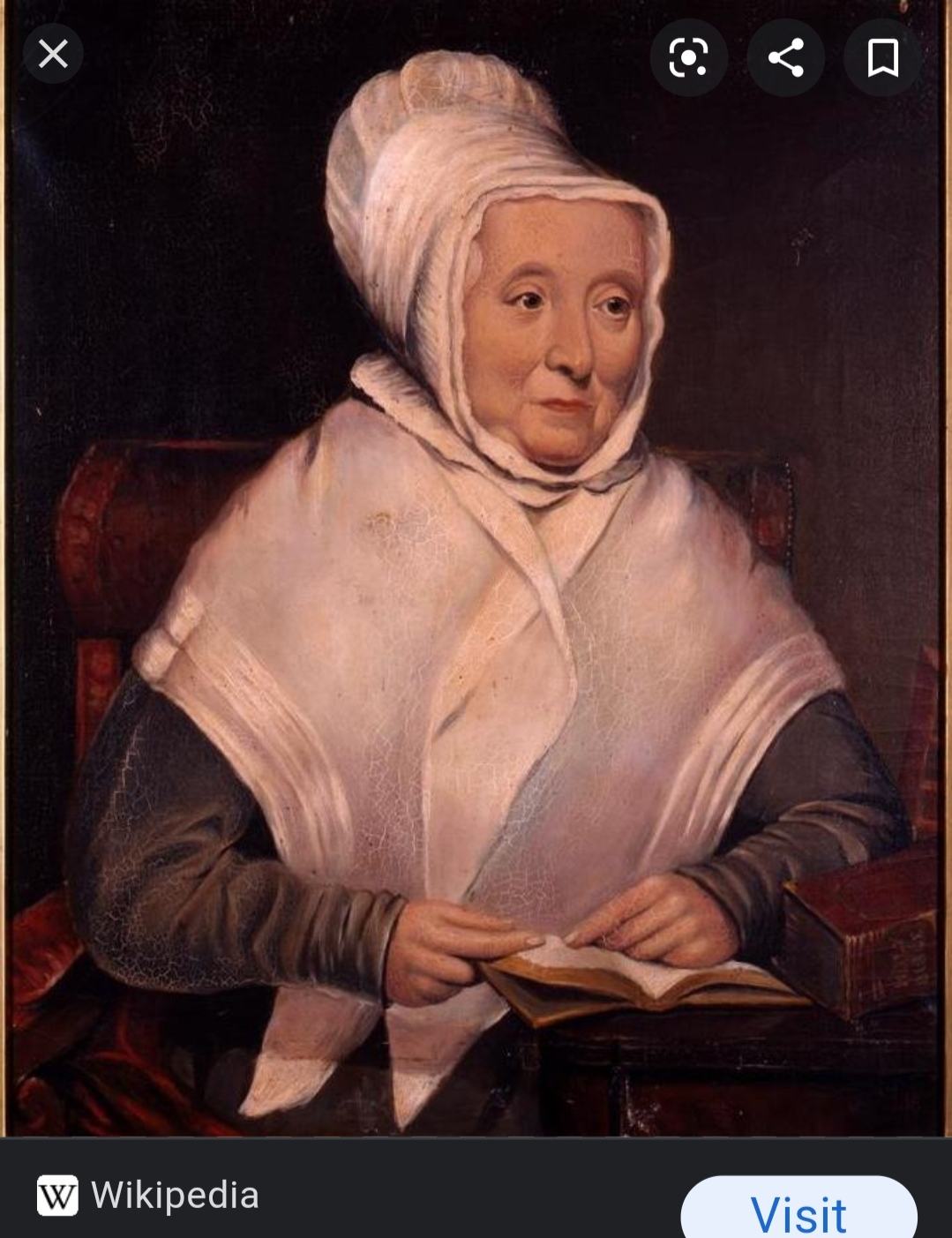
1150) Hannah Adams

Courtesy of Wikipedia

1150: Hannah Adams

The First Woman to Work Professionally as a Writer in the United States

Born: 2 October 1755, Medfield, Massachusetts Bay Colony (Present-day Medfield, Massachusetts, United States of America)

Died: 15 December 1831, Brookline, Massachusetts, United States of America

Hannah had no formal schooling. She was born into a large family headed by her eccentric father. Hannah’s father had no business sense and often kept his family in poverty; however, he was a known bibliophile and so Hannah had plenty of reading material to learn from. Hannah was also tutored by divinity students who boarded in her home as a child, and she had a very good memory which helped as well.

Hannah authored books on comparative religion and early United States history. Her first work was published in 1784 and brought her enough financial return to support herself through her writing. Her 1784 book was a dictionary of sorts on various Christian denominations, and unlike other works of the era, Hannah made sure hers had no judgement shown on any of the denominations and instead explained straight facts.

Later in life her eyesight started to suffer but she continued to work until her death. Her memoire was published posthumously, as Hannah had hoped. Hannah wanted the proceeds from her memoire to go towards supporting her surviving sister financially.

Hannah never married and had no children.

Badges Earned:

Find a Grave Marked

Located In My Personal Library:

Revolutionary Mothers by Carol Berkin

Sources:

https://www.bostonathenaeum.org/library/book-recommendations/athenaeum-authors/hannah-adams

https://www.britannica.com/biography/Hannah-Adams

https://librarycompany.org/women/portraits_religion/adams.htm

https://www.findagrave.com/memorial/8488955/hannah-adams

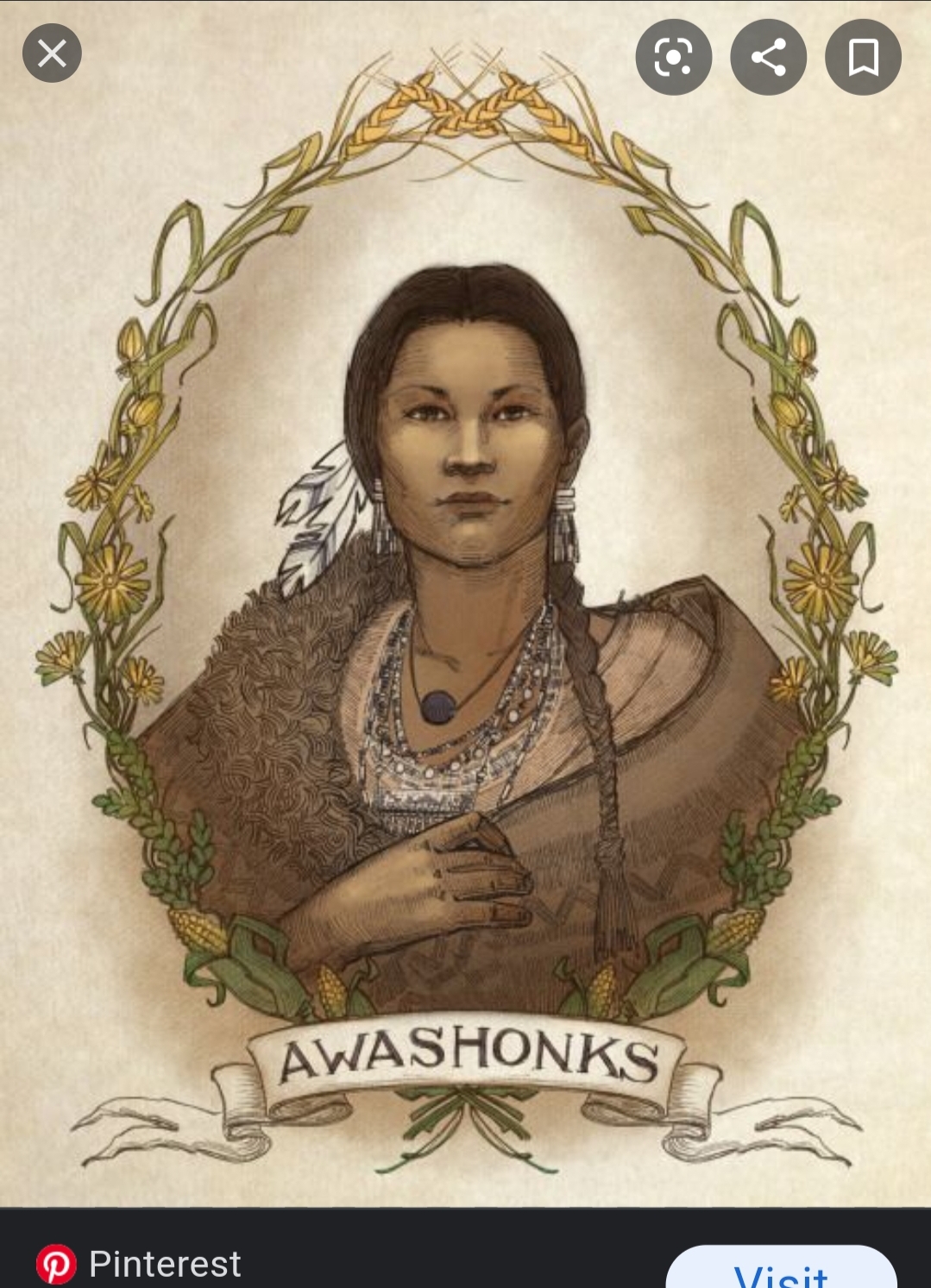
1149) Awashonks

Courtesy of Pinterest

1149: Awashonks

Sunksqua of the Sakonnet Tribe

Born: c.1620-1640, Most Likely Present-day Rhode Island, United States of America

Died: after 1683, Present-day United States of America

Awashonks means “She who is Queen” and was her title, not her name. Unfortunately, her actual name has been lost to history.

Sunksqua is the feminized term for Sachem, meaning chief or leader of a certain tribe. The Sakonnet people lived in what is today, Rhode Island. Awashonks became Sunksqua of her people after her husband, who was the previous Sachem, died. Her father had served as Sachem before her husband, but Awashonks did not inherit the position purely through her heritage, but rather instead through her own power and wisdom.

Awashonks is most known for having signed a Peace Treaty between the native tribes and Plymouth Colony during King Philip’s War. She also supported Weetamoo and Metacom, Indigenous leaders during that war in the beginning, but switched sides to support the colonists after it was clear that was what was best for her people. Awashonks sided with the colonists on the condition that none of her people would be killed or sent away as slaves.

Sadly, that peace was not to last, and later on the Sakonnet people would see their land seized and members of their people enslaved.

Awashonks is said to have married twice and had three children.

According to Historic Women of the Southcoast (article linked below): “The name Awashonks appears in official records more than the name of any other Native American woman.”

Sources:

https://historicwomensouthcoast.org/awashonks/

https://littlecompton.org/historical-resources/little-compton-womens-history-project/awashonks/

https://www.brooklynmuseum.org/eascfa/dinner_party/heritage_floor/awashonks

https://www.encyclopedia.com/women/encyclopedias-almanacs-transcripts-and-maps/awashonks-fl-mid-late-17th-c

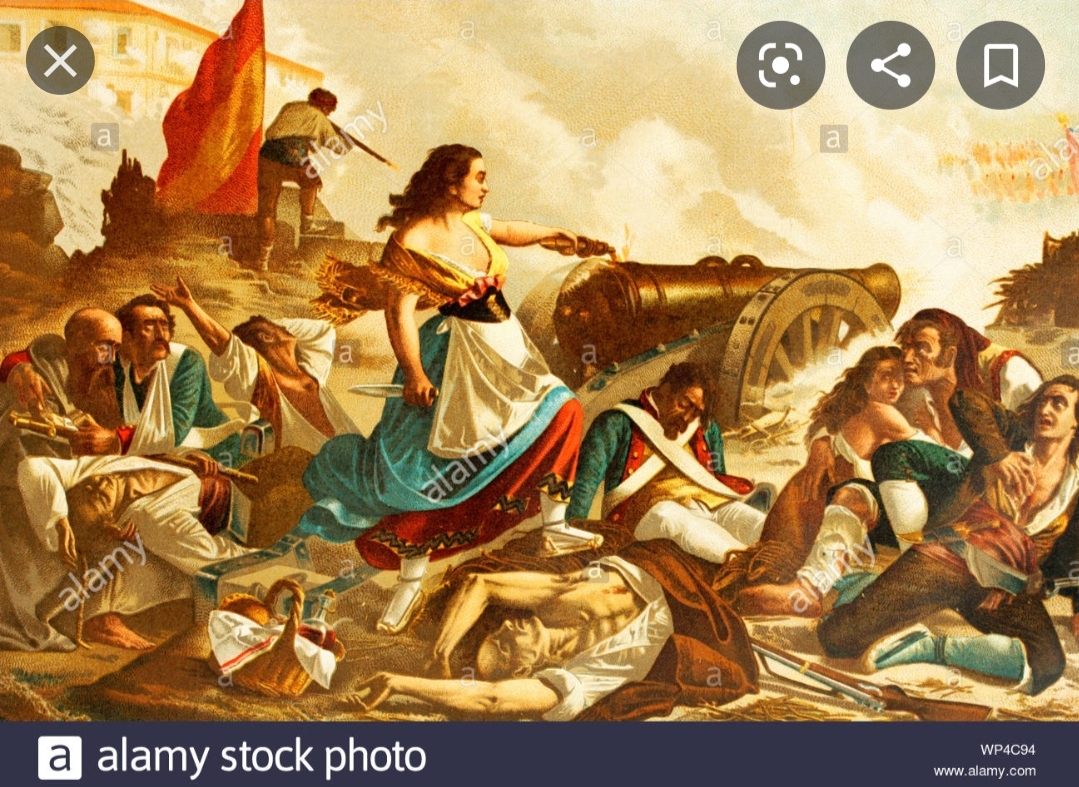
1148) Agustina de Aragon

Courtesy of Alamy Stock Photo

1148: Agustina de Aragón

Spanish Heroine who Defended her Country During the War for Independence

Full Name: Agustina Raimunda Maria Saragossa i Domènech

Born: 4 March 1786, Reus, Spain

Died: 29 May 1857, Ceuta, Spain

Agustina fought first as a civilian and later as an officer in the army, eventually reaching the rank of Second Lieutenant.

Agustina married at the age of only sixteen and followed her husband into battle. With this husband she had two sons, and after he died she married again to a man several years younger than her and had a daughter with him.

She has been dubbed the Spanish Joan of Arc.

Agustina saw her son die in front of her at the hands of the French. The pair were taken captive when Agustina’s son was only five years old, and he died from effects of hunger and disease.

She is best known for her work in the Siege of Saragossa (also spelled Zaragoza). Agustina ran into the fray in order to light a fuse for the cannons to stop the oncoming French.

After the war’s end, Agustina was granted a military pension for the rest of her life by the king of Spain. The king also awarded her the Cross of Distinction, a very high military honor for her work.

Unfortunately, except for her Wikipedia article, almost every source I was able to find for Agustina are written in Spanish, which is a language I can maybe form a spoken phrase in on a good day let alone read. Beware of that fact if you do your own research on Agustina.

Badges Earned:

Find a Grave Marked

Sources:

https://www.britishmuseum.org/collection/term/BIOG198352

https://dbe.rah.es/biografias/6525/agustina-zaragoza-domenech

https://www.biografiasyvidas.com/biografia/s/saragossa.htm

https://en.wikipedia.org/wiki/Agustina_de_Arag%C3%B3n

https://www.findagrave.com/memorial/19180016/agustina-de-arag%C3%B3n

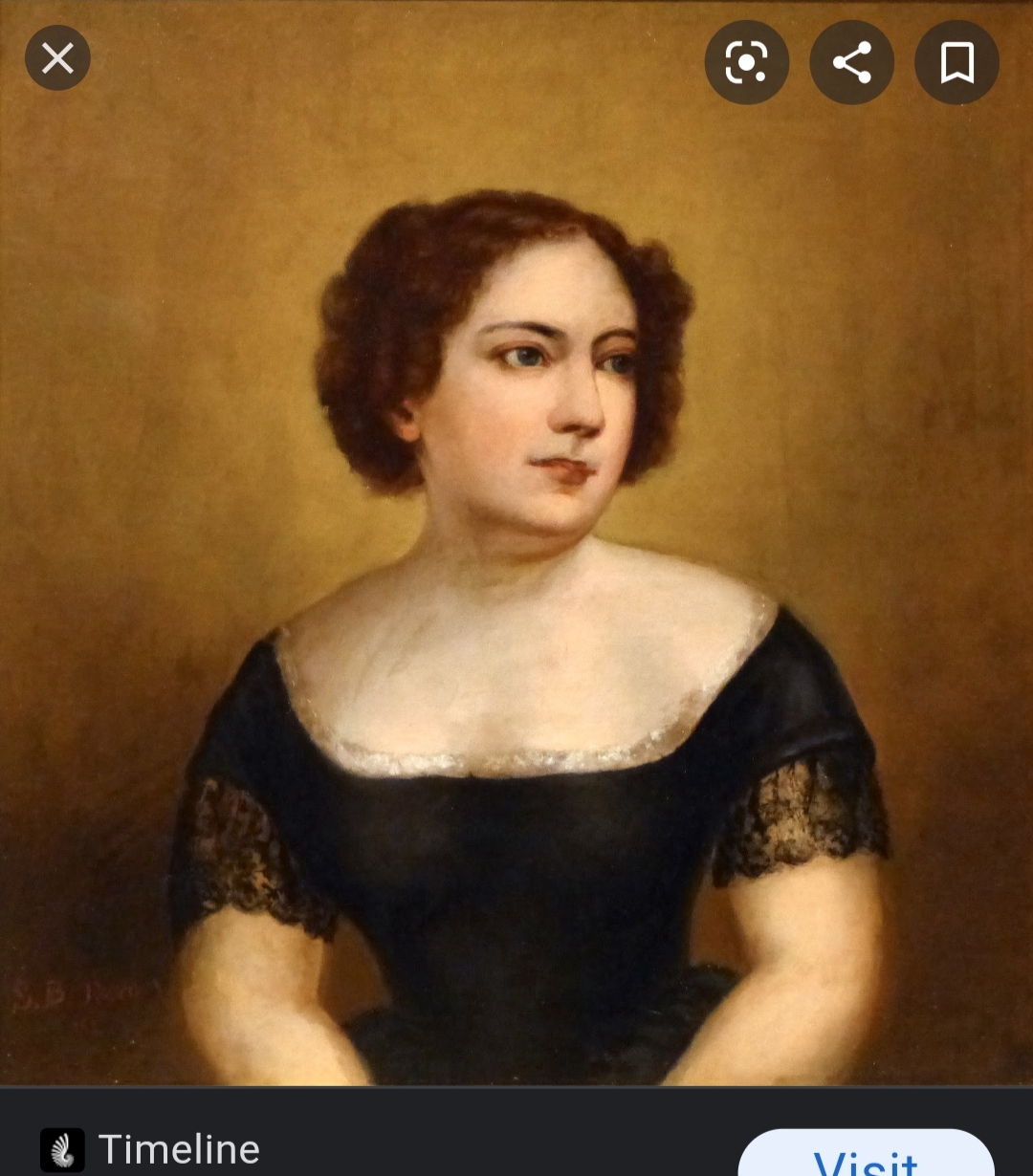
1147) Anna Ella Carroll

Courtesy of Timeline

1147: Anna Ella Carroll

The First (Unofficial) Female Cabinet Member of a US President

Born: 29 August 1815, Maryland, United States of America

Died: 19 February 1894, Washington DC, United States of America

Anna was a woman of many talents and roles throughout her life, and her familial connections made her as close to American Royalty as could be.

Her grandfather signed the Declaration of Independence and her father served as Governor of Maryland. Anna’s other grandfather was a prominent Baltimore physician. She herself was the oldest of eight children and sometimes went so far as to refer to herself as “Princess Anne.” Anne’s father educated her at home from the vast library the family owned, and she enjoyed an especially close relationship with him. Her education was so vast, that Anna was better trained in law than most students studying for the bar exam at the time.

Anna herself worked as a lobbyist for railroad companies and printing agents. Through her connections she became close with presidents Millard Fillmore and Zachary Taylor and was also able to use these connections to get her own father a job as the Naval Officer of Baltimore. Anna’s relationship with President Fillmore was so close, in fact, he proposed marriage to her. Anna declined but did continue to help his political career.

Anna was proposed to a second time in 1860, after starting a relationship with one of the security officers assigned to protect the president. Once again, Anna declined in order to focus on her writing career.

She was also one of the first major proponents of the American Political Party (better known by its nickname of the Know-Nothing Party). Anna’s personal convictions made her staunchly Anti-Catholic and Pro-Union at a time when the United States was fracturing apart at the seams. She wrote several books that championed her anti-Catholic and anti-immigrant themes.

Anna had been a slave owner who freed her servants after Abraham Lincoln was elected president of the United States in 1860. Anna would go on to serve as an unofficial advisor and member of cabinet to the president. Anna was also instrumental in convincing the governor to keep the state of Maryland from seceding from the union. Anna lobbied for the creation of a colony for former African American slaves in present-day Belize, and also argued against the Emancipation Proclamation for fear it would alienate southern planation owners with pro-Union sympathies.

As though she hadn’t done enough already, Anna then decided to become a military strategist. After traveling to the western theatre of the war in early 1861, Anna helped provide her own insight into which river the union army should send gunboats down. Because of her help, the union went on to capture two forts from the Confederate forces and European powers that had been thinking of helping the Confederacy withdrew their support. [Author’s Note: Anna’s exact involvement in the so-called Tennessee Plan continues to be disputed by historians to this day. Anna claimed she was directly involved, though other members of the government, including President Lincoln himself, disagreed].

Anna eventually battled for a government pension on the premise of her insight into the aforementioned river plan as well as the pamphlets she had written in support of the president and the union. President Lincoln thought the idea abhorrent, and she lost her fight to receive $5,000. Finally in the 1880’s, Anna was eventually granted a pension…of $50 a month for the remainder of her life.

According to the Maryland State Archive (article linked below): “The closest she ever came to receiving formal recognition was in 1864, when painter Francis B. Carpenter painted President Lincoln and his cabinet signing the Emancipation Proclamation.  In the scene there is an empty chair, against which rests some documents likely carried by Carroll.  It is said that in this way she was shown as the "unrecognized member of the cabinet."”

Anna never married and had no children. She was posthumously inducted into the Maryland Women’s Hall of Fame. Anna’s epitaph on her headstone describes her best, “A woman rarely gifted.”

Badges Earned:

Find a Grave Marked

Sources:

https://msa.maryland.gov/megafile/msa/speccol/sc3500/sc3520/002900/002900/html/2900bio1.html

https://msa.maryland.gov/msa/educ/exhibits/womenshallfame/html/carroll.html

https://www.womenhistoryblog.com/2007/04/anna-ella-carroll.html

https://time.com/4382031/this-woman-may-have-helped-win-the-union-win-the-civil-war/

https://www.findagrave.com/memorial/11903155/anna-ella-carroll

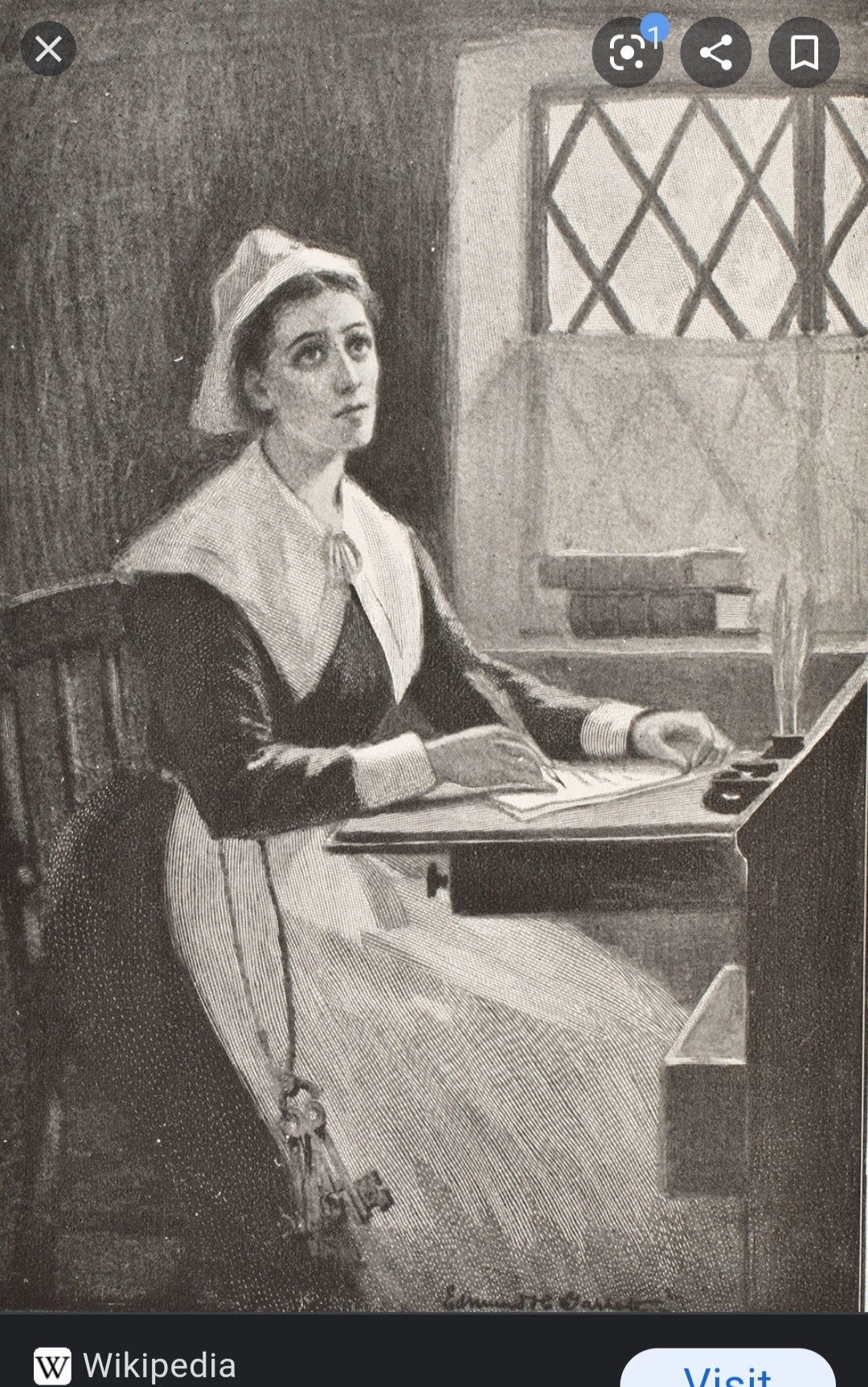
1146) Anne Bradstreet

Courtesy of Wikipedia

1146: Anne Bradstreet

The First English Poet to Have Their Works Printed in the American Colonies

Born: 20 March 1612, Northampton, England (Present-day United Kingdom)

Died: 16 September 1672, Andover, Massachusetts Bay Colony (Present-day Andover, Massachusetts, United States of America)

Anne was the most prominent of the early English colonial poets and has been recognized as the first female accomplished New World Poet (according to the Poetry Foundation).

Anne’s poetry gained such acclaim her works were said to have been held in King George III’s library.

She never attended a formal school but was instead tutored at home by her well-read father. Anne moved to the New World with her father, husband, and other family members in 1630 and gave birth to eight children in the subsequent years. Though she was a Puritan, Anne was dismayed by life in the primitive colony and missed the aristocratic manor she had been raised on in England.

For fourteen or fifteen years (sources differ), Anne and her family moved several times throughout the earliest cities in the Massachusetts Bay Colony, before they finally settled in Andover in 1645. Despite the fact that Anne would give birth eight times and care for the domestic household chores, Anne still found time to write. She used her poetry as an outlet, to contemplate and grapple with the many difficulties in her life, usually having something to do with her Puritan religion and earthly attachments to her family, which were often at odds with one another.

In 1650, Anne’s brother-in-law took copies of her poems to England and published them without her knowledge. This collection would be the only poems of Anne’s published in her lifetime, but others would follow in the centuries after her death. Surviving letters of Anne’s have also been published, showing that she was a refreshing and groundbreaking woman for her time (Anne even told her children that she had had carnal thoughts and desires in her earlier life—shocking for her era!).

Unfortunately, according to Find a Grave, Anne’s burial site has been lost to history. Her legacy and written works live on however.

Badges Earned:

Find a Grave Marked

Located In My Personal Library:

America's Women: 400 Years of Dolls, Drudges, Helpmates, and Heroines by Gail Collins

Revolutionary Mothers by Carol Berkin

The Secret Library: A Book-Lovers' Journey Through Curiosities of History by Oliver Tearle

The Warrior Queens by Antonia Fraser

Sources:

https://www.poetryfoundation.org/poets/anne-bradstreet

https://poets.org/poet/anne-bradstreet

https://www.britannica.com/biography/Anne-Bradstreet

https://www.huffpost.com/entry/anne-bradstreet-the-first-published-poet-of-america_b_5876173fe4b0f8a7254483ba

https://www.findagrave.com/memorial/126/anne-bradstreet

  • Previous
  • 1
  • …
  • 7
  • 8
  • 9
  • 10
  • 11
  • 12
  • 13
  • …
  • 159
  • Next

Categories

Archives

  • July 2025 (10)
  • July 2024 (1)
  • January 2024 (1)
  • August 2023 (1)
  • June 2023 (2)
  • October 2022 (1)
  • July 2022 (1)
  • June 2021 (3)
  • December 2020 (3)
  • August 2019 (1)
  • July 2019 (2)

Search

© 2026 The Exasperated Historian | Powered by Minimalist Blog WordPress Theme