The Exasperated Historian
Menu
  • Home
  • The Women’s List (New)
  • The Men’s List
  • The Animal List
  • Collections
  • The Blog
  • Contact Us
  • FAQ
Menu

Category: Birth Locations

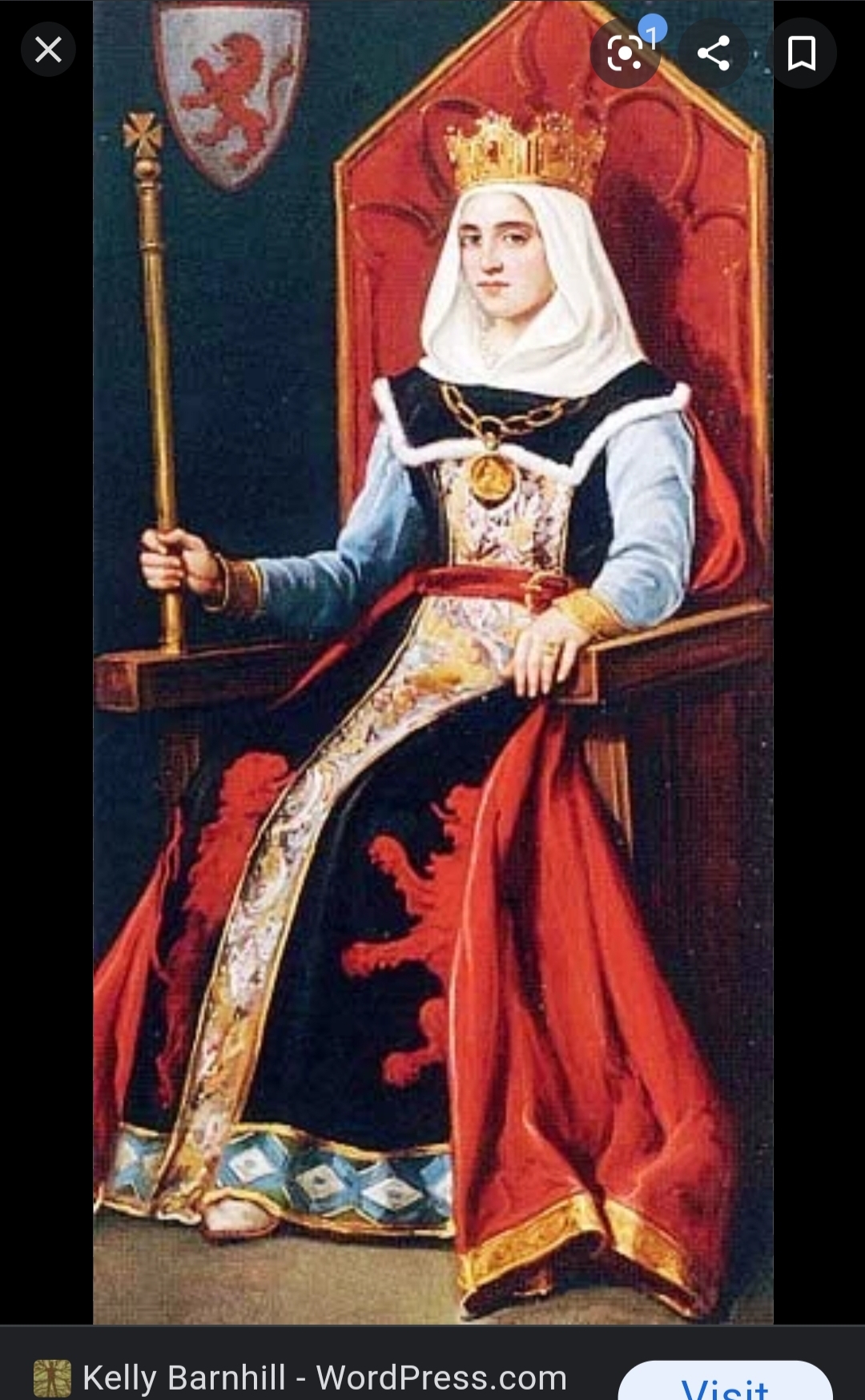
1165) Urraca of Zamora

Courtesy of Kelly Barnhill (WordPress Site)

1165: Urraca of Zamora

Infanta of Zamora

Born: c.1033, Present-day León, Spain

Died: c.1101, Present-day León, Spain

Urraca was one of five siblings who split their father (Ferdinand the Great)’s empire after his death. Urraca was bequeathed the city of Zamora and ruled with palatine authority over the walled city.

Urraca’s eldest brother tried to take over their father’s entire empire, but Urraca stood up to him and allegedly killed him before going back to her castle and ruling peacefully for the rest of her life; possibly retiring to a convent near the end.

And that’s about all that is known of Urraca, which isn’t surprising given that she lived right around a thousand years ago.

Badges Earned:

Find a Grave Marked

Sources:

https://kellybarnhill.wordpress.com/2012/09/18/butt-kicking-princesses-in-history-urraca-of-zamora/

https://honorsblog.uark.edu/women-in-charge-a-medieval-murder-mystery-namedropping-11th-century-style/

https://en.wikipedia.org/wiki/Urraca_of_Zamora

https://www-jstor-org.ezproxy1.lib.asu.edu/stable/1358232#metadata_info_tab_contents

https://www.findagrave.com/memorial/102723103/urraca-of_zamora

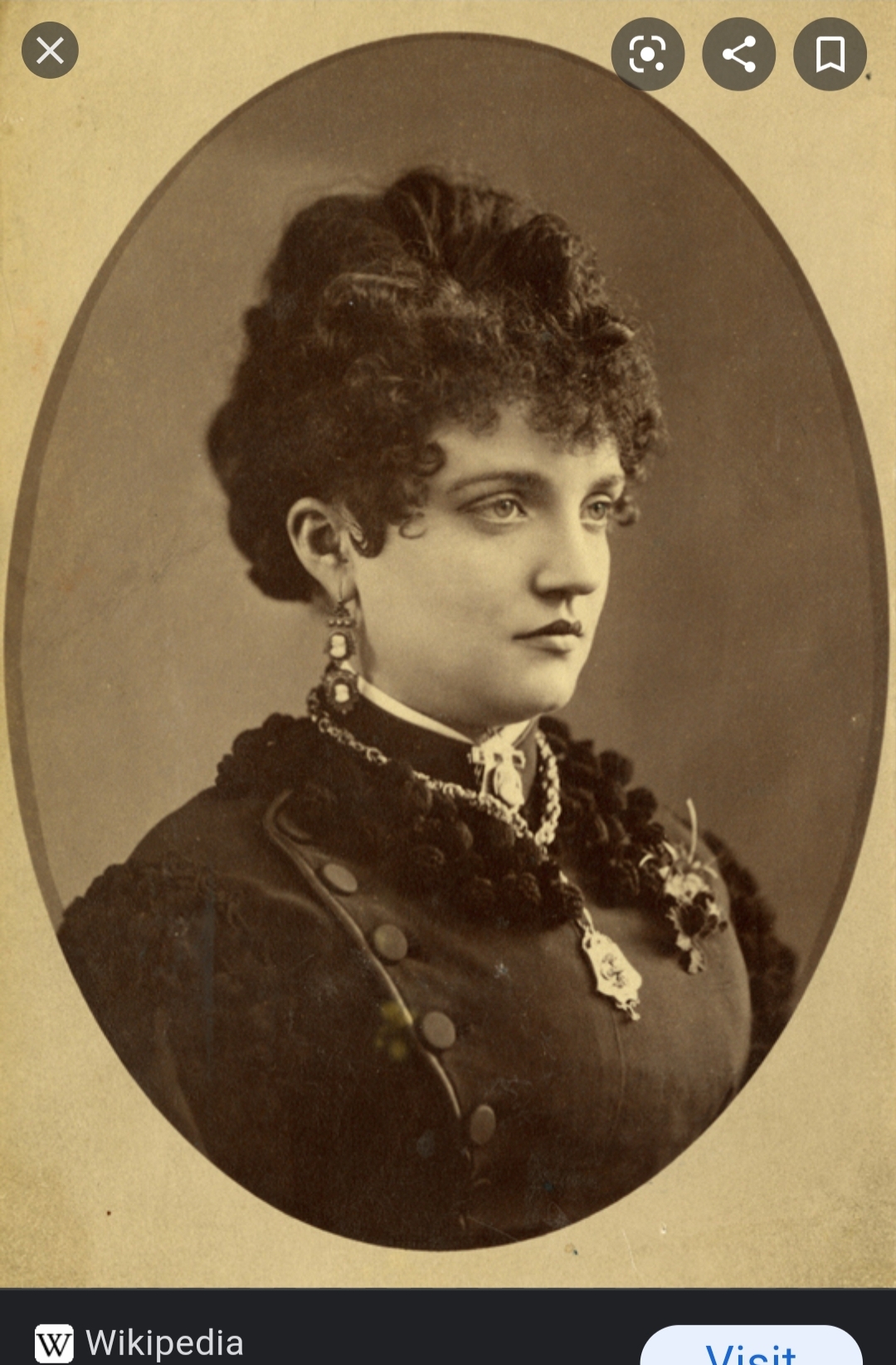
1164) Elizabeth Tabor

Courtesy of Wikipedia

1164: Elizabeth Tabor

One of The Most Dramatic Rags to Riches Then Back to Rags Story

Born: 1854 (Exact date is in dispute), Oshkosh, Wisconsin, United States of America

Died: 5 March 1935, Leadville, Colorado, United States of America

Also Known As: Baby Doe Tabor or The Silver Queen of Colorado

Elizabeth was born fifth of fourteen children into sort-of middle class in an Irish-Catholic family. Her father owned a clothing store that catered specifically to the local lumber workers, however, several fires burned down his store in quick succession and depleted what wealth the family had. Elizabeth’s mother refused to let her do hard labor in order to preserve her beauty and hopefully marry a wealthy husband.

Her first husband was named William Doe, hence her nickname, Baby Doe. Together they moved to Colorado in order to oversee the Doe Family’s mining investments. Despite the rough and tumble nature of the Old West, Baby Doe thrived in her new environment. Elizabeth’s marriage to William lasted only three years, and she filed for divorce in 1880.

She next married silver mining baron Horace Tabor, with whom she would have three children. Technically when the pair wed in 1882, Elizabeth’s divorce had yet to be publicly recorded, and Horace’s divorce from his first wife Augusta was still in the process of being finalized. This meant Elizabeth and Horace were technically bigamists, but they loved each other dearly. Unfortunately, the fact that Horace was one of the wealthiest men in the country also meant the scandal of his divorce and remarriage to a woman half his age (Elizabeth was twenty-five and he forty-nine when they met) would damage both of their reputations for the rest of their lives. Sadly, Elizabeth and Horace’s son would die soon after birth, but their two daughters survived to adulthood (named Elizabeth Bonduel Lily Tabor and Rose Mary Echo Silver Dollar Tabor respectively).

The next few years were wealthy and prosperous for the Tabor family. Elizabeth worked with the Colorado Women’s Suffrage movement while Horace oversaw the mines.

The Tabors lost their money thanks to the repeal of Sherman Silver Purchase Act, which led to the Panic of 1893. The family watched all of their vast fortune disappear in a puff of smoke, but Elizabeth refused to give up. She spent the next few years overseeing the family’s business dealings in Denver while Horace worked as a muckraker in one of the mines before becoming the postmaster in Denver in 1898.

Horace died destitute not long after, in 1899, leaving Elizabeth alone to raise their daughters.

Elizabeth spent the last thirty years of her life living in a shack besides the Matchless Mine (which used to be owned by her husband). Debates rage as to whether or not she believed the mine would be prosperous again or not. Elizabeth most likely worked odd jobs here and there and sold artifacts from her past life in order to earn enough money to keep the family going.

Elizabeth’s youngest daughter (Silver Dollar) was found scalded to death in Chicago, either the victim of suicide, a bizarre accident, or murder—depending on which account you believe. Her oldest daughter (Lily) refused to be known as Baby Doe’s daughter and moved to Wisconsin to get away from the drama and scandal her parents had created. Neither girl had children, and so Elizabeth and Horace’s family line died with the girls.

Elizabeth was eventually found frozen to death in her cabin. She had spent the last years of her life living off scraps of bread, writing extensively in her journals the dreams, visions, and memories she had trapped in her head. Some of those writings have survived until today.

Elizabeth was posthumously inducted into the Colorado Women’s Hall of Fame.

Badges Earned:

Find a Grave Marked

Located In My Personal Library:

Augusta Tabor: Her Side of the Scandal by Caroline Bancroft

Haunted West: Legendary Tales From the Frontier (Magazine Published by Centennial Today, Fall 2020)

No Place for a Woman: The Struggle for Suffrage in the Wild West by Chris Enss

Scandalous Women: The Lives and Loves of History's Most Notorious Women by Elizabeth Kerri Mahon

Silver Queen: The Fabulous Story of Baby Doe Tabor by Caroline Bancroft

A Fun Update...(June 2021):

In late June of 2021, my mother and I took a road trip around some of the closer states to where we live. Along that journey, we were able to stop at the Mount Olivet Catholic Cemetery in Wheat Ridge, Colorado, where Elizabeth and her husband Horace are laid to rest for all eternity, and I was able to snap this photo while we were there.

Elizabeth Tabor Grave

Sources:

https://coloradoencyclopedia.org/article/elizabeth-%E2%80%9Cbaby-doe%E2%80%9D-tabor

https://www.cogreatwomen.org/project/elizabeth-baby-doe-tabor/

https://www.coloradovirtuallibrary.org/digital-colorado/colorado-histories/boom-years/elizabeth-baby-doe-mccourt-tabor-colorados-silver-queen/

https://centralcityopera.org/the-wild-true-tale-of-baby-doe-tabor/

https://www.findagrave.com/memorial/2751/elizabeth-bonduel-tabor

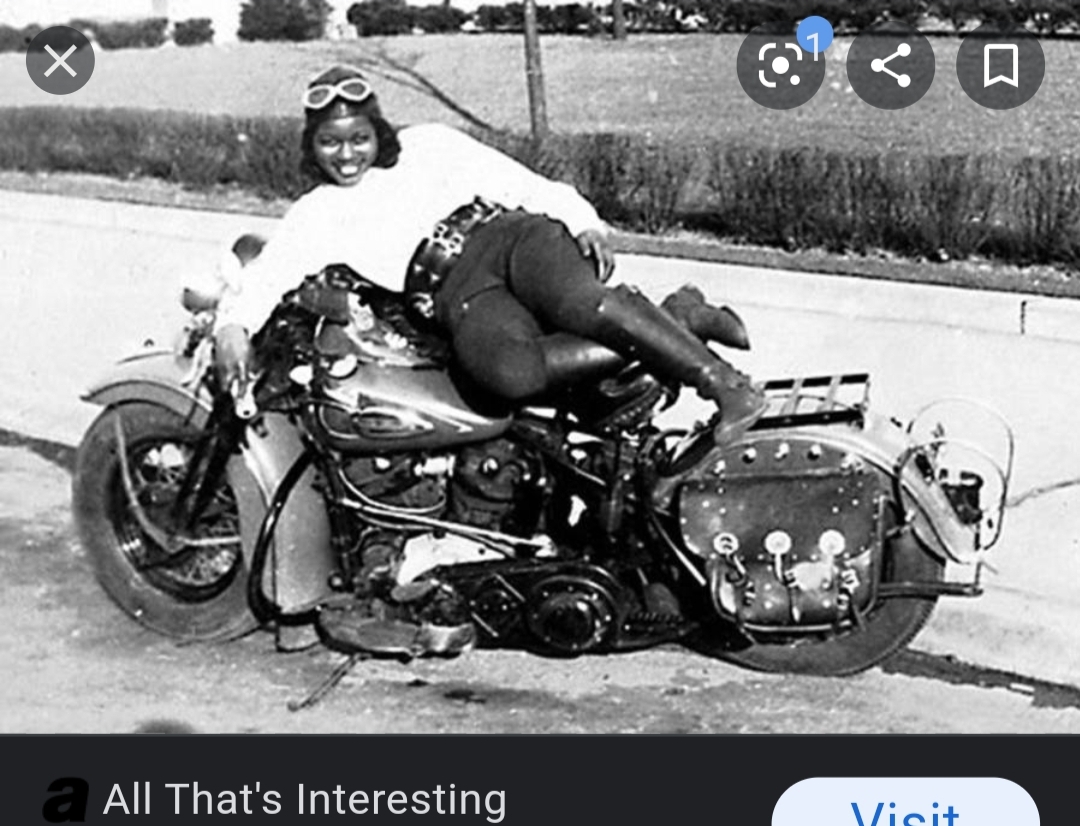
1163) Bessie Stringfield

Courtesy of All That's Interesting

“It’s got to be blue and it’s got to be new! I never bought anything used—except husbands!”

1163: Bessie Stringfield

First African American Woman to Motorcycle Drive Across the United States Solo (in 1930)

Born: c.1911, Kingston, Jamaica*

Died: 16 February 1993, Opa-locka, Florida, United States of America

Bessie was dubbed the “Motorcycle Queen of Miami.”

Bessie was orphaned at the age of five soon after her family moved to the United States. Her parents died of smallpox, but luckily soon after Bessie was adopted by a Catholic family (although it should be noted in some accounts that Bessie’s father didn’t die—instead he just abandoned his family). Bessie also had at least two sisters but probably had more siblings, full and half, that have not been identified in any of the sources.

Bessie was given her first motorcycle at the age of sixteen (a 1928 Indian Scout--though she would soon switch to Harley Davidson) and spent the next several years earning money by performing tricks at various carnivals. Because she was of African descent, Bessie was often denied sleeping accommodations in hotels or hostels, and often had to sleep on her bike at gas stations.

She was a Motorcycle Dispatch Rider for the United States Army in World War II, though she technically worked as a civilian. Bessie was the only woman in her unit and encountered even more racial prejudice while on the road. One time, a man driving a pickup truck went so far as to drive her off the road, knocking her to the ground.

During the 1930s and 1940s, she made eight solo long-distance rides across the United States. She traversed all of the lower forty-eight states on her bike throughout the years.

After the war, Bessie earned her LPN (Licensed Practical Nurse) certificate and founded a motorcycle club. One time, Bessie won a flat track race and was then denied the prize money after she removed her helmet and the race organizers realized she was a woman.

Bessie was posthumously inducted into the AMA Motorcycle Hall of Fame in 2002. She passed away from complications of an enlarged heart. According to Blackpast, she had been married and divorced six times throughout her life and suffered the loss of three children with her first husband. She owned twenty-seven motorcycles throughout her life (per Rejected Princesses).

*Some sources state her birthplace as North Carolina, however an official biography written on Bessie by a woman who knew her before she died states Bessie was born in Kingston, Jamaica, so that is the birthplace I have chosen to list here. However, it should be noted that The New York Times states her birthplace was North Carolina, and that Bessie lied and said she was born in Jamaica in order to make her life story a little more outrageous.

Badges Earned:

Find a Grave Marked

Rejected Princess

Sources:

https://nationalmcmuseum.org/featured-articles/bessie-stringfield-southern-distance-rider/

https://www.blackpast.org/african-american-history/bessie-stringfield-1911-1993/

https://www.nytimes.com/2018/04/04/obituaries/overlooked-bessie-stringfield.html

https://www.rejectedprincesses.com/princesses/bessie-stringfield

https://bessiestringfieldbook.com/

https://www.findagrave.com/memorial/165444982/bessie-b-stringfield

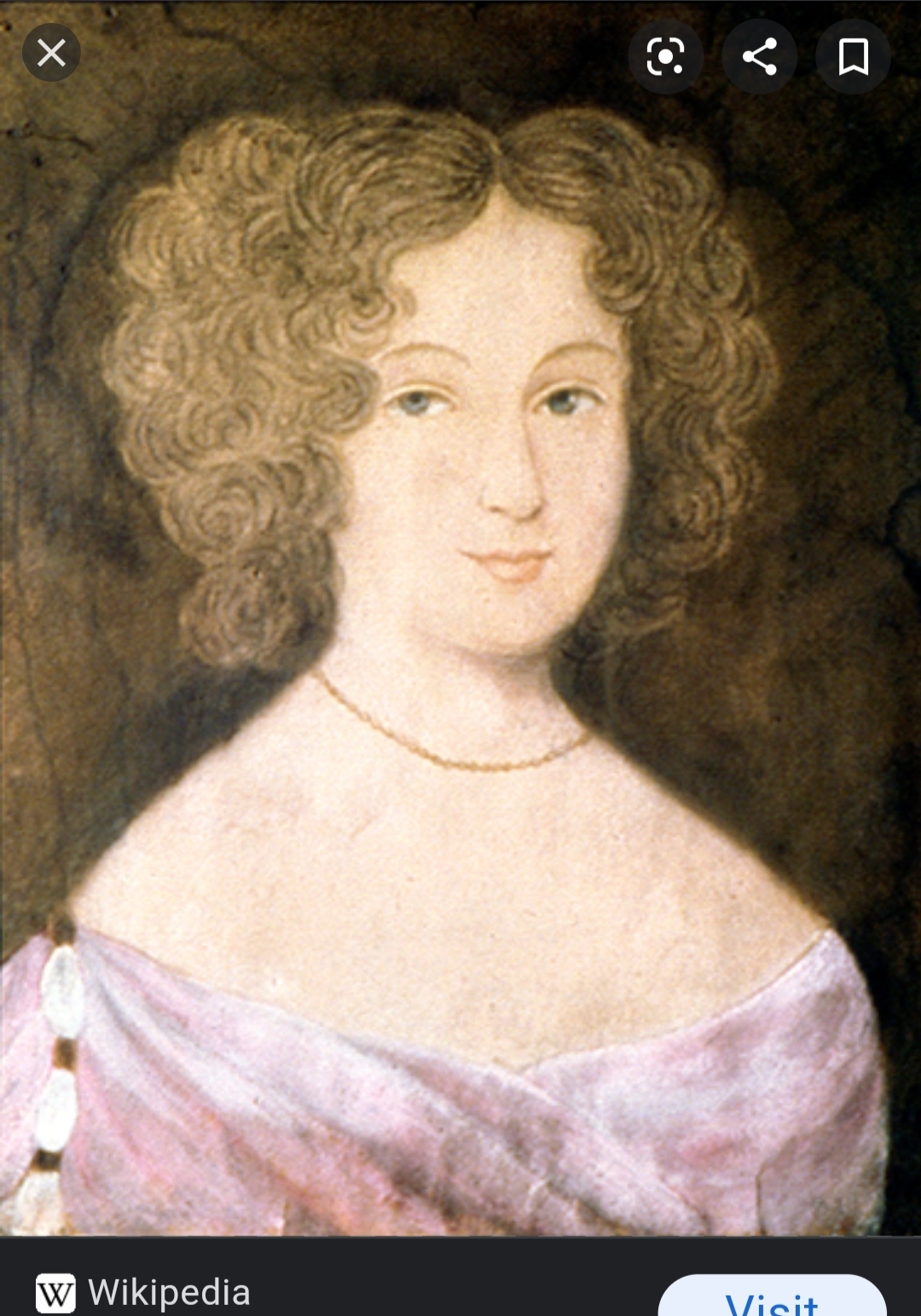
1162) Frances Berkeley

Courtesy of Wikipedia

1162: Frances Culpeper Stephens Berkeley Ludwell

Wife of Three Colonial Governors

Born: 1634, Kent, England (Present-day Kent, United Kingdom)

Died: c.1695, Jamestown, The Colony of Virginia (Present-day Jamestown, Virginia, United States of America)

Also Known As: Lady Frances Berkeley

Frances was one of the leaders of the Green Springs Virginia Political Faction, which effectively controlled all but the governor's office of the Virginia Colony for two years.

Frances arrived in the New World with her family around 1650. She was the youngest of five children. Her first husband was Captain Samuel Stephens, the governor of the Albemarle settlements in what is today, North Carolina (although it should be noted he only became governor fourteen years after he and Frances married).

After Frances’s first husband died, she inherited his wealthy estate, and because they had no children the entire inheritance went to her and her alone. Her next husband was the governor of Virginia, William Berkeley. Frances and her second husband lived together on his own large estate, Green Spring. They married during his second term as governor. Frances became stepmother to William’s two children from his own first marriage.

She supported her husband during Bacon’s Rebellion and argued his case before Charles II, King of England at the time. Bacon’s Rebellion was a particularly trying time for Frances because her husband and her relative, Nathaniel Bacon, were on opposing sides of the debate. Sadly, France’s pleading for her husband before the king ended in failure, and she returned to the colonies with her husband’s replacement.

In the 1680’s, Frances married for a third time after her second husband’s death. This new husband, Philip Ludwell, was the treasury of the Virginia Colony and also served as deputy governor of the Carolinas. It was around this time that Frances reached the height of her political power, but this waned within a few years. At the height of her power, Frances, Philip, and several other men who made up the Green Spring Faction were the most powerful political group in Virginia, and they were often at odds with the governor.

Frances petitioned the House of Burgesses on her third husband’s behalf, usually while he was working out various legal issues her second husband had left behind.

William Byrd, one of the most prominent figures in Virginia at the time, spoke of Frances’s competence and entrusted documents with her. Frances was known for her sharp wit and intelligence and was one of the most influential figures in Virginia society at the time.

Debate continues to this day as to whether or not Frances had any children. No children have ever been definitively identified in the surviving documents from the time, however certain written accounts from the time of Frances’s life indicate that she may have been pregnant several times. It is possible that Frances was pregnant, but that she either lost the children through miscarriage or still birth, or that the babies died so early on they were never named or written into the family papers.

Whatever the case of her potential children, Frances led a full and interesting life. She was married to three different colonial governors and was a woman involved in politics in an era when so few were. Frances more than made her mark on history to say the least.

Badges Earned:

Find a Grave Marked

Sources:

https://encyclopediavirginia.org/entries/berkeley-frances-culpeper-stephens-1634-ca-1695/

https://edu.lva.virginia.gov/changemakers/items/show/197

https://colonialvirginiaportraits.org/portrait/called-lady-frances-culpeper-stephens-berkeley-1634-ca-1695-woman-of-the-ludwell-family/

https://www.womenhistoryblog.com/2007/12/lady-frances-culpeper-berkeley.html

https://www.findagrave.com/memorial/7656482/frances-ludwell

1161) Mary Rowlandson

1161: Mary Rowlandson

Early Colonial Eyewitness Author

Born: c.1637, Somerset, England (Present-day Somerset, United Kingdom)

Died: c.1710/1711, Massachusetts Bay Colony (Present-day Wethersfield, Connecticut, United States of America)

Also Known As: Mary Talcott

Mary and her family moved to the New World when she was a small child, and Mary herself was the sixth of ten children. Until 1653, they lived in the settlement of Salem in the Massachusetts Bay Colony, so they moved to the new frontier village of Lancaster. Three years later, Mary married for the first time, and a few years after that, her husband became the Puritan minister for Lancaster.

Details of the next twenty years of her life are few and far between. She lived and worked as a Puritan wife and mother would for her time and had at least three children.

Mary was captured by the Nipmuc Wampanoag during King Philip’s War in February 1676, along with three of her children. One of her children would die while in captivity only a week later, succumbing to the wounds she had sustained during the attack (the child, a girl named Sarah, was only six years old and according to Mary had been shot through her intestines by a musket ball—a horrific way to die no matter the age). Mary and the kids were actually among the twenty-four captives who were seized when the Wampanoag people attacked the Puritans.

Mary and her family were held for eleven harrowing weeks before being ransomed back to English society. During their time as captives, Mary and her people were taken as far north as present-day New Hampshire. They survived on little to eat, and Mary was given better treatment than the others thanks to her sewing skills. One of the native people was also kind enough to give Mary a copy of the Bible they had obtained somewhere. At one point, Mary was even introduced to “King Philip” himself—the Wampanoag Chief Metacom.

Mary’s ransom amount was £20, two coats, a half a bushel of feed corn, and some tobacco, paid by her husband (or another man named Joan Hoar—sources differ [sources also differ on whether or not it was the £20 in cash or whether or not the items in total added up to £20]). Their children were returned soon after. In 1678, Mary’s husband died.

After her release, Mary authored an account of her capture providing detail on Native American culture and conflict between the Puritans. The account was reprinted four times in 1682 and has been reprinted over thirty times over the years. The entire account can now be read, for free, online thanks to Project Gutenberg. If you would like to read it yourself, click here or at the source linked below.

Mary married for the second time in 1679, to an English colonial captain from King Philip’s War. Unfortunately, her second husband did not live long after the wedding, and Mary lived the last twenty-odd years of her life as a widow.

Badges Earned:

Find a Grave Marked

Located In My Personal Library:

America’s Women: 400 Years of Dolls, Drudges, Helpmates, and Heroines by Gail Collins

Revolutionary Women by Carol Berkin

Sources:

https://www.britannica.com/biography/Mary-Rowlandson

https://www.masshist.org/beehiveblog/2013/02/mary-rowlandsons-dolefullest-day/

https://www.learner.org/series/american-passages-a-literary-survey/utopian-promise/mary-rowlandson-c-1636-1711/

https://www.gutenberg.org/files/851/851-h/851-h.htm

https://www.findagrave.com/memorial/75623151/mary-rowlandson_talcott

1160) Jane Dickenson

1160: Jane Dickenson

One of the Few Colonial Women to be Heard Before a Court of Law

Born: Unknown, Most Likely England (Present-day England, United Kingdom)

Died: After 1624, Mostly Likely The Colony of Virginia, Present-day Virginia, United States of America

Jane made a landmark plea to be released from indentured servitude in the year 1624.

In 1620, Jane and her husband arrived in colonial Virginia, her husband under an indentured servant contract lasting seven years.

Jane was taken captive by Pamunkey Native Americans in 1622. Sadly, Jane’s husband was killed in the attack. After spending nearly a year under indigenous captivity, Jane was ransomed by a wealthy colonist under the agreement that she would become his indentured servant. Now, the word agreement here is used rather loosely. It seems that in actuality, Jane was coerced into accepting the agreement because her husband had been killed five years before the end of his contract. Jane was also told she would have to pay off the ransom amount as well.

With the choice being either staying with the native people, or returning to colonial English society, Jane agreed to becoming an indentured servant. Two years later she appeared before the court in order to plead for her freedom. According to Jane, the ill treatment she received from her new master was far worse than she had endured living with the Pamunkey people.

Now, I should note that the sources I have listed below are a little shaky and contradictory on Jane’s story. Some claim her husband was contracted and she was not, while others state they both came to the New World under contract as indentured servants.

Not only that, but the sources also fail to mention whether or not Jane actually received her freedom after making her petition, and any information about Jane after her petition has been lost to history as well.

Sources:

https://encyclopediavirginia.org/entries/the-humble-petition-of-jane-dickenson-widdowe-1624/

https://www.dailypress.com/news/dp-xpm-20070510-2007-05-10-0705100023-story.html

https://www.elizabethamartina.com/2021/05/27/jane-dickenson-founding-mother/

https://en.wikipedia.org/wiki/Women_of_Colonial_Virginia#Jane_Dickenson

1159) Martine Bertereau

1159: Martine Bertereau, Baroness de Beau Soleil

Mining Engineer and Mineralogist

Born: c.1602, Possibly Touraine, France

Died: c.1642, Vincennes, France

The Baroness traveled Europe extensively in search of mineral deposits and fresh groundwater sources at the behest of various nobles and members of different European royal families.

She was possibly the first female geologist and mining engineer in world history and worked alongside her husband who was also a geologist and engineer. According to Wikipedia, the pair had multiple children but only information on two of them survive to present-day.

Martine published two reports on her and her husband’s finds, in 1632 and 1640.

The baroness and her husband founded a mining company that used dowsing to search out mineral deposits. Her and her husband were charged with sorcery for using witchcraft by the church and died in prison.

Very little other information on Martine has survived, and as I mentioned Wikipedia is one of the only sources readily available on the internet.

Sources:

https://scientificwomen.net/women/bertereau-martine-183

https://www.brooklynmuseum.org/eascfa/dinner_party/heritage_floor/baroness_de_beausaleil

https://en.wikipedia.org/wiki/Martine_Bertereau

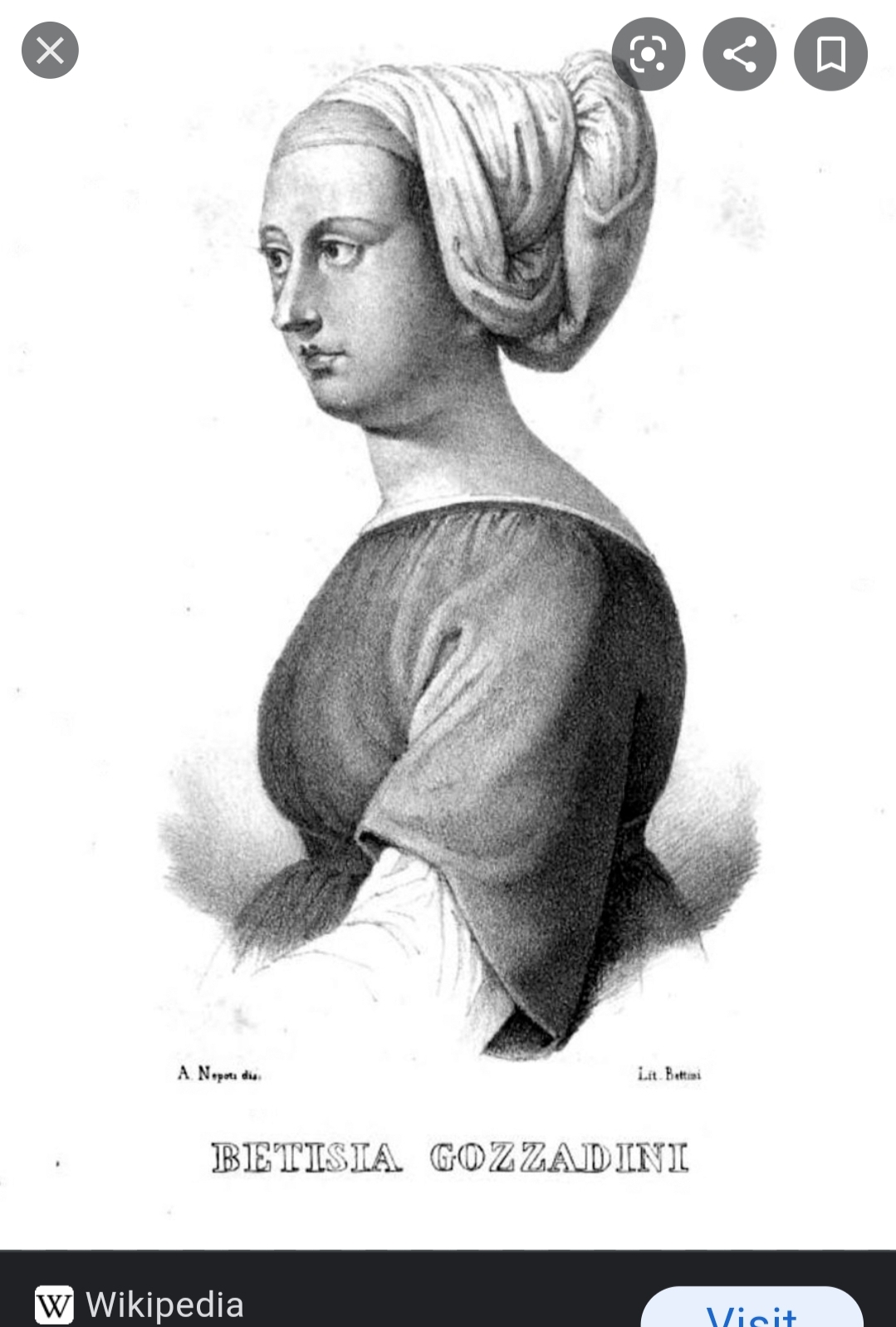
1158) Bettisia Gozzadini

Courtesy of Wikipedia

1158: Bettisia Gozzadini

First Known Woman to Have Taught at a University

Born: 1209, Bologna, Papal States (Present-day Bologna, Italy)

Died: 2 November 1261, Bologna, Papal States (Present-day Bologna, Italy)

Bettisia taught at the University of Bologna after obtaining a law degree. She was reportedly so skilled as an orator that she quickly outgrew her lecture hall and had to give speeches in crowded stadiums instead. When one of the most prominent members of Bolognese society died, Bettisia was asked to give his funeral eulogy.

According to Fulbright Year Italy (article linked below): According to reports, Gozzadini showed such intellectual promise from such an early age that scholars from the university approached her and encouraged her to earn a doctorate in law. Later, she turned down the university’s first offer to teach before finally agreeing to head her own studium. Unlike the feminist heroes of the 20th and 21st centuries, Gozzadini did not need to claw or “lean” her way into a man’s world; they practically begged her to join them.

However, things were not as easy as it might seem for her on the surface. Bettisia attended classes as a student dressed as a man, and after she became a teacher, she at first lectured from behind a curtain so as not to be a distraction to her students.

Bettisia died when her house on the riverbanks collapsed on her in a flood. The city was so stunned by her untimely death the entire community went into mourning, and lessons at the university were suspended for a day in order to honor her.

Today, Bettisia’s bust is held in a museum in Bologna. Hers is one in a series of several prominent Bolognese women from the 13th to 18th centuries.

Little else of Bettisia’s life story is known today, which is to be expected given how long ago she lived. Unfortunately this leaves many questions about Bettisia and her life which will most likely never be answered.

Sources:

https://fulbrightyearitaly.com/2014/11/10/bettisia-gozzadini-europes-first-female-legal-scholar/

https://www.brooklynmuseum.org/eascfa/dinner_party/heritage_floor/bettisia_gozzadini

https://en.wikipedia.org/wiki/Bettisia_Gozzadini

https://www.uh.edu/engines/epi378.htm

https://www.bologna-experience.eu/the-women-who-have-made-the-history-of-bologna/

1157) Cartimandua

Courtesy of Wikipedia

1157: Cartimandua

Queen of the Brigantes

Born: Unknown, Ancient Britannia (Present-day Britain, United Kingdom)

Died: After c.69 AD, Ancient Britannia (Present-day Britain, United Kingdom)

Also Known As: Cartismandua

The Brigantes were the biggest territorial tribe in Britannia, encompassing modern-day Yorkshire. Most of what we know about Cartimandua comes from the Roman author Tacitus. According to English Heritage, Cartimandua is the first documented queen to reign in part of the British Isles.

Cartimandua made several deals with Rome to keep the peace between the empire and her people. She ruled over her tribe from around 43 to 69 AD. She came to power around the same time as Rome overtook Britannia.

In 51 AD, another Celtic king led an uprising against the Romans. When his rebellion fell apart, this king and his family sought refuge among the Brigantes. Unfortunately for him, Cartimandua handed the king over to the Romans. Cartimandua’s people turned against her for this treacherous act.

Six years later, Cartimandua further angered her people by deciding to divorce her husband Venutius in favor of his armor-bearer, Vellocatus. Her ex-husband formed a rebellion against Cartimandua, and unfortunately for her, Venutius was much more popular with their people than she was.

The Romans sent cohorts in and defeated the Celts in order to protect Cartimandua, who was still, after all, their ally, even if her people were not in spirit. In 69 AD, after the death of Emperor Nero, Venutius launched another rebellion during the political upheaval rocking the Roman Empire.

Because of the political climate of Rome, they were unable to send the cohorts of troops Cartimandua requested. Instead, all they could send were auxiliary forces. Cartimandua fled to the newly built Roman fort in order to save her life, and unfortunately this is also where the queen fades from history.

Venutius briefly ruled over the Brigante people but was eventually ousted by the Romans.

The archaeological site of Stanwick is now believed to be the Brigantian capital from the time Cartimandua ruled (though this cannot be conclusively proven due to a lack of archaeological evidence bearing the queen’s name). The site covers just over a square mile in area and has produced numerous archaeological finds.

Sources:

https://www.historic-uk.com/HistoryUK/HistoryofEngland/Cartimandua-Cartismandua/

https://www.english-heritage.org.uk/learn/histories/women-in-history/cartimandua/

https://www.britannica.com/biography/Cartimandua

https://www.englishmonarchs.co.uk/celts_15.html

1156) Cynisca

Courtesy of Wikipedia

1156: Cynisca

Spartan Princess

Born: c.440 BC, Ancient Sparta (Present-day Sparta, Greece)

Died: Unknown

Also Spelled: Kyniska or Kyneska

Cynisca was also the first woman in history to win at the Olympic Games. She competed with a chariot drawn by four horses—notably, however, she did not physically compete as a driver. Cynisca was a breeder and owned the horses that raced. Because her horses won, technically, Cynisca won. She won in both the 396 BC and 392 BC games but was not actually present to see her horses racing as women were not permitted at the games.

According to the ancient author Pausanias, Cynisca’s name meant “Female Puppy”, a reference to her grandfather’s love of breeding bloodhounds. Cynisca was a tomboy from childhood and was an excellent horsewoman. She was also wealthy enough to own her own team of horses, as referenced above.

Cynisca was eventually given a statue in the temple of Zeus at Olympia as well as other honors throughout Ancient Greece. Very little else of her life is known, but the fact that her story has survived at all is a testament to her abilities and might as a woman.

In July of 2022, Cynisca Cycling launched as an innovative brand inspired by Cynisca of Sparta’s story. Their goal is to help empower female cyclists from the United States to win in events around the world.

Badges Earned:

Located In My Personal Library:

Arsinoe of Egypt and Macedon: A Royal Life by Elizabeth Donnelly Carney

Sources:

https://www.brooklynmuseum.org/eascfa/dinner_party/heritage_floor/cynisca

https://www.worldhistory.org/Cynisca_of_Sparta/

https://www.greekboston.com/culture/ancient-history/cynisca/

https://greekerthanthegreeks.com/2021/07/cynisca-of-sparta-the-first-woman-to-claim-victory-at-the-olympic-games-of-ancient-greece.html

  • Previous
  • 1
  • …
  • 6
  • 7
  • 8
  • 9
  • 10
  • 11
  • 12
  • …
  • 159
  • Next

Categories

Archives

  • July 2025 (10)
  • July 2024 (1)
  • January 2024 (1)
  • August 2023 (1)
  • June 2023 (2)
  • October 2022 (1)
  • July 2022 (1)
  • June 2021 (3)
  • December 2020 (3)
  • August 2019 (1)
  • July 2019 (2)

Search

© 2026 The Exasperated Historian | Powered by Minimalist Blog WordPress Theme