The Exasperated Historian
Menu
  • Home
  • The Women’s List (New)
  • The Men’s List
  • The Animal List
  • Collections
  • The Blog
  • Contact Us
  • FAQ
Menu

Category: Birth Locations

1193) Jeannie Rousseau

1193: Jeannie Rousseau de Clarens

World War II Spy

Born: 1 April 1919, Saint-Breuc, France

Died: 23 August 2017, Montaigu, France

Jeannie’s father was a World War I veteran and a politician in Paris. She graduated at the top of her class in 1939 and was known for being adept at languages. Soon after the Germans occupied France in 1940, she began passing information along to what became the French resistance.

Jeannie was arrested for the first time in 1941 but was released because of a lack of evidence. After her release from prison, she moved to Paris, and quickly became involved with the resistance there. Jeannie was a part of the Druids Network, and she delivered information on the building of V-1 and V-2 Rockets. Her code name was Amniarix.

In 1943, Jeannie was working as an interpreter for various French businessmen who were working with the German occupying force. Jeannie spoke fluent German, was young, and attractive—everything German officers loved.

“I teased them, taunted them, looked at them wide-eyed, insisted that they must be mad when they spoke of the astounding new weapon that flew over vast distances, much faster than any airplane. I kept saying, ‘What you are telling me cannot be true!’ I must have said that 100 times.” (quote courtesy of The Washington Post in 1998).

One dumbstruck officer went so far as to show her diagrams and drawings of the rockets in order to explain it to her better. Even though a lot of the details were far beyond what Jeannie could comprehend, she had a near photographic memory and was able to recite word-for-word what she heard from the officers, passing the information on to the French resistance.

The information Jeannie passed along helped British intelligence bomb the V2 rocket facility in Peenemünde. The destruction of the facility is believed to have spared thousands of civilian lives in London.

In 1944, Jeannie was supposed to be evacuated out of France in order to be debriefed in London. Unbeknownst to her, the day before she was supposed to be removed from France, her contact was arrested. When Jeannie arrived at the rendezvous point, she was arrested.

Jeannie was initially interrogated in the same prison she had been held in three years before, but after the Germans failed to get any intelligence from her, they sent her to Ravensbrück, the female concentration camp. After arriving at the camp, Jeannie gave her captors her real name, as opposed to the false name she had been arrested under. Because of this, her captors at Ravensbrück had no idea she was the famous spy they needed to interrogate.

Soon after, Jeannie was transferred with several hundred other prisoners to Torgau, where they were expected to manufacture weapons for the Nazis. Not willing to help the enemy, Jeannie walked right up to the camp commandant, and told him in flawless German, that under the Geneva convention Jeannie and her fellow prisoners of war could not be compelled to create weapons of war.

Evidently the commandant at Torgau didn’t want to deal with Jeannie, so she was sent back to Ravensbrück and then from there on to Königsberg. While she never said exactly what happened there, conditions were so bad Jeannie and two fellow prisoners decided to take their chances.

They smuggled themselves into the back of a truck, which took them back to Ravensbrück, where they fully expected to be murdered in the gas chambers. They laid low in the camp for awhile before they were caught.

Jeannie and her friends weren’t killed, but instead they were sent to another part of the camp, where they were forced to survive on half-rations, doing the hardest and most disgusting jobs in the camp.

In 1945, the Swiss Red Cross arrived at the camp with a list of prisoners they had secured the release of. Jeannie was among them. Good timing too because she was close to death from tuberculosis.

While recovering from her illness, Jeannie met a fellow survivor, whom she ended up marrying. They had two children and four grandchildren. Though she was known for her gift of languages in her youth, when Jeannie was interviewed in 1998, she said she had completely forgotten the German language.

Jeannie rarely spoke publicly about her exploits during the war and worked for the United Nations and other organizations as an interpreter. She was given several commendations by the French government, including the Legion of Honor and the Croix de Guerre. In 1993, she also received a medal from the director of the CIA.

In the same Washington Post article mentioned earlier, Jeannie also said:

"What I did was so little. Others did so much more. I was one small stone."

Badges Earned:

Find a Grave Marked

Sources:

https://www.nytimes.com/2017/08/29/world/europe/jeannie-rousseau-de-clarens-dead-french-spy-in-world-war-ii.html

https://www.washingtonpost.com/archive/politics/1998/12/28/after-five-decades-a-spy-tells-her-tale/8bfa5aae-5527-4eb5-8e45-878f1ec823fb/

https://www.smithsonianmag.com/smart-news/wwii-spy-jeannie-rousseau-has-died-98-180964677/

https://www.findagrave.com/memorial/183117578/jeannie-yvonne-de_clarens
1192) Anna Goldi

1192: Anna Göldi

The Last Person to be Executed for Witchcraft in Europe

Born: 24 October 1734, Senwald, Switzerland

Died: 13 June 1782 AD, Glarus, Switzerland

Anna was born into a very poor family at the bottom of the social ladder. She worked as a maid in various households from the age of fifteen, but despite her humble origins she was described as being fairly well educated for a woman of her day.

When Anna was thirty-one, she got pregnant with her first child. The father was a traveling mercenary and had left the country by the time their baby was born. Sadly, for Anna, the baby died when it was less than a day old. Because of the baby’s untimely death, (the child accidentally suffocated to death), Anna was accused of killing the child.

After being found guilty of killing her child, Anna was sentenced to six years’ house arrest in her sister’s home. Rather than accepting the punishment, Anna fled her village and moved to the larger town of Glarus.

While living in Glarus, Anna began to work for the wealthy Zwicky family. She also became pregnant by the family’s adult son and gave birth to a baby boy. What happened to the baby is unknown, but Anna was socially ostracized for the affair. Even though the father of the baby wanted to marry her, this was not possible because of their differing social statuses.

Because of the affair, Anna moved on and began to work for other families, eventually finding herself in the employ of the Tschudi family. After working for the family for a time, Anna was eventually accused of putting needles in one of the daughters’ milk (this was a sign of witchcraft at the time). Anna was forced to quit her job and was highly encouraged to leave town.

Eighteen days later, another daughter became ill and vomited pins and other pieces of metal. Anna had left the household over two weeks before, but she was still the main suspect, and Mr. Tschudi publicly claimed that Anna had cursed his daughter.

Anna was arrested and put on trial for poisoning the girl (interestingly, she was never actually accused of “witchcraft” even though she was widely seen as using the craft to poison Mr. Tschudi’s daughter). The vast majority of witnesses who testified were friends of the Tschudi family. Anna initially claimed innocence, but after being tortured several times, she finally broke and admitted she had cursed the girl with the Devil’s help. Anna was found guilty and sentenced to death.

She was beheaded, not burned at the stake, as most people tend to believe when hearing “executed for witchcraft.”

Today, historians speculate that Mr. Tschudi (as an educated elite) was fully aware of the fact that “witches” (like the Europeans had believed in in previous centuries) were not real. By the time of Anna’s death, Europeans as a whole no longer believed in witches, witchcraft, or anything of the sort—which made Anna’s trial and execution that much more astounding. From a modern perspective, it seems more likely that Mr. Tschudi simply wanted to get rid of Anna, and the only reason it was possible was because of his prominence in the local community.

It has been speculated that Mr. Tschudi wanted to get rid of Anna because they had had an affair. It has been thought that Anna was threatening to reveal their relationship to the public, and Mr. Tschudi feared for his up-and-coming political career. After she was dead, he had a document drawn up denying they had ever had any kind of physical affair.

In 2008, the Glarus government exonerated Anna of any wrongdoing, finally clearing her name completely.

In 2017, a museum was opened in her honor to help exonerate Anna and tell her true-life story. The museum is also dedicated to further exploring and educating those about witch trials in Europe.

Anna has been memorialized in a novel, on film, and on stage, all of which has kept her memory alive and in the public consciousness.

Badges Earned:

Find a Grave Marked

Located In My Personal Library:

Magic and Witchcraft: An Illustrated History by Ruth Clydesdale

The Witch Hunt in Early Modern Europe by Brian P Levack

Sources:

https://www.swissinfo.ch/eng/business/last-witch_-anna-goeldi-was-like-a-wild-horse-impossible-to-catch/43451512

https://www.smithsonianmag.com/smart-news/last-witch-executed-europe-gets-museum-180964633/

http://scihi.org/last-condemned-witch-anna-goeldi/

https://www.findagrave.com/memorial/22265939/anna-göldi

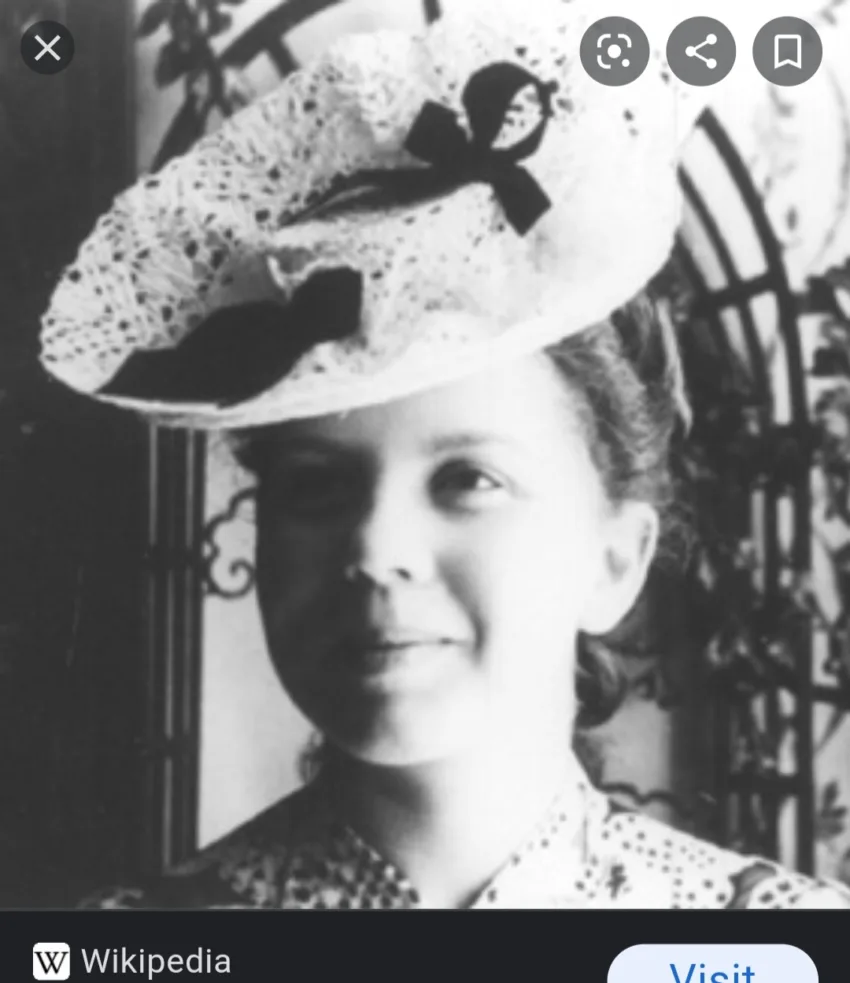
1191) Claire Phillips

1191: Claire (Phillips) Snyder

Subject of the 1951 Film “I Was an American Spy”

Born: 2 December 1907, Grand Rapids, Michigan, United States of America

Died: 22 May 1960, Portland, Oregon, United States of America

Original Name: Mabel Clara Dela Taste

Before the war, Claire was a stage actress and singer. She had two sisters and moved to Portland with her family as a child. Claire dropped out of high school in order to pursue her stage career. After joining the Baker Stock Company, Claire traveled to Manila in the then-American-occupied Philippines. After her tour ended, she decided to stay in Manila. It was during the early days there that Claire married for the first time to a Filipino merchant mariner. The marriage didn’t last, but she did adopt a baby girl around this time.

In December 1941, the Japanese Imperial Army occupied the Philippines. Claire, her daughter, and her then-fiancé fled with the American army towards the Bataan peninsula. The couple married soon afterward but were separated after her husband was captured by the Japanese.

Claire decided to become a spy for the Americans after witnessing the brutality of the Bataan Death March. In order to gather intel, Claire opened a fabulous nightclub for Japanese officers. Sadly, her husband would die while being held as a Prisoner of War.

According to the Oregon Encyclopedia (article linked below):

“After Sergeant Phillips died in Cabanatuan, Claire Phillips began smuggling medicines, food, money, and morale-building news to prisoners of war, saving many and giving hope to others. The contraband was paid for unknowingly by those who patronized her nightclub, Club Tsubaki.”

Claire employed several attractive women to serve as hostesses in the club. They would gather intelligence on troop deployments and other information from the Japanese officers they were serving and plying with alcohol.

Claire’s nickname was “High Pockets” (supposedly because she carried her valuables in her bra). She would hand the information she gathered over to guerilla fighters, who would radio the information to General Douglas MacArthur’s camp.

In May of 1944, the intelligence ring was uncovered, and Claire was arrested. She was subjected to numerous forms of torture, including being beaten, burned with cigarette butts, waterboarded, and even subjected to a mock beheading.  Claire refused to break, however, and instead would only give the names of guerilla fighters she knew had already died or had moved on from the area. She was sentenced to death in November of that year.

Luckily her execution was delayed, and in February of 1945 Americans liberated the prison. Claire was released, but her torture was so profound she only weighed eighty-five pounds after being kept captive for nine months. She was reunited with her daughter soon after.

Claire returned home to Portland with her daughter after her liberation, and wrote a memoir entitled Manila Espionage, which was published in 1947.

Claire received the Presidential Medal of Freedom the following year, the highest award that can be bestowed upon a civilian in the United States. In April of 1950, government officials in Oregon gifted her a new home in Beaverton as thanks for her work during the war. The next year, the Hollywood film “I was an American Spy” was released—which had been based on her memoir. Claire went on a press tour for the film and worked as a technical advisor on it as well.

Sadly, Claire passed away unexpectedly at age fifty-two from meningitis. She had also suffered from Post-Traumatic Stress and had been an advocate for liberated military prisoners.

According to 1859 Oregon’s Magazine (article also linked below):

“In the United States Embassy in Manila, a life-sized portrait of “High Pockets,” faithfully rendered in oil, adorns the Claire Phillips Room, a meeting place for visiting dignitaries. Fittingly, it adjoins the room where generals were convicted of war crimes for atrocities in Manila.”

In 2017, a memorial to Claire was created and dedicated in Oregon’s capital city, close to the World War II memorial.

Badges Earned:

Find a Grave Marked

Source:

https://www.oregonencyclopedia.org/articles/phillips_claire/

https://oregoncapitolfoundation.org/project/claire-phillips-memorial/

https://1859oregonmagazine.com/think-oregon/art-culture/claire-phillips/

https://www.portlandtribune.com/opinion/columnists/offbeat-oregon-portland-woman-ran-american-spy-ring-in-occupied-manila/article_dc61bd88-4e8d-11ee-9b27-d7c38e6dceb0.html

https://www.findagrave.com/memorial/89746045/claire-maybelle-phillips

1190) Carol McCain

1190: Carol McCain

Former White House Visitor’s Office Director

Born: 1938, Lansdowne, Pennsylvania, United States of America

Carol attended college at the Centenary Junior College for Women in New Jersey.

She also worked as a model.

Carol had two children with her first husband*, however, she is best known for being the first wife of John McCain. With John she had a daughter, Sidney (he also adopted her two sons). While John was serving in the Vietnam War, Carol raised her three children as a single mother. After her husband was taken captive, Carol become very active in the POW/MIA movement.

In 1969, Carol was in a horrendous car accident that almost killed her. After two years and numerous surgeries, Carol’s mobility was permanently damaged, and she was four inches shorter than she had been before the accident.

Wikipedia goes into more detail about the accident, describing it thusly:

“While visiting family and friends in the Philadelphia area on Christmas Eve 1969, McCain skidded and crashed into a telephone pole as she was navigating an icy, snowy, isolated portion of Pennsylvania Route 320 near Gulph Mills, Pennsylvania, driving alone.[3] She was thrown from her car into the snow, going into shock;[7] she thought she would never be seen and would die there.[3] Hours later she was found and taken to Bryn Mawr Hospital.[7] She suffered two smashed legs, a broken pelvis, broken arm, and a ruptured spleen.[3] She spent six months in the hospital and underwent 23 operations over the following two years in order to rebuild her legs with rods and pins, and had extensive physical therapy.[6][20] During this time, her daughter stayed with her parents in Landsdowne while her sons stayed with friends in Florida.[3]”

Her medical bills were paid for by politician Ross Perot. Carol did not tell her husband about the accident in the letters she wrote to him because she thought he already had enough to worry about as a POW.

After the Vietnam War ended, Carol and John became good friends with another power couple, Ronald and Nancy Reagan. Carol became Nancy’s personal assistant, and helped campaign for the Reagans as Ronald ran for president in the 1980 election. After he won, Carol became the director of the White House Visitor’s Office and organized the Inaugural Ball. She also managed many of Reagan’s private and public social events during their time in office.

In 1987, Carol left the White House in order to become programming director of We the People 200, inc. The group was focused on celebrating the United States 200th anniversary of adopting the Constitution. By 1990 she had become a spokesperson for the event-planning company Washington Inc.

Carol and John divorced in 1980 because of John’s affair with his better-known next wife, Cindy (who was eighteen years younger than John). “John and Cindy obtained a marriage license in Arizona in early March 1980, four weeks before his divorce from Carol was final. They married six weeks later, on May 17,” (quote courtesy of People Magazine, article linked below).

Ross Perot, the man who had paid for Carol’s medical bills following her accident, had this to say about their divorce:

"After he came home, he walked with a limp, she [Carol McCain] walked with a limp. So he threw her over for a poster girl with big money from Arizona [Cindy McCain] and the rest is history."[23] (Quoted from her Wikipedia article).

When asked about it years later, Carol said this experience broke her heart. She said she was “blindsided” by it all and that she believed John’s attraction to Cindy was partly due to him wanting to be “young again.” Carol didn’t want the divorce and still loved her husband deeply at the time. One of her sons stated in an interview that the entire family was shaken up by the affair, but that in hindsight the signs were there because of the extremely high rates of divorce among people who used to be held as Prisoners of War.

As the years went on, the entire family healed from the trauma of the divorce and moved on. All three of Carol’s children became close to Cindy and remained close to John. Carol also seems to have moved on and let bygones be bygones.

She retired in 2003 and has stayed relatively out of the spotlight ever since. Carol did campaign from the sidelines for John’s 2008 presidential campaign, however.

*Sadly, if Wikipedia is to be believed, Carol and her first husband divorced because he was also unfaithful to her.

Sources:

https://www.lifestories.org/interviewees/carol-mccain

https://people.com/politics/john-mccain-daughter-sidney-first-wife-discuss-divorce/

https://en.wikipedia.org/wiki/Carol_McCain

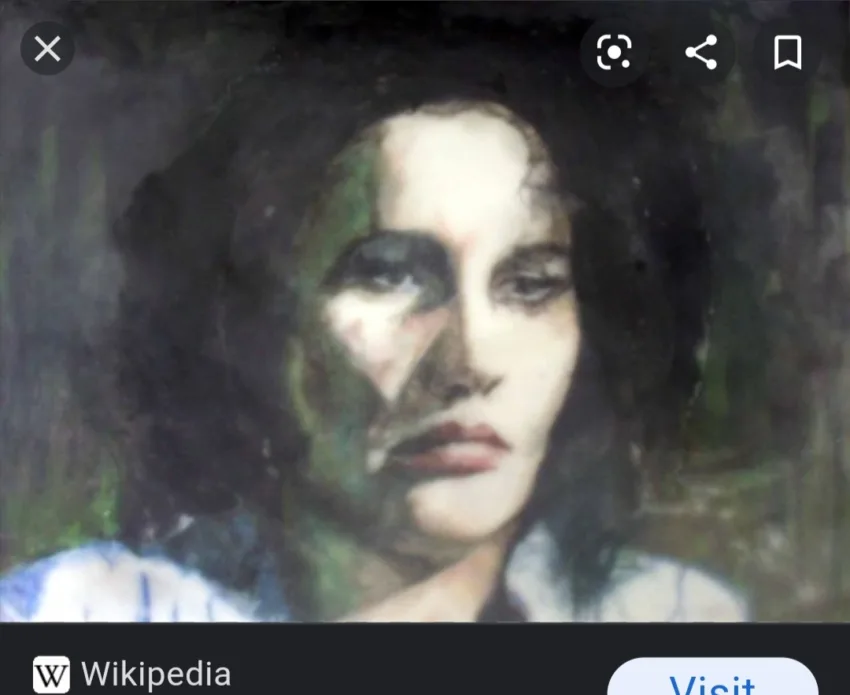
1189) Hipparchia

1189: Hipparchia of Maroneia

Greek Philosopher

Born: c.340-330 BCE, Maroneia, Thrace, Ancient Greece (Present-day Maroneia, Greece)

Died: c. 280 BCE, Athens, Ancient Greece (Present-day Athens, Greece)

She is known for being drawn to the Cynic lifestyle, one of the few women to study philosophy in Ancient Greece. While little biographical information about her early life survives, it is thought that she was born to a prosperous and wealthy family who may have been involved in the production of wine. Instead of choosing to become a wealthy wife and mother, as was expected of her, Hipparchia instead became a follower of the Cynic lifestyle in her early teens, and may have been introduced to it by her brother who was also a Cynic.

She was married to Crates the Cynic, a fellow philosopher and proponent of the Cynic lifestyle, which dictated they purposefully lived in poverty. While she was famous for her marriage, she was also, supposedly, infamous for it as well because she consummated the marriage in public. Some ancient sources indicate they had either one or two children together.

According to the Internet Encyclopedia of Philosophy:

“The story of Hipparchia’s Cynic marriage quickly became the premiere example of that virtue, which is based on the Cynic belief that any actions virtuous enough to be done in private are no less virtuous when performed in public.”

Evidently Hipparchia was very young, while Crates was much older, when they married. According to one source, the marriage only took place because Hipparchia threatened to kill herself if Crates refused to marry her. The couple, and their children, lived as homeless wanderers in the streets of Athens, promoting the Cynic lifestyle to others as they did so. The ancient sources state that Hipparchia raised her son according to her views on life. His cradle was a hard tortoiseshell, he was bathed in cold water, and her son was given just barely enough food to survive. Hipparchia and her husband begged for every drop of food they consumed and wanted their son to follow their teachings. No source data survives on how Hipparchia raised their daughter (shocking, I know) but given what we know about Hipparchia and her convictions, she most likely raised her daughter exactly the same as her son.

No writings that have been proven to be written by Hipparchia survive today, but what is known is that she challenged traditional gender roles and also was a big influence on her husband’s life and writings. While getting married went against the Cynic lifestyle, Hipparchia’s marriage to Crates was a way for the couple to showcase a new role for women in marriage and also advertise, for lack of a better term, the Cynic lifestyle to a wider audience.

It is believed Crates died first, and Hipparchia took over his teachings and school after his death in order to keep the message going. Some sources go on to state that Hipparchia died later the same year. If so, she did not lead his school for long, but the very fact that she did at all is groundbreaking for her time period.

The only piece of writing that has survived to present-day, that may have been written in part by Hipparchia, is the epigram that supposedly marked her tomb. The Roman poet Antipater of Sidon wrote the following, which he claimed was written on her tombstone:

“I, Hipparchia, have not followed the habits of the female sex

But with manly courage, the strong dogs – the Cynics.

I have not wanted the jewel on the cloak nor bindings for my feet

Nor head ties scented with ointment; rather a stick, bare feet, and

Whatever covering clings to my limbs, and hard ground instead of a bed.”

The epigram supposedly ended with the line “My name shall be greater than Atalanta, for wisdom outshines mountain running”—which alludes to the mythological figure Atalanta, who was a huntress known for her running prowess. Atalanta is also remembered for living her life according to the way she wanted, not the role men tried to bestow upon women in Ancient Athens.

Hipparchia’s name is listed as a part of Judy Chicago’s “The Dinner Party” art installation.

Badges Earned:

Located In My Personal Library:

“Goddesses, Whores, Wives, and Slaves: Women in Classical Antiquity” by Sarah B Pomeroy

Sources:

https://iep.utm.edu/hipparch/

https://www.worldhistory.org/Hipparchia_of_Maroneia/

https://www.worldhistory.org/article/121/hipparchia-the-cynic-devoted-wife-mother--outspoke/

https://www.brooklynmuseum.org/eascfa/dinner_party/heritage_floor/hipparchia

1188) Erinna

1188: Erinna of Telos

Ancient Greek Poet

Lived: c. 4th Century BC, Telos, Ancient Greece (Present-day Tilos, Greece)

Also Known As: Herinna

Erinna is most remembered for her long-form poem entitled “The Distaff” which is a lament on the loss of her friend. While the original work is supposed to have been 300 lines long, sadly today the poem survives in fragments (with sources claiming anywhere from four to fifty-four lines survive). She may also have written a poem entitled “The Tortoise and the Mirror,” as well as several other shorter works as well.

There is very little information about Erinna surviving on the internet today. Her name is found on Judy Chicago’s famous “Dinner Party” art installation and is therefore listed on the Brooklyn Museum of Art’s website about the art installation, and she also has one of the most well-sourced and fleshed out Wikipedia articles I have ever seen for an ancient person, so I have linked that article below as well.

According to several sources, Erinna was a contemporary and friend of the most-famous Ancient Greek Female Poet, Sappho, but whether or not this is true is unverifiable. Because of the contradictory nature of ancient sources, various sources list Erinna as having been born anywhere from the 600s to the 400s BC, and that she could have been born on any number of ancient Greek islands, including Telos and Lesbos. Most historians usually attribute her birthplace to Telos because of the Doric dialect her poems are written in, but this is far from a conclusive theory.

Historians have also speculated she died around the age of nineteen, because the writing in the Distaff seems to indicate she was nineteen at the time of writing it—however again this does not necessarily indicate she died at nineteen, soon after her famous poem was written.

All we really know about Erinna is that she was widely lauded for her poetry during Antiquity, and that she was Greek. Hopefully someday more information about her is uncovered, but for now, her life is a bit of a mystery.

Sources:

https://www.britannica.com/biography/Erinna

https://www.brooklynmuseum.org/eascfa/dinner_party/heritage_floor/erinna

https://en.wikipedia.org/wiki/Erinna

1187) Phile

1187: Phile of Priene

The First Woman Elected as Magistrate in Priene, Ancient Greece

Lived: c.100-50 BC, Priene, Ancient Greece (Present-day Güllübahçe, Aydın, Turkey)

Greek Alphabet: Φίλη

Phile personally paid for the city’s aqueduct and reservoir, which is how she was elected as a magistrate (or local judicial officer). Historians know she was a real person because a monument was erected in her honor, with her name inscribed on it.
According to Attalus.org, the inscription (translated to English) reads in full:

“[Phil]ē daughter of Apollonios, the wife of Thessalos the son of Polydeukes, who was the first woman to have served as stephanephoros, dedicated from her own resources the reservoir of water and the aqueducts in the city.”

There is very little information about Phile surviving on the internet today. Her name is found on Judy Chicago’s famous “Dinner Party” art installation and is therefore listed on the Brooklyn Museum of Art’s website about the art installation, but that’s about all the information for her out there.

The ancient city of Priene was listed as a UNESCO World Heritage Site in 2018.

Sources:

https://www.brooklynmuseum.org/eascfa/dinner_party/heritage_floor/phile#:~:text=Flourished%20circa%2050%20B.C.E.%2C%20Priene,monument%20erected%20in%20her%20honor.

https://www.attalus.org/docs/other/inscr_174.html

https://en.wikipedia.org/wiki/Phile_(politician)

1186) Cleopatra Thea

1186: Cleopatra Thea

Queen of the Seleucid Empire

Born: c165 BCE, Ancient Egypt (Present-day Egypt)

Died: c121 BCE, Ancient Seleucid Empire (Present-day Syria)

Also Known As: Cleopatra Euteria

Greek Alphabet: Κλεοπάτρα Θεά

Cleopatra Thea was the daughter of Ptolemy VI and Cleopatra II of Egypt. She was most likely the older sister of Cleopatra III. Because of her, the Ptolemaic and Seleucid empires were linked through blood and marriage bonds both. Her three husbands were back-to-back rulers of the Seleucid Empire, and by the end of her life she ruled as both queen regnant in her own right, as well as co-monarch of the empire with her son.

Cleopatra Thea was first married to Alexander Balas, her second husband was Demetrius II Nicator, and her third was Antiochus VII Sidetes. As mentioned, her husbands ruled as successive kings to the Seleucid throne, largely because of Cleopatra’s help (or her family’s in any case). Also important to note is the fact that her second and third husbands, Demetrius and Antiochus, were brothers.

Cleopatra was given to Alexander Balas as a wife by her own father, Ptolemy VI. However, within a few years it was clear Alexander would rather drink, party, and be irresponsible than actually rule his empire. As a result, Cleopatra’s father dissolved their marriage and gave her instead to Demetrius, who was a few years younger than Cleopatra but was much more popular and a better ruler. A war over the Seleucid Empire followed this decision. The war eventually led to the death of Cleopatra’s father, who died after falling from his horse after a battle.

Right before Ptolemy VI died, he learned that his former son-in-law, Alexander, had been murdered by his own troops. Unfortunately, despite both Ptolemy and Alexander now being dead, the war continued between Demetrius (Cleopatra’s new husband) and her son Antiochus (whom she had had with Alexander). Antiochus was able to secure the Seleucid throne for a time, but a few years later Demetrius was able to have Antiochus (who was technically his stepson) murdered.

Unsurprisingly, Cleopatra was not too enthused by the fact that her second husband had helped kill her first husband and her firstborn child. While Demetrius was busy causing trouble, Cleopatra moved against him. She married his younger brother (also named Antiochus—confusing I know) and that third husband was finally able to restore some peace and stability to the Seleucid throne.

While this relative stability lasted for a few years, it eroded fairly quickly. To explain all of the political mumbo-jumbo from the time would make this article way too long and confusing, so all you really need to know is that Cleopatra’s second and third husbands continued to fight over the Seleucid throne (and remember, they were also brothers which didn’t help the situation either). In the midst of the fighting, Antiochus (hubby number three) was killed, leaving control of the Seleucid throne up in the air again.

As a result, Cleopatra and her second husband, Demetrius, both tried to claim control of the throne and kingdom, sparking yet another war. Normally, one or both sides of a war happening around that part of the world at the time would seek help from Ancient Egypt, one of the most powerful players on the world stage. Egypt did indeed get involved in the Seleucid struggle for the throne, but not in the way one would think.

After all, Cleopatra was originally from Egypt, and her mother was still queen of that empire. But instead of taking her daughter’s side, Cleopatra II sided with her former son-in-law, Demetrius, because of her own dynastic struggle for the Egyptian throne.

That’s right. At the same time Cleopatra Thea was trying to take the Seleucid throne, her own mother was fighting with her brother/husband, Ptolemy VIII, for control of the Egyptian throne.

And you thought world politics today were confusing.

But wait—it gets even MORE confusing. Soon after our Cleopatra’s mother sided against her, her husband Demetrius was murdered by a local governor for the town he was staying in (the governor killed him after Cleopatra ordered the governor to do so). Once Cleopatra’s son learned his own mother had had his own father murdered, he decided he wasn’t too jazzed with his mom anymore. As a result, this son claimed the Seleucid throne for himself.

Cleopatra then decided she wasn’t all that maternally attached to her son after all and had him killed. (According to Encyclopedia.com, Cleopatra actually killed him with her own hands).  For a little less than a year, Cleopatra ruled the Seleucid Kingdom as queen regnant, but realizing that yet another man was vying for her throne, she quickly raised one of her other sons to the position of co-monarch. Soon after, she married her son to her own, Egyptian, niece (Cleopatra Tryphaena)*.

Her son was able to kill off the other man jockeying for control of the Seleucid throne, and for a few years there was peace, albeit a strenuous one. Cleopatra’s son soon grew tired of his mother having equal control of the empire and he—you guessed it—had her murdered, poisoned more specifically. Her son claimed that he had forced his mother to drink the cup of poison that she had intended for him. If that’s true, it meant Cleopatra was actually attempting to kill another of her sons, only this one got the drop on her first.

After Cleopatra’s death, her son continued to rule for a time, bringing peace and prosperity to the empire. However, once again, this would not last. After eight years, another of Cleopatra’s sons would return to fight for the throne, and a new civil war was sparked.

For those interested in the names of her children, Cleopatra had the following: a son named Antiochus VI with her first husband, sons Antiochus VIII Philometor Grypus and Seleucus V, and a daughter Laodice Epiphanes with her second husband, and another son named Antiochus IX Philopator Cyzicenus with her third husband.

She may not have been the world’s greatest wife or mother, but Cleopatra was Thea was definitely a cunning, politically savvy monarch to say the least. While not nearly as famous as the later Cleopatra VIII, Cleopatra Thea made her own impact on the world two hundred years earlier.

*In case you’re wondering, in the ancient world parents were even less creative when naming their children than some parents today. Looking at a family tree of the Ptolemaic empire in Egypt is one long intertwining list of “Cleopatra” “Berenice” and “Ptolemy”, over and over again!

Sources:

https://www.encyclopedia.com/women/encyclopedias-almanacs-transcripts-and-maps/cleopatra-thea-c-165-121-bce

https://www.livius.org/articles/person/cleopatra-thea/

https://kids.kiddle.co/Cleopatra_Thea

1185) Arsinoe II

Ancient World Magazine

1185: Arsinoë II Philadelphus

Queen of Thrace, Asia Minor, & Macedonia

Born: c.318-314 BCE, Most-Likely Memphis, Ptolemaic-Controlled Ancient Egypt (Present-day Mit Rahineh, Egypt)

Died: c.270-268 BCE, Alexandria, Ptolemaic-Controlled Ancient Egypt (Present-day Alexandria, Egypt)

Arsinoë was the daughter of Ptolemy I and Berenice I, the first Ptolemaic couple to rule over Egypt after the death of Alexander the Great.

Arsinoë was married three times in her life. When she was married to Lysimachus, she was queen of Thrace, when she married Ptolemy Ceraunus she became queen of Macedonia, and when she was married to Ptolemy II is when she may have been co-ruler of Egypt, though this is contested by some historians.

When Arsinoë was a teenager, she was married off to Lysimachus, a man who was already in his fifties or sixties, and had been a childhood friend of both her father (Ptolemy I) and Alexander the Great. The couple had three sons together, and the marriage was likely made to solidify political and dynastic alliances between Lysimachus and his territory, and that of Arsinoë’s father and their territory. This was done to protect Lysimachus and Ptolemy’s land holdings against that of Seleucus I Nicator, who controlled the Seleucid Kingdom (present-day Syria and Iran) at the time.

While there is some documentation to prove that Lysimachus granted various cities and land holdings to his wife during their marriage, what this actually meant in terms of Arsinoë’s political power is up for debate. Royal women of her period were often granted lands, but usually only symbolic power was attached, along with the money earned from the property.

After Lysimachus was killed in battle, Arsinoë briefly married her half-brother Ptolemy Ceraunus for political reasons and became his queen. At the time, Ptolemy Ceraunus was ruling over Macedonia and only wanted to marry Arsinoë to strengthen his own political ambitions. Arsinoë was suspicious of her new husband’s motivations, and sure enough, he had her two younger sons executed almost immediately after the wedding.

Arsinoë fled from her husband’s court and eventually made her way to Alexandria, where her other brother was ruling Egypt. Her oldest son (and only survivor) tried to gain control of the Macedonian throne from Ptolemy Ceraunus but never quite managed it. Ptolemy Ceraunus was eventually killed in battle as well. Now that she was once again single, Arsinoë wasted little time and married Ptolemy II Philadelphus.

While some of the Greek citizenry objected to the siblings marrying, Ptolemy II and Arsinoë began to align themselves with other brother/sister wedded pairs, like Osiris and Isis and Zeus and Hera, in order to gain public approval for their wedding.

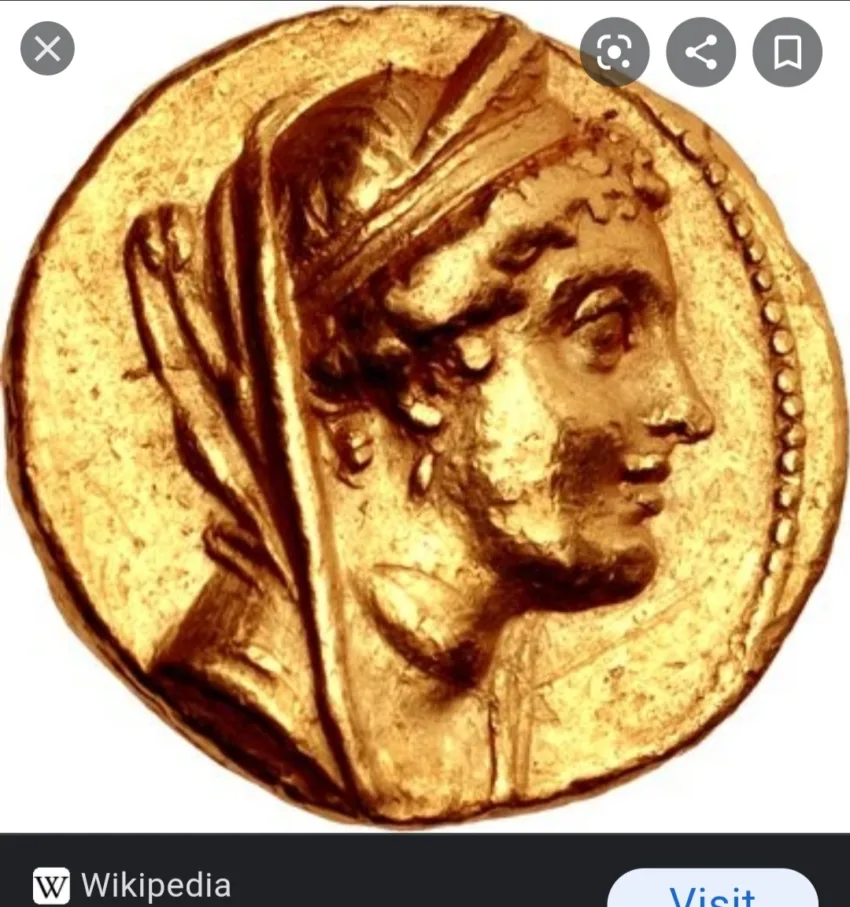
Soon after the wedding, Arsinoë began taking steps to solidify her own power alongside that of her husband. The Egyptian army soon defeated the Seleucid forces after a plague broke out in Babylon. Arsinoë also appeared on coins alongside her husband (some of which show her wearing Egypt’s Lower crown) and shared his pharaonic titles, all of which suggests she did wield some power in Egypt. She adopted her husband’s children from his first wife and began to appear in deified form as well—leading some historians to believe Arsinoë herself was deified, either before or after her death. Some have even gone so far as to credit her with completing the Alexandrian Museum, which housed the famous Library of Alexandria (though this is also disputed by some). Various provinces and cities across the ancient world were named in her honor, and a cult was established after her death as well.

According to the World History Encyclopedia, some of the titles granted to Arsinoë while she was still alive included:

“Mistress, Magnanimous,” “Lady of Loveliness, Sweet in Love,” “Beautiful of Appearance, Who Fills the Palace with Her Beauty,” “Who Has Received the Cobras of the Two Crowns,” “Beloved of the Ram, Who Serves the Ram” [of Mendes], “Royal Sister,” “Great Wife of the King [Ptolemy II], His Beloved,” “Queen of the Two Lands,” “Royal Daughter of the King of the Two Lands, Ptolemy [I], the Goddess Who Loves Her Brother.”

Titles such as these would not be granted to another, living, Egyptian royal woman until Cleopatra VIII almost three hundred years later. When she died, Arsinoë hadn’t yet reached her fiftieth birthday, and yet in her short life she accomplished so much, especially for a woman of her time. Her image has survived on multiple statues, coins, and other inscriptions throughout the ancient world. In modern-day, Arsinoë’s name appears in Judy Chicago’s art installation “The Dinner Party” near Boudicca’s name.

According to the online Britannica entry on Arsinoë’s life, she is found in the following Antiquity-era sources:

“Various—and sometimes contradictory—accounts, or references to, the life of Arsinoe are found in the writings of Pausanias, Memnon (by way of Nymphis), Strabo, Polybius, Plutarch, Polyaenus, and Justin.”

Badges Earned:

Located In My Personal Library:

Arsinoë of Egypt and Macedon: A Royal Life by Elizabeth Donnelly Carney

The Pharaohs by Joyce Tyldesley

When Women Ruled the World: Six Queens of Egypt by Kara Cooney

Sources:

https://www.britannica.com/biography/Arsinoe-II

https://www.worldhistory.org/Arsinoe_II_Philadelphus/

https://www.livius.org/articles/person/arsinoe-ii/

https://www.brooklynmuseum.org/eascfa/dinner_party/heritage_floor/arsinoe_ii

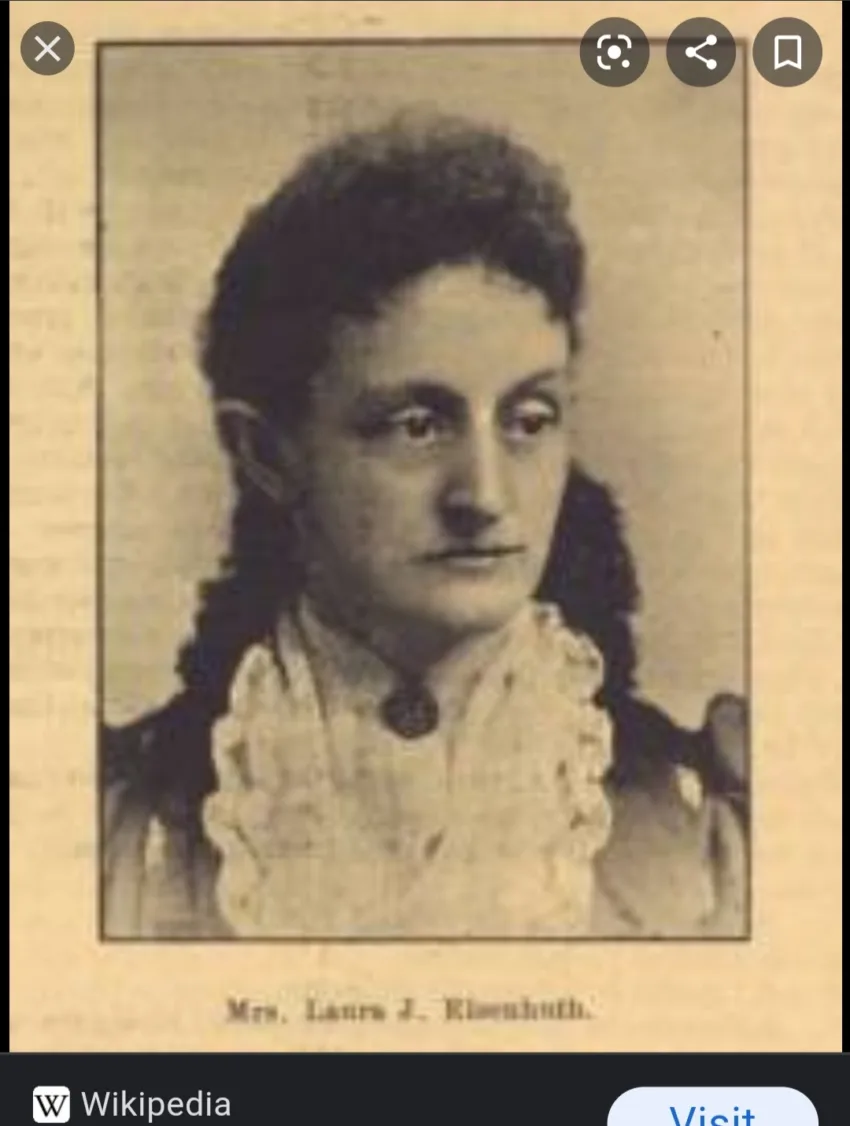
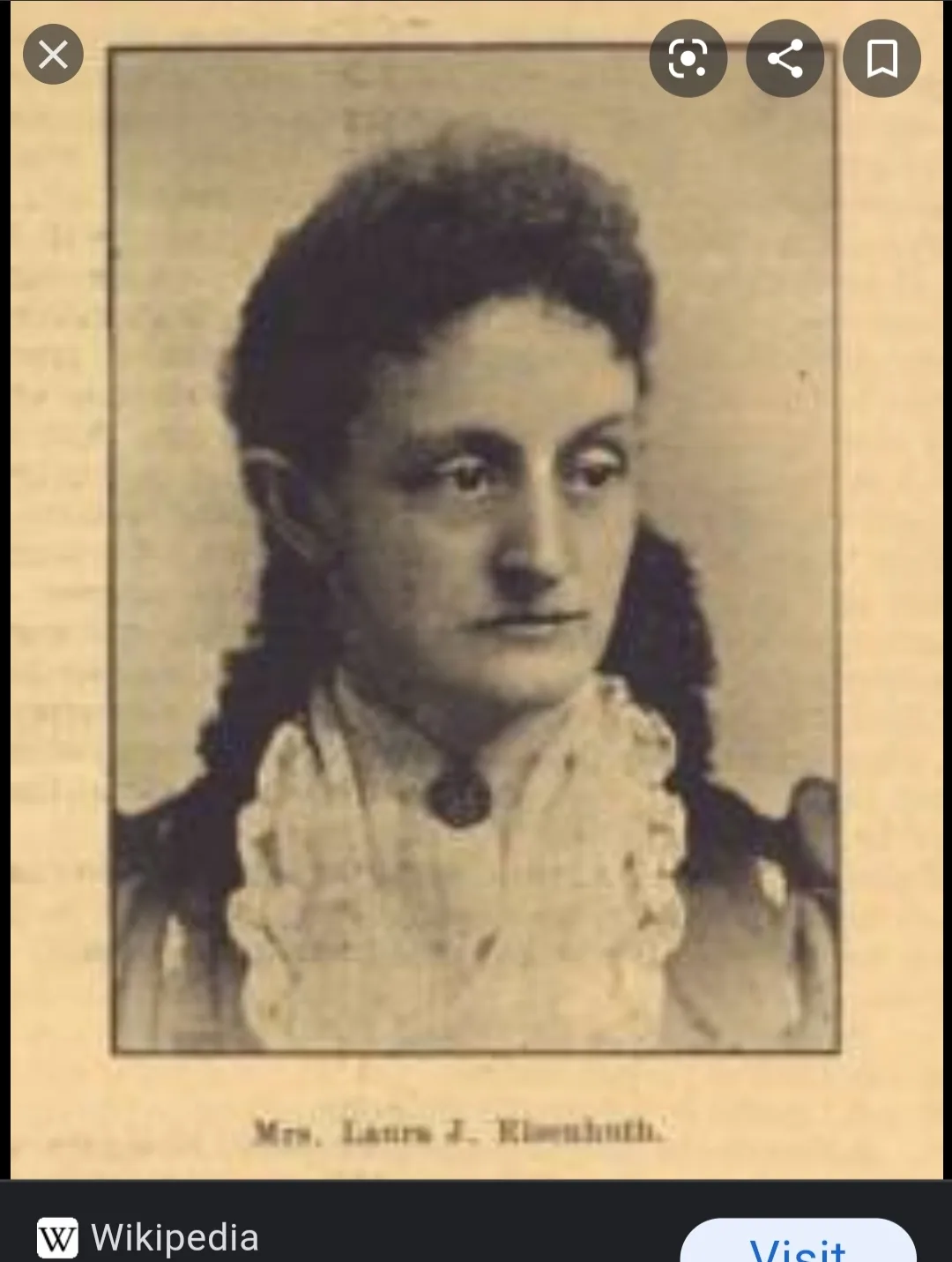
1184) Laura Eisenhuth

Courtesy of Wikipedia

1184: Laura Eisenhuth Alming

The First Woman to Win an Election for State Office in the United States

Born: 29 May 1859, Blenheim, Ontario, Canada

Died: 20 September 1937, Medford, Oregon, United States of America

Laura was elected Superintendent of Public Instruction in North Dakota in 1892. She ran for office once again in 1894.

When Laura was a young toddler, her family moved to Iowa in the United States. She went on to earn some college credits before starting a job as a teacher at a local high school.

In the summer of 1885, Laura moved to what was then the Dakota Territory in the Northern United States. Laura laid claim to a deed of land that totaled 160 acres. For the next two years, Laura taught in Iowa during the school year but spent her summers in what is now North Dakota.

Laura’s first husband was also a teacher, but he moved to the Dakota Territory to open a drugstore instead of teaching. Around this same time, Laura began teaching in the Dakota Territory. Her first year she had eighty students in a one-room schoolhouse. Luckily for her, the town hired an assistant for her the next year.

In 1889, she was elected Superintendent of Public Instruction for Foster County. During her time in that office, Laura oversaw the creation of several institutions for teacher-training, in the hopes of improving the public education system in the county.

When Laura was elected to state office in 1892, women in North Dakota could only vote on school-related issues. Laura was a champion for further training for teachers, as well as improving hygiene within the schools and adding fencing to school curriculum.

Laura’s husband became very ill, and Laura resigned her position as Superintendent in order to care for him further. She became a teacher and later assistant principal at a local high school instead.

Laura’s husband passed away in 1902. Five years later, Laura remarried and moved with her new husband to Oregon, where she spent the rest of her life in relative quiet.

Badges Earned:

Find a Grave Marked

Sources:

https://chalkboardchampions.org/north-dakotas-laura-eisenhuth-alming-teacher-pioneer-politician/

https://herhat.historyit.com/items/view/project/1132/search

https://cawp.rutgers.edu/node/3105

https://www.findagrave.com/memorial/58191141/laura-j-eisenhuth_alming

  • Previous
  • 1
  • …
  • 3
  • 4
  • 5
  • 6
  • 7
  • 8
  • 9
  • …
  • 159
  • Next

Categories

Archives

  • July 2025 (10)
  • July 2024 (1)
  • January 2024 (1)
  • August 2023 (1)
  • June 2023 (2)
  • October 2022 (1)
  • July 2022 (1)
  • June 2021 (3)
  • December 2020 (3)
  • August 2019 (1)
  • July 2019 (2)

Search

© 2026 The Exasperated Historian | Powered by Minimalist Blog WordPress Theme