These are the entries that were born in the African country of Mozambique.
Entries:
- Tyke the Elephant, Circus Performer

These are the entries that were born in the African country of Mozambique.

2: Tyke the Elephant
Circus Elephant Remembered for Her Traumatic Death
Born: c.1973, Mozambique
Died: 20 August 1994, Honolulu, Hawaii, United States of America
Tyke was a female African Bush Elephant who was horrifically shot and killed by Hawaiian police.
Tyke was captured as a baby from her homeland of Mozambique in Africa. African elephants normally stay with their mothers for two years, and then stay with their herd for the rest of their lives. Tyke never got the chance to be with her family and was instead taken away far too soon. Not only is this incredibly traumatizing, to not just elephants but all animals in general, with how intuitive and intelligent elephants are this meant Tyke was mentally wounded for the rest of her life because of this separation.
After being imported to the United States, Tyke was sold to the Hawthorn Corporation, a company that trained and rented animals to various circuses around the country. In the mid-90s, they held nineteen elephants and over eighty tigers that they leased to various organizations around the country, all based out of Illinois. The trainers employed by Hawthorn were known for their abusive practices, and the animals were kept in concrete buildings with minimal food, bedding, or other necessities.
For over twenty years, Tyke was forced to perform in various circuses. She was “trained” to perform tricks, including riding a huge tricycle. The word “trained” is used rather loosely. In reality, she was being beaten and physically abused in order to force her to submit. Most days she was shackled to a wall for up to twenty-two hours a day, only being set free of the chains for around two hours for “training” or performances. Trainers used a tool called an “Ankus” or bull hook, which was used to stab and whip the elephants to force them into submission.
In April 1993, Tyke attempted to escape for the first time in Altoona, Pennsylvania. She ran away from the ring, made her way to the balcony of the performance area, and refused to come down. The following July in Minot, North Dakota, she escaped once again and ran free for twenty-five minutes after being spooked by something. The only way Tyke was able to be recaptured was after she calmed down and willingly allowed herself to be taken into custody. Sixteen days before her death, on another Hawaiian island, Tyke escaped once again and held a family visiting the circus hostage by pinning them against a wall before finally being taken back into custody.
After enduring years of abuse from various handlers across the mainland US, Tyke was sent to perform in a circus in Hawaii. In order to be transported to Hawaii, Tyke was loaded onto a container ship and held in the cargo bay, in the dank, metal, cold, for days as she crossed from California to Hawaii. On 20 August 1994, Tyke finally had enough. Tyke was one of five elephants set to perform that day. Before the elephants were supposed to begin their part of the show, Tyke ran out onto the stage and began to brutally kick her groomer over and over again. Members of the audience thought it was part of the show and didn’t realize it was a real person being attacked. Soon after, Tyke’s handler raced onto the floor to try and stop the attack. Sadly, Tyke’s rage could not be stopped that day, and she quickly crushed her handler to death.
As the audience began to scream and panic, all of the commotion scared Tyke, and she raced for the exit, forcing her way outside onto the streets of Honolulu along with dozens of members of the crowd.
The panicked pachyderm ran around the city for over a half an hour, desperate to escape to freedom. After being initially trapped in a small, fenced lot, she barreled through the fence and made her way back onto the street, where she was shot by Hawaiian police several times.
Sadly, Tyke would never make it to freedom. She was eventually shot by Hawaiian police at least eighty-seven times before falling to the ground, partially crushing a car beneath her body. She weighed 9,500 pounds and still wasn’t dead despite the dozens of wounds. Tyke lay on the street bleeding and in tremendous pain. The Honolulu Zoo staff arrived on scene to administer what should have been a lethal dose of medication, but she still didn’t die. The police shot Tyke three more times, and she finally, mercifully, passed away.
In the beginning, Tyke’s trainer and handler that was killed in the rampage was hailed as a hero. Later on, however, it became known that he was a serial animal abuser who had been fired previously for mistreating elephants. For most of Tyke’s life, this specific trainer had worked with her on and off. When she was only a few years old, he hurt her so badly Tyke was seen screaming and trying to escape from him. The brutality would continue for two decades in Tyke’s short life.
After her death, The Hawthorn Corporation went into damage control mode, quickly throwing her injured groomer under the bus. The Hawthorn Corporation claimed that Tyke only attacked her groomer because he walked behind her back feet, which frightened her and made her attack. It didn’t take long for the real truth to surface. Her brutal death led to the creation of an elephant sanctuary in Tennessee, and for a nationwide boycott in the United States, where people refused to see circuses or other performances that used elephants.
After her death, Tyke’s body was shipped away and subjected to a necropsy (that’s the animal version of an autopsy) at the Department of Agriculture’s Quarantine station. The necropsy was performed to see if there was any physical evidence to explain her rampage. Her body was then unceremoniously dumped in a landfill to decompose, instead of giving her any sort of proper burial.
The Hawthorn Corporation was eventually fined $272,500 (over three separate fines) for their neglect and abuse of the animals in their care. The owner was later found to have been abusing elephants so severely, his pachyderms were removed from his care in 2004 after having lost thousands of pounds, suffering from tuberculosis. The first cases of elephant to human transmission of TB can be traced from the Hawthorn Corporation’s elephants. The Hawthorn Corporation was the first company to have an elephant confiscated from their care by the US Department of Agriculture because of the abuse dealt to the animal.
Between 2000 and 2011, thirty-two tigers owned by the Hawthorn Corporation died in their care—of those, around half were only three years old or younger (for context, tigers usually live ten to fifteen years). In 2017, the owner finally lost his license to keep tigers as well—at the time he had over eighty tigers.
In 2015, a documentary about her life, Tyke Elephant Outlaw, was released. In the film, former trainers who worked with Tyke recounted how dangerous she was and that they often urged the circus owners to not use Tyke in their shows. Sadly, all of their warnings fell on deaf ears.
Three years later, in 2018, Hawaii finally banned the importation of wild animals for use in animal shows like circuses. They were the second state in the United States to do so. As of 2023, California, Colorado, New York, and New Jersey have also banned the importation of animals. Illinois has banned the use of elephants in performances, while Rhode Island (and California) have banned the use of bull hooks to control animals. Barnum and Bailey retired all of their elephant performers in 2022, sending their elephants to a sanctuary in Florida. Sadly however, many other circuses around the United States, and the rest of the world, continue to use and abuse elephants in order to force them to perform.
Footage of Tyke’s initial attack in the circus, along with her racing around the streets of Honolulu, survive today and can be seen online. One of my favorite YouTubers, Caitlin Doughty, made a documentary about Tyke’s story, which I have linked below. Tyke’s story is what inspired “The Animal List” on my website in the first place.
Badges Earned:
Find a Grave Marked
Sources:
https://allthatsinteresting.com/tyke-elephant
“Why Did Tyke the Elephant Have to Die?” YouTube Video Created by Caitlin Doughty, Ask a Mortician
https://www.chicagotribune.com/1994/08/30/circus-elephant-goes-on-rampage-in-hawaii/
https://ladyfreethinker.org/hawaii-finally-bans-exotic-animal-acts-25-years-death-tyke-elephant/
https://www.peta.org/blog/hideous-hawthorn-corporation-history/
https://www.findagrave.com/memorial/135593841/tyke_the-elephant
1: Topsy the Elephant
Elephant Circus Performer Remembered for Being Electrocuted by Thomas Edison
Born: c.1875, Southeast Asia
Died: 4 January 1903, Coney Island, New York, United States of America
Topsy was one of several animals electrocuted using alternating current electricity. Topsy has long been seen as one of his many victims in what was dubbed “The Current War”—in which Thomas Edison pioneered direct current while his rivals, Nikola Tesla and George Westinghouse, opted to back alternating current.
As the story goes, Thomas Edison began to record videos of various animals being killed by alternating current, in order to prove that AC was much more dangerous to use than direct current (DC).
However, some historians today take a different view—namely because “The Current War” had ended over a decade before Topsy was killed. At the time of Topsy’s death, many circuses across the United States, and around the world, employed wild elephants as performers. Many of those elephants would be killed or seriously maimed during their careers, because…well they are several thousand-pound wild animals that do not appreciate being forced to contort and perform for humans to the detriment of their own health. Crazy thought I know.
Topsy was captured somewhere in Southeast Asia in 1875, when she was only a few months old. After being illegally shipped to the United States, Topsy was purchased by the Forepaugh Circus—a direct competitor of Barnum and Bailey, both of whom were competing to see who could have the largest collection of elephants. Supposedly, Topsy was named after a slave girl in the book Uncle Tom’s Cabin who had the same name. Over the next few years, Topsy was sold and re-sold to various circuses around the country, growing a reputation for being more and more aggressive because of the serious abuse she suffered from handlers. Topsy was apparently famous for having a crooked tail, which had been caused by the abusive beatings she was given for misbehaving.
Topsy had been deemed to be too dangerous to continue working in the circus after she killed a man in May 1902. In Topsy’s defense, she killed the man after he burned her with the tip of a lit cigar. While Topsy’s owners initially thought about putting her down then and there, she was deemed too valuable to the circus for them to kill her. Instead, Topsy’s owners decided to make her more famous by labeling her a “man killer” in her shows. However, Topsy’s behavioral issues continued to get more and more severe.
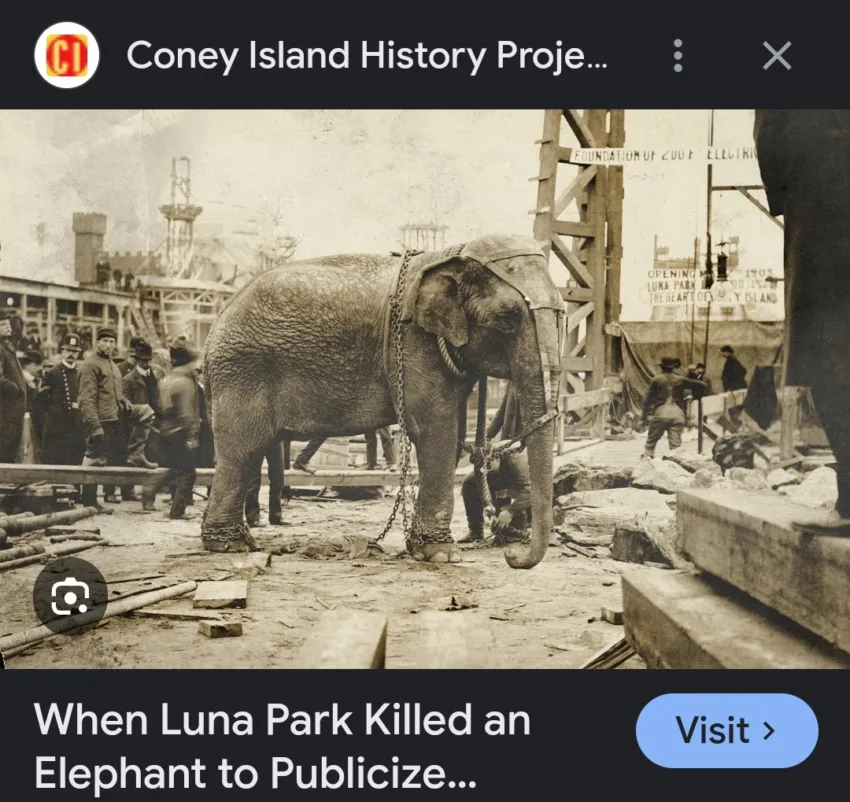
Near the end of her life, Topsy ended up working at Coney Island’s new amusement park, Luna Park. Not only did Topsy perform in the shows, but her handlers also forced her to haul building materials and do other hard labor around the park, all while being subjected to physical abuse in order to make her work. At one point, one of Topsy’s handlers either become drunk and took her for a ride around the streets of Coney Island, or she somehow got loose on her own (sources differ). Either way, Topsy scared the heck out of the people of the island—and her reputation grew even more infamous as a result.
While her handlers had tried to get her under control through force by using pitchforks and other weapons, it was eventually decided that Topsy needed to be put down.
Originally Topsy’s handlers decided they wanted to hang her, as had been done to other elephants throughout history, but the Society for the Prevention of Cruelty to Animals protested the hanging idea. The method of execution ended up being Alternating Current electricity. The SPCA had previously advocated for electrocuting smaller animals, but never anything as big as an elephant before.
At the time, no other elephants had ever been killed via electrocution before. Because the handlers were uncertain that the electricity would be enough to kill poor Topsy, she ended up also being fed carrots laced with cyanide before a rope was put around her neck. Then her feet were placed in copper-soled sandals to help facilitate the flow of electricity. It took just ten seconds of continual electrical flow into Topsy’s body before she fell over and died.
In order for enough electricity to be provided for her death, Topsy’s handlers contacted the local power company, Edison Electric Illuminating Co. of Brooklyn, to provide the 6,600 volts of electricity needed to kill Topsy. Even though the power company had Edison in the name, the organization had nothing to do with Thomas Edison personally and only used his last name because of an association with the Edison system of electrical power generation pioneered by the scientist. Many power companies across the United States used “Edison” in their name because of this, but again, Thomas Edison himself wasn’t actually involved in the creation of the various power companies using his name.
How many spectators came out to witness Topsy’s death is also a matter of speculation. Newspaper accounts differ, saying anywhere from just reporters and the videographers, to several dozen, to up to 1,500 people. What is known for certain is that Thomas Edison was not in the crowd witnessing Topsy’s death.
Even though many of us have been taught over the years that Thomas Edison had a direct involvement in Topsy’s death, this is not actually true. Today, no surviving correspondence from Thomas Edison ever mentions Topsy or her story, and there is no evidence he ever saw the film of her death or had anything to do with it either. There are also no surviving newspaper accounts or documents from the time of Topsy’s death implicating him in her execution either. What is known is that his company sent a crew to film Topsy’s death, but that does not necessarily mean the execution was ordered by Edison himself. There is also no evidence that Thomas Edison ever even saw the film “Executing an Elephant”* even though his name is listed in the credits. As explained by the Rutgers—New Brunswick School of Arts and Sciences:
“Although he was the president of the Edison Manufacturing Co., which, among other things, oversaw the film company, day-to-day operations were in the hands of the vice president and general manager William E. Gilmore.”
Thomas Edison may not have been directly involved in Topsy's death, but it is clear other members of the electric company were--whether from the perspective of the crew filming her death or the power company workers who attached the electrodes to her. Who should be held most directly responsible, however, were her handlers and owners at Luna Park who decided to murder an innocent wild animal who was only responding to the cruelty shown to her.
Rest in Peace Topsy--this world was much too cruel for you.
*The film can be viewed on YouTube today, but I must warn you it is not for the faint of heart. I chose not to include it in this article because it is very graphic and heartbreaking, but should you choose to watch it, like I said, the video is now available on YouTube.
Badges Earned:
Find a Grave Marked
Sources:
https://edison.rutgers.edu/life-of-edison/essaying-edison/essay/myth-buster-topsy-the-elephant
https://owlcation.com/humanities/the-life-and-death-of-topsy-the-elephant
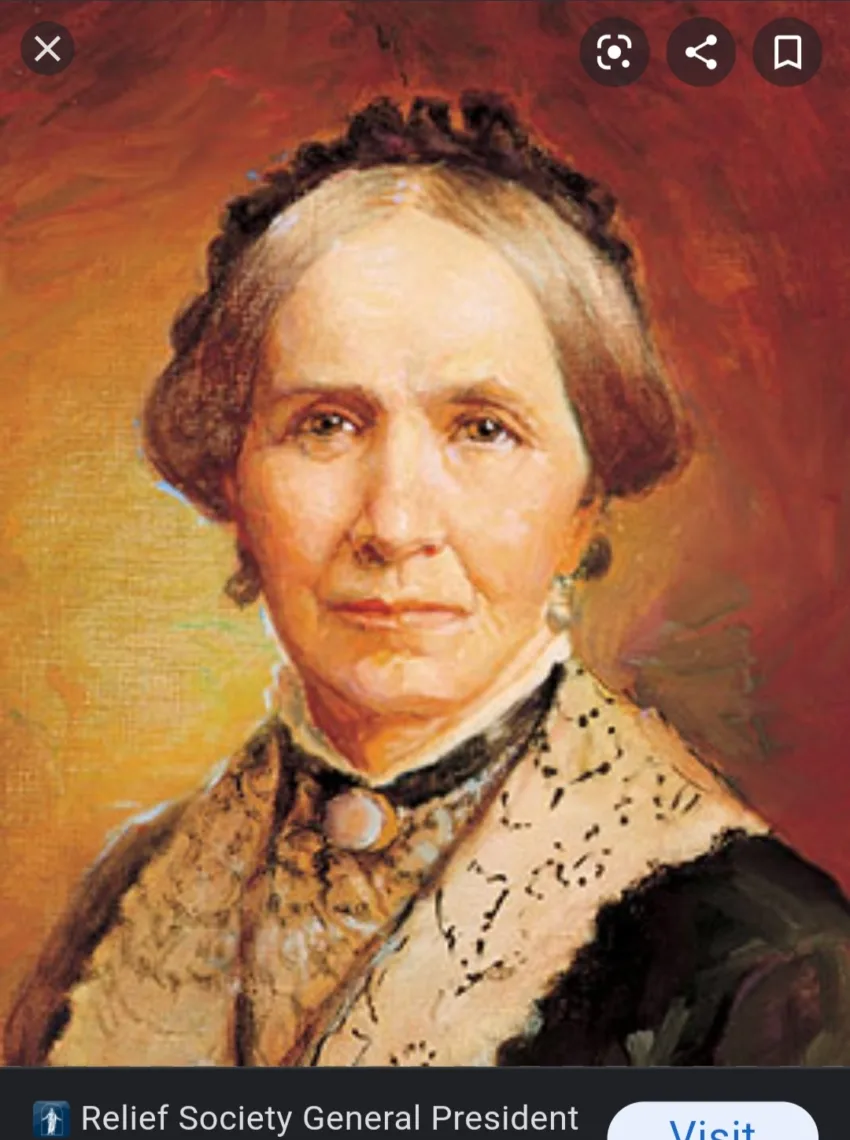
1200: Zina D H Young
Third General President of the Relief Society of the Church of Jesus Christ of Latter-Day Saints
Born: 31 January 1821, Watertown, New York, United States of America
Died: 28 August 1901, Salt Lake City, Utah, United States of America
“Sisters, it is for us to be wide awake to our duties. The kingdom will roll on, and we have nothing to fear but our own imperfections.”
Zina is known today for having three husbands, two of whom were Joseph Smith and Brigham Young. While early practitioners of the Latter-Day-Saints faith were often polygamous in the sense that one husband would have multiple wives, Zina did the opposite, being a single woman/wife with multiple husbands. As you will see the further along you read this article, Zina’s marital status has been a source of confusion and contention for over one hundred years.
Zina was born to a strict Presbyterian family and was the seventh of nine children. The family prayed together, sang hymns, and read from the Bible daily. Zina’s father read from the Bible so extensively, he taught his children that none of the religions of the day lined up with how the Bible described the Christian religion and how it should be practiced. When Zina’s family first learned of the new faith, known today as “Mormons” but more accurately called Latter-Day-Saints, her entire family converted in 1835, save for one brother.
In 1840, according to the church’s own website, Zina was “privately taught” about plural marriage from Joseph Smith himself. What exactly being “privately taught” meant was not described, but Zina initially declined the offer, and refused two more times in quick succession after that. The following year, she married her first husband Henry Jacobs (although this marriage was a civil one, and not performed in a church or religious setting). A few months after that, Zina received a “personal revelation on plural marriage” (according to the church’s website) and was sealed* to Joseph Smith. Evidently Joseph Smith had been continually asking Zina, in secret, to marry him even after she was married to Henry. At the time of Zina and Joseph’s sealing, Zina was pregnant with her first child, her husband Henry’s child. After Joseph’s death, Zina was sealed to Brigham Young**.
To put it in more plain language, Zina’s first marriage was a civil wedding only, while her next two had deeper religious meaning. Zina was married to her civil husband, Henry, and Joseph at the same time, and was married to Henry and Brigham at the same time as well (but she was not married to both Joseph and Brigham at the same time—her marriage to Brigham only occurred after Joseph had died). Zina married Brigham in 1846. Zina also stated her civil marriage, to Henry Jacobs, was an unhappy one, and they separated at some point during her life, but records are uncertain as to when the separation occurred. To make it even more confusing, Zina never elaborated on exactly what was so “unhappy” about her marriage to Henry—and Henry would spend the rest of his life after their separation pining for Zina.
At the time, polygamous or polyandrous marriages in the church were kept quiet as much as possible. Records indicate that on all three occasions Joseph approached Zina to ask for her hand in marriage, he came to her one on one to discuss it in secret. Joseph had already been married to Emma, the wife he is most often associated with, and at least one other woman named Louisa (although one source indicates he already had at least five other wives), before Zina finally married him. Today, the LDS Church has admitted their records indicate Joseph eventually had at least forty wives, however, these wives were supposedly mostly wives for “eternity” only—meaning they were not consummated marriages in this life, consummation would occur in the next life instead.
An article I found went even furth into discussing how many times it took Joseph proposing to Zina before she finally said yes. According to the article (linked below), Zina later recounted that Joseph told her brother to tell her, “Tell Zina I have put it off and put it off until an angel with a drawn sword has stood before me and told me if I did not establish that principle [plurality of wives] and live it, I would lose my position and my life and the Church could progress no further.”
(If this sounds like the most confusing game of Telephone you’ve ever heard, don’t worry, it feels like that to me as well). Essentially Zina kept saying no, and so eventually Joseph went to Zina’s brother, and asked Zina’s brother to convince Zina to marry Joseph. Joseph told Zina’s brother to tell the story quoted above, that if Zina did not marry Joseph he would literally be killed by an angel and that the entire church would collapse.
While this may seem extremely manipulative today, there is, once again, more to the story. Zina (supposedly) did not marry Joseph based on this one story/quote alone. Later in life, Zina would state that she only chose to marry Joseph after the Lord came to her in several dreams, telling her that he wanted her to partake in a “Celestial Marriage” (as her marriage/sealing to Joseph was called by the church). It was only after Zina received this message from the Lord that she decided to go ahead with the marriage to Joseph.
(It should also be noted that, while Zina was in her early twenties at the time of her sealing to Joseph, he was sixteen years older than her).
It is also still up for debate as to whether or not Zina’s first husband Henry knew his wife had been married/sealed to Joseph Smith from the get-go. Some scholars believe that Henry was not informed of his wife’s second marriage until after it had already taken place, and therefore he couldn’t do anything about it, while others insist he must have known because of how close he and Joseph Smith were. As late as 1842, Henry was reportedly telling people how much he loved his wife’s “loveliness” and “fidelity,”—he probably would not have used the word fidelity if he knew she was married to another man.
Those who believe Henry was aware of Zina’s sealing to Joseph include Henry and Zina’s own granddaughter, who claimed, “Henry signed a paper relinquishing his right to Zina for eternity. The slip he signed is still in the records of the Salt Lake Temple.” However, as of 2006 (when the article which mentions this was written) that piece of paper had not been located. If the story is true, however, Henry knew within months of his own marriage to Zina that she would also be marrying Joseph.
One has to wonder, looking back from a modern perspective, if Zina and Henry’s marriage was unhappy because of her plural marriages, the first of which she seems to have been coerced into, whether she realized it herself or not.
When Zina was sealed to Brigham Young, she was heavily pregnant with her second child (that had been fathered by her first husband, Henry).
To make it even more confusing, around the time Zina moved in with Brigham Young and several of his other plural wives, her first husband Henry left on a mission for the church. While serving on that mission, Henry married another woman. So now Zina had two husbands and Henry had two wives. Some scholars believe Brigham Young forced Henry to abandon Zina and marry someone else, but there is no definitive proof this is true. It is rather convenient timing, however.
For those unaware of early Latter-Day-Saint history, the members of the church were intensely persecuted by other white Christian settlers. The church initially began in New York, before moving to Ohio and then Missouri. The Saints were pushed out of Missouri and into Illinois, where they founded a settlement called Nauvoo. However, it was while living in Nauvoo that Joseph Smith was killed. After his death, Brigham Young took over as head of the church (although not all of the congregants believed in Brigham Young, so the church splintered apart after Joseph's death. The vast majority of the congregants did follow Brigham Young however). The Saints ended up fleeing Illinois and headed westward, like so many other settlers on the Oregon trail. Brigham's followers eventually ended up in Utah, as they are most known and associated with today, but they stopped in several places along the way, including Iowa.
Back to Zina.
Zina and Henry arrived at Mt. Pigsah, in what was then the Iowa Territory, on May 18th, 1846. By June 1st, Henry had left on a mission and he and Zina would never live as husband and wife again. Their second son had been born March 22nd of that same year. Zina’s father wrote in his diary on July 2nd, that Brigham had requested Zina, and her children move into Brigham’s household. She did not immediately move, however. Zina’s father passed away in August, and at that time, she was living with her sons, but not with Brigham. By the time winter set in, however, she had moved into Brigham’s household and had declared herself divorced from Henry.
When Henry left on his mission in June, he had not given up on their marriage. In a letter he wrote to Zina in August, he mentions how much he still loves her and the children and hopes for the future. Part of the letter reads:
“Zina I have not forgotten you, my love is as ever the same, and much more abundantly, and hope that it will continue to grow stronger and stronger to all eternity, worlds without end, when families are joined together and become one consolidated in truth, when the keys of the Resurrection will be restored, and the fullness of the Gospel given the Law of the Celestial Kingdom be in force and every man and woman will know their place and have to keep it. Though there will be shiftings in time and revisions in eternity, and all be made right in the end. You told me in your letter that you calculated to start the next morning for the big camp. Well, may the Lord bless you and my little children with life and good health and a safe journey. Take good care of the cow and steers and all I left with you. Keep it safe till I return, for I will then again give my best respects to Brother Brigham and family.”
I don’t know about you, but to me, that does not come across as a man ready to give up on his marriage and family. By the end of the paragraph, it is clear Henry knows Zina is going to take the children away to live with Brigham. While Henry cannot argue with her over this fact, seeing as Brigham was now president of the church and also married to Zina, it is clear that he is not happy with this decision. He is wishing her the best while also remaining hopeful that things might change once he comes back home.
Henry’s mission lasted just over a year. He arrived back in the same city as Zina by November of 1847, yet by that time he had married another woman and taken in her five-year-old-son as his stepson. Zina and Henry would remain in the same settlement for around six months, during the winter of 1847/1848, and yet there is no evidence the two ever spoke a word together, much less lived as husband and wife. Clearly, during that year Henry was away from Zina, they both settled on the dissolution of their marriage and moved on…but again, there is no evidence Henry was happy with this solution. There are no records that indicate the pair ever received a legal divorce either, which meant that technically they remained married until they died. This can be easily explained away though. The most likely time they would have filed for divorce, while living in Iowa, was practically impossible to do. Iowa Territorial Law dictated that a divorce had to be granted by a district court, and the settlement Zina and Henry lived in was in unincorporated land with no district court anywhere even close to being nearby.
With all of that said, Zina was much more than just her marriages. Yes, she was married to three men, two of whom were founding members of the Church of Jesus Christ of Latter-Day-Saints, but she was more than just a wife.
Zina had three children in total, two sons with Henry Jacobs and a daughter with Brigham Young. She also went on to adopt three or four more children (sources differ) that were born to another of Brigham’s wives.
Though she had limited medical training of her own, Zina became a midwife to her people and helped deliver countless babies over the years. She opened a nursing school and taught obstetrics classes. She even became a member of the board of the Deseret Hospital. Zina spent twenty-one years traveling around Utah to help create Relief Societies. Once becoming General President, Zina helped expand Relief Societies to other areas outside of Utah as well. The goal of the Relief Societies was to help provide and improve local medical care and give classes on nursing in the beginning. Today, the Relief Society is the women's based organization within the church that continues to focus on philanthropic endeavors. Zina served as President of the Relief Society for the entire church from 1888 until she died in 1901.
Zina was also a suffragist, attending conventions and becoming the vice president of the National Council of Women. She served as president of the Deseret Silk Association (after learning how to care for silkworms to foster silk production) and was the matron of the Salt Lake City Temple from 1893 (when the temple was dedicated) until her death in 1901. She also worked for the temples in Logan and St. George, Utah.
The practice of plural marriage, or polygamy, within the church began to be phased out around 1890—which happened to coincide with the time Zina was serving as General President of the Relief Society. Six years later, Utah became the forty-fifth state to enter the union of the United States; largely because the LDS faith had abandoned the practice of plural marriage. To read more about Utah's path to statehood, click here.
The most frustrating part about trying to study Zina’s life is the fact that every easily locatable source online (outside of Wikipedia) is from a Latter-Day-Saint’s based website. Two of the main sources I have listed are official pages from the church’s actual website, one is from a site called “Joseph Smith’s Paper’s” one is called “Joseph’s Smith’s Polygamy” and another is from “FAIR Latter-Day-Saints.” The only sources I have listed below that are not affiliated with the church are a Wikipedia article, an article from NPR recounting how many wives Joseph Smith had, and finally Zina’s Find a Grave profile. While church records can give a great insight into a person’s life, in this case it also means there is great bias into the research behind Zina’s story. I myself am not affiliated with the Latter-Day-Saints but have many family members who are church members. LDS folks are some of the kindest and most loving people I know, but just like with all religions, there are always bad seeds as well. I did my best to pick through the bias and report on Zina’s story as best I could, while also trying to make it as not-confusing as possible.
*Sealing is the word used for marriage conducted within the Latter-Day-Saint religion for those unaware. A sealing ceremony usually means an individual’s soul is sealed to another’s for all eternity, although a temple divorce is possible in certain circumstances.
**Although interestingly enough, many of Joseph Smith’s plural wives who were later sealed to Brigham Young, were sealed to Brigham in the current life only, according to the church. The reason for this is because Joseph Smith had made it known before his death, that the majority of his forty-odd “plural wives” should be remarried to the church’s apostles. The LDS church always has a president and twelve apostles that run the church, and Joseph was the first president. Brigham was sealed to either seven or nine of Joseph’s wives, while the other eleven apostles all received some of his other wives. Zina was apparently allowed to choose which of the twelve she would marry, and she chose Brigham. At the time of Brigham and Zina’s sealing, her first husband Henry was standing in the room and evidently gave his approval for the match, even though Zina was only weeks away from giving birth to their second child.
Badges Earned:
Find a Grave Marked
Located In My Personal Library:
In Sacred Loneliness: The Plural Wives of Joseph Smith by Todd Compton
No Place for a Woman: The Struggle for Suffrage in the Wild West by Chris Enss
Uppity Women Speak Their Minds by Vicki Leon
Sources:
https://www.churchofjesuschrist.org/study/history/topics/zina-d-h-young?lang=eng
https://www.josephsmithpapers.org/person/zina-diantha-huntington-young
https://josephsmithspolygamy.org/plural-wives-overview/zina-diantha-huntington/
https://www.findagrave.com/memorial/6740557/zina-diantha-young
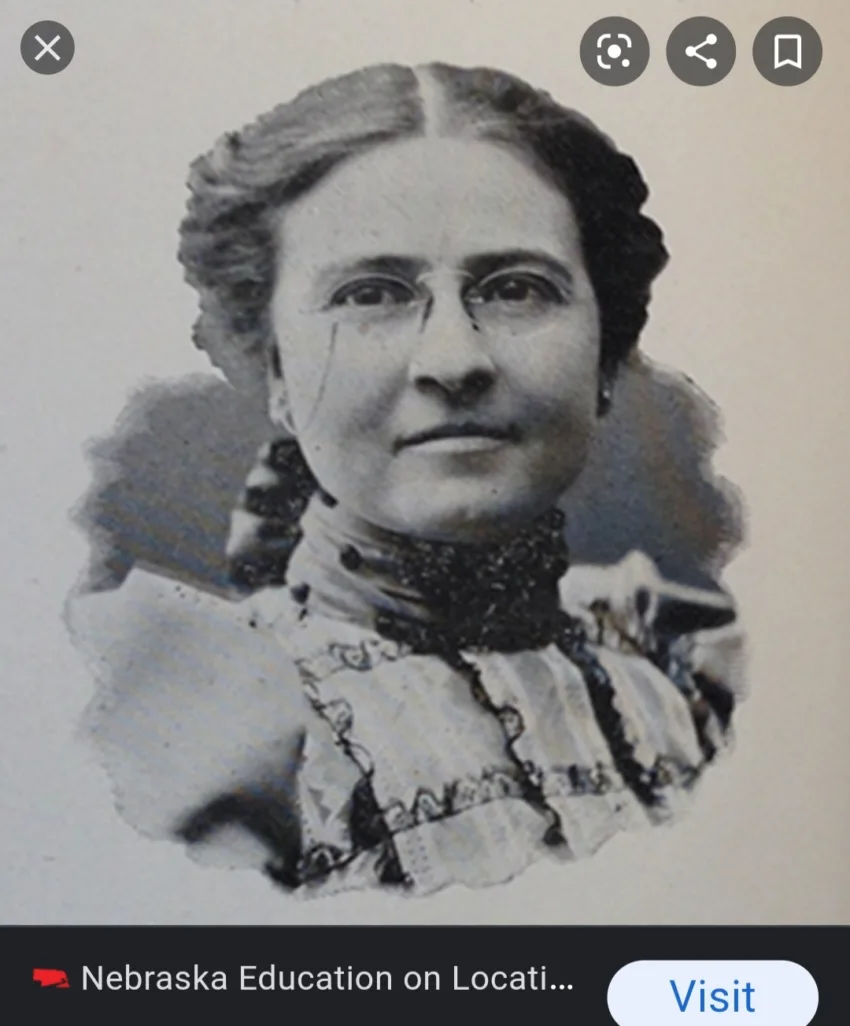
1199: Susette la Flesche Tibbles
Omaha Native American Author and Activist
Born: 1854 AD, Omaha Reservation (Present-day Bellevue, Nebraska, United States of America)
Died: 26 May 1903 AD, Omaha Reservation (Present-day Bancroft, Nebraska, United States of America)
Omaha Name: Inshata Theumba (or “Bright Eyes” in English)
“It’s all a farce when you say you’re trying to civilize us, then, after we educate ourselves, refuse us positions of responsibility and leave us utterly powerless to help ourselves. Perhaps the only way to make ourselves heard is to appeal to the American public through the press. They might listen.”
Susette was the daughter of the last recognized Chief of the Omaha Native American Tribe, Iron Eyes (also known as Joseph La Flesche). The same year she was born, the Omaha tribe surrendered their ancestral land to the United States government, and moved onto a reservation in what is now Nebraska. Susette’s little sister Susan was born a few years later and grew up to become the first Native American Physician.
Susette and her siblings attended a school on the reservation, where the girls learned to speak and read English, as well as being taught other skills like cooking and sewing. After graduating from the reservation school, Susette’s father sent her to a private girls’ school in New Jersey to further her education. While a senior at the school, the New York Tribune published one of Susette’s essays, essentially launching her professional career as a writer.
After graduation, Susette returned to the reservation, where she taught at the government school for several years. During her time as a teacher, Susette learned of a decision the federal government was making in regard to the Ponca Native American Tribe. Susette’s grandmother had been born to the Ponca tribe, and so the decision, which forced the tribe to move to Indian Territory (in what is present-day Oklahoma), worried Susette greatly.
In 1879, Susette helped the chief of the Ponca tribe, Standing Bear, sue the federal government over the forced movement and re-negging of treaties the Ponca had signed with the government. Susette acted as the chief’s interpreter. After the Ponca had been forcibly moved to Indian Territory, the chief and several other members struggled across hundreds of miles to return to their homeland in Nebraska. When they finally made it home, they were arrested, leading to Chief Standing Bear suing the government.
Standing Bear ended up winning his case. The verdict, which ruled that “An Indian is a person within the meaning of the law of the United States,” meant that Native American people not only had the right to choose wherever they wanted to live (meaning they could not be forced to live on a reservation) but also that they had the same rights as any other person living within the United States as well. Susette’s work to help the Ponca ignited a firestorm inside of her, and she would spend the rest of her life advocating, traveling, speaking, and writing for the cause of Native American civil rights.
Susette’s speaking tours were a first for Native people. She was the first nationally known Native American to partake on a public speaking tour, some of which lasted months at a time and reached as far afield as Scotland. She was fluent in five languages.
Susette was married to a white man who was also an activist for Native American rights. Her wedding dress is now held by the Smithsonian American Women’s History Museum. They had no children. According to Wikipedia, the reason why Susette and her husband waited so many years to marry is because he was married to another woman first, and he and Susette only wed after his first wife passed away.
In 1887, Susette helped pass the Dawes Act. While looked down upon in later generations, at the time, the Daws Act was a landmark win for Native American rights. The Dawes Act was meant to provide land allotments for individual people, instead of a general amount of land for the entire tribe. While in theory this would have been a great idea, in practice it was decidedly less so. Most individuals were given tracts of land that were practically worthless and could not be used to farm or support the individual the land was given to.
In 1891, Susette and her husband traveled to the site of Wounded Knee, to research the genocide and also help survivors. Around this time, she and her husband also became involved in the controversial Ghost Dance movement.
Susette was only forty-nine when she passed away. Her mother and sister Susan outlived her. Susette was eulogized by the United States Senate for all of her advocacy work, and in 1983 she was inducted into the Nebraska Hall of Fame, and in 1994 she was inducted into the National Women’s Hall of Fame.
Badges Earned:
Find a Grave Marked
Located In My Personal Library:
Uppity Women Speak Their Minds by Vicki Leon
A Warrior of Her People: How Susan La Flesche Overcame Racial Inequality to Become America's First Indian Doctor by Joe Starita
Women in American Indian Society by Rayna Green
Sources:
A Warrior of Her People by Joe Starita
https://www.womenshistory.org/education-resources/biographies/susette-la-flesche-tibbles-bright-eyes
https://www.womenofthehall.org/inductee/susette-la-flesche/
https://www.britannica.com/biography/Susette-La-Flesche
https://awpc.cattcenter.iastate.edu/directory/susette-la-flesche-tibbles/
https://womenshistory.si.edu/herstory/activism/object/susette-la-flesches-wedding-dress
https://www.findagrave.com/memorial/54038294/susette_tibbles
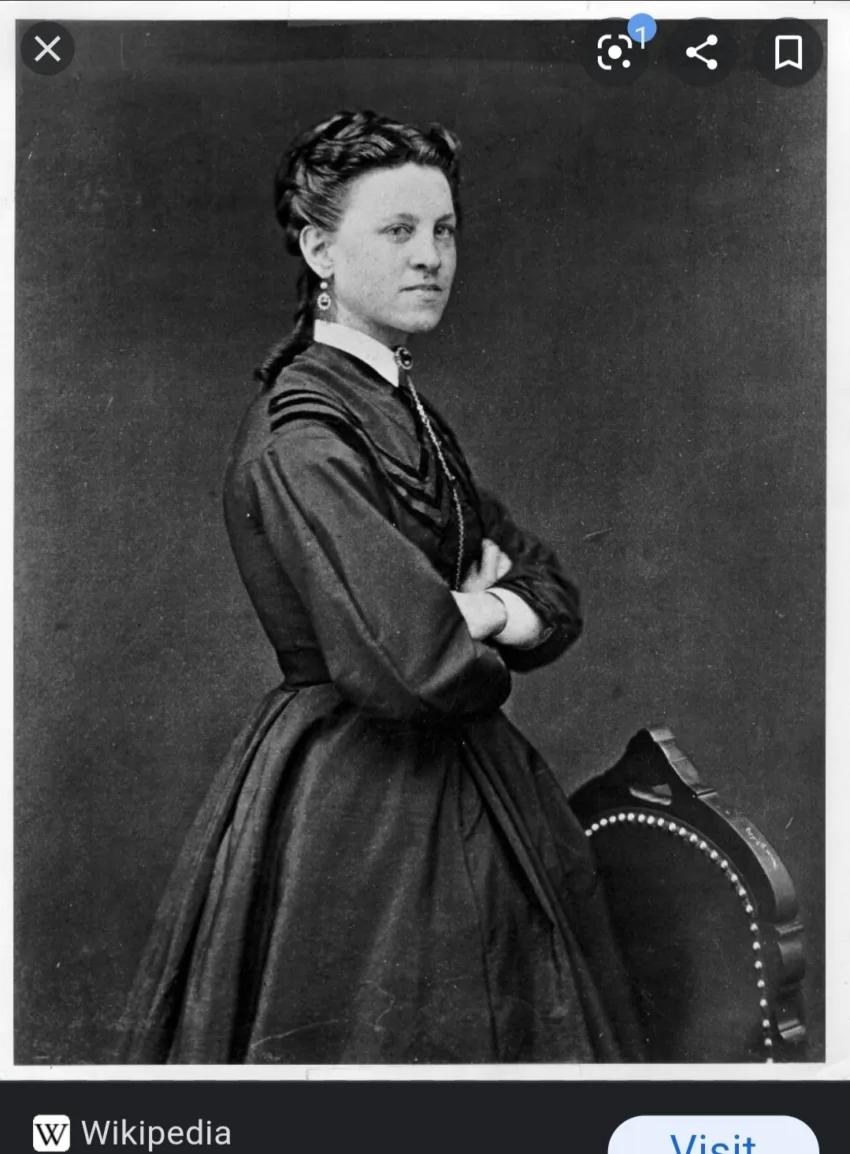
1198: Idawalley Zorada Lewis
Lighthouse Keeper
Born: 25 February 1842, Newport, Rhode Island, United States of America
Died: 24 October 1911, Newport, Rhode Island, United States of America
Idawalley (called Ida) saved several people from drowning in separate incidents while serving as a lighthouse keeper in Newport, Rhode Island. When asked about her heroic exploits later in life, Ida was quoted as saying, “I did not think the matter worth talking about, and never gave it a second thought.”
Ida became involved with the Lime Rock Lighthouse because of her parents. Ida’s father was the keeper of the lighthouse from its inception in 1854 until 1857, when he became too ill to continue working. From 1857 to 1879, Ida served as an unofficial keeper alongside her mother (they had moved onto the grounds of the lighthouse with Ida’s father in 1856, when a permanent structure was built for the family). Ida’s mother was the official lighthouse keeper from 1872 (when her husband, Ida’s father, died) until 1879. From 1879 to 1911, Ida took over as the official lighthouse keeper.
Ida became a national sensation, not only because she was a working woman at a time when most stayed home, but because she also saved lives through her work. She met one of the presidents (Ulysses S Grant) and a vice president, suffragists Susan B Anthony and Elizabeth Cady Stanton visited Ida and Elizabeth bought photos of her*. They were proud of Ida for showing women could do a physically demanding job like a man. Ida was featured on the cover of hundreds of magazines and newspapers and received several accommodations and awards across the country. She was even known to sign photographs of herself for fans, like a modern-day celebrity. The Society of the American Cross of Honor nicknamed her “The Bravest Woman in America.” Ida is also the only woman, as of 2024, to have been awarded the Coast Guard’s Gold Lifesaving Medal, the highest honor the Coast Guard can bestow upon someone who has saved lives in the line of duty.
As part of her duty as light keeper, Ida was responsible for saving those shipwrecked on the shore near the lighthouse. As a result, she was also an expert oarsman and could man small craft. At one point it was even said that she could “row a boat faster than any man in Newport.” As thanks for her service, Newport dubbed 4 July 1869 “Ida Lewis Day,” and held a parade in her honor.
In 1870, Ida married a man named William Wilson, but little information about the match is known. They separated two years later, and Ida seemingly spent the rest of her adventurous life alone; not that she needed a man to keep her happy or fulfilled obviously.
Later in life, Andrew Carnegie, one of the richest men in America, granted Ida a monthly pension for life as thanks for her hard work and dedication to saving lives. Ida was awarded $30 a month, which she placed in a bank account and used to help support her brother—who also worked at the lighthouse.
Officially, Ida saved eighteen lives while on duty during her thirty-nine years serving the Lime Rock Lighthouse (although unofficial records put the count as high as thirty-six). Two of the people she saved were some soldiers shipwrecked in 1869. When the soldiers saw that Ida was their rescuer, one of them reportedly said, “It’s only a girl!” Luckily for him, Ida was more than capable of saving his life. In 1909, Ida also managed to save five girls whose boat was swamped and over-turned—she was sixty-eight years old at the time. She eventually became the highest paid lighthouse keeper in the country, earning $750 per year.
Ida died of a stroke while on duty, serving the lighthouse that had been a part of her life for so many years. Her brother found her unconscious on the floor, and even though a doctor was summoned, there was nothing he could do. Ida died three days later. Her brother believed Ida’s stroke had been caused by her hearing a rumor that her beloved lighthouse was about to be closed. Two years later, after public outcry and a fund started by a fifteen-year-old Newport girl, enough money was finally raised to place a tombstone marker over Ida’s grave that had been unmarked since her death.
In 1924, the light Ida had overseen for so many years was renamed the Ida Lewis Rock Light Station. The lighthouse also became the meeting place for the Ida Lewis Yacht Club in 1928. The lighthouse was officially discontinued (meaning was no longer deemed needed to help bring in ships, and therefor no longer requiring a keeper) in 1963.
Ida is considered a United States Coast Guard veteran because she worked as a part of the US Lighthouse Service, a pre-cursor to the United States Coast Guard (the Lighthouse Service merged with the Coast Guard in 1939). A street within Arlington National Cemetery, Ida Lewis Drive, was named in recognition of her service when it opened in 2018.
She was honored with a Google Doodle on her 175th birthday in 2017.
*Although it should be noted that Ida never publicly advocated for women’s right to vote or other Suffrage ideals herself.
Badges Earned:
Find a Grave Marked
Located In My Personal Library:
Uppity Women Speak Their Minds by Vicki Leon
Sources:
https://www.arlingtoncemetery.mil/Blog/Post/12407/Ida-Lewis-The-Bravest-Woman-in-America
http://www.ilyc.org/Default.aspx?p=dynamicmodule&pageid=86&ssid=100092&vnf=1
http://www.rhodeislandlighthousehistory.info/lime_rock_lighthouse.html
https://www.findagrave.com/memorial/7919955/ida-zorada-lewis
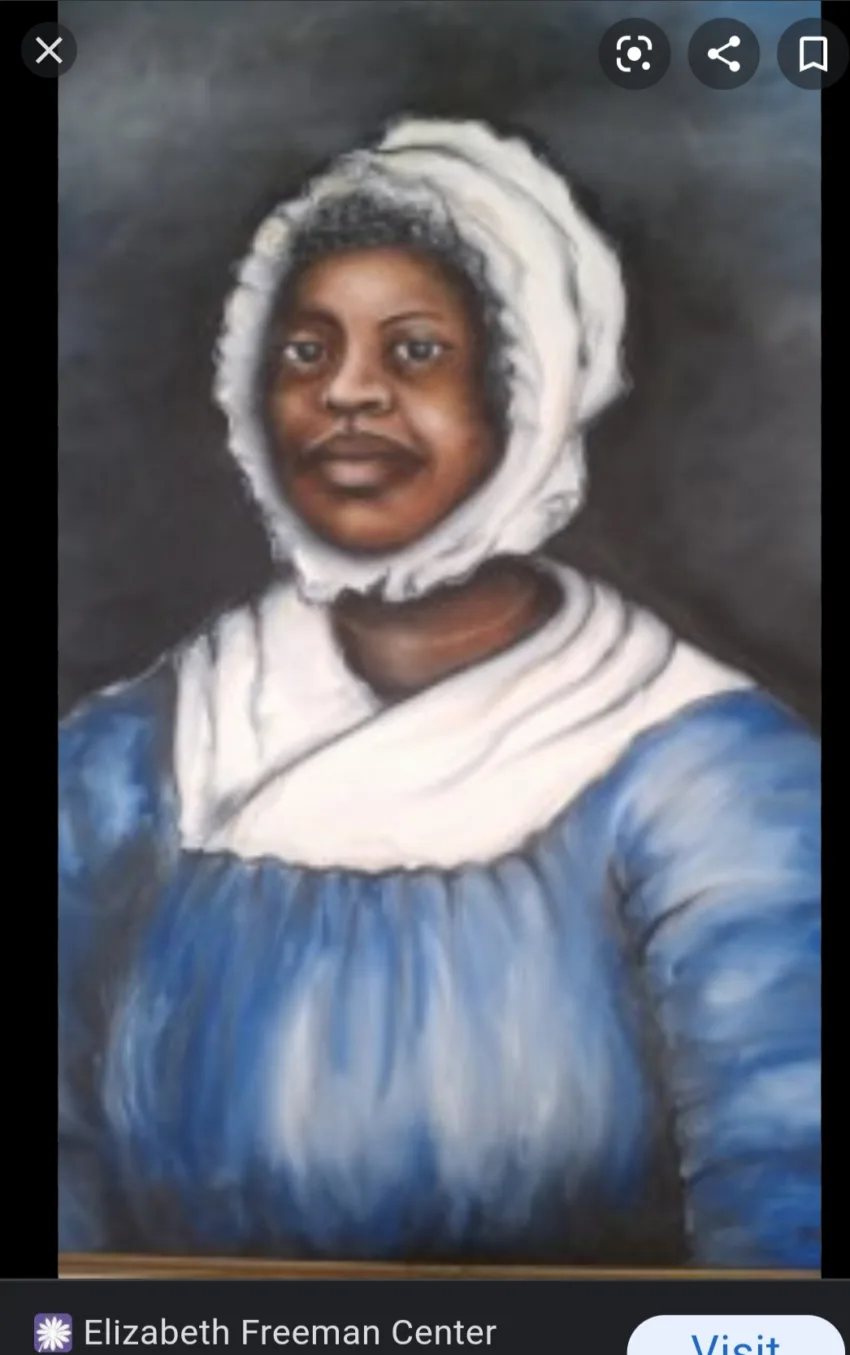
1197: Elizabeth Freeman
The First Black Slave to File and Win a Freedom Suit in Massachusetts
Born: c.1744, Claverack, The Colony of New York (Present-day Claverack, New York, United States of America)
Died: 28 December 1829, Stockbridge, Massachusetts, United States of America
Original Name: Mum Bett
Elizabeth’s case was titled Brom and Bett v Ashley and took place in 1781, less than a year after Massachusetts ratified their state constitution. Her case served as the precedent for the later abolishment of slavery in Massachusetts.
Elizabeth (known as Mum Bett at the time) grew up on a plantation with her sister Lizzie. When her owner’s daughter got married, he gifted Elizabeth and her sister to the new couple as part of their own estate. (Although it should be noted that some sources say Elizabeth’s new owners were actually married years before Elizabeth was born, and that she was sent to live with them when she was very young even though they had already been married for several years). It was during her time at the new home that Elizabeth gave birth to a baby girl she named Elizabeth, but she never revealed the child’s father, only said that he had died during the Revolutionary War.
Elizabeth was not able to read or write, but she was far from stupid, and she was proud and determined. Evidently her new owners were cruel to the slaves. Once, when her female owner tried to hurt Elizabeth’s sister by hitting her over the head with a hot shovel, Elizabeth interfered and blocked the blow with her arm. The wound never fully healed, and Elizabeth refused to cover it either, letting the world bear witness to her mistreatment.
Elizabeth’s male owner was a local judge, revolutionary patriot, and politician. It is believed that Elizabeth overheard her owner’s discussions on freedom and equality. He eventually helped draft a declaration that stated mankind in their natural state are free, independent, and equal of one another. It also stated people, “have a right to the undisturbed enjoyment of their lives, their liberty and property.” (Sheffield Declaration, 1773).
After the adoption of the Declaration, Elizabeth and another slave named Brom began the fight for their freedom based on the declaration’s language (the same language was also later used in the Massachusetts state constitution, and the Declaration of Independence). When the Massachusetts state constitution was adopted in 1780, Elizabeth learned that the inspiring words she had heard seven years earlier in the Sheffield Declaration were now the law of the land in which she lived.
In May of 1781, Elizabeth’s attorney filed a document with the Berkshire Court of Common Pleas, suing for Elizabeth and Brom’s freedom. The reason why Brom was included in the proceedings is unclear, but some historians speculate that Elizabeth’s attorney added a male slave to his case so that it would not be dismissed for only pertaining to a female (that’s right, sexism was alive and well in the late 1700s in case you forgot!). The court sided with the slaves, stating they were not the legitimate property of their current owner, however, he refused to abide by the ruling and release them.
In August, the case moved on to the County Court of Common Pleas of Great Barrington. Elizabeth’s attorney argued that the wording of the Massachusetts state constitution clearly outlawed slavery, and the jury agreed. Elizabeth and Brom were not only granted their freedom, but they were also awarded thirty shillings each plus the cost of the court proceedings. Initially, Elizabeth’s (now former) owner filed an appeal, but he dropped the case a few months later.
After being set free, Elizabeth changed her name from Mum Bett to Elizabeth Freeman. Her former owner asked her to be a member of his staff as a paid servant on several occasions, but she always refused. Elizabeth instead became a paid domestic worker for her attorney.
Elizabeth also worked as a midwife, healer, and nurse to her community. After twenty years of hard work, Elizabeth was able to purchase her own home where she lived with her children.
Because Elizabeth was illiterate, most of the details of her life are not concrete facts, outside of her court case. Everything we know of Elizabeth’s life was written secondhand, either by people who claimed to know her or by historians who lived after her. The biggest source of information from close to Elizabeth’s time period comes from Catharine Maria Sedgwick, the daughter of Elizabeth’s attorney and an author in her own right, who described Elizabeth’s life story in an essay on slavery.
In 1974, The Elizabeth Freeman Center opened in Massachusetts to provide help and support to those impacted by domestic and sexual abuse in Berkshire County, where Elizabeth used to live.
Elizabeth was quoted as saying:
“While I was a slave, if one minute’s freedom had been offered to me, and I’d been told I must die at the end of that minute, I would have taken it—just to stand one minute on God’s earth a free woman.”
Badges Earned:
Find a Grave Marked
Located in My Personal Library:
Uppity Women Speak Their Minds by Vicki Leon
Founding Mothers by Cokie Roberts
Sources:
https://www.womenshistory.org/education-resources/biographies/elizabeth-freeman
https://elizabethfreeman.mumbet.com
https://elizabethfreemancenter.org/who-we-are/about-us/
https://www.findagrave.com/memorial/16476373/elizabeth-freeman
1196: Jane Sharp
Pioneering Midwife and Author
Born: Most Likely 1610s/1620s, Present-day England, United Kingdom
Died: After 1671, Most-likely Present-day England, United Kingdom
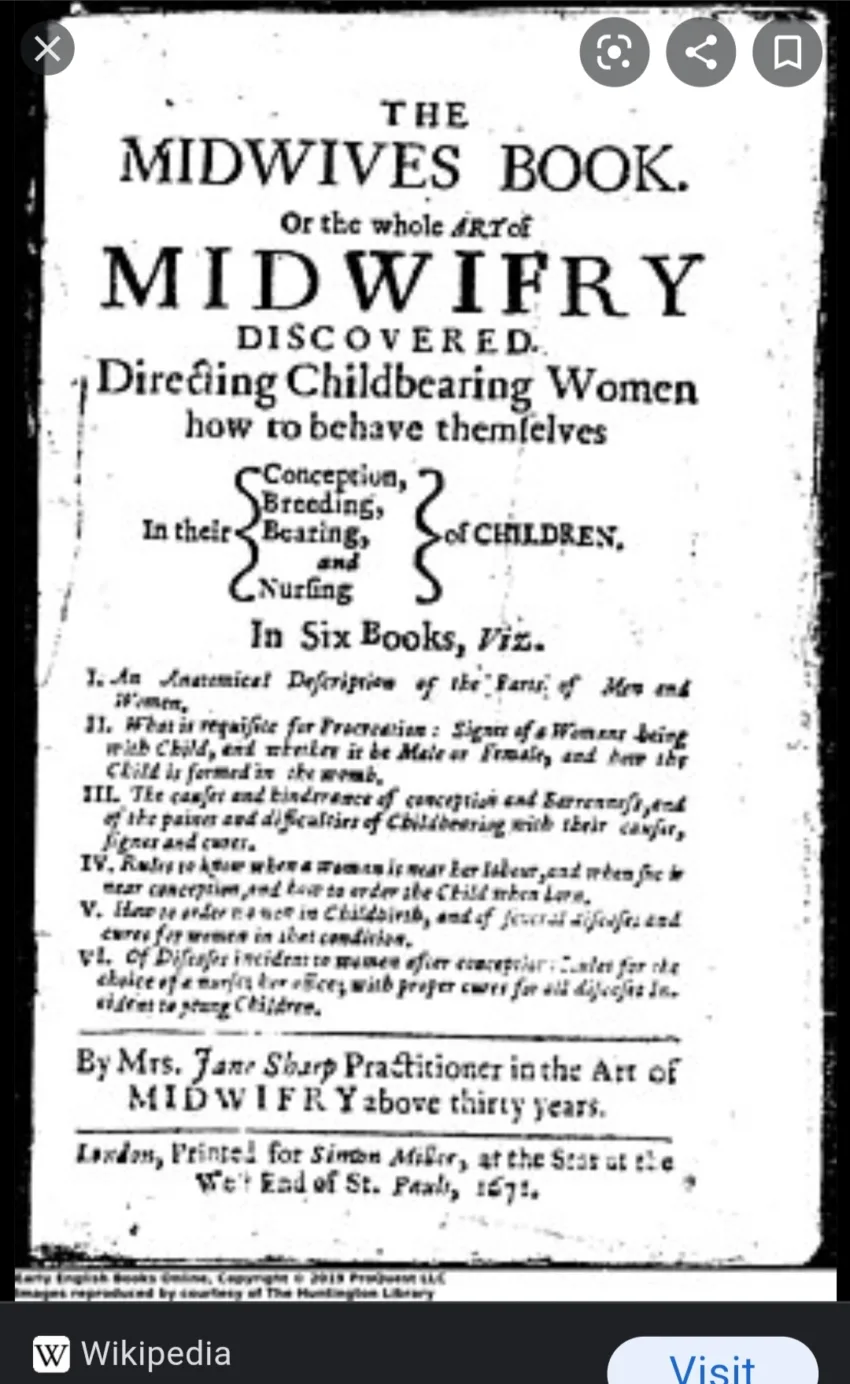
Jane is known for having written the first book on English midwifery to be written by a woman. When she published the book in 1671, Jane described herself as a midwife with over thirty years of experience. The book was called Midwives Book: or The Whole Art of Midwifery Discovered and appeared in four editions, with the last update being published in 1725.
By 1700, aside from Jane’s manual, nearly all written works on the science of midwifery were theoretical texts written by men with little to no actual midwifery experience. Practicing midwives usually learned on the job and had no trustworthy texts to read from. Jane’s book began to change that.
Jane’s book covered six different sections, or topics, which went beyond the straight confines of midwifery. Though some of the knowledge is wrong by today’s medical standards, for the time period it was incredibly all-encompassing. Jane’s book included information on female and male reproductive anatomy, conception and addressing problems with conceiving, fetal development, childbirth itself, complications that can arise during a birth, and advice to mothers for caring for the newborn in the months following the birth. The manual even went on to give nutritional advice, tips on breastfeeding, and how to care for common childhood illnesses.
Jane’s book also had underlying feminist themes. She discusses her frustrations with the lack of education available to women—how they were barred from attending university classes, were unable to learn the sciences, and how most science and anatomy textbooks were still being written in Latin or Greek, languages the vast majority of women (and to be honest, most men) did not know and could not read. At one point she even states that she believes midwifery should be a solely female held position. While men were able to learn textbook knowledge on how to help women in childbirth, Jane pointed out that women know their own bodies better than men and midwifes with practical on-the-job training were much more useful in emergent situations than men with a university degree. That is also why Jane urged midwives to take up their own surgical and medicinal training, so that they would not have to rely on male physicians.
According to the Heroine Collective (article linked below), Jane’s feminist writings also went beyond the scope of midwifery. As stated in the article:
“Perhaps rather unexpectedly for a work dating from the 17th Century, Jane’s book contained a vivid portrayal of female sexuality. She emphasised the significance of clitoral stimulation, believing that the female climax was an important aspect of conception. Unlike her male contemporaries who wrote about female anatomy in a very negative and derisory way, depicting women’s bodies as inferior to men’s, Jane celebrated the marvels of the female body. She wondered at the ability of the vagina and cervix to open, close or expand as necessary and extolled it as “The works of the Lord”.”
Another aspect of childbirth Jane placed great emphasis on, and which she differed wildly from male counterparts, was that the mother needed to be comfortable while giving birth. Most male physicians (and, let’s be honest, hospital workers today! At least in the United States) demanded a mother giving birth should be stuck in one specific position while giving birth. Jane disagreed wholeheartedly, and insisted a mother should be allowed to move around the room and also choose what position was most comfortable for the mother in order to facilitate an easier birth. Jane also added that under no circumstances should a physician try to hasten a non-emergent birth, and that mothers should be allowed to eat or drink to keep up their strength if they so wished.
Immediately after the birth, Jane also advised continuing to care for the mother’s physical and mental wellbeing. As she stated, the poor woman had just been through excruciating pain, and needed extra care that male physicians were likely to ignore. All of these reasons added up to Jane’s book being wildly popular, and as she hoped for, changed the field of midwifery forever. While men continued to dominate the sciences for centuries onward, Jane’s manual helped break open the path for women to become more prominent midwives, and later physicians, helping their fellow women through the most natural of all bodily functions, welcoming a new child into the world.
Midwives of Jane’s era could usually read but being able to write—especially at the level needed to publish an instructional manual, was unusual. The book also had drawings made by Jane herself, to further illustrate her points.
Jane said in the book:
“To the Midwives of England: Sisters, I have often sat down sad in the consideration of the many miseries women endure in the hands of unskillful midwives.”
Sadly, no other biographical information about Jane is known today. There are no records of her obtaining a license from the church to practice her skill, but that was not uncommon for her time. Historians have no idea when she was born or when she died; we have no idea if she was ever married or had children of her own. All we know is that she was a woman ahead of her time. She was educated in both practical sciences as well as reading and writing. But what we know more than anything, is that Jane wanted women to have better opportunities going forward, not just for more successful outcomes during a pregnancy, but also in their professional careers.
Jane’s book can be purchased on Amazon today. Of course, they are not first edition copies by any means, but still copies are available. When I checked the listing (here) hardback copies were almost $200 and paperbacks were between $40 and $65.
Badges Earned:
Located in My Personal Library:
Uppity Women Speak Their Minds by Vicki Leon
Sources:
https://huntington.org/educators/learning-resources/spotlight/midwives-book
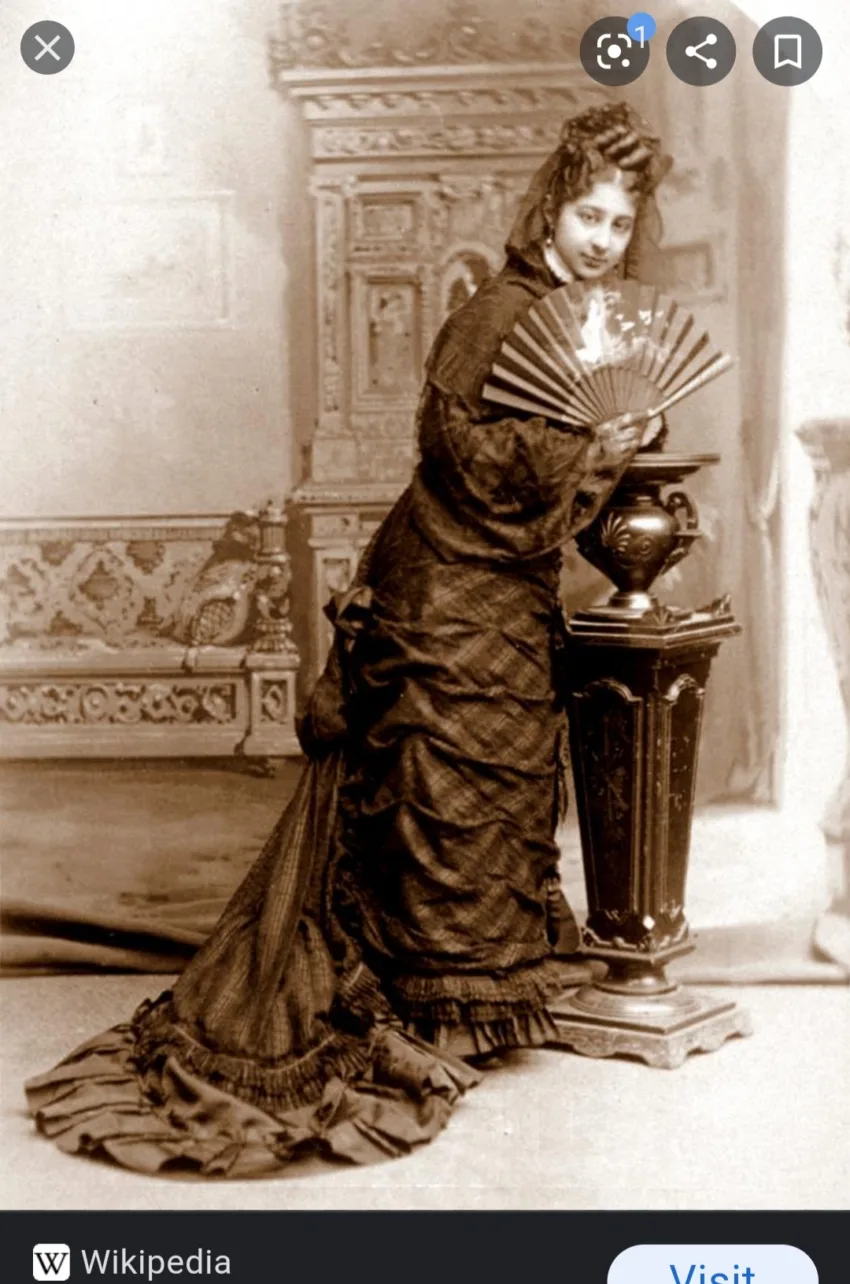
1195: Zelia Nuttall
One of the First and Most Important Mexican Archaeologists
Born: 6 September 1857, San Francisco, California, United States of America
Died: 12 April 1933, Coyoacán, Mexico City, Mexico
Zelia’s entire career was founded on the fact that she wanted to dispel the narrative that Mexico’s indigenous past was nothing more than “bloodthirsty savages” only interested in killing one another as the popular narrative hailed at the time.
Zelia was born into a fairly well-to-do family. She was the second of six children and was well educated. Her mother was from Mexico and her father had Irish heritage. As a child, Zelia and her family moved to Europe, where she lived in various countries and became fluent in German and Spanish, and also became fairly well versed in Italian and French (and English, of course!). Later in life she also became fluent in Nahuatl, the Aztec language.
Zelia and her family returned to San Francisco in 1876, and four years later she married a French explorer and anthropologist. Originally, the couple traveled extensively to facilitate her husband’s research, but by 1882 Zelia was pregnant with their second daughter Nadine, and also no longer happy with their marriage (a first daughter had died soon after birth earlier on in the marriage). The couple separated in 1884 and finished the divorce in 1888. Zelia’s husband had seemingly married her for her family’s money, and by the time Zelia sued for divorce, her inheritance was gone, and her husband didn’t contest the proceedings. She retained custody of their daughter and also reclaimed her maiden name, Nuttall—both facts (and the fact that she got divorced!) were all astounding and nearly unheard of for her time period.*
In 1884, Zelia traveled to Mexico for the first time with family and officially began her career as an archaeologist. While she had never received a formal education at a university (and was therefor looked down upon by her male peers, both for being a woman and uneducated), Zelia made the most of her career and made a huge impact on the study of Mexican and indigenous archaeology as a whole.
One of the biggest debates happening in Mexican archaeological was at the forefront when Zelia first began her career. The Mexican people, and the world at large, were unsure if the indigenous citizens of Mexico were direct descendants of the Aztec people or not. Zelia set out to prove that, not only were the Mexican people the direct descendants of the Aztecs, but that the indigenous people of Mexico should be proud of that heritage. Instead of looking down on their Aztec past as being something savage and dirty, Zelia wanted the Mexican people to look back and realize the great heights they had achieved, and that they could do it again.
In 1886, Zelia published her first paper in an accredited archaeological journal. The paper, entitled “The Terracotta Heads of Teotihuacan” was a study of her first dig that she had completed two years previously. As Smithsonian Magazine writes, “The study was original, thorough, and demonstrated an authoritative knowledge of Mexico’s history—as evidenced by the glowing responses of the archaeological community.”
Later that same year, Zelia was given an honorary special assistant position at Harvard’s Peabody Museum. She maintained this prestigious post until she died. A famed anthropologist (and the man who gave Zelia the position) described her thusly:
“[Zelia is] familiar with the Nahuatl language, having intimate and influential friends among the Mexicans, and with an exceptional talent for linguistics and archaeology…As well as being thoroughly informed in all the early native and Spanish writings relating to Mexico and its people, Mrs. Nuttall enters the study with a preparation as remarkable as it is exceptional.”
Zelia also became a fellow in the American Association for the Advancement of Science. Later in life, in 1908, she was named an honorary professor to the National Museum of Mexico (a position she later resigned after the museum cut her funding, tried to tell her what she could and could not do, and allowed some men to take credit for one of her discoveries. Yikes!).
Between 1886 and 1899, Zelia lived in Germany but traveled across Europe and California, doing more research in various libraries. During this time, she also began to be sponsored by Phoebe Hurst, who paid for her travel and research. Because Zelia was not formally attached to any one institution, as most archaeologists were, she was allowed to travel wherever she wanted, and research whatever she wanted, which gave her a serious advantage on the archaeological stage.
After her thirteen years of travel, Zelia began to publish multiple works, sharing with the world everything she had discovered. One of her most important finds had been Aztec and other indigenous works that Europeans had taken back to the Old World. Zelia not only found these lost works, but she also translated them and shared them with their country of origin for the first time in centuries. Zelia’s discovery was the most complete set of pre-Columbian writings found (a record that holds to this day!). She also managed to find some lost manuscripts from the explorer Sir Francis Drake. Zelia even discovered the site on the Isla de Sacrificios where human sacrifices were carried out (although, befitting her time period, some men tried to take the credit of discovering it!).
Zelia was the first person to decode the Aztec calendar. She also helped identify various weapons and other adornments of the Aztec people to provide explanations for how mysterious items were used. Zelia was able to transcribe and translate ancient songs, uncover how various commercial trade routes were used, and so much more. By the time she died, Zelia had published over seventy-five articles and three books.
In 1905, Zelia moved to Mexico City, making the country she had fallen in love with her home as well as the center of her research. Zelia took up botany and enjoyed growing indigenous plants from ancient seeds in the sprawling gardens of her new home. She used the plants to try and revive some ancient forms of medical healing. A woman ahead of her time!
Despite how progressive she may sound to modern audiences, Zelia was not necessarily a “woman of the people.” She left Mexico for seven years during the Revolution, only returning home after the violence had mostly ended. Zelia did not agree with the new revolutionary ideals of the winners. She did not believe everyone should be on equal footing; Zelia was a firm believer in classes, hierarchy, and other pieces of civilization that had been seen throughout various societies of the past. While she longed to be popular in the new-Mexico she found herself in, Zelia couldn’t shake her past or the things she found comforting, including the estate she lived in. Her home, Casa Alvarado, made her stand out from the common people of Mexico, and she became less and less popular among the other Mexican citizens. One guest who visited her estate was horrified to note that Zelia’s servants wore white gloves while serving tea and working for their patron.
Despite all of that, in 1928, nearing the end of her life, Zelia began pushing even harder for the revival of Aztec and other indigenous cultural celebrations that had been wiped out by the Spanish conquistadors. That year, for the first time since 1519, Mexico City celebrated the Aztec New Year, much like how Chinese, Vietnamese, and other Asian cultures celebrate their own New Year celebrations in February as well as the internationally accepted new year.
One of Zelia’s indigenous proteges, Manuel Gamio, would go on to become one of Mexico’s most prominent archaeologists (after Zelia fought for his education).
Not all of Zelia’s theories and postulations turned out to be correct, but many were. While Zelia proposed that seafaring Phoenicians traveled to Mexico and kickstarted the culture there, modern archaeologists have largely discounted this idea. But hey, you can’t be 100% right all the time, right?
While much is known of Zelia’s professional life, little is known of her private life. When she died, her daughter was living in Cambridge, England, and doesn’t seem to have returned to Mexico to clean up her mother’s estate. According to Smithsonian Magazine, the new owners of Zelia’s home burned her private documents that they found in her home’s basement. Earlier documents from Zelia’s life also disappeared during the 1906 San Francisco Earthquake. She was a woman ahead of her time, but also clearly cemented in it as well.
*While Zelia’s divorce and retaining custody of her daughter may seem like quite the feminist statement today, and was best for her and her career, it also had its downsides. Zelia’s daughter Nadine would state of her childhood and relationship (or lack thereof) with her father thusly:
“From the time before I can remember, he was taboo to me…I was frightened by the violent scoldings I got for mentioning his name. Later, I compromised with myself and when asked about him quietly said, ‘I never knew him!’ I realized that people thought he was dead and were sorry for me and said no more. In those days it was a disgrace to have a divorced mother.”
(Nadine wrote the above to a New York Times editor in 1961).
Badges Earned:
Rejected Princess
Located In My Personal Library:
In the Shadow of Quetzalcoatl: Zelia Nuttall and the Search for Mexico's Ancient Civilizations by Merilee Grindle
Tough Mothers: Amazing Tales of History's Mightiest Moms by Jason Porath
Sources:
https://www.britannica.com/biography/Zelia-Maria-Magdalena-Nuttall
https://hearstmuseum.berkeley.edu/zelia-nuttall/
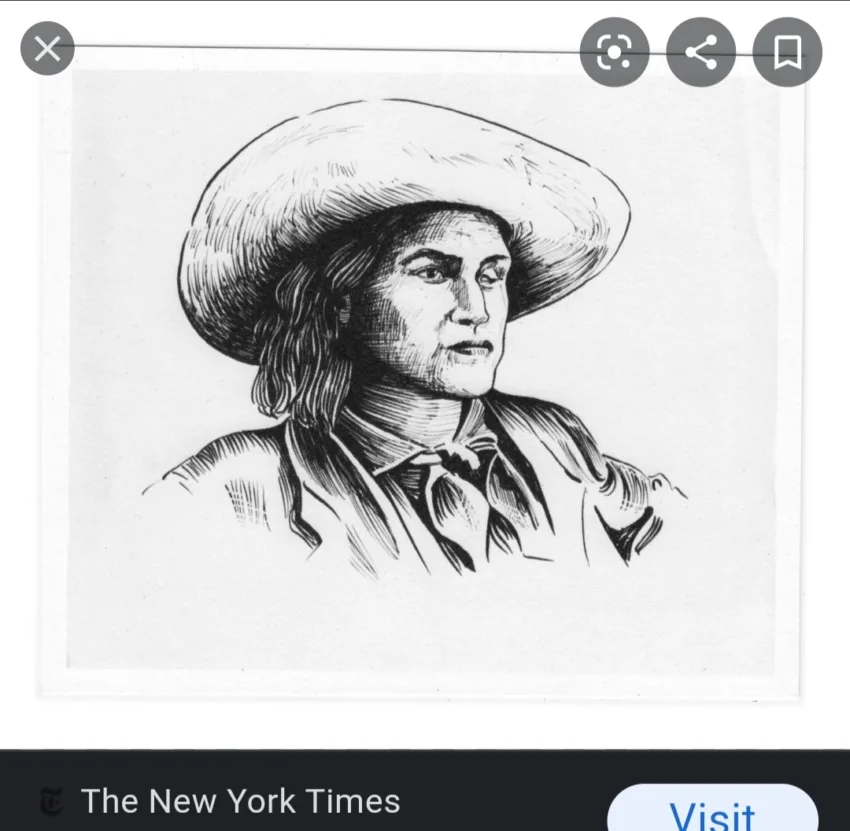
1194: Charlotte “Charley” Parkhurst
California Stagecoach Driver
Born: 17 January 1812, Lebanon, New Hampshire, United States of America (or Possibly Sharon, Vermont, United States of America)*
Died: 18 or 28 December 1879, Watsonville, California, United States of America**
Also Known As: One-Eyed Charley or Six-Horse Charley
Charlotte was abandoned by her parents, according to some sources, and grew up in an orphanage. Around the age of twelve to fifteen (sources differ), she decided to run away and donned men’s clothing in order to do so. She maintained the persona for the rest of her life, building on it and making it more believable over time. Charlotte eventually found work in some stables, cleaning the stalls, and washing the carriages.
Charlotte moved to Rhode Island with the owner of the stables she worked at. While working for him, she also learned how to ride horses and drive stagecoaches, quickly becoming known as the best stagecoach driver on the East Coast.
In 1851, following the rush of miners who flocked to California during the Gold Rush, Charlotte moved across the country to join the crowds. She worked for several stagecoach companies over the years, including Wells Fargo. Charlotte drove routes all over the state, from Stockton to Mariposa, San Jose to Santa Cruz, Sacramento to Placerville, and more.
Around 1856, Charlotte was kicked in the head by a horse she was trying to shoe, and wore an eye patch the rest of her life as a result. She was known for being a rough and rowdy character who drank whiskey, chewed tobacco, and swore just like the rest of the men. In 1858, a bandit robbed Charlotte’s coach. When he tried to rob her again a few months later, she shot and killed him. To say Charlotte was one tough SOB—er lady that is!--would be an understatement.
In 1864, John Ross Browne, a journalist from Harper’s Monthly Magazine, rode a coach that was driven by Charlotte. A year later he summed up his experience for the magazine, immortalizing Charlotte forever under the name “Charlie.” Charlotte was attributed the following quote about her experiences on the road:
“Fact is I’ve traveled over these mountains so often I can tell where the road is by the sound of the wheels. When they rattle, I’m on hard ground; when they don’t rattle, I generally look over the side to see where she’s a going.”
Charlotte registered to vote in 1868 (although it is unknown if she ever actually cast a ballot). If she did ever vote, she could have been the first woman to vote in the United States (Sacagawea voted in newly acquired US territory and did not vote in a nationally balloted election).
In the 1870s, Charlotte stopped driving stagecoaches and moved on to operate a saloon for a time, as well as a way station (she sold both companies). Charlotte also owned a stake in a cattle ranch for a while, but she sold that as well. When she retired from the stagecoach, she was known as the “Best Damn Driver in the West” according to some.
She passed away from tongue and throat cancer. It is said that in the last few months of her life, she kept telling the family she was living with that she had a secret she wanted to share, but she always postponed actually telling them the secret.
Two articles I read note that the medical examiner viewing her body determined that she had given birth at one point in her life (one of the sources also states that the child had died at a young age—though how that could be determined by viewing the mother’s body I have no idea!). The only other source I found who noted this fact was her Wikipedia article. The Wikipedia article states that the source for the having given birth story is the Encyclopedia of Frontier Biography by Dan Thrapp. I’ve never read this book myself so I cannot verify this one specific fact, but I still thought it interesting enough to include.
Charlotte never revealed her secret and its only known because of her body being examined after her death. In this article, I have referred to her with female pronouns and her name at birth because there is no evidence she actually wished to become a man in the way we see transgender men do today. Charlotte socially transitioned to that of a male in order to survive and attain the job she loved, that of a stagecoach driver, because it would have been next to impossible for her to do so as a woman.
Charlotte has a Daughters of the American Revolution chapter named after her in Folsom and El Dorado Hills, California. The chapter was founded and organized in May of 2021.
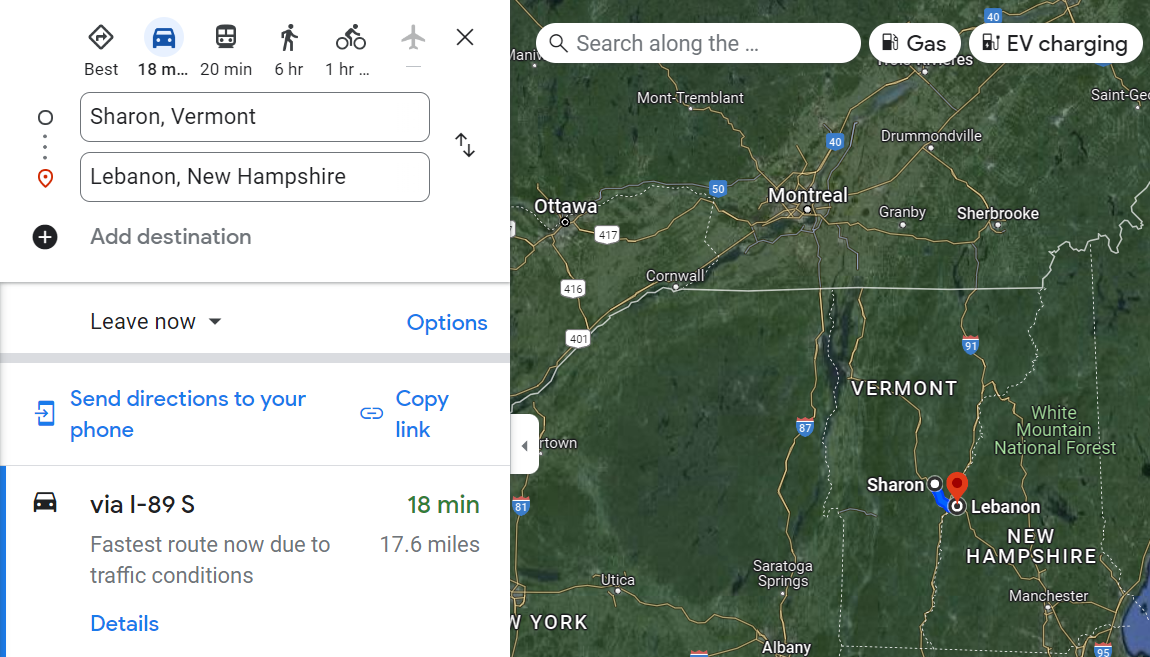
*The differing birth location is because it seems every other source I found listed either New Hampshire or Vermont. Wikipedia seems to think the differing opinions stems from the fact that Charlotte was born in Vermont, but the orphanage she was raised in was in New Hampshire, HOWEVER I went a little further and clicked on the sourced link Wikipedia used for this fact, and that article also states Charlotte was born in New Hampshire and not Vermont. I have no idea which state she was born in, but at least they are side by side. To cover my bases I will list Charley on both Vermont and New Hampshire’s listings, just in case. I also decided to do a quick search, and according to Google Maps the two cities (which still exist as of 2024) are less than eighteen miles (or around twenty-nine kilometers) apart. I included an image from Google Maps below.
**Sources also differ on whether she died on the 18th or the 28th of December, with the sources being split equally between the two dates.
Badges Earned:
Find a Grave Marked
Located In My Personal Library:
Haunted West: Legendary Tales From the Frontier (Magazine Published by Centennial Today, Fall 2020)
America's Women: 400 Years of Dolls, Drudges, Helpmates, and Heroines by Gail Collins
Stagecoach Women: Brave and Daring Women of the Wild West by Cheryl Mullenbach
Sources:
https://www.britannica.com/biography/Charley-Parkhurst
https://www.legendsofamerica.com/charley-parkhurst/
https://thenovelhistorian.com/truth-and-fiction/
https://en.wikipedia.org/wiki/Charley_Parkhurst
https://www.parks.ca.gov/?page_id=25451
https://folsom.californiadar.org/index.php/about-us/chapter-history