The Exasperated Historian
Menu
  • Home
  • The Women’s List (New)
  • The Men’s List
  • The Animal List
  • Collections
  • The Blog
  • Contact Us
  • FAQ
Menu

Category: Birth Locations

12) Tardar Sauce

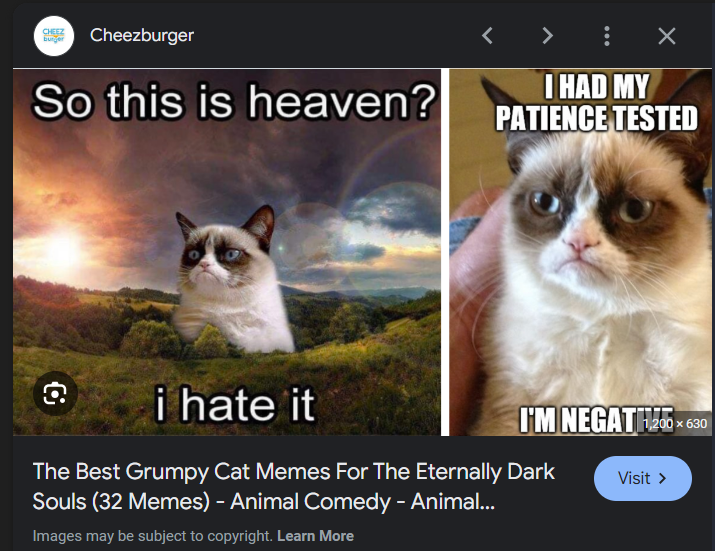
Courtesy of Cheezburger
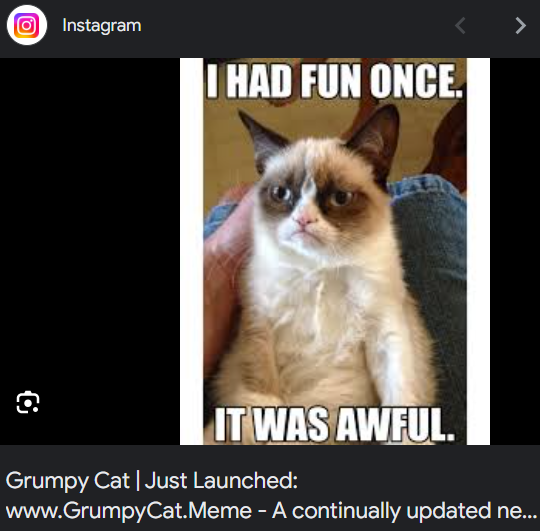
Courtesy of Instagram

12: Tardar Sauce

The Internet’s Most Famous Cat

Born: 4 April 2012, Morristown, Arizona, United States of America

Died: 14 May 2019, Morristown, Arizona, United States of America

Also Known As: Grumpy Cat

Tardar Sauce climbed to internet fame in 2012 when her image went viral for the first time. In the beginning, people claimed her face had to be photoshopped, but after a video of her was posted to YouTube, the world realized that no—she just literally looked like that.

The reason why Tardar Sauce looked so dang grumpy was because she suffered from feline dwarfism, which affected her facial features and accounted for her tiny size. She was a regular old domestic shorthair cat otherwise, and lived and died in the small town of Morristown, Arizona.

While cats in general are especially loved online, Tardar Sauce in particular was especially popular, in both meme format and as a brand. Her image graces everything from shoes to calendars, perfumes, merchandise, and so much more. She even became a official spokescat for Friskies. Tardar Sauce even appeared on multiple television shows, including Good Morning America and The Today Show.

Tardar Sauce was only seven years old when she passed away following complications from a Urinary Tract Infection (UTI). As all cat owners should be aware of, UTIs are especially deadly in feline friends.

When she passed away, Tardar Sauce had 8.5 million followers on Facebook, 1.5 million on Twitter, and 2.4 million on Instagram. Tardar Sauce’s owners had done their best to protect her Intellectual Property rights both during her life and after, meaning her owners became extremely wealthy as a result of her adorably grumpy face.

Badges Earned:

Find a Grave Marked

Sources:

https://www.grumpycats.com/about

https://www.cnn.com/2019/05/17/celebrities/grumpy-cat-dead-intl-scli/index.html

https://knowyourmeme.com/memes/grumpy-cat

https://www.catster.com/guides/what-cat-breed-was-grumpy-cat/

https://www.wipo.int/wipo_magazine/en/2018/01/article_0008.html

https://www.findagrave.com/memorial/199192055/grumpy-cat

11) Harambe

Screenshot_20240515_103421_Instagram
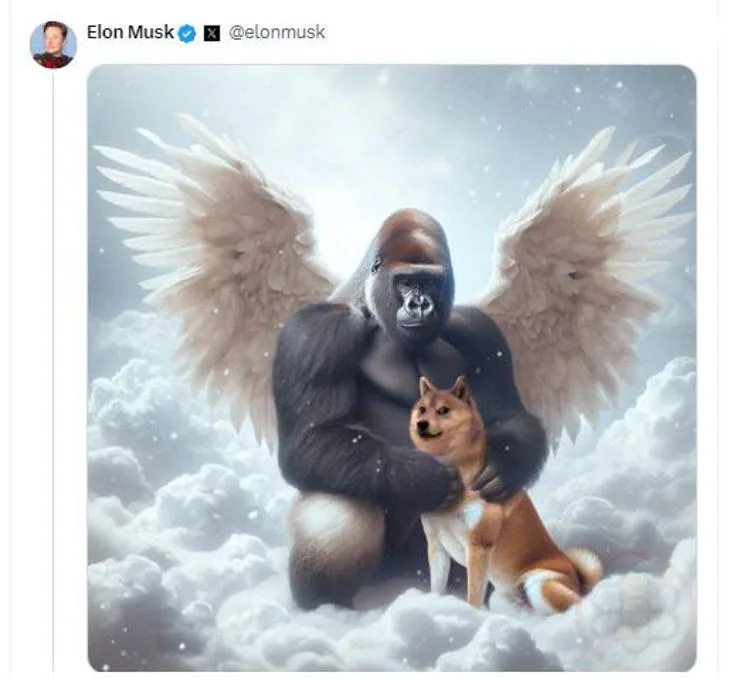
musk_doge
A Facebook Meme About Harambe
An Instagram Meme About Harambe
A Facebook Meme
A Facebook Meme
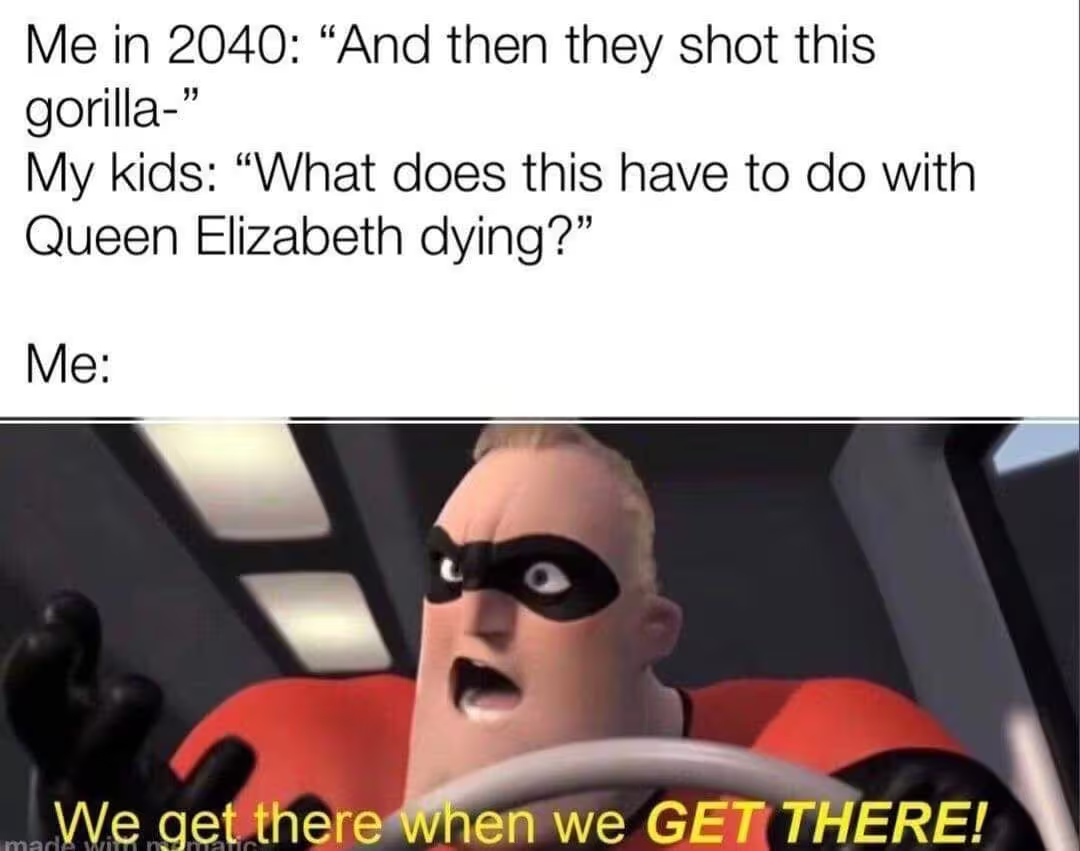
A Harambe Meme

11: Harambe the Gorilla

Gorilla Whose Tragic Death Became One of the Biggest Internet News Stories of All Time

Born: 27 May 1999, Brownsville, Texas, United States of America

Died: 28 May 2016, Cincinnati, Ohio, United States of America

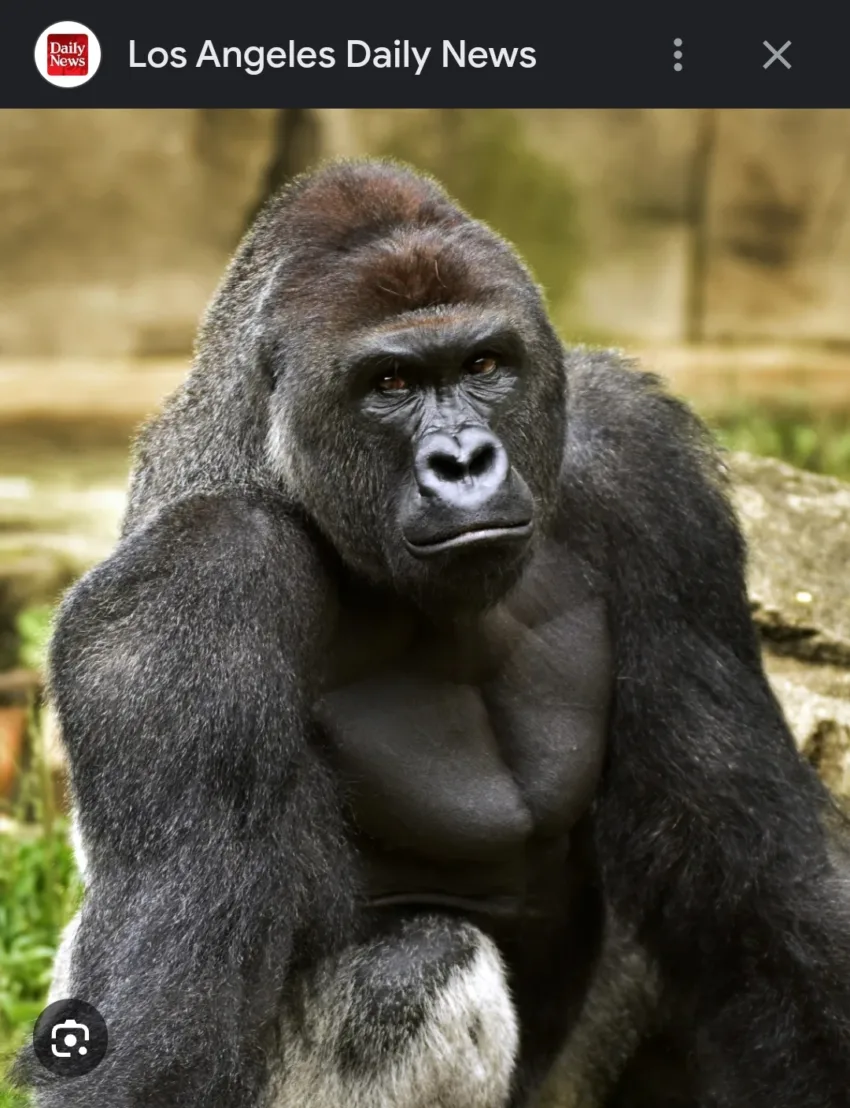
Harambe was a western lowland silverback gorilla. He was born at the Gladys Porter Zoo in Brownsville, Texas, and came to live at the Cincinnati Zoo in 2014.

At the time of Harambe’s death, he weighed approximately 450 pounds and was one of ten gorillas living at the zoo. As of 2019, western lowland gorillas are considered critically endangered in the wild, with only about 95,000 to 125,000 existing in the wild (sources differ). That same year, approximately 765 of the species existed in zoos around the world.

Harambe was killed as a result of a tragic accident at the Cincinnati Zoo. In May of 2016, a three or four-year-old human child (sources differ on his age) fell into Harambe’s exhibit (called “Gorilla World”) at the zoo. Even though Harambe did not actually harm the child, he was deemed dangerous and was shot to death by an emergency response team sent in to rescue the child.

The option to use a tranquilizer dart was abandoned by the Emergency Response Team because the child was still located within the enclosure. Had the team fired a tranquilizer dart, they may have struck the child or—because the dart takes a few minutes to take effect—they may have agitated Harambe and caused him to further harm the child.

Reports conflict on how much danger the child was actually in. Some say Harambe didn’t actually hurt the child, while others—including the Cincinnati Zoo themselves, say that Harambe was violently dragging the child throughout the exhibit. Other sources like National Geographic, however, state that Harambe was showing no signs of actual aggression and instead was showing normal playful gorilla behavior; similar to how male gorillas play with their young.

After the child was removed from the exhibit, he was transported to a local hospital and released later that night.

This incident was the first time the Gorilla World exhibit had been breached in the thirty-eight years it had been open. The exhibit was regularly inspected and maintained, but because of this accident had to be re-inspected and changes made to reinforce the barriers.

At the time of his death, Harambe was seventeen years old and had celebrated his birthday only the day before. In all of those seventeen years, he had never displayed aggressive behavior or shown any other signs that something like this would happen. In all honesty--Harambe might still be alive today if the parents or guardians of the child had been paying closer attention and stopped them from falling into the exhibit. According to the Philadelphia Zoo (article linked here and below), Harambe's species can live up to thirty-five years in the wild or fifty-five years in captivity.

Some people believe that Harambe’s death sparked the beginning of the end for humanity, and honestly, I can sort of see their point. Ever since Harambe died in May of 2016 the world has irrevocably changed—and for the most part not for the better. Think about how your life has changed since 2016. It is now May of 2024 when I am writing this article, so think about the past eight years of your life, the lives of those around you, and the world at large.

In the United States alone, since 2016, we have seen a former real-estate mogul and television personality become president (Donald Trump)*, then Covid happened (no explanation needed there), then we had the walking-corpse known as Joe Biden get elected as president—and don’t even get me started on this upcoming election. We also saw riots sparked by the Black Lives Matter movement and the group known as ANTIFA cause millions of dollars in property damage across the country—and for some reason YouTubers and other celebrities have decided to get involved at times. I mention this last bit because, as a native Arizonan, I found it hilarious when Jake Paul was arrested for rioting at a mall in Scottsdale. Of all the people, seriously?

Oh—and apparently the restaurant chain Red Lobster might be going out of business because of their never-ending shrimp option on their menu.

Around the rest of the world, we’ve seen the death of Britain’s longest-reigning monarch Queen Elizabeth II, and Queen Margarethe II of Denmark abdicated, which means there are currently no queens regnant in the entire world. The Ukrainian/Russian War kicked off in early 2022, Israel and Palestine are once again at war, Haiti completely collapsed for a few months in early 2024, and a coup was just stopped in the Democratic Republic of the Congo. And then in animal news, Kabosu died a few days ago—the real Shiba Inu dog behind the “Doge” meme.

Now, as a historian it is my job to point out that current events that impact the world have constantly been happening since before recorded history. So, do I really think the world has suddenly started falling apart because of the death of a single gorilla? No. I simply believe that the internet and social media have allowed us to be more “plugged-in” for lack of a better term, meaning people can access information much more quickly and become much more informed—whether correctly or incorrectly—about world events; all of which has become much more prevalent since 2016.

Harambe’s death was tragic, there is no doubt about that. He should be remembered for all eternity—and the internet will always keep his memory alive through memes if nothing else. But the world has always been falling apart, and while the last eight years have been crazy to say the least...in the grand scheme of things they have not been any crazier than earlier periods in history.

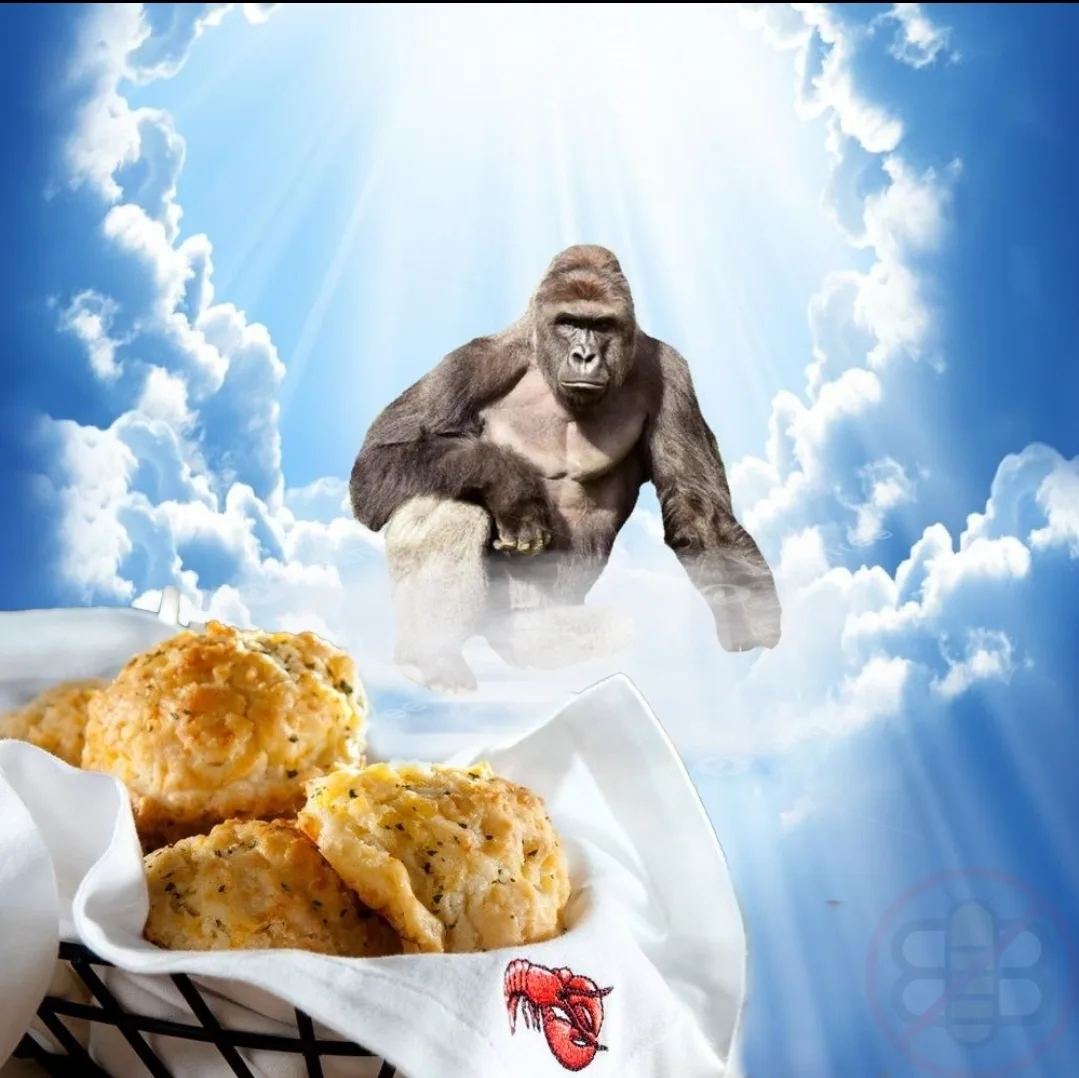
Rest in Peace Harambe. Keep Kabosu safe with you now, and enjoy those cheddar bay biscuits that Red Lobster is about to take away from the rest of us. (Except for those of us who have had a better copycat recipe for ages already!).

*Although it is difficult to prove, at the time of the 2016 Presidential Election in the United States, it was rumored that Harambe had amassed several thousand votes as a write-in candidate, despite the fact that he had died several months before.

Badges Earned:

Find a Grave Marked

Harambe Sources:

https://www.cincinnati.com/story/entertainment/2023/05/26/when-did-harambe-die-why-was-he-killed-what-happened-to-the-gorilla/70249358007/

https://cincinnatizoo.org/cincinnati-zoo-devastated-by-death-of-beloved-gorilla/

https://www.nationalgeographic.com/animals/article/harambe-gorillas-behaviors-zoos-animals

https://firstmonday.org/ojs/index.php/fm/article/download/9449/10089

https://www.philadelphiazoo.org/animals/western-lowland-gorilla/#:~:text=Males%20on%20average%20weigh%20300,leaves%2C%20and%20other%20plant%20parts. 

https://www.findagrave.com/memorial/163475420/harambe-the-gorilla

World News Events/Sources:

https://www.archives.gov/electoral-college/2016

https://www.cdc.gov/museum/timeline/covid19.html

https://ballotpedia.org/Election_results,_2020

https://www.heritage.org/progressivism/commentary/congress-should-investigate-the-black-lives-matter-riots

https://www.fox10phoenix.com/news/police-charges-against-jake-paul-in-connection-to-scottsdale-fashion-square-riot-dismissed

https://www.post-journal.com/news/top-stories/2024/05/red-lobster-seeks-bankruptcy-protection-after-closing-dozens-of-restaurants/

https://www.bbc.com/news/uk-61585886

https://apnews.com/article/denmark-queen-margrethe-abdication-what-to-know-389235c59f6fa081bf14c42db1ce5eee

https://www.cfr.org/global-conflict-tracker/conflict/conflict-ukraine

https://www.bbc.com/news/world-middle-east-67039975

https://apnews.com/article/haiti-garry-conille-new-prime-minister-gangs-7d9255f4b9ef9ad493b616575f15418d

https://www.dailystar.co.uk/news/world-news/brit-could-face-execution-over-32908331

https://www.dailystar.co.uk/news/world-news/brit-could-face-execution-over-32908331

10) Smokey Bear

10: Smokey Bear

The Real-Life Inspiration Behind the Campaign “Only YOU Can Prevent Wildfires!”

Born: January 1950, Lincoln National Forest (Near Capitan), New Mexico, United States of America

Died: 9 May 1976, Washington, District of Columbia, United States of America

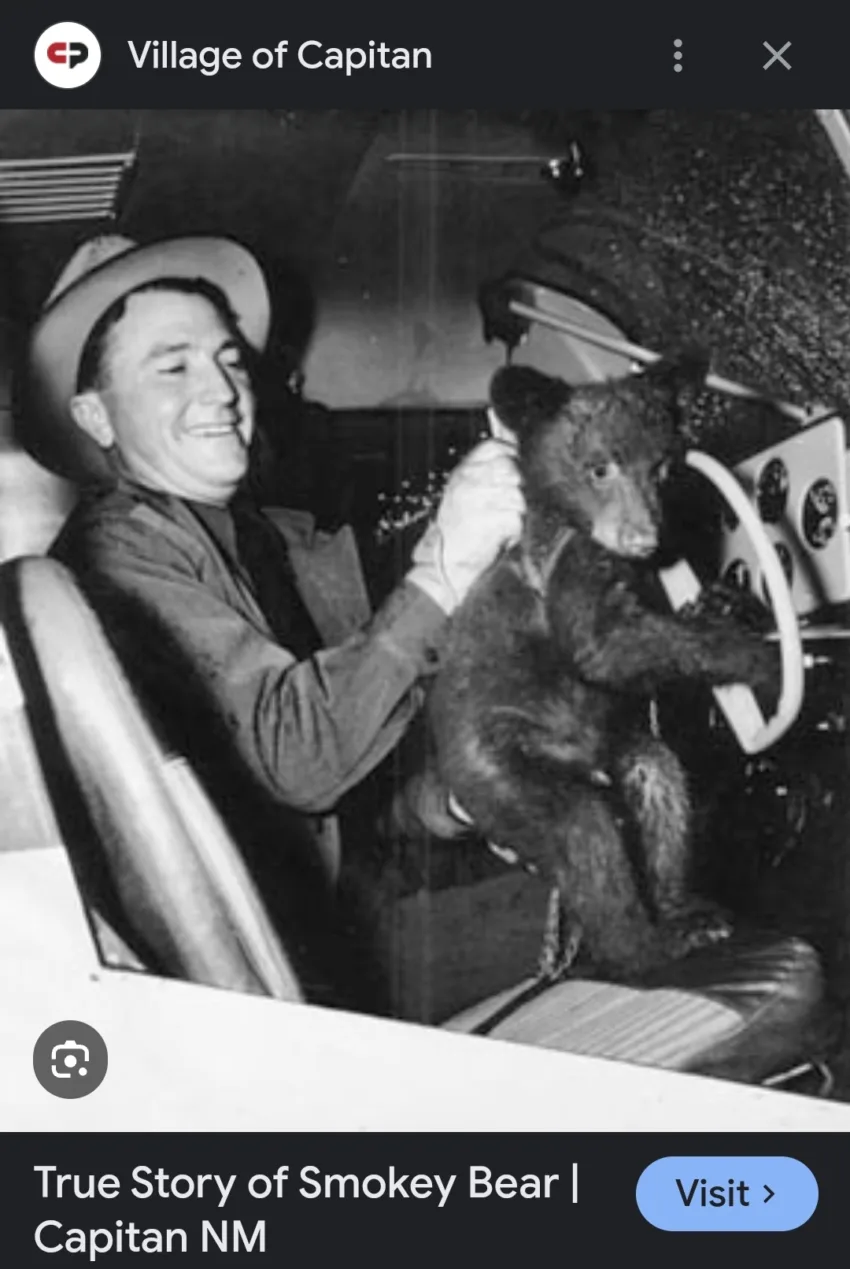
In Spring 1950, a wildfire was blazing through the Capitan Mountains in New Mexico. While various crews battled to contain and stop the fire, a report went out that a small bear cub was wandering the line of the blaze all alone.

The fire crews hoped that the bear cub’s mother would soon return to save her baby, but sadly this would not occur. It is believed the cub's mother died in the fire. Instead, the little bear would climb a tree to try to escape the blaze. While he would survive, he did not do so unscathed. His paws and hind legs were badly burned, but the firefighters were able to remove him from the tree.

A local rancher agreed to take care of the cub initially, but the bear was eventually flown to Santa Fe where his wounds were carefully treated.

News of the bear cub spread like, well, wildfire, and soon his story was known all across New Mexico and the rest of the country. Everyone wanted to know how he was doing and if he would survive. The state game warden eventually wrote to the chief of the United States Forest Service with an idea. The bear cub’s life would be dedicated to a publicity campaign to help prevent further forest fires.

Soon after, the little cub was sent to the Smithsonian's National Zoo in Washington DC. He would spend the rest of his life known by his new name—Smokey Bear. Smokey would spend the rest of his life living at the zoo and became so popular the US Postal service had to assign him his own zip code! According to the State Foresters website (article linked below) the only other individual in US history to have received their own zipcode is the sitting US President. He received gifts like honey, letters from children, and much more.

While living at the zoo, Smokey learned to love peanut butter sandwiches, which he was given as a treat alongside his regular diet of various kinds of fish. Smokey was also given a mate, a female bear named Goldie, in 1962. The zoo hoped the pair would mate and continue on Smokey's legacy, however, by 1971 the pair had failed to produce any cubs of their own, so the zoo instead gave the pair an orphaned cub from Smokey's home forest of Lincoln. The zoo announced that Smokey and Goldie had adopted the cub, who was named Little Smokey.

Children all across the United States were raised to not only recognize a cartoon image of Smokey*, but also tips on how to prevent forest fires (the phrasing was later changed to “wildfires”). Even today, Smokey’s image is one that is recognizable to people all across the United States—one study said as many as 96% of US adults recognized Smokey in 2022. His is the longest running PSA Campaign in US history and will officially reach its 80th anniversary in 2024.

After his death, Smokey was returned to be buried at the Smokey Bear Historical Park in Capitan, New Mexico, near where he was originally spotted and rescued.

According to the official Smokey Bear website, there is some confusion around Smokey’s name. In 1952, a song about Smokey was released. In order to “maintain the rhythm” of the song, the writers said his name as “Smokey the Bear” which is why so many call him “Smokey the Bear” today, but according to the site, his name never actually included “the” and was always just “Smokey Bear.”

Today, about 85% of forest fires in the United States are caused by humans. Whether it is intentional arson or accidental doesn’t matter when thousands of acres of forest land are burning every year. As someone who has lived in Arizona most of my life, I was raised to recognize Smokey’s image and to be much more conscious of fires and their causes. All throughout my life we have had one devastating fire after another, whether it be Rodeo Chediski (which burned 462,600 acres), the Wallow Fire (which burned just over 535,000 acres and as of May 2024 is the most devastating forest fire in recorded Arizona history), Yarnell Hill (which burned around 8,000 acres), or so many others. These fires not only burn thousands of acres of forest, as I mentioned, but they can also turn deadly at times.

In 2013, The Yarnell Hill fire ripped across Arizona. While this particular fire was found to have been caused by dry lightning, the devastation it caused led to the deaths of nineteen members of the Granite Mountain Hotshots. If this sounds familiar, it is because their story was memorialized in the 2017 film “Only the Brave”.

I want to take a moment here, before getting back to Smokey, to memorialize the Granite Mountain Hotshots and thank them for their service. The Hotshots were:

Grant McKee, 21 years old at the time of the fire

Kevin Woyjeck, 21 years old at the time of the fire

Wade Parker, 22 years old at the time of the fire

Robert Caldwell, 23 years old at the time of the fire

Anthony Rose, 23 years old at the time of the fire

Dustin DeFord, 24 years old at the time of the fire

John Percin Jr., 24 years old at the time of the fire

William Warneke, 25 years old at the time of the fire

Sean Misner, 26 years old at the time of the fire

Travis Turbyfill, 27 years old at the time of the fire

Garret Zuppiger, 27 years old at the time of the fire

Scott Norris, 28 years old at the time of the fire

Clayton Whitted, 28 years old at the time of the fire

Andrew Ashcraft, 29 years old at the time of the fire

Christopher MacKenzie, 30 years old at the time of the fire

Travis Carter, 31 years old at the time of the fire

Joe Thurston, 32 years old at the time of the fire

Jesse Steed, 36 years old at the time of the fire

Eric Marsh, 43 years old at the time of the fire

I would also like to thank Brendan McDonough for his service. Brendan was the only member of the Hotshots to survive the fire, and has dedicated his life to spreading awareness of fire safety to help prevent fires and the dangerous consequences of them.

There have been many other firefighters and hotshots who have been killed in the line of duty over the years as well, and I would like to thank all of them for their service here. I highlighted the Granite Mountain Hotshots specifically because their deaths continue to affect us Arizonans. I was thirteen years old at the time and I know that Arizona, and the world, lost nineteen brilliant and brave shining young men eleven years ago. They were all far too young and will never be forgotten.

Now, back to Smokey and the dangers fire can cause.

While Smokey Bear’s campaign slogan has changed to focus exclusively on human-caused fires (the phrasing changing from “Forest Fires” to more specifically “Wildfires” in 2001) it is important to remember that ALL fires are dangerous and need to be taken seriously. Please remember to always extinguish your fires and smother the ashes and coals as well. Do not allow chains or anything else to drag from your moving vehicle, always make sure to be safe with electricity to prevent sparks, remove dry brush and weeds that have died from your property, and always carry water with you to prevent small sparks/fires in case of emergencies. And, if you live in a place like Arizona where the forest service will post Fire Danger warnings, always make sure to heed those warnings and be extra-precautious during High and Extreme Fire Danger days.

Remember everyone, just like Smokey has taught us, “Only YOU can prevent wildfires.”

*Interestingly enough, the first Smokey Bear ads began to appear three years before the actual Smokey Bear cub was rescued in New Mexico. The real, living, bear helped promote the cartoon image that was already in use, but not so well known at the time. As previously mentioned, Smokey has been helping teach kids and adults across the country about the dangers of fires for eighty years, and hopefully he will continue to do so for many years to come.

Smokey Bear Sources:

https://smokeybear.com/en/smokeys-history/story-of-smokey

https://www.stateforesters.org/2022/08/03/smokey-bears-birthday-is-fast-approaching-whos-up-for-a-history-lesson/

https://en.wikipedia.org/wiki/Smokey_Bear#Living_symbol 

https://siarchives.si.edu/history/featured-topics/pictures/smokey-bear

https://www.forbes.com/sites/wendyaltschuler/2024/03/19/only-you-can-prevent-wildfires-smokey-bear-turns-80-this-august/?sh=170c6dd13949

https://www.findagrave.com/memorial/2482/the-smokey_bear

Various Fire Sources:

https://www.fs.usda.gov/research/treesearch/61210

https://www.fs.usda.gov/Internet/FSE_DOCUMENTS/stelprdb5333354.pdf

https://www.iawfonline.org/article/the-yarnell-hill-fire-a-review-of-lessons-learned/

https://www.weather.gov/fgz/YarnellFire2013

https://azstateparks.com/hotshots/the-hotshots/about-the-hotshots

https://www.imdb.com/title/tt3829920/

9) Ol’ Rip

9: Ol’ Rip

The Texas Horned Toad

Born: c.1897 or Earlier, Most-Likely Texas, United States of America

Died: 19 January 1929, Eastland, Texas, United States of America

In 1897, the city of Eastland in Texas was building a courthouse. A local resident had heard that horned toads, a specific kind of lizard native to the American Southwest, had the ability to hibernate for decades—or even as much as one hundred years--at a time.

Deciding to test that theory, the man (who happened to also be the county clerk) put his son’s pet horned toad in one of the courthouse’s cornerstones in July of 1897. The toad, at the time, was named Blinky. Thirty-one years later, the courthouse was demolished in order to build a newer version. Once the cornerstone was revealed, the residents looked at the horned toad and, voila! He was magically still alive.

(Even more magical—most Texas Horned Toads only live to be five years old in the wild).

Supposedly the story of Ol’ Rip, as he became known, was spread so far and wide that a crowd of three thousand people had gathered to see if the lizard was in fact still alive. They were not disappointed.

Ol’ Rip was given his name after Rip Van Winkle. The people of Eastland were so excited to see Ol’ Rip still among the living that they took him on a tour of the United States. He eventually made his way to Washington DC, where he met President Calvin Coolidge.

Sadly, Ol’ Rip didn’t live long after his re-discovery. A necropsy was performed after his death, and fluid was (supposedly) discovered in his lungs, leading the official cause of death to be listed as pneumonia (and before you ask, I did look it up and yes, lizards are capable of contracting pneumonia!). After the necropsy was completed, Ol’ Rip was embalmed and placed in a glass case display, where he remains to this day in the lobby of the Eastland, Texas courthouse.

In 1973, someone kidnapped poor Ol’ Rip’s final resting place and left a ransom note behind. According to the note, Ol’ Rip’s story was a hoax from the beginning, and the kidnapper wanted the other co-conspirators to come forward and pay a ransom to him. No ransom was ever paid, and no conspirators ever came forward. Eventually, Ol’ Rip and his coffin-display-case were recovered at the Eastland fairgrounds. He was returned to the courthouse, but now some wonder if it really is Ol’ Rip in the case or if the lizard had been swapped with a different corpse.

Today, a statue of Ol’ Rip is located on the Texas Christian University campus.

Texas Horned Toads are native to Texas and Oklahoma, but sadly the toads are now beginning to disappear. In Texas they are classified as threatened, and in Oklahoma they are listed as needing to be of the “greatest conservation” level. The reason for the Texas Horned Toad’s decline can be traced to two things: human invasion of their native territory, and fire ants that are native to South America. The fire ants have driven out the majority of the ants native to Texas, which made up the bulk of the Texas Horned Toad’s diet, and the ants can also invade the nests of the Texas Horned Toad’s and eat their young.

The Texas Horned Toads are also eaten by a huge variety of other native wildlife, everything from coyotes to other rodents, bobcats, roadrunners, snakes, the list goes on—and sadly the Texas Horned Toads move rather slowly and are not good at escaping their natural predators. Their best defense is looking tough while also blending in with their coloring—and they can also shoot blood from their eyes which is pretty cool! But all of this isn’t enough to save the Texas Horned Toads from slowly disappearing from the natural landscape.

The Horned Lizard Conservation Society was founded in 1991 to try to save the critters from complete extinction. In 2001, the Fort Worth Zoo became the first in the world to successfully breed Texas Horned Toads in captivity. This zoo, and other institutions, have begun a mission to breed the toads in captivity before releasing them back into the wild.

Badges Earned:

Find a Grave Marked

Located In My Personal Library:

The Encyclopedia of the Weird and Wonderful by Milo Rossi

Sources:

https://www.eastlandvisitor.com/area/ol-rip.html

https://familyweekend.tcu.edu/history-traditions-tour/ol-rip/

https://www.texasmonthly.com/video/legend-old-rip-horned-toad-eastland/

https://enewspaper.latimes.com/infinity/article_share.aspx?guid=39a30c21-8a24-4bdb-9176-bce8efb285a2

https://www.findagrave.com/memorial/269034375/ol'-rip


8) Cher Ami

8: Cher Ami

Carrier Pigeon That Saved the Lost Battalion in World War I

Born: c. Late March-Early April 1918, Possibly Norfolk, England, United Kingdom

Died: 13 June 1919, Fort Monmouth, New Jersey, United States of America

During the years in which World War I was fought, technologies like telephones and radio communications were still very new and not easily employable on the battlefield. As a result, armies on both sides of the war continued to use older forms of technology, such as employing pigeons to deliver messages across the lines. Though science was not able to prove it until 2013 when a study was conducted, those who employed pigeons in times of war had known for centuries that these birds had an incredible ability to be able to deliver messages. The reason for this is that pigeons are able to distinguish sounds at lower frequencies than humans. With this ability to hear lower sounds, the pigeons are able to create a map in their head based off of the sound waves that they are detecting. By using the map in their brain, pigeons are able to deliver messages to unknown locations and then return home with no issues. Who needs GPS when you can do it all in your head?

Sadly, because the use of pigeons was so well known, German forces were quickly trained to specifically aim to shoot down the pigeons carrying messages. It is unknown how many pigeons were killed during the war, but their service will never be forgotten.

In May of 1918, in the midst of what was then being called “The Great War”, the United States received six hundred English-bred birds, including a black check cock homing pigeon named “Cher Ami” for use in the war.

On May 21st, Cher Ami and fifty-nine other pigeons were assigned to Mobile Loft No. 11 of the US Armed Forces and were sent to the Aisne-Marne Sector of the Western Front in Europe. By September, the unit had moved towards the Argonne Forest, where Cher Ami and his fellow pigeons were used to help support the 77th Infantry Division. In total, Cher Ami would have twelve successful missions throughout the war, a fairly high number for a pigeon.

In October of 1918, a “Lost Battalion” of Allied Soldiers found themselves under attack from heavy—friendly—fire due to an inability to communicate where their position was. According to legend, Cher Ami was the only surviving carrier pigeon still with the battalion, and it was Cher Ami who managed to carry a message to the other Allied forces to stop the attack. The letter Cher Ami carried ended with the following sentence—

“For Heaven’s sake, stop it!”

Soon after taking flight, the American troops watched in horror as Cher Ami was shot in the chest. The small pigeon hit the ground, but he quickly righted himself and took flight once again, this time managing to dodge the rest of the German gunfire.

Cher Ami was able to deliver the message—covering twenty-five miles in around a half an hour, and luckily three days later the battalion was not only located, but also saved as the firing was redirected towards actual enemies. He managed to save the lives of 194 American service men—originally 554 men were a part of the battalion, but once Cher Ami’s message was delivered, the remaining 360 men were either dead or so wounded they had to be evacuated out of the Argonne Forest. When Cher Ami returned to his roost, he did so with a deep wound across his chest and another on his right leg. Both injuries were likely caused by either a bullet or a shell of some sort.

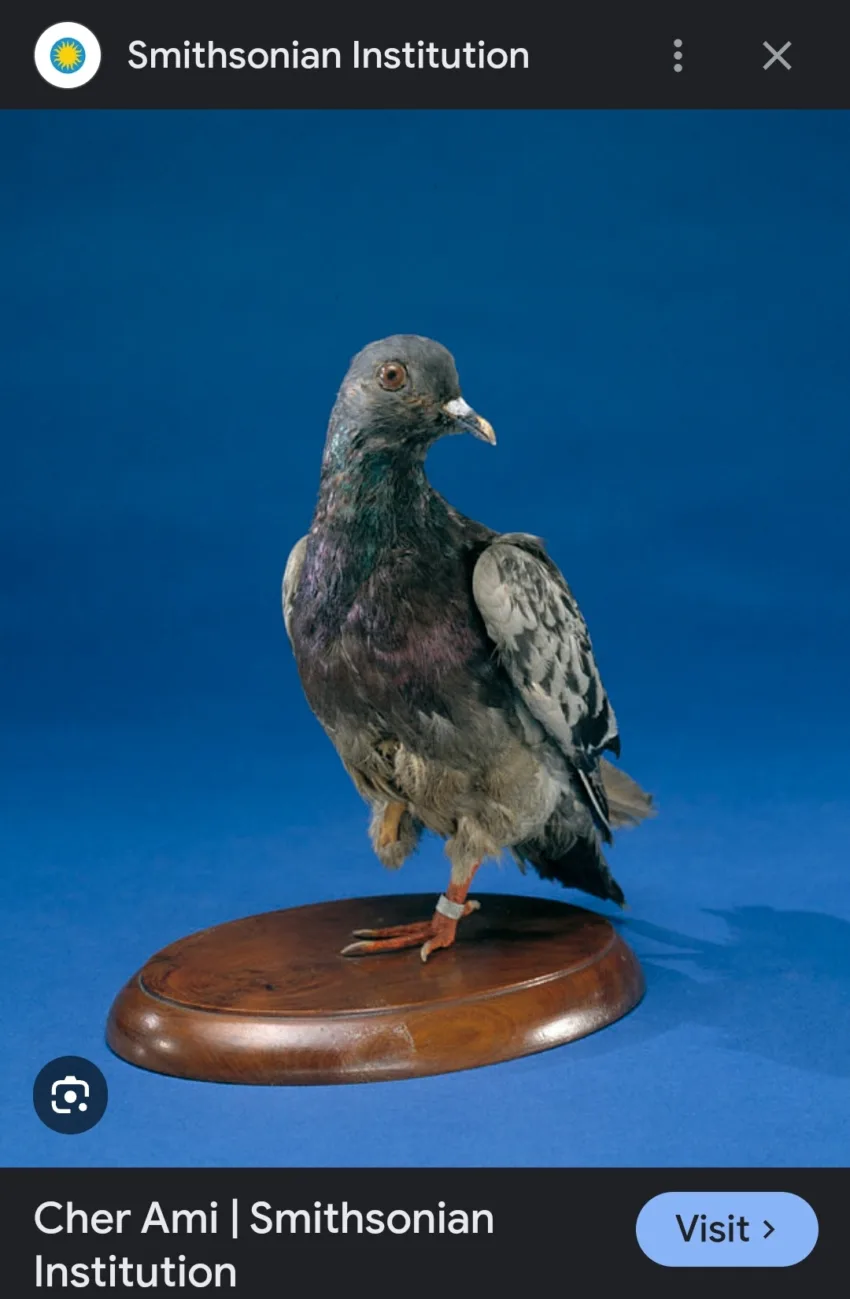
Because of the wound, Cher Ami’s right leg was amputated, he also found himself permanently blinded, and his military service came to an end. The French government bestowed upon him the Croix du Guerre with palm for his brave and heroic actions. He returned to the United States in April of 1919, but because of his injuries Cher Ami passed away in June. After his death, the US Army Signal Corps donated his body to the Smithsonian Institution, where he was subsequently taxidermized.

Sadly, the Army Major that was most tied to Cher Ami’s story, the officer that had been in charge of caring for Cher Ami and sending his messages back and forth, would commit suicide in 1921 as a result of his Shell Shock from the war.

In 1931, Cher Ami was posthumously inducted into the Racing Pigeon Hall of Fame. He also received a gold medal from the Organized Bodies of American Pigeon Fanciers. He was also given the Animals in War and Peace Medal of Bravery in 2019.

In 2021, the Smithsonian conducted DNA testing on Cher Ami’s remains in order to positively identify him as a male pigeon—because apparently his gender had been up for debate for over a century! He is now held in the Smithsonian Museum of American History.

A curator at the museum described Cher Ami’s mission thusly:
“It would be the equivalent of a human getting gut-shot and holding their guts and still walking 100 miles back. It’s just mind-blowing—with a broken leg, I should add.”

Badges Earned:

Find a Grave Marked

Located In My Personal Library:

The Encyclopedia of the Weird and Wonderful by Milo Rossi

Sources:

https://www.si.edu/object/cher-ami%3Anmah_425415

https://www.thenmusa.org/biographies/cher-ami/

https://www.smithsonianmag.com/smithsonian-institution/cher-ami-the-iconic-world-war-i-carrier-pigeon-makes-his-debut-at-carnegie-hall-180983212/

https://www.findagrave.com/memorial/8636364/cher_ami

7) Kabosu

7: Kabosu  かぼす

The Real Doge Dog

Born: c.2005, Japan

Died: 24 May 2024, Sakura, Japan

Kabosu lived to the age of eighteen and was a Shiba Inu dog who lived with her family in Japan. Her image was used to create the “Doge” meme many years ago.

At one point in her life, Kabosu was just another dog living in a shelter, threatened with euthanasia if she wasn’t adopted. Kabosu’s owner saw her image on a local shelter’s website in 2008. Immediately falling in love with Kabosu, her owner, named Atsuko, adopted the dog, and brought her home. Atsuko decided the date she adopted Kabosu, 2 November 2008, would from then on be considered Kabosu’s birthday, but the actual day Kabosu was born is unknown.

Kabosu and Atsuko’s lives changed forever in 2010, when Atsuko posted a silly photo of Kabosu online. While the image was seemingly normal to Atsuko and her husband, it quickly went viral online. Within three years, Atsuko became aware of the fact that her seemingly normal dog Kabosu was now an internationally recognized meme called “Doge”. While Atsuko never made any money off of the initial meme, Kaboso/Doge was being sold on all manner of merchandise and was known to billions around the world.

Soon after, a new form of cryptocurrency was created, called Dogecoin. Dogecoin is available around the world on various platforms and helped launch Kabosu to even greater fame. The coin is sold under the name DOGE.

In 2021, Atsuko created seven NFTs of Kabosu that were auctioned off for charity. The total amount raised was around $3.4 million. In 2023, Twitter temporarily changed their logo away from the famous blue and white bird to an image of Kabosu as Doge.

Kabosu’s owner took excellent care of Kabosu. By the end of her life she was nearly blind and deaf because of her advanced age. She also suffered cancer at one point but was able to pull through. At the time of her death, it was estimated Kabosu was eighteen years old (or around ninety in “dog years”). She lived with several cats along with her humans, and her fans were regularly updated with the goings-on in Kabosu’s life through an Instagram and Twitter (or X, whatever you want to call it) page decided to her under the screen names @kabosumama.

In November of 2023, a statue dedicated to Kabosu was unveiled in Sakura, Japan. The statue and monument were created after hundreds of fans around the world donated the money for it to be built. The statue unveiling also took place alongside a birthday party for Kabosu, where plenty of fans came to visit the famous dog and celebrate her life and legacy.

When Kabosu passed away, Atsuko announced the news that Kabosu went peacefully, saying on her Instagram:

“She quietly passed away as if asleep while I caressed her."

Badges Earned:

Find a Grave Marked

Sources:

https://www.asahi.com/ajw/articles/15142210

https://soranews24.com/2023/12/22/japan-creates-public-monument-to-original-doge-meme-dog-in-her-home-prefecture【photos】/

https://www.nasdaq.com/articles/18-years-of-much-wow-kabosu-the-doge-behind-dogecoin-gets-a-statue-for-birthday

https://dogeshibe.fandom.com/wiki/Doge_(Kabosu)

https://www.nbcnews.com/news/world/kabosu-dog-doge-internet-meme-died-rcna4472

https://www.findagrave.com/memorial/250404859/kabosu-sato

6) El Chango

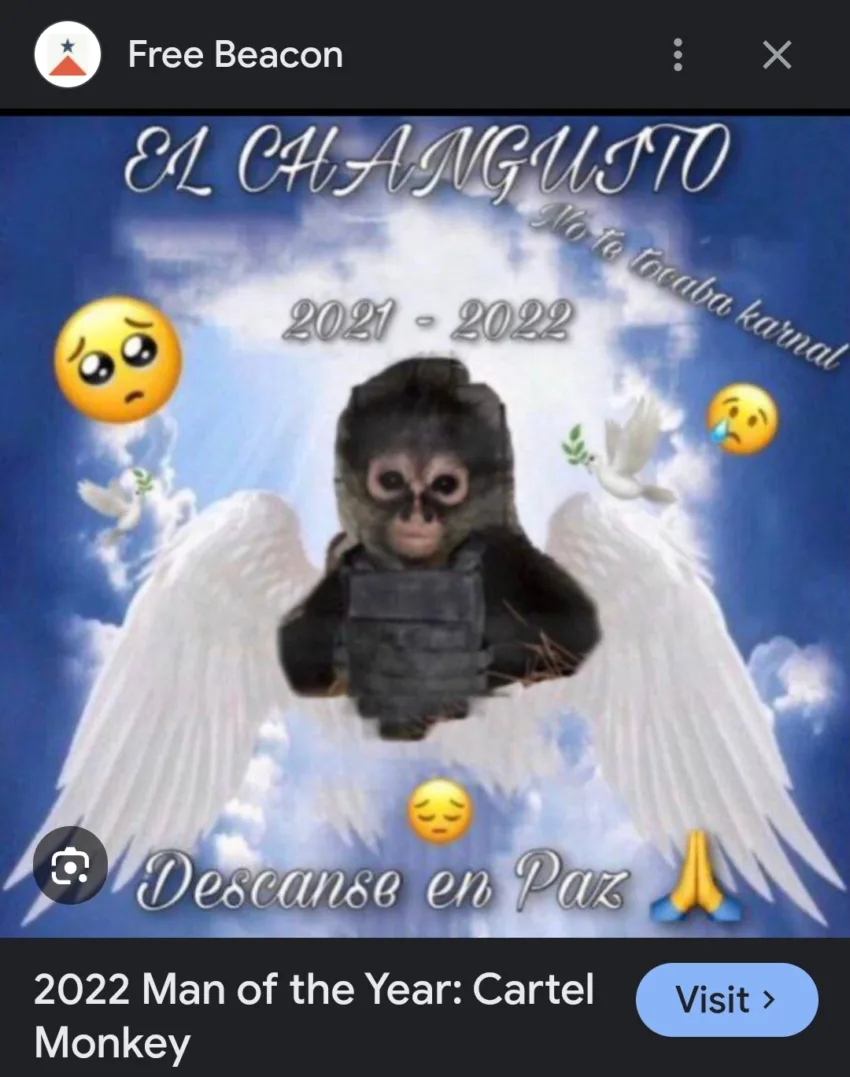
6: El Chango

The Mexican Drug Cartel Monkey

Born: c.2021, Presumably Mexico

Died: June 2022, Texcaltitlán, Mexico

The story of El Chango, or El Changuito (depending on the source) went viral after his death. Photos flooded the internet of a small spider monkey wearing a tactical vest and camouflage. The poor little guy evidently belonged to a member of a Mexican drug cartel (the gang is called La Familia Michoacana), and he had been shot and killed by Mexican police.

Evidently the monkey’s owners had attacked a convoy of Mexican police officers. As a result, the police returned fire—killing ten men and the monkey, as well as arresting several others and seizing multiple weapons.

Soon after the monkey’s death, the internet was flooded with both memes and also a song in tribute to him.

Nothing else is known about the monkey, and yet the memes indicate he was born only a year before he died. Rest in peace El Chango, may your memory never fade.

Sources:

https://www.indy100.com/viral/el-chango-monkey-killed-song

https://www.vice.com/en/article/k7bqxz/narco-monkey-shootout-narcocorrido-mexico

https://knowyourmeme.com/memes/drug-cartel-monkey-el-changuito

https://www.barstoolsports.com/blog/3422339/musical-tributes-are-being-written-to-el-chango-the-drug-cartel-monkey-who-was-killed-in-a-shootout

https://www.washingtonpost.com/nation/2022/06/22/el-chango-sicario-monkey-mexico-dead/

5) Smoky

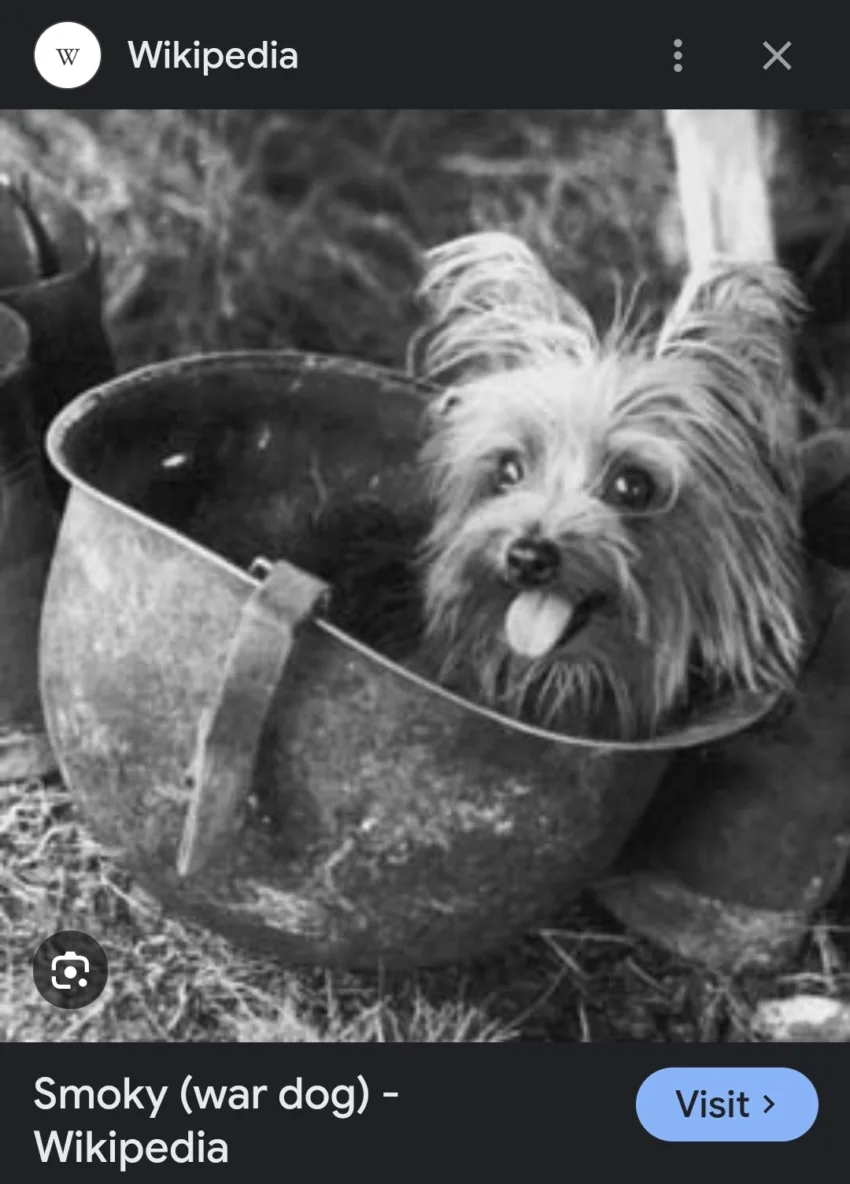
5: Smoky Wynne

The First Known Therapy Dog

Born: c.1943, New Guinea

Died: 1957, Cleveland, Ohio, United States of America

Smoky served the American forces in World War II. She was dubbed America’s “smallest” soldier—standing only seven inches tall and weighing approximately four pounds. Smoky survived eighteen months of combat and never lost her fighting adventurous spirit.

Smoky was discovered by American forces hiding out in a foxhole on the island of New Guinea. The original soldier who found Smoky ended up selling her to Corporal Bill Wynne for two Australian pounds, or around $6.44—upwards of $109 today. Corporal Bill Wynne decided to adopt the small dog, and together they went on many adventures, both during the war and after. Throughout the war, Smoky went everywhere Corporal Wynne did—always riding along in his backpack.

According to Roadside America (article linked below):

“Smoky learned over 200 commands and hand signals. She survived kamikaze attacks, a typhoon on Okinawa, the Luzon invasion in the Philippians (where she saved Wynne's life by warning him of an incoming shell), and a sting from a six-inch jungle centipede. Smoky also flew with Wynne on twelve combat air missions, spending long hours in a soldier's pack dangling near the machine guns.”

Smoky even delivered messages to fellow combatants by crawling through combat zones and tunnels that humans could not reach. After saving a group of GIs from what could have been certain death, she was awarded with the largest steak her platoon could find. Smoky was so adorable she was given the title “Champion Mascot in the Southwest Pacific Area” after Corporal Wynne submitted her photo to Yank Magazine.

During her eighteen months of service, Smoky visited patients in hospitals across the Pacific Theatre, reaching as far as Australia and Korea. Smoky’s ability to cheer up the sick was discovered after Corporal Wynne fell ill with Dengue Fever. Another GI was able to smuggle Smoky in to see her owner, and while she was cheering up Corporal Wynne, she also managed to make the other GIs feel more at ease as well. This is how Smoky became known as the world’s first therapy dog. One of her patients was a man struggling with Shell Shock (now known as Post Traumatic Stress). This particular patient had been completely withdrawn and unable to communicate for months, but the second Smoky was placed in his lap, the man smiled and began to speak again.

After the war, Smoky’s owner smuggled her back into the United States where she quickly became a celebrity. She was dubbed “Yorkie Doodle Dandy” and traveled all over the United States, visiting wounded GIs in hospital to cheer them up. Smoky also began to appear on a local Cleveland children’s television program, and visited nursing homes fairs, and schools as well. She brought cheers and good vibes everywhere she went, until she suddenly passed away in 1957 around the age of fourteen.

Smoky received a Purple Heart (from Australia) which is specifically awarded to animals for their service. In 2022, she was also posthumously awarded the Animals in War & Peace Distinguished Service Medal—the first dog to be so awarded. This award is the highest honor the United States can bestow upon an animal, and is awarded to:

“[R]ecognize the roles and contributions of United States service animals and their valiant human handlers for bravery and acknowledging their valor and meritorious achievements.”

When Smoky died, her owner buried her in a World War II .30 caliber ammo box. For nearly fifty years, Smoky’s grave was unmarked. However, a Vietnam veteran heard her story and decided to raise the funds needed to build a monument for her. Luckily Smoky’s owner Corporal Wynne still lived in the area and could point out where Smoky was buried. Corporal Wynne passed away at the age of ninety-nine in 2021. Sadly, he could not be buried beside his beloved dog because of city regulations.

Today, there are several monuments dedicated to Smoky, including in Ohio, USA and in Brisbane, Australia. Corporal Wynne published a book about Smoky, and there is also a short-film telling her story as well.

Badges Earned:

Find a Grave Marked

Sources:

https://www.roadsideamerica.com/story/23162

https://nationalserviceanimalsmemorial.org/project/smokey-first-therapy-dog-and-veteran-of-wwii/

https://www.military.com/history/worlds-first-therapy-dog-was-world-war-ii-pacific-veteran.html

https://www.cleveland.com/entertainment/2022/03/clevelands-own-wwii-hero-smoky-becomes-first-war-dog-to-be-honored-with-distinguished-service-medal.html

https://www.smokywardog.com

https://www.findagrave.com/memorial/27096513/smoky-wynne

4) Black Diamond the Elephant

4: Black Diamond the Elephant

Circus Elephant

Born: c.1898, Southeast Asia

Died:16 October 1929, Just Outside Kenedy, Texas, United States of America

Also Known As: Tusko or Congo

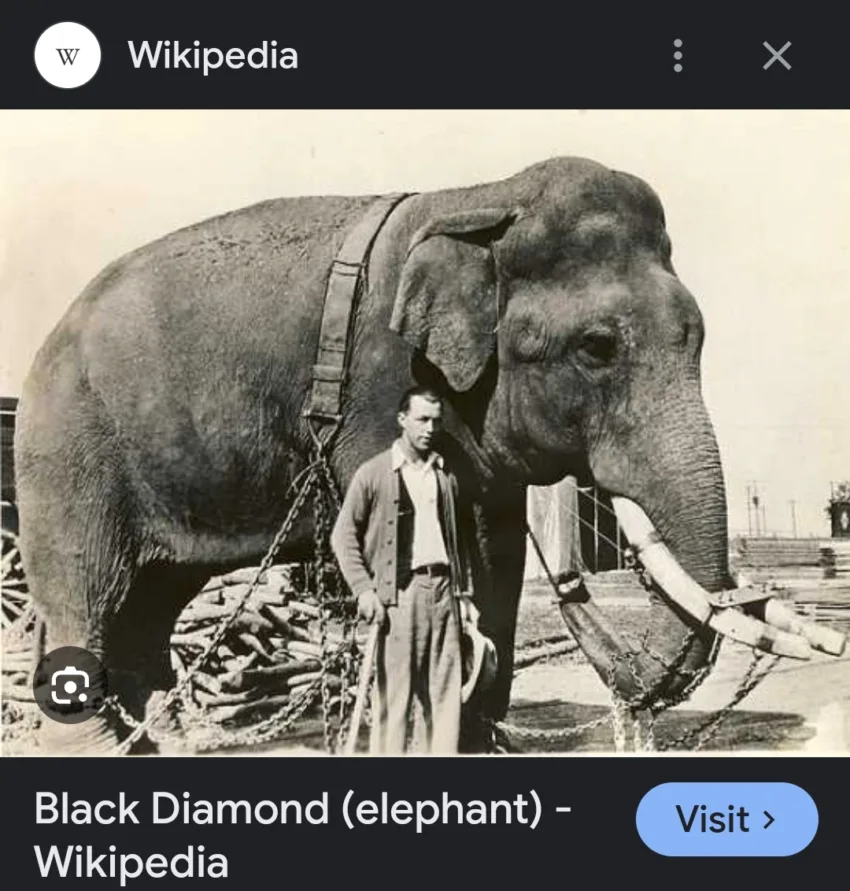
Black Diamond was a male Indian elephant owned by the AI G Barnes Circus. He reportedly weighed somewhere between six and nine tons and was called the largest elephant in captivity for his time. Like most circus elephants, Black Diamond had spent the majority of his life in perpetual chains. Whenever he wasn’t chained, Black Diamond was being forced to learn tricks or perform for crowds of people.

Before we get anything further, I would like to preface that most of the information about Black Diamond varies wildly depending on which source you read. I have tried to piece together the story based on which facts were mentioned most often, but in reality, we may never know what really happened in that small Texas town.

On October 12th, 1929, Black Diamond was being led at the front of the circus’s parade by his old handler, who had worked with him for a number of years previously but hadn’t worked with Black Diamond for over a year at the time of the parade.

Black Diamond was already responsible for the death of three people at the time of the incident, but not everyone was aware of that fact. His handlers had taken measures to prevent Black Diamond from harming anyone else by shaving his tusks short, attaching an iron bar across the tusks (both of which can be seen in photographs), and also shackling female elephants on either side of him to prevent him from getting out of control (although some sources say that he wasn’t shackled to other elephants on that day, but that he had been at other times in the past).

Nobody is sure what set Black Diamond off on this particular day, but whatever it was, Black Diamond panicked. He threw his handler off of his back with his trunk and then began to attack another woman by dragging her between parked cars and crushing her. Black Diamond’s handler got away with a broken wrist, but the other woman was later pronounced dead. Unfortunately for Black Diamond, his latest victim was a well-known member of the community and a wealthy landowner, which meant the community was even more upset over her death.

The only way the circus hands were able to regain control of Black Diamond was by tightening his chains that held him to the other elephants. Today, some historians and zoologists have theorized that Black Diamond was in a period of “must” –a hormonal change seen in male animals that make them more aggressive. Attaching an already aggressive male elephant to two females, while also in a state of must, was like lighting a match in a dynamite factory.

Black Diamond was quickly hurried back into his cage, which was one of the cars on the railway that his circus traveled with. Two circus hands were assigned to be guards over the elephant, and angry townspeople began to call for Black Diamond’s death.

The circus moved on to neighboring cities, hoping to leave the incident behind them, but the angry people of Corsicana followed the circus, continuing to demand Black Diamond be put down.

Also, unfortunately for Black Diamond, his circus had recently been bought out by John Ringling, of Ringling Brothers fame. Because John Ringling wanted to prevent a PR disaster from engulfing his newest venture, he began to try and come up with various methods of killing Black Diamond. He turned down an offer from the city of Corpus Christie, who offered to tie Black Diamond’s feet to tugboats and lead, drowning him in the harbor. Mr. Ringling then rejected the idea of having other elephants rip Black Diamond to pieces by tying chains to them and having them walk in different directions away from Black Diamond, who would have had the other end of the chains around his neck.

At first, the circus tried to poison the elephant by having him eat a crate of oranges and peanuts (reportedly his favorite food) that had been heavily laced with cyanide. Elephants are not stupid by any means however, and so it should be no surprise that Black Diamond refused to touch the food.

Finally, the circus decided they would kill Black Diamond via firing squad. Accounts differ as to how many rounds it took to kill the elephant—some sources say fifty while others say upwards of one hundred and seventy bullets were used to kill him.

According to the Texas Observer (article linked below):

“Onlookers rushed to collect relics from the massive body. A taxidermist and the Houston zookeeper arranged for the head to be transferred to the Houston Museum of Natural Science. The local undertaker, a member of the firing squad, made a foot into a stool that’s now displayed in the Karnes County Museum near Kenedy. A butcher sold strips of the hide for a dime apiece. A local who watched the execution ended up with some of the elephant’s bones.”

As of 2012, Black Diamond’s taxidermized head and skull are on display in “The Trophy Room”—a sort-of museum owned by a Texas oil baron who likes to display his trophies from big game hunts. He did not have a role in killing Black Diamond, but he did think it would be fitting to have Black Diamond’s head displayed with his other prizes.

Yes, I threw up in my mouth a little bit typing that.

(Luckily, I found a more updated source that says the exhibit was closed to the public as of 2015).

According to the research done on Black Diamond’s skull, visitors can clearly see where his tusks were sawed down, where the iron bar dug into the remaining tusk, and how one side of the right tusk is also more worn down because of how Black Diamond was forced to sleep on his side in his small railcar.

Black Diamond’s story is one of pain and heartbreak. How he was captured from the wild and brought to the United States has been lost to history, but it had to have been traumatic to say the least. Forced to perform for the vast majority of his life, maybe Black Diamond had finally had enough. Whatever set him off that day, I doubt he knew it would lead to his horrific death four days later. Today, there is no grave for Black Diamond. Instead, he was pieced apart and sold as souvenirs to small-town-Texas folk, and his story remains to remind us why wild animals are called that, wild.

Sources:

https://www.texasobserver.org/corsicanas-killer-elephant/

https://www.houstonchronicle.com/news/columnists/native-texan/article/88-year-old-recalls-1929-elephant-rampage-in-4795724.php

https://www.roadsideamerica.com/story/7832

https://txnavarr.genealogyvillage.com/biographies/b/black_diamond.htm

3) Mary the Elephant

3: Mary the Elephant

Born: c.1894, Southeast Asia

Died: 13 September 1916, Erwin, Tennessee

Mary was an Asian elephant who performed with the Sparks World Famous Shows circus, which traveled by railroad all over the country. She was purchased by the Sparks circus at the age of four and spent the remainder of her life with the Sparks family. How Mary was captured in the wild and transported to the United States has been lost to history.

Her owners billed Mary as “The Largest Living Land Animal on Earth” (which probably wasn’t true, but it sure sold tickets!)*. Her owner also liked to make up all sorts of rumors about Mary to make her more famous—or infamous—depending on how you looked at it. He claimed she had killed somewhere between two and eighteen men (according to one source—which also probably isn’t true, Mary is only known to have actually killed one man in her lifetime) and that she was worth $20,000.

Mary had been trained to perform all sorts of tricks in her circus, including tossing the first pitch in a baseball game, playing different notes on a horned instrument, and always led the parade whenever her circus rolled into town.

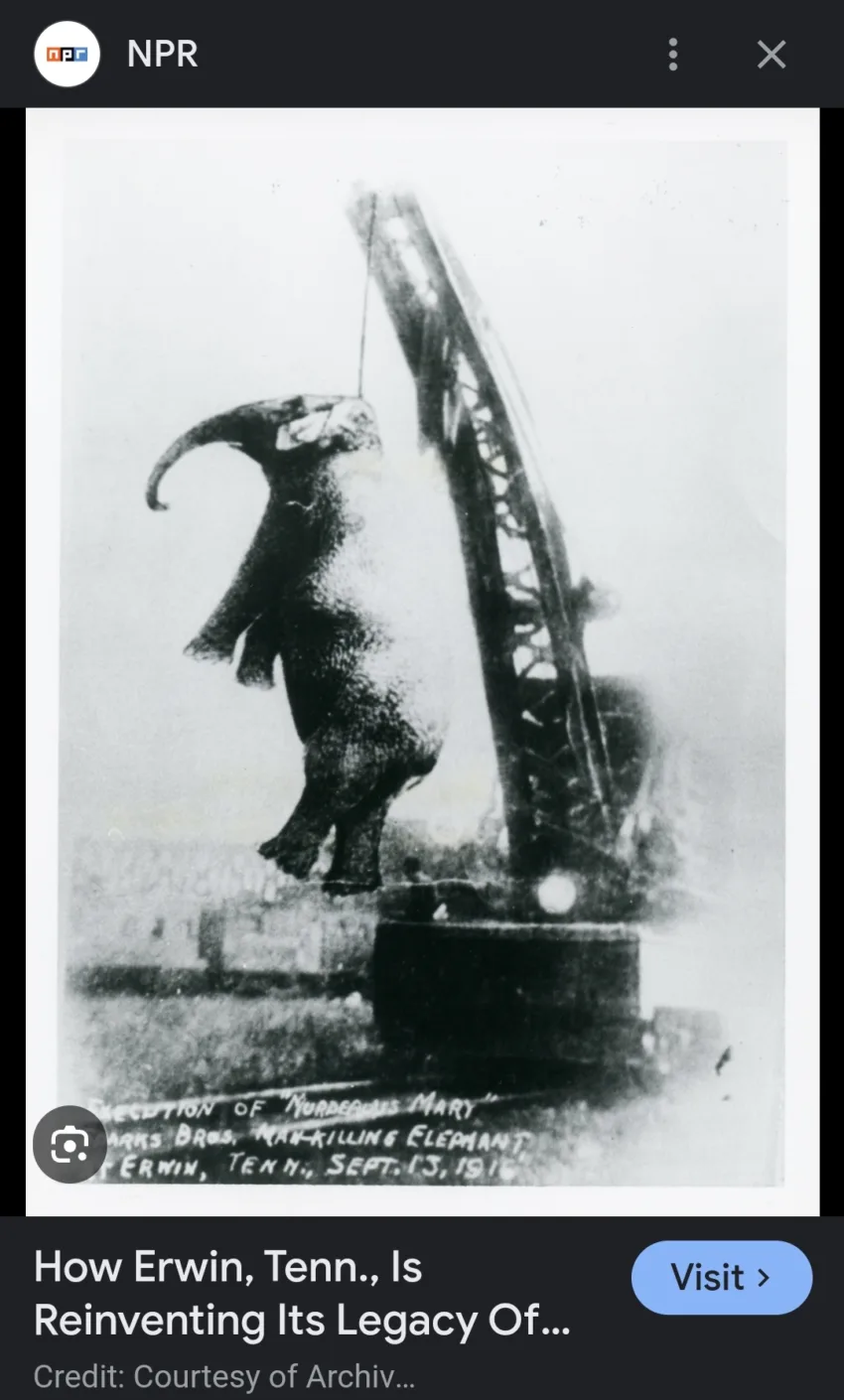
Mary was hung to death from a crane after she killed a man, earning her the nickname “Murderous Mary.” Evidently Mary’s trainer was upset by her attempting to eat a watermelon rind without his permission, so he hit her extremely hard with a sharpened stick or bull hook.

Mary, incensed by this, picked her “trainer” up off her back with her trunk, throwing him to the ground—and may have stomped on his head—killing him instantly. The trainer had never worked with elephants before the day of his death, and was actually a handyman, janitor, and hotel porter who had simply wanted to test out his luck as a pachyderm handler.

Mary didn’t rampage or run free, just calmly let her handlers get her back under control. A local blacksmith reportedly fired at her with his pistol, but she didn’t even react because of her rough hide.

Mary’s final performance went ahead as scheduled that night in Kingsport, Tennessee, where she had killed the man. The following day, Mary and the circus continued on to Erwin, where they were supposed to perform.

Instead of the circus going on as scheduled, however, the people of Kingsport (and Mary’s owner) decided it was time to hang an elephant instead. Mr. Sparks loved Mary like one of his own children, but he also knew that in order to save his business--and potentially the lives of others should Mary (rightfully) become enraged again--Mary would have to be put down.

The rest of the circus put on a matinee show in the neighboring town of Erwin, and after it was over, the people of the town killed Mary by hanging her from a crane in the railyard. Surviving witness reports state that Mary knew something was wrong. She acted nervously and was suspicious of those around her. In order to get Mary to cooperate, the other elephants she lived and performed with were marched alongside of her across town to the railyard.

After reaching the yard, the railroad workers used a chain to attach Mary’s leg to the railroad itself, and another chain went around her neck that led to the crane that would kill her. Then the circus employees marched the other elephants back the way they had come. The other elephants, also realizing something was now very wrong, trumpeted back to Mary as they were led away.

Mary was then winched into the sky by the chain around her neck. Some witnesses said she was only raised a few feet, others said as many as eight. As she was lifted, the workers realized her leg was still chained to the railroad and they heard a horrific cracking sound as the bones in her leg were torn apart. Soon after lifting her into the air, the chain snapped, and Mary fell onto her rear end. The fall was so heavy, Mary broke either her hip or her pelvis (sources differ). She was still alive, but now she was unable to move and in tremendous pain. Workers quickly threw another chain around her neck and lifted her into the air again, where Mary would struggle for a short while before falling still, dead. The crane workers held her in the air for between fifteen and thirty minutes, to ensure Mary really had died, before lowering her back to the ground.

When Mary was executed, thousands turned out to watch her die. After her death, Mary was unceremoniously buried in a large pit on the grounds of the railroad yard. Her grave is a source of fascination today, but the actual site was lost because it is located on private property. The owners, and the town of Erwin in general, are desperate to distance themselves from the horrifically sad story.

Mary was executed via hanging, instead of the more “humane” electrocution as Topsy had been killed, because of the fact that rural Tennessee did not have enough electrical power to kill her. Other methods of execution that were thought of but decided against included having two trains smash into either side of her, or having two trains pull her apart limb from limb.

The famous photograph of Mary’s hanging has been the subject of controversy to say the least. Some say its fake, others say its real. One way people have said its fake is because Mary doesn’t seem to have any tusks in the picture. Either her tusks were removed before she was hung (which has never been part of the story), they were removed after she was killed and then she was re-strung up for a photo opportunity, or the tusks are still on her body but because it’s a photograph from 1916 its just really hard to see them. Those are all possible explanations—or the photo is simply fake. Unfortunately, it seems the internet cannot make up their mind on which theory is the correct one.

*At the time, the largest elephant in the world was supposedly Jumbo, an elephant owned by Barnum and Bailey’s Circus. Mary was purportedly three inches taller than Jumbo and weighed five tons, or ten-thousand pounds.

Badges Earned:

Find a Grave Marked

Sources:

https://www.wbir.com/article/news/local/mary-the-elephant-hanging-100-years-later/51-ee92f081-718d-4da6-bb6d-8be8dbe2b8b6

https://rarehistoricalphotos.com/murderous-mary-1916/

https://blueridgecountry.com/archive/favorites/mary-the-elephant/

https://allthatsinteresting.com/murderous-mary-the-elephant

https://www.findagrave.com/memorial/122059661/mary-the-elephant

  • Previous
  • 1
  • 2
  • 3
  • 4
  • 5
  • 6
  • 7
  • …
  • 159
  • Next

Categories

Archives

  • July 2025 (10)
  • July 2024 (1)
  • January 2024 (1)
  • August 2023 (1)
  • June 2023 (2)
  • October 2022 (1)
  • July 2022 (1)
  • June 2021 (3)
  • December 2020 (3)
  • August 2019 (1)
  • July 2019 (2)

Search

© 2026 The Exasperated Historian | Powered by Minimalist Blog WordPress Theme