
The Exasperated Historian
Menu
  • Home
  • The Women’s List (New)
  • The Men’s List
  • The Animal List
  • Collections
  • The Blog
  • Contact Us
  • FAQ
Menu

Category: Birth Locations

1175: Anna May Wong

Courtesy of Wikipedia

"I was so tired of the parts I had to play. Why is it that the screen Chinese is always the villain? And so crude a villain--murderous, treacherous, a snake in the grass."

1175: Anna May Wong

The First Chinese-American Movie Star

Born: 3 January 1905, Los Angeles, California, United States of America

Died: 3 February 1961, Santa Monica, California, United States of America

Original Name: Wong Liu Tsong

Anna was also the first Asian-American actress to gain international recognition.

Throughout her career, Anna appeared in over sixty films. She started as a silent film actress and transitioned to the talkies, even appearing in one of the first technicolor productions.

Anna was the second born of seven or eight children in her family (sources differ). Her original name, Liu Tsong, meant “Frosted Yellow Willows.” The first school Anna and her sister attended had children of all different backgrounds as students, and the Wong sisters were teased relentlessly for their Chinese heritage. Anna’s parents moved the girls to a Chinese school soon after to spare them any more grief. Anna learned Cantonese while in school, but her parents were disappointed that she spoke it with an American accent.

Anna soon fell in love with the budding film industry in Los Angeles. She would skip school and use her lunch money to pay for movie tickets and began visiting film sets as well. In 1919, Anna was cast as an extra in the film The Red Lantern, officially launching her film career.

Anna continued to work as an extra while attending school but dropped out in 1921 to become an actress full-time. In 1922, Anna was cast in the lead role in The Toll of the Sea, the first feature-length film created by Technicolor. Unfortunately for Anna, her roles would continue to be side-characters or stereotypical Asian characters thanks to the rampant racism of the time. Because of anti-miscegenation laws at the time, Anna, being a woman of color, was barred from appearing as part of an inter-racial relationship with other male actors, which hampered her career efforts.

In 1924, Anna created her own production company, Anna May Wong Productions, to try and combat these issues and allow Anna to make films about her own Chinese cultural background. Sadly, the production company closed not long after thanks to her business partner’s “bad business practices” according to Women’s History. That same year, she was cast as the Native American girl Tiger Lily, in one of Hollywood’s earliest productions of Peter Pan.

In the late 1920s, fed up with Hollywood’s discrimination against her, Anna moved to Europe to begin starring in films and plays. Anna starred in the operetta Tschun Tschi, managing to perform the role in fluent German no less. Anna also learned French and developed a British accent for her English roles while in Europe. While in Germany, Anna became acquainted with star Marlene Dietrich as well as the director Leni Riefenstahl.

In the 1930s, Paramount Studios asked Anna to return to the United States and promised her bigger roles and better parts if she did so. Around the same time, in 1930 (or 1931, again sources differ), Anna’s mother was hit by a car outside of Anna’s childhood home. Her mother died as a result of the accident. A few years later, most of Anna’s family would return to China. That same year, Anna also starred in her first talkie flick, The Flame of Love. She also did her own dubbing for the film, completing the dialogue in English, French, and German.

While filming Dangerous to Know, Anna was asked to use stereotypical Japanese mannerisms in order to portray her Chinese character. Anna refused. Anna then appeared in another stereotypically Asian role in the film Daughter of the Dragon because she was promised a part in a future Josef von Sternberg film. She made arguably her most famous film, Shanghai Express, soon after.

The 1930s continued to be as racist in Hollywood as the twenties were. In 1932, Anna screen-tested for a role in The Son-Daughter, which told the story of a Chinese woman. However, Anna was dubbed “Too Chinese to play a Chinese woman,” and the role instead went to a Caucasian actress in yellow-face. Five years later, in 1937, Anna once again lost out on both Asian actress roles in The Good Earth, because she once again “failed” to live up to what a Caucasian audience expected a Chinese actress to look like. Both roles went to Austrian actresses.

In the early 1940s, Anna made two anti-Japanese propaganda films for the budding United States’ war effort. The films were produced by Producers Releasing Corp, one of the poorest and least-respected studios in Hollywood. Anna donated her salary to United China Relief. The bigger production companies, when creating propaganda flicks centered around Asian characters, continued to use Caucasian actors and actresses in yellow-face.

In 1942, Anna wrote a preface to one of the first Chinese cookbooks published in the United States. The book was called “New Chinese Recipes” and all proceeds from the book were dedicated to United China Relief.

Anna stepped away from Hollywood during the later 1940s, but returned in 1950s to television, becoming the first Asian American to have a lead on their own television program, The Gallery of Madame Liu-Tsong.

Anna faced criticisms and hardships in her personal life as well as professional. While she faced rampant racism in Hollywood, Anna also faced racism and prejudice from Chinese people as well. On a trip to China in 1936, Anna was welcomed in Beijing and Shanghai. When she tried to visit her parents’ ancestral village, however, Anna faced protestors and had to flee for her own safety. In Chinese culture, actresses were equated with prostitutes, and Anna, being both single and an actress, was seen as bringing shame to her people and her culture. This attitude continued over the ensuing decades, helping ensure Anna’s memory has been all but erased or forgotten.

Anna had several relationships over her life, but never married and had no children. It was illegal for her to marry a Caucasian man until 1948, and she feared marrying a Chinese man. In Chinese culture, if Anna married, she would most likely have to quit her acting career to become an obedient Chinese wife. She had no way to win in either scenario.

Anna passed away from a heart-attack at the age of only fifty-six. She had been battling cirrhosis of the liver for many years as a result of her heavy drinking.

Anna has been honored in several ways for her film career, including becoming one of the first actors to be honored on a US Postage Stamp. Anna also has a star on the Hollywood Walk of Fame. Lucy Liu has a star adjacent to Anna’s, and on the day Lucy’s star was dedicated, she thanked Anna for paving the way for other Asian actresses in Hollywood. Anna also became the first Asian-American individual to appear on US currency in 2022.

Badges Earned:

Find a Grave Marked

Located In My Personal Library:

Backwards and in Heels by Alicia Malone

Who Knew? Women in History by Sarah Herman

The White Devil's Daughters: The Fight Against Slavery in San Francisco's Chinatown by Julia Flynn Siler

Time Magazine's 100 Women of the Year (Anna appears in the 1928 article, "Anna May Wong")

Sources:

https://www.womenshistory.org/education-resources/biographies/anna-may-wong

https://www.imdb.com/name/nm0938923/bio/?ref_=nm_ov_bio_sm

https://wams.nyhistory.org/confidence-and-crises/jazz-age/anna-may-wong/
https://www.findagrave.com/memorial/1121/anna-may-wong

1174: Mae West

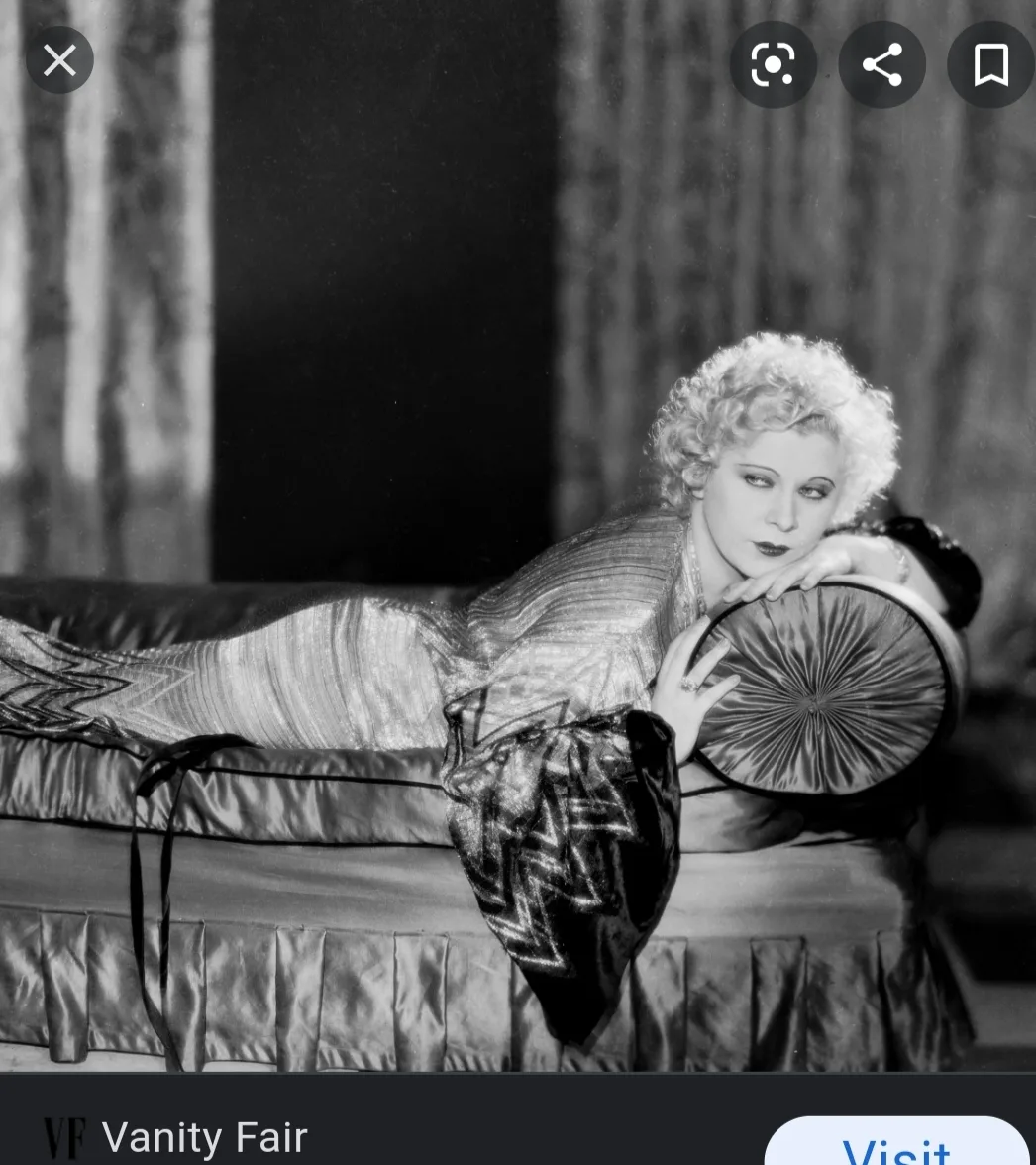
Courtesy of Vanity Fair

“She wanted to offer an alternative version of womanhood, in which overt sexual desire wasn’t shameful or dirty but an expression of independence.” -Sally Rosenthal

1174: Mae West

Film Actress, Screenwriter, Playwright, and Sex Symbol

Born: 17 August 1893, Brooklyn, New York, United States of America

Died: 22 November 1980, Hollywood, California, United States of America

Original Name: Mary Jane West

Mae was one of three children in a family that moved around different parts of Brooklyn in her early years. By the time she was five, Mae had already begun performing onstage. She was a vaudeville performer by the time she was twelve, and it is reported that her mother approved of all of Mae’s performances, including the ones deemed inappropriate for their time period.

Mae was five foot two inches tall at her tallest point in life, and so it is said she wore high heels to increase her stage presence and height.

Mae was arrested on indecency charges for her play “SEX.” Written, directed, produced, and performed by Mae in 1926, she was thirty-three years old at the time of the play’s debut.  Mae received a sentence of a fine of $500 and ten days in jail for her offense but was released after serving eight days. This stunt made her budding stardom rocket to new heights, cementing her place in history.

In 1932, Mae was given a contract with Paramount Pictures in Hollywood, despite the fact that she was “mature” at the time—meaning she was already thirty-eight years old. Within a year, Mae was the second-highest paid actor in the country, and according to IMDb, her performances at Paramount saved the company from bankruptcy. At the time, Hollywood films were controlled by the Hays Code, meaning many of Mae’s most controversial or overtly sexual lines, scenes, and so on were deleted from films before they went to theatres. Mae got crafty, however, and began upping the amount of double entendres used in her films to continue inputting the amount of sexuality she wanted to showcase. Her career went up and down over the years, with her leaving the limelight for twenty-six years before returning in 1970. That film bombed, but Mae was back on the scene.

Mae described Hollywood, and her underwhelming first impression of it, in her autobiography, stating: “I saw some of the town, met some of the sodden gilded people. I saw that under the daffy California sun there had hatched out as queer an industry and as odd a collection of self-made men as ever crossed the Rockies…. The studios were giant factories turning out the same length of scented tripe, dressed up with the same rubber stamp features of large cowlike heads, mammary glands, and 10-foot-high closeups of nostrils you could drive a Cadillac into.”

During the 1970s, Mae reportedly became the only actor to allow photographers to check her for signs of plastic surgery. She was found to still be entirely natural. Mae appeared in her final film in 1978, but continued to live in Hollywood, write personal messages to her fans, and leave her phone number listed in Los Angeles so fans could visit with her.

Mae only made twelve films over a forty-six year career, which shows just how impactful her career and star-status really were.

In her personal life, Mae married in 1911 and divorced in 1943 (or possibly married in 1914 and divorced in 1920, everything I am finding says she was married once and once only, but the dates are different pairs and there are two different names given for her ex-husband) but she was surrounded by several men throughout the years. In later life, she continued to employ muscular younger men as chauffeurs and bodyguards, even launching a Las Vegas review show of the former bodybuilders.

Mae is also remembered for her staunch feminism as well as her support for the LGBT+ community. Mae’s beliefs were actually controversial, even among the allied community at the time. According to Turner Classic Movies, “She was an advocate of gay and transgender rights, but her belief that "a gay man was actually a female soul housed in a male body" ran counter to the belief at that time that homosexuality was an illness.”

Mae passed away from complications following a series of strokes.

Badges Earned:

Find a Grave Marked

Located In My Personal Library:

 Where Are They Buried, How Did They Die? by Tod Benoit

The Rough Guide to Film Musicals by David Parkinson

Backwards and in Heels by Alicia Malone

Appetite For America: Fred Harvey and the Business of Civilizing the Wild West--One Meal at a Time by Stephen Fried

America’s Women by Gail Collins

Sources:

https://www.tcm.com/tcmdb/person/204532%7C103917/Mae-West/#overview

https://www.britannica.com/biography/Mae-West

https://www.vanityfair.com/hollywood/2020/06/mae-west-autobiography-scandal

https://www.pbs.org/wnet/americanmasters/mae-west-biographical-timeline/14486/

https://www.imdb.com/name/nm0922213/trivia/?ref_=nm_dyk_trv

https://www.findagrave.com/memorial/1089/mae-west


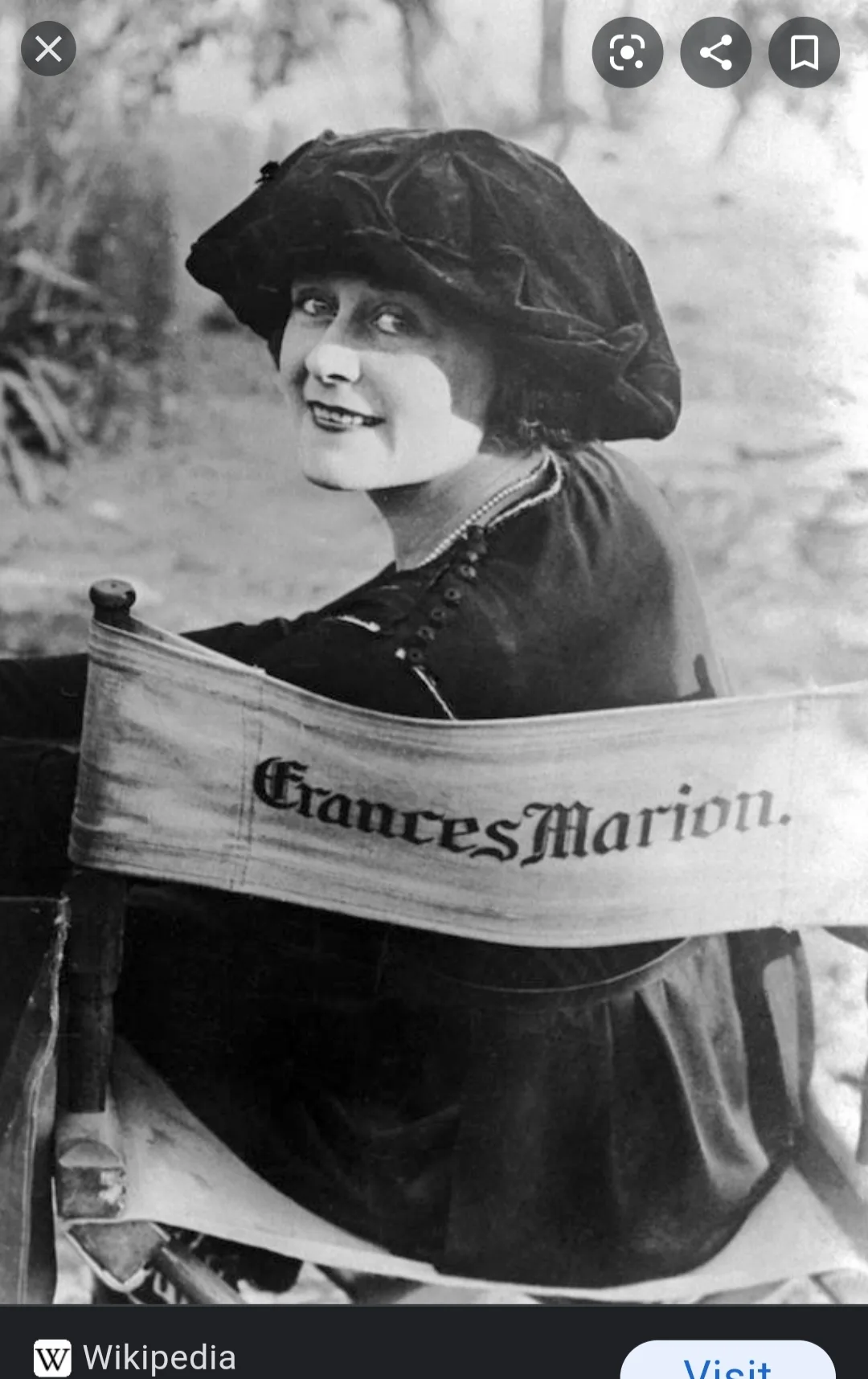
1173) Frances Marion

“By the time I was ten years old I had been thoroughly schooled in all the social hypocrisies.” 

1173: Frances Marion

The First Hollywood Writer to Win Two Academy Awards

Born: 18 November 1888, San Francisco, California, United States of America

Died: 12 May 1973, Los Angeles, California, United States of America

Original Name: Marion Benson Owens

Frances was a journalist, author, film director, and screenwriter, who was evidently named after the famous Revolutionary War hero Francis Marion (at least, according to Time Magazine).

As a child, Frances’s parents split and divorced. Her father remarried a few years later. When she was around the age of ten, Frances was sent to a Christian boarding school. To say she did not enjoy this time would be an understatement, and the strict rigidness of the school helped nourish Frances’s rebellious side, as well as her aversion to organized religion.

As a teenager, Frances’s mother sent her to an art school in San Francisco, which was much better suited to the young girl’s artistic passions. While there, Frances fell in love with her art teacher, and they married soon after. In her early days of writing, Frances also took jobs as a telephone operator and at a fruit cannery, to help bring in income as well as give her ideas to write short stories with. Because of how many hours she devoted to her work, Frances and her first husband would divorce after four years of marriage, in 1910.

In 1912, Frances moved to Los Angeles with her second husband, who had promised to take her to Paris for her career. That clearly didn’t happen, but Los Angeles was a better fit anyway because it allowed Frances to begin working in the budding film industry. By 1919, however, Frances had divorced husband number two and married her third, the future actor Fred Thomson. Sadly, Fred would die on Christmas Day 1928—according to Frances, her third husband was the love of her life. She briefly married for a fourth time in the 1930s, but the marriage ended in another divorce.

Frances worked in the film industry from 1915 to 1946 and has been credited with formulating the careers of various stars such as Mary Pickford, Greta Garbo, her husband Fred Thomson, and several others. In fact, Mary Pickford and Frances were so close, Mary hired Frances to be her exclusive screenwriter for Mary’s earlier films.

Frances worked primarily as a screenwriter at Metro Goldwyn Mayer, but also did some freelance work as well. At MGM, Frances is said to have been paid $3,000 a week, more than $40,000 a week today! In total, she is credited with writing around 300 screenplays for various films over her thirty-year career.

Frances went beyond the typical scope of screenwriting, however. She also wrote a textbook on the subject, How to Write and Sell Film Stories.

During World War I, Frances directed a film showcasing women’s contributions to the war effort from the front lines. Because of this, Frances became the first woman to cross the Rhine after the armistice was declared.

Some of Frances’s best-known films that she wrote the screenplay for included The Scarlet Letter (1926), Stella Dallas (1925), The Wind (1928), The Big House (1930), and The Champ (1931). Frances won the Oscar for The Big House and The Champ. She also directed Just Around the Corner (1921) and The Love Light (1921).

After she was let go from MGM in 1946, Marion continued to write—but not for Hollywood or the film industry. She wrote several novels and plays over the ensuing decades, with her last writing project being her memoir, published a year before her death. According to Marion’s Find a Grave profile, she had two sons.

Badges Earned:

Find a Grave Marked

Located In My Personal Library:

Backwards and in Heels: The Past, Present, and Future of Women Working in Film by Alicia Malone

Sources:

https://wfpp.columbia.edu/pioneer/ccp-frances-marion/

https://time.com/4186886/frances-marion/

https://www.criterion.com/current/posts/6948-the-woman-who-invented-the-hollywood-screenwriter

https://www.findagrave.com/memorial/157241913/frances-marion

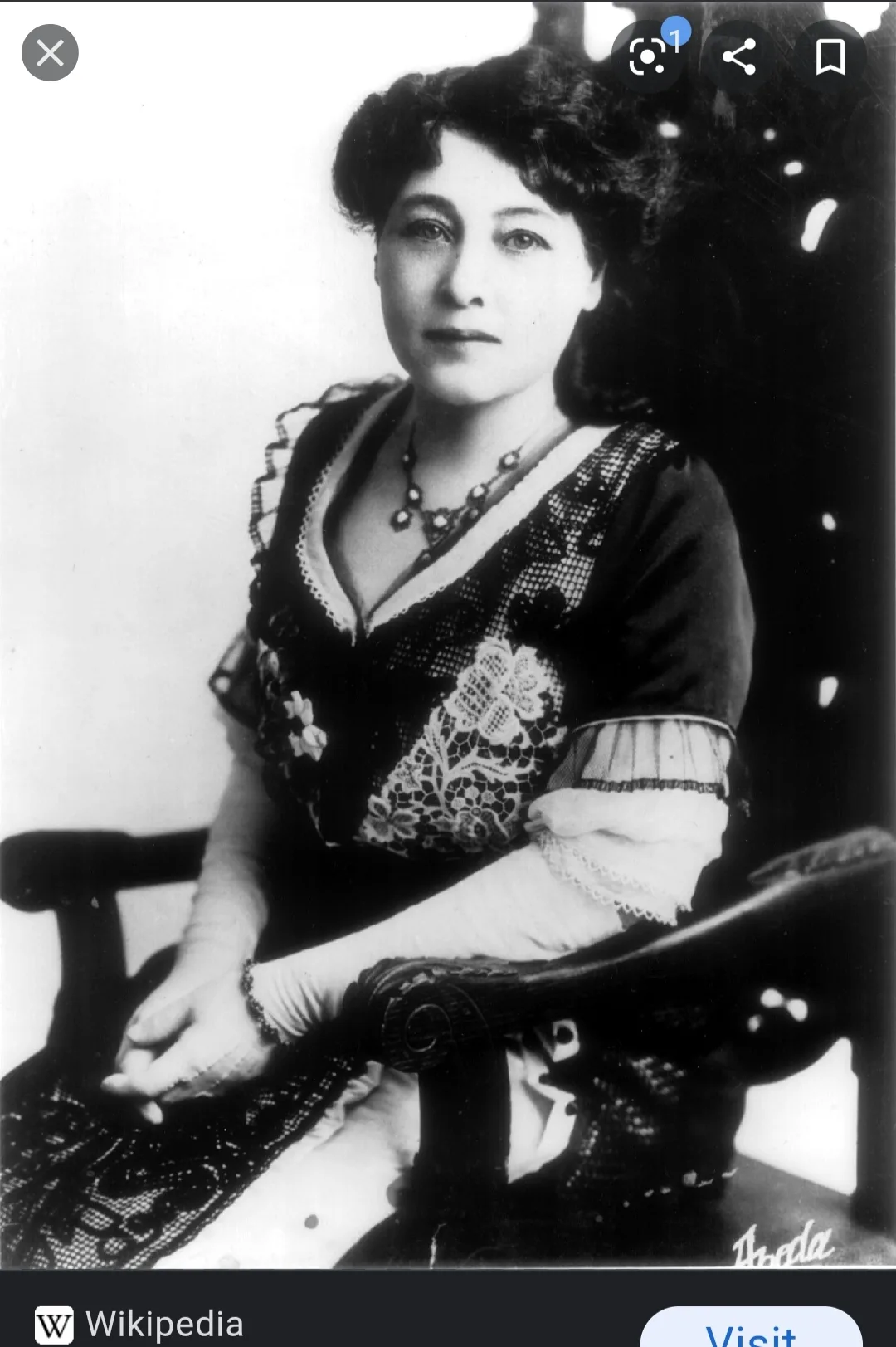
1172) Alice Guy Blache

Courtesy of Wikipedia

1172: Alice Guy-Blaché

The First Director and Writer of Narrative Fiction Filmography

Born: 1 July 1873, Paris, France

Died: 24 March 1968, Mahwah, New Jersey, United States of America

Alice was also a special effects innovator and the first known female film director. It is believed that from 1896 to 1906, Alice was the only female film director working in the world.

She is known to have directed and produced around 600 Silent Films over the course of her career. Alice also directed, produced, or supervised around one hundred and fifty sound films for the Gaumont Film Company using Chronophone technology. The films only lasted between one and thirty minutes, so relatively short compared to the blockbusters of today, but for Alice’s time this was remarkable to say the least.

According to the Women Film Pioneers Project (article linked below):

Most notable of her Gaumont period films is La Vie du Christ (1906), a thirty-minute extravaganza that featured twenty-five sets as well as numerous exterior locations and over three hundred extras.

In 1910, while living with her husband in New York, Alice began to produce her own films under the studio name Solax. The films were created on the Gaumont film lot, and distributed through the Gaumont company, but this was still a remarkable achievement to say the least.

Solax flourished as a company for the next two years, allowing Alice, her husband, and their two children to move into a large home in New Jersey. Alice was even able to purchase a $100,000 studio lot for her company, also in New Jersey, in 1912. That same year, Alice also began to distribute her own films on a state-by-state basis throughout the United States.

Alice’s films were revolutionary for their time. She nearly always portrayed married couples as standing on an equal partnership, instead of the husband dominating his wife as was common in both films and culture as a whole at the time. Alice was also known for creating action films that starred female leads.

In 1913, Alice’s husband launched his own studio, and sadly the Solax name slowly faded away. Alice and her husband worked in tandem under the new company name. They continued to create films together—one would direct and the other would produce, flipping back and forth in their roles. The couple also produced and directed for other film companies as well throughout the 1910’s.

The couple separated in 1920, and Alice’s company filed for bankruptcy around that time as well. She spent the next thirty years back in her native France. Alice never made another film, but she did write screenplays and articles for film magazines. She also lectured on all aspects of film. Alice was awarded the Legion of Honor by her native France in 1953. Her autobiography was published posthumously in 1976. Sadly, the vast majority of her films have been lost over time, and most of the credit for her work was given to male colleagues until very recently.

Badges Earned:

Find a Grave Marked

Located In My Personal Library:

Backwards and in Heels: The Past, Present, and Future of Women Working in Film by Alicia Malone

The History of Cinema, a Very Short Introduction by Geoffrey Nowell-Smith

Sources:

https://wfpp.columbia.edu/pioneer/ccp-alice-guy-blache/

https://www.britannica.com/biography/Alice-Guy-Blache

https://www.nytimes.com/2019/09/06/obituaries/alice-guy-blache-overlooked.html

https://www.findagrave.com/memorial/6837011/alice-ida_antoinette-guy-blaché

1171) Sammu-Ramat

1171: Sammu-Ramat

Empress Regnant of Assyria

Born: c.850 BCE, Ancient Babylon (Present-day Iraq)

Died: c.798 BCE, Ancient Babylon (Present-day Iraq)

Also Known As: Semiramas

Reign: c811-c808 BCE or Possibly c809-c792 BCE

Sammu-Ramat was one of the first known women to rule an empire in world history. Because of this fact, her legacy has been twisted and warped through the following millennia. Today, no one knows much for sure about Sammu-Ramat, and what is known is debated.

Sammu-Ramat served as regent for her son Adad Nirari III until he grew old enough to rule on his own. She assumed the position of regent after her husband, the emperor Shamsi-Adad V died. At the time, a woman ruler anywhere in the world was astonishing, but in Assyria it was completely unprecedented. And yet, Sammu-Ramat’s reign was largely successful, to the point an obelisk was placed and inscribed in her honor in the city of Ashur.

Sammu-Ramat is said to have led military campaigns as well as initiate large-scale building projects during her reign, though this has been disputed by some.

Greek Classical Philosophers renamed her Semiramas, the name she is better known as today, and actually respected her—unlike most women from history. According to World History.org, (article linked below):

This last designation, "Semiramis", has been the source of considerable controversy for over a century now, as scholars and historians argue over whether Sammu-Ramat was the inspiration for the myths concerning Semiramis, whether Sammu-Ramat even ruled Assyria, and whether Semiramis ever existed as an actual historical personage.

The debate has been going on for some time and is not likely to be concluded one way or the other in the near future but, still, it seems possible to suggest the likely possibility that the legends of Semiramis were, in fact, inspired by the reign of queen Sammu-Ramat and have their basis, if not in her actual deeds, then at least in the impression she made upon the people of her time.

Badges Earned:

Located In My Personal Library:

National Geographic History Article “Genesis of an Assyrian Legend, Searching for Semiramas” September/October 2017 Edition

The Warrior Queens by Antonia Fraser

When Women Ruled the World by Kara Cooney

Sources:

https://www.worldhistory.org/article/743/sammu-ramat-and-semiramis-the-inspiration-and-the/

https://www.britannica.com/topic/Sammu-ramat

https://www.encyclopedia.com/women/encyclopedias-almanacs-transcripts-and-maps/sammuramat-fl-8th-c-bce

1170) Dr. Ruth Pfau

Courtesy of Smithsonian Magazine

“The most important thing is that we give them their dignity back.”

1170: Dr. Ruth Pfau

German-born Nun and Medical Missionary

Born: 9 September 1929, Leipzig, Germany

Died: 10 August 2017, Karachi, Pakistan

Dr. Pfau was an advocate for Lepers in Pakistan, but oddly enough, she was never supposed to stay in Pakistan in the first place.

In 1960, Dr. Pfau’s Catholic Order had sent her to India, however, certain visa issues forced her to stay in Pakistan for a few weeks. While there, Dr. Pfau encountered leprosy patients who encouraged her to stick around. She would continue to work in Pakistan for the next fifty-seven years.

When she first arrived in Pakistan in 1960, there was one center for leprosy patients in the entire country. By 1996, the World Health Organization announced leprosy was ‘under control’ in Pakistan. By the time Dr. Pfau died, there were 157 centers for leprosy patients. The centers also focus on blindness, tuberculosis, and other diseases caused by land mines and have treated over 50,000 patients.

Quoted from the Catholic News Agency, “By 2016, the number of patients under treatment for leprosy in Pakistan had fallen to 531, down from 19,398 in the 1980s, according to the Karachi daily Dawn.”

Dr. Pfau was a member of the Society of Daughters of the Hearts of Mary. She joined the order after attending medical school in Eastern Germany in 1957 (or Western, sources differ). Her childhood home was bombed during World War II. Dr. Pfau was granted Pakistani citizenship in 1988, and in 2002 she was awarded the Ramon Magsaysay Award, which has been called the Asian Nobel Prize.

Because of her influence on Pakistan and her people, Dr. Pfau was granted a state funeral by the prime minister.

Badges Earned:

Find a Grave Marked

Sources:

https://www.catholicnewsagency.com/news/36600/meet-the-religious-sister-known-as-the-mother-teresa-of-pakistan

https://leprosyhistory.org/database/person184

https://www.npr.org/sections/thetwo-way/2017/08/10/542588725/ruth-pfau-beacon-for-pakistan-s-leprosy-patients-dies-at-87

https://www.findagrave.com/memorial/182262697/ruth-pfau

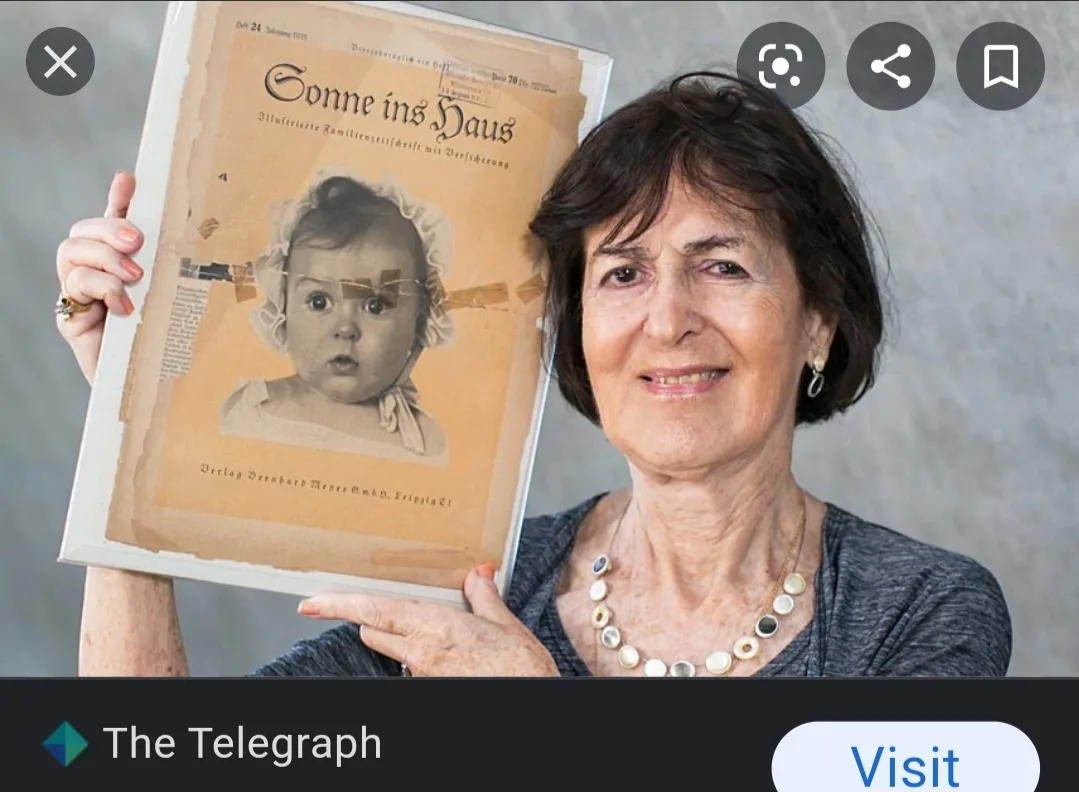
1169) Hessy Levinsons Taft

Courtesy of The Telegraph

1169: Hessy Levinsons Taft

Jewish Woman Whose Baby Portrait was Used by the Nazis in Propaganda Work

Born: 17 May 1934, Berlin, Germany

Hessy’s parents were from Latvia but had moved to Germany a few years before Hessy was born. Her parents had dreams of being opera singers, but unfortunately once it was discovered that the couple were Jewish, they were shunned from the music industry.

In 1935, Hessy was an adorable little baby and her family decided to have her photo taken by a professional photographer. A few months later, the family housekeeper noticed Hessy’s picture on the cover of the popular German magazine “Sonne ins Haus.” Evidently, Hessy’s photo had been chosen out of a hundred baby pictures from all across Germany, that had been captured by professional photographers.

The best part though? The contest had been created by Joseph Goebbel’s Propaganda Wing of the Nazi government. The premise of the contest was to show the “ideal” Aryan German baby. That’s right—an adorable little Jewish girl was now being broadcast across Germany, and eventually as far away as Lithuania, as the perfect Aryan baby. The photographer who took her picture had known Hessy was Jewish. He submitted the photo anyway because he wanted to allow himself the pleasure of the joke.

Oh sweet sweet irony, how we love you so.

While it was great of the photographic to pull such a great joke on the Nazis, he unfortunately also left Hessy in danger. Her face was the most famous baby picture, arguably in all of Germany, and so her parents could no longer take her out of the apartment and out into public. If she had been recognized, and her Jewish ancestry came out, she would have been killed.

Hessy’s family moved to France in 1938, and in 1941 escaped France through various spots in Europe, eventually making their way to Cuba. Finally in 1949, the family settled for good in the United States, despite the fact they were committed Zionists.

Hessy married in 1959 and has two children and four grandchildren. She studied chemistry at Barnard College and is a part time Chemistry teacher at St. Johns University. While Hessy’s immediate family survived the war, unfortunately large parts of her extended family in Latvia were murdered during the Shoah.

Hessy donated her copy of the magazine “Sonne ins Haus” with her photo to Yad Vashem’s collection entitled “Gathering the Fragments” which has gathered over 120,000 items from the Nazi period, to showcase all aspects of Jewish life and how people survived that time.

Sources:

https://www.yadvashem.org/blog/jewish-girl-was-poster-baby-in-nazi-propaganda.html

https://www.washingtonpost.com/news/morning-mix/wp/2014/07/07/the-perfect-aryan-child-the-nazis-used-in-propaganda-was-actually-jewish/

https://cen.acs.org/articles/92/i36/Hessy-Taft.html

1168) Rachel Washburn

Courtesy of Coastal Courier

1168: First Lieutenant Rachel Washburn

Gave up Being a Philadelphia Eagles Cheerleader to Join the United States Army

Born: c. 1988, Unknown (Probably somewhere in the United States)

As a child, Rachel was an army brat, meaning her father served in the armed forces. Rachel herself moved at least twelve times in her formative years, all across the country.

Rachel served two tours in Afghanistan as a member of the United States Army. She served from 2010 to 2016 and achieved the rank of First Lieutenant.

Rachel previously worked as an NFL cheerleader for the Philadelphia Eagles from 2007 to 2010. She attended Drexel University through an ROTC scholarship in order to earn a bachelor’s degree in history.

She went to Iraq on a USO Tour while in college as a part of the Eagles Cheerleading Team. While there, Rachel realized her true passion lay not in cheerleading, but rather serving her country in the armed forces.

Rachel was a part of a special squad to relate to local Afghan women in a way male troops could not, called the Cultural Support Team. While serving in Afghanistan, Rachel helped deliver a baby in the middle of a snowstorm with help from Army Medical via a radio.

She later also trained in intelligence and paratrooper training and left the army in 2016. During her time in the service, Rachel received the Bronze Star Medal, the Army Commendation Medal and the Combat, Airborne and Air Assault Badges (according to the Philadelphia Eagles website). Rachel then began working for Academy Securities as of 2017.

According to her Military Wiki article, in 2019, Rachel married a fellow soldier. Very little other information is readily available for her online, and most articles are from 2013 when she first joined the army. Rachel’s Instagram account also pulls up as a result on Google, but she has not updated or posted on the account in a very long time.

Sources:

https://military-history.fandom.com/wiki/Rachel_Washburn

https://www.philadelphiaeagles.com/news/rachel-washburn-an-american-hero-13217037

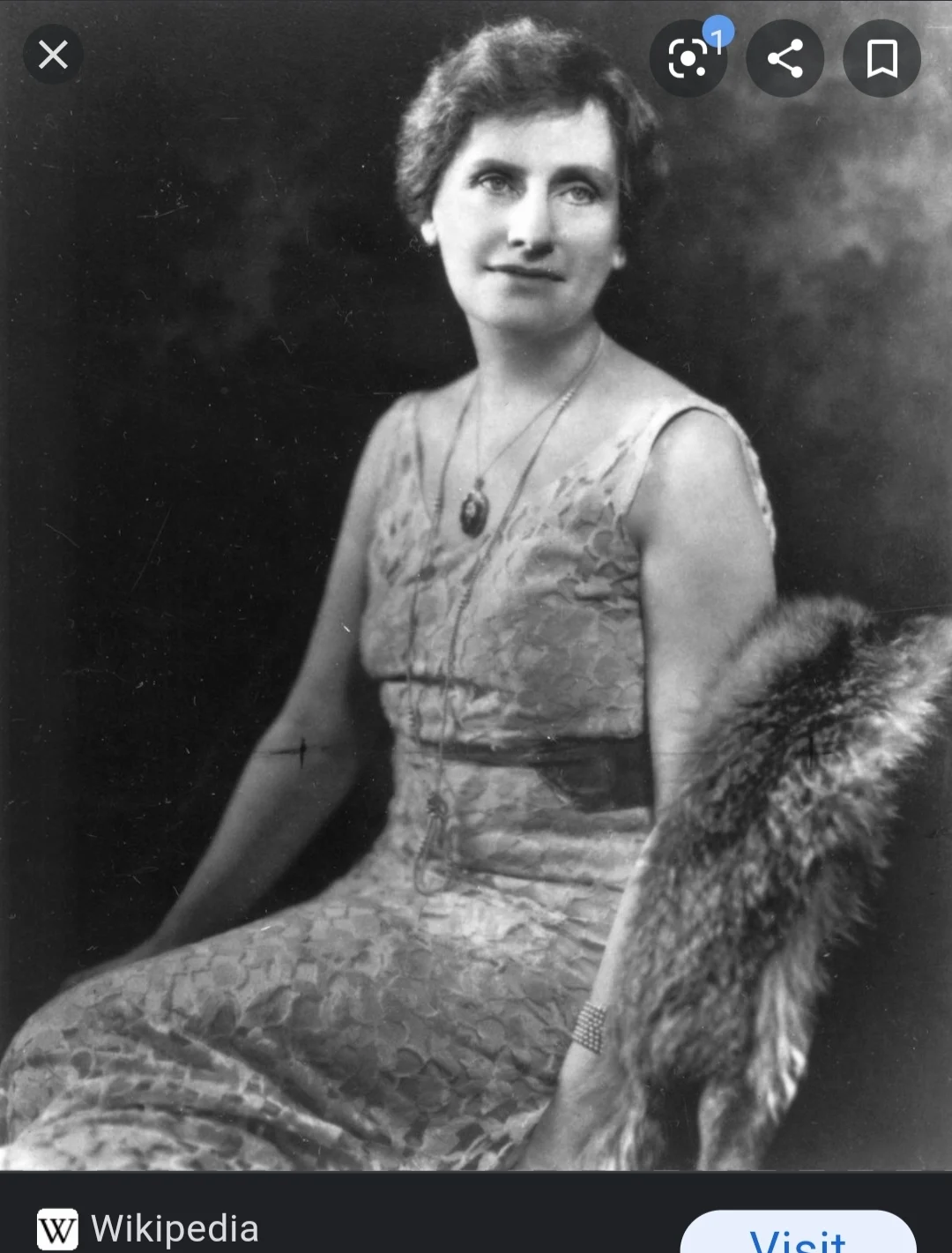
1167) Nellie Tayloe Ross

Courtesy of Wikipedia

1167: Nellie Tayloe Ross

The First Female Governor to be Inaugurated in the United States

Born: 29 November 1876, St. Joseph, Missouri, United States of America

Died: 19 December 1977, Washington DC, United States of America

Nellie was the fourteenth governor of Wyoming (and obviously the first woman to serve in such a capacity). She was also the first female Director of the United States Mint for twenty years, from 1933 to 1953, and served as Vice President of the Democratic National Convention.

Nellie was educated in private and public schools in her formative years. She originally lived with her family on a farm in Missouri, but when hard times hit the family moved to Kansas, where her father owned a grocery store. When Nellie was thirteen, her mother died.

After graduation, Nellie worked as a kindergarten teacher for the Omaha public school district. Her various life experiences growing up with her father and then as a teacher were preparing her for a life in government and politics, she just didn’t know it yet.

In 1902, Nellie married a young lawyer named William Ross, who also had political ambitions of his own as a populist democrat. The couple would have four sons, though one died when he was only ten months old.

Nellie began her political career as First Lady of Wyoming when her husband was governor. She also acted as an advisor to him but was constantly stressed over money. The governor’s salary was $6,000 a year, and yet Nellie’s husband kept borrowing money in order to keep up appearances and live a far more lavish lifestyle than they could afford.

When Nellie’s husband died partway through his term as governor, Nellie was left with a choice: either run in the race as the Democrat candidate to finish her husband’s term, or step aside and try to find some other way to support her sons and pay off her husband’s debt. Forty-five minutes before the deadline, Nellie finally accepted the Democrat nomination to run for governor.

Nellie easily won the election, with 8,000 more votes in her favor than her Republican opponent (and only 79,000 votes were cast in total!). Nellie had officially become the first female governor, not just in Wyoming, but in the entire United States (although it should be noted that Miriam “Ma” Ferguson was inaugurated as governor of Texas only fifteen or sixteen days later [sources differ on the number of days]).

According to Wyoming History (article linked below), “It was a tough time to take office. Drought, farm and ranch failures and especially bank failures were spreading hardship across the state. Many people lost their property and their life savings. The oil boom was leveling off. Deadly mine explosions in western Wyoming at Kemmerer in 1923 killed 100 miners, and reminded the state that coal mining remained as dangerous as ever.”

Unfortunately, Nellie was a Democrat trying to keep her head up in a sea of Republicans, and so she did not manage to get as much accomplished in her term as she had hoped. Of the eleven reforms Nellie had wanted to get passed through the state legislature, only five succeeded. Despite these setbacks, Nellie was famous across the country. She rode in President Calvin Coolidge’s inaugural parade, as well as giving a speech before the Women’s National Democratic Club.

Nellie continued to travel, to Chicago, Maine, and more. She gave speeches and discussed various issues, including water rights for western states. Newspaper accounts praised her successes, as well as showing their confusion and surprise that a woman politician was doing so well at her job.

In 1926, Nellie ran for re-election. Newspapers were vicious in their coverage of her. To some, she had not done enough to lower taxes or do anything worthwhile to help the people of Wyoming. To others, Nellie had betrayed her gender by not hiring any women to fill positions previously held by men in the government. It was a lose-lose situation, and Nellie could not make anyone happy (other than her close circle of supporters). Nellie, never one to just lie down and quit, drove all over the state in a jam-packed schedule, campaigning and giving as many speeches as she could.

Unfortunately, it wasn’t enough, and Nellie lost. Republicans took all five of the highest seats in the Wyoming state government. Nellie’s race was the closest of the bunch—she lost by just over 1,000 of the 70,000 votes cast.

After losing the election, Nellie continued to travel across the United States, campaigning for various other Democrats. It was also during this time that she became director of the US Mint and worked for the Democratic National Convention.

When Nellie retired in 1953, she was finally rich thanks to various real estate investments, and had plenty of time to travel and play with her grandchildren. Nellie lived to be one hundred and one years old. She was born during the Presidency of Ulysses S Grant and died during the Jimmy Carter administration. The country changed in a multitude of ways during her lifetime, and Nellie made her mark on history to say the least.

Badges Earned:

Find a Grave Marked

Located In My Personal Library:

Roses of the West by Anna Seagraves

No Place for a Woman: The Struggle for Suffrage in the Wild West by Chris Enss

America's Women: 400 Years of Dolls, Drudges, Helpmates, and Heroines by Gail Collins

A Fun Update...(June 2021):

In late June of 2021, my mother and I took a road trip around some of the closer states to where we live. Along that journey, we were able to stop at the Lakeview Cemetery in Cheyenne, WY, where Nellie and her husband are laid to rest for all eternity, and I was able to snap this photo while we were there.

nellie ross grave

Sources:

https://www.nga.org/governor/nellie-tayloe-ross/

https://www.wyohistory.org/encyclopedia/ambition-nellie-tayloe-ross

https://www.britannica.com/biography/Nellie-Tayloe-Ross

https://missouriencyclopedia.org/people/ross-nellie-tayloe

https://www.findagrave.com/memorial/905/nellie-ross

1166) Ethel Macia

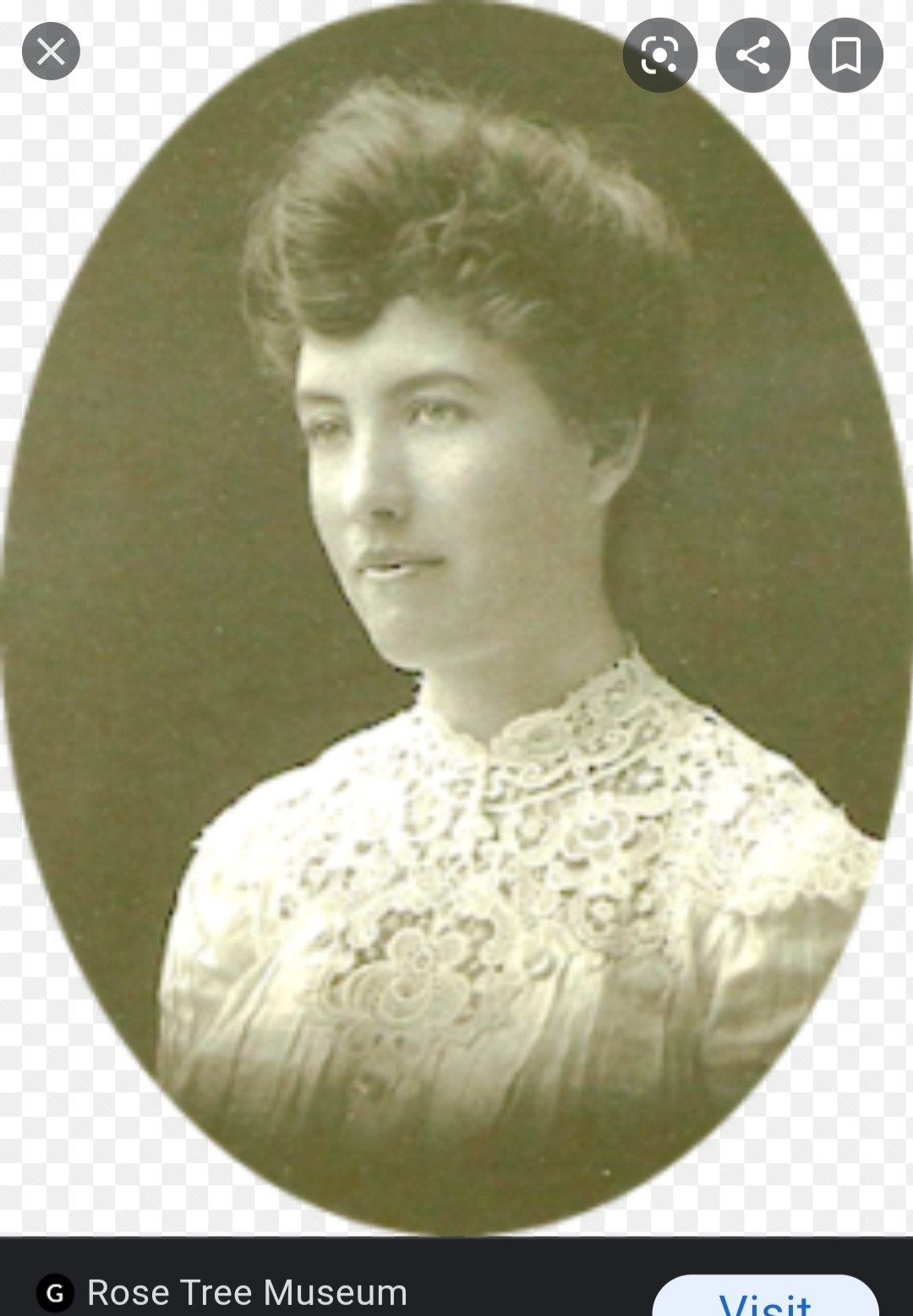
Courtesy of the Rose Tree Museum

1166: Ethel Robertson Macia

The First Lady of Tombstone, Arizona

Born: 16 August 1881, Tombstone, Arizona Territory, USA (Present-day Tombstone, Arizona, United States of America)

Died: 6 August 1964, Tombstone, Arizona, United States of America

Ethel was the oldest of five children. Sadly, her mother died when Ethel was fourteen, soon after giving birth to Ethel’s youngest sibling Olive. Four years later, Ethel’s father died, leaving Ethel in charge of her younger siblings. She had attended one year of college at the University of Arizona but had to drop out after her father’s murder.

Sadly, Ethel and all of her siblings were technically underage, and so they became wards of the state. Ethel and her sister were put to work to help support the family in any way they could. Because of their neat and legible handwriting, Ethel and sister Edith became the first women employed at the Cochise County Courthouse, in Cochise County, Arizona.

A few years later, when Ethel was twenty-one, she was officially made the head of household over her younger brothers and sisters. The following year, Ethel married a man who worked for one of Tombstone’s mining companies. The couple would have three children together.

Ethel and her husband purchased the Arcade Hotel in Tombstone, which quickly became one of the most sought-after attractions in the city. A white rose bush (specifically of the Lady Banksia variety) had been planted at the hotel in 1885, and by 1936 Ripley’s Believe it Or Not claimed the bush was the world’s largest rose tree. Ethel renamed the hotel the Rose Tree Inn to celebrate the beautiful blooms she had surrounding the building. The rose tree is still growing as of 2022.

Ethel was very active in the community and was dubbed the First Lady of Tombstone thanks to her work with various organizations and charities. She was also an avid historian of the Tombstone area and was dubbed the Queen of Helldorado in 1953 after helping create the annual Helldorado festival in 1929.

In 2021, the Lady Banksia Daughters of the American Revolution chapter was organized in Tombstone and was named for the rose bush planted at Ethel’s hotel.

Badges Earned:

Find a Grave Marked

Sources:

https://tombstonerosetree.com/robertson-macia-family/

https://tucson.com/news/retrotucson/western-women-ethel-robertson-macia-brought-fame-to-tombstones-rose-tree/article_ef7ba7c5-c2f9-5120-b674-2c4025f4e5fe.html

https://www.findagrave.com/memorial/32276006/ethel-maud-macia

  • Previous
  • 1
  • …
  • 5
  • 6
  • 7
  • 8
  • 9
  • 10
  • 11
  • …
  • 159
  • Next

Categories

Archives

  • July 2025 (10)
  • July 2024 (1)
  • January 2024 (1)
  • August 2023 (1)
  • June 2023 (2)
  • October 2022 (1)
  • July 2022 (1)
  • June 2021 (3)
  • December 2020 (3)
  • August 2019 (1)
  • July 2019 (2)

Search

© 2026 The Exasperated Historian | Powered by Minimalist Blog WordPress Theme