The Exasperated Historian
Menu
  • Home
  • The Women’s List (New)
  • The Men’s List
  • The Animal List
  • Collections
  • The Blog
  • Contact Us
  • FAQ
Menu

Category: Birth Locations

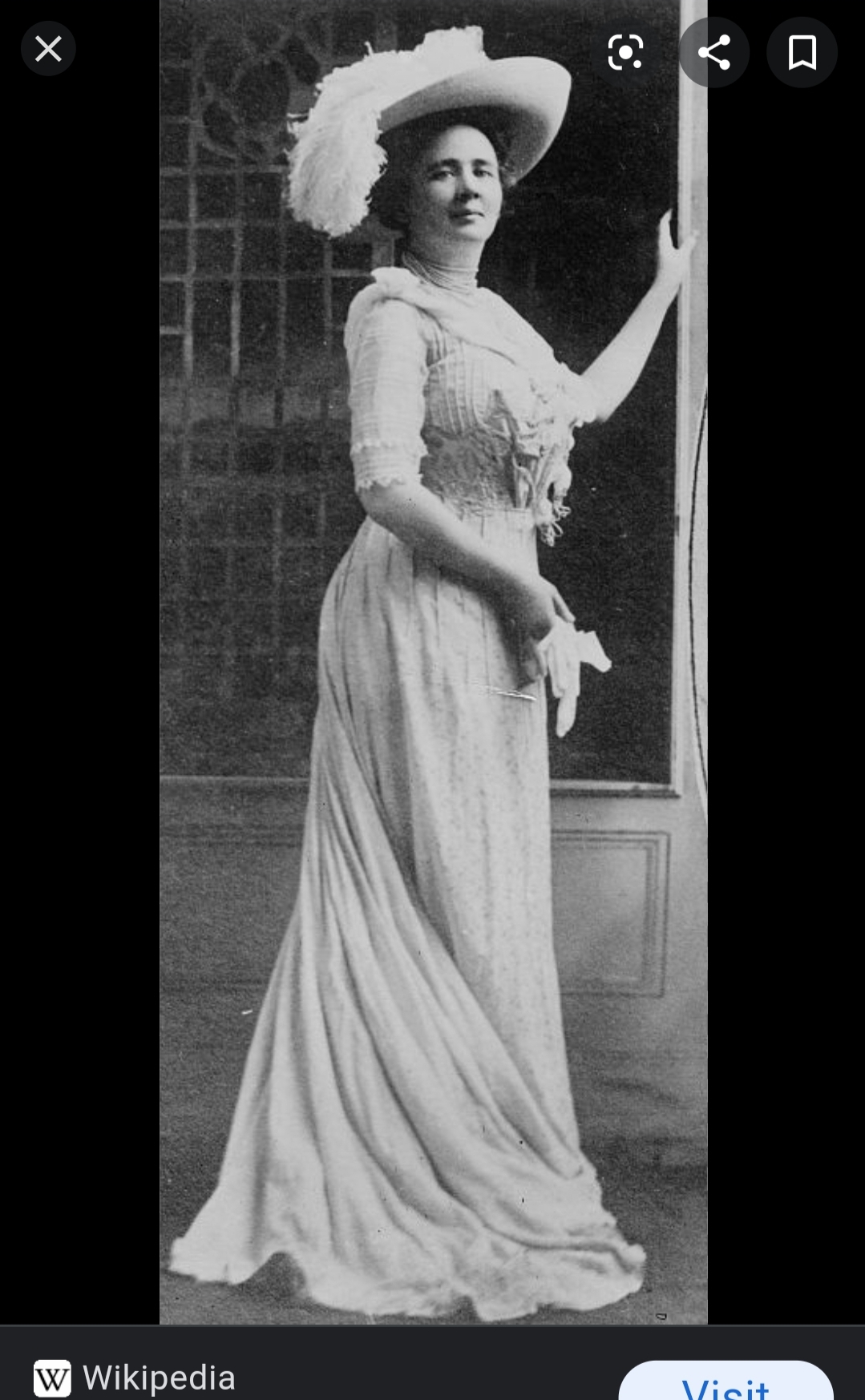
1089) Helen Longstreet

Courtesy of Wikipedia

1089: Helen Dortch Longstreet

Wife of Confederate General James Longstreet

Born: 20 April 1863, Carnesville, Georgia, United States of America

Died: 3 May 1962, Milledgeville, Georgia, United States of America

Helen and James married when she was thirty-four and he seventy-six. This was only one of the many reasons for why Helen would earn the nickname “The Fighting Lady.”

Before marrying the general, Helen was the first woman in Georgia to serve as Assistant State Librarian (appointed to the post in 1894). This made her the first woman to serve in a state office in Georgia history. Helen was the author of the Dortch Bill which became law in 1896—allowing a woman to serve as State Librarian. It was an important first step in giving Georgia women an opportunity to work for their state government. Two years later, Helen made history again by becoming the first female postmaster in her adopted hometown of Gainesville.

While in college, Helen became friends with a daughter or granddaughter (sources differ) of General James Longstreet, who had served as General Robert E Lee’s second-in-command in the latter part of the War Between the States. Soon after the pair married, despite their significant age gap as mentioned above. General Longstreet passed away six years later, and the pair did not have any children; though the General's family from his first marriage were displeased with his marrying Helen to say the least.

Helen was always concerned (before and after her marriage) with ensuring General Longstreet and his history were remembered and recorded accurately. It was her persevering efforts that helped to change some opinions, swaying historians into believing her husband was not responsible for the Confederate defeat at Gettysburg. Today however, the General's reputation remains split, with some seeing him as a pioneer and a hero for his efforts to support Republicanism, serve with African-Americans in New Orleans, and try to heal a still-fractured country. During his lifetime, some veterans viewed General Longstreet's actions as traitorous, and that stigma remains in place today, despite Helen's efforts to change that.

When not focused on preserving her husband’s reputation, Helen’s passion lied with nature preservation. Her unsuccessful attempts to stop the building of hydroelectric dams was one of the first conservation moments in Georgian history. She lost her battle with the electric company in 1913, but in 1992, the company leased back several thousand acres of land to the state of Georgia in order to create a nature preserve and return the waterfalls located within the area to their previous state that Helen had been fighting to preserve.

During World War II, Helen worked at the Bell Aircraft Plant in Marietta as a riveter. She advocated widely, attempting to get women to go to work in the factories to free up men to fight. In case you’ve forgotten her birthdate by this point—yes, Helen was in her eighties at the time! Apparently the union tried to get her to quit but Helen refused, stating it was her patriotic duty to do what she could for her country.

And if all that wasn’t impressive enough, Helen was also interested in several social campaigns as well. Everything from women’s suffrage to civil rights received vocal support from The Fighting Lady.

Helen was a Progressive Party activist (serving as a delegate to their convention in 1912). She even supported President Theodore Roosevelt's campaign for the presidency that same year. In 1947 she became the first woman to have her portrait placed in the state capitol. Not to be stopped there, in 1950, she ran as a write-in candidate for Governor of Georgia but lost the election.

Helen's life was remarkable to say the least, and the fact that so few remember her today is a travesty. But articles like this one and others on the internet, and the fact that she was inducted into Georgia's Women's Hall of Fame in 2004 ensure The Fighting Lady will never be truly forgotten.

Badges Earned:

Find a Grave Marked

Sources:

https://www.georgiawomen.org/helen-dortch-longstreet

https://encyclopediavirginia.org/967hpr-30a1db10fa7504c/

https://www.georgiaencyclopedia.org/articles/history-archaeology/helen-dortch-longstreet-1863-1962

http://www.longstreetsociety.org/helen-dortch-longstreet.html

https://www.findagrave.com/memorial/25419227/helen-longstreet

1088) Irene Triplett

Courtesy of the Wall Street Journal

1088: Irene Triplett

At the Time of Her Death, She was the Last Living Recipient of a War Between the States Pension

Born: 9 January 1930, Wilkes County, North Carolina, United States of America

Died: 31 May 2020, Wilkesboro, North Carolina, United States of America

Irene’s Father was a soldier (originally serving the Confederate Army before deserting and joining the Union) and her mother was fifty years younger than him. Private Triplett deserted the Confederate forces after falling ill only days before the Battle of Gettysburg. Doing so likely saved his life, as over ninety percent of his former unit went on to die, be wounded, or turn up missing during the three bloody days in that small Pennsylvania village.

When Irene was born, her father was eighty-three years old and her mother was thirty-four. The couple had five children in all, but only Irene and her younger brother Everette would survive childhood (he passed in 1996). Irene’s father died in 1938, his wife, Irene’s mother, in 1967. Irene’s childhood was tough. Since her father had defected and joined the Union as one of “Kirk’s Raiders”, Irene was often teased and tortured by classmates for being the child of a traitor to the South. She was also beaten by bother her parents and her teachers for any number of reasons. Sadly, for Irene, she had been born mentally disabled and was an easy target to say the least. Its no surprise that she became hooked on tobacco as a way to ease her ills, but the fact that she was only in first grade at the time she became addicted is extraordinarily sad.

Irene’s pension payment wasn’t much, $73.13 a month (just under $880 a year), but it was still historic for obvious reasons. Irene qualified for the financial aid as a helpless child of a United States veteran. With her passing, one of the last close links to the War Between the States left the world, finally closing the darkest chapter in the United States’ history once and for all.

Irene had been living in nursing homes for decades, since the passing of her mother. She never married or had children of her own. Irene was remembered for her laughter and happy demeanor and outlook on life, though she rarely talked about her father’s past or his activities in the war. She passed away at the age of ninety after suffering complications from a broken hip.

Badges Earned:

Find a Grave Marked

Sources:

https://www.smithsonianmag.com/smart-news/last-person-receive-civil-war-pension-dies-180975049/

https://www.theguardian.com/us-news/2020/jun/07/irene-triplett-last-person-american-civil-war-pension-dies

https://www.aarp.org/home-family/voices/veterans/info-2020/last-civil-war-pensioner-dies.html

https://www.findagrave.com/memorial/210736348/irene-triplett

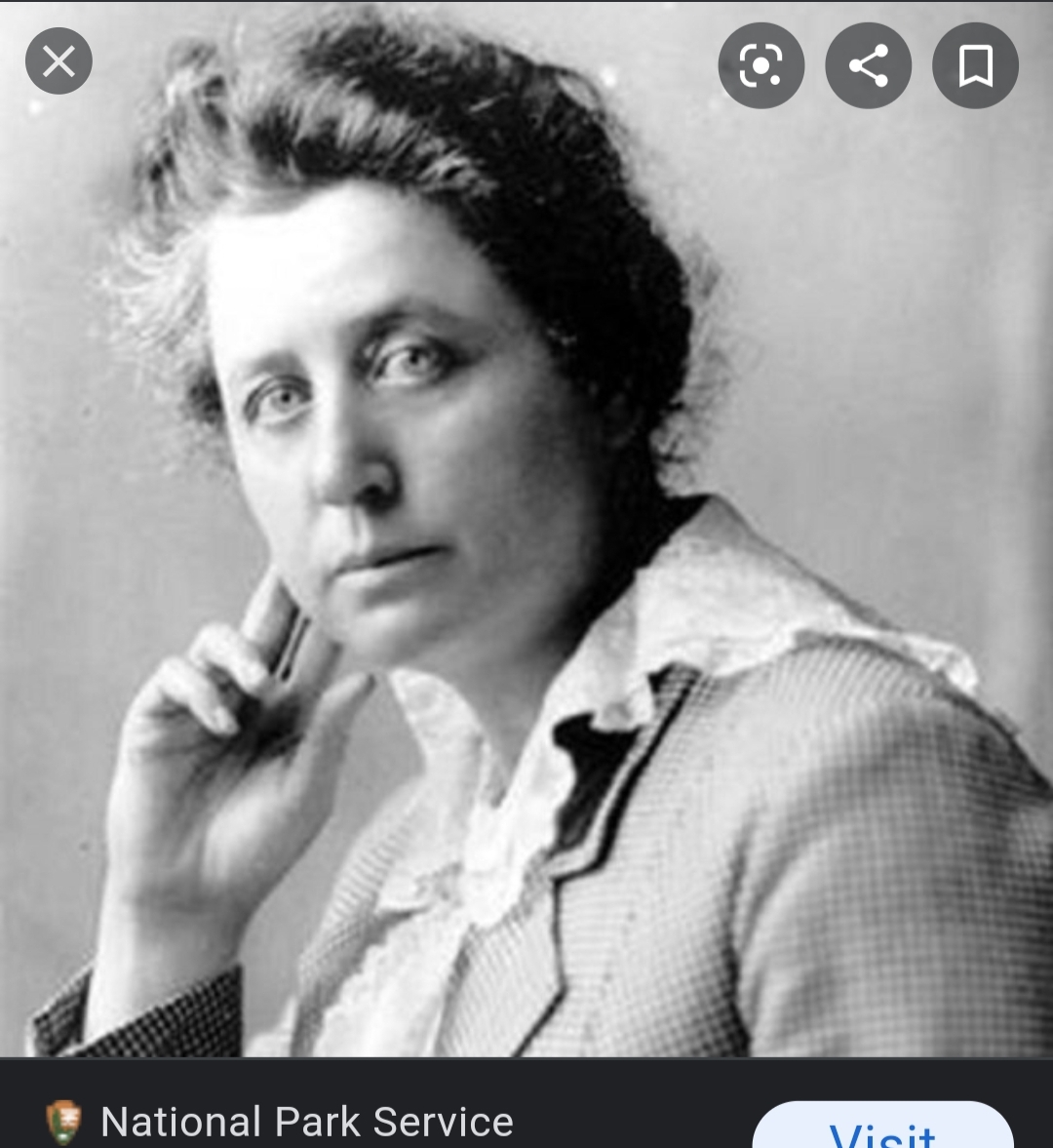
1087) Marie Equi

Courtesy of the National Park Service

1087: Marie Equi

Western Medical Doctor and Progressive Political Activist

Born: 7 April 1872, New Bedford, Massachusetts, United States of America

Died: 13 July 1952, Portland, Oregon, United States of America

Marie was also a Birth Control information provider at a time when such a thing was still illegal. She also performed abortions and held a medical degree; spending her entire adult life fighting for the rights of the working class.

Raised in Massachusetts, Marie had at least six siblings (one source claims as many as ten), though several died in childhood. Her father was a mason and would sometimes feed workers on strike, enabling Marie to hear their stories as she grew up. Both of Marie's parents were immigrants who had moved to the United States in search of a better life; her mother from Ireland and her father, Italy.

Marie dropped out of high school after her first year in order to go to work to help support her family. Marie’s time in the factory would give her an eyewitness look into the deplorable conditions working-class folks experienced at the time.

A friend paid for a year of seminary school, but Marie was unable to gain a scholarship to continue on her education. When she was twenty, Marie left home and moved across the country to Oregon, where she would live for the rest of her life. Marie lived in Oregon with the same friend who had paid for her school tuition, and though they started out as simply friends, the two women’s relationship grew into something more as time went on.

After arriving on the West Coast, Marie immediately set to work. Marie’s girlfriend was a teacher, and Marie began studying for her exams to enter medical school. In 1899, Marie enrolled in medical school after she and her girlfriend relocated to San Francisco. Four years later, Marie had moved to Portland, switched schools, had broken up with her teacher girlfriend and was now seeing another young woman. That same year, Marie also graduated from medical school with her license to practice.

Marie’s private medical practice was focused on obstetrics, gynecological issues, and pediatrics, though she treated men when needed as well. As time continued on, Marie became more and more involved in progressive politics and activism work. The majority of Marie’s patients were the same working-class immigrants just trying to survive that she had surrounded herself with her entire life.

After she joined the Progressivism Movement, Marie became the only woman to volunteer on the Oregon Doctor Train, a group of Oregon physicians who traveled south to help relieve those affected by the 1906 San Francisco Earthquake. Marie was put in charge of a 300-bed obstetric wing by the US Army, and was eventually given an award from the Army for her work in those dark days.

After returning to San Francisco, Marie entered into a new relationship with a wealthy heiress named Harriet. Harriet and Marie would adopt a baby girl, named Mary Jr. The women continued to raise Mary Jr together even after they split up a few years later.

As time went on, she became more radicalized and preached anarchism. In 1913, Marie was brutally beaten by police during a riot that broke out after a gathering of striking workers in Portland turned violent. This experience pushed Marie from Progressive Activist to full-on political radical.

Marie spent the years of World War I urging local men to not enlist in the armed forces; which obviously didn’t make her popular with the folks back in Washington. Marie was eventually subjected to wiretaps, had an informant placed within her social circle, and went to trial for her seditious activities. At the trial, the prosecution included in their “evidence” the fact that Marie was openly lesbian and had some anger issues to prove she was guilty of sedition. In late December 1918, Marie was found guilty and sentenced to three years in federal prison. After serving ten months in San Quentin, Marie was released for good behavior. President Roosevelt would issue her a pardon in 1933.

In her later late years, Marie lived a much quieter life, though she did continue to attend and openly support at least two different strikes. During a hospital stay in 1950, Marie received red roses from longshoremen union workers as thanks for all she had done to support them. Marie was cared for by her daughter in her final years.

Marie was a fellow of the American Medical Association.

Badges Earned:

Find a Grave Marked

Rejected Princess

Located In My Personal Library:

Tough Mothers by Jason Porath

Sources:

https://www.nps.gov/people/drmarie-equi.htm

https://historicwomensouthcoast.org/marie-equi/

https://cfmedicine.nlm.nih.gov/physicians/biography_103.html

https://www.findagrave.com/memorial/139839557/marie-diana-equi

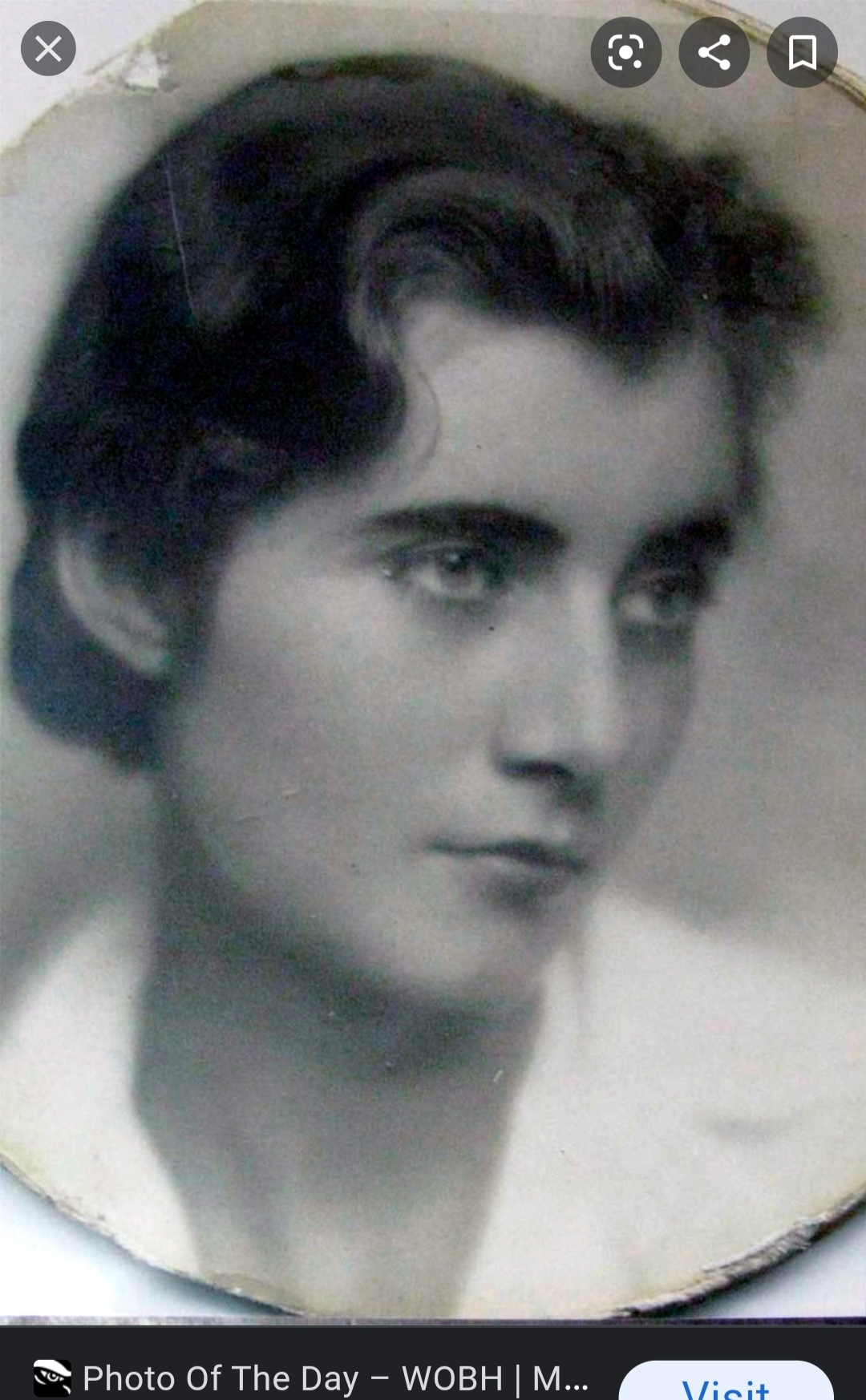
1086) Amy Brousse

Courtesy of Photo of the Day-WOBH

"Ashamed? Not in the least. My superiors told me that the results of my work saved thousands of British and American lives….It involved me in situations from which ‘respectable’ women draw back–but mine was total commitment. Wars are not won by respectable methods."

1086: Amy Elizabeth Thorpe Brousse

She Has Been Hailed “World War II’s Mata Hari”

Born: 22 November 1910, Minneapolis, Minnesota, United States of America

Died: 1 December 1963, Castelnou, France

Codename: Cynthia

Amy was the also author of a romance novel that she wrote as a young girl.

Amy, known to her family as “Betty”, gained British citizenship through marrying her husband but gave their first child, a son, up for adoption—she kept their daughter. Amy was nineteen years younger than her husband and the pair were ill-suited, to put it politely. They married on the insistence of Amy’s parents after she found herself pregnant, though she was still only twenty years old.

During the Spanish Civil War, Amy’s husband was stationed in the war-torn country. Amy helped transport Red Cross supplies and helped evacuate nationalists; basically, doing anything she could to help out.
Afterword she became a spy for British intelligence in Poland during World War II. Amy gained information by sleeping with the men she was gleaning information off of. In 197, her marriage was apparently over anyway. Her husband suffered an attack that left him in a nursing home, but this was after he’d informed Amy he was in love with another woman.

In 1938, Amy was ordered out of Poland despite gathering a fair amount of usable intelligence. Amy’s husband had made a miraculous recovery around the same time, and the pair moved to Santiago, Chile as his job required. With the outbreak of war soon after, Amy first wrote articles for the local papers in support of the war effort while also trying to secure a place in the official intelligence service.

Soon after, Amy sailed for New York, leaving her husband behind. She received her codename (Cynthia) and set herself up as a journalist in Washington DC. Amy once again was more than willing to use her good looks and other talents in that regard in order to gain intelligence to help out the war effort in the Mediterranean. It also helped that Amy spoke French as well as a native speaker (her mother had studied at the Sorbonne before her marriage).

In 1941, Amy was able to begin gleaning intelligence off a married, anti-Nazi, embassy worker for the Vichy-French government. Amy even moved into the same hotel as her new target and his wife in order to further gain information from the man. Their most famous dalliance occurred in order to break into the Vichy Embassy in Washington DC, which housed coded details the American and British forces wanted. Amy got the information and was able to pass it along. Eventually the British and American forces used the intelligence to further their efforts in North Africa.

Amy’s post-war life was much tamer. Her husband committed suicide in 1945, and Amy’s new French flame divorced his own wife. The pair married soon after, and Amy became Mrs. Brousse as a result. They then settled into a medieval castle on a mountainside in France where they lived out the last years of their lives together.

Amy died of mouth cancer soon after her forty-third birthday. Her husband died ten years later after being electrocuted by his electric blanket. Their castle home was also partially destroyed in the resulting fire; a sad end to such a rowdy story.

In 2016, news was announced Jennifer Lawrence was set to play Amy in an upcoming biopic film. However, seeing as it’s now been five years since the announcement, I have a feeling this feature film has either been put on hold or will soon be recast. I’ll update this page if more information about the film is ever shared.

Badges Earned:

Find a Grave Marked

Located In My Personal Library:

Enigma Code Breakers: How Breaking the Nazi Code Helped Win World War II by Michael Kerrigan

Sources:

https://archive.nytimes.com/www.nytimes.com/books/first/m/mcintosh-sisterhood.html

https://www.historynet.com/amy-elizabeth-thorpe-wwiis-mata-hari.htm

https://spartacus-educational.com/SPYpack.htm

https://www.dailymail.co.uk/news/article-3674051/She-used-bedroom-way-James-Bond-used-Beretta-seductress-Betty-Pack-stole-secrets-helped-defeat-Nazis-Jennifer-Lawrence-tapped-portray-ultimate-honey-trap-spy.html

https://www.findagrave.com/memorial/162164138/amy-elizabeth-brousse

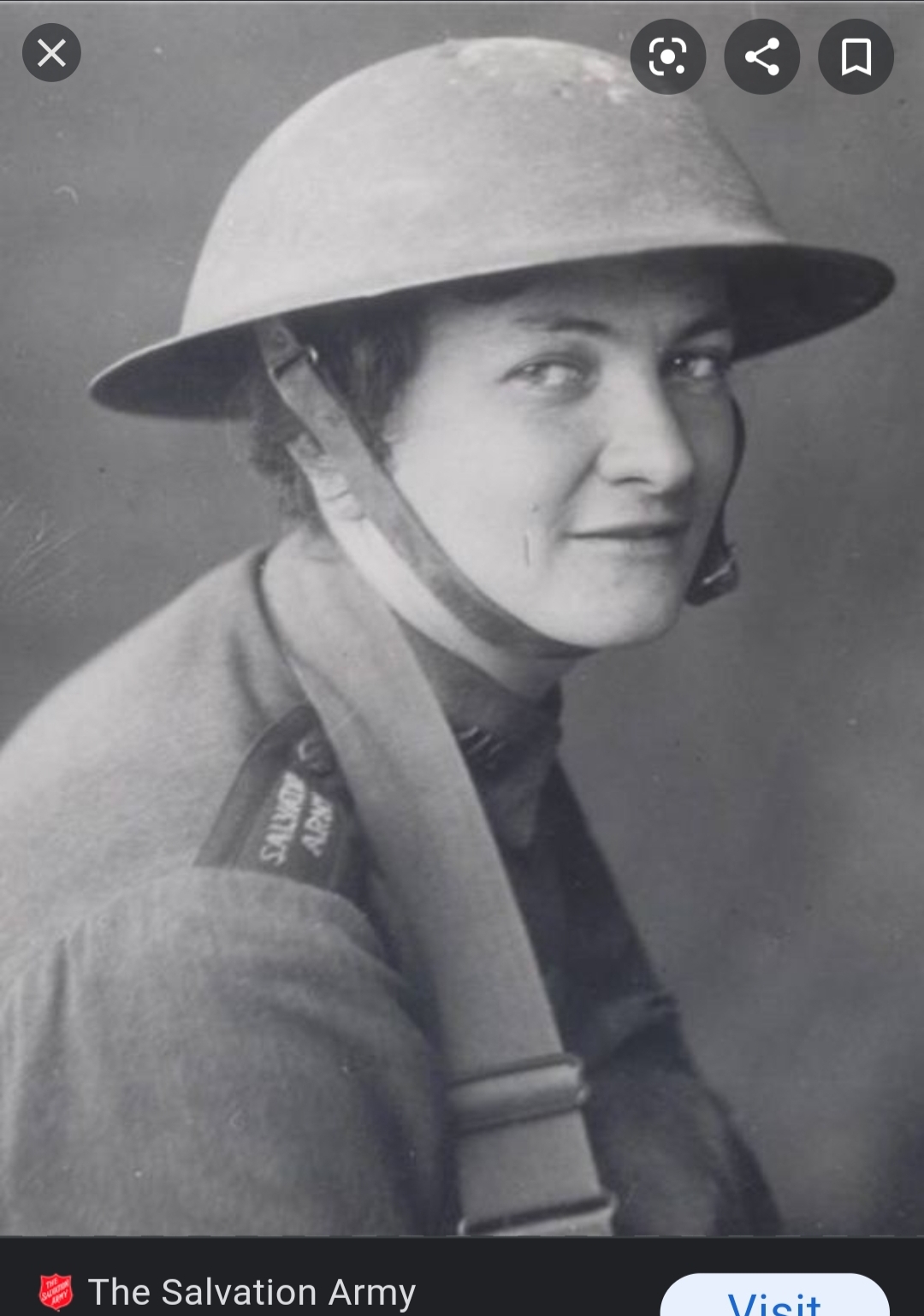
1085) Helen Purviance

Courtesy of the Salvation Army

“I was literally on my knees when those first donuts were fried, seven at a time in a small fry pan. There was also a prayer in my heart that somehow this home touch would do more for those who ate the donuts than satisfy a physical hunger.”

1085: Helen Purviance

Popularized Donuts in the United States and Around the World

Born: 16 February 1889, Huntington, Indiana, United States of America

Died: 26 February 1984, Wabash County, Indiana, United States of America

Helen is remembered today for handing out donuts to the American troops during World War I.

Helen was one of five children and had a loving family. When Helen was eleven, she moved to New York to attend boarding school. Six years later, she had moved to the Big Apple in order to join the Salvation Army. Helen was given the rank of Captain and became an active officer out of New York.

In August of 1917, the newly commissioned Helen joined the American First Division of the Salvation Army and departed for France. At the time, women were barred from joining the armed forces in most capacities, and so Helen’s only chance to serve overseas was through the work of the Salvation Army.

Trapped in the rain-soaked frontline trenches, Helen and fellow Salvationist Margaret Sheldon decided to help perk up the troops with some home cooked meals. The only problem was supplies were limited, so Margaret and Helen would have to get creative. That’s when Helen and Margaret settled on donuts, a treat that would not become popular until after the war thanks in large part to Margaret, Helen, and their helpers.

Helen and her fellow ensigns made the donuts by using a wine bottle for a rolling pin and cutting the dough with a knife. They fried the donuts in a wood fired pot belly stove seven or eight at a time; forcing Helen to lean on her knees in front of it for hours out a time.

The first day the ensigns served 150 donuts and the second day 300. By the time they were fully equipped they fried anywhere from 2500 to 9000 every day! Its estimated by war’s end Helen and the other girls had made over a million of the treats.

The ensigns were called Donut Girls despite making apple pies and other treats as well. Helen herself was actually dubbed the Donut Queen and continued to be associated with them throughout her life (despite the fact she announced in 1936 she was sick of them—not that I blame her any!).

Helen was only one of the four women to serve on the American Front Lines during World War I. At the beginning of 1918, Helen and three other Salvationists were allowed to travel to the front lines in order to help serve the soldiers in any capacity they could. Helen survived bitter cold snaps and carried mental scars from her ordeal for the rest of her life.

After the war, Helen became dean of the Salvation Army training college in the Bronx, New York. She also helped establish a Salvation Army post in her hometown of Huntington, Indiana, with the help of her younger brother Paul.

During World War II, Helen promoted baking cookies for the troops instead and also helped train the newest generation of Salvationists. She attained the rank of Brigadier by the time she finally retired from the Salvation Army after the war’s end.

Badges Earned:

Find a Grave Marked

Sources:

https://www.indianawarmemorials.org/2021/03/08/helen-purviance/

https://syracuseny.salvationarmy.org/SyracuseNY/news/helen

https://www.huntingtoncountyhonors.org/Honorees/Helen-Purviance

https://www.worldwar1centennial.org/index.php/indiana-in-wwi-stories/2433-helen-purviance.html

https://www.findagrave.com/memorial/67623816/helen-gay-purviance

1084) Anna Kingsley

1084: Anna Kingsley

From Princess to Slave to Operator of Her Husband's Plantation

Born: 1793, Kingdom of Jolof (Present-day Linguère, Senegal)

Died: 1870, Duval County, Florida, United States of America

Full Name: Anna Madgigine Jai Kingsley.

Birth Name: Anta Madjiguéne Ndiaye

According to research done by historian Dan Schafer, Anna was actually a Jolof Princess in her native lands (present-day Senegal). Her people long assumed she had been killed by a wild animal or some other explanation for why she disappeared from history, and never would have guessed she had actually been kidnapped and sold into slavery when she was only thirteen. In 2017, Senegalese leaders traveled to Florida to learn Anna’s story in the hopes of taking it back home to their people; to return their lost princess to her rightful place in history at last.

In March of 1811, Anna was freed by her white owner at the age of eighteen. Anna had been purchased in Havana, Cuba several years before at the age of thirteen, and was already the wife and mother of her owner’s three children (all of whom were also freed at the same time). According to the Florida Department of State, Anna lived apart from her husband for long periods as her West African heritage dictated, especially considering he had three other slave wives also of West African descent. However, as you will quickly realize, Anna was clearly the most powerful and respected of her husband’s wives.

Anna oversaw her husband’s large plantation along with her own land (which she had been granted in 1813). She also purchased her own slaves and worked as an independent businesswoman selling various goods, poultry, and wares to settlers living nearby.

During an insurrection between the Americans and the Spanish (known as the Patriot War), Anna sided with the Spanish and was later rewarded 350 acres of land for her loyalty. When the Americans got too close for comfort, Anna burned her buildings to the ground and escaped with her children and slaves on a Spanish gunboat. After the insurrection failed, Anna returned to her land and began to rebuild her livelihood.

For the next period of their lives, Anna and her husband worked a plantation on Fort George Island together. Their lives were comfortable to say the least. Anna’s husband owned four plantations in all, as well as several ships and other signs of wealth. He entrusted the care of the largest plantation, the one on Fort George Island, to his wife Anna whenever he was away. The Kingsleys held sixty men, women, and children in bonded slavery at the plantation.

Florida became a territory of the United States in 1821, and the rights of free African Americans were cut in the years following the decision, despite a promise made by the US and Spain after the land was turned over to the United States to protect the people of color in the new territory. Anna’s husband was a member of the territorial legislature and published various writings, urging the new territorial government to protect slaves and other people of African descent. Obviously, his pleas fell on deaf ears.

In 1824, Anna gave birth to her fourth child, who immediately fell under the new harsh laws enacted by the territorial government. While Anna and her older children were supposedly safe for the time being, she was not about to take that chance.

Anna moved their family and plantation to Haiti. Haiti became the first nation in the New World to completely overthrow the system of slavery and became a haven for those of African descent as a consequence. When Anna moved the family and their slaves, she was legally required to manumit, or free, her slaves. Instead, the former slaves now worked the new Haitian plantation as indentured servants.

The Kingsleys quickly improved their land by building bridges and roads. They also planned to open a school for the community, but their plans were put on hold when Anna’s husband died in 1843 at the age of seventy-eight.

You should not be shocked to know that, in the wake of his death, some of Anna’s husband’s family members immediately contested his will. The Kingsley fortune was considerable (with some estimates stating it was worth $5 Million in today’s currency), and these (white) relatives did not want to hand the money over to Anna and her children, despite the fact that her husband had obviously loved her and their children dearly. Anna fought hard in court, and eventually was rewarded for her efforts when her husband’s will was upheld.

Sadly, in 1846, Anna’s oldest son died while trying to sail to Florida—his ship was lost at sea. Her younger son took over the running of the Haitian plantation, and Anna returned to Florida, though her reasons for doing so are not known today. She lived in the small settlement of Jacksonville, and during the War Between the States, Anna and her daughters supported the Union, despite the fact that their neighbors were staunchly Confederate.

Anna and her husband’s Florida home is now protected by the National Parks Service. No diaries or other personal writings of Anna’s survive today, meaning her life story has been pieced together through other surviving documentation in land records, court documents, and so on. No photographs or portraits are known to survive, and her grave is also unmarked. What Anna’s personal thoughts and feelings were throughout her life are unknown, but what is known is that she was strong, independent, and refused to let her status as a slave stop her from becoming something bigger. And once Anna was free, she turned her life around to become a wealthy landowner and mother of four children who fought for what she believed in and refused to stand aside when bullies got in her face.

Badges Earned:

Find a Grave Marked

Located In My Personal Library:

Anna Madgigine Jai Kingsley: African Princess, Florida Slave, Plantation Slaveowner by Daniel L Schafer

Sources:

https://www.nps.gov/timu/learn/historyculture/kp_anna_freewoman.htm

https://dos.myflorida.com/offices/historical-museums/united-connections/women-in-history/anna-madgigine-jai-kingsley/

https://www.jacksonville.com/news/metro/2017-12-06/visitors-anna-kingsley-s-african-homeland-tour-kingsley-plantation-it-s-just

https://ameliamuseum.org/anna-kingsley-a-life-like-no-other/

https://www.findagrave.com/memorial/7698327/anna-madgigine_jai-kingsley

1083) Rhoda Abbott

Courtesy of Find a Grave

1083: Rhoda Abbott

The Only Female RMS Titanic Survivor to Have Been Pulled from the Water

Born: 14 January 1873, Aylesbury, Buckinghamshire, England, United Kingdom

Died: 18 February 1946, Surrey, England, United Kingdom

Also Known As: Rosa Abbott

Rhoda was traveling in third class with her two sons; both of whom would die in the sinking.

Rhoda’s sons were Rossmore (sixteen when he died) and Eugene (thirteen at the time of his death). On the night of the sinking, Rhoda was offered a place on one of the lifeboats, but stayed onboard the ship after realizing her sons would not be allowed to escape with her.

Before the Abbott family earned their spot in history, they had been living in England and before that Rhode Island (where Rhoda had immigrated in 1894). Rhoda and her husband had divorced while living in the United States, and Rhoda decided to move her sons to England to live with her mother in 1911. Rhoda worked as a seamstress, Rossmore a bootmaker, in order to pay the bills. However, by the following year, Rossmore and Eugene were homesick and Rhoda agreed to move the family back to the United States. They had no idea that by booking passage on the Titanic, they had already sealed their fates.

As the Titanic began its final descent into the frigid Atlantic, Rhoda, Rossmore, and Eugene all jumped into the water. Rhoda was able to swim to the lifeboat known as Collapsible A, which was filling rapidly with water. Eventually the survivors in Collapsible A were transferred to nearby Lifeboat 14, where they waited and were eventually rescued with the other passengers by the Carpathia.

Rhoda’s boys were never seen again.

Rhoda reportedly spent two weeks recovering in hospital upon reaching New York. Rhoda would remarry, but her second marriage was almost entirely loveless. The rest of her life was plagued by mental turmoil from all she had survived, as well as frequent times of unemployment and other financial struggles. She even suffered from Chronic asthma brought on by her night in the water.

Rhoda eventually found her way back across the ocean and she died in England thirty-four years after the sinking. Rhoda had spent the last few years of her life trying in vain to return to the United States, but thanks to the outbreak of World War II that was impossible to achieve. When she died, the only family she had left was a niece with whom she only had a distant relationship.

Rhoda is seen briefly in James Cameron’s 1997 epic Titanic, however her story is slightly altered for the film. In the film, Rhoda is already seated in Collapsible A when she is handed a small girl by Cal Hockley (played by Billy Zane). Rhoda is next seen being helped back into the boat after the sinking when she is tossed out of it.

So many regular people know the history of the Titanic, at least somewhat anyway, but they do not know the story of what happened to the survivors after the sinking; how their lives were forever altered by one chance night. Some survivors went on to lead happy and productive lives, while many other remained trapped, at least mentally, on a lifeboat in the frigid North Atlantic waters, just wanting to go back to the way their life was leading on the morning of 14 April 1912. Rhoda was one such survivor, and she wasn't alone. When she sank, Titanic took over 1,500 lives with her, but in the decades after, many dozen more of the so-called "survivors" became victims of their past, unable to move on from the loved ones they'd left behind. And that is yet another aspect of the tragedy that is hardly ever considered.

Badges Earned:

Find a Grave Marked

Located In My Personal Library:

Centennial Presents The Titanic: The Shipwreck That Shocked the World, What Really Happened by Ben Harris and Sebastian Raatz

The Complete Guide to the Titanic by Julia Gastecki

Gilded Lives, Fatal Voyage: The Titanic's First-Class Passengers and Their World by Hugh Brewster

A Night to Remember by Sir Walter Lord (Seen on the Passenger List as Rosa Abbott)

How it Happened: Titanic by Geoff Tibballs (Seen on the Passenger List as S. Abbott)

Sources:

https://www.encyclopedia-titanica.org/titanic-survivor/rhoda-mary-rosa-abbott.html

https://www.encyclopedia-titanica.org/rhoda-abbott.html

https://titanic.fandom.com/wiki/Rhoda_Mary_Abbott

https://www.wikitree.com/wiki/Hunt-5911

https://www.findagrave.com/memorial/204890356/rhoda-mary-abbott

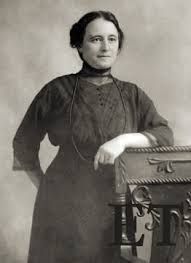
1082) Jennie Bauters

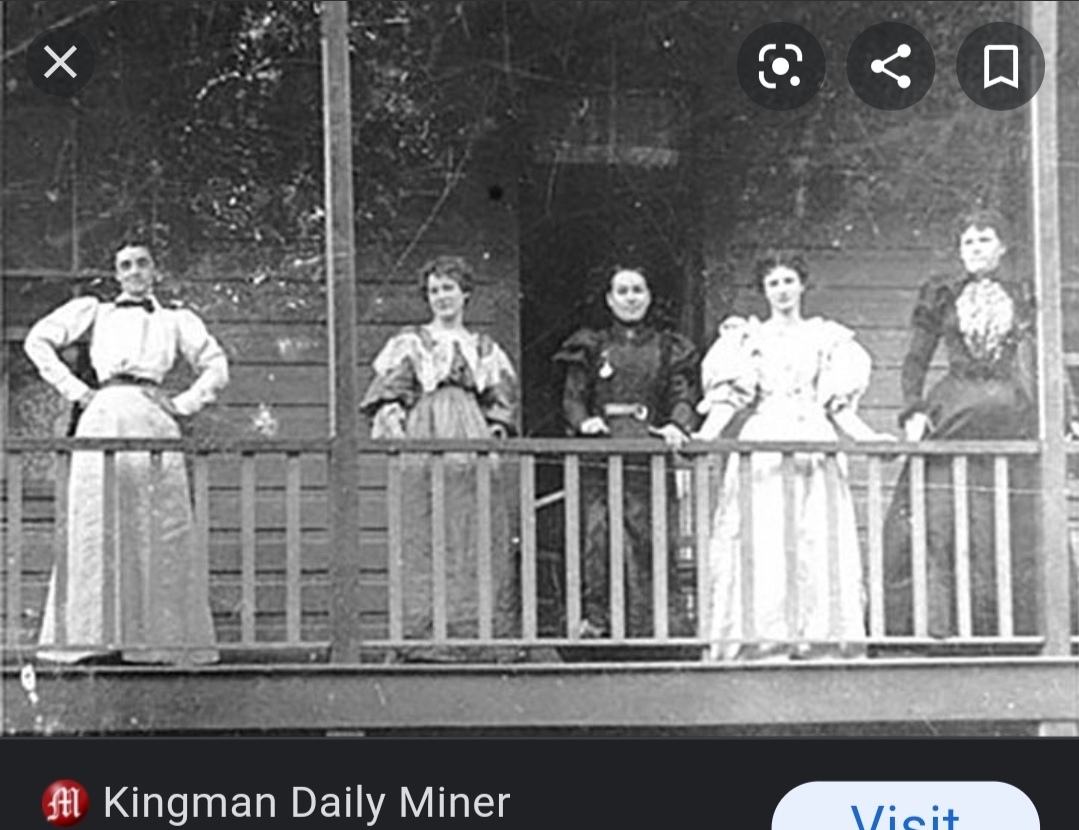
One of These Women is Jennie

1082: Jennie Bauters

Jerome, Arizona’s Most Notorious Madam and Proud Business Owner

Born: Possibly 1862, Present-day Belgium

Died: 3 September 1905, Goldroad, Arizona Territory (Present-day Arizona State--Goldroad itself is an abandoned site)

Also Known As: Belgian Jennie

Very little information about Jennie is readily available online, however I first learned her story while visiting the Jerome Historical Mine Museum in Jerome itself, so what little is known of her story is certainly verifiable in the historical sense.

According to several online articles (linked below), Jennie gave birth to a son named John in Brussels. When her son was old enough, the pair moved to the United States. Jennie left her son in a boarding school in Chicago while she herself moved out west, quickly becoming one of the most notorious and wealthy madams in the Arizona Territory.

In October of 1896, Jennie secured a mortgage on three small parcels on land in the copper mining village of Jerome, constructing a wooden building on the site called “Jennie’s Place.” While on paper Jennie claimed the building was a boardinghouse, in actuality it was one of the first brothels in Jerome. Over the next four years three fires would crash through the small village, and each time Jennie had to rebuild.

Yet despite the setbacks, Jennie was making the big bucks. By 1900, Jerome had incorporated as a city and was demanding all buildings be fireproof, which Jennie was able to accommodate in her latest brothel.

Jennie left Jerome in 1903, after being repeatedly harassed by a stalker, and settled in Goldroad instead. Goldroad was a small mining community about halfway between Kingman and Oatman that no longer exists today. All that's left of Goldroad is the mine which has operated on and off for more than a century now.

Unfortunately, Jennie’s stalker followed her there. While some claim the man titled himself as Jennie’s husband, the truth was he wanted Jennie and her money, and she was willing to give him neither. Jennie told anyone who would listen that the man was threatening her, and yet nothing was ever done about it.

Eventually the man grew violent, and after a morning of hard drinking in which he declared he would take Jennie’s money even if it killed him, he went to her house armed with a loaded pistol. After breaking in Jennie’s door, the man demanded she hand over her money. The two began to argue loudly, and Jennie ran out into the street dressed only in her nightgown. Her stalker then shot her four times, killing her right there in the street in broad daylight. The man then attempted to kill himself by firing a shot into his chest and then lying down in the street.

Jennie’s murderer didn’t die that day.

Instead, he was arrested and taken to Kingman for trial. Eventually, he was hanged for the killing after exhausting all of his appeals. Snippets of news articles from his trial survive today.

The story doesn’t end there however.

The murderer and Jennie were both buried in the old Pioneer Cemetery in Kingman. Jennie’s son paid for her to have a grave marker with the money he inherited from her. In 1917, the cemetery was moved to a new location at the behest of city planners. Any bodies that went unclaimed by family were left in situ. Jennie’s body was one of the unclaimed—as was her murderer’s.

In the 1940’s the remaining bodies were dug up and moved to one mass grave, with a high school being built on the sight of the former cemetery. Today, Jennie and her murderer are trapped forever, buried under the football field at the high school.

According to one source, Jennie’s bordello in Jerome still stands. Today however, the business is a jewelry store known as “Nellie Bly.” Having visited the store myself a few years back, my advice to any potential visitors is to not ask the women working there if the store is named after the journalist of the same name. The women I encountered that day got very prickly over that question to say the least and reminded me the name was Elizabeth Cochran’s nickname and that many women have used the name over the years. Excuse me for asking a question.

Jennie was an immigrant and a single mother. She rose from abject poverty to become one of the richest women in the Arizona territory. Sadly, with her success came the ire of a jealous man, and she lost her life because no one was willing to help protect her, a notorious woman of the night. And if all that wasn't sad and horrific enough, today, Jennie has to spend eternity trapped lying beside the man who put her in an early grave. Jerome locals claim Jennie's ghost now haunts the town she once called home, and I can only hope wherever her spirit ended up, she's no longer being tortured by the man who ended her life.

Badges Earned:

Find a Grave Marked

Located In My Personal Library:

Are Ghosts Real? The Story of Belgian Jennie: The Richest Madam in the Arizona Territory by Peggy L Hicks

They Came to Jerome by Herbert V Young

Sources:

https://heathermonroe.medium.com/the-murder-of-jennie-bauters-ae1b11006d0c

http://files.usgwarchives.net/az/mohave/obits/bauters.txt

https://www.bealestreettheater.com/events/ghost-walk-2019/the-life-of-belgian-jennie-bauters/

https://www.azcentral.com/story/news/local/arizona-best-reads/2016/03/09/inglorious-arizona-belgian-jennie-madam-jerome-more-than-myth/81451438/

https://www.thedesertway.com/jerome-az/

https://www.findagrave.com/memorial/87867179/jennie-bauters

1081) Juliane Diller

Courtesy of BBC.com

“The next thing I knew, I was no longer inside the cabin. I hadn’t left the plane; the plane had left me.”

1081: Juliane Diller

The Only Survivor of LANSA Flight 508

Born: 10 October 1954, Lima, Peru

Original Name: Juliane Kopecke

At the time of the flight, Juliane was seventeen. Her mother and all of the other passengers and crew perished after the plane fell more than two miles to the jungle floor after being struck by lightning.

As of 2021, LANSA Flight 508 remains the deadliest crash in aviation history as a result of a lightning strike (ninety-one people died). LANSA itself didn’t have the greatest travel record, with two previous crashes already in their history. The flight itself also took off several hours late and was only supposed to last an hour. The first twenty-five minutes of the flight were completely ordinary, but then the turbulence hit, and before Juliane could blink, the plane had broken apart in midair.

The saddest part? The crash happened on Christmas Eve in 1971, meaning Juliane not only had to live with knowing her mother was dead, but she also spent the holiday alone struggling to survive. When she came to on Christmas Day, Juliane found herself in the middle of the plane’s wreckage. She had some cuts and bruises, a broken collarbone, and a torn ligament in her knee, but she could walk, and that was what truly mattered.

Juliane had been living in the rainforest on and off for the past three years with her parents who were researchers. She had no way of knowing it before the crash, but that year spent in the jungle would also help ensure her survival. Unlike a lost tourist, Juliane knew how to navigate the dense forest canopy, where to find food and shelter, and which animals and plants to avoid in order to stay alive.

Juliane definitely wasn’t dressed for a forest adventure either. She was wearing a mini dress and had lost one of her shoes as well as her glasses. Four days after the crash, Juliane encountered the first bodies from the wreck. The crash sight was so spread out across the dense forest floor it had taken her that long to come across any other passengers.

After ten days, Juliane was delirious from hunger and thirst. She thought she was hallucinating when she came across a boat, but realized after touching it that the boat was in fact real. Juliane didn’t find anyone near the but or the hut erected close by that night, but decided to spend the night in the hopes of coming across someone. She managed to treat an infected wound in her arm by putting gasoline into it, and come morning was awoken by the sound of several men’s voices.

The men were stunned by Juliane’s appearance to say the least. A petite blonde white girl in the middle of the Amazonian rainforest? But after she explained to them what had happened to her (in Spanish), they fed her and helped treat her wounds. The next day the men drove her back to civilization.

Juliane was finally reunited with her father, but her mother was still classified as missing. On January twelfth, her mother’s body was located on the forest floor. After an autopsy was conducted, investigators were able to prove Juliane’s mother had survived the initial crash but was badly wounded. She died several days later, most likely in agonizing pain.

Over fifty years after the crash, Juliane still spend part of her time in Peru, running the research station her parents founded. Today, Panguana, that same research base, is the oldest biological research station in Peru. The base has expanded over the years from just over four hundred acres to now covering 4,000. According to the New York Times, “the preserve is home to more than 500 species of trees (16 of them palms), 160 types of reptiles and amphibians, 100 different kinds of fish, seven varieties of monkey and 380 bird species,” (article linked below). Fifty-six separate species of bats live on the preserve, a remarkable feat considering only twenty-seven exist in the entirety of Europe.

The rest of the time Juliane lives in Munich, having recently retired from her job as deputy director of the Bavarian State Collection of Zoology. After the crash, she moved to Germany and earned her doctoral degree biology.

In 1989, Juliane married an entomologist whose main study is parasitic wasps.

In 1998, Juliane returned to the scene of the crash after being approached by a German filmmaker for a made for television documentary. She published her memoir, “I Fell From the Sky” in Germany in 2011.

Juliane’s mother, Maria, was also a biologist. Four different species of Peruvian wildlife have been named in her honor.

Sources:

https://www.bbc.com/news/magazine-17476615

https://www.nytimes.com/2021/06/18/science/koepcke-diller-panguana-amazon-crash.html

https://edition.cnn.com/2009/WORLD/europe/07/02/germany.aircrash.survivor/

1080) Olympias

1080: Olympias

One of the Most Powerful Women of Ancient Hellenic Origin

Born: c.375 BC, Present-day Epirus, Greece

Died: c.316 BC, Present-day Pydna, Greece

Original Name: Myrtle

Olympias was the daughter of the king of the Mollosians, a powerful tribe in Epirus. She was also the second wife of Philip II of Macedon (they married when she was about eighteen and he was around twenty-eight) and she was the mother of Alexander the Great (as well as a daughter named Cleopatra). Olympias even claimed her family was descended from the legendary Greek hero Achilles, and that his power and might had lived on in their blood. Her son would eventually travel to the ancient site of Troy to pay homage to his ancestor, and some say he carried a copy of The Iliad with him wherever he went as a consequence as well.

Long story short, Olympias was connected to lots of powerful men to say the least.

Olympias was given the name she is now most associated with after her husband’s prized horse was victorious in the Olympic Games. According to the ancient scholar Plutarch, Olympias gave birth to her son, Alexander, on the same day as her husband’s victory at the games. These two events corresponding on the same day foretold a great future for Olympias’s son; a future he more than lived up to.

Olympias may have poisoned Alexander’s half-brother (who wasn’t her son) so the boy wouldn’t be a threat to Alexander’s ambitions for the throne. The boy didn’t die, just became mentally impaired as a result. The proof of whether or not Olympias was actually responsible for this act is circumstantial, but the fact that it has persisted for so many centuries is telling.

The Macedonian people disliked Olympias for being a cult follower of Dionysus. The cult of Dionysus is remembered for being very hedonistic; drinking wine (unsurprisingly), enjoying some fun in the bedroom with several other adults (trying to keep this PG in case someone young comes across this article…), as well as keeping company with snakes. Some of the ancient sources went so far as to say Olympias slept with snakes in her bed. To me that seems very uncomfortable and more dangerous than it would be worth, but maybe she was about that life. I don’t judge.

After twenty years of marriage, Phillip divorced Olympias to marry a fully-Macedonian woman (rumors were swirling that Phillip himself was only half-Macedonian and therefore he and his son’s claim to the throne was in jeopardy). The politically savvy Phillip knew that by marrying his new Macedonian bride, if he managed to get her pregnant, he would be scoring a child worthy of inheriting the Macedonian throne.

The main issue here? This would obviously remove Alexander from the line of succession. Around the same time she was divorced from her husband, Olympias’s brother, who was king of Epirus, came into a marriage contract with his niece, Olympias’s daughter Cleopatra. This meant that, should the marriage go forth and should Phillip’s newest wife give birth to a boy, Olympias would be completely void of any political power in Macedonia or Epirus. Her world was about to come tumbling down.

Luckily for Olympias, fate was about to intervene.

Phillip was assassinated (possibly with Olympias’s help) at the wedding banquet for his and Olympias’s daughter (who did end up marrying Olympias’s brother, the poor girl’s uncle—luckily for the bride, the groom died not long after). With Phillip dead, Alexander rose to the throne and Olympias became the mother of the king, just like she had always wanted.

Soon after, Phillip’s new wife and daughter (and possibly son if she had one) were put to death on Olympias’s orders. According to some accounts, the family was burned to death, while others claim Cleopatra-Eurydice, Phillip’s widow, was hung until dead. Either way, their end was swift and brutal, leaving Olympias and Alexander the winners of that round.

Soon after becoming king, Alexander left to conquer large swaths of the world. Before he left, Olympias pulled her son aside and told him his father was not actually the now dead and deposed Phillip, but actually the god Zeus. Alexander more than lived up to his supposed divine heritage (you don’t earn the nickname “The Great” for nothing!) but Olympias and Alexander would never meet face to face again. Though mother and son corresponded all throughout his travels, Alexander died from an infection a long long way from home while still in his thirties, his only child not yet born.

With Alexander dead, the struggle for his empire soon began. Eventually, the vast empire was split apart, certain swaths given to certain generals. The portion that contained his native Macedonia (as well as other swaths of land) was eventually given to the general Polyperchon to rule as regent, but he was soon ousted by a brutal man named Cassander. Technically speaking, the plan was for Cassander to rule as regent until Alexander’s son (and Olympias’s grandson) would grow old enough to rule in his own right. For the time being though? Cassander ruled as regent while the mentally ill prince (Alexander’s half-brother that had survived an assassination attempt so many years before) wielded the title of king. Olympias realized soon after that, so long as Cassander breathed, her grandson would never be able to take the throne as Alexander IV (his father, Alexander the Great, was technically Alexander III).

After several years of struggle, Olympias and her cousin, the new king of Epirus, tried to invade Macedonia in order to place Olympias’s grandson on the throne. In 317 BCE, Olympias finally succeeded in murdering the current king, Alexander’s half-brother, the boy she may have tried to poison many years before. With the king as well as hundreds of other citizens who had been loyal to Cassander dead, Olympias may have finally felt secure once again. However, Cassander himself wasn’t dead and still remained regent of the area. Though the man initially vowed to save Olympias’s life, he decided she was too much of a threat to his own ambitions to keep alive.

Olympias was executed in 316 BCE. Sometime after (possibly as long as six years later), her grandson, Alexander IV, as well as his mother Roxanne (Alexander the Great’s widow), were both put to death as well. Alexander IV was only around fourteen years old at the most when he died. Olympias had battled her entire adult life for her son and grandson, but in the end, her ambition to save her family’s right to the throne was what also led to her doom.

Badges Earned:

Find a Grave Marked

Rejected Princess

Located In My Personal Library:

Tough Mothers by Jason Porath

Arsinoe of Egypt and Macedon, a Royal Life by Elizabeth Donnelly Carney

Goddesses, Whores, Wives, and Slaves: Women in Classical Antiquity by Sarah B Pomeroy

Lost Bodies by Jenni Davis

Lost Cities, Ancient Tombs: 100 Discoveries That Changed the World edited by Ann R Williams

National Geographic History Magazine November/December 2019 Edition article “The Woman Behind the Throne, Olympias”

National Geographic History Magazine May/June 2025 article "Alexander and Philip, A Twisted Path to Power" by Mario Agudo Villanueva

Secret Egypt by Zahi Hawass

Sources:

https://www.worldhistory.org/Olympias/

https://www.nationalgeographic.com/history/history-magazine/article/queen-olympias-ancient-macedonia

https://www.britannica.com/biography/Olympias

https://www.livius.org/articles/person/olympias/

https://allthatsinteresting.com/queen-olympias

https://www.findagrave.com/memorial/147615586/olympias-of_macedon

  • Previous
  • 1
  • …
  • 14
  • 15
  • 16
  • 17
  • 18
  • 19
  • 20
  • …
  • 159
  • Next

Categories

Archives

  • July 2025 (10)
  • July 2024 (1)
  • January 2024 (1)
  • August 2023 (1)
  • June 2023 (2)
  • October 2022 (1)
  • July 2022 (1)
  • June 2021 (3)
  • December 2020 (3)
  • August 2019 (1)
  • July 2019 (2)

Search

© 2026 The Exasperated Historian | Powered by Minimalist Blog WordPress Theme