The Exasperated Historian
Menu
  • Home
  • The Women’s List (New)
  • The Men’s List
  • The Animal List
  • Collections
  • The Blog
  • Contact Us
  • FAQ
Menu

Category: Birth Locations

1062) Chandro Tomar

Courtesy of Gulf News

“My husband and his brothers were very angry. They said, ‘What will people think? An old lady of your age going out to shoot guns? You should be looking after your grandchildren.’ I listened to them quietly, but I decided to keep going no matter what.”

1062: Chandro Tomar

Held the Title of Oldest Female Sharpshooter in the World at the Time of Her Death

Born: c.1931, Shamli, India

Died: 30 April 2021, Meirut, India

Her nicknames included Shooter Dadi and Revolver Dadi (Dadi meaning grandmother in Hindi).

She had eight children and at least nine grandchildren, and three great-grandchildren.

Chandro first learned to shoot when one of her granddaughters wanted to learn how.

Chandro first learned to shoot in 1999 when she was in her late sixties, and she won over thirty national competitions in the years after. Before she became a sharpshooter, she spent her days working the family farm and living as a domestic housewife like millions of other women across India. According to the New York Times, she married when she was fifteen and never attended school.

At the time, Chandro’s husband and other male family members were not at all happy with her decision to learn to shoot. She hid the news as long as she could, but after a local paper published her story, Chandro’s husband berated her. Chandro decided to ignore his mean words and kept competing anyway.

Her husband and his brothers never approved of Chandro’s competing. But instead of trying to stop her, they decided instead to simply ignore her work and move on with life. Chandro said that was fine by her. Along with her competing, Chandro also mentored hundreds of young women in India who wanted to learn to shoot as well. Chandro became a force and advocate for women’s equality in India in the years after she began shooting, and was fondly remembered throughout her country.

Her family opened an indoor shooting range in her honor soon after her death. A Bollywood movie was created after being inspired by her life story.

Chandro’s niece was the first Indian woman to win at the Rifle and Pistol World Cup in 2010. One of her granddaughters is also a champion shooter.

Sources:

https://www.nytimes.com/2021/05/11/world/chandro-tomar-dead.html

https://indianexpress.com/article/sports/sport-others/shooter-dadi-chandro-tomar-dead-covid-19-7296785/

https://www.hindustantimes.com/sports/others/shooter-dadi-chandro-tomar-dies-due-to-covid19-101619782327255.html

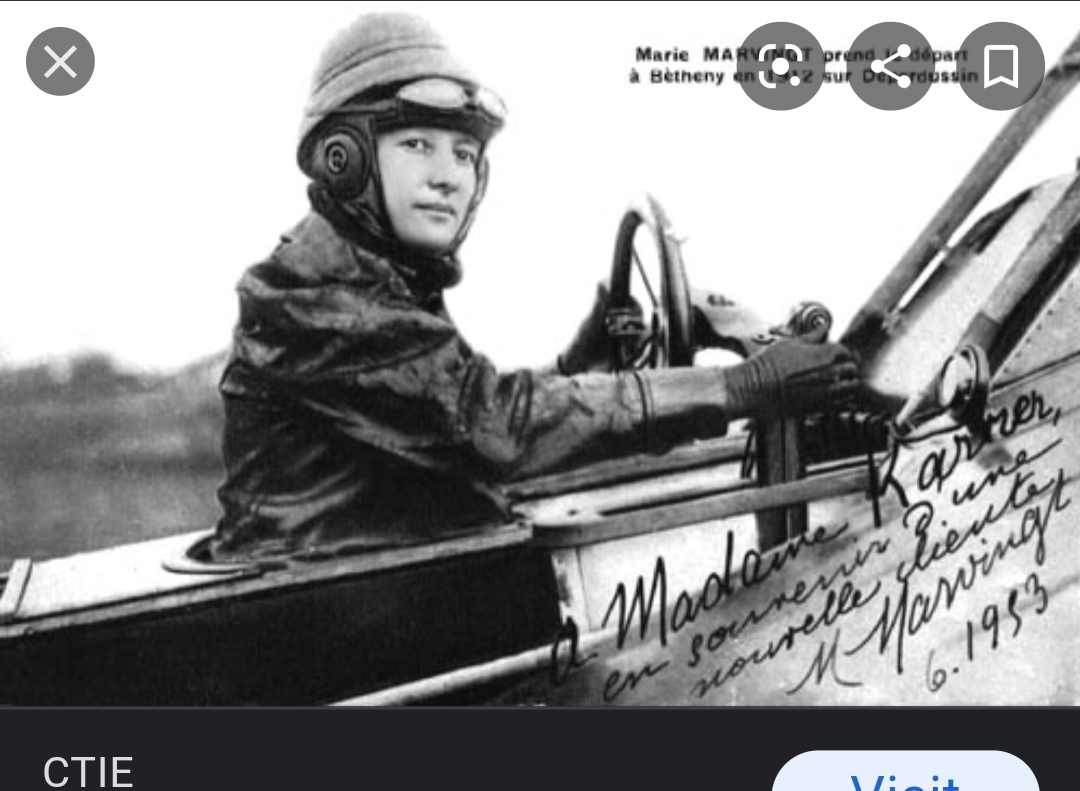
1061) Marie Marvingt

Courtesy of CTIE

1061: Marie Marvingt

It Takes a Special Kind of Woman to be Nicknamed, The Fiancée of Danger

Born: 20 February 1875, Aurillac, Auvergne, France

Died: 14 December 1963, Laxou, Lorraine, France

Marie was a true athlete and was proficient in a number of sports including mountain climbing, cycling, swimming, fencing, shooting, skating, bobsledding, flying in various aircraft, and more.

Marie was the first woman to climb many French and Swiss mountains. According to one source, she earned her helicopter pilot’s license when she was eighty.

Two years before she died, at the age of eighty-six, Marie bicycled one hundred and seventy-five miles across France, just because she could. That attitude was reflected throughout her trend setting, incredible life.

In 1908, for instance, Marie was denied entry to the Tour de France because of her gender. Undeterred, Marie decided to cycle the race anyway and finished it independently while two-thirds of the male competitors failed to complete the race.

She was also a record-breaking balloonist. In 1907 (or 1901, sources differ), Marie was the first woman in France to earn a balloon pilot’s license. In October of 1909, she became the first person to pilot a balloon over the English Channel from England to France. The following year, she became the third woman in the world to earn a fixed wing pilot’s license. That same year, Marie became the first woman to hold a flying record for women after a successful fifty-three-minute-long flight. Flight at the time was incredibly dangerous, yet Marie managed to fly nine hundred consecutive flights without a single crash.

In 1915, Marie was even the first woman to fly combat bomber raids in history. To put that into perspective; this was only twelve years after the Wright Brothers first flew at Kitty Hawke--twelve years. Marie was involved in at least two raids against the German lines during World War I. Some sources even claim she served on the front lines as an infantryman earlier in the war. For her efforts, Marie was awarded the Croix de Guerre.

She was a surgical nurse and the first trained and certified flight nurse in the world. As early as 1912, Marie had designed her first air ambulance and oversaw the deployment of flight ambulances in North Africa. Marie also helped establish the first training protocols for flight nurses.

In the 1930’s, Marie even found time to help direct and star in two films.

Among her other awards, Marie was the first and only person in the world to ever be awarded the “For All Sports” French National Sports Federation award in 1910.

According to Women in Aviation International, Marie, “Was so successful in sports that she was named in a 1914 anti-feminist book as setting a poor example for young women, because she did not participate in sports for entertainment or health, but displayed unladylike characteristics in that “she competes fervently” and “really tries to win.””

Badges Earned:

Find a Grave Marked

Rejected Princess

Located In My Personal Library:

Rejected Princesses by Jason Porath

Sources:

https://www.wai.org/pioneers/2007/marie-marvingt

https://www.uh.edu/engines/epi2504.htm

http://www.mariemarvingt.com/

https://www.ctie.monash.edu/hargrave/marvingt.html

https://www.findagrave.com/memorial/44263640/marie-marvingt

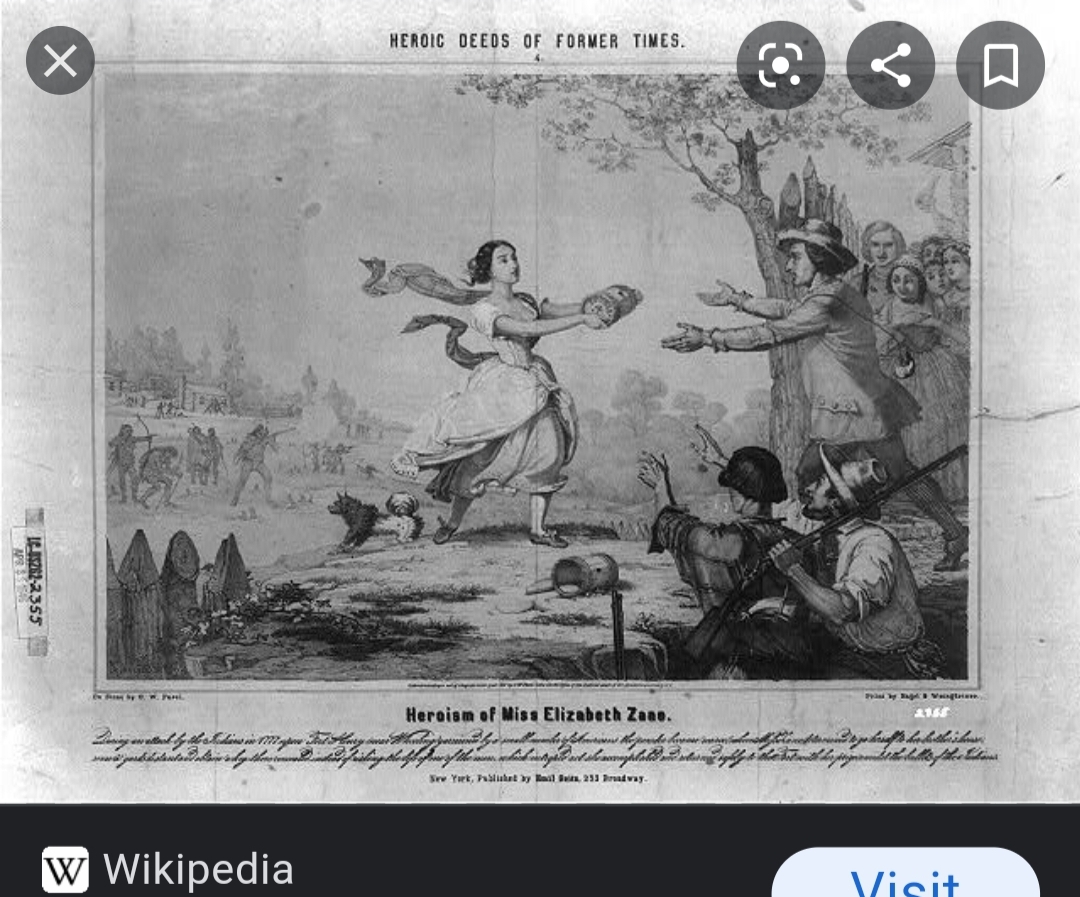
1060) Betty Zane

Courtesy of Wikipedia

“You have not one man to spare; a woman will not be missed in the defense of the fort…’Tis better a maid than a man should die."

(Betty’s supposed words when someone suggested a man go for the gunpowder instead of her)

1060: Elizabeth “Betty” Zane

Famed Revolutionary War Volunteer

Born: c.1759-1766, The Colony of Virginia (Present-day West Virginia, United States of America)

Died: c.1823-1831, Ohio, United States of America

Full Name: Elizabeth Zane McLaughlin Clark

Betty was present at the siege of Fort Henry in Wheeling, present-day West Virginia the day she entered the pages of history. The town and its nearby fort had been founded by Betty’s older brothers several years before the siege occurred in 1782.

As the story goes, Betty had just returned home from school in Philadelphia when a band of Native Americans and British regulars attacked the town. The locals panicked and raced into Fort Henry, near the town, without grabbing enough gunpowder to adequately defend themselves.

Inside the fort they ran out of gunpowder in the midst of the fighting, so Betty ran to her brother’s house, loaded the gunpowder into her apron, then ran back towards the Fort. The soldiers fired at her once they realized what she was doing, and supposedly pierced her clothes, but she managed to return to the fort unscathed. The amount of gunpowder she returned with was enough to ensure the inhabitants of the fort were able to fight off the Natives until more help could arrive.

While the story is quite imaginative and fun to listen to, there is little actual documentation about Betty’s life to ensure the story is factual. All we really know about her is that after the war she married and moved to Ohio. Her story was fixed in American history after her descendant and famed author Zane Grey published an account of the battle and included his ancestor’s story in 1903.

Today, a monument to Betty’s courage is located in her adopted hometown of Martins Ferry, Ohio.

No known depictions of Betty from her life survive to present-day. The image of her shown here is an artist's interpretation of events that happened during the siege.

Badges Earned:

Find a Grave Marked

Located In My Personal Library:

Women Heroes of the Revolution by Susan Casey

Sources:

https://www.britannica.com/biography/Betty-Zane-American-frontier-heroine

https://www.ohiocountylibrary.org/wheeling-history/4226

https://rimcountrymuseum.org/who-was-betty-zane/

https://www.findagrave.com/memorial/13414418/betty-zane

1059) Emily Geiger

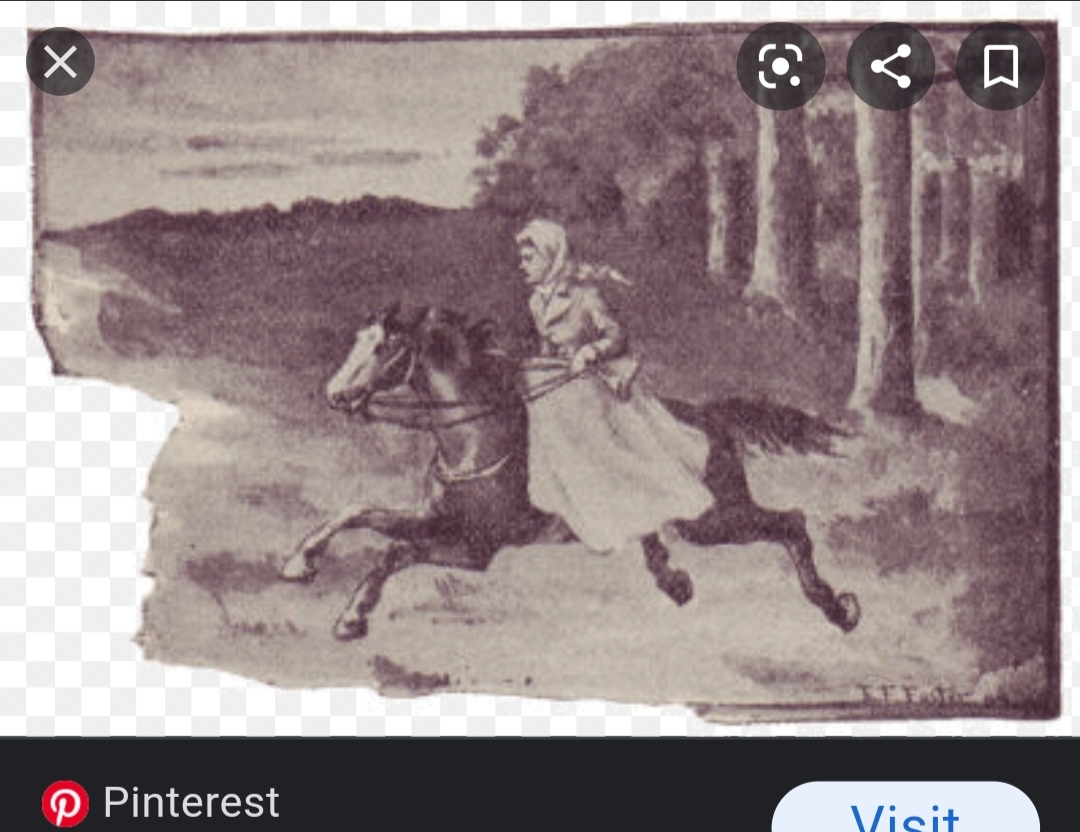
Courtesy of Pinterest

1059: Emily Geiger

Revolutionary War Patriot

Born: c.1765, The Colony of South Carolina (Present-day South Carolina, United States of America)

Died: c.1825, South Carolina, United States of America

Emily was a civilian volunteer who offered to ride across seventy miles of dangerous terrain to deliver a message during the war when she was only eighteen. It was June of 1778, and General Nathanael Greene needed a message delivered to General Thomas Sumter. Her incredible bravery is one of the few details known with certainty about her life.

The first night of the ride, Emily was almost captured by Tories but escaped and then later actually captured and questioned.

Before the message she carried could be found on her, Emily memorized and then ate it.

The soldiers had to release Emily after finding nothing suspicious on her.

She finished her journey and passed on the message successfully.

After the war, Emily got married, but her date of birth and death are unknown with certainty. No known images or depictions survive of Emily to this day. The drawing shown here is simply an artist's rendering of Emily's famed ride.

Emily has been honored with a National Society Daughters of the American Revolution dedicated marker in a small cemetery in South Carolina (though according to Find a Grave Emily herself is not buried there), indicating she is a Revolutionary Patriot in the DAR database. Today, Emily also has a DAR chapter named after her in the South Carolina state society.

Badges Earned:

Find a Grave Marked

Located In My Personal Library:

Women Heroes of the Revolution by Susan Casey

Sources:

https://www.scencyclopedia.org/sce/entries/geiger-emily/

https://www.emilygeigernsdar.org/emily-geiger

https://historyswomen.com/early-america/emily-geiger/

https://www.nps.gov/_cs_upload/kimo/learn/education/classrooms/539617_1.pdf

https://www.findagrave.com/memorial/33779258/emily-geiger

1058) Nancy Hart

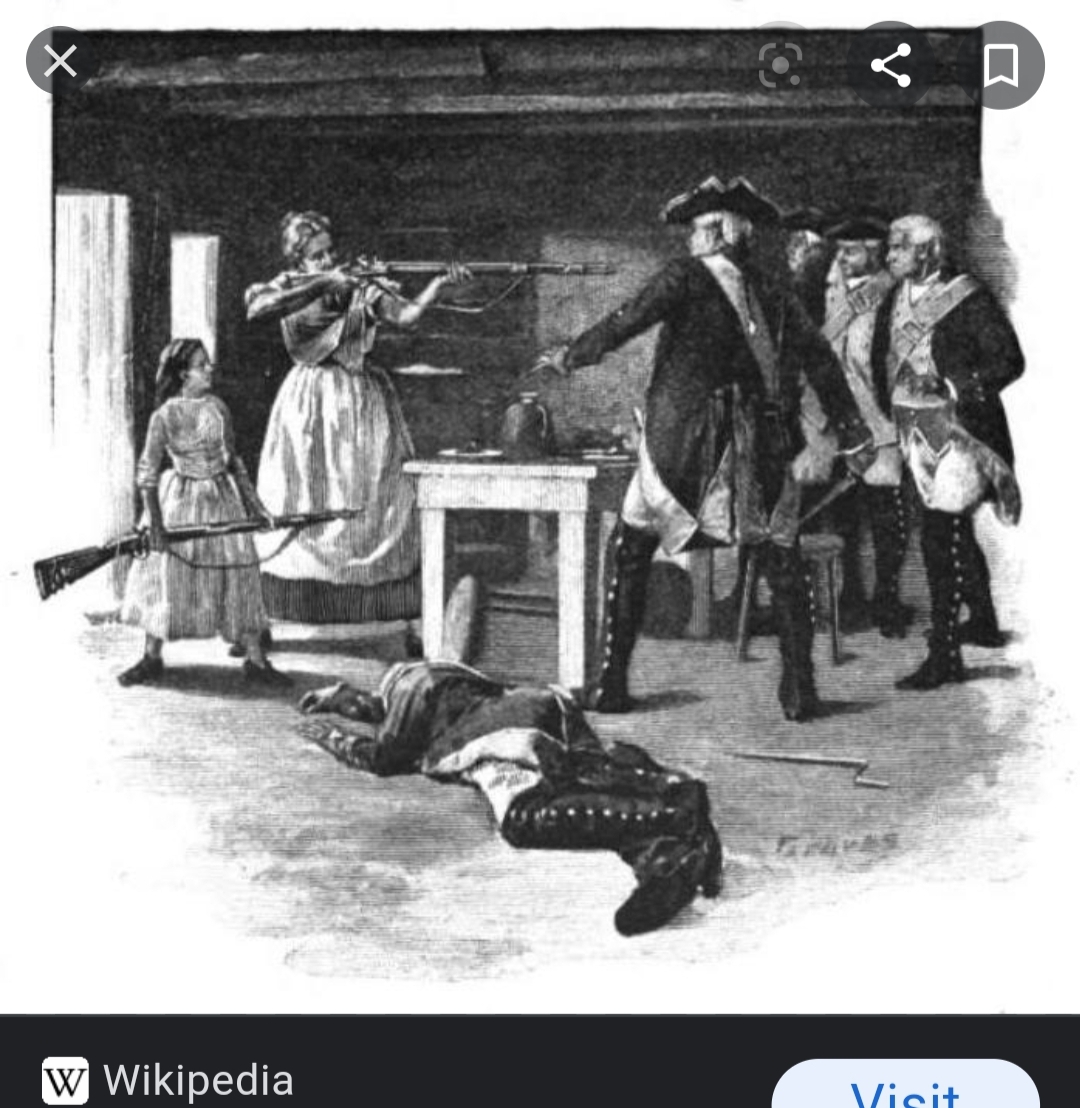
Courtesy of Wikipedia

1058: Nancy Hart

Spy, Scout, and Soldier During the American Revolution

Born: 1735, The Colony of North-Carolina (Present-day Orange County, North Carolina, United States of America [or possibly Pennsylvania, sources differ])*

Died: 1830, Present-day Henderson County, Kentucky, United States of America

Original Name: Ann Morgan

Nancy made it her personal mission to rid Georgia of the Loyalist Tories by possibly capturing six, killing one, and overseeing the hanging of five others.

She reportedly gave birth to six sons and two daughters despite the fact that she didn't get married until she was in her mid-thirties.

Nancy was a formidable woman. She was reportedly six feet tall and muscular with bright red hair leading the Cherokees to calling her Wahatche; meaning War Woman. Nancy might have been a relative of either Daniel Boone or Daniel Morgan (though the evidence for both is not really existent). She was illiterate, a skilled herbalist, hunter, excellent shot, and was cross eyed as well. As if her other characteristics weren’t memorable enough.

Despite these descriptions, no verifiable images of Nancy's likeness survive to this day. You simply have to use your imagination when you think of her. In a way I think that makes it better.

During the course of the war, Nancy managed the family farm while her husband was away fighting for the Americans. Evidently Nancy was restless though and she often snuck off to spy on the British by posing as a feeble-minded man. Some reports state she was even present for the Battle of Kettle Creek in 1779.

It is said Nancy’s daughter caught someone spying on them through a hole in the wall so Nancy chucked hot soap at the poor guy. Apparently scalded by the soap, Nancy was able to capture and then tie him up before handing the poor sap over to the Patriots for a bit more fun.

After some British soldiers came into Nancy’s home and demanded food from her (possibly even killing her last turkey and demanded she cook it for them) Nancy started stealing their guns and when caught threatened to shoot the soldiers. She actually did kill one soldier and wound another when they rushed her. The rest of the soldiers were hung once her husband got home to help Nancy finish them off.

Now, in case you think that last story sounds a bit outlandish, it’s important to note that reportedly in 1912, six bodies were found buried near the house, leading some to believe they were the soldiers killed by Nancy and her husband that fateful day.

According to Battlefields.org (article linked below):

“In the decades after the Revolution, many of Hart’s adventures became the stuff of legend and inspiration. During the Civil War, a band of Georgia women formed a militia unit named in honor of Nancy Hart, illustrating how the legacy of Hart’s heroism has lived on. Today, the state of Georgia has memorialized Hart in several ways, including one of the state’s counties, a state park, a lake, and a highway. In the 1930s, the Daughters of the American Revolution reconstructed the Hart’s cabin, which had been washed away in a flood many years before, in order to commemorate one of Georgia’s most famous female Patriots. Nancy Hart, like many American frontierswomen, played an important role not only in defending her family and community during the War for Independence but also in shaping the memory of the American Revolution in ways that still resonate today.”

*I have decided to list Nancy under “North Carolina” for her birth location because of her Find a Grave profile which states North Carolina. Evidently the profile is managed by one of her descendants—though the message they have in relation to her burial itself is hostile in nature to say the least.

Badges Earned:

Find a Grave Marked

Located In My Personal Library:

Women Heroes of the Revolution by Susan Casey

American Spirit Magazine Article "Feisty and Fearless--Georgia Fireball Nancy Hart Outfoxed Loyalists" by Emily McMackin Dye (September/October 2021 Magazine)

Sources:

https://www.womenshistory.org/education-resources/biographies/nancy-morgan-hart

https://www.battlefields.org/learn/biographies/nancy-hart

https://www.britannica.com/biography/Nancy-Hart-American-Revolution-heroine

https://www.findagrave.com/memorial/16616031/nancy-ann-hart

1057) Hannah White Arnett

1057: Hannah White Arnett

Patriot During the American Revolution

Born: 15 January 1733, The Colony of New York (Present-day Bridgehampton, New York, United States of America)

Died: 10 January 1823 (or 1824, sources differ), Elizabeth, New Jersey, United States of America

Hannah is best remembered today for stopping a group of American men from deserting the cause and joining the British for “protection of life and property”. She overheard this conversation because her husband Isaac and the other men were discussing the idea in Hannah and Isaac’s home. According to legend, Hannah strode into the room and berated the men for daring to even consider it. Hannah also reportedly told her husband she would leave him if he took the offer. Isaac and the other men decided the cause of liberty was more important than their property, and continued to fight.

According to WikiTree, Hannah had at least ten children and was married twice. She is buried with her second husband and three of their children who died in infancy. Other than her single act of ultimate bravery, very little else is known of Hannah’s life. No images of her survive to modern day.

In 1890, Mary Smith Lockwood, one of the four founders of the National Society Daughters of the American Revolution uncovered Hannah’s story and published it, bringing Hannah out of the shadows and into the history books. According to the same WikiTree profile referenced above (linked below) Hannah’s husband is recorded as a patriot in the DAR database, but it does not mention if Hannah is a recorded patriot.

In 1938, the Boudinot Chapter (New Jersey State Society) of the Daughters of the American Revolution erected a memorial plaque honoring American Revolutionary Soldiers in the First Presbyterian Church in Elizabeth, New Jersey—the same cemetery where Hannah White Arnett is buried.

Badges Earned:

Find a Grave Marked

Located In My Personal Library:

Unlikely Heroes: Ordinary Men and Women Whose Courage Won the Revolution by Ron Carter

Sources:

https://njwomenshistory.org/discover/biographies/hannah-white-arnett/

http://njwomenshistory.org/Period_2/Arnett.htm

https://www.wikitree.com/wiki/White-6120

https://historyswomen.com/miscellaneous-articles/hannah-white-arnett/

https://www.findagrave.com/memorial/7237150/hannah-arnett

"... have you chosen the part of men or traitors? ... God is on our side and every volley of our muskets is an echo of his voice ... we entered into this struggle with pure hearts and prayerful lips; we had counted the cost and were willing to pay the price, were it our heart's blood. And now ... because for a time the day is going against us, you would give up all ... you cowards!"

(Hannah’s words as reported in The Great Women of the American Revolution, published by the National Society Daughters of the American Revolution in 1975)

1056) Margaret Corbin

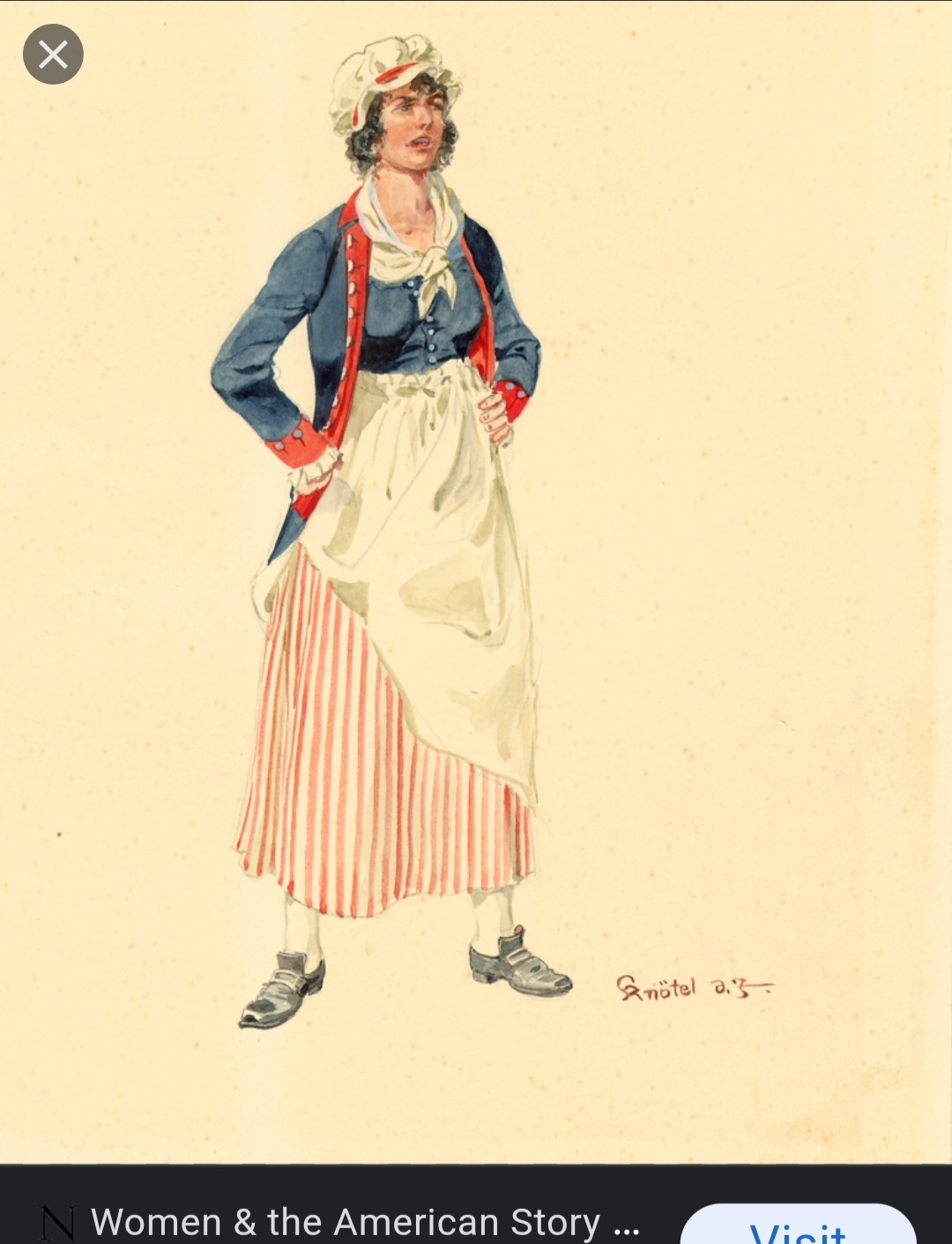
Courtesy of Women and the American Story

“She’s an army spouse, and then an army widow, and then she was a soldier, and then she was a wounded soldier, and then she was a prisoner of war, and then she was a veteran. I really think of her as that building block for women in the military.”

-Jennifer Minus, Veteran and Member of the National Society Daughters of the American Revolution (New York State Society)

1056: Margaret Cochran Corbin

The First Female United States Veteran to be Awarded a Military Pension

Born: 12 November 1751, The Colony of Pennsylvania (Present-day Franklin County, Pennsylvania, United States of America)

Died: 16 January 1800, Highland Falls, New York, United States of America

Margaret fought in the American Revolutionary War, but this was far from the first hardship she had faced in her life. When Margaret was four, the French and Indian War (otherwise known as the Seven Years’ War) broke out in the colonies—basically disrupting daily life for everyone on the Eastern seaboard. A year later, when Margaret was five, her father was reportedly killed by a band of Native American warriors. Margaret’s mother was kidnapped and was never seen or heard from again; meaning Margaret and her brother were both orphaned as small children and sent to be raised by their uncle.

Margaret lost complete use of her left arm due to being wounded during the Battle of Fort Washington in 1776 (the same battle where her husband was killed). Margaret’s husband John had been a matross, or cannon operator, while Margaret herself took on the more typical feminine role of camp follower. However, during the battle, Margaret had stayed by her husband’s side and immediately leapt into action after he was killed*. Margaret’s other injuries included wounds to her jaw and left shoulder, while a piece of grapeshot tore off a section of her breast. In spite of these injuries, Margaret was captured alongside more than 2,000 American soldiers when the fort was surrendered to British forces. One source goes so far as to claim Margaret’s cannon was the last to stop firing when the fort was surrendered; but that seems like a detail to be taken with a grain of salt to say the least.

Margaret was released from captivity soon after and she continued to try and help with the war effort. However, others living with Margaret soon noted she was very hard to have nearby, because she was irritable and angry most of the time. She also drank and swore like any other (male) soldier, which made her unpopular with polite society even more so than for her understandably bad attitude.

Her “bad attitude” is completely understandable considering she had literally seen her husband shot to death right in front of her. Combine that with her other wounds, and Margaret was most likely in constant physical and mental anguish. She was formerly discharged from the military in 1783.

Margaret struggled financially for the rest of her life. Her wounds made it so that working to support herself was easier said than done, and there is no concrete proof she ever remarried or had children (though some sources say she had a second husband who died a year after the nuptials). Then, on 6 July 1779, the United States Congress formally awarded Margaret a soldier’s pension for the rest of her natural life. She was awarded half of that of a male combatant, which is awful, but it was better than nothing. Her name was entered into the Congressional Record, proving beyond reasonable doubt that she definitely served. Congress was also nice enough to award her a new suit of clothes to replace the ones she was wearing during the battle.

When she died in 1800, Margaret was buried in a pauper’s grave. She was not yet fifty years old. No drawings or paintings of her have survived to modern day, but many artists’ interpretations of this brave woman have been crafted over the centuries, including the one shown here.

Today, Margaret is best remembered for the being the only woman (as of 2021), to have a monument dedicated to her in the West Point Military Cemetery. After Margaret’s death, her remains were “supposedly” dug up and reburied at West Point in 1926 after efforts were raised by the National Society Daughters of the American Revolution, hence the grave monument; which is described by Atlas Obscura thusly:

“The monument to Margaret Corbin is West Point’s only monument to a woman veteran, and it greets visitors near the main gate, just feet from a neoclassical chapel. It faces Washington Road, where the Academy’s top brass live, and depicts Corbin in a long dress, operating a cannon as her long hair and cape fly in the wind. She wears a powder horn and holds a rammer to load cannonballs; the rest of the rather cramped cemetery sprawls out behind her. The monument portrays the moments before Corbin became a prisoner of war,” (article linked below under sources tab).

Unfortunately, ninety years after the monument was placed, Margaret’s grave was accidentally disturbed during some construction work, and testing was done on the newly uncovered remains. Scientists discovered the person buried in Margaret’s grave is a man who could have been over six feet tall. While shocking at the outset, after looking further into the work that went into exhuming her remains almost a century before, the story starts to make a bit more sense. By the time the DAR got involved in the effort to move Margaret’s remains, her true burial site had been lost to history save for word-of-mouth suggestions on where it lie. The DAR was able to track down the great-grandson of the man who had claimed to dig the grave and they used the evidence presented by him to choose the remains they would move.

During the initial exhumation process, the grave digger accidentally put a shovel through the skull, but a forensic examination at the time decided the skeletal remains showed signs of being injured by grapeshot. The remains were dug up, placed in a new flag draped casket, and transported three miles down the road to the West Point Cemetery by a horse drawn hearse.

The first Tuesday of May for every year following, representatives from DAR honor the female veteran on Margaret Corbin Day. They stand by the gravesite, sing hymns, educate others on Margaret’s story, and stand by while soldiers perform a twenty-one-gun salute.

Sadly, all of this means Margaret’s true remains have been lost (the original cemetery has even begun routing a sewage plant through the graveyard, leaving little hope for Margaret’s true remains to be found) but her place in history will never be forgotten. The man’s remains who were found in her grave have since been relocated within West Point Cemetery to where other unidentified remains are also buried.

*Some claim Margaret is the inspiration behind the famed Molly Pitcher character all American school children know well, however Margaret’s story is less likely the main inspiration. That honor is usually given to Mary Ludwig Hayes McCauley, but it is entirely possibly Molly Pitcher was inspired by both women.

Badges Earned:

Find a Grave Marked

Located In My Personal Library:

Revolutionary Women by Carol Berkin

Women Heroes of the Revolution by Susan Casey

Women in the American Revolution by Jeanne M Bracken

Sources:

https://www.atlasobscura.com/articles/margaret-corbin-grave-west-point

https://www.womenshistory.org/education-resources/biographies/margaret-cochran-corbin

https://www.dar.org/national-society/who-margaret-cochran-corbin

https://www.dar.org/national-society/margaret-cochran-corbin

https://wams.nyhistory.org/settler-colonialism-and-revolution/the-american-revolution/margaret-corbin/

https://www.findagrave.com/memorial/231/margaret-corbin

1055) Bettany Hughes

Courtesy of iNews

1055: Bettany Hughes

Award Winning Historian, Author, and Broadcaster

Born: May 1967, West London, United Kingdom

I’ll be completely honest with you. Bettany earned her spot on this list purely because of one of the documentaries she hosted: “Alexandria The Greatest City.” This special from 2010 taught me, the Exasperated Historian herself, Hypatia’s story for the first time and later inspired my love of women’s history and this project.

What all that means is, if it weren’t for me happening to find that documentary and choosing to watch it, this entire website may have never existed. That alone makes Bettany more than earn a place here, but now for more information about the woman herself.

Bettany is a professor who has lectured at Oxford, Cambridge, Bristol, Cornell, Swansea, Manchester, UCL, Utrecht, and Maastricht universities. Her specialty is medieval and ancient history and culture. Bettany has authored several works, which have been translated into over a dozen languages, and has hosted or helped create over fifty documentaries which have been viewed more than two hundred and fifty million times. If you’re interested in documentaries about the ancient world, odds are you have seen Bettany’s face; especially with the advent of streaming services like Netflix which have streamed her programs.

Bettany has been given numerous awards and accommodations, and has worked extensively to promote women’s history throughout the world. According to her biography on her personal website: "As a commentator she is asked to contribute to The New York Times, The Guardian, The Times, The Sunday Times, The Daily Telegraph, The Sunday Telegraph, The Daily Mail, Prospect Magazine and The New Statesman."

Bettany’s other main interest is the struggle to get classical works and languages reintroduced to schools in the UK. According to Wikipedia, she is married, has two children, and is a vegetarian. She was also made an OBE (Officer Order of the British Empire) in 2019 for her work.

Her work is awe inspiring, to say the least, and she proves that history can be cool or interesting to the masses…at least in my opinion anyway.

Badges Earned:

Located In My Personal Library:

Helen of Troy: The Story Behind the Most Beautiful Woman in the World by Bettany Hughes

National Geographic History Magazine Article "Aphrodite, Goddess of Desire" by Bettany Hughes (January/February 2025 Edition)

Sources:

https://www.bettanyhughes.co.uk/about

https://en.wikipedia.org/wiki/Bettany_Hughes

1054) Sutematsu Oyama

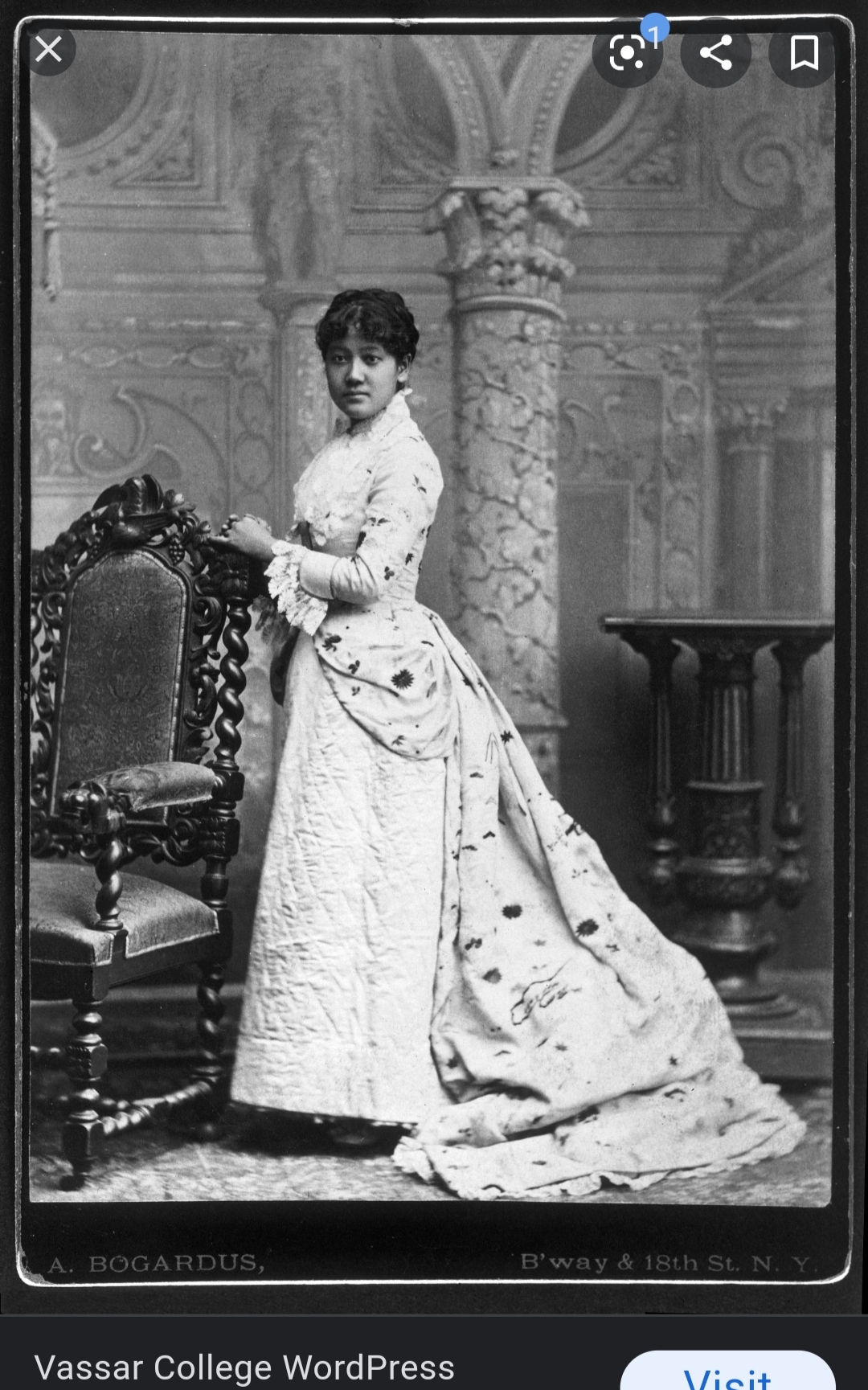
Courtesy of Vassar College WordPress

1054: Sutematsu Ōyama

The First Japanese Woman to Earn a College Degree From a Western College

Born: 16 March 1860, Present-day Aizu, Japan

Died: 18 February 1919, Tokyo, Japan

Also Known As: Princess Ōyama

Original Name: Sakiko Yamakawa

Unfortunately for Sutematsu, attending college wasn’t actually her choice. Her family forced her to go. She was eleven years old when she left her home to go abroad for her higher education. Sutematsu was one of five girls selected for the educational mission that was meant to last ten years. At the time, Sutematsu did not know a word of English, and must have been terrified by the very prospect.

Sutematsu’s family were descended from the samurai, and Sutematsu’s generation was the last to remember the elite warrior class before the war that ended the Samurais supremacy throughout Japan. When Sutematsu was only eight years old, the war reached her hometown of Aizu. Even though she was still just a child, according to Rejected Princesses, Sutematsu would provide additional ammunition to the gunners within the city and might have even smothered landed shells with wet quilts in order to prevent them from exploding. On one such occasion, the shell burst before Sutematsu’s sister could smother it in time. The shrapnel given off from the shell would kill Sutematsu’s sister-in-law and leave her with a large scar on her neck from where she herself had been struck.

According to Vassar College’s biography of her:

Sutematsu’s selection for [the mission to attend college abroad] was curious, considering her family’s relationship to the emperor of Japan. She came from a samurai family who were vassals to the Prince of Aizu, one of the last to surrender to imperial forces in the mid-nineteenth century civil war which ended the shogun’s reign and restored the emperor to power. In 1868, eight-year-old Sutematsu and her family were involved in the siege of Wakamatsu, during which the women and children supported the war effort from within the castle while the men battled the imperial warriors outside the castle walls. Sutematsu’s future husband, General Oyama, who was part of the imperial forces during that battle, later liked to joke that the shell that hit him during that battle was made by Sutematsu herself.

Of the five girls sent to the United States, two went home after only a few months because of the stress of the new country and culture. After a few months in the country, the remaining three girls, including Sutematsu, had hardly learned more than a word of English. The three girls were then separated and sent to different foster homes, making them feel truly alone in the world.

At Sutematsu’s new foster home, her family renamed her “Stemats” because they couldn’t pronounce her full name. She was sent to public school and soon began to excel in her classes. After her high school graduation, she became the only girl to go on to college.

Sutematsu graduated from Vassar College in 1882. Her sophomore year she served as president of her class, and she also became a member of the prestigious Shakespeare Club. By the time she returned home to Japan after graduation, she had lost her fluency in literature in the Japanese language, but she was proficient in English and able to write correspondence in French.

Sutematsu married after realizing there were few professional opportunities for women in Japan. She then had three children of her own as well as helping to raise three from her husband’s first marriage. She served as a volunteer nurse for the Japanese Red Cross during the Russo-Japanese War.

Eventually, Sutematsu became the most educated Japanese woman alive.  She later opened the Peeresses School for noblewomen and fought for the education rights of girls of all classes after teaming up with the other two girls she had been originally sent abroad with. Working at the school was extremely hard work, and Sutematsu found herself being pulled further and further away from normal Japanese society. She was too Anglicized for her own people, too Japanese for the Americans, to much of a feminist for the Conservatives in her country, and too close to the Empress for those on the more democratically thinking side of the political aisle. Around this time, Sutematsu wrote a letter to her American foster sister stating, “My husband grows fatter every year, and I thinner.”

Finally, in 1899, the Japanese government mandated at least one school for girls be created in each prefecture in the country. Soon after, Sutematsu helped one of the other girls who had gone to America with her by funding a school her old traveling companion had built. It was the first college opened for anyone who wanted to attend in the country.

In 1919, a flu epidemic landed in Tokyo. Sutematsu decided against fleeing the city. She instead stayed behind the ensure the school stayed open. Only a few weeks later, she died from the disease less than a month before her fifty-ninth birthday.

Badges Earned:

Rejected Princess

Located In My Personal Library:

Daughters of the Samurai: A Journey From East to West by Janice P Nimura

Tough Mothers by Jason Porath

Sources:

http://vcencyclopedia.vassar.edu/alumni/princess-oyama.html

https://specialcollections.vassar.edu/collections/manuscripts/findingaids/oyama_sutematsu.html

https://www.rejectedprincesses.com/princesses/sutematsu-oyama

1053) Florence Finch

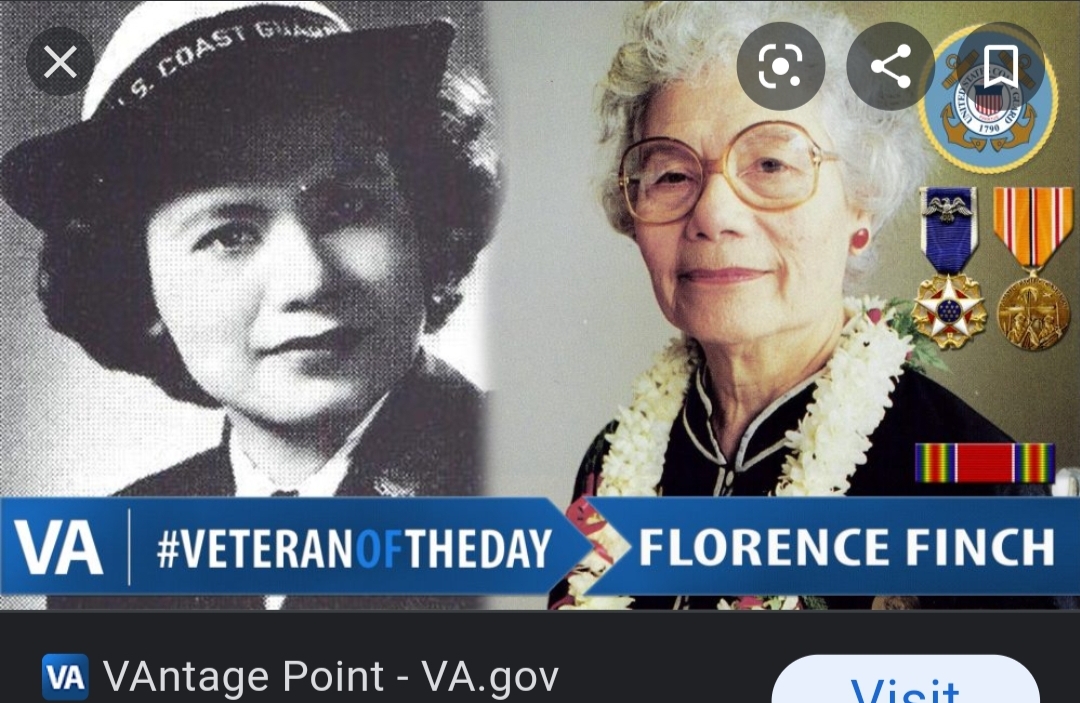
Courtesy of VAntage Point

“I feel very humble because my activities in the war effort were trivial compared with those of people who gave their lives for their country.”

1053: Florence Finch

Allied Spy During World War II

Born: 11 October 1915, Santiago, Philippines

Died: 8 December 2016, Ithaca, New York, United States of America

Florence’s mother was Filipino and her father was an American who decided to stay on in the Philippines after the conclusion of the Spanish/American war.

Florence married in 1941, however her husband was killed in action a year later fighting for the Allies in World War II. Soon after, Manila fell to Japanese invasion forces.

Having Filipino citizenship allowed Florence to avoid detection from the Japanese. Florence was put to work writing vouchers for distributing fuel which allowed her to pass information on to the rebels as well as supplies. She also helped sabotage the Japanese several times as well.

Florence was captured and sentenced to three year of hard labor in a prison camp after being tortured for information, but she was freed during the American Liberation.

After arriving in the United States, she joined the US Coast Guard Reserves in July 1945. Florence stated her reason for enlisting was to avenge the death of her husband. Her time in the service ended in 1946 after the conclusion of the war.

Florence married for a second time and raised a family in New York.

Florence was the first woman to be honored with the Asiatic-Pacific Campaign Ribbon. She was also a Medal of Freedom Recipient. An administrative building on a US Coast Guard base in Hawaii was named after her.

Badges Earned:

Find a Grave Marked

Sources:

https://www.history.uscg.mil/Browse-by-Topic/Notable-People/All/Article/1854611/florence-ebersole-smith-finch-uscgr/

https://compass.coastguard.blog/2020/05/14/the-long-blue-line-florence-finch-asian-american-spar-and-frc-namesake-dons-uniform-75-years-ago/

https://www.nytimes.com/2020/07/22/books/review/the-indomitable-florence-finch-robert-j-mrazek.html

https://www.findagrave.com/memorial/173726387/florence-finch

  • Previous
  • 1
  • …
  • 17
  • 18
  • 19
  • 20
  • 21
  • 22
  • 23
  • …
  • 159
  • Next

Categories

Archives

  • July 2025 (10)
  • July 2024 (1)
  • January 2024 (1)
  • August 2023 (1)
  • June 2023 (2)
  • October 2022 (1)
  • July 2022 (1)
  • June 2021 (3)
  • December 2020 (3)
  • August 2019 (1)
  • July 2019 (2)

Search

© 2026 The Exasperated Historian | Powered by Minimalist Blog WordPress Theme