The Exasperated Historian
Menu
  • Home
  • The Women’s List (New)
  • The Men’s List
  • The Animal List
  • Collections
  • The Blog
  • Contact Us
  • FAQ
Menu

Category: Birth Locations

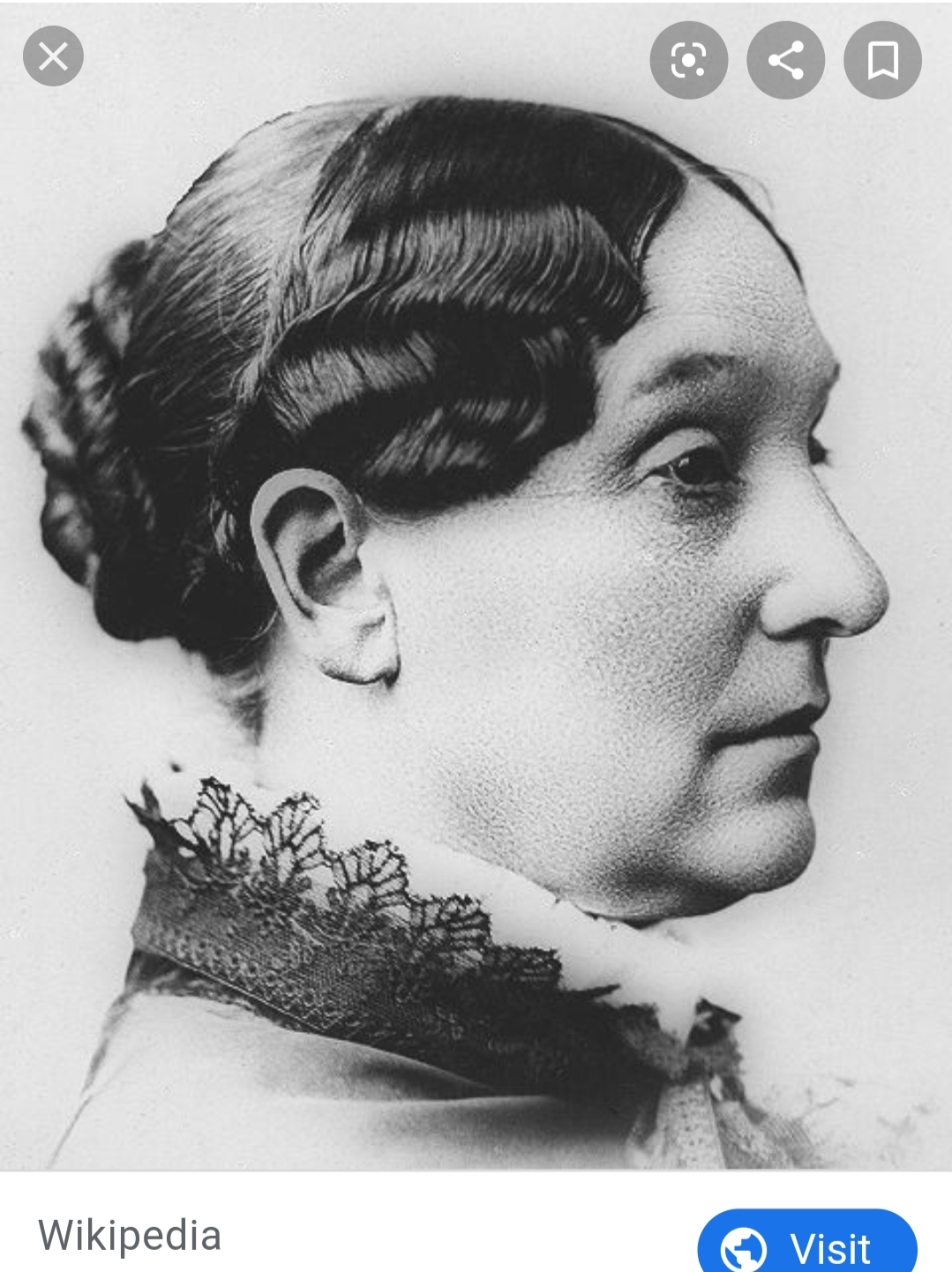
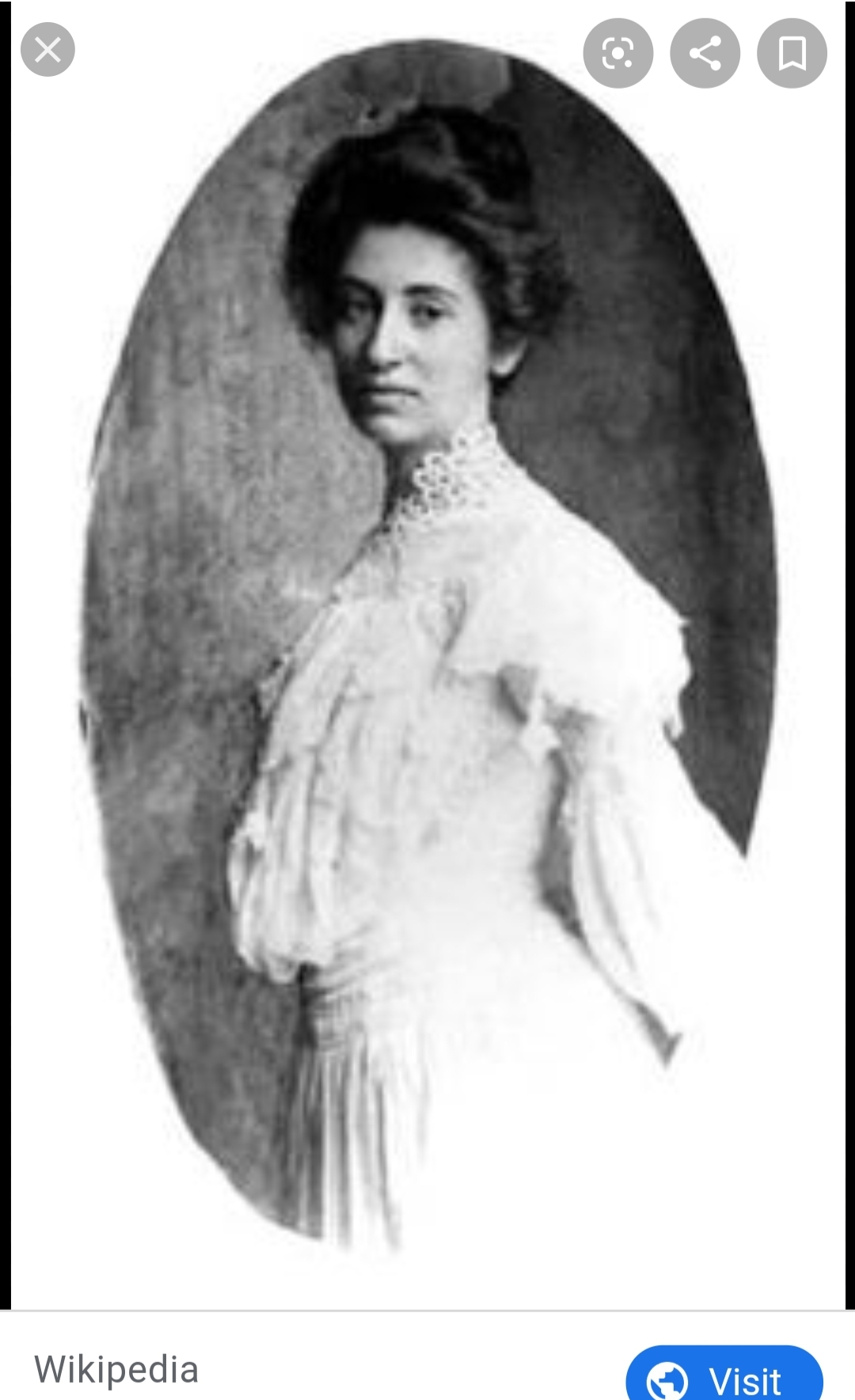
977) Abigail Scott Duniway

Courtesy of Wikipedia

“I was my husband’s silent partner, a legal nonentity, with no voice or power.”

977: Abigail Scott Duniway

Suffrage Advocate, Teacher, Lecturer, Editor, and Author

Born: 22 October 1834, Groveland, Illinois, United States of America

Died: 11 October 1915, Portland, Oregon, United States of America

Abigail traveled on the Oregon Trail at the age of seventeen. She was one of twelve children, though by the time their journey began only nine still lived. She had only received one year of formal schooling before leaving home. While making their way across the northern United States, her mother and brother died. Abigail kept a daily log of the family’s adventures while moving from Illinois to Oregon.

Abigail would marry soon after arriving in Oregon. Her husband owned two farms, but they would lose both, one in a flood/shady business dealing and another in a fire. If all that wasn’t bad unable, Abigail’s husband was injured and left unable to work in the early 1860’s. This left Abigail left to run a retail store (a millinery shop), teach, and take in boarders all in an effort to raise enough money to keep the family afloat.

Eventually, the family (which included Abigail, her husband, and six children) moved to Portland to start a newspaper demanding equal rights for women and men. The paper became a family business, with Abigail’s husband helping run the business side of things while some of their sons did the actual printing, which was a very laborious task at the time.

Abigail spent sixteen years publishing the newspaper in Portland. Among the human rights issues the paper wrote on were the legal status of women across the United States, temperance and prohibition, and the treatment and policies relating to Chinese immigrants and Native Americans. The newspaper was only one of the many written works Abigail either wrote, edited, or helped publish over her career; including the first novel written and published in the Pacific Northwest; Captain Gray’s Company (published by Abigail in 1859).

One of the biggest newspapers published in the area at the time was the Oregonian, of which Abigail’s younger brother was chief editor. Much to Abigail’s dismay, he actively pushed for suffrage to be stymied, and his work helped put a stop to women’s voting rights being easily passed in Oregon. It wouldn’t be until two years after her brother’s death that the Oregonian would come out in support of suffrage.

Abigail would devote the last forty plus years of her life to the cause of suffrage, and became friends with leading suffragists across the country like Susan B Anthony. According to the Oregon Encyclopedia, Abigail is remembered today as the state of Oregon’s “Mother of Equal Suffrage,” and was the first Oregonian woman to register to vote. Sadly, she still passed away a little less than five years before suffrage was universally adopted across the country with the passage of the Nineteenth Amendment.

Her efforts helped push through women getting the vote in Idaho, Washington, and Oregon. The Oregon Encyclopedia describes the battles in these states thusly: “In Idaho Territory in 1896, Duniway celebrated victory for woman suffrage. In Washington Territory, her early successes were overturned, although the State of Washington would give women the vote in 1910. In Oregon, which defeated woman suffrage more times than any other state, Duniway witnessed five losses—in 1884, 1900, 1906, 1908, and 1910—before Oregon women gained the ballot in 1912.”

Badges Earned:

Find a Grave Marked

Located In My Personal Library:

No Place for a Woman: The Struggle for Suffrage in the Wild West by Chris Enss

Uppity Women Speak Their Minds by Vicki Leon

Wild West Women by Erin Turner

Sources:

https://www.oregonencyclopedia.org/articles/abigail_scott_duniway/

https://www.britannica.com/biography/Abigail-Jane-Scott-Duniway

https://sos.oregon.gov/blue-book/Pages/explore/notable/duniway.aspx

http://asduniway.org/home/?__cf_chl_jschl_tk__=7aedd325254994779601c6bab7ea3dd5a4e96e07-1605906223-0-Abv_b0RbQBQvE2W02RGYlfKv5vtW0_eddGlGdi9QZulIEfxtzh036FNznoGMGSE4zgvwNVEoja4RXuVqFXr1CEfl2yQHFAe7B3OW3m4ddOwpcufyCkiS31afDViTK2NPN4_oAQvpCV1NG-m8J-G6IhTnKylNBIQ4Au648q_LnJB_ZcssIYVQjtulsBV32933keVDJmIv4myRqPxajs0zKj00c1aY40ROnJMq49QmKhZFGkvi1VV4-Smj2ieIO3n9RTY3Pk2nIjEJzyyLgw_ymOI82Y3xEw1FuQlVaoq6ikRhr5yEcsrzNDe6q2N4_hmGEA

https://www.findagrave.com/memorial/5954241/abigail-jane-duniway

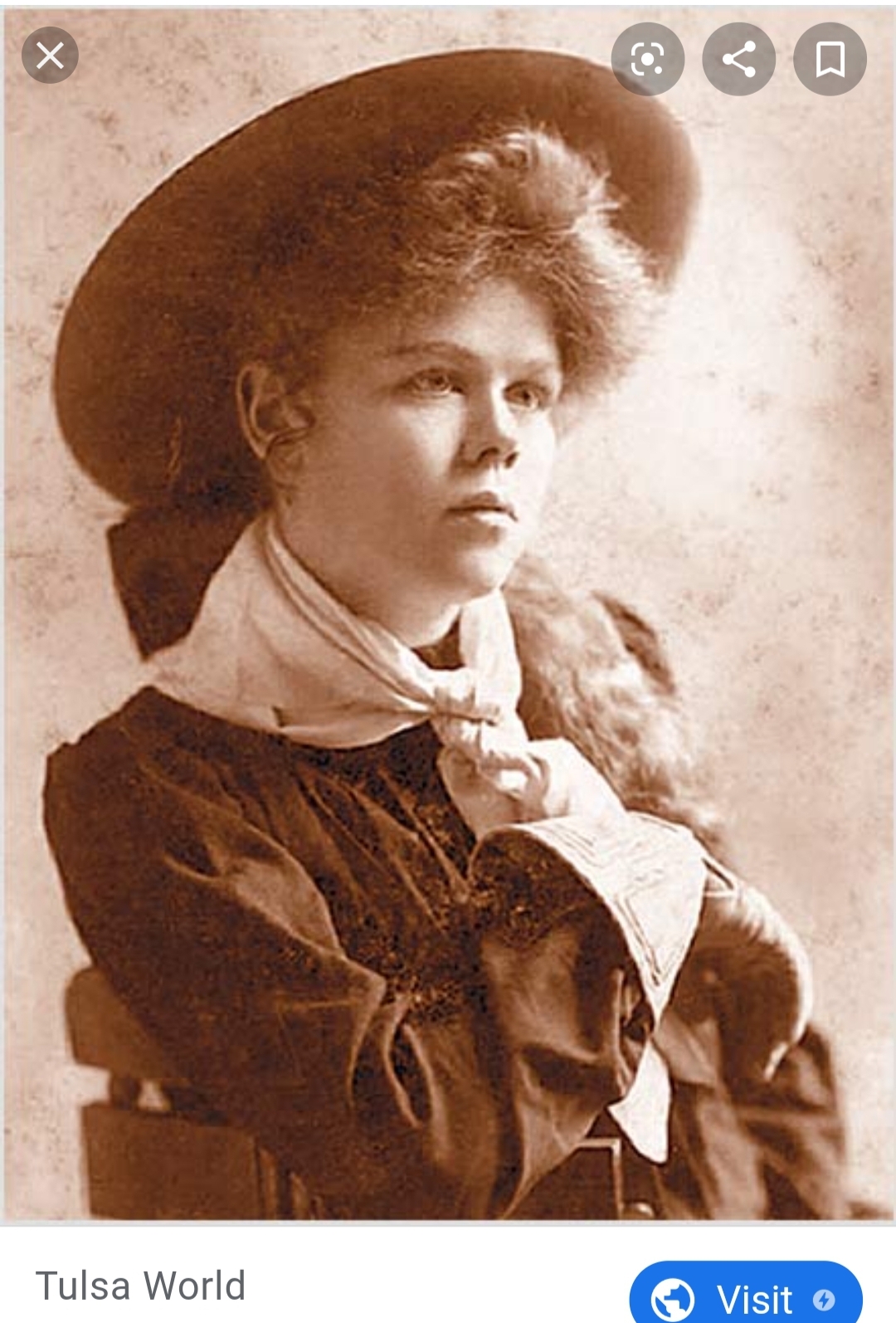
976) Lucille Mulhall

Courtesy of Tulsa World

976: Lucille Mulhall

One of the First Women to Compete in Roping and Riding Events Against Men

Born: 21 October 1885, St. Louis, Missouri, United States of America

Died: 21 December 1940, Logan County, Oklahoma, United States of America

Lucille is the first woman credited with popularizing the term “Cowgirl” on a national scale. She became a favorite of President Theodore Roosevelt after he saw her perform.

Lucille and her family moved to the Indian Territory (later the state of Oklahoma) when she was four. By the time she was thirteen, Lucille was able to rope steer and ride a horse with a skill that wowed everyone around her.

Lucille was a star of “Mulhall’s Congress of Rough Riders and Ropers”, a wild west show which was started by Lucille’s father. Other stars were got their start in the show included Will Rogers and Tom Mix.

Her work earned her the title “Champion Lady Steer Roper of the World.”

In 1913, Lucille started her own troupe and in 1916 produced her own rodeo (Lucille Mulhall’s Roundup). She traveled around the world, dazzling audiences with her skills on a horse and the tricks she was able to perform. Sadly with the popularization of movies, less and less people wanted to see wild west shows in real life, and Lucille’s career slowed.

Lucille married twice, but neither relationship lasted long. She had one son with her first husband.

She was killed in a car accident after retiring to the family ranch. Scarily enough, the aforementioned film star Tom Mix, who starred in Lucille's father's show, also died in a car accident only two months earlier.

In 1975, Lucille was inducted into the Rodeo Hall of Fame. Two yeas later, she was also inducted into the Cowgirl Hall of Fame.

Badges Earned:

Find a Grave Marked

Located In My Personal Library:

Cowgirls: Women of the American West by Teresa Jordan

Wild West Women by Erin Turner

Sources:

https://www.okhistory.org/publications/enc/entry.php?entry=MU006

https://www.wideopencountry.com/lucille-mulhall-oklahomas-rodeo-queen-and-the-original-cowgirl/

http://www.cowgirl.net/portfolios/lucille-mulhall/

https://womenofageridinghorses.com/training/features/the-first-cowgirl-lucille-mulhall/

https://www.findagrave.com/memorial/51797201/lucille-agatha-mulhall

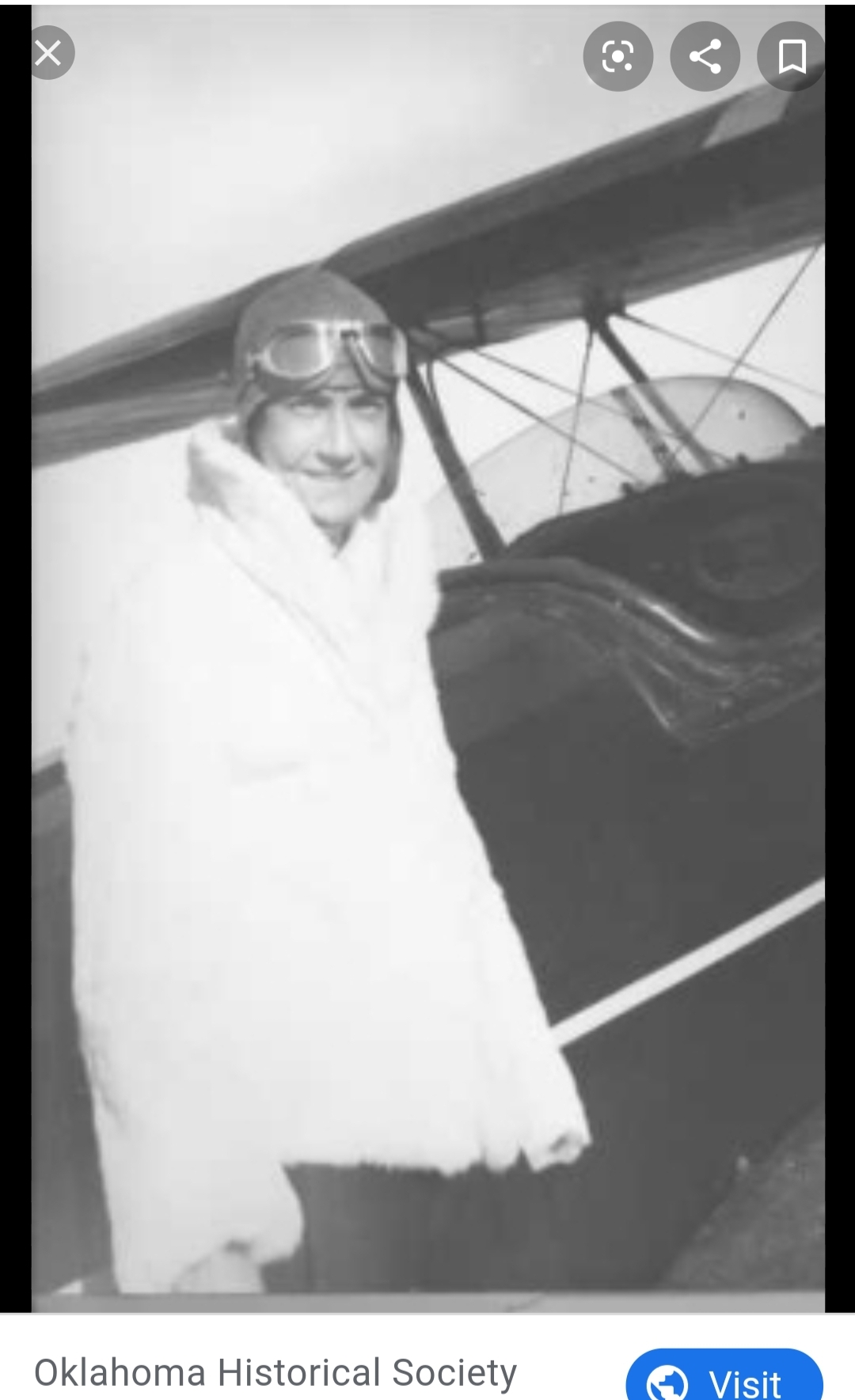
975) Dorothy Morgan

Courtesy of the Oklahoma Historical Society

"Any Woman Who Could Ride a Horse Could Fly."

975: Dorothy K Barrack Pressler Morgan

The Second Female Pilot in Oklahoma

Born: 19 May 1896, St. Mary’s, West Virginia, United States of America

Died: 31 January 1978, Most Likely Oklahoma, United States of America

According to one source, Dorothy’s pilot’s license was signed by Orville Wright.

Dorothy flew as a stunt pilot in a flying circus. At the time, she was the only female stunt pilot from Oklahoma and competed against Amelia Earhart amongst others.

Dorothy technically broke a record for altitude but flew so high the ink in the barograph froze and the actual record of the record breaking was lost.

In 1932, she was one of forty women to earn a transport license and became the first female municipal airport manager the next year.

Most outrageous about her story? Dorothy lost her Pilot’s License when she became pregnant (as per federal law all women pilots who became pregnant could not get their license back until after they finished a two-year training course—yes, I’m serious). The law was luckily changed partly due to Dorothy’s lobbying against it.

Dorothy could not afford to enroll in the training course and had to stop flying after having her baby. To fill her time instead, she served on the boards of several Oklahoma Aviation associations and eventually worked for the Federal Aviation Administration.

Dorothy was married twice and had one daughter, Sharon. In 1992, she was inducted into the Oklahoma Aviation and Space Hall of Fame.

Despite all her accomplishments, very little information about Dorothy survives to this day. I haven’t even been able to uncover where (or I guess more technically if) she was buried so I can create a Find a Grave profile for her. If anyone out there does happen to know this information, I would sincerely appreciate that knowledge being shared with me!

Badges Earned:

Located In My Personal Library:

Wild West Women by Erin Turner

Sources:

https://www.okhistory.org/publications/enc/entry.php?entry=MO020

https://www.normantranscript.com/news/local_news/oklahoma-s-first-woman-in-flight/article_85965ca5-06c5-5538-a9c1-5153f707bcac.html

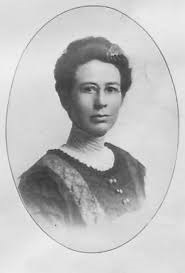
974) Rachel Eaton

Courtesy of Explore Claremore History

974: Dr. Rachel Caroline Eaton

The First Native American Woman from Oklahoma to Earn a PhD

Born: 7 June 1869, Flint Creek, Cherokee Nation, Indian Territory, United States of America (Present-day Flint Creek, Cherokee Nation, Oklahoma, United States of America)

Died: 20 September 1938, Claremore, Oklahoma, United States of America

Also Known As: Callie Eaton

Rachel was a Cherokee Educator and Historian, who had worked as a teacher at Cherokee public schools, the Cherokee Female Seminary, and several universities throughout her life. She was also the Dean of Women at Trinity College in present-day San Antonio, Texas.

Rachel’s mother was a descendant of the Cherokee woman Nancy Ward, who was a Beloved Woman to her own people. Rachel herself married in 1901 but divorced eight years later and never had children.

She was the first elected woman county superintendent of schools for Rogers County, Oklahoma. Rachel was a member of the Democrat Party.

Rachel wrote extensively on Western History and her doctoral thesis is still used to teach Cherokee History today. She was also a dedicated Presbyterian and had thought about becoming a missionary at one point.

In 1936, Rachel was inducted into the Oklahoma Hall of Fame. She passed away after a prolonged battle with breast cancer.

Badges Earned:

Find a Grave Marked

Located In My Personal Library:

Wild West Women by Erin Turner

Sources:

https://oklahomahof.com/member-archives/e/eaton-rachel-caroline-1936

https://www.allthingscherokee.com/rachel-caroline-eaton/

https://exploreclaremorehistory.wordpress.com/2020/08/16/dr-rachel-caroline-eaton-author-educator-and-ph-d/

https://exploreclaremorehistory.wordpress.com/2020/08/20/dr-caroline-eaton-author-educator-and-ph-d-married-life-part-2/

https://exploreclaremorehistory.wordpress.com/2020/08/27/dr-caroline-eaton-author-educator-and-ph-d-married-life-part-3/

https://exploreclaremorehistory.wordpress.com/2020/09/03/dr-rachel-caroline-eaton-author-educator-and-ph-d-part-4/

https://www.findagrave.com/memorial/33946760/rachel-caroline-eaton

973) Kate Barnard

Courtesy of Wikipedia

973: Catherine Ann Barnard

First Elected Female State Official in Oklahoma (United States of America)

Born: 23 May 1875, Geneva, Nebraska, United States of America

Died: 23 February 1930, Oklahoma City, Oklahoma, United States of America

Also Known As: Kate Barnard

Before entering politics, Kate was a teacher and stenographer. Her mother died before her second birthday, and Kate’s early years were marked by financial hardship and several separations from her father.

Kate was selected to work at the Oklahoma Exhibit at the World’s Fair in 1904. While there, she first encountered urban poverty and the philosophical ideas on how to combat it. The experience opened Kate’s eyes, and when she returned to Oklahoma City, she began working in charitable fields to help combat homelessness and poverty in the city.

Kate was elected the first Commissioner of Charities and Corrections for the state of Oklahoma in 1907 (an office she helped create). Kate actually assisted in getting two reforms passed during the Oklahoma State Constitutional Convention; the first was creating the office of Commissioner of Charities and Corrections and the second was a push to end child labor in the state.

After the Democratic State Convention, Kate was endorsed by the party and was officially up for election. She easily beat out her Republican opponent and won by a greater margin than any other officer in the state. The election ensured Kate was the first woman to hold office in Oklahoma statehood history, and she was one of the first people to hold state office in Oklahoma period.

Kate was either the first or second woman ever to be elected to a statewide office in the United States (sources differ), and she did it without a single female vote since the female population didn’t have that right at the time.

With Kate’s two terms equaling seven years in office (1907-1914/15 (sources differ), she got several laws on the books. Among those passed were an edict making education compulsory, creating a justice system for juvenile offenders, and a better system to regulate child labor.

At the time of statehood Oklahoma had no prisons so Kate oversaw the building of a prison system and put it into operation. Eventually, the prison system for the state would have three levels: the penitentiary, a boys’ training facility, and a reformatory, so that state prisoners could be held within the state, instead of sent to neighboring Kansas to serve out their sentence as they had previously.

She left office after advocating for Native American orphans being able to retain their property and monetary rights; which was wildly unpopular at the time (to get into it all would take several pages, but all you really need to know is the former “Indian Territory” was unsurprisingly racist to Native Americans—big shocker I know). Even after leaving her state position, Kate continued to advocate for the rights of Native American orphans. She died in seclusion fifteen years later, her legacy all but forgotten. According to one source, her grave wasn’t even marked until fifty years after she died.

Kate never married or had children. In 1982, she was inducted into the Oklahoma Women’s Hall of Fame and in 2001, a statue in her honor was unveiled at the state capitol.

Badges Earned:

Find a Grave Marked

Located In My Personal Library:

Wild West Women by Erin Turner

Sources:

https://www.okhistory.org/publications/enc/entry.php?entry=BA020

https://socialwelfare.library.vcu.edu/people/barnard-kate/

https://www.britannica.com/biography/Kate-Barnard

https://www.news-star.com/story/news/2020/02/28/oklahomas-centennial-of-passage-of-19th-amendment-remembering-kate-barnard/111694180/

https://www.findagrave.com/memorial/9564189/kate-barnard

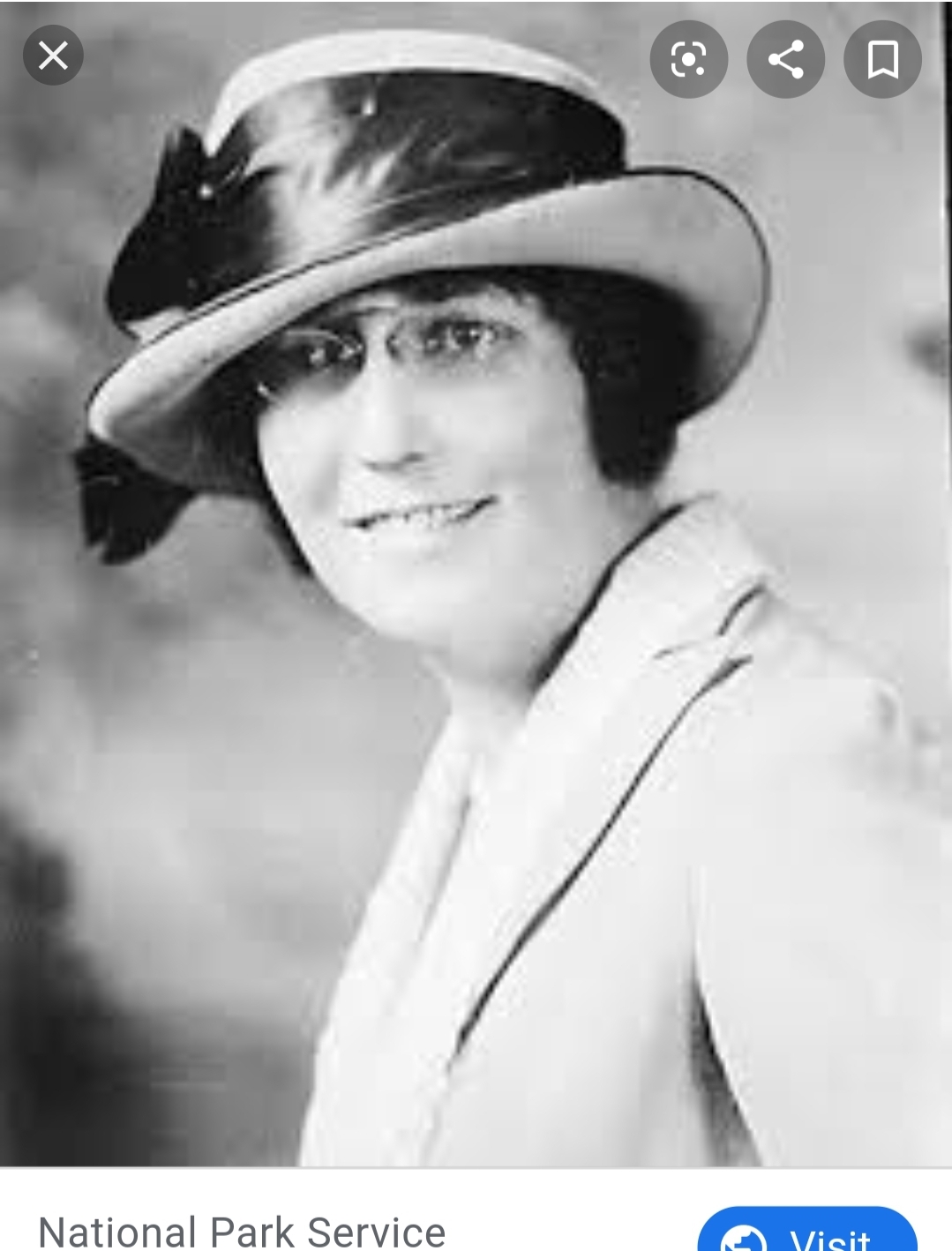
972) Adelina Otero-Warren

Courtesy of the National Park Service

972: Adelina Otero-Warren

Suffrage Advocate, Politician, and Education Advocate

Born: 23 October 1881, Present-day Los Lunas, New Mexico, United States of America

Died: 3 January 1965, Santa Fe, New Mexico, United States of America

Original Name: Adelina Isabel Emilia Luna Otero

Adelina (or Nina, as she was better known) was born into a family of noble origins. Her mother's family descended from some of the very first Spanish settlers, while her father's family had been in Mexico for around two hundred years and was equally prosperous. Sadly, Adelina's father was murdered just before her second birthday in a land dispute while her mother was pregnant with Adelina’s younger sibling.

Adelina’s mother would remarry an Italian/English Immigrant and have nine more children (bringing her total number of kids to twelve) leaving Adelina with plenty of siblings, all of whom were well educated in school and in how to operate the ranch they lived on. Adelina would later recall her experiences on the ranch in a book entitled Old Spain in Our New Southwest.

When she was a teenager, Adelina’s family moved to Santa Fe, where Nina became a regular fixture on the social scene there. Adelina met her future husband while living in the city; he was about nine years older than her. Nina was twenty-six when she married him, though the marriage wouldn’t last.

Adelina left her husband (who was in the Army) after two years because she did not like the life of an Army wife. She told everyone in Santa Fe she was a widow when she returned to living there; keeping her hyphenated married name to keep up appearances. At the time, admitting she had divorced her husband would have left a stain on Adelina’s reputation.

In 1917, Adelina’s work in New Mexico caught the eye of American Suffrage Leader Alice Paul, who tasked Nina with heading the New Mexico Chapter of the Congressional Union—the precursor to the National Woman’s Party. Adelina was successful because she fought for suffrage literature to be published in both English and Spanish, in order for the message to reach the largest audience possible.

Because of Adelina and other women’s suffrage fight, New Mexico gave women the vote in 1920. Adelina immediately launched a campaign to be the Republican Party Nominee for the House of Representatives in 1921 (becoming the first Latina to run for national office). She secured the nomination but ended up losing the election by less than nine percent.

However, it wasn’t all bad news. Nina had managed to become the Superintendent of Public Schools for Santa Fe County (serving from 1918 to 1929). This meant Adelina was the first female government official from New Mexico.

While working as Superintendent, Adelina argued for the rights of Native Americans and ethnic Latin and Hispanic communities in New Mexico. She pushed for the inclusion of Spanish in the schools and fought to protect the culture and way of life for the non-whites. At the time, the federal government was pushing hard for assimilation into white society, and Adelina recognized this was detrimental to the Native peoples as a whole. Her work eventually culminated in Adelina serving as Santa Fe County Inspector of Indian Schools, which allowed her to work closer and see up close the detrimental effects the federal government had on the Native population, especially in the school system.

Adelina was also an author and real estate agent in later life. According to the National Parks Service, “She remained politically and socially active, and served as the Chairman of New Mexico’s Board of Health; an executive board member of the American Red Cross; and director of an adult literacy program in New Mexico for the Works Projects Administration.”

Though Adelina never remarried and never had children, she was called “La Nina” by her numerous nieces and nephews, serving as godmother for the majority of them.

Nina may have never remarried another man, but she did spend twenty years of her life closely living and working alongside another woman, named Mamie. Nina and Mamie successfully began an application and earned a title for their homestead, and also opened a real estate company together. Though Mamie died fifteen years before Nina, it seems the two women were very close. How close is anyone’s guess. And I’m not about to put a label on Nina’s sexuality considering no one knows definitively what Nina and Mamie’s relationship behind closed doors was; I just felt like it should be included here.

Badges Earned:

Find a Grave Marked

Located In My Personal Library:

Wild West Women by Erin Turner

No Place for a Woman: The Struggle for Suffrage in the Wild West by Chris Enss

Sources:

https://www.nps.gov/people/nina-otero-warren.htm

https://www.loc.gov/exhibitions/women-fight-for-the-vote/about-this-exhibition/more-to-the-movement/adelina-nina-otero-warren/

https://sos.oregon.gov/archives/exhibits/suffrage/Pages/bio/otero-warren.aspx

https://ninaotero.sfps.info/about_us/who_was_nina_otero_warren

https://www.findagrave.com/memorial/16157381/mar%C3%ADa_adelina-isabel_emilia-warren

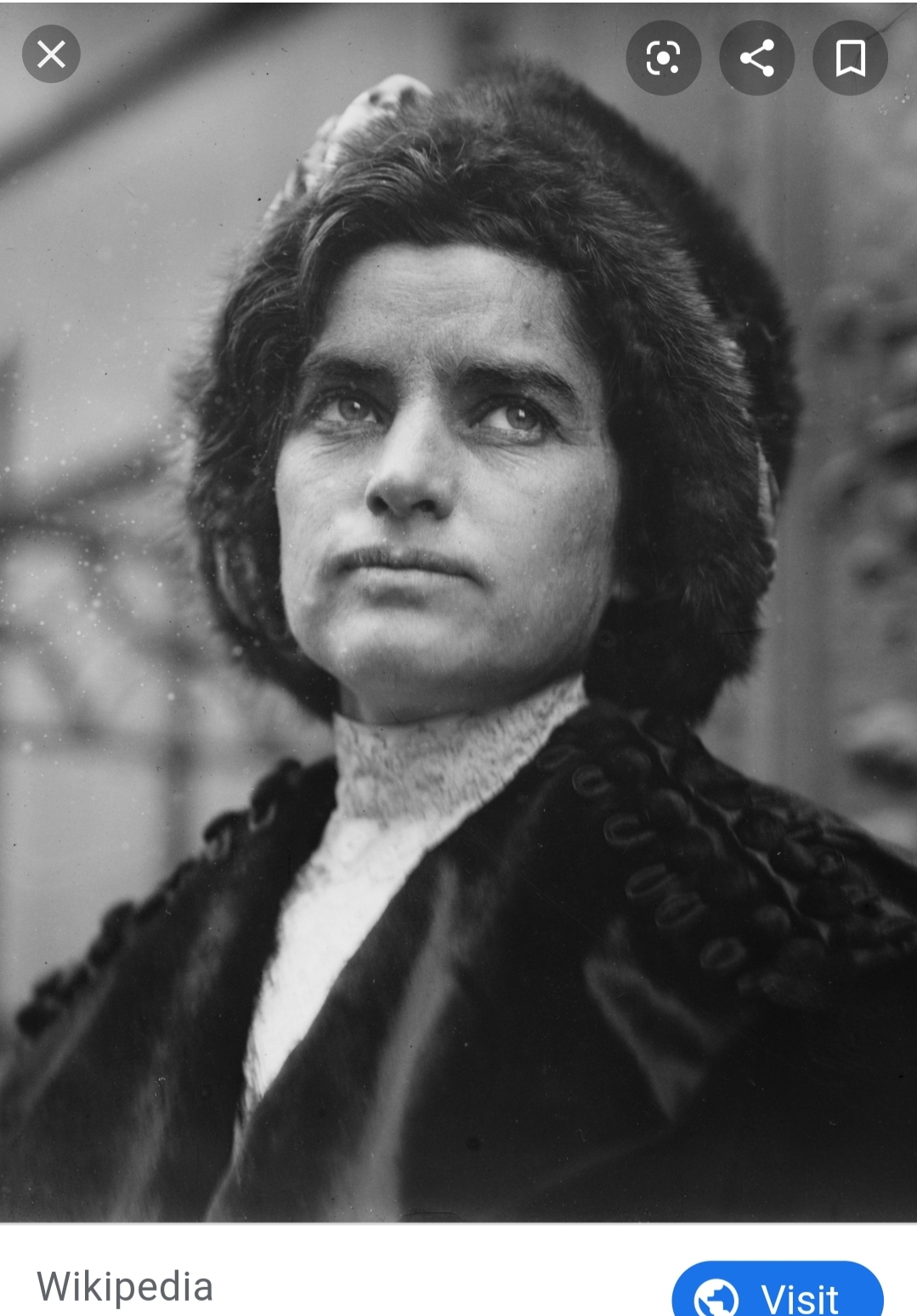
971) Mary Colter

Courtesy of Wikipedia

“I have always longed to carry out the true Indian idea, to plan a hotel strictly Indian with none of the conventional modern motifs.”

Courtesy of the National Park Service

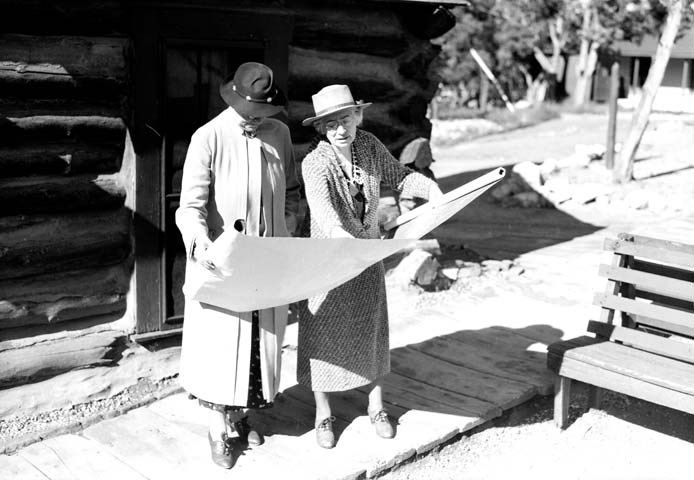
Mary Colter holding what suspiciously appear to be blueprints on a job site (sarcasm explained under the "Note" heading at the bottom of the article). Courtesy of the National Parks Service

971: Mary Colter

Architect and Interior Designer in the Southwestern United States

Born: 4 April 1869, Pittsburgh, Pennsylvania, United States of America

Died: 8 January 1958, Santa Fe, New Mexico, United States of America

Mary is most known today for having created Hopi House at the Grand Canyon. Her other projects at the canyon include Hermit’s Rest, Lookout Studio, Desert View Watchtower, Phantom Ranch, and the Bright Angel Lodge.

Mary attended the California School of Design, where she grew her already budding design skills. Mary also earned an apprenticeship with an architectural firm where she learned how to create architectural work herself. She graduated from the school in 1891, but returned to Saint Paul, Minnesota, to be with her family and begin a career in teaching. Within four years, she had transitioned to working as a drawing instructor at an art-based high school.

In 1902, Mary was hired to design the interior of a building adjacent to the famous Alvaredo Hotel in Albuquerque, New Mexico (the hotel has since been demolished). This was her first project with the Fred Harvey Company, where she would stay working for the next forty-six years. During that time, Mary would design twenty-one more structures for the Fred Harvey Company along one of the major routes of the Atchison, Topeka, and Santa Fe Railroad line.

Mary’s work is even more remarkable given her unique approach to the entire process. Her works are an homage to Native American culture of the Southwest, and she did more than just include imagery and artifacts. Mary employed as many Native American workers as she could and used local materials as well. Mary made sure to research the tribes and their way of life before randomly including things too, so that her work was respectful, tasteful, and a perfect embodiment of the American Southwest.

Four of her buildings have been deemed National Historic Landmarks (Hopi House [built in 1904/05], Lookout Studio [built in 1914], Hermit’s Rest [built in 1914], and Desert View Watchtower [built in 1932]—all at the Grand Canyon). Unfortunately, the majority of her buildings have either been demolished entirely or changed so much very little of her designs remain to present-day.

She retired ten years before she passed away.

Note:

While in the process of writing this short biographical page, I came across a self-published book on Amazon entitled False Architect, which evidently sets out to “prove” Mary Colter was a fraud and that before she died she came up with a conspiracy to steal credit from other designers and architects for the buildings she is credited with today.

If you just rolled your eyes, don’t worry, I’m in the same boat. However, I felt I better include at least an acknowledgement that the book exists here so no one could accuse me of ignoring the claims put forth in the book.

Now, I obviously haven’t read the several-hundred-page long work by a man who evidently doesn’t have any actual historical training (an article about the book put out by Route 66 News literally describes the author as a banking executive from Chicago). The book apparently is three quarters him making claims and one quarter listing several hundred sources and citations to back up his claims, most of which he uncovered by looking at the internet. Ah the internet, where everything must be true.

Now, in the Route 66 News article about the book (which I will link below), they go over several of the claims put forward in the book. The very first claim is that Mary couldn’t have designed any of the buildings on her own because she didn’t have any architectural training—which is funny considering the sources I all easily found noted she had taken an internship at an architectural firm while attending art school; including in several pages put out by the National Parks Service themselves (but you have to ignore that because the NPS is working to actively cover up the truth).

The next claim is that Mary couldn’t have designed the Alvarado Hotel in Albuquerque because she hadn’t been employed by the Fred Harvey company until after the hotel was built (all within the span of the year 1902). So this one might have some validity. A few sources state Mary was the designer of the hotel--HOWEVER--the National Parks Service disagrees. They state (as I also stated above, in this article) that Mary designed the interior of a building adjacent to the already existing hotel. There, easily cleared up! In any case, the hotel was demolished in the 1970’s so it doesn’t really matter at this point anyway.

The claims continue that Mary couldn’t have designed the buildings at the Grand Canyon because…well…well one of the buildings was again built “before” she was hired by the Fred Harvey company (like the Alvarado Hotel listed above), but the other buildings can’t be proven or disproven definitively at all because the only surviving blueprints for them are unsigned. It’s the Chicago banker’s opinion that the blueprints are similar to other male architects at the time, so he thinks this means Mary didn’t design them. Which is again funny, considering there are actual photos of Mary on building sites, holding blueprints or big rolls of paper that look conspicuously like blueprints (in my opinion), and people who worked on the projects at the time gave accounts during that same time period attesting to Mary working on the buildings.

The article goes on from there, claiming Mary claimed credit for a design only for the building to be subsequently demolished, or for more design work to be done on it clearing away the old. According to the Route 66 News article, the Chicago Banker states Mary was only able to get away with her lies because the majority of the people she worked with at the Fred Harvey Company died before World War II. Okay, but she didn’t stop working for Fred Harvey until 1948—which is three years after the war ended, and obviously not every single person she worked with died before the war ended. To be fair, evidently he claims only the "higher up" executives at Fred Harvey had died, but really, all of them? And all the other people who worked for the company around that time who worked with Mary and other architects all jumped aboard the train of allowing Mary to take credit for work that wasn't hers? I'm sorry, but that seems highly improbable to me.

And if all that isn’t bad enough; Mr. Banker Man finishes his book by “theorizing” (which is a fancy word for claiming without actually using the word claim) that Mary suffered from Narcissistic Personality Disorder or some other form of mental illness, possibly senility as well. Wow, that’s—well that’s polite to say the least [sarcasm]. Evidently as soon as you get into your eighties you can no longer remember what you’ve been doing the last fifty years of your life. And to further back up his claim (I’m sorry, “theory”) Mary’s father reportedly died in an insane asylum so you know, all that mental illness running in families, or something. As someone who has a long history of mental illness in my own family, that particular claim (I'm sorry, "theory") is honestly more offensive than any of the others. You can't just assume someone had a mental disorder because one of their parents died in an insane asylum.

Honestly my favorite part of all this is the inclusion in the Route 66 News article of an email sent out by the co-owner of one of the hotels the Chicago Banker claims Mary didn’t actually design. The excerpt from the email reads [my italics and coloring for emphasis]:

“The attributions of Colters works to Curtis and others is preposterous, and obviously discounted by the many including Harvey family with direct knowledge of Colter and the buildings. We have collectively decided it best to ignore these self published rantings and not give Shaw a podium for his hatred.”

The aforementioned owner also included another email from Mr. Chicago Banker. Apparently, he’s decided to compare a woman who runs a Fred Harvey/Mary Colter fan page on Facebook to Communist dictators Stalin and Mao and that those who refuse to believe Mr. Chicago Banker man are “Afraid of the truth.” You can tell the guy is also highly uncomfortable with anyone critiquing his work by glancing over the reviews and information about his book on Amazon. For one thing, he is this close to threatening readers by saying he dares the reader to find proof his claims are false, and that he’ll give them their money back if they don't like the book (that's a relief, don't want any of you throwing away $12.95 for nothing). Then he evidently deletes reviews he doesn’t like; one poor woman named Ofelia has been on the wrong side of his wrath for some time now. Ofelia claimed she read the entire book and didn’t agree with him; so, Mr. Chicago Banker literally dared her to meet him in Santa Fe so they could publicly debate the book. Wow. He also offered a $10,000 reward to anyone who could prove Mary built certain buildings, but conveniently only left the reward open for a few months before letting it expire.

So, what have we learned? Well, not to sound like a preachy feminist, but I honestly believe Mary was very influential in many buildings with the Fred Harvey Company. She definitely did most of the interior design work, no one seems to be claiming otherwise, but this one random guy made it his personal mission to take out a vendetta against a woman who had already been dead for sixty years by the time he published. Now I’ll say it right here and now, if someday someone is able to definitively prove this guy’s claims, I’ll apologize and correct my article. But the fact that the two historians questioned in the Route 66 News article refused to say they agreed with or endorsed his work, that people who are closely associated with the Fred Harvey Company disavow it, and that most of the buildings in question are long gone makes me wonder what this guy’s problem is. No matter what the “truth”, what Mary accomplished is remarkable, and she’ll always be remembered for her pioneering work in the field. Not even a self-published weirdo from Chicago can take that from her.

Badges Earned:

Find a Grave Marked

Located In My Personal Library:

Appetite For America: Fred Harvey and the Business of Civilizing the Wild West--One Meal at a Time by Stephen Fried

Arizona: A History by Thomas Sheridan

Grand Canyon Women: Lives Shaped by Landscape by Betty Leavengood

Harvey Houses of Arizona: Historic Hospitality from Winslow to the Grand Canyon by Rosa Walston Latimer

Levi's and Lace: Arizona Women Who Made History by Jan Cleere

Wild West Women by Erin Turner

Grand Canyon Pioneer Cemetery by Parker Anderson

Mary Colter: Builder Upon the Red Earth by Virginia L Grattan

Sources:

https://www.nps.gov/articles/marycolter.htm

https://www.nps.gov/grca/learn/photosmultimedia/colter_index.htm

https://pioneeringwomen.bwaf.org/mary-elizabeth-jane-colter/

https://www.mygrandcanyonpark.com/park/grand-canyon-architect

https://www.route66news.com/2018/05/23/mary-colter-fabricate-architect-role/

https://www.findagrave.com/memorial/24462198/mary-elizabeth_jane-colter

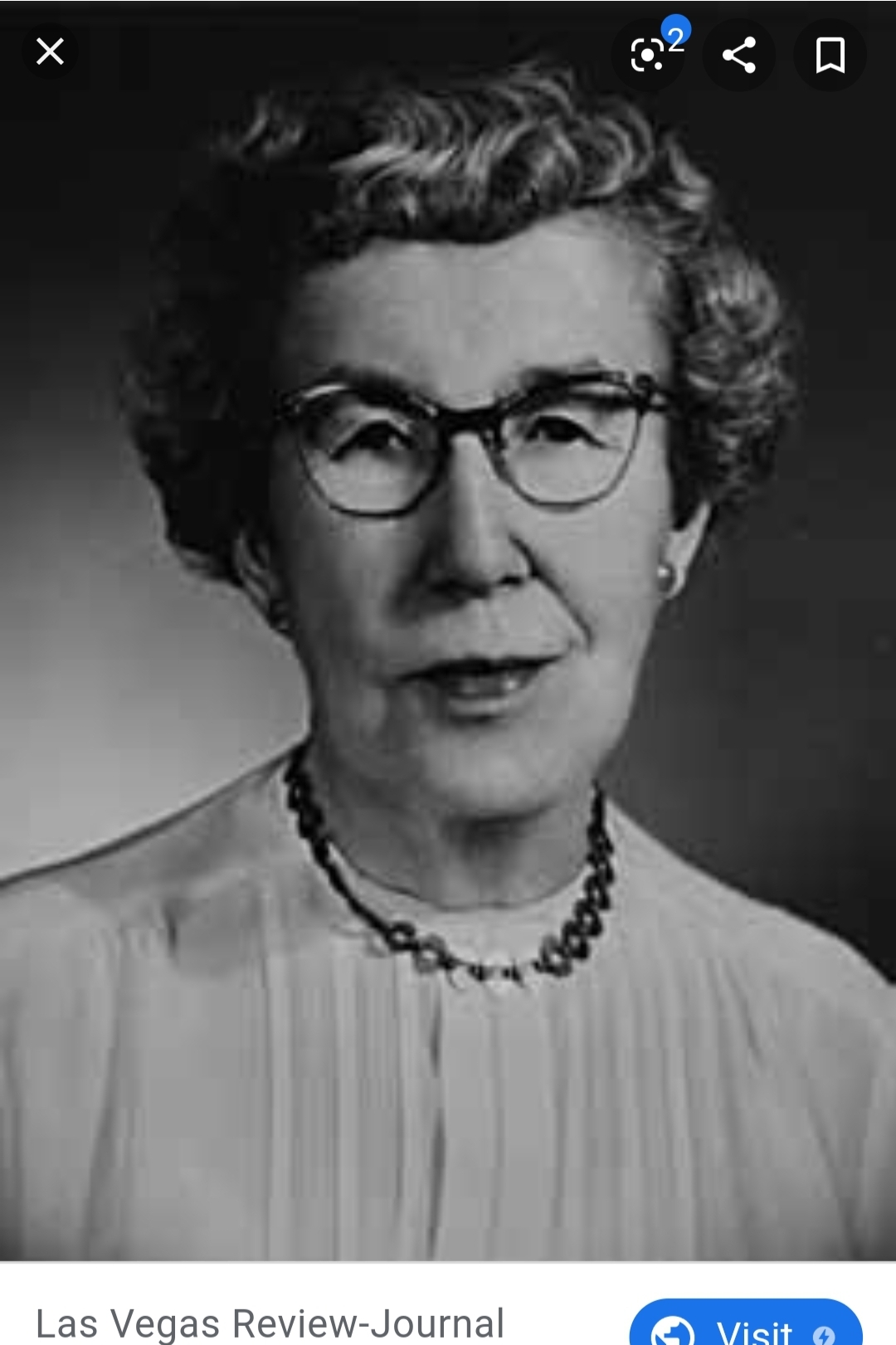
970) Maude Frazier

Courtesy of the Las Vegas Review-Journal

“I was well aware that when a woman takes over work done by a man, she has to do it better, has more of it to do, and usually for less pay.”

970: Maude Frazier

The First Female Lieutenant Governor of Nevada

Born: 4 April 1881, Sauk County, Wisconsin, United States of America

Died: 20 June 1963, Las Vegas, Nevada, United States of America

Maude was also an Education Advocate. She dared to attend college without her father’s wishes and graduated from the Wisconsin State Teacher’s College.

Maude started teaching in Wisconsin before moving to Nevada in 1906. Her first job there was principal and teacher for the upper grades of a small school (there were two teachers total--Maude and one other).

In 1920, Maude was named principal of Sparks Elementary School. In 1921, she was chosen to be supervisor of four counties covering over 40,000 miles (seventy-five schools in sixty-three districts) within the state of Nevada. Most of the terrain was unpaved and access to the remote schools was far from easy. However, Maude took it all in stride and purchased a Dodge Roadster to make the journey. She also bought a set of tools and took a course in auto mechanics, just in case.

After six years on the road, Maude was chosen to be superintendent of the Las Vegas Union School District and Principal of Las Vegas High School. While working in the now infamous city, Maude oversaw the building of the first permanent structure there; the county courthouse. She continued to work for the district until 1947, overseeing the construction of six new elementary schools and the improvement of several others throughout the district.

In 1948, Maude ran for the state legislature but lost the election. Two years later she ran again and was appointed to the state education committee. While working there, Maude oversaw the raising of funds to build a new branch of the state university in Las Vegas. The first building erected at Nevada Southern University Campus (now known as University of Nevada Las Vegas) was christened in Maude’s honor. In 1955, the school granted her an honorary doctorate for her efforts.

In 1962, at the age of eighty-one, she was appointed Lieutenant Governor after the previous Governor died in office (the highest office a woman had held to that point in Nevada history). Maude had spent twelve years in the state House of Representatives before being elevated to the executive office. She served the final six months of the previous governor’s term until the election was held. Maude passed away the following year.

Badges Earned:

Find a Grave Marked

Located In My Personal Library:

Wild West Women by Erin Turner

Sources:

https://www.nevadawomen.org/research-center/biographies-alphabetical/maude-frazier/

https://womennvhistory.com/portfolio/maude-frazier/

https://www.findagrave.com/memorial/92054362/maude-frazier

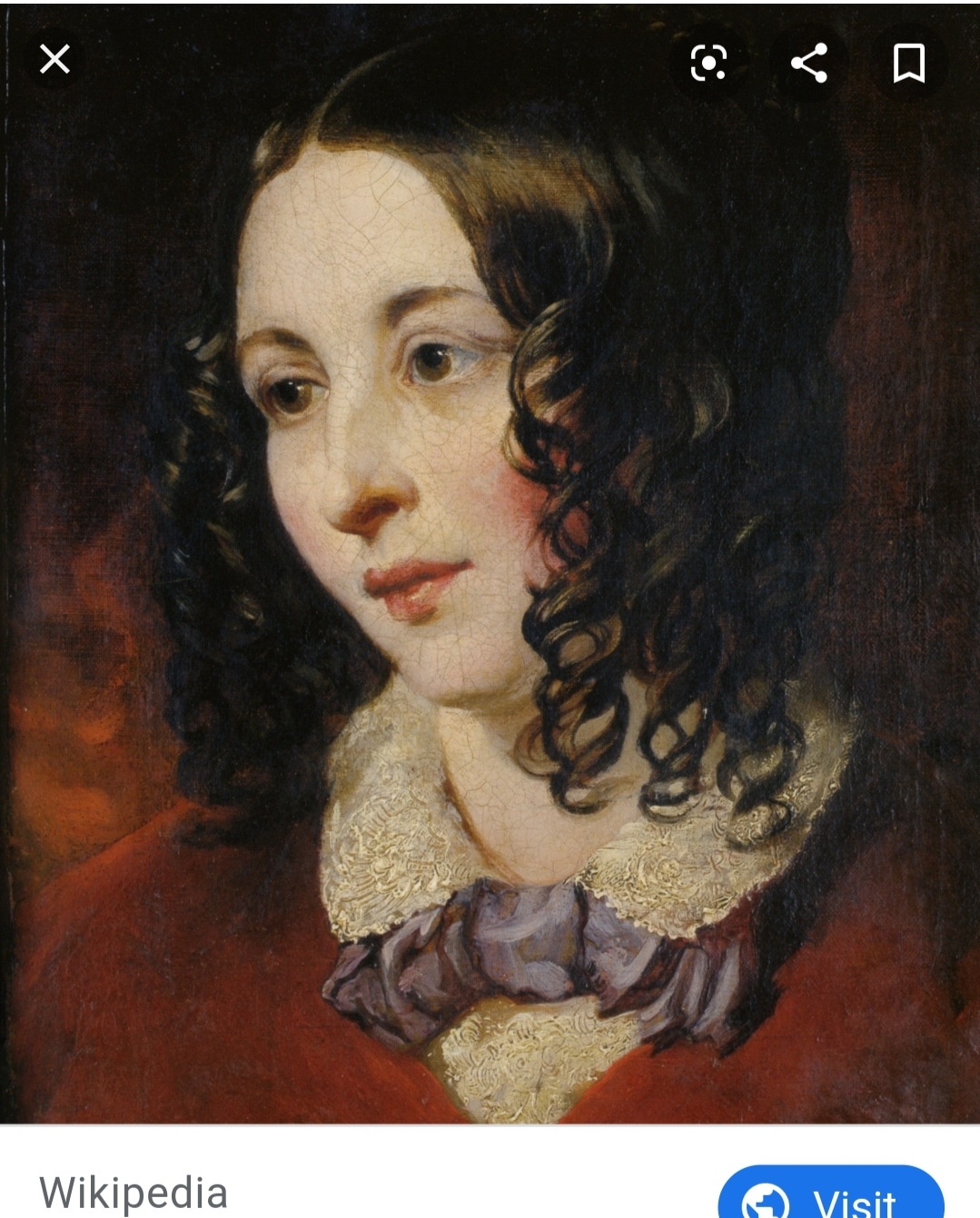
969) Eliza Cook

Courtesy of Wikipedia

969: Eliza Cook

Poet and Political Reformist

Born: 24 December 1818, Southwark, London, United Kingdom

Died: 23 September 1889, Wimbledon Park, London, United Kingdom

Eliza was self-educated and began writing poetry when she was fifteen. Her first collection of poems was published two years later in 1835. A second collection was published a few years later. Eliza’s poems also appeared in several magazines of the era; her work cropping up in print in England and the United States.

Eliza also published the Weekly Dispatch which covered political and social goings on in a newspaper format. While most of her work was verse (poetry), her writings for the Dispatch and other newspapers was written in prose instead.

Eliza’s poems had a political nature. She was an advocate for political freedom for women and had a focus on the working class. Eliza was also a member of the Chartist Movement, those who believed in voting rights for non-property owners. This made Eliza controversial, but she was also scandalous as well. For one thing, Eliza often dressed in semi-male attire (like a men’s jacket over her dress). For another, Eliza was openly in a relationship with an American actress and even addressed several of her poems to her girlfriend. According to Wikipedia, Eliza and her girlfriend would wear matching dresses (I personally think that’s adorable).

Badges Earned:

Find a Grave Marked

Sources:

https://poets.org/poet/eliza-cook

https://mypoeticside.com/poets/eliza-cook-poems

https://en.wikipedia.org/wiki/Eliza_Cook

https://www.findagrave.com/memorial/173477479/eliza-cook

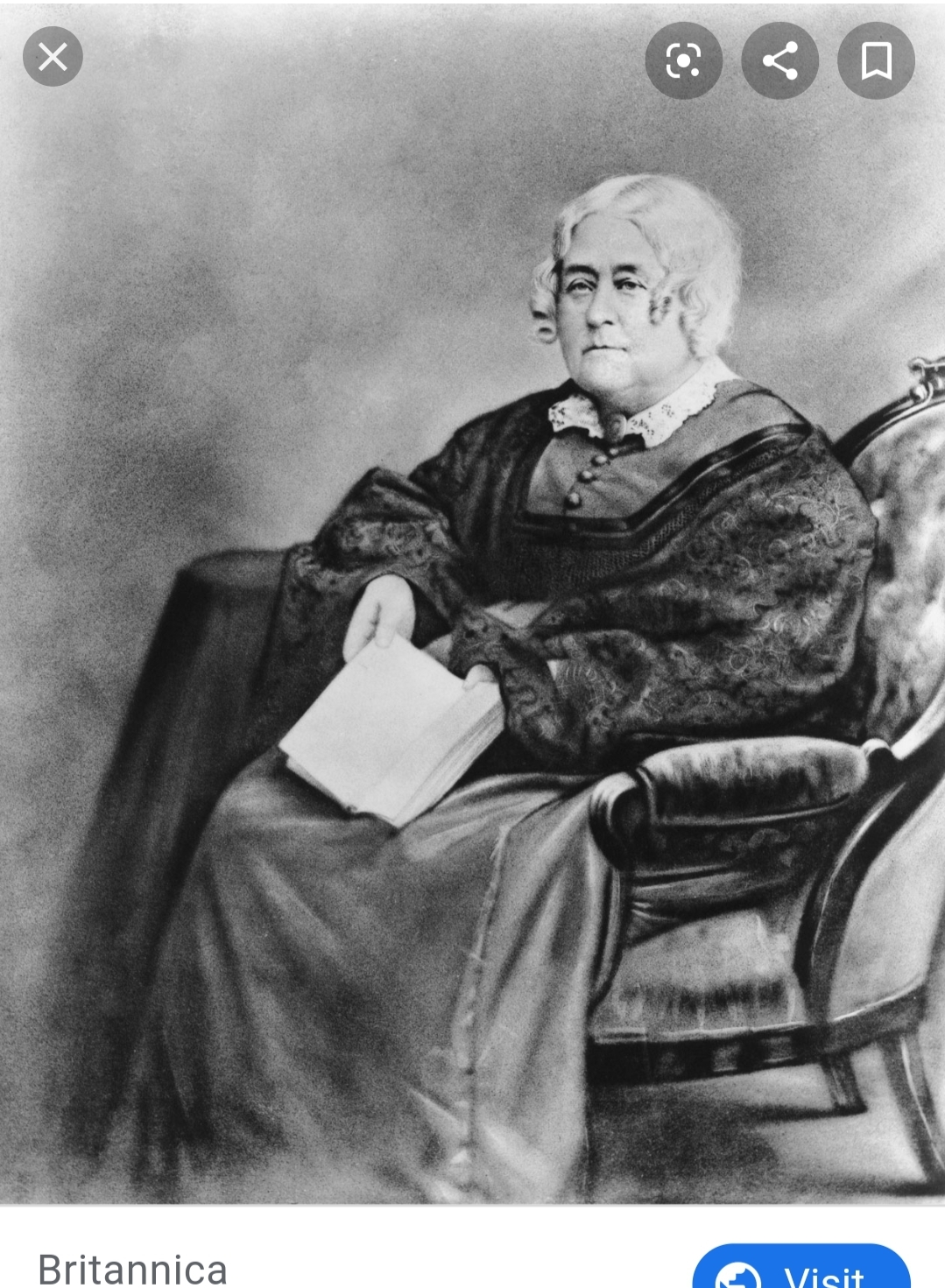
968) Elizabeth Peabody

Courtesy of Britannica

968: Elizabeth Palmer Peabody

Opened the First English Language Kindergarten in the United States

Born: 16 May 1804, Billerica, Massachusetts, United States of America

Died: 3 January 1894, Jamaica Plain, Massachusetts, United States of America

Elizabeth was a transcendentalist, author, and educator.

Elizabeth was, like most women of her time, educated at home by her mother. She opened her first school in 1820 (when she was sixteen), with a second opening in Boston two years later and a third three years after that.

With the closure of her last school in 1832, Elizabeth supported herself through writing and private tutoring. The next few years saw her gathering her own philosophical thoughts, and by 1837 she became a charter member of the Transcendentalist Club (alongside Margaret Fuller).

She also owned a printing press and a bookstore; opening the store in 1839. Elizabeth was probably the first woman to become a book publisher in the United States, operating the press until 1850.

After closing her store, Elizabeth returned to teaching and promoting public education. Her kindergarten operated in Boston from 1859 to 1867, when she left for Europe to research the new form of educating youth. Most of Elizabeth’s writings after this time are concerned about Kindergarten. She went so far as to publish a newsletter about kindergartens for two years and founded the American Froebel Union (Froebel being the creator of Kindergartens in Germany). Elizabeth spent her final years as a lecturer at the Concord School of Philosophy.

Other fun facts about Elizabeth include, she was tutored in Greek by a nineteen-year-old Ralph Waldo Emerson and Elizabeth’s brother-in-laws included Nathaniel Hawthorne and Horace Mann. Elizabeth also helped fund Sarah Winnemucca’s lecture tours and helped her open a school to educate Northern Paiute youth.

She never married or had children of her own.

Badges Earned:

Find a Grave Marked

Located In My Personal Library:

After the Fact by Owen Hurd

Women in White Coats: How the First Women Doctors Changed the Face of Medicine by Olivia Campbell

Sources:

https://www.britannica.com/biography/Elizabeth-Palmer-Peabody

https://www.walden.org/what-we-do/library/about-thoreaus-life-and-writings-the-research-collections/elizabeth-palmer-peabody-1804-1894/

https://archive.vcu.edu/english/engweb/transcendentalism/authors/peabody/

https://www.findagrave.com/memorial/21923/elizabeth-palmer-peabody

  • Previous
  • 1
  • …
  • 26
  • 27
  • 28
  • 29
  • 30
  • 31
  • 32
  • …
  • 159
  • Next

Categories

Archives

  • July 2025 (10)
  • July 2024 (1)
  • January 2024 (1)
  • August 2023 (1)
  • June 2023 (2)
  • October 2022 (1)
  • July 2022 (1)
  • June 2021 (3)
  • December 2020 (3)
  • August 2019 (1)
  • July 2019 (2)

Search

© 2026 The Exasperated Historian | Powered by Minimalist Blog WordPress Theme