The Exasperated Historian
Menu
  • Home
  • The Women’s List (New)
  • The Men’s List
  • The Animal List
  • Collections
  • The Blog
  • Contact Us
  • FAQ
Menu

Category: Birth Locations

173) Arsinoë IV

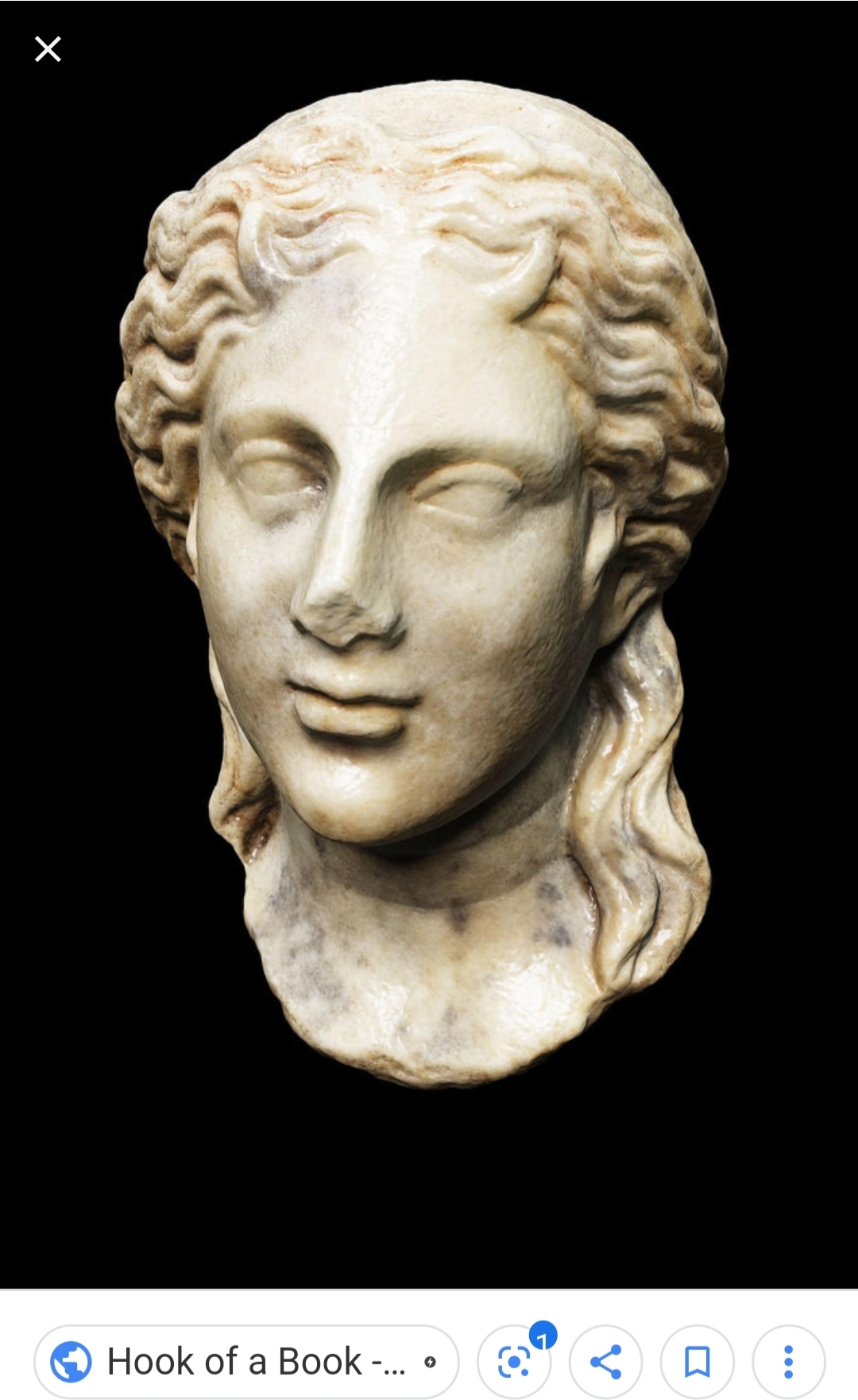
Courtesy of Hook of a Book

173) Arsinoë IV

Egyptian Queen and Cleopatra VII’s Younger Sister

Born: c.68 BC, Alexandria, Ancient Egypt

Died: c.41 BC The Temple of Artemis, Ephesus, Ancient Roman Empire (Present-day Ephesus, Turkey)

Arsinoë may have been Ptolemy XIII’s twin sister.

In 48 BC, Arsinoë’s siblings Cleopatra VII and Ptolemy XIII started a civil war over who would be sole ruler of Egypt—while they were busy with that Arsinoë simply took the throne for herself as Arsinoë IV.

However, Julius Caesar butted his head in and took the throne away from her—giving her Cyprus to rule with her youngest brother Ptolemy XIV as compensation.

Instead of accepting that, Arsinoë and Ptolemy XIII allied themselves against Cleopatra and Caesar, forging an alliance with Achillas.

Once Achillas ran out his usefulness, Arsinoë had him executed and her favorite, Ganymede, put in charge of the army instead.

Unfortunately, her brother, Ptolemy XIII, ended up dead, Cleopatra ended up on the throne, and Arsinoë found herself on her way to Rome to be paraded around the capitol as a prisoner of Caesar.

Even the vicious mobs of Rome found the sad teenager pitiful by the time she arrived. Arsinoë was sent to live in the Temple of Artemis at Ephesus.

After Caesar’s death it seemed Arsinoë would be set up to rule Cyprus beside her big sister, but Cleopatra had other plans.

Arsinoë was dragged out of the temple and killed on the steps—her blood staining one of the ancient wonders of the world. She was between twenty and twenty-seven at the time of her death, but nobody can really agree on an exact age. She had never married and had no children.

The supposed tomb of Arsinoë discovered at Ephesus has very weak archaeological evidence of belonging to her, but the scientific studies are ongoing. A documentary which explores the evidence is linked in this article, but as I've mentioned, the true evidence is weak at best and the documentary skews things to make the evidence seem stronger. Watch at your own risk! I find it entertaining to sit and listen to, and it does give decent information on Arsinoë's life before her death.

Badges:

Located In My Personal Library:

The Warrior Queens by Antonia Fraser

When Women Ruled the World: Six Queens of Egypt by Kara Cooney

The Pharaohs by Dr. Joyce Tyldesley

Sources:

http://dangerouswomenproject.org/2016/07/08/arsinoe-iv/

https://www.britannica.com/biography/Arsinoe-IV

https://www.livescience.com/27459-cleopatra-sister-discovery-controversy.html

https://en.wikipedia.org/wiki/Arsinoe_IV_of_Egypt

172) Cleopatra VII Philopater

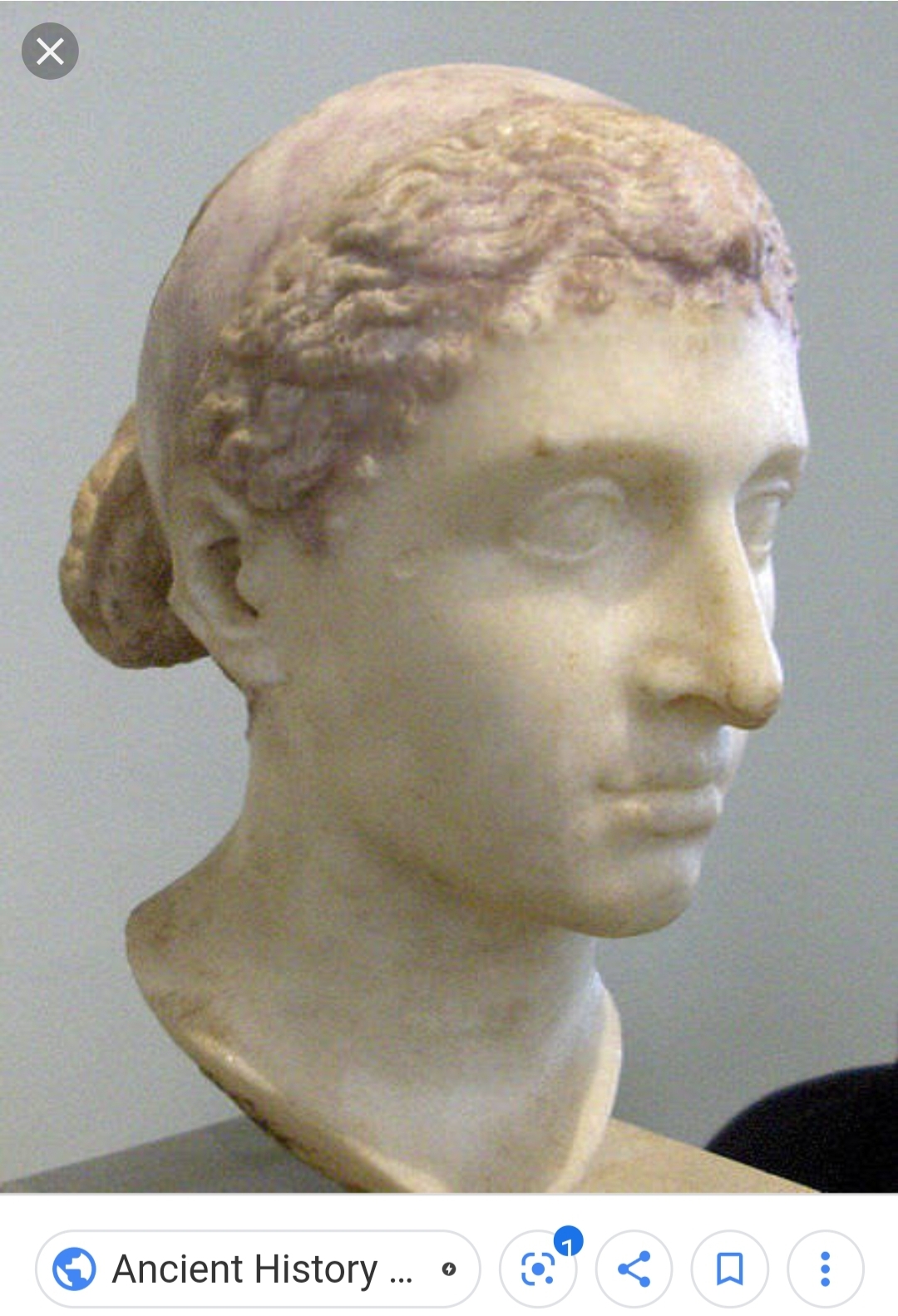
Courtesy of Ancient History Encyclopedia
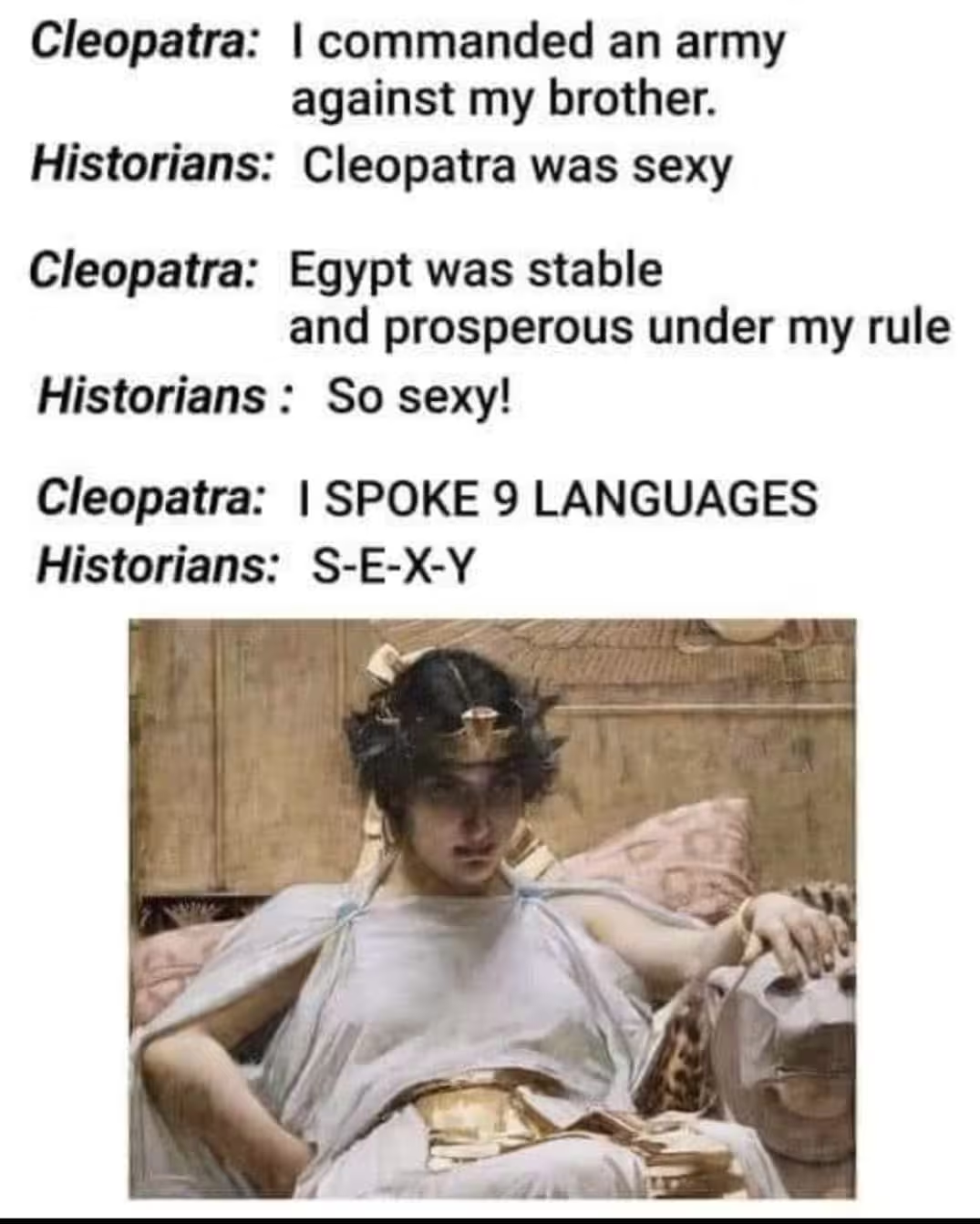
A Facebook Meme
A Facebook Meme

172) Cleopatra VII Philopater

Yes, That Cleopatra

Born: 69 BC, Alexandria, Egypt

Died: 30 BC, Alexandria, Egypt

Cleopatra was an Egyptian Pharaoh who first ruled as co-regent with her two younger brothers (Ptolemy XIII and Ptolemy XIV respectively) and then her oldest son Caesarion (Ptolemy Caesar/ Ptolemy XV).

Cleopatra is widely seen as the last of her dynasty but if you want to get technical her children reigned after her (albeit for literally two weeks but still) ending the Ptolemaic Dynasty after three hundred years and the reign of the Egyptian Pharaohs after thousands of years.

Among Cleopatra's talents were that of knowing various languages; it was reported she was the only Ptolemaic Pharaoh who understood Demotic—the common language of the Egyptians, as well as Greek and Latin.

Cleopatra is best known for her romantic relationships with Julius Caesar and later her husband Marc Antony.

With Caesar she had her son Caesarion (meaning Little Caesar) and with Antony she had three children: the twins Cleopatra Selene and Alexander Helios and then Ptolemy Philadelphos.

In her years as ruler of Egypt Cleopatra faced frequent periods of war and unrest within her borders first from her siblings—including her younger sister Arsinoë, and then from the Romans.

Cleopatra and her son were in Rome when Julius Caesar was assassinated. After his death, Cleopatra took her son and fled back to Egypt. Soon enough however, Marc Antony came into the picture.

The winter Marc Antony spent in Alexandria was interesting to say the least—he and Cleopatra formed a drinking club called the Inimitable Livers (Basically meaning the Unique Livers).

The pair were separated for three years however—during which time Cleopatra gave birth to their twins and Marc married his fourth wife (and Roman Leader Octavian’s sister-in-law) Octavia.

When they met again Antony held an elaborate ceremony called the Donations of Alexandria in which he bestowed vast lands on his Egyptian family. This thoroughly angered the already upset Romans, who viewed Marc Antony's relationship with Cleopatra poorly to say the least.

Also, around this time Cleopatra had her fourth and final child.

In 32 BC, the Roman man Octavian (later to become the first true Roman Emperor) would declare war on Cleopatra after getting pissed at Antony for throwing logic to the wind (from a Roman viewpoint) as I already mentioned above. He had other children and a wife back in Rome too remember? Not saying Antony was a great guy by any means. In any case, Octavian used the Roman people's wrath towards Marc Antony as leverage to declare war on Cleopatra, and in effect Marc Antony as well.

Cleopatra and Antony were defeated at the Battle of Actium soon after. Cleopatra fled the battle and returned back to her palace in Alexandria. Upon returning to Alexandria, Marc Antony killed himself after hearing a rumor that Cleopatra had done the same. It was a false rumor. Cleopatra was still alive; she held her lover in her arms as he died from his own self-inflicted wound.

A few days later, Cleopatra decided she would rather take her life into her own hands rather than become a Roman prisoner. This was most likely a good move on her part. Years earlier, after Julius Caesar had captured Cleopatra's younger sister Arsinoe, he had her paraded through the streets of Rome as a political prisoner for the crowds to jeer at. Cleopatra wanted to avoid that future at all costs.

Cleopatra ended her own life with snake venom, locked away in her own mausoleum. Though Shakespeare would later popularize the myth she had ended her life by allowing an asp to bite her, actual herpetologists who have studied the snakes that were endemic to Egypt at the time disagree. Its more likely Cleopatra ended her life with a hairpin or other sharpened device that was treated with snake venom beforehand.

Sadly, Cleopatra's older son Caesarian was soon murdered by his tutor and her other three children were taken to Rome as prisoners; raised in their father's ex-wife Octavia's household. Cleopatra's sons disappear from history—most likely dying as children, but her daughter went on to become Queen of Mauritania. Cleopatra Selene would die in peace but her only son was then murdered on Caligula’s orders thus ending Cleopatra’s bloodline once and for all.

Badges Earned:

Find a Grave Marked

Located In My Personal Library:

Ancient Egypt: An Introduction by Salima Ikram

Arsinoe of Egypt and Macedon: A Royal Life by Elizabeth Donnelly Carney

Cleopatra by Stacy Schiff

Cleopatra by Susan Blackaby

Cleopatra by Zahi Hawass

Daughters of Isis: Women of Ancient Egypt by Joyce Tyldesley

The Encyclopedia of Ancient Egypt by Helen Strudwick

From Alexander to Cleopatra by Michael Grant

Goddesses, Whores, Wives, and Slaves: Women in Classical Antiquity by Sarah B Pomeroy

The Great Book of Ancient Egypt: In the Realm of the Pharaohs by Zahi Hawass

How They Croaked by Georgia Bragg

Hypatia: The Life and Legend of an Ancient Philosopher by Edward J Watts

Hypatia's Heritage: A History of Women in Science from Antiquity to the Late Nineteenth Century by Margaret Alic

Lost Bodies by Jenni Davis

Lost Cities, Ancient Tombs: 100 Discoveries That Changed the World edited by Ann R Williams

National Geographic History Magazine Article "Antony and Cleopatra" (October/November 2015 Edition)

National Geographic History Magazine Article "Antony & Cleopatra, Taking Liberties With the Queen" (May/June 2017 Edition)

National Geographic History Magazine Article "Cleopatra & Mark Antony, History's First Power Couple" by Javier Negrete (March/April 2025 Edition)

Nefertiti and Cleopatra by Julia Samson

100 Greatest Mysteries: The World's Secrets Revealed (Magazine by History)

One Bloody Thing After Another: The World's Gruesome History by Jacob F Field

The Pharaohs by Dr. Joyce Tyldesley

Princesses Behaving Badly by Linda Rodriguez McRobbie

National Geographic Presents "Queens of Egypt When Women Ruled the World" by Kara Cooney

Religion and Magic in Ancient Egypt by Rosalie David

Secret Egypt by Zahi Hawass

The Warrior Queens by Antonia Fraser

When Women Ruled the World: Six Queens of Egypt by Kara Cooney

Who Knew? Women in History: Questions That Will Make You Think Again by Sarah Herman

The Woman Who Would Be King: Hatshepsut's Rise to Power in Ancient Egypt by Kara Cooney

Women in Ancient Rome by Paul Chrystal

Women in the Valley of the Kings: The Untold Story of Women Egyptologists in the Gilded Age by Kathleen Sheppard

Uppity Women Speak Their Minds by Vicki León

Sources:

All the books listed above

https://www.history.com/topics/ancient-history/cleopatra

https://www.findagrave.com/memorial/8384583/cleopatra_vii

171) Nefertiti Neferneferuaten

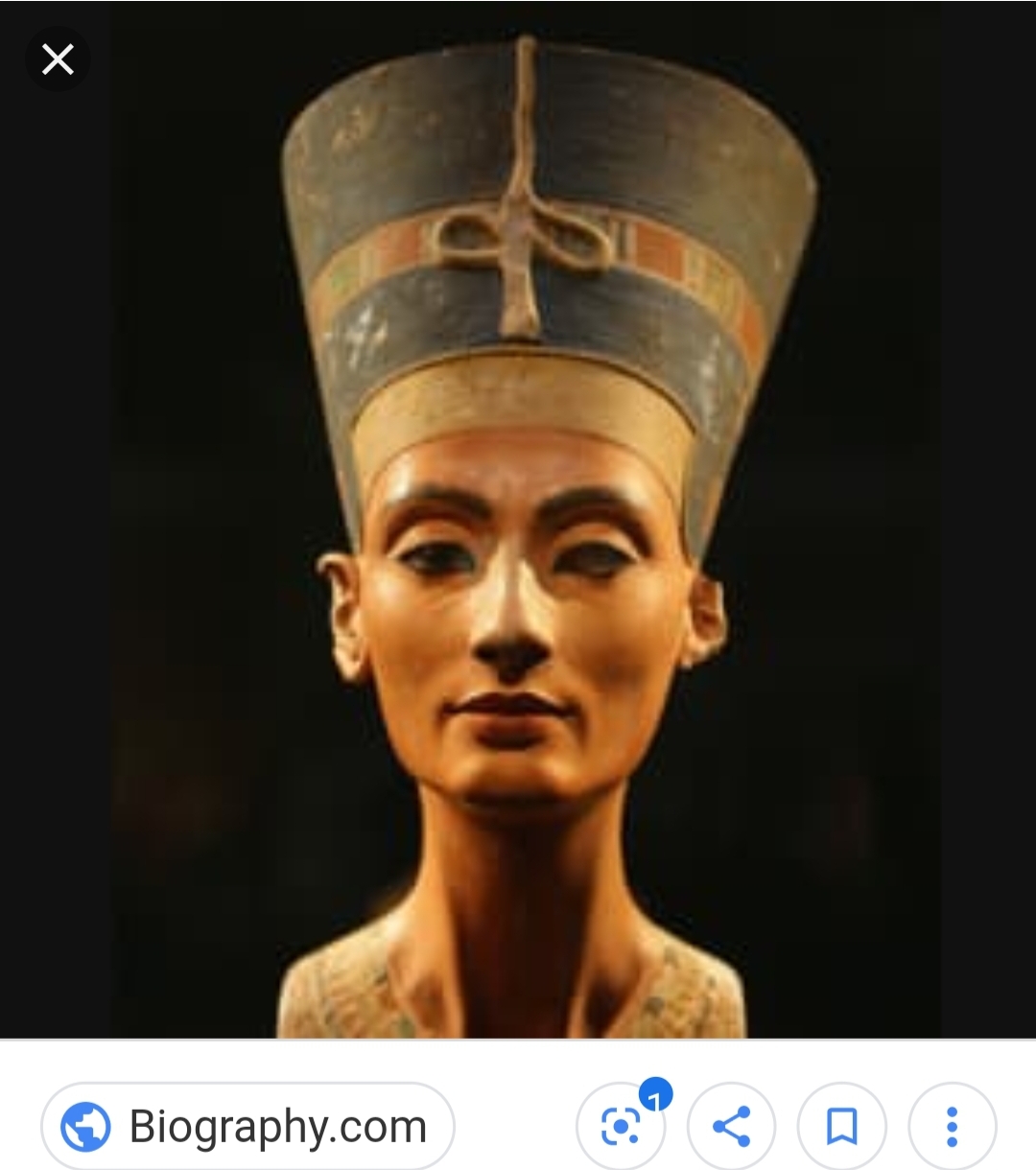
Courtesy of Biography

171) Nefertiti Neferneferuaten

Egyptian Queen and Great Royal Wife of Akhenaten

Born: c. 1370 BC, Thebes, Egypt

Died: c. 1331 BC, Egypt

Her name means “Beautiful of the Beauties of Aten, a Beautiful Woman has Come.”

Nefertiti is one of the most iconic figures from Ancient Egypt thanks to her alluring bust (and by that, I mean statue of her head and not…you know).

It is believed by some that she was the daughter of Ay—a top adviser who would go on to become Pharaoh after Tutankhamun’s death (and he would marry one of Nefertiti’s daughters--Ankhesenamun, so you know—gross).

Nefertiti lived through one of the greatest religious upheavals in Ancient Egypt—her husband decided to displace the main god of the Egyptian Pantheon—Amun—and supplant Aten in his place—downplaying all the other gods as well into basically what would become the first Monotheistic Empire.

Nefertiti is seen with a frequency unseen by any other Egyptian Queen in the empire’s history and is sometimes even seen in a position of power larger than her husband’s.

She gave the king six daughters but no male heir. Her daughters were: Meritaten, Ankhesenamun, Meketaten, Neferneferure, Setepenre, and Nefernefernuaten Tasherit.

Akhenaten had other wives though and one of them would be the mother of Tutankhamun—thought for years to be one of his lesser wives we now know Tutankhamun’s mother was also Akhenaten’s sister—but her name is not known beyond that of The Younger Lady.

Nefertiti disappears from the historical record in her husband’s twelfth year as Pharaoh leading many to believe she died; however another popular theory is that she changed roles and become her husband’s co-regent serving after him as the Pharaoh Smenkhkare—though this has yet to be definitively proven.

If this is true, she would have been the start of reversing her husband’s religious policies and returning Egypt to the polytheistic roots we all remember.

Badges Earned:

Find a Grave Marked

Located In My Personal Library:

Nefertiti by Joyce A Tyldesley

Nefertiti & Cleopatra by Julia Samson

Daughters of Isis: Women of Ancient Egypt by Joyce Tyldesley

The Encyclopedia of Ancient Egypt by Helen Strudwick

The Great Book of Ancient Egypt: In the Realm of the Pharaohs by Zahi Hawass

King Tutankhamun: The Treasures of the Tomb by Zahi Hawass

Lost Bodies by Jenni Davis

Lost Cities, Ancient Tombs: 100 Discoveries That Changed the World edited by Ann R Williams

Religion and Magic in Ancient Egypt by Rosalie David

Scanning the Pharaohs by Zahi Hawass and Sahar Saleem

Secret Egypt by Zahi Hawass

The Pharaohs by Dr. Joyce Tyldesley

Temples, Tombs & Hieroglyphs: A Popular History of Ancient Egypt by Barbara Mertz

National Geographic History Magazine Article "Nefertiti: Iconic Queen of Egypt" written by the editors of National Geographic (January/February 2022 Edition)

National Geographic History Magazine Article "King Tut's Unsolved Mysteries" by Ann R Williams (November/December 2022 Edition)

National Geographic Presents "Queens of Egypt When Women Ruled the World" by Kara Cooney

Warfare and Weaponry in Ancient Egypt by Rebecca A Dean

The Woman who Would be King by Kara Cooney

When Women Ruled the World: Six Queens of Egypt by Kara Cooney

Sources:

https://www.history.com/topics/ancient-history/nefertiti

https://www.britannica.com/biography/Nefertiti

170) Hatshepsut

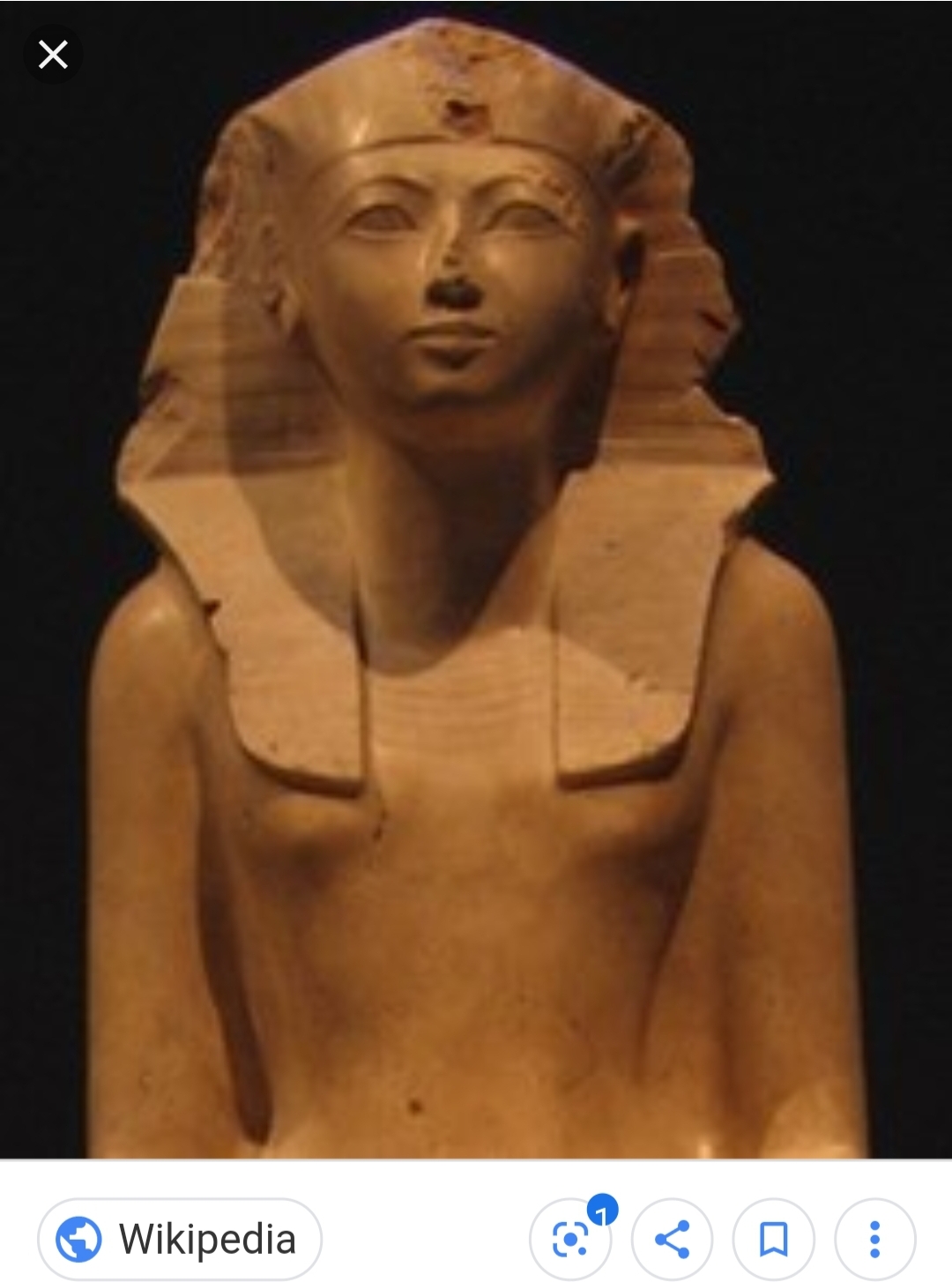
Courtesy of Wikipedia

"Now my heart turns to and fro, In thinking what will people say, They who shall see my monument in after years, And shall speak of what I have done." -Inscription on one of Hatshepsut's mortuary obelisks at Karnak

170) Hatshepsut

Egyptian Pharaoh who Has Been Falsely Identified by Many as the First Woman in Egyptian History to Rule in her Own Right as Pharaoh

Born: c.1508 BC, Ancient Egypt

Died: c.1458 BC, Ancient Egypt

There was at least one woman before Hatshepsut that did so—Sobekneferu.

Hatshepsut was the daughter of Thutmose I and the wife of Thutmose II (her half-brother). They married when Hatshepsut was around twelve years old.

When Thutmose II died, Hatshepsut became regent for her stepson Thutmose III before later taking complete control of the country.

Hatshepsut is remembered for being an ambitious builder (just look at her funerary complex at Deir el-Bahri as an example) and for expanding trade outside the borders of her empire (with a land called Punt—and literally modern day scholars have no idea where that was, we know how beautiful and amazing it was but the Egyptians forgot one key detail—writing down where the heck it was geographically!).

Hatshepsut ordered that she be depicted as a male in nearly all sculptures and images of herself in order to assert her power; and wore the false beard and other regalia to further support her claim.

The reason why Hatshepsut took control of the throne is debated—with historians split between sole ambition on her part to possibly trying to avert a political crisis and save the throne for her stepson someday.

Hatshepsut had one daughter from her husband—Neferure—who she might have been trying to raise as her successor.

Some historians also like to romanticize her relationship with her head adviser Senenmut but there is little evidence to support the claim. The rumor of a romance between the pair is not new however; some of the earliest crude graffiti ever found depicts Senenmut and Hatshepsut in a, ehem, shall we say compromising position?

Hatshepsut died from an infected abscess in her mouth after having a tooth pulled. Remember people, always take care of your teeth! Dental health is just as important as mental health!

Late in Hatshepsut's stepson’s reign he did everything in his power to erase his stepmother’s existence—explaining her absence from the king’s list and scholars’ attention until her rediscovery in 1822.

In 2007, Hatshepsut's mummy was positively identified by Zahi Hawass and now rests in the Cairo Museum.

Badges Earned:

Find a Grave Marked

Rejected Princess

Located in my Personal Library:

Rejected Princesses by Jason Porath

Ancient Egypt: An Introduction by Salima Ikram

Arsinoe of Egypt and Macedon: A Royal Life by Elizabeth Donnelly Carney

Bygone Badass Broads: 52 Forgotten Women Who Changed the World by Mackenzi Lee (This one falsely claims her as the first female pharaoh)

Daughters of Isis: Women of Ancient Egypt by Joyce Tyldesley

The Encyclopedia of Ancient Egypt by Helen Strudwick

King Tutankhamun: The Treasures of the Tomb by Zahi Hawass

The Great Book of Ancient Egypt: In the Realm of the Pharaohs by Zahi Hawass

100 Greatest Mysteries: The World's Secrets Revealed (Magazine by History)

The Oxford Encyclopedia of Women in World History Edited By Bonnie G Smith

National Geographic History Magazine Article "Temple of Hatshepsut: Rock of Ages" by David Rull Ribo (March/April 2024 Edition)

Princesses Behaving Badly by Linda Rodriguez McRobbie

Scanning the Pharaohs by Zahi Hawass and Sahar Saleem

Secret Egypt by Zahi Hawass

Temples, Tombs & Hieroglyphs: A Popular History of Ancient Egypt by Barbara Mertz

Uppity Women Speak Their Minds by Vicki León

Warfare and Weaponry in Dynastic Egypt by Rebecca Angharad Dean

The Woman who Would Be King by Kara Cooney

Women in the Valley of the Kings: The Untold Story of Women Egyptologists in the Gilded Age by Kathleen Sheppard

World Mythology in Bite-Sized Chunks by Mark Daniels

When Women Ruled the World: Six Queens of Egypt by Kara Cooney

Who Knew? Women in History: Questions That Will Make You Think Again by Sarah Herman

The Pharaohs by Dr. Joyce Tyldesley

Unwrapping a Mummy: The Life, Death, and Embalming of Horemkenesi by John H Taylor

National Geographic Presents "Queens of Egypt When Women Ruled the World" by Kara Cooney

Sources:

https://www.rejectedprincesses.com/princesses/hatshepsut

https://www.history.com/topics/ancient-history/hatshepsut

https://www.findagrave.com/memorial/7396127/hatshepsut

169) Sobekneferu

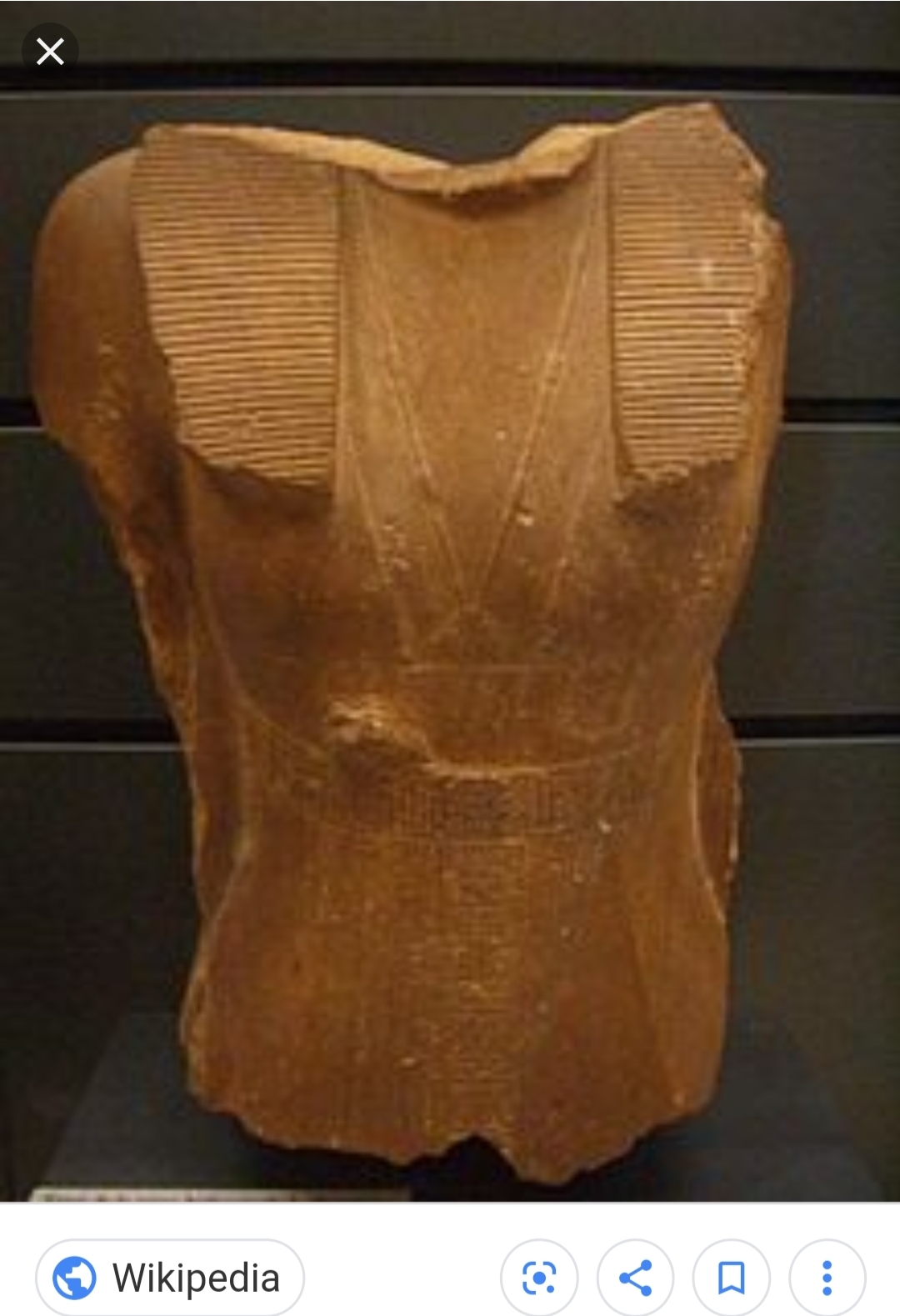
This piece of a statue is one of the few confirmed to depict Sobekneferu

169) Sobekneferu

The First Confirmed Female Pharaoh of Ancient Egypt

Birth Date Unknown: Ancient Egypt

Died: c.1802 BC, Ancient Egypt

Alternate Name: Nefrusobek

Sobekneferu's name means "She Who Shows the Beauty of Sobek." Sobek is one of the most powerful pharaohs the Egyptian Pantheon. He is most known as being the Crocodile god.

Nefrusobek's father was the powerful Amenemhat III.

When her brother died, the Cult of Sobek—which was the primary Cult in Egypt at the time—backed her claim to the throne as Nefrusobek brother had died with no sons.

Not much is known about her other than she helped to further complete her father’s labyrinth—which (according to some sources) was the basis for the one later built in Crete (of the Minotaur Myth Fame).

The only real evidence left of Nefrusobek's reign are several statues, beads, and scarab seals depicting her and her name. There is no iconography today (that has been uncovered anyway) depicting her face, but the statue shown here bears her name and shows how Nefrusobek began the tradition of blending male and female attire as a female pharaoh.

Nefrusobek is also listed in the Turin King’s List (Not even Hatshepsut has that designation) and is also listed in a Nile Inundation Record.

Sobekneferu is also listed in her father’s mortuary temple (which she finished) her name appears several times there—meanwhile her brother’s name is noticeably absent.

Nefrusobek is the first definitively proven woman to have ruled Egypt in her own right as the Pharaoh.

There’s also a story that she might have been the princess that rescued Moses from the Nile and what have you but…yeah.

Sobekneferu began the practice of anointing the Pharaoh with Crocodile Fat—adopting the practice from Mesopotamia (possibly) and from there the idea was passed to Israel and Judea.

One website even claims this practice was so profound a Hungarian King in the 1400’s and Vlad Tepes (as in Dracula) claimed lineage from Sobekneferu—but nowhere else on the internet agrees with that so here’s your giant grain of salt to go with it.

It is believed the unfinished pyramids at Mazghuna may belong to Nefrusobek and another male relative but that has not been proven (despite what Wikipedia will have you believe).

She reigned for approximately four years.

Badges Earned:

Located In My Personal Library:

The Encyclopedia of Ancient Egypt by Helen Strudwick

The Great Book of Ancient Egypt: In the Realm of the Pharaohs by Zahi Hawass

The Pharaohs by Dr. Joyce Tildesley

National Geographic Presents "Queens of Egypt When Women Ruled the World" by Kara Cooney

Warfare and Weaponry in Dynastic Egypt by Rebecca Angharad Dean

When Women Ruled the World: Six Queens of Egypt by Kara Cooney

The Woman Who Would Be King: Hatshepsut's Rise to Power in Ancient Egypt by Kara Cooney

Temples, Tombs & Hieroglyphs: A Popular History of Ancient Egypt by Barbara Mertz

Sources:

https://mathstat.slu.edu/~bart/egyptianhtml/kings%20and%20Queens/Sobekneferu.html

https://ancientegyptonline.co.uk/sobekneferu/

https://www.ancient-origins.net/history-famous-people/sobeknefru-powerful-pharaoh-and-queen-dragon-court-002753

http://www.touregypt.net/featurestories/mazghunap.htm

https://en.wikipedia.org/wiki/Sobekneferu

168) Khentkaus III

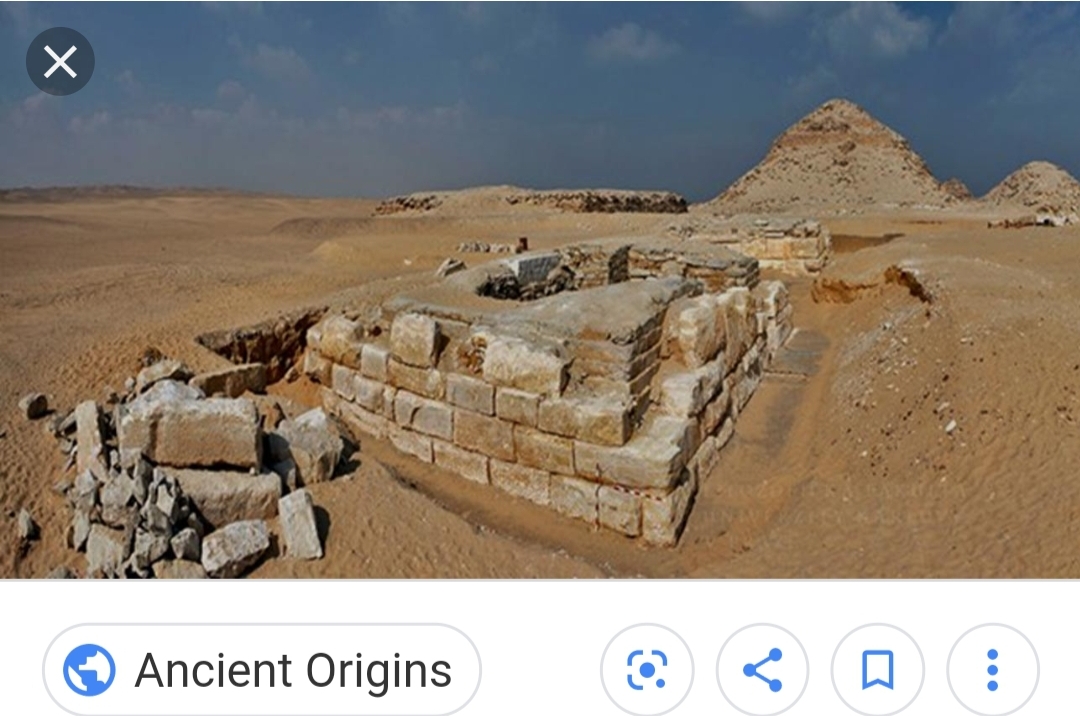
Courtesy of Ancient Origins

168) Khentkaus III

Egyptian Queen from the 5th Dynasty

Lived Around 2450 BC, Ancient Egypt

Alternate Spelling: Khentakawess III

Her tomb was uncovered in 2015.

She was either the mother or wife of Pharaoh Neferefre. The location of the tomb points to her more likely being his wife but that still isn’t certain.

The confusion stems from the fact that her tomb says she is both the wife and mother of the king.

Before the discovery of her tomb there had been no prior knowledge of her.

She is named the third because two other queens of the same name had been previously discovered.

If she is the wife of Neferefre then she is most likely the daughter of Neferirkare Kakai (and possibly his queen Khentkaus II) and the mother of Menkauhor Kaiu—meaning her father was a pharaoh, her husband was a pharaoh, and her son was also a pharaoh.

Badges Earned:
Find a Grave Marked

Located In My Personal Library:

National Geographic History Magazine Article "Tomb Reveals Previously Unknown Egyptian Queen" (June/July 2015 Edition)

Secret Egypt by Zahi Hawass

Sources:

http://www.ancient-egypt.org/world-wide-ancient-egypt/egyptology-news/khentkaus-iii-tomb-found-at.html

https://en.wikipedia.org/wiki/Khentkaus_III

https://www.findagrave.com/memorial/200181833/khentkaus-iii

167) Justa Grata Honoria

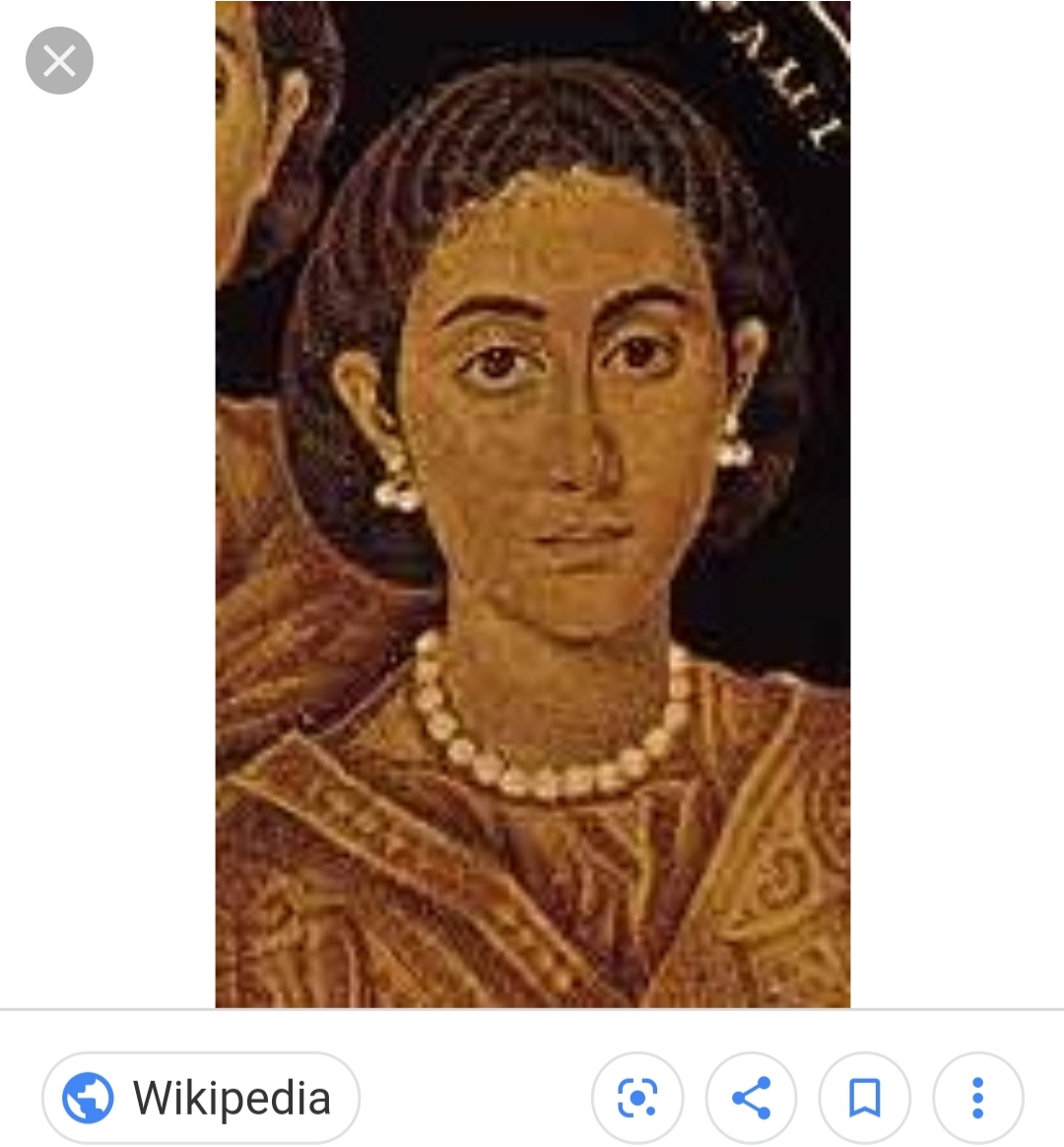
Courtesy of Wikipedia

167) Justa Grata Honoria

Roman Princess and sister of Roman Emperor Valentinian III who was literally responsible for the collapse of Western Civilization

Born: c.416 CE, Ravenna, Roman Empire (Modern Day Italy)

Died: c.455 CE, Rome, Roman Empire (Modern Day Italy)

Her brother was crowned at the age of six while she was pushed aside to await a suitable marriage—something that did not suit Honoria seeing as she would have been an epic ruler save for her lack of a stupid Y chromosome (Her Opinion Not Mine).

Honoria responded to this like any other slighted girl—by sleeping her way through the Roman court in her teens.

Still not getting enough attention Honoria set her sights on the bigger picture and decided to take the throne for herself.

After seducing one of her brother’s servants she convinced him to help her get rid of the pesky boy.

Their plot was soon uncovered, and the servant executed—with Honoria sent off to a convent in Constantinople.

After years attempting again and again to escape the convent Honoria realized all she needed to do was make friends with the one man who could topple Rome—Attila the Hun.

She wrote him a simple letter telling him that if he rescued her, she would marry him and hand over half of the empire as her dowry.

One problem—she didn’t exactly have the right to offer up half the empire and so when Attila came up to Valentinian and demanded his half Val said no.

In 451 CE the Huns invaded and made their way to Rome.

The Huns were then stopped by the Visigoths—who would sack Rome in turn and the Empire collapsed.

Honoria was never rescued by Attila and sent back to Rome to face her brother’s wrath.

He couldn’t kill her, and he couldn’t send her off to scheme again so Valentinian chose option number three—marrying her off to an old Roman Senator—where she disappeared into history never to be heard from again.

Rome was gone, alongside the Western Half of the Empire, but the Eastern Half thrived for centuries more.

Badges Earned:

Located In My Personal Library:
Princesses Behaving Badly by Linda Rodriguez McRobbie

Sources:

https://www.roman-emperors.org/justa.htm

https://www.cnn.com/2007/LIVING/wayoflife/10/19/mf.princess.rome/index.html

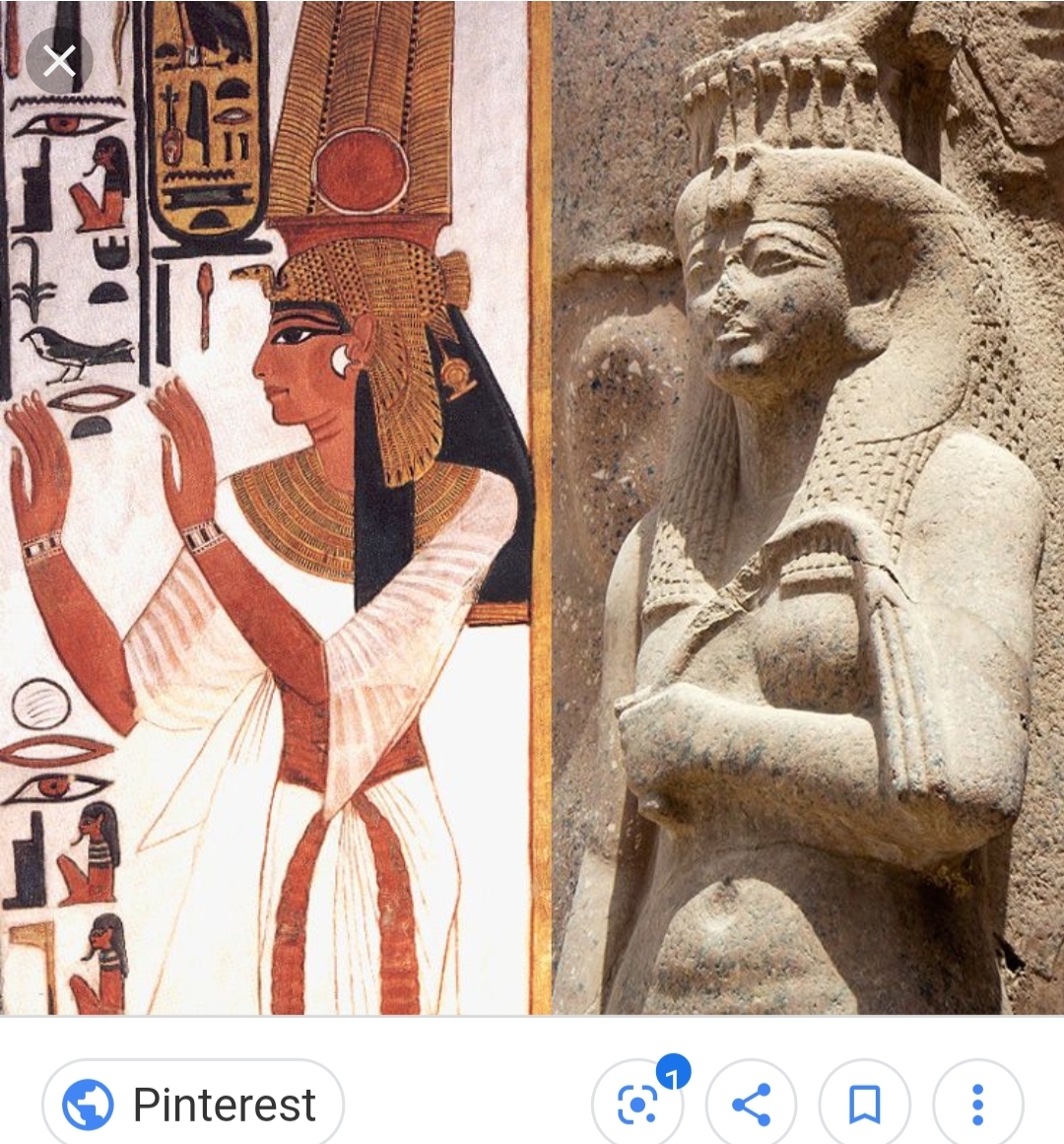
166) Nefertari Merytmut

Courtesy of Pinterest

166) Nefertari Merytmut

Egyptian Queen and wife of Ramses II

Died: c.1255 BC

Her name means "The Beautiful Companion, Beloved of Mut"

One source says Nefertari was thirteen and her husband fifteen when they married.

Not much is known of her past, but she was most likely a noblewoman not of the royal family—we know this because her titles indicate as such and do not list her as a king’s daughter or anything to that extent.

She was the first and most loved of Ramses seven queens. Nefertari was the mother of at least four sons and two or four daughters (Ramses would have over eighty children in all).

She was his wife for over twenty-four years, and they married before he ascended the throne.

Her titles included: Sweet of Love, Bride of God, and Lady of the Two Lands. These show she was not just a consort but also a priestess and political ally. She accompanied her husband on several military campaigns and was instrumental in helping get the Treaty of Qadesh signed (the World’s First Modern Peace Treaty).

She sent several gifts and letters to the king and queen of the Hittites once this peace was facilitated.

Her tomb is designated as QV66 and is the most beautifully decorated in the entire Valley of the Queens. Unfortunately, grave robbers took all of the valuables inside centuries ago—including her sarcophagus and most of her mummy (it is believed her lower legs were recovered).

Ramses’ love for his wife did not stop at her tomb. The Temples of Abu-Simbel were built in Nubia and the smaller temple is dedicated to Nefertari; two huge statues of her flank the front alongside four of her husband—an honor unseen anywhere else in the history of Egypt.

She died in the twenty-fourth year of her husband’s reign soon after construction of the temple began.

Badges Earned:
Find a Grave Marked

Located In My Personal Library:

The Great Book of Ancient Egypt: In the Realm of the Pharaohs by Zahi Hawass

Daughters of Isis: Women of Ancient Egypt by Joyce Tyldesley

The Encyclopedia of Ancient Egypt by Helen Strudwick

Religion and Magic in Ancient Egypt by Rosalie David

Scanning the Pharaohs by Zahi Hawass and Sahar Saleem

Sources:

https://www.history.com/news/archaeologists-identify-mummified-legs-as-queen-nefertaris

https://www.ancient-egypt-online.com/nefertari.html

https://en.wikipedia.org/wiki/Nefertari

https://www.findagrave.com/memorial/12931373/nefertari

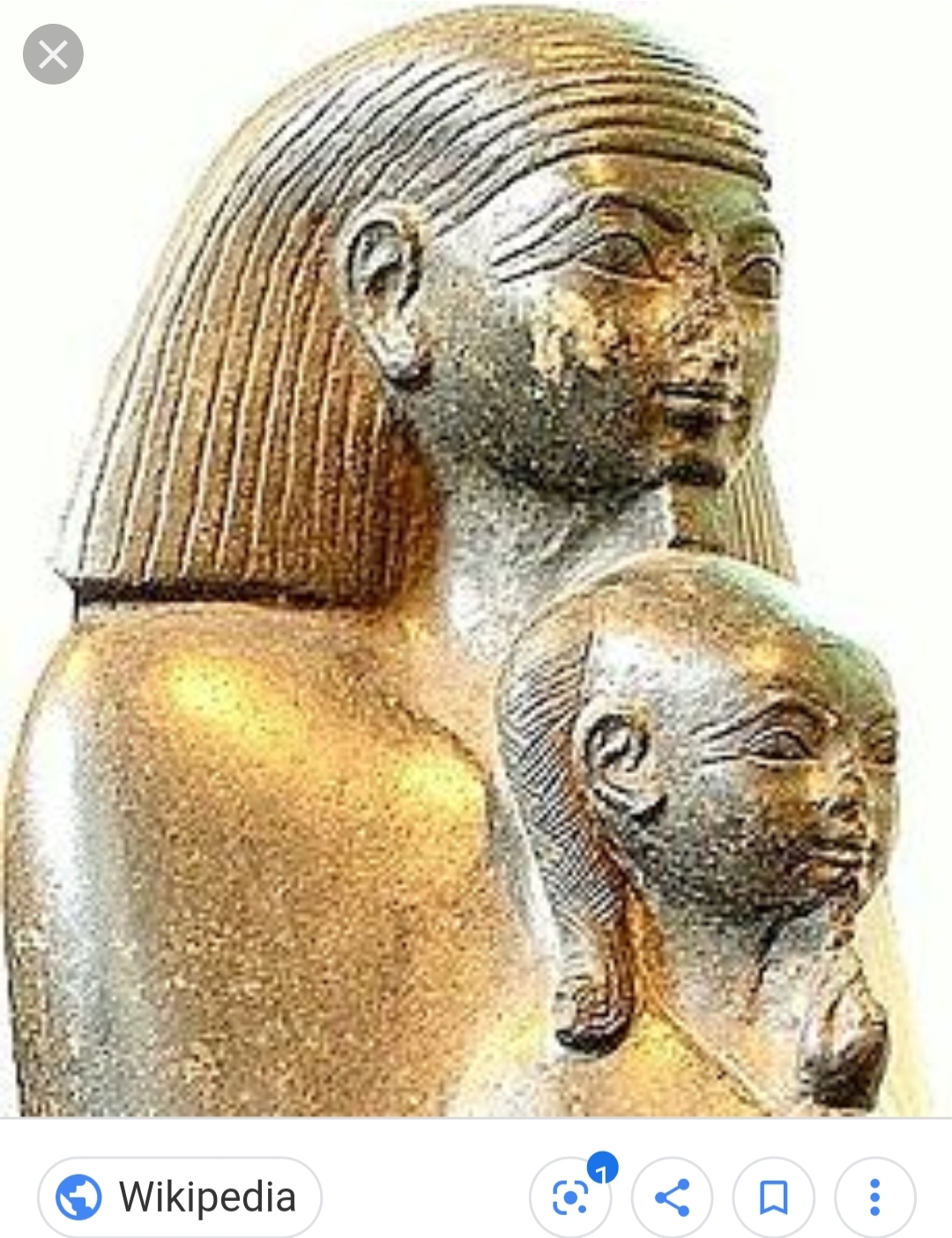
165) Neferure

Courtesy of Wikipedia

165) Neferure

Daughter of the Pharaohs Hatshepsut and Thutmose II

Birth and Death Dates Unknown for Certain

Her name means The Beauty of Re (or Ra).

Neferure was given a very good education by her mother’s top advisors.

Senenmut was particularly proud of the role he played in her education—eight statues of the two of them together have been discovered (leading some scholars to speculate he might have been her biological father, which would be interesting seeing as there is next to no proof, he even had a sexual relationship with her mother).

Neferure was often given the title of God’s Wife—a ceremonial role usually given to the Pharaoh’s wife, or in Neferure’s case—her mother.

She was confirmed to be the God’s Wife of Amun in Hatshepsut’s Red Chapel at Karnak—an especially important priestess position that existed for thousands of years in Ancient Egypt.

The God’s Wife was usually the most powerful woman in the empire.

An inscription at Sinai also lists Neferure as King’s Daughter King’s Wife.

Some speculate her mother was grooming her to be the future Pharaoh but the more likely explanation was that she was being prepared to marry her half-brother Thutmose III and become the wife of the Pharaoh.

Neferure was never recorded as his great wife but it seems they were married. She might have died before he became sole ruler.

Neferure most likely died between the years eleven and sixteen of her mother’s reign.

Belief that she was the mother of Thutmose III’s heir Amenemhat are most likely untrue from looking at the historical evidence.

A tomb in the Valley of the Monkeys discovered by Howard Carter may have been originally meant for her.

Badges Earned:

Located In My Personal Library:

The Pharaohs by Joyce Tyldesley

Scanning the Pharaohs by Zahi Hawass and Sahar Saleem

Warfare and Weaponry in Ancient Egypt by Rebecca A Dean

The Woman who Would be King by Kara Cooney

When Women Ruled the World: Six Queens of Egypt by Kara Cooney

Sources:

https://ancientegyptonline.co.uk/neferure/

https://mathstat.slu.edu/~bart/egyptianhtml/kings%20and%20Queens/Neferure.html

https://ancientegypt.fandom.com/wiki/Neferure

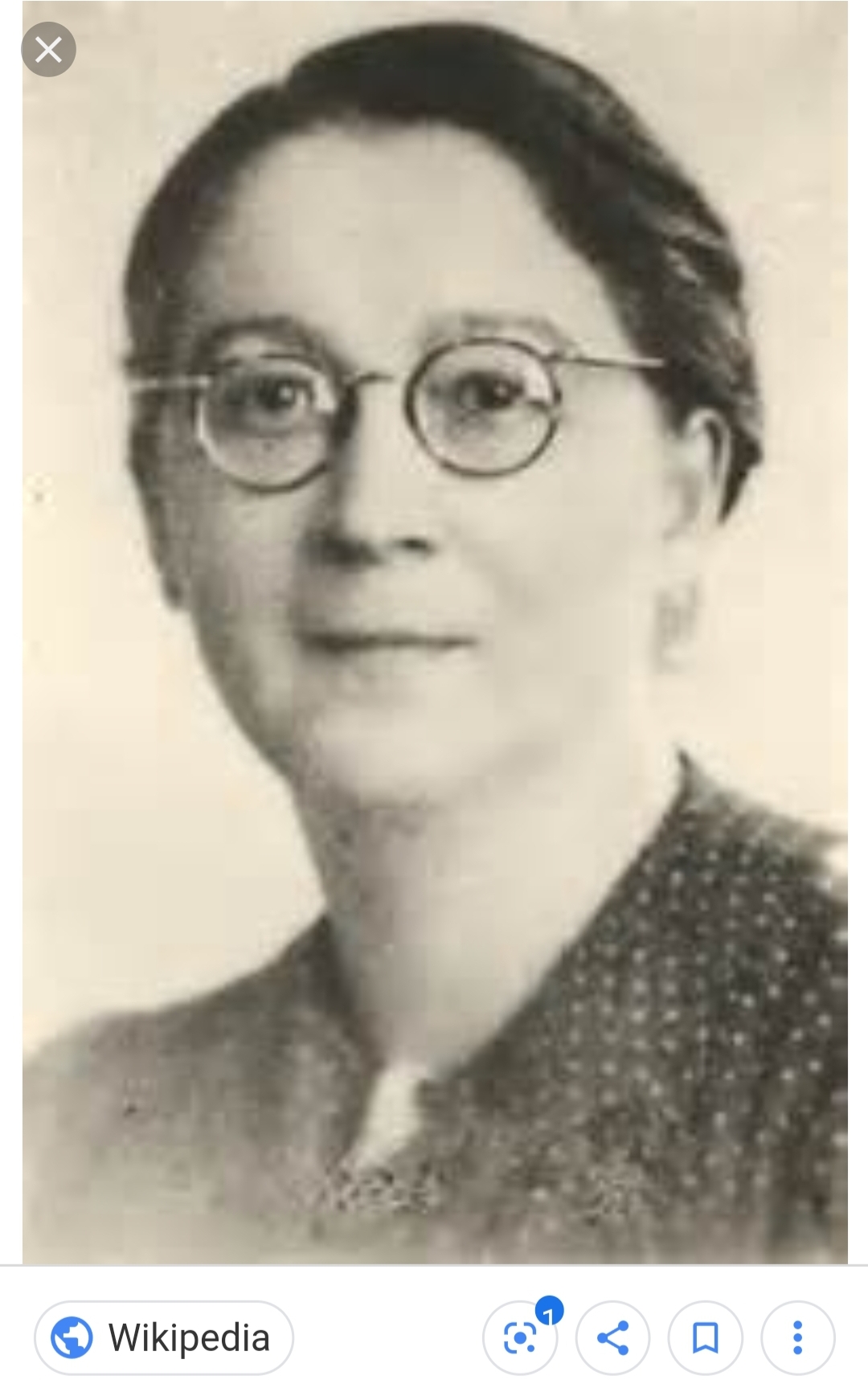
164) Rose Valland

Courtesy of Wikipedia

164) Rose Valland

The Real Monument’s Woman

Born: 1 November 1898, Saint-Étienne-de-Saint-Geoirs, France

Died: 18 September 1980,  Ris-Orangis, France

She held two degrees in art history and had extensive knowledge of European art and culture.

Starting in July 1941, Rose took over the job of curator (though without the title) of the Jeu de Paume Museum in Paris.

The October before the Nazis had taken over the museum as its headquarters for their ERR—the department responsible for looting and pillaging the art and valuables of thousands of people and entities across Europe.

Leaders of other museums (including the Louvre) ordered Valland to stay at her post and keep an eye on all the stolen loot. The Germans had no idea she was fluent in German and able to take meticulous notes on where the pieces had come from and were going.

Despite coming close on two separate occasions Valland stayed undercover—had she been caught she probably would have been shot as a spy.

Valland would eventually turn over her records to the famous Monuments Men and help them uncover numerous repositories including that of Neuschwanstein Castle where over twenty thousand works of art were recovered.

Her notes would also be instrumental in expediting the process of restitution to the rightful owners of the works.

In May of 1945 she was allowed into the French First Army’s Commission de récupération Artistique (The French Commission on Art Recovery).

In 1954, Rose was named Chair of the Chef du Service de protection des oeuvres d’art (Commission for the Protection of Works of Art).

In 1961 she would publish a book on her experiences that would go on to inspire a Hollywood film.

Rose received many awards and accommodations but wouldn’t be named curator of a museum until 1953.

Badges Earned:
Find A Grave Marked

Located In My Personal Library:

The Rape of Europa by Lynn H Nicholas

Sources:

https://www.monumentsmenfoundation.org/the-heroes/the-monuments-men/valland-capt.-rose

https://www.findagrave.com/memorial/124709268/rose-antonia_maria-valland

  • Previous
  • 1
  • …
  • 119
  • 120
  • 121
  • 122
  • 123
  • 124
  • 125
  • …
  • 159
  • Next

Categories

Archives

  • July 2025 (10)
  • July 2024 (1)
  • January 2024 (1)
  • August 2023 (1)
  • June 2023 (2)
  • October 2022 (1)
  • July 2022 (1)
  • June 2021 (3)
  • December 2020 (3)
  • August 2019 (1)
  • July 2019 (2)

Search

© 2026 The Exasperated Historian | Powered by Minimalist Blog WordPress Theme