The Exasperated Historian
Menu
  • Home
  • The Women’s List (New)
  • The Men’s List
  • The Animal List
  • Collections
  • The Blog
  • Contact Us
  • FAQ
Menu

Category: Birth Locations

819) Charlotte Badger

Courtesy of Rejected Princesses

819: Charlotte Badger

The First European/Australian Female Pirate

Born: c.1778, England (Present-day United Kingdom)

Died After: 1816

Charlotte was also one of the first two white female settlers in New Zealand.

Charlotte was banished to Australia after a petty theft conviction in her native Britain. She stole a silk handkerchief and a few guineas. Since England was in the midst of their crackdown on crime, Charlotte was sent on a seven-month seafaring voyage to Australia, with no certain future for her on arrival. While in prison she gave birth to a baby girl and was able to use this new situation to get herself a lighter sentence; becoming a house servant in Tasmania.

While on the journey to Tasmania, the other male prisoners on the ship mutinied and took the ship to New Zealand instead. Some reports suggest Charlotte just wanted to keep her and her baby alive, while others paint a very different picture. Charlotte switched to male clothing, grabbed a pistol, flogged the captain, and then participated in a raid on another ship. A third story even suggests Charlotte and Catherine (the other female prisoner on board the ship) convinced the guys to mutiny in the first place.

The guys dropped Charlotte, her baby, her friend Catherine, and Charlotte and Catherine’s boyfriends off on the coast of New Zealand before sailing on. The small group built some huts, but by 1807 Catherine was dead and the two men had seemingly left New Zealand altogether. Charlotte and her baby girl were all alone.

Charlotte was taken in, or at the very least tolerated, by the local Māori chieftain. Twice in the following years she was offered passage back to the white man’s world in Port Jackson, and twice she refused saying she would much prefer to die among the Māori.

After that nobody knows what happened to Charlotte and the baby. Some believe the Māori changed their attitude towards her after realizing the men on the ship she was associated with previously had kidnapped several Māori women. Another source says that when a ship landed in Tonga around 1826 the men aboard heard tale of a woman and her eight-year-old daughter who had arrived in Tonga ten years earlier. The woman, described as a “Stout Englishwoman” could have been Charlotte, but this was never proven (if it was Charlotte, she would have also been the first European woman to visit Tonga). Some claim Charlotte may have even eventually made her way to the Americas, but no one knows for certain.

Badges Earned:

Rejected Princess

Located In My Personal Library:

Pirate Women: The Princesses, Prostitutes, and Privateers Who Ruled the Seven Seas by Laura Sook Duncombe

Sources:

https://teara.govt.nz/en/biographies/1b1/badger-charlotte

https://www.rejectedprincesses.com/princesses/charlotte-badger

https://www.wikitree.com/wiki/Badger-209

https://nzhistory.govt.nz/culture/frontier-of-chaos/charlotte-badger

818) Onake Obavva

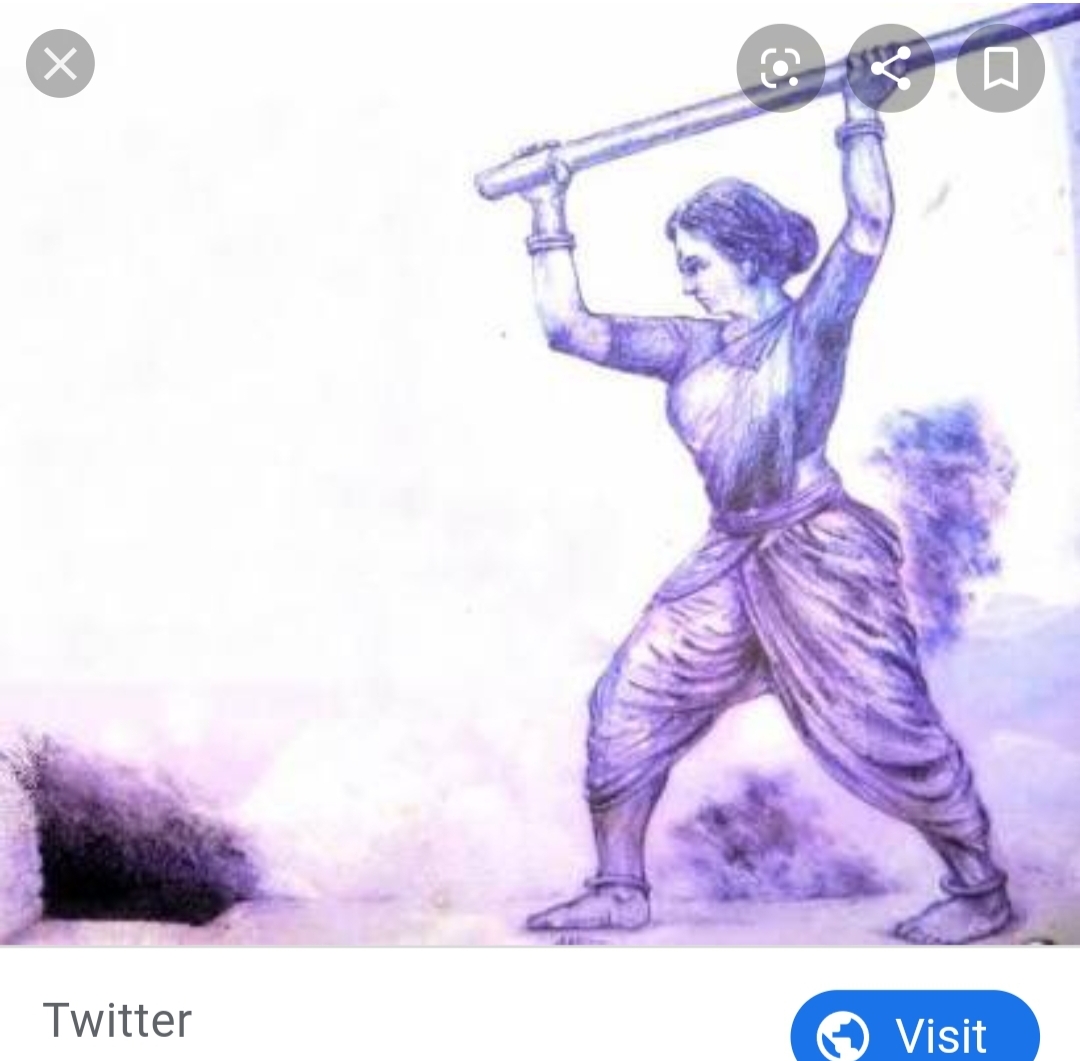
Courtesy of Twitter

818: Onake Obavva

Yeah, she was a Badass

Born: c.1750, Most Likely India

Died: 1777, Chitradurga, Karnataka, India

Onake is her people’s term for the weapon she most famously wielded; while Obavva was her actual name.

Obavva is remembered for fighting off rival forces with a pestle (which in this case is a huge wooden rounded club basically).

This occurred in her small town of Chitradurga in present-day India.

When a warlord tried to get into the city to take it by force he ran into a major problem. The only way into the city/fort was a hole in a wall that let one person in at a time.

Obavva’s husband was supposed to be guarding the hole in the wall but he went home for lunch instead. Obavva went to get him some water (the stream just happened to be by the hole in the wall) and saw the soldiers—which sent her into playing the world’s best game of whack a mole.

Obavva actually killed the soldiers by whacking them over the head really hard and then dragging the bodies out of the way so the next could come through. By the time her husband finally found her some stories say she’d killed a hundred men!

Sadly, Obavva ended up dying that day; some say from one of the men fatally stabbing her, and others claiming it was from exhaustion. While the warlord and his men gave up their plans to take the town that day, they returned two years later and successfully took Chitradurga.

And if all that isn’t badass enough on its own; Obavva also just happened to be a beda and dalit; or untouchable in the caste system. Today, Onake is a heroine among the Kannada people, and she is remembered through various musical numbers and film appearances. And you can still visit the hole she so zealously guarded today.

Badges Earned:

Rejected Princess

Sources:

https://www.rejectedprincesses.com/princesses/onake-obavva

https://military.wikia.org/wiki/Onake_Obavva

https://medium.com/lessons-from-history/onake-obavva-an-extraordinary-story-of-an-ordinary-indian-woman-c6cb5a510707

817) Catalina de Erauso

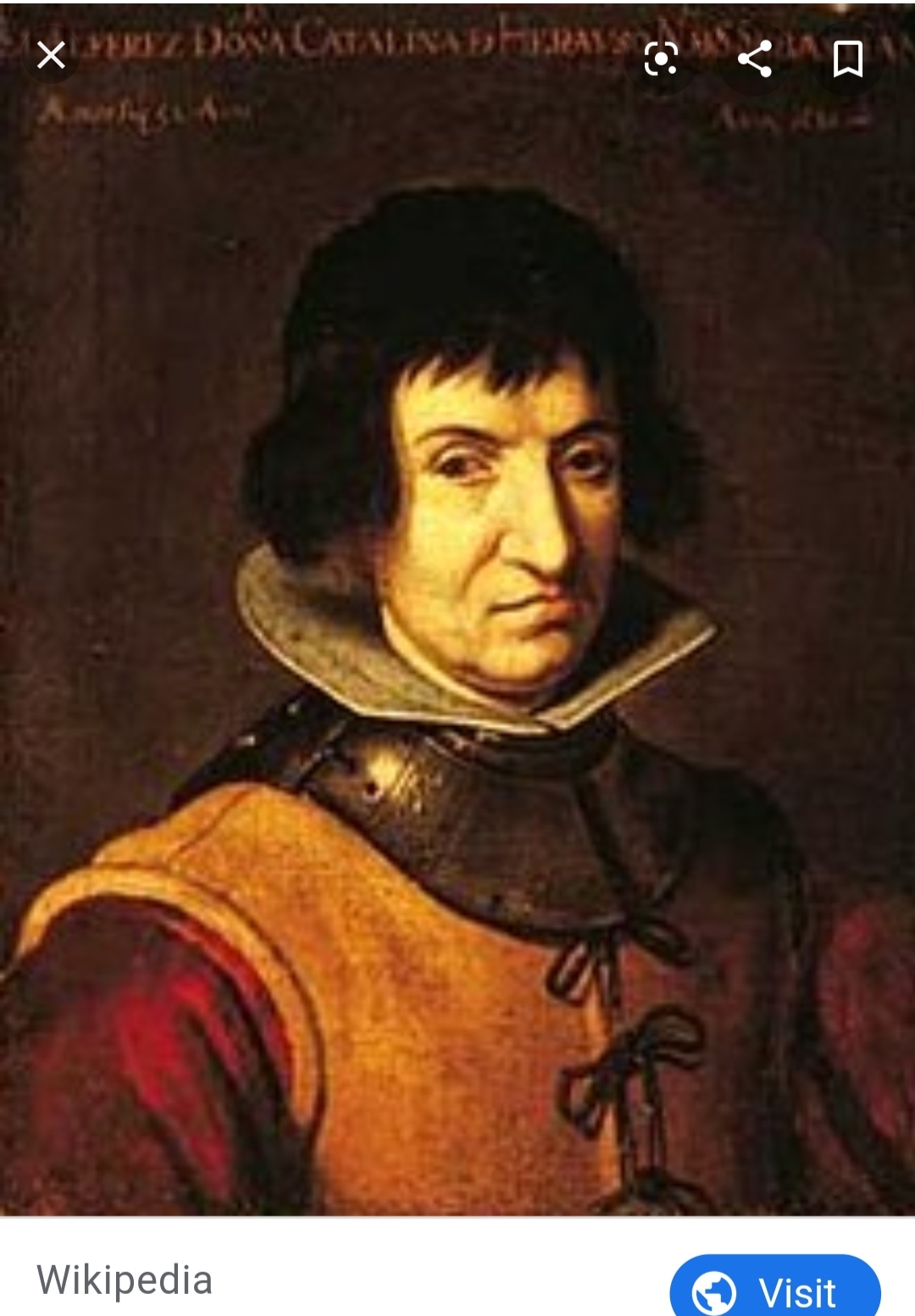
Courtesy of Wikipedia

817: Catalina de Erauso

The Lieutenant Nun

Born: c.1585-1592, San Sebastian, Basque, Spain

Last Known Sighting: c.1650, Veracruz or Cuitlaxtla, New Spain (Present-day Veracruz, Mexico)

Also Known As: La Monja Alferez or Antonio de Erauso

Before she was born, Catalina’s father was wounded in battle. He made a vow, that if he were to survive his wounds, all his sons would join the army and all his daughters would become nuns. Therefore, Catalina was trapped in a convent from the age of four to fifteen with abusive nuns who would beat her regularly. Obviously, this marked the young girl, and she decided freedom was more important than staying in one place.

Catalina eventually ran away and started crossdressing (taking the masculine name Francisco de Loyola). From that point onward Catalina lived her life as a hard drinking, womanizing, killer of men. Her first victim came when Catalina was eighteen (or eleven if you believe the later birth year of 1592*, but eighteen is more probable). Catalina went to a theatre and was insulted by some random dude. After she beat him up, rando came back for revenge a few months later. Catalina not only killed him, but several of his friends as well, before running to take sanctuary in a church.

Later on, Catalina joined the army and was put under her brother’s command (he didn’t recognize her; being separated from her family at a young age and the fact that they were now on a new continent—South America, makes this believable). Catalina started having an affair with her brother’s mistress (for three years!). Her brother found out, they fought, and she fled to a church for sanctuary; then she stabbed an Army buddy in the chest over a small understanding (over gambling) and when a judge interceded she sliced him in the face and ran to a church for sanctuary all over again!

After staying in a church for six months after slicing the judge, Catalina went out to place herself as a second in a duel and unknowingly killed her brother (then fell into a depression for a year).

Catalina had many many adventures over the years in South America, traversing the continent and fighting in numerous battles and for various armies. She also earned the reputation as an “Indian fighter” and has a less than favorable opinion of the indigenous populations. Catalina’s story is very confusing and the exact sequence of when she killed who and where changes from source to source, but what we do know is that she killed many people and got in fights with many others over the years.

Catalina also had at least four run-ins with separate women** who never realized she herself was a woman. One of these escapades actually involved Catalina being engaged to two women at the same time; she skipped town before marrying either of them.

Later in life she killed another guy and was sentenced to death. At her last communion, Catalina asked to have it in the church and once there she declared sanctuary. A month later she skipped town, killed some more cops and took sanctuary again. This time the Bishop found out she was a woman (and a virgin at that!) which somehow cleared her of two decades of murder and other crimes and made her a Blessed Individual.

Catalina made her way all the way to the Pope who told her she was free to continue wearing men’s clothes provided she stop killing people. It was one of the ten commandments after all, and a pretty important one at that. By that point she had been back in Spain for anywhere from several weeks to several years (again, depending on the source). While still in Spain, Catalina was granted a lifelong military pension from King Philip IV.

Catalina lived out the rest of her life in relative quiet (only cutting one more guy in the face over a game of cards). Some sources state she lived until around 1650, while others state she vanishes from the pages of history in 1635 after embarking from her trans-Atlantic voyage to Mexico.

She also wrote an autobiography of her life; something rare in the history of women overall. Catalina wrote it in 1626, but the book wasn’t published until the 1800’s. For this reason, if you find and read the book, you should probably take it with a grain of salt.

*Explaining Catalina’s two birth years—The first date, 1585, stems from the autobiography Catalina herself supposedly wrote. However, a baptismal certificate has been located indicating Catalina was born on 10 February 1592. Today, no one is certain which date is correct.

**Today, historians and scholars have struggled over how to classify or write about Catalina’s sexuality or gender identity. In the autobiography Catalina supposedly wrote, she switches back and forth between masculine and feminine pronouns. Because she never recounts having an attraction to another man, most claim she was lesbian. However, others classify her as transgender (female to male). I have chosen to use all feminine pronouns in this article for two reasons. One, Catalina was born female, and two, she identified as female later in life and in her autobiography, later in life. The idea of transgender as we know it today did not exist in the early 17th Century either, which is another contributing factor in why I have written the article the way I have.

Badges Earned:

Located In My Personal Library:

National Geographic History Magazine Article “Conquistadoras, Spanish Women in the Americas” by Eloisa Gomez-Lucena (September/October 2024 Edition)

Rejected Princess

Sources:

https://www.rejectedprincesses.com/princesses/catalina-de-erauso

https://www.encyclopedia.com/women/encyclopedias-almanacs-transcripts-and-maps/erauso-catalina-de-1592-1635

https://en.wikipedia.org/wiki/Catalina_de_Erauso

816) Noor Inayat Khan

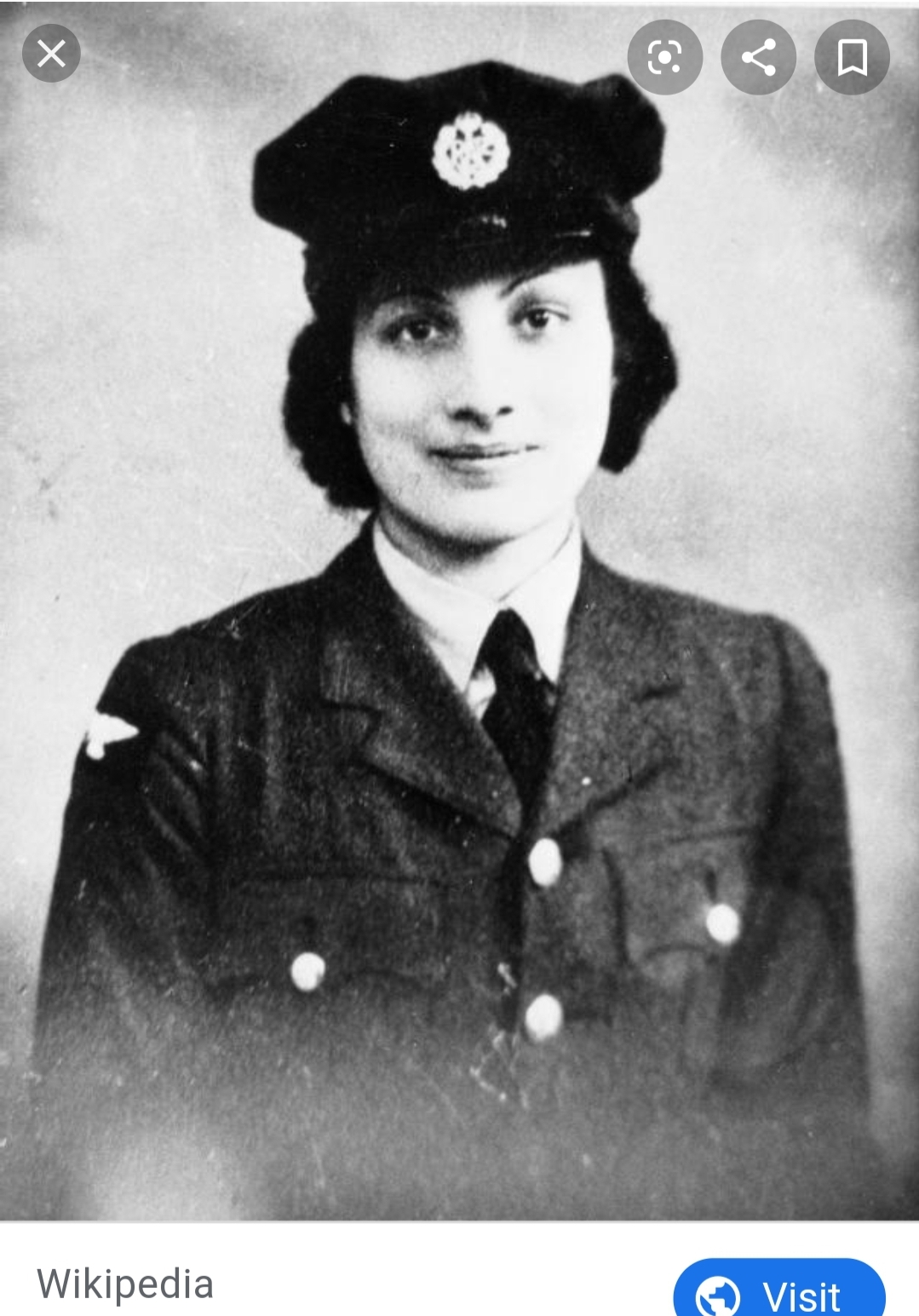
Courtesy of Wikipedia

816: Noor Inayat Khan

Radio Operator and Spy in Occupied France

Born: 1 January 1914, Moscow, Russian Empire (Present-day Moscow, Russia)

Died: 13 September 1944, Dachau Concentration Camp, Germany

Noor was a direct descendant of Tipu Sultan (making her kind of a princess). She was raised to be a pacifist; her father was a Sufi Muslim and counted Mahatma Gandhi as a personal friend. When her father died when Noor was thirteen, she had to step up to care for her mother and three younger siblings. Noor herself was so devoted to Sufism she refused to ever lie. So, to say Noor deciding to become a spy was a shock is the understatement of the century.

Noor published children’s stories and wrote music and poetry before the war broke out. Once World War II kicked off, Noor continued her brutal honesty when she interviewed with the SOE. Noor promptly told the British she didn’t like them, and that once the war was over, she would start fighting for India’s independence. She also was not at all in physical shape or had even the most basic knowledge needed to be a successful spy. Her interviewers noted Noor tended to freeze when interrogated and frequently left codebooks out in the open.

Despite all of this, Noor was the first female radio operator (of the SOE) to be parachuted behind enemy lines in occupied France. After only ten days, Noor was the only agent to be working as a radio operator for her network in occupied Paris when all the rest were captured. The SOE offered to extract her, but Noor refused until a replacement could be found. She ended up covering the work of six operators all on her own.

According to some sources, the average lifespan for a radio operator was six weeks; Noor lasted nearly four months before she was captured by the Gestapo after being betrayed by a double agent.

Within hours of her capture, Noor attempted to escape. She was quickly recaptured but gave the Nazis hell. Noor finally learned how to lie, and attempted to escape again only to be caught, again. Noor was kept in isolation for ten or so months before being transported to Dachau and executed alongside three other female agents. She had undergone brutal beatings and torture methods, but never cracked. Noor’s final word before she was shot was shouted at the top of her lungs, “liberté!”

In the words of Jason Porath of the Rejected Princesses, “She became a pacifist that fought dirty. A klutz that climbed buildings. A Sufi that lied daily. An artist that braved torture. A captive that told nothing.”

Noor was posthumously awarded the George Cross in 1949 and the Croix de Guerre with gold star as well. She has been called a modern Joan of Arc, her sacrifices remembered on statues and plaques across Europe. In recent times, it has been suggested Noor’s face grace the £50 bank note in the UK (instead the UK government voted for Alan Turing to grace the note). In 2012, the Noor Inayat Khan Memorial Fund finally saw the installation of a memorial statue for Noor in London. When it was unveiled, the bust earned its place in history as the first of an Asian woman in Britain.

Badges Earned:

Find a Grave Marked

Rejected Princess

Located In My Personal Library:

Rejected Princesses by Jason Porath

Women Wartime Spies by Ann Kramer

Bygone Badass Broads by Mackenzi Lee

Sources:

https://www.rejectedprincesses.com/princesses/noor-inayat-khan

http://www.bbc.co.uk/history/historic_figures/inayat_khan_noor.shtml

https://www.nytimes.com/2018/11/28/obituaries/noor-inayat-khan-overlooked.html

https://war-experience.org/lives/noor-inayat-khan-soe/

http://www.noormemorial.org/aboutus.php

https://www.findagrave.com/memorial/15255888/noor-inayat_khan

815) Naziq al-Abid

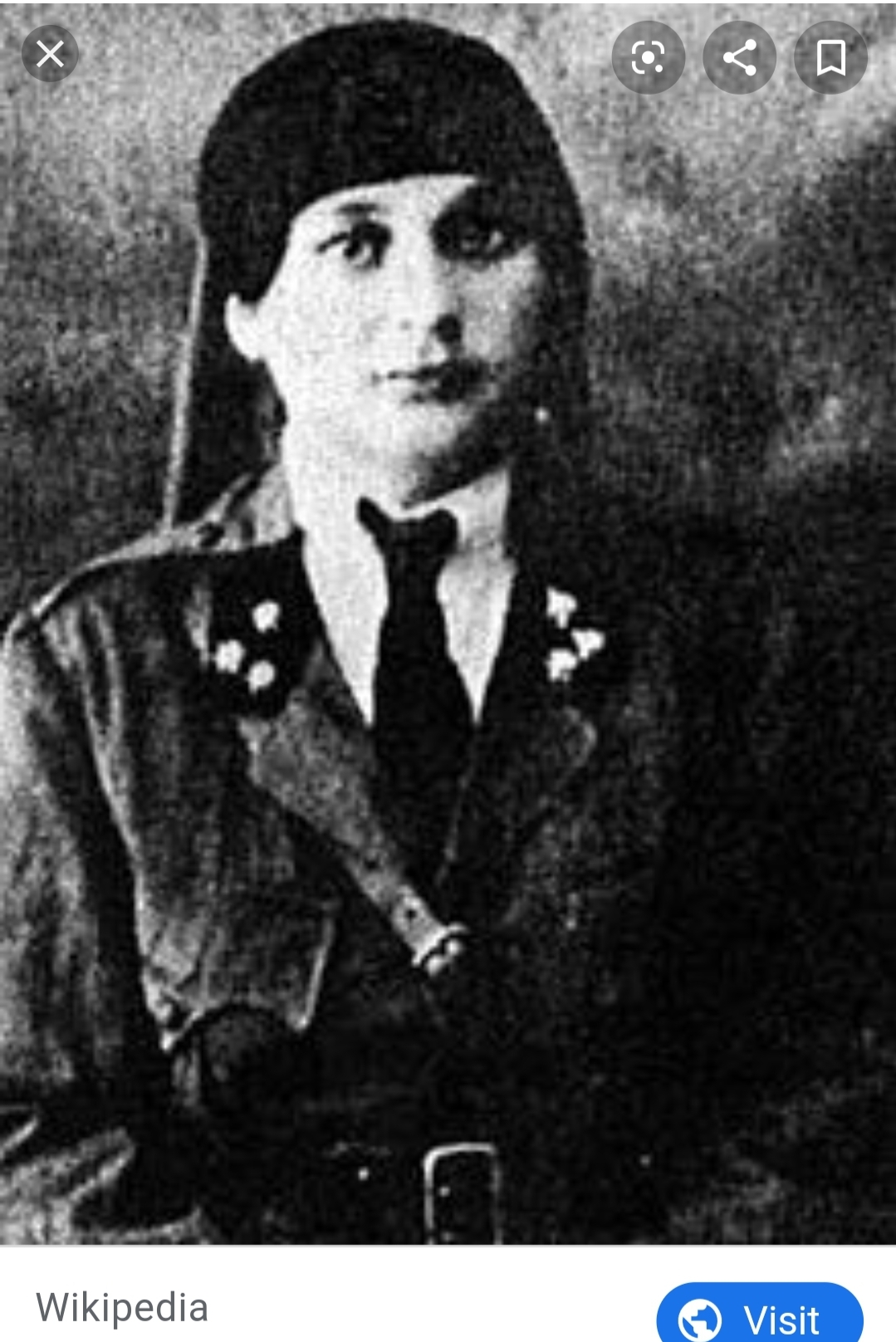
Courtesy of Wikipedia

815: Naziq al-Abid

Joan of Arc of the Arabs

Born: 1898, Damascus, Ottoman Empire (Present-day Damascus, Syria)

Died: 1959, Syria

Also Spelled: Nazik

Full Name: Nazik Khatim al-ʿAbid Bayhum

Naziq was a Revolutionary and Suffragette born into a wealthy family.

She spoke five languages, started the Syrian Red Crescent and Noor-al-Fayha (Light of Damascus, the first women’s organization in the city), was the first female general in Syrian history, and is the possible record holder for the greatest number of times to be sent into exile.

Naziq was first exiled after trying to get people to protest against her Turkish teachers in Mosul for discriminating against the Arab students (Naziq herself was Kurdish, so to say she understood what it meant to be hated by the Turks was an understatement). Her second exile came after heading to Damascus; she started a women’s rights organization (the first in Syrian history) that also advocated for Syria becoming free of the Ottoman Empire. Naziq went to her second exile (with her family in tow) only to return after the Ottoman Empire went away and Syria became free.

Now only sixteen, Naziq went right back to her old ways, trying to get women the right to vote (and was promptly pelted with rocks for her efforts). Syria was free for the first time in four hundred years, so Naziq figured the best way to start off this brand-new country would be through equality and all that jazz. Very few others agreed with her.

She eventually met the US Ambassador (without wearing a veil) to beg for help, however four months after Syria became free the king surrendered to the French to avoid what would probably be a bloodbath. That’s right, after only a third of a year, Syria was back under the dominion of a foreign power. It was good while it lasted.

However, the Syrian Minister of Defense gathered 1,500 soldiers in the hopes of taking on the French (one of those soldiers was Naziq). The French had 9,000 properly trained soldiers with weaponry to back them up. The Syrians were a ragtag group of fighters, some with no military backing at all. Naziq was the only woman out of the 1,500 soldiers, but she didn’t let her gender hold her back.

Pictures of her in military uniform with a rifle and no veil made it to the newspapers around the world (giving her the titles the Sword of Damascus and Syrian Joan of Arc.

After the resistance failed, and the French grip on Syria tightened, Naziq was exiled a third time.

Two years later she came back and started her women’s rights organization, a school for orphans, and the Red Crescent (Syria’s version of the Red Cross). She was only allowed to return with the promise she gave up politics, and Naziq figured these other activities weren’t technically political.

After all that, she somehow pissed somebody off and was exiled a fourth time. This time she wound up in Jordan.

Naziq came back again and smuggled supplies to anti-French rebels. She provided food and munitions to the people fighting for Syria’s freedom. Naziq worked as a medic and opened another women’s organization as well.

After the French caught wind of her activities, and handed down an arrest warrant, she fled to Lebanon (Some historians count this as exile number five even if it was self-imposed). While in Lebanon, Naziq met the man she would eventually marry, quite a few years down the line once her life calmed down a bit.

Naziq was able to return to Syria and by the time she died women were joining the workforce and the future for women in her country looked bright. Ten years after Naziq died, women were even being elected to Syria’s parliament.

If only things in Syria had stayed that way.

Badges Earned:

Rejected Princess

Located In My Personal Library:

Tough Mothers by Jason Porath

Sources:

https://www.rejectedprincesses.com/princesses/naziq-al-abid

http://archive.pov.org/thelightinhereyes/syrian-women-making-change-past-and-present/

http://al-hakawati.net/en_personalities/PersonalityDetails/7420/Naziq-alAbid

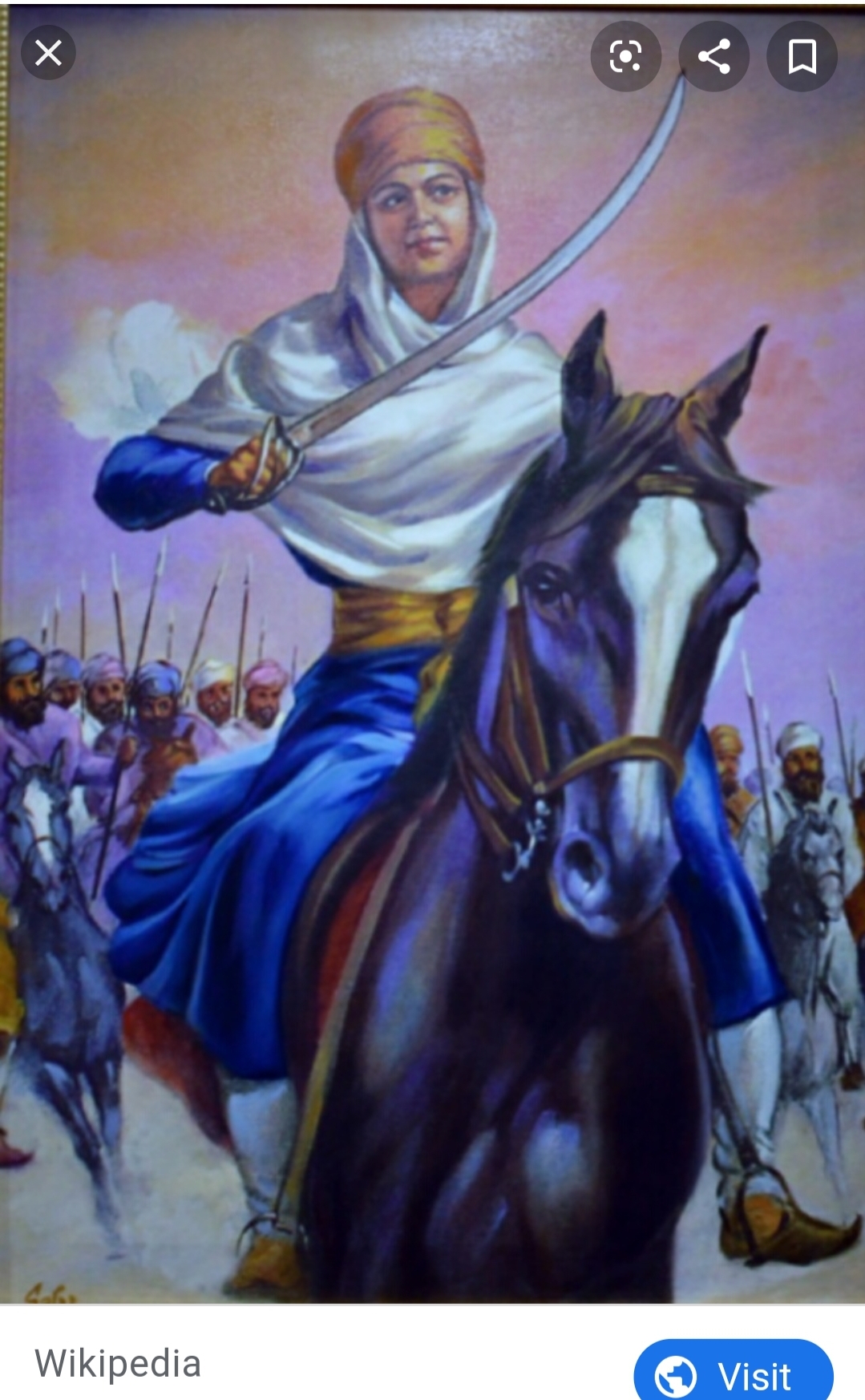
814) Mai Bhago

Courtesy of Wikipedia

814: Mai Bhago

Sikh Saint who Fought the Mughal Empire

Born: c.1666, Jhabal Kalan, Punjab, Majha Region, India

Died: c.1750, Present-day Janwada, India

Also Known As: Mata Bhago Kaur or Mai Bhag Kaur

Mai’s childhood was spent being educated by her dad on how to be a good Sikh, how to ride a horse, and how to kill anyone who pisses you off. You know, just normal father/daughter bonding activities. Mai had four brothers and was the only girl in her family. She was raised by her father to be faithful and devout to her Sikh religion and way of life. Luckily for Mai, the Sikhs viewed men and women as equals and refused to abide by the caste system already forming in the Indian Subcontinent by that time.

Mai became a Khalsa, or warrior-saint (as ordained by the leader of the Sikhs at the time, a Guru named Gobind Singh Ji). Three hundred years later and Mai is still considered a warrior and saint among her people.

After a year of brutal warfare from the Mughals forty of the Sikh deserted the cause and their religion. When Mai heard about this, she got women to replace them, made sure the other women denied these forty hospitality, and basically shamed them into coming back and rejoining the fight.

Then those forty died in battle against the Mughals with the only survivor being Mai. The battle was called The Battle of Khidrana or The Battle of Muktsar (depending on who you ask), and besides the fact that Mai was the sole survivor on her side, she also managed to kill a few enemy Mughals (the only source that names a number said there were 10,000 of them, but that’s probably an exaggeration). Oh, and this happened in 1705.

After the battle she became the bodyguard of the guru and outlived him to a ripe old age.

Today, Mai is remembered for being the first woman in the Punjab to fight on a battlefield. Her spear and gun can still be seen in museums today, and her home has been transformed into a Sikh place of worship, or gurdwara (also spelled gurudwara.)

Badges Earned:

Rejected Princess

Sources:

https://www.sikhiwiki.org/index.php/Mai_Bhago

https://www.rejectedprincesses.com/princesses/mai-bhago

https://www.hindustantimes.com/punjab/know-mai-bhago-quoted-by-bbc-as-one-of-the-most-badass-women-in-history-punjab-sikh-international-women-s-daygolden-temple/story-DNwFYAc0j6uwDhiBGRTWXN.html

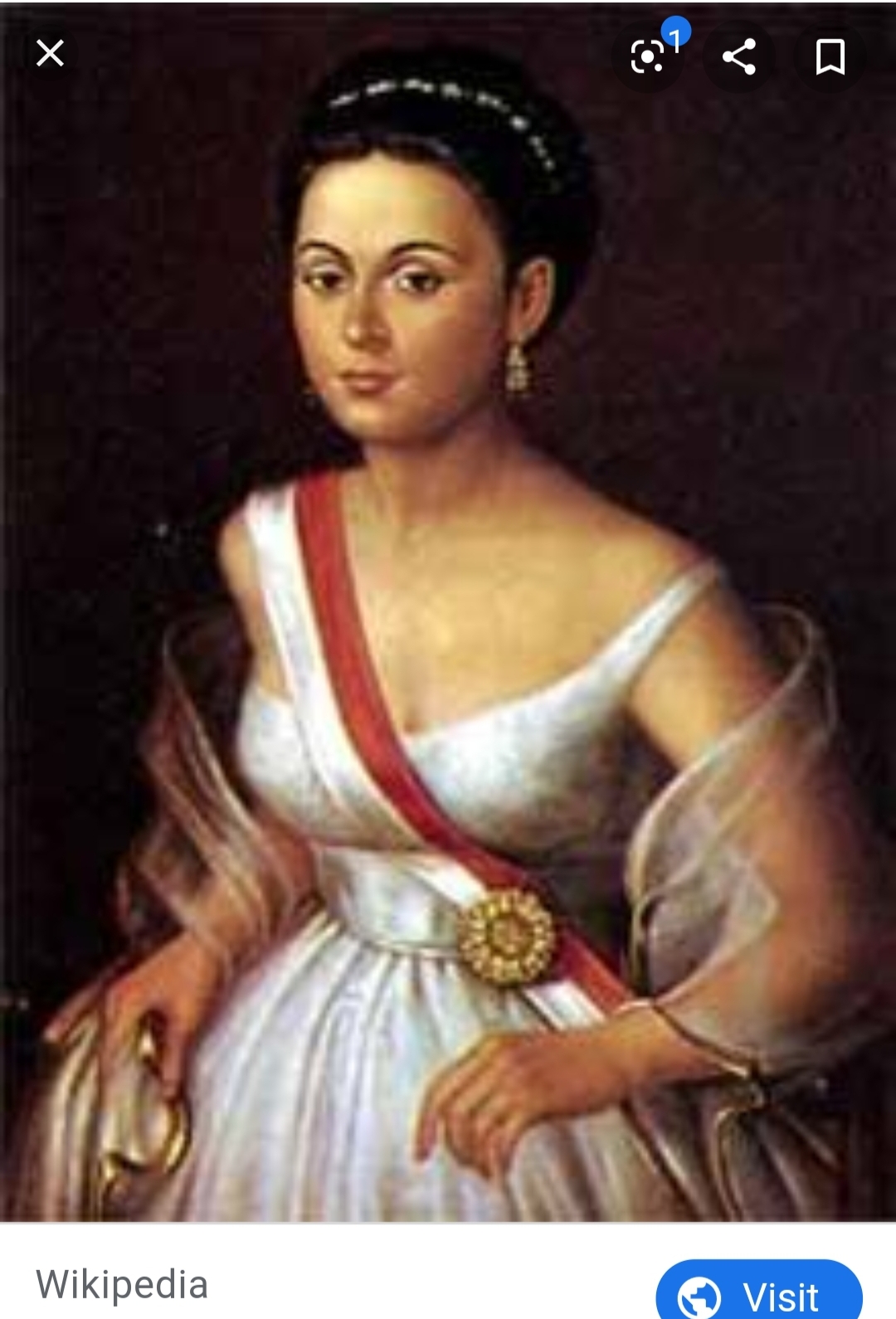
813) Manuela Saenz

Courtesy of Wikipedia
"If even the withdrawal of this hero from public life has failed to calm your rage and you have chosen me as your target, I can say to you: you can do whatever you want to me, you can threaten my very existence, cowards that you are, but you cannot make me betray my respect and friendship for General Bolívar and my gratitude to him. Those of you who consider this to be a crime reveal only the pettiness of your own minds, while I demonstrate the constancy of my spirit by vowing that you shall never make me vacillate or fear."

813: Manuela Sáenz

Revolutionary Leader and Suffragette

Born: 27 December 1797, Quito, New Grenada (Present-day Quito, Ecuador)

Died: 23 November 1859, Paita, Peru

Full Name: Doña Manuela Sáenz de Vergara y Aizpuru

Manuela was promoted to Colonel for her bravery in combat after fighting at the battles of Pichincha and Ayacucho.

Manuela’s early life was pleasurable but also uncomfortable at times. She was the illegitimate daughter of a Spanish gentleman at a time when being illegitimate was a big deal. Manuela’s first years were in her maternal grandparents’ home and later a ranch. On the ranch, Manuela learned the classics and how to speak English; she was also taught how to ride a horse. She also learned how to swear, drink, and smoke and became friends with the African servants her family employed. So, she had a privileged upbringing, but also did just about everything she could to not be a normal high society gal.

Her mother died at some point (sources vary), and after Manuela was sent to live in a convent (or possibly even before, again, sources differ). Manuela left the convent after marrying a British man named James Thorne in 1817. Manuela was a young girl, barely twenty, and James was forty. Jason Porath of the Rejected Princesses summed up James thusly, “an English merchant with all the personality of a bowl of oatmeal.” Yikes.

After the wedding, James and Manuela headed to Lima, where Manuela was first introduced to the liberation movement (or she possibly already knew about it; again, sources can’t make up their minds). All across South America, the people were growing tired of being colonized by European powers. They were united under the hope of one day governing themselves, and that fervor was inviting to Manuela.

While living in Lima, Manuela began hosting political salons and raising money for the independence movement.

By 1822, Manuela had left her husband and returned home to Quito (possibly to collect an inheritance). It was there that she first met the man she would forever be linked to. Today, he is remembered for helping liberate Venezuela, Peru, Colombia, Panama, Ecuador, and Bolivia from Spanish rule.

General Simon Bolivar (whom Manuela was romantically involved with) called her the “Liberator of the Liberator” after she risked her life to save him from an assassination attempt (she actually saved him twice). Bolivar was a widower who had vowed never to remarry, instead he would spend the rest of his life fighting to free Venezuela, and other large swaths of South America.

Soon, Manuela and Simon were traveling together across the continent. Manuela adopted an outfit of red pants, a plumed hat, and a black velvet pancho; happy that she had been taught to ride a horse in her younger years. Manuela was also able to fight with a sword and pistol after learning from the other men. Manuela became Simon’s chief confidant and advisor. She cared for him when he was sick and read to him when he was tired (by the time they met, Simon was already sick with tuberculosis). Manuela was also trusted to care for Simon’s personal papers and was called “Bolivar’s woman” by the troops. Around this time, Manuela was also granted the title Colonel.

After Spain was finally forced out of South America in 1824 at the battle of Ayacucho, Manuela moved to modern-day Bolivia with Simon; and yes the country has been named in his honor. At the time, the area covering Venezuela to Peru was part of a very short-lived country called Gran Colombia. Twice in the ensuing years, Manuela would save Simon from would-be assassinators (and neither time did he ever credit her, instead the second time he told reporters he’d escaped all on his own—even though Manuela was beaten by the assassinators and almost killed!). Simon would see himself rise to the most well known and beloved figure in South America to a hated war hero, accused of committing atrocities and lying about his war exploits (in truth, he really should stand at an in-between place in history, at least in my, the author's, opinion). Manuela’s reputation was torn down beside Simon’s. She was called a prostitute and mocked for her loyalty to a man now considered nothing more than a mass murderer.

With all their money gone, and Simon becoming sicker and sicker; the pair decided to leave the South America they had fought so hard to free. They wanted to sail for Europe to start a new life there. However, the money completely ran out before they reached port, and Simon sent Manuela away. During this time, Manuela learned she was going to be burned in effigy by one of Simon’s enemies.

After Simon’s death later that year (1830), Manuela was exiled to Colombia and later Jamaica, then to Ecuador before she settled in Peru her last twenty-five years. While in Peru, Manuela ran a small shop for sailors. She is reputed to have had customers ranging from Giuseppe Garibaldi (maybe his wife Anita was with him?), Herman Melville, and Ricardo Palma. She died during a diphtheria epidemic, ten years after a dislocated hip rendered her even more destitute.

Manuela was buried in a common grave, and unfortunately for history, the townspeople burned Simon’s papers which Manuela had protected for so many years. They burned the papers in order to hopefully halt the spread of the disease, but in the process, they also destroyed a huge piece of South American history. Thankfully, Manuela lived long enough to see Simon’s reputation restored to a hero of South America.

Manuela’s legally wedded English husband James kept sending her money throughout her life (which she refused) and also left her money in his will when he died (which she still refused). This despite the fact Manuela had repeatedly sent him less than flattering letters throughout the years; claiming she loved Simon more than James and yatta yatta yatta. At one point, Manuela even wrote, “Let’s make a deal: in heaven we’ll marry again, but on earth, no.” In contrast, Simon completely left her out of his Will—nice.

If her life story doesn’t seem badass enough on its own; you should probably also know Manuela had a pet bear for a time; because why would she not?

In 2000, Manuela’s story was turned into a Venezuelan film, entitled Manuela Saenz.

Badges Earned:

Find a Grave Marked

Rejected Princess

Located In My Personal Library:

Uppity Women Speak Their Minds by Vicki Leon

Sources:

https://www.britannica.com/biography/Manuela-Saenz

https://www.encyclopedia.com/women/encyclopedias-almanacs-transcripts-and-maps/saenz-manuela-1797-1856

https://www.rejectedprincesses.com/princesses/manuela-saenz

https://www.findagrave.com/memorial/97869907/manuela-s_enz

Entries Born in Kenya

These are the entries born within the modern day borders of the Republic of Kenya.

Entries:

  • Mekatilili wa Menza, Revolted Against the Colonial British

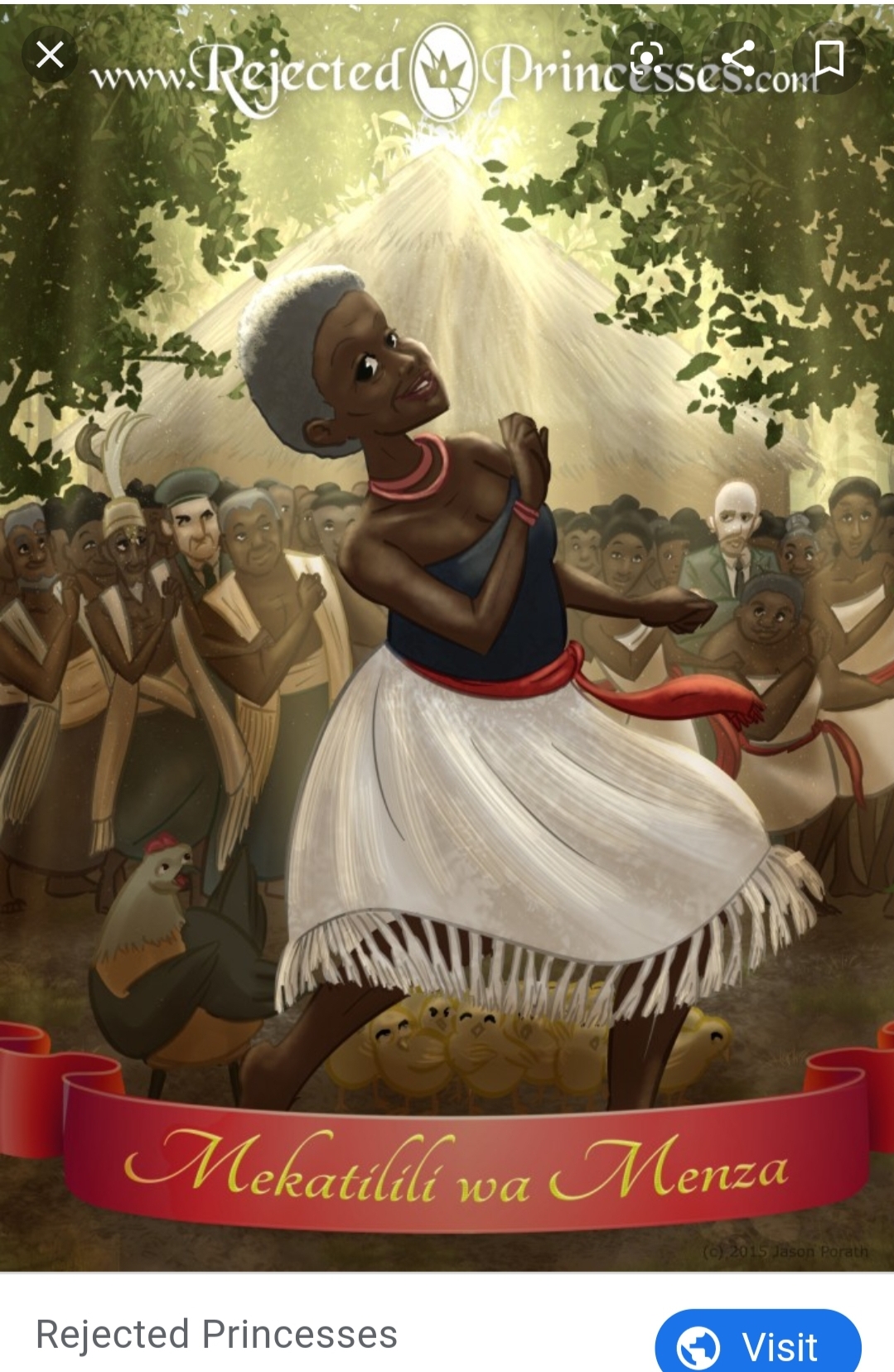
812) Mekatilili wa Menza

Courtesy of Rejected Princesses

812: Mekatilili wa Menza

Giriama Leader who Revolted against the Colonial British

Born: c.1860, Mutara wa Tsatsu Ganze, Present-day Republic of Kenya

Died: c.1925, Magarini, Kenya

Birth Name: Mnyazi wa Menza

Mekatilili’s actions were surprising seeing as she was a commoner in a culture where women were rarely seen doing anything at all political. The only reason Mekatilili had any room to speak was because she was a widow, and this allowed her some more space in her culture. By that time, she had changed her name to Mekatilili. Her name meant “Mother of Katilili” who was her son.

Mekatilili spoke up for an end to free labor (the British had outlawed slavery only to turn around and force the Kenyans to provide backbreaking labor on the railway line, plantations, and in the British army for free), over-taxation, and being ruled by the British oppressors; and she did it all by dancing. The dance she did was called the kifudu; a funerary dance that gathered her people’s attention and let them know Mekatilili was special. Its said she also had powers that had been given to her by her people’s shrines.

Her dancing quickly garnered a mass of followers and completely interrupted colonial life in only weeks. Mekatilili started holding weekly meetings with the elders to stop people from cooperating with the Colonists. The British responded in kind by burning homes, killing, and arresting people, including Mekatilili.

Mekatilili was captured by British forces after a demonstration (supposedly, this might be more of a story than an actual historical episode). The British wanted the Giriama youth to join the British Army. Mekatilili stood up for her young neighbors by using a mother hen and some chicks. She asked the British man in charge to try and take the chicks from the mother hen. When the mother attacked the British man, Mekatilili said this is what would happen with the Giriama people. Humiliated, the British man shot the mother hen and sent Mekatilili away.

She ended up having to wander 600 miles through Kenyan wilderness to get home after escaping from prison in January of 1914. Mekatilili was captured again, and after she watched as most of her people’s villages were torched, Mekatilili was sent to Somalia. She once again escaped and returned to her native part of Kenya. No one knows how Mekatilili escaped either time, or how she walked all the way home. When she did finally return, the British were too busy with World War I to pay her any mind.

The British gave up and allowed the traditional tribal councils to be reinstated throughout Kenya. For the Giriama people, two such councils were set up. The main council was headed by Mekatilili’s friend she broke out of prison with (who may or may not have been her husband by that point) while Mekatilili herself headed up the Women’s Council.

Mekatilili’s story was lost to history until only a few years ago. Today, she is a local hero in Kenya, and is seen as one of many local leaders who fought back against the British and whose stories are being told again. Unfortunately, we know frustratingly little else about Mekatilili. We don’t know her exact birth and death dates, or where exactly she was born or died. We don’t know how she died either. According to legend, she went out to work in the fields one day and was sucked down into the earth. The same end came for a prophet who spoke of a woman much like Mekatilili in the years before she was born.

Unfortunately, Mekatilili’s people never truly became a great power. While the rest of Kenya went through a period of rapid development, the Giriama lands stayed small. Today, they are one of the poorest, least developed, and smallest producing parts of the country. The Giriama people struggle for basic essentials like clean drinking water.

A statue of Mekatilili stands in Nairobi, Kenya today. In front of her are a small representation of a mother hen and her chickens.

Badges Earned:

Rejected Princess

Sources:

https://artsandculture.google.com/story/mekatilili-wa-menza-the-story-of-the-giriama-wonder-woman/uQJiyBBzmBOAKg

https://www.rejectedprincesses.com/princesses/mekatilili-wa-menza

https://tuftsobserver.org/badass-women-of-history-mekatilili-wa-menza/

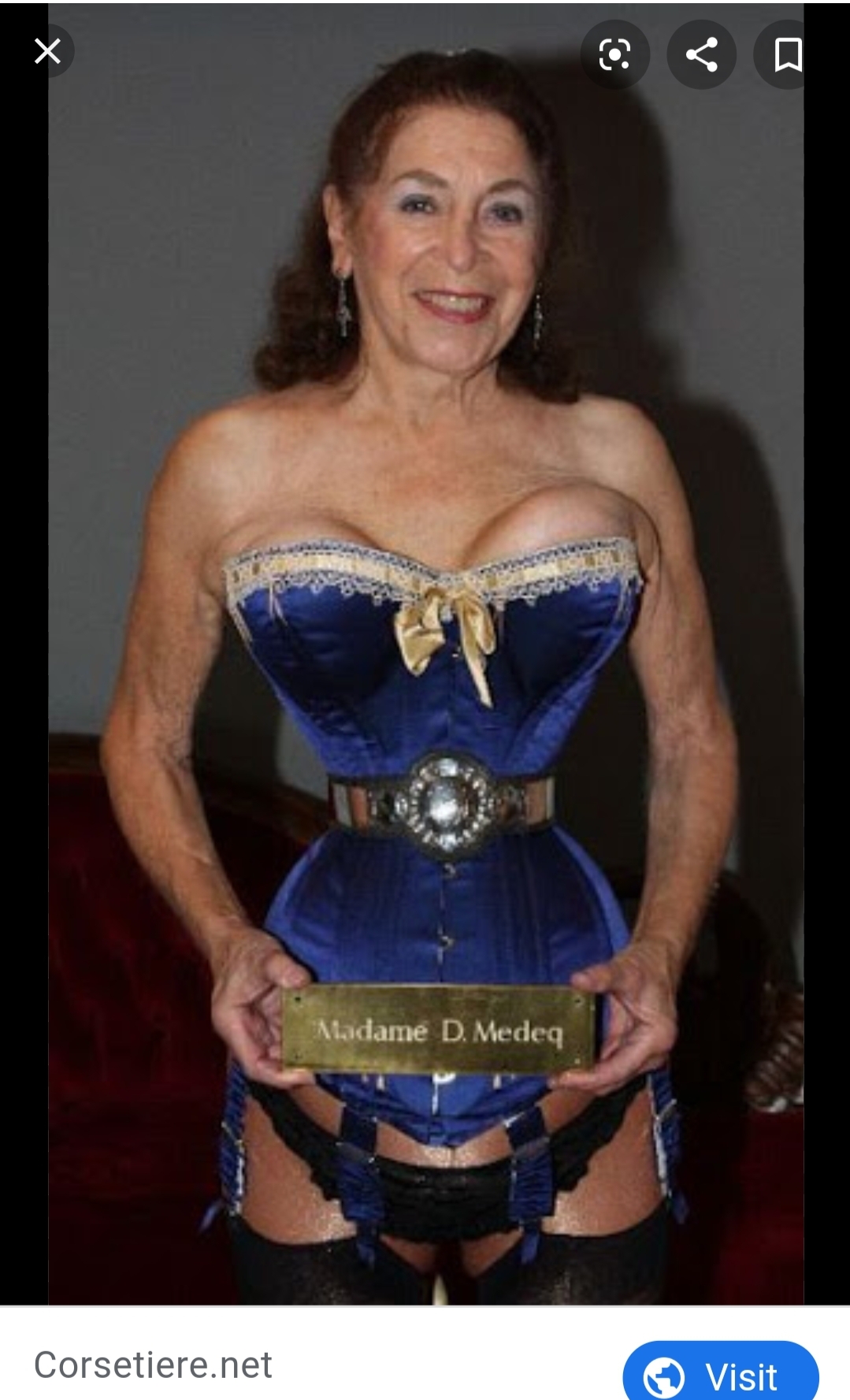
811) Cathie Jung

Courtesy of Corsetiere.net

811: Cathie Jung

The Real Queen of Hearts

Born: 1937, United States of America

Also Spelled: Cathy Jung

Cathie holds the Record (courtesy of the Guinness Book) for having the world’s smallest waist on a living person. Her waist is fifteen inches when corseted and twenty-one without. Her bust and hips both measure thirty-nine inches, so she’s an incredible sight to say the least!

She started seriously waist training when she was thirty-eight. Since 1983, Cathie has lived in her corset, only removing it to take a shower once a day or when she goes out in hot weather.

Cathie first wore a corset for her wedding, back in 1959. To me, it’s a little disconcerting reading her official biography on her website. According to the site, Cathie only began seriously waist training after her husband talked her into it. Hopefully Cathie was also just as serious about it and not just doing what he wanted. I wanted to put this little PSA in here in case anyone was wondering.

Cathie and her husband have three children together. Their daughter actually left home after Cathie began tight lacing. Evidently the daughter didn’t want her mother showing up to school or other functions dressed in the tight-fitting corsets.

Cathie has never had surgery or used a special diet to reduce her waist. She managed to “naturally” slim her waist from her starting size, twenty-six inches, to her new natural size of twenty-one. She has done this through waist training (using corsets that gradually get smaller and smaller). I find Cathie’s story interesting but also misconceiving. Story's like Cathie’s are why so many people today view corsets as dangerous, even deadly.

In truth, corsets were used by women for hundreds of years to provide support before the invention of the modern brassiere (to learn more about that, read up on Caresse Crosby). A normal corset, when laced appropriately, will not cause discomfort or harm to a person’s internal organs. Even a reduction like Cathie’s, though far from the “normal” result, is not dangerous.

For more information on proper corsetry, I recommend clicking the video in this article from fashion historian Karolina Zebrowska.

Sources:

https://www.cathiejung.com/History.htm

https://www.guinnessworldrecords.com/world-records/smallest-waist-living-person

https://medium.com/@fabiosanews/cathie-jung-and-her-wasp-waist-6832ffbadda3

  • Previous
  • 1
  • …
  • 42
  • 43
  • 44
  • 45
  • 46
  • 47
  • 48
  • …
  • 159
  • Next

Categories

Archives

  • July 2025 (10)
  • July 2024 (1)
  • January 2024 (1)
  • August 2023 (1)
  • June 2023 (2)
  • October 2022 (1)
  • July 2022 (1)
  • June 2021 (3)
  • December 2020 (3)
  • August 2019 (1)
  • July 2019 (2)

Search

© 2026 The Exasperated Historian | Powered by Minimalist Blog WordPress Theme