The Exasperated Historian
Menu
  • Home
  • The Women’s List (New)
  • The Men’s List
  • The Animal List
  • Collections
  • The Blog
  • Contact Us
  • FAQ
Menu

Category: Birth Locations

810) Jyoti Amge

Jyoti with her American Horror Story co-star Emma Roberts

"However we are, whatever sort of hand we've been dealt, that we should not let it limit ourselves. Be happy and live our lives as much as we possibly can."

810: Jyoti Amge

The World’s Smallest Living Woman

Born: 16 December 1993, Nagpur, India

According to the Guinness Book of World Records; Jyoti stands at two feet one inch tall. Jyoti weighs about twelve pounds. Her small stature is due to her having achondroplasia.

In 2012, thanks to the Guinness World Records, Jyoti was flown out to meet Chandra Bahadur Dangi, the shortest man in the world at the time. Chandra stood just one foot nine and a half inches tall so Jyoti “towered” over him (Chandra passed away in 2015). Their meeting was the first time in recorded history that the world’s shortest man and the world’s smallest woman met. Jyoti has also met the next shortest man, Khagendra Thapa Magar, but he too has since passed away.

Jyoti works as an actress (notably playing Ma Petite in Season Four of American Horror Story: Freak Show).

In her personal life, Jyoti has said she is not interested in dating, marrying, or having a family. She prefers her independence and is instead focused on her career. One day, she would love to win an Academy Award.

In 2020, it was announced Jyoti will be starring in a TLC special entitled World’s Smallest Woman: Meet Jyoti. The special first aired in July of 2020.

Sources:

https://www.etonline.com/worlds-smallest-woman-jyoti-amge-talks-marriage-and-dreams-of-winning-an-oscar-exclusive-149319

https://www.imdb.com/name/nm5956253/bio?ref_=nm_ov_bio_sm

https://www.guinnessworldrecords.com/records/hall-of-fame/jyoti-kisanji-amge-shortest-woman-living

809) Julia Gnuse

Courtesy of Alchetron

809: Julia Gnuse

The Most Tattooed Lady in the World

Born: 18 January 1955, Flint, Michigan, United States of America

Died: 10 August 2016, Overland Park, Kansas, United States of America

Julia had 95% of her body tattooed and held the Guinness Book of World Records for the most skin area covered in tattoos at the time of her death. This earned her the nickname “The Illustrated Lady.”

Julia had another nickname as well, “The Irvine Walker” thanks to her zest for walking around the Irvine, California area; sometimes as much as twenty miles a day. For ten years, Julia also operated a bakery called Sweet Temptations.

Julia developed porphyria in her 30’s which left scars from horrible blisters all over her skin. So, Julia started tattooing them to cover the scars up. Hers were images of cartoon characters, pictures, and famous people; not necessarily the style or genre you might assume.

The tattoos actually helped with her porphyria. The ink on her skin acted as a natural barrier from the sun, allowing Julia to spend more time outdoors. The tattoos helped her in her walking career, previously mentioned, and she eventually got a sponsorship from Nike as well (according to one source).

The year she died; Julia had started trying to laser them all off. You can find photos of her attempts to remove the tattoos on the website of the removal office she was making appointments with at the time of her death (linked below).

According to one of the tattoo artists who tattooed Julia for seven years, he learned after her death Julia passed away from complications of an eating disorder. Her cause of death is not listed on her official obituary, but that is not surprising if an eating disorder was the cause. In all the photos of Julia, she is very thin. If she did die from an eating disorder, then I hope her story, like Karen Carpenter’s, can help other people suffering learn to battle and hopefully overcome their demons.

Badges Earned:

Find a Grave Marked

Sources:

https://www.legacy.com/obituaries/name/julia-gnuse-obituary?pid=181087041

http://www.inkoffmd.com/tattoo-removal/before-and-after/

https://funhousetattooing.blogspot.com/2019/12/julia-gnuse-january-18-1955-august-11.html

https://www.findagrave.com/memorial/169378260/julia-ann-gnuse

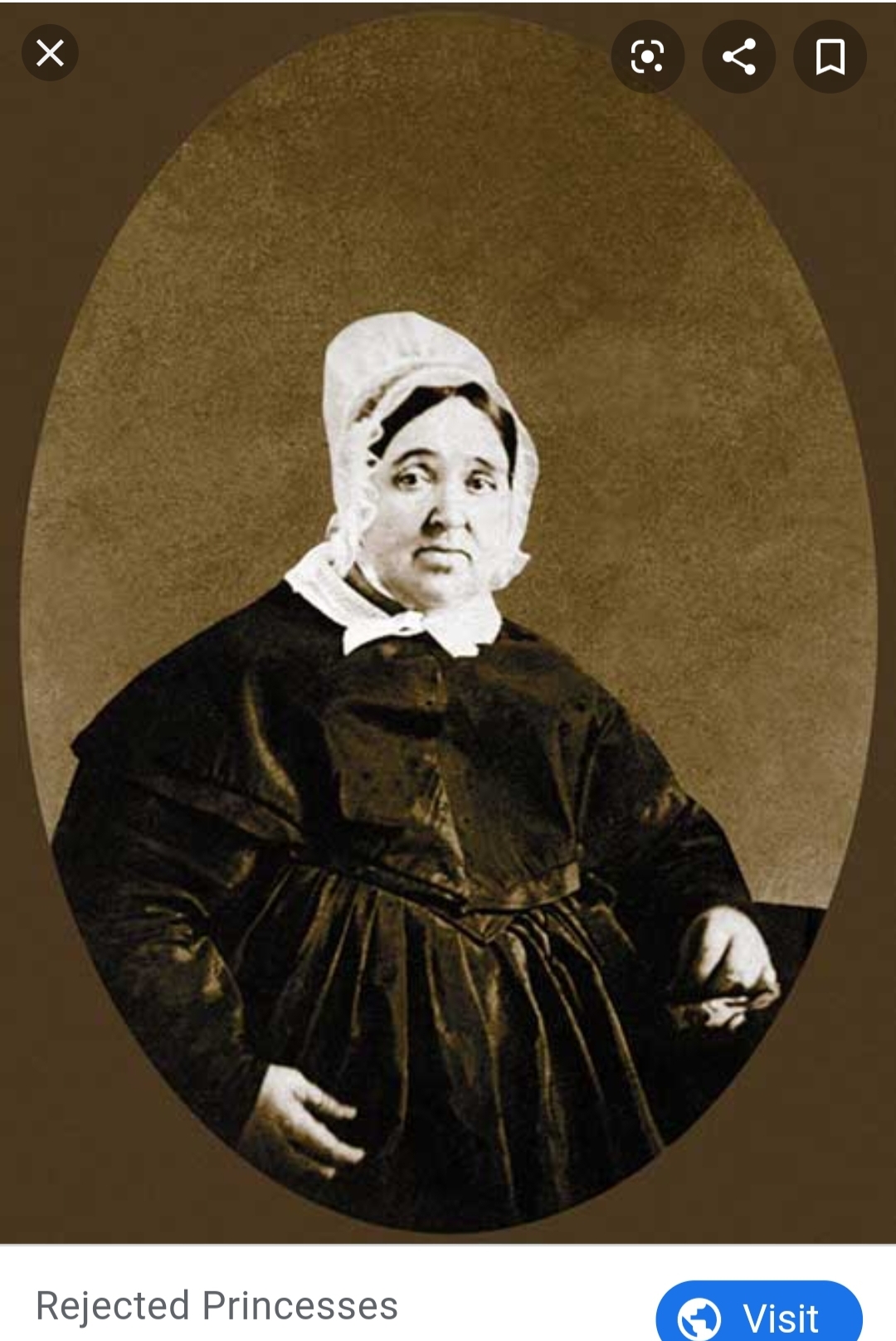
808) Rebecca Lukens

Courtesy of Rejected Princesses

"Necessity is a stern taskmistress and my every want gave me courage...Besides I had promised my dying husband I would remain, and where else could I go and live?"

808: Rebecca Lukens

Owner and Manager of One of the Most Successful Metalworking Factories in US History

Born: 6 January 1794, Chester County, Pennsylvania, United States of America

Died: 10 December 1854, Coatesville, Pennsylvania, United States of America

Rebecca turned a failing family business into one of the most successful factories in the American Industrial Revolution.

Her father, Isaac, owned a slitting mill; a specialized type of iron forge. When Rebecca wasn’t in school, she was at the mill with her father, learning the run of the business and the iron forging world as a whole. Unfortunately, Rebecca’s mother did not approve of her daughter working in the business, and their strained relationship began when Rebecca was still a child.

After Rebecca left school as a teenager, she met a doctor named Charles Lukens. They decided to marry, and Rebecca convinced Charles to leave the medical profession and instead enter the ironworks alongside Rebecca’s father. By then, Rebecca’s father was operating two ironworks businesses. Rebecca and her husband took over running and operating one of the mills, including paying all the costs needed to make repairs. This was done on the understanding that Rebecca and her husband would inherit the business after Rebecca’s father passed away.

Rebecca ensured the factory became a major supplier in the expanding railroads and for boiler plates for steamships. Her company supplied the plates for the first Iron hulled ship in the United States (The Codorus). She is believed to be the first woman to head an industrial company in American history.

Rebecca and her husband Charles ran the Brandywine Ironworks together during their marriage. Though they were in debt, they were happy, and the business was running solid. However, a few years of tragedy soon ended that happiness.

In 1822, Rebecca’s son Isaac died. Then, in 1824, her father Isaac died—without leaving Brandywine Ironworks to Rebecca and her husband in his final will. The following year, Rebecca’s son Charles died. Only a few months later, Rebecca’s husband died as well; while she was pregnant with their sixth child.

Now, Rebecca was alone, a mother to four young children, a widow, and in massive debt. Her brother-in-law stepped in and stayed for fifteen years, helping her from the sidelines, but Rebecca was the real brains behind the operation. She made sure the factory went above and beyond all expectations, and once she was out of debt, Rebecca reworked the facilities to expand and become more efficient. During various financial struggles, including the Panic of 1837, Rebecca refused to slash her pricing in order to keep making money. Instead, she stopped the factory from producing altogether, so she neither made nor lost money. Instead, she set her employees to work repairing the factory and then later her own estate. So, when the market recovered, the factory was set up to work even better than ever before and all of the workers had stayed on; happy to have had a steady paycheck through the crisis.

Outside of the ironworks, Rebecca was also the owner of several other ventures. These included a warehouse, saddler’s shop, retail store, and ten rental homes. All of the businesses were in the Coatesville area of Pennsylvania, near Brandywine.

Despite all the success, Rebecca’s mother was still so set against Rebecca running the factory she did pretty much everything she could to repossess the business from Rebecca. Finally, Rebecca decided to pay off her mother and siblings to get them out of her hair; thinking this decision would finally mean Rebecca owned Brandywine outright. When Rebecca’s mother died in 1844, she learned that her initial hope had been false. She settled with her family members out of court for an undisclosed amount, and finally became the proper owner of Brandywine Ironworks.

Around the same time of her mother’s death, Rebecca’s daughter Charlesanna died, shortly after giving birth to her own daughter of the same name. Rebecca’s daughter wished for her mother to raise the baby, and so after Rebecca insisted on receiving a written and signed notice from the little girl’s father handing over custody, Rebecca agreed to raise her granddaughter. Rebecca also amended her will to leave behind a financial trust for her granddaughter, ensuring no one would be able to take the girl’s assets.

By the late 1840’s, Rebecca stepped back from Brandywine, retiring and turning over the business to two of her son-in-law’s. After leaving the factory, Rebecca’s diary is filled with despair filled entries. She felt useless and utterly alone without her work and had no idea how to fill her time. When she died, Rebecca left Brandywine to two of her daughters with their husbands as executors. Eventually, one of Rebecca’s son-in-law’s left the business entirely. This left the other, Chester Huston, with sole control of Brandywine. The name eventually changed to Lukens Iron Works, then Lukens Iron and Steel, and finally in 1917 to just Lukens Steel. The name stuck until 1998 when Bethlehem Steel purchased Lukens; ending 125 years of company ownership by Rebecca and her descendants.

The metals produced by Lukens Steel would cover much more than just the ship boilerplates Rebecca had overseen. Eventually, Lukens Steel would provide for the expansion of railroads across the country, the hulls of submarines and other naval vessels, and eventually even the so-called “trees” of the World Trade Center.

As previously mentioned, today, Rebecca is seen as the “first female industrialist leader” thanks to Fortune Magazine. She was also inducted into the National Business Hall of Fame.

By the end of her life, Rebecca had gone from $15,000 in debt to over $100,000 in personal wealth and assets. She was the richest woman in Chester County, Pennsylvania. And if that isn’t a testament to her incredible strength and abilities, well, I don’t know what to tell you. Today, the Rebecca Lukens Award is bestowed upon an individual who shows the same qualities Rebecca carried in her own life.

Badges Earned:

Find a Grave Marked

Rejected Princess

Located In My Personal Library:

Revolutionary Women by Peter Pauper Press

Tough Mothers by Jason Porath

Sources:

https://www.steelmuseum.org/RebeccaLukens/rebecca_lukens_resource_center/index.cfm

https://steelmuseum.org/RebeccaLukens/index.cfm

http://www.chestercohistorical.org/historys-people-rebecca-lukens-tough-nails

https://www.rejectedprincesses.com/princesses/rebecca-lukens

https://www.findagrave.com/memorial/147084000/rebecca-webb-lukens

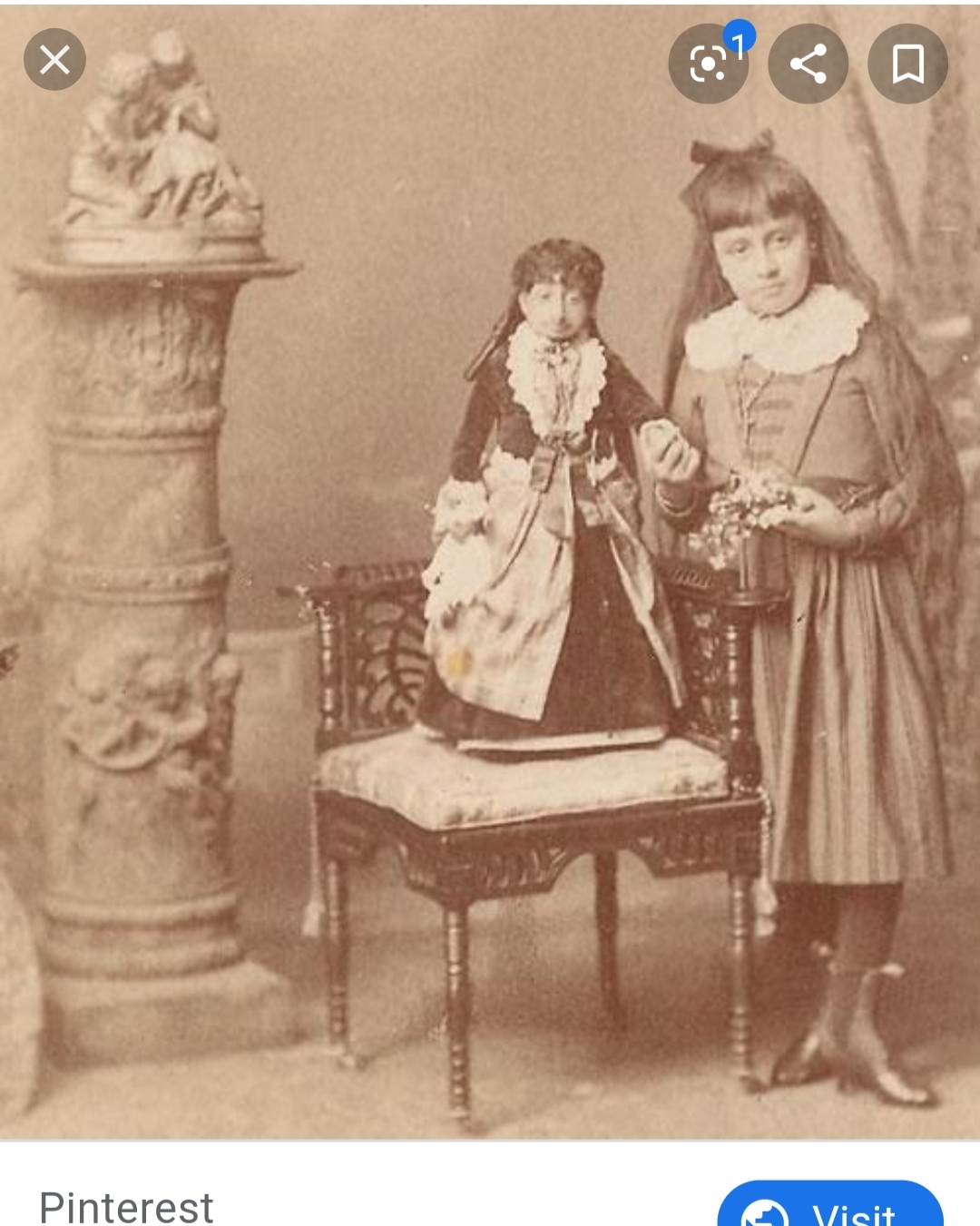
807) Lucía Zárate

Courtesy of Pinterest

807: Lucía Zárate

The World’s Smallest Woman

Born: 2 January 1863, San Carlos Nuevo Guaymas, Mexico

Died: 29 January 1890, Truckee, California, United States of America

Lucía most likely had Primordial Dwarfism. While Wikipedia states this with certainty, there really is no way to know for certain considering Lucía lived so many years ago. If she did have the genetic disorder, Lucía was the first person in history ever identified as having Microsephalic osteodysplastic primordial dwarfism type II (Primordial Dwarfism’s full scientific name).

At birth she weighed eight ounces and was seven inches long. At her tallest, Lucía was one foot eight inches. Lucía earned a spot in the Guinness Book of World Records at the age of seventeen for being the “lightest recorded adult”; weighing in at four pounds and seven ounces. Amazingly, Lucía wasn't the only dwarf in her family. Her brother Manuel was short-statured as well. Unfortunately, Manuel died before Lucía became famous.

Today, Lucía and Manuel’s family home is a museum known as “Casa Grande” or Big House.

Lucía traveled all over North America and the United Kingdom, performing for huge audiences. She would dance and sing, delighting the audiences alongside other folk who were small in stature. As of 2020, Lucía is still the smallest woman to ever reach adulthood.

She died at the age of twenty-six when a train Lucía was on became trapped in the Rocky Mountains in the cold. Lucía’s small body could not withstand the freezing temperatures, and she died from hypothermia.

Sadly, very little information about Lucía is easily available on the internet today. She was definitely a real person, who performed onstage and died young, but I still want to warn you that one of my listed sources below is a Wikipedia article just for the sake of full transparency.

Badges Earned:

Find a Grave Marked

Sources:

https://historicalnovelsociety.org/reviews/lucia-zarate/

http://casagrande-museo.blogspot.com/

https://en.wikipedia.org/wiki/Luc%C3%ADa_Z%C3%A1rate

https://www.findagrave.com/memorial/16797491/lucia-zarate

Entries Born in Greenland

These are the entries born on the island known as Greenland.

Entries:

  • Freydis Eiriksdottir, Pregnant Viking Warrior

806) Freydís Eiríksdóttir

Courtesy of Bavi Power

 “Let me but have a weapon, I think I could fight better than any of you.”

806:  Freydís Eiríksdóttir

Don't Mess With Freydís

Born: c.970AD Possibly Present-day Greenland

Died: After 1104 AD

Freydís was the sister of Leif Erikson and daughter of Erik the Red.

The only primary sources for her life are two of the epic Sagas. The first is the Erik the Red Saga and the second, The Greenlanders Saga.

Freydís’s main piece of history states that when the Vikings in Vinland were on the run from a Native war party, Freydís (who was extremely pregnant at the time) requested a weapon to fight and said she could beat any of the men attacking them.

None of the Vikings took her up on her offer so she ended up pulling a sword off a dead guy, bearing her breasts to the Natives, and screaming bloody murder. Evidently the Natives took that as a sign that she was not one to mess with and ran off in one of the stories.

In the other source (The Greenlanders Saga), Freydís was a conniving brat who married for money and only came to Vinland in search of more wealth. She also convinces her husband to kill her brothers while she chops some women up with an ax. When Leif catches her, he refuses to punish her, but instead everyone treats her coldly and she goes on her way.

Historians now believe the second account, The Greenlanders Saga, was probably Christian propaganda. In The Greenlanders Saga, Freydís is referred to as a heathen for refusing to convert to Christianity.

Interestingly enough, The Erik the Red Saga was actually written after The Greenlanders Saga and is kind of a retelling of the first. Even though this is the case, historians still find The Erik The Red Saga more objective and accurate towards what we know of the Vikings in Vinland.

Badges Earned:

Rejected Princess

Located In My Personal Library:

Tough Mothers by Jason Porath

The Northwomen: Untold Stories From the Other Half of the Viking World by Heather Pringle

Sources:

https://www.rejectedprincesses.com/princesses/freydis-eiriksdottir

https://blog.vkngjewelry.com/freydis-eiriksdottir/

https://www.ancient.eu/image/9837/freydis-eiriksdottir/

Entries Born in Ecuador

These are the entries born within the borders of the modern country Ecuador.

Entries:

  • Isabel Godin des Odonais, Survived Trekking Through the Amazon on Her Own
  • Manuela Saenz, Revolutionary Leader & Suffragette

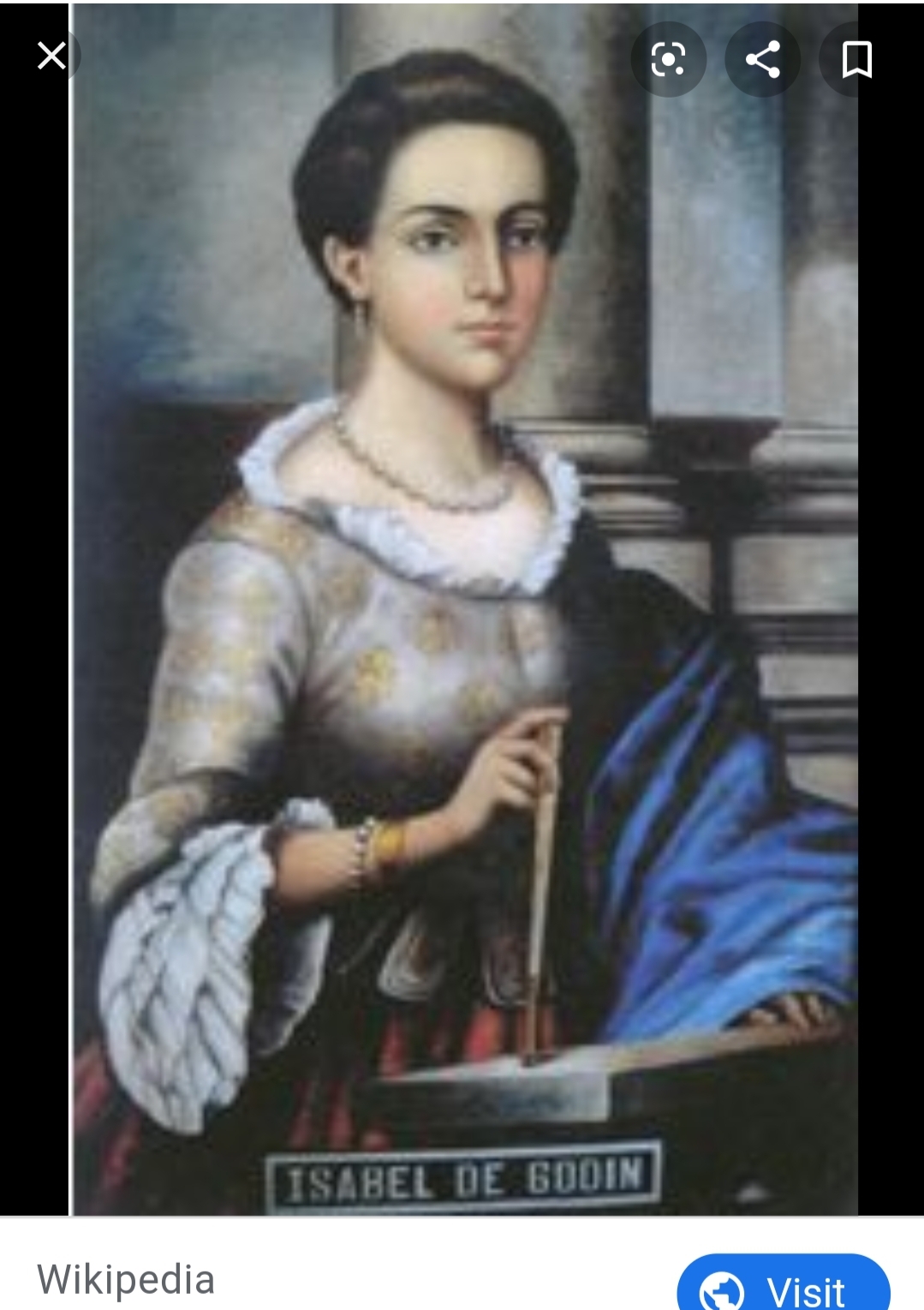
805) Isabel Godin des Odonais

Courtesy of Wikipedia

805: Isabel Godin des Odonais

What? Like Surviving in the Jungle is Hard or Something?

Born: 16 January 1728, Riobamba, Viceroyalty of Peru (Present-day Riobamba, Ecuador)

Died: 28 September 1792, Saint-Amand-Montrond, France

Isabel’s father was a rich local governor in colonial Peru, but her every dream was to go to France.

Therefore, it’s no surprise Isabel quickly fell in love with a French scientific explorer when he come to her town when she was a teenager. The feeling was mutual, and they married within a year of meeting.

Six years later, Isabel’s husband Jean was ready to return to France and went ahead with his plans in the hopes he would return for Isabel and their unborn child in two years. That child would be the only of their four to survive childhood.

Instead of the two-year separation as planned, Jean was actually gone for twenty years. The reason? Spain and Portugal were not on friendly terms with France at the time and so Jean couldn’t travel or even get letters to Isabel back in South America.

Isabel waited for him to return. While waiting, their daughter grew into a woman wanting to meet her father. And then she died from smallpox at the age of nineteen. The girl never got the chance to meet her dad.

After their daughter’s death, Isabel decided she was going to France with a retinue of forty-two other people on the 3,000-mile six-month journey.

However, the group immediately started fragmenting apart. First, they found a village that had been burned to the ground after smallpox ravaged it. Then the group had to paddle canoe down an engorged river; despite the fact none of them knew how to paddle or swim. Then the group separated after getting lodged on a sandbar. The other group never came back, leaving Isabel and her family behind. For weeks Isabel and her family walked through the thick Amazon Jungle dying off one by one until only she was left.

After eight days alone in the Jungle, a group of natives found Isabel and nursed her back to health. By then her hair had turned permanently grey and her hand was crippled.

Six months later, Isabel found her husband on a Portuguese boat after being separated twenty-one long years.

Three years later they made it to France; where Isabel lived out the rest of her life in peaceful serenity dying a little more than six months after her husband.

Today, a bronze bust of Isabel sits in the city in France where she died.

Badges Earned:

Rejected Princess

Located In My Personal Library:

Tough Mothers by Jason Porath

Sources:

https://www.rejectedprincesses.com/princesses/isabel-godin-des-odonais

https://www.encyclopedia.com/women/encyclopedias-almanacs-transcripts-and-maps/godin-des-odonais-isabel-1728-d-after-1773

https://statues.vanderkrogt.net/object.php?webpage=ST&record=frce039

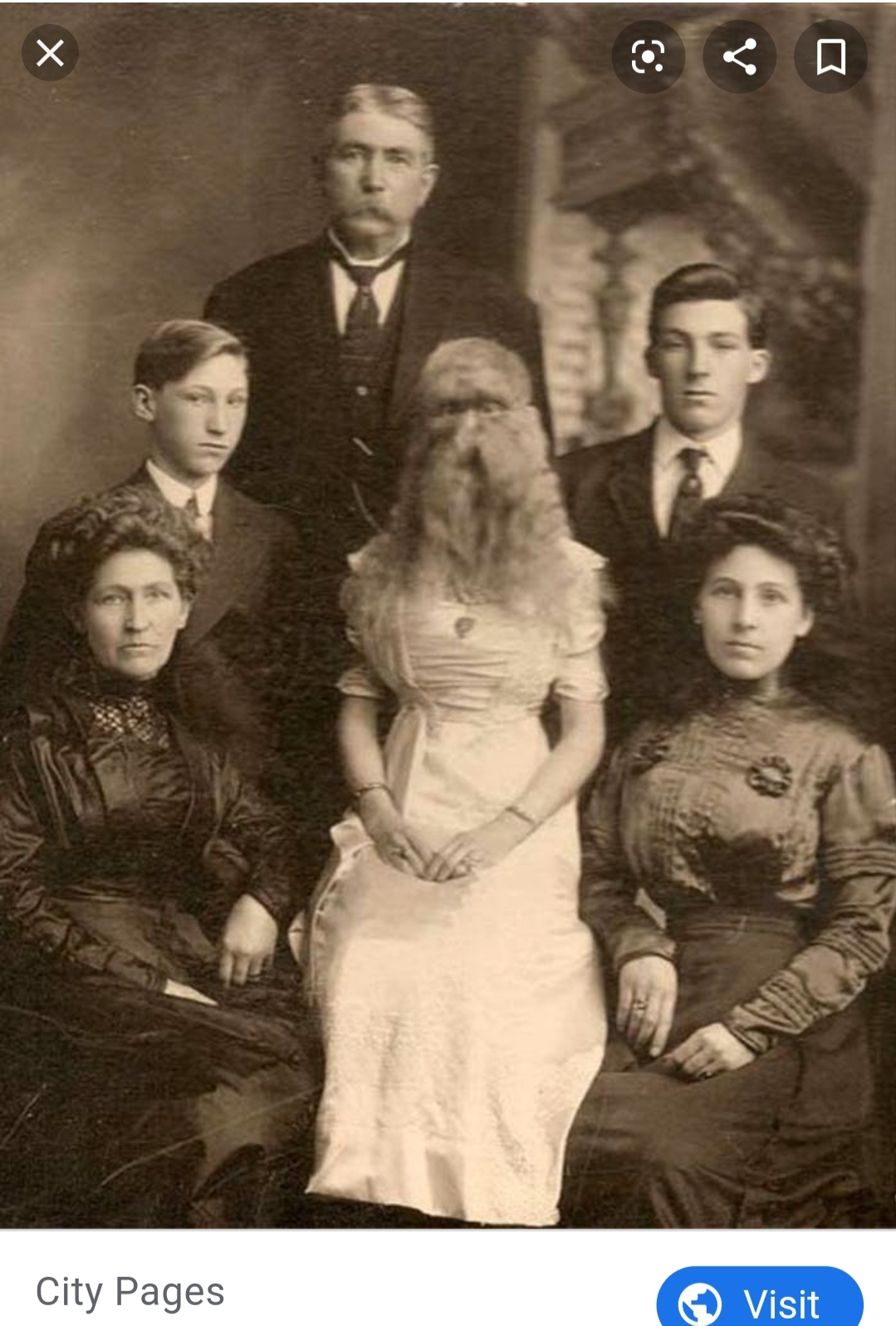
804) Alice Doherty

Courtesy of City Pages

804: Alice Doherty

The Minnesota Woolly Girl

Born: 14 March 1887, Minneapolis, Minnesota, United States of America

Died: 13 June 1933, Dallas, Texas, United States of America

Alice, like Antonietta Gonsalvus, lived with Hypertrichosis.

Hypertrichosis is a genetic trait that makes hair grow out all over your body.

Alice is the only known person to be born in the United States with the even rarer subset of the condition called hypertrichosis lanuginosa (or “dog-faced” hypertrichosis). She was born with approximately two-inch-long blonde hair all over her body. No other member of Alice’s family suffered from the condition.

She first stepped on stage at the age of two. At the time, Alice had no teeth and showed no signs of ever growing any. She was also described as being as “frolicsome as a kitten.”

Alice never liked the show business and retired in 1915 with enough money to live out her days in peace. She passed away at the age of forty-six; never having married or having children.

Badges Earned:

Find a Grave Marked

Sources:

http://www.sideshowworld.com/81-SSPAlbumcover/Alice/Doherty.html

https://fabiosa.com/lbmkt-ctlf-rskk-audsm-pbdlr-actual-life-story-of-the-woolly-girl-the-tragic-fate-of-a-freak-show-star-not-destined-to-become-popular/

https://www.thehumanmarvels.com/alice-doherty-the-minnesota-woolly-girl/

https://www.findagrave.com/memorial/35673356/alice-elizabeth-doherty

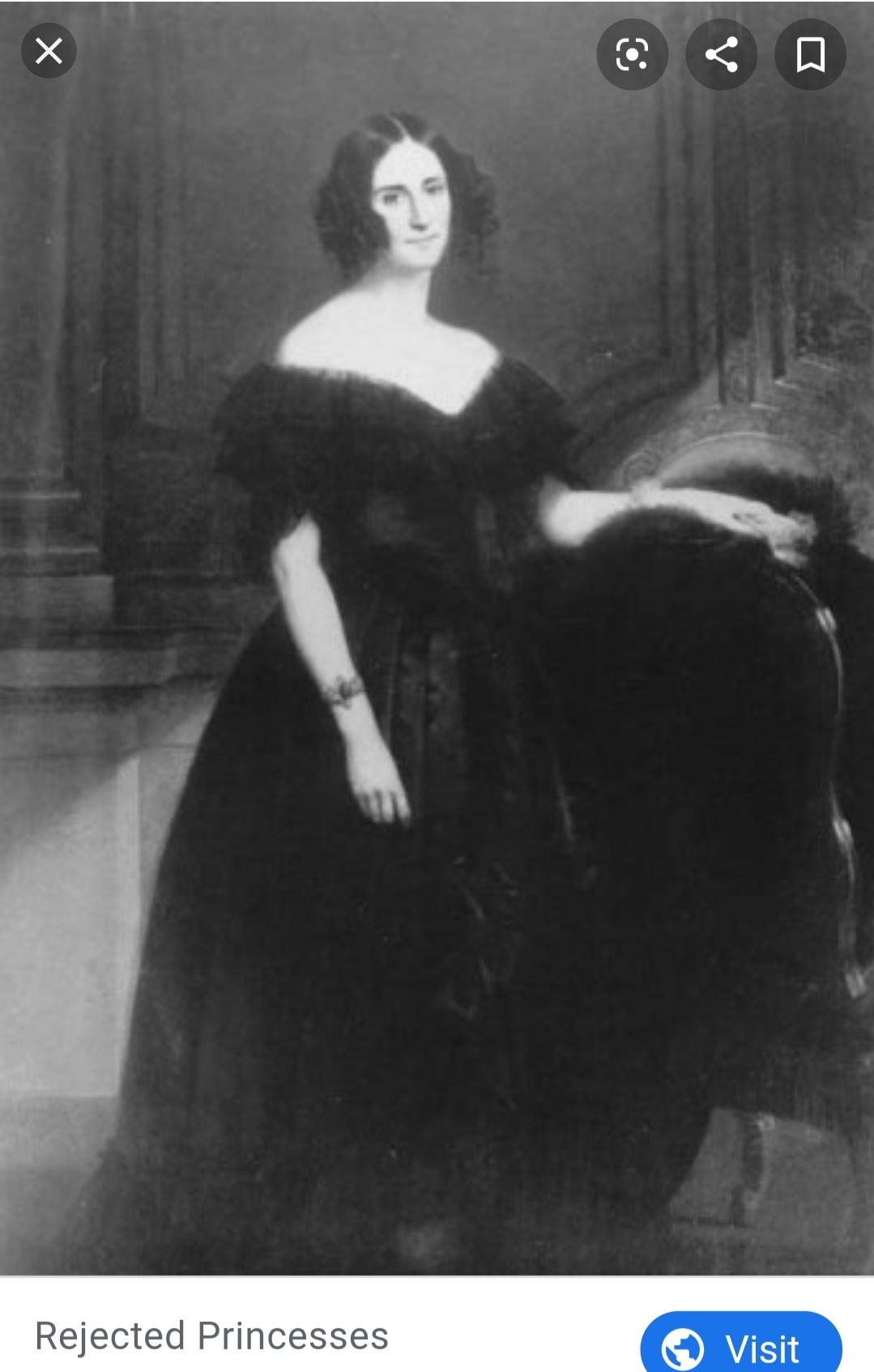
803) Micaela Almonester

Courtesy of Rejected Princesses

 “I can now say that I have gone through my purgatory while still on this earth.”

803: Micaela Almonester

Real Estate Developer with a Hellish Homelife

Born: 6 November 1795, New Orleans, Spanish Controlled Louisiana Colony (Present-day New Orleans, Louisiana, United States of America)

Died: 20 April 1874, Paris, France

Micaela was also the Baroness of Pontalba through her marriage.

Micaela’s marriage to her cousin gave her the worst father-in-law ever. That’s not an exaggeration or an opinion; I literally dare you to find a man who treated his daughter-in-law worse than the way Micaela was treated by her father-in-law.

Micaela was born into a wealthy Creole aristocratic family in then Spanish-Controlled Louisiana. She was the couple’s only child (I mean, her dad was seventy when she was born!), and so one day she would inherit their vast fortune. This made Micaela a prize catch to many men around the world. To put into perspective how wealthy the Almonester family was, take this example. Micaela’s father donated and paid for the St. Louis Cathedral, the municipal hall, and the priest’s house—all in the French Quarter. Micaela would later marry in that same cathedral.

Unfortunately for her, Micaela’s mother decided to marry her daughter off to her cousin, Celestin de Pontalba; and Micaela therefore also inherited his awful father, Joseph, the Baron Pontalba. Joseph was so unhinged he demanded his wife and son write daily accounts of every single thing that happened to them whenever they were separated. According to one source, in a letter Joseph wrote to his son Celestin (who was a child at the time) Joseph lovingly included the following passage, “Are you not sorry not to have your dear papa put his arms around your neck and squeeze you tighter and tighter?” Yikes!

After the wedding, (which took place when Micaela was only fifteen) Micaela was taken away from her home in New Orleans and shipped off to mainland France. Upon arrival there, the issues began. Once Micaela was unpacked and settled in at home, her father-in-law Joseph decided to take a look at the marriage contract and Final Will Micaela’s mother had written for her daughter. This is when Joseph realized Micaela’s mother was looking out for her daughter after all. Micaela would retain sole control of her family’s fortune. Her new father-in-law, who had married his son to Micaela solely to gain control of the Almonester estate, was furious.

Over the next few years, Joseph destroyed Micaela’s life as mercilessly as he could. Joseph ensured Micaela had no contact with any friends or family and cut her off from everything else she knew. After years of this abuse, Micaela broke, and signed Power of Attorney papers to allow Joseph control of her money and assets.

By that point, Micaela was a mother to several young children (she had five but two died in childhood), and was probably trying to protect herself and her children despite knowing the decision was a disastrously wrong one. Micaela was also, most likely, trying to salvage her rocky marriage. Despite the fact her father-in-law was a horrible excuse for a human being, Micaela might have actually loved, or at least liked, her husband Celestin. Unfortunately for Micaela, soon after she signed the Power of Attorney papers, Celestin abandoned Micaela and their children.

But they were still married. This meant Micaela was still under her husband and father-in-law’s purview. Recognizing this, Micaela moved to Paris and rented one of her husband’s numerous homes. She lived on a meager $600 a month allowance and tried to eke out a semblance of a life.

Quickly realizing Celestin was never coming back, Micaela decided to act. She left France, returning to her native New Orleans and the people she knew and loved. Micaela flipped the tables on the Pontalba’s; soon her monthly income was near $40,000 after she reclaimed her assets. Once she was financially comfortable, Micaela did the next best thing—she sued Celestin for divorce in a Louisiana Court.

If you thought things were bad for Micaela before, well, you best buckle up and remember, it can always get worse.

Unable to let Micaela go without a fight, Joseph and Celestin decided to hire spies to follow Micaela’s every move. They hoped to collect evidence to prove Micaela was having an affair. When that didn’t work, Joseph and Celestin managed to garnish Micaela’s income, and get the French courts to order her back to France.

After Micaela arrived there, Joseph and Celestin decided the best course of action would be to drive her insane. Micaela was locked in a single room with no visitors; not even maids to help her dress for the day. Any guest to the home was ordered not to pay Micaela any mind, and everyone living in the house were punished if they acknowledged her presence. Joseph and Celestin were determined to turn Micaela into a living ghost, a haunted soul that no one could see or hear.

But Micaela refused to accept this lying down. As the punishments increased, Micaela began to collect evidence of her own. She was determined to beat Joseph and Celestin at their own game. As the legal case drug on for years, Micaela was bested again and again thanks to the strict (read: sexist) French legal system. She was also forced to pay all of the Pontalba’s legal fees.

After four years of Micaela and her in-laws battling things out, Joseph finally broke. Micaela had refused to show any fear or break herself, until Joseph couldn’t take it anymore. Micaela’s father-in-law busted into her room, two dueling pistols in hand. He quickly fired the guns, shooting Micaela in the chest four times. Four! Micaela’s left hand was damaged in the attack, but she survived.

Joseph on the other hand, did not. After shooting Micaela, he went back to his study, put his affairs in order, and then shot himself. That time he was successful in ending a life.

Micaela’s recovery was a slow and painful process. The pain was so intense she couldn’t sleep, while epileptic seizures rocked her body for three weeks after the attack. One of her fingers had to be amputated, while one of her lungs was so damaged Micaela wouldn’t even be able to climb a flight of stairs without being out of breath for the rest of her life. Micaela’s mother-in-law never acknowledged her daughter’s suffering, but Celestin stayed by her bedside to care for her.

Micaela was not impressed by her husband’s sudden compassion. It was too little too late, and when asked about it later, Micaela merely said Celestin acted towards her as he should have, being her husband and all.

After three weeks in living hell, Micaela returned to Paris. She sued for divorce once again and was once again denied by the French courts. Micaela also lost several of her high society friends because of the nature of her “scandalous” life. Celestin was so happy about her failings in court, he took copies of the proceedings and printed them out, handing the copies to anyone on the street practically.

Celestin’s ego finally caught up with him. By openly mocking his wife, Celestin clearly failed to provide his husbandly duties. That’s right, Micaela finally received a legal divorce after proving Celestin had failed to protect her. The courts didn’t think he had failed after he allowed his father to torture Micaela for years or shoot her in the chest four times. Oh no, he finally failed to be a good husband by insulting her in the streets. But hey, at least she was finally free. Later, a Louisiana court would also order the Pontalbas to return all of Micaela’s assets to her.

Now forty years old, Micaela pivoted her life to one of building. Micaela decided she wanted to be an architectural designer. Her first project was the Hotel de Pontalba, a landmark in Paris today and the official residence of the United States Embassy. After returning to New Orleans, Micaela next constructed a series of structures known as the Pontalba Buildings. Today, the Pontalba buildings are known as some of the most iconic structures in the French Quarter. They were declared National Historic Landmarks in 1974.

Within a few years, Micaela was a shark in the real estate game; shrewd but tough. She knew what she wanted, and she knew how to get it. Micaela was also so good with money she quickly became head of the family fortune, as she should have been all along. Her children were now grown, and frequently got into financial mishaps. Micaela was always there to dig them out. When they married, Micaela settled their marriage contracts and wills with a tenacity that could only have come from an actual survivor like Micaela clearly was.

When Celestin grew old and infirm, Micaela hired servants to care for him; ensure he was eating and looked after. Though we don’t know how she really felt for him, in the end or even the beginning, its clear she didn’t outright hate him. She even moved back to France to be with him; spending the last twenty-three years of her life there.

When she passed away, Micaela was in her late seventies, and one of the most respected, and feared, members of the New Orleans high society. She is buried in a tomb beside her husband…and her father-in-law.

In 2003, with the passing of the Louisiana Purchase’s Bicentennial celebration, an opera portraying Micaela’s story, entitled “Pontalba.”

Micaela’s story is mentioned on an episode of the Travel Channel TV Show The Dead Files. Unfortunately, if the psychic medium Amy Allen’s findings are to be believed, Micaela is today trapped with the spirit of her horrific father-in-law Joseph, and she may never be free of him.

Badges Earned:

Find a Grave Marked

Rejected Princess

Located In My Personal Library:

Tough Mothers by Jason Porath

Sources:

https://www.rejectedprincesses.com/princesses/micaela-almonester

https://www.frenchquarter.com/baronesspontalba/

https://64parishes.org/entry/micaela-almonester-baroness-pontalba
https://www.findagrave.com/memorial/190116206/micaela-leonarda_antonia-delfau_de_pontalba


  • Previous
  • 1
  • …
  • 43
  • 44
  • 45
  • 46
  • 47
  • 48
  • 49
  • …
  • 159
  • Next

Categories

Archives

  • July 2025 (10)
  • July 2024 (1)
  • January 2024 (1)
  • August 2023 (1)
  • June 2023 (2)
  • October 2022 (1)
  • July 2022 (1)
  • June 2021 (3)
  • December 2020 (3)
  • August 2019 (1)
  • July 2019 (2)

Search

© 2026 The Exasperated Historian | Powered by Minimalist Blog WordPress Theme