The Exasperated Historian
Menu
  • Home
  • The Women’s List (New)
  • The Men’s List
  • The Animal List
  • Collections
  • The Blog
  • Contact Us
  • FAQ
Menu

Category: Birth Locations

769) Shajar al-Durr

Courtesy of Rejected Princesses

769: Shajar al-Durr

Female Sultan

Born: c.1220 AD, Present-day Armenia*

Died: 1257 AD, Present-day Cairo, Egypt

Alternate Spelling: Shajarat al-Durr

Royal Name: al-Malika ʿAṣmat ad-Dīn ʾUmm-Khalīl Shajar ad-Durr

Shajar was the first woman in Islamic Egyptian History to become a Monarch (the second Muslim woman overall) and the first woman to rule Egypt since Cleopatra VII had died nearly 1,300 years before.

Shajar was born a slave and her name translates to String, Spray, or Tree of Pearls, depending on the source. What Shajar’s real name or ethnicity was is, as mentioned above, lost. She may have been Turkish, or even Armenian. *One source states she was born in present-day Armenia to Turkish parents.

She was bought by the son of the Sultan of Egypt who soon rose to become Sultan himself and he married her. They had one san together, but the heir was her husband’s older son. Shajar’s husband’s rise to the throne hadn’t been a straightforward shot, and after he became Sultan he had to fight off and conquer large swaths of enemies, including his uncle. All of this infighting within the Islamic world led to the kicking off of the Seventh Crusade, but this time, instead of targeting the Holy Lands, Europe targeted Egypt.

Shajar’s husband soon died right as the Seventh Crusade was really kicking off, which is just great considering it was his ruling tactics that had started the whole war in the first place. In order to keep up morale, Shajar told everyone her husband just wasn’t feeling well but in actuality she and his chief commandeer led the country to victory and captured the King of France (Louis IX) ransoming him back to his own country, for 30% of their total annual revenue no less.

After it came out Shajar’s husband was dead, her stepson become Sultan. However, her stepson wasn’t all that bright (he was a teenager after all) and after thoroughly pissing off all the courtiers, the slave-soldiers rose up and killed him leaving Shajar in charge instead.

Shajar legitimized her rule by having coins minted and everything. Unfortunately, after only eighty days of rule she was forced to step down because the Muslim Caliphate refused to accept a female ruler and the rest of the people under her command outside of Egypt were just as sexist.

Shajar also ended up marrying the new Sultan but things didn’t go well, and she and some servants killed the guy while he was taking a bath one night. Though the official reasons for why Shajar had him killed varied, one that stands out would be the fact he was planning on marrying a third woman. Shajar tried to regain her power after this, but the dead guy’s first wife seized control instead and had the servants beat Shajar to death with clogs…yes clogs, as in wooden footwear.

Legend says Shajar’s body laid naked in a moat for three days after the city’s peasants stole her fine clothes. Finally, someone took pity on their fallen Sultan and buried her. As is common throughout human history, Shajar’s story was purposefully omitted and forgotten about by historians. Her name was left off the official Sultan’s list. However, Shajar’s story was never completely forgotten thanks to local folklore and an epic poem. In the verse “Sirat al-Zahir Baybars”, Shajar is depicted as the daughter of the Caliph of Baghdad, who gives her Egypt to rule. In the poem she is killed after fleeing from her enemies and falling off a roof.

Today, Shajar’s bones rest in a mosque that was built and named in her honor.

Badges Earned:

Find a Grave Marked

Rejected Princess

Located In My Personal Library:

Rejected Princesses by Jason Porath

Sources:

https://www.headstuff.org/culture/history/terrible-people-from-history/shajar-al-durr-queen-egypt/

https://www.rejectedprincesses.com/princesses/shajar-al-durr

https://muslimheritage.com/malika-iii-shajarat-al-durr/

https://www.encyclopedia.com/women/encyclopedias-almanacs-transcripts-and-maps/shajar-al-durr-d-1259

https://www.findagrave.com/memorial/195049186/shajar-al_durr

Entries Born in Brazil

These are the entries born in the country of Brazil, whether the modern country we see now or within the borders before the country came to be.

Entries:

  • Anita Garibaldi, It Takes a Special Woman to Fight in Several Revolutions

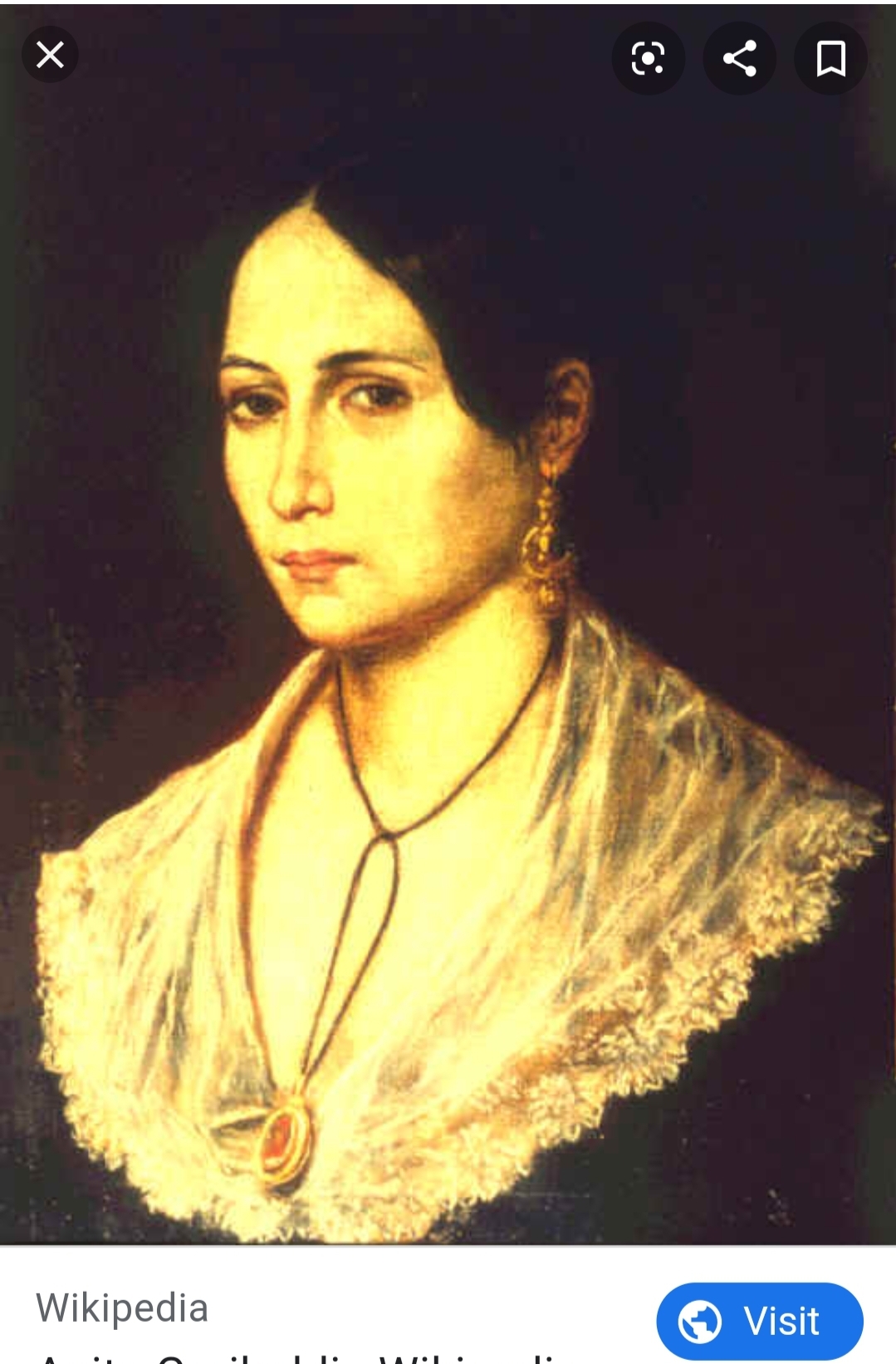
768) Anita Garibaldi

Courtesy of Wikipedia

768: Anita Garibaldi

Revolutionary and Comrade in Arms of Giuseppe Garibaldi

Born: 30 August 1821, Morrinhos, Brazilian Empire (Present-day Santa Catarina, Brazil)

Died: 4 August 1849, near Present-day Ravenna, Italy

Original Name: Ana Maria de Jésus Riberio da Silva

Anita’s Revolutionary Husband Giuseppe had some qualms about bringing along his often-pregnant wife on his various exploits across the world, but she quickly quashed them, and is today remembered for fighting for independence and freedom on two continents and in three countries.

Anita was the children of peasants and married for the first time in 1835. Little information about her early life is unknown. She had multiple siblings, but the exact number how many is unknown. After her father’s death when she was small, Anita’s mother moved the children to town of Laguna. Though Anita had no formal education, she was taught to ride a horse like the other children in the village.

According to sources, Anita was vicious and iron-willed. A man who had tried to court her eventually attempted to rape her after Anita refused him. According to this story, Anita whipped him, stole his horse, rode to a police station and reported the attempted rape. Because of her unruliness, Anita’s mother finally married her off when she was fourteen to a twenty-five-year-old shoemaker, who also happened to be an abusive alcoholic.

No one knows for certain what happened to this husband. It is said he joined the Army and left the picture. The pair had been married four years and had no children, so some believe the marriage had gone unconsummated. Others state either Anita or her husband simply abandoned the other. Whatever the reason, by 1839, Anita’s husband was gone, and she was, for all intents and purposes, single. Just in time too, for Giuseppe entered the picture this same year. He was thirty-two and she around eighteen. He was an attractive Italian while she was described as having large eyes and freckles, but even still, it was love at first sight.

By the time the pair met, Giuseppe was already branded a revolutionary. He’d been forced to flee Italy a few years before after being discovered as a nationalist, attempting to unify the Italian states. When he arrived in Rio de Janeiro, Giuseppe’s freedom and independent streak simply found a new host, and he was put in command of a ship to bring down the Brazilian Empire. The Empire was newly free from Portuguese control true but was still corrupt as all get out. The people wanted freedom, and Revolution broke out.

Only months after meeting, Giuseppe was given orders to sail out, and Anita insisted on going with him. Over the next ten years, Anita and Giuseppe would fight for independence across two continents and multiple countries. At their first engagement at Imbituba, Giuseppe tried to get Anita to go belowdecks while the fighting continued. She refused, and event took up a musket and began firing on the enemy. When Anita finally did go belowdecks, she returned moments later towing along other sailors who had gotten scared and tried to hide below. Anita would continue to fight for the next decade. At one battle, Giuseppe was ashore when ships opened fire on his own. The men were scared to engage, so Anita fired the first cannon. Giuseppe said of his wife, “She looked upon battles as a pleasure and the hardships of camp life as a pastime.”

When Anita was pregnant with their first child, she refused to stop fighting. At one point, she was attempting to flee from her enemies when a horse was shot out from under her, and she fell to the ground. Anita was apprehended but escaped from her jailors later that night. She gave birth to their son several months later, in September 1840. The baby, christened Menotti, was born with a scar on his forehead. Giuseppe thought the scar came from Anita’s fall from the horse, but this is unlikely. Twelve days after Menotti was born, the home Anita was resting in was surrounded. Anita took her baby, mounted a horse, and with some of the other men, fled into the woods where they stayed until the danger had gone.

That winter was hard, and the army frequently had little food or supplies. Anita was terrified her son would die like so many of the men, but Menotti hung in there, and the small family made it to their destination. The family arrived in Uruguay in June of 1841, and for a time Giuseppe worked as a math teacher. No one knows why the pair chose to marry at this time (in 1842), but some believe it is because Anita learned of her first husband’s death. However, this cannot be verified, as a death certificate for the man has never been located or any evidence of his existence after 1839.

Soon after the wedding, Anita and Giuseppe were back at it. This time they fought for the Uruguayan Independence fighters against the Argentinian dictator trying to overtake them. For five years, Giuseppe served the Uruguayan government, and Anita gave birth to three more children. Despite the fact Giuseppe continued to rise through the ranks, he was never given a pay raise. The family lived in a single room and shared a kitchen with another family.

Anita did not participate with her husband in the fighting during these years. She also did not help with the safer campaigning work upper class Uruguayan women did, possibly because she found it boring or possibly because she didn’t like the way these other women looked at her husband. She did however sew uniforms and flags for the soldiers, giving Giuseppe’s men the famed red shirts, they came to be known for. By December 1845, Giuseppe was in Salto and Anita was alone with the children. That month, their daughter Rosita died, plunging Anita into a depression.

Giuseppe asked his wife to join him on campaign to get her mind off the death of their daughter. Two years later, in 1847, public opinion had turned the tide in Italy, and Giuseppe was eager to return home.

While pregnant with their fifth child, Anita went to Italy with the children and other wives of Italian Legionaries with the agreement that Giuseppe would soon follow. When Anita arrived in Genoa, she was greeted by cheering crowds, grateful for the Garibaldis help in seeing a free and united Italy, safe from the invading Austrians. For a few months, Anita, her husband, and their family spent time in Italy in relative peace. When Anita and Giuseppe married in 1842, Anita could not read or write, and only managed to learn to sign her name months before her death during those calm months in Italy. But soon after they had settled in for a calm future, fighting broke out, and this time, Anita refused to stay behind.

Menotti was sent to a boarding school while his two still surviving younger siblings stayed with friends in Nice. For a few months, Anita and Giuseppe were together and apart, over and over again, while Giuseppe tried to come up with a plan for who needed his help the most. Finally, Giuseppe persuaded a now pregnant Anita to go home to care for their children.

Instead, Anita returned to Giuseppe soon after. Minutes after her arrival, a cannon blast knocked in the ceiling of the room she and Giuseppe were talking in. Anita wasn’t fazed, and refused to go back to the children, insisting she stay with her husband. She cut her hair short and dressed in men’s clothes, riding out on horseback with Giuseppe and five thousand other soldiers.

The following months became more and more desperate for the soldiers. Desertions skyrocketed, and by the time Giuseppe and Anita arrived at the border to the Republic of San Marino, they only had 1,800 men. Anita was now wearing a dress because of her advanced pregnancy but remained as strong willed and tough as ever. Within a few days, Giuseppe had dissolved his army, leaving every man to themselves. He and the other women in town tried to get Anita to stay while Giuseppe fled, but she refused to stay behind. By then, Anita had grown ill with fever, possibly malaria.

They escaped, but only barely. Most of the men were captured within the next few days, and Anita grew more and more delirious. She asked for water to drink, which her husband did not have to give her. Finally, Giuseppe, Anita, and their single other companion stopped to rest in a corn field. Anita was still speaking of the children, but her thoughts began to ramble and became incoherent. A friend found them, and Giuseppe carried his wife two miles to a farmhouse. Lying in the bed, Anita was able to drink a few sips of water and swallow some soup, but she was fading fast.

It was decided Anita would stay with a doctor while Giuseppe tried to escape, but Anita would hear none of it. She was strong enough still to understand what was being said around her, and after she looked her husband in the eye and whispered, “You want to leave me,” Giuseppe broke, and decided to stay with her. While being transported to another house for a doctor to look after her, Anita and her baby died. Anita was seven months pregnant at the time, making their deaths even more heartbreaking.

Giuseppe was able to escape after quickly burying Anita. Ten years later, with Italy free and unified, Giuseppe returned to his homeland. He ensured Anita was given a proper burial at last and secured her legacy. She is known to some as the Mother of Italy. To others, she is the heroine of multiple revolutionary wars. No matter what you call her, Anita was brave, and she never stopped fighting.

This is an excerpt from Giuseppe’s autobiography; his description of how he met Anita (and before you read, you might want to get some tissues):

By chance I cast my eyes towards the houses on the Barra—a tolerably high hill on the south side of the entrance to the lagoon [of the town of Laguna, Brazil], where a few simple and picturesque dwellings were visible. Outside one of these, by means of the telescope I usually carried with me when on deck, I espied a young woman, and forthwith gave orders for the boat to be got out, as I wished to go ashore. I landed, and, making for the houses where I expected to find the object of my excursion, I had just given up all hope of seeing her again, when I met an inhabitant of the place, whose acquaintance I had made soon after our arrival.

He invited me to take coffee in his house; we entered, and the first person who met my eyes was the damsel who had attracted me ashore. It was Anita, the mother of my children, who shared my life for better, for worse—the wife whose courage I have so often felt the loss of.

Badges Earned:

Find a Grave Marked

Rejected Princess

Located in My Personal Library:

Anita Garibaldi: A Biography by Anthony Valerio

Rejected Princesses by Jason Porath

Sources:

https://www.encyclopedia.com/women/encyclopedias-almanacs-transcripts-and-maps/garibaldi-anita-c-1821-1849

https://www.whatshernamepodcast.com/anita-garibaldi/

https://artsandculture.google.com/entity/anita-garibaldi/m07bymw?hl=en

https://www.findagrave.com/memorial/32134000/anita-garibaldi

767) Gloria Estefan

Courtesy of Wikipedia

767: Gloria Estefan

Multi-Grammy Award Winning Singer and Dancer

Born: 1 September 1957, Havana, Cuba

Gloria has worked as a solo artist and also from the band Miami Sound Machine.

A Broadway musical about her life debuted in 2015 called “On Your Feet”.

When Gloria was little, her family fled Cuba with the rising of Communist Dictator Fidel Castro. Her father had been a soldier and bodyguard for President Batista, and the Farjado Garcia family would have been in danger had they stayed.

After making it to the United States, Gloria’s father signed up to join the failed Bay of Pigs invasion but was thankfully returned to his family. Soon after, he joined the US Army and was sent to Vietnam, where his prolonged contact with Agent Orange made him very sick later in life. With Gloria’s mother working to support the family, Gloria herself took care of her little sister and her father, using music as an escape.

By the mid-1970’s, Gloria had met the group which would soon become Miami Sound Machine. By the 1980’s, they were famous around the world for their hits like “Conga”. Miami Sound Machine combined pop music with traditional Latin beats and influences, and unsurprisingly they were a huge hit in Florida before reaching the rest of the world.

Today, Gloria is most remembered for making a miraculous recovery from a horrific tour bus accident that should have left her paralyzed—instead she returned to touring only ten months after the accident. Doctors also told Gloria she would never be able to have more children, but this was also incorrect. Gloria’s daughter was born four years after the accident (her son and husband were both on the bus and survived the accident).

I’d also like to mention that, unlike so many other famous couples from Hollywood or anywhere in the realm of celebrity, Gloria and her husband Emilio have been going strong since 1978. Emilio never left her side after the bus crash and was there for every step of her recovery. They have two children together, Nayib and Emily. The Estefans career isn’t beholden to just music either (Emilio was a founding member of the band that became Miami Sound Machine before stepping back to take on a producer role behind the scenes), in fact, Gloria and Emilio have released a cookbook together as well.

Sources:

https://www.imdb.com/name/nm0002065/bio?ref_=nm_ov_bio_sm

https://www.biography.com/musician/gloria-estefan

https://www.pbs.org/wgbh/latinmusicusa/legends/gloria-emilio-estefan/

http://www.gloriaestefan.com/

766) Thomasine Cooper White

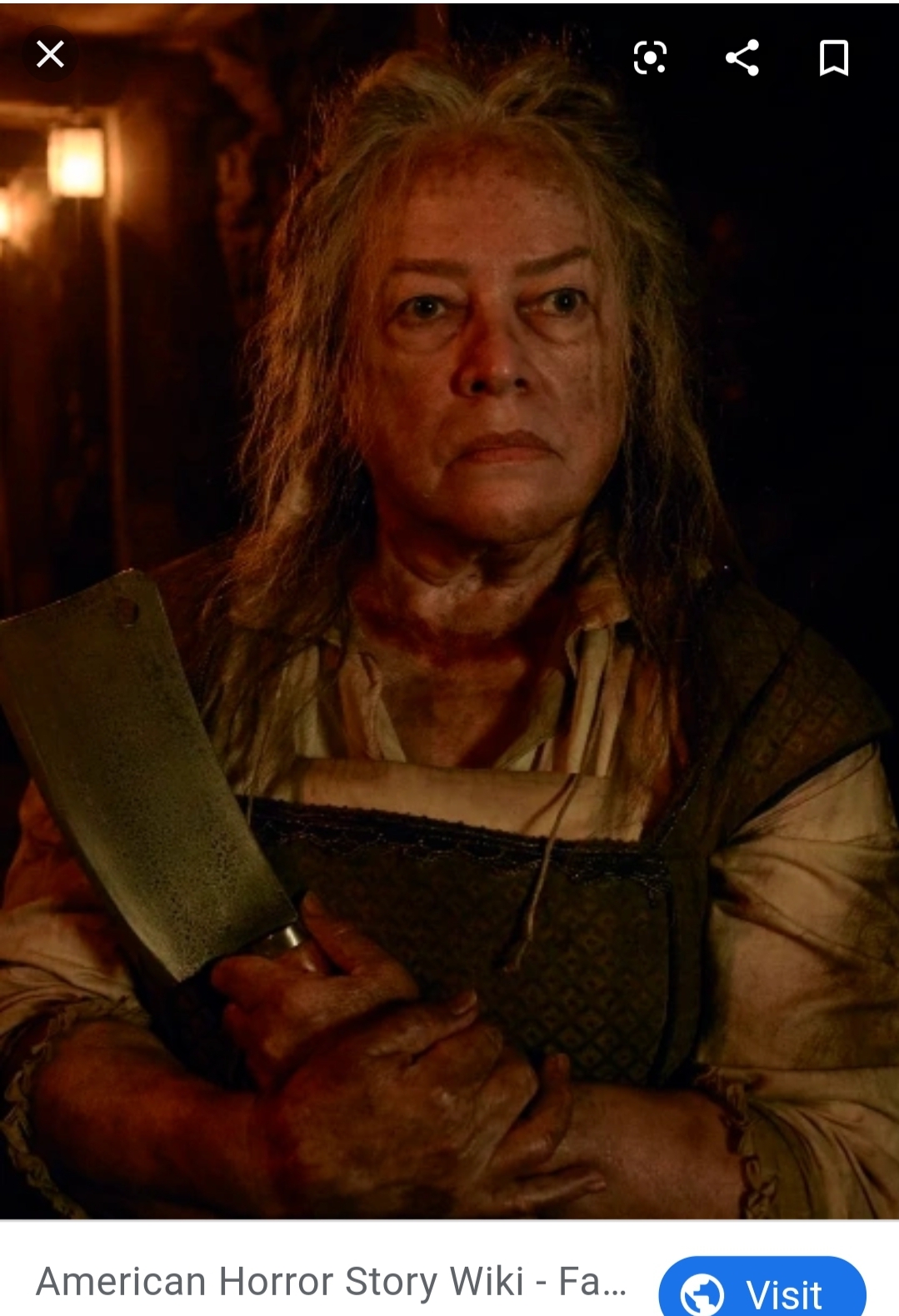
Courtesy of American Horror Story-Wiki

766: Thomasine Cooper White

Talk About Early Family Connections

Born: c.1546, Present-day England, United Kingdom

Last Known Position*: 1587, Roanoke Colony, (Present-day Roanoke Island, North Carolina, United States of America)

Also Spelled: Thomasin or Tomasyn

Thomasine was the wife of John White and mother of Elinor—making her the grandmother of Virginia Dare, the first English baby born in the New World. Thomasine and John married in 1566 and also had a son, who died in infancy.

When John decided to return to the Roanoke Colony in 1587 to attempt to successfully colonize the island again, his wife, pregnant-daughter, and son-in-law accompanied him. Unfortunately for them, the Whites, Dares, and other settlers became known as The Lost Colony of Roanoke. Whatever happened to the Colonists has been lost to history, but one intriguing theory for their end crops up in the so-called Dare Stones, the first of which may have been authored by Thomasine’s daughter Elinor.

Very little other information about Thomasine survives today, but that didn’t stop the creators of American Horror Story: Roanoke from adopting her name. Though we don’t know much about her as a person, I think it is fairly easy to assume she wasn’t a serial killer known as “The Butcher” …nor do we think she looked like Kathy Bates. I have chosen to use a photo from the series here just so you can remember which character I’m talking about.

* I have inferred Thomasine made it to Roanoke with the rest of her family based on what seems like common sense (she would not have stayed in England while the rest of her family went on without her), but it is important to note I have not found any actual evidence she made it to Roanoke Island. All of the sources agree on one thing: after Elinor’s birth, Thomasine disappears from the historical record. However, there are no death records or documentation to suggest she died in the time between Elinor’s death and the crossing to North Carolina, other than The National Park Service which suggests she had died but gives no information as to why they believe she did. As I mentioned above, very little is known about Thomasine today, so while it is nice to believe she traveled with her family, we cannot accept that as concrete fact unless more documentation or sources are uncovered in the future.

Sources:

https://www.wikitree.com/wiki/Cooper-17577

https://www.encyclopediavirginia.org/white_john_d_1593#start_entry

https://www.smithsonianmag.com/travel/sketching-the-earliest-views-of-the-new-world-92306407/

https://www.bustle.com/p/which-ahs-roanoke-characters-are-real-the-based-on-a-true-story-claim-isnt-false-19713

https://www.nps.gov/fora/learn/education/john-white.htm

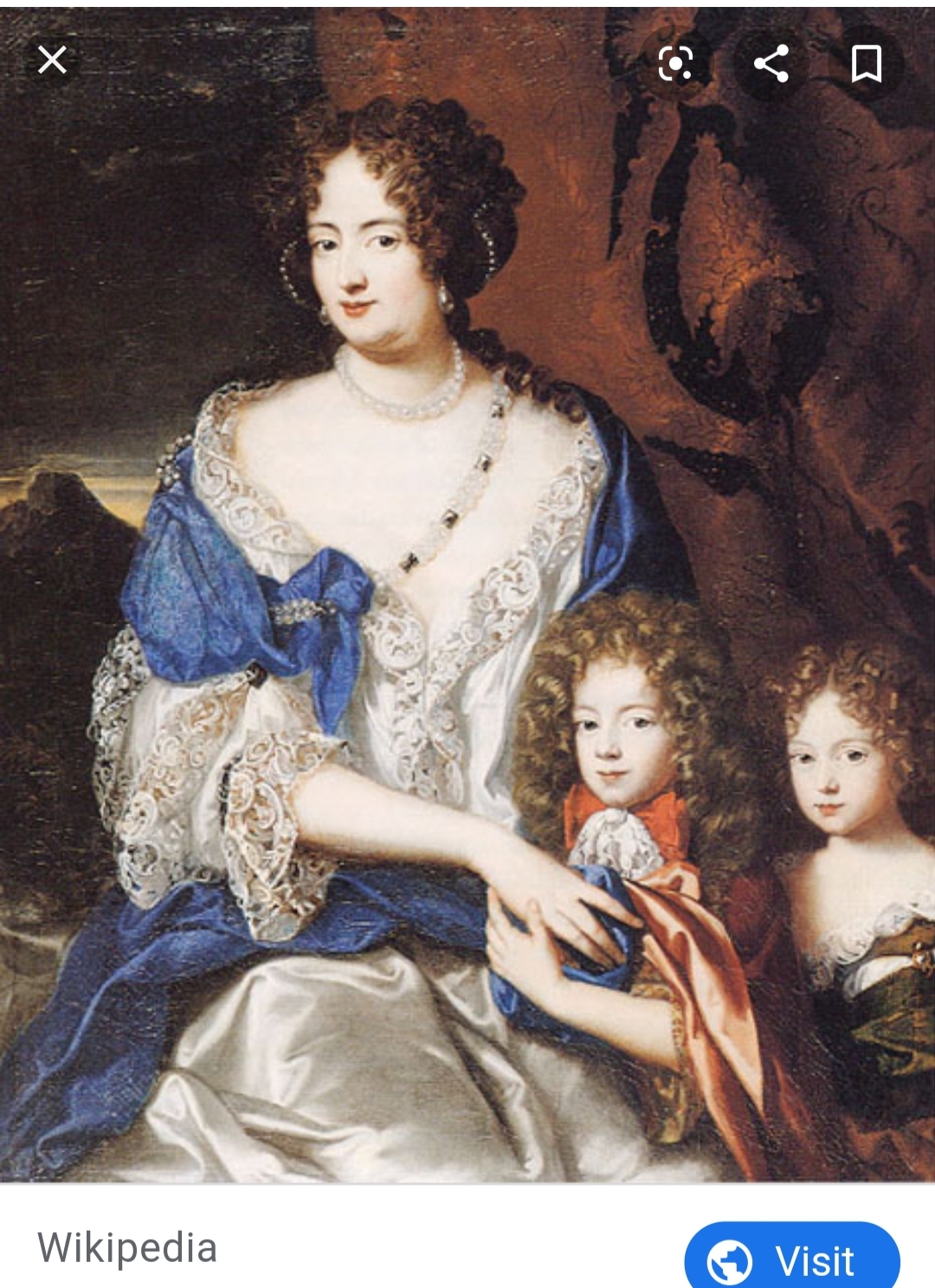
765) Sophia Dorothea of Celle

Courtesy of Wikipedia

"I will not marry the pig snout!"

765: Sophia Dorothea of Celle

Royalty Really Isn’t All Its Cracked Up to Be

Born: 15 September 1666, Present-day Celle, Lower Saxony, Germany

Died:13 November 1726, Present-day Ahlden, Lower Saxony, Germany

Alternate Spelling: Sophie Dorothea

Sophia was a princess (or more accurately duchess, but in this case the terms are equal) from the German states who wound up married to George Louis, future George I King of Great Britain. Unfortunately for Sophia, her husband accused her of infidelity and imprisoned her for thirty-two years; over half her life! So, how did Sophia Dorothea wind up imprisoned and separated from everyone in her life save her mother? Read on.

Sophia was the only child of the Duke of Brunswick-Lüneburg and his mistress, a Frenchwoman. Though her parents would eventually enter a Morganatic marriage, Sophia was born ten years before the wedding, whoops!

Sophia’s father should have been heir to the dukedom of Hanover but love, or the lack thereof, intervened. George William (Sophia’s father) had been tasked with marrying Sophia, Princess of Palatinate, but George could not stand Sophia. Instead of forcing himself into a marriage that would make him unhappy, George gave up his dukedom, handing it and Princess Sophia’s hand in marriage off to his younger brother Ernest Augustus. In exchange, George William received the smaller Duchy of Celle.

In case all of that seems really confusing to you, the gist is this: our Sophia would eventually marry her first cousin, George Louis, who was the son of the woman Sophia’s father refused to marry (Princess Sophia of Palatinate) and his younger brother Ernest Augustus.

Sophia Dorothea and George Louis’s marriage was obviously an arranged one, and vastly unhappy to say the least. Only part of the problem stemmed from the fact that Sophia’s mother-in-law, also named Sophia as previously mentioned, hated her. Apparently, Sophia’s mother-in-law never got over the slight from Sophia’s father refusing to marry her. However, importantly for our Sophia’s future in-laws, Sophia came with an enormous dowry that the Hanovers desperately needed to survive. Various stories have been passed down through the years of Sophia’s reaction to the news of her impending nuptials—one of which stated she told her parents they’d have to physically drag her to the altar. Everything was off to a great start! And yes, in case you’re wondering, I do find it incredibly hypocritical that Sophia’s father gave up everything to save himself from a loveless marriage, but had no problem forcing his own daughter into one. Alas, that’s just history.

The wedding between Sophia Dorothea and George Louis finally took place in 1682. George was twenty-two and already had a bastard child courtesy of his parents’ governess. Sophia was sixteen and at least had the satisfaction of thinking she would eventually be the Electress of Hanover.

Sophia hated her life in Hanover so much she tried to escape her life there multiple times. She and her husband had known one another years; being first cousins gave them ample opportunity to get to know one another. Unfortunately, they had never liked each other, and marriage only made their already strained relationship much worse. In 1686, Sophia was allowed to travel abroad with her in-laws, the first trip outside of Hanover since the wedding, and she was a wonderful success—particularly with Italian men. Obviously, the attention Sophia garnered did not please her husband at all, but the relationship survived the trip well enough Sophia returned home pregnant.

Now, let’s talk more hypocrisy. George Louis had his panties in a twist because Sophia was getting a little male attention, right? Well, he and Sophia made it home to Hanover, and then he promptly took on a mistress. And remember, Sophia was pregnant at the time. When Sophia found out, she jumped at the chance to rail against her husband, calling his behavior unacceptable. Eventually, Sophia fell so ill her physicians were afraid she would miscarry. Sophia’s mother-in-law forced George to visit his wife’s bedside, which he did. George sat and held her hand, not saying a word.

After Sophia’s second child was born, she never became pregnant again. This leads most historians to agree that the couple stopped sleeping together. However, George’s mistress gave birth to two daughters, so he wasn’t missing much from his wife. Around this same time, Sophia began to be linked to Count Philip Christoph von Königsmark; who has widely been regarded as her lover. The couple exchanged many letters over the years, most of them eventually ending up with Philip’s sister to help hide the relationship. Very few of the letters survive to today, with many believing a large majority were destroyed by Sophia’s son, George II.

The relationship did not remain secret long, and eventually Sophia’s mother, mother-in-law, and sister-in-law all tried to get her to knock it off and, for lack of a better word, dump Philip. Sophia refused and the relationship continued. Unfortunately for them both, Philip was assassinated in 1694 after Sophia tried and failed to escape once again.

Now, if you think this story sounds sad enough already, just wait. Philip wasn’t just assassinated. Oh no; his body was buried under the floorboards of the castle in which he was killed after the mistress who ordered his death realized her beau hadn’t authorized Philip’s murder (not George and his girl, actually the mistress of George’s father Ernest, confusing I know!). During that same time year, Sophia came into a room and found George—her husband—was sitting with his mistress and their daughter. A fight broke out between the married couple, and George physically tried to strangle his wife. She received no support from her in-laws, who told her to ignore George’s indiscretions and move on. Then Philipp was killed. And then, again with the it gets worse, George forced Sophia to obtain a divorce, becoming only the second British Monarch to do so. Once the marriage was split apart, George sent Sophia to a castle in Ahlden, where she stayed for the rest of her life, a prisoner to her ex-husband’s whims.

And if all that wasn’t bad enough (I know, just hang on), George managed to hang onto Sophia’s dowry—reportedly to help raise their children, and then forbid Sophia from seeing her children entirely. She spent the rest of her life locked away in Ahlden, and though her husband tried to make her out to be the villain, the people of Ahlden grew to love their princess.

In 1701, years after Sophia Dorothea became a prisoner in Ahlden, Great Britain passed The Act of Settlement. This act came about after the current king, William III and the future Queen Anne, were not likely to have any surviving heirs. The act proclaimed George Louis’s mother, Sophia’s pesky mother-in-law Sophia Princess of Palatinate, the heir to the throne of Great Britain and Ireland. Though Princess Sophia was over seventy years old by then, she was ready to be queen. Unfortunately for her, she died two months before Queen Anne. With Anne and Sophia both dead, George Louis stepped up to become George I, the first Hanoverian King, and his son George the heir. Had the divorce never been forced through, our Sophia Dorothea would have been Queen Consort of Great Britain and Ireland.

Just before Sophia’s death, she wrote from her bed in Ahlden a nasty letter to her ex-husband. She blamed him for the many horrors he’d caused her throughout her life and told him what a piece of crap he really was. Sophia was finally laid to rest six months after her death, beside her parents in an old chapel in Celle. Four weeks after her burial, George arrived in Hanover for a visit. He had just received Sophia’s final letter. Only days later, George suffered from a horrific and fatal stroke, and the people wasted no time saying Sophia’s spirit had returned to exact her final revenge against the man who had imprisoned her for so many years.

Before her life fell apart, Sophia had two children with her husband George. Her son was the future George II, while her daughter, also named Sophia Dorothea, went on to marry Frederick William I and become the mother of Frederick the Great, earning the title Queen of Prussia for her efforts. Today, our Sophia Dorothea is little remembered, but she was the matriarch of the House of Hanover and should be honored for her sordid and horribly sad tale, and for the crown that was unfairly snatched from her beautiful brow.

Badges Earned:

Find a Grave Marked

Located In My Personal Library:

Daughters of the Winter Queen: Four Remarkable Sisters, the Crown of Bohemia, and the Enduring Legacy of Mary, Queen of Scots by Nancy Goldstone

Princesses Behaving Badly by Linda Rodriguez McRobbie

Sex With The Queen by Eleanor Herman

Scottish Queens 1034-1714 by Rosalind K Marshall

The Royal Wardrobe: Peek Into the Wardrobes of History's Most Fashionable Royals by Rosie Harte

Sources:

https://www.britannica.com/biography/Sophia-Dorothea

https://rebeccastarrbrown.com/2017/10/03/the-extraordinary-case-of-george-is-wife-sophia-dorothea-of-celle/

https://www.historyanswers.co.uk/kings-queens/king-george-i-abused-and-imprisoned-his-wife-but-did-he-murder-her-lover/

http://www.englishmonarchs.co.uk/hanover_13.html

https://royalcentral.co.uk/features/the-wives-of-the-georgian-kings-sophia-dorothea-of-celle-38885/

https://www.findagrave.com/memorial/8476410/sophie-dorothea_of-brunswick_l_neburg

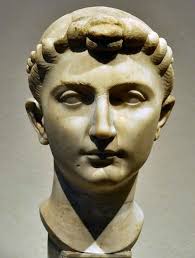
764) Julia the Elder

Courtesy of Pinterest

764: Julia the Elder

Daughter of Rome’s First Emperor Augustus

Born: 30 October 39 BC, Rome, Roman Empire (Present-day Rome, Italy)

Died: 14 AD, Rhegium, Roman Empire (Present-day Reggio Calabria, Italy)

Also Known As: Julia Ceasaris filia or Julia Augusti filia

Julia was his only biological child, and unfortunately her parents divorced when Julia was only days (or hours according to some sources) old.

Julia was thoroughly educated and raised by her stepmother to be an aristocrat. She loved reading and was taught to weave and spin as well. Unfortunately, it wasn’t all sunshine and roses as Julia’s father forbid her from speaking with anyone he had not vetted beforehand.

Her first marriage was to her first cousin when she was fourteen; then at age eighteen she was married to the general Agrippa (who was twenty-five years older than her) and they had five children; with her two eldest sons being adopted by Augustus. Julia was married a third time after Agrippa’s death; however, the marriage was an unhappy one for both parties, and not just because their only child died when still a baby.

After the death of their son, Tiberius (Julia’s third husband), voluntarily exiled himself. Julia, now alone and lonely, started a string of affairs that became politically more and more dangerous, including one with Marc Antony’s son.

Once Augustus found out about his daughter’s adultery, he banished her to Pandateria. Soon after, Julia was moved to Rhegium, still exiled. Once her husband Tiberius became emperor, he cut off her allowance, and Julia eventually starved to death. Only one child outlived her; a daughter who also died in exile.

Julia was remembered for being kind and that made her popular, however, her father never forgave her, and even referred to her as a “Disease in my flesh.”

Badges Earned:

Find a Grave Marked

Sources:

https://www.britannica.com/biography/Julia-daughter-of-Augustus

https://www.historyofroyalwomen.com/roman-empire/julia-elder-biological-child-emperor-augustus/

http://www.forumancientcoins.com/Articles/Julia_the_Elder.htm

https://www.livius.org/articles/person/julia-3/

https://www.findagrave.com/memorial/210361713/julia-the_elder

763) Julia Drusilla The Younger

763: Julia Drusilla the Younger

Caligula’s Daughter and Only Legitimate Child

Born: 39 CE, Rome, Roman Empire (Present-day Rome, Italy)

Died: 24 January 41 CE, Rome, Roman Empire (Present-day Rome, Italy)

Julia was named after her aunt and Caligula’s favorite sister of the same name.

Julia was assassinated alongside her parents because she was Caligula’s only legitimate heir. Caligula was murdered earlier in the day, and a few hours later, Julia’s mother, Empress Caesonia, was stabbed to death. Julia herself was killed by having her brains bashed against a wall.

After her and her mother’s death, the Romans responsible for their brutal murders set out to damnatio memoriae them or destroy any image or memory of them ever existing. They were successful as no sculptures survive of Julia or her mother to this day. According to Wikipedia, there is a surviving coin that shows Julia’s image, but the coin is not shown in the article and I was not able to find it myself, so take that with a grain of salt.

Sadly, the only easily accessible sources for Julia readily available on the internet today are a Wikipedia article and a Find a Grave article which sources, you guessed it, that same Wikipedia article earlier mentioned. Therefore, I’ve linked that Wikipedia article as well as my own source for this entry.

Badges Earned:

Find a Grave Marked

Sources:

https://en.wikipedia.org/wiki/Julia_Drusilla_(daughter_of_Caligula)

https://www.findagrave.com/memorial/119911035/julia-drusilla

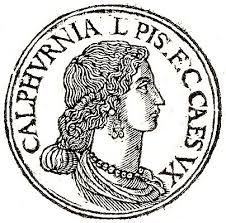
762) Calpurnia

Courtesy of Wikipedia

762: Calpurnia

Wife of Julius Caesar

Born: c.70 BC, Rome, Roman Republic (Present-day Rome, Italy)

Died: Unknown, Rome, Roman Empire (Present-day Rome, Italy)

Full Name: Calpurnia Pisonis

Though their wedding was for political purposes only at the outset, Calpurnia and Julius did grow to care for one another over time.

It is believed Calpurnia and Julius married around 59 BC, fifteen years before Julius’s assassination. She was either his third or fourth wife. However, by 53 BC, Julius was considering divorcing Calpurnia in order to marry Pompeia, the daughter of his political rival Pompey. For whatever reason, he decided against this course of action, and stayed married to Calpurnia.

Calpurnia is most remembered for warning Caesar not to go the Senate for fear of him being killed that fateful March day; but he ignored her and was in fact assassinated. They had no children together, and despite her having to know about his affair with Cleopatra VII, she remained loyal to Julius’s memory.

After his death, Calpurnia donated Julius’s private papers to Marc Antony, and backed him in the hopes Marc would avenge her late husband. Her loyalty to Julius ensured Calpurnia’s family would see their political ambitions realized and ensured for the rest of their lives.

Sadly, very little about Calpurnia herself survives today, including where, how, and why she died. One would think a figure as important to history as her would have more sources and documentation to follow her life’s path, but of course, what we want and the reality of the situation are not always the same thing.

From 2017 to 2019, a Canadian rock band that consisted of one of the Stranger Things actors, Finn Wolfhard, was named Calpurnia. Probably not the legacy our Calpurnia envisioned for herself.

Badges Earned:

Located In My Personal Library:

National Geographic Magazine Article "Beware the Ides of March" by Josep Maria Calas (March/April 2022 Edition)

Sources:

https://www.encyclopedia.com/women/encyclopedias-almanacs-transcripts-and-maps/calpurnia-c-70-bce

https://oxfordre.com/classics/view/10.1093/acrefore/9780199381135.001.0001/acrefore-9780199381135-e-1294

https://classicalstudies.org/annual-meeting/147/abstract/calpurnia-and-ides-march

https://en.wikipedia.org/wiki/Calpurnia_(band)

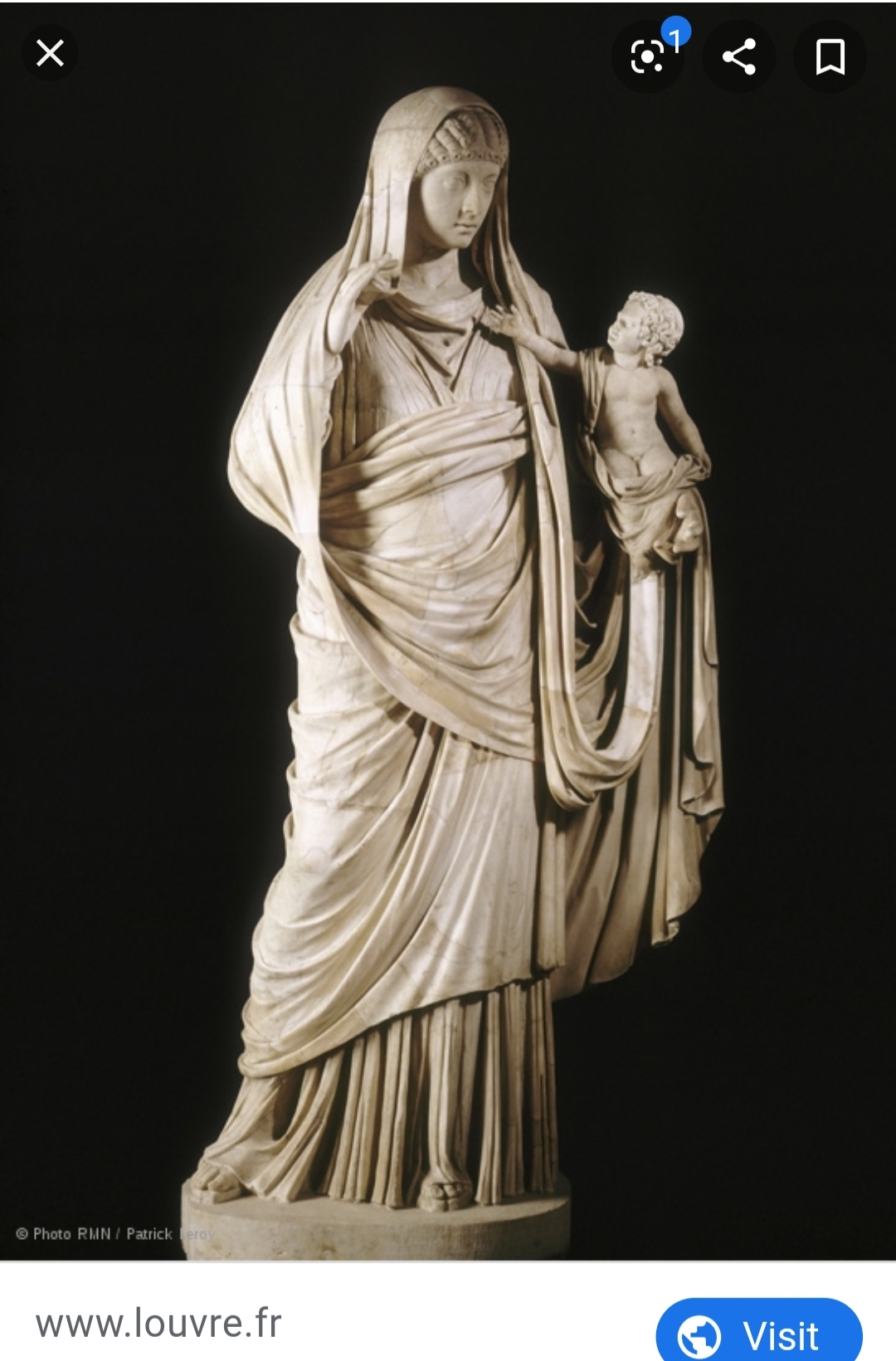
761) Valeria Messalina

Courtesy of Louvre

761: Valeria Messalina

What is it With Romans and Their Family Connections?

Born: c20-22 CE, Rome, Roman Empire (Present-day Rome, Italy)

Died: 48 CE, Rome, Roman Empire (Present-day Rome, Italy)

Also Known As: Messalina Valeria

Also Spelled: Messallina

Messalina was all of the following: the great- grandniece of Augustus, second cousin of Caligula, cousin of Nero, great-granddaughter of Marc Antony's wife Octavia, and wife of Claudius (who also happened to be her second cousin).

Messalina and Claudius married when she was fifteen and he was around fifty, so you know, that’s nice. He had previously married two other women, both of which ended in a divorce. The pair would have two children together, the second of which, Britannicus, was born just weeks after Claudius became emperor.

Messalina’s husband has largely been seen as being cowed and a pushover. She would levy charges against anyone she deemed an enemy and he was more than happy to have them exiled. One example of this was after Messalina became infatuated with her stepfather and he rejected her; Messalina had him executed by claiming Narcissus, her friend and Claudius’s secretary, had seen visions of Messalina’s stepfather stabbing the emperor. In order to back up the claim, Messalina stated she also saw the vision of the emperor’s death. Claudius signed off on the death warrant without another word.

Another example would be the sisters Julia Livilla (who was Claudius’s niece) and Agrippina, who had been exiled by Caligula. Claudius not only returned them to Rome, but also gave them back their estates and wealth. Messalina was jealous and felt threatened by the sisters, so she made her husband re-banish Julia. Julia would eventually starve to death while in exile, her husband executed. Agrippina wisely kept her head down and survived the encounter.

Messalina was so in love with her grip on power, she didn’t stop with having influential people killed. She also loved being the receiver of numerous gifts and expensive objects that once belonged to her victims. One time, Messalina also worked out having a man killed just so she could own his beautiful gardens. The man was allowed to commit suicide in favor of execution, but the means still ended with the same resolution—Messalina got her gardens.

Messalina’s use of execution and extortion were so widely known, the smarter senators all knew to go to her for favors or ways to get close to the emperor. However, Messalina’s unchecked behavior could not go on forever. By 48 CE, Messalina had had so many affairs, and Claudius was such a pushover, he had become a laughingstock to the entire Roman public. Around that time, Messalina fell in love with another Roman senator, and they hatched a plan to do away with Claudius entirely and rule the empire themselves. Gaius (the Senator in question) would adopt Messalina’s son Britannicus and everything would be just perfect.

Only duh, of course it wasn’t that easy. Despite Messalina and Gaius getting married, and Messalina even moving some of her furniture from the palace into his home. Fearful Claudius would forgive his wife for her treachery, measures were taken to prevent them from meeting. Messalina, sensing the end was near, did what any good mother would—and tried to use her children to convince their father not to kill their mother.

Wait…So not what any good mother would do. Just something a desperate woman would. It’s important to remember the children were around eight and five at the time all this went down. Messalina received word her husband would meet with her. In the meantime, her new beau and the majority of the guests that had the misfortune of showing up for the wedding were executed. A messenger arrived in place of Claudius, and he informed Messalina she was supposed to commit suicide. When Messalina refused, the messenger stabbed her himself.

Claudius showed no emotion upon the death of his third wife. He did decide to remain celibate…for a while. However, soon enough came wife number four, Agrippina. You can click on her name to read how well that worked out for the Romans.

For centuries after Messalina’s death, she was and is remembered as one of the most unmoral and indecent women in history, certainly in Roman history. However, its important to remember that Messalina was a very influential woman, with many enemies. The stories that claimed she worked in a public house as a prostitute were immediately believed by many in her time and the decades after, but today historians point out that the source for this claim remains unknown. Messalina was an empress, and most likely never worked as a prostitute. Also unhelpful to the situation was the declaration of damnatio memoriae from the Senate, basically meaning Messalina’s name would be removed from history and never be spoken again.

Badges Earned:

Find a Grave Marked

Located In My Personal Library:

National Geographic History Magazine March/April 2021 Edition (Article “Agrippina's Power Play” by Isabel Barcelo)

National Geographic History Magazine March/April 2023 Edition "Article "The Real Messalina" by Emma Southon)

Women in Ancient Rome by Paul Chrystal

Sources:

https://www.ancient.eu/Valeria_Messalina/

https://www.britannica.com/biography/Messalina-Valeria

https://www.roman-emperors.org/valmess.htm

https://www.ancient-origins.net/history-famous-people/questioning-dramatic-story-empress-messalina-was-she-cruel-doxy-or-victim-020725

https://www.findagrave.com/memorial/110006817/valeria-messalina

  • Previous
  • 1
  • …
  • 48
  • 49
  • 50
  • 51
  • 52
  • 53
  • 54
  • …
  • 159
  • Next

Categories

Archives

  • July 2025 (10)
  • July 2024 (1)
  • January 2024 (1)
  • August 2023 (1)
  • June 2023 (2)
  • October 2022 (1)
  • July 2022 (1)
  • June 2021 (3)
  • December 2020 (3)
  • August 2019 (1)
  • July 2019 (2)

Search

© 2026 The Exasperated Historian | Powered by Minimalist Blog WordPress Theme