The Exasperated Historian
Menu
  • Home
  • The Women’s List (New)
  • The Men’s List
  • The Animal List
  • Collections
  • The Blog
  • Contact Us
  • FAQ
Menu

Category: Arizona’s Own

That Time My Fiancé and I Were Handfast

Let's start at the beginning--shall we?😂


When I was nineteen, I fell in love with the Scottish heritage I inherited from my Paternal Grandmother, who was a very proud descendant of the Graham Clan. Around the same time, I also fell in love with the Outlander books and TV show, which revolve around Scottish history and culture quite a bit!

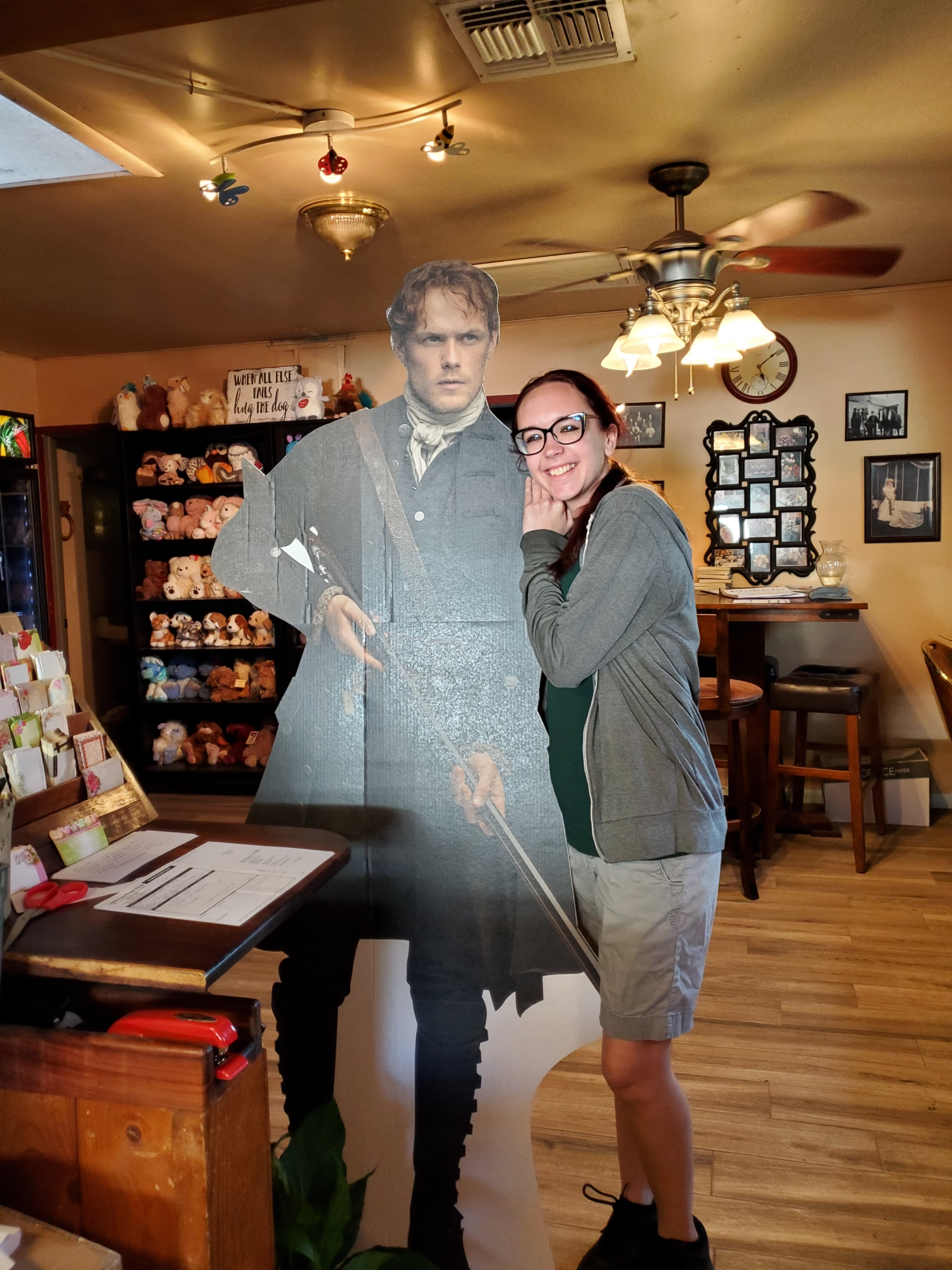
As a history-focused, nineteen-year-old, single college girl, I did what any rationally minded individual would do--and bought a lifesize cardboard cutout of Jamie Fraser when he went on sale!
My First Boyfriend

I specifically chose the Revolutionary War-era Jamie because of my interest in that period of history as well (I am a member of DAR after all!). For those who don't know, the actor who plays Jamie (Sam Heughan) is six foot five, and yes we measured--the cardboard cutout IS life size. Anyways! The point of me even mentioning this is that I began to say that Cardboard Jaime was my first boyfriend--and that was that! Ha ha, the lonely historian is dating a cardboard cutout. You get the picture!


Flash forward three years--to when I was twenty-two, and I met my first actual, flesh and blood, living boyfriend (phrasing it like that sounds really weird but I don't know how else to phrase it either!). My actual first boyfriend turned out to be a six foot four, Danish/Hispanic hunk who--although he lacks the Scottish brogue accent, his voice is actually the first part of him I fell in love with. Coincidentally, we "met" three years ago today, on Snapchat! And after going back and forth for hours, exchanging messages and getting to know one another, we ended up on an over four hour long phone call. We met in person for the first time two days later, and two days after that we officially started dating!💚

(Also, random other comparison but the Outlander character's full name is James Alexander Malcolm Mackenzie Fraser, and my fiancé's name is almost as long! He's got two middle names AND a suffix--and yes we plan on passing the name down to our future first-born son because of the incredibly rich history and legacy behind the name).

My parents were both raised Christian (my dad Methodist and my mom in various churches, both non-denominational and other sects). When my brother and I were born, our parents chose to raise us outside of the church but with the mindset that if we ever wanted to attend a church of any kind we were more than welcome to.

As I grew up, I became fascinated with various Antiquity cultures (shocker I know) and eventually decided my own spiritual and religious beliefs were closer to the umbrella term of "Pagan." This is because, in my own PERSONAL OPINION (please don't get offended by what you're about to read), I personally believe it more plausible that there are multiple "gods" or deity-like beings or spirits, as opposed to one overall. This is because of my own historical research into the subject as well as my own personal experiences throughout my life--as well as my experiences with spiritual entities or "ghosts" as most refer to them.

My fiancé, on the other hand, was raised as a member of the Church of Jesus Christ of Latter Day Saints, better known as "Mormons" or "LDS" (though the church itself prefers to not use either and instead likes members to use the full Latter Day Saints). He also had some other Christian influence from various family members and friends in his upbringing.

I swear I'm going to get to a point here in a minute.

For many couples, a disagreement on religious ideology can spell the death of a relationship. For us, however, my fiancé and I were extremely upfront about our beliefs from the very first phone call we had with one another, and because of that, and because of how open we both are to learning about new cultural/religious experiences and whatnot, we have both grown together throughout the past three years. I have attended church with him on several occasions, and he helped me pin up various god and goddess posters throughout our house when we moved in together. We don't have to "make" anything work, because we are respectful of one another's beliefs and love each other for them.
 

The Engagement

As I mentioned, my fiancé and I have been in each other's lives for three years now. We've been talking about marriage and babies since, well, honestly day one. I have known I've wanted to be a mom since I was five years old and he also knew he wanted to get married and have a family one day.

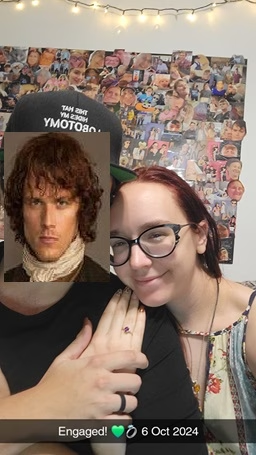
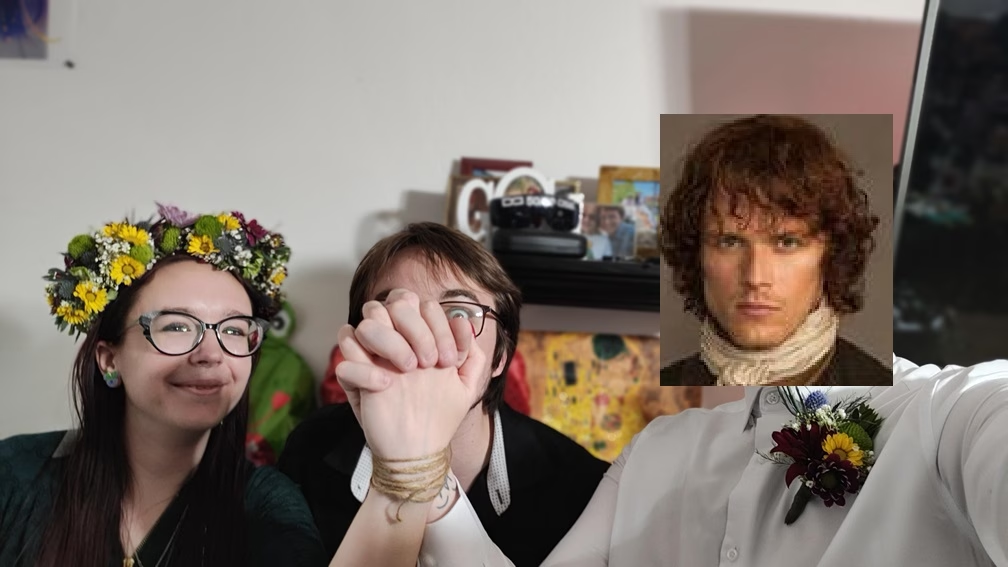
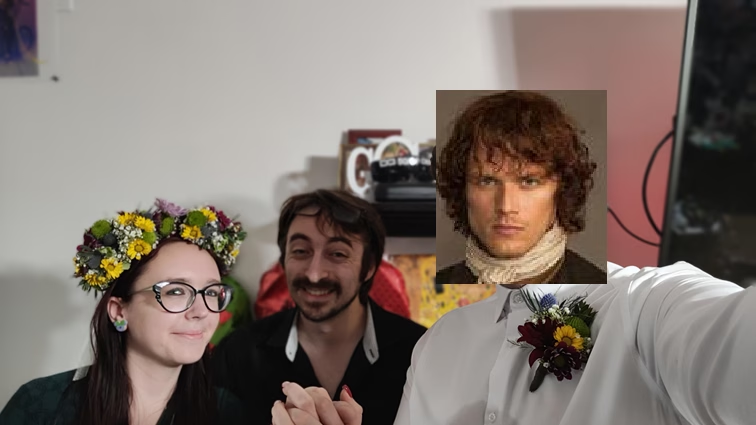
(Also, in case you're wondering, my man is a sort-of advocate for social media anonymity and so I always make sure to cover his face before posting any photos. Usually I use a cutesy emoji but for this specific post I thought Jamie's face was more appropriate, Ha!)

Last Autumn, we found out my fiancé's littlest brother was planning to leave on a mission for the Latter Day Saints church. For those unaware, missions usually last between eighteen months and two years, and my future brother-in-law planned on being gone for two years.

When my fiancé and I got engaged in October of 2024, we agreed we would wait for our actual wedding until his brother came home and could come to our wedding. Neither of us are in a rush to sign a piece of paper, and we both already spiritually feel as though we are married. We've been living together for over a year, and in that time we've seen and been through plenty of ups and downs that come with being in a serious, committed relationship.

Alright, now we're finally getting to the good part of the story!
 

The ceremony

A few weeks ago we were discussing the fact that we had done some church-related functions with my fiancé's family in the lead up to his brother leaving on his mission. My mom then asked me if we had any plans to do anything special for our three-year anniversary, which also happens to coincide right around the time one of my fiancé's cousins is getting Sealed in the Temple.

(For those unaware, the specific marriage ritual/ceremony celebrated within the Latter Day Saint church is called a Sealing).

Somehow this conversation switched to the idea of a Handfasting Ceremony. My fiancé had never heard of such a thing before, so I was all too happy to fill him in on the details.

A Handfasting ceremony is a traditional wedding ceremony that, according to some estimates and sources, dates back as far as 7,000 BCE. I'll post multiple links/sources below, but basically it allows a couple to get married in a simple, quick, way without any church, witness, or other involvement.

Depending on the time period in history, a Handfasting could either be seen as an actual marriage or a sort-of engagement ceremony. According to some, a traditional Handfasting lasted a year and a day, and if at the end of that time period the couple decided they no longer wanted to be together, they could part ways as easily as someone moving out and moving on.

Some sources state the bride would have to fall pregnant in that time in order to "seal the deal" but that wasn't the case for them all. Another few sources also stated that a Handfasting, for an engagement, would ensure that if the bride did fall pregnant within that year time span, the child would technically be born "in wedlock," so long as the couple did eventually have a more formal wedding.

Its important to remember that Handfasting, or similar ceremonies with other names, have existed across multiple cultures around the world for thousands of years, from Scotland to China and various places in between. To claim it is purely a Celtic ritual is not entirely true--while the term "Handfasting" itself can be tied to Celtic history, the ceremony itself did not only exist among the Celts.

And if that's not confusing enough, a lot of the "History" about Handfasting you find in various wedding blogs online isn't actually true either--instead, a lot of the information actually stems from the author Sir Walter Scott (whom I personally believe spent his life dressing up Scottish folklore in order to drive tourists to the country!).

One particular passage stuck out to me as I was doing a bit of research for this post. From the article "Handfasting--The True Story" (article linked below):

My friend and colleague Tom Morton lives in the Shetland Isles and on our new Substack, he’s just shared another ‘origin story’ that has a ring of truth about it. As he says, “The word ‘handfesta’ in Old Norse means ‘to strike a bargain by holding hands’ and holding hands seems to me a perfectly reasonable expression of affection, even for Scots.”

The best part of the idea is that, for hundreds of years, a Handfasting ceremony was recognized as a completely legal way to get married in Scotland. This changed for a few decades after the government decided to get more involved in marriages, but as of 2025 a Handfasting is once again legal (with several caveats of course).

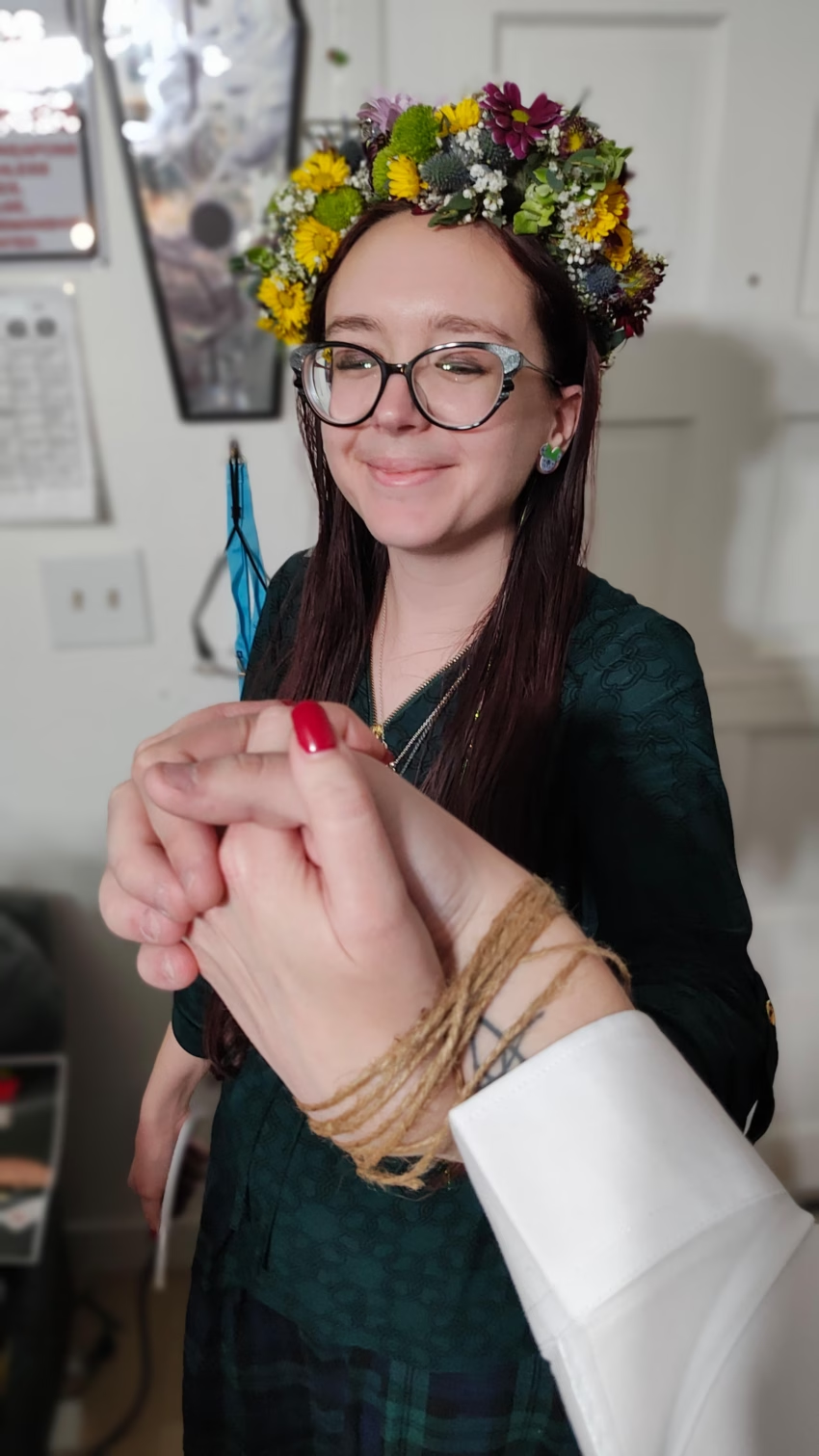
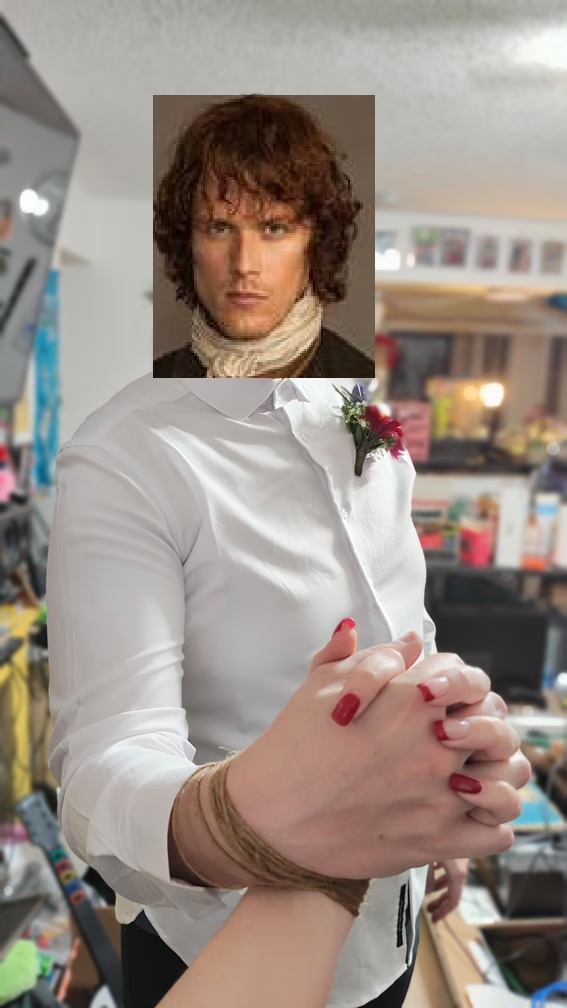
Because the tradition dates back so far, and crosses so many cultures, there is no one set of rules or guidelines a Handfasting has to follow. You can use a random piece of string you have laying around the house (like my fiancé and I did since we forgot to actually figure out anything else beforehand), or you can go all out and buy fancy Tartan ribbons (which is a booming business apparently).

All you have to do to complete the ritual is have that piece of rope or ribbon tied around the hands of the betrothed couple. Usually a few words are said, but that's basically it. This is where the phrase "Tying the Knot" is believed to come from in relation to weddings.

For some Handfastings, you don't even have to have a witness present! Take one of the most famous fictional examples--which occurs in the fourth Outlander book Drums of Autumn, when Roger and Brianna are Handfast in front of a roaring fire while staying at an inn, soon after they are reunited in the 18th Century.

(I won't add more details than that in case its a spoiler for any potential fans!)
Our Ceremony

For my fiancé and I's specific ceremony, we had our very close (and half-Jewish friend who agrees with us on the "live and let live" religious belief system) act as our officiant. We plan on having him perform the ceremony at our actual wedding in two years as well!

My Outfit

My day job, when I'm not busy ranting about all things history, is working in my family's flower shop. The traditional flower of Scotland is the Thistle, and while we cannot easily get the Scottish Thistle out here in the Sonoran Desert, I did the next best thing by incorporating many of the thistle we can get in my flower crown that I made by hand just for the evening's events.

As I previously mentioned, I am descended from the Graham Clan in Scotland, which is a lowland clan (so don't picture me in full Highland-gear, speaking Gaelic and gathering fresh Heather or peat from the bogs). For those curious if there is any Outlander connection, unfortunately (at least in my OPINION) the Graham clan chose to side with the English crown against the Jacobites in the Rising of '45.

Today, every Scottish Clan has an official tartan to go along with it, which is a specific pattern and set of colors. Historically speaking, there were no specific tartans for specific clans. This is a fairly modern invention, starting in the 1800s or so, and was another way to garner interest in Scottish culture and also raise money for the clans and country by having visitors buy a tartan in their favorite clans colors.

Before the clans picked their own tartans, the previous generations of Scots would usually have kilts and tartan patterns in all different colors and styles, usually created with the local plant and animal dyes from around their lands. This is why some clans had different colors than others, even before the official clan colors were decided upon.

The Graham Tartan is a beautiful mix of dark blue, dark green, and black. I have always wanted a real kilt in my clan's colors, but they are (understandably) very expensive. So for this occasion, I chose a much more cost-effective skirt I found on Amazon.

(And it has pockets!! So I mean come on, how could I not buy it?)
The man himself

I made my fiancé a boutonniere out of all the various flowers my flower crown was made of to match.

For our vows, we decided to take inspiration from some other vows we had found online and mashed some various options together.

We did take a video of the whole thing to save for our kids and grandkids one day, but I'm obviously not going to post it here, because as easy as it was to superimpose Jamie's face in Microsoft Paint over my fiancé's face, I do not have the time or patience to do that with a five minute long video!

So anyways, yeah, I guess I'm married now? Just kidding, *legally speaking* we are still only engaged, but we specifically did our Handfast two years and two days before we plan our actual wedding...that way we can do this all over again next year if we feel like it!

I hope you enjoyed my rambling and learned a little bit about Handfasting along the way. If you want to learn more about the ritual, or some of the other topics relating to Scottish history and culture I mentioned, I'm including some links below. Thanks for reading! Until next time, I am your Friendly Exasperated Historian, Zoë

Sources:

Handfasting:

How we Got Our Vows

From Brides.com

Handfasting--The True Story

The History of Handfasting

Handfasting--A History


Tartans and Kilts:

Generations of Highland Dress

The Real History of the Tartan (According to National Geographic Anyway!)

The History of Tartan

Tartans and Kilts


The Jacobite Rising of 1745:
The Jacobite Rebellion

The Jacobite Revolts: Chronology
The Jacobites

The Battle of Culloden

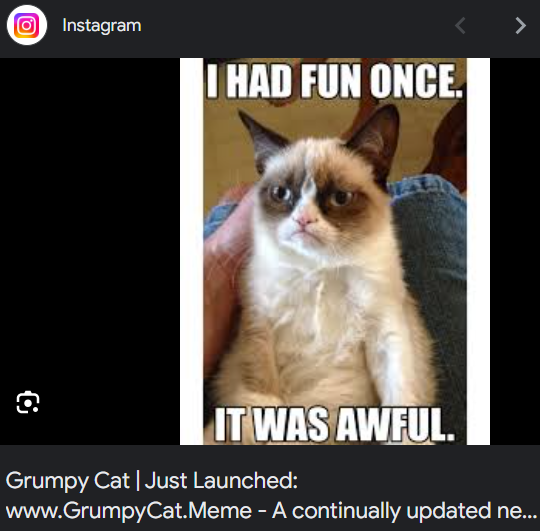
12) Tardar Sauce

Courtesy of Cheezburger
Courtesy of Instagram

12: Tardar Sauce
The Internet’s Most Famous Cat

Born: 4 April 2012, Morristown, Arizona, United States of America

Died: 14 May 2019, Morristown, Arizona, United States of America

Also Known As: Grumpy Cat

Tardar Sauce climbed to internet fame in 2012 when her image went viral for the first time. In the beginning, people claimed her face had to be photoshopped, but after a video of her was posted to YouTube, the world realized that no—she just literally looked like that.

The reason why Tardar Sauce looked so dang grumpy was because she suffered from feline dwarfism, which affected her facial features and accounted for her tiny size. She was a regular old domestic shorthair cat otherwise, and lived and died in the small town of Morristown, Arizona.

While cats in general are especially loved online, Tardar Sauce in particular was especially popular, in both meme format and as a brand. Her image graces everything from shoes to calendars, perfumes, merchandise, and so much more. She even became a official spokescat for Friskies. Tardar Sauce even appeared on multiple television shows, including Good Morning America and The Today Show.

Tardar Sauce was only seven years old when she passed away following complications from a Urinary Tract Infection (UTI). As all cat owners should be aware of, UTIs are especially deadly in feline friends.

When she passed away, Tardar Sauce had 8.5 million followers on Facebook, 1.5 million on Twitter, and 2.4 million on Instagram. Tardar Sauce’s owners had done their best to protect her Intellectual Property rights both during her life and after, meaning her owners became extremely wealthy as a result of her adorably grumpy face.

Badges Earned:

Find a Grave Marked

Sources:

https://www.grumpycats.com/about

https://www.cnn.com/2019/05/17/celebrities/grumpy-cat-dead-intl-scli/index.html

https://knowyourmeme.com/memes/grumpy-cat

https://www.catster.com/guides/what-cat-breed-was-grumpy-cat/

https://www.wipo.int/wipo_magazine/en/2018/01/article_0008.html

https://www.findagrave.com/memorial/199192055/grumpy-cat

All My History Travels (So Far!)

Posted on January 25, 2024January 27, 2024 by nickssquire12

Since I was seven or eight years old, I have been fascinated by all things history. Luckily in my (now almost twenty-four) years of living, I have managed to visit some pretty interesting places and learn lots of local history. Here are some of my adventures I've had along the way.

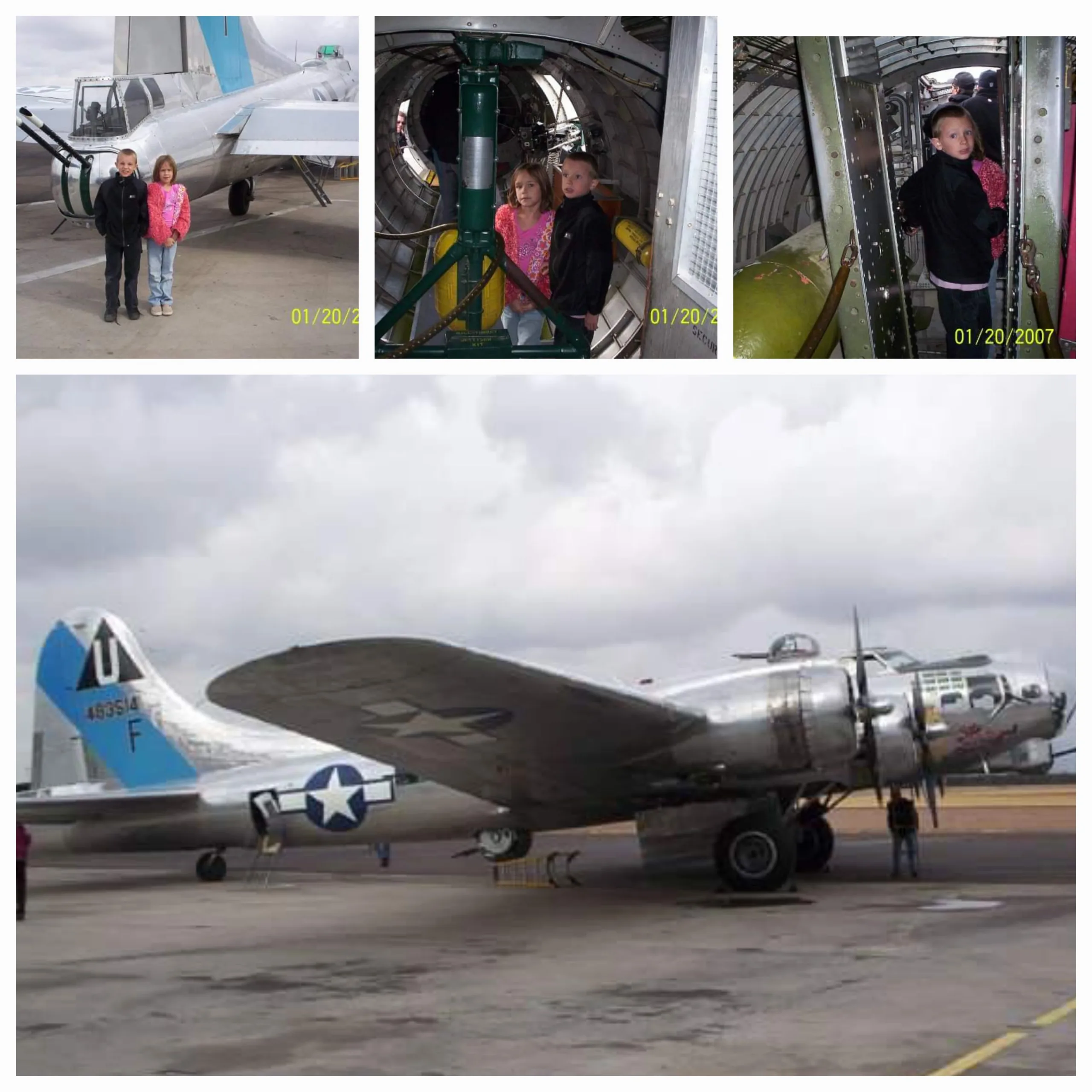
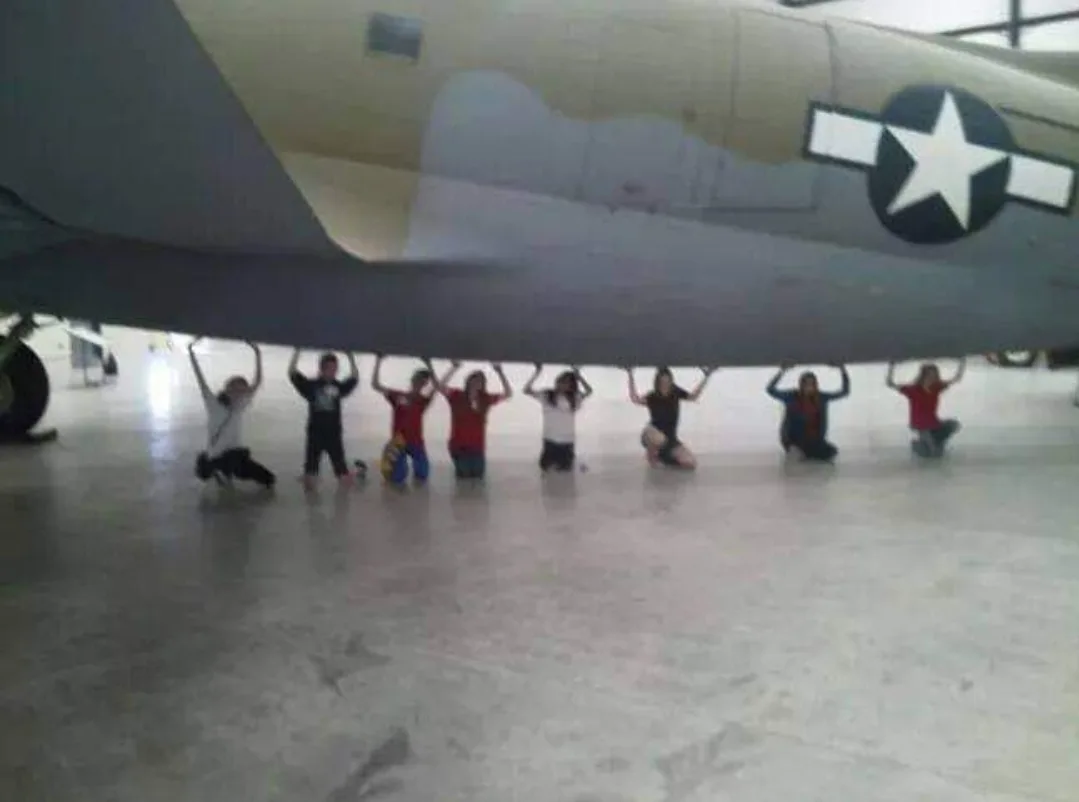
2007-Visiting Sentimental Journey at the Commemorative Air Force Museum, Mesa, Arizona, United States of America

Sentimental Journey Collage

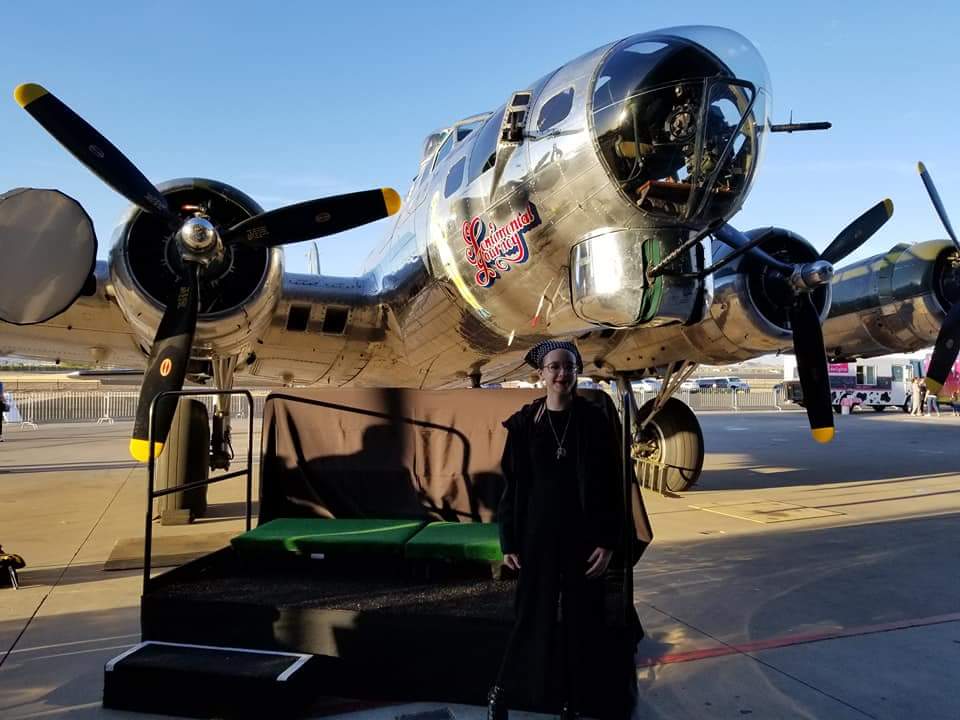
Sentimental Journey is a B17-G Flying Fortress who served the United States military doing active bombing raids during World War II.

According to the Commemorative Air Force Museum's website, (linked here), Sentimental Journey is one of only five B17 bombers still flying today.

Sentimental Journey holds a special place in my family's heart. My maternal grandfather Dale raised my brother, cousins, and I to love and appreciate this particular aircraft from the time we were tiny. These pictures are from just before my seventh birthday, when my brother and I were lucky enough to step inside of the airplane.

Sentimental Journey spends the majority of her time at the Commemorative Air Force Museum, located near Falcon Field airport in my hometown of Mesa, Arizona.

When we were tiny, my grandpa would always take my cousins and I to Falcon Field to watch the planes take off and land. He would always buy us a cup of hot chocolate and some Cheetos from the vending machine. The ladies who worked in the office at the air field always knew us on sight because, while my grandpa intended for us to sit still and watch the planes, in reality us kids were too busy running around and banging ourselves up on the rocks. We frequently used up all of the bandages in the office first aid kit. Falcon Field will always hold memories for my family, and Sentimental Journey was one of the first pieces of history I was given the opportunity to learn about and see and feel with my own eyes and hands.

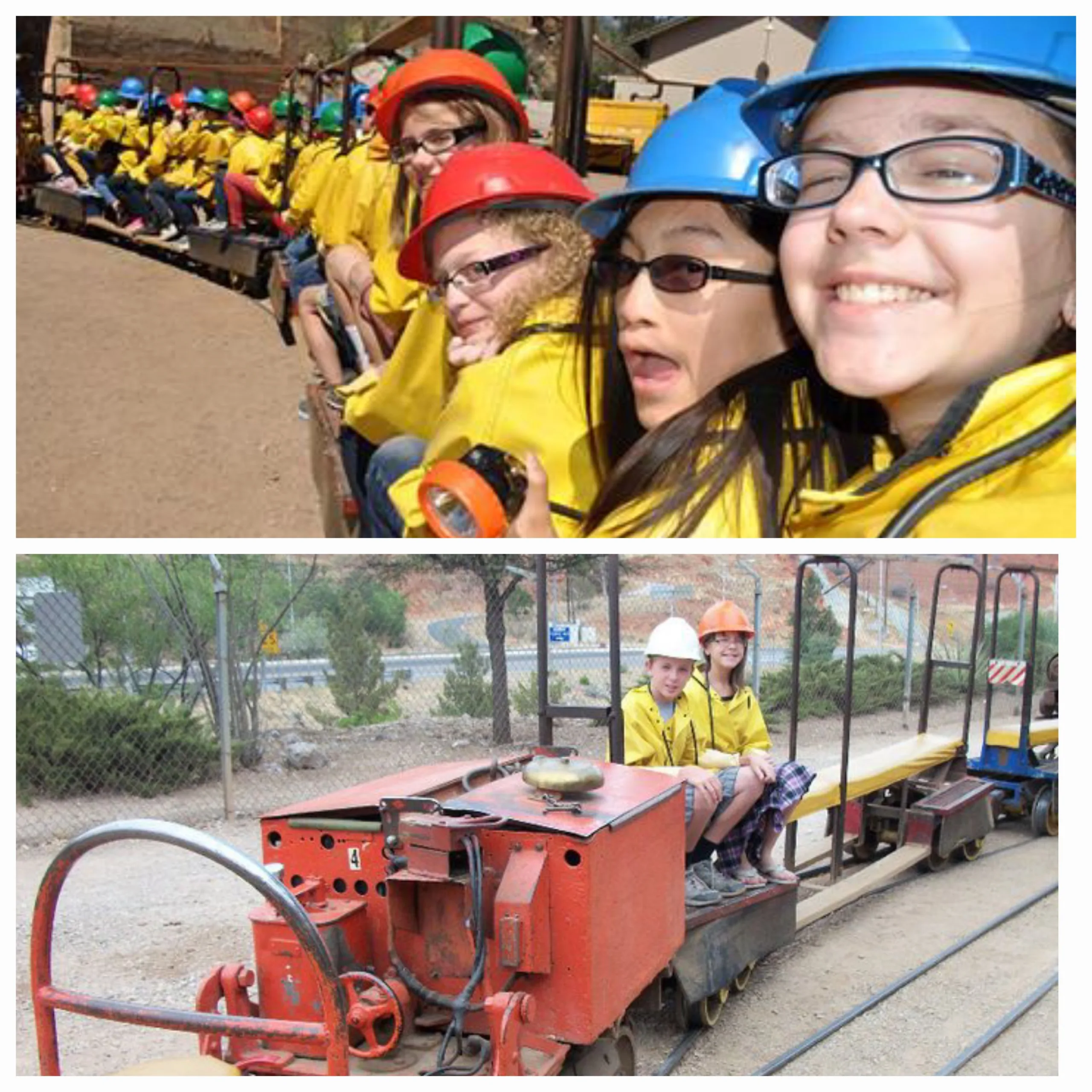
2011, 2012, and 2021--The Copper Queen Mine Tour, Bisbee, Arizona, United States of America

Queen Mine Tour, Bisbee Arizona

I have had the opportunity to visit the Copper Queen three times in my life, and if you ever visit Bisbee, Arizona I HIGHLY recommend taking the tour yourself (unless you are claustrophobic and hate being underground in which case you won't have nearly as much fun...like my poor friend Sierra on our Seventh Grade History trip which is the top photo in this section).

Copper was mined in Bisbee from the 1880s until 1975. Bisbee was one of the leading exporters of copper for the state of Arizona, to the point that schoolchildren in Arizona are taught about the "Five C's of Arizona" -- Copper, Climate, Citrus, Cattle, and Cotton.

The Queen Mine Tour officially opened in February of 1976, less than a year after the mine had officially closed. The tour has continued ever since, with participants getting to take a ride deep into the mines on the same train that used to carry miners to work and back every day.

To learn more about the Copper Queen, or to schedule a tour yourself, visit their website here.

2012- Pima Air and Space Museum, Tucson, Arizona, United States of America

Pima Air and Space

On that same seventh grade history trip I mentioned above, my class also stopped at the Pima Air and Space Museum, in Tucson, Arizona.

The museum's initial idea dates back to 1966, and remains open to this day. Of all the aerospace museums I've visited over the years, the Pima Air and Space Museum is definitely one of, if not the coolest museums I have ever stepped foot in, and if you have not had the chance to visit yourself, I cannot recommend it enough. To learn more about the museum or get tickets, visit the museum's website here.

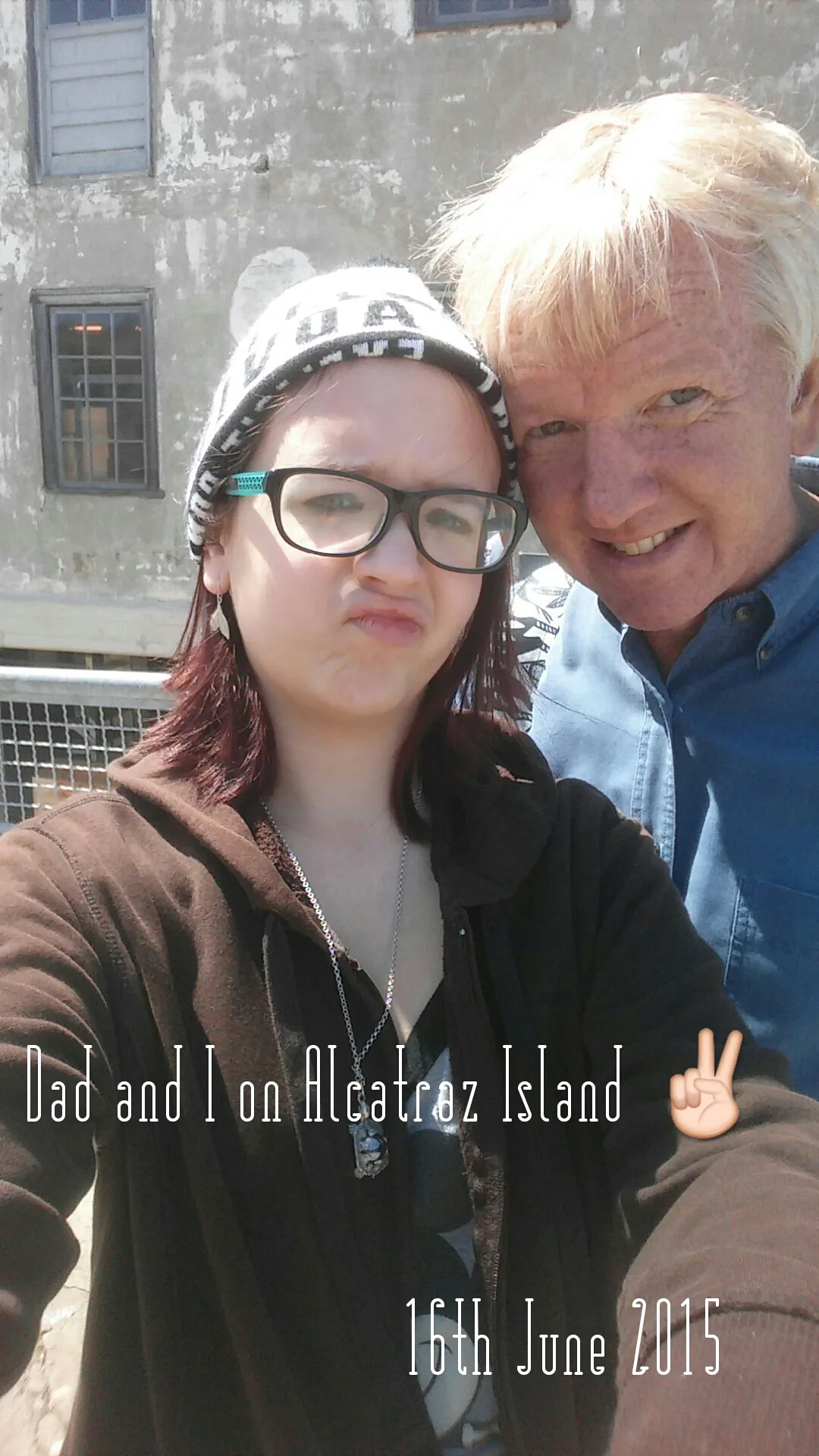
2015--Alcatraz Island, San Francisco, California, United States of America

Alcatraz Island

Before I say anything else, first let me apologize for my face in this photo. I was a stupid fifteen year old who thought it was a good look. I know now that it most definitely was NOT a good look for any photograph, especially one with my dad at a historic site.

But I can't change the past and this is the only photo I have remaining so with that said...

Alcatraz Island, also known as "The Rock."

I visited Alcatraz with my parents and brother in June of 2015, which is the warmest month of the year to visit San Francisco. I know this because a few years later, one of my oldest friends competed in a swimming competition from Alcatraz back to San Francisco and every year that competition is held in June because again, its the only month out of the year that the water is warm enough for the swimmers to compete safely. Yikes!

As for Alcatraz itself, for those unaware, the island is best remembered for being a federal prison for many years, but is so much more than that. As described by the National Park Service, Alcatraz has been a "Civil War fortress, military prison, federal prison, bird sanctuary, first lighthouse on the West Coast, and the birthplace of the American Indian Red Power movement."

Alcatraz served as a military installation from 1850 to 1934, a federal prison from 1934 to 1963, and was occupied by several different Native American activist groups in 1964, as well as again from 1969 to 1971. In 1973, Alcatraz Island officially opened as a tourist destination for the general public and is now considered a National Park.

In order to get to Alcatraz, tourists take a ferry ride from San Francisco across the bay to the island. The standout part of the journey for me was the fact that all of the TV screens on the ferry, which displayed safety information for guests once they reached the island, also had interpreters giving those same instructions in American Sign Language. This is much more common now in 2024, but eight years ago in 2015 this was something I hardly ever saw and so it stood out in my memory.

To learn more about Alcatraz and its history, click here.

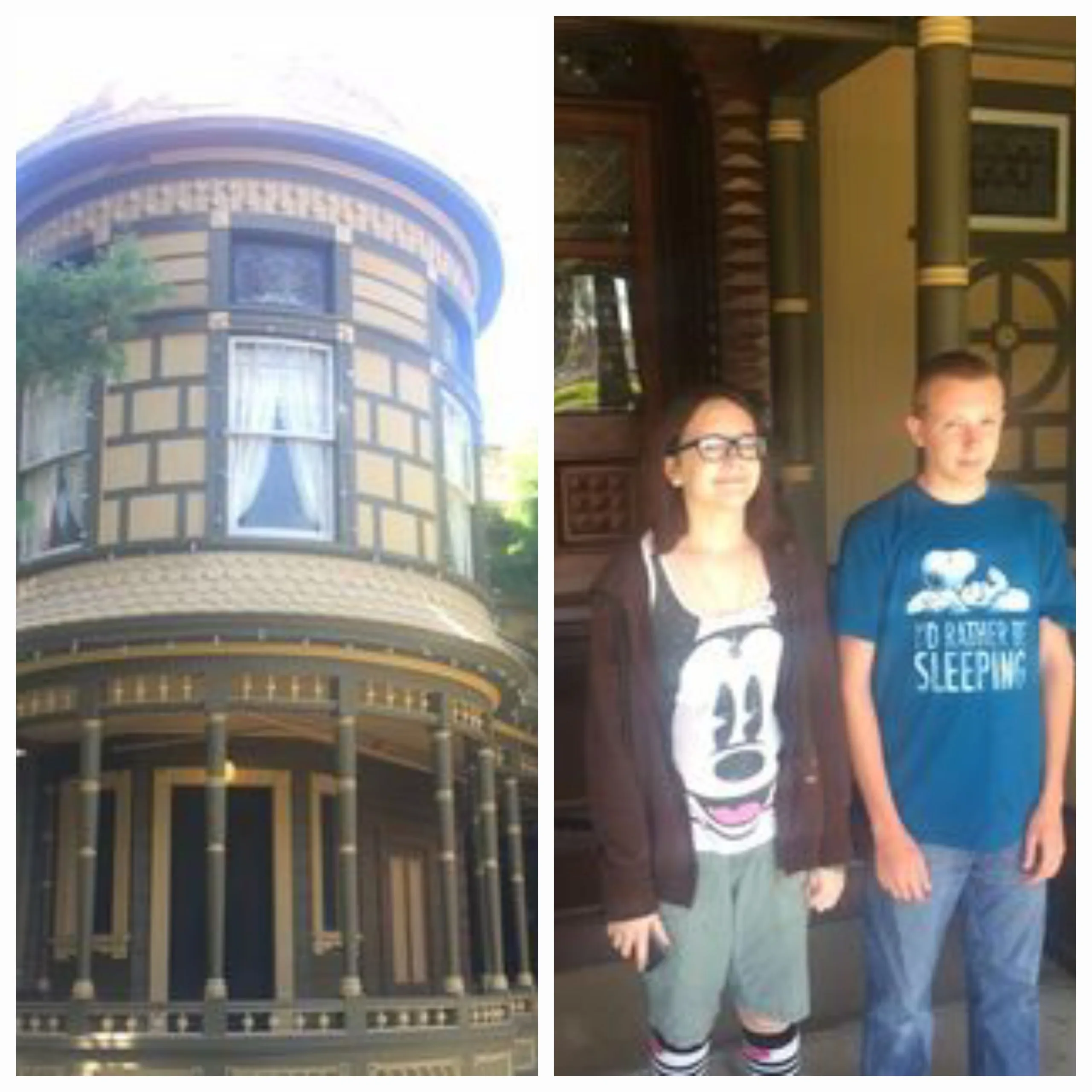
2015--The Winchester Mystery House, San Jose, California, United States of America

Winchester House

After leaving Alcatraz, and San Francisco, behind, my parents, brother, and I traveled to San Jose, in order to visit the famous Winchester Mystery House.

To learn more about the house and its famous owner, check out my article on Mrs. Winchester herself, here.

Between 1886 and 1922, Sarah Winchester converted an eight bedroom farmhouse into a confusing mansion with the following features (according to the official Winchester House website, which you can access here).

-24,000 square feet
-10,000 windows
-2,000 doors
-160 rooms
-52 skylights
-47 stairways and fireplaces
-17 chimneys
-13 bathrooms
-6 kitchens
-Built at a price tag of the $5 million dollars in 1923 or $71 million today

My family sprang for the fancy tour, so we were allowed to see the inside of the mansion as well as some of the outer buildings. Unfortunately the tour did not allow for guests to take photos inside of the mansion, so enjoy our crusty, low-quality photos of us outside the house instead!

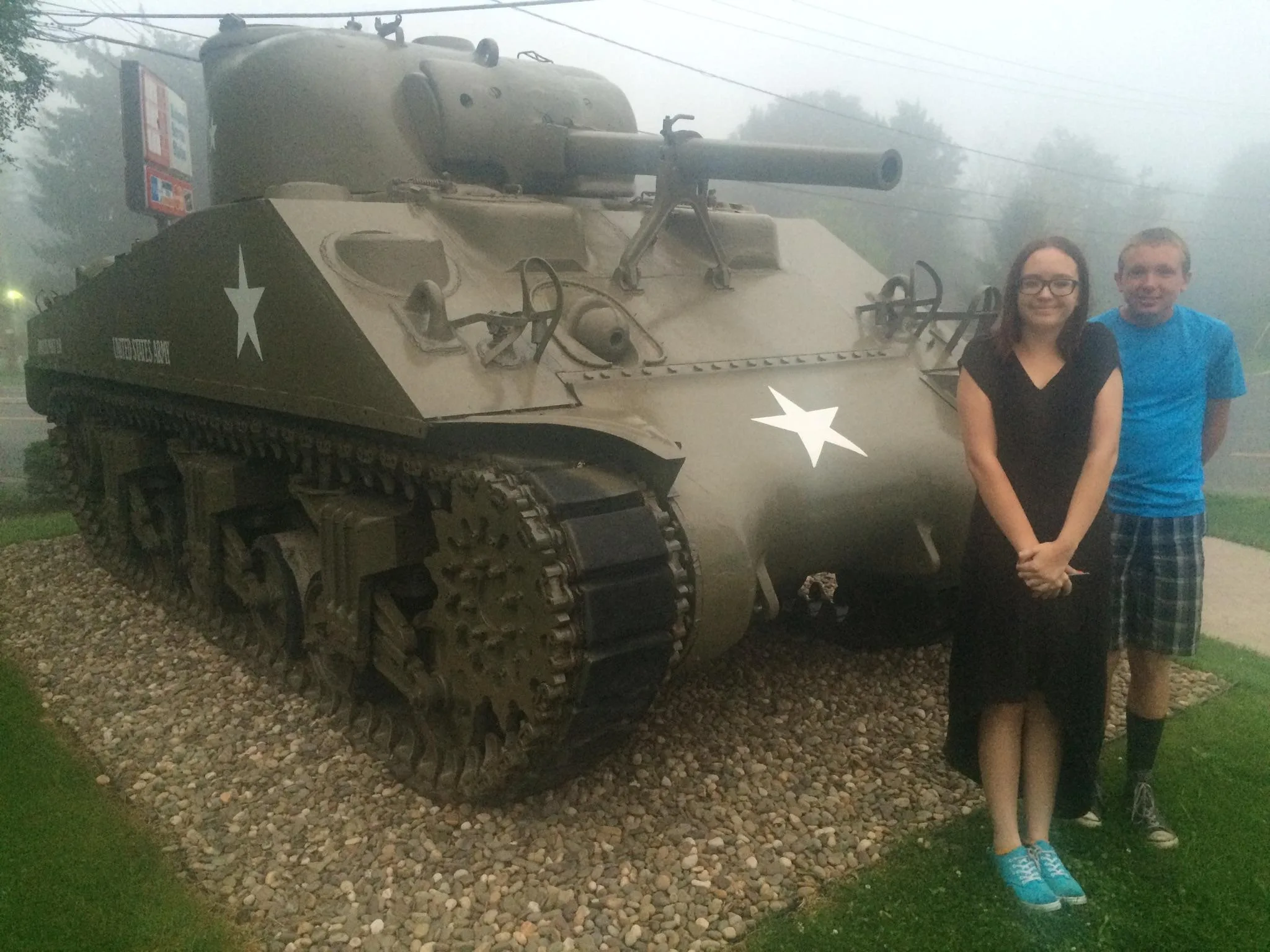
2015--Visiting a Random World War II Tank in Pennsylvania, United States of America

Logan and Zoe in PA

For my brother's eighteenth birthday, our dad took us on a trip back east to visit his family's farm in Pennsylvania. While we were out driving around, we stumbled across an M4 Sherman Tank just parked on the side of the road. I don't know why an actual World War II tank is sitting in Philipsburg, Pennsylvania, but I got a photo of it! So, enjoy!

2015--Gettysburg Battlefield, Gettysburg, Pennsylvania, United States of America

zoe goofing off, gettysburg
Gettysburg 2

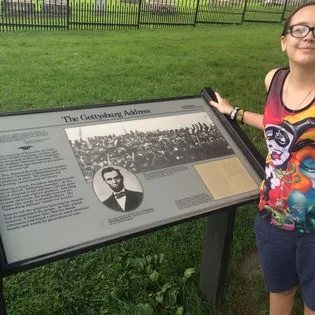
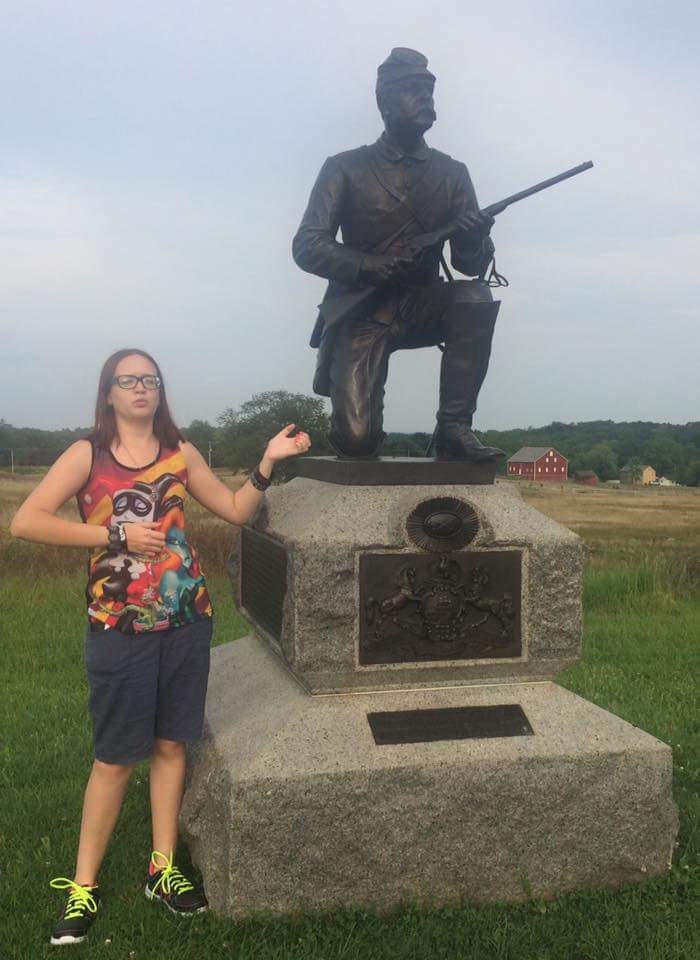
Once again I find myself apologizing for being a goofy fifteen year old. I know now this is not the most appropriate pose for a person to be taking while standing on a literal scarred battlefield, but what can I say I was fifteen and thought it was a good idea.

Anyway! On that same trip for my brother's birthday I mentioned earlier, my dad also took us to Gettysburg, which is both a town people live in and also a National Park, which was really cool to experience firsthand.

For those unaware, Gettysburg was the site of one of the most horrific battles during the War Between the States (and according to the Gettysburg website, linked here, it was actually the largest battle of the entire conflict). The battle occurred over three days in July of 1863, during which time over 51,000 soldiers either died, were wounded, or declared missing--in THREE DAYS.

Immediately after the battle, residents of Gettysburg and preservationists began efforts to ensure Gettysburg would remain as a testament and memorial to those who died. In 1895, the land where the battle had taken place was declared a National Military Park, and in 1933 the area was re-designated to become a part of the National Park Service.

Today, visitors to the park can take a driving tour from their own vehicles, to scout around the area and see just how massive the battle was. There is also a museum and walking areas as well.

2015-Arlington National Cemetery, Arlington, Virginia, United States of America

Arlington

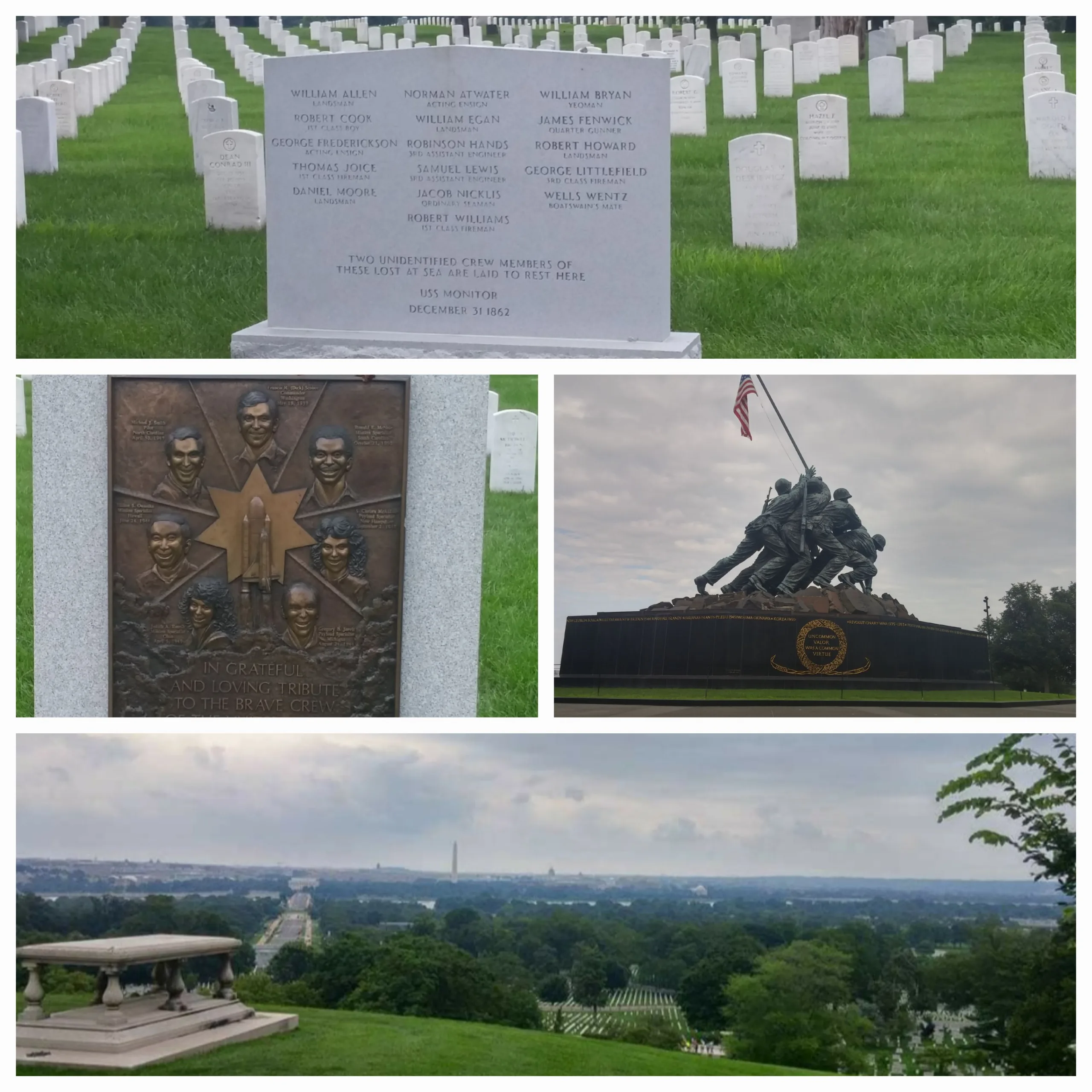
While on that same trip when I was fifteen, we also visited Arlington National Cemetery, the most hallowed burial ground in the United States--but it did not start out that way.

For a more complete history of Arlington, check out my article on its most famous owner, Mary Custis Lee. The short version is this: Mary owned the property and happened to be married to General Robert E Lee, the most famous Confederate General during the War Between the States.

After General Lee went off to fight in the war, his wife and family fled further down into the Confederacy (because Arlington is within sight of Washington DC, which was the capitol of the United States still).

Soon after, it became time for the Custis Lee family to pay their property taxes. Because the United States federal government was upset with General Lee for choosing to fight with the Confederate army, the federal government seized the property after the Lee family failed to pay their taxes.

Soon after seizing the property, the Union army began burying their dead at Arlington. The military did not begin the burials because of Arlington's beautiful and scenic views however. Unfortunately, the burials began to spite the Custis Lee family.

After the conclusion of the war, the Custis Lee family then spent several years fighting with the federal government over the property. Eventually, the federal government purchased the land from the Custis Lee family and continued to bury military veterans there.

As I said, this is an extremely shortened version of events, so please read Mary Custis Lee's biography here on my website or check out the Arlington National Cemetery website here to learn more.

When I visited the cemetery in 2015, I was stunned to not only learn the history behind the property, but also to take in the breathtaking views as well. There are thousands and thousands of graves as far as the eye can see, as well as countless memorials, statues, and other tributes to those who gave their lives for their country. Arlington has graves dating from the Revolutionary War (graves that were re-interred at the cemetery after the creation of the graveyard) all the way to today. According to Arlington's website, they conduct between twenty-seven and thirty funerals every week day and several on Saturdays as well.

If you happen to be in the Washington DC area and have spare time, I highly recommend visiting Arlington National Cemetery to see, honor, and remember.

2015--Washington DC, United States of America

Washington DC
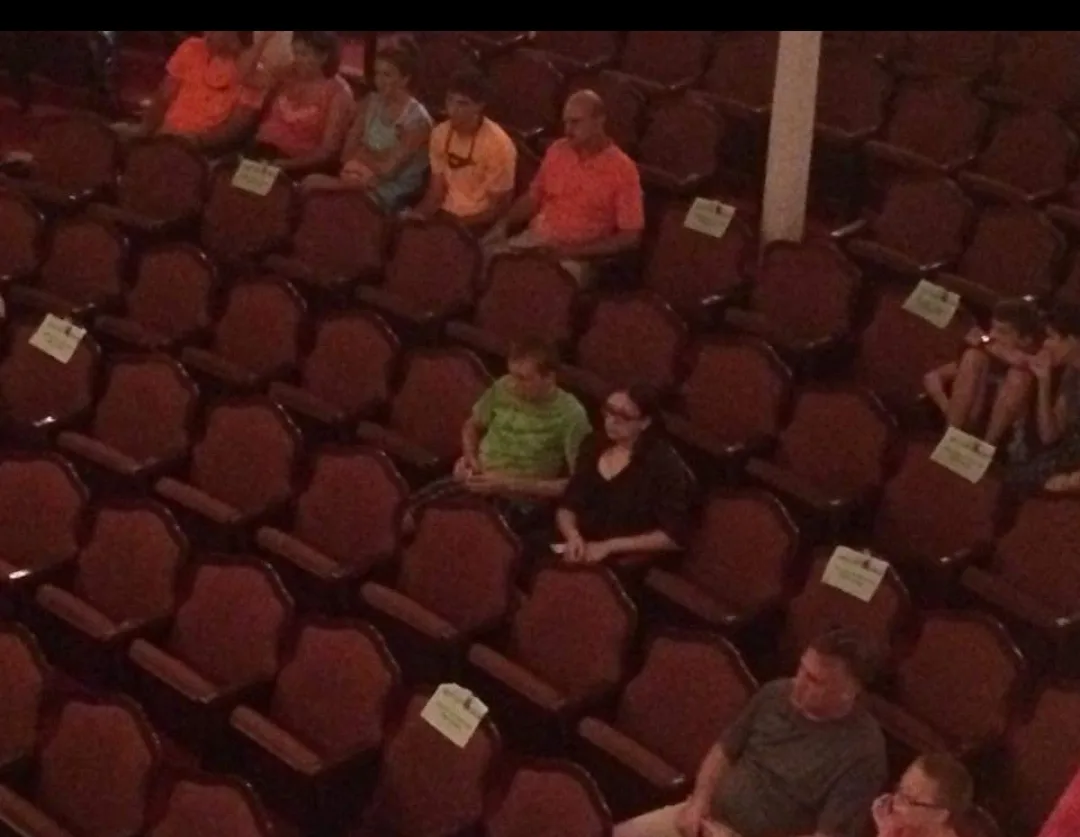
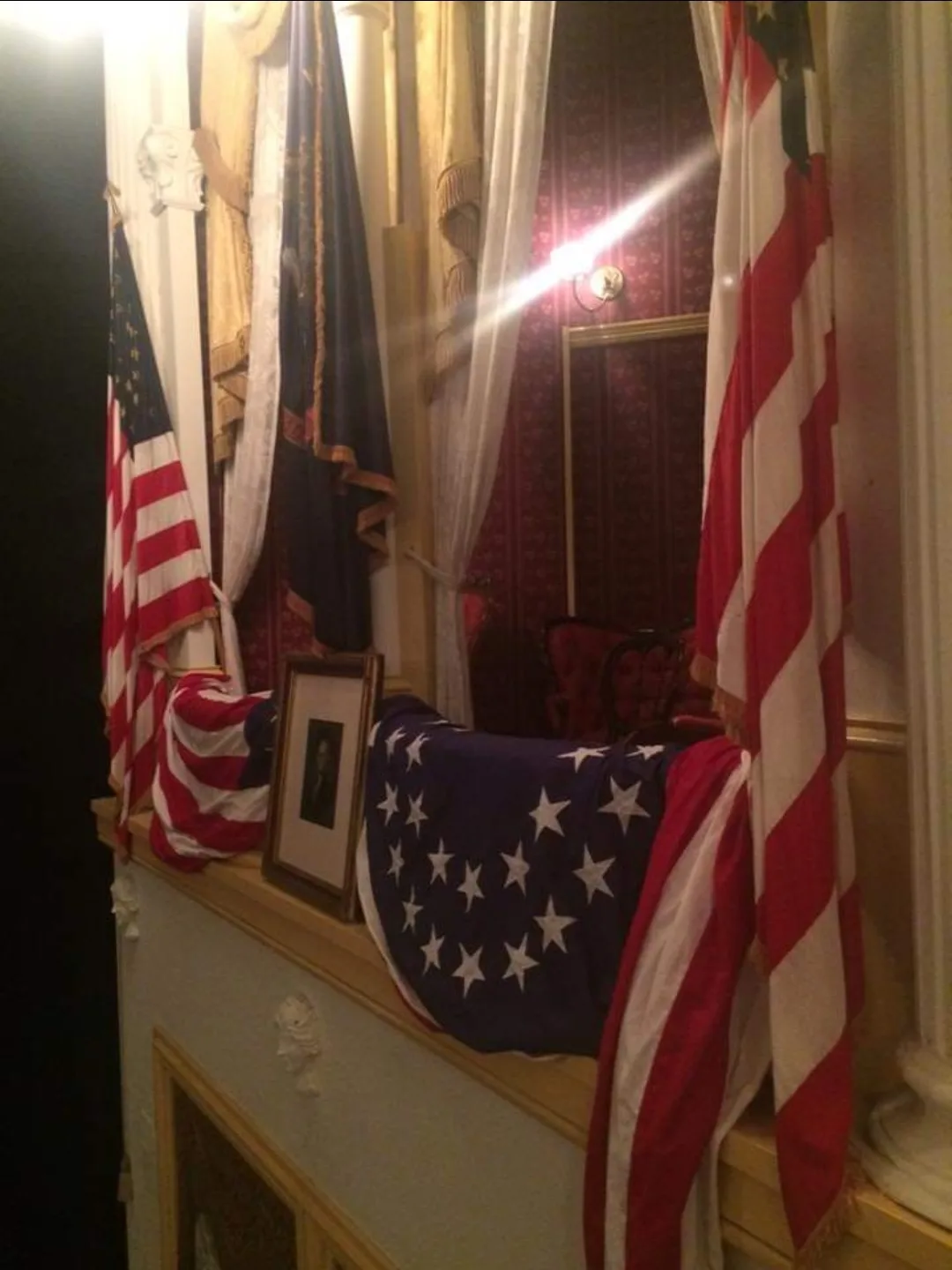
Zoe and her brother in Ford's Theatre
The Presidential Box at Ford's Theater

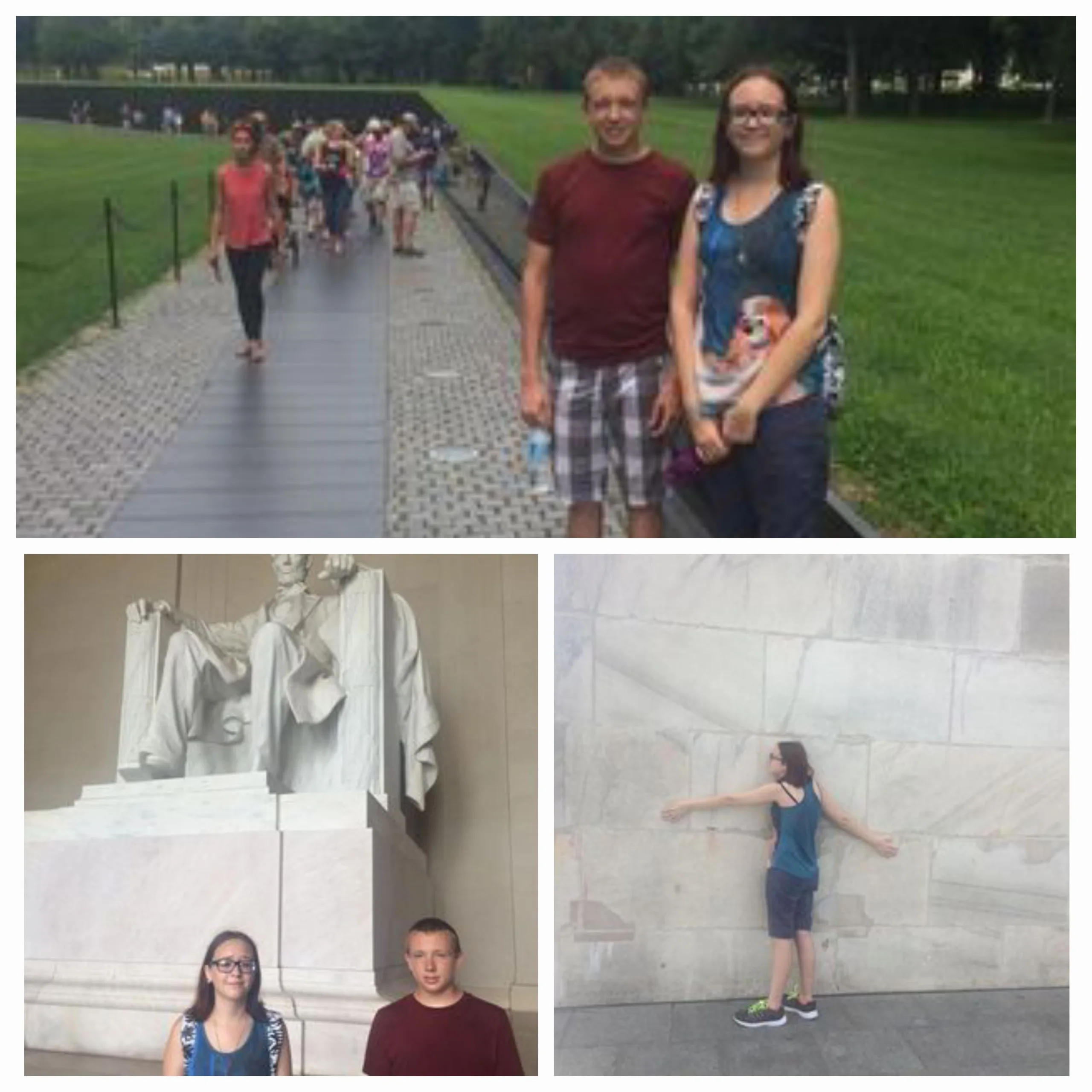
Why we thought visiting Washington DC in July was a good idea, I don't know, but we did! While in DC, we saw all the major sites--the Vietnam War Memorial, the Abraham Lincoln Memorial, and the Washington Memorial are pictured here, alongside our stop at Ford's Theater. We also stopped the White House and the US Capitol Rotunda. And we did it all while drenched in sweat from the humidity!

2015- The American Civil War Museum/White House of the Confederacy, Richmond, Virginia, United States of America

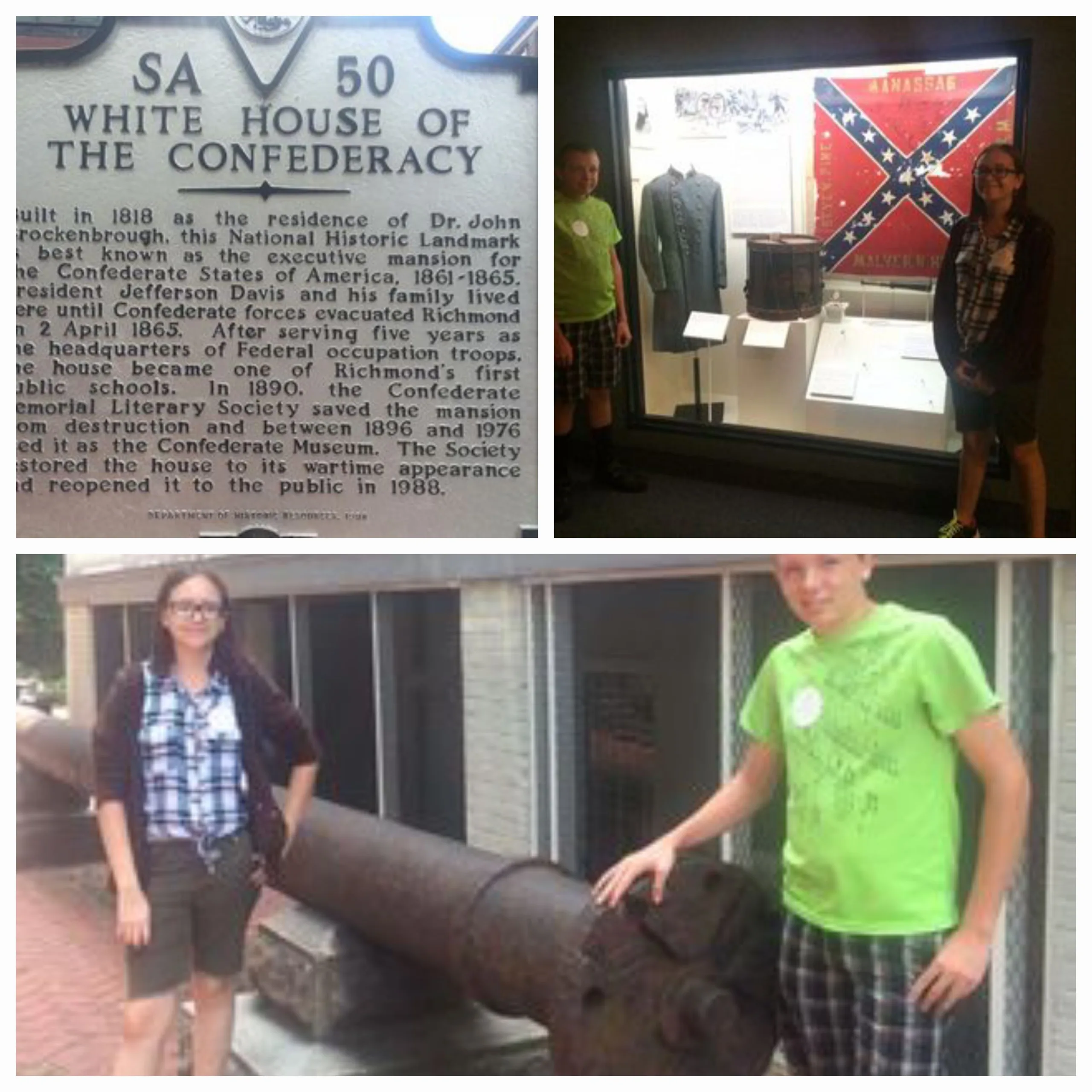
White House of the Confederacy

A little known historical place to visit is located in Richmond, Virginia. "The White House of the Confederacy" is exactly what it sounds like, the executive mansion and home of President Jefferson Davis and his family during the War Between the States.

Today, the home is open for tours, which my dad, brother, and I went on. Attached to the house is a museum dedicated to taking a more nuanced take on the War Between the States, which was also very interesting. To learn more about both the house and the museum, visit their website here.

2015-The Mariner's Museum, Norfolk, Virginia, United States of America

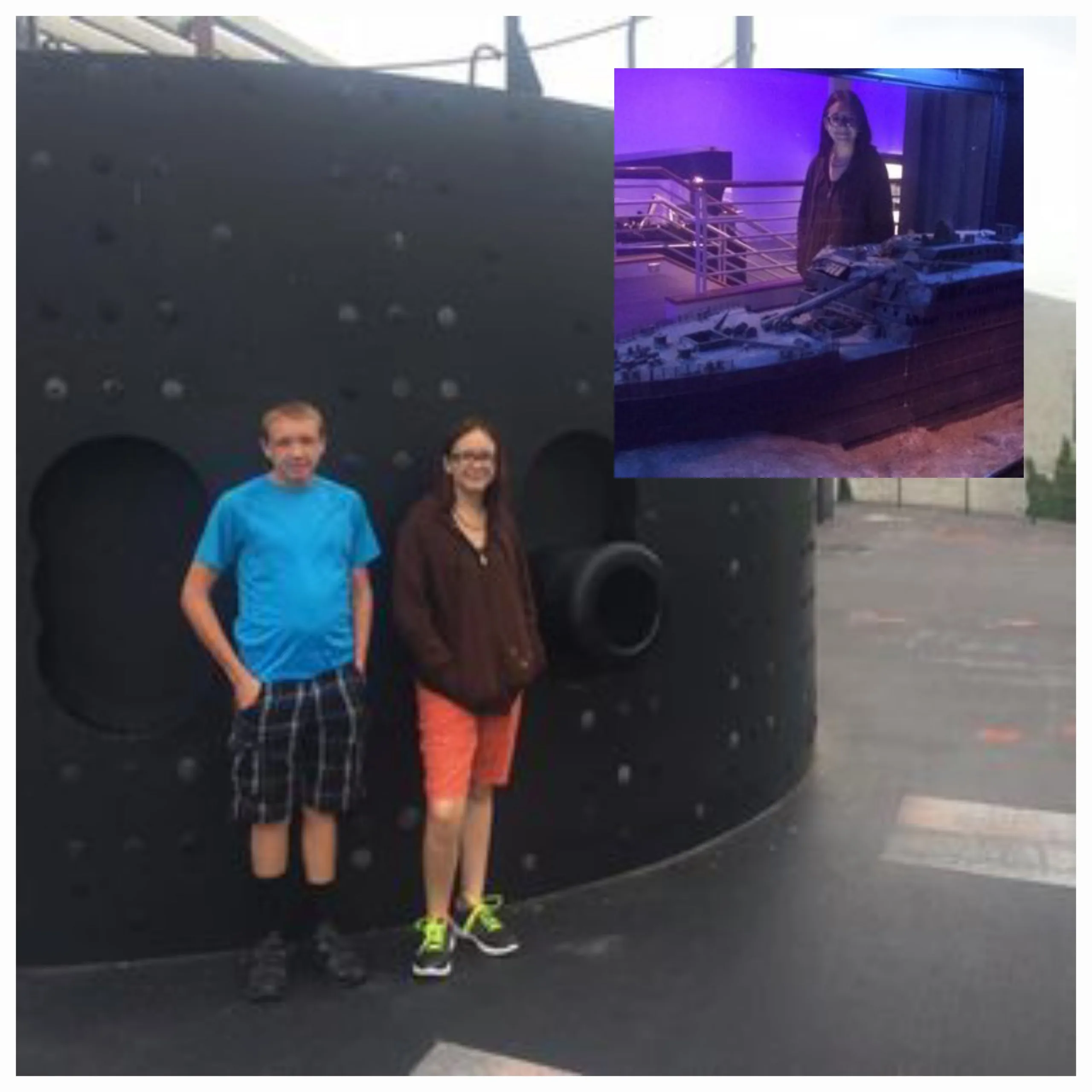
Mariner's Museum
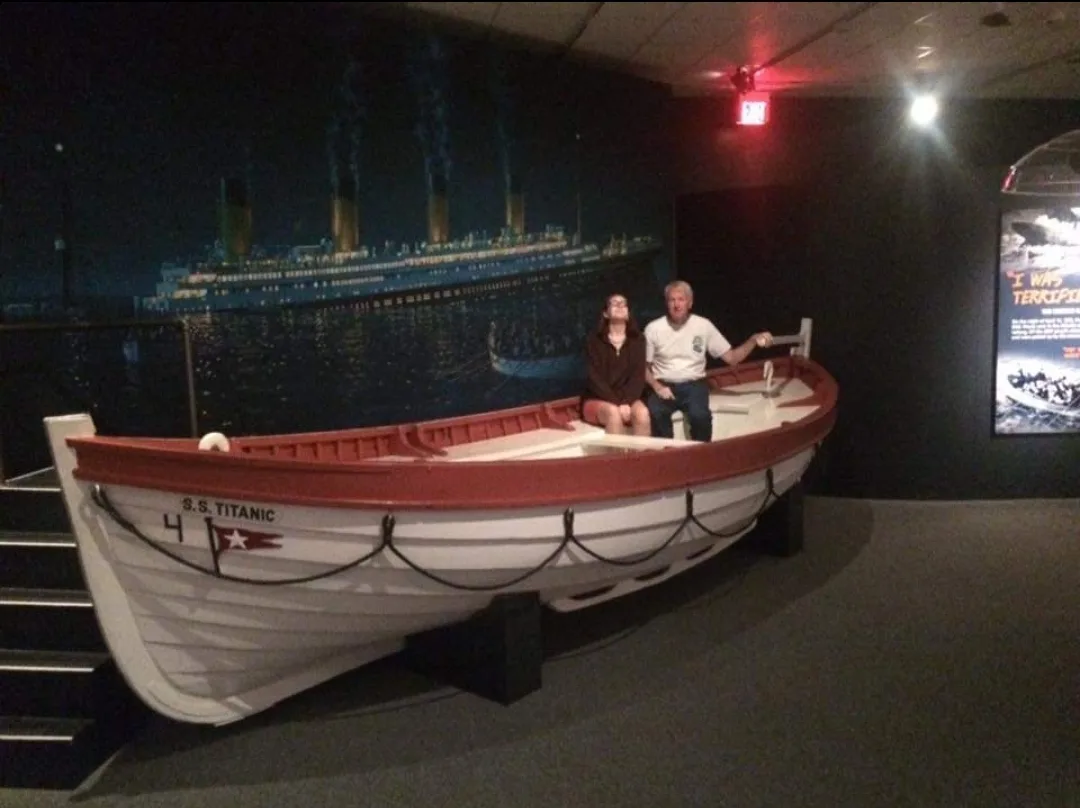
Zoe and Jerome in a replica Titanic lifeboat

While we may have traveled to the east coast to celebrate my brother's birthday, my dad told me I could pick a few museums I wanted to see myself. Number one on my list was the Mariner's Museum in Norfolk, Virginia. The reason? My favorite battle to research from the War Between the States happened extremely close by, the Monitor vs the Merrimack, the world's first ironclad battleship battle.

Not only is the museum extremely close by to the battle location, but, the museum also holds the recovered pieces of the Monitor itself, which was lifted from the sea floor in 2002 and brought to the museum for preservation.

The museum dates all the way back to 1930 and remains open to this day. Also included in the museum are other artifacts and exhibits, including those from the RMS Titanic.

To learn more about the museum, visit their website here. 

2016--Visiting Old Ironsides, also known as The USS Constitution, Boston, Massachusetts, United States of America

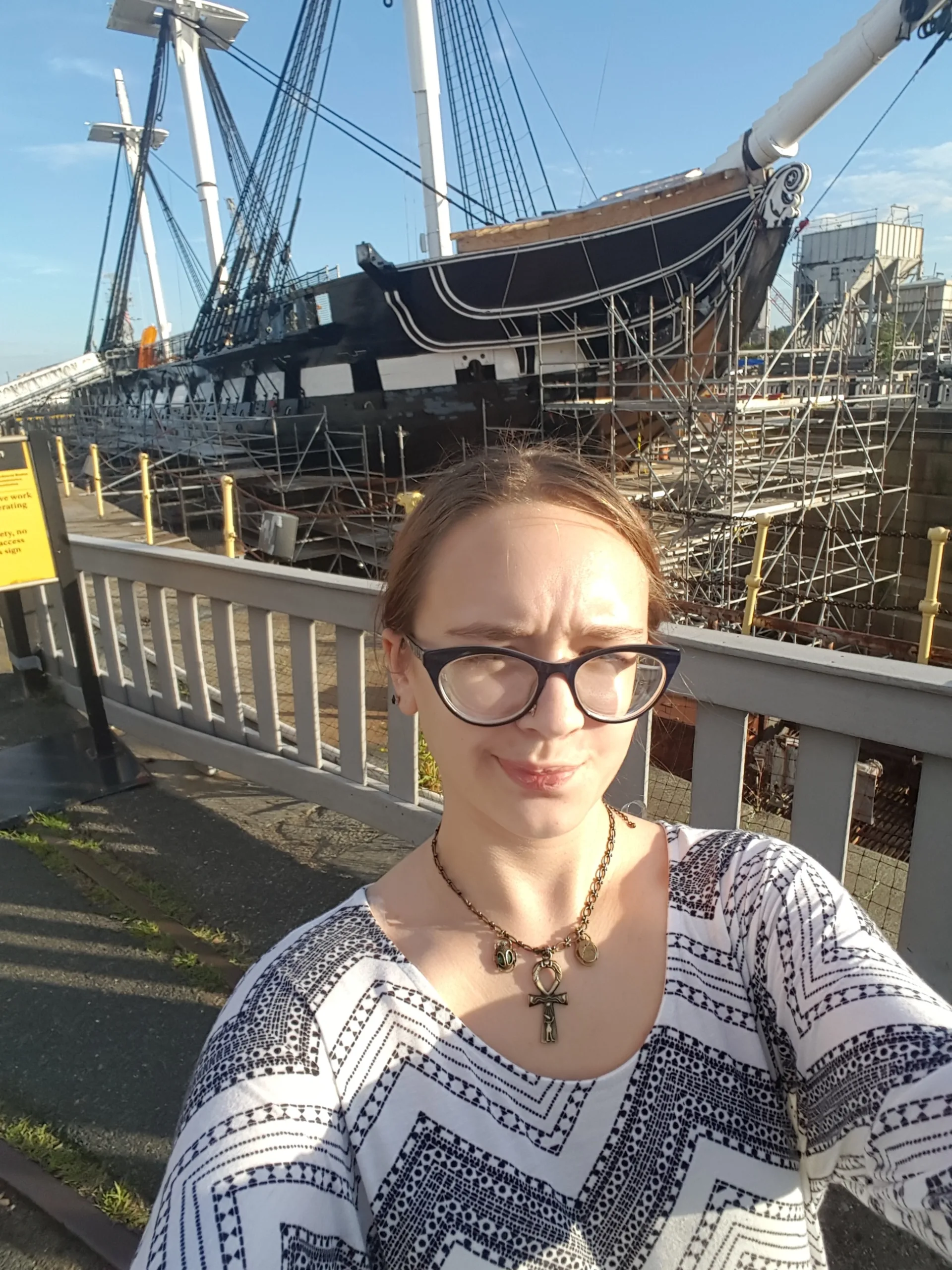
Zoe with the USS Constitution, Old Ironsides

When I was sixteen, my dad and I took a trip to Massachusetts, New York, New Jersey, Vermont, New Hampshire, Connecticut, and Rhode Island. We landed in Boston, and unfortunately the museum for the USS Constitution had just closed for the day! So while I did not get a chance to go into the museum, I did get this quick selfie with the ship herself.

For those who do not know her history, the USS Constitution was designed and built between 1794 and 1797. Yes, you read that right, 1797.

The Constitution was one of six frigates created under the order of President George Washington, in order to create the fledgling United States' first true navy. It took three launches before she finally became truly seaworthy, and in 1798, the Constitution completed her first long-distance journey, sailing all the way to the Caribbean islands. Over the next thirty-two years, the ship would see battle in several conflicts along the Eastern Seaboard and garnering fame as she did so.

In 1830, rumors began to swirl that the Constitution would be scrapped. As a rallying cry to save the aging ship, Oliver Wendell Holmes Sr wrote a now-famous poem defending the ship, by-then nicknamed "Old Ironsides." This poem and public interest helped ensure the Constitution would survive being decommissioned and scrapped.

Between 1844 and 1846, the Constitution completed a sailing journey around the world. In all, she sailed 52,370 miles during that one journey.

By August of 1860, the Constitution was removed from active military duty and transformed into a naval school ship instead. To be fair though, by then the ship had been rebuilt several times and was sixty-three years old!

For the next several decades, the ship would serve as a training vessel for naval academy students as well as a transport vessel. In 1925, schoolchildren across the country would raise $154,000 in order to facilitate the latest round of restoration work for the ship.

In 1976, the USS Constitution Museum officially opened in the Charlestown Navy Shipyard. That same year, a group of white oak trees in Indiana are specifically set aside and designated for future repairs the ship might need.

In 1995, a copper spike from the ship went to space on a mission on the space shuttle Atlantis! Two years later, the Constitution would set sail under her own power for the first time in 116 years. She celebrated her 200th birthday in 1997.

All of these dates were provided by the official USS Constitution timeline posted on the museum's website, located here.

As you can see from my photo, when I visited the ship she happened to be undergoing her latest round of renovations, hence the scaffolding all over her. But even though I didn't get to spend as much time with the ship as I would have liked, it was still really cool to see a piece of history almost as old as the United States itself.

2016--Springfield Armory National Historic Site, Springfield, Massachusetts, United States of America

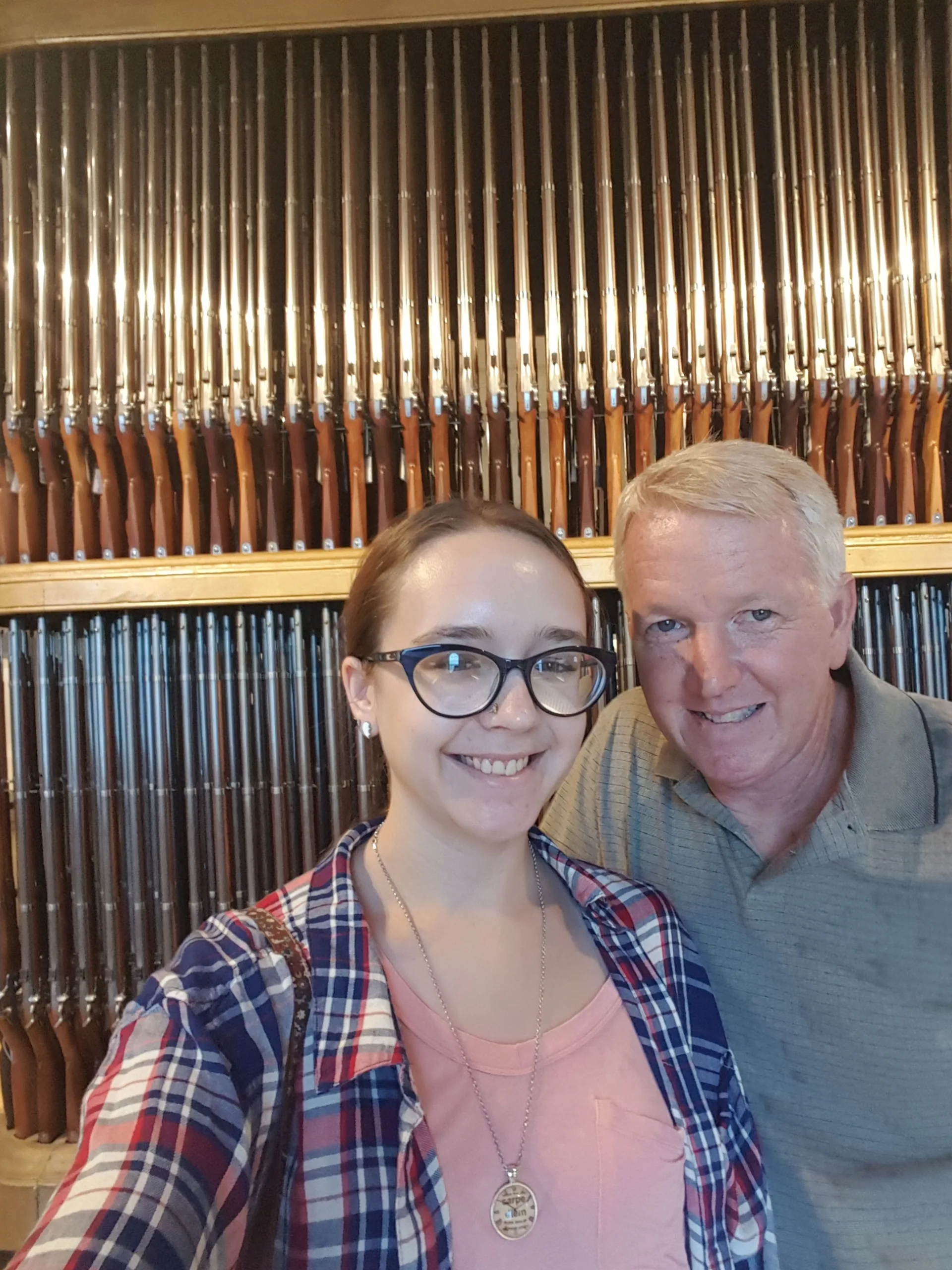
Springfield Armory

I think everyone knows the best adventures are the ones that happen on accident.

During my dad and I's trip back east, during which time we saw the USS Constitution, we also visited Springfield Armory, by accident.

We were driving along the freeway through Massachusetts when my dad pointed to a brown road sign on the side of the freeway.

"Springfield Armory!" he shouted excitedly before quickly changing lanes and exiting the freeway.

"What's Springfield Armory?" I remember asking him confused.

Little did I know, Springfield Armory is a hidden National Park that not enough Americans know about. I knew I had found a special place to hold in my heart when the first park ranger we met quickly introduced himself and then said:

"If you have any questions I will be right back! I left my car windows down and its about to rain. Be right back!"

Then he ran out the door we had just walked through, jingling his car keys as he went!

Springfield Armory began manufacturing muskets in 1794, but dated back a few years earlier, to when General George Washington declared it as a holding arsenal for the Revolutionary War Soldiers. The last weapons manufactured at Springfield Armory were produced in 1968, after two hundred and four years of continual manufacturing. Let me restate in case you missed it the first time--204 YEARS.

In 1978, Springfield Armory reopened as a National Historic Site, continuing to provide educational materials to guests to this day. The Armory holds the world's largest collection of American military firearms. To learn more about the armory, visit their website here.

2016-- 9/11 Memorial in Jersey City, New Jersey, United States of America

9-11 memorial

While on the same trip to New England with my dad, we stopped at multiple places in Manhattan, but also stayed at a hotel in Jersey City.

No offense New Jersey, but that was the most disgusting hotel room I have ever stayed in.

Anyway! While on that side of the river, we also stopped at the 9/11 Memorial, which was one of the most haunting and moving spots I have ever visited. Here I am standing alongside some of the rubble taken from the site of the Twin Towers.

2016--Ellis Island and the Statue of Liberty

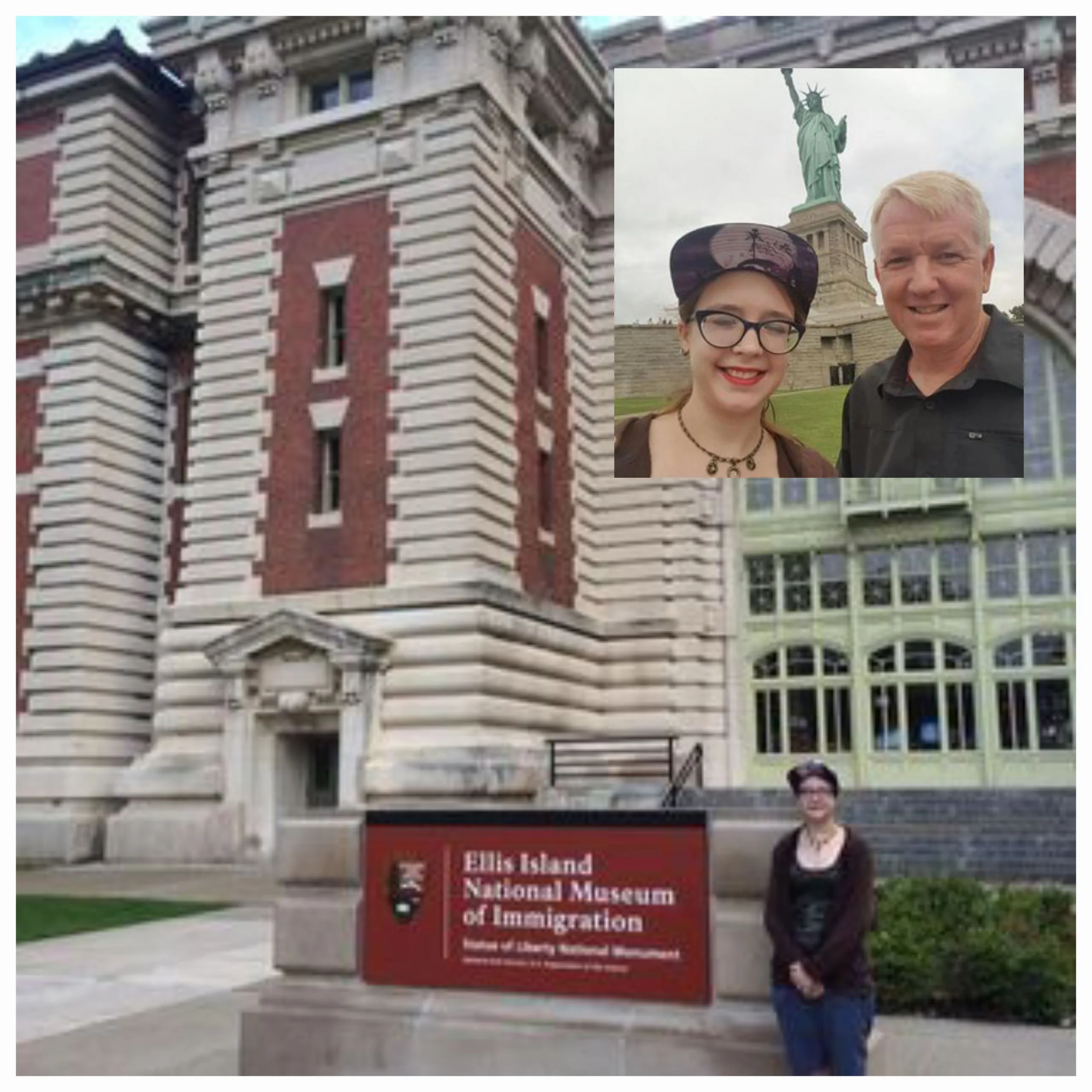
Ellis Island and Statue of Liberty

Once again I must apologize for my awful sense of fashion. I was sixteen and...well there's really no excuse for why I thought that was a good look. I also chose to wear extremely uncomfortable shoes and so I was miserable most of the day we were hiking around Manhattan, Ellis Island, and the Statue of Liberty.

With all that said, I did really enjoy the day, which started at Ellis Island.

For those who do not know, Ellis Island and the Statue of Liberty are both operated as part of the same national monument, which has been dubbed the "Statue of Liberty National Monument, NJ, NY" according to the park's website, which can be accessed here.

Ellis Island was operated as an immigration checkpoint for the Eastern United States between 1892 to 1954. During those years, over twelve million immigrants traveled the halls of Ellis Island to be inspected, both physically and on paper, before they were told whether or not they would be allowed to travel within the United States.

In 1965, Ellis Island became a part of the Statue of Liberty National Monument, as I mentioned above. Between 1976 and 1984, the island was opened to tourists wanting to visit, however, it was badly in need of repairs. $156 Million later, the island reopened for tourists in 1990, and has remained open ever since.

As for the Statue of Liberty, she has a history of her own.

The statue was first gifted to the United States by the people of France in 1886, and was designated a national monument in 1924. The National Park Service began caring for the statue in 1934, and today hundreds of tourists flood the island each and every day to get photos like my dad and I posed for.

You can make reservations to travel up inside the statue itself, all the way up to her crown, but my dad and I didn't have the time nor did we want to battle our way through the crowd either. To learn more about the statue or to plan a trip, you can visit the National Park Service website for the statue here. 

You can reach both Ellis Island and the Statue of Liberty by a ferry. My dad and I embarked on our journey from New Jersey, and ended up in Manhattan where we continued on as tourists for the day.

2016- The Metropolitan Museum of Art, Manhattan, New York, United States of America

The Met

Ah, the Met. One of the most well-known art museums in the world, thanks to celebrity functions like The Met Gala that happens every year.

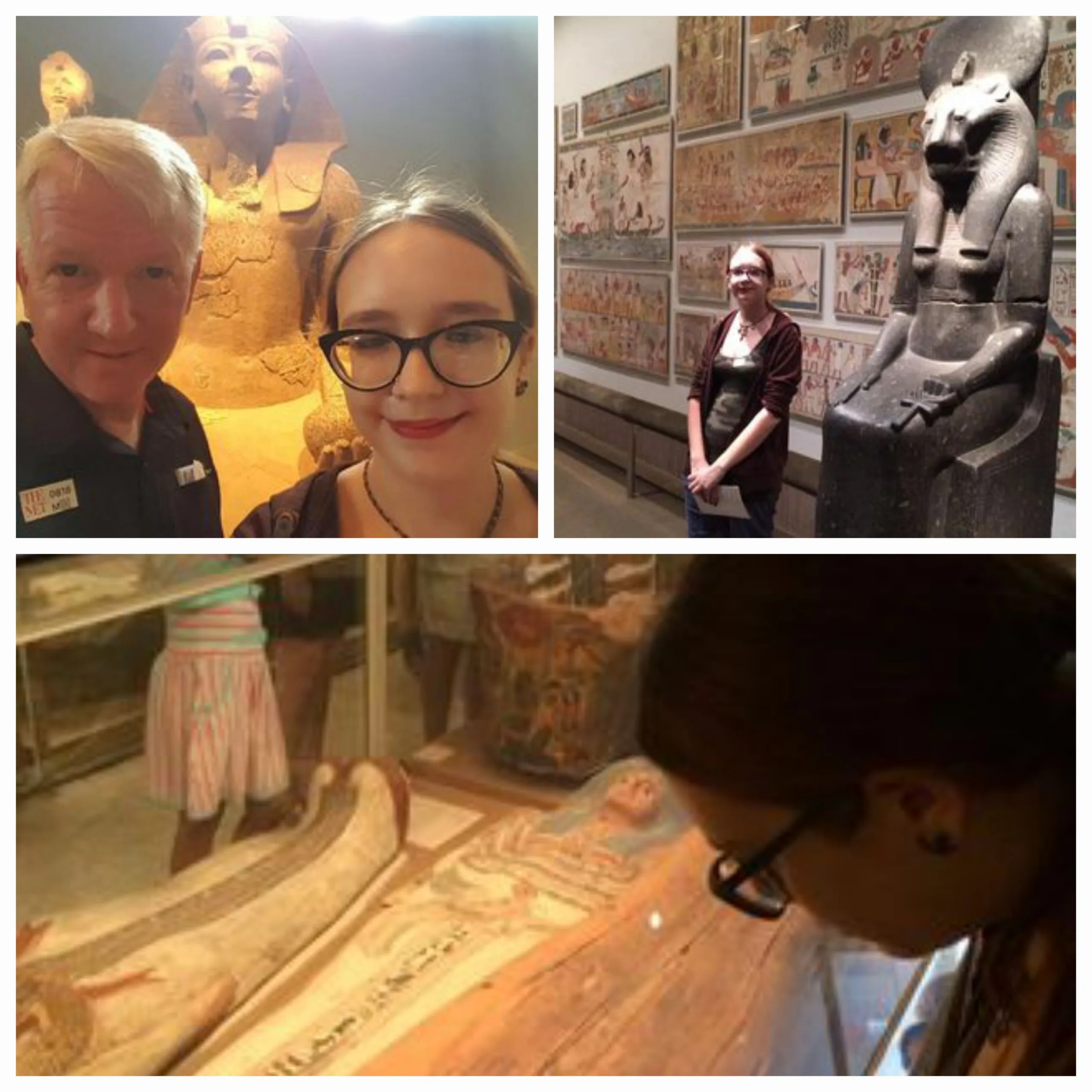
When I visited the Met, my dad and I were in a bit of a hurry, so we didn't get to see the entire museum. We did, however, spend a large amount of time in the Ancient Egypt wing. I don't have a photo of it here, but my favorite artifact in the entire Met was the actual floral wreath that was placed over Pharaoh Tutankhamun's mummified remains.

The history of the Met begins in 1866, when a group of Americans in France decided to bring art and art history to the United States in order to better educate the American public. In 1870, the Met officially opened its doors on Fifth Avenue, however it was a different Fifth Avenue location from where it is today. The museum would not open at its current site until 1880.

To learn more about the Met and its various collections that are on display, visit their website here.

2017- Tortilla Flat and Hayden, Arizona, United States of America

Tortilla Flat

When I was seventeen, my dad and I both decided I should probably learn to drive. A right of passage for most American youth, I already owned a car (I had bought a 1999 Mercury Grand Marquis from a friend of the family when I was fourteen for $2,000), and so all I needed to know was how to drive it.

You would think learning to drive would be fairly straightforward, and for a lot of teenagers it is. For me though? Not so much. For those who do not know their late 90s vehicles, my car was basically a boat. Picture a 90s police car--that's basically what I was driving just without the red and blue flashing lights.

And if you also don't know, I wear glasses and have extremely poor depth perception. So when it came time for me to learn to drive, my dad and I were in for a bit of adventure.

Most Arizonans living in the eastern half of the Valley of the Sun know exactly what Tortilla Flat is, but if you're an out-of-towner, I'll let you in on a little secret. Tortilla Flat is a tourist spot but is also the oldest still-operating stagecoach town in the state of Arizona, originally built in 1904. They even have a website, which you can access here.

Today, Tortilla Flat has a restaurant, a museum, and a gift shop. If you've driven into town, you've seen it all, but its still worth it to park and wander around for a bit. In order to get to Tortilla Flat, you have to drive along a long and winding road...with several cliffsides along side it.

If you ask my dad, he will heartily inform you that I nearly drove off several of those cliffs while learning to drive. In my defense! I had no idea where we were going at the time. My dad had me sit behind the wheel, and drive. He was giving me directions as we went. Luckily we didn't die! Or drive off a cliff! And now its a funny memory to look back on.

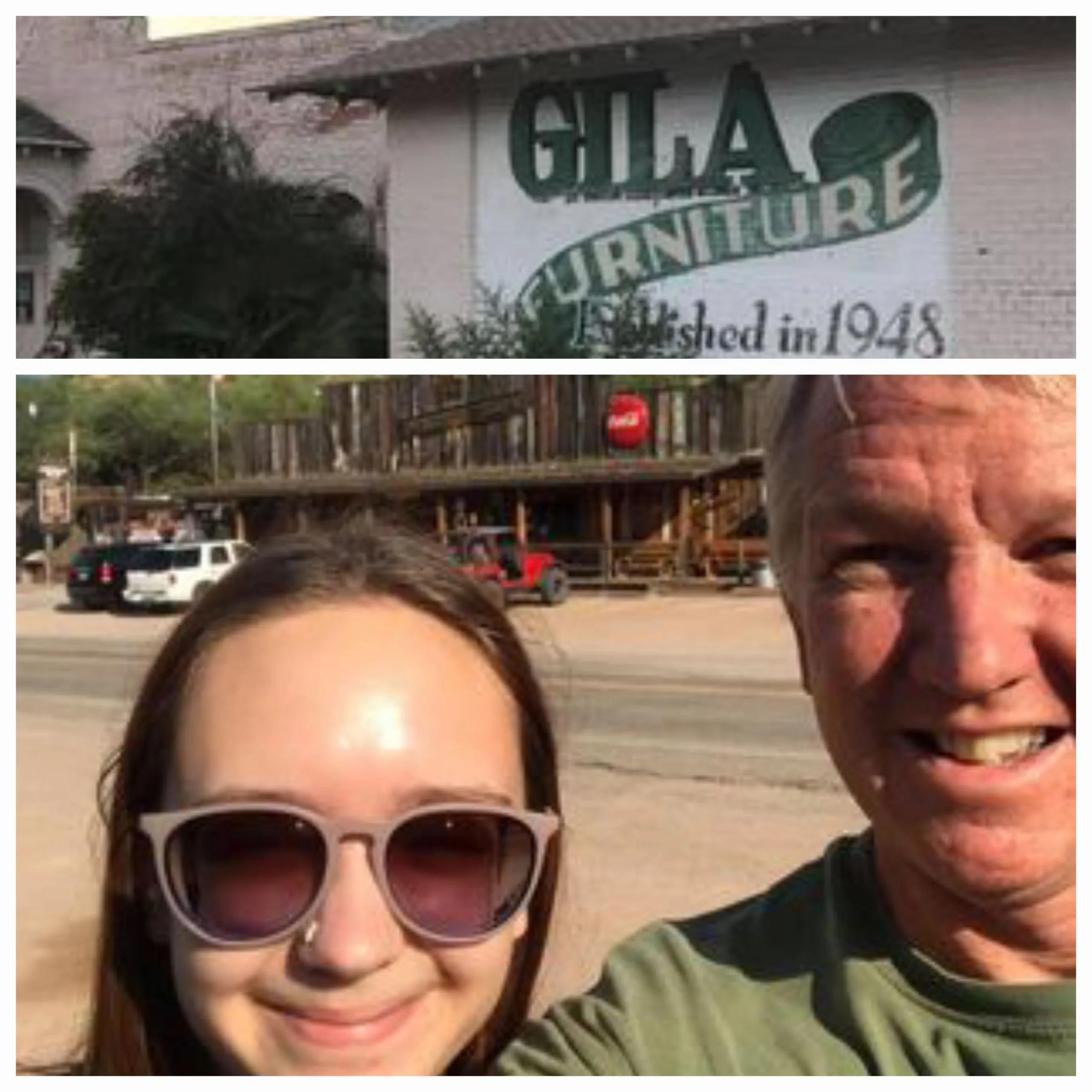
That same day, after leaving Tortilla Flat, we continued on our little road trip and headed out to Hayden, Arizona. If you've never heard of Hayden don't worry--I hadn't either. The town still has a few residents, but most of the buildings are abandoned. We drove out there because my dad used to sell furniture to a store out there called Gila, shown here, which opened in 1948. Hayden may be tiny, but they do still have an active website, which you can reach here.

2017-- Lincoln, New Mexico, United States of America

Lincoln NM

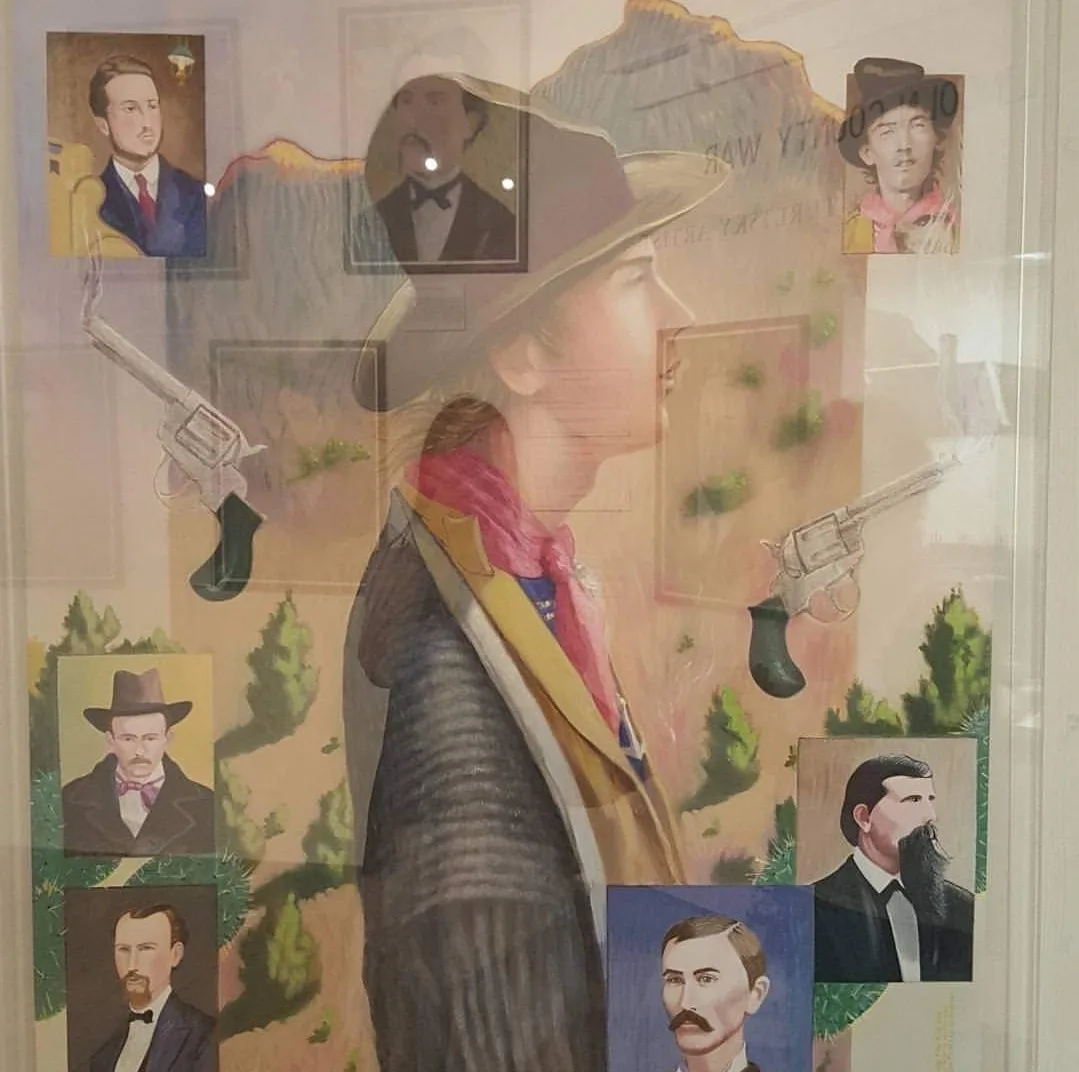
I can't believe this is the only surviving photo I took of my trip to Lincoln! While not much survives in Lincoln today, the tiny town was once the sight of one of the nastiest wars in the Old West, The Lincoln County War. And you know who the most-famous character to walk away from that war was?

Billy the Kid.

The Lincoln County War is a story that deserves a fully fleshed out retelling, which I don't have space for here, but the war took place because of local politics and street-vengeance. Some of the battles took place on the very streets tourists can now walk every day.

According to the Lincoln Historic Site website (which you can reach here), the little town is now the most-visited historic site in New Mexico. There are multiple buildings that have survived from the 1870s and 1880s, as well as gift shops and museums tourists can visit. This photo is of a painting of Billy the Kid and some other notable western figures involved in the local history at the time.

If you're ever passing through Southern New Mexico, I highly recommend stopping by Lincoln. Ruidoso, New Mexico is a short drive away and has beautiful sights and hotels to stay in. Another random fact--if you're in a rental car that does not have Bluetooth or an Aux Cord, you can tune into the local classic rock station, KIDX 101.5 "The Kid" named in honor of the area's most famous outlaw.

2017- Montezuma's Castle, Toozigut, Fort Misery, and Jerome, Arizona, United States of America

Montezuma castle
Fort Misery

At one point in 2017, my mom and I took a road trip around the area of Prescott, Arizona--unfortunately not many pictures of this trip survive. While we were driving around, we visited Prescott and Jerome, Arizona, as well as national monuments like Toozigut and Fort Misery.

I have actually visited Jerome three or four times throughout my life, but I don't have any photos somehow! So that's disappointing, but yes, Jerome holds a special place in my family's heart. Jerome has been dubbed the "Wickedest Town in the West" according to the town's website (which can be accessed here). Originally founded in 1876, Jerome eventually became the fourth largest city in Arizona, with a population of around 15,000 people in the 1920s. This number is incredible given the fact that the town is literally built into the side of a hill, and constantly looks like its about to collapse and fall.

No I am not kidding.

The population today has shrunk to around 400 people, but its a thriving tourist spot and has a major scene in the art world, alongside its close-by neighbor Sedona.

To learn more about Jerome here on my website, you can read articles on its most famous Madam, Jennie Bauters, as well as the town's strange connection to Winston Churchill through his mother, Lady Randolph Churchill.

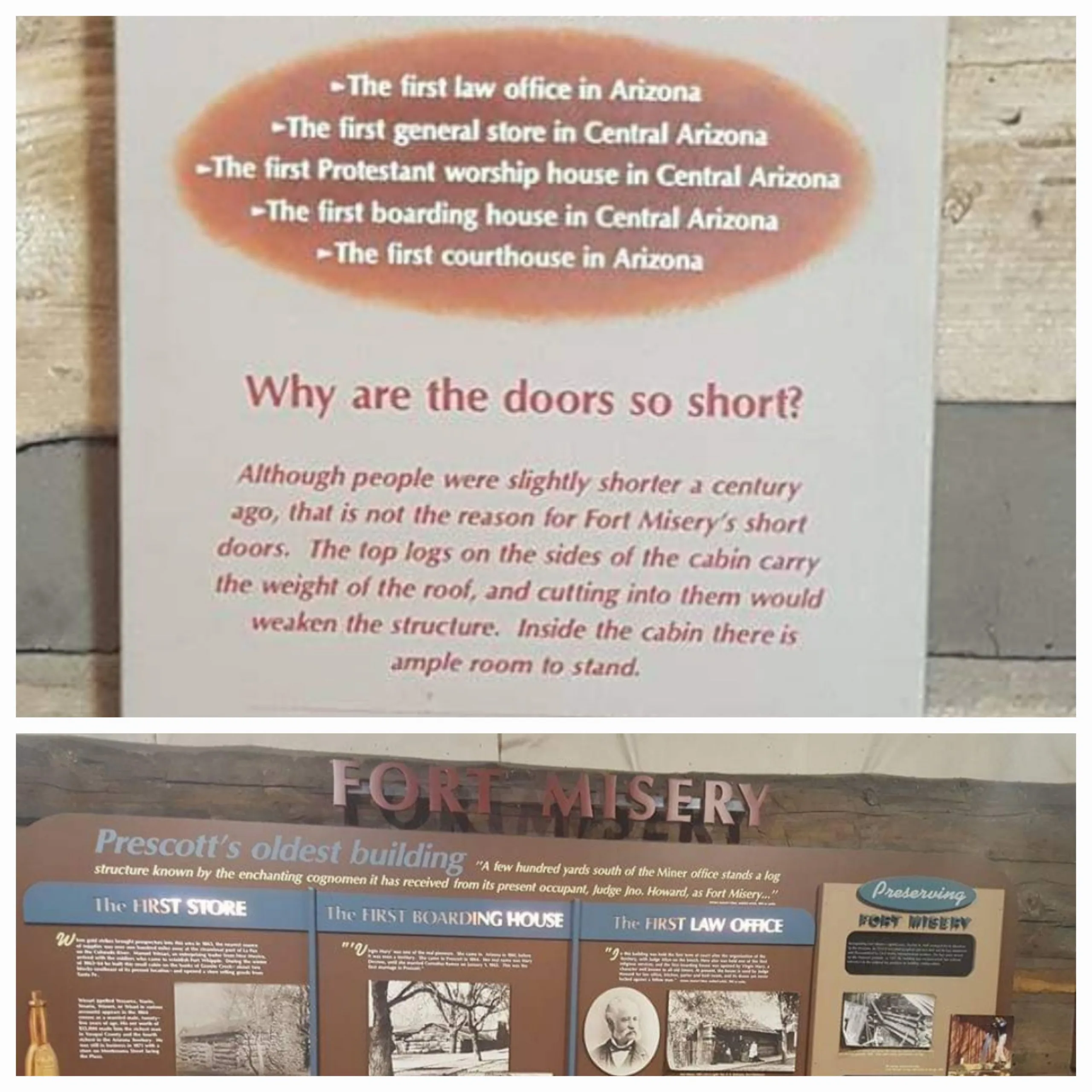
Fort Misery, on the other hand, has been deemed the oldest still-surviving log building in the state of Arizona. Originally built in either 1863 or 1864, today the log cabin has been moved from its original site to now being a part of the Sharlot Hall Museum (which you can read more about here). My takeaway? The doors were really, really, short.

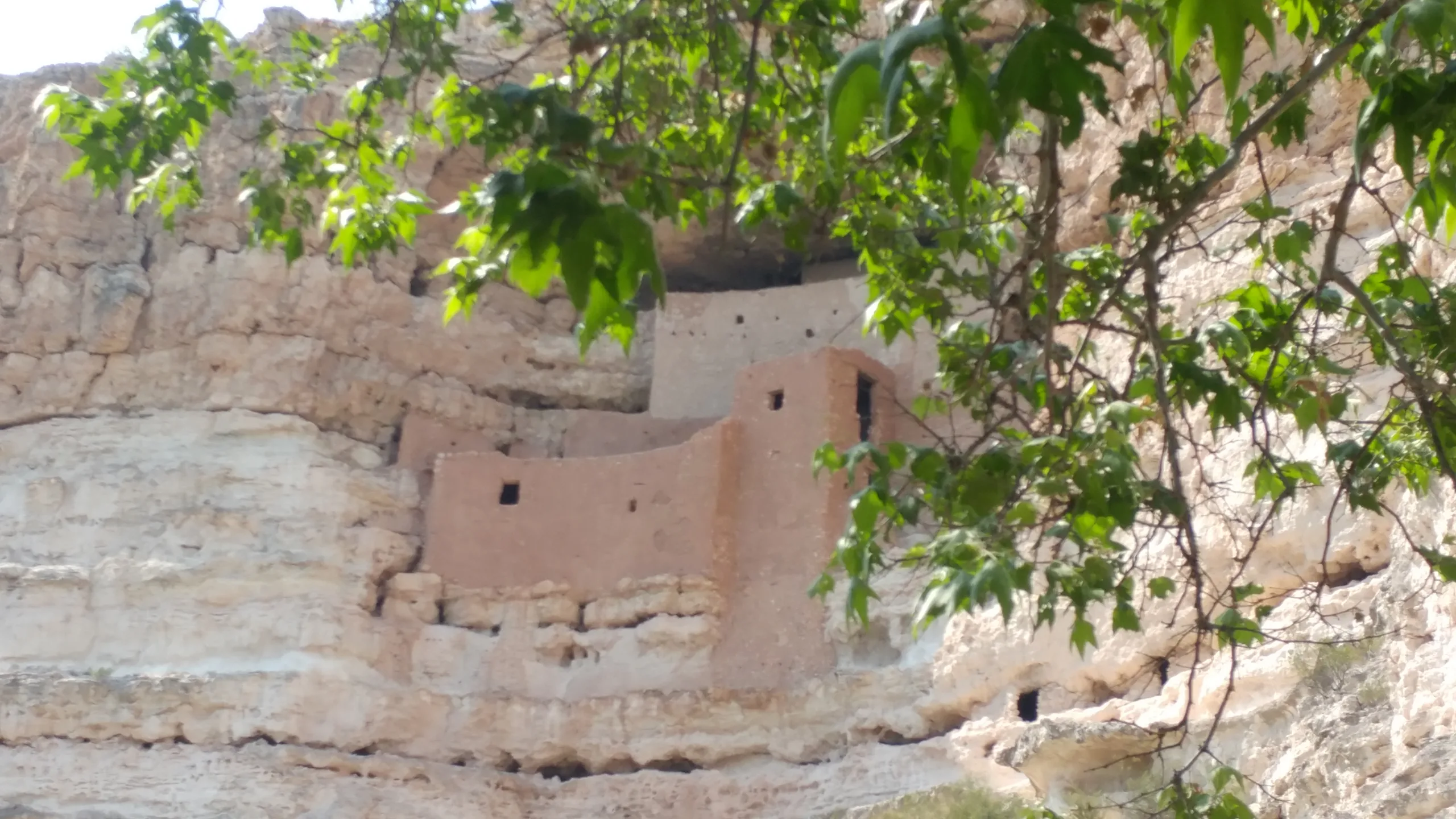
Because no trip around Arizona would be complete without visiting Native American sites as well, my mom and I also stopped at Montezuma's Castle, pictured above, and Tuzigoot National Monument.

Best estimates from archaeologists date Montezuma's Castle to around 600 years ago, when the Sinagua people called it home. Built into the side of a cliff, Montezuma's Castle is a pueblo ruin comprising of over forty ruins. Archaeologists theorize that the Sinagua people lived in and around Montezuma's Castle for four hundred years.

The site was one of four national monuments created in 1906 by President Theodore Roosevelt, making it one of the oldest historic landmarks to be declared a national monument in the United States.

Early visitors could actually step foot inside the ruins thanks to scaffolding ladders that had been erected on the cliffside, but extensive damage to the ruins by tourists eventually made it so that the public was no longer allowed access after 1951.

The closest visitors can get today is from where I took the photo you can see above. The reason why it is so fuzzy is because I had to zoom in quite a bit on my phone's camera. While its disappointing that we as the general public can no longer get closer, at least the site will be preserved for generations to come.

To learn more about Montezuma's Castle, you can read about it on the park's website here.

As for Tuzigoot National Monument, this pueblo structure holds over 100 rooms inside and was occupied by several hundred people for several hundred years.

The site was abandoned by the Sinagua people sometime in the 1300s and was left abandoned until the 1930s. At that point, archaeologists excavated the site and in 1939 it was turned into a national monument. To learn more about Tuzigoot, you can read about it here.

I don't have any photos that survive from my time at Tuzigoot, but I did purchase one of the most interesting books in my entire collection while there, which is really saying something given the fact that I own almost 1300 books at this point.

The book in question is called Finder's Keepers: A Tale of Archaeological Plunder and Obsession by Craig Childs. Mr. Childs dives deep into the question of archaeological ethics, and whether or not archaeologists should remove artifacts from their ancestral homelands to display in museums and other places. The book made me question what I thought I knew about anthropology and the field of archaeology, and I highly recommend it to anyone with an interest in those fields, along with Southwestern Native American studies as well.

2018-- Sentimental Journey, again! Mesa, Arizona, United States of America

Zoe in front of Senitmental Journey

For my grandmother's 76th birthday, my mom, brother, and I took her to a big band swing dance that was a fundraiser for the Commemorative Air Force Museum. The main showstopper attraction was Sentimental Journey, so I posed for a photo with my old friend.

2019--Joining the Daughters of the American Revolution, Chandler, Arizona, United States of America

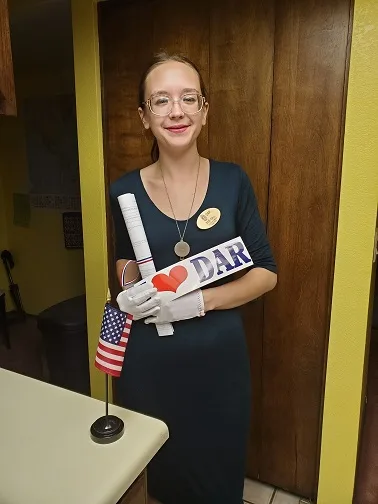
Zoe with her DAR Regalia

While this technically wasn't "visiting" a historic site, this is definitely a historic achievement.

The Daughters of the American Revolution are a genealogy based organization that hope to promote historic preservation, patriotism, and education. In order to join the society, you must be a woman who can prove direct lineage from a patriot who fought in the American Revolution.

Since DAR's founding in 1890, over one million women have become members, and I happen to be one of them.

To learn more about DAR, and see if you might be able to join and become a member yourself, visit the national website at dar.org.

2019--Visiting The Madonna of the Trail Statues in Albuquerque, New Mexico, and Springerville, Arizona, United States of America

Madonna Statues

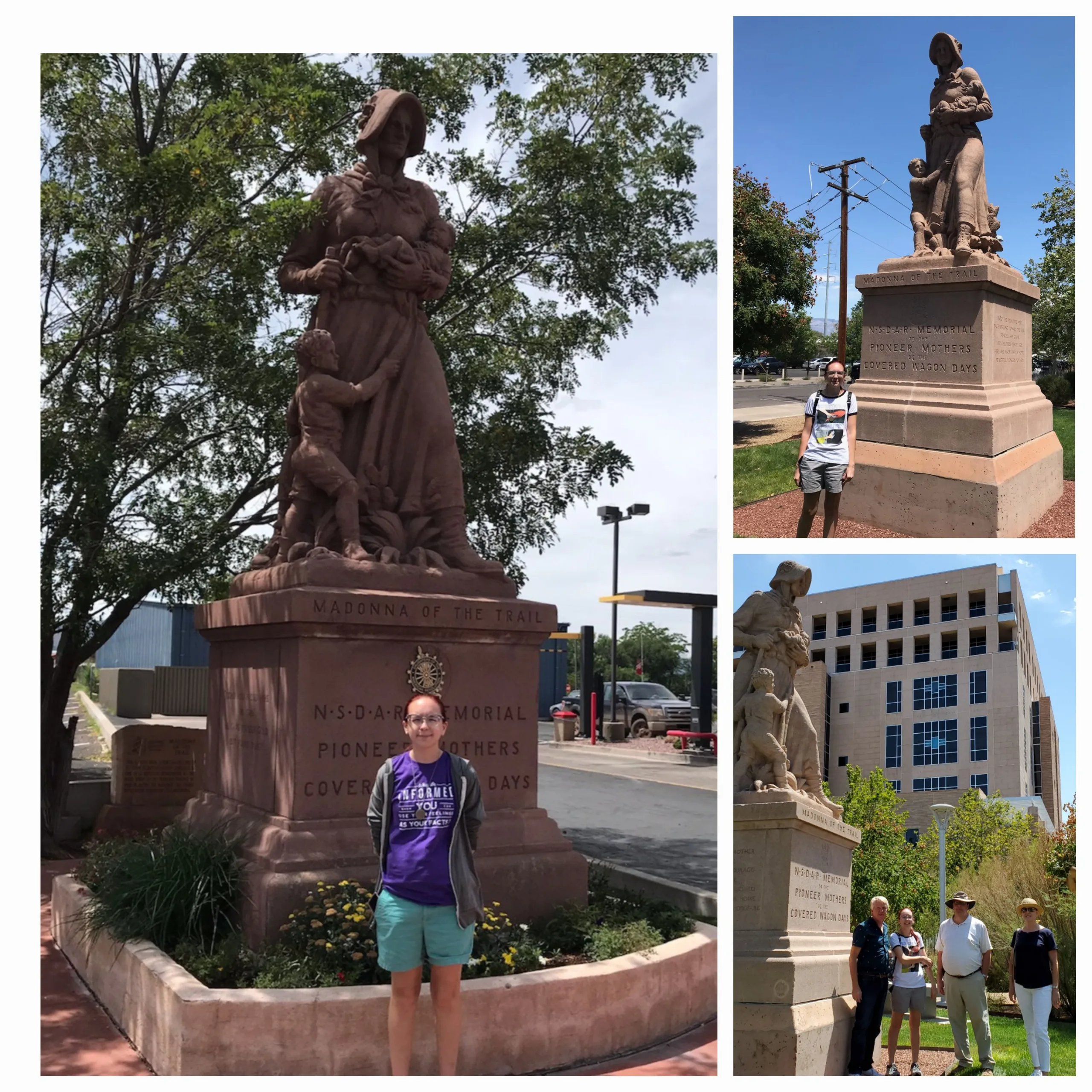
2019 was a big year for me and my DAR journey. A few months after joining the organization, I got the chance to visit two of the statues DAR erected across the United States, from Maryland to California.

The project began in 1911, when the national society decided to erect twelve identical statues across the "Old Trails Road" that stretched across the country. The first statue was dedicated in 1928, when then-judge (and future president) Harry S Truman spoke at the unveiling.

The twelve statues are located in the following locations:

-Bethesda, Maryland

-Beallsville, Pennsylvania

-Wheeling, West Virginia

-Springfield, Ohio

-Richmond, Indiana

-Vandalia, Illinois

-Lexington, Missouri

-Council Grove, Kansas

-Lamar, Colorado

-Albuquerque, New Mexico

-Springerville, Arizona

-Upland, California

I have personally visited the statues in Springerville, Arizona, and Albuquerque, New Mexico, and hope to one day visit some of the others as well. The statues were erected to honor the pioneering spirit of mothers along the old wagon roads across the country. Unfortunately today, some see the statues as problematic and take issue with them as a result, but so far, all twelve have remained standing.

To read more about the statues, and the controversy surrounding them, click here.

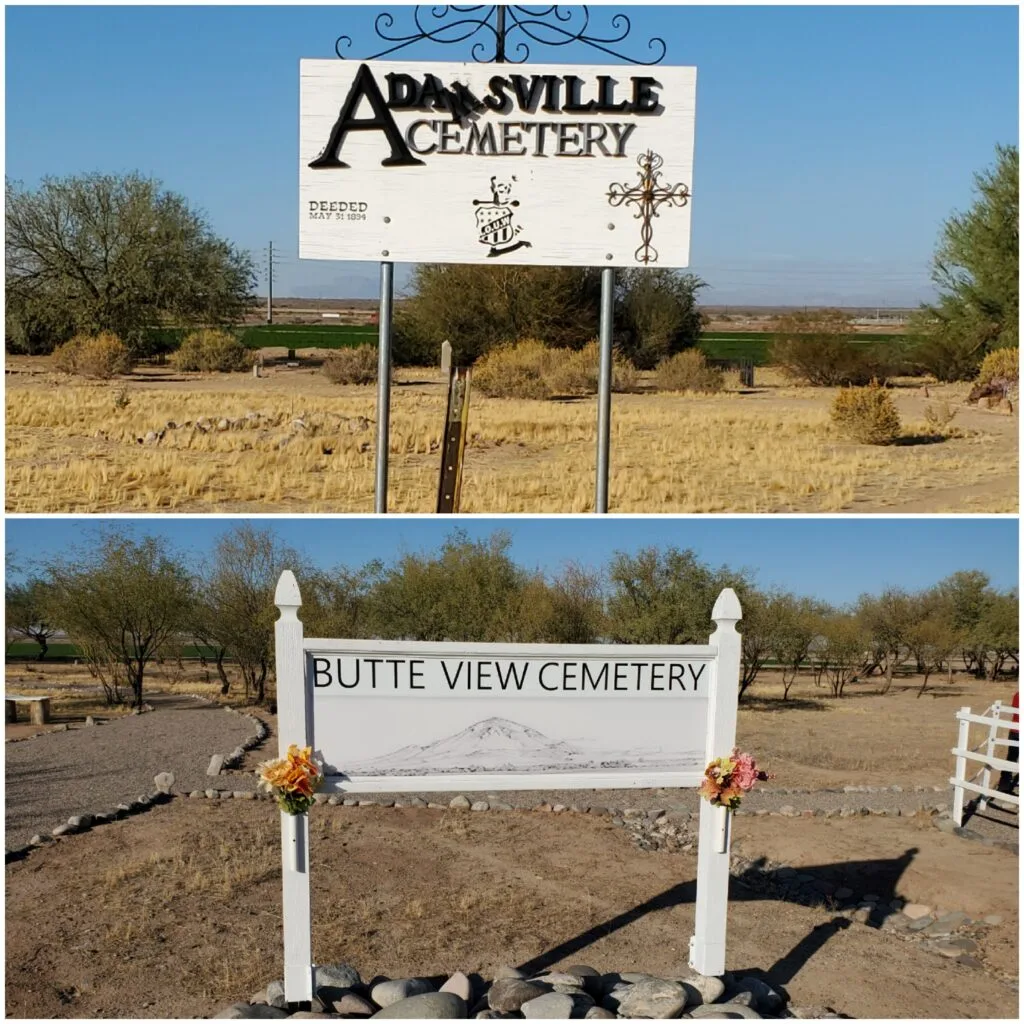
2020--Visiting Butte View/Adamsville Cemeteries, Florence, Arizona, United States of America

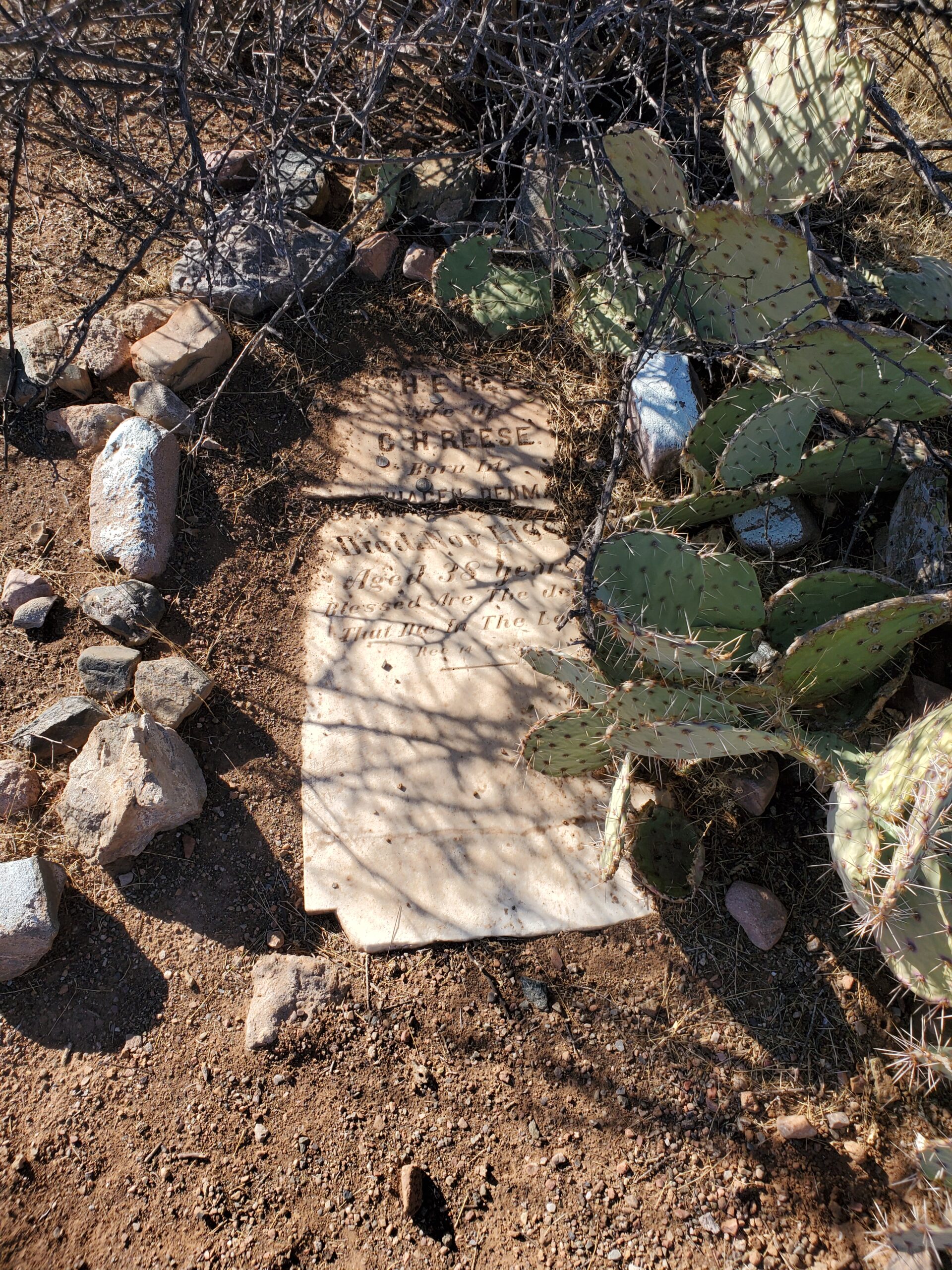
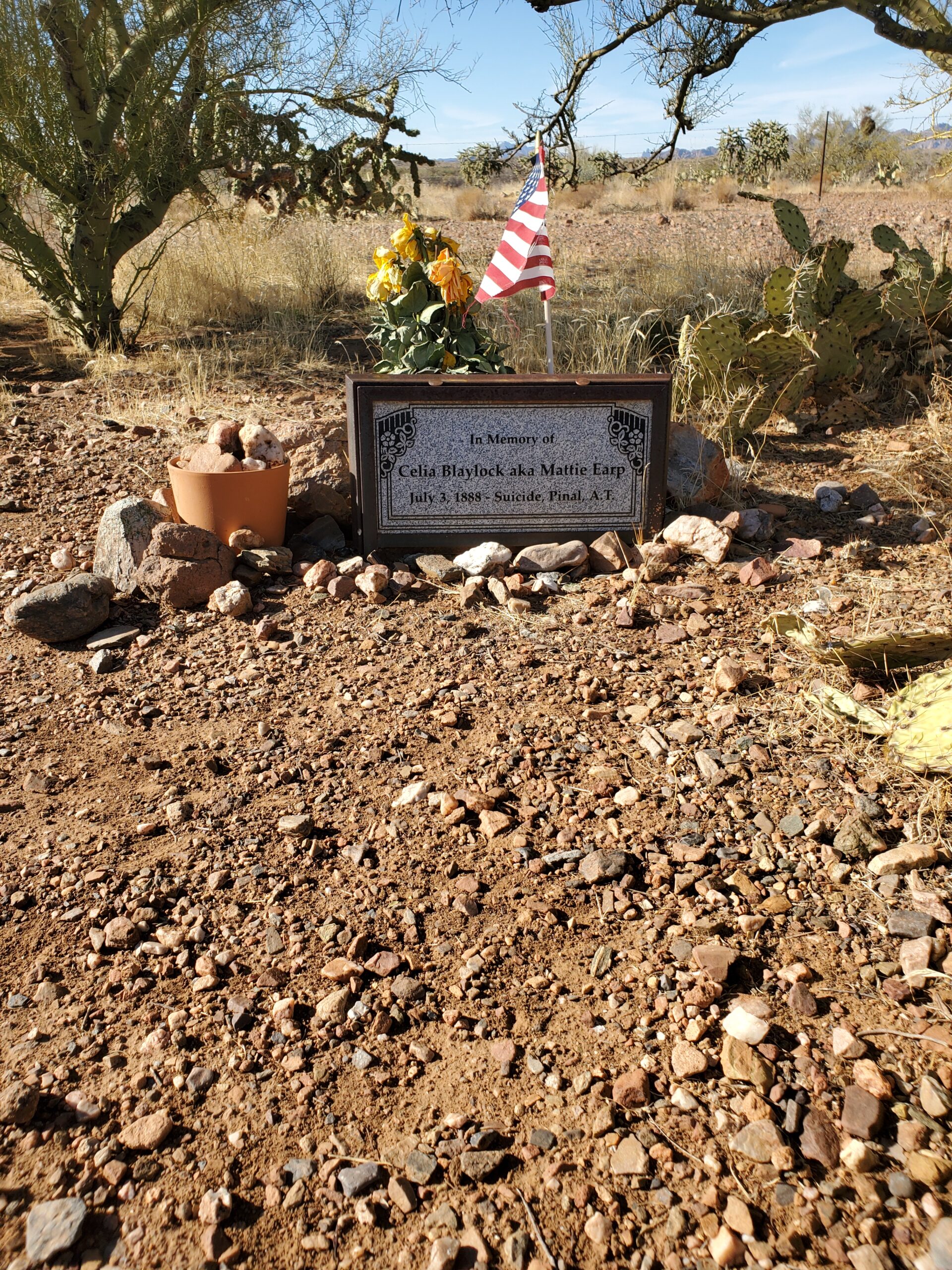
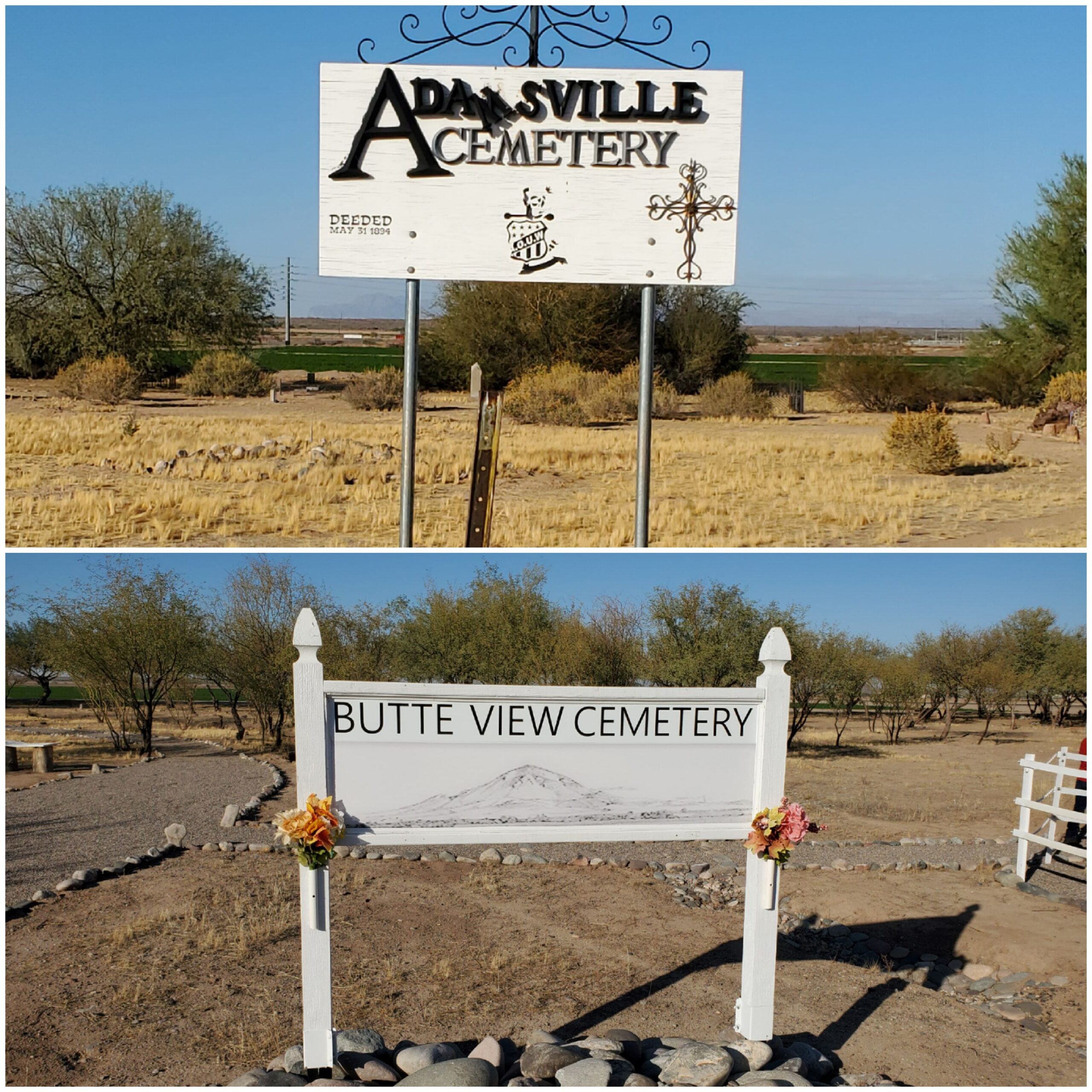
Adamsville

I won't spend much time on this section because I already wrote a blog post about these old cemeteries, which you can read here.

This is simply an acknowledgement that in late 2020, I visited these two adjoining cemeteries outside of Florence, Arizona.

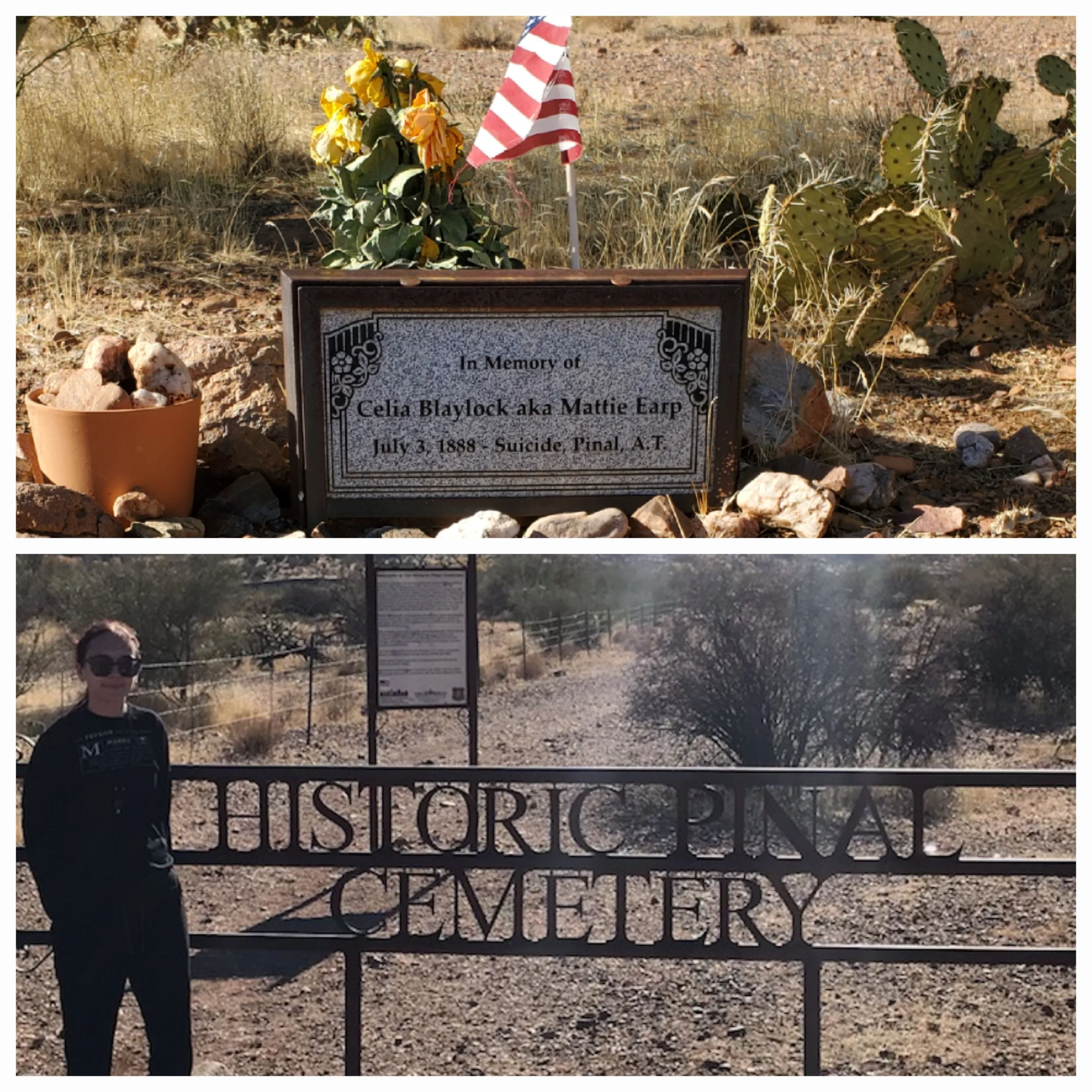
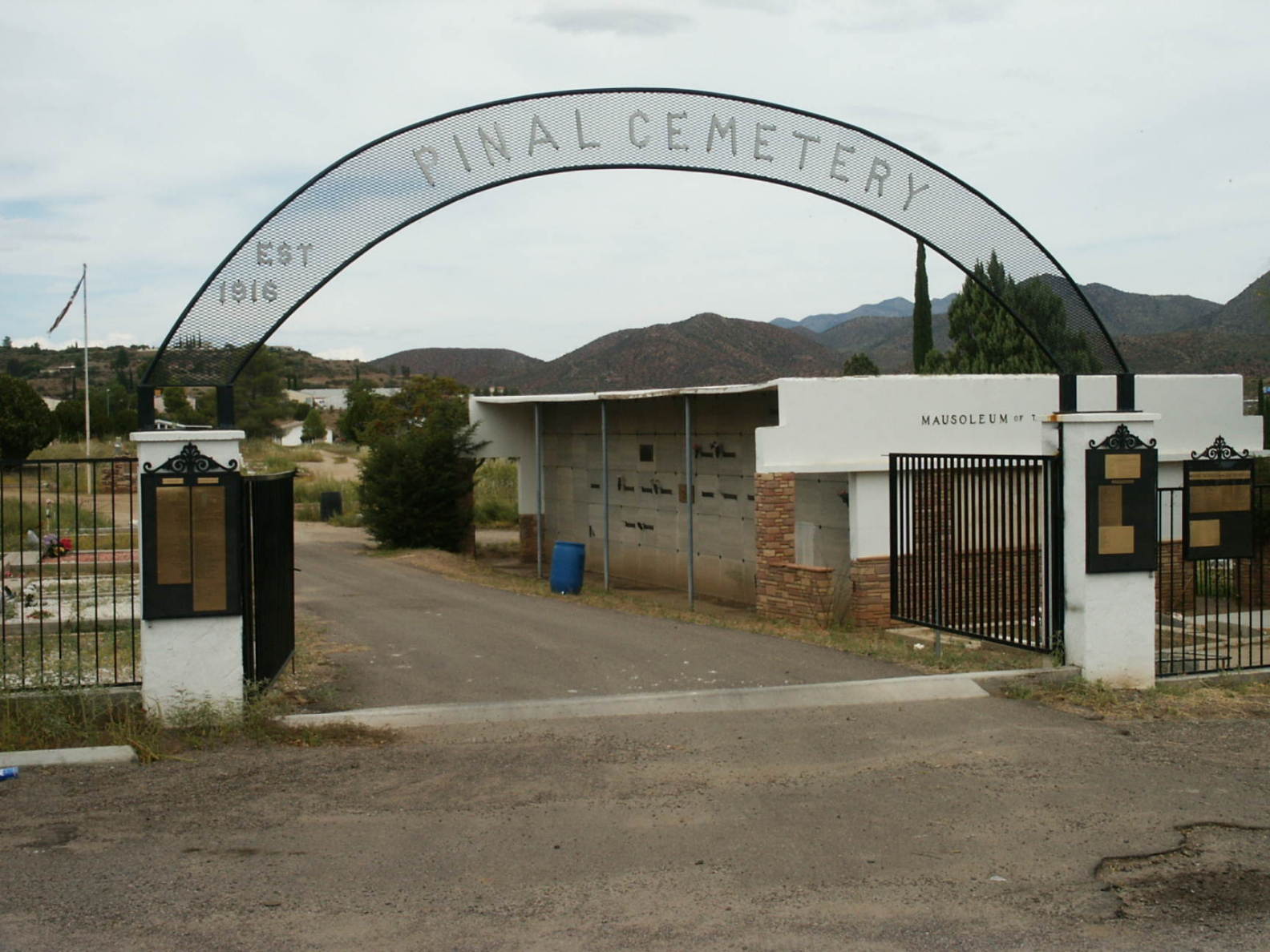
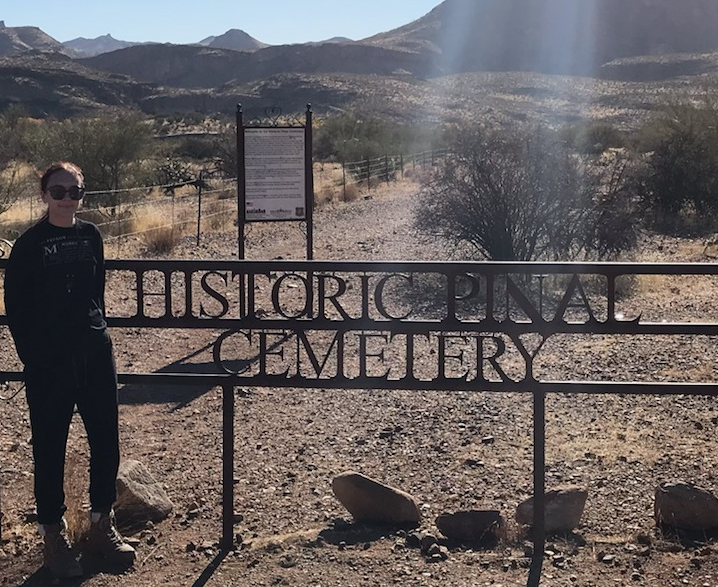
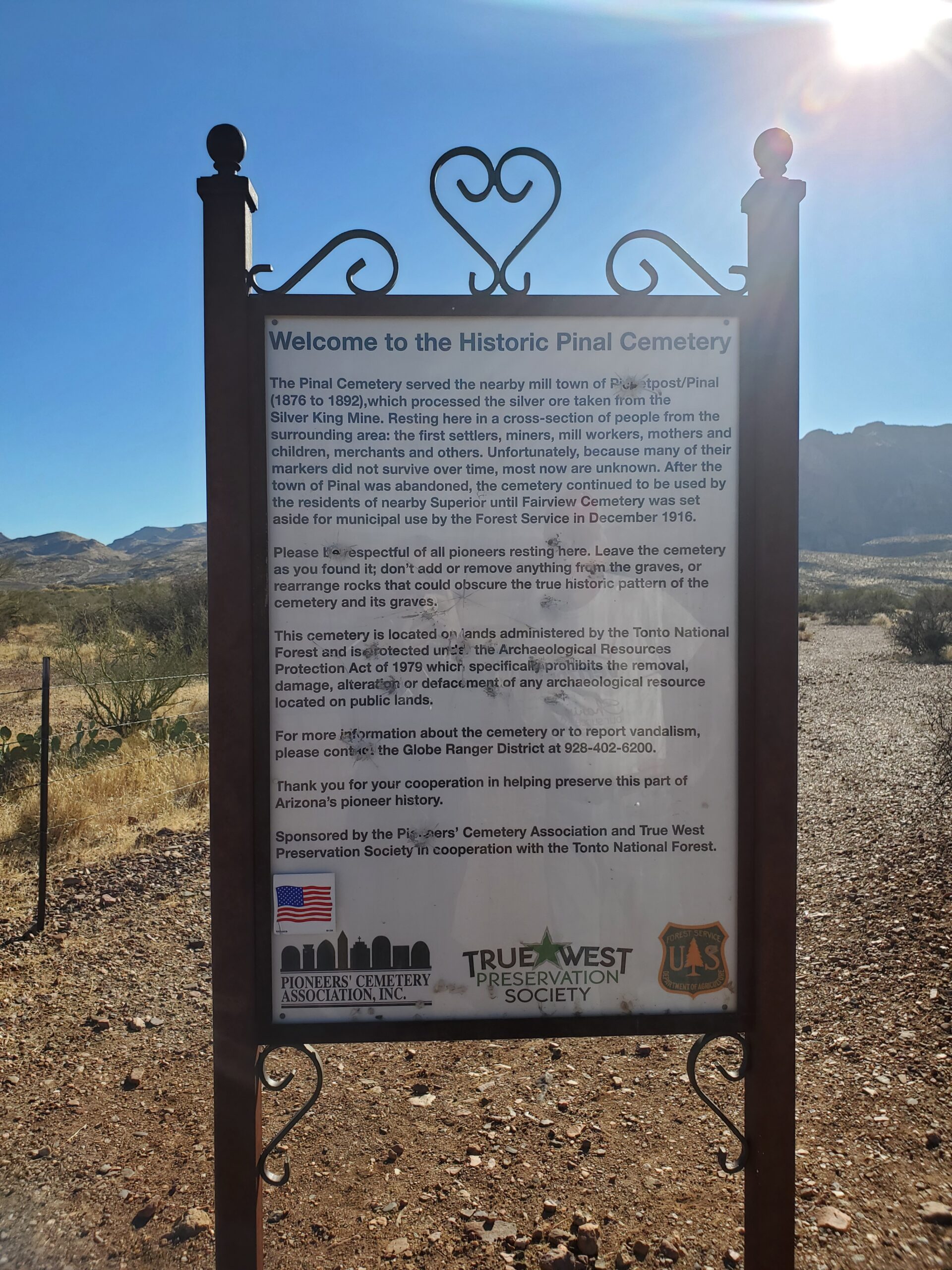
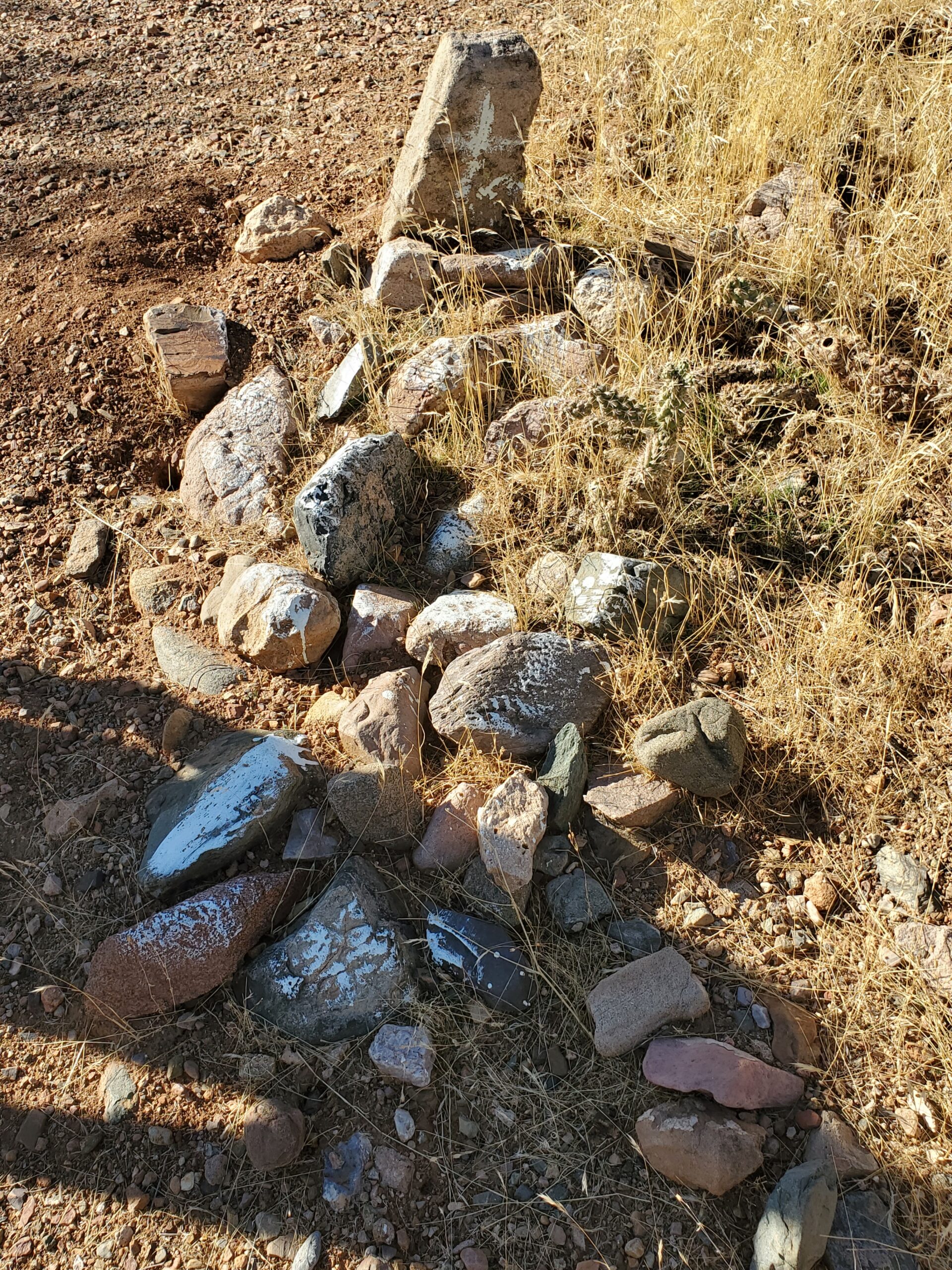
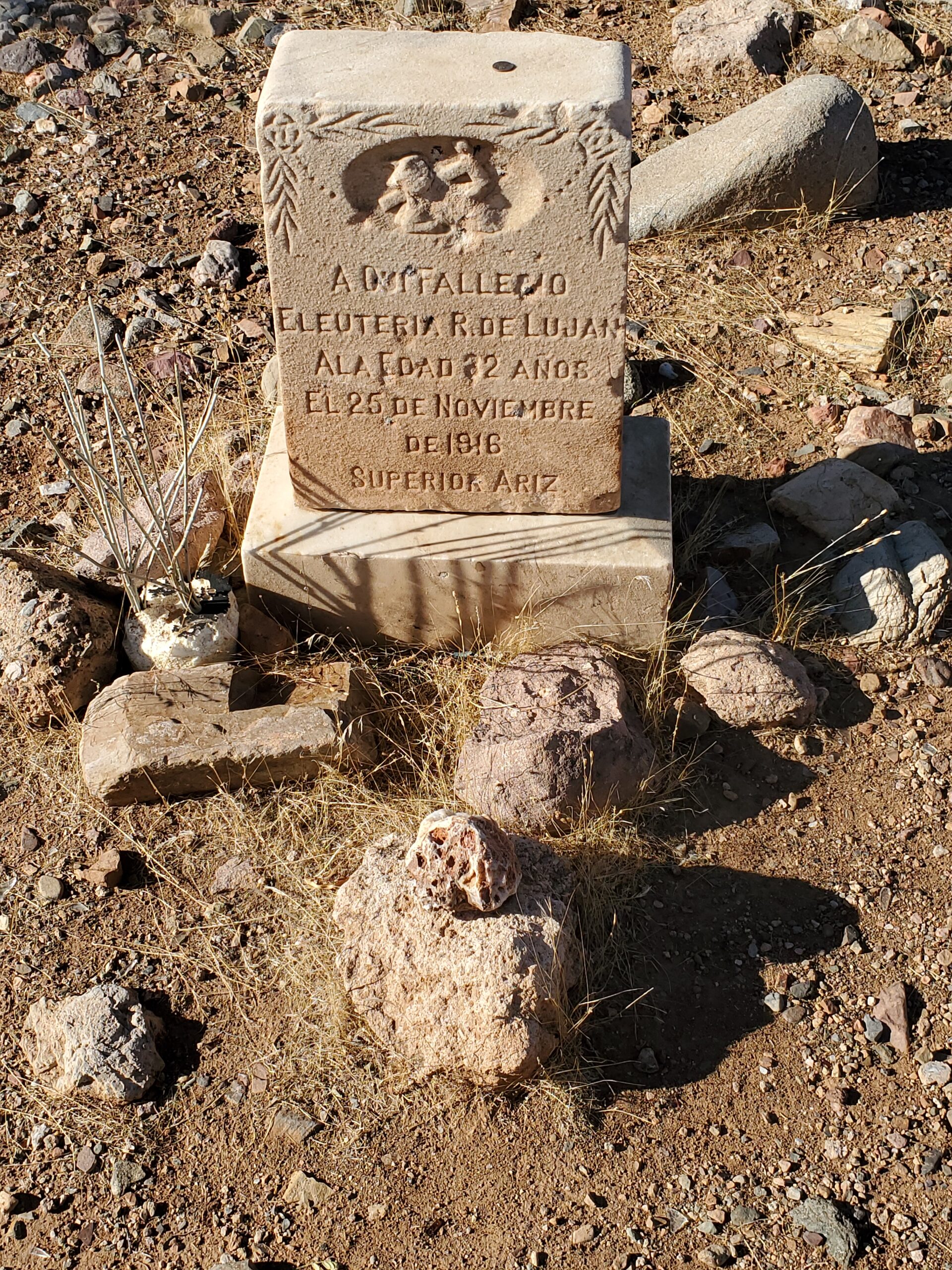
2020--Visiting Historic Pinal Cemetery, outside Superior, Arizona, United States of America

Historic Pinal

Once again, I already wrote a more extensive blog post about Pinal Cemetery, which can be read here.

I visited the abandoned cemetery in late December 2020, but my dad, brother, and cousin first visited in 2006 or 2007. Its way off the beaten path and hard to locate for those who have never visited before, but its still worth a stop if you happen to be in the area.'

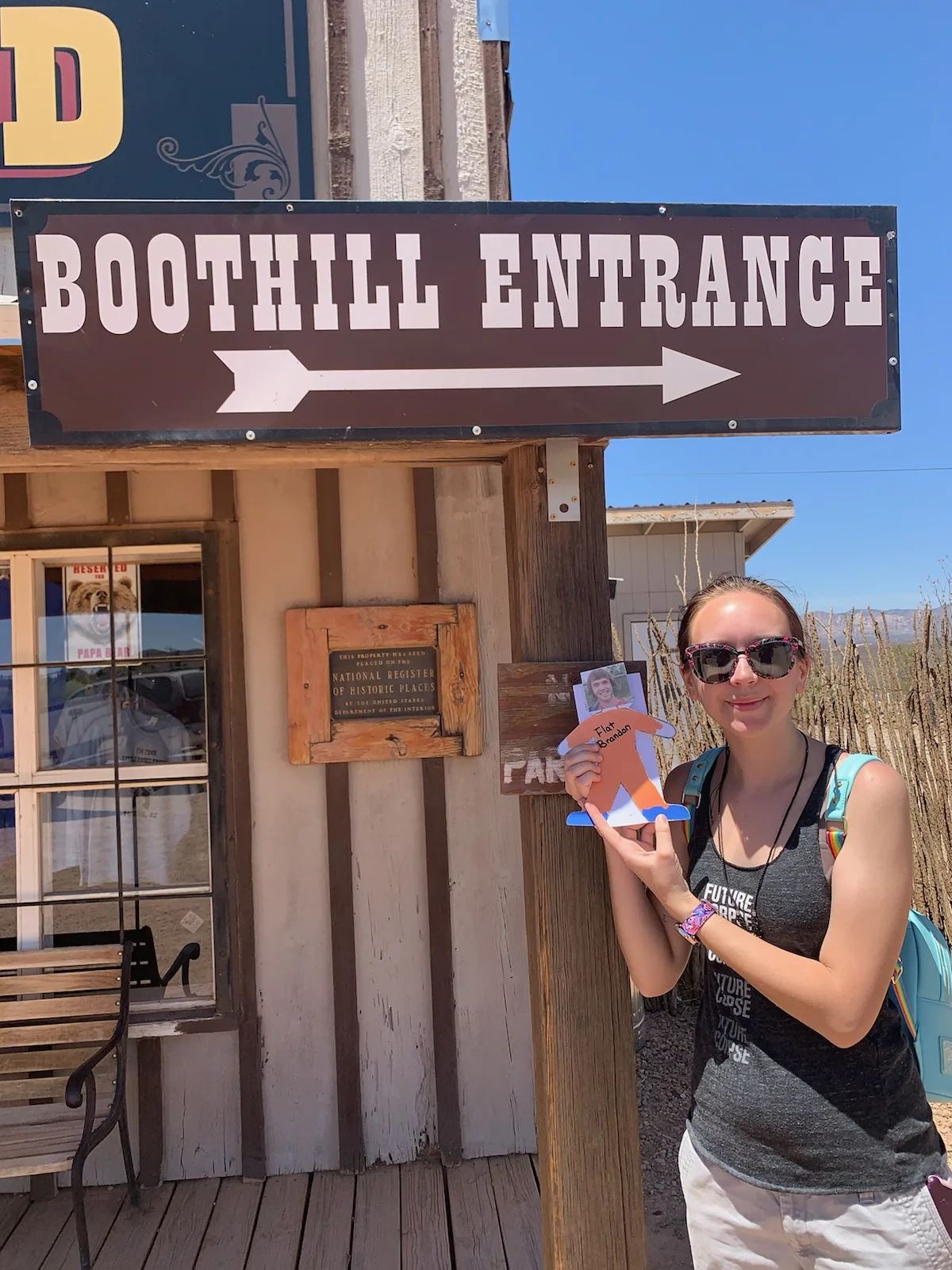
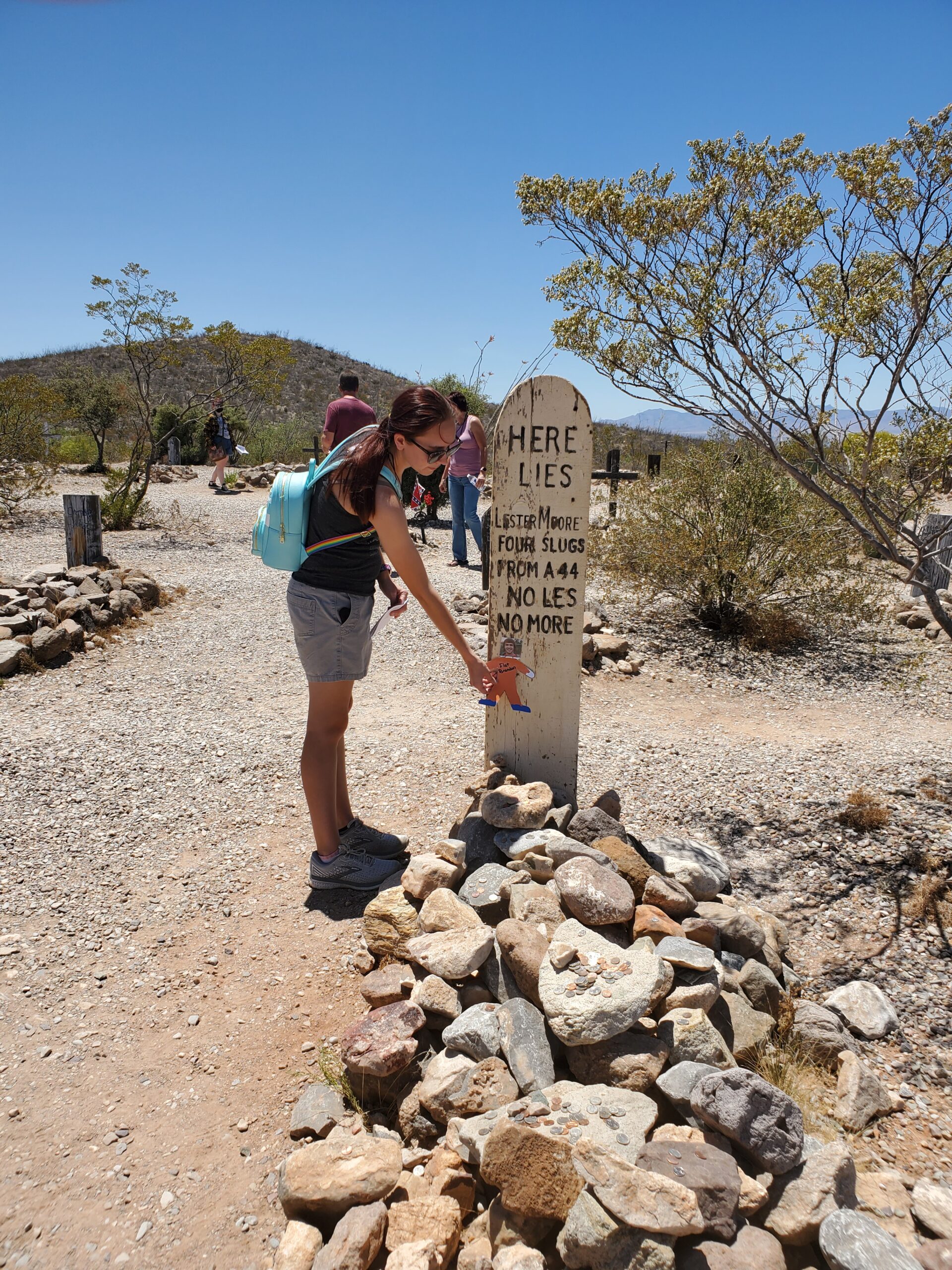
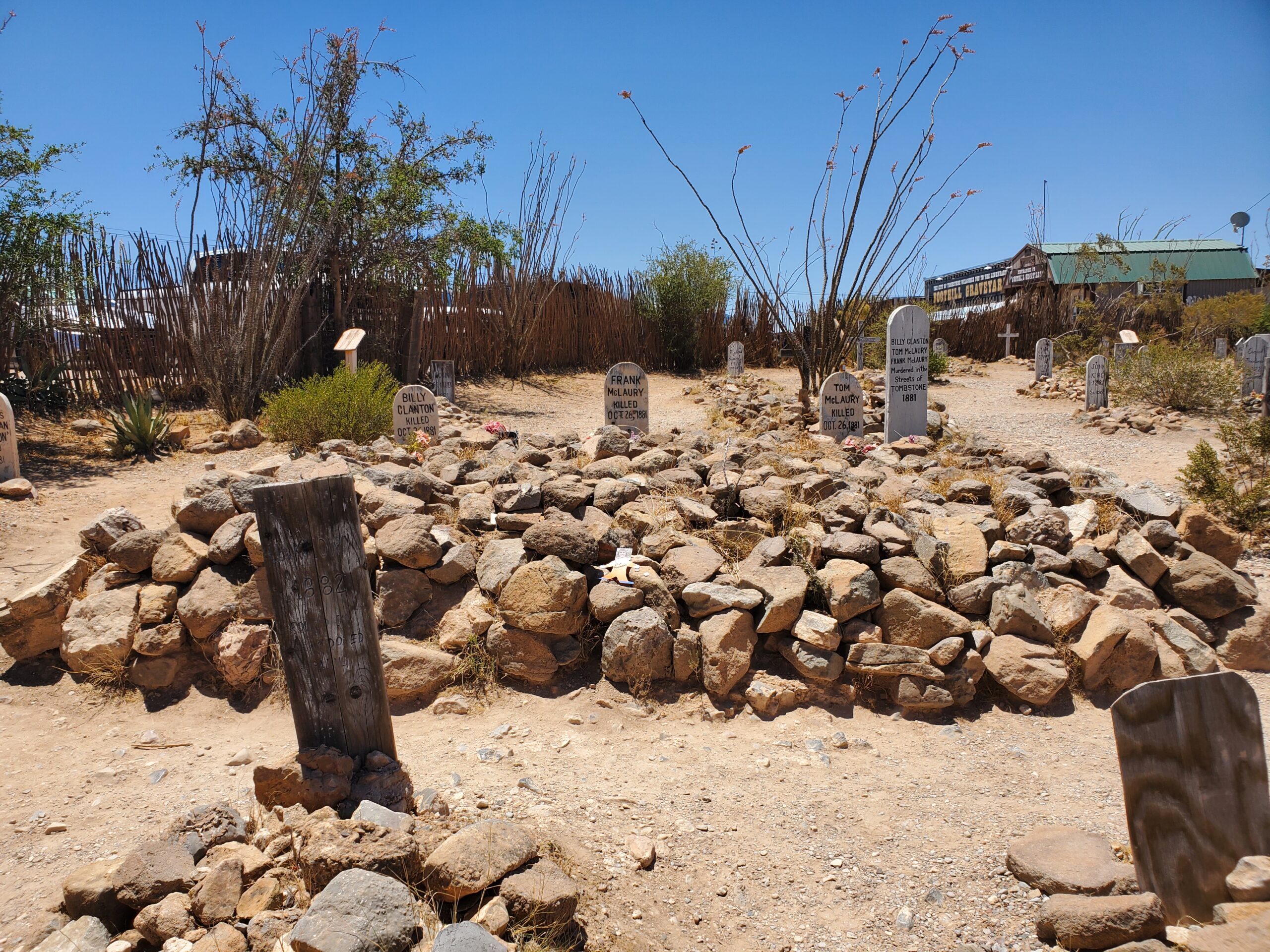
2021--Boothill Graveyard, Tombstone, Arizona, United States of America

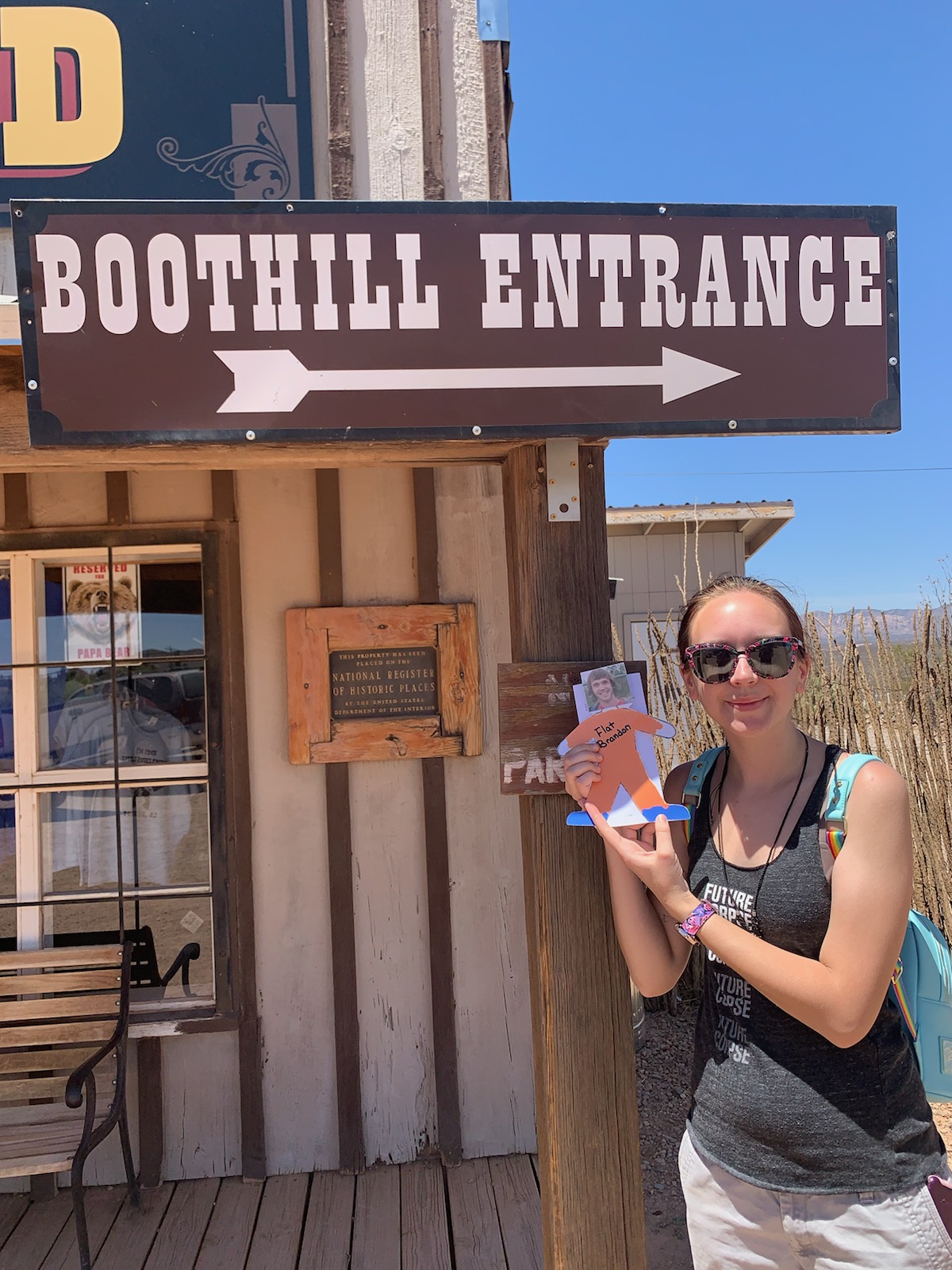
Flat Brandon and Zoe outside Boothill

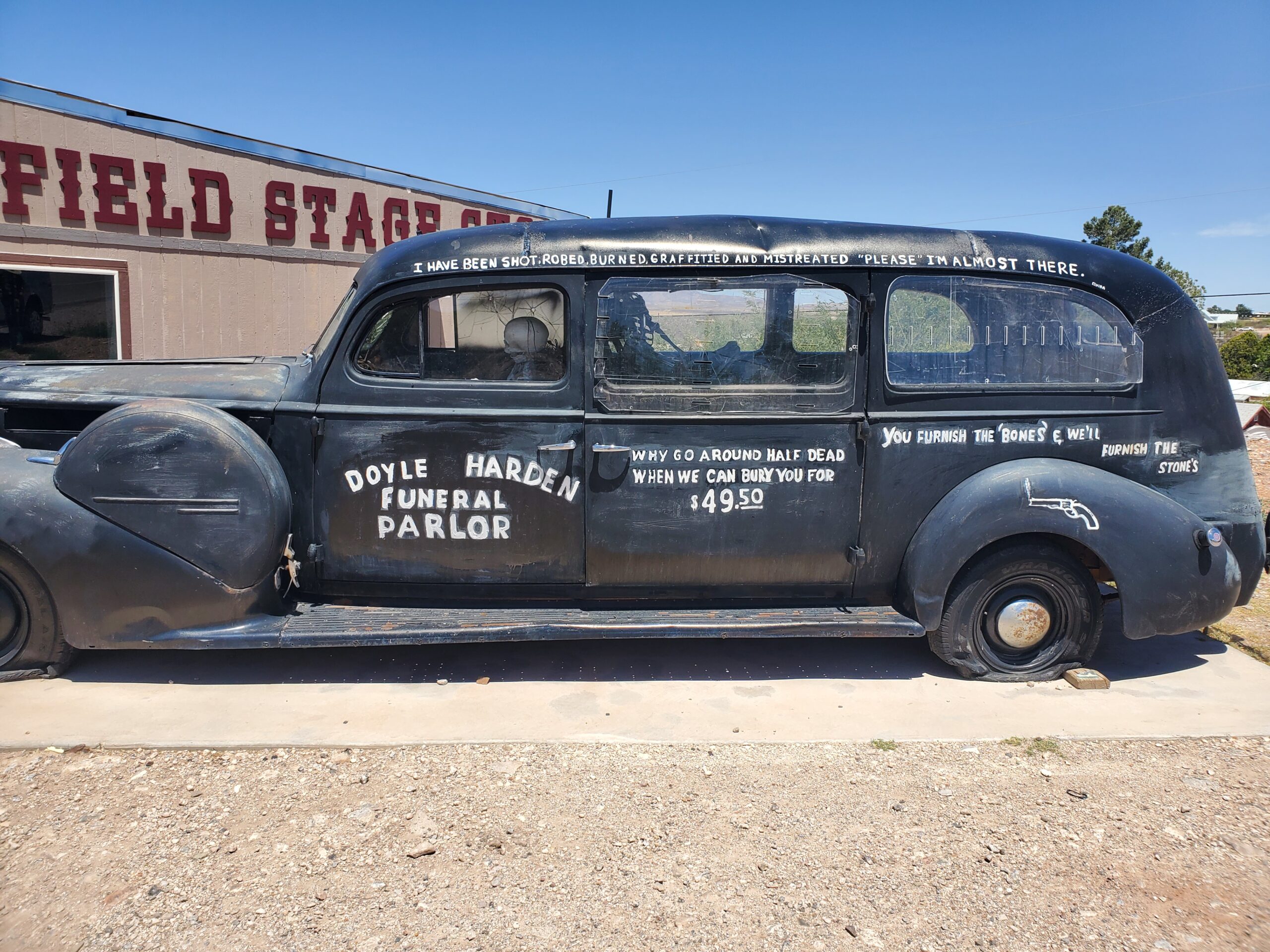
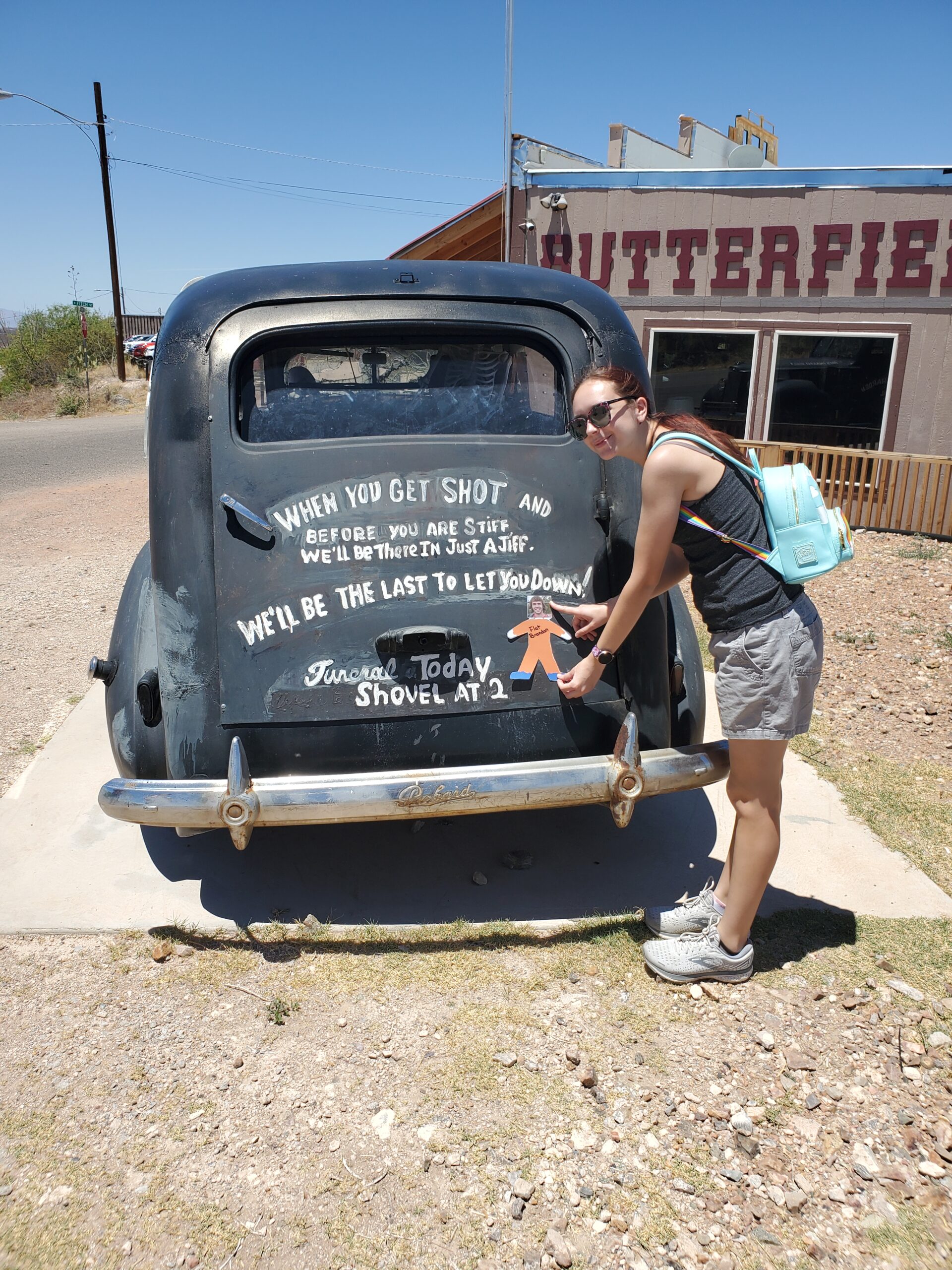
Once again, I already have a blog post written about my stop at Boothill, which can be read here. I've been to Tombstone twice now, and it is a lot of fun if you like old west tourist things! (Ignore the Flat Brandon, its a long story!)

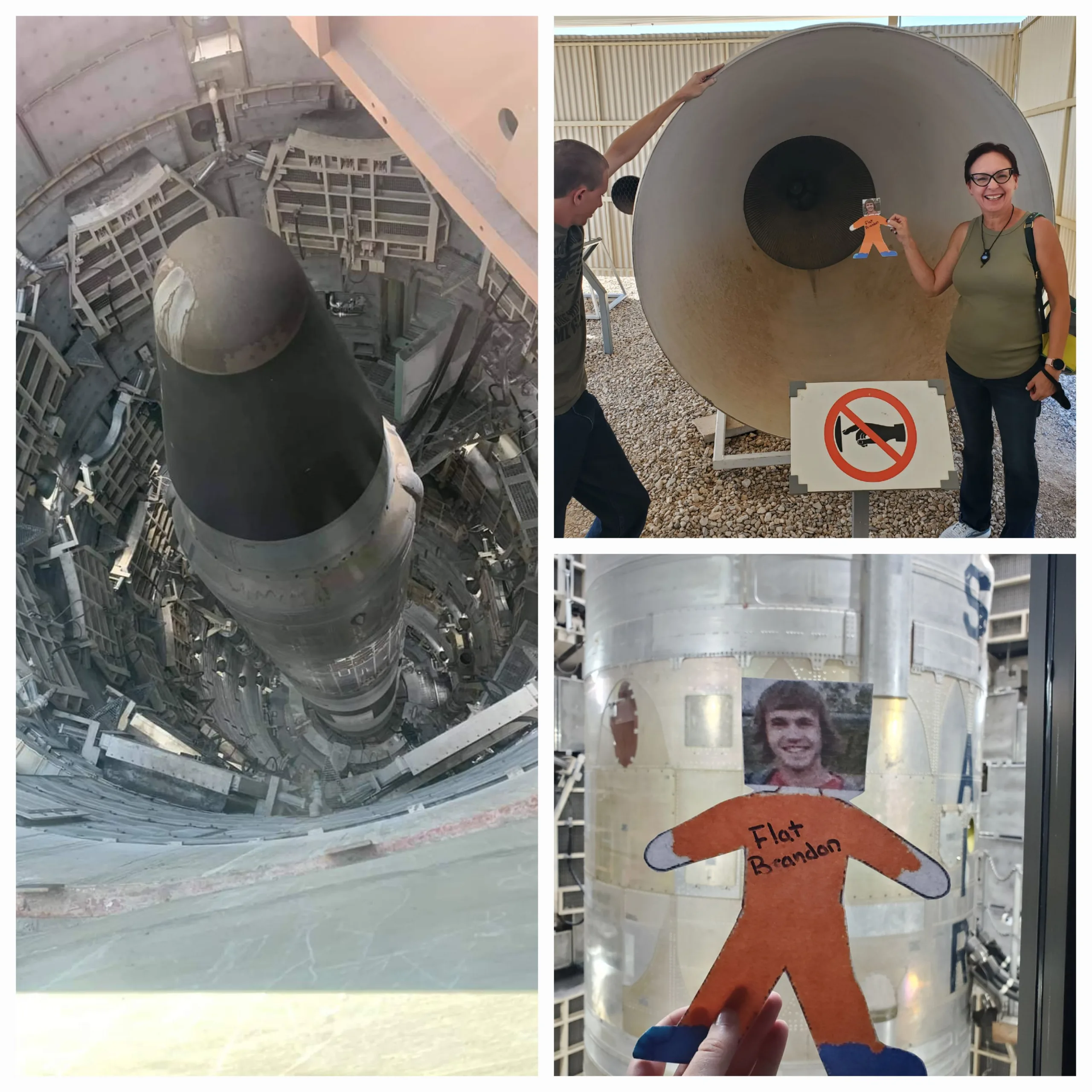
2021--The Titan Missile Museum, Green Valley, Arizona, United States of America

Titan Missile Museum

Do you like large and intimidating nuclear warheads? Do you enjoy smacking your head on metal scaffolding if you happen to be above five and a half feet tall? Do you like going up and down lots of metal stairs?

If you said yes to any of the above questions, do I have the museum for you!

Once again, no I'm not kidding!

The Titan Missile Museum is a de-activated nuclear missile silo that allows visitors to step inside a window into the past. There isn't a lot of information about the history of the site itself--I'm guessing because part of it might still be under lock and key from the federal government.

The Titan Missile Museum teaches visitors about The Cold War and the nuclear missiles developed during it, specifically the Titan II Missiles. Visitors get to see artifacts on the surface as well as traveling down into the silo itself. And don't worry, the photos of the missile shown here are real, BUT the missile has been deactivated and is not harmful to the general public.

To learn more about the museum and the Titan II missiles, visit their website here.

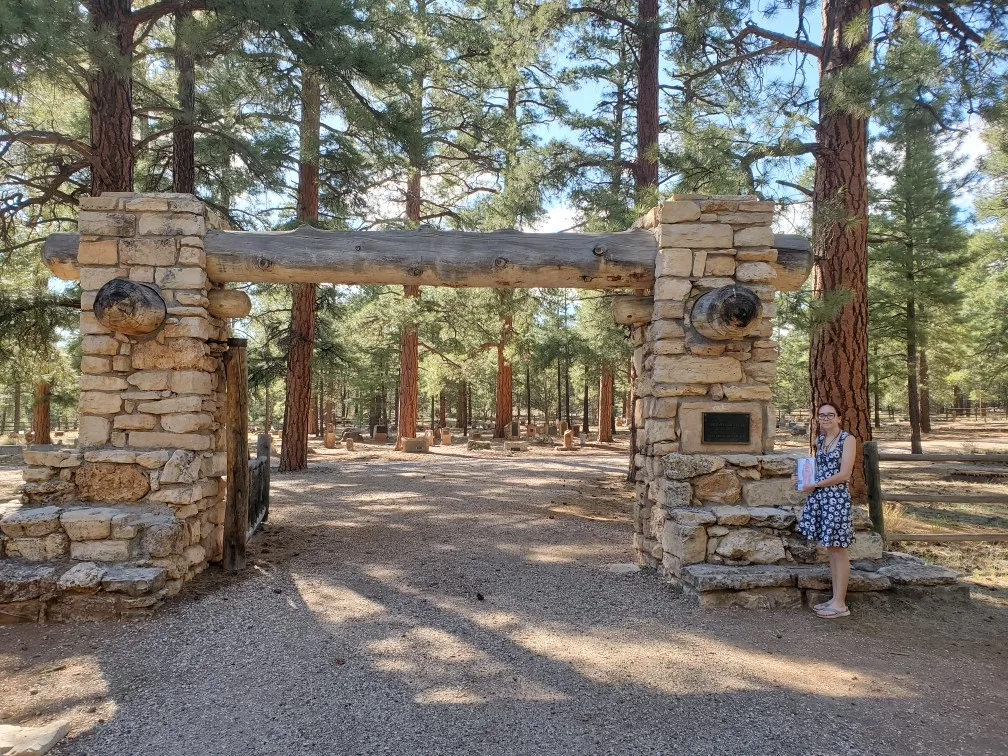
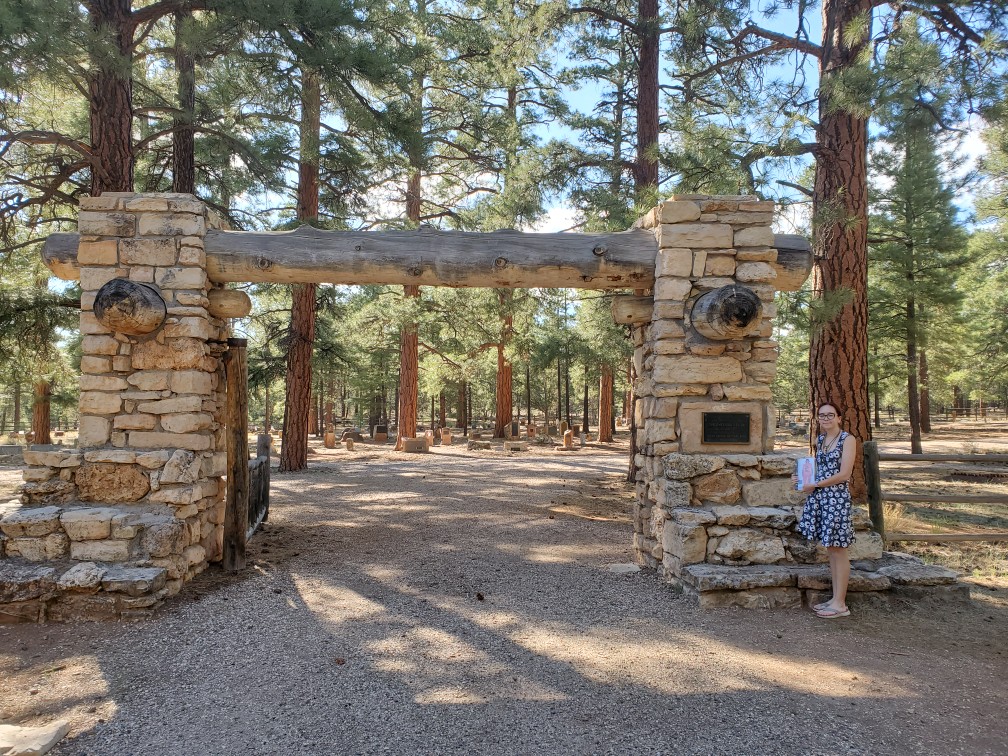
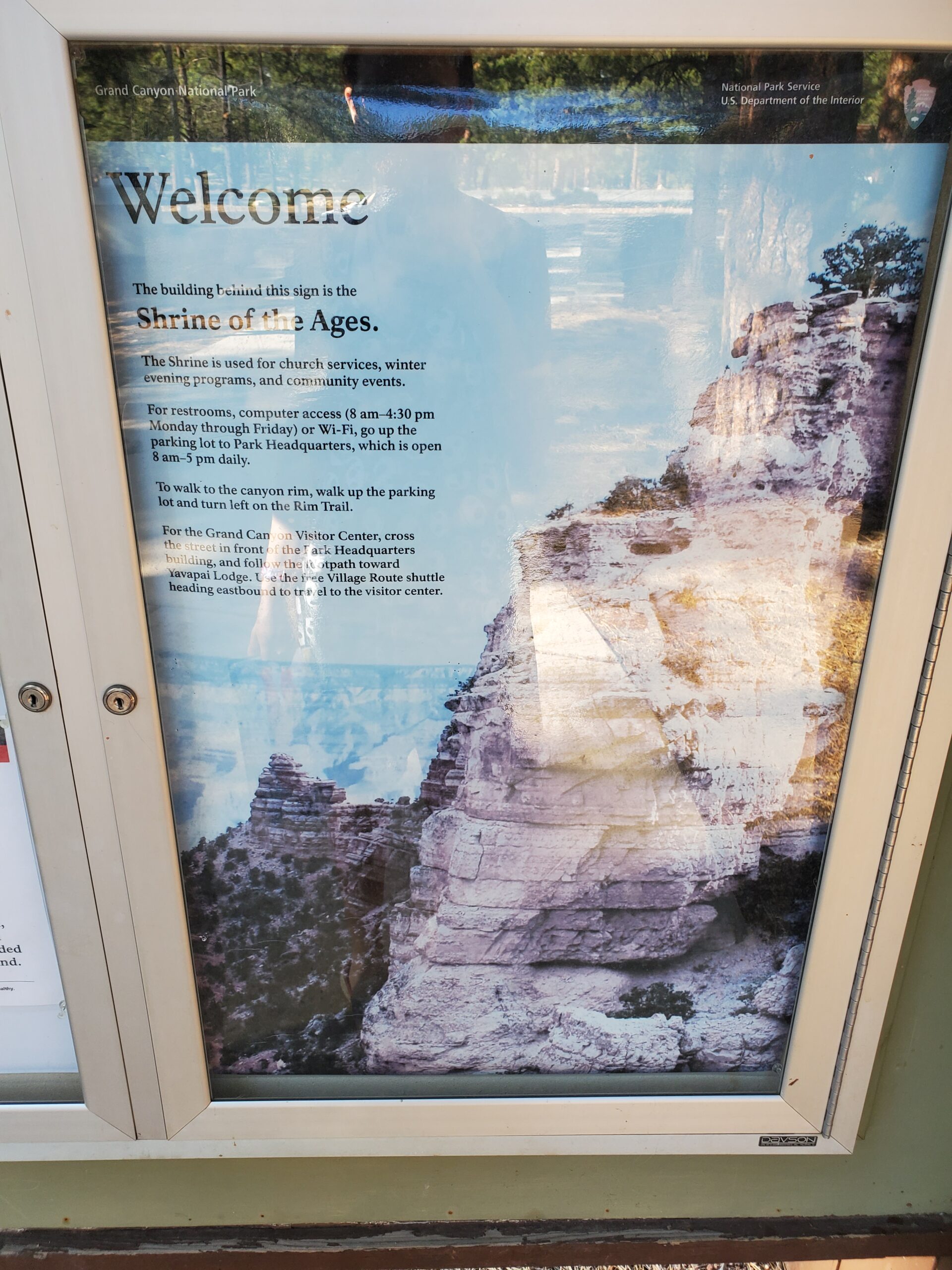
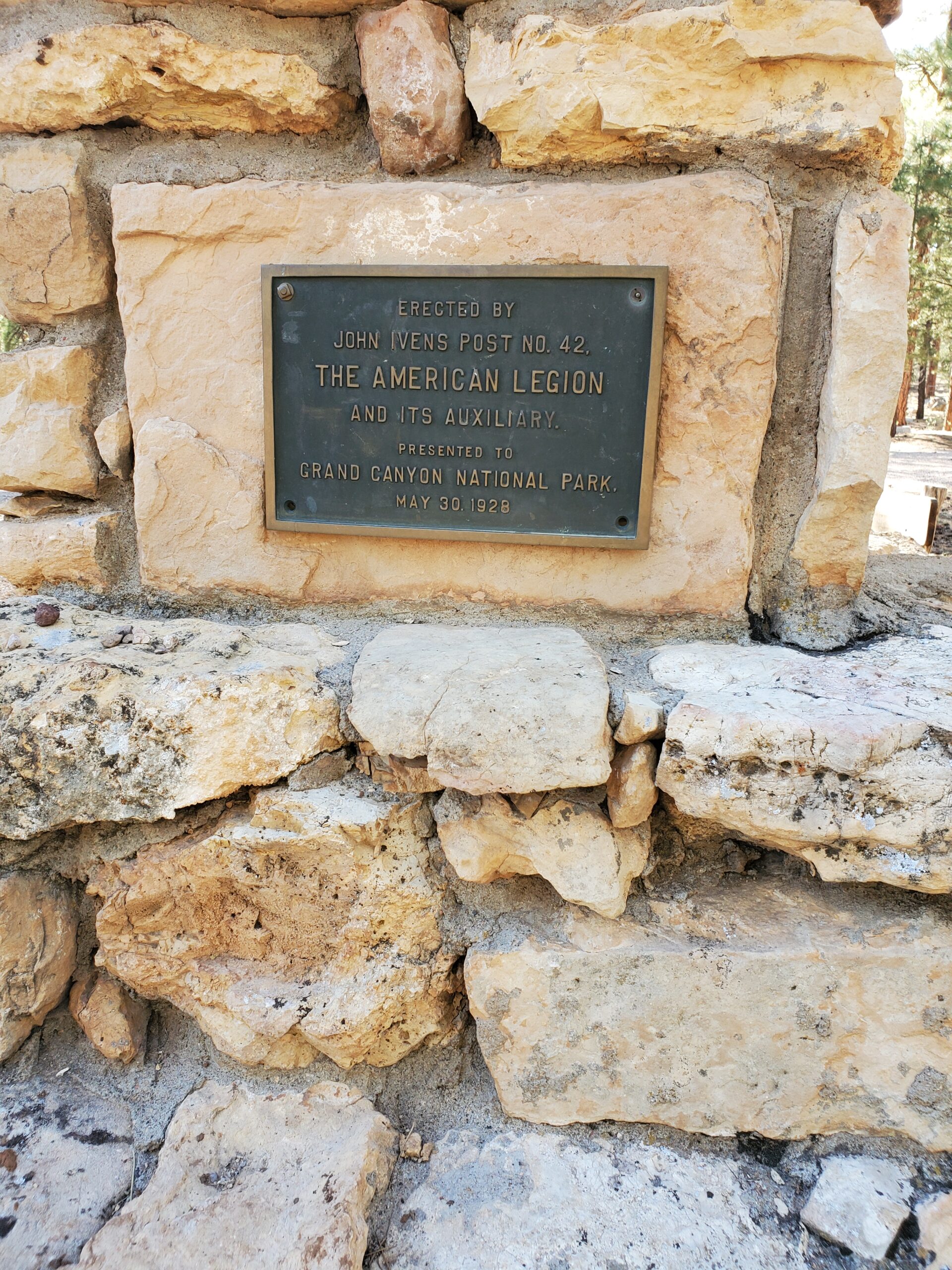
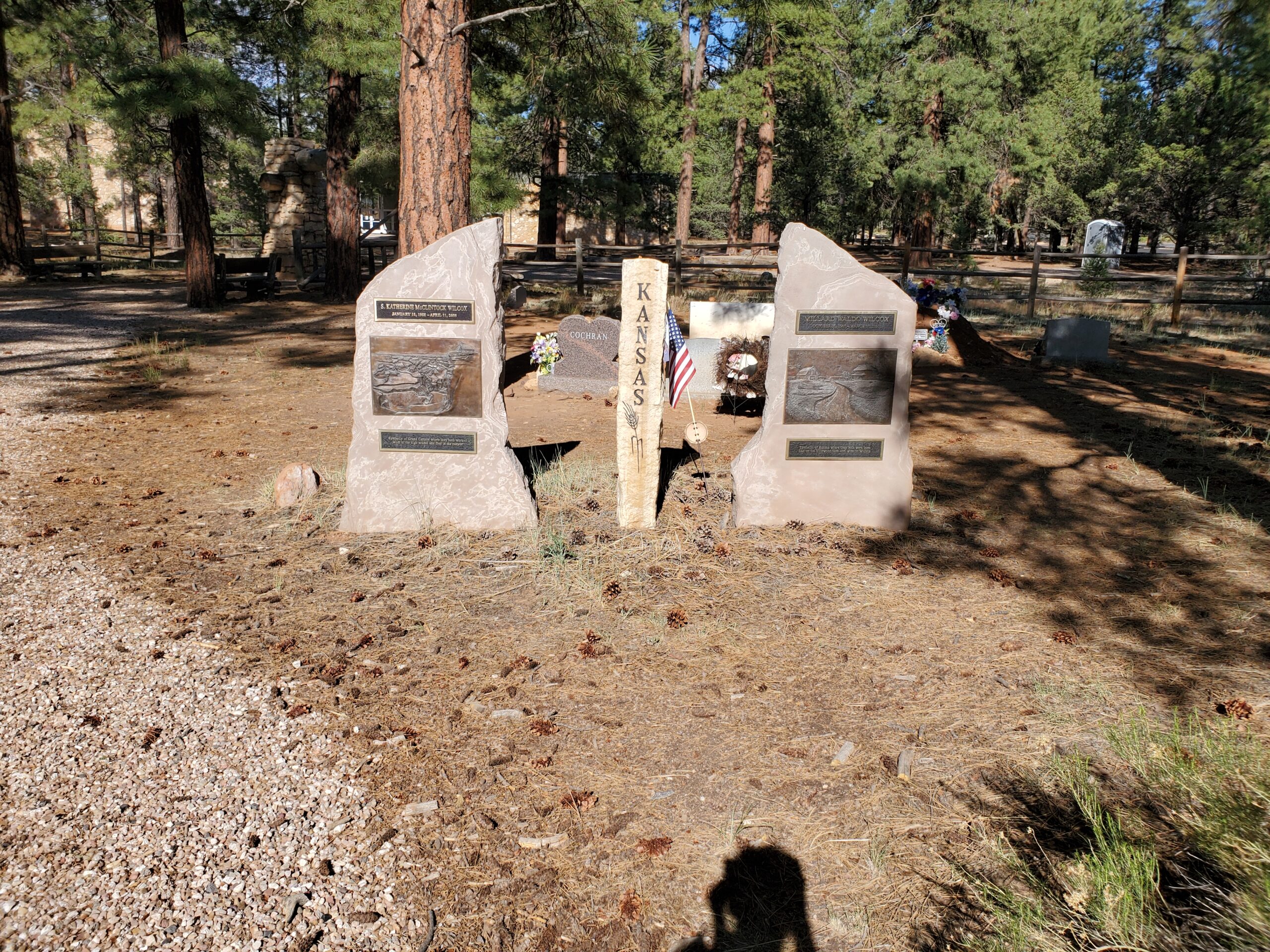
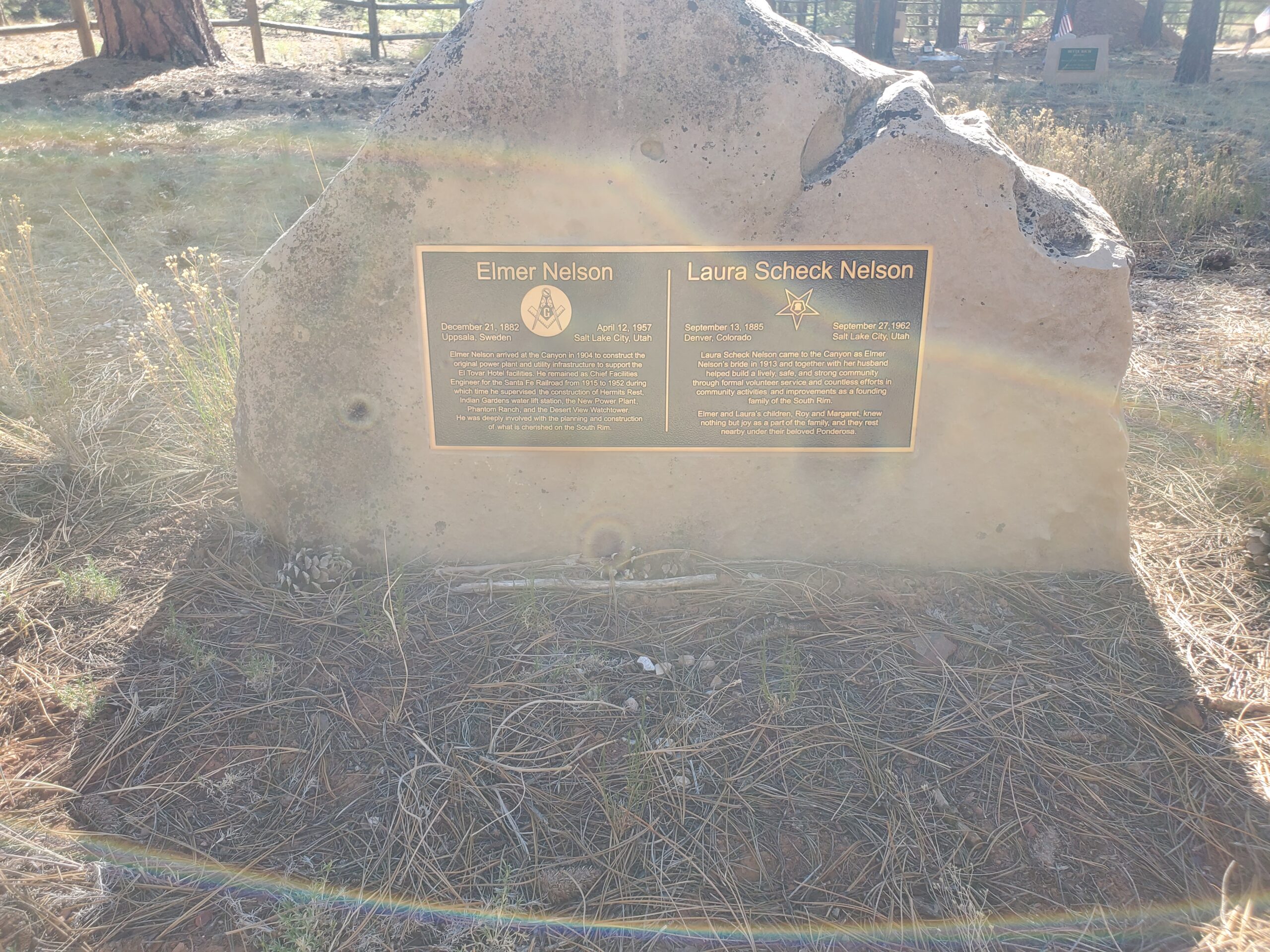
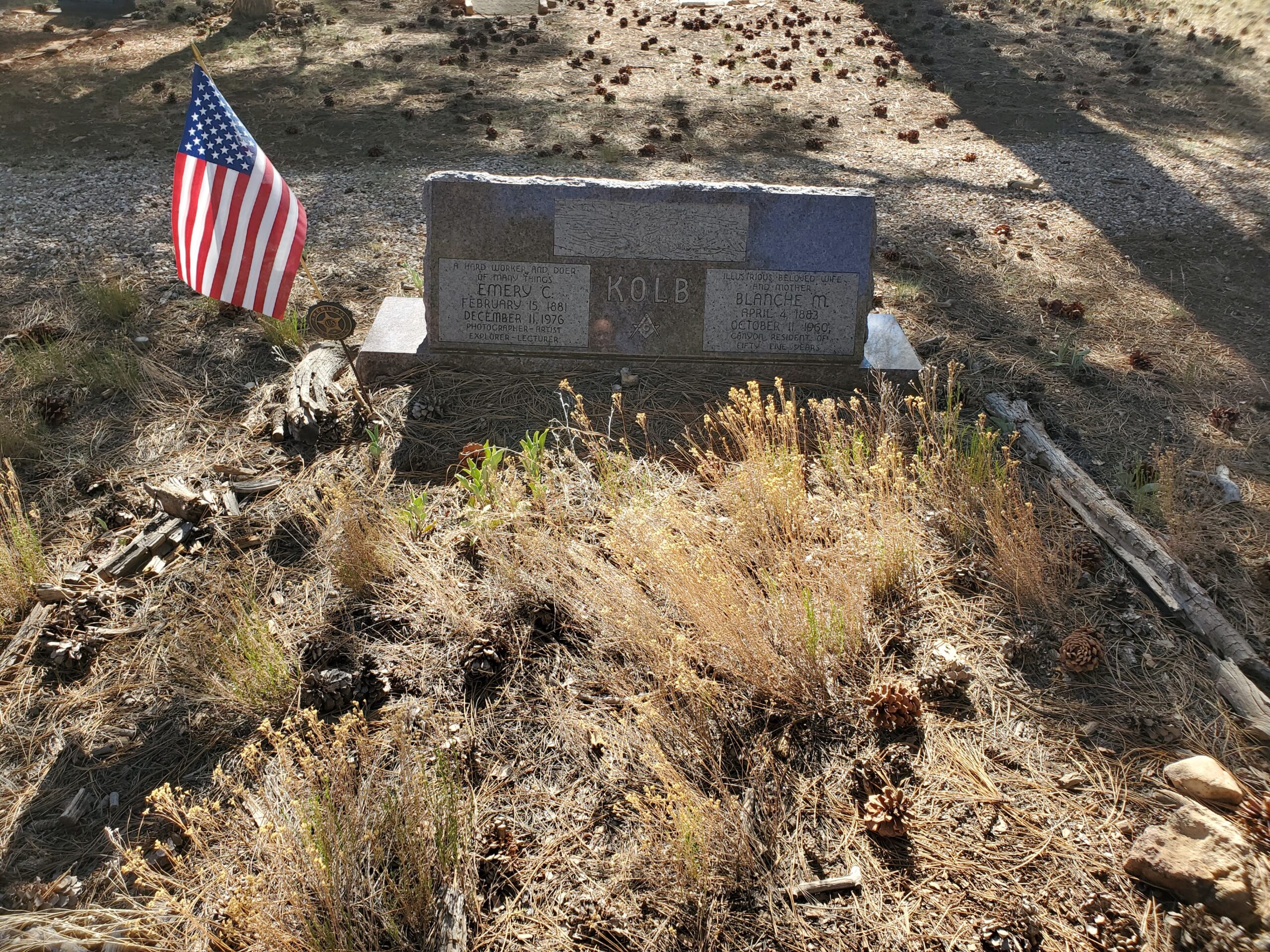
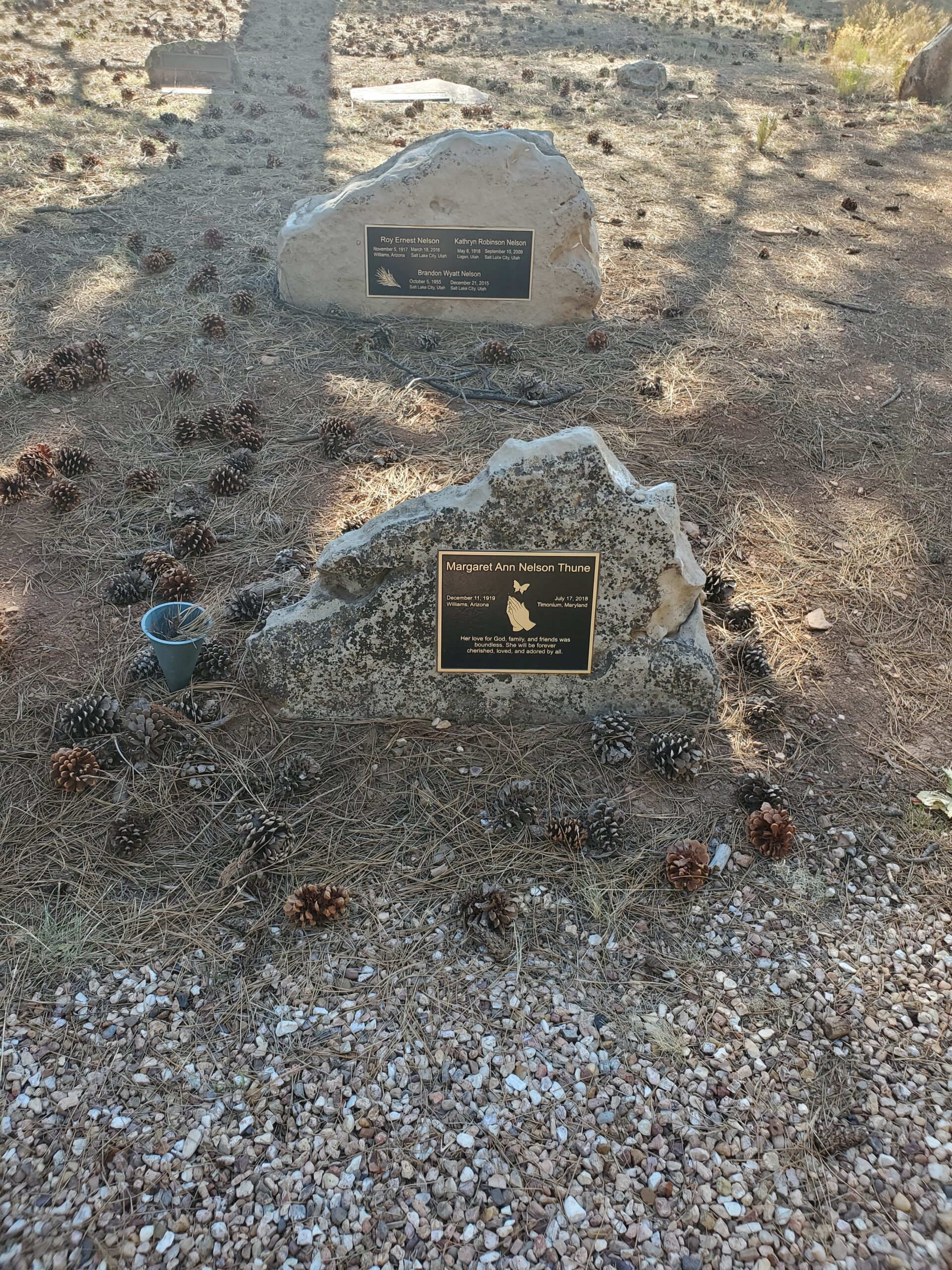
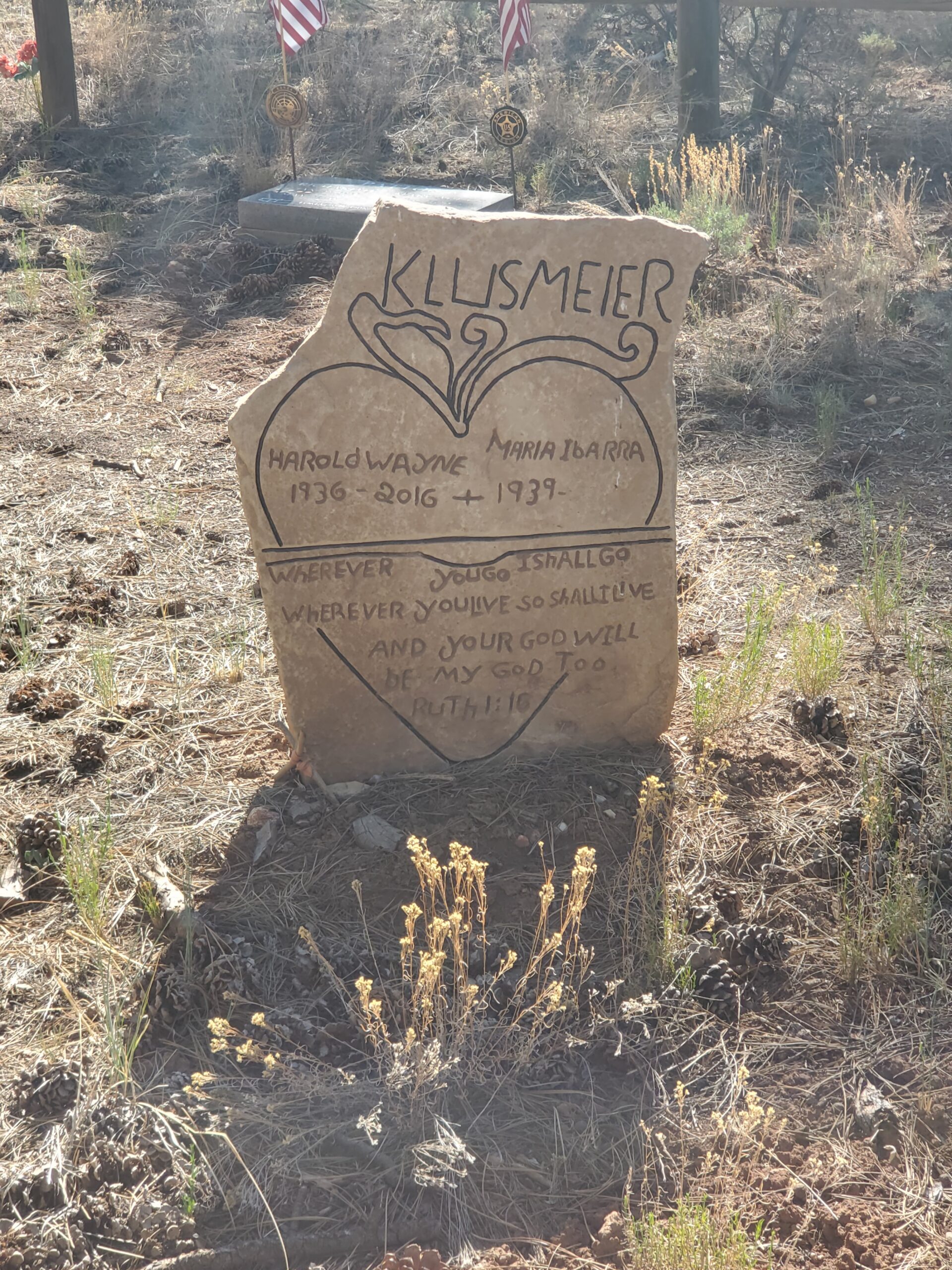
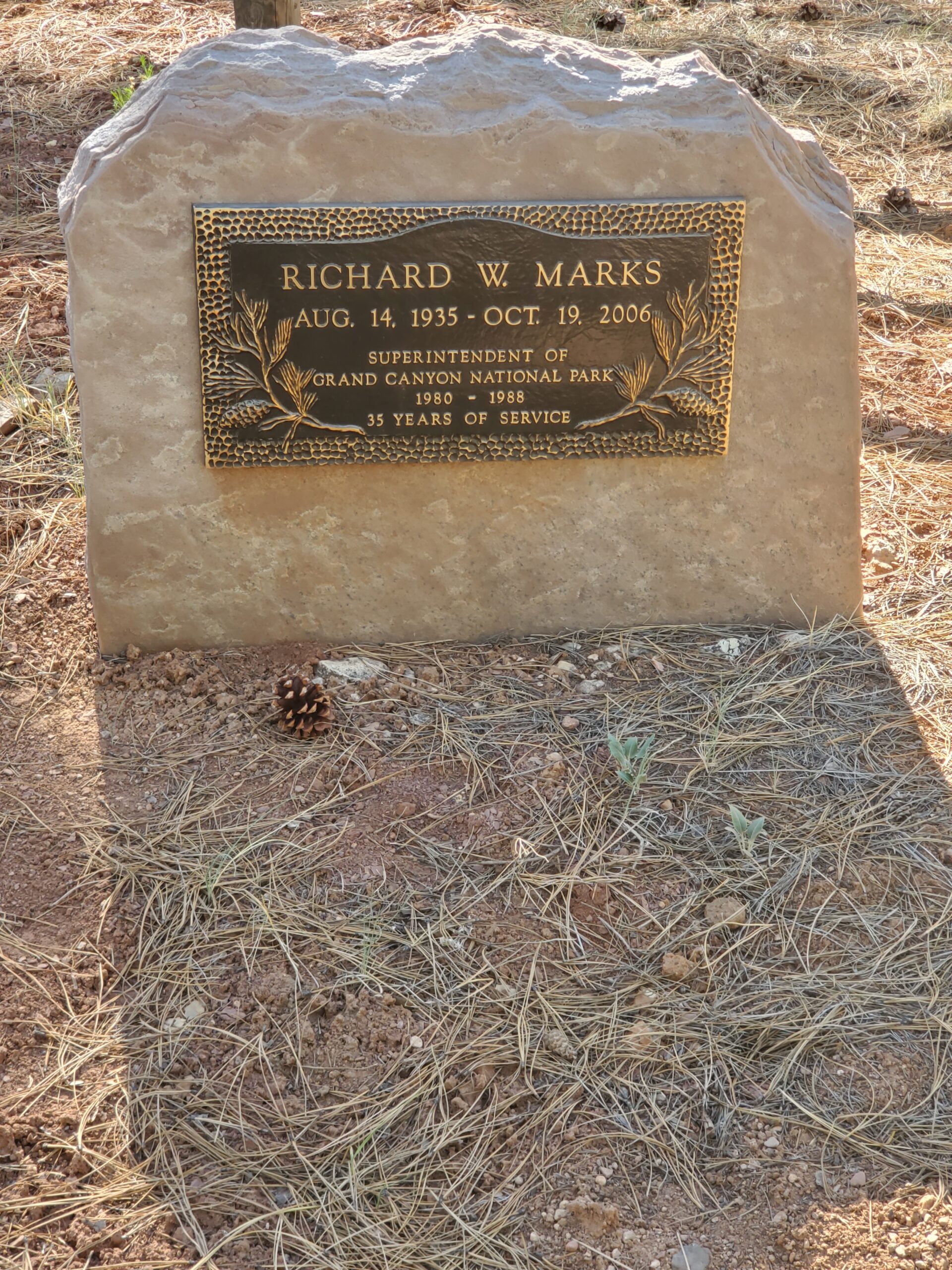
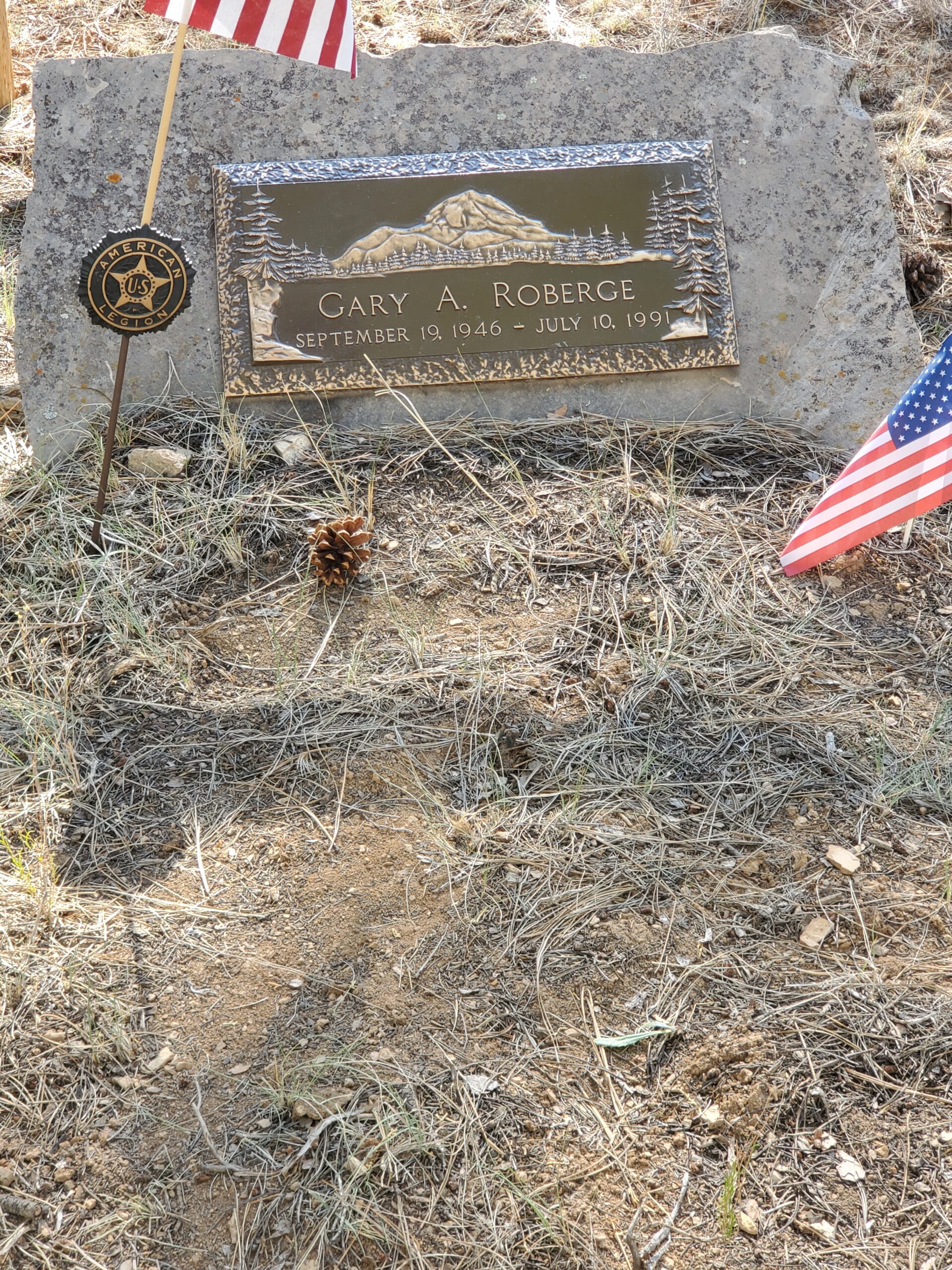
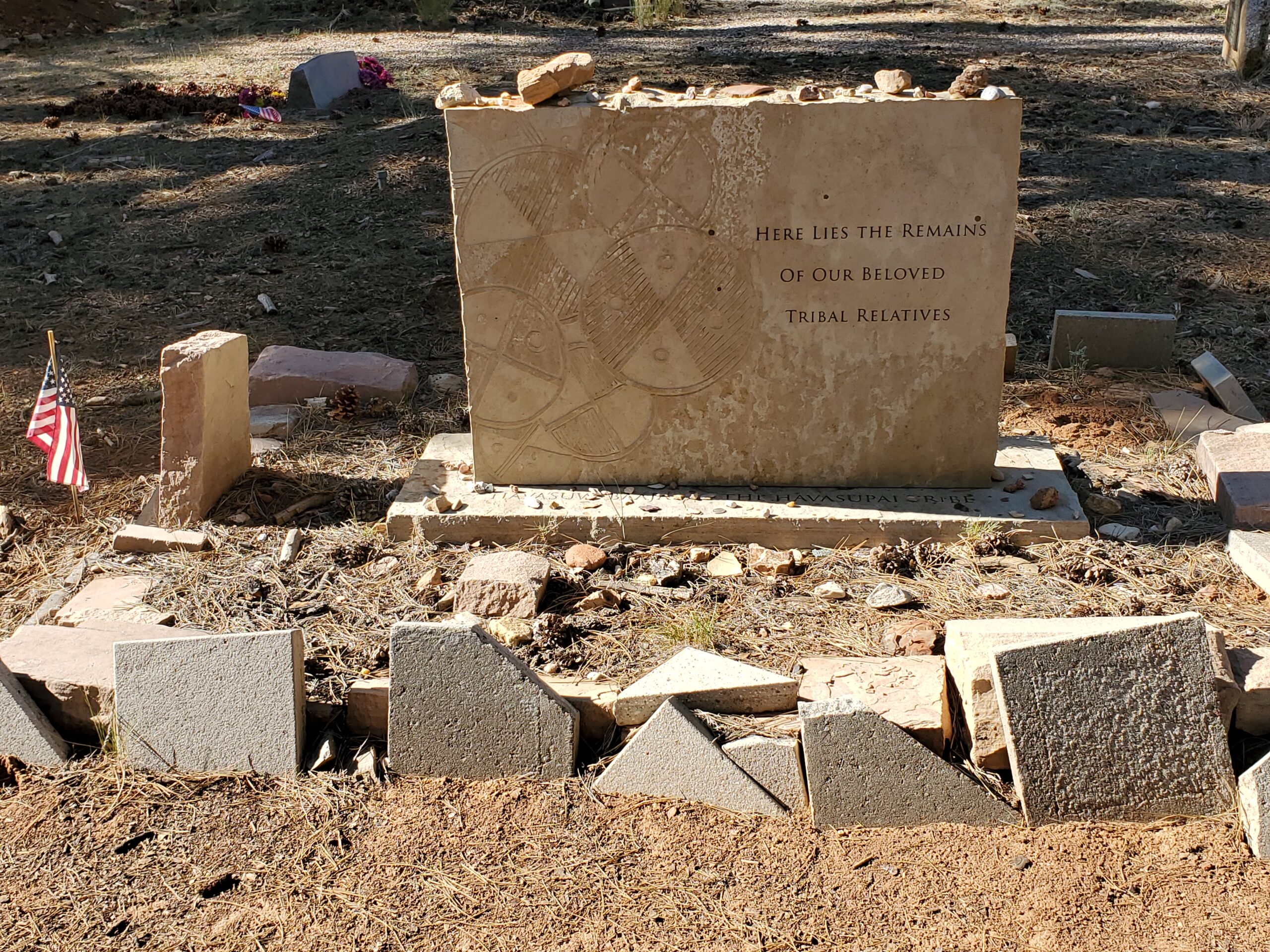
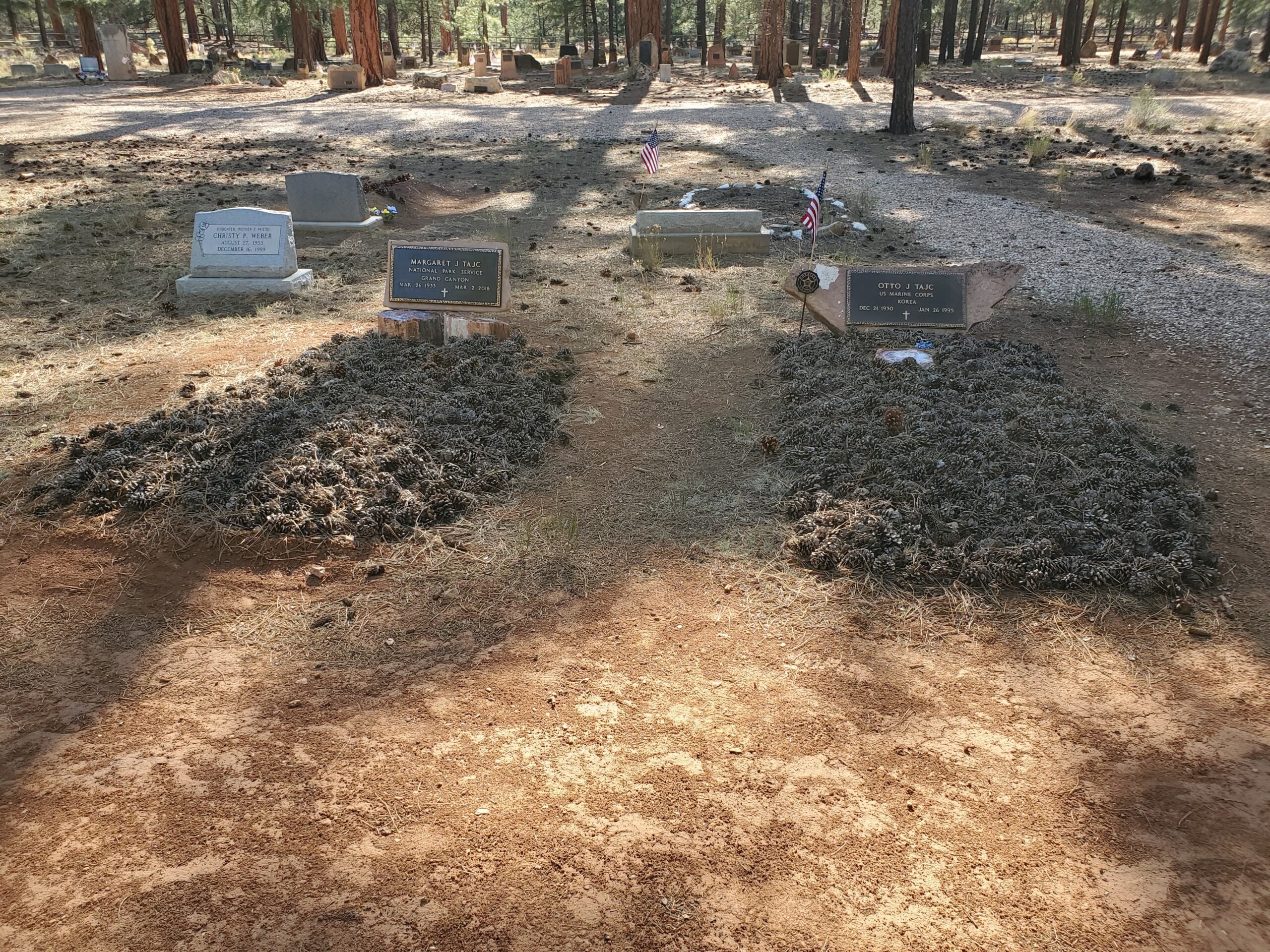
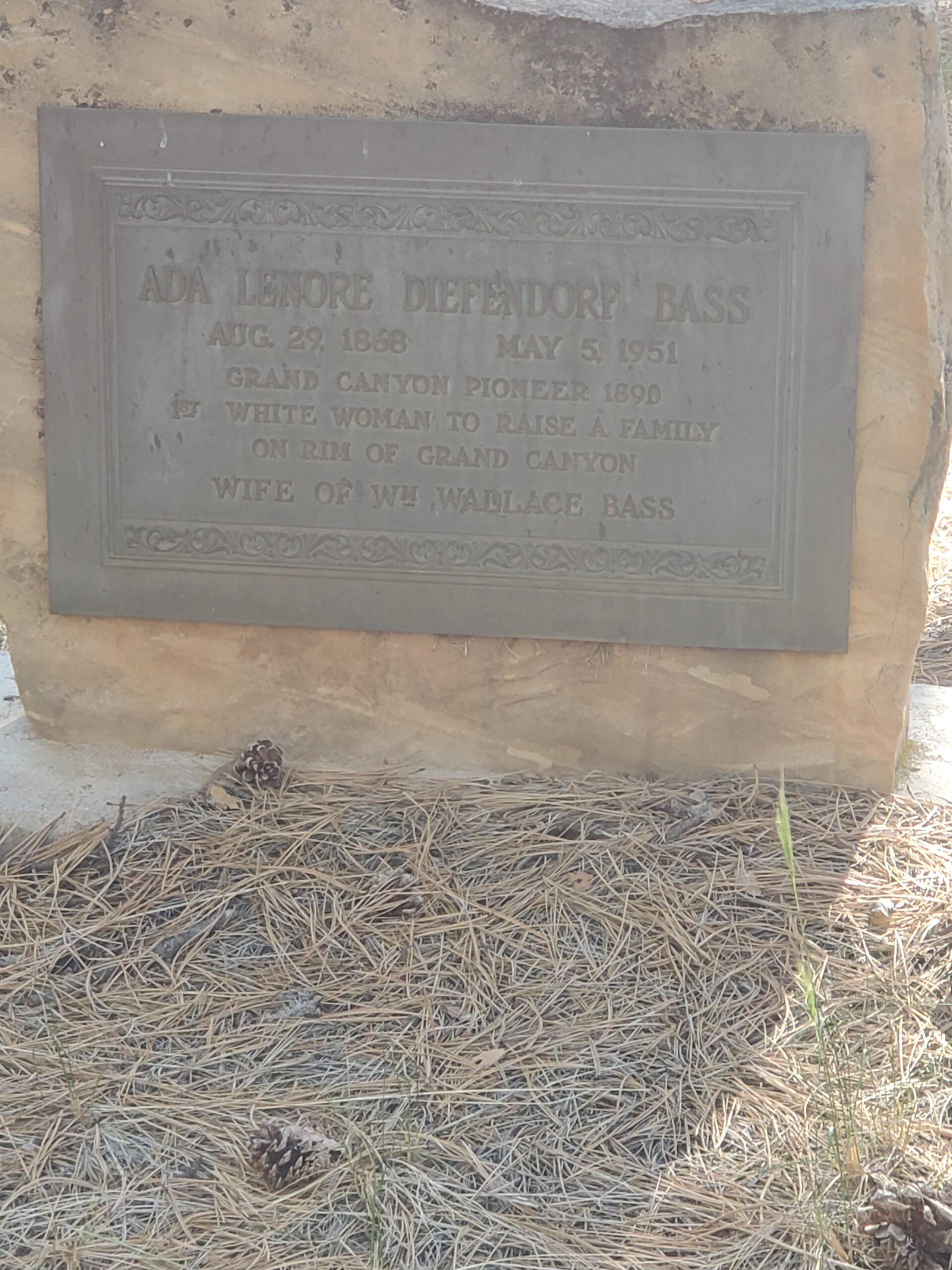
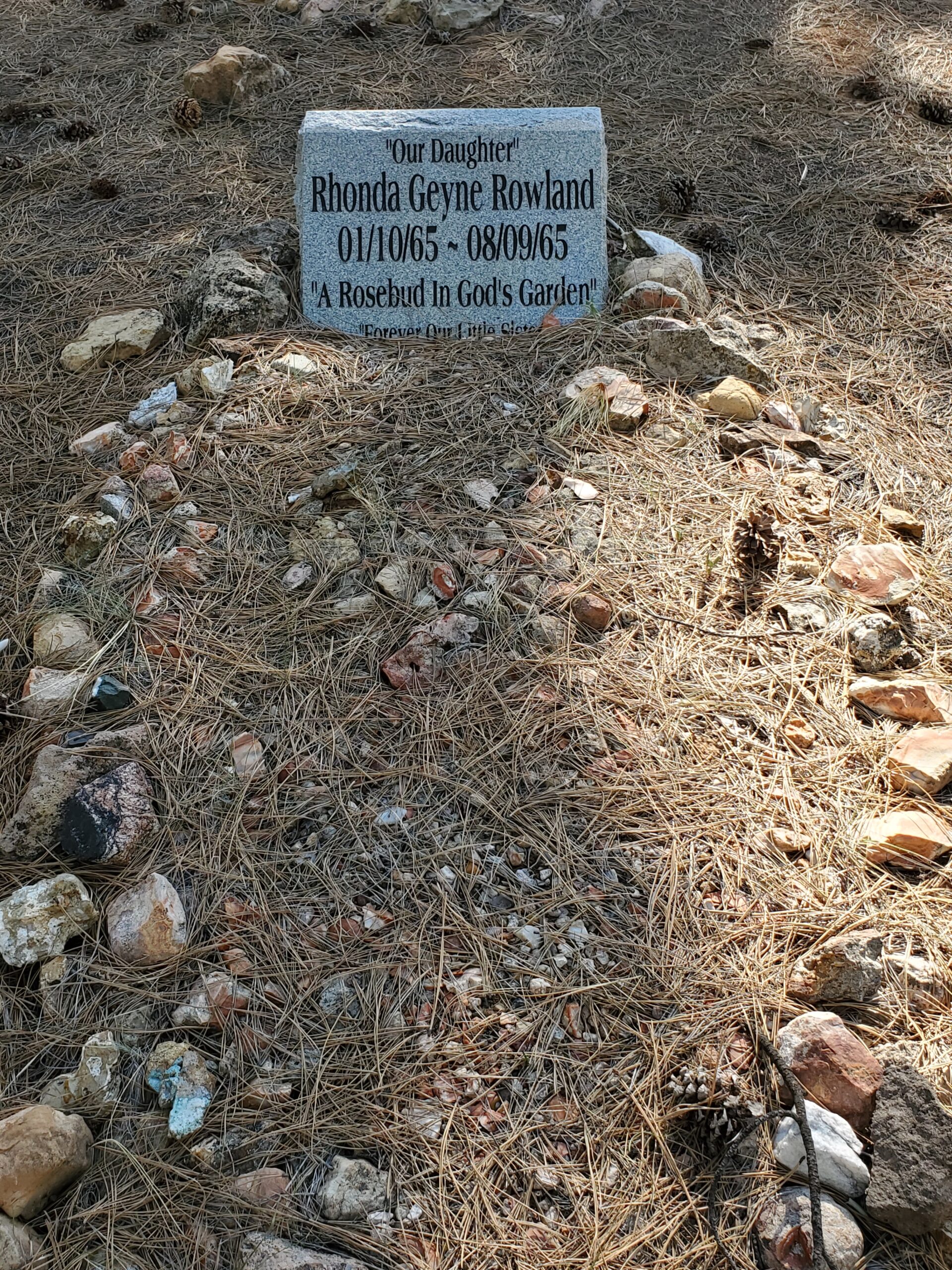
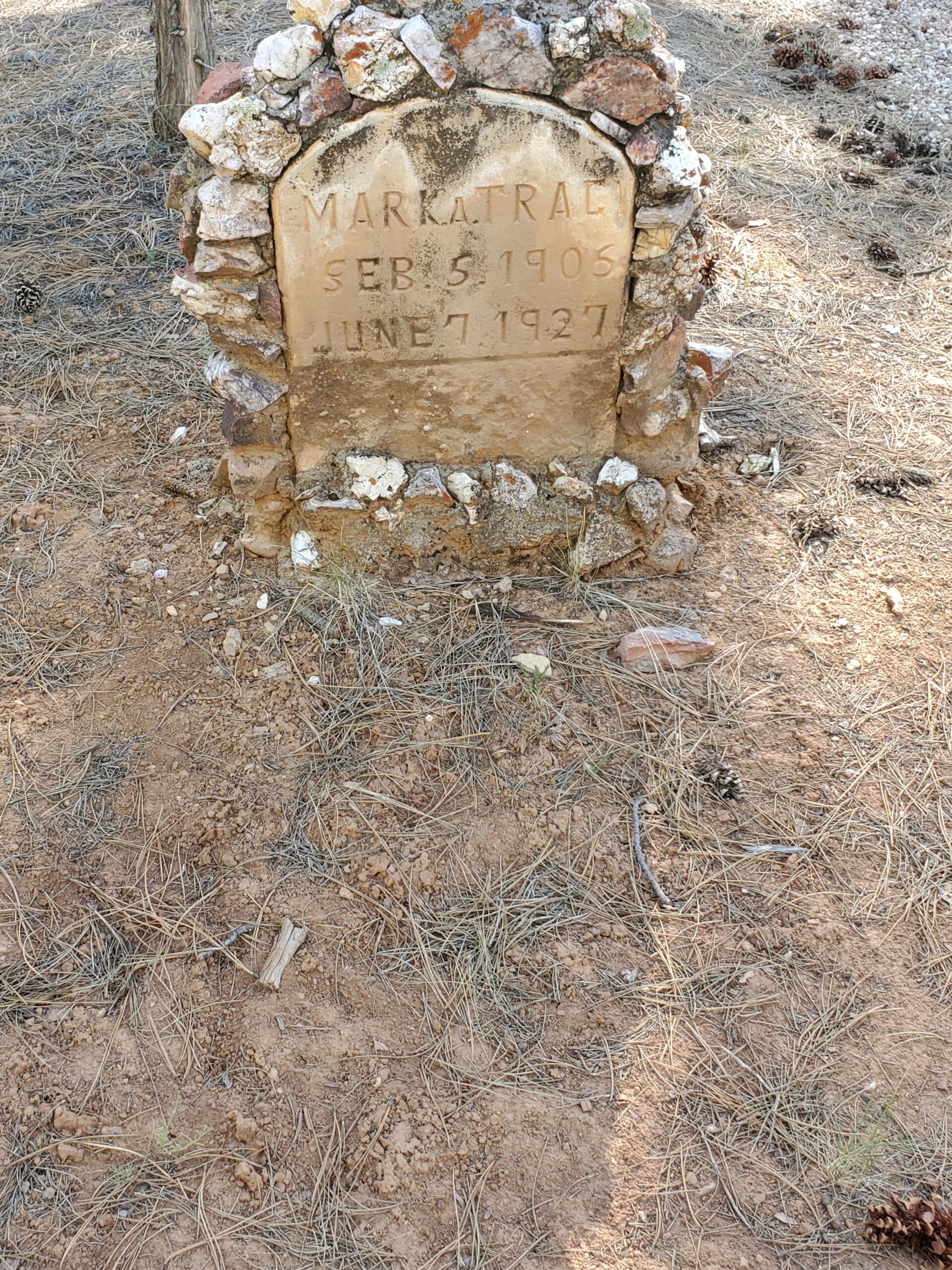
2021--Grand Canyon Pioneer Cemetery, Grand Canyon Village, Arizona, United States of America

Grand Canyon Pioneer Cemetery 2021, zoe

I also have a blog post about the cemetery at the Grand Canyon, which can be read here.

If you are ever visiting Arizona's most famous landmark, make sure to stop at the cemetery to see some of the most unique headstones I have ever seen.

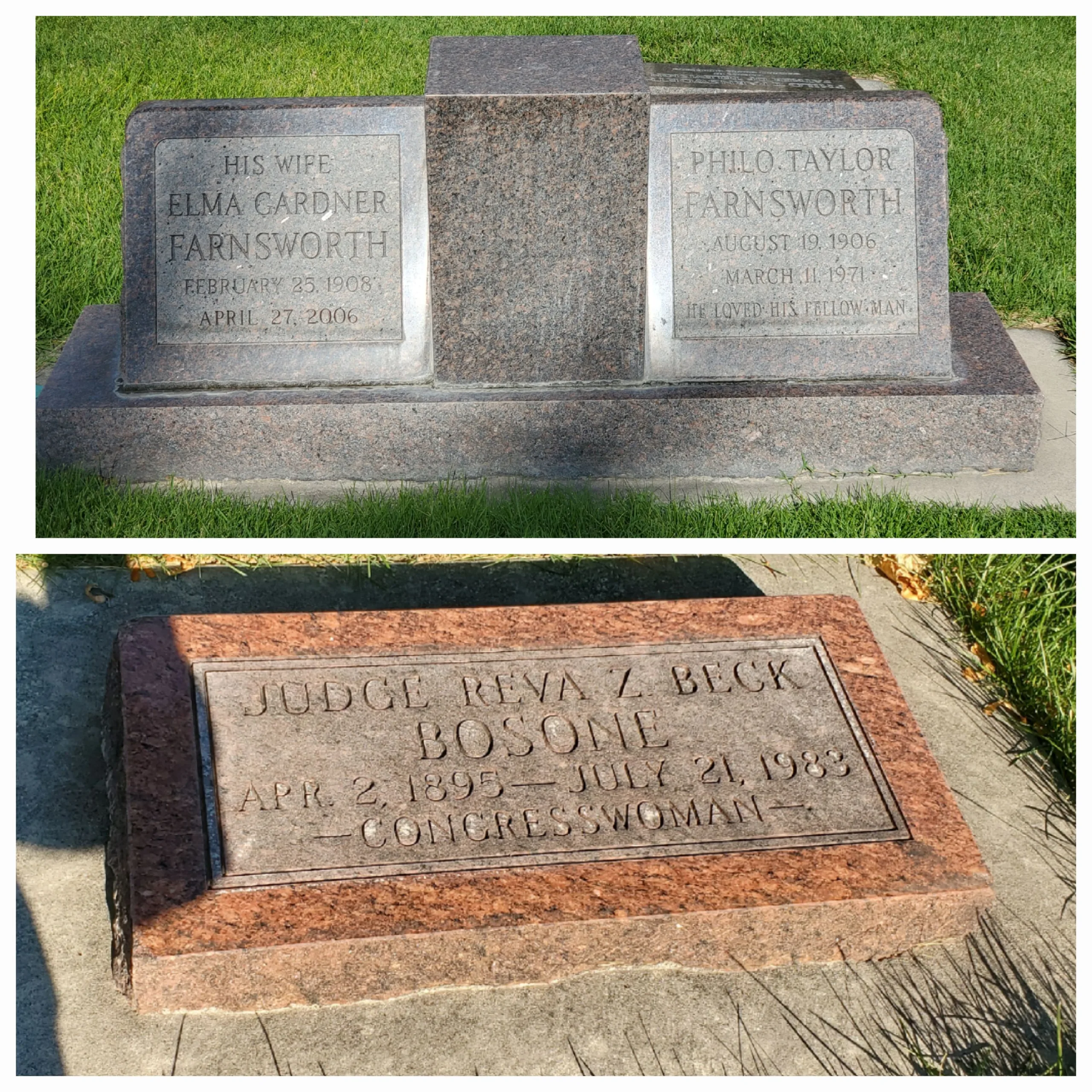
2021--Philo Farnsworth Grave (Provo City Cemetery, Provo, Utah, United States of America) and Reva Beck Bosone Grave (American Fork Cemetery, American Fork, Utah, United States of America)

Utah graves

Once again, I wrote more extensively about both cemeteries in a blog post that you can read here.

If you would like to learn more about why I visited the two individuals I did, you can read about them both here:

Philo Farnsworth, inventor of the all-electric television

Reva Beck Bosone, first female politician elected to national office from Utah

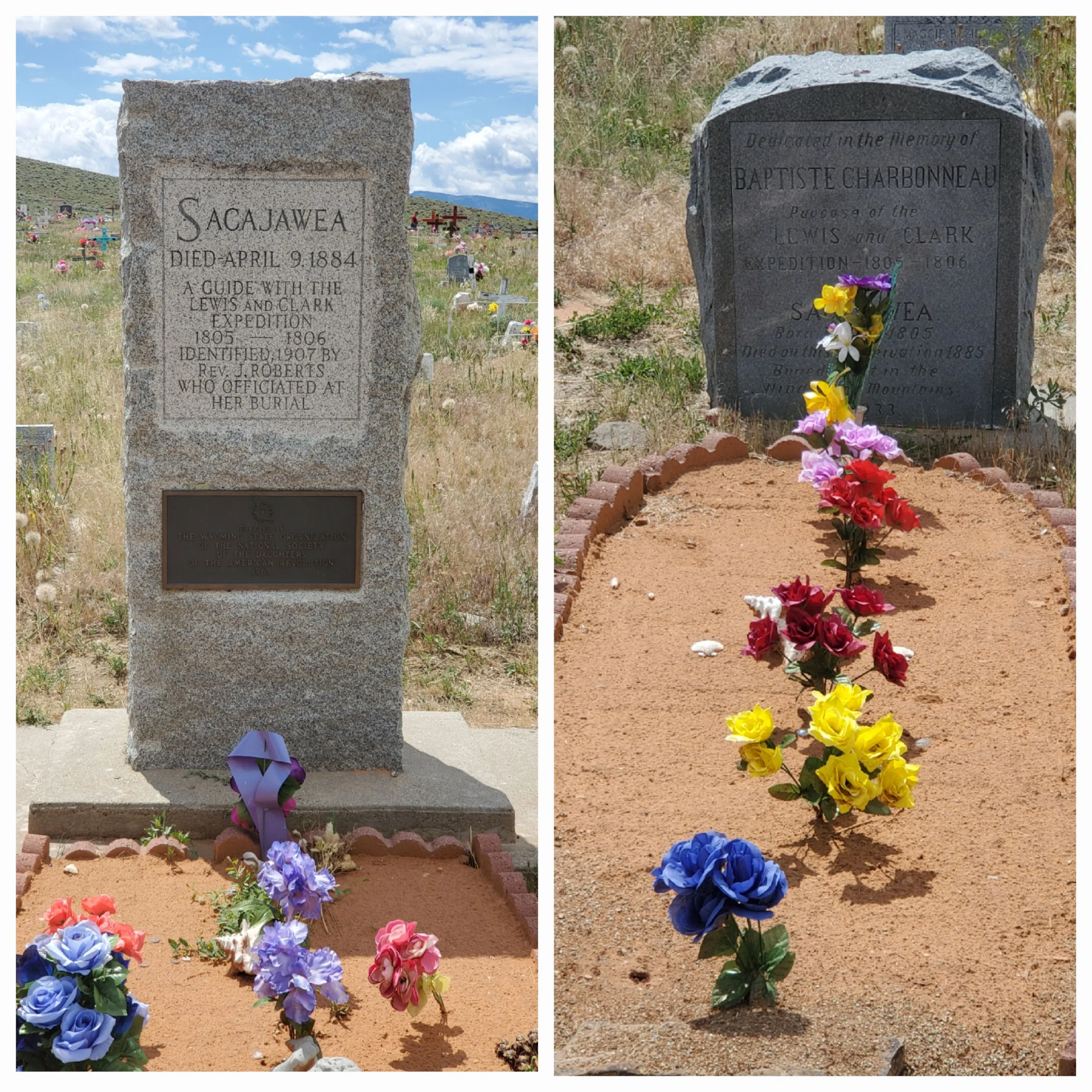
2021--Sacagawea Cemetery, Fort Washakie, Wyoming, United States of America

Sacagawea Cemetery

Once again, I have a more conclusive writeup on the cemetery that can be read here.

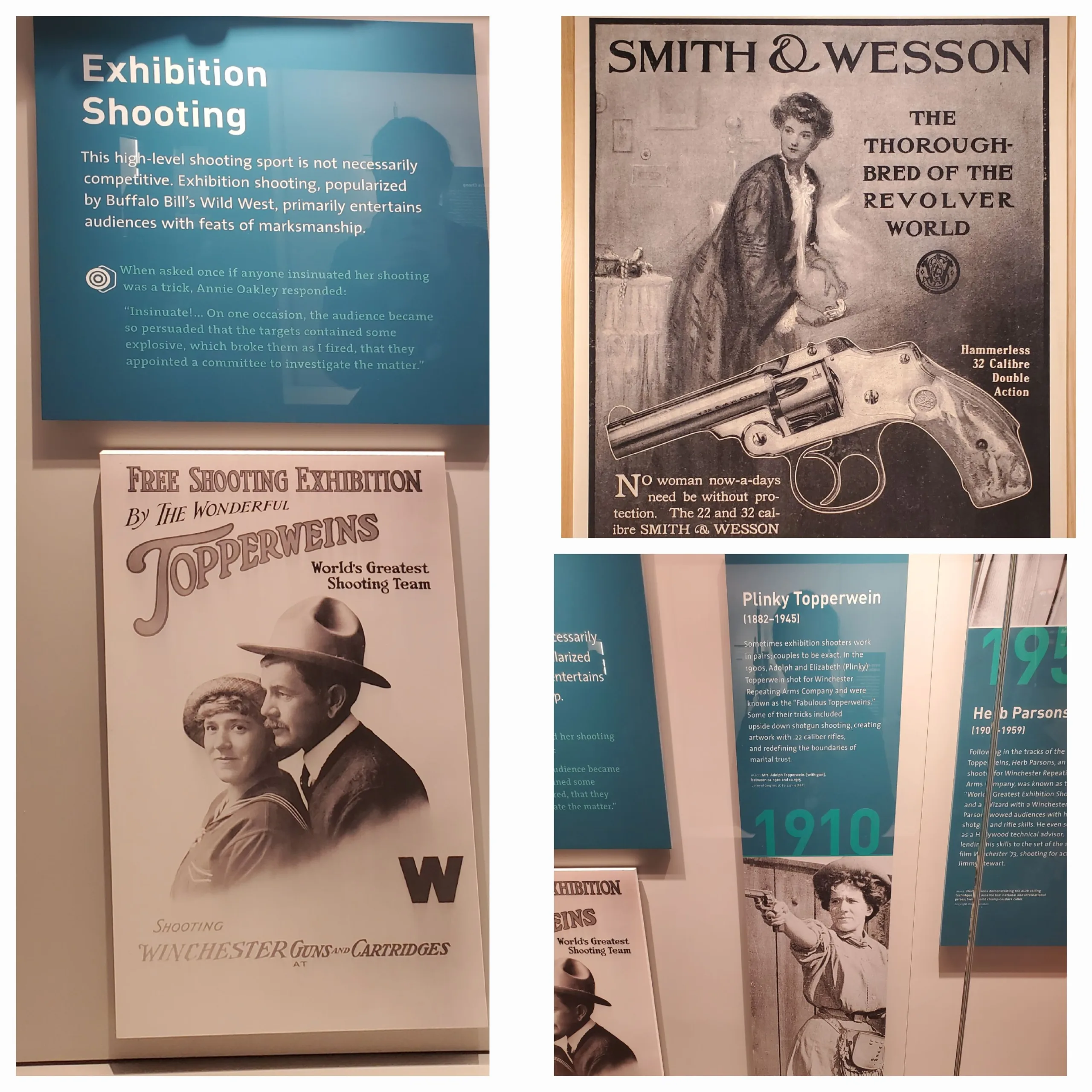
2021--The Buffalo Bill Center of the West, Cody, Wyoming, United States of America

Cody
Cody pt 2

If you ever find yourself in Cody, Wyoming, you simply have to stop at one of the largest and most fascinating museums I have ever stepped foot in, The Buffalo Bill Center of the West.

For one thing, its more than just a regular old museum. In fact, its five museums in one, all located under a single roof!

According to their website, the five museums are as follows: "Draper Natural History Museum, Buffalo Bill Museum, Plains Indian Museum, Whitney Western Art Museum, and Cody Firearms Museum."

I didn't have a chance to step into the art museum, but my mom and I did go through the other four. My favorites were the Plains Indians Museum and the Cody Firearms Museum, both of which I included photos of above.

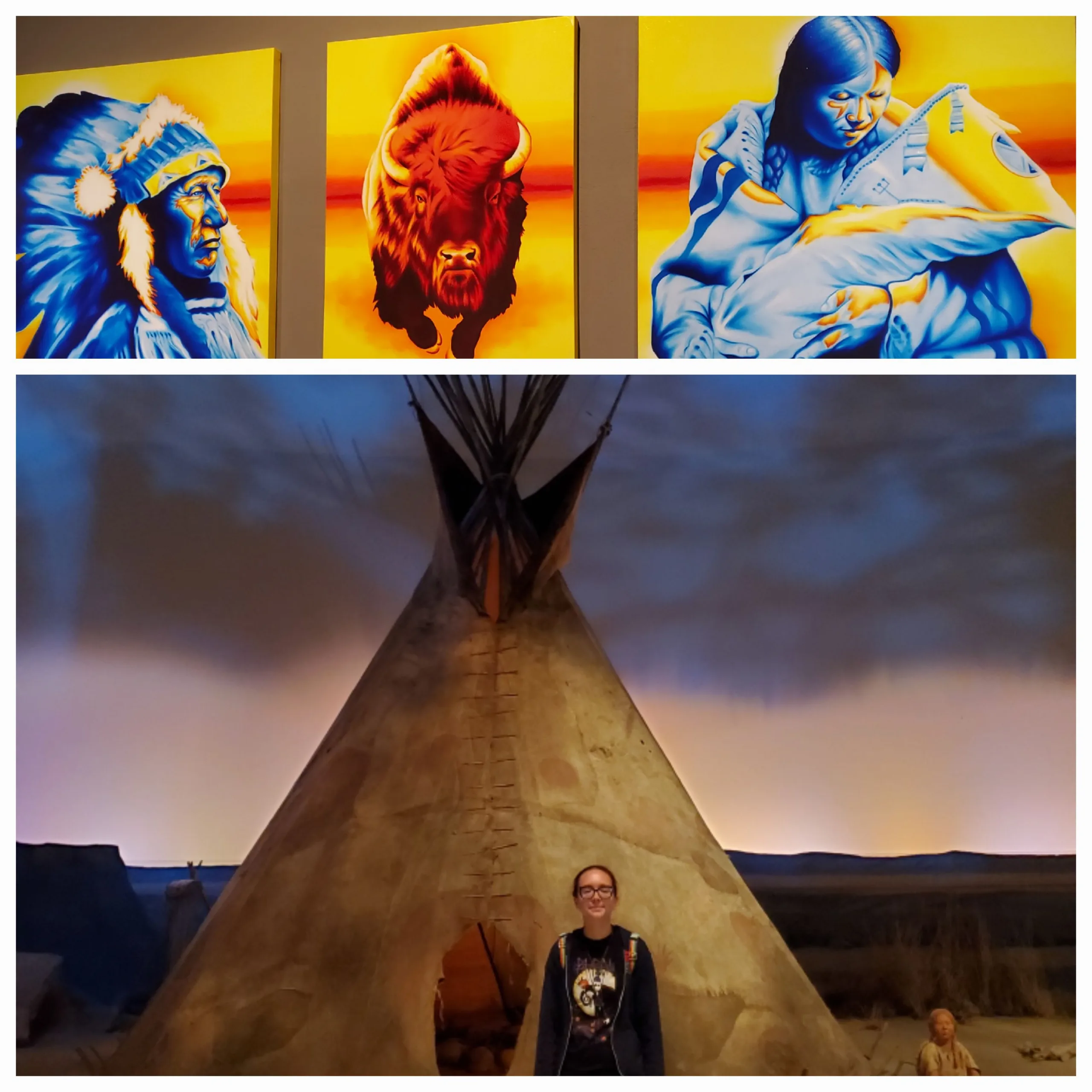
One of the most fascinating artifacts in the entire building was the actual Native American teepee which has survived to present day. Its hard to get the full experience from a photograph, but picture this. I am five feet six inches tall, and it towered above me!

The Buffalo Bill Center of the West gets its roots from the Buffalo Bill Museum, founded in 1927 by William Cody's niece, Mary Jester Allen. The current location of the center was donated in 1935 by Whitney Vanderbilt. The art museum was added in 1959, and ten years later the Plains Indians museum was added as well. The firearms museum was opened to the public in 1991, with the fifth and final section, the Draper Natural History Museum, added in 2002.

To read a full timeline history of the museum, click here.

To view the museum's website to plan a visit of your own, click here!

If the center sounds vaguely familiar to you, maybe its because one of my favorite history Youtubers uploaded two videos on the center only a few months ago. Below are links to both of The History Underground's videos on the center, which give you a much better look inside at the exhibits.

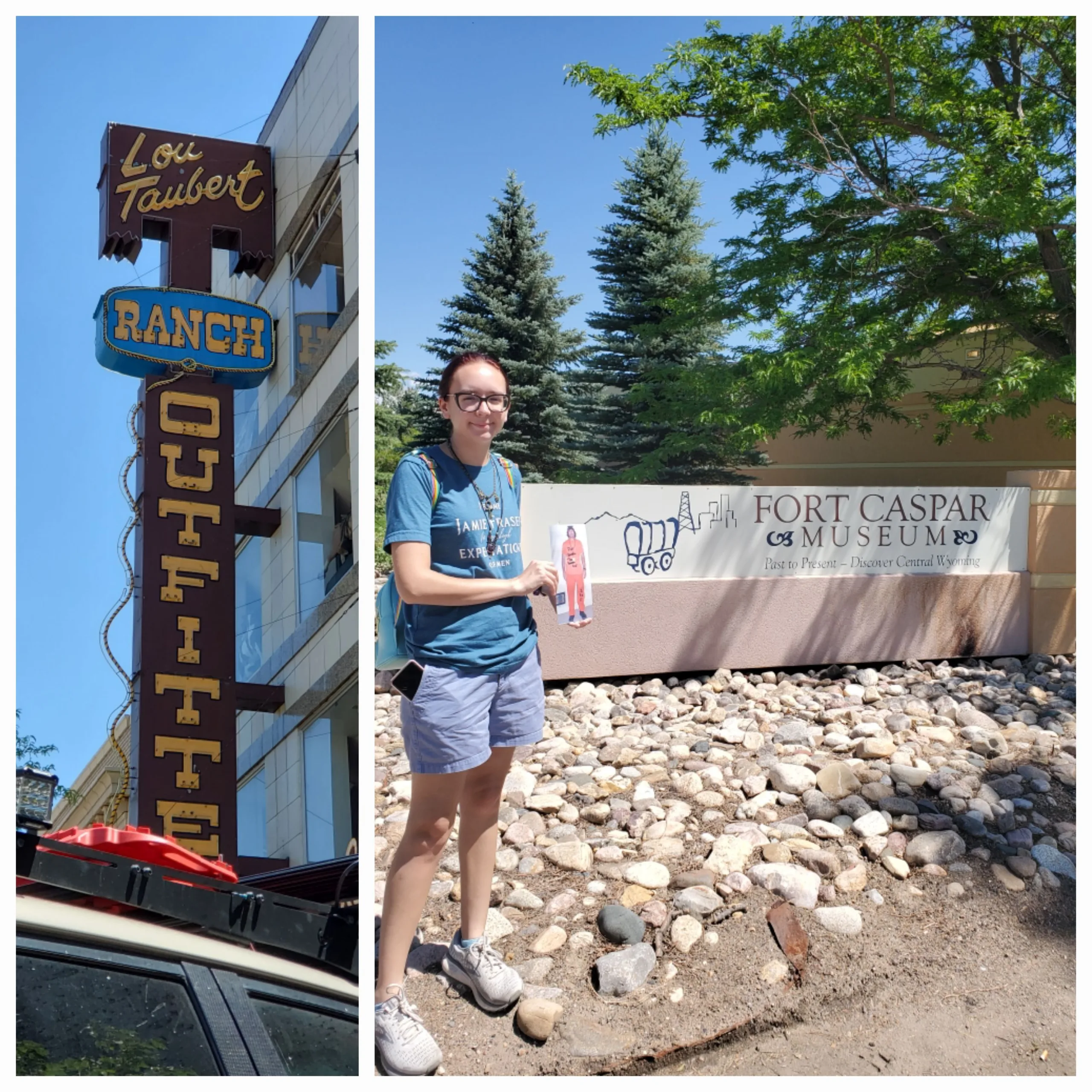
2021--Fort Caspar and Lou Taubert's Ranch Outfitters, Casper, Wyoming, United States of America

Casper, Wyoming

For some of my younger and more internet-attuned audience members, you might read "Casper, Wyoming" and think--JEFFREE STAR!

But unfortunately, while I was in Casper I did not see Jeffree Star or any of his now-famous yaks. This was also before Jeffree opened his "Makeup and Meat" store in Casper as well, but I really want to go back and visit it someday!

(If you have no idea what I'm talking about, the internet personality, makeup mogul, and ranch owner Jeffree Star happens to own a ranch outside of Casper, Wyoming, and he opened a storefront there to sell both his makeup and products from his ranch).

Anyways! Like I said, Jeffree had yet to open his store while I was in Casper, so instead we stopped at the Fort Caspar Museum and the world-famous western wear store Lou Taubert.

Fort Caspar dates to 1847, when Brigham Young led his wagon train of LDS Pioneers across the midwestern states. In June of that year, the pioneers constructed a ferry boat to cross the North Platte river. The remains of that same ferry exist today in the museum, along with other structures built in 1859 that still exist today as well.

If you visit in the summer months, you can walk around those older structures outside and look within. There is also a small indoor museum to walk around as well, and the staff is very enthusiastic about answering your questions.

(They also had a very wide ranging selection of books to buy in the gift shop!)

To learn more about Fort Caspar, visit their website here.

Lou Taubert's, on the other hand, is both a store and a piece of history.

According to their website, Lou Taubert's has been supplying the west with their products since 1919! (Technically the western wear store opened in 1947, but the original owner opened his first store in 1919). I had no idea what to expect when we arrived, but my mom knew she wanted to visit.

In fact, she'd been wanting to visit since she was a member of FFA (Future Farmer's of America) in high school. Visiting Lou Taubert's was checking an item off a bucket list she hadn't actually ever written down, and boy was it worth the stop!

The ranch outfitting store is unlike any other. For one thing, the store is in a building that covers NINE different floors, or approximately 55,000 square feet of floor space. Lou Taubert's is also family owned and has been operating over three generations.

(Which is kind of impressive that they've managed to stretch three generations across one hundred years. My own family has been running our own small local business for just over sixty years and we're on our fourth generation already!)

From 1980 to 2018, the family expanded to having a second store in Billings, Montana, but today they only operate the original store out of Casper.

My favorite part about visiting Lou Taubert's was the extraordinary number of old photographs located around the store. We spent most of our time on the floor with the cowboy hats and other women's clothing. While my mom shopped, I looked around the photos of all the different rodeo queens who had competed across the country for various titles, all of whom seemed to have shopped at Lou Taubert's.

To learn more about this famous store, visit their website here.

2021--The Big Boots of Cheyenne and Lakeview Cemetery, Cheyenne, Wyoming, United States of America

zoe w the big governor boot, cheyenne WY 2021
nellie ross grave

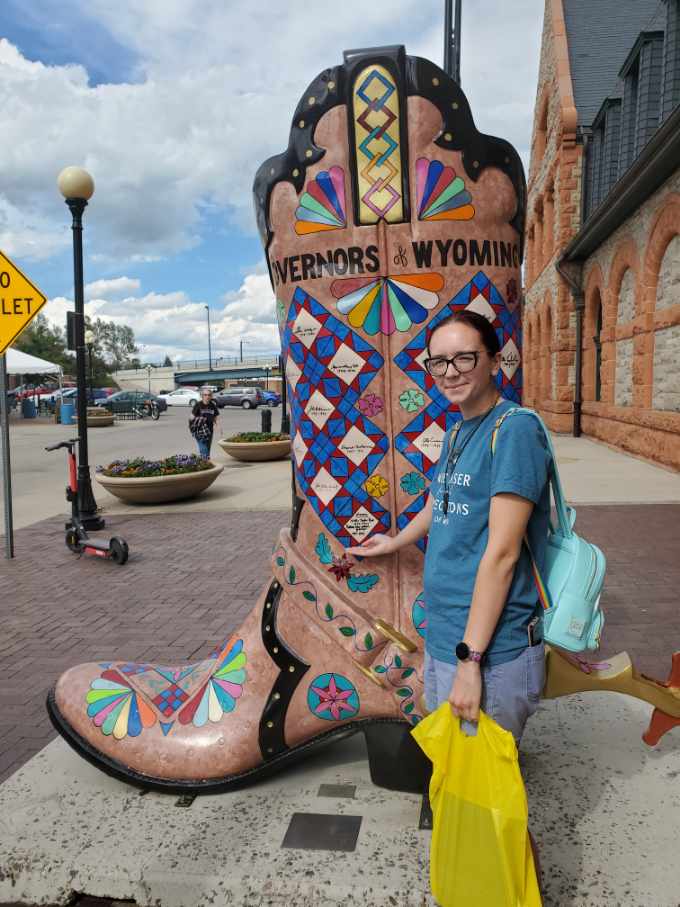
Cheyenne, the capitol of Wyoming. Our last stop in my favorite state in the United States allowed me to visit one of the strangest man-made landmarks in the country, the so-called "Big Boots."

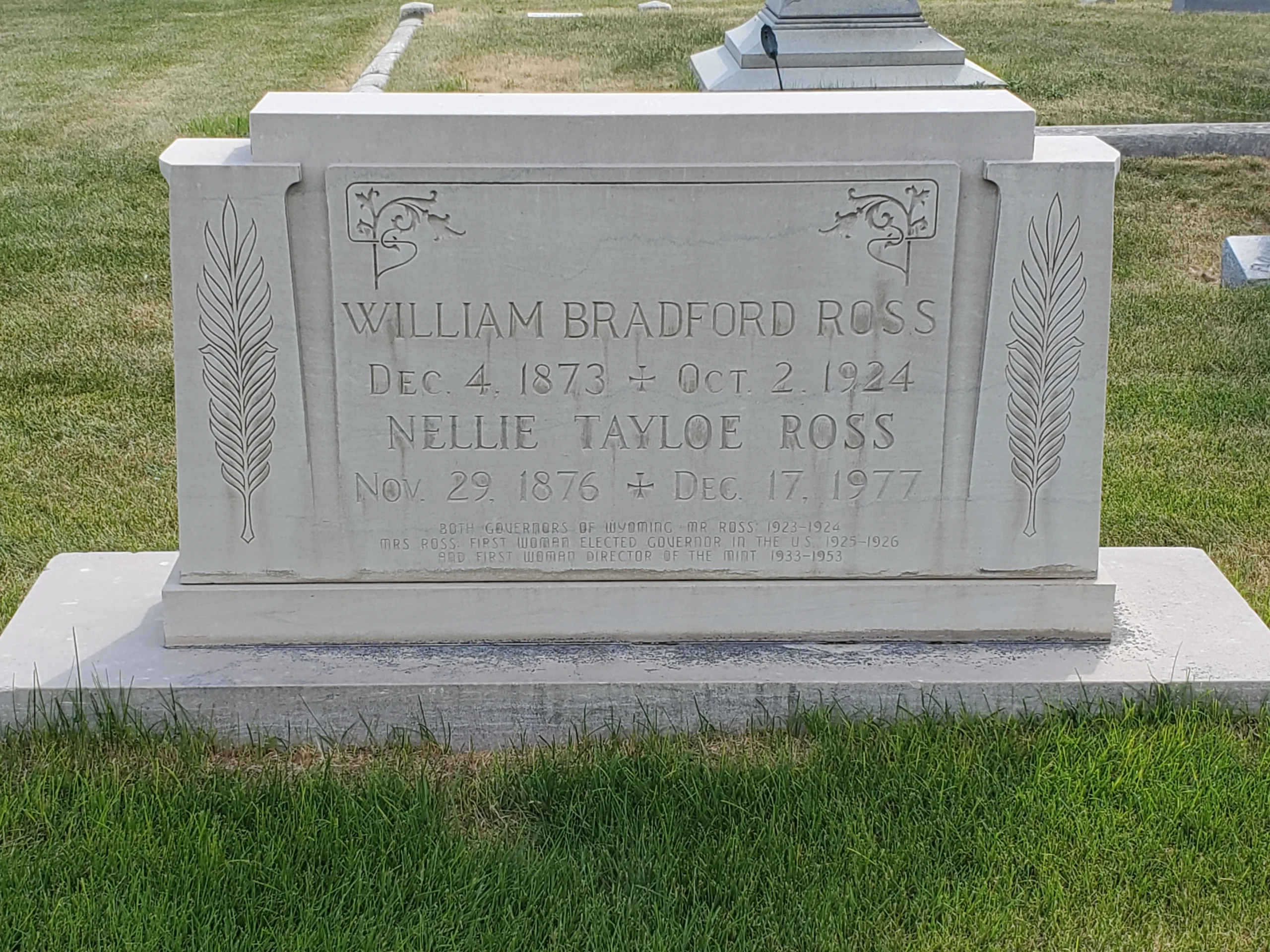
According to an online brochure, which you can read here, there are thirty eight-foot-fall hand painted boots located all over the city. Each was painted by a local artist and shows an aspect of history for Cheyenne or Wyoming. Here I am pictured with the Governor's Boot, which lists--you guessed it--every governor of the state of Wyoming, at least at the time of the boot's creation. I am underlining Nellie Tayloe Ross's name--the first female governor of Wyoming, whom we also stopped to visit at Lakeview cemetery that same day (also pictured).

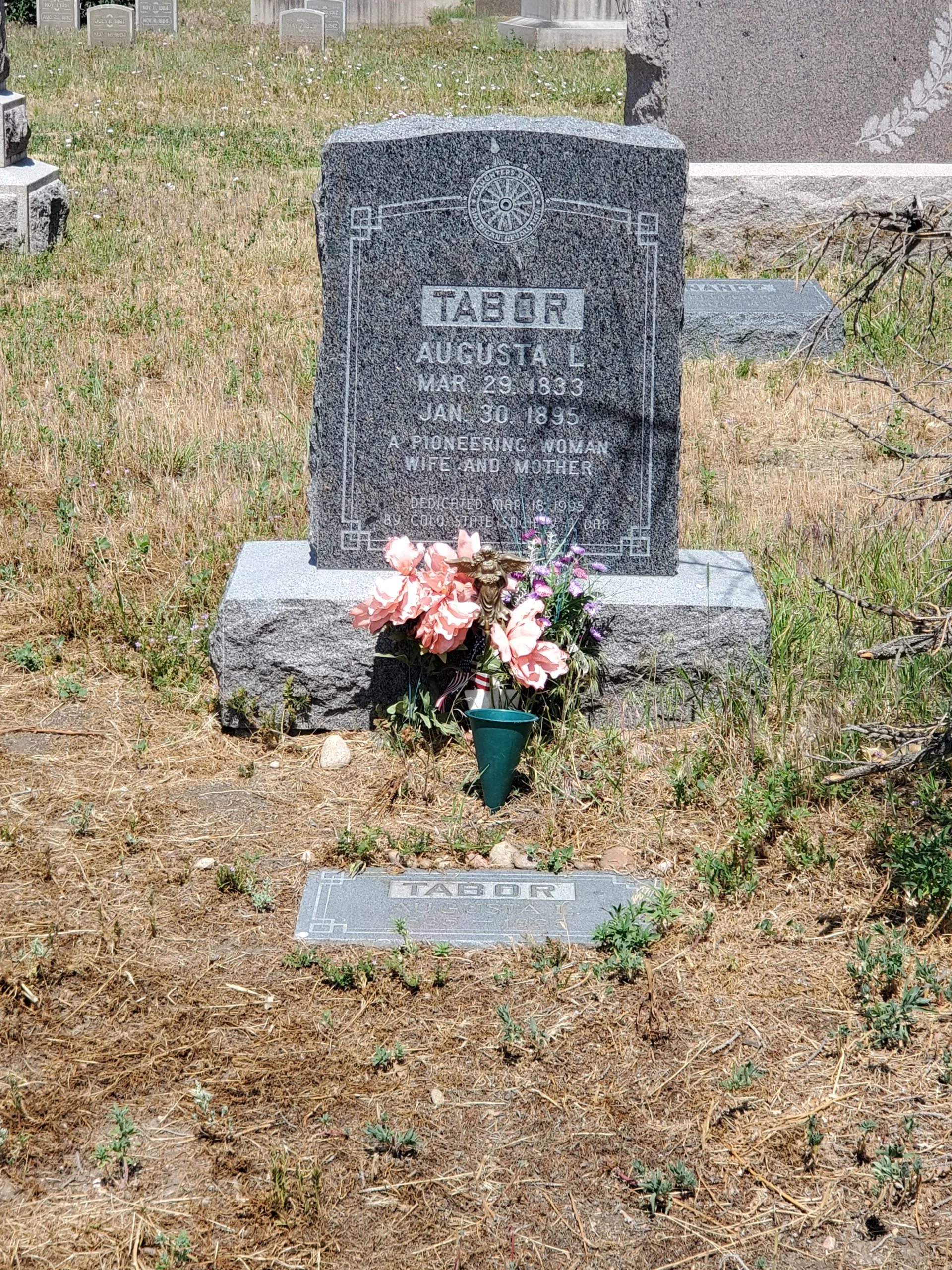
2021--Visiting the Tabor Ladies, and the Inventor of Tampax, Denver, Colorado, United States of America

Denver graves
Augusta Tabor grave

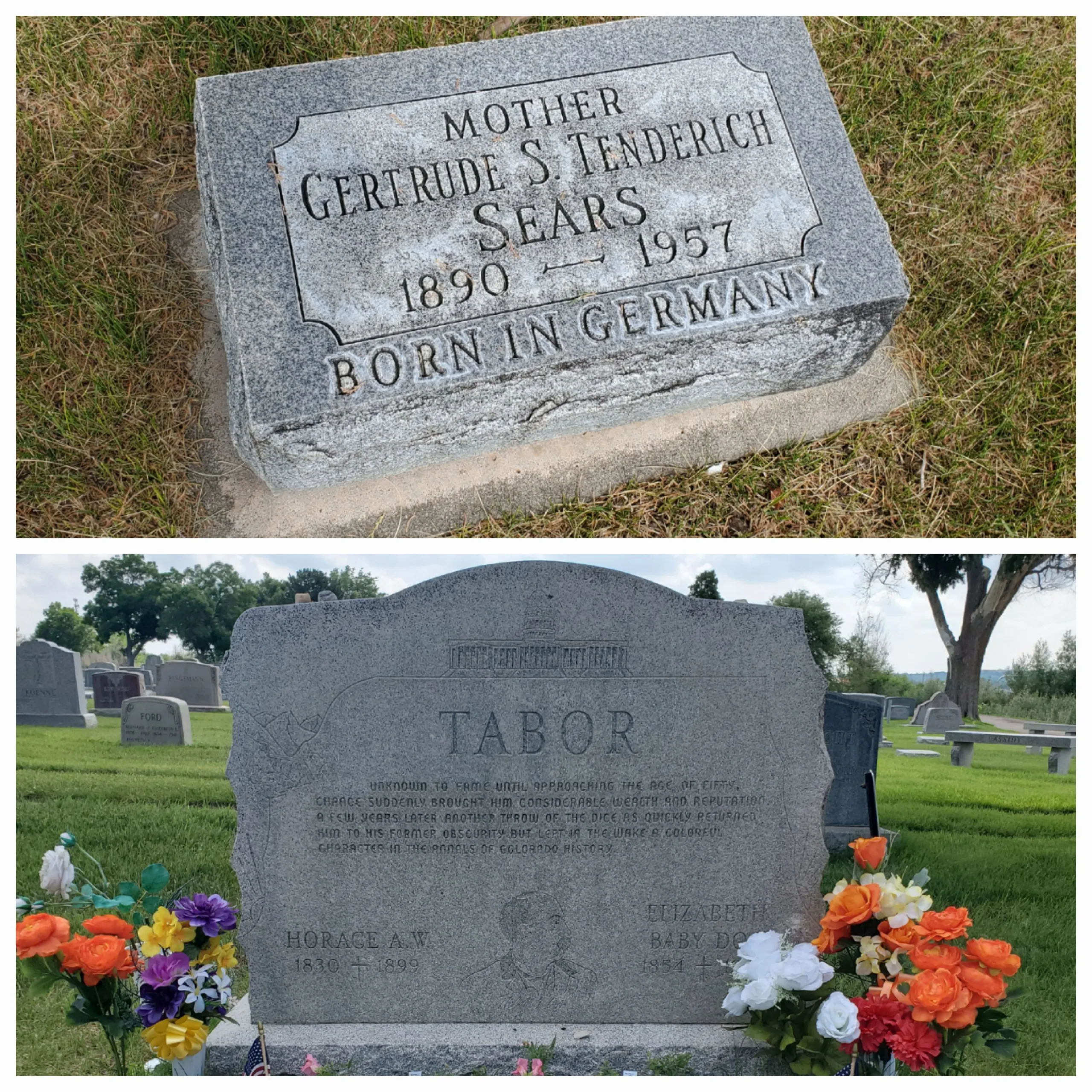
While my mom and I didn't spend a ton of time in Denver on our road trip through, I did make sure to have us stop off at two cemeteries: Mount Olivet Catholic Cemetery (technically in Wheat Ridge, Colorado) and Riverside Cemetery.

At Mount Olivet, we visited both Gertrude Tenderich-Sears, the inventor of the first modern tampon, and Elizabeth "Baby Doe" Tabor, the second wife of silver baron Horace Tabor. Mount Olivet is a beautiful cemetery, with perfectly manicured lawns and interesting headstones in a picturesque environment for those who like to wander.

Riverside Cemetery, on the other hand, was extremely depressing to witness. First of all, it is located directly across the street from a water treatment sewage plant, which made the entire cemetery smell like...well...rotting corpses. If that isn't bad enough, the cemetery is very old and very overgrown. I managed to find Augusta Tabor's grave (the first wife of the aforementioned Horace Tabor) simply because it is tall and easy to spot from a distance, but other graves that were smaller and closer to the ground were almost impossible to identify. My mom and I still took some time to wander, but the cemetery does not have clear roads to drive down or any other markers to help visitors find who they are looking for either, so we didn't stay as long as I would have wanted to otherwise.

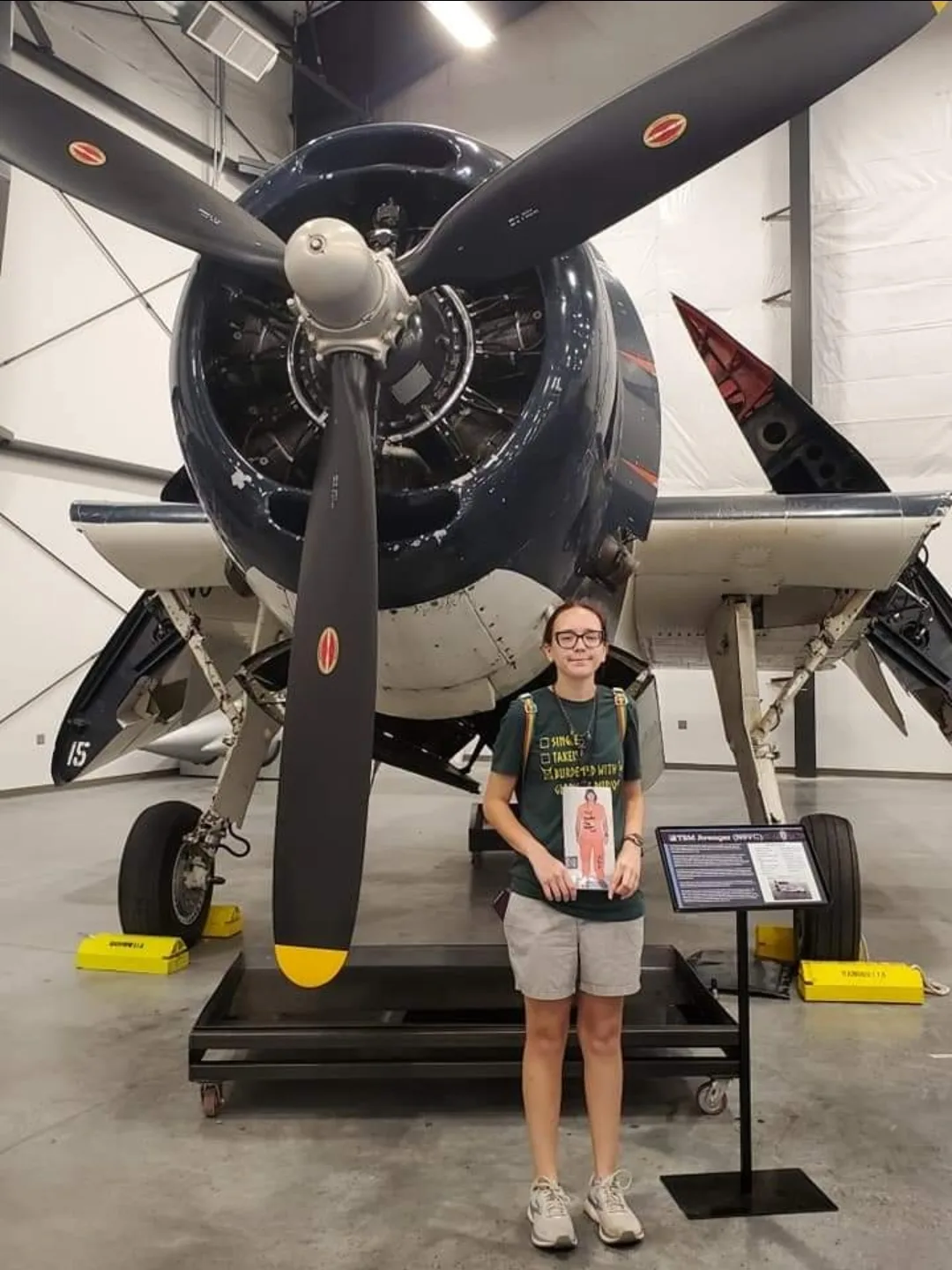
2021--The National Museum of World War II Aviation, Colorado Springs, Colorado, United States of America


Zoe with a plane

My mother and I found this museum by complete accident, but what a find it was!

I have always loved aerospace museums, and this one was one of the best I've visited so far. Not only is the hangar full of all sorts of old planes, engines, and other machinery from World War II, but the museum also had short biographies on some of the most famous pilots from the period, and before.

The only downside to this museum was the gift shop, which was pretty lackluster, at least when we visited. We spent several hours wandering around, taking in the sights as well as calling and texting various family members, to tell them to stop by the next time they visited that part of Colorado.

To learn more about the National Museum of World War II Aviation, visit their website, here.

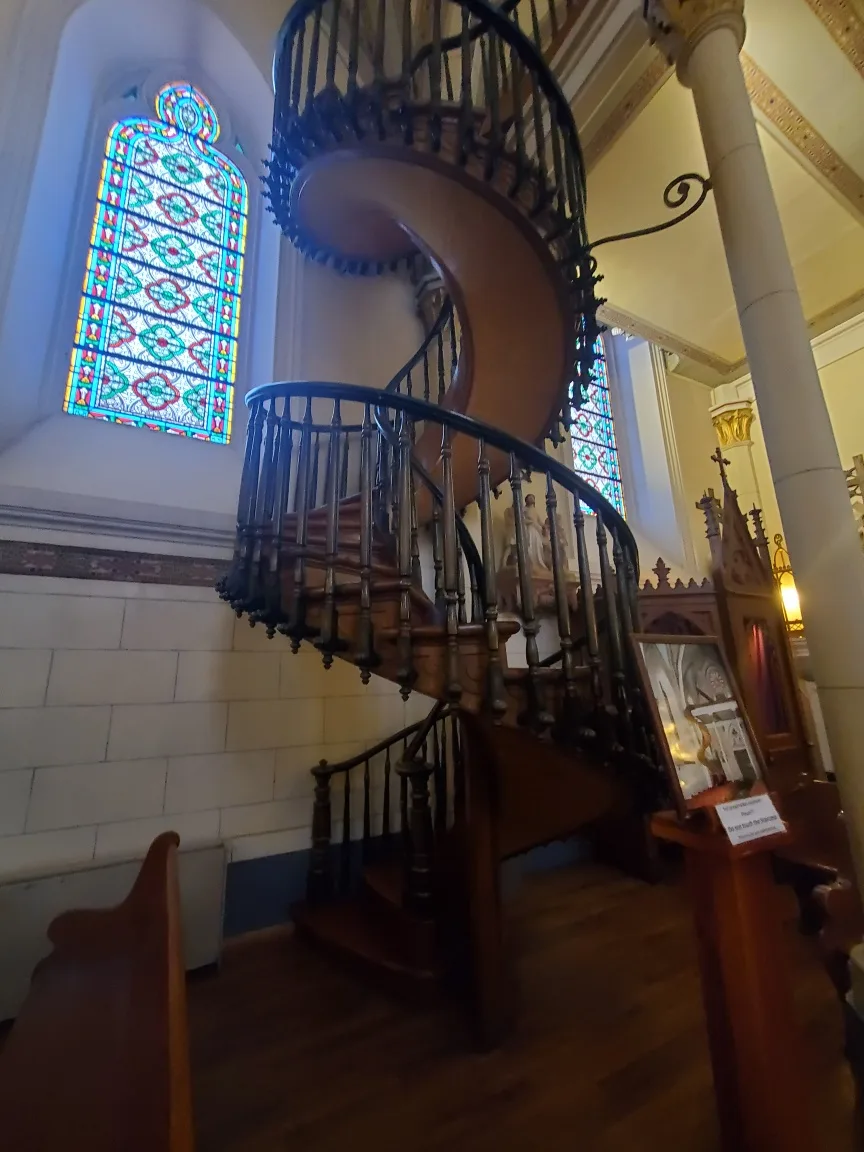
2021--The Loretto Chapel, Santa Fe, New Mexico, United States of America

the staircase at the loretto chapel, santa fe nm, 2021

The story of one of the most famous staircases in the world starts in 1850, when the local Catholic order in New Mexico decided a school for girls was needed.

The sisters of Loretto took up the call, and built the Loretto Academy in 1853, after a journey which cost the Mother Superior her life, and during which time the sisters had to quickly learn Spanish in order to communicate with the locals.

Twenty years later, the sisters were able to begin construction of a chapel to go alongside the school. While the architect in charge was able to complete most of the building, he died before he could build a staircase that would reach the chapel's loft.

Because of the shape of the chapel itself, a standard staircase would have taken up too much floorspace and would have shrunk the available seating on the floor of the chapel to make not sustainable. Not knowing what else to do, the sisters of Loretto prayed for nine days to St. Joseph, the Patron Saint of Carpenters.

This is what happened next, according to the Loretto Chapel's Website:

"A carpenter appeared with only a hammer and carpenter’s square. He built what is now known as the Miraculous Staircase with simple tools and wooden pegs. The rare wood is not native to the American Southwest. When the Staircase was complete, it is said that the carpenter disappeared without receiving thanks or payment. The Sisters tried all local lumber stores but could not find accounts open for supplies for their stairs. Some believe the carpenter was St. Joseph himself while others believe that is was someone sent by St. Joseph. What is known is that the Sisters of Loretto prayed, and their prayers were answered."

The stairs are not just beautiful, but practical as well. Designed with two 360 degree complete turns, the stairs provided a way to the chapel's loft while also taking up as minimal floor space as possible. Because of the way they are designed, the entire weight of the staircase lays on the bottom step. They did not originally have railings, but about ten years after the miracle took place, the railings were added to help those climbing up and down.

Today, the Loretto Chapel is as much a tourist attraction as it is a Catholic place of worship. For a couple of dollars per person, visitors can sit in the pews and listen to an audio recording recount the story of the miracle. I very much enjoyed the entire experience, and the gift shop was equally amazing!

To learn more about the Loretto Chapel, visit their website here.

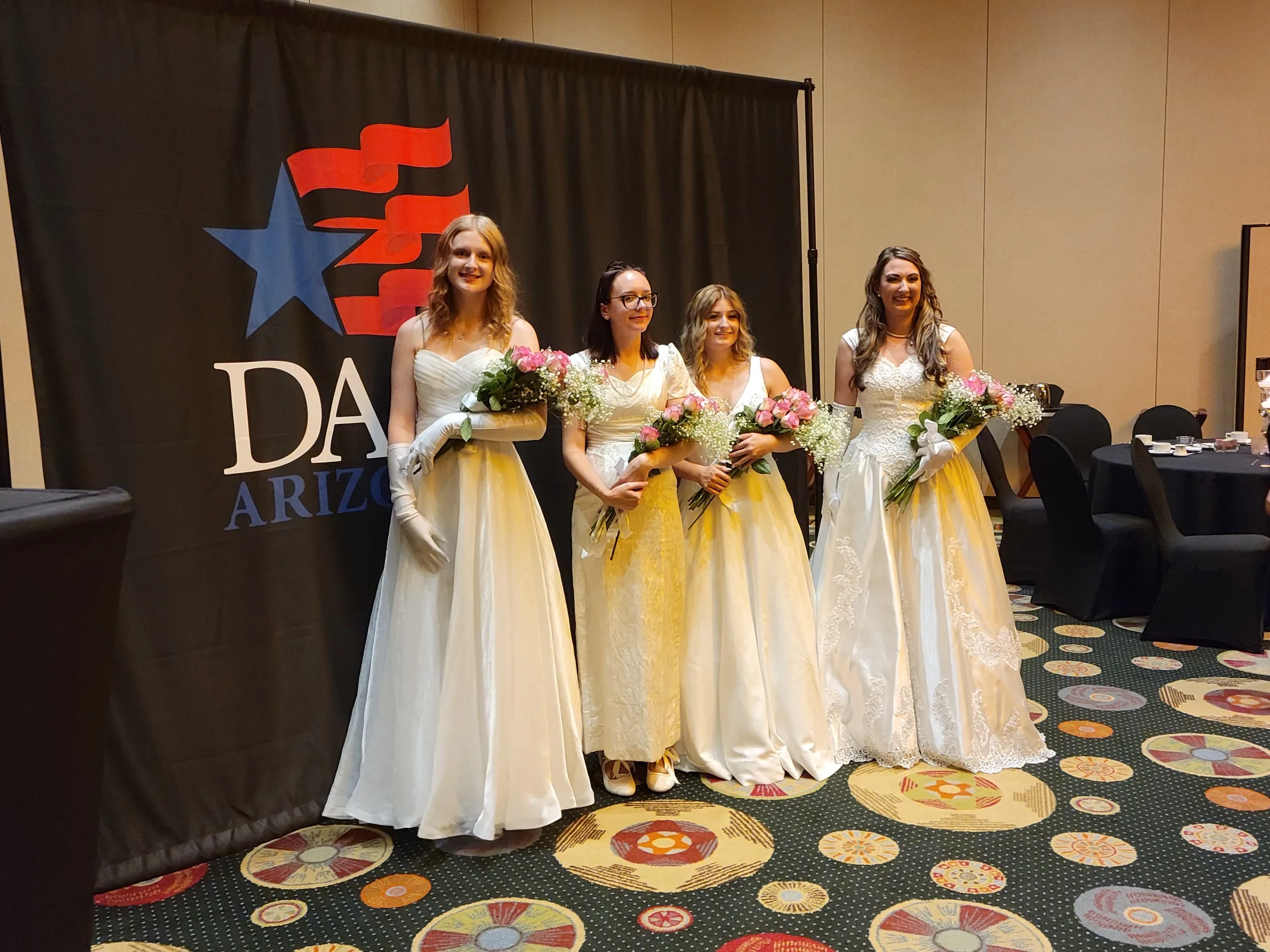
2021--I Debuted as Debutante for Daughters of the American Revolution, Fountain Hills, Arizona, United States of America

zoe with the other debutantes, 2021

From the time I joined DAR at the age of nineteen, I had it in my mind that I wanted to participate in their version of a Debutante Ball. Girls are allowed to debut as "Debs" between the ages of eighteen and twenty-two in DAR, and so I was originally supposed to be a part of the ball in 2020 (the first year I was eligible because the ball only happens once a year, and had already taken place by the time my paperwork came through in 2019).

Well, then covid happened.

I feel like no further explanation is needed than that!

So, 2020 was out for that particular endeavor, but luckily the ball was rescheduled for 2021 and I was ready to go.

I'm not wearing them in this particular photo, but I did have white gloves that I wore for part of the ceremony. There were five of us debutantes in all that year, but one of the girls missed this photo. I wore a long ivory gown with a bow on the back, and my grandmother Helen's pearls. My stepsister did my hair, I managed to do my own makeup, and my father served as my chaperone for the presentation itself.

Part of the reason why I agreed to take part in the ball was because I knew it would be the only time my family would see me in a white/ivory formal gown. Ever since I was a child I have been determined to marry in a black gown (the color of life in Ancient Egyptian culture) and not white. White wedding dresses only became the fashion after Queen Victoria married Albert in a white gown (before their fairy tale wedding, women usually married in the nicest gown they already owned, regardless of color). Not only that, but white is also the color associated with death in Ancient Egyptian culture--and neither of those traditions particularly excite me when I think about my future wedding.

With that tangent aside, however, I definitely think being a debutante counts as a historical venture I took part in. As for what a debutante ball actually is... well, that largely depends on who you ask and whether or not you identify as a feminist.

Historically, debutante balls were a way for young women in high society to debut themselves. What this meant was, when a girl reached the age in which she was eligible for marriage, she would "come out" to society to introduce herself, her family, and what all she could bring to her marriage.

Today, many feminists view debutante balls as something to look down upon, because they view these ceremonies as though women are being presented for the sole purpose of getting married and being a man's property. Whether or not you agree with that is up to you and has nothing to do with this blog post, however.

While the first confirmed date for a debutante ball has been lost to history, the first notable ball that has made it into the history books dates all the way back to 1780 in England. The last presentation of ladies in England in this manner ended in 1958.

I enjoyed my night as a debutante--except for the fact that my dress was fairly tight and I had to keep standing up and sitting down, over and over, for standing ovations and various other reasons. Other than that though, the night was quite fabulous!

Because the ball I debuted at was a part of DAR, I was sponsored by my chapter, Cactus Wren. The three other girls in the photo with me were all from the same chapter, and the fifth girl was from a third beside that. The DAR Debutante Ball is a good way for younger DAR members to get to know one another, and show our community that DAR is not just for little old ladies. While some of the other girls wore their mother's wedding dresses, or a dress they bought online, I chose to buy my dress from a local store that only sells modest dresses, "Modest Wedding and Prom." I was happy to support a local business and loved my dress! I bought it even though they offered rentals, even though I doubted even then that I would ever wear it again.

To learn more about the history of Debutante Balls, here is an article from Encyclopedia Britannica.

2022--Visiting Pearl Hart's Grave, Central Heights, Arizona, United States of America

Pearl Hart's Grave

As you can tell, I like visiting historic cemeteries and well, dead people. I can't believe it took me nineteen years of living in Arizona to realize Pearl Hart is buried in my home state, but in July of 2022 I got the chance to visit her in person.

To learn more about the cemetery Pearl is buried in, read my blog post about it here.

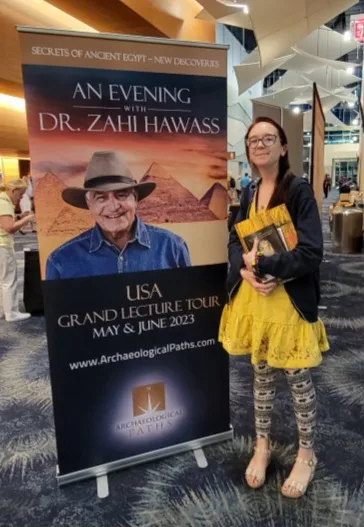
2023--Hearing Zahi Hawass Speak at a Lecture, Phoenix, Arizona, United States of America

Zoe at the zahi hawass lecture in phx, may 2023

I won't say much about it here because again, I already wrote a blog post (that you can read here), but ever since I was a little girl, Zahi Hawass has been my hero, and so when I found out he was coming to Phoenix I had a proper fan-girl freakout.

Yes he is an old man who is an archaeologist, and I was a twenty-three-year-old-girl at the time, but still! Dr. Zahi Hawass! Chances are if you have watched a documentary on Ancient Egypt at any point in the last twenty years he was probably in it. Thanks again to my mom for getting us the tickets! This was a dream come true.

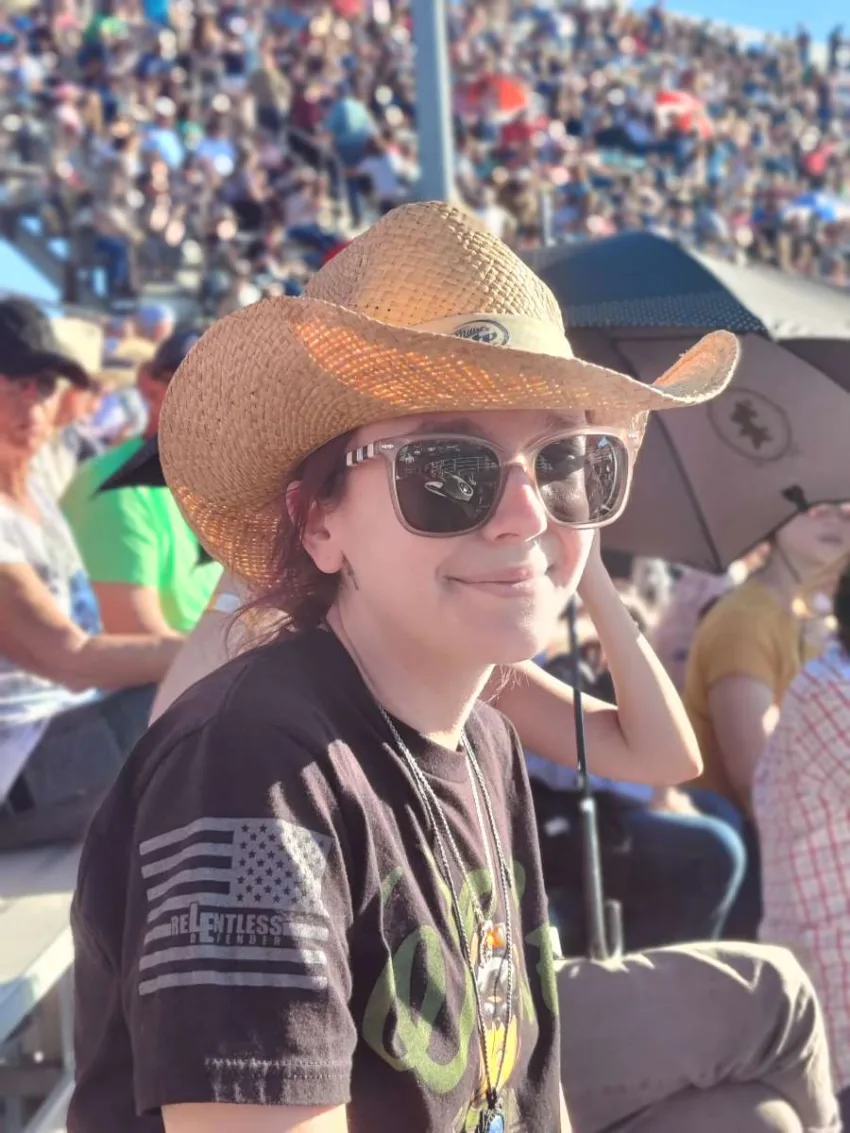
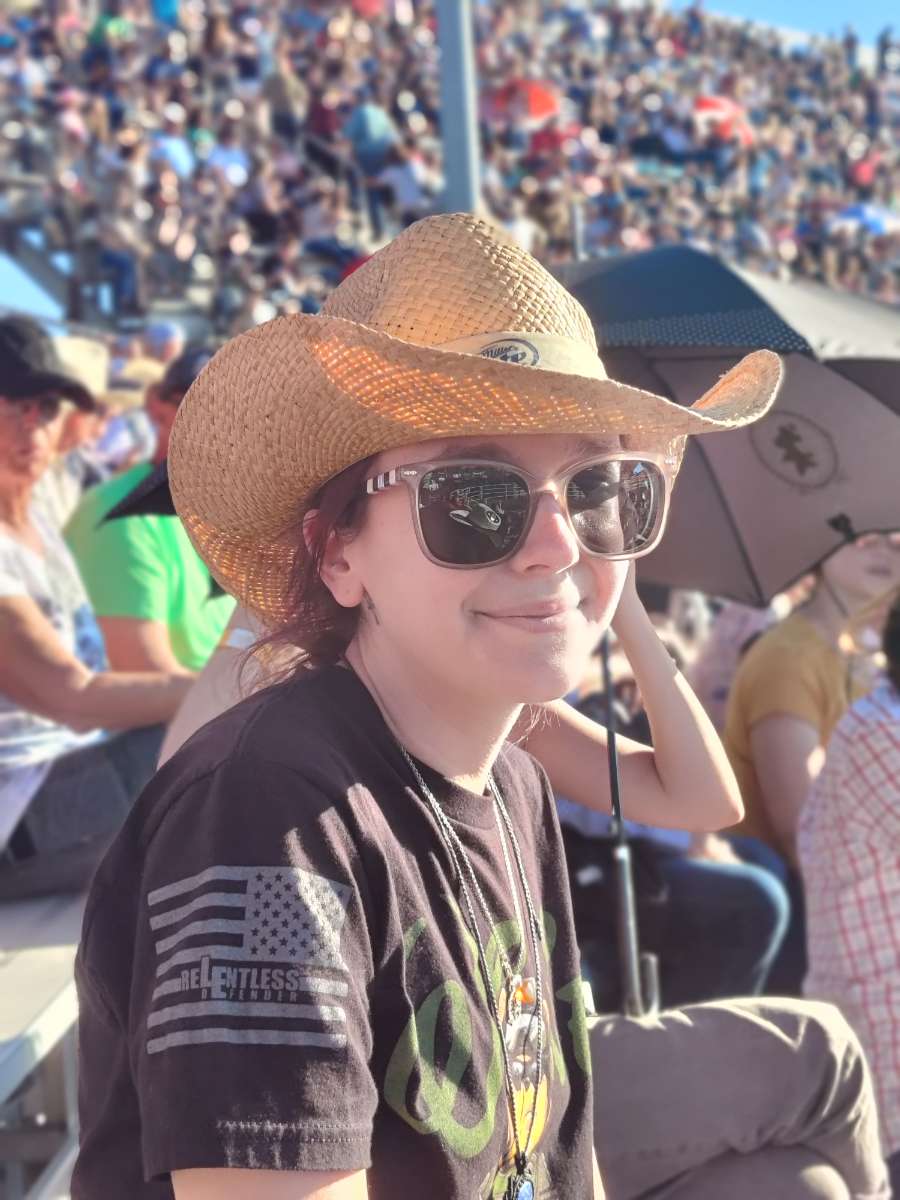
2023--My First Rodeo, Taylor, Arizona, United States of America

zoe at the taylor rodeo, jul 23
https://theexasperatedhistorian.com/wp-content/uploads/2024/01/20230701_200554.mp4

How I managed to make it to twenty-three years old without seeing a real rodeo, I'm not sure, but wow was Taylor a great place to start!

Before I met my boyfriend in March of 2022, I had heard of the town of Taylor, had driven through a time or two, but it never registered as anything more than that, a town up north.

After meeting my boyfriend, that all changed. Taylor is a little slice of heaven to his family, and a big part of the reason why is the fact that his ancestors literally helped found the town. According to the town of Taylor's website, the founder of Taylor, AZ was James Pearce, my boyfriend's great-great-great-grandfather through his paternal grandmother's side.

My boyfriend's family still owns a house in Taylor, which has been in the family for generations, and every year they go up for the annual rodeo. 2023 was Taylor's 69th Annual Rodeo, and it was AWESOME. I can't wait to go back again.

The only downside? The rodeo takes place over 4th of July weekend and it was a bit toasty to say the least. The weather was in the low nineties and it was bright and sunny. My cowboy hat and sunglasses were a lifesaver until the sun went down. If you ever want to visit the rodeo, plan on arriving early! Almost as soon as the gates open, the bleacher seats will be packed full, even though the main event doesn't start until hours later.

The rodeo featured all of the typical rodeo competitions you might expect: bronc riding, bull riding, barrel racing, trick riding, calf roping, and more. They also kicked off the night with an anvil launching!


And in the future...

I know I will have more historical adventures in the years to come, but I thought a fun way to kick off 2024 would be to look back on my life and everything I've done so far.

In the future I will continue to update my website with blog posts every time I do anything fun and historical in any way, but again, I thought this would be a good way to start the year and to remember all the places I've been and the things I have seen. I have a passport, but I've never left the United States. I'm about to turn twenty-four, and I think I've seen and done quite a bit in my time already.

To the future!

And beyond 🙂

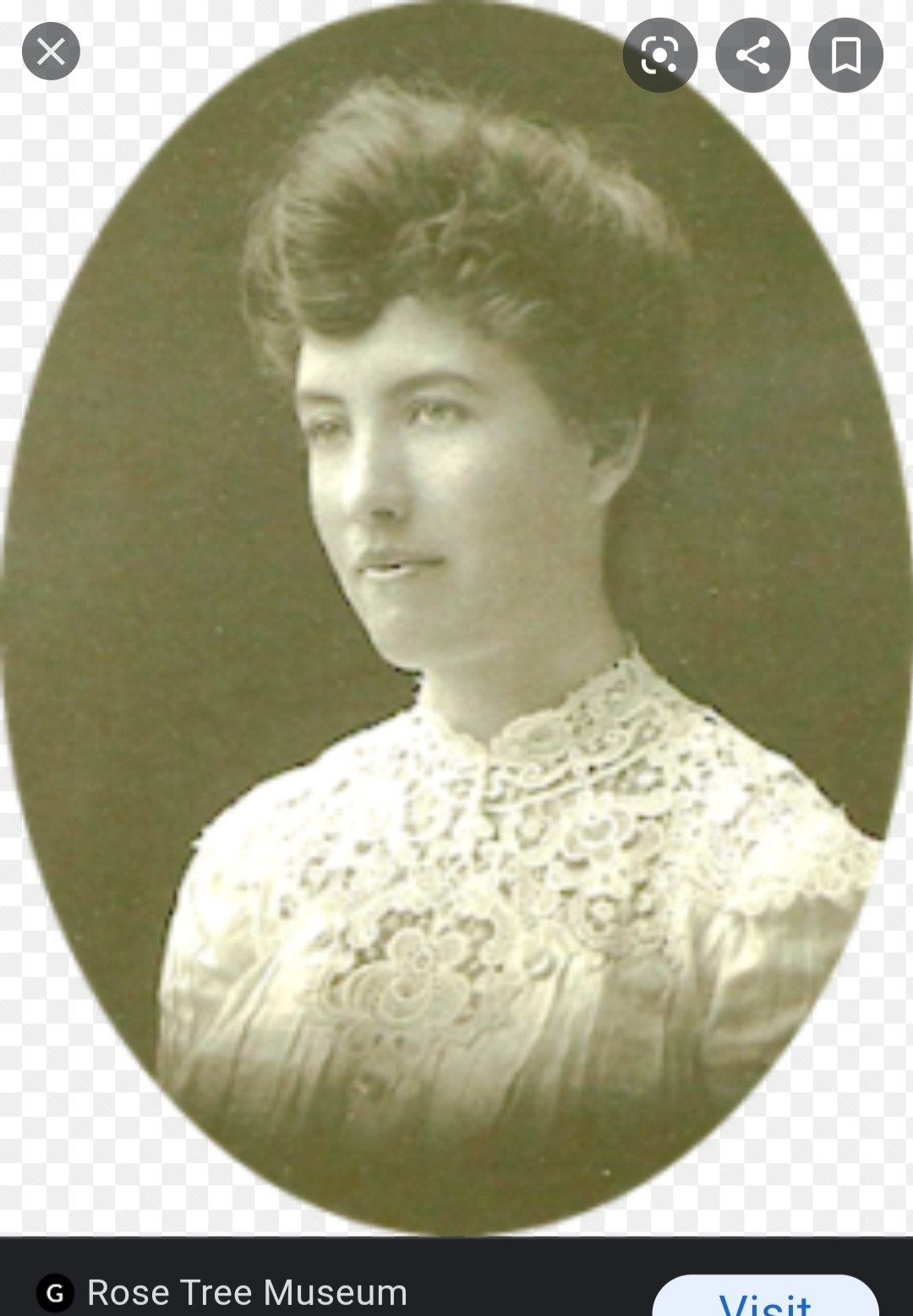
1166) Ethel Macia

Courtesy of the Rose Tree Museum

1166: Ethel Robertson Macia

The First Lady of Tombstone, Arizona

Born: 16 August 1881, Tombstone, Arizona Territory, USA (Present-day Tombstone, Arizona, United States of America)

Died: 6 August 1964, Tombstone, Arizona, United States of America

Ethel was the oldest of five children. Sadly, her mother died when Ethel was fourteen, soon after giving birth to Ethel’s youngest sibling Olive. Four years later, Ethel’s father died, leaving Ethel in charge of her younger siblings. She had attended one year of college at the University of Arizona but had to drop out after her father’s murder.

Sadly, Ethel and all of her siblings were technically underage, and so they became wards of the state. Ethel and her sister were put to work to help support the family in any way they could. Because of their neat and legible handwriting, Ethel and sister Edith became the first women employed at the Cochise County Courthouse, in Cochise County, Arizona.

A few years later, when Ethel was twenty-one, she was officially made the head of household over her younger brothers and sisters. The following year, Ethel married a man who worked for one of Tombstone’s mining companies. The couple would have three children together.

Ethel and her husband purchased the Arcade Hotel in Tombstone, which quickly became one of the most sought-after attractions in the city. A white rose bush (specifically of the Lady Banksia variety) had been planted at the hotel in 1885, and by 1936 Ripley’s Believe it Or Not claimed the bush was the world’s largest rose tree. Ethel renamed the hotel the Rose Tree Inn to celebrate the beautiful blooms she had surrounding the building. The rose tree is still growing as of 2022.

Ethel was very active in the community and was dubbed the First Lady of Tombstone thanks to her work with various organizations and charities. She was also an avid historian of the Tombstone area and was dubbed the Queen of Helldorado in 1953 after helping create the annual Helldorado festival in 1929.

In 2021, the Lady Banksia Daughters of the American Revolution chapter was organized in Tombstone and was named for the rose bush planted at Ethel’s hotel.

Badges Earned:

Find a Grave Marked

Sources:

https://tombstonerosetree.com/robertson-macia-family/

https://tucson.com/news/retrotucson/western-women-ethel-robertson-macia-brought-fame-to-tombstones-rose-tree/article_ef7ba7c5-c2f9-5120-b674-2c4025f4e5fe.html

https://www.findagrave.com/memorial/32276006/ethel-maud-macia

Pinal Cemetery

Posted on July 15, 2022July 23, 2022 by nickssquire12

In July of 2022, my boyfriend and I planned a trip up to the White Mountains to take a well-deserved vacation. On the way, I asked if we could stop off at Pinal Cemetery (not to be confused with Historic Pinal Cemetery, which I previously visited and covered in a different blog post!)

So, why stop off at Pinal Cemetery? Well, what other reason did I need other than the Bandit Queen of Arizona herself is buried there?

But before we visit Pearl Hart's final resting place, let me take you on a short tour. The cover photo for this blog post is from Find a Grave, but all other photos shown here were taken by me on my quick jaunt around the graveyard.

The Memorial Marker, Pinal Cemetery

Pinal Cemetery first opened in Central Heights (a small suburb of the historic city of Globe) and was operated by a local mortuary, but once the Spanish Flu struck the fledgling state in 1918, Gila County took over the operation and management of the cemetery in order to provide more burial accommodations for the flu's many victims.

However, the county did not care for the cemetery long, and it soon fell into disrepair. According to Globe Miami Times, "The property is no longer listed on tax rolls, so taxpayer money can’t be used to cut down the weeds, water trees and repair fences. And there have never been any maintenance funds set aside – as is mandated by state law when a cemetery is owned by a mortuary – because no mortuary owns it, and the law does not apply to fraternal/beneficial organizations."

Several times a year, volunteers like local members of the Elks Lodge and Boy Scouts come to the cemetery to support some clean up efforts, but nothing concrete has been done for the abandoned cemetery in many decades.

Some of the graves
More graves

It was too hot to stay long (probably around 95 degrees Fahrenheit that afternoon), but I did notice one thing that made Pinal Cemetery unique--at least from other cemeteries I have visited so far.

At Pinal, every grave, or at least every few graves, is surrounded by a concrete berm of some sort. Some of the graves have concrete covering the entire face as well as around the sides, while others have the concrete as siding with open dirt on top to provide a sort of flower bed in the desert. Why this cemetery is laid out this way I do not know, but it did provide a hint of uniqueness among the desert landscape.

Graves going into the distance
Grave with metal cross marker

The other surprising thing about the cemetery is just how large it is. From the front gate looking in, you would think the cemetery only encompasses an area directly in front of you. But once inside, you realize the graves actually cover a sprawling hillside. To your left are graves going up the hill, to your right is a concrete jungle going slightly downhill. Towards the center the graves are either in the dirt or have lots of gravel covering.

Graves Behind a Fenced Area
More fenced graves

Now, if you're visiting Pinal Cemetery in order to find Pearl Hart, the prospect might seem daunting when you first walk through those gates. However, I'm here to help you, because I felt the same way!

The easiest way to find Pearl is to pull up her Find a Grave profile (linked here) on your mobile device once you reach the cemetery. If you click the link on her profile that says "Show Map" (next to the name of the cemetery) your mapping system will bring you fairly close to her grave. Just keep in mind that she has the image of a burro with a cowboy and a cactus carved on the headstone and you'll find her fairly quickly, this is what I did! The image on her headstone is unique to the cemetery (at least from the graves I saw) and so it is much easier to look for the design rather than her name, which is a little worn by now.

If you don't have good enough cell signal to get the map to load it'll be a bit harder but still doable if you have enough time (and if you visit in the heat of the summer, remember to bring plenty of water to stay hydrated!!! As someone who has lived in Arizona most of my life I cannot stress the importance of water and staying hydrated in our heat enough. Please please please be careful when venturing outside in our summers!).

To find Pearl, once again keep in mind that her grave has that image of a burro (or possibly horse?) with a cowboy and a saguaro cactus. If you walk straight in through the front gates, her grave is on the right hand side in the middle of the area I dubbed the "concrete jungle" in my mind. It took me a few minutes of circling, but I did eventually find her. She is fairly close to the grave with the metal cross I showed a photo of earlier in this article.

Pearl Hart's Grave

Tah dah!! After only a few minutes of searching I found her, and I'm sure if you are ever in the area and want to look for her to visit you will too.

Last Look

Thank you for taking this virtual tour of Pinal Cemetery. To learn more about the cemetery click here. I don't know when I'll get out of town and able to visit another historic graveyard, but when I do I'll be sure to take plenty of pictures and mental notes to blog about here.

And remember, if you're exploring the great state of Arizona at any time, but especially in the summer, it does not matter what part of the state you're visiting, please pack plenty of water. We crack jokes about it being a "Dry Heat" around these parts, but that saying is very true. Stay hydrated, stay happy, and keep learning. Thanks for reading!

Grand Canyon Pioneer Cemetery

Posted on June 25, 2021January 16, 2022 by nickssquire12

Tucked away from the road within Grand Canyon National Park is a small, tranquil graveyard that is open to the public, despite what Google will have you believe.

When my mother and I arrived at the park entrance today, we asked the ranger if the Pioneer Cemetery was in fact open to the public. The surprised ranger asked, "You mean the cemetery with the Shrine of the Angels?" When we said yes, that is in fact the place we were looking for, the ranger then asked if we were visiting anyone in particular. When we said no, that we just wanted to see the place, the polite ranger told us we were free to walk the grounds. When he asked if that's all we wanted to do in the park and we said yes, he seemed even more surprised. Then he handed us a map of the park and waved us through. Google brought us right to the parking lot attached to the cemetery, which lies adjacent to the Shrine of the Angels, which is used as a church for various congregations and religions today.

Shrine of the Ages Explanation
Cemetery Dedication

The cemetery closed to burials as of 2017, though there are a few newer graves within the boundaries of the graveyard today. Family members who have already purchased plots or are eligible to be buried alongside a spouse, parent, etc, are still allowed to be buried there.

The most surprising fact of the cemetery, to my mother and I in any case, was the high number of young individuals buried there. Some of the graves date back to the beginning of the twentieth century, when white settlers first began to move to the rim, but many of the graves are far newer. And many are for babies, children, or young adults who died in their twenties.

The word I would use to describe the place is tranquil. In the fifteen or so minutes we spent walking around, no one else joined us in the cemetery itself. Judging by the ranger's reaction when we entered the park, the cemetery itself doesn't receive a lot of traction or interest from visitors. However, I would highly recommend a stop for anyone already visiting the canyon, or anyone interested in visiting cemeteries like my mother and I. The headstones are all unique, so very different from the standard rectangles we see at our normal city cemeteries like where the majority of my family is buried.

Here are some photos of the burials within the cemetery.

This memorial was dedicated to the 128 souls lost during the collision of two planes over the canyon in 1956

Memorial to those lost during the mid-air collision of two flights over the canyon in 1956.

The Lemons' Double Headstone

A double headstone for a couple united forever in death. Roy worked at the Canyon for many years, as did Edna. The Fred Harvey Company operated most of the buildings at the canyon for many years, and "Harvey Girls" were usually waitresses at the various restaurants and cafes around the canyon rims.

Morell Roberts Grave
Wilcox Graves
Backside of the Wilcox Grave

The Wilcox's have very intricate headstones that are separate but united by their familiarity. The stones are decorated with epitaphs on the front and engravings on the back.

Nelson Double Headstone
Kolb Headstone

Emery Kolb and his brother have often been considered the true pioneers of Grand Canyon tourist attraction and excavation work. Emery's headstone here, shared with his wife, is simple and located just inside the gates of the cemetery to the left. Unfortunately during our visit his grave marker was directly in line with a port-a-potty outside the cemetery gates.

More Nelson Graves
This young man's headstone features a Marvin the Martian engraving
Dana Wren Headstone
Pat and Ron Brown Headstone
Bette Rich Swanson Grave Marker
Elmer W Headstone

This poor soul was lost in the canyon for several years before his remains were identified and laid to rest in the cemetery. Several of his relatives are at rest nearby.

Child's Headstone
Dale Schmidt Grave
This headstone dates from 1928, one of the older markers in the cemetery
Hand Carved Headstone
Richard Marks Headstone
Gary Roberge Headstone
Tribal Grave
David Karraker Marker
Dan Davis Headstone
Another young man taken from this world too soon
John Davis Marker
These two graves are littered with a bed of pine cones on each
Ada's headstone claims she was the first white woman to raise a family on the canyon's rims
Another child taken too soon
This headstone dates from 1927
These two headstones are for a father and son buried side by side

As I mentioned above, the cemetery itself only takes about fifteen minutes to meander through. Whether or not you'll find a ranger willing to waive the fee to enter the park is a luck of the draw thing, but I was more than willing to pay the $35 single car entrance fee to visit the park. Of all the cemeteries we have visited so far, Grand Canyon Pioneer is the most tranquil and peaceful we have found yet.

Not enough visitors know about this place, but maybe that's secretly a good thing. The swarms of tourists who mob the rims of the canyon can be overwhelming at times, but the cemetery itself will always be there, waiting in the wings for those willing to find their way to it.


Tomorrow, my mother and I will continue on our road trip and head into the great state of Utah. It will be my first time visiting the state, and at the moment we plan on visiting two cemeteries tomorrow but we'll see if things go according to plan. My next cemetery update will likely be an amalgamation of the several stops we make throughout the state as opposed to focusing on one cemetery in particular. Until next morrow...

Boothill Graveyard

Posted on June 24, 2021January 16, 2022 by nickssquire12
Boothill on the National Register

Ah Boothill, the most famous of Arizona's "Wild West Cemeteries."

Boothill claims that title for various reasons, including its proximity to Tombstone, arguably Arizona's most famous "Wild West Town", as well as the fact that many well known individuals are buried within the confines of Boothill Graveyard itself.

My family (and by family this time I mean myself, my mom, my brother, and my mom's boyfriend) visited Boothill Memorial Day weekend in 2021. Boothill is definitely a tourist trap; the exact opposite of Historic Pinal, Adamsville, and Butte View (the historic cemeteries I have previously visited and blogged about here on this site). First of all, there's an entrance fee to get into Boothill (don't worry--its only a couple bucks and kids are free), but visitors are also given a pamphlet with an explanation of all individuals buried within the graveyard and a bit of information about each of them.

The Historian Outside the Entrance to Boothill

(In case you're wondering, the little dude I'm holding is "Flat Brandon"--its a long story and not really relevant to this blog post...so anyway moving on).

(PS, like my tank top? Its official merchandise from Caitlin Doughty's Etsy store--gotta represent the fact that one day we'll all be laid to rest somewhere, just like those in the graveyard).

The entrances to Boothill are well marked and Google Maps will bring you straight to it. Be warned, the parking lot is fairly small and you may have to park up the road and walk a ways on busy weekends like we had to.

Once inside the cemetery, the burials are laid out in neat rows on a small hillside. The graveyard is gravel, so I recommend wearing closed toes shoes with some sort of grip to them in order to avoid slipping and sliding!

Here are some photos of some of the more interesting graves within the confines of Boothill.

Here is the most famous gravesite within Boothill

The graves of the McLaury brothers and Billy Clanton, all of whom were killed in the infamous Gunfight at the OK Corral. These are the most visited and most famous burials within Boothill, and are tucked away in the corner, near the bottom of the burial portion of the hill.

This simple cross grave marker is labeled as one "S McFarland"

No relation to the man who created Family Guy, American Dad, The Orville, and more.

One of the wordier epitaphs in the graveyard
A man who was the victim of a lynch mob

(Please ignore Flat Brandon...)

China Mary Grave

China Mary was one of the better known Chinese citizens in Tombstone. Considered the Godfather of the Chinese community by some, China Mary was generous and gave back to her community; opening various businesses and protecting the less prosperous citizens in Tombstone.

Lester More Grave
One of the more modern looking headstones
View from the Hill

Here is a view of how the cemetery is laid out near the bottom of the hill.

The Jewish Memorial

One of the more interesting aspects of Boothill Graveyard is the Jewish Memorial. Located at the very bottom of the hill, down a meandering path, travelers will find this tranquil moment to Jewish and "Indian" settlers. This area is set apart from the Gentile portion of the cemetery, but is the most intricate and well kept up portion of the entire graveyard. The entire area is fenced off, and in our short visit my family didn't see a way to get closer, so this photo was taken after zooming in on my camera for clarification.

Old Timey Hearse
Backside of the Hearse

Parked on the street, before entering the graveyard, is this old hearse. I had to get a few photos with it! My dream car would honestly be a hearse, and the captioning on this one is hilarious. With phrases like "Why go around half-dead when we can bury you for $49.50?" "I have been shot, robbed, burned, graffitied, and mistreated. 'Please' I'm almost there," "You furnish the bones, we'll furnish the stones," "When you get shot and before you are stiff, we'll be there in just a jiff!" and my personal favorite, "We'll be the last to let you down!" this little hearse adds to the overall atmosphere and fun of the graveyard.

Wandering around Boothill only takes about fifteen to twenty minutes for the casual viewer, a bit longer for those more interested, but its still a fun stop if you're touring historic graveyards.

My family had a great time in southern Arizona over the Memorial Day weekend. We visited the Queen Mine in Bisbee, Kartchner Caverns, did the Bisbee Ghost Tour come nightfall, jaunted around Kent's Tools in Tucson, and also toured the Titan Missile in Green Valley. But out of everything we saw that weekend, my personal favorite stop was Boothill.

And just because I want to post this but had nowhere else to put it on my website, check out this cool sign that now hangs in downtown Bisbee; erected for the centennial celebration of the Nineteenth Amendment to the US Constitution:

Women Get the Vote, Bisbee

Did you know Arizona women won the right to vote in 1912, a full eight years before the federal government ratified the nineteenth amendment?


And that concludes our tour of Boothill Graveyard. I am heading out on a weeklong car trip starting tomorrow, so hopefully I'll have another historical post to add soon. Thanks for reading!

Historic Pinal Cemetery

Posted on December 30, 2020January 16, 2022 by nickssquire12
Informational Sign Near the Cemetery Entrance

Over the Christmas 2020 weekend, I hit the road once again, this time with my mom, dad, and brother with me.

Okay, to be fair, my dad drove while he and my brother took my mom and I out to the Historic Pinal Cemetery. This graveyard is located about forty miles from our house, just outside Superior, Arizona, and is definitely not as easy to find as our last stop at Adamsville/Butte View outside Florence. To get to Historic Pinal, you need a vehicle equipped to drive off road and some good old fashioned sense of direction. Google Maps gets you kind of close, but you need to know what you're looking for in order to actually find the spot.

My dad and brother last visited the cemetery around fifteen to seventeen years ago by their best estimation, but typical of my dad, he was able to find the cemetery after a quick five minute walk from where we parked.

I took a quick reference photo for all of you, in case you need some help finding the place. For one thing, the entire cemetery is surrounded by a wire fence, and there is the one big metal sign at one end (see the top photo of me standing beside it). However, if you approach the cemetery from the opposite side, like my family did, you might not see the sign. Therefore, this image will probably be helpful. To find the cemetery, you first need to locate this:

Power Lines Near the Cemetery

If you see this power line juncture, you know you're close. You're literally within sight of the cemetery, by the way.

Once inside the actual graveyard, you'll quickly notice there are very few actual graves that are identifiable today. Most of the graves are only marked with a circle of stones, some of which are marked with white paint. The majority of those buried in the cemetery are women and children, and no one has been buried in the graveyard since 1916, when another cemetery opened in the actual city limits of Superior.

One of the graves at Historic Pinal

The following photos are all from within Historic Pinal. These are the graves I spotted that are better marked. Unfortunately this cemetery is less cared for than those outside Florence, but I am glad the limits are at least fenced off now.

One of the better marked Historic Pinal graves
Marked with a cross, Historic Pinal
A marked grave at Historic Pinal
This marble grave marker is nearly impossible to read in the Arizona sun
This is the most intricate marker in the cemetery as of 2020

Despite signage requesting no new additions or flowers being added to the cemetery, it is clear someone ignored that request with this marker.

This poor marker is cracked and hidden under a bush

The vast majority of visitors to Historic Pinal are there for one reason: to see the grave of Mattie Blaylock, who was the girlfriend of famed gunslinger Wyatt Earp. Unfortunately, though Mattie is buried somewhere within the confines of Historic Pinal, her actual gravesite has been lost.

Today, a memorial cenotaph has been placed at the entrance to Historic Pinal, pictured below in a photograph I took while visiting.

This marker was placed by the overseers of the cemetery

Unfortunately that's about all there is to see at Historic Pinal. Maybe someday Mattie Blaylock's actual gravesite will be rediscovered. Maybe someday the little cemetery hidden behind the abandoned railroad tracks will be kept up better once again. For now though, this little graveyard really does belong under the banner of "Abandoned Cemetery of the Old West."

Hopefully soon we'll be able to take another trip to visit another burial ground. None of the others on our list are as close as Historic Pinal, Butte View, or Adamsville are to where we live, so we'll have to wait and see. For now though, I hope you enjoyed reading and virtually visiting this historic graveyard.

990) Mary Page Handy

Mary on Her Wedding Day

990: Mary Page Handy

Her Husband is Remembered for Being the First Chancellor of the University of Arizona—Even Though He Also Horrifically Abused Her and Tried to Ruin Her Life

Born: c.1860-1861, Tucson, New Mexico Territory, (Present-day Tucson, Arizona, United States of America)*

Died: 1893, Tucson, Arizona Territory (Present-day Tucson, Arizona, United States of America)

Mary’s life was tragic from the start. Her father was killed by a band of Apache Native Americans while her mother was taken captive by them. Mary’s mother managed to escape and crawl through the wilderness for over a week (once source states sixteen days) before making her way back to Western Civilization.

When Mary was sixteen, she married a well-known physician who served Tucson residents as well as working for the US Army at Camp Thomas. The couple would eventually have five children.

In November of 1886, Mary’s husband was named the first chancellor of University of Arizona (though he was removed from office only a year later for being terrible at his job, shocker!). By then, he had already begun to torture his wife.

The good doctor would chain Mary to a bed in their home and forcibly inject her with morphine. His goal? To make her an addict. And he was eventually successful. After two years of this abuse, he filed for divorce (one source says he wanted to divorce Mary so his affair with a married woman wouldn't be as scandalous. I think he was just a horrible person). In the court filing, Mary’s husband accused her of being, “a morphine fiend and common slut.” She was a morphine addict, that was true, but she was only an addict because her husband had made her so.

I think we should refer to her ex from here on out as Dick. Sound good to the rest of you?

After filing for divorce, Dick publicly let it be made known that any lawyer who dared to defend Mary would be sorry. Nice guy, I know. Luckily one man was brave enough to step up and fight for her in the territorial court.

In 1889, Dick was successful in obtaining a divorce from Mary. He also managed to gain full custody of their five children. Once the kids were in his possession, Dick sent them away to live with his mother in California. Then Dick complained that he had been ordered to pay Mary $30 a month in alimony and tried to kick her out of the house the court had decided she could keep in the divorce settlement.

That’s right, Dick made Mary a morphine addict, smeared her name in the press, threatened any attorneys who might be brave enough to do the right thing, tried to evict her from her own rightfully obtained home, pissed and moaned about having to pay her alimony, and then he also took away Mary’s children and dumped them on his mother instead of caring for them himself.

The story doesn’t end there. But luckily this next bit should put a smile on your face.

On 24 September 1891, Dick attacked Mary’s attorney in the street. The attorney knew how nuts the good doctor was and shot him where he stood (I mean, Dick had been threatening to kill Mr. Heney, Mary's attorney, openly for anyone willing to listen to him so can you blame the guy?). Mary’s attorney got away with it with a successful (and in this case completely true) plea of self-defense. Dick got what was coming to him in the end.

Oh Karma, how we love you so so much.

Sadly, Mary didn’t live with her victory long. She passed away from cancer two years later. According to some sources, she asked for her children to be brought back to Arizona for her to see them before she died, but Dick's family refused to let them come see her.

According to an article I found online, one of Dick and Mary’s sons had sworn to kill Mary’s attorney in revenge for his father’s death. However, after meeting Mr. Heney, the two became lifelong friends instead. One final *expletive* you to the good doctor that I sincerely hope is true!

Oh and by the way, Mary is unfortunately in the ever-expanding collection of women I have found who were victims of a man in their life and the man has a Wikipedia article that pops up right away on Google search results while little appears for their victim (Mary does not have her own Wikipedia article). Other women in this unfortunate collection include Maria Milagro de Hoyos, Mary Phagan, Anna Aumuller, and Emily Mather. 

*Two Notes on Mary’s Early Life:

According to Mary’s headstone, she was born in 1860. However, according to genealogists on WikiTree, Mary’s father died in February 1861 while Mary’s mother was pregnant with their daughter, and so Mary would have to have been born later in 1861. The obituary printed at the time of her death also supports the 1861 date because it states she was “Thirty-one and a half years old” at the time of her death in 1893.

Note Two: On Mary’s Find a Grave profile, one of the flowers placed on her virtual grave is said to be from a distant relative. On the attached note, they said Mary made a long journey from Tennessee to Arizona. However, taking anything you see on the internet at face value is never a good idea and so I did a little more digging and found a copy of her obituary posted to a WikiTree profile for her (the same one I mentioned above). The obituary states Mary was born in Tucson, and so I have listed her birth location as Tucson, Arizona. This also makes sense if her mother was pregnant with her when she was taken captive by a band of Apache. The Apache people historically lived in the Southwestern United States--nowhere near Tennessee. If I ever find out different, I will update her profile accordingly, but for now I am listing Mary's birth location as Arizona.

Badges Earned:

Find a Grave Marked

Located In My Personal Library:

Southern Arizona Cemeteries by Jane Eppinga

Sources:

Southern Arizona Cemeteries by Jane Eppinga

https://commons.wikimedia.org/wiki/File:Mary_page_handy_1878.jpg

https://arizonahistoricalsociety.org/wp-content/uploads/2012/05/Cemetery_Evergreen_flyer_2012.pdf

http://tucsoncitizen.com/morgue/2006/10/14/29340-lookin-back-temper-proves-deadly-for-physician/

https://www.wikitree.com/wiki/Page-13076

https://www.findagrave.com/memorial/35086925/mary-handy

Adamsville and Butte View Cemeteries (Florence, Arizona)

Posted on December 2, 2020January 16, 2022 by nickssquire12

In October of 2020, I casually purchased a copy of Graveyards of the Wild West: Arizona by Heather L Moulton and Susan Tatterson from my local Barnes and Noble. After thumbing through the book, my mother and I decided it would be fun to take several road trips around our state to visit these Old West cemeteries to see what we could find. Yes, we are those kind of people (the kind that find visiting cemeteries fun!).

So with the long Thanksgiving weekend in sight, we set out to drive down to Florence, which is about forty minutes from where we live. Down in Florence you will find two cemeteries that lay back to back: Butte View and Adamsville (named after the town of the same name that no longer exists--Adamsville was washed away when the Gila River flooded in the early 1900's!).

Most of the graves date to before Arizona became a state in 1912, but several others are from much later. Adamsville covers more land area and has more graves, but they are spread out and not as well kept up as Butte View. Butte View has a gravel path linking all of the graves, the majority of which are marked with a plain white cross and the words "Unknown Grave" with a number and any information about the deceased that might be known. While in Butte View, my mother and I noticed a baby girl buried there was celebrating her 120th birthday that very weekend (gravesite pictured below).

Margaret's grave has a white cross and a small placard explaining her name, birth and death dates.

Margaret Truman was only a few months old when she died in 1900. Her gravesite was recently restored in time for us to visit near her 120th birthday.

The other notable grave in Butte View, at least according to Graveyards of the Wild West, is the three Butte View "Witches". I must confess, the witches are the reason my mom and I were most interested in visiting the cemetery. According to the book, the three witches are buried outside the confines of the cemetery; their graves are unmarked but were later adorned by visitors. Interestingly enough, this is not at all what you see at Butte View today. After comparing photos from the book with the graves in the cemetery while we were there, my mother and I discovered the three graves now have markers indicating the birth and death dates, along with the names of those buried there. So now the question is, are the graves really those of "witches" and someone created fake names and identities for the graves, or were the authors of the book fed false information? If I'm ever back in Florence when the local historical society is open, I'll have to stop in and ask a few questions...

Three graves marked with concrete slabs surrounded by a white fence

According to the book, these graves are of the three Butte View "Witches", but according to the graves themselves, these three individuals are men of the same family

The three "witches" graves at Butte View cemetery, as shown in Graveyards of the Wild West

Heading over to Adamsville, you'll find another notable grave. Way out here in the middle of nowhere (practically anyway), you'll find the grave of a Confederate Veteran, the only veteran of the War Between the States in this area of Arizona. His name was Granville Oury, and he has a traditional marker as provided by the United States Government for veteran graves (note the pointed tip at the top; Union veterans have rounded tops to their headstones). Besides the traditional grave marker, Captain Oury also has a rock engraved with the Confederate Battle Flag and more information about his life. The two markers are side by side out there in the desert.


Captain Oury's government issue marker is on the top of this image while the engraved polished stone is beneath. I took both of these photos in November of 2020

Located in the Adamsville Cemetery, Captain Granville Oury is the only Confederate veteran buried in either of these cemeteries.

Some of the other graves in Adamsville I took photos of include a judge, two children buried back to back, and a hand engraved stone with little information. Another marker has completely broken off the original pedestal and now lays flush with the ground. Adamsville is a stark contrast to Butte View, to say the least. What's remarkable about the two cemeteries is the fact that they are side by side, only a few hundred yards apart. One (Butte View) is well cared for, clean, and welcoming to visitors. Adamsville is the complete opposite; surrounded by sharp wire fencing, with dilapidated headstones that are nearly worn away and no one there to clean them up or restore them.

This simple headstone marks the final resting place of a judge from before Arizona became a state
Two Children Buried Back to Back

The headstone in front is for a young girl who died before her third birthday. Directly behind her stone is a small marker in the shape of a box for a boy who died at one and a half years old (the box is peeking out to the left of the girl's stone in this photo)

Hand Engraved Headstone

This simple headstone is a concrete slab with a hand engraved marker that lists the deceased's name and years they lived

Broken Grave Marker

This grave marker has broken off the pedestal base. The majority of the upright stone now lays behind the base on the desert floor

I'll end this short tour of the headstone back at Butte View Cemetery. Right in the center is a large wagon wheel made of rocks. Why the wagon wheel is there, other than being decorative, I have no idea. The only explanation is a sign saying the design is a wagon wheel. Whatever reason, I thought it looked cool and snapped a photo, so here it is for you all to enjoy as well.

Located in Butte View is this artistic wagon wheel circle made of rocks

Someday soon we hope to also visit the following historic cemeteries in Arizona:

  • Historic Pinal (Outside Superior)
  • Pearce (Outside Tombstone)
  • Boothill (Tombstone)
  • Jerome (Jerome)
  • Arizona Pioneers (Prescott)
  • Grand Canyon Pioneer (Outside the Grand Canyon in Northern Arizona)

Hopefully once the Covid health scare calms down and we're able to travel more, I and other members of my family will be able to visit other historic cemeteries around the United States.

There are two other "historic" cemeteries I've also visited: Arlington National in Arlington, Virginia, where our nation's heroes are laid to rest, and the City of Mesa Cemetery in my hometown of Mesa, Arizona. I now have fifteen relatives and friends buried in the City of Mesa Cemetery, and I try to visit them all once a month if not more often. Visiting cemeteries is a great way to learn local history and also say hello to some of history's forgotten every day people.

So the next time you drive by a scenic or abandoned cemetery, stop in and say hello. You never know whose story you might learn by doing so.

  • 1
  • 2
  • Next

Categories

Archives

  • July 2025 (10)
  • July 2024 (1)
  • January 2024 (1)
  • August 2023 (1)
  • June 2023 (2)
  • October 2022 (1)
  • July 2022 (1)
  • June 2021 (3)
  • December 2020 (3)
  • August 2019 (1)
  • July 2019 (2)

Search

© 2026 The Exasperated Historian | Powered by Minimalist Blog WordPress Theme