The Exasperated Historian
Menu
  • Home
  • The Women’s List (New)
  • The Men’s List
  • The Animal List
  • Collections
  • The Blog
  • Contact Us
  • FAQ
Menu

Category: Birth Locations

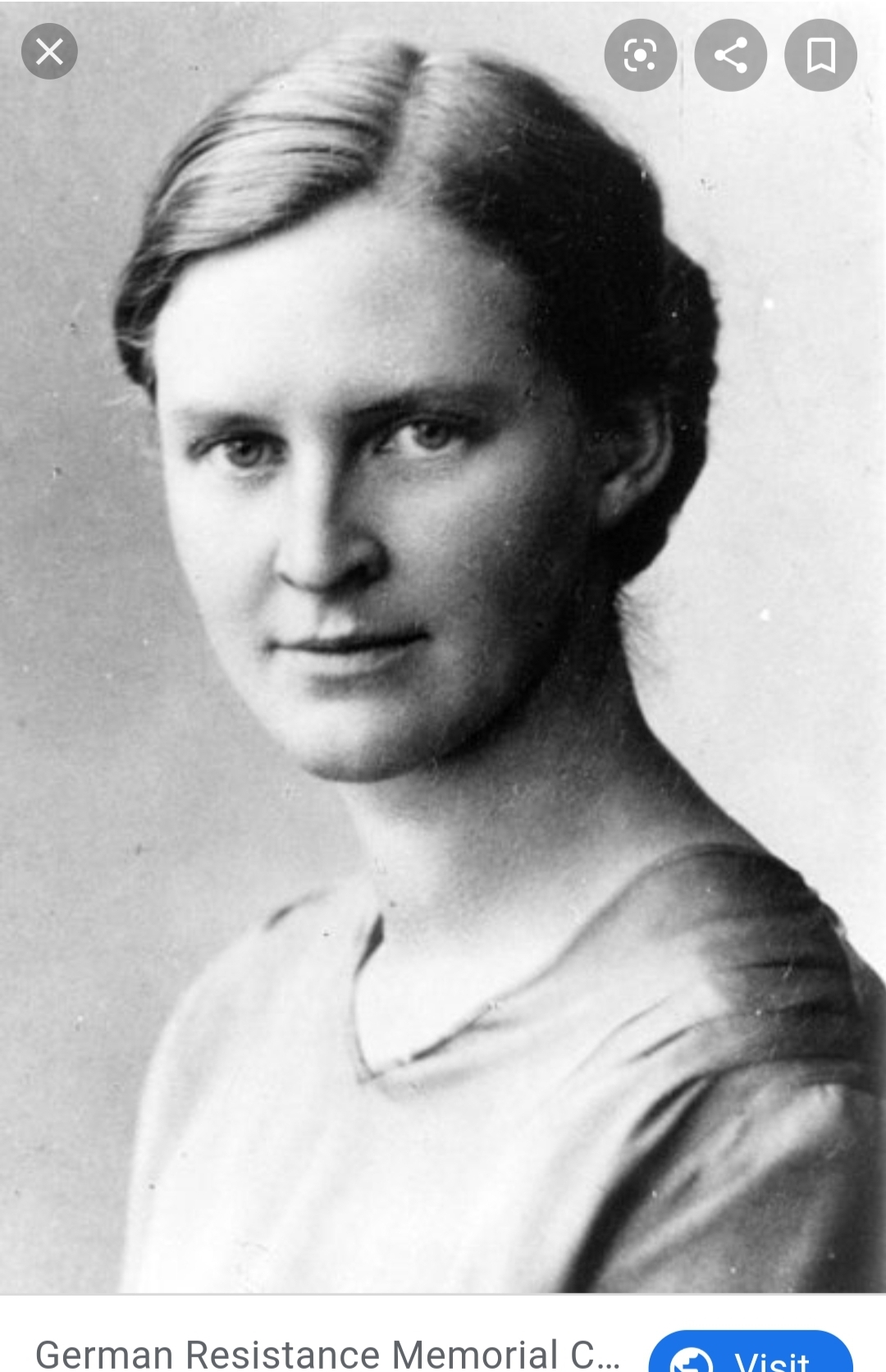
907) Mildred Fish-Harnack

Courtesy of the German Resistance Memorial

 “It can be assumed that I am widowed. I haven’t however received an official letter informing me of the death of my husband, who was supposed to be executed.”

907: Mildred Fish-Harnack

The Only American Woman Executed by the Germans in World War II

Born: 6 September 1902, Milwaukee, Wisconsin, United States of America

Died: 16 February 1943, Charlottenburg-Nord, Berlin, Germany

Milldred was a resistance fighter, literary historian, and translator.

Mildred wasn’t ethnically German but began to learn about the German language and culture as a child. She quickly was able to read, write, and speak German (though she was far from fluent). In her senior year of high school, Mildred played for the basketball and baseball teams, starred in the school play, and worked as an editor for a school paper. She graduated from high school in 1919 and then went on to George Washington University for two years before transferring to the University of Wisconsin at Madison.

While at UW-Madison, Mildred joined the Wisconsin Literary Magazine in the hopes of becoming a writer. She earned her bachelor’s in 1925 and her master’s in 1926. Mildred also taught English while attending graduate school at UW-Madison.

That year, 1926, was one that changed the course of history for both Mildred and the world. Arvid Harnack was a German student studying at UW-Madison in the hopes of earning his second doctoral degree. As the story goes, he went to the wrong building and wandered into a random classroom. After stepping inside, his eyes fell on Mildred.

It was love at first sight. They began to speak, both apologizing for not being fluent in the other’s language. They decided Arvid would learn English from Mildred and she learn German from him. We know Arvid fell hard and fast for Mildred thanks to the letters he wrote home to his mother back in Germany. Those letters survive today and show the budding and tender romance between the American girl and the German boy.

Almost immediately the pair became engaged, and by August of 1926 they were married. At the time, Mildred took a bold step in asserting her rights as a woman. She hyphenated her name, instead of losing her maiden name entirely, officially becoming Mildred Fish-Harnack.

After the wedding, the pair moved to Germany. Mildred worked on getting her doctoral degree and Arvid went to work for the German government. While she worked, Mildred went back to teaching. As one of the few Americans teaching on her campus at the time, Mildred worked alongside the likes of Albert Einstein, albeit in different buildings on campus. Mildred taught modern American Literature at Berlin University; I doubt those classes were held in the same building as the physics classes!

However, after fifteen months of teaching, the university fired Mildred, reportedly for not being pro-Nazi enough. Mildred and Arvid were horrified by the rise of Nazism in Germany, and they joined one of the first resistance groups in the country. Arvid, Mildred, and the others fed information to the Soviet Union and American embassies on the economic policies in Germany. After Germany invaded the Soviet Union, their group would hold “concerts” over the radio to feed the Soviets military information on the German advance. These so-called concerts led the Gestapo to call Mildred’s group The Red Orchestra.

In September of 1942, The Red Orchestra were caught and arrested by the Gestapo. Mildred was taken to Charlottenburg Women’s prison, where she was noted to have the following assets available to her: $8.47 in her pocket, some money from Deutsche bank, a ticket to the United States estimated to be worth $127, and some furnishings for an apartment including some carpets. Sounds about right for a university professor.

Arvid was sentenced to death for espionage and treason. He was executed on Christmas Eve in 1942. Unfortunately, it wasn’t an easy or good death. Arvid was hung from a foot-long rope, meaning his death was a slow and agonizing way to die. He went to his death believing Mildred would serve a prison sentence and be released.

Mildred was also found guilty of treason and espionage. At first, she was sentenced to six years hard labor in prison. The months she spent in prison were hard, backbreaking even. Her beautiful blonde hair had turned white, and she was so weak she could no longer stand by the time the end came.

At the personal behest of Hitler, Mildred’s case was re-reviewed, and she was sentenced to death. Mildred was beheaded by guillotine. She was the only American civilian to be executed on direct order of Hitler.

Sadly, Mildred’s story was buried in the United States after the war. In the years of McCarthyism and the Cold War, the United States government did not want to advertise the story of an American martyr who also happened to possibly, maybe have been connected to Communism. It is true that Mildred was interested in the Soviet Union, which in its earliest days allowed women into higher positions of power and afforded them greater rights than contemporary countries (see Alexandra Kollontai). Does this mean she was a Communist? Maybe, but that doesn’t diminish her incredible accomplishments and bravery.

But the story finally began to change as the decades passed. Every September 16th, Wisconsin celebrates Mildred Fish-Harnack day, to honor their hero. Every year, the University of Wisconsin at Madison holds their Mildred Fish-Harnack Human Rights and Decency Lecture, which strives to further the understanding of human rights, democracy, and enable a richer understanding of international studies.

Wisconsin Public television also released a documentary about Mildred’s story. It can be viewed online, with German subtitles even, here.

In July of 2019, a memorial obelisk was unveiled in Mildred’s honor in her home state of Wisconsin. A similar memorial has been planned to be one day dedicated at the University of Giessen in Germany, where Mildred earned her doctoral degree in literature.

Badges Earned:

Find a Grave Marked

Sources:

https://news.wisc.edu/mildred-fish-harnack-honored-as-hero-of-resistance-to-nazi-regime/

https://www.gdw-berlin.de/en/recess/biographies/index_of_persons/biographie/view-bio/mildred-harnack/?no_cache=1

https://womeninwisconsin.org/mildred-fish-harnack/

https://www.findagrave.com/memorial/13198506/mildred-harnack
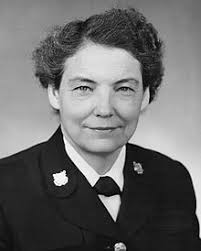
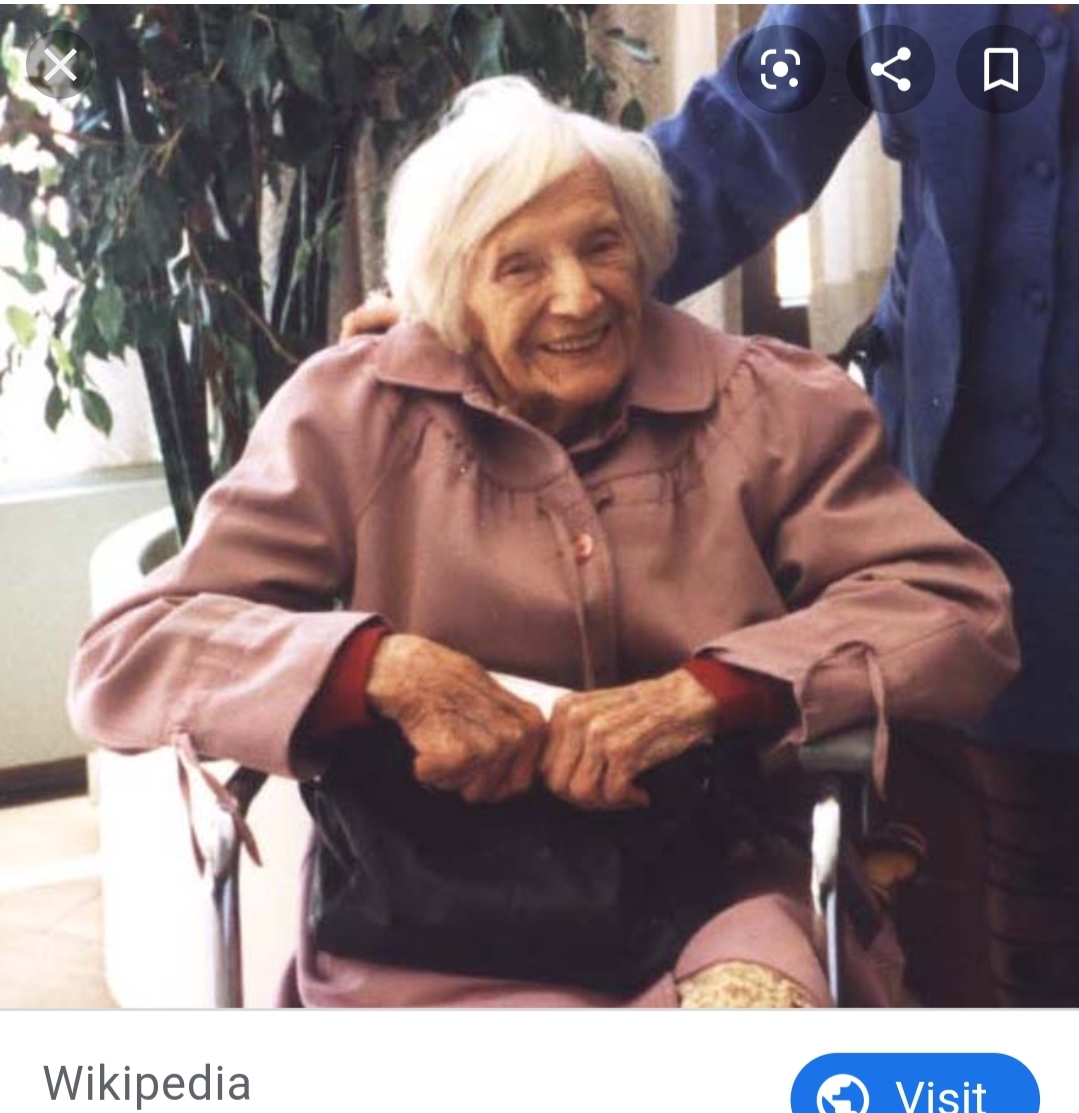
906) Capt. Dorothy Stratton

Courtesy of WIkipedia

906: Captain Dorothy Stratton

Commanding Officer of the United States Coast Guard’s SPARs Program

Born: 24 March 1899, Brookfield, Missouri, United States of America

Died: 17 September 2006, West Lafayette, Indiana, United States of America

First, I feel it necessary to say do not, and I mean DO NOT, confuse this Dorothy with the Playboy actress who was murdered by her significant other also named Dorothy Stratten. Two completely different women with two very different life stories!

Our Dorothy was paving the way for women long before joining the Coast Guard. She earned her bachelor’s degree in 1920, the same year women secured the right to vote in the United States. She would later go on to earn a doctoral degree as well.

In 1933, Dorothy, who was an assistant professor of psychology, became the dean of women at Purdue University. Dorothy was the university’s first full-time dean of women and at the time only 500 women were students there; most of them studying home economics.

Over the nine years Dorothy spent as dean at Purdue, the enrollment of women expanded to 1,400 students. The university also built three dormitories for their female students and saw the implementation of a liberal arts program for women.

Dorothy left Purdue to enter service in the US Armed Forces during World War II. In 1942, Dorothy helped create and became the first director of the Coast Guard’s Women’s Reserve (also known as the SPARs Program, a name Dorothy coined from the Coast Guard’s slogan Semper Paratus or Always Ready). Earlier that year, Dorothy had been selected for the position and pulled from her place as a Senior Lieutenant in the Navy. In her new position, Dorothy officially became the first commissioned officer in the US Coast Guard. She would later be awarded the Legion of Merit for her services.

The purpose of the SPARs, much like the WAVES (Navy), WACs (Army), WASPs (what would later become the Air Force), and the women in the Marines (they didn't have a cool acronym, but were just as important!) was to free up positions on the home front to allow men to serve overseas. In all, 10,000 enlisted women served in the Coast Guard alongside another 1,000 commissioned officers during the war.

After leaving the armed forces in 1946, Dorothy went on to become the first director of personnel at the International Monetary Fund. She also later became the executive director of the United States Girl Scouts, serving for ten years between 1950 and 1960.

Sadly, after Dorothy retired from the Girl Scouts, very little other information about her ever surfaced. She seemed content to her anonymity, and something must be said about that. Dorothy was never in it for the glory, instead, she was in it to serve her country the only way she knew how. Dorothy lived on to be 107 years old, before passing away in the same city Purdue University operates. She was never far from home.

In 2010, Former First Lady Michelle Obama oversaw the christening of a Coast Guard cutter named the CGC Stratton, in honor of Dorothy and all the women who served in the US Coast Guard during World War II.

Badges Earned:

Find a Grave Marked

Sources:

https://www.nytimes.com/2006/09/25/us/25stratton.html

https://coastguard.dodlive.mil/2010/07/the-dorothy-stratton-legend-lives-on/

https://www.womensmemorial.org/stratton

https://www.history.uscg.mil/Our-Collections/Commemorations/World-War-II/igphoto/2001759245/

https://www.findagrave.com/memorial/54047400/dorothy-constance-stratton

905) Emilie Schindler

Courtesy of Wikipedia

"If he'd stayed, I'd have looked after him."

905: Emilie Schindler

Most Known for Being Oskar Schindler’s Wife

Born: 22 October 1907, Alt Moletein, Republic of Czechoslovakia (Present-day Stary Maletin, Czech Republic)

Died: 5 October 2001, Strausberg, Germany

Emilie should be better known for helping to save over 1,200 Jews during The Shoah.

Emilie was raised in the Sudetenland, a region that bordered Germany but was actually a part of Czechoslovakia at the time. Emilie and her future husband were both a part of the population that had deep ties to their Ethnic German roots. According to one story, as a young girl, Emilie befriended a Jewish girl. Emilie’s pastor told her she needed to stop being friends with Rita, the Jewish girl. Instead, Emilie maintained her friendship with Rita, until Rita was murdered by the Nazis in 1942.

Emilie married Oskar only six weeks after meeting him. Her father actually paid Oskar a dowry (he used the money to buy a luxury car and quickly lost the rest). Unfortunately, the marriage wasn’t all sunshine and roses. They married in 1928, but Oskar was never faithful to Emilie. He was always, however, ready to help anyone in need, regardless of his own financial status at the moment.

Oskar opened his now famous factory in Poland in 1939. This occurred after Oskar had once again run out of money and had no job. Like many Germans of the day, he joined the Nazi Party in the hopes of bettering himself financially. He had no hatred towards Jewish people or any other ethnic population, he just wanted to make money. That might not make him out to be a great guy in your book, but that’s the truth.

Anyway, Oskar opened his Polish factory after the Nazis invaded the country in 1939. Emilie was left behind at first, while Oskar moved into an apartment that had used to belong to a Jewish family. His factory also once belonged to a Jewish family and had been used to make enamel goods before the war. Oskar employed his factory with primarily Jewish workers from the Ghetto nearby (in Krakow) because Jewish workers were the least expensive to employ in Nazi Germany (I know, you’re shocked).

It soon became apparent to Oskar just how horrible the Nazi’s Final Solution was. He realized the SS were planning on killing as many of the Jews as they could get their hands on, including Oskar’s employees. In the months that had passed after he took over the factory, he began to see his workers as the people they really were, instead of just cheap labor. This realization changed something in Oskar. He had always been kind to anyone in need, but now he decided he would be a hero (and Emilie would be with him every step of the way).

Emilie sold her jewelry in order to purchase food and medical supplies for the Jewish people who worked in the factory, while Oskar quickly learned he had enough clout to keep his employees working, saving them from being sent to the camps.

In the factory itself the couple set up a secret sanitorium for Emilie to care for the sick. When one of them died, the Schindlers paid for their burial in a private Jewish cemetery Oskar and Emilie themselves established. Its estimated they spent around four million German Reichsmarks throughout the war to keep their employees safe. Emilie even replaced the glasses of a young Jewish boy after he accidentally broke them.

In seven months, the factory produced military shells for the German Wermacht. Not a single one of them was usable, and therefore even though they were technically working for the Nazis, they were more of a hindrance than ever a help.

Near the end of the war Emilie got the SS to divert a train of 250 Jews from a camp to her factory. The vast majority of them weighed under seventy pounds on arrival but she managed to save all but sixteen of them.

Most sources state the 250 number, but another listed the number as 120. I believe these conflicting tales are the same story, as they have the same details, only the actual number of how many prisoners changed. In any case, this is the second story with the lower number, just in case they are two different tales:

Possibly at another time, the SS were attempting to dispatch anther 120 Jewish workers as the Russian approached. Emilie and Oskar were able to convince the SS to allow them to take in the workers instead. This was in the freezing winter of January, and so when the two cattle cars were forced open, it was revealed thirteen of the men had already died. The SS wanted to incinerate the bodies to hide the evidence, but Oskar and Emilie refused. Instead, the Schindlers had the victims buried with full Jewish burial rites. The other 107 survivors they took in and gave medical treatment too. They gradually recovered from frostbite and starvation, all thanks to the Schindlers.

Again, I’m not certain if this really was two different moments of courage, or the same just with the numbers tweaked. But in reality, it doesn’t matter in the larger context of things. Oskar and Emilie were heroes, and they saved around 1,300 Jews out of the kindness of their hearts, lots of money, and good old-fashioned bribery and purchases on the black market. They survived and so did their workers, some of whom were more like family by war’s end.

After the war Emilie and Oskar were stripped of their German citizenship and then they were refused entry into the United States because Oskar had been a member of the Nazi Party.

In 1949 they settled in Buenos Aires, Argentina, with one of Oskar’s mistresses and a dozen of the Jewish people they had saved. They decided to become farmers to make money, but in 1957 Oskar abandoned Emilie to return to Germany, where he died in poverty seventeen years later.

Emilie survived in Argentina on a small pension from the Israeli and German governments. Her only living relative at that point was a niece in Bavaria, and anything else she needed was given to Emilie through various Jewish charities.

In 1993, Israel honored Emilie (and Oskar) with the Righteous Among the Nations title, which is bestowed upon gentiles who went above and beyond to help save the Jewish people during the Shoah.

In 1995, Argentina awarded her the Order of the May (the highest honor that can be bestowed on a foreigner), and also awarded her a pension to help with her financial situation. According to oskarschindler.com, Emilie spent the last fifty years of her life in Argentina with an armed guard outside of her house, provided by the Argentinian government, to protect her from extremist groups like Anti-Semites and neo-Nazis.

In 2001, Emilie finally returned to Germany in order to give some of Oskar’s papers to a museum. She died there, alone at a Berlin hospital a few months later. To the end, Emilie loved Oskar. Though she also was able to recognize he wasn’t a perfect human either, and far from the perfect husband. Emilie was laid to rest in Germany, but Oskar remains the only member of the Nazi Party to be allowed to be buried at Mount Zion in Israel.

In 2020, The Times of Israel put out an article saying Steven Spielberg, while filming Schindler’s List, the epic film that recounts Oskar’s story, made an even bigger mistake than just largely leaving Emilie’s part out. Steven sent Emilie a hand signed letter, asking her to partake in the epilogue portion of the film to play one of the Jews she and Oskar had saved in real life. Evidently Steven somehow got Emilie confused with one of the Jews she helped save during the war, and the letter he sent even invited her spouse to appear in the film with her! Yikes! The letter, and the fact that Emilie’s story was left out of the movie and in other historical accounts, evidently made Emilie very upset. No Wonder!

Badges Earned:

Find a Grave Marked

Located In My Personal Library:

Secret Heroes of World War II by Eric Chalene

Sources:

https://www.jewishvirtuallibrary.org/emilie-schindler

https://www.yadvashem.org/righteous/stories/schindler.html

http://www.oskarschindler.com/10.htm

https://www.timesofisrael.com/steven-spielberg-mistook-oskar-schindlers-wife-for-a-jew-she-saved/

https://www.findagrave.com/memorial/4455/emilie-schindler

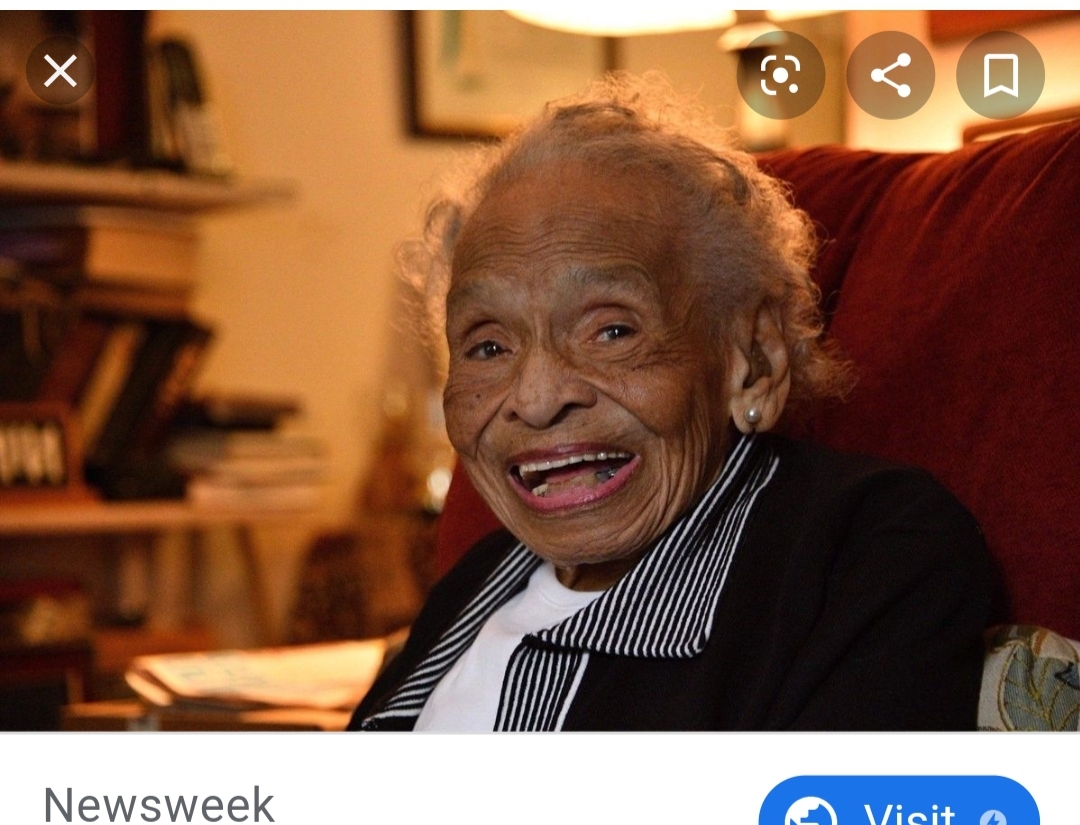
904) Dr. Olivia Hooker

Courtesy of Newsweek

 “Love all, trust few, and do right.”

904: Dr. Olivia Hooker

The First African American Woman to Enter the US Coast Guard

Born: 12 February 1915, Muskogee, Oklahoma, United States of America

Died: 21 November 2018, White Plains, New York, United States of America

Olivia enlisted in 1945 and worked in the SPARs Program, also known as the US Coast Guard Women's Reserve.

Olivia was also the last survivor of the Tulsa Race Riot and Massacre of 1921 (at the time the area where the riots happened was called Black Wall Street). The riots broke out after a white woman claimed she had been assaulted by an African American man. Though the claim was never substantiated or proven, the locals responded by taking the law into their own hands (after arresting the man accused of sexual assault). Overnight, more than thirty-five blocks of Greenwood, aka Black Wall Street, in Tulsa were incinerated, and between three dozen and three hundred African Americans had gone missing or were killed (estimates vary wildly, and no exact number has ever been pinned down). At the time, Olivia’s father owned a department store, which was completely destroyed. Olivia’s father never received compensation from the insurance company for the damage, and the family was financially ruined.

After the smoke cleared, Olivia’s family moved to Ohio to start over. They had managed to cash a bond, which was protected by a safe that managed to survive the riots, and Olivia’s father began a new career in real estate. Olivia herself was plagued by nightmares and other symptoms, most likely PTSD, from the Riots.

Olivia overcame all of the hardships and graduated from Ohio State University in the midst of the Depression. She then tried to enlist in the WAVES (or Women Accepted for Voluntary Emergency Services—the women’s division of the US Navy) but was denied entry, possibly because of her ethnicity. That’s okay though, because it meant Olivia was even more special. As previously stated, she became the first African American woman to enlist in the US Coast Guard.

Olivia served with the Coast Guard for right around a year. After her unit was disbanded following the end of the war, she used her GI Bill to pursue higher education. She earned a master’s in psychology and later a doctoral degree.

Olivia was a Professor at Fordham University until 1985 and served as director of the Kennedy Child Study Center in New York City until 2002.

In 1973, Olivia helped found Division 33 of the American Psychological Association which conducts research and advocates for people with intellectual and developmental disabilities.

Olivia continued to volunteer with the Coast Guard auxiliary until only a few years before her death. She also continued to advocate, though was never successful, in seeing the survivors of the Tulsa Race Riots receive restitution from the federal government.

In June of 2015, the US Coast Guard named a wing of its training center after Olivia. Sources differ on whether it was the center in Washington DC or Staten Island. In 2019, it was announced the USCGC Olivia Hooker, a fast response cutter, would be commissioned and rolled out for the United States Coast Guard after 2023.

Though she died at the age of one hundred and three, Olivia never married or had children.

Badges Earned:

Find a Grave Marked

Sources:

http://www.feministvoices.com/olivia-hooker/

https://www.nytimes.com/2018/11/23/obituaries/olivia-hooker-dead.html

https://www.nbcnews.com/news/us-news/olivia-hooker-one-last-survivors-1921-tulsa-race-riot-dies-n939651

https://en.wikipedia.org/wiki/Olivia_Hooker

https://www.findagrave.com/memorial/195158837/olivia-juliette-hooker

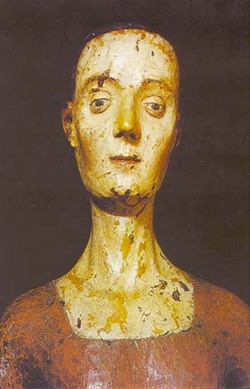
903) Catherine of Valois

Courtesy of Find a Grave

903: Catherine of Valois

Used as a Political Tool to Hand France to England During the Hundred Years' War

Born: 27 October 1401, Paris, France

Died: 2 January 1437, Bermondsey Abbey, London, England (Present-day Bermondsey, London, United Kingdom)

Catherine’s marriage to Henry V legitimized his claim to be king of England and France and made things awkward for Catherine considering her brother was the heir to the French throne (the future Charles VII). Catherine’s father was King Charles VI, known as “Charles the Wise” by some despite the fact it was well known in his time he suffered from severe mental issues.

Despite being a princess, Catherine’s early life was far from glamorous. Because of her father’s issues, Catherine’s mother seized control of the country when Catherine was only three years old. Catherine grew up impoverished, with only a few of her siblings as companions.

In 1420, Henry V of England invaded France and renewed his claim to the French throne. It was decided Charles (Catherine’s father), would name Henry as his heir in place of Charles’ own son (and Catherine’s brother), the Dauphin. This is why I previously stated Catherine’s marriage was an awkward family affair from day one.

In June of 1420, Catherine and Henry married. In February of the following year, Catherine was crowned Queen of England. In December of that same year, her and Henry’s only child, Henry VI, was born.

Catherine was the mother of Henry VI and grandmother of Henry VII. When Catherine’s son Henry VI was only a few months old, her husband Henry V died of dysentery while campaigning in France. Catherine’s son never got to meet his father. Sadly, Catherine’s son, Henry VI, inherited her father, Charles VI’s mental defects. A few months later, Catherine’s father died as well, making the infant Henry VI king of both England and France. Unfortunately, Catherine was not named regent for her son in either England or her native France, nor was she granted custody of her son. Instead, Henry was to be raised by his father’s brothers.

Catherine was forbidden to remarry until her son, now England’s youngest king in their history, was an adult. Seeing as Henry became king at the grand old age of eight months, that would have been a really long wait. The reason for the gap was because of the tense political climate Henry V’s death left the country in. Never before in English history had there been such a long minority—meaning the period until the king was old enough to rule in his own right. The politicians surrounding the young king did not want Catherine to remarry someone that might put Henry VI in jeopardy of possibly produce an heir to compete for his place on the throne.

This meant Catherine was legally forbidden to marry until her son was able to give his okay. After Henry VI’s seventh birthday, he ceased to live with his mother full time. This made Catherine’s predicament even more lonely than before.

Instead of waiting around for one day far in the future, Catherine married in secret. She just happened to pick the least likely suitor, arguably in English history, the servant/squire Owen Tudor.

Owen was Welsh and not a member of the nobility or aristocracy. At the time, the Welsh were seen as far beneath the English, and so no one would ever accuse Catherine of marrying to attain a higher place in society. Owen had, however, distinguished himself in the fighting at Agincourt, so he wasn’t a complete peasant either. She still had to keep the marriage, and family she’d soon build, a secret, however.

Catherine would have four or five babies in five years: three boys and at least one girl, maybe two (sources differ). At least one of the girls, if she had more than one, probably died in infancy. The only information we know with certainty about Catherine’s children pertains to her three sons. Owen became a monk, while Edmund and Jasper distinguished themselves at court and became very important to their half-brother, Henry VI, later on. Edmund would go on to marry Margaret Beaufort and have one son, Henry Tudor (the future Henry VII), though Edmund died before his son was born. But anyway, back to Catherine.

After having her children, Catherine then died, aged only thirty-five after a brief illness. Her younger children and husband were all in jeopardy for being Welsh and for being born in defiance of royal decree.

Owen spent two years in prison around the time of Catherine’s death. Most sources say he was imprisoned beforehand, but some say after. In any case, he was arrested for having a relationship with Catherine, but was eventually pardoned and released by his stepson, the king.

Catherine was buried in Westminster Abbey; Henry VI placing an inscription on her tomb describing her as the widow of Henry V. The inscription failed to mention her second marriage or her children, though Henry was not entirely cruel to his stepfather and half-siblings. He later knighted his stepfather, and his half-brothers Edmund and Jasper did quite well for themselves as well.

Many years later, Owen was captured and executed by Edward IV’s forces. Edward had forced Henry VI off the throne previously. Henry VI’s only son, also named Edward, was killed at the Battle of Tewkesbury around the same time.

Owen’s final words were recalling his wife, the queen.

After Edward IV died, his brother, Richard III became king (after Richard conveniently oversaw the disappearance of his nephews, Edward’s children). Richard III was then overthrown by Henry Tudor, Catherine’s grandson through one of her Welsh sons. And so, Catherine became mother and grandmother to two different English kings, though not from the same direct family line.

During the reign of Catherine’s grandson, Henry VII, her tomb was damaged as Henry tried to hide his less than ideal ancestry. The lid of her tomb was raised at this time, and Catherine’s corpse was unveiled, becoming a tourist attraction of sorts. Her body and tomb were not restored until nearly four hundred years later, during the reign of Queen Victoria.

Catherine is briefly portrayed by Johnny Depp’s daughter, Lily-Rose, in the Netflix Film The King (which portrays Henry V’s story).

Badges Earned:

Find a Grave Marked

Located In My Personal Library:

The Wars of the Roses by Dan Jones

The Woodvilles: The Wars of the Roses and England's Most Infamous Family by Susan Higginbotham

Sources:

https://www.britannica.com/biography/Catherine-of-Valois

http://www.englishmonarchs.co.uk/plantagenet_36.html

https://www.historyofroyalwomen.com/catherine-of-valois/catherine-valois-queen-welshman/

https://www.findagrave.com/memorial/8344315/catherine-of_valois

902) Gina Haspel

Courtesy of Wikipedia

"I wanted to be part of something bigger than just me. I think with my dad's service in the military, I saw that as a natural affinity. I wanted an overseas adventure where I could put my love of foreign languages to use. CIA delivered."

902: Gina Haspel

Former Director of the CIA

Born: 1 October 1956, Ashland, Kentucky, United States of America

Gina was Appointed by the Trump Administration in 2018, but stepped down on 19 January 2021 before the incoming Biden Administration took office.

Gina was the first woman to hold the position on a permanent basis after previously serving as Deputy Director under Mike Pompeo.

Gina was born in Kentucky but grew up on several military bases around the world. Her father served in the Air Force, and Gina was one of five children. As a child she told her father her biggest dream was to attend West Point, and her father had to break Gina’s heart by telling her West Point did not admit female students. This ruling would not change until May of 1980, when sixty-two female cadets graduated from the United States’ most elite military school.

Gina studied instead at the University of Kentucky, majoring in journalism and studying languages. After college, she began working at Fort Devens in Massachusetts. Gina ran the library and the foreign languages lab. It was from several of the soldiers stationed at Fort Devens that Gina first learned of the Central Intelligence Agency and their mission of being involved in global affairs, something Gina had always wanted to do.

Gina was married for nine years, but had no children.

Gina joined the CIA in 1985. Her first assignment was in Africa, but she quickly also saw the devastating affects of Communism on the Soviet Union’s satellite states at the end of the Cold War. Gina later served during the Golf War as well, her affinity for foreign languages coming in handy.

Since joining the operation, Gina has held numerous positions within the organization, including several stances within the National Clandestine Service.

Gina’s first day at the Counter Terrorism Center happened to fall on the eleventh of September 2001. She would stay there for three years, often working seven days a week.

As Director, Gina oversaw the CIA’s budget, personnel, and managed the operations of the entire agency. A few months after leaving the CIA, she joined a private law firm.

She has received several awards and accommodations for her work.

Like everything relating to the Trump Administration, Gina was deemed “controversial” as a choice for the lead position within the CIA by several left-wing media pundits and analysts. One story that made the rounds of news media was Gina’s belief in the practice of waterboarding and torturing interrogatees while working with the George W Bush administration. Regardless of one’s personal feelings towards Gina, it cannot be denied she has made great strides towards women’s equality by becoming the first female Director of the Central Intelligence Agency and managed to hold the office for just under three years, which is pretty impressive.

Oh, and she had a five-foot-tall poster of Johnny Cash in her office, because why not? (Her official reason is because Johnny represents American individualism).

Badges Earned:

Located In My Personal Library:

Killing the Killers: The Secret War Against Terrorists by Bill O'Reilly and Martin Dugard

Sources:

https://www.whitehouse.gov/people/gina-haspel/

https://www.cia.gov/news-information/featured-story-archive/2018-featured-story-archive/get-to-know-our-deputy-director.html

http://www.allgov.com/news/top-stories/director-of-the-central-intelligence-agency-who-is-gina-haspel-180507?news=860463

https://www.bloomberg.com/news/articles/2021-10-21/ex-cia-director-to-advise-super-wealthy-on-risks-for-law-firm

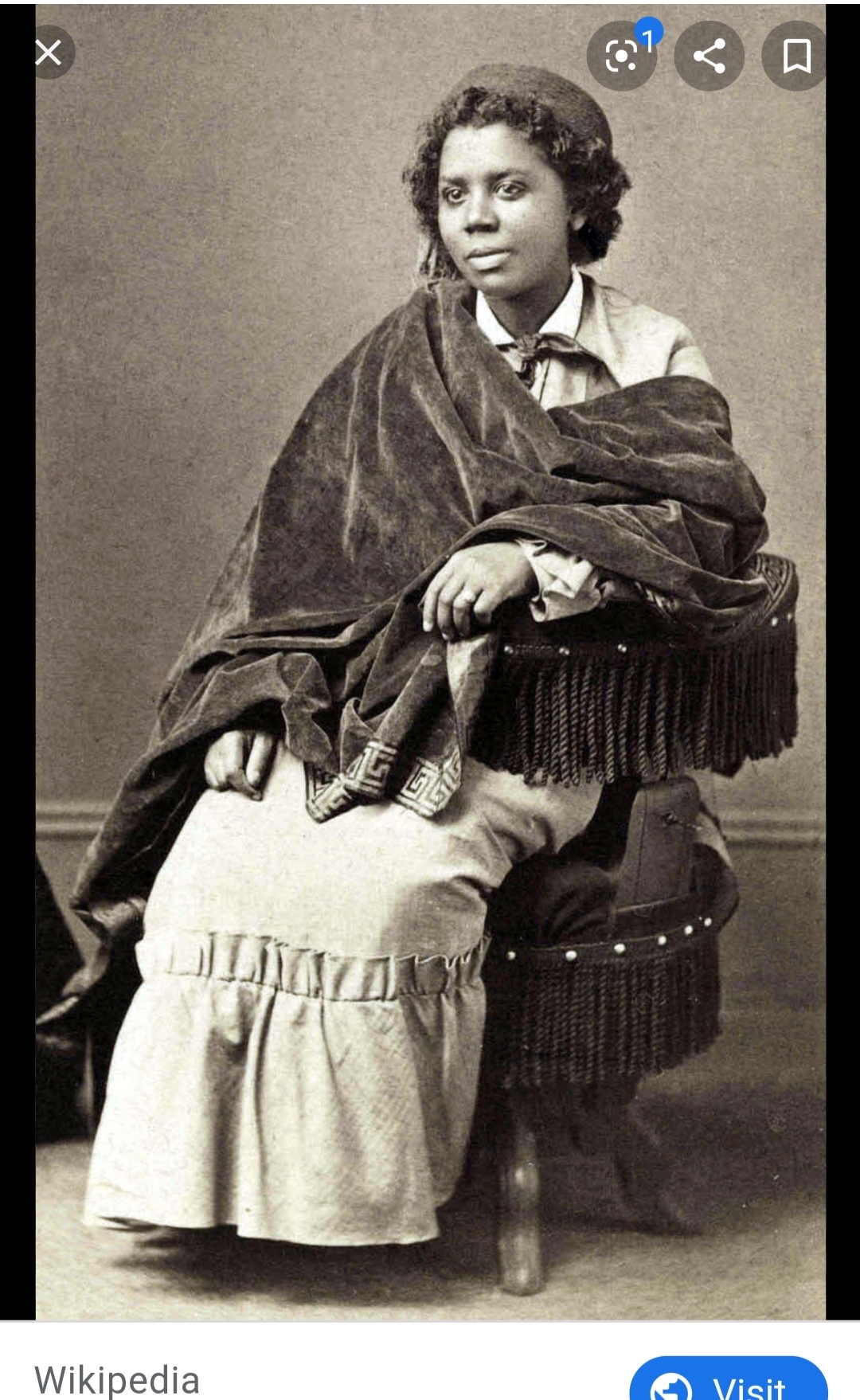
901) Edmonia Lewis

Courtesy of Wikipedia

 “There is nothing so beautiful as the free forest. To catch a fish when you are hungry, cut the boughs of a tree, make a fire to roast it, and eat it in the open air, is the greatest of all luxuries. I would not stay a week pent up in cities, if it were not for my passion for art.” 

901: Edmonia Lewis

The First Professional African American Sculptor

Born: c. 4 July 1844, East Greenbush, New York, United States of America (Present-day Rensselaer, New York, United States of America)*

Died: 17 September 1907, London, United Kingdom

Full Name: Mary Edmonia Lewis

Edmonia has also been hailed as "The First Female African American and Native American to achieve International Fame as a Sculptor in Neoclassicism". I figured that was a little too wordy to have as her “claim to fame” at the beginning of the article.

Edmonia’s mother was a Chippewa Native American (also known as Ojibwe) and gave her the Native name of Wildfire. Her father was a freeman of African descent (one source states he was from Jamaica).

Edmonia was orphaned by the time she was five but stayed with her mother’s people until she was twelve. Edmonia’s older brother Sunrise became a gold miner in California, and he helped her pay for her schooling. After a time, Edmonia shed her native name and officially began going by Mary Edmonia, and later just Edmonia.

Edmonia attended Oberlin College with her brother’s help but was not allowed to graduate. Most state the reason Edmonia was not allowed to graduate was because of a racial issue. Firstly, Edmonia was accused of poisoning two white classmates. Though she was later acquitted of the charge, Edmonia was also accused of stealing art supplies. Between the two charges school officials barred her from graduating. This was a harsh blow that came after an even harsher beating. After Edmonia was accused of poisoning two fellow white students, she had been kidnapped and beaten nearly to death by a mob who didn’t believe she was innocent. The cruel treatment Edmonia faced during her dark days in college would mark her artistic works for the rest of her life.

After leaving Oberlin, Edmonia moved to Boston and began what would be a limited education in sculpting. In her day, only white men (and a select few white women) were able to study human anatomy in order to create a more accurate picture of the human body. But Edmonia’s work never suffered from not being able to take the traditional route. If anything, this made her work that much more human and real. Soon enough, Edmonia began to sculpt medallion portraits and eventually portrait busts of the likes of William Lloyd Garrison, Wendell Phillips, Charles Sumner, John Brown, Abraham Lincoln, Ulysses S Grant, and more. The sales of these works would allow Edmonia to travel to Europe for the first time.

It was during her European trip in 1865 and 1866 that Edmonia decided to settle in Rome. She learned Italian and began to sculpt in the neoclassical style, popularized by a revival of all things Ancient Greek and Roman.

In the 1870’s, for instance, Edmonia spent four years on her most epic sculpture of her career, The Death of Cleopatra. After shipping the three-thousand-pound structure to Philadelphia, Edmonia was relieved to see the work placed at the Centennial Exhibition. Some saw the statue as a masterful creation, while others criticized the work, which depicted Cleopatra VII in the moments after her suicide, as too graphic for the Victorian mindset. After the exhibition ended, Cleopatra was dumped in an area of Chicago and was forgotten about until the 1990’s, when she was donated to the Smithsonian.

Edmonia’s sculptures were unique from others working in Italy at the time. She rarely employed outside help, while others would create a plaster bust and then transfer the work to marble with the help of native Italian craftsmen. Edmonia decided against that route for two reasons: she didn’t have the funds to pay for another’s help and she didn’t want to lose her originality in the pieces.

Sadly, very few of Edmonia’s sculptures survive to present day. She focused on abolitionists and other works relating to her African and Native American heritage, but she also sculpted religious works and other icons.

Edmonia visited the United States a few times in the latter part of the nineteenth century, but afterwards she fades from history. Her date and place of death only recently came to light. She never married or had children. Finally in 2017, Edmonia’s grave was marked with a granite headstone after being unmarked for one hundred-ten years.

*Most sources agree Edmonia was born in New York, however I thought I better mention that one Smithsonian article states she was born in either New York or Ohio. If evidence ever comes to light Edmonia was definitely born in Ohio as opposed to New York, I will update this page accordingly.

Badges Earned:

Find a Grave Marked

Located In My Personal Library:

Revolutionary Women by Peter Pauper Press

Uppity Women Speak Their Minds by Vicki Leon

Who Knew? Women in History by Sarah Herman

Sources:

https://americanart.si.edu/artist/edmonia-lewis-2914

https://www.smithsonianmag.com/smithsonian-institution/sculptor-edmonia-lewis-shattered-gender-race-expectations-19th-century-america-180972934/

https://artsandculture.google.com/exhibit/edmonia-lewis-smithsonian-american-art-museum/gQJi3NKm3VagLg?hl=en

https://www.edmonialewis.com/chronology.htm

https://www.findagrave.com/memorial/8757543/edmonia-mary-lewis

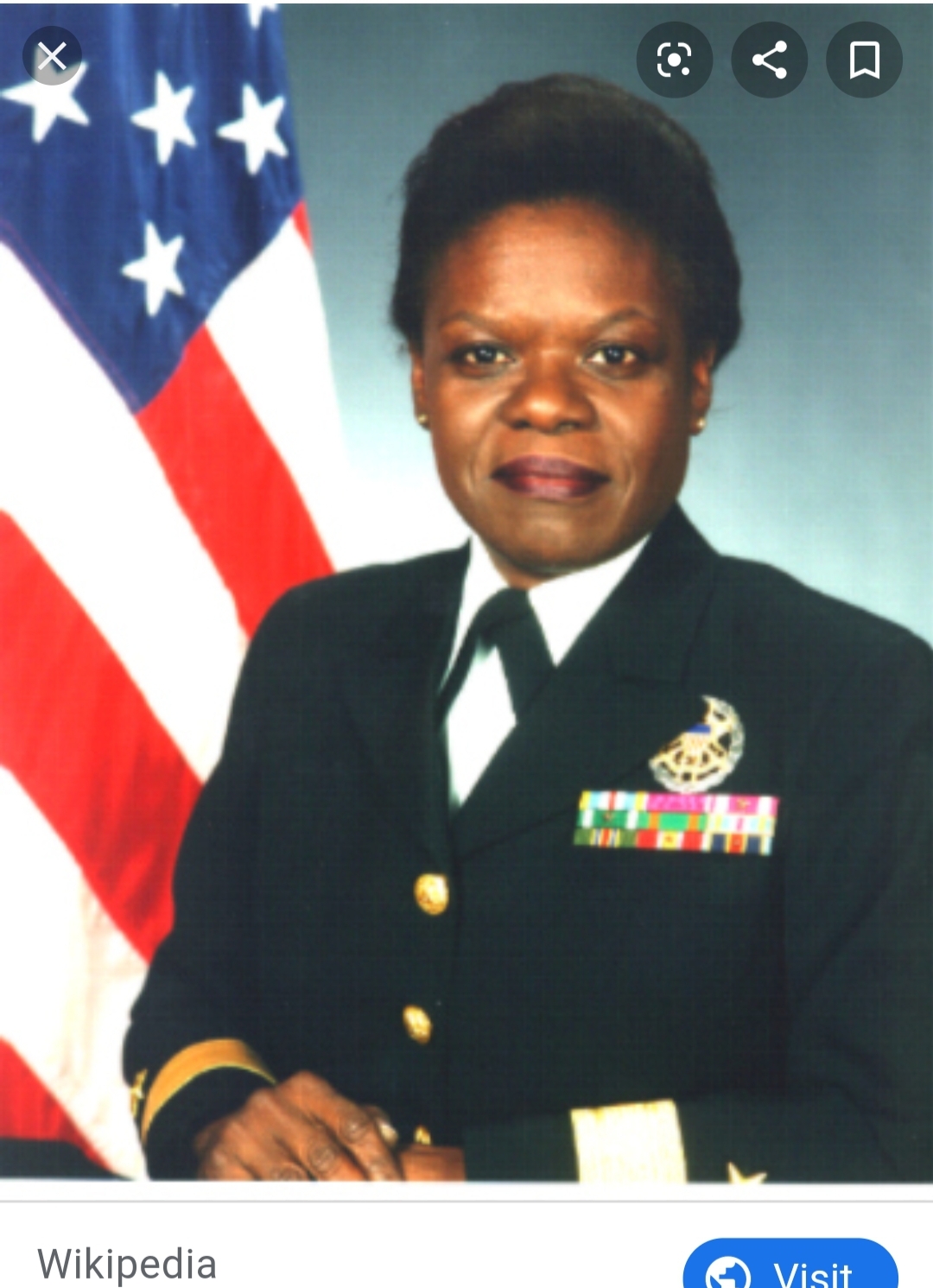
900) Lillian E Fishburne

Courtesy of Wikipedia

900: Rear Admiral Lillian E Fishburne

The First African American Woman to Hold the Position of Rear Admiral in the United States Navy

Born: 25 March 1949, Patuxent River, Maryland, United States of America

Lillian was appointed to the position by President Bill Clinton in 1998. She was the nineteenth African American rear admiral overall, and as previously stated, the first African American woman.

Lillian’s father was active duty in the Navy when she was born, and he was her biggest support for joining the Navy later on. She holds a bachelor’s degree in Sociology. She also holds a Master of Arts in management and a Master of Science in telecommunications systems management degree.

Lillian began working with the Navy in 1973 and retired in 2001. She worked in New Jersey, Illinois, Japan, Florida, Washington DC, Hawaii, and more throughout her career.

According to Wounded Warrior Project, Lillian has been awarded the following: two Navy Commendation Medals, a Navy Achievement Medal, a Meritorious Service Medal, and a Defense Superior Service Medal.

Lillian is married and has one daughter.

Sources:

https://www.military.com/navy/rear-adm-lillian-fishburne.html

https://newsroom.woundedwarriorproject.org/Rear-Adm-Lillian-Fishburne-Continued-a-Naval-Family-Legacy-to-Become-Services-First-Black-Female-Flag-Officer

https://www.montgomerycountymd.gov/cfw/Resources/Files/biofishburne.pdf

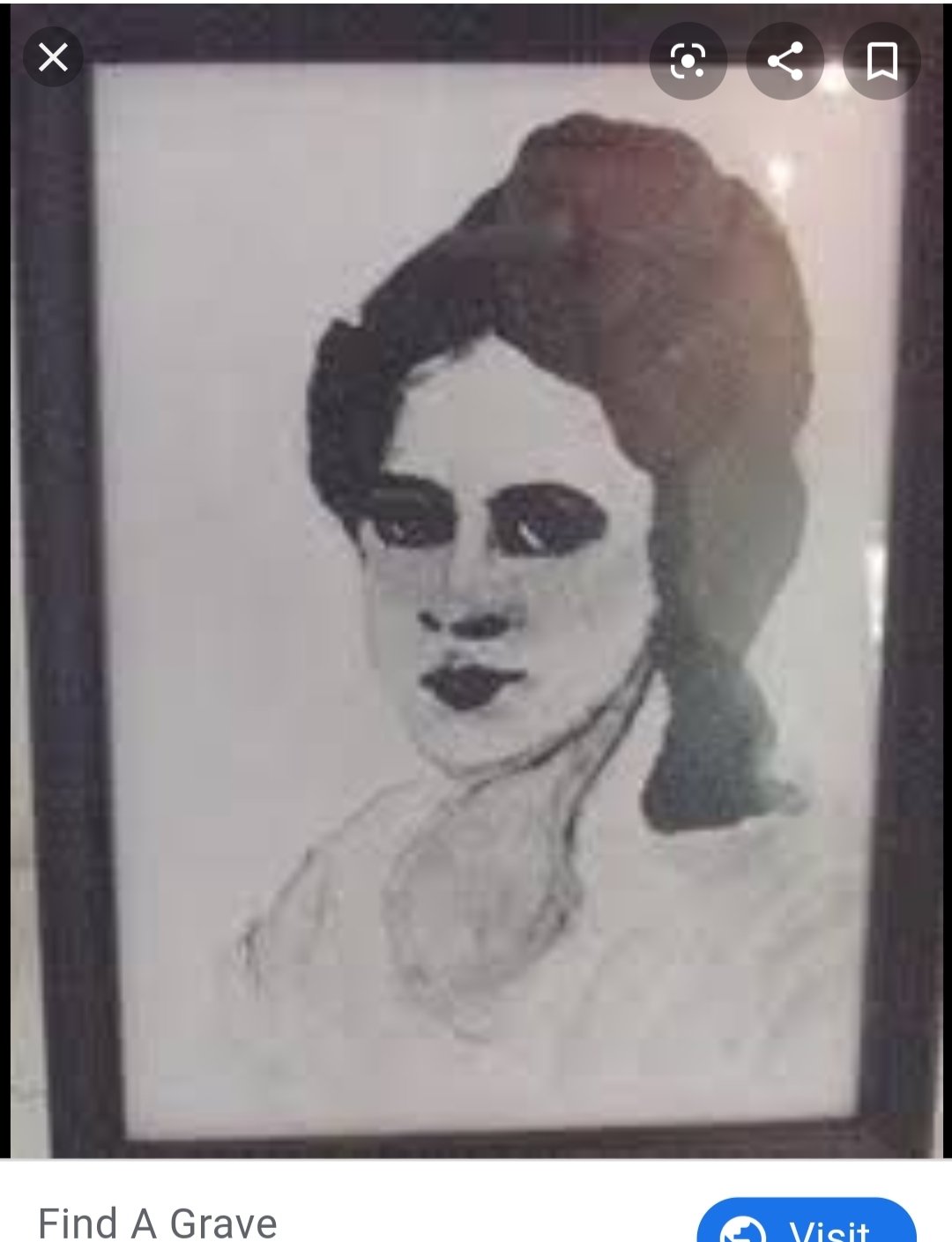
899) Sarah Shelton Henry

Courtesy of Find a Grave

899: Sarah Shelton Henry

Patrick Henry’s First Wife

Born: 29 May 1736, Rural Plains, The Colony of Virginia (Present-day Rural Plains, Virginia, United States of America)

Died: 19 March 1775, Scotchtown, The Colony of Virginia (Present-day Scotchtown, Virginia, United States of America)

Patrick kept Sarah in the cellar to protect her from herself and others. She was wrapped in an early form of a straitjacket, a “Quaker Shirt.”

He did this because of Sarah’s mental illness (possibly postpartum depression after their youngest was born in 1771). Patrick and Sarah had six children in all, after they married when Sarah was sixteen and he eighteen. They had been in love since they were children. Sarah’s father gifted Patrick six slaves and a 300-acre farm. Patrick later sold the farm after he began practicing as a lawyer.

There was a newly opened asylum in the area, but Patrick didn’t want to send her there. He visited the asylum after it opened and learned his wife would be kept in a windowless room, shackled to the floor with a filthy mattress on the floor as her only furniture. Patients would be “treated” by being dunked in freezing water, bled, shocked, terrorized, blistered, and kept restrained as earlier mentioned. As horrifying as it sounds, this hospital is seen as a step forward in the progress of treating the mentally ill, as it was designed for that sole purpose alone and was not a regular hospital.

It’s sad that Patrick should be praised for deciding to care for Sarah in his own home as opposed to sending her away, where she’d be forgotten and mistreated. Unfortunately, the only way he knew how to care for her was to lock her away in her own home.

Sarah was moved to a two-room apartment in her home’s basement. She received plenty of sunlight and visitors (in the form of her husband and children) and was assigned a slave who nursed her and cared for her every need. Sarah’s oldest daughter and husband moved back to Scotchtown to help care for her. She passed away four years after the birth of her final child; some speculate from suicide, but the truth will never be known for certain.

Very little else is known of Sarah’s life. After she died, Patrick buried her on the property, and her grave was never marked by anything more than a lilac tree. By that point, Patrick was governor of Virginia and so Sarah’s death was hushed up to preserve his position, and her dignity.

Ever since Sarah died, ghost sightings have been spotted on the Scotchtown Plantation. Many have seen a woman in a long white gown walking with a candle, candles burning in windows, doors refusing to open, objects moving, and even more strange activities. One tour group reportedly even heard a woman screaming from the basement. If this is Sarah, I can only hope she someday finds her eternal rest.

More Americans should know Sarah’s story. We all have Patrick’s name memorized by the time we get out of elementary school, after all. So why are we never taught about his first wife? Sarah's story reminds us everyone from history was human at their core. We all have dreams, doubts, and fears. Some of us are victims to our time period, while others made the most out of what was available to them in order to help those they loved most. Sarah and Patrick's story is a true love story for the ages, and we should all learn both of their names and the sacrifices they made in order to make The United States a reality.

Badges Earned:

Find a Grave Marked

Located In My Personal Library:

Sarah Shelton Henry by Sheila Phelps Inderbitzen

"Killing the Witches: The Horror of Salem Massachusetts," by Bill O'Reilly and Martin Dugard

Sources:

https://www.wikitree.com/wiki/Shelton-118

https://americanhistory.si.edu/blog/patrick-and-sarah-henry-mental-illness-18th-century-america

https://en.wikipedia.org/wiki/Sarah_Shelton_Henry

https://www.findagrave.com/memorial/49434135/sarah-henry

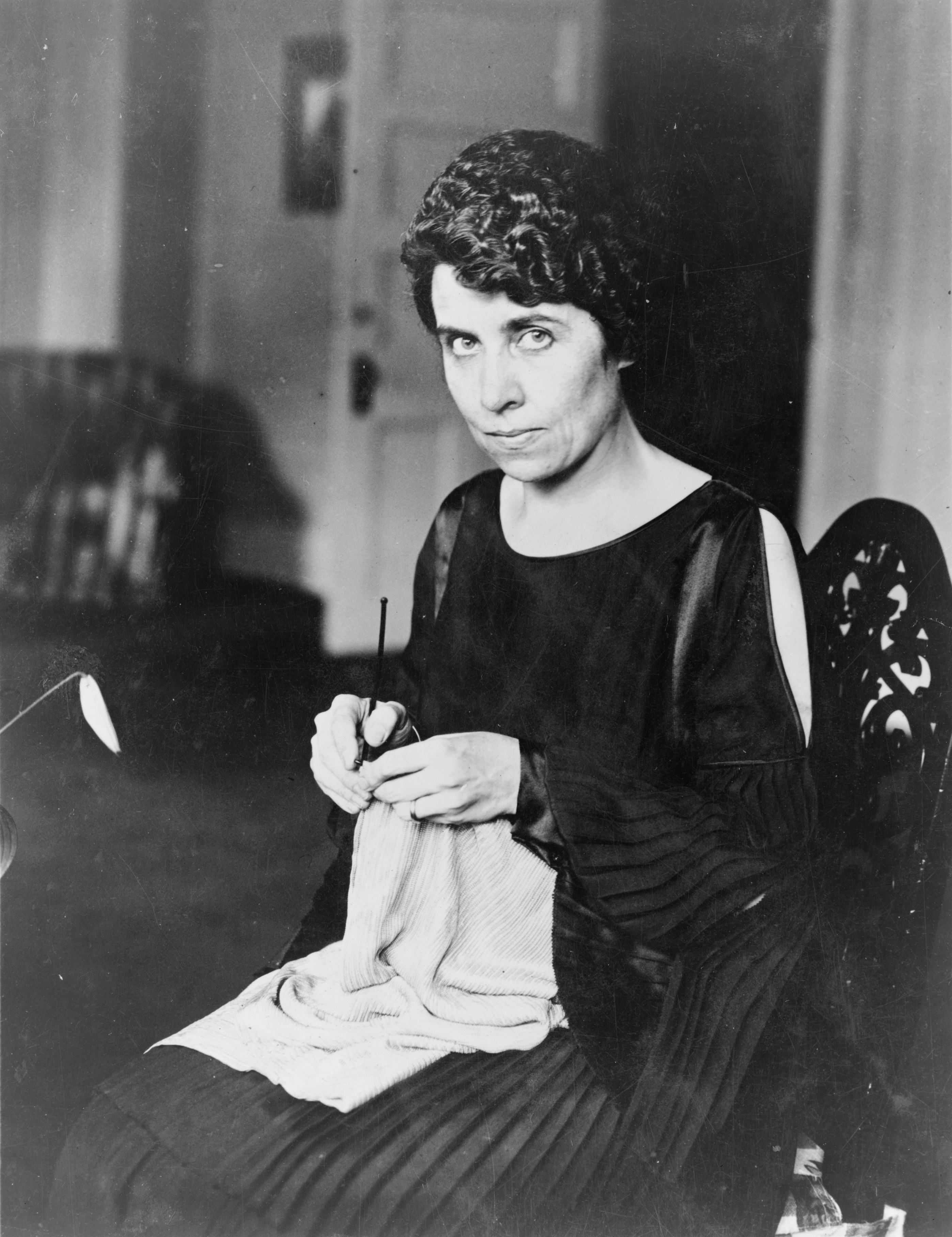
898) Grace Coolidge

Courtesy of Wikimedia Commons

898: Grace Coolidge

Former First Lady of the United States During Her Husband, Calvin Coolidge’s Administration

Born: 3 January 1879, Burlington, Vermont, United States of America

Died: 8 July 1957, Northampton, Massachusetts, United States of America

Grace was an only child, and very close to her parents. From a young age she watched and learned from her mother how to sew, cook, clean, garden, knit, and bake.

Grace’s parents were also all too happy to allow her to attend school, and Grace began at Grammar School when she was only five.

In high school, Grace studied Latin, French, various scientific topics, and took voice lessons on top of the required English and history classes. After high school, Grace took ill and had to remain home for a time, but eventually she went on to college. Grace became the first First Lady to earn a traditional four-year college degree.

After graduation, Grace trained and eventually began to teach at the Clarke School for the Deaf. Her mother wanted Grace to teach at a more traditional school closer to home, but Grace was determined, and quickly learned and was able to teach her students to lip-read (this was a time before sign language became a popular, and albeit better system to teach the deaf). Grace would teach the deaf for three years, and though her teaching days ended with her marriage in 1905, Grace remained committed to keeping up to date on the developments in teaching the deaf.

On Grace’s wedding day, she wore gray and had no flowers. She and Calvin married in her parents’ home and enjoyed a weeklong honeymoon. They would eventually have two sons.

Two years after the wedding, Calvin was first elected to office. He would spend much of their son’s childhoods away in Boston while Grace continued to raise the boys back home. Before Calvin was president, he served in state legislature, as lieutenant-Governor, then as actual Governor of Massachusetts. He also served as Vice President of the United States and Mayor of Northampton., Massachusetts before he made it to the Oval Office.

Once Calvin became Vice President, the Coolidge family moved to Washington DC. Grace quickly became a popular social figure in DC. Soon after, President Harding died while in office. Grace reassured the suddenly widowed Florence Harding that she did not need to vacate the White House immediately but was instead to take her time. Sadly, more personal tragedy would soon follow.

During the 1924 presidential election period, Grace and Calvin were subdued to say the least. Their son, Calvin Jr, died that July. He was only sixteen and died after a two-day battle with blood poisoning. Historians have speculated whether or not Grace would have had a more active role in the campaign had she not been in mourning. Of the few public appearances Grace did make, one happened on the White House lawn. Grace had her desk carried out onto the green and allowed photographs to take her photo as she filled out her absentee ballot. This gesture was to remind women of the fact this was only the second election cycle they had been given the right to vote in; following the passage of the Nineteenth Amendment in 1920.

Although Grace was very detached from her husband’s role, hardly made any significant public appearances, and received minimal response from the public from her hopes for the White House, she did make one important contribution to the history of the United States. Grace was one of the first First Ladies to advocate for federal legislation. In her case, she asked Congress to approve donations to the White House of items that might have once belonged to the Presidential Mansion. Grace wanted to restore some of the rooms to their former historical glory. She received minimal response, sadly, but was able to refurbish the Green Room.

Another famous moment from her tenure as First Lady came from a simple photoshoot. Grace posed for a photo with the famous deaf/blind Helen Keller. As Grace was a former teacher for the deaf, just being in the White House brought national attention to deaf children across the country. Grace was able to raise $2,000,000 in an endowment fund for the Clarke School for the Deaf while First Lady, though her husband received most of the credit.

Grace had a strict policy of not speaking to the press or giving speeches while First Lady. The only time she ever “broke” her rule was with a gathering of female reporters. They asked her for a speech, and so Grace appeased them by raising her arms and making a few rudimentary signs she had learned while in training for the deaf.

Part of the reason for Grace being held back from public view stemmed from her husband. Calvin’s belief was that men should be in public roles while women stick to the background. Grace said that, had she been more involved with Calvin’s public life before he became Vice President, she might have been more inclined to take on a larger role as well.

Calvin would not let Grace drive a car or fly in an airplane (even when one of their guests, the esteemed aviator Charles Lindbergh, offered Grace a private ride). He also refused to let her cut her hair short, as was all the rage in the Jazz Age, and would not let her wear pants when she wanted to go hiking.

The only time Grace ever seemed to stand up to her husband was done in secret, without him even knowing. While on vacation in 1927, Grace took a hike with only one of her unmarried Secret Service agents. They got lost and were away a few hours longer than they meant to be. When the “couple” returned, the press had a field day, which only grew worse after the president insisted on the poor secret service agent being removed from Grace’s protective detail. The media wondered if this meant there was marital trouble between the Coolidges, and possibly a hint of an affair with the agent. There definitely wasn’t anything of the sort going on, but Grace reached out to the head of the Secret Service to ensure the poor agent wasn’t put into too much trouble. Surviving letters indicate Calvin never found out.

Calvin died of a heart attack in 1933, five years after they left the White House. Four years later, Grace was awarded a presidential widow’s pension. She also ensured her memoirs were written down; the manuscript typed with her own hands. Grace realized when she first became First Lady that very little information on other first ladies survived, and she didn’t want to continue that tradition. The autobiography was published after she died.

From 1935 to 1952, Grace served as President of the Clarke School for the Deaf. She ensured the Boston Red Sox’s played at least one game a year for which some of the proceeds were donated to the school. Grace also kept apprised of all new technology being created to help the deaf.

In 1936, after Grace learned to drive a car, she took a road trip across Europe. That same year she moved into her own home that she designed and rode in an airplane for the first time. She became a staunch supporter of President Roosevelt during World War II, and one of her last public acts was to voice her vocal support for the creation of the United Nations.

She never remarried, and if anything, Grace is proof that life doesn’t end when a beloved spouse does. If anything, sometimes that makes life begin again.

Badges Earned:

Find a Grave Marked

Located In My Personal Library:

Confronting the Presidents: No Spin Assessments from Washington to Biden by Bill O'Reilly and Martin Dugard

First Ladies: Presidential Historians on the Lives of 45 Iconic American Women by Susan Swain and C-SPAN

The Smithsonian First Ladies Collection by Lisa Kathleen Graddy and Amy Pastan

Sources:

http://www.firstladies.org/biographies/firstladies.aspx?biography=31

https://www.coolidgefoundation.org/presidency/grace-coolidge-overview/

https://www.whitehouse.gov/about-the-white-house/first-ladies/grace-anna-goodhue-coolidge/

https://www.findagrave.com/memorial/8622/grace-anna-coolidge

  • Previous
  • 1
  • …
  • 33
  • 34
  • 35
  • 36
  • 37
  • 38
  • 39
  • …
  • 159
  • Next

Categories

Archives

  • July 2025 (10)
  • July 2024 (1)
  • January 2024 (1)
  • August 2023 (1)
  • June 2023 (2)
  • October 2022 (1)
  • July 2022 (1)
  • June 2021 (3)
  • December 2020 (3)
  • August 2019 (1)
  • July 2019 (2)

Search

© 2026 The Exasperated Historian | Powered by Minimalist Blog WordPress Theme