The Exasperated Historian
Menu
  • Home
  • The Women’s List (New)
  • The Men’s List
  • The Animal List
  • Collections
  • The Blog
  • Contact Us
  • FAQ
Menu

Category: Birth Locations

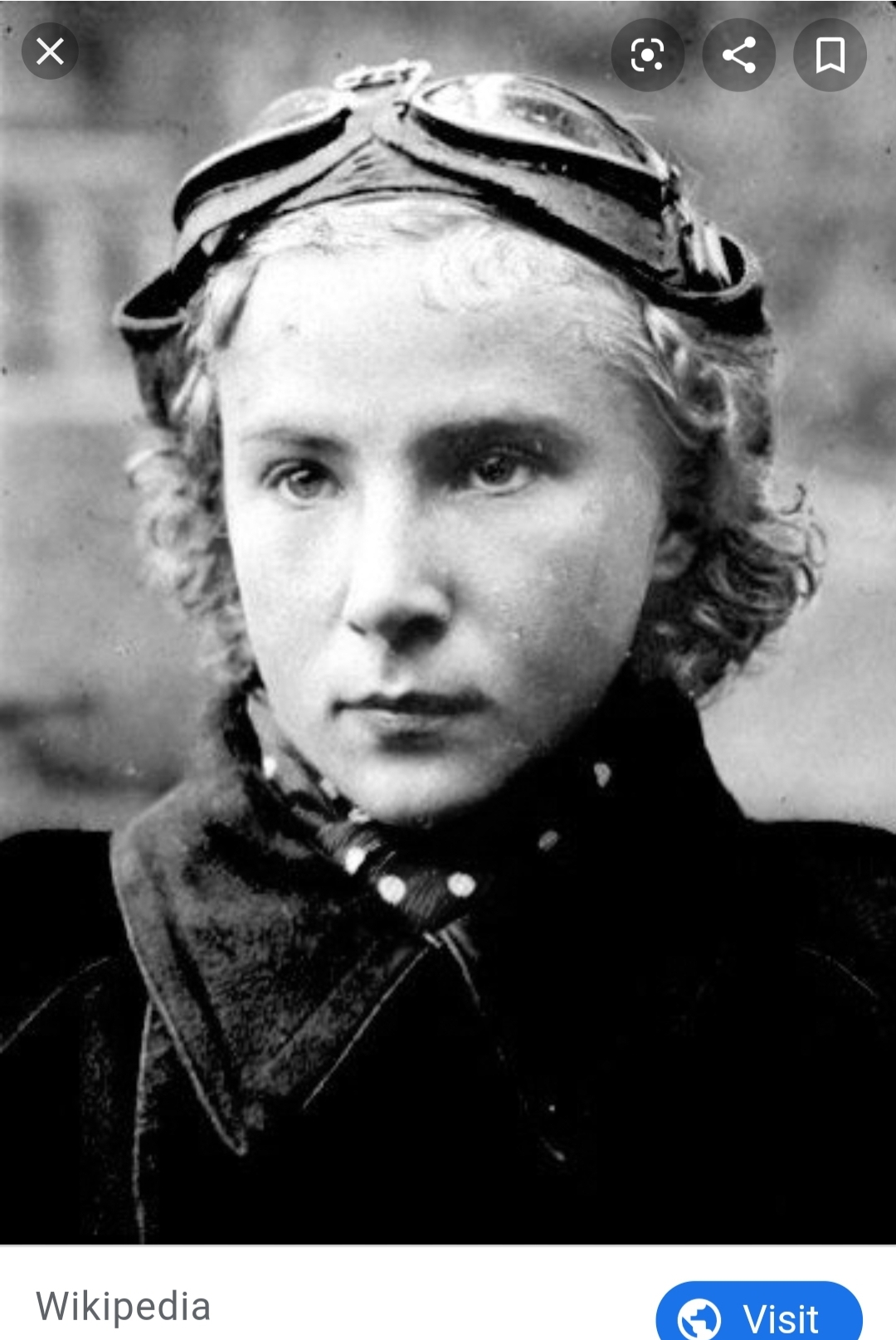
672) Lydia Litvyak

Courtesy of Wikipedia

672: Lydia Litvyak

Soviet Air Force Pilot During World War II

Born: 18 August 1921, Moscow, Soviet Union (Present-day Moscow, Russia)

Died: c. 1 August 1943, Possibly Ukraine (See below for more details)

Lydia was called the White Rose of Stalingrad (also the White Lily).

She learned how to fly by age fifteen and was an instructor by eighteen.

Lydia entered the Soviet Air Force after being denied entrance by the first recruiter for not having 1,000 flight hours in her five-year career thus far; so, she went to the next recruiter up the street and said she’d flown 1000 hours. A few weeks later she was at boot camp.

Lydia was placed with other fighter pilots and flew in a Yak-1 (and anyone with any knowledge of aircraft history will tell you the Yak-1 left much to be desired).

Lydia became the first woman in military history to ever score a solo-aerial victory in combat shooting down a German fighter on her second mission ever. About ten minutes later she became the first woman to score two aerial victories when she shot down another pilot (this guy had earned the Iron Cross and demanded to know which pilot had bested him after he was captured by the Russians. After meeting Lydia, he was so stunned he offered her his gold watch and she replied she did not except gifts from her enemies).

The next day she shot down another fighter pilot for good measure.

Lydia was quickly given "Free Hunter" status which meant she could shoot down whoever whenever (think James Bond's license to kill). Lydia flew sixty-six more combat missions under this license earning a total of twelve solo kills and four or five assisted kills (although some sources change these numbers around a bit so use these numbers at your own discretion). In any case, hers were the most of any female fighter pilot ever.

In 1943, Lydia was last seen trying to outrun an enemy squadron and she disappeared for over forty years. In 1979, word came about that a female fighter pilot who had received a head wound and died had been buried in the town of Dmitrievka...in Shakhterski district Ukraine (from Wikipedia, linked below).

Examinations were done on the body to confirm an identity. The inquiry decided the remains did belong to Lydia Litvyak but controversy continues with some historians continuing to deny the body and state Lydia was taken prisoner by the Germans.

In 1990 she was posthumously awarded Hero of the Soviet Union status.

Badges Earned:

Find a Grave Marked

Located In My Personal Library:

Flying for her Country: The American and Soviet Women Military Pilots of World War II by Amy Goodpaster Strebe

Sources:

https://ww2db.com/person_bio.php?person_id=433

https://www.theparisreview.org/blog/2017/10/06/short-daring-life-lilya-litvyak-white-rose-stalingrad/

https://www.planeandpilotmag.com/article/upcoming-wwii-fighter-pilot-movie-highlights-lydia-litvyak-first-female-ace/#.XmrBdahKhPY

https://en.wikipedia.org/wiki/Lydia_Litvyak#Last_mission

https://www.findagrave.com/memorial/195310349/lydia-vladimirovna-litvyak
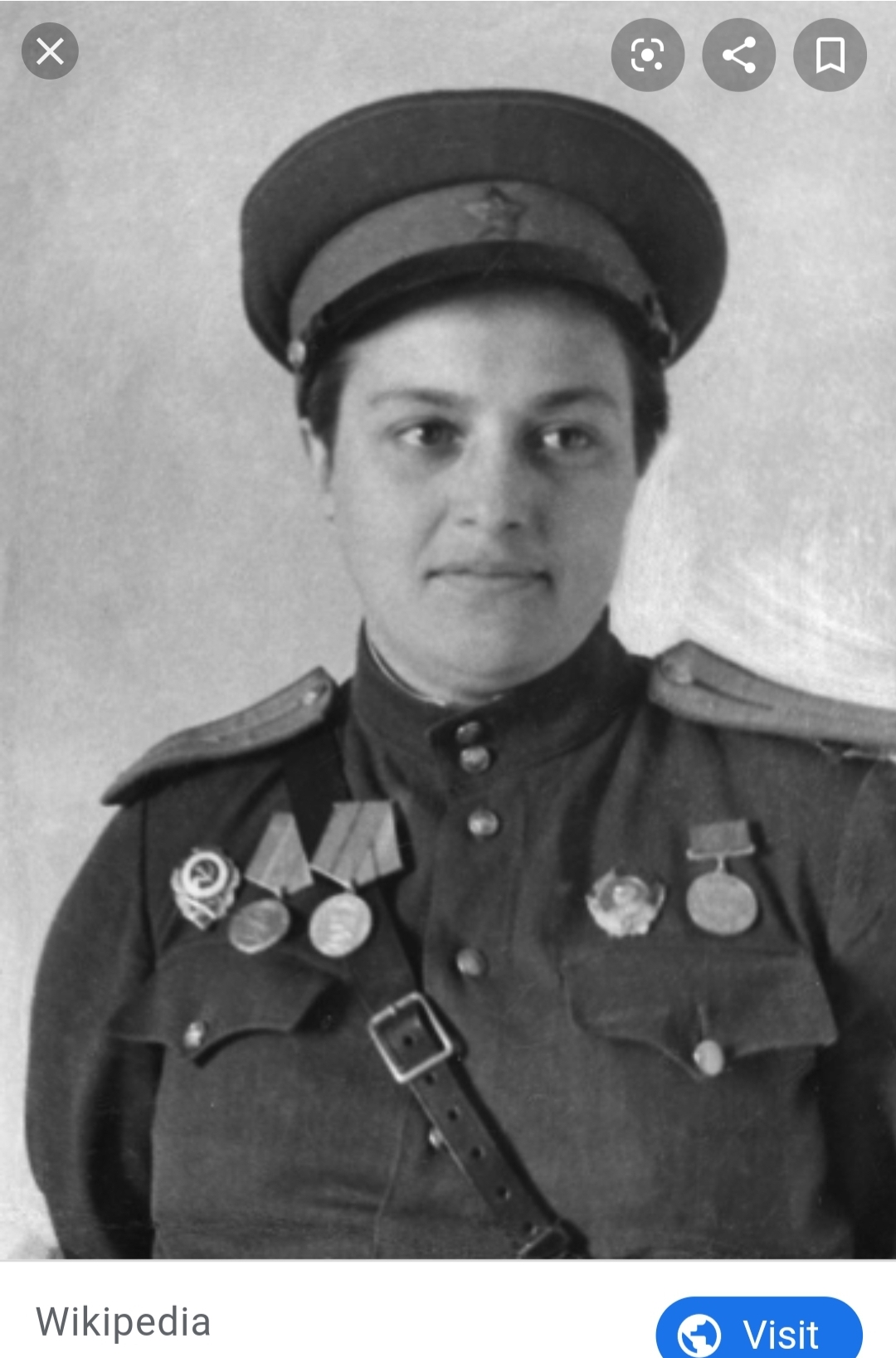
671) Lyudmila Pavlichenko

Courtesy of Wikipedia
“I wear my uniform with honor. It has the Order of Lenin on it. It has been covered with blood in battle. It is plain to see that with American women what is important is whether they wear silk underwear under their uniforms. What the uniform stands for, they have yet to learn.”

671: Major Lyudmila Pavlichenko

Sniper with 309 Confirmed Kills

Born: 12 July 1916, Bila Tserkva, Ukraine

Died: 10 October 1974, Moscow, Soviet Union (Present-day Moscow, Russia)

Her kill count makes her the deadliest female sniper in known history. And she did it in less than four years.

The Soviet Union used Lyudmila as a propaganda tool, putting her on a speaking tour across the United States in the hopes of getting the Americans more involved in the war effort at the start of World War II.

This tour would eventually lead to Lyudmila becoming friends with First Lady Eleanor Roosevelt. Lyudmila was the first Soviet citizen to be welcome as a guest of the White House. Unfortunately for Lyudmila, the American press cared less about her time fighting on the front lines and more about such vastly important things as: were women soldiers allowed to wear makeup at the front? Did you know your uniform skirt makes you look fat? Why aren’t you wearing makeup now? Did you know you eat your food like a man? Do you use nail polish or curl your hair?

Yeah…we can look back on those reporters with a heavy sigh and a head shake to say the least.

By the time of the tour in 1942, Lyudmila had been wounded in battle four times and was suffering from severe PTSD, but she refused to stop fighting. Part of her PTSD was from her husband (or lover, the exact circumstances of their relationship are unclear) dying in battle despite Lyudmila trying to save him by dragging him from the field after he was wounded.

Lyudmila had spent her youth partaking in various sports in school and began attending universe with the hopes of being a teacher or scholar. To prove women were just as capable of men, she joined the sniper’s school. When war broke out, recruiters tried to make Lyudmila a nurse or work in a factory, but she refused. Instead, Lyudmila agreed to execute two Romanians who were captured after being caught working for the Germans. Lyudmila didn’t count their deaths in her official kill count because they were “test shots.”

Needless to say, she was mustered into the Red Army’s 25th Chapayev Rifle Division. Of her 309 confirmed kills, around 100 were officers. Eventually Lyudmila was engaged in sniper duels. In these instances, she was able to take out thirty-six snipers from the opposing side. The Germans began hoping to lure Lyudmila to their side, using loudspeakers to offer her an officer position and lots of chocolate. Lyudmila wasn’t amused or swayed by the offers.

Lyudmila was finally removed from the front lines after her fourth wound. She sustained shrapnel to the face from a bomb, and the Soviets decided to make Lyudmila a trainer of other snipers. However, two months later she found herself in the United States for the aforementioned tour. Once she was done in the US, Lyudmila made a stop in the UK, continuing to advocate for more soldiers on the European front.

When she returned to the Soviet Union, Lyudmila was promoted to Major and given the commendation Hero of the Soviet Union, the highest honor bestowed in the Soviet Union. Lyudmila was also featured on a postage stamp.

After the war, Lyudmila returned to university and became a historian. She remarried and started a family. In 1957, fifteen years after Lyudmila toured the US, Eleanor Roosevelt arrived in Moscow. She fought hard and was eventually granted a visit with an old friend. Eleanor found Lyudmila living in a two-bedroom apartment in Moscow. After a moment of cool formality between the two women (and others watching), Lyudmila pulled Eleanor into a bedroom where they could speak in private, where they spent plenty of time getting caught up and chatting as old friends love to do.

Lyudmila is featured in the film Battle for Sevastapol, which was released in 2014. I have linked the trailer for the film, as well as a great YouTube video resource for Lyudmila’s story as well.

Badges Earned:

Find a Grave Marked

Rejected Princess

Located In My Personal Library:

Who Knew Women in History? By Sarah Herman

Rejected Princesses by Jason Porath

Sources:

https://www.smithsonianmag.com/history/eleanor-roosevelt-and-the-soviet-sniper-23585278/

https://www.rejectedprincesses.com/princesses/lyudmila-pavlichenko

https://www.findagrave.com/memorial/11928656/lyudmila-pavlichenko

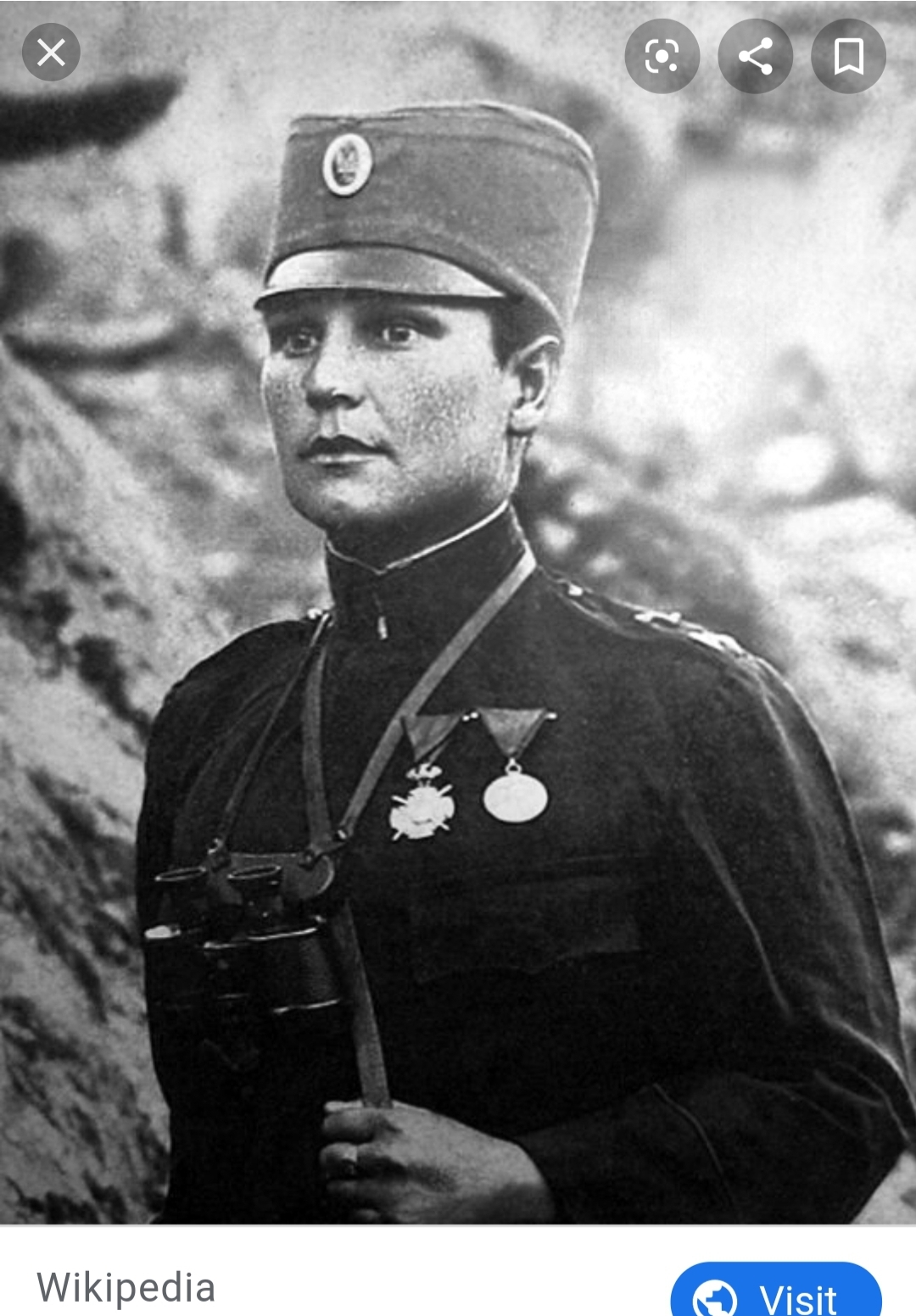
670: Sergeant Milunka Savić

Courtesy of Wikipedia

670: Sergeant Milunka Savić

Probably the Most Decorated Female Soldier Ever

Born: c.1892, Koprivnica, Novi Pazar, Serbia

Died: 5 October 1973, Voždovac, Belgrade, Serbia

Serbian Spelling: Милунка Савић

Milunka fought in the Balkan Wars and World War I.

In seven years, she fought in three wars on two continents.

Milunka received her country’s highest military bravery award, twice.

Milunka was born in a village of less than twenty people. As of early 2020, the Google page for her village lists the population as twelve.

When her brother was called to fight in the Balkan War, Milunka took it upon herself to take his place. She cut her hair short and enlisted successfully. She was able to finish nine missions and pick up numerous awards and commendations before anyone realized her true gender. However, it was during the tenth mission that Milunka was wounded with shrapnel to the chest, and after it was discovered she was a woman, Milunka was ordered transferred to the nurse’s division. An unamused Milunka refused to go. After an hour of refusing to move, Milunka’s superiors gave in and sent her back to her division. By the end of the war, she’d managed to single-handedly capture twenty-three confused Belgian soldiers.

Milunka went on to capture at least fifty enemy combatants and two trenches during World War I and was the only female soldier of that war to earn the Croix du Guerre. She was also awarded the Legion d’Honneur, The Cross of St. George, the Medal of the Most Distinguished Order of St. Michael, and many others.

Milunka also served ten months in a German concentration camp during World War II. She’d been busy organizing clinics to provide aid to Yugoslav Partisans, which obviously won her no friends with the Nazis.

When French President Charles de Gaulle was inaugurated, Milunka was the only Serbian combatant from the first world war invited to attend the ceremony.

In the final decades of her life, Milunka adopted several children off the streets of Serbia and survived off a state pension. She also married and had a biological daughter. However, by the early 1970’s, she’d been forgotten by her country and the world at large.

Milunka suffered a stroke and died penniless and alone in a suburb of Serbia’s capital. After forty years, in 2013, Milunka’s body was moved to the Alley of the Greats, where all distinguished Serbian war heroes and citizens are buried.

That same year a documentary about Milunka was released entitled Milunka Savic: Heroine of the Great War.

Badges Earned:

Find a Grave Marked

Sources:

http://thesrpskatimes.com/milunka-savic-the-tragic-story-of-the-most-decorated-woman-in-warfare/

http://www.serbia.com/about-serbia/serbia-history/world-war-one/milunka-savic/

https://www.findagrave.com/memorial/116655535/milunka-savic

669) Elizabeth “Bessie” Blount

Courtesy of Find a Grave

669: Elizabeth “Bessie” Blount

Mistress of Henry VIII of England

Born: c.1498, Kinlet Hall, Shropshire, England (Present-day Shropshire, United Kingdom)

Died: c.1540, England (Present-day United Kingdom)

Bessie was Henry’s mistress for around five years. She previously served as maid of honor to Catherine of Aragon and was noted for her musical talents.

Bessie was one of eight children, although like most families from the time it is unknown what her exact birth year was or which order her siblings were born in. Very little is known of Bessie’s early years and upbringing, but it has been supposed she was educated at home by her mother and other female relatives. The Blounts were devout Catholics, and so religious instruction would have been an important part of Bessie’s education.

Bessie entered court life around the age of fifteen. The king would have been about twenty-three at the time of their first meeting. Although its not known when exactly their relationship developed into a sexual one, by 1519 Bessie had given birth to Henry’s illegitimate son Henry Fitzroy—the only illegitimate child recognized by the king (he later became Duke of Richmond).

After the birth of Henry, Bessie would marry three times and had six more children. Her second child, a girl, was born before her marriage, and so its been suggested she may have been the king’s as well; however, Bessie’s husband claimed the girl as his own, along with two sons they had together.

Bessie’s second husband was fourteen years younger than her, and so the match has been seen as one of love by historians. This pairing would produce three daughters.

When Henry Fitzroy was just seventeen, he died of either tuberculosis, pneumonic plague, or some other wasting illness. Bessie’s thoughts on her son’s death do not survive the centuries, but the heartbreak must have been immense.

Bessie is suspected to have died from either consumption or complications of childbirth around the age of forty-two.

Badges Earned:

Find a Grave Marked

Located In My Personal Library:

The Wives of Henry VIII by Antonia Fraser

The Other Tudors by Philippa Jones

The Creation of Anne Boleyn: A New Look at England's Most Notorious Queen by Susan Bordo

Sources:

https://www.tudorsociety.com/elizabeth-bessie-blount-by-sarah-bryson/

https://spartacus-educational.com/Bessie_Blount.htm

https://www.historyofroyalwomen.com/the-royal-mistresses-series/elizabeth-bessie-blount-mother-of-the-kings-son/

https://www.findagrave.com/memorial/101856985/elizabeth-clinton

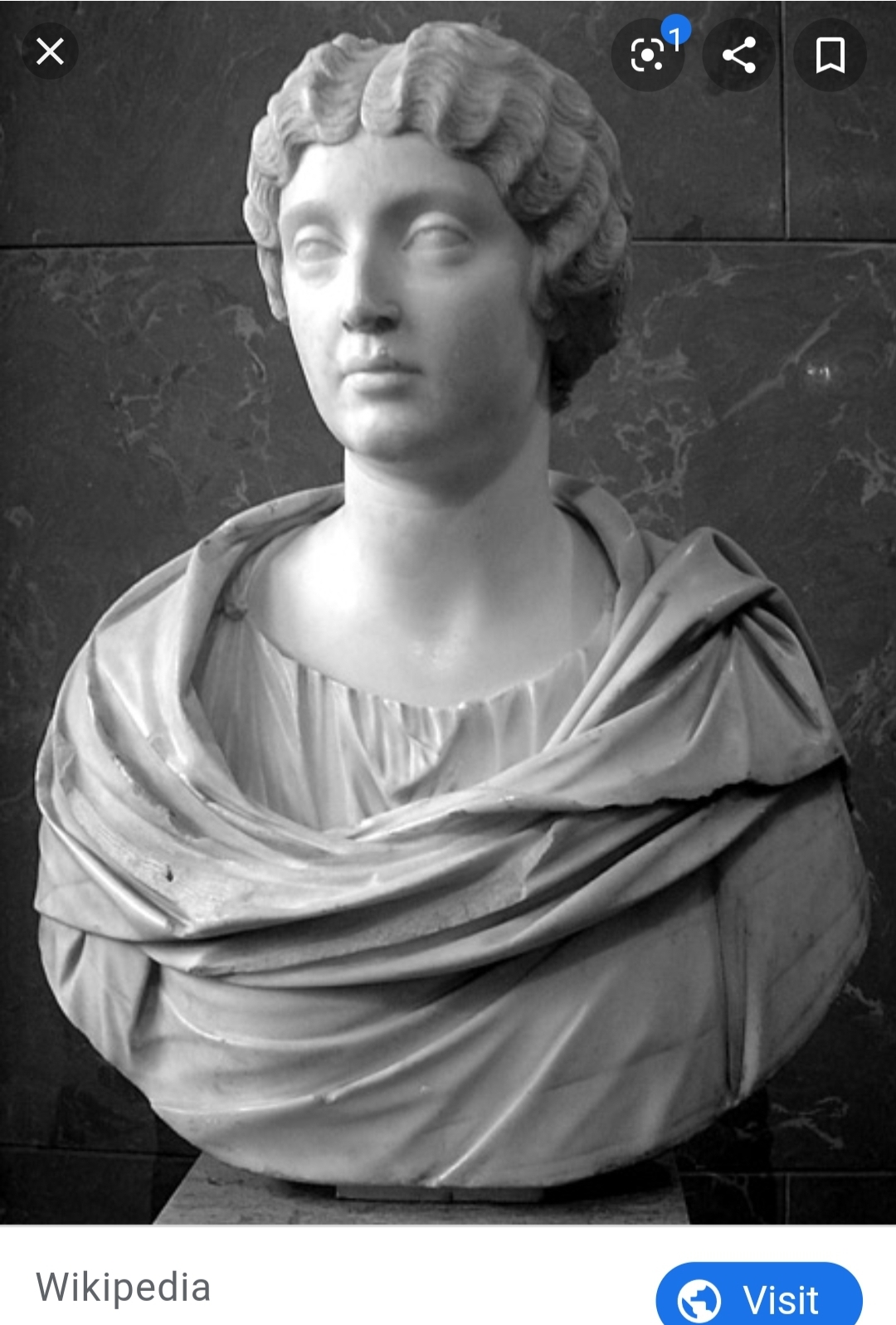
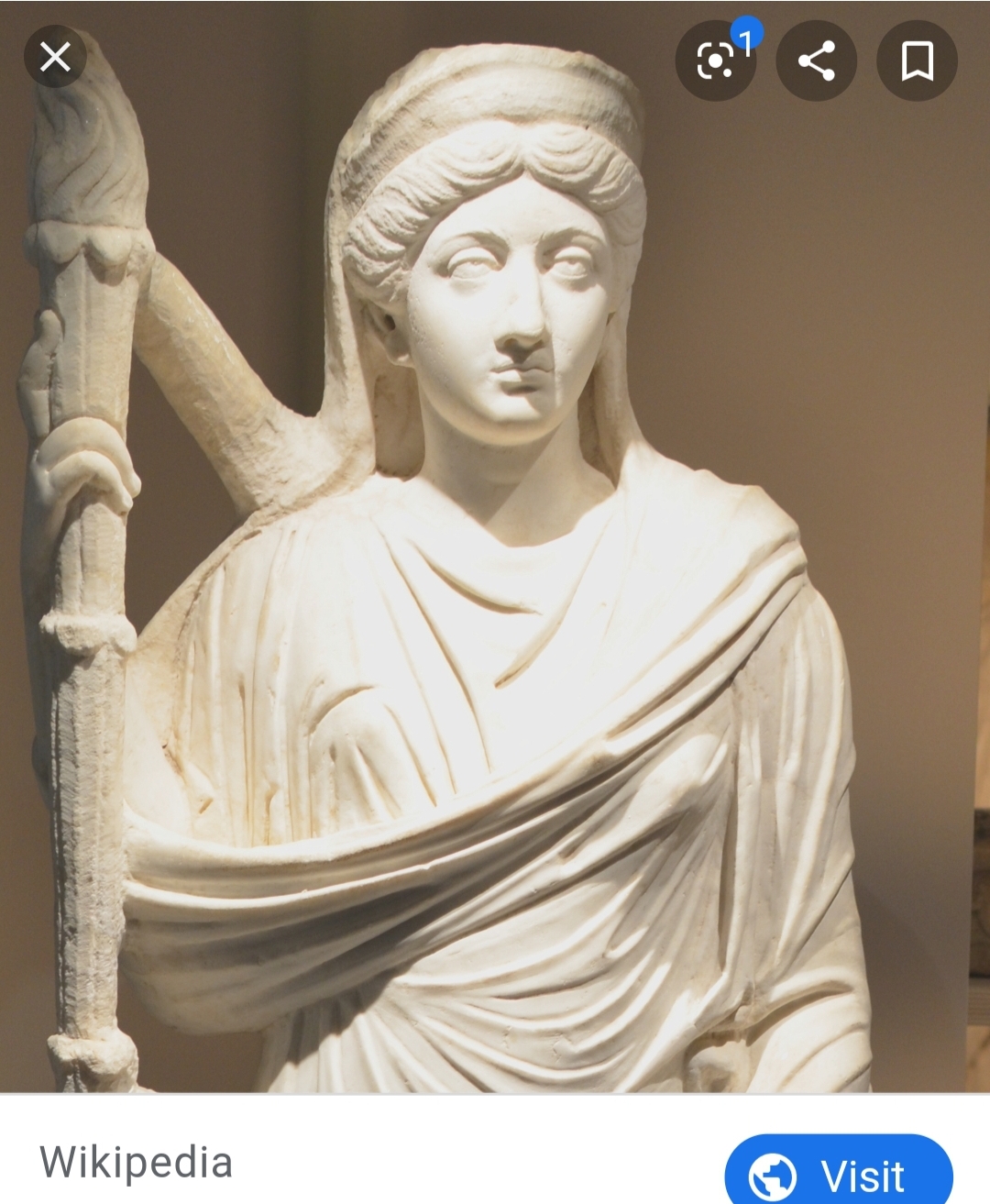
668) Faustina the Younger

Courtesy of Wikipedia

668: Faustina the Younger

Empress of Rome

Born: c.130 AD, Rome, Roman Empire (Present-day Rome, Italy)

Died: c.175 AD, Halala (later Faustinopolis), Roman Empire (Present-day Cappadocia, Turkey)

Full Name: Annia Galeria Faustina Minor

She was the cousin and wife of Marcus Aurelius and the daughter of Emperor Antoninus Pius and Faustina the Elder.

Faustina and Marcus Aurelius married in 145 AD on Antoninus Pius’s wishes.

Faustina had at least twelve children of which six survived her. Some claim Faustina had a, shall we say, voracious sexual appetite, for lack of a better term? However, whether or not Faustina really slept around as much as some claim is up for debate. If you peruse the sources, I’ve listed below you’ll notice this. Some historians seem to think she had numerous affairs without a doubt, while others point out that Marcus Aurelius, her husband, never divorced her or had anything bad to say about her. He loved her and sung her praises far and wide, and after her death he grieved for her openly. So, whether or not Faustina was an adulteress is entirely up for debate and will probably never be known for certain.

What is known is that Faustina was given the titles Mater Castorum which meant Mother of the Camp because she followed her husband as he fought rival tribes along the Danube and Augusta, the title traditionally given to empresses.

After her death Marcus Aurelius had her deified. The village where she died was renamed in her honor, and coins were minted with her image throughout the empire.

Badges Earned:

Find a Grave Marked

Located In My Personal Library:

Goddesses, Whores, Wives, and Slaves: Women in Classical Antiquity by Sarah B Pomeroy

Sources:

https://finds.org.uk/romancoins/emperors/emperor/id/20/name/faustina-the-younger

https://www.britannica.com/biography/Annia-Galeria-Faustina

http://www.jasperburns.com/gasfaust.html

https://www.findagrave.com/memorial/196718207/annia-galeria-faustina

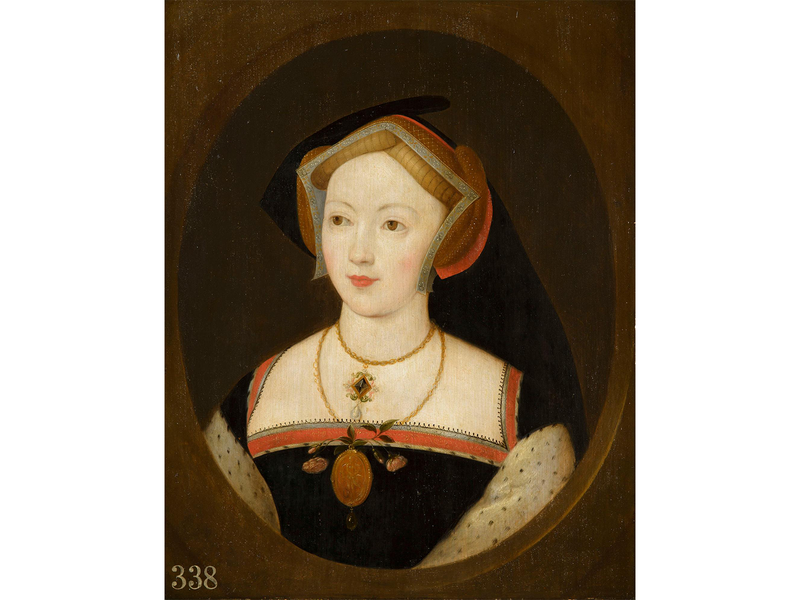
667) Mary Boleyn

Courtesy of Smithsonian

667: Mary Boleyn Carey Stafford

Mistress of Henry VIII of England

Born: c.1508, Norfolk, England (Present-day Norfolk, United Kingdom)

Died: June or July 1543, Presumably England (Present-day England, United Kingdom)

Mary was the king’s mistress before her sister Anne married him.

Historians cannot exactly pinpoint which sister was elder, but if one believes Anne was born in 1507 it would make her the elder and Mary the younger. The main discrepancy stems from the fact that Mary married before Anne; usually the elder sister would wed first. However, Anne was given the prestigious opportunity to be educated at the French court, and usually a privilege such as that would be given to the elder sister. See the confusion? In any case, please note that the ages I state Mary was at various times in this article are based on if she was born in 1508. If she was born earlier, closer to 1500, then obviously she would have been eight years older during each of these occasions.

In any case, what is known is that Mary married her husband when he was twenty-four and she was presumably around twelve. Gross, I know. Her first child Catherine was born when Mary was around sixteen years old. Mary’s husband wasn’t the best match in terms of her gaining lands and titles from the get-go, however, over time, the couple slowly gained manors, money, and places at court.

Mary became Henry’s mistress less than a year after Catherine’s birth. The evidence to support the time frame of their affair is short but sweet. When Henry tried to get permission to marry Anne in 1527, he listed that he had had a sexual affair with her sister. Anne only had one sister, Mary. On another occasion, someone accused the king of having an affair with both Anne’s mother and sister. An incensed Henry is said to have replied, “Never the mother.” Nice guy, right?

However, the affair ended quickly with the birth of Mary’s son Henry who may have been the King’s son. The only male royal bastard Henry acknowledged was named Henry Fitzroy, so no one knows for certain, but accounts say Mary’s son physically resembled the king (other sources say her daughter Catherine did as well; and it is true Mary was seeing Henry during the time both of her children were conceived, but again, nothing was ever confirmed).

In 1528, Mary’s husband died, and Henry granted Anne guardianship over Mary’s son, leading more to believe the boy was his. Henry and Anne exchanged letters over the period noting they were worried Mary would make an embarrassment of herself and them now that her husband was dead, but she was still allowed at court. Anne paid off what could be seen as gambling debts and allowed Mary to accompany Anne and the king to France. When Anne and Henry finally married in 1533, Anne made her sister a lady-in-waiting.

However, trouble brewed the following year. Mary secretly married a commoner and was banished from court. Her relatives were outraged, and Mary lost everything, but she most likely loved her husband, so it wasn’t all bad. Mary’s son was still living with Anne and being educated by fine tutors at this time, so that wasn’t horrible either.

When Anne and their brother George were arrested and sentenced to death, Mary didn’t visit them in prison. There is also no surviving evidence that she attempted to write to them either. Mary probably figured it was safer for her own well being to steer clear.

After Anne’s death, Mary’s children were able to succeed socially. Her daughter Catherine was named a maid to Henry’s fourth wife, Anne of Cleves. She also married well, and become a close friend to her cousin, the future Queen Elizabeth I. Catherine’s daughter would eventually marry Robert Dudley (Elizabeth’s proposed great love), and Catherine's son would become a favorite at court (before he was executed for treason…yeah).

One of Mary’s descendants was Diana, Princess of Wales, meaning the princes William and Harry, and their children, are also descended from “The Surviving Boleyn” as Mary’s been dubbed by some.

Mary Boleyn’s story has recently grown in the public spotlight thanks to the book and later movie The Other Boleyn Girl. Both are historical fiction.

It should be noted that there are no portraits of either Anne or Mary from when the sisters were alive, so the portraits typically attributed to them are often swapped or interchanged. Until 2020, no portrait had definitively been identified as Mary, but that all changed in June. According to Smithsonian, the painted portrait shown here in this article has finally been proven, or as close as a painting can be in any case, to show Mary. The painting was created years after Mary's death, but is believed to be a copy of an earlier portrait that may have been made while Mary was still alive.

Badges Earned:

Find a Grave Marked

Located In My Personal Library:

The Creation of Anne Boleyn: A New Look at England's Most Notorious Queen by Susan Bordo

The Royal Wardrobe: Peek Into the Wardrobes of History's Most Fashionable Royals by Rosie Harte

Sources:

https://englishhistory.net/tudor/citizens/mary-boleyn/

https://schoolhistory.co.uk/notes/mary-boleyn/

https://www.factinate.com/people/facts-mary-boleyn/

https://www.smithsonianmag.com/smart-news/after-hundreds-years-unknown-woman-tudor-painting-was-identified-180975071/

https://www.findagrave.com/memorial/35663231/mary-stafford

666) Lucilla

Courtesy of Wikipedia

666: Lucilla

Empress of Rome

Born: c.149, Rome, Roman Empire (Present-day Rome, Italy)
Died: c.181, Capri, Roman Empire (Present-day Capri, Italy)

Full Name: Annia Aurelia Galeria Lucilla

Lucilla was Emperor Commodus’s Elder Sister. She was also the daughter of Marcus Aurelius and Faustina the Younger, and the wife of Lucius Verus. In 161, Marcus Aurelius and Lucius Verus became co-emperors of the Roman Empire. Soon after, Lucius and Lucilla married, making Lucilla empress.

Lucius and Lucilla married when he was around thirty-three and she was between fourteen and sixteen years old. Also, legally speaking, he was her uncle but not biologically related. Roman family relationships among the elite were really confusing to say the least.

In 169, Lucius Verus died, leaving Marcus Aurelius the sole Emperor. Then, in 180, Marcus Aurelius also died. Commodus ascended to the throne after Marcus’s death.

By this time, Lucilla had remarried. Lucilla’s second husband was Tiberius Claudius Pompeianus. She had a daughter with her first husband and a son with her second (though a second source states Lucilla had three children with her first husband Lucius, two of whom died in infancy).

Lucilla was accused of trying to kill her brother Commodus after he ascended to the throne. Lucilla was sent into exile where she was later executed alongside her daughter and cousin, both co-conspirators.

In the 2000 film Gladiator, the love interest of Russell Crowe’s character is loosely based on Lucilla's real life story; emphasis on loosely.

Sources:

https://www.livius.org/articles/person/lucilla/

https://juliaherdman.com/2019/05/15/the-tragic-life-of-annia-aurelia-galeria-lucilla/

665) Stephanie Murphy

Courtesy of Wikipedia

"My journey, from fleeing a violent communist regime, to being rescued by the U.S. Navy, to working in national security at the Pentagon, and now as the first Vietnamese-American congresswoman, is a journey that could have only happened here in America."

665: Stephanie Murphy

The First Vietnamese Woman Elected to the United States Congress

Born: 16 September 1978, Ho Chi Minh City, Vietnam

Stephanie was a member of the House of Representatives from Florida and a member of the Democrat Party. She served Florida’s Seventh Congressional District from 2017 to 2023.

She is a former National Security specialist, educator, and businesswoman.

Stephanie is also the first woman to represent Florida’s seventh district. Before running for Congress, Stephanie had never been involved in politics.

She is married and has two children.

Stephanie announced in late 2021 that she would not run for re-election in 2022.

Sources:

http://www.stephaniemurphyforcongress.com/about/

https://murphy.house.gov/biography/

https://www.congress.gov/member/stephanie-murphy/M001202?searchResultViewType=expanded&KWICView=false

https://www.foxnews.com/politics/florida-rep-stephanie-murphy-become-latest-house-democrat-to-announce-retirement-at-end-of-current-term

https://rfkhumanrights.org/awards/ripple-of-hope-award-2023/stephanie-murphy

664) Chita Rivera

Courtesy of Fierce-Mitu

664: Chita Rivera

Dancer, Singer, and Actress

Born: 23 January 1933, Washington DC, United States of America

Died: 30 January 2024, Blauvelt, New York, United States of America

Original Name: Dolores Conchita Figueroa del Rivero

Chita is known for her Broadway performances in West Side Story, Chicago, and more.

As a young adult, she took lessons in singing, piano, and ballet lessons; quickly falling in love with dance. Chita eventually earned a scholarship to George Balanchine’s American School of Ballet in New York City, where she studied for three years.

Beginning in 1952, Chita began touring across the country for various different performance groups, but by 1954 had begun focusing on off-Broadway productions. In the next few decades Chita starred on Broadway and in Hollywood films; racking up multiple Tony nominations and wins as she went along.

In 1986, Chita was involved in a car accident that broke her leg. She was told she might never walk again. However, Chita gradually worked her way through rehabilitation, and started working in cabaret shows once again, though this time on cruise ships.

Luckily by 1993, Chita was back on Broadway. She has continued to earn Tony nominations and wins since. In 2002, Chita became the first Latin-American to receive the Kennedy Honors Award. She was also awarded the Presidential Medal of Freedom in 2009. Chita received a Tony Lifetime Achievement Award in 2018.

Badges Earned:

Find a Grave Marked

Sources:

https://www.britannica.com/biography/Chita-Rivera

https://www.imdb.com/name/nm0729234/bio?ref_=nm_ov_bio_sm

http://chitarivera.com/facts.php

https://www.nytimes.com/2024/01/30/theater/chita-rivera-dead.html

https://www.findagrave.com/memorial/263516693/chita-rivera

663) Katrina Lake

Courtesy of Fortune

663: Katrina Lake

CEO of Stitch Fix

Born: 24 December 1982, San Francisco, California, United States of America

Katrina’s net worth was estimated by Forbes to be $380 Million in June of 2019. In 2018, Stitch Fix’s annual revenue was ballparked at $1.2 Billion.

Katrina founded Stich Fix in 2011 while working on her master’s degree from Harvard. When she took the company public in 2017, Katrina became the youngest female ever do so with their own company.

In 2020, Katrina officially joined the cast of ABC’s Shark Tank as one of the sharks.

She is married with two children.

Sources:

https://www.forbes.com/profile/katrina-lake/#5def73f45fe9

https://www.thecut.com/2019/12/how-i-get-it-done-stitch-fix-ceo-katrina-lake.html

https://www.tvinsider.com/gallery/shark-tank-season-11-katrina-lake/

  • Previous
  • 1
  • …
  • 58
  • 59
  • 60
  • 61
  • 62
  • 63
  • 64
  • …
  • 159
  • Next

Categories

Archives

  • July 2025 (10)
  • July 2024 (1)
  • January 2024 (1)
  • August 2023 (1)
  • June 2023 (2)
  • October 2022 (1)
  • July 2022 (1)
  • June 2021 (3)
  • December 2020 (3)
  • August 2019 (1)
  • July 2019 (2)

Search

© 2026 The Exasperated Historian | Powered by Minimalist Blog WordPress Theme