The Exasperated Historian
Menu
  • Home
  • The Women’s List (New)
  • The Men’s List
  • The Animal List
  • Collections
  • The Blog
  • Contact Us
  • FAQ
Menu

Category: Birth Locations

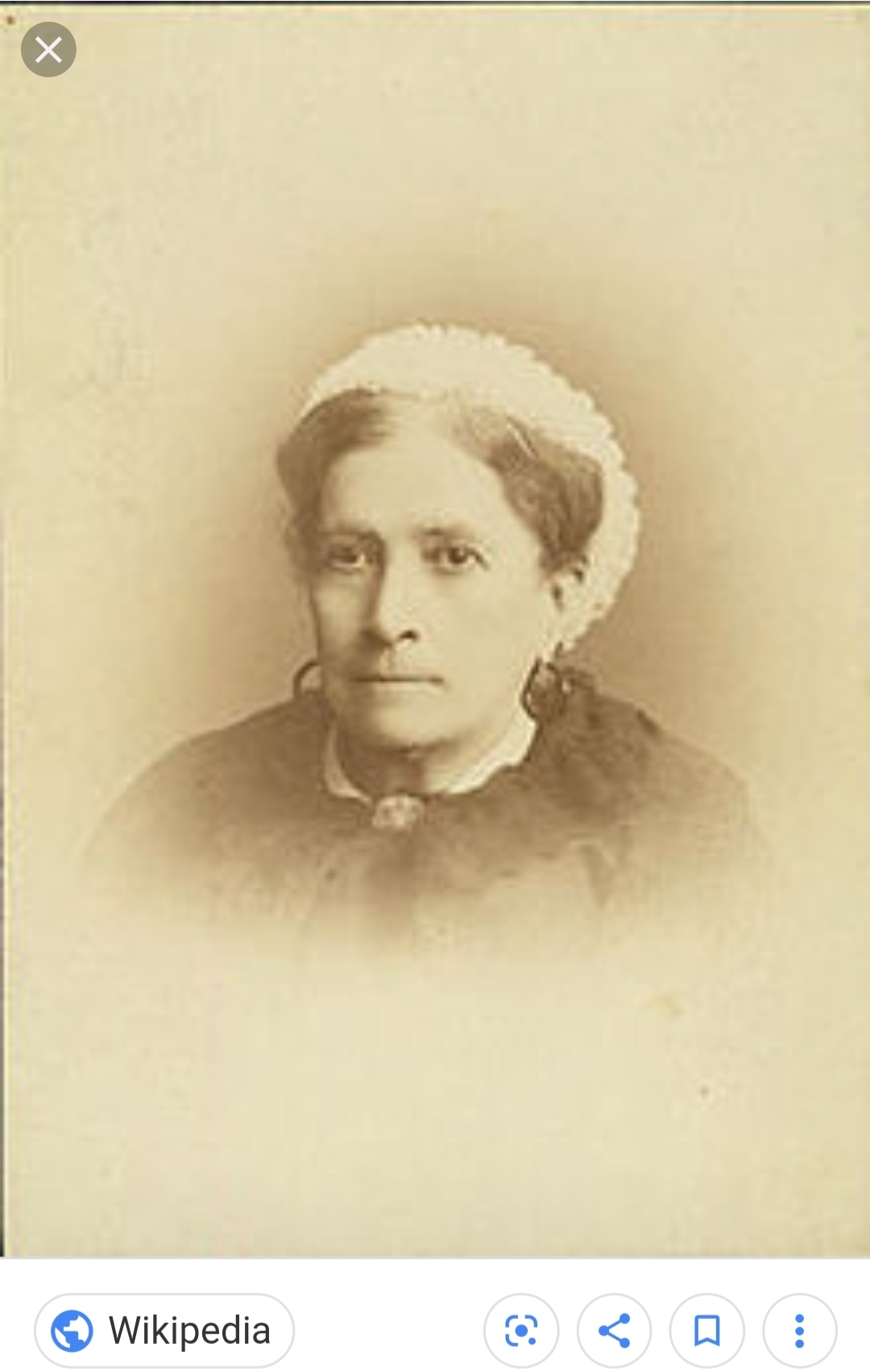
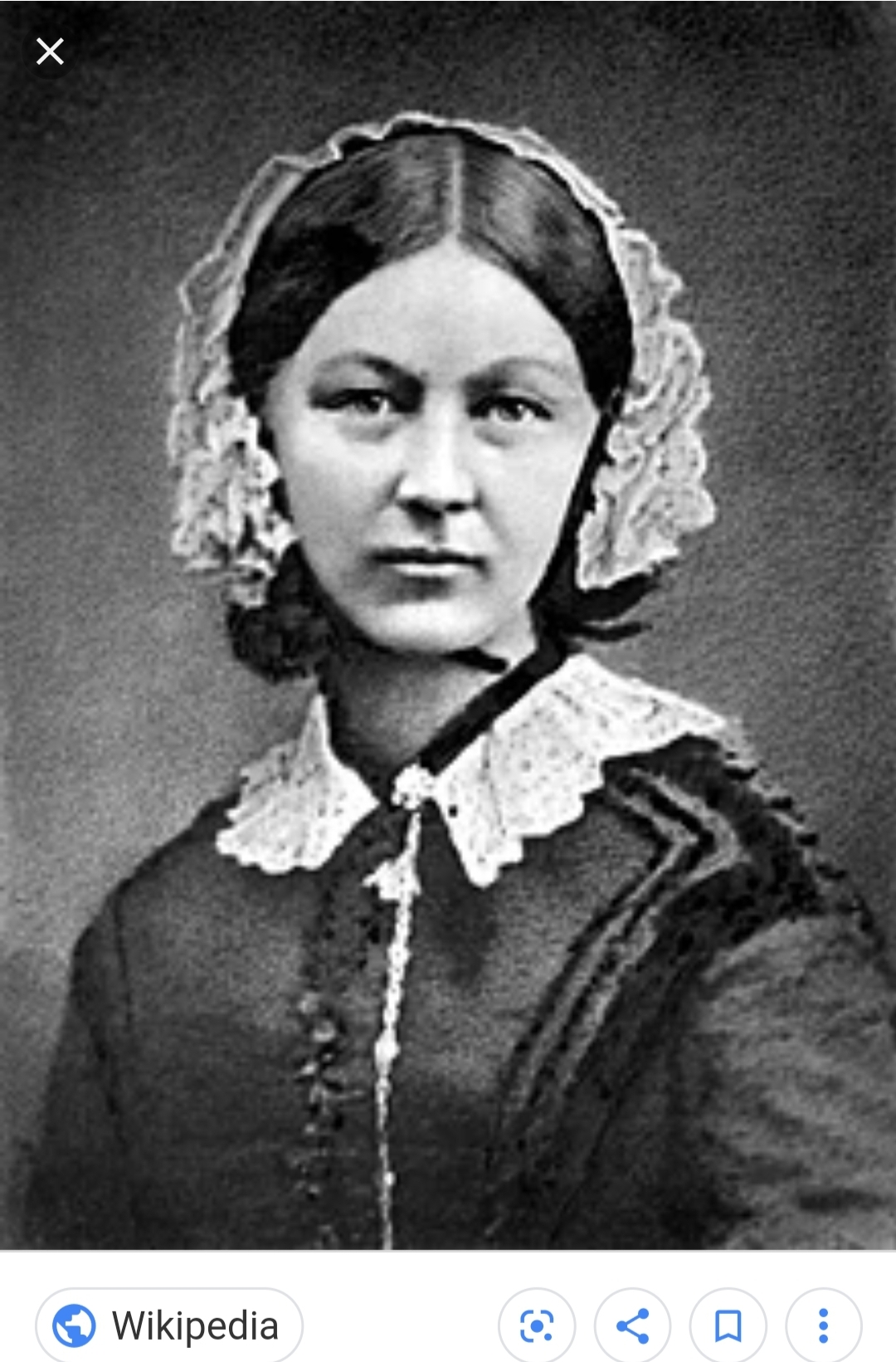
143) Florence Nightingale

Courtesy of Wikipedia

"Not even a doctor...gives any other definition of what a nurse should be than...'devoted and obedient.'...This definition might even do for a horse."

143) Florence Nightingale

The Woman Who Pioneered Modern Nursing

Born: 12 May 1820, Florence, Italy

Died: 13 August 1910, Mayfair, London, United Kingdom

Florence was born to a wealthy British family living in Italy.

She was given a classical education meaning she learned Italian, French, and German along with math.

When Florence decided to become a nurse, her parents did not support her at all (nursing was a lowly job and she was expected to marry a man of her stature and standing to keep her place in society). She turned down a marriage proposal and enrolled the following year in nursing school in Germany.

Upon moving to London, she began working as a nurse in separate settings—one of which was dealing with a cholera outbreak that inspired her to improve hygienic practices.

After the Crimean War broke out, 18,000 British soldiers ended up in hospital in only a few short months. Later that year Florence, received a letter from the Secretary of War asking her to organize a group of nurses willing to go to the Crimea to help.

After being given complete control she brought up around three dozen nurses to ship off. Soon after arriving in the Crimea the death rate of the patients dropped by two-thirds thanks to her work and Florence was soon called The Angel of Crimea and the Lady with the Lamp thanks to her making rounds after dark with a light.

After a year and a half, she returned to England and received a jeweled brooch and a $250,000 cash prize from Queen Victoria and the government as thanks.
She would use the money to open a nursing school. Soon, nursing was seen as a respectable job that even upper-class women were eager to do.

Badged Earned:

Find a Grave Marked

Rejected Princess

Located in My Personal Library:

Rejected Princesses by Jason Porath

Victoria the Queen by Julia Baird (Florence is briefly mentioned)

The Book of Awesome Women: Boundary Breakers, Freedom Fighters, Sheroes, and Female Firsts by Becca Anderson

The Only Woman by Immy Humes

Women in White Coats: How the First Women Doctors Changed the Face of Medicine by Olivia Campbell

Sources:

https://www.biography.com/scientist/florence-nightingale

https://www.rejectedprincesses.com/princesses/florence-nightingale

https://www.findagrave.com/memorial/2579/florence-nightingale
142) Dorothea Dix

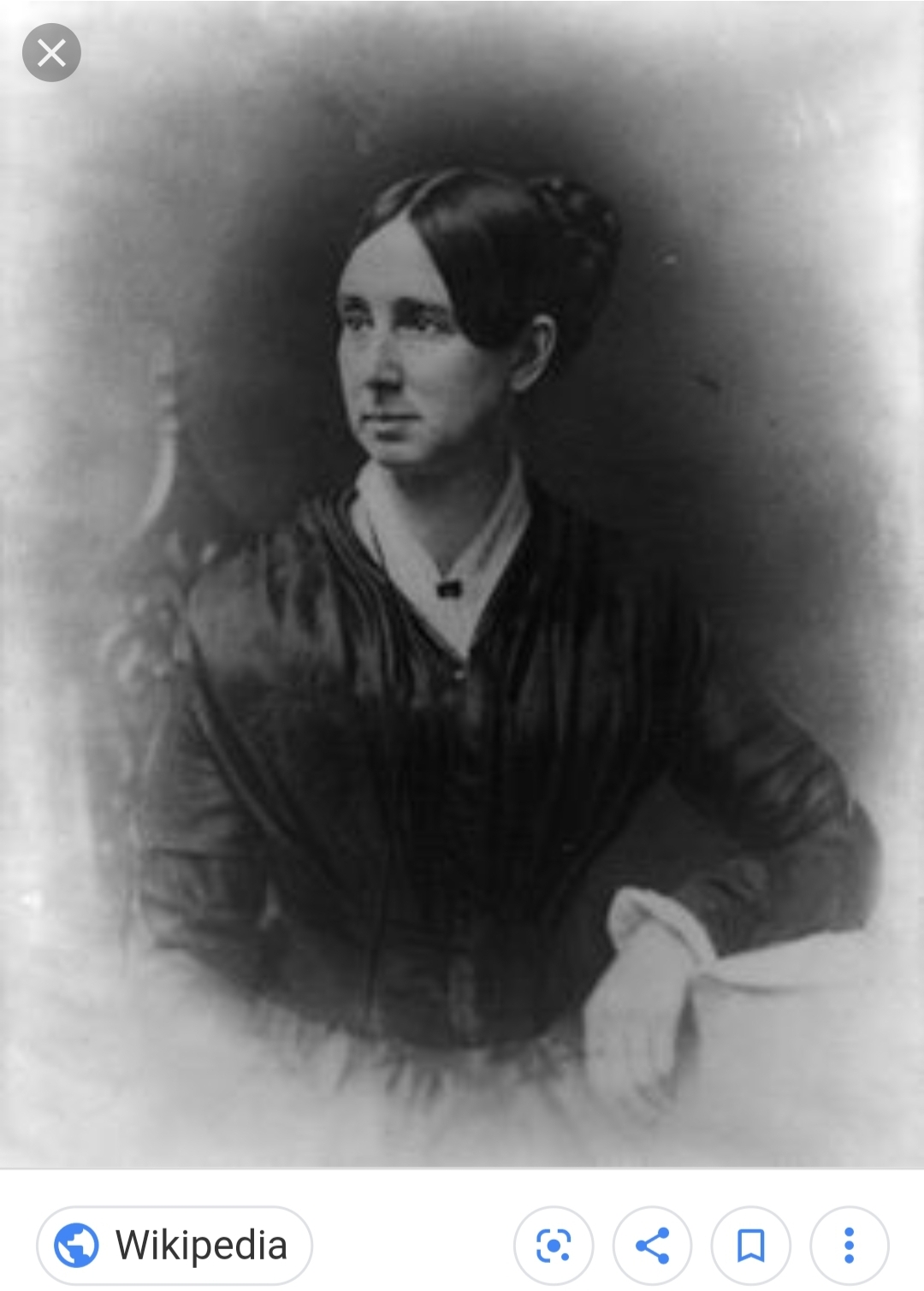
Courtesy of Wikipedia

142) Dorothea Dix

Mental Health Advocate and Nursing Coordinator

Born: 4 April 1802, Massachusetts, United States of America (Present-day Hampden County, Maine, United States of America)

Died: 17 July 1887, Trenton, New Jersey, United States of America

Original Name: Dorothea Lynde Dix

She also recruited nurses for the Union Army during the War Between the States.

Not much is known about her childhood other than her parents were most likely alcoholics and she lived with her grandmother to escape an abusive home.

By the age of fourteen, Dorothea was teaching at a girls’ school. Her homemade curriculum stressed knowing the natural sciences and living ethically.

She spent a period of years teaching and then not, trying to recover from ill health by moving to England for two years. When she returned to the United States, Dorothea learned she’d inherited enough money to live comfortably while she figured things out.

She spent two years in Massachusetts observing the horrific conditions in Asylums, reporting her findings to the Massachusetts State Legislature. She then moved on to Rhode Island and New York, pushing for better legislation and more funding to improve these institutions.

Over the next forty years, Dorothea inspired action in fifteen US states and Canada, improving the conditions for thousands of people. Her efforts are credited with seeing thirty-two new institutions opened in the United States alone.

Dorothea even traveled overseas to research how mental asylums operated in other countries. While in Italy, for example, she petitioned the pope to observe the conditions himself and work to improve them.

When the war broke out, Dorothea was named Superintendent of the Army Nurses for the Union Army, making her the first woman to have such a high-ranking appointed position within the United States Federal Government. Sources differ on her level of effectiveness in this post. The National Women’s History Museum writes a glowing review with the following information:

She treated Confederate and Union nurses alike which gained her respect from both sides. Dorothea was responsible for appointing around 15% of all union army nurses (around 3,000).

But Encyclopedia Britannica says she was ill suited to the position.

According to History, one of the nurses who worked under Dorothea Dix was Louisa May Alcott, future author of the Little Women books. History also says (according to Louisa May) that Dorothea was not very well liked by the nurses, who tended to steer clear of her, and that by 1863 she’d been ousted from her position and sent home.

Here’s how I interpret what the three different sources are trying to say: Dorothea was appointed to the position in the hopes that she could do some good for a dire situation. She did her best, got some good accomplished, but was not actually qualified for the job, and in the end, she was replaced.

These three sources are a great example of how you should not always believe the first thing you see online. If I had stopped at just one of any of these articles, I would have had a completely different viewpoint of what actually happened.

But I digress, back to Dorothea.

After the war she worked to raise money for the deceased soldiers’ monument which stands at Fort Monroe, Virginia today. She passed away in one of the hospitals she had helped to create.

Badges Earned:

Find a Grave Marked

Located In My Personal Library:

America's Women: 400 Years of Dolls, Drudges, Helpmates, and Heroines by Gail Collins

The Oxford Encyclopedia of Women in World History Edited By Bonnie G Smith

Sources:

https://www.womenshistory.org/education-resources/biographies/dorothea-dix

https://www.history.com/topics/womens-history/dorothea-lynde-dix

https://www.britannica.com/biography/Dorothea-Dix

https://www.findagrave.com/memorial/286/dorothea-lynde-dix

141) Juliet Opie Hopkins

Courtesy of Wikipedia

141) Juliet Opie Hopkins

Confederate Nurse During the War Between the States

Born: 7 May 1818, Jefferson County, Virginia (Today West Virginia), United States of America

Died: 9 March 1890, Washington D.C., United States of America

She was known as the Florence Nightingale of the South and was once injured during the war rescuing wounded men from the field.

Juliet married twice before the war and had one daughter, also named Juliet.

Her image appeared on the twenty-five-cent piece and the fifty-dollar bills issued by Alabama during the war.

Her husband was an Alabama Supreme Court Judge and named State Hospital Agent in 1861 but it is believed he was chosen for the position so that Juliet could carry out the duties.

She is buried in Arlington National Cemetery but was not given a headstone until 1987.

Badges Earned:
Find a Grave Marked

Sources:

http://www.arlingtoncemetery.net/jhopkins.htm

https://www.findagrave.com/memorial/3030/juliet-ann_opie-hopkins

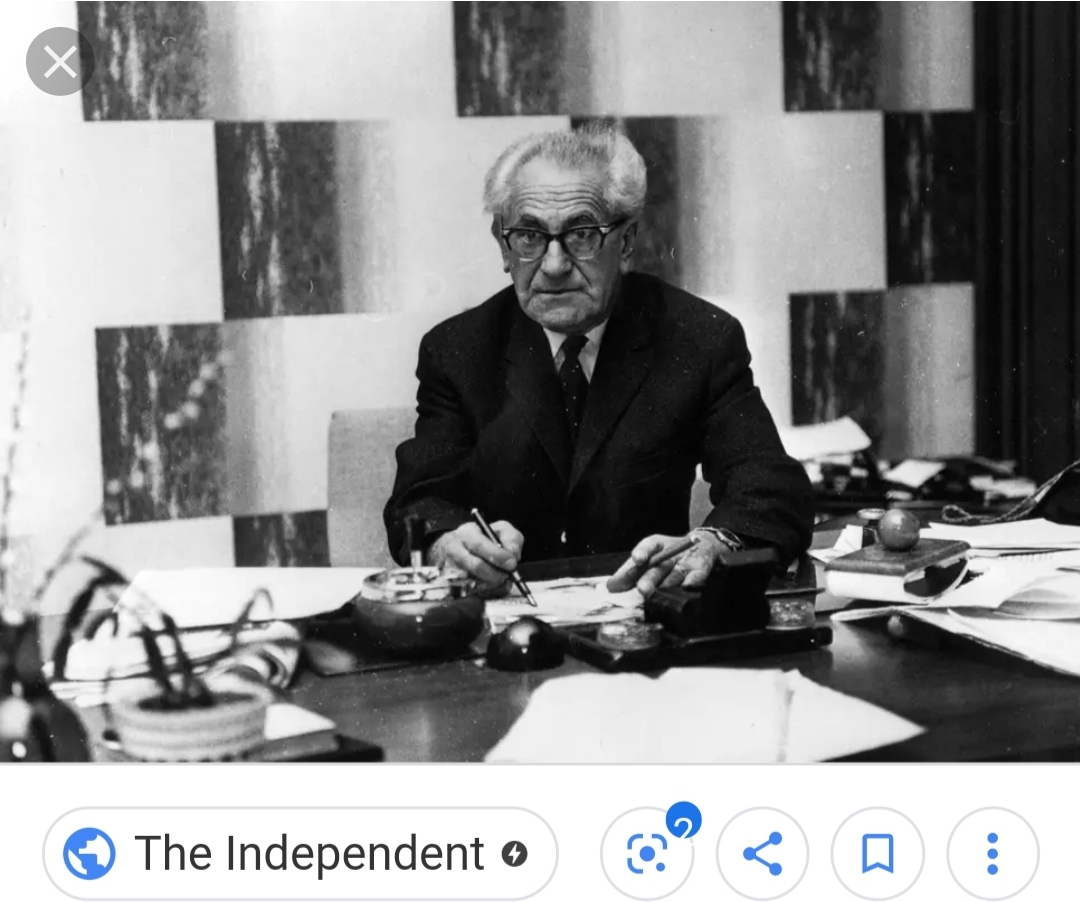
150) Fritz Bauer

Courtesy of the Independent

150) Fritz Bauer

The Jewish Judge who was Essential in Launching the Frankfurt Auschwitz Trials

Born: 16 July 1903, Stuttgart, Germany

Died: 1 July 1968, Frankfurt, Germany

He became the youngest judge in Germany in 1930 at the age of twenty-seven. In 1933, he was sent to a concentration camp and after nine months was forced into signing a statement that said he agreed with and would follow Nazi rule. He later fled to Denmark and then Sweden, where he lived for the rest of the war.

Oh, and he was gay.

When he returned to West Germany in 1949, he found that many former Nazis now held high ranking government positions, and one of the Chancellor’s advisors was a Nazi who helped draft the Third Reich’s infamous race laws.

Fritz is considered Germany’s first Nazi Hunter.

By 1957, he was the chief state prosecutor in Frankfurt. While there, he received a tip from Argentina, and became instrumental in seeing Adolf Eichmann taken to trial and executed in 1962, and a year later, as Attorney General, he saw to it that some of the men who ran Auschwitz were prosecuted as well.

Twenty-two Nazi SS were placed on trial in a highly polarizing case. Outside the courthouse, surviving footage shows the police saluting their former Comrades. Of the twenty-two, six received life sentences and twelve were given up to fourteen years in prison.

It should be noted that after 1945, around 120,000 people were investigated for Nazi War Crimes—approximately 560 were convicted.

Fritz was found mysteriously drowned in his bathtub after receiving constant death threats for most of his life. A postmortem investigation showed sleeping pills in his system, so some have speculated he committed suicide due to the immense stress and pressure he was under for the majority of his adult life.

In 2015, a film about his life was released, entitled The People Versus Fritz Bauer. I have linked the trailer in this article. The film is entirely in German, but the trailer at least has captions.

Badges Earned:

Find a Grave Marked

Sources:

https://www.independent.co.uk/news/world/europe/germany-finally-pays-tribute-to-the-first-nazi-hunter-fritz-bauer-auschwitz-nazism-adolf-eichmann-a6901756.html

https://www.findagrave.com/memorial/161517278/fritz-bauer

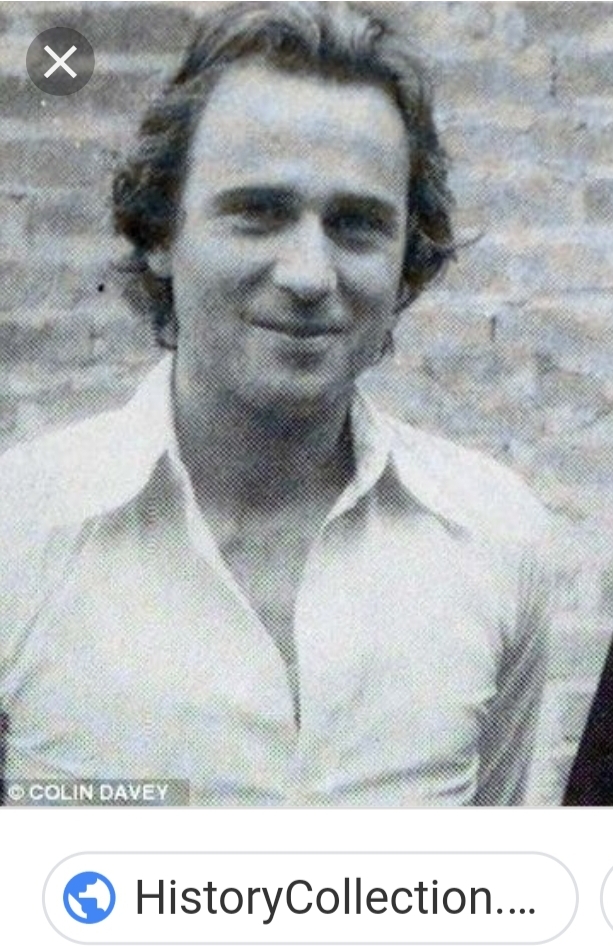
149) Rolf Mengele

Courtesy of History Collection

149) Rolf Mengele

Son of the Nazi Doctor Nicknamed The Angel of Death

Born: 16 March 1944, Freiburg, Germany

He Openly despises the things his father did and has spent his life trying to do whatever he can to make sure no one thinks he is anything like this father.

In 1977, Rolf traveled to South America to meet with his father, face to face, for the first time since his father had fled at the end of World War II. When Rolf asked his father about the past, he was disgusted at his father’s so-called justifications for the things he had done and resolved to never have a true connection with him. However, when asked by those hunting his father down where the doctor was hiding, Rolf refused to betray that information.

In the 1980’s, after living with his surname for forty years, Rolf had enough and decided to change it. After that, he disappeared off the map, and it is believed he married and had a family, working as an attorney.

Badges Earned:

Located In My Personal Library:

Children of Nazis: The Sons and Daughters of Himmler, Goering, Hoss, Mengele, and Others; Living With a Father's Monstrous Legacy by Tania Crasnianski (Translated to English by Molly Grogan)

Sources:

https://historycollection.co/here-is-what-became-of-the-offspring-of-historys-monsters/10/

https://www.aish.com/ho/i/Children-of-Nazis.html

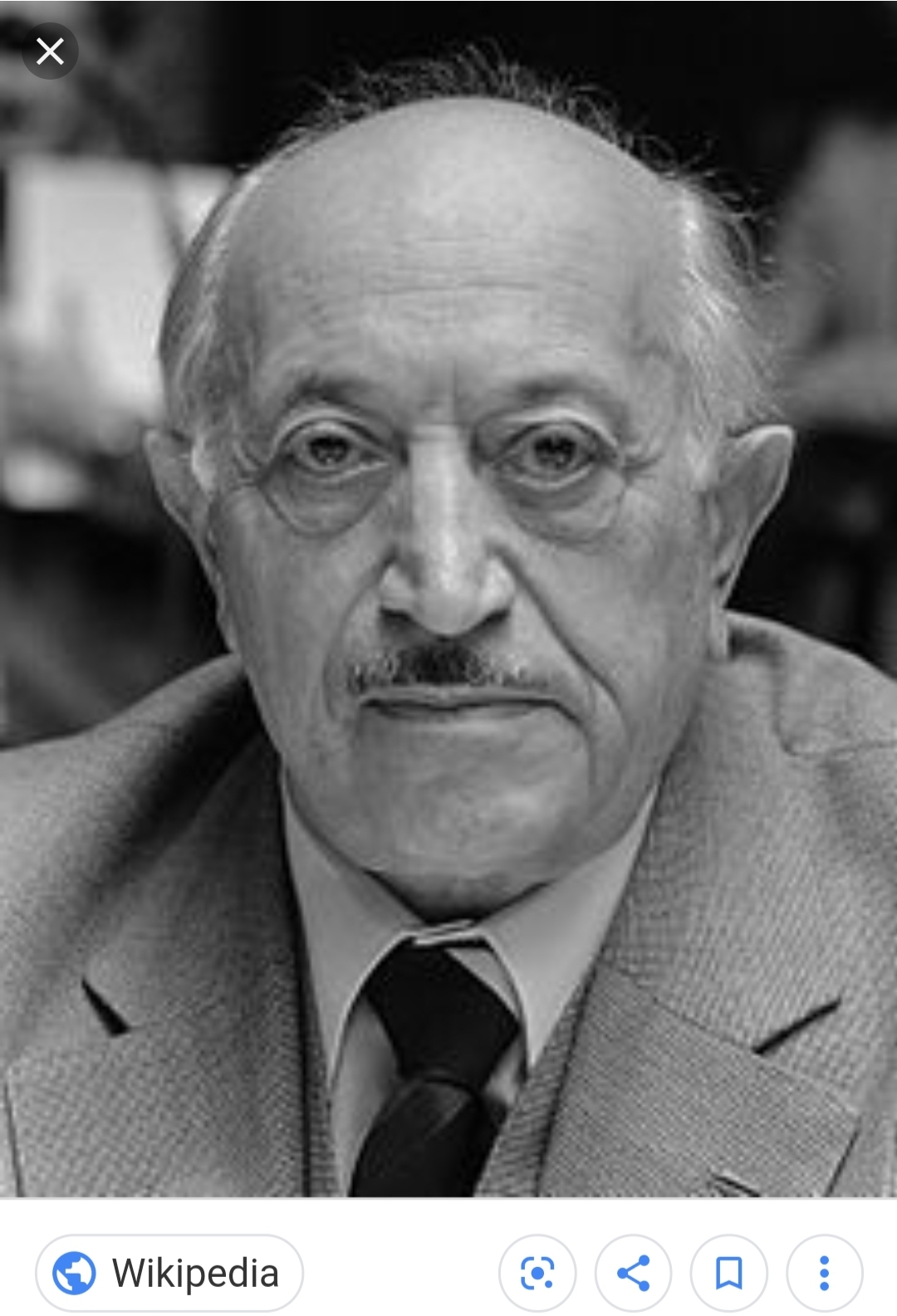
148) Simon Wiesenthal

Courtesy of Wikipedia

148) Simon Wiesenthal

The Nazi Hunter

Born: 31 December 1908, Buczacz, Ukraine (Present Day Buchach, Ukraine)

Died: 20 September 2005, Vienna, Austria

He was a Shoah Survivor and Writer known as the Nazi Hunter.

After the war, Simon made it his personal mission to hunt down and bring to justice the thousands of Nazi War Criminals who escaped. To do this, he founded the Jewish Documentation Center in Vienna. He would eventually apprehend nearly 1,100 former Nazis, from all aspects of the Third Reich.

Simon received a degree in architectural engineering in 1932. He married Cyla in 1936. With the Russian occupation in 1939, Simon’s stepfather and step-brother were both killed. He managed to get himself, his wife, and his mother out of danger after bribing an official. In 1941, the Nazis occupied the area and forced the Russians out. While he and his wife escaped execution, they did end up in a forced labor camp.

In early 1942, Simon’s mother was sent to a death camp. By the end of the war, Simon and his wife lost eighty-nine family members. His wife survived by using false papers to identify her as a Polish woman (her blonde hair allowed her to suppress her Jewish heritage). Simon ended up in various camps, finally ending his journey at Mauthausen in 1945. When the camp was liberated, he weighed less then 100 pounds.

As soon as he was back to his health, Simon began gathering evidence of Nazi War Crimes for the United States Army. After the war, he worked for the Army’s Office of Strategic Services and Counter-Intelligence Corps. Simon also headed the headed the Jewish Central Committee of the United States Zone of Austria.

When he and his wife were reunited late in 1945, they had both assumed the other dead. Their daughter Pauline was born the next year.

After prominent Nazi Adolf Eichmann’s arrest, Simon was encouraged to continue hunting Nazi War Criminals. He set his sights on the man responsible for arresting Anne Frank, and two years later, Simon found him.

In October of 1966, sixteen former SS went on trial in West Germany—nine of them had been apprehended by or with the help of Simon.

The following year, Simon also helped apprehend the SS man who had been commandant of Sobibor and Treblinka. He was sentenced to life in prison, and died there.

In 1973, Simon also helped capture the woman who had helped execute hundreds of children at Majdanek. She had been living in Queens, New York, but was extradited to Germany, where she was found guilty and sentenced to life in prison.

It should be noted that while Simon was responsible for tracking these heinous excuses for human beings down, he hardly ever was on the ground arresting them himself. Simon gathered the paperwork and information, and sent others out to catch the people.

In 1977, Simon founded the Simon Wiesenthal Center, which encompasses the Museum of Tolerance in Los Angeles, California and the New York Tolerancenter. The Center is an internationally recognized organization that ensures no one will ever forget the horrors of the Shoah.

In 1981, the Center produced the Academy Award winning documentary Genocide, which was narrated by Elizabeth Taylor and Orson Welles. I have included the trailer for Genocide in this article.

From 1982 onward he had to live with armed guards at his home. That year, a bomb exploded at his door, and though luckily no one was hurt, there was significant damage to his house.

Interestingly enough, in the 1980’s a movie made about Simon’s life story starred Ben Kingsley as Simon (Murderers Among Us: The Simon Wiesenthal Story). Then, in 2018, another movie came out (Operation Finale)—this one on the apprehension of Adolf Eichmann. In that film, Ben Kingsley played Eichmann.

Badges Earned:
Find a Grave Marked

Located in my Personal Library:

The Betrayal of Anne Frank: A Cold Case Investigation by Rosemary Sullivan

The Nazi Hunters by Neal Bascomb

Unsolved Mysteries of World War II: From the Nazi Ghost Train and 'Tokyo Rose' to the day Los Angeles was Attacked by Phantom Fighters by Michael FitzGerald

Sources:

http://www.wiesenthal.com/about/about-simon-wiesenthal/

https://www.jewishvirtuallibrary.org/simon-wiesenthal

https://www.findagrave.com/memorial/11785077/simon-wiesenthal

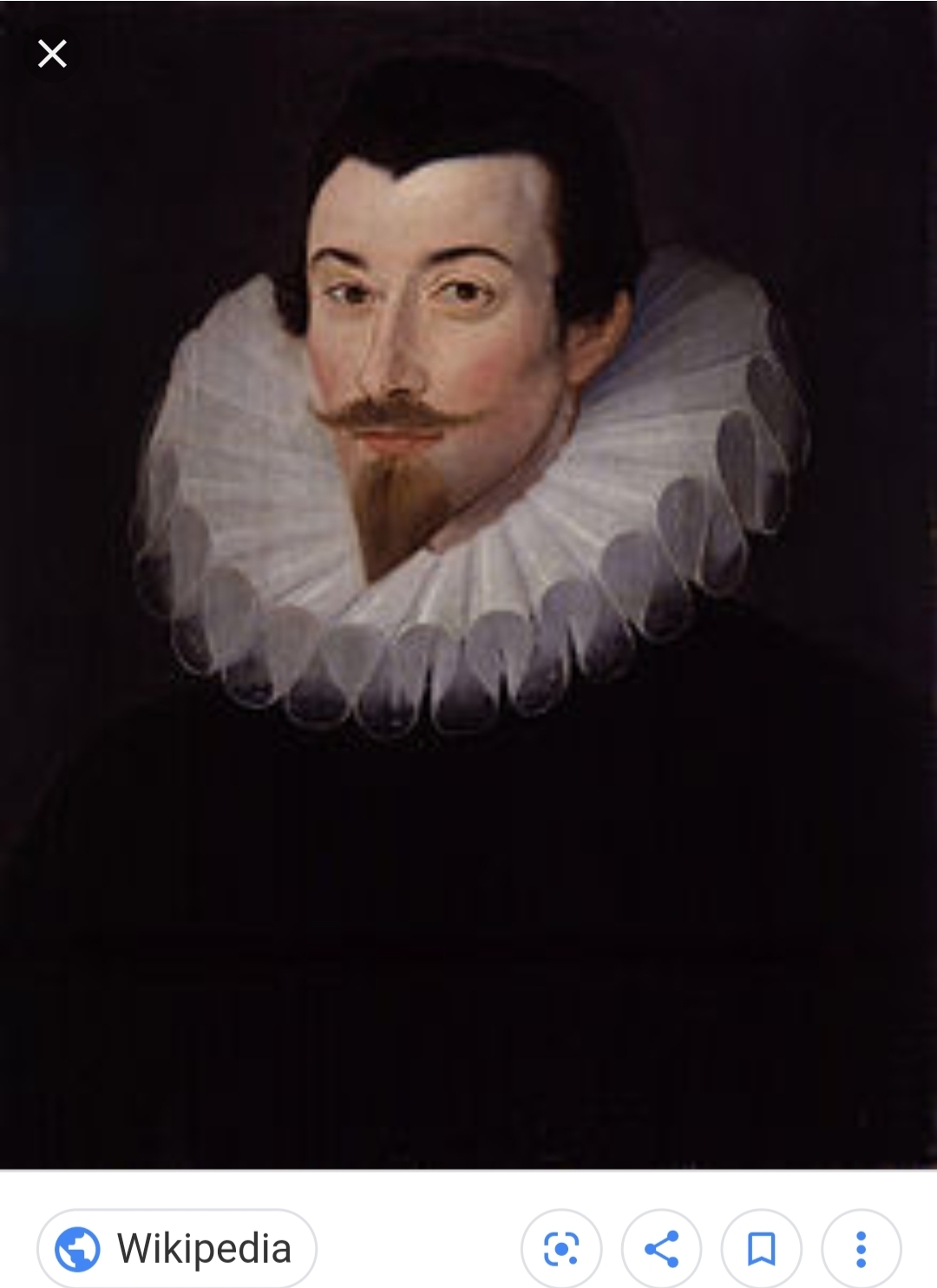
147) John Harington

Courtesy of Wikipedia

147) John Harington

If Anyone was a Secret Love Child of Queen Elizabeth I, He is the Most Likely Suspect

Born: 4 August 1561, Kelston, Somerset, England (Today a part of the United Kingdom)

Died: 20 November 1612, Kelston, Somerset, England (Today a part of the United Kingdom)

John was a courtier, Author, Translator, and Inventor.

He was also Possibly the child of Elizabeth I and Robert Dudley. John for certain was one of her 102 godchildren.

Today he is most remembered for inventing the flushing toilet.

Despite being the queen’s godson, he was banished from court for telling risqué stories. While sulking at home, he ended up inventing the first flush toilet, which he named Ajax.

The queen later forgave him (after he finished translating Orlando Furioso—which was apparently his punishment) and even visited him at his home in 1592. While there she reportedly tested Ajax and ordered one for herself. However, the device failed to catch on in public, and the first flushing toilet would not be patented until 1775, and in 1848 the UK passed a law under the Public Health Act that ruled every house must be built with some kind of lavatory.

In 1599 he was knighted, and during the reign of James I he worked to change his reputation to something other than Queen Elizabeth’s Saucy Godson.

To read more about the possibility of him being the Queen's biological son, read the book I have listed below.

Badges Earned:

Find a Grave Marked

Located in My Personal Library:

Elizabeth The Virgin Queen? by Philippa Jones

Sources:

https://www.historic-uk.com/CultureUK/The-Throne-of-Sir-John-Harrington/

https://www.britannica.com/biography/John-Harington

https://www.findagrave.com/memorial/101649781/john-harington

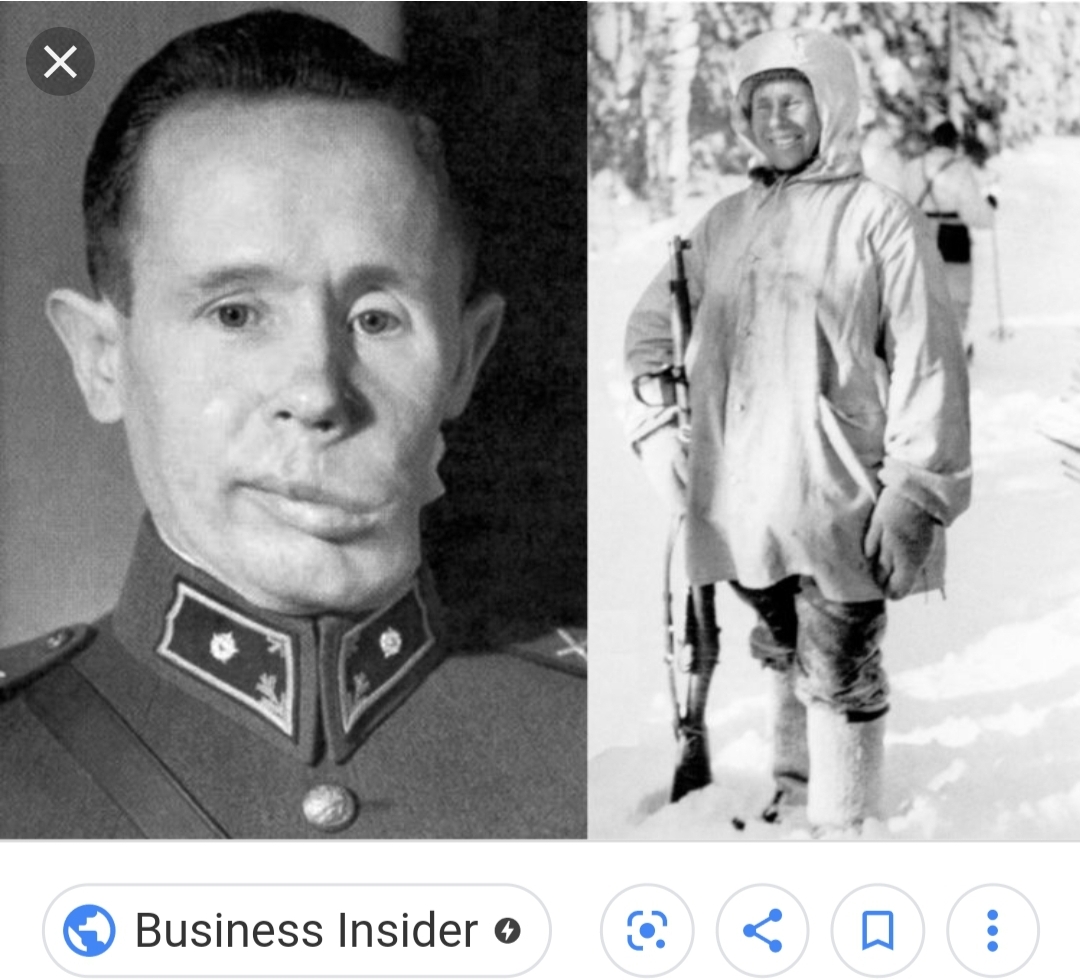
146) Lieutenant Simo Häyhä

Courtesy of Business Insider
Facebook Meme
An Instagram Meme

146) Lieutenant Simo “White Death” Häyhä

Possibly the Deadliest Sniper Ever

Born: 17 December 1905, Karelia, Finland, Present Day Russia (However, some sources dispute this)

Died: 1 April 2002, Hamina, Kymenlaasko, Finland

Historians use the word Possibly because his actual number of kills are in dispute.

He was nicknamed The White Death by the Soviet Red Army.

It is believed Simo killed over five hundred men during The Winter War of 1939-1940.

Simo grew up on a farm very near to the Russian Border in Finland. In 1925, he served one year in the Army as was required of men in Finland at the time. During his one year of service, he attained the rank of Corporal.

He then joined the Finnish Equivalent of the National Guard, called the Civil Guard. While serving with the Civil Guard, Simo focused his attention on bettering his skill at shooting. Soon he was able to hit a target sixteen times a minute from around 500 feet away.

In 1939, the Winter War occurred between the Soviet Union and Finland. This short war was the result of the USSR trying to invade Finland. The Finns were vastly outnumbered, and at one point there were reportedly only thirty-two Finnish soldiers to face 4,000 Soviets. However, the Finns won the day thanks to the Soviets being disorganized and unused to the cold that Finland had that winter (with temperatures usually ranging from -40 to -20 degrees Celsius).

Simo’s success as a sniper was due to several things. For one, he hardly ever used sights on his rifle, which could catch sunlight and cause a glare that revealed his position. For another, he kept snow in his mouth to help hide his breath from the cold air. In around 100 days, he killed five hundred men.

On 6 March 1940, he was struck in the jaw with an explosive device from a rival sniper and fell into an eleven-day coma. He awoke on the final day of the war; the Finns were victorious.

He underwent twenty-six operations to repair his jaw, but his speech was never perfect afterward. He lived alone on his farm until the year before he died, when he moved into a home for disabled veterans.

Badges Earned:

Find a Grave Marked

Sources:

https://www.simohayha.com/

https://www.historyextra.com/period/second-world-war/worlds-deadliest-sniper-simo-hayha-finnish-white-death-winter-war/

https://www.findagrave.com/memorial/115834830/simo-hayha

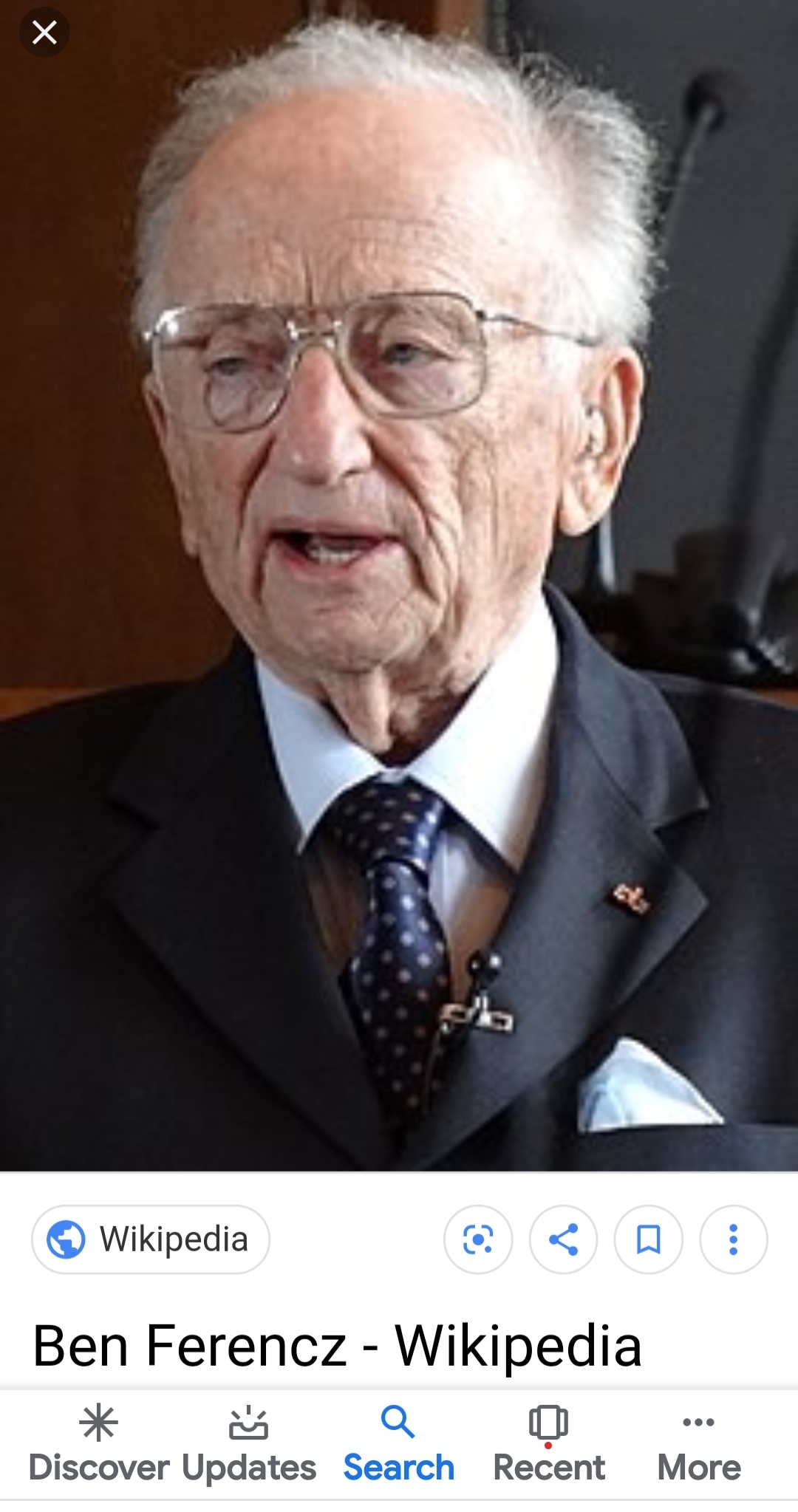
145) Sergeant Benjamin Ferencz

Courtesy of Wikipedia

"There is no doubt that I was indelibly traumatized by my experiences as a war crimes investigator of Nazi extermination centers. I still try not to talk or think about the details."

145) Ben Ferencz

The Last Living Prosecutor From the Nuremburg Trials at the time of his death

Born: 11 March 1920, Present-day Transylvania, Romania

Died: 7 April 2023, Boynton Beach, Florida, United States of America

When Ben was ten months old, his family moved to the United States, and settled in Manhattan, New York. He graduated from Harvard Law School in 1943 and joined the Armed Forces soon after.

Near the end of the war, he was invited to be a part of a special branch of the US Army to investigate Nazi War Crimes. Ben was tasked with gathering evidence from recently liberated Concentration Camps. The goal? To use the evidence in a court of law to officially prosecute the worst Nazi Germany had to offer.

He received an Honorable Discharge from the Army in 1945, and returned home to New York. Soon after though, the United States government reached out to Ben again, and he was recruited to join the prosecutorial team headed to Nuremburg.

Ben and fifty other researchers headed to Berlin, where they gathered and collected more evidence to use in the upcoming trials.

At the age of only Twenty-Seven, Ben was appointed lead prosecutor of the Einsatzgruppen Trial. At the end, all twenty-two defendants received a guilty verdict, charged with murdering over one million people.

Once the trial ended, Ben continued to work for compensation, return of stolen assets, and anything else he could do for survivors of the Shoah.

Until the end of his life, he worked with the United States Holocaust Memorial Museum. He had established the Ferencz International Justice Initiative, which works to demand justice for victims of atrocious crimes.

In 2002, one of Ben's lifelong dreams was realized with the establishment of the International Criminal Court, located in the Hague. Unfortunately, the court's effectiveness is limited severely because of certain countries refusing to participate in the court, notably the United States.

In 2019, Ben was interviewed by 60 Minutes. One of the links I’ve provided is to the interview.

Ben lived with his wife in Florida until she passed away in 2019. They had four children.

Badges Earned:

Find a Grave Marked

Sources:
http://www.benferencz.org/

https://www.ushmm.org/confront-genocide/ferencz-international-justice-initiative/about/about-ben-ferencz

https://www.cbsnews.com/news/what-the-last-nuremberg-prosecutor-alive-ben-ferencz-wants-the-world-to-know-60-minutes-2019-06-30/

https://www.npr.org/2023/04/09/1168832384/ben-ferencz-last-living-nuremberg-prosecutor-nazis-dies 

https://www.findagrave.com/memorial/252802086/benjamin-berell-ferencz

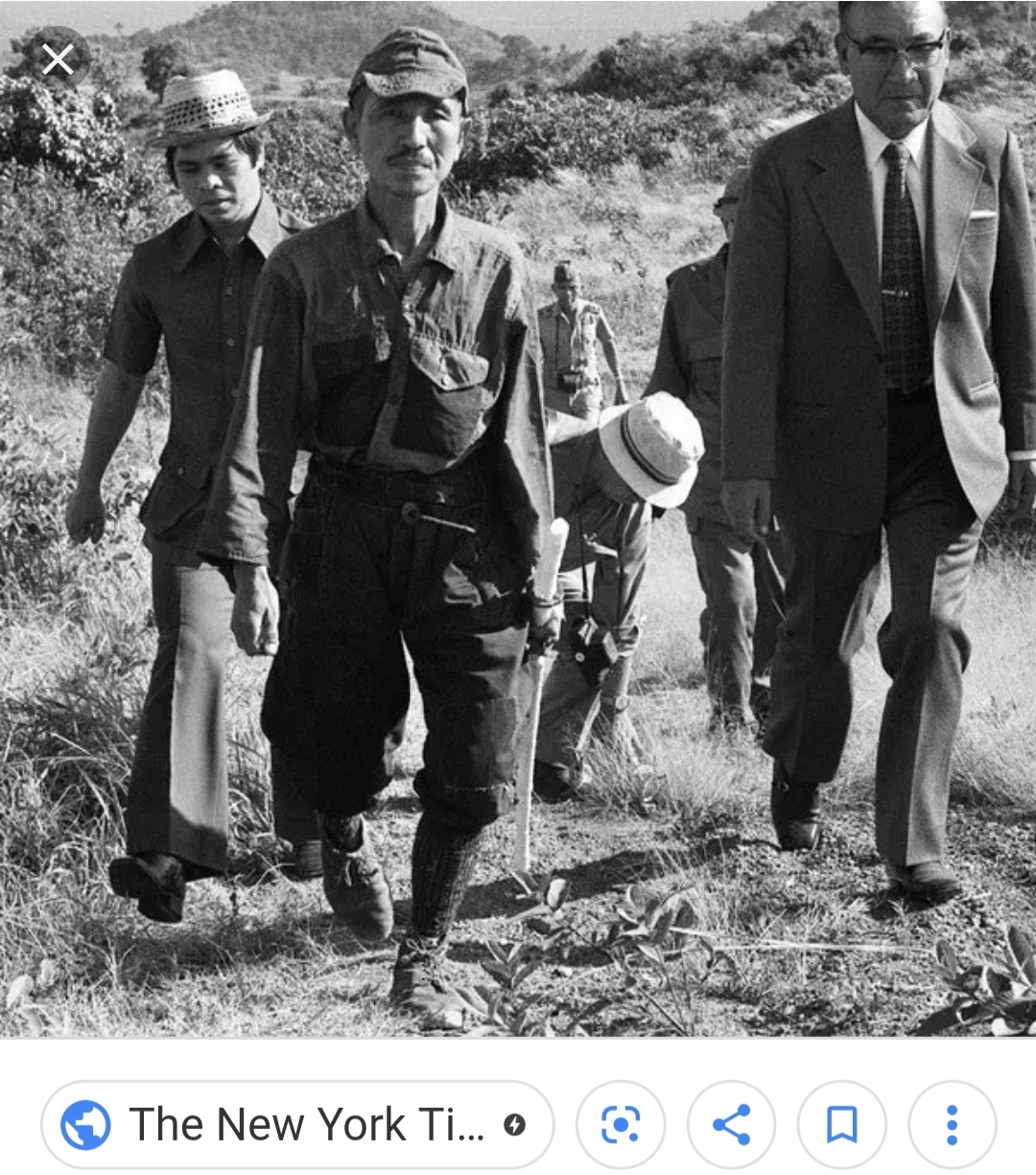
144) Second Lieutenant Hiroo Onoda

Courtesy of the New York Times
An Instagram Meme

144)  Hiroo Onoda

Japanese Soldier During World War II who Refused to Surrender Until 1974

Born: 19 March 1922, Wakayama, Japan

Died: 16 January 2014, Tokyo, Japan

Original Name: Hirō Onoda

Refused to surrender isn’t really the right word for it. In actuality, Hiroo had been abandoned in the Jungle for nearly thirty years and had no idea the war had come to an end.

He reportedly survived on barnacles and coconuts, and killed several local villagers he believed to be enemy enforcers.

Once he was found, Hiroo surrendered to the President of the Philippines by offering up his sword. President Marcos returned Hiroo’s sword to him.

His triumphant return to Japan was reminiscent of Neil Armstrong and Buzz Aldrin’s return to the United States after flying to the moon, huge adoring crowds, parades, and the like.

Hiroo’s last order, which came down early in 1945, was to stay and fight on Lubang Island, ninety-three miles from Manila, which meant the other Japanese soldiers who retreated with the coming American Invasion left him behind.

Hiroo and the three other Japanese soldiers stationed on the island with him refused to believe the leaflets air dropped onto the island proclaiming the war’s end. They figured it was just war propaganda.

Its estimated around thirty villagers were killed by Hiroo and his fellow soldiers. They evaded American and Filipino search parties and kept their rifles in working order.

One of the soldiers surrendered in 1950. The two others were shot in 1954 and 1972, but Hiroo persisted.

Hiroo was officially declared dead in 1959, however, a student named Norio Suzuki decided to take up the search and find whatever had happened to Hiroo. In 1974, he found him. Hiroo refused to believe Norio though, and it took a delegation from the Japanese Government, photographs, documentation, Hiroo’s former commander, and his brother to convince him the war was over and to relieve him of duty.

On his return to Japan, doctors found him to be in astonishingly good health. Hiroo was given a military pension and signed a contract for a ghostwritten memoire. However, he did not like the new and industrialized Japan, and in 1975 he move to São Paulo, Brazil to raise cattle. He married the following year.

In 1984, Hiroo and his wife returned to mainland Japan. They founded the Onoda Nature School, which taught kids skills they’d need to survive in the wilderness.

In 1996, Hiroo returned to Lubang and granted a school there $10,000. He was made an honorary citizen of Brazil in 2010.

Badges Earned:
Find a Grave Marked

Sources:

https://www.nytimes.com/2014/01/18/world/asia/hiroo-onoda-imperial-japanese-army-officer-dies-at-91.html

https://www.findagrave.com/memorial/123584503/hiroo-onoda

  • Previous
  • 1
  • …
  • 127
  • 128
  • 129
  • 130
  • 131
  • 132
  • 133
  • …
  • 159
  • Next

Categories

Archives

  • July 2025 (10)
  • July 2024 (1)
  • January 2024 (1)
  • August 2023 (1)
  • June 2023 (2)
  • October 2022 (1)
  • July 2022 (1)
  • June 2021 (3)
  • December 2020 (3)
  • August 2019 (1)
  • July 2019 (2)

Search

© 2026 The Exasperated Historian | Powered by Minimalist Blog WordPress Theme