The Exasperated Historian
Menu
  • Home
  • The Women’s List (New)
  • The Men’s List
  • The Animal List
  • Collections
  • The Blog
  • Contact Us
  • FAQ
Menu

Category: New York’s Own

22) Peanut the Squirrel

RIP Peanut and Fred
A Peanut Meme
Another Peanut Meme
Meme

22: Peanut the Squirrel

Peanut’s Story is Proof of How One Tiny Life Can Impact Thousands of Hearts

Born: c.2017, Possibly New York City, New York, United States of America

Died: c.30 October 2024, New York State, United States of America

Also Known As: P’Nut

Peanut was an Eastern Grey Squirrel, who had been injured as a baby and was living with humans Mark Longo and Danielle Bittner, who had rescued Peanut and a raccoon named Fred and rehabilitated them in their home. Peanut’s mother had been hit by a car when he was tiny, and so Mark rescued Peanut and raised him to adulthood, bottle feeding him for eight months. Once he reached adulthood, Mark tried to release him back into the wild, but the effort failed and so Mark decided to keep Peanut as a pet.

Mark planned on releasing Fred back into the wild once he was rehabilitated.

Mark also made social media posts featuring Peanut and Fred, as a way to help raise money for his sanctuary. He already had made quite the following for himself, but after the death of Peanut and Fred, Mark’s social media following jumped considerably as more and more attention turned to this developing story.

Mark is not some random guy that just happened to keep a squirrel in his house, by the way. He owns a three-hundred-acre property called “P’Nut’s Freedom Farm Animal Sanctuary”, and he houses several hundred animals of all different species on the property.

On 30 October 2024, the state of New York’s Department of Environmental Conservation (or DEC) raided Mark’s home, seized both Peanut and Fred, and then euthanized them. During the raid, which lasted over five hours, nine agents ransacked the house (though Wikipedia claims there were actually twelve agents present), detained Mark and his wife, and they questioned his wife’s immigration status (she is a legal immigrant from Germany). The agents claim that Peanut bit one of them during the raid.

According to Big Brother, I mean, the government, the raid occurred after several complaints were filed. Evidently, a few random people decided Fred might be carrying rabies (even though they had no proof of this whatsoever), and so the state came in, seized both animals, and killed them. The reason why both animals were euthanized so quickly is because there is no way to test for rabies in an animal while it is still alive, because brain tissue has to be examined to find signs of rabies. The tests came back, unsurprisingly, negative.

It is also illegal to keep a raccoon as a pet in New York State. While you can keep squirrels in the state of New York, you can only legally do so after jumping through bureaucratic hoops to become a licensed wildlife rehabilitator. Mark attempted to complete this process but never managed to actually obtain the license, but he did try.

Also important to note, there are NO known cases of a human contracting rabies from a squirrel anywhere in the US.

In the wake of their sudden deaths, the DEC also refused to allow Mark to have the remains of his beloved pets Peanut and Fred. News of the detainment and death of the animals hit the internet immediately, and as someone living in the United States at the time, I can personally attest to the fact that it seemed to cement a lot of voters’ opinions on government overreach only days before the United States’ Presidential Election, where Donald Trump beat out Kamala Harris in both the popular vote and the electoral college.

Memes exploded across the internet showcasing Peanut and Fred. Even then-Vice-Presidential Candidate JD Vance denounced their deaths as horrendous overstepping by the state of New York. Joe Rogan, Donald Trump Jr, and Elon Musk also commented on the case. Supreme Court Justice Neil Gorsuch mentioned Peanut in a speech on the dangers of government overreach. The DEC even received bomb threats in the wake of the news. Saturday Night Live even got in on the public frenzy, airing a skit in November 2024 supposedly featuring Peanut’s widow (portrayed by a human actor).

A few months after the raid, the DEC commissioner released a statement that admitted they, “know that we can do better moving forward.” Efforts have also been made to force agents from agencies like the DEC to wear body cameras.

In April 2025, Mark and other lawmakers advocated for Peanut’s Law to be passed in New York State, which would require the government to hold animals for a set period of time after they are seized, to giver the owner’s time to try and rescue them by proving the animals are not actually dangerous.

In June 2025, Mark filed a lawsuit against the state, claiming government overreach and a violation of his rights. The suit is requesting $10 Million in damages. According to USA Today (article linked below):

“The suit says the DEC officers acted outside the scope of a warrant that authorized the search of the home and seizure of the animals but not their euthanasia, and in doing so violated the couple's right to due process. It also says the killing of Peanut and Fred also economically harmed Longo and Bittner and their animal sanctuary. They received donations and generated revenue thanks to the social media popularity of the animals.”

The suit also claims that Peanut and Fred were executed, not euthanized. I personally agree with that statement.

As of August 2025, no trial date or further action about the lawsuit has been made public.

Also, in the spirit of total honesty, I want to include the fact that apparently Mark either was, or possibly still is, running an OnlyFans account that was making him thousands of dollars a month, and marketing himself as “Peanut’s Dad” on the platform. That’s…kind of gross, but doesn’t really have anything to do with Peanut and Fred being murdered for no reason.

Sources:

https://www.usatoday.com/story/news/nation/2025/07/11/peanut-the-squirrel-lawsuit/83475019007

https://www.newsweek.com/pnut-squirrel-fred-racoon-lawsuit-owners-seek-10-million-dollars-new-york-2111657

https://apnews.com/article/peanut-squirrel-rabies-new-york-investigation-55bae101240c088ffa0c427cac803e3f

https://en.wikipedia.org/wiki/Peanut_(squirrel)

New York City, New York, USA (2025)

Posted on July 15, 2025July 15, 2025 by nickssquire12

Ah yes, my second trip to New York City.

I have nothing against the people who live there, but I will be very upfront and honest, I do not like New York City. I didn't like it the first time and I liked it even less this time around. There are too many people everywhere and, honestly, in Manhattan specifically there's not much history I'm interested in--I've definitely seen all I need to and don't plan on ever going back.

St. Patrick's Cathedral

With that said, let's start the tour!

One of our stops was St. Patrick's Cathedral, right in the middle of Manhattan. While the inside of the building is equally impressive, it still feels wrong to me to wander around and take photos and videos inside a place of worship, so you can survive with this photo of the outside instead.

According to the church's website, the cathedral was built between 1858 and 1879, funded in part by poor immigrants, as well as the wealthier citizens of the city. In 1866, the first church known as St. Patrick's in the city was destroyed by a fire, so many describe the cathedral that exists today as the second St. Patrick's church in New York City. Restoration work was undertaken on the inside and out of the building in the 1970s, to celebrate the church's 100th birthday.

If you tour the inside of the church, you will see dozens of statues, beautiful pieces of stained glass, and many other ornate decorations. One thing my group commented on (since none of us are Catholic), is we wish the stained glass had inscriptions on them to let the public know which Biblical scene is taking place in them. They do all say on them who donated the pieces though, so that's cool!

The Cathedral is also still a practicing church, with active mass times and other services taking place inside. When we visited, they had big banners inside advertising the Christian prayer app "Hallow," which my fiancé had never heard of. At first he was dismayed by the thought of a cathedral having an app of all things, but once I explained it was advertising he was...slightly less dismayed.

Brooklyn Bridge
Manhattan's skyline

The Staten Island Ferry is a free ferry service that takes tourists and locals alike from Manhattan to Staten Island and back, and while it does so it gives some pretty incredible views of Manhattan's famous skyline, the Statue of Liberty, and the Brooklyn Bridge. According to the Ferry's website, they transport around 22 million people every year, which is crazy!

I was most excited to see the Brooklyn Bridge because it meant I could take a photo to fan girl about the early 2000s film "Kate and Leopold." Sadly no one else in my group had any idea what I was talking about!

One World Trade
The Firefighters Lost on 9/11

Ground Zero at the World Trade Center is one of the saddest places you can visit, not just in New York, but anywhere in the US.

I don't know how anyone reading this doesn't know about the 9/11 Tragedy, but in case you don't, here is a brief summary.

On September 11th, 2001, four planes were hijacked and used, or were attempted to use, as a way to commit terror attacks on US Soil. Two of the planes struck One World Trade Center Tower One and Tower Two. A third plane struck the Pentagon, and a fourth was crashed in a small field in Pennsylvania by the heroic passengers on board, who made the choice to sacrifice themselves and prevent further lives being lost rather than let the plane strike whatever its intended target was. To this day, no one knows what the fourth target was.

When the planes struck in New York, first responders responded, well, immediately. Unfortunately for those at work in the towers, if you were on a floor above where the planes struck you had two options: die in the tower, or die by jumping to death outside of the building, as all the stairs and elevators were blocked by flames. For those lucky enough to be beneath where the planes struck, some were able to escape thanks to the help of brave volunteers and first responders.

Over two thousand people died that day. What most people don't know, is that another, much smaller tower in the World Trade Center complex also fell that day, after being struck and damaged by debris from the attack.

Today, the ground where Tower One and Tower Two stood are large, recessed, reflecting pools. Around the edges of the pool are the names of everyone who died, be it civilians or first responders, that day--and also those that died in the bombing that took place at the World Trade Center several years before. The day I visited in June 2025, one of the reflecting pools was undergoing maintenance and was dry, but the other pool was still fully operational.

Today, the 9/11 memorial fund also ensures that, on the birthday of anyone who died, a white rose is placed by their name on the memorial plaque, helping to keep their memory alive for generations to come.

Right across the street from the One World plaza is a fire station for FDNY. On the side of the fire house is a poster, (in the photo I took shown above), with the name and photo of every fire fighter that perished that day. While we were there, we were able to point out Pete Davidson's father amongst the dozens of other first responders who gave the ultimate sacrifice that day. Sadly, all six firefighters who served from the Brooklyn 118 died that day, but are credited with saving over 200 lives.

What most people don't realize, is that the work to identify victims of 9/11 still isn't complete. The New York City Medical Examiner's Office is still working every day to identify more than 1,000 missing people, presumed dead because of where they were last known to be alive that day.

After the attacks, family members of the victims provided over 17,000 DNA samples in an effort to help locate their missing relatives. Those samples are still being used today. In the aftermath of the tragedy, almost two million tons of debris were searched by hand to find any trace of human remains. In 2006, over 700 small bone fragments were discovered on the roof of a building across the street from Ground Zero--later identified to be from victims of one of the planes. After this discovery, 18,000 tons of excavated material was also searched, leading to over a thousand more human remains, down to the microscopic level.

All of those tiny fragments, discovered from the day of the attacks all the way up to five years later, have been catalogued and kept safe. To date, over 21,000 individual pieces of human remains have been located--there were 2,573 victims in total that day. Of those, sixty percent of the victims were identified, with forty percent (or 1,103 people) still unaccounted for as of November 2024.

The problem lies in the DNA technology as it stands today. What happened at Ground Zero is a perfect storm for destroying DNA--everything from jet fuel to diesel fuel, bacteria, mold, various chemicals, insects, heat. Think of anything that might destroy DNA cells--whatever it was, the odds are it was present during the attacks or in the aftermath.

The remains present and still unidentified have been tested over and over again as technology advances, up to fifteen times in some cases, and the work will not end until every piece has been identified and returned home to that victim's family.

Around half of those families, however? They have informed the medical office that, if their loved one is found, they don't want to know. Those families have tried to put the past to rest, and knowing a piece of their loved one has been sitting in a lab for twenty-four years now is too much to bear. The other half of the families however, are waiting for news, hoping that every day will be that day. When remains are identified and the family is notified, they have the option of having the remains transferred to the funeral home of their choice, or they can stay at the medical examiner's office, which is located within the museum complex.

I obviously didn't get to visit the medical examiner's office, but I learned about the recovery efforts a few years ago and have always wanted to find time to highlight the work the medical examiner is still doing to help the families affected by this horrific tragedy.

Carpathia's Unloading Pier

The business name Cunard Line doesn't mean as much to most people today as it did one hundred years ago.

Before the invention of airplanes, and later planes big enough to carry passengers across the world, people would have to travel by oceanliner.

The very word oceanliner has lost meaning in the modern landscape. Today, if you asked a random selection of people on the street what the difference is between an oceanliner and a cruise ship is, the response you would receive is probably first, "What's an oceanliner?" and second, "Isn't that just a cruise ship?"

(For those curious, an oceanliner is a ship built specifically for the purpose of ferrying passengers back and forth across oceans--ships like Titanic, Olympic, Queen Mary, and so on), while a cruise ship is a vessel meant specifically to take people on vacations and for pleasure. It doesn't seem like that big of a difference today but I promise it is.

Anyways! I digress--unfortunately I was not able to physically stop at Cunard's Pier 54 while in New York City (part of the famed Chelsea Piers), but we did pass it on a bus tour and our guide casually mentioned, "By the way, that's the pier that Carpathia unloaded Titanic's passengers on, and three years later that Lusitania took off from on her fatal voyage."

Other than my fiancé and I, nobody else in our group seemed phased by the casualness of our guide's comments. Meanwhile I'm sitting in the back of the bus, openly gaping and scrambling to get this photo!

Returning visitors to this site, and those who know me in person, know how much I am personally invested in the story of Titanic. I am also sure everyone knows the Titanic story by now as well, but once again, for those who don't, I'll give a quick summary.

In April of 1912, The White Star Line, one of the largest oceanliner companies in the world, launched their latest, most fabulous, and technically largest ship in the world, RMS Titanic. RMS stands for Royal Mail Ship--and one of Titanic's primary duties was to carry bags and bags of mail from the UK to the US and back.

Also happening at the time was a massive coal strike. Oceanliners of the day relied on coal in order to power their steam engines. With not enough coal to go around, and Titanic underbooked for her maiden voyage, White Star Line made the decision to move what coal they did have from other ships, onto the Titanic in order to power her first trip across the sea. At the same time, White Star Line "upgraded" numerous passengers set to sail on those other vessels that had just been stripped of their coal supplies.

On the night of April 14th, 1912, Titanic was steaming across an ice cold Atlantic ocean. Her captain, J Edward Smith, had been warned numerous times of ice flows in the area, but elected to ignore the warnings and continued to speed on--at least one other ship in the area, the Californian, had elected to shut down her engines and wait for daylight out of an abundance of caution.

At around 11 PM, disaster struck. In the blackness of night, Titanic's two lookouts spotted an iceberg "Dead Ahead." They immediately rang down to the bridge to warn of the danger. The crew (which did not include Captain Smith, as he had already gone to bed for the night), made the decision to try to steer the ship out of the way of the iceberg.

(Ironically, studies have now proven that had the Titanic hit the iceberg head on, she would have sustained severe structural damage, but she would not have sunk. To watch a video on that analysis and to support one of my favorite YouTube channels click here.)

Within minutes of the lookout spotting the iceberg, Titanic would graze the berg on her starboard side, ripping open five of her watertight compartments. Had only four been breached, she also might not have sunk. Another quick fact! Most people think the iceberg ripped open one giant gash that allowed water to enter the ship--when in actuality it was a series of punctures ranging from small to large. Can you tell I'm a Titanic nerd?

On the night of the 14th, Titanic had around 2,200 souls on board (the approximate number can never be known for certain). Three hours after the iceberg struck the ship, Titanic would snap in half from the sheer weight of the water rushing into the bow section, and within minutes would sink under the waves, just after 2 AM on the 15th. The Californian, and one other mystery ship, were nearby--but neither had wireless operators awake and able to receive Titanic's distress signals. The closest ship who did hear the distress signals was Cunard Line's Carpathia, captained by Arthur Rostron. 

Captain Rostron had made full steam ahead, or as close to it as he could manage while keeping his own crew and passengers safe through the dangerous ice flows, and arrived at the scene on the morning of the 15th. He had believed that when he arrived, Titanic would still be afloat but heavily damaged, and that he would be assisting passengers move to his ship to continue the trip to New York.

Instead, what he found was very different. As I mentioned, Titanic was long gone. Not only that, but over 1,500 of her passengers and crew had also perished. Captain Rostron's Carpathia arrived in the midst of Titanic's lifeboats, with 705 survivors freezing inside them.

Carpathia had been heading in the opposite direction, taking her passengers and cargo to Italy, but after rescuing the Titanic survivors, they changed course and headed to New York as quickly as possible. Carpathia was not equipped to hold so many people, but the passengers and crew did everything possible to help the survivors--including sharing food, clothes, and in some cases even giving up their own cabins.

On April 18th, Carpathia steamed into New York, arriving at the very pier I photographed above, delivering all of the Titanic survivors to the place they had headed out for only a few days before, but their lives had changed forever. 40,000 people waited at the pier to meet them, everyone from EMS workers to journalists, to anxious family members praying that their loved ones would walk down the gangplank.

Just over three years later, in May 1915, the Cunard liner Lusitania--noted for its considerable speed and luxury, was leaving from the same pier in New York that Carpathia had delivered Titanic's survivors in April 1912.

By May 1915, World War I was in full swing in Europe, and the German government was operating U-Boats in the water around the United Kingdom. The Lusitania was leaving New York to head for Ireland, knowing full well that they were heading into dangerous waters. The passengers, some of whom were some of society's most wealthy, and some of whom were immigrants returning to Europe because of the war, traveled knowing full well of the danger. There were 1,959 souls on board.

Unfortunately for those on board Lusitania, their captain, William Thomas Turner, elected to ignore the British Admiralty's warnings of the danger. He was told to be especially careful in the water around Ireland and also to travel across the ocean in a zigzag pattern--which would slow them down but also make it harder for the U-Boats to torpedo them. Apparently Captain Turner decided he knew better than the Admiralty and did neither of the recommendations.

Everything was going fine until May 7th. On that morning, the Lusitania was within sight of the Irish coast when disaster struck. A torpedo hit the Lusitania, and twenty minutes later she sunk beneath the waves, taking 1,198 souls with her.

Two disasters, separated by three years and costing the lives of around 3,400 people, connected by a simple pier in New York City. All of that hit me hard as I looked at the rusty metal sign--and then a few seconds later, it was out of sight as we continued to drive on to our next stop.

While doing research for this section of the blog, I found an article all about the "Curse of Pier 54" and how, while Lusitania and Titanic were the most well known disasters linked to the pier, they were not the only ones. Evidently Lusitania's sister ship Mauretania stuck the pier on two separate occasions, in 1907 and 1925. Then in 1932, a fire broke out causing devastating results:

"More than 700 firemen became involved in fighting the flames, battling for hours until it became clear that the US$2-million structure was doomed. More than US$100,000 worth of cargo turned to ash, but there was a higher cost to bear. Not all attending firemen survived, dozens were injured and nearby buildings were destroyed. As the sun set that day, Pier 54’s flaring wreckage collapsed into the Hudson River, having claimed further souls."

(From "Pier 54, Cunard's Cursed New York Base" article linked below)

The pier's building was reconstructed following the fire, opening in July 1933. In 1991, with the collapse of the oceanliner industry, the building was leveled--leaving a blank concrete slate behind. Then in 2015, what was left of the pier was obliterated to make way for an art installation. Today, all that remains is the rusty steel sign I was able to photograph from my tour bus.

My Book of Mormon playbook

Okay let's switch to a lighter topic, shall we?

I don't consider myself a "Theatre Kid" by any means, but there are definitely a few musicals that I have always wanted to see. Earlier this year, I got to see "Jersey Boys" at the Phoenix Theatre in Arizona, which was AMAZING, and while in New York I got to see "Book of Mormon" at the Eugene O'Neill Theatre.

For those who don't know, "Book of Mormon" is a satirical take on the Church of Jesus Christ of Latter-Day-Saints (better known as "Mormons" by non-church members). I am not LDS myself, but growing up a majority of my friends and parts of my extended family were/are, and now a lot of my future family-in-law are also practicing members of the church. I knew going into it that the play "Book of Mormon" is largely seen as offensive to members of the church, but many of my non-member friends who had seen it told me its amazing and that I had to see it one day.

Then I looked up the opening number for the musical, which was performed at the Tony awards after "Book of Mormon" debuted on Broadway (and can be viewed by clicking here). It is SO SPOT ON and hilarious, so I was immediately hooked.

Now that I have seen the entire musical, I am even more stoked. I genuinely loved the entire show from start to finish. I went with my fiancé, his brothers, and his grandma, and they were--let's say less enthused by parts of the show, but I think they still liked it for the most part. They didn't outright say they hated it anyway.

To summarize the basic plot, for those who haven't seen anything about the show is pretty simple. Two missionaries for the church, Elder Price and Elder Cunningham, are called to serve in a war torn village in Uganda. Elder Price feels betrayed by this because he had prayed time and again and thought he would be sent to his favorite place in the world--Orlando, Florida. His companion, Elder Cunningham, is a bit of an idiot and social outcast, who has never actually read the Book of Mormon himself and therefore doesn't know how to proselytize properly.

I don't want to give away too much, but let's just say the musical number "Spooky Mormon Hell Dream" is absolutely hilarious and my fiancé and his brothers all agreed the song "Turn it Off" is spot on to how they were raised in the church.

If you're a Pagan heathen like me, or are just interested in seeing a musical that pokes fun while still staying (mostly) accurate to the LDS doctrine, I highly recommend watching "Book of Mormon"!

PS, when I looked up the musical online to get a bit more information, I found out the theatre I watched it in was actually where "Book of Mormon" first debuted in 2011! The musical received nine Tony awards and has made more than $1 Billion since its debut.

According to Encyclopedia Britannica, the Church of Jesus Christ of Latter-Day-Saints themselves had an interesting response to the popularity of the show. Rather than protesting or denouncing the musical, instead the church bought ad space in the official playbook and had tag lines printed on advertisements that said things like "The book is always better" or "You've seen the play, now read the book."

I mean, that's one way to do it I guess, haha!

Spotted in New York

So yeah, that about sums up my trip to New York City. I took this Fight Club sewer grate photo after having dinner in Little Italy because I thought it was funny!

As I said, I've never been the biggest fan of New York, and I'll probably never go back, but I'm glad I got to experience "Book of Mormon" on Broadway and that I was able to do a deep dive into Pier 54. It wasn't all bad!

I hope you enjoyed my random ramblings on random New York topics. There's still more to come from my trip around the world, so keep checking back. I've still got to tell you all about my experiences in Denmark and Japan!

Thank you New York, and Goodnight!

Sources:

St. Patrick's Cathedral

https://saintpatrickscathedral.org/history-heritage

https://saintpatrickscathedral.org/historical-timeline

Staten Island Ferry

https://siferry.com/about/

9/11 Memorial and Museum

https://www.911memorial.org

https://allthatsinteresting.com/scott-davidson

https://www.cbsnews.com/news/nyc-medical-examiner-still-identifying-september-11-victims-remains-60-minutes-transcript/

Cunard Pier Sources

https://americanhistory.si.edu/

https://www.britannica.com/topic/Titanic

https://www.britannica.com/topic/Lusitania-British-ship

https://www.worldofcruising.co.uk/editors-corner/pier-54-cunard-new-york-history

"Book of Mormon" Source

https://bookofmormonbroadway.com

https://www.britannica.com/topic/The-Book-of-Mormon

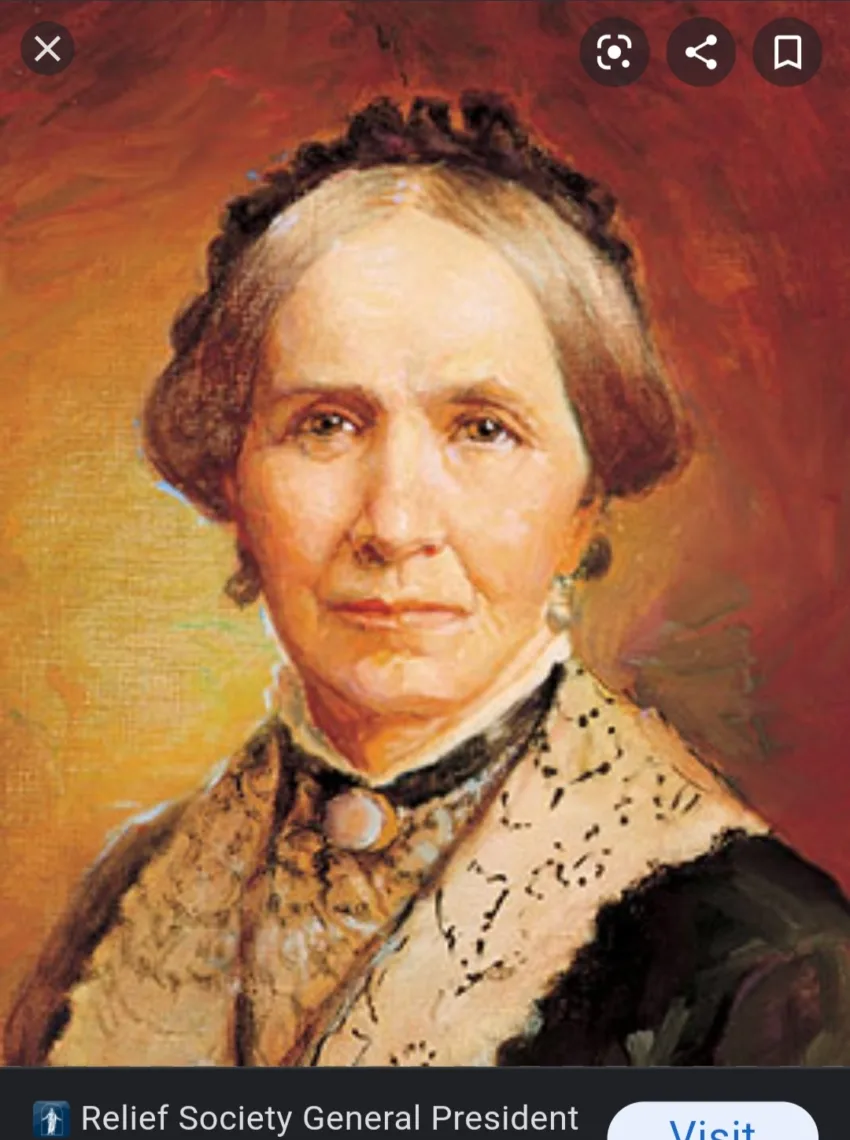
1200) Zina Young

1200: Zina D H Young

Third General President of the Relief Society of the Church of Jesus Christ of Latter-Day Saints

Born: 31 January 1821, Watertown, New York, United States of America

Died: 28 August 1901, Salt Lake City, Utah, United States of America

“Sisters, it is for us to be wide awake to our duties. The kingdom will roll on, and we have nothing to fear but our own imperfections.”

Zina is known today for having three husbands, two of whom were Joseph Smith and Brigham Young. While early practitioners of the Latter-Day-Saints faith were often polygamous in the sense that one husband would have multiple wives, Zina did the opposite, being a single woman/wife with multiple husbands. As you will see the further along you read this article, Zina’s marital status has been a source of confusion and contention for over one hundred years.

Zina was born to a strict Presbyterian family and was the seventh of nine children. The family prayed together, sang hymns, and read from the Bible daily. Zina’s father read from the Bible so extensively, he taught his children that none of the religions of the day lined up with how the Bible described the Christian religion and how it should be practiced. When Zina’s family first learned of the new faith, known today as “Mormons” but more accurately called Latter-Day-Saints, her entire family converted in 1835, save for one brother.

In 1840, according to the church’s own website, Zina was “privately taught” about plural marriage from Joseph Smith himself. What exactly being “privately taught” meant was not described, but Zina initially declined the offer, and refused two more times in quick succession after that. The following year, she married her first husband Henry Jacobs (although this marriage was a civil one, and not performed in a church or religious setting). A few months after that, Zina received a “personal revelation on plural marriage” (according to the church’s website) and was sealed* to Joseph Smith. Evidently Joseph Smith had been continually asking Zina, in secret, to marry him even after she was married to Henry. At the time of Zina and Joseph’s sealing, Zina was pregnant with her first child, her husband Henry’s child. After Joseph’s death, Zina was sealed to Brigham Young**.

To put it in more plain language, Zina’s first marriage was a civil wedding only, while her next two had deeper religious meaning. Zina was married to her civil husband, Henry, and Joseph at the same time, and was married to Henry and Brigham at the same time as well (but she was not married to both Joseph and Brigham at the same time—her marriage to Brigham only occurred after Joseph had died). Zina married Brigham in 1846. Zina also stated her civil marriage, to Henry Jacobs, was an unhappy one, and they separated at some point during her life, but records are uncertain as to when the separation occurred. To make it even more confusing, Zina never elaborated on exactly what was so “unhappy” about her marriage to Henry—and Henry would spend the rest of his life after their separation pining for Zina.

At the time, polygamous or polyandrous marriages in the church were kept quiet as much as possible. Records indicate that on all three occasions Joseph approached Zina to ask for her hand in marriage, he came to her one on one to discuss it in secret. Joseph had already been married to Emma, the wife he is most often associated with, and at least one other woman named Louisa (although one source indicates he already had at least five other wives), before Zina finally married him. Today, the LDS Church has admitted their records indicate Joseph eventually had at least forty wives, however, these wives were supposedly mostly wives for “eternity” only—meaning they were not consummated marriages in this life, consummation would occur in the next life instead.

An article I found went even furth into discussing how many times it took Joseph proposing to Zina before she finally said yes. According to the article (linked below), Zina later recounted that Joseph told her brother to tell her, “Tell Zina I have put it off and put it off until an angel with a drawn sword has stood before me and told me if I did not establish that principle [plurality of wives] and live it, I would lose my position and my life and the Church could progress no further.”

(If this sounds like the most confusing game of Telephone you’ve ever heard, don’t worry, it feels like that to me as well). Essentially Zina kept saying no, and so eventually Joseph went to Zina’s brother, and asked Zina’s brother to convince Zina to marry Joseph. Joseph told Zina’s brother to tell the story quoted above, that if Zina did not marry Joseph he would literally be killed by an angel and that the entire church would collapse.

While this may seem extremely manipulative today, there is, once again, more to the story. Zina (supposedly) did not marry Joseph based on this one story/quote alone. Later in life, Zina would state that she only chose to marry Joseph after the Lord came to her in several dreams, telling her that he wanted her to partake in a “Celestial Marriage” (as her marriage/sealing to Joseph was called by the church). It was only after Zina received this message from the Lord that she decided to go ahead with the marriage to Joseph.

(It should also be noted that, while Zina was in her early twenties at the time of her sealing to Joseph, he was sixteen years older than her).

It is also still up for debate as to whether or not Zina’s first husband Henry knew his wife had been married/sealed to Joseph Smith from the get-go. Some scholars believe that Henry was not informed of his wife’s second marriage until after it had already taken place, and therefore he couldn’t do anything about it, while others insist he must have known because of how close he and Joseph Smith were. As late as 1842, Henry was reportedly telling people how much he loved his wife’s “loveliness” and “fidelity,”—he probably would not have used the word fidelity if he knew she was married to another man.

Those who believe Henry was aware of Zina’s sealing to Joseph include Henry and Zina’s own granddaughter, who claimed, “Henry signed a paper relinquishing his right to Zina for eternity. The slip he signed is still in the records of the Salt Lake Temple.” However, as of 2006 (when the article which mentions this was written) that piece of paper had not been located. If the story is true, however, Henry knew within months of his own marriage to Zina that she would also be marrying Joseph.

One has to wonder, looking back from a modern perspective, if Zina and Henry’s marriage was unhappy because of her plural marriages, the first of which she seems to have been coerced into, whether she realized it herself or not.

When Zina was sealed to Brigham Young, she was heavily pregnant with her second child (that had been fathered by her first husband, Henry).

To make it even more confusing, around the time Zina moved in with Brigham Young and several of his other plural wives, her first husband Henry left on a mission for the church. While serving on that mission, Henry married another woman. So now Zina had two husbands and Henry had two wives. Some scholars believe Brigham Young forced Henry to abandon Zina and marry someone else, but there is no definitive proof this is true. It is rather convenient timing, however.

For those unaware of early Latter-Day-Saint history, the members of the church were intensely persecuted by other white Christian settlers. The church initially began in New York, before moving to Ohio and then Missouri. The Saints were pushed out of Missouri and into Illinois, where they founded a settlement called Nauvoo. However, it was while living in Nauvoo that Joseph Smith was killed. After his death, Brigham Young took over as head of the church (although not all of the congregants believed in Brigham Young, so the church splintered apart after Joseph's death. The vast majority of the congregants did follow Brigham Young however). The Saints ended up fleeing Illinois and headed westward, like so many other settlers on the Oregon trail. Brigham's followers eventually ended up in Utah, as they are most known and associated with today, but they stopped in several places along the way, including Iowa.

Back to Zina.

Zina and Henry arrived at Mt. Pigsah, in what was then the Iowa Territory, on May 18th, 1846. By June 1st, Henry had left on a mission and he and Zina would never live as husband and wife again. Their second son had been born March 22nd of that same year. Zina’s father wrote in his diary on July 2nd, that Brigham had requested Zina, and her children move into Brigham’s household. She did not immediately move, however. Zina’s father passed away in August, and at that time, she was living with her sons, but not with Brigham. By the time winter set in, however, she had moved into Brigham’s household and had declared herself divorced from Henry.

When Henry left on his mission in June, he had not given up on their marriage. In a letter he wrote to Zina in August, he mentions how much he still loves her and the children and hopes for the future. Part of the letter reads:

“Zina I have not forgotten you, my love is as ever the same, and much more abundantly, and hope that it will continue to grow stronger and stronger to all eternity, worlds without end, when families are joined together and become one consolidated in truth, when the keys of the Resurrection will be restored, and the fullness of the Gospel given the Law of the Celestial Kingdom be in force and every man and woman will know their place and have to keep it. Though there will be shiftings in time and revisions in eternity, and all be made right in the end. You told me in your letter that you calculated to start the next morning for the big camp. Well, may the Lord bless you and my little children with life and good health and a safe journey. Take good care of the cow and steers and all I left with you. Keep it safe till I return, for I will then again give my best respects to Brother Brigham and family.”

I don’t know about you, but to me, that does not come across as a man ready to give up on his marriage and family. By the end of the paragraph, it is clear Henry knows Zina is going to take the children away to live with Brigham. While Henry cannot argue with her over this fact, seeing as Brigham was now president of the church and also married to Zina, it is clear that he is not happy with this decision. He is wishing her the best while also remaining hopeful that things might change once he comes back home.

Henry’s mission lasted just over a year. He arrived back in the same city as Zina by November of 1847, yet by that time he had married another woman and taken in her five-year-old-son as his stepson. Zina and Henry would remain in the same settlement for around six months, during the winter of 1847/1848, and yet there is no evidence the two ever spoke a word together, much less lived as husband and wife. Clearly, during that year Henry was away from Zina, they both settled on the dissolution of their marriage and moved on…but again, there is no evidence Henry was happy with this solution. There are no records that indicate the pair ever received a legal divorce either, which meant that technically they remained married until they died. This can be easily explained away though. The most likely time they would have filed for divorce, while living in Iowa, was practically impossible to do. Iowa Territorial Law dictated that a divorce had to be granted by a district court, and the settlement Zina and Henry lived in was in unincorporated land with no district court anywhere even close to being nearby.

With all of that said, Zina was much more than just her marriages. Yes, she was married to three men, two of whom were founding members of the Church of Jesus Christ of Latter-Day-Saints, but she was more than just a wife.

Zina had three children in total, two sons with Henry Jacobs and a daughter with Brigham Young. She also went on to adopt three or four more children (sources differ) that were born to another of Brigham’s wives.

Though she had limited medical training of her own, Zina became a midwife to her people and helped deliver countless babies over the years. She opened a nursing school and taught obstetrics classes. She even became a member of the board of the Deseret Hospital. Zina spent twenty-one years traveling around Utah to help create Relief Societies. Once becoming General President, Zina helped expand Relief Societies to other areas outside of Utah as well. The goal of the Relief Societies was to help provide and improve local medical care and give classes on nursing in the beginning. Today, the Relief Society is the women's based organization within the church that continues to focus on philanthropic endeavors. Zina served as President of the Relief Society for the entire church from 1888 until she died in 1901.

Zina was also a suffragist, attending conventions and becoming the vice president of the National Council of Women. She served as president of the Deseret Silk Association (after learning how to care for silkworms to foster silk production) and was the matron of the Salt Lake City Temple from 1893 (when the temple was dedicated) until her death in 1901. She also worked for the temples in Logan and St. George, Utah.

The practice of plural marriage, or polygamy, within the church began to be phased out around 1890—which happened to coincide with the time Zina was serving as General President of the Relief Society. Six years later, Utah became the forty-fifth state to enter the union of the United States; largely because the LDS faith had abandoned the practice of plural marriage. To read more about Utah's path to statehood, click here.

The most frustrating part about trying to study Zina’s life is the fact that every easily locatable source online (outside of Wikipedia) is from a Latter-Day-Saint’s based website. Two of the main sources I have listed are official pages from the church’s actual website, one is from a site called “Joseph Smith’s Paper’s” one is called “Joseph’s Smith’s Polygamy” and another is from “FAIR Latter-Day-Saints.” The only sources I have listed below that are not affiliated with the church are a Wikipedia article, an article from NPR recounting how many wives Joseph Smith had, and finally Zina’s Find a Grave profile. While church records can give a great insight into a person’s life, in this case it also means there is great bias into the research behind Zina’s story. I myself am not affiliated with the Latter-Day-Saints but have many family members who are church members. LDS folks are some of the kindest and most loving people I know, but just like with all religions, there are always bad seeds as well. I did my best to pick through the bias and report on Zina’s story as best I could, while also trying to make it as not-confusing as possible.

*Sealing is the word used for marriage conducted within the Latter-Day-Saint religion for those unaware. A sealing ceremony usually means an individual’s soul is sealed to another’s for all eternity, although a temple divorce is possible in certain circumstances.

**Although interestingly enough, many of Joseph Smith’s plural wives who were later sealed to Brigham Young, were sealed to Brigham in the current life only, according to the church. The reason for this is because Joseph Smith had made it known before his death, that the majority of his forty-odd “plural wives” should be remarried to the church’s apostles. The LDS church always has a president and twelve apostles that run the church, and Joseph was the first president. Brigham was sealed to either seven or nine of Joseph’s wives, while the other eleven apostles all received some of his other wives. Zina was apparently allowed to choose which of the twelve she would marry, and she chose Brigham. At the time of Brigham and Zina’s sealing, her first husband Henry was standing in the room and evidently gave his approval for the match, even though Zina was only weeks away from giving birth to their second child.

Badges Earned:

Find a Grave Marked

Located In My Personal Library:

In Sacred Loneliness: The Plural Wives of Joseph Smith by Todd Compton

No Place for a Woman: The Struggle for Suffrage in the Wild West by Chris Enss

Uppity Women Speak Their Minds by Vicki Leon

Sources:

https://www.churchofjesuschrist.org/callings/relief-society/relief-society-presidents/zina-h-young?lang=eng

https://www.churchofjesuschrist.org/study/history/topics/zina-d-h-young?lang=eng

https://www.josephsmithpapers.org/person/zina-diantha-huntington-young

https://josephsmithspolygamy.org/plural-wives-overview/zina-diantha-huntington/

https://www.fairlatterdaysaints.org/conference/august-2006/zina-and-her-men-an-examination-of-the-changing-marital-state-of-zina-diantha-huntington-jacobs-smith-young

https://www.npr.org/sections/thetwo-way/2014/11/11/363324816/mormon-church-admits-founder-joseph-smith-had-up-to-40-wives#:~:text=Mormon%20Church%20Admits%20Founder%20Joseph,%3A%20The%20Two-Way%20%3A%20NPR&text=Food-,Mormon%20Church%20Admits%20Founder%20Joseph%20Smith%20Had%20Up%20To%2040,now-banned%20practice%20in%20detail.

https://www.findagrave.com/memorial/6740557/zina-diantha-young

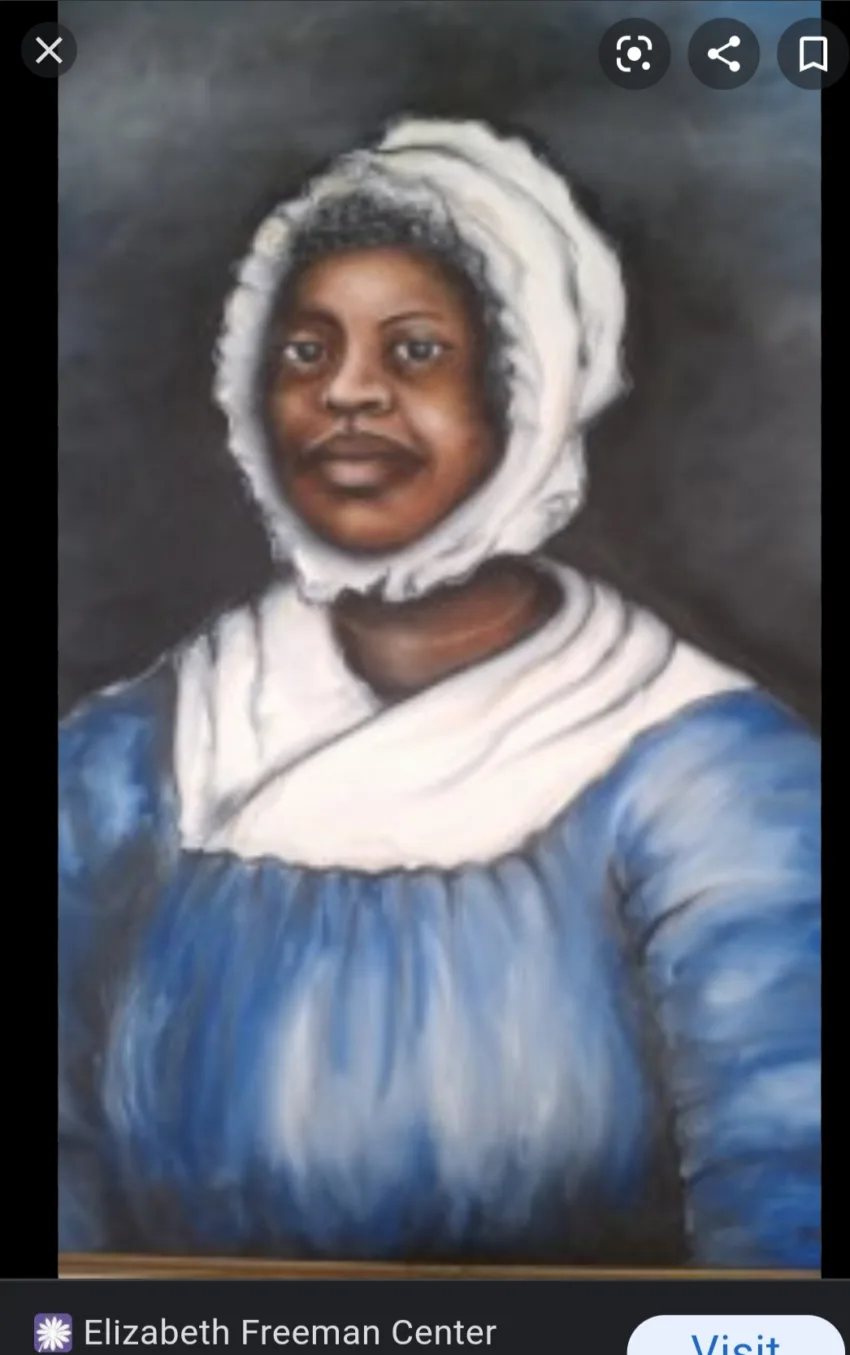
1197) Elizabeth Freeman

1197: Elizabeth Freeman

The First Black Slave to File and Win a Freedom Suit in Massachusetts

Born: c.1744, Claverack, The Colony of New York (Present-day Claverack, New York, United States of America)

Died: 28 December 1829, Stockbridge, Massachusetts, United States of America

Original Name: Mum Bett

Elizabeth’s case was titled Brom and Bett v Ashley and took place in 1781, less than a year after Massachusetts ratified their state constitution. Her case served as the precedent for the later abolishment of slavery in Massachusetts.

Elizabeth (known as Mum Bett at the time) grew up on a plantation with her sister Lizzie. When her owner’s daughter got married, he gifted Elizabeth and her sister to the new couple as part of their own estate. (Although it should be noted that some sources say Elizabeth’s new owners were actually married years before Elizabeth was born, and that she was sent to live with them when she was very young even though they had already been married for several years). It was during her time at the new home that Elizabeth gave birth to a baby girl she named Elizabeth, but she never revealed the child’s father, only said that he had died during the Revolutionary War.

Elizabeth was not able to read or write, but she was far from stupid, and she was proud and determined. Evidently her new owners were cruel to the slaves. Once, when her female owner tried to hurt Elizabeth’s sister by hitting her over the head with a hot shovel, Elizabeth interfered and blocked the blow with her arm. The wound never fully healed, and Elizabeth refused to cover it either, letting the world bear witness to her mistreatment.

Elizabeth’s male owner was a local judge, revolutionary patriot, and politician. It is believed that Elizabeth overheard her owner’s discussions on freedom and equality. He eventually helped draft a declaration that stated mankind in their natural state are free, independent, and equal of one another. It also stated people, “have a right to the undisturbed enjoyment of their lives, their liberty and property.” (Sheffield Declaration, 1773).

After the adoption of the Declaration, Elizabeth and another slave named Brom began the fight for their freedom based on the declaration’s language (the same language was also later used in the Massachusetts state constitution, and the Declaration of Independence). When the Massachusetts state constitution was adopted in 1780, Elizabeth learned that the inspiring words she had heard seven years earlier in the Sheffield Declaration were now the law of the land in which she lived.

In May of 1781, Elizabeth’s attorney filed a document with the Berkshire Court of Common Pleas, suing for Elizabeth and Brom’s freedom. The reason why Brom was included in the proceedings is unclear, but some historians speculate that Elizabeth’s attorney added a male slave to his case so that it would not be dismissed for only pertaining to a female (that’s right, sexism was alive and well in the late 1700s in case you forgot!). The court sided with the slaves, stating they were not the legitimate property of their current owner, however, he refused to abide by the ruling and release them.

In August, the case moved on to the County Court of Common Pleas of Great Barrington. Elizabeth’s attorney argued that the wording of the Massachusetts state constitution clearly outlawed slavery, and the jury agreed. Elizabeth and Brom were not only granted their freedom, but they were also awarded thirty shillings each plus the cost of the court proceedings. Initially, Elizabeth’s (now former) owner filed an appeal, but he dropped the case a few months later.

After being set free, Elizabeth changed her name from Mum Bett to Elizabeth Freeman. Her former owner asked her to be a member of his staff as a paid servant on several occasions, but she always refused. Elizabeth instead became a paid domestic worker for her attorney.

Elizabeth also worked as a midwife, healer, and nurse to her community. After twenty years of hard work, Elizabeth was able to purchase her own home where she lived with her children.

Because Elizabeth was illiterate, most of the details of her life are not concrete facts, outside of her court case. Everything we know of Elizabeth’s life was written secondhand, either by people who claimed to know her or by historians who lived after her. The biggest source of information from close to Elizabeth’s time period comes from Catharine Maria Sedgwick, the daughter of Elizabeth’s attorney and an author in her own right, who described Elizabeth’s life story in an essay on slavery.

In 1974, The Elizabeth Freeman Center opened in Massachusetts to provide help and support to those impacted by domestic and sexual abuse in Berkshire County, where Elizabeth used to live.

Elizabeth was quoted as saying:

“While I was a slave, if one minute’s freedom had been offered to me, and I’d been told I must die at the end of that minute, I would have taken it—just to stand one minute on God’s earth a free woman.”

Badges Earned:

Find a Grave Marked

Located in My Personal Library:

Uppity Women Speak Their Minds by Vicki Leon

Founding Mothers by Cokie Roberts

Sources:

https://www.womenshistory.org/education-resources/biographies/elizabeth-freeman

https://wams.nyhistory.org/settler-colonialism-and-revolution/the-american-revolution/elizabeth-freeman/

https://elizabethfreeman.mumbet.com

https://elizabethfreemancenter.org/who-we-are/about-us/

https://www.findagrave.com/memorial/16476373/elizabeth-freeman

1174: Mae West

Courtesy of Vanity Fair

“She wanted to offer an alternative version of womanhood, in which overt sexual desire wasn’t shameful or dirty but an expression of independence.” -Sally Rosenthal

1174: Mae West

Film Actress, Screenwriter, Playwright, and Sex Symbol

Born: 17 August 1893, Brooklyn, New York, United States of America

Died: 22 November 1980, Hollywood, California, United States of America

Original Name: Mary Jane West

Mae was one of three children in a family that moved around different parts of Brooklyn in her early years. By the time she was five, Mae had already begun performing onstage. She was a vaudeville performer by the time she was twelve, and it is reported that her mother approved of all of Mae’s performances, including the ones deemed inappropriate for their time period.

Mae was five foot two inches tall at her tallest point in life, and so it is said she wore high heels to increase her stage presence and height.

Mae was arrested on indecency charges for her play “SEX.” Written, directed, produced, and performed by Mae in 1926, she was thirty-three years old at the time of the play’s debut.  Mae received a sentence of a fine of $500 and ten days in jail for her offense but was released after serving eight days. This stunt made her budding stardom rocket to new heights, cementing her place in history.

In 1932, Mae was given a contract with Paramount Pictures in Hollywood, despite the fact that she was “mature” at the time—meaning she was already thirty-eight years old. Within a year, Mae was the second-highest paid actor in the country, and according to IMDb, her performances at Paramount saved the company from bankruptcy. At the time, Hollywood films were controlled by the Hays Code, meaning many of Mae’s most controversial or overtly sexual lines, scenes, and so on were deleted from films before they went to theatres. Mae got crafty, however, and began upping the amount of double entendres used in her films to continue inputting the amount of sexuality she wanted to showcase. Her career went up and down over the years, with her leaving the limelight for twenty-six years before returning in 1970. That film bombed, but Mae was back on the scene.

Mae described Hollywood, and her underwhelming first impression of it, in her autobiography, stating: “I saw some of the town, met some of the sodden gilded people. I saw that under the daffy California sun there had hatched out as queer an industry and as odd a collection of self-made men as ever crossed the Rockies…. The studios were giant factories turning out the same length of scented tripe, dressed up with the same rubber stamp features of large cowlike heads, mammary glands, and 10-foot-high closeups of nostrils you could drive a Cadillac into.”

During the 1970s, Mae reportedly became the only actor to allow photographers to check her for signs of plastic surgery. She was found to still be entirely natural. Mae appeared in her final film in 1978, but continued to live in Hollywood, write personal messages to her fans, and leave her phone number listed in Los Angeles so fans could visit with her.

Mae only made twelve films over a forty-six year career, which shows just how impactful her career and star-status really were.

In her personal life, Mae married in 1911 and divorced in 1943 (or possibly married in 1914 and divorced in 1920, everything I am finding says she was married once and once only, but the dates are different pairs and there are two different names given for her ex-husband) but she was surrounded by several men throughout the years. In later life, she continued to employ muscular younger men as chauffeurs and bodyguards, even launching a Las Vegas review show of the former bodybuilders.

Mae is also remembered for her staunch feminism as well as her support for the LGBT+ community. Mae’s beliefs were actually controversial, even among the allied community at the time. According to Turner Classic Movies, “She was an advocate of gay and transgender rights, but her belief that "a gay man was actually a female soul housed in a male body" ran counter to the belief at that time that homosexuality was an illness.”

Mae passed away from complications following a series of strokes.

Badges Earned:

Find a Grave Marked

Located In My Personal Library:

 Where Are They Buried, How Did They Die? by Tod Benoit

The Rough Guide to Film Musicals by David Parkinson

Backwards and in Heels by Alicia Malone

Appetite For America: Fred Harvey and the Business of Civilizing the Wild West--One Meal at a Time by Stephen Fried

America’s Women by Gail Collins

Sources:

https://www.tcm.com/tcmdb/person/204532%7C103917/Mae-West/#overview

https://www.britannica.com/biography/Mae-West

https://www.vanityfair.com/hollywood/2020/06/mae-west-autobiography-scandal

https://www.pbs.org/wnet/americanmasters/mae-west-biographical-timeline/14486/

https://www.imdb.com/name/nm0922213/trivia/?ref_=nm_dyk_trv

https://www.findagrave.com/memorial/1089/mae-west


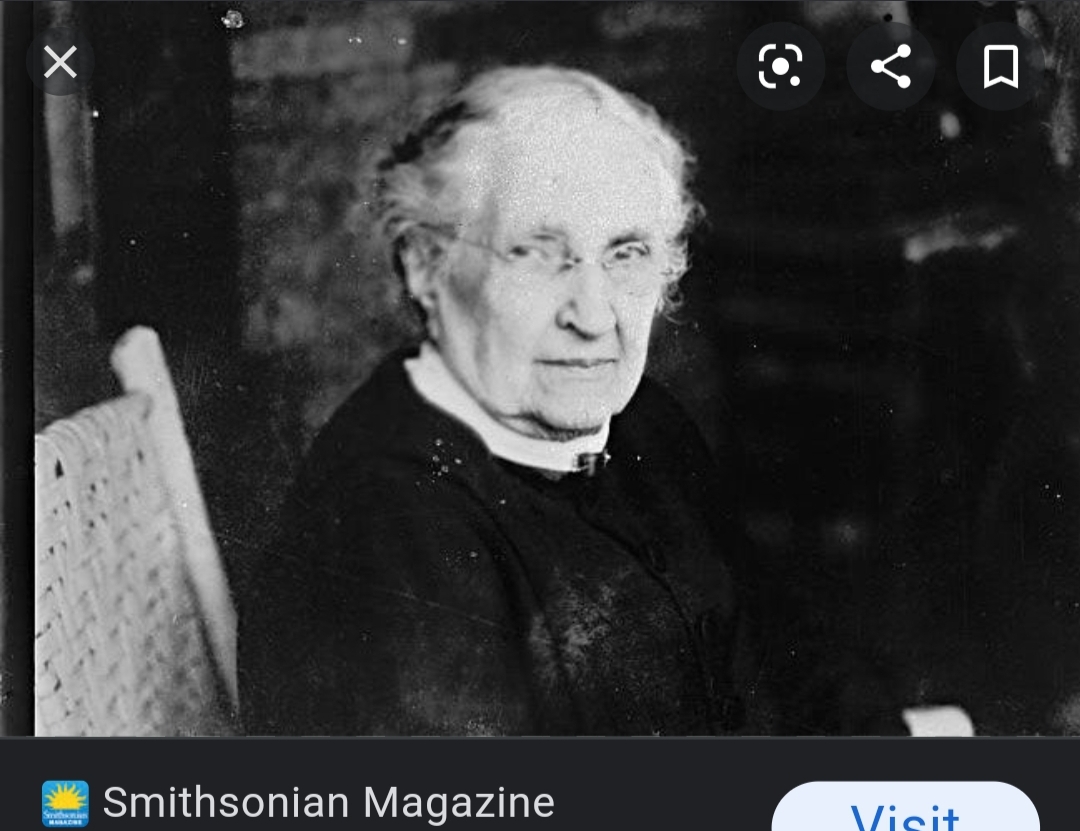
1107) Charlotte Pierce

Courtesy of Smithsonian Magazine

"I do not believe there was any community anywhere in which the souls of some women were not beating their wings in rebellion. . .  Every fiber of my being rebelled, although silently, for all the hours that I sat and sewed gloves for a miserable pittance which, after it was earned, could never be mine. I wanted to work, but I wanted to choose my task and I wanted to collect my wages."

1107: Charlotte Woodward Pierce

Suffragists Came From All Corners of the Country

Born: c.1830, Possibly Waterloo, New York, United States of America
Died: after 1921, Location Unknown

Charlotte was the only woman present at the Seneca Falls Convention still alive when the 19th Amendment to the United States Constitution (giving women the right to vote in federal elections) was passed.

If that fact isn’t sad enough, by the time the elections rolled around, Charlotte was too ill and infirm to leave her home, so she could not even vote in the election anyway.

Charlotte was one of sixty-eight women to sign the Declaration of the Rights of Sentiments at the Seneca Falls Convention. The amendment was passed seventy-two years after the convention.

Very little else of Charlotte’s life is known today. She was probably from a Quaker background and was around eighteen or nineteen when she attended the convention. Charlotte began working as a teacher when she was fifteen, but at the time of the convention was actually working from home, sewing gloves from pieces sent to her by merchant capitalists.

Charlotte and a few of her close neighborhood friends drove themselves across New York to the convention via a horse drawn cart. According to Census information takin in 1850, researchers believe Charlotte traveled farther than most of the women who signed the Declaration at the convention’s end. If the Charlotte Woodward listed in the 1850 Census is indeed our Charlotte (and it almost certainly must be as there was only one in New York State at the time), Charlotte traveled forty miles in order to attend the convention!

Charlotte eventually married but remained active in the Suffrage cause the rest of her life. She even knew Susan B Anthony. Sadly, the information on Charlotte pretty much ends there. She was ill during the 1920 elections and practically blind by 1921, so she could not participate in either year. After that, the information just stops. But no matter where she ended up, Charlotte still managed to make her mark on history by being brave in a time when girls were taught to be docile and keep their heads down. And that's worth celebrating.

Sources:

https://www.nps.gov/wori/learn/historyculture/charlotte-woodward.htm

https://www.smithsonianmag.com/smart-news/only-one-woman-who-was-seneca-falls-lived-see-women-win-vote-180964044/

https://unrememberedhistory.com/tag/charlotte-woodward/

1057) Hannah White Arnett

1057: Hannah White Arnett

Patriot During the American Revolution

Born: 15 January 1733, The Colony of New York (Present-day Bridgehampton, New York, United States of America)

Died: 10 January 1823 (or 1824, sources differ), Elizabeth, New Jersey, United States of America

Hannah is best remembered today for stopping a group of American men from deserting the cause and joining the British for “protection of life and property”. She overheard this conversation because her husband Isaac and the other men were discussing the idea in Hannah and Isaac’s home. According to legend, Hannah strode into the room and berated the men for daring to even consider it. Hannah also reportedly told her husband she would leave him if he took the offer. Isaac and the other men decided the cause of liberty was more important than their property, and continued to fight.

According to WikiTree, Hannah had at least ten children and was married twice. She is buried with her second husband and three of their children who died in infancy. Other than her single act of ultimate bravery, very little else is known of Hannah’s life. No images of her survive to modern day.

In 1890, Mary Smith Lockwood, one of the four founders of the National Society Daughters of the American Revolution uncovered Hannah’s story and published it, bringing Hannah out of the shadows and into the history books. According to the same WikiTree profile referenced above (linked below) Hannah’s husband is recorded as a patriot in the DAR database, but it does not mention if Hannah is a recorded patriot.

In 1938, the Boudinot Chapter (New Jersey State Society) of the Daughters of the American Revolution erected a memorial plaque honoring American Revolutionary Soldiers in the First Presbyterian Church in Elizabeth, New Jersey—the same cemetery where Hannah White Arnett is buried.

Badges Earned:

Find a Grave Marked

Located In My Personal Library:

Unlikely Heroes: Ordinary Men and Women Whose Courage Won the Revolution by Ron Carter

Sources:

https://njwomenshistory.org/discover/biographies/hannah-white-arnett/

http://njwomenshistory.org/Period_2/Arnett.htm

https://www.wikitree.com/wiki/White-6120

https://historyswomen.com/miscellaneous-articles/hannah-white-arnett/

https://www.findagrave.com/memorial/7237150/hannah-arnett

"... have you chosen the part of men or traitors? ... God is on our side and every volley of our muskets is an echo of his voice ... we entered into this struggle with pure hearts and prayerful lips; we had counted the cost and were willing to pay the price, were it our heart's blood. And now ... because for a time the day is going against us, you would give up all ... you cowards!"

(Hannah’s words as reported in The Great Women of the American Revolution, published by the National Society Daughters of the American Revolution in 1975)

1045) Mary Pinchot Meyer

Courtesy of the New York Times

1045: Mary Pinchot Meyer

Painter, Writer, DC Socialite, and One of President John F Kennedy’s Mistresses

Born: 14 October 1920, New York City, New York, United States of America

Died: 12 October 1964, Georgetown, Washington DC, United States of America

Mary was born into an upper-class family and had one younger sister. She counted high ranking members of DC society as personal friends, including Jackie Kennedy. Surprisingly Mary’s clandestine affair with the president didn’t interrupt her friendship with Jackie; seeing as Mary usually visited the president at the White House when Jackie was out of town. A few weeks before he died, the president wrote Mary a letter but never sent it. The letter sold at auction in 2016 for nearly $89,000!

Mary was married to a World War II vet who worked for the CIA, but at the time of her death her by then ex-husband was identified as an author. This small innocuous detail was one of many facts about the case that later led to conspiracy theories into what exactly happened the day Mary died.

Mary had three sons (one of whom was killed after being struck by a car eight years before Mary’s death) and lived with them in the DC suburb Georgetown at the time of her death. Mary also had an artist studio in her home and spent most of her time painting.

Mary was also a possible victim of the United States’ Central Intelligence Agency.

Two days before her fortieth birthday, Mary went for her usual lunchtime walk when she was shot twice and killed in broad daylight. An African American man was later arrested and charged with the crime, but was eventually acquitted due to lack of evidence. Mary’s murder has never officially been solved.

Some believe Mary was murdered by the CIA; the same people who believe John F Kennedy was also killed by the CIA. The reason? Because of her affair with the president, and her former marriage to a high-ranking agent, Mary knew things…too many things for her own good. Compound that with the fact she was liberally minded and had a lot of opinions about the United States’ foreign policy at the time and…yeah, you get the picture.

And the conspiracy isn’t nearly as far fetched as it may seem on first glance. It is known that the CIA was wiretapping Mary’s phone at the time of her death, and around the same time, an agent was caught attempting to break into her home in order to steal whatever evidence of her affair with President Kennedy could be found.

Badges Earned:

Find a Grave Marked

Located In My Personal Library:

Sex With Presidents: The Ins and Outs of Love and Lust in the White House by Eleanor Herman

Sources:

https://www.smithsonianmag.com/history/44-years-later-a-washington-dc-death-unresolved-93263961/

https://www.townandcountrymag.com/leisure/arts-and-culture/a32599090/mary-meyer-jfk-mistress-murder/

https://allthatsinteresting.com/mary-pinchot-meyer-murder

https://spartacus-educational.com/JFKmeyerM.htm

https://www.findagrave.com/memorial/6506826/mary-eno-meyer

1005) Megan Leavey

Courtesy of Foundation for Women Warriors

1005: Megan Leavey

Former United States Marine Corporal in a K-9 Unit

Born: 28 October 1983, Valley Cottage, New York, United States of America

Megan is famous for her fight to adopt her K-9 unit partner Rex after he was retired from the military.

Megan joined the US Marine Corps after the terrorist attacks on 9/11. Like so many other young Americans, Megan was inspired to join the armed forces after the horrible day that took so many innocent lives.

Megan’s parents were less than pleased when they first learned of her plans to join the Marines. She was their only child, and they were understandably worried. However, Megan’s parents soon flipped their tune and became very proud of her.

Megan officially enlisted in 2003. In 2004, at Camp Pendleton in California, Megan first met Rex (or more accurately, Sergeant Rex). Megan had been assigned to a K-9 unit and Rex became her partner. They landed in Iraq for their first enlistment in 2005. They returned for a second deployment in 2006.

K-9 Units, like the one Megan and Rex were a part of, are vitally important to the lives of soldiers in places like Iraq. Rex was specially trained to be able to sniff out IEDs (Improvised Explosive Devices), which are often used by insurgent groups. Rex and Megan would travel ahead of the other soldiers, and whenever Rex sniffed out a bomb, Megan would call it in. They would mark the site with a military grade glow stick to warn others while waiting for the EOD (Explosive Ordinance Disposal) Team to arrive.

In September of 2006, Megan and Rex were out on a patrol when things went wrong. Megan and Rex were approaching an intersection in an unfamiliar area when an explosion went off without any notice. Enemy insurgents had been watching from a nearby rooftop and detonated the device once Megan and Rex were within range. Enemy insurgents often target K-9 teams because of how successfully they are at spotting IEDs.

Megan and Rex both survived the explosion but were knocked unconscious. Megan received a severe concussion, was bleeding from her ears, and couldn’t see when she first came to. Luckily, she felt for Rex and found that he was still alive and mostly unharmed.

Enemy insurgents began firing on Megan, Rex, and the other Army soldiers she was serving with that day. The US Army soldiers began firing back, and they urged Megan to return to safety. Megan refused, knowing the mission was far from over and that Rex’s ability to sniff out bombs was still badly needed that day.

In all, Megan and Rex served side by side for approximately three years in total and completed around 100 missions together during two tours. Rex had previously served with another Marine, named Corporal Mike Dowling. Corporal Dowling wrote a book about his time working with Rex and was vocal in his support for Megan’s efforts to adopt Rex.

Megan was eventually medevac’d to a hospital in Baghdad, while Rex was looked after by a military veterinarian, much to his dismay. Rex had an injured shoulder and had to undergo physical therapy for a year.

Megan stayed in the hospital for a week, and then went back to where she had been serving at the time of the explosion. Soon after, Megan returned to California. She had a year left in her enlistment contract and spent much of it in physical therapy and training new K-9 Marine recruits.

Megan was honorably discharged from the US Marine Corps in December of 2007. As a civilian, Megan began working for a security firm. She worked with another trained bomb sniffing dog, named Patriot, and patrolled places like Madison Square Garden and Times Square.

Megan first tried to adopt Rex when she was honorably discharged, but the Marine Corps refused the request. She was awarded the Purple Heart for her actions, but her original medal was stolen while she was still recovering at Camp Pendleton. Megan was eventually given a replacement in 2012. She was given other awards and accommodations as well.

The fight to adopt Rex became a national story after Megan learned Rex’s health had begun to fail. After developing a palsy in his face, Rex could no longer perform his military duties. When Megan learned this, she started to fight for him all over again. Megan started a petition and eventually got around 20,000 signatures supporting her efforts to adopt Rex. Adopting a military dog is an extremely long and arduous process, and some military dogs are deemed unsuitable for adoption. Luckily this wasn’t the case with Rex and Megan was finally able to take him home six years after they almost died on that road in Iraq. If Rex had been deemed unsuitable for adoption, then he most likely would have been put to sleep by the military.

Sadly, Rex died only eight months after Megan brought him home. He was twelve years old. Megan also adopted her other bomb sniffing dog, Patriot, after he retired.

Megan and Rex’s story was made into a movie in 2017. Megan is portrayed by actress Kate Mara, but Megan herself also makes an appearance in the film as a drill instructor who gets in Kate’s face.

Megan now works as a veterinary technician.

Sources:

https://www.purpleheartmission.org/stories-of-valor/megan-leavey-corporal-united-states-marine-corps

https://www.historyvshollywood.com/reelfaces/megan-leavey/

https://www.usatoday.com/story/life/nation-now/2017/06/07/megan-leavey-sgt-rex/377334001/

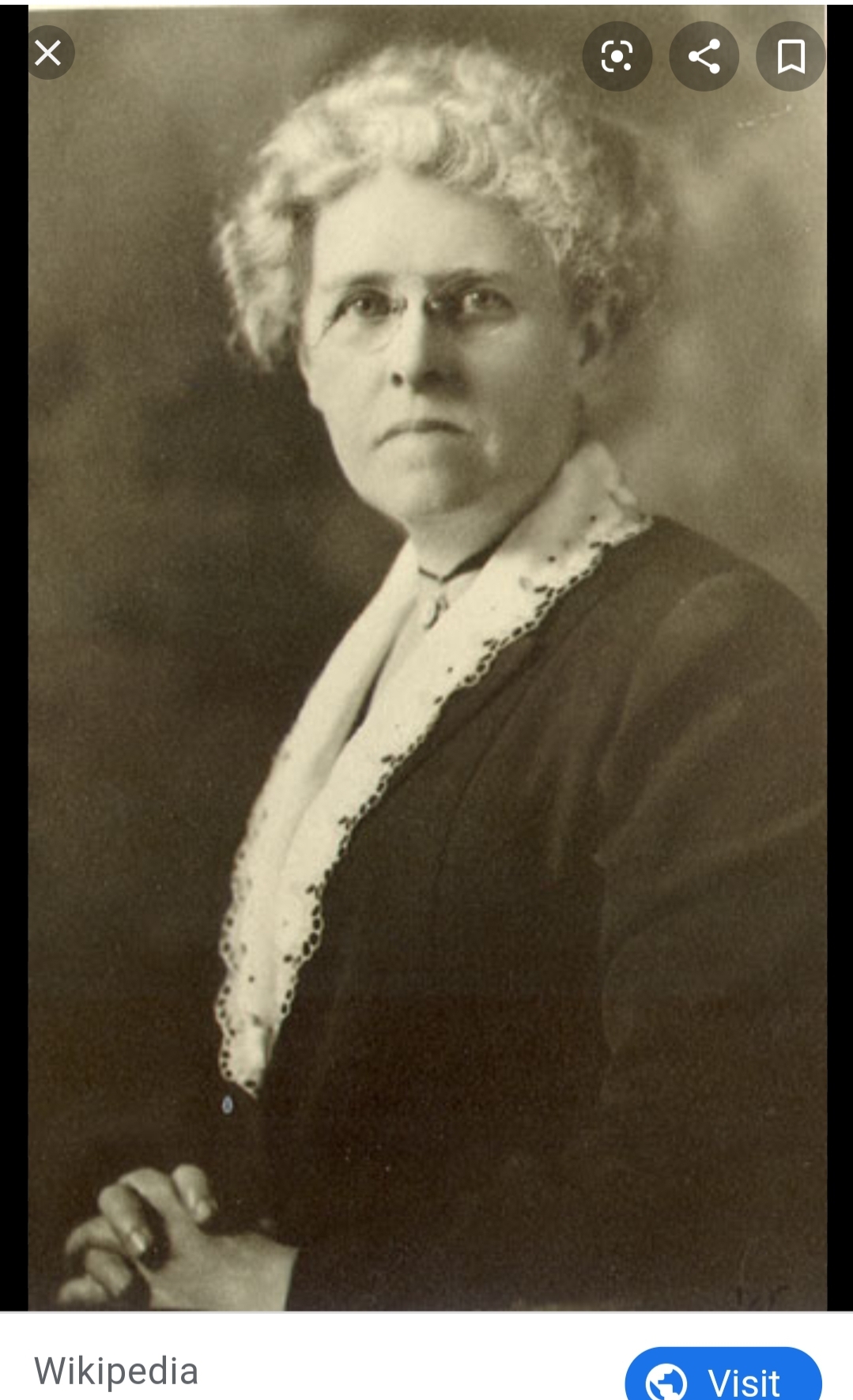
978) Lola Baldwin

Courtesy of Wikipedia

978: Lola Greene Baldwin

The First Female Police Officer in the United States

Born: 1860, Elmira, New York, United States of America

Died: 22 June 1957, Portland, Oregon, United States of America

Original Name: Aurora Greene

Lola had to leave school early to begin working after her father lost his job. She taught for several years in her native New York and out west in Nebraska before getting married in 1884. Lola and her husband had two sons together.

Lola spent several years working with delinquent girls in Rhode Island, Massachusetts, New York state, and Virginia—following her husband wherever he moved for his job. In Rhode Island, Lola worked with two Florence Crittenton Homes for unwed mothers. After a while, Lola and her husband moved their family to Portland, Oregon.

In 1905, Portland hosted the Lewis and Clark Centennial Exposition, a one-hundred-year anniversary gathering to celebrate the Corps of Discovery. Portland authorities were wary of the hundreds of visitors that would be flooding the city, knowing young women and girls would be particularly at risk for conmen and human traffickers. Lola was hired to patrol the exposition and was paid $75 a month for her efforts. She was given privileges to make arrests for anyone breaking the law, and she organized a volunteer group to help her patrol the grounds and ease the pressure of local police.

After the fair ended, Lola switched to working as a volunteer for the police department. She would go out on calls to do with sex crimes involving young women. That same year, 1905, Lola organized the juvenile court system for Portland and became the first probation officer for female juvenile offenders in the city.

In 1908, she officially joined the Portland Police Department at the age of forty-eight. Lola had to pass a civil service exam, and afterward became the first female municipally paid police officer in the United States. Lola didn’t wear a badge or uniform like other officers and did not stay at the police headquarters like other male officers and instead was housed at the Young Women’s Christian Association building when working overnights.

Lola was also a fervent suffragist and fought for equal pay for female workers. It was her belief that a fair and living wage for women would help keep them off the streets or from falling into prostitution. Lola was even a charter member of the Oregon Social Hygiene Society, which sough to educate the public about sexually transmitted infections and sex education.

With the outbreak of World War I, Lola was also hired by the federal government with a very specific task in mind. She was supposed to keep prostitutes away from military bases on the west coast and into Arizona. If only she’d been in Europe! The outbreak of STI’s in troops during World War I is a fascinating subject to research, but let’s save that for another day…

Lola officially retired from the Portland Police Department in 1922 but didn’t stop her work as an advocate. She went on to serve for several terms on the Oregon Parole Board and the National Board of Prisons and Prison Labor. Lola also continued to travel the country, advocating for better protections for young women and pushing for more women to be hired by police departments.

Today, Lola’s logbooks and other police records are held by the Portland Police Museum and are often on display.

Badges Earned:

Find a Grave Marked

Located In My Personal Library:

Wild West Women by Erin Turner

Sources:

https://sos.oregon.gov/blue-book/Pages/explore/notable/baldwin.aspx

https://www.oregonencyclopedia.org/articles/baldwin_lola_1860_1957_/

http://osupress.oregonstate.edu/book/municipal-mother

https://www.findagrave.com/memorial/6254137/lola-baldwin

  • 1
  • 2
  • 3
  • 4
  • …
  • 10
  • Next

Categories

Archives

  • July 2025 (10)
  • July 2024 (1)
  • January 2024 (1)
  • August 2023 (1)
  • June 2023 (2)
  • October 2022 (1)
  • July 2022 (1)
  • June 2021 (3)
  • December 2020 (3)
  • August 2019 (1)
  • July 2019 (2)

Search

© 2026 The Exasperated Historian | Powered by Minimalist Blog WordPress Theme