The Exasperated Historian
Menu
  • Home
  • The Women’s List (New)
  • The Men’s List
  • The Animal List
  • Collections
  • The Blog
  • Contact Us
  • FAQ
Menu

Category: New York’s Own

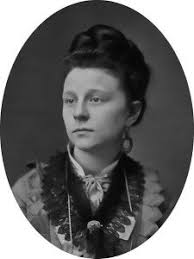
964) Maria Halpin Hunt

Courtesy of Smithsonian Magazine

“The circumstances under which my ruin was accomplished are too revolting on the part of Grover Cleveland to be made public.”

964: Maria Halpin Hunt

To Say Her Life was Ruined by a United States President Would be an Understatement

Born: 22 March 1842 (according to her headstone), Brooklyn, New York, United States of America

Died: 7 February 1902, New Rochelle, New York, United States of America

Maria was raped by Grover Cleveland before he became president.

At the time, Maria was a recently widowed mother of two and Grover was an up and coming politician and attorney in Buffalo, New York.

One night, Maria was walking to a friend’s birthday party after dark. Grover spotted her on the street and asked her to dinner. They were acquaintances, but it was far from proper for a single woman to accept a dinner invitation on a whim and follow a man to a restaurant at that time. Unsurprisingly, Maria at first refused, telling him she was headed to her friend’s party, but Grover wasn’t about to take no for an answer.

After dinner, he next insisted on walking her home. Once they got up to Maria’s apartment, Grover raped her and then left. He later promised to destroy her life and reputation if she went to the police.

Maria had hoped the whole matter would fade to only her memory, but six weeks later she realized she was pregnant. Maria approached Grover and asked him to marry her. Grover led her on for a while but failed to follow through.

When Maria’s son was born, she tried her best to raise him, but eventually Grover’s political aspirations got in the way. Maria had turned to drinking and was possibly planning on pursuing legal action against Grover. His goons decided to reply by throwing Maria in an insane asylum and taking away her son; she never regained custody of him. In fact, Maria’s son was adopted by another family soon after.

Maria once again tried to move on with her life. She lost her older children, moved away, and tried to start her life over. Things quieted down—and then Grover decided to run for president.

Someone caught wind of Maria’s story, and her name was suddenly dragged all across the nation press. Maria was now an alcoholic whore who had tricked or beguiled Grover into bed. And those were the nice descriptions. According to Maria, once Grover decided to run for president and before the story become a national sensation, she was kidnapped once again by Grover’s goons and taken to Albany, where he was working as Governor of New York. Maria was warned once again to keep her mouth shut or risk something much worse.

A journalist tracked Maria down once she was sent home and tried to get her to talk, but Maria clearly wanted nothing to do with it. Maria was, however, willing to tell that she’d been raped and that any excuse Grover came up with for his actions was disgusting. She also called him out for being a horrible excuse for a human being by trying to claim any number of other men (including Grover’s best friend, who would have been his father-in-law had he lived) was the father of Maria’s child.

Then the reporters figured out Maria had been in an asylum. They tracked down her doctors from the asylum and asked them about it. The doctors confirmed Maria was not in any way insane and backed up her story that she had been raped by Grover. Maria never changed her story or any significant details in all the times she recounted her memory of that night.

When confronted about it, Grover didn’t claim innocence. While he never outright confessed, he never said he hadn’t attacked Maria either. So, you know, an actual rapist was elected President—with the public knowing he was a rapist at the time they decided to vote for him. Voters in 1884 decided an actual rapist was better than the Republican candidate, who was as crooked a politician as they came. Yikes.

Maria lived out the rest of her life in quiet obscurity. Her last wish to her new husband was to have a private funeral because, in her own words (according to her obituary), "Do not. let my funeral be too public. I do not want strangers to come and gaze on my face. Let everything be very quiet. Let me rest."

Sadly, in the years after Maria’s story made national headlines and for decades afterward, Grover Cleveland apologists and historians covered up Maria’s story. Only now, in the era of the #MeToo Movement, is Maria’s story finally being told again. She was not a willing participant or a playful hidden lover. Maria was attacked, had her life destroyed, her children taken away from her, and was forced to sit by while her name was dragged through the mud of the national press. And that’s not even pointing out she was literally kidnapped twice and involuntarily committed once. Maria’s life was utter hell, and yet how many people know her name?

That's what I thought.

Badges Earned:

Find a Grave

Located In My Personal Library:

Sex With Presidents: The Ins and Outs of Love and Lust in the White House by Eleanor Herman

Sources:

Sex With Presidents: The Ins and Outs of Love and Lust in the White House by Eleanor Herman

https://www.smithsonianmag.com/history/president-clevelands-problem-child-100800/

https://www.jamesarsenault.com/pages/books/5266/maria-halpin/tell-the-truth-here-it-is-maria-b-halpin-s-statement?soldItem=true

https://cdnc.ucr.edu/?a=d&d=SFC19020208.2.11&e=-------en--20--1--txt-txIN--------1

https://risecollaborative.com/rise/maria-halpin-grover-cleveland

https://www.findagrave.com/memorial/113447867/maria-bertha-hunt
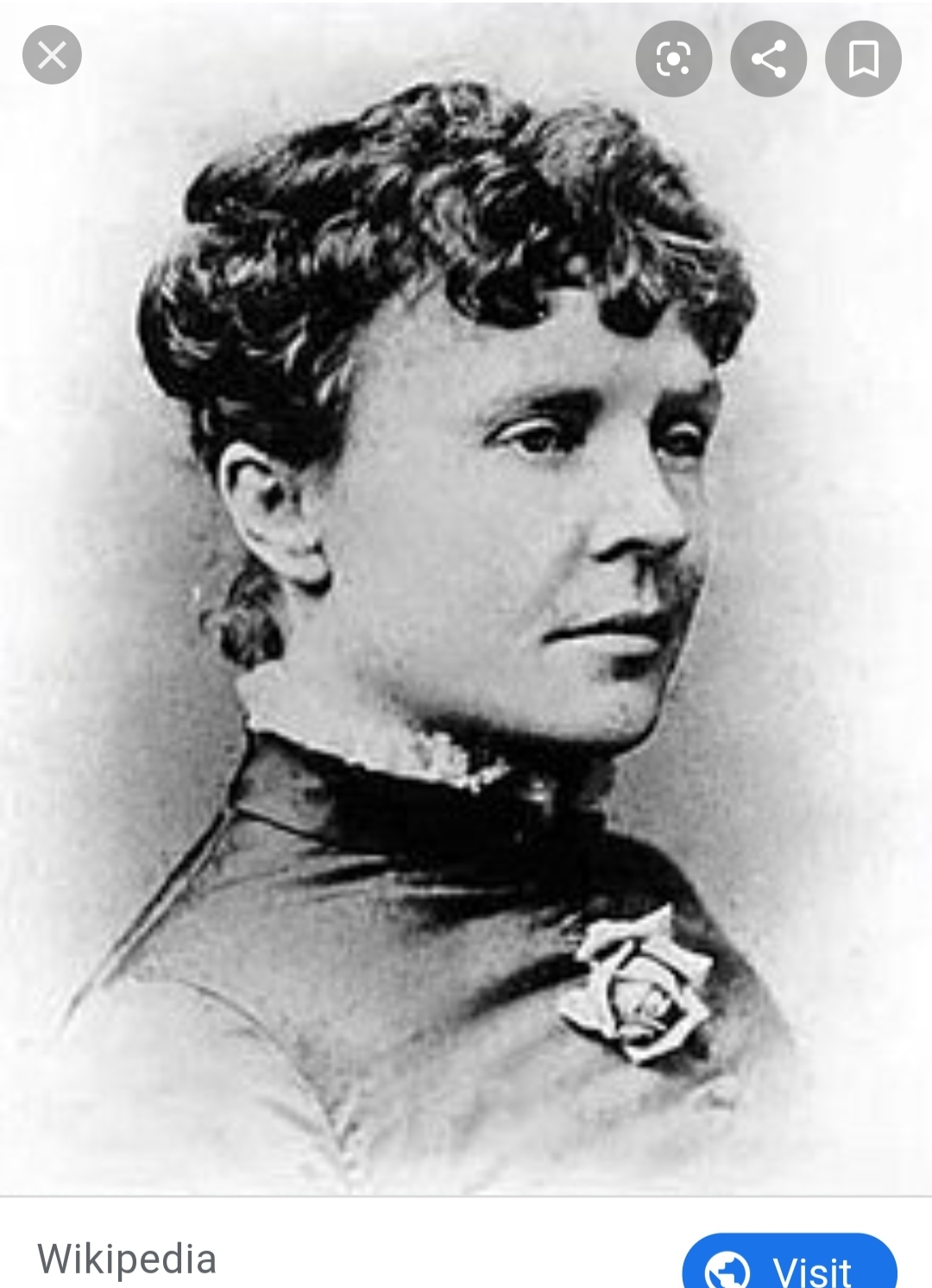
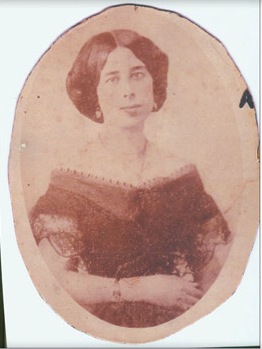
961) Rose Cleveland

Courtesy of Wikipedia

 “I need you and life is not long enough to always wait."

961: Rose Cleveland

Acting First Lady of the United States During Her Brother Grover Cleveland’s First Administration

Born: 13 June 1846, Buffalo, New York, United States of America

Died: 11 November 1918, Bagni di Lucca, Italy

Rose was also present for the dedication for the Statue of Liberty.

Rose was chosen to serve as First Lady because she was seen as a balance to her brother’s more outlandish (read: horrifying) behavior. To put it in layman’s terms, Grover was the first presidential candidate to be publicly accused of rape (something he never denied, instead he just made Maria Halpin’s life a living nightmare afterward). Rose on the other hand was a published author, former teacher at a women’s seminary, and was scandal free—at the time anyway.

After Rose’s brother married Frances Folsom, she resigned as First Lady (a role she did not like at all) and re-entered the field of education and writing. Rose was said to have spent her time at long and drawn out state functions conjugating Latin and Greek verbs in her head, so you know, it’s not that much of a surprise she found the role of First Lady dull.

Rose is also remembered for having a girlfriend named Evangeline (which caused quite a stir as you can imagine). The couple spent six years in romantic bliss, visiting one another (Rose lived in New York and Evangeline Massachusetts), vacationing in Europe and the Middle East, and even buying property together in Florida. But then, in 1896, Evangeline announced she was getting married. Evangeline had been previously widowed and had no children.

Rose was about ten years older than Evangeline and had never married herself. Evangeline was by then forty years old, past the point of marrying to have children, and besides her husband was literally almost twice her age. But apparently, she did love him; Rose was understandably upset by the news. Three weeks after Evangeline married, Rose left for Europe and would not return for three years.

Five years after saying their vows; Evangeline’s husband died. Rose and Evangeline had continued to write one another over the years, and with Evangeline’s husband gone, the wording of Rose’s letters make it seem as though they were growing closer again. In 1910, Rose and Evangeline moved to Italy. At first, they had gone to care for Evangeline’s brother, but after he died two years later, they continued to live together in Italy. During World War I, the couple volunteered and did what they could for the refugees flooding into Tuscany.

Rose died during the Spanish Flu Epidemic at the age of seventy-two. Evangeline wrote to her stepdaughter, “The light has gone out for me,” after Rose passed. When Evangeline died twelve years later, she was buried next to Rose in the English Cemetery in Bagni di Lucca, Italy. The letters Rose wrote to Evangeline over the last twenty-eight years of her life have since been compiled into a book (the majority of Evangeline’s letters have not survived the decades since they were written).

Badges Earned:

Find a Grave Marked

Sources:

https://www.washingtonpost.com/history/2019/06/20/she-was-once-first-lady-she-is-buried-next-her-longtime-female-partner/

https://www.smithsonianmag.com/smart-news/new-book-chronicles-first-lady-rose-clevelands-love-affair-evangeline-simpson-whipple-180972472/

https://allthatsinteresting.com/rose-cleveland

https://www.findagrave.com/memorial/199466633/rose-elizabeth-cleveland

950) Mother Fidelia McMahon

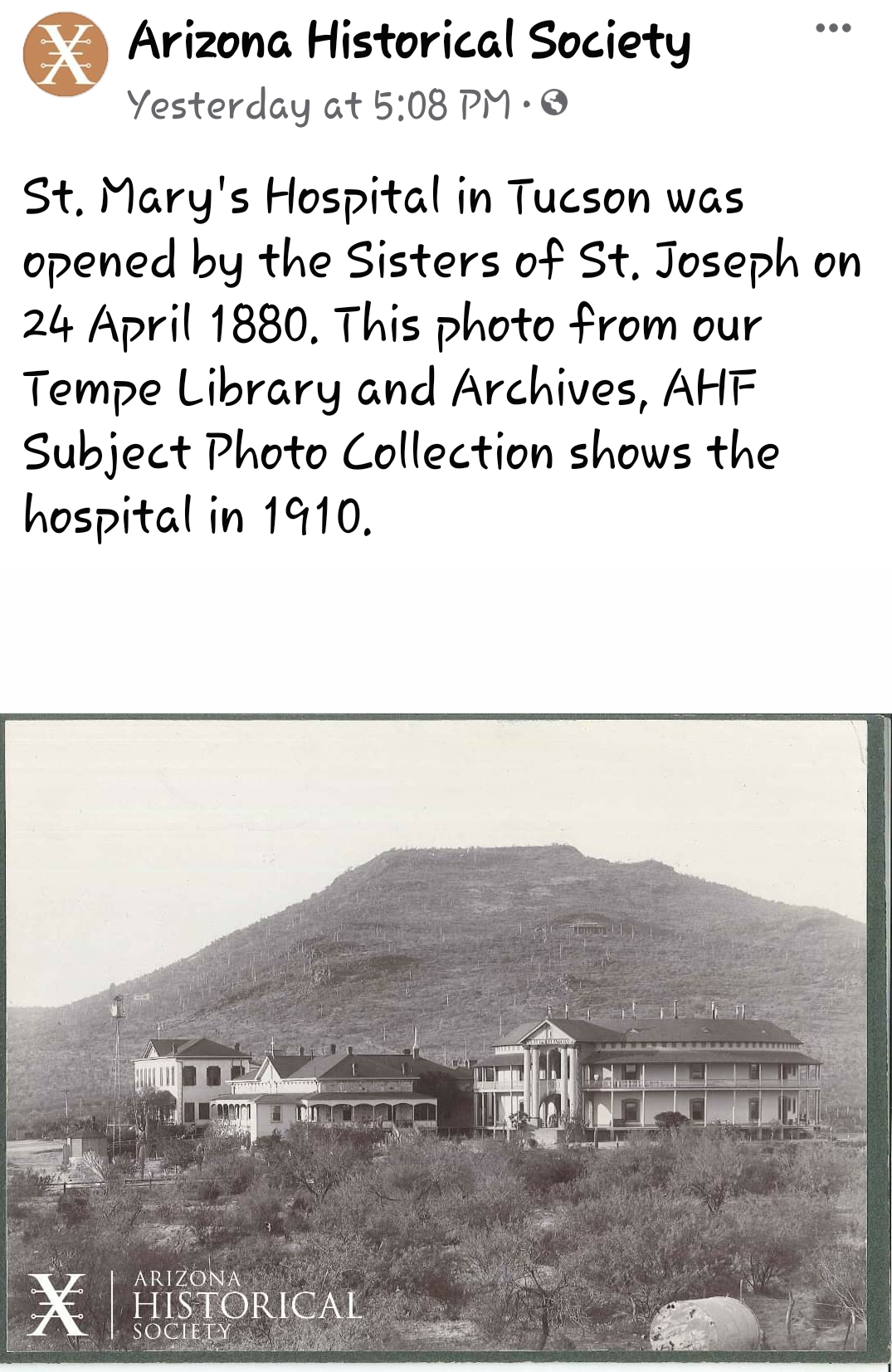
Courtesy of Arizona Historical Society on Facebook

950: Mother (Mary) Fidelia McMahon

Helped Expand St. Mary’s Hospital in Tucson, Arizona

Born: 1850, Cohoes, New York, United States of America

Died: 6 February 1923, Los Angeles, California, United States of America

Original Name: Bridget McMahon

Mother Fidelia, as she was known, entered the convent of St. Joseph of Carondelet in 1872. The sisters of St. Joseph originally began in France, but Mother Fidelia joined the order in Missouri.

She served in Arizona for thirty-seven years, including as Mother Superior and president of St. Mary’s Hospital for twenty-eight years. St. Mary’s first opened in 1880 and was Arizona’s first hospital. Located in Tucson, the hospital originally housed room for twelve patients and was sold to the sisters on the condition it remain in operation as a hospital for the next ninety-nine years. The hospital remains open today.

When Mother Fidelia took over the hospital it was a small one room building with a ground floor and a basement. By the time Mother Fidelia left in 1920, the hospital had expanded to several buildings with enough innovations the complete list of them all is several pages long (one of the sources I've linked below actually goes into the timeline of how the hospital has changed over the years).

Though there were several nuns on staff, there was also no place for the sisters to live on site in the early 1890's. Mother Fidelia rectified this by immediately requesting the construction of a living quarters for the nuns on the hospital property. The old adobe building they used to live in was converted to an orphanage.

Next, Mother Fidelia decided the hospital needed a separate building to house patients in need of isolation if they were suffering from infectious diseases (the number of tuberculosis patients had skyrocketed in Arizona around that time). A large four-room building was created specifically for this task.

With the isolation building complete, Mother Fidelia also opened a surgical wing with sterilization areas and an attached emergency room—in 1903! The new section of the hospital even included a place to tie up horses that were used for ambulance services at the time. That same year Mother Fidelia also added an ice room to provide a way to cool patients in the summer heat. Three years later she added a heating system for the cool winters. In 1907 the hospital even received electricity; their first electric bill was $19.40. By that point, unfortunately, the hospital was also $12,000 in debt. Ten years later, continuing to push forward, Mother Fidelia also oversaw an X-ray room being added to the ever-expanding hospital.

Mother Fidelia insisted a separate building be created specifically to teach nurses. At the time, nurses were usually trained while on the job, and an actual school for nursing was practically unheard of. The first student nurses arrived in 1914; unfortunately, the graduates could not be licensed to practice as nurses in the state because there were no laws in the state providing for nurses at the time (give us a break, Arizona was literally two years old at the time!). Luckily, in 1921, legislation was passed allowing for nursing graduates to become licensed to practice in the state.

Even more impressive than the fact the first nurses enrolled in 1914 is this—the first national curriculum to teach nursing in the United States wouldn’t even be published until 1917. Basically, Mother Fidelia was ahead of her time in all aspects of her management of the hospital.

In 1920, Mother Fidelia was reassigned to a new post in Los Angeles. She died there, three years later. Very little is known about her personal life outside her work with the order.

I haven’t been able to track down a photo of Mother Fidelia, but I have found an old photo of St. Mary’s hospital, posted courtesy of the Arizona Historical Society.

Badges Earned:

Find a Grave Marked

Located In My Personal Library:

Levi's and Lace: Arizona Women Who Made History by Jan Cleere

More Than Petticoats: Remarkable Arizona Women by Wynne Brown

Wild West Women by Erin Turner

Sources:

Wild West Women by Erin Turner

https://tucson.com/news/local/western-women-the-sisters-of-st-joseph-of-carondelet/article_e3ce7b26-4241-5900-a2e9-3cd675ac61f3.html

https://tope.sites.arizona.edu/node/98

https://tope.sites.arizona.edu/node/76

https://www.carondelet.org/about/our-history

https://www.findagrave.com/memorial/185571651/mary-fidelia-mcmahon

944) Anne Sheafe Miller

944: Anne Sheafe Miller

The First Person Saved by Penicillin

Born: 13 October 1908, New York, United States of America

Died: 27 May 1999, Salisbury, Connecticut, United States of America

Anne was suffering from a Streptococcal Infection.

She got the infection in 1942 and was in the hospital for over a month. What today is an illness quickly cleared up with a round of antibiotics was a deadly disease strain that had killed millions when Anne was admitted to the hospital. Luckily for her, she happened to be admitted at just the right moment in history.

For four weeks, Anne was wracked with a fever at times peaking above 106 degrees. Anne had fallen ill after suffering a miscarriage and contracting streptococcal septicemia (also known as blood poisoning).

Penicillin had first been isolated and discovered in 1928, however, Anne was the first patient in the United States for whom there was enough of the antibiotic available to save a life. The sample used to spare her was flown in from a neighboring state and escorted to the hospital by a state trooper. Four of six test patients in the United Kingdom had been saved by the new wonder-drug (according to Yale Medicine, however other sources state Anne was the first overall), but Anne would be the first in the United States to stay alive. The science was so new, doctors weren’t even sure how much was needed to be effective.

Anne was administered five and a half grams of the Penicillin. The first treatment began at 3:30 PM on Saturday, and by Monday she was alert, her fever had dropped, and she was able to eat four square meals for the first time in days.

Her hospital chart is now in the Smithsonian. Because of Anne’s case, thousands of civilians and servicemen’s lives were saved during the course of World War II thanks to penicillin.

Anne graduated from Columbia Presbyterian School of Nursing in 1931. Her husband was on the faculty for Yale University and also served as headmaster of a school. At the time of her death she was survived by three sons.

Badges Earned:

Find a Grave Marked

Located In My Personal Library:

Here is Where: Discovering America’s Great Forgotten History by Andrew Carroll

Sources:

https://medicine.yale.edu/news/yale-medicine-magazine/fulton-penicillin-and-chance/

https://www.nytimes.com/1999/06/09/us/anne-miller-90-first-patient-who-was-saved-by-penicillin.html

https://time.com/4250235/penicillin-1942-history/

https://www.baltimoresun.com/news/bs-xpm-1999-06-12-9906120371-story.html

https://www.findagrave.com/memorial/192289745/anne-miller

940) Elizabeth Jennings Graham

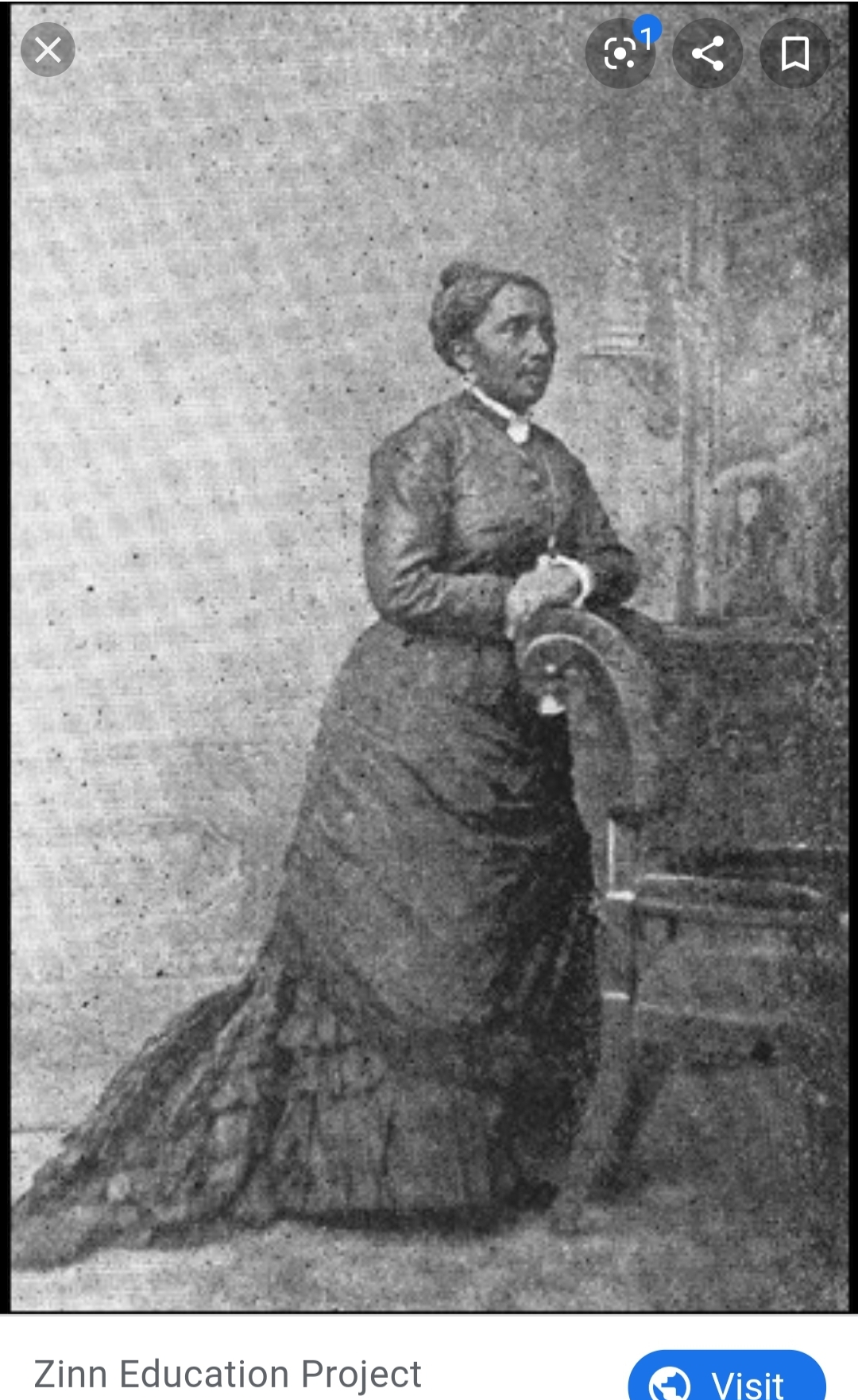
Courtesy of Zinn Education Project

940: Elizabeth Jennings Graham

Rosa Parks Who?

Born: c.1830*, New York, United States of America

Died: 5 June 1901, Manhattan, New York, United States of America

Elizabeth is known for being the first African American woman to be denied a seat on public transportation and whose case later made national news in the United States (in 1854).

Elizabeth’s father was said to have been the first African American man in the United States to hold a patent. She herself was working as a schoolteacher at the time of the incident.

Elizabeth was on her way to play the organ in church when she was forcibly removed from the streetcar by a policeman. At the time, no African Americans were allowed on this particular streetcar, but the driver let her on as long as none of the other passengers complained. However, as soon as the driver found a police officer to throw her off the streetcar, he did just that. Elizabeth was tossed into the dirt and saw her clothes dirtied and ripped, but luckily she was not harmed further than that.

Protests broke out against the streetcar line from as far away as San Francisco, and Elizabeth’s father hired then-lawyer Chester A Arthur to represent her in a civil case against the streetcar.

Elizabeth was awarded $225 in damages after the court found there was no reason for the streetcar driver to remove her for being African American. Judge Rockwell’s ruling read in part, “Colored persons if sober, well behaved and free from disease, had the same rights as others and could neither be excluded by the rules of the company, nor by force or violence.”

By 1873, all of New York City’s streetcars had been desegregated after the passage of a Civil Rights law.

Elizabeth had one son who died at a year old. His death took place during the New York City Draft Riots, in which (mostly) Irish immigrants fought back against the draft which would have conscripted them to fight in the War Between the States for the Union. Because it was too dangerous for Elizabeth and her husband to be seen outside at the time, they had to sneak into the cemetery to lay their baby boy to rest.

She spent the last six years of her life running a kindergarten for African American children out of her home.

*At the time of Elizabeth being taken off the streetcar by force, she was stated as being twenty-four years old in most sources. This suggests a birth year of around 1830, seeing as the event happened in 1854. However, many sources list her birth year as being as early as 1827, meaning she would have been closer to twenty-seven at the time of the court case. I have elected to list her birth year as circa 1830 for this reason.

Badges Earned:

Find a Grave Marked

Located In My Personal Library:

America's Women: 400 Years of Dolls, Drudges, Helpmates, and Heroines by Gail Collins

Sources:

https://www.nytransitmuseum.org/elizabethjenningsgraham/

https://www.nytimes.com/interactive/2019/obituaries/elizabeth-jennings-overlooked.html

https://www.zinnedproject.org/news/tdih/elizabeth-jennings-graham/

https://www.findagrave.com/memorial/88729004/elizabeth-graham

937) Alice Bullis Ayler

Courtesy of Find a Grave

“The kids were shipped like cattle on train cars, with up to 300 on each trip.  The adult agents who accompanied the children dressed them up and groomed them like livestock for a show.  They taught them poems and songs to present to their prospective owners."

937: Alice Bullis Ayler

One of the Last Three Children to Ride an Orphan Train

Born: 29 June 1919, Cherry Valley, New York, United States of America

Died: 2 June 2005, Oklahoma City, Oklahoma, United States of America

Alice boarded the train when she was ten or eleven years old. She had been orphaned at the age of nine, and before that had been living in a tent with her mother and siblings in a forest in upstate New York. After a year in an orphan asylum, she was later put on a train and sent to Kansas.

Alice later wrote of how grateful she was for the train ride, but at the time she was anything but.

The orphan trains ran from 1854 (some sources claim 1850) to 1929, transporting orphans from the East Coast out West to help work the farms that were cropping up everywhere and to help boost the sporadic populations of midwestern states. Its believed between 150,000 to 250,000 children in all rode the trains, and that they have over two million descendants today.

For context, the number of orphan asylums (where orphans were sent seeing as foster care hadn’t been invented in the states yet) in New York grew from two in 1825 to sixty asylums in 1866. It was also estimated that between 30,000 and 50,000 children were homeless in New York City on average every year between the 1850's and the 1920's. These kids were literally eating garbage, begging on street corners, and dying in droves. Hopefully these tidbits help to explain why the Orphan Trains began running in the first place. The trains helped get the kids off the streets and also helped the economies of the midwestern states—its just too bad the kids went from being homeless to child labor in some cases.

When Alice was initially taken to Kansas it was just after the Market Crash and at the beginning of the Great Depression. Too old to be adopted, she was shipped around from family to family without being paid for her work.

Finally, when Alice was seventeen, she started working at JC Penney and living on her own; never looking back. She got married to her high school sweetheart three years later and moved with him to Chicago and later Oklahoma City, where he worked as an optometrist.

Alice and her husband had one biological son and one adopted daughter. Her daughter Ann died at the age of thirty-nine, after suffering years from mental trauma stemming from her being given up for adoption. Alice and her husband brought Ann home when she was ten days old, but just because she didn't remember her birth mother didn't mean her mental anguish was lessened in any way.

With Alice watching her daughter suffering, she began looking into the field of psychology, and earned her bachelor’s degree in 1973. In 1977, she received a master’s degree in education. Alice spent a few years working as a psychologist and psychometrist for the school system in Oklahoma City.

Alice also became involved with the Orphan Train Heritage Society in later life, traveling around to spread awareness of the trains and the impact it had on their friends and family.

Badges Earned:

Find a Grave Marked

Sources:

https://orphantraindepot.org/history/orphan-train-rider-stories/alice-bullis-ayler/

https://obits.oklahoman.com/obituaries/oklahoman/obituary.aspx?n=alice-blanche-bullis-ayler&pid=14142837

http://www.hastingstribune.com/speaker-brings-orphan-train-to-life-as-part-of-library-celebration/article_8005e112-1896-11ea-ad96-27c48bc6cd87.html

https://www.findagrave.com/memorial/39294265/alice-ayler

936) Inez Milholland

Courtesy of Find a Grave

“Mr. President, how long must women wait for liberty?”

936: Inez Milholland

Literally Campaigned Herself to Death for the Cause of Suffrage

Born: 6 August 1886, Brooklyn, New York, United States of America

Died: 25 November 1916, Los Angeles, California, United States of America

Full Name: Inez Milholland Boissevain

Inez was a labor lawyer and suffragist in the United States. Though hardly remembered today, in her own time Inez was known for leading the 1913 Suffrage Parade in Washington DC. The parade, spearheaded by Alice Paul, was the first protest of its kind to be seen in the nation’s capital.

Inez was raised in an affluent Brooklyn family, and split her time between the United States and London, England. While in the UK, Inez first became acquainted with the more-militant faction of the British Suffrage movement (known as Suffragettes). Inez was inspired by their protests and became a political radical herself.

One tiny detail I cannot stress enough here; American women who fought for suffrage were known as Suffragists. The British women who fought for Suffrage through more militaristic tactics were known as Suffragettes. These days its popular for the term Suffragette to be applied to all women who fought for suffrage, but in actuality large swaths of the American women who fought for suffrage in the early 1900’s fought very hard to not be equated with the Suffragettes.

Okay, now back to Inez.

Inez attended school at Vassar College. While there, she became involved in the suffrage movement after learning the very topic was banned from speaking on campus. Inez defied the rules by hosting suffrage discussions at the local cemetery nearby. She graduated from the college in 1909.

That same year and the following, Inez was arrested multiple times for joining pickets and strikes in support of women’s labor rights. Since she had money, Inez also contributed to the cause by paying bail for other activists who’d been arrested.

Because of her unfortunate birth defect (being born a woman—that’s sarcasm by the way), Inez was rejected from several law schools. Finally, in 1912, Inez was able to graduate with a law degree from New York University. She had officially jumped from public nuisance (from the perspective of the factory owners in any case) to powerful advocate who could fight for her fellow women with that much more power and might. By the way, Inez didn't just support women in these endeavors. She supported the rights of all laborers and those down on their luck do to economic hardships; she's just better known for her supporting women.

The following year, Inez rode astride the horse Grey Dawn as she led thousands of women down Pennsylvania Avenue in the first organized march on Washington. Inez was supposed to represent the New Woman of the twentieth century, and she did just that.

After the parade, Inez continued her advocacy work in both the United States and overseas. She also met a man while onboard a ship to visit Europe. Before they’d even docked, Inez proposed marriage. The man agreed and was an ardent supporter of her suffrage advocacy.

Inez’s attention pivoted away from suffrage somewhat as she began to openly ask for peace in Europe. Unfortunately, her wishes would go unrealized, and World War I broke out in 1914.

The War to End All Wars, as it was known at the time, directed attention away from Women’s Suffrage. The women in the United Kingdom put down their signs and picked up their Red Cross aprons; deciding the preservation of their nation and way of life was more important than voting rights at that window in time.

However, women in the United States had a slightly different point of view. Seeing as the Americans didn’t immediately jump in to join the fighting, the American suffragists continued to push for their rights. On the frontlines of this battle was Inez.

In 1916, despite the fact she’d been suffering poor health for quite some time, Inez began a tour of the Western United States. She went by train and gave numerous speeches at each stop; each time asking for more support and donations for the cause.

Inez was onstage, in the midst of an impassioned speech in Los Angeles on 22 October 1916. One second, she was pleading for women’s rights, and the next she’d collapsed to the stage. Inez died a few weeks later in the hospital. She had literally campaigned herself to death for the cause, and still died four years before suffrage was gained on a Federal Level.

Inez’s memorial service, held at the Washington DC Statuary Hall at the US Capitol, was the first for a woman ever held at that site.

After her death, Inez’s sister stated her last words were, “Mr. President, how long must women wait for liberty?” Whether or not the words were actually spoken by Inez in her last moments of lucidity or not, they became a rallying cry for the Suffragists.

When Alice Paul and the Silent Sentinals began to stand outside the gates of the White House, one of their most famous and frequent signs was emblazoned with Inez’s words.

In 1921, a statue depicting the original suffragists (for the United States anyway) Elizabeth Cady Stanton, Susan B Anthony, and Lucretia Mott was dedicated at the US Capitol. The statue was only on public display a few hours (or weeks, depending on the source) before it was hidden away in the basement. Finally, in 1997, groups of supporters across the country raised the funds needed to bring the statue out of the crypt and put on public display in the Capitol Rotunda at long last.

Badges Earned:

Find a Grave Marked

Located In My Personal Library:

Consuelo and Alva Vanderbilt: The Story of a Daughter and a Mother in the Gilded Age by Amanda Mackenzie Stuart

No Place for a Woman: The Struggle for Suffrage in the Wild West by Chris Enss

Suffragists in Washington DC: The 1913 Parade and the Fight for the Vote by Rebecca Boggs Roberts

Sources:

Suffragists in Washington DC: The 1913 Parade and the Fight for the Vote by Rebecca Boggs Roberts

https://www.nps.gov/people/inez-milholland.htm

http://vcencyclopedia.vassar.edu/alumni/inez-milholland.html

https://www.nytimes.com/2020/08/19/arts/design/inez-milholland-suffragist.html

https://www.findagrave.com/memorial/8660159/inez-milholland

935) Clara Harris Rathbone

Courtesy of History of American Women

 “The President is Shot!”

Ticket I Received When Visiting Ford's Theatre
The ticket I received when visiting Ford's Theatre.

935: Clara Harris Rathbone

She Didn’t Know it at the Time, but President Lincoln Wasn’t the Only Victim in the Box That Night

Born: 4 September 1834, Albany, New York, United States of America

Died: 23 December 1883, Hanover, Imperial Germany (Present-day Hanover, Germany)

Clara and her fiancé were the guests of Abraham and Mary Lincoln that infamous night at Ford’s Theatre. Sadly, for Clara, her fiancé (later husband) suffered from mental illness. Clara would not escape her second brush with death.

Clara and Henry (her fiancé, later husband) weren’t even supposed to be in the presidential box that night. The original guests would have been future President US Grant and his wife Julia, but they canceled only hours before the curtain rose. Several others also canceled (one source states at least four others), and at the last-minute Mary Todd invited Clara, whom she had become friendly with through the Washington DC social scene.

Clara’s father was a Senator from New York state. Her mother died when she was a young teenager, and her father remarried a woman named Pauline Rathbone. Pauline had children as well, including a son named Henry. Though Clara and Henry were technically stepsiblings by their parents’ marriage, Clara and Henry fell in love and became engaged to be married anyway. They didn’t grow up together, if that’s what you’re thinking. Henry’s biological father was seventeen when he died and so, by today’s standards anyway, Henry was already an adult by the time his mother married Clara’s father. That makes his and Clara’s situation a little less odd; a little.

Henry’s mental illness first began to appear while he served in the Union Army during the War Between the States. Henry was present for some of the worst battles of the war, and some believe his Post Traumatic Stress Disorder was exacerbated by his memories of the war. Matters did not improve when Henry was severely wounded during the Presidential assassination. After Lincoln was shot, Henry tried to interfere. John Wilkes Booth stabbed Henry, dragging the knife from Henry’s shoulder down to his elbow, severely wounding him. When John went to make his escape attempt, Henry called out, “Stop that Man!” at the same time Clara screamed, “Won’t somebody stop that man? The president is shot!”

After Abraham Lincoln’s wounded body was moved across the street, Clara remained in attendance throughout the night until he passed the next morning (according to some sources, others state she went home with Henry—more on that in a second). Henry was returned to Clara’s home after he collapsed from blood loss. He was lucky to survive the night, the knife wound coming within inches of a major artery in his arm that would have certainly caused him to bleed out entirely had it been severed.

Trying to put the night behind them, Clara and Henry married two years later and had three children. Though he resigned his Army commission in 1870 and never had regular work after, the Rathbone family remained affluent thanks to an inheritance Henry received from his late-father’s estate.

Unfortunately, Henry’s mental health continued to decline. He believed the horrid gossip people were saying about him, that he should have done more to prevent the assassination. Survivor’s guilt gripped him like a vice. His paranoia growing, Henry eventually concluded Clara was going to leave him and take the children. One source mentions Clara had brought up the idea with her family but decided against it because of the stigma attached to divorced women of her day, but none of the other sources state either way what she was thinking at the time.

After moving to Germany, Henry’s mental health finally snapped. Just before Christmas, Henry shot Clara dead and stabbed himself several times. Clara had just enough time to get the children behind a locked door before Henry shot her twice and then stabbed her multiple times as well. According to two sources, Clara’s sister was living with the family at the time and served as the children’s nanny. One of those sources goes on to state Clara said to her sister, "Lock the door and save the children; there is going to be dreadful work,” after she discovered Henry armed with his knife and gun.

A few minutes later, Clara’s sister and her children heard the screams and gunshots. Clara’s sister rushed into the bedroom to find Clara dying. This same source as I’ve mentioned above (From the Assassination of Abraham Lincoln website, linked below) claims Clara’s last words were, "He has killed us both at last."

Henry survived the suicide attempt and was later declared insane. He spent the rest of his life in an asylum. After his death, he was buried beside Clara in Germany; though tradition in the country dictated their bodies were eventually moved and "disposed of" after they failed to receive visitors for many years.

Find a Grave backs this tidbit up, claiming Henry and Clara’s graves were reused in 1952.

Their children were sent back to the United States after Henry was committed. The three children were raised by one of Clara's brothers.

Clara’s oldest son believed a curse had fallen on the family, and he knew why. The bloodstained dress Clara was wearing the night of the assassination remained in her possession. The dress had taken on mythic proportions after John Wilkes Booth fired his pistol. Though the blood on the dress was not from the president (not the majority of it anyway), Mary Lincoln was still reported to have screamed when she saw Clara later that evening. Mary reportedly shouted, “Oh, my husband’s blood, my dear husband’s blood!” Most of the blood on the dress actually came from Henry’s arm wound, but the sentiment was the same either way. It didn't help that the dress was white, allowing the red stains to show up even better than if the fabric had been another color.

One source says Clara later posed for a photograph with a famed photographer of the era while wearing the dress, but none of the other sources mention this. In any case, yes, Clara hung onto the dress. She didn't feel it would have been appropriate to have the dress cleaned so she could reuse it, but Clara also didn't feel like disposing of the dress either.

Eventually, Clara had the dress bricked up in a wall, reportedly after she saw Abraham Lincoln’s ghost. After her own death, guests of the home reported seeing both Lincoln’s specter and the apparition of a woman in a blood-soaked gown sobbing uncontrollably. Others said they would hear a gunshot every year on the anniversary of Lincoln’s death.

In 1910, Clara’s son had the dress dug out of the wall and burned, claiming all it had done was curse the family. He went on to become a member of the House of Representatives and proposed Ford’s Theatre be turned into a museum. His hope came true. Visitors to the theatre today see it exactly as it was the night Lincoln was shot.

When I visited the theatre in 2015, I couldn’t make myself climb up to the opposing balcony to look at the president’s box. I didn’t know Clara and Henry’s story at the time, but to me the very atmosphere of the theatre and the house across the street where Lincoln died was, well, creepy. You can still feel the sadness and heavy emotions in the air. President Lincoln’s assassination was tragic because of the death of the president yes, but it was also unexpected (he was the first US president to be assassinated) and it proved that the United States and the former Confederate States were far from being reunited happily.

Did John Wilkes Booth know, the night he shot the President, that he was actually destroying the lives of all four of the people in that box? I doubt it. But his actions did ensure that came to be. Mary Todd herself was committed to an asylum, by her own son, and she died a broken and sad woman, never able to overcome the deaths of her husband and three of her sons. Clara was murdered in a manner eerily similar to the way the president had died. Henry spent the last twenty-eight years of his life in an insane asylum, claiming the other inmates were trying to kill him and suffering intense hallucinations.

I would argue the United States has never fully healed from the effects of that one shot, the night of 14 April 1865. Only time will tell if the country grows closer or is pushed further apart. One thing is for sure though, Clara’s story is proof that a single moment in history can affect the lives of anyone, even an innocent bystander that should have never been there in the first place.

Badges Earned:

Find a Grave Marked

Located In My Personal Library:

After the Fact: The Surprising Fates of American History's Heroes, Villains, and Supporting Characters by Owen Hurd

Legends & Lies: The Civil War by Bill O'Reilly and David Fisher

Sources:

http://blog.nyhistory.org/attending-fords-theater-with-the-lincolns-the-tragic-lives-of-clara-harris-and-henry-rathbone/

https://medium.com/@mlrendek/major-henry-rathbone-and-clara-harris-forgotten-victims-of-the-lincoln-assassination-85727619bc76

https://www.assassinationofabrahamlincoln.com/clara-harris-rathbone

https://www.americanheritage.com/haunted-major

https://www.thevintagenews.com/2018/06/07/henry-reed-rathbone/

https://www.findagrave.com/memorial/13980435/clara-hamilton-rathbone

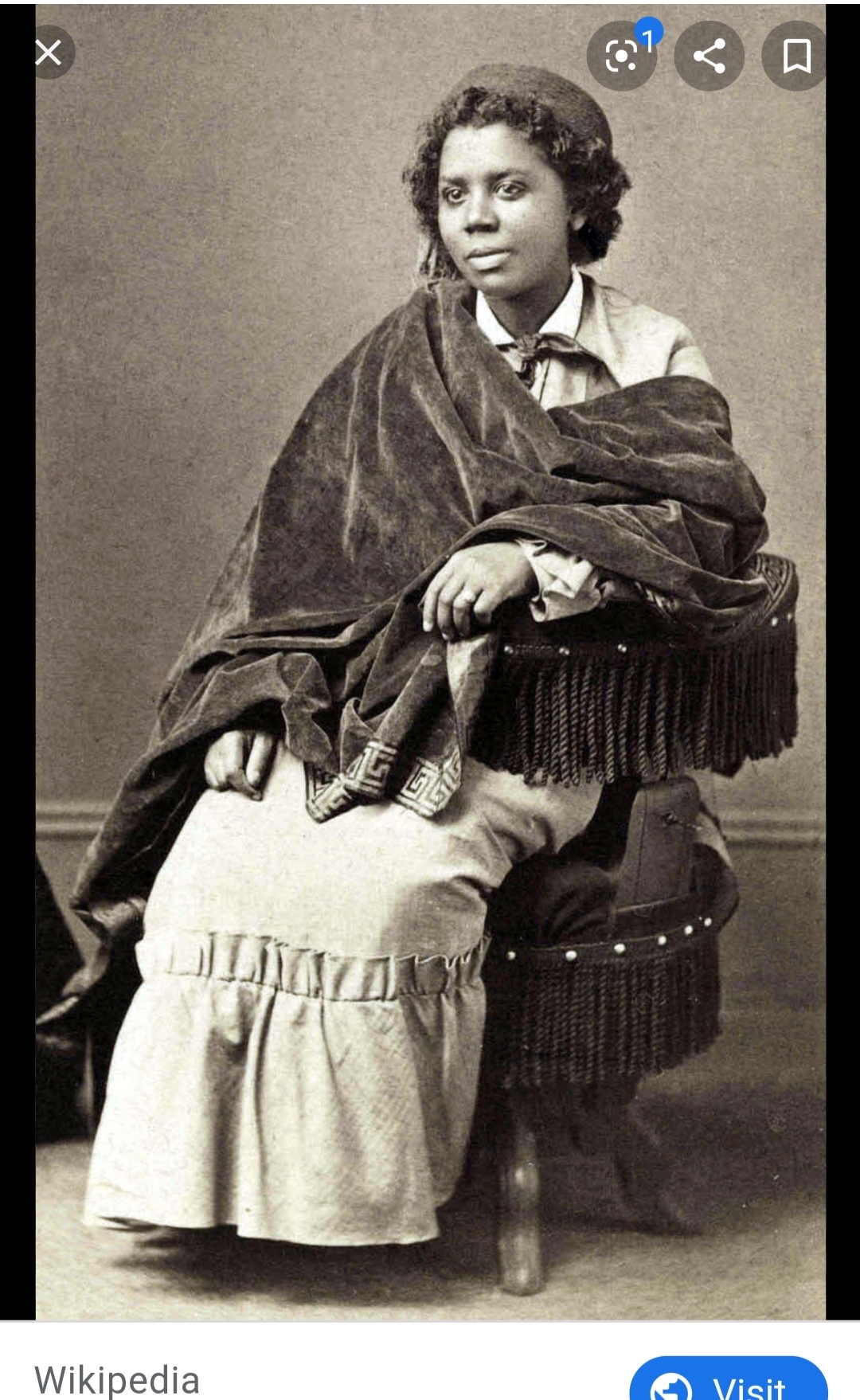
901) Edmonia Lewis

Courtesy of Wikipedia

 “There is nothing so beautiful as the free forest. To catch a fish when you are hungry, cut the boughs of a tree, make a fire to roast it, and eat it in the open air, is the greatest of all luxuries. I would not stay a week pent up in cities, if it were not for my passion for art.” 

901: Edmonia Lewis

The First Professional African American Sculptor

Born: c. 4 July 1844, East Greenbush, New York, United States of America (Present-day Rensselaer, New York, United States of America)*

Died: 17 September 1907, London, United Kingdom

Full Name: Mary Edmonia Lewis

Edmonia has also been hailed as "The First Female African American and Native American to achieve International Fame as a Sculptor in Neoclassicism". I figured that was a little too wordy to have as her “claim to fame” at the beginning of the article.

Edmonia’s mother was a Chippewa Native American (also known as Ojibwe) and gave her the Native name of Wildfire. Her father was a freeman of African descent (one source states he was from Jamaica).

Edmonia was orphaned by the time she was five but stayed with her mother’s people until she was twelve. Edmonia’s older brother Sunrise became a gold miner in California, and he helped her pay for her schooling. After a time, Edmonia shed her native name and officially began going by Mary Edmonia, and later just Edmonia.

Edmonia attended Oberlin College with her brother’s help but was not allowed to graduate. Most state the reason Edmonia was not allowed to graduate was because of a racial issue. Firstly, Edmonia was accused of poisoning two white classmates. Though she was later acquitted of the charge, Edmonia was also accused of stealing art supplies. Between the two charges school officials barred her from graduating. This was a harsh blow that came after an even harsher beating. After Edmonia was accused of poisoning two fellow white students, she had been kidnapped and beaten nearly to death by a mob who didn’t believe she was innocent. The cruel treatment Edmonia faced during her dark days in college would mark her artistic works for the rest of her life.

After leaving Oberlin, Edmonia moved to Boston and began what would be a limited education in sculpting. In her day, only white men (and a select few white women) were able to study human anatomy in order to create a more accurate picture of the human body. But Edmonia’s work never suffered from not being able to take the traditional route. If anything, this made her work that much more human and real. Soon enough, Edmonia began to sculpt medallion portraits and eventually portrait busts of the likes of William Lloyd Garrison, Wendell Phillips, Charles Sumner, John Brown, Abraham Lincoln, Ulysses S Grant, and more. The sales of these works would allow Edmonia to travel to Europe for the first time.

It was during her European trip in 1865 and 1866 that Edmonia decided to settle in Rome. She learned Italian and began to sculpt in the neoclassical style, popularized by a revival of all things Ancient Greek and Roman.

In the 1870’s, for instance, Edmonia spent four years on her most epic sculpture of her career, The Death of Cleopatra. After shipping the three-thousand-pound structure to Philadelphia, Edmonia was relieved to see the work placed at the Centennial Exhibition. Some saw the statue as a masterful creation, while others criticized the work, which depicted Cleopatra VII in the moments after her suicide, as too graphic for the Victorian mindset. After the exhibition ended, Cleopatra was dumped in an area of Chicago and was forgotten about until the 1990’s, when she was donated to the Smithsonian.

Edmonia’s sculptures were unique from others working in Italy at the time. She rarely employed outside help, while others would create a plaster bust and then transfer the work to marble with the help of native Italian craftsmen. Edmonia decided against that route for two reasons: she didn’t have the funds to pay for another’s help and she didn’t want to lose her originality in the pieces.

Sadly, very few of Edmonia’s sculptures survive to present day. She focused on abolitionists and other works relating to her African and Native American heritage, but she also sculpted religious works and other icons.

Edmonia visited the United States a few times in the latter part of the nineteenth century, but afterwards she fades from history. Her date and place of death only recently came to light. She never married or had children. Finally in 2017, Edmonia’s grave was marked with a granite headstone after being unmarked for one hundred-ten years.

*Most sources agree Edmonia was born in New York, however I thought I better mention that one Smithsonian article states she was born in either New York or Ohio. If evidence ever comes to light Edmonia was definitely born in Ohio as opposed to New York, I will update this page accordingly.

Badges Earned:

Find a Grave Marked

Located In My Personal Library:

Revolutionary Women by Peter Pauper Press

Uppity Women Speak Their Minds by Vicki Leon

Who Knew? Women in History by Sarah Herman

Sources:

https://americanart.si.edu/artist/edmonia-lewis-2914

https://www.smithsonianmag.com/smithsonian-institution/sculptor-edmonia-lewis-shattered-gender-race-expectations-19th-century-america-180972934/

https://artsandculture.google.com/exhibit/edmonia-lewis-smithsonian-american-art-museum/gQJi3NKm3VagLg?hl=en

https://www.edmonialewis.com/chronology.htm

https://www.findagrave.com/memorial/8757543/edmonia-mary-lewis

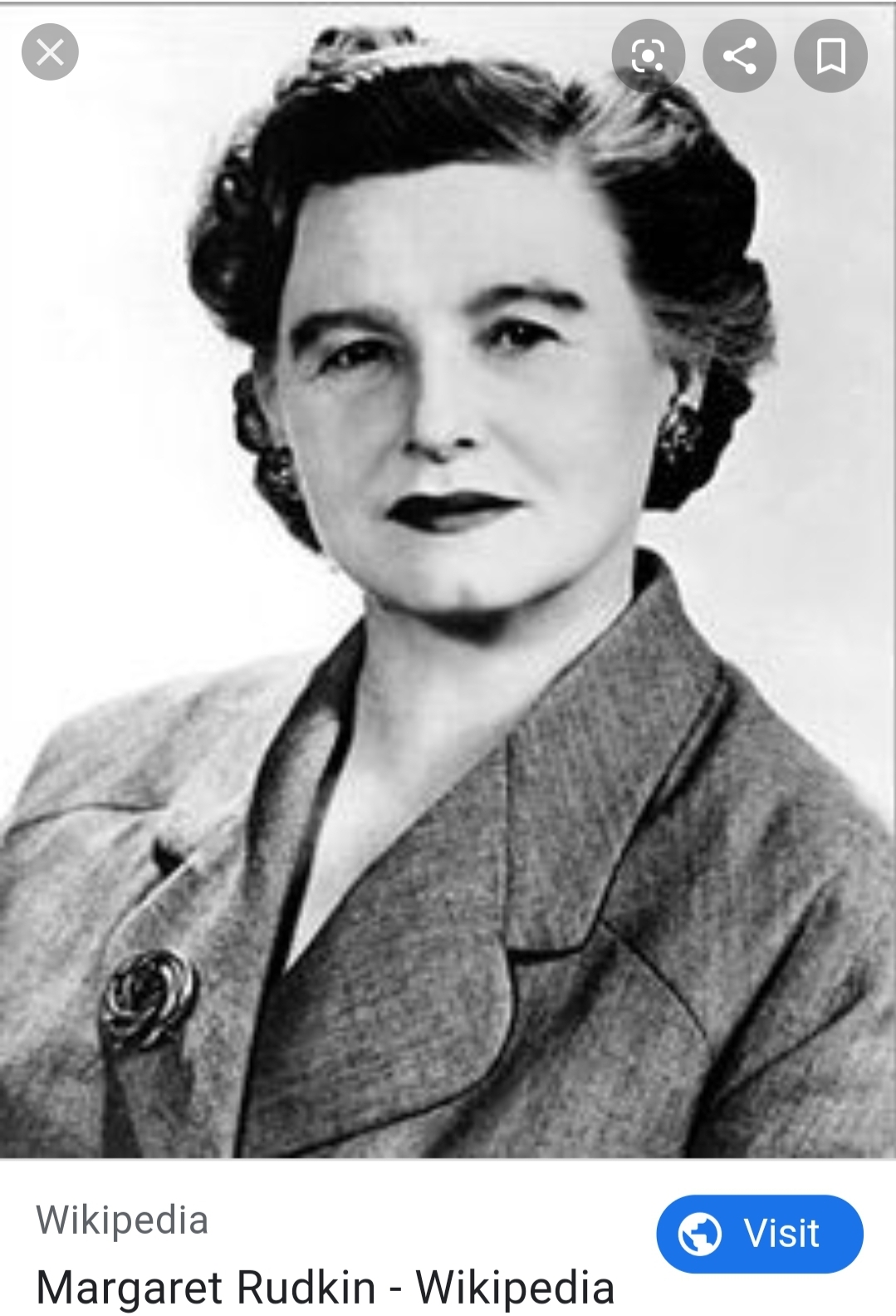
886) Margaret Rudkin

Courtesy of Wikipedia

 “That first loaf should have been sent to the Smithsonian Institution as a sample of bread from the Stone Age for it was hard as a rock and about one inch high."

886: Margaret Rudkin

Pepperidge Farm Remembers

Born: 14 September 1897, Manhattan, New York, United States of America

Died: 1 June 1967, New Haven, Connecticut, United States of America

Margaret founded Pepperidge Farm after her son developed intestinal issues from eating breads available for sale at the market.

Margaret was high school valedictorian and worked in New York City for nine years before settling down and getting married. She would have three sons and her husband worked as a stockbroker on Wall Street. Unfortunately for them, Margaret’s husband was in a polo accident that left him out of work for six months; and the Great Depression happened to strike at the same time. To say the family was in financial distress would be an understatement.

The name Pepperidge Farm came from the property on which the Rudkin family lived, Pepperidge Farm. The property was named that way after an ancient Pepperidge tree that grew on the homestead.

From 1937 to 1940, Margaret operated the business out of her garage. She started with no business model or even any idea how to make bread, but soon enough the loaves took off. Even though they sold for fifteen cents more per loaf than the average bread at the time (twenty-five as opposed to ten), people couldn’t get enough of Pepperidge Farm.

In 1939, Pepperidge Farm sold their millionth loaf of bread. They opened their first factory in 1940, but production had to be cut during World War II. Some of the ingredients Margaret insisted on using, including honey and real butter, were in short supply due to the war effort. But by the time peace rang out in 1945, Margaret had been given enough time to develop a solid business plan on how to expand.

On 4 July 1947, Pepperidge Farm celebrated the grand opening of their first commercial kitchen and factory in Connecticut. During the 1950’s, Margaret often traveled to Europe, where she encountered Belgian chocolate cookies. Knowing there were no similar products on the market in the United States, Margaret bought the rights to the pastries to begin selling under the Pepperidge Farm banner. Today the cookies remain some of Pepperidge Farm’s best sellers. Soon after, Margaret also dug into the frozen pastry world. She knew Americans were on the cusp of having freezers in their homes and kitchens and was able to guess frozen food would be a big-ticket item too. Frozen products are now responsible for up to twenty percent of Pepperidge Farm’s sales. Next up came the most iconic of all Pepperidge Farm products. While traveling in Switzerland, Margaret discovered small fish shaped crackers, and Goldfish were born.

In 1961, Margaret sold Pepperidge Farm to Campbell Soup Co and became the first woman to serve on the board of Campbell Soup.

Her cookbook was the first to ever make the bestseller list on the New York Times. Published in 1963, the Margaret Rudkin Pepperidge Farm Cookbook held both recipes and Margaret’s memoirs.

Margaret would continue to lecture at Harvard and other business schools across the country. She retired from Pepperidge Farm in 1966, and passed away from breast cancer the following year.

Badges Earned:

Find a Grave Marked

Sources:

https://www.pepperidgefarm.com/our-story/

https://www.tastecooking.com/distinctive-life-margaret-rudkin-founder-pepperidge-farm/

https://www.innovationhartford.com/entrepreneurial-legend-pepperidge-farm-founder-margaret-rudkin/

https://www.findagrave.com/memorial/6923482/margaret-rudkin

  • Previous
  • 1
  • 2
  • 3
  • 4
  • 5
  • …
  • 10
  • Next

Categories

Archives

  • July 2025 (10)
  • July 2024 (1)
  • January 2024 (1)
  • August 2023 (1)
  • June 2023 (2)
  • October 2022 (1)
  • July 2022 (1)
  • June 2021 (3)
  • December 2020 (3)
  • August 2019 (1)
  • July 2019 (2)

Search

© 2026 The Exasperated Historian | Powered by Minimalist Blog WordPress Theme