The Exasperated Historian
Menu
  • Home
  • The Women’s List (New)
  • The Men’s List
  • The Animal List
  • Collections
  • The Blog
  • Contact Us
  • FAQ
Menu

Tag: women in politics

1087) Marie Equi

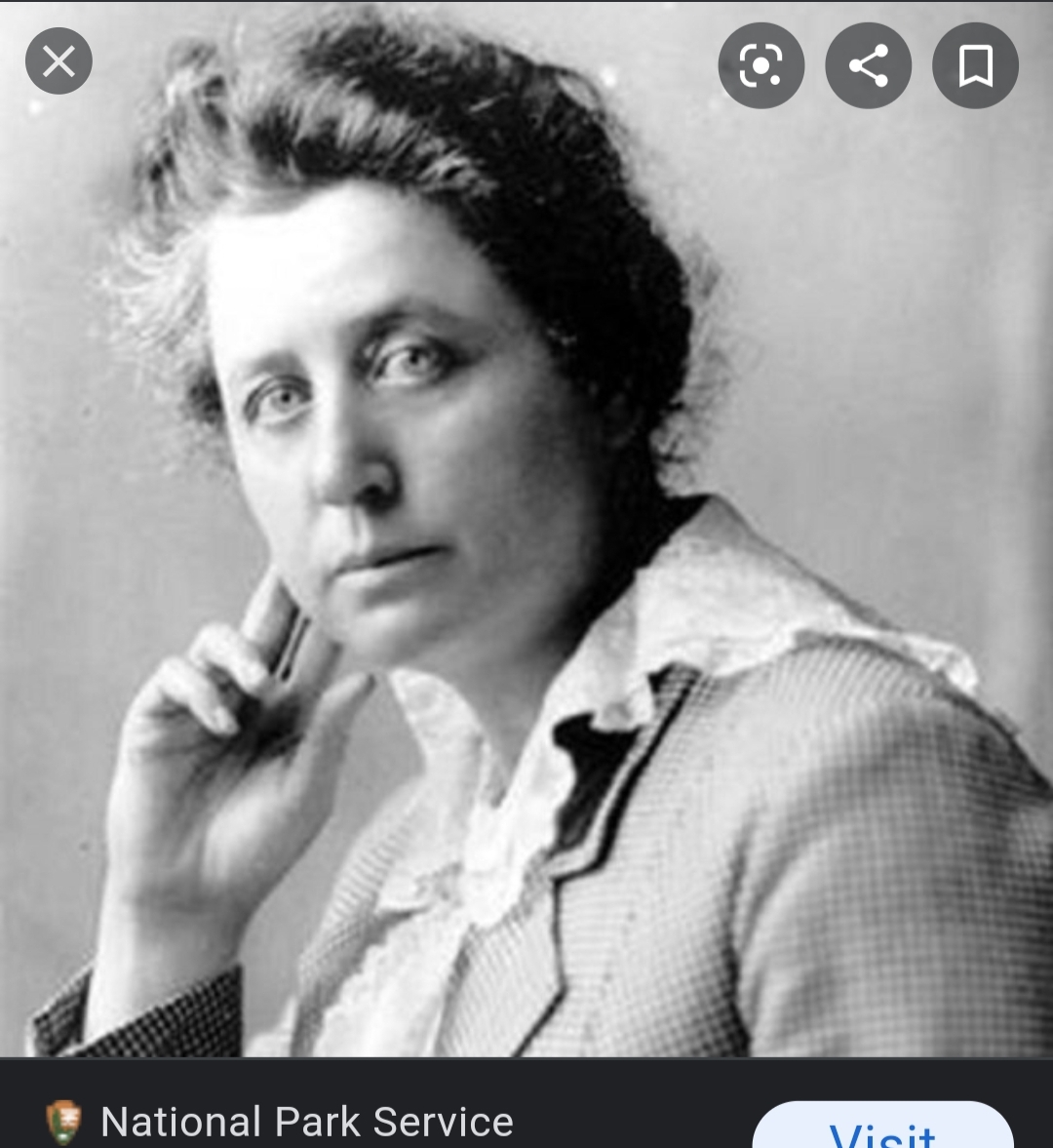
Courtesy of the National Park Service

1087: Marie Equi

Western Medical Doctor and Progressive Political Activist

Born: 7 April 1872, New Bedford, Massachusetts, United States of America

Died: 13 July 1952, Portland, Oregon, United States of America

Marie was also a Birth Control information provider at a time when such a thing was still illegal. She also performed abortions and held a medical degree; spending her entire adult life fighting for the rights of the working class.

Raised in Massachusetts, Marie had at least six siblings (one source claims as many as ten), though several died in childhood. Her father was a mason and would sometimes feed workers on strike, enabling Marie to hear their stories as she grew up. Both of Marie's parents were immigrants who had moved to the United States in search of a better life; her mother from Ireland and her father, Italy.

Marie dropped out of high school after her first year in order to go to work to help support her family. Marie’s time in the factory would give her an eyewitness look into the deplorable conditions working-class folks experienced at the time.

A friend paid for a year of seminary school, but Marie was unable to gain a scholarship to continue on her education. When she was twenty, Marie left home and moved across the country to Oregon, where she would live for the rest of her life. Marie lived in Oregon with the same friend who had paid for her school tuition, and though they started out as simply friends, the two women’s relationship grew into something more as time went on.

After arriving on the West Coast, Marie immediately set to work. Marie’s girlfriend was a teacher, and Marie began studying for her exams to enter medical school. In 1899, Marie enrolled in medical school after she and her girlfriend relocated to San Francisco. Four years later, Marie had moved to Portland, switched schools, had broken up with her teacher girlfriend and was now seeing another young woman. That same year, Marie also graduated from medical school with her license to practice.

Marie’s private medical practice was focused on obstetrics, gynecological issues, and pediatrics, though she treated men when needed as well. As time continued on, Marie became more and more involved in progressive politics and activism work. The majority of Marie’s patients were the same working-class immigrants just trying to survive that she had surrounded herself with her entire life.

After she joined the Progressivism Movement, Marie became the only woman to volunteer on the Oregon Doctor Train, a group of Oregon physicians who traveled south to help relieve those affected by the 1906 San Francisco Earthquake. Marie was put in charge of a 300-bed obstetric wing by the US Army, and was eventually given an award from the Army for her work in those dark days.

After returning to San Francisco, Marie entered into a new relationship with a wealthy heiress named Harriet. Harriet and Marie would adopt a baby girl, named Mary Jr. The women continued to raise Mary Jr together even after they split up a few years later.

As time went on, she became more radicalized and preached anarchism. In 1913, Marie was brutally beaten by police during a riot that broke out after a gathering of striking workers in Portland turned violent. This experience pushed Marie from Progressive Activist to full-on political radical.

Marie spent the years of World War I urging local men to not enlist in the armed forces; which obviously didn’t make her popular with the folks back in Washington. Marie was eventually subjected to wiretaps, had an informant placed within her social circle, and went to trial for her seditious activities. At the trial, the prosecution included in their “evidence” the fact that Marie was openly lesbian and had some anger issues to prove she was guilty of sedition. In late December 1918, Marie was found guilty and sentenced to three years in federal prison. After serving ten months in San Quentin, Marie was released for good behavior. President Roosevelt would issue her a pardon in 1933.

In her later late years, Marie lived a much quieter life, though she did continue to attend and openly support at least two different strikes. During a hospital stay in 1950, Marie received red roses from longshoremen union workers as thanks for all she had done to support them. Marie was cared for by her daughter in her final years.

Marie was a fellow of the American Medical Association.

Badges Earned:

Find a Grave Marked

Rejected Princess

Located In My Personal Library:

Tough Mothers by Jason Porath

Sources:

https://www.nps.gov/people/drmarie-equi.htm

https://historicwomensouthcoast.org/marie-equi/

https://cfmedicine.nlm.nih.gov/physicians/biography_103.html

https://www.findagrave.com/memorial/139839557/marie-diana-equi

1080) Olympias

1080: Olympias

One of the Most Powerful Women of Ancient Hellenic Origin

Born: c.375 BC, Present-day Epirus, Greece

Died: c.316 BC, Present-day Pydna, Greece

Original Name: Myrtle

Olympias was the daughter of the king of the Mollosians, a powerful tribe in Epirus. She was also the second wife of Philip II of Macedon (they married when she was about eighteen and he was around twenty-eight) and she was the mother of Alexander the Great (as well as a daughter named Cleopatra). Olympias even claimed her family was descended from the legendary Greek hero Achilles, and that his power and might had lived on in their blood. Her son would eventually travel to the ancient site of Troy to pay homage to his ancestor, and some say he carried a copy of The Iliad with him wherever he went as a consequence as well.

Long story short, Olympias was connected to lots of powerful men to say the least.

Olympias was given the name she is now most associated with after her husband’s prized horse was victorious in the Olympic Games. According to the ancient scholar Plutarch, Olympias gave birth to her son, Alexander, on the same day as her husband’s victory at the games. These two events corresponding on the same day foretold a great future for Olympias’s son; a future he more than lived up to.

Olympias may have poisoned Alexander’s half-brother (who wasn’t her son) so the boy wouldn’t be a threat to Alexander’s ambitions for the throne. The boy didn’t die, just became mentally impaired as a result. The proof of whether or not Olympias was actually responsible for this act is circumstantial, but the fact that it has persisted for so many centuries is telling.

The Macedonian people disliked Olympias for being a cult follower of Dionysus. The cult of Dionysus is remembered for being very hedonistic; drinking wine (unsurprisingly), enjoying some fun in the bedroom with several other adults (trying to keep this PG in case someone young comes across this article…), as well as keeping company with snakes. Some of the ancient sources went so far as to say Olympias slept with snakes in her bed. To me that seems very uncomfortable and more dangerous than it would be worth, but maybe she was about that life. I don’t judge.

After twenty years of marriage, Phillip divorced Olympias to marry a fully-Macedonian woman (rumors were swirling that Phillip himself was only half-Macedonian and therefore he and his son’s claim to the throne was in jeopardy). The politically savvy Phillip knew that by marrying his new Macedonian bride, if he managed to get her pregnant, he would be scoring a child worthy of inheriting the Macedonian throne.

The main issue here? This would obviously remove Alexander from the line of succession. Around the same time she was divorced from her husband, Olympias’s brother, who was king of Epirus, came into a marriage contract with his niece, Olympias’s daughter Cleopatra. This meant that, should the marriage go forth and should Phillip’s newest wife give birth to a boy, Olympias would be completely void of any political power in Macedonia or Epirus. Her world was about to come tumbling down.

Luckily for Olympias, fate was about to intervene.

Phillip was assassinated (possibly with Olympias’s help) at the wedding banquet for his and Olympias’s daughter (who did end up marrying Olympias’s brother, the poor girl’s uncle—luckily for the bride, the groom died not long after). With Phillip dead, Alexander rose to the throne and Olympias became the mother of the king, just like she had always wanted.

Soon after, Phillip’s new wife and daughter (and possibly son if she had one) were put to death on Olympias’s orders. According to some accounts, the family was burned to death, while others claim Cleopatra-Eurydice, Phillip’s widow, was hung until dead. Either way, their end was swift and brutal, leaving Olympias and Alexander the winners of that round.

Soon after becoming king, Alexander left to conquer large swaths of the world. Before he left, Olympias pulled her son aside and told him his father was not actually the now dead and deposed Phillip, but actually the god Zeus. Alexander more than lived up to his supposed divine heritage (you don’t earn the nickname “The Great” for nothing!) but Olympias and Alexander would never meet face to face again. Though mother and son corresponded all throughout his travels, Alexander died from an infection a long long way from home while still in his thirties, his only child not yet born.

With Alexander dead, the struggle for his empire soon began. Eventually, the vast empire was split apart, certain swaths given to certain generals. The portion that contained his native Macedonia (as well as other swaths of land) was eventually given to the general Polyperchon to rule as regent, but he was soon ousted by a brutal man named Cassander. Technically speaking, the plan was for Cassander to rule as regent until Alexander’s son (and Olympias’s grandson) would grow old enough to rule in his own right. For the time being though? Cassander ruled as regent while the mentally ill prince (Alexander’s half-brother that had survived an assassination attempt so many years before) wielded the title of king. Olympias realized soon after that, so long as Cassander breathed, her grandson would never be able to take the throne as Alexander IV (his father, Alexander the Great, was technically Alexander III).

After several years of struggle, Olympias and her cousin, the new king of Epirus, tried to invade Macedonia in order to place Olympias’s grandson on the throne. In 317 BCE, Olympias finally succeeded in murdering the current king, Alexander’s half-brother, the boy she may have tried to poison many years before. With the king as well as hundreds of other citizens who had been loyal to Cassander dead, Olympias may have finally felt secure once again. However, Cassander himself wasn’t dead and still remained regent of the area. Though the man initially vowed to save Olympias’s life, he decided she was too much of a threat to his own ambitions to keep alive.

Olympias was executed in 316 BCE. Sometime after (possibly as long as six years later), her grandson, Alexander IV, as well as his mother Roxanne (Alexander the Great’s widow), were both put to death as well. Alexander IV was only around fourteen years old at the most when he died. Olympias had battled her entire adult life for her son and grandson, but in the end, her ambition to save her family’s right to the throne was what also led to her doom.

Badges Earned:

Find a Grave Marked

Rejected Princess

Located In My Personal Library:

Tough Mothers by Jason Porath

Arsinoe of Egypt and Macedon, a Royal Life by Elizabeth Donnelly Carney

Goddesses, Whores, Wives, and Slaves: Women in Classical Antiquity by Sarah B Pomeroy

Lost Bodies by Jenni Davis

Lost Cities, Ancient Tombs: 100 Discoveries That Changed the World edited by Ann R Williams

National Geographic History Magazine November/December 2019 Edition article “The Woman Behind the Throne, Olympias”

National Geographic History Magazine May/June 2025 article "Alexander and Philip, A Twisted Path to Power" by Mario Agudo Villanueva

Secret Egypt by Zahi Hawass

Sources:

https://www.worldhistory.org/Olympias/

https://www.nationalgeographic.com/history/history-magazine/article/queen-olympias-ancient-macedonia

https://www.britannica.com/biography/Olympias

https://www.livius.org/articles/person/olympias/

https://allthatsinteresting.com/queen-olympias

https://www.findagrave.com/memorial/147615586/olympias-of_macedon

1065) Benazir Bhutto

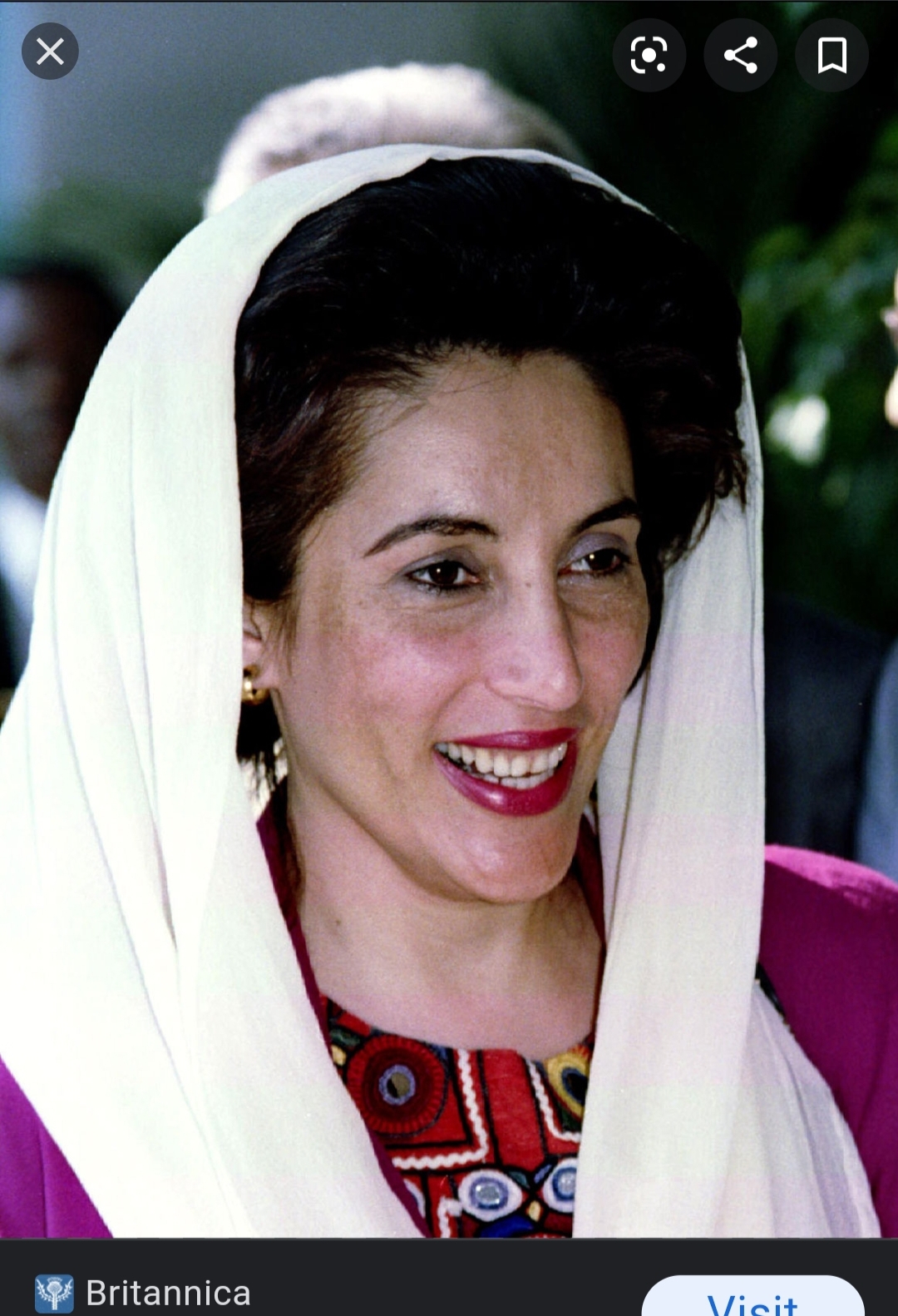
Courtesy of Britannica

“You can imprison a man, but not an idea. You can exile a man, but not an idea. You can kill a man, but not an idea.”

“Democracy is the best revenge.”

1065: Benazir Bhutto

Former Prime Minister of Pakistan

Born: 21 June 1953, Karachi, Pakistan

Died: 27 December 2007, Rawalpindi, Pakistan

Benazir was the first woman to head a Muslim Majority Nation in the modern day, and the first woman to ever be democratically elected leader of a Muslim Majority country.

Benazir was educated at both Harvard and Oxford University, earning a bachelors degree at Harvard and completing several courses at Oxford.

She was the daughter of Zulfikar Ali Bhutto, a former Prime Minister himself. He served as the leader of Pakistan for six years. Sadly, in 1979 Benazir’s father was hung by the military dictator who had taken control of Pakistan; ironically on charges of authorizing the murder of a rival political leader. After her father’s death, Benazir became de facto leader of the party he had once headed, the PPP or Pakistan People’s Party (Benazir became the chair of the party in 1982). From 1979 to 1984, Benazir was put under house arrest several times, and beginning in 1984 she was actually exiled from her country for two years.

Tragedy continued to befall Benazir’s family. One of her brothers died mysteriously in 1980 (the family insisted he was poisoned but no one was ever charged in his death). A second brother was killed in a gun battle in 1996.

In 1987, Benazir married a wealthy landowner. The couple would eventually have three children: one son and two daughters. Benazir became prime minister three months after her first child was born.

After the death of Pakistan’s military dictator in 1988, Benazir became a leading force in Pakistani politics. During the elections that year, Benazir’s party won the largest majority of seats in Pakistan’s National Assembly, leading to her being selected as Prime Minister as the head of a coalition government.

Benazir served two terms (1988-1990 and 1993-1996). During her first administration, Benazir was forced to resign her position after charges of political corruption were leveled at her. She hadn’t managed to effect much change in her country during her time in office, and her party lost large swaths of the election later that year (1990).

Three years later, Benazir was back. The PPP won back a large piece of the government after elections in October, and Benazir was once again Prime Minister. Three years later however, her government was once again forced out of power after being accused of political corruption, decline of law and order, and economic mismanagement.

Things were so bad that Benazir and her husband were both convicted on multiple charges relating to government corruption in 1999. However, the convictions were overturned by the Pakistani Supreme Court in 2001 after it was discovered the rival political party, who was in power at the time, had had a hand in ensuring the couple were convicted. During this time Benazir was in a self-imposed exile, splitting her time between London and Dubai. Though her tenure away was initially indeed self-imposed, arrest warrants for her were eventually sworn out meaning she would be taken into custody if she returned home.

The government decided to take things a step further with Benazir. According to Encyclopedia Britannica (Article linked below): “Because of [the Pakistani president’s] 2002 decree banning prime ministers from serving a third term, Bhutto was not permitted to stand for elections that same year. In addition, legislation in 2000 that prohibited a court-convicted individual from holding party office hindered her party, as Bhutto’s unanimously elected leadership would have excluded the PPP from participating in elections. In response to these obstacles, the PPP split, registering a new, legally distinct branch called the Pakistan People’s Party Parliamentarians (PPPP). Legally separate and free from the restrictions brought upon the PPP by Bhutto’s leadership, the PPPP participated in the 2002 elections, in which it proceeded to earn a strong vote. However, Bhutto’s terms for cooperation with the military government—that all charges against her and against her husband be withdrawn—continued to be denied.”

In 2007, the president of Pakistan finally commuted the charges against Benazir, and granted her amnesty, allowing her to return home—just in time for another round of elections. Sadly, Benazir’s return was not welcomed by many in her country. 136 people were killed in a rally welcoming her back to Pakistan, though the plotters of the attack failed to kill Benazir, that day.

The plotters succeeded a few months later, however. In December, Benazir was assassinated and twenty-eight other bystanders were killed in the attack. Around one hundred more were wounded. The suicide bomber who was identified as the culprit behind the attack was fifteen years old.

In the weeks after her death, mass protests and riots broke out across the country, killing twenty-three more. Pakistan’s Interior Justice blamed Benazir’s death on Al Qaeda, but a spokesperson for the terrorist organization denied being involved.

Badges Earned:

Find a Grave Marked

Rejected Princess

Located In My Personal Library:

Historical Heartthrobs: 50 Timeless Crushes--From Cleopatra to Camus by Kelly Murphy

The Only Woman by Immy Humes

The Warrior Queens by Antonia Fraser

Tough Mothers by Jason Porath

Sources:

https://www.britannica.com/biography/Benazir-Bhutto

https://www.history.com/topics/womens-history/benazir-bhutto

https://www.bbc.com/news/world-asia-42409374

https://www.goodreads.com/author/quotes/471833.Benazir_Bhutto

https://www.findagrave.com/memorial/23574601/benazir-bhutto

1031) Georgiana Cavendish

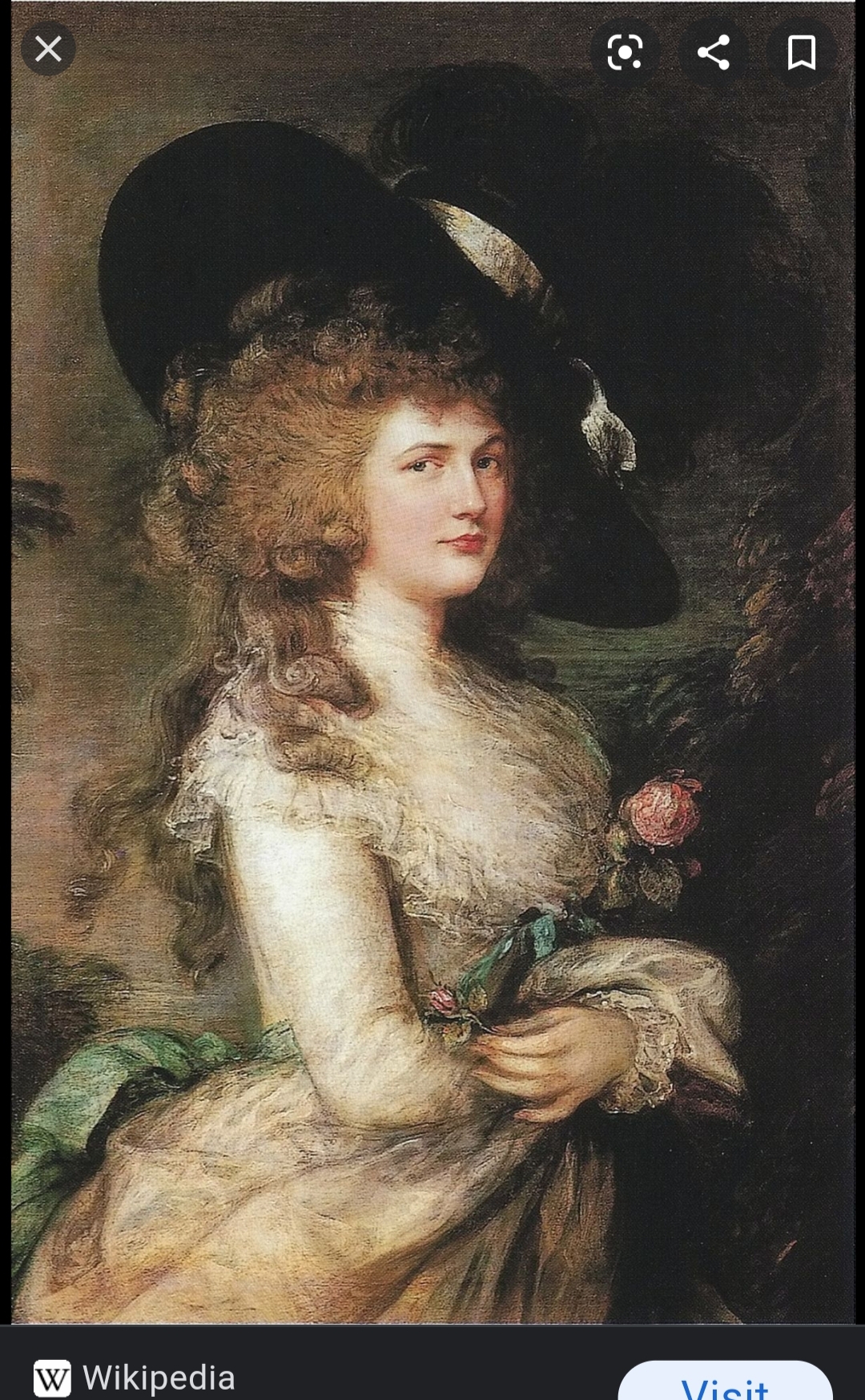
Courtesy of Wikipedia

1031: Georgiana Cavendish

Duchess of Devonshire

Born: 7 June 1757, Althorp, Northamptonshire, England (Present-day Althorp Estate, England, United Kingdom)

Died: 30 March 1806, Devonshire House, Greater London, United Kingdom (Present-day Piccadilly, London, United Kingdom)

Georgiana was born to the affluent Spencer family and held the titles of Honorable and later Lady growing up. One of her more famous descendants was Diana, Princess of Wales.

As a child, Georgiana’s family pronounced her name Jor-jee-ah-nah, but after she married, she changed the pronunciation to her husband and his family’s pronunciation of Jor-jay-nuh.

Georgiana, or Gee to her close friends, is best remembered for her incredible fashion sense and her keen mind for politics. Living in the Georgian era of English history meant Georgiana, as well as the rest of women among the aristocracy and peasant classes both, were just starting to become involved in politics and had to figure out how to navigate these new waters while still retaining their place in society. Women were not able to vote at the time, but Georgiana became the central advocate for the Whig Party, bringing attention and new votes to the party.

Georgiana was the oldest child in her family. Her father went on to become the 1st Earl Spencer, while her mother became Countess Spencer. Georgianna had two younger siblings, Henrietta and George.

On her seventeenth birthday, Georgiana married William Cavendish, the fifth Duke of Devonshire, who was eight years older than her. It was an arranged marriage and was a largely unhappy one. Though they would have three children together (along with multiple heartbreaking miscarriages), both William and Georgiana were unfaithful and spent years living in the same house but leading separate lives.

Georgiana and William had two daughters and a son. Their daughters, born first, were named Georgiana Dorothy (Little G) and Harriet Elizabeth (Harryo). Finally, in 1790, after sixteen years of marriage, Georgiana gave birth to a son (and heir to the dukedom), William George Spencer Cavendish. The family also cared for William’s illegitimate daughter Charlotte, who was older than his legitimate children. Before the birth of her son, Georgiana was not permitted to take a lover for fear of who the legitimate father of the child would be. However, after giving birth to her son, Georgiana was finally free to embark on a great love affair of her own. In 1791, the duchess began having an affair with Charles Grey, an earl and later the Prime Minister. Within a few months of their romance blossoming, Georgiana discovered she was pregnant.

Georgiana’s husband told her she had a decision to make. Either give up her unborn child and her lover or never see her three already living children again. Georgiana went to France to secretly give birth. Her daughter Eliza was given away to Charles Grey’s family, and Georgiana’s husband refused to allow his wife to return home for two long years to punish her for her indiscretion. Meanwhile, his own lovechild Charlotte was still living at home! Eliza grew up believing Georgiana was simply a kind woman who took an interest in her as an aunt-figure, while Charles was her much older brother. Eliza was a grown woman before she knew the truth, and only then after Georgiana herself had died. Eliza named her own daughter Georgiana in tribute to her biological mother.

The duchy Georgiana found herself tied to through her marriage meant she had access to considerable sums of money. With that money, Georgiana brought a new sense of fashion to the English aristocracy, including the tall hairstyles better known in the French courts. She spent her evenings hosting large social events, while her husband was usually off playing cards at a private club far from home. Georgiana also was a known gambling addict, and spent much of her life racking up considerable debt with no way of ever repaying the money she spent (after one of her more heartbreaking miscarriages, Georgiana finally broken down and admitted to her husband she was around $300,000 in debt in today’s money). She was also prone to drinking copious amounts of alcohol, which led to other mental health crisis episodes including rounds of either starving herself or binging on large quantities of food.

After her two years abroad in France, Georgiana returned to England in 1793 a changed woman. She gave up partying and switched to other pursuits, like collecting crystals, spending time with her children, and nursing her useless (in this author’s opinion) husband through his struggles with gout. In her late thirties, Georgiana came down with an eye infection that left her half-blind and with a scarred face. No longer held back by society viewing her as the most beautiful woman in the land, Georgiana was able to be taken more seriously for her mind rather than her face.

Georgiana also spent her time writing. She wrote several works of poetry, but also dipped her quill in fictional works as well. Georgiana wrote several novels, most of which inspired scandal in their day. One work in particular, The Sylph, opened the doors to the general public on what really went on in the aristocracy, in all its unabashed and debauched glory (the novel was published anonymously under the name 'A Young Lady'). Today, some historians believe the main character in The Sylph, is actually a reflection of Georgiana herself, while the other characters are caricatures of her so-called friends. While most of high society openly admonished the book, they couldn’t help buying it either. Soon enough Georgiana had a best-seller on her hands.

Sadly, for Georgiana, she was never able to drop her one true addiction: gambling. Throughout her entire adult life, Georgiana continued to gamble and rack up debts that she could never repay. In her forties by then, Georgiana had to ask her mother for money to help pay back her creditors. Only a few years later, Georgiana died from a liver abscess at only forty-eight years old.

In Georgiana’s time, many aristocratic women took part in “Romantic Female Friendships.” This meant a woman, such as Georgiana, grew incredibly close with another woman. For many viewers today, these relationships can be construed as lesbian relationships, but whether or not there was ever a true sexual nature in Georgiana’s friendships with women is unknown.

In 1782, Georgiana embarked on her closest relationship with another woman. Known as Bess to her friends, Lady Elizabeth Foster was, at the time, estranged from her husband and had no funds with which to support herself. Georgiana invited Bess to live with herself and her husband, and Bess readily agreed. Over the course of the next twenty-five years, Bess and William, Georgiana’s husband, lived together and conducted an affair that resulted in two illegitimate children together (and yes, this does make William’s attitude towards Georgiana’s own illegitimate child hypocritical in this author’s opinion). This fact, coupled with Georgiana and Bess’s close relationship as well, has led to some historians to question whether or not the three of them were actually in a sort of polyamorous relationship, but once again, this will never be known for certain.

In 1806, after Georgiana died, Bess married William Cavendish and became the next Duchess of Devonshire. Georgiana had bequeathed her personal papers to Bess, who went on to destroy most of them, leading to the mysteries of Georgiana’s personal life that pervade to today.

The 2008 film The Duchess is inspired by Georgiana’s life and is sort-of based on the biography of her listed below, written by Amanda Foreman.

Badges Earned:

Find a Grave Marked

Located In My Personal Library:

Who Knew? Women in History by Sarah Herman

Georgiana, Duchess of Devonshire by Amanda Foreman

Jefferson’s Daughters by Catherine Kerrison

Sources:

Georgiana, Duchess of Devonshire by Amanda Foreman

https://www.tatler.com/article/who-was-georgiana-spencer-duchess-of-devonshire

https://www.english-heritage.org.uk/learn/histories/lgbtq-history/romantic-female-friendship/

https://www.factinate.com/people/facts-georgiana-cavendish/

https://www.findagrave.com/memorial/10126610/georgiana-cavendish

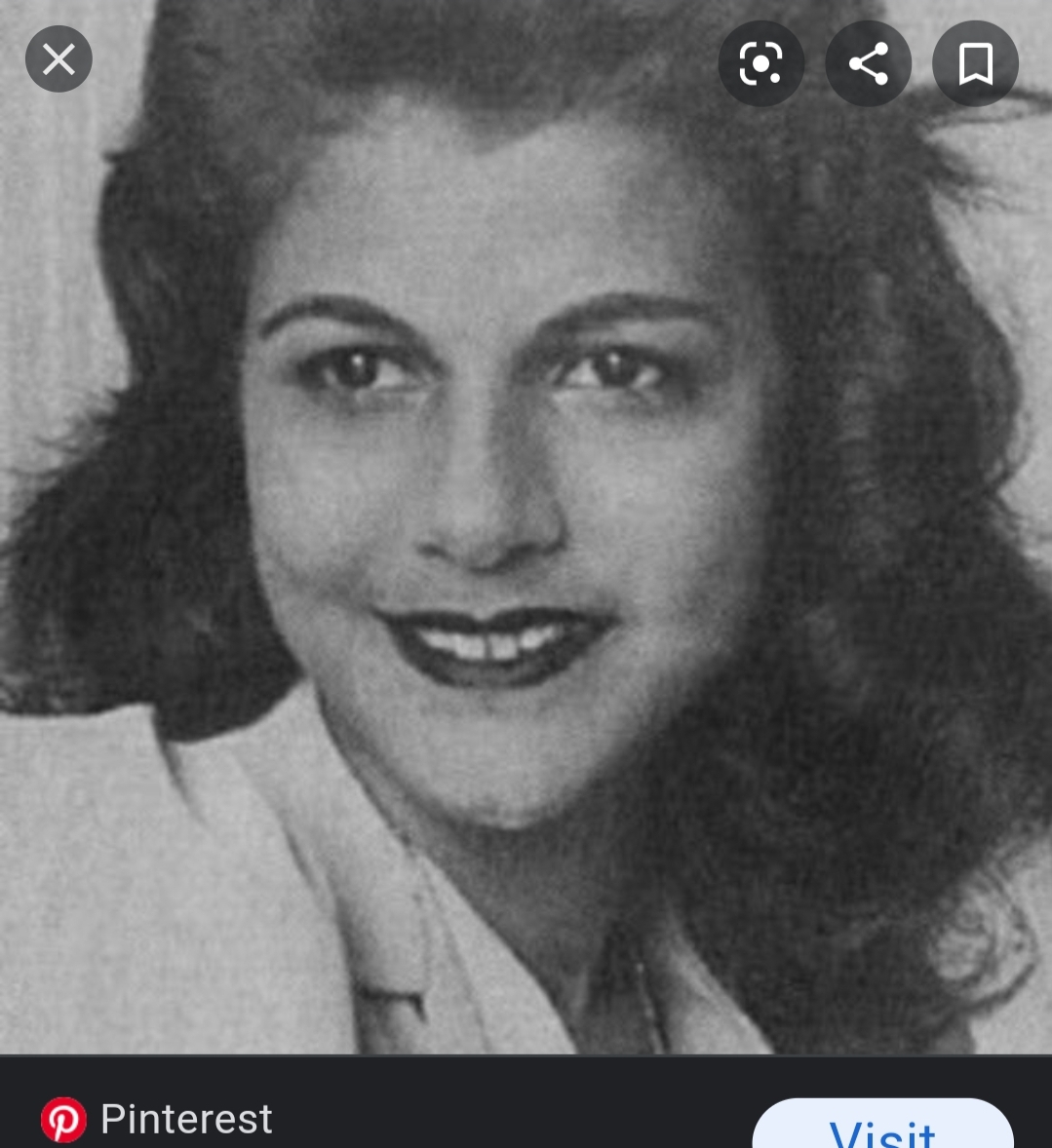
1030) Maria Teresa Mirabal

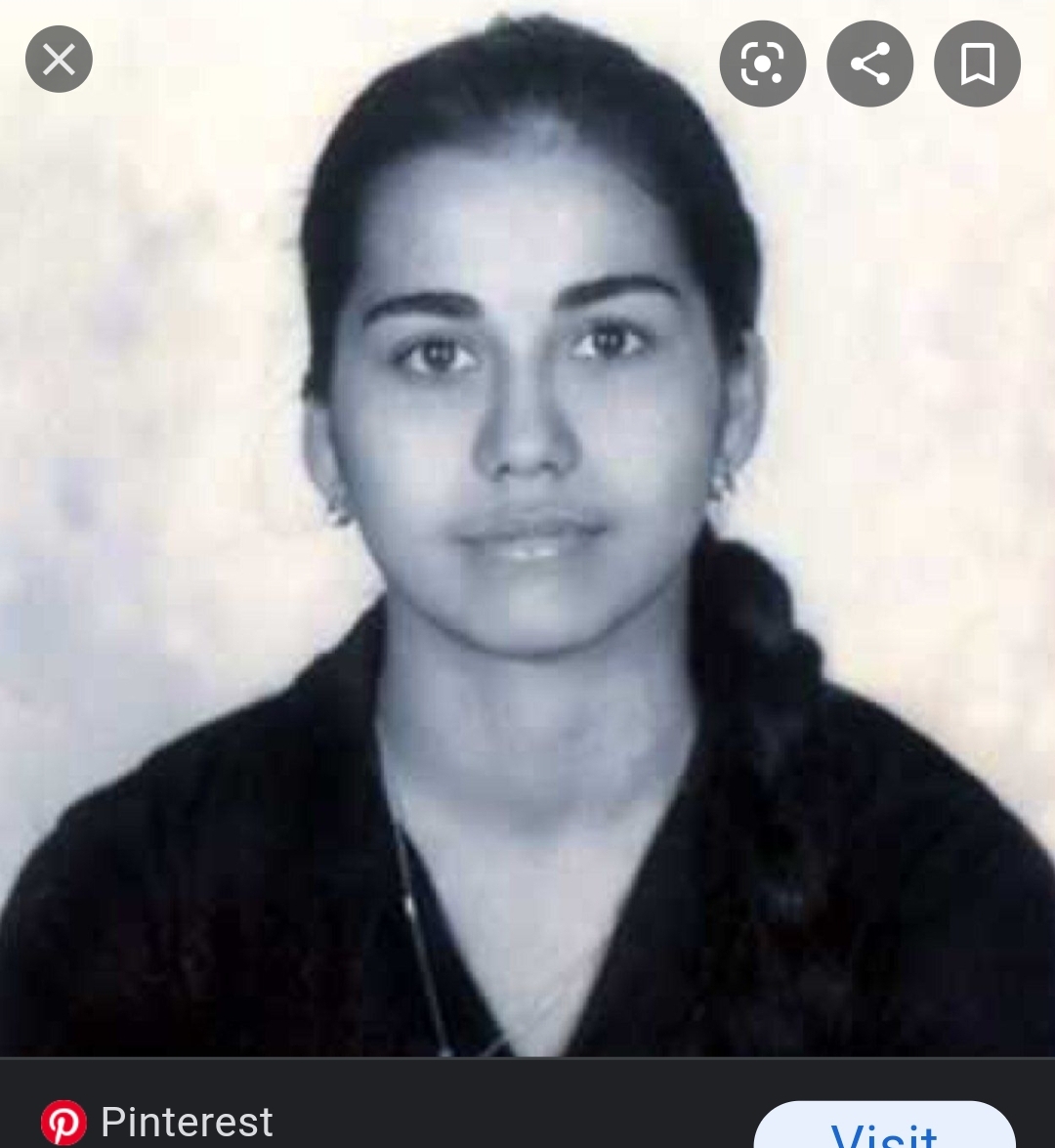
Courtesy of Pinterest

“Perhaps what we have most near is death, but that idea does not frighten me. We shall continue to fight for that which is just.”

1030: María Teresa Mirabal

One of the Famed Las Mariposas

Born: 15 October 1936, Salcedo, Dominican Republic

Died: 25 November 1960, Dominican Republic

Full Name: Antonia María-Teresa Mirabal de Guzmán

María Teresa was the youngest sister in her family, and studied mathematics in college. She greatly admired her older sister Minerva. María Teresa was married and had one daughter.

María Teresa was one of four sisters (Patria, Minerva, Dede, and María Teresa), all of whom were raised in a small Conservative community. The four sisters, known collectively as Las Mariposas, fought back against their country’s brutal dictator and are seen as feminist icons and activists around the world today.

A dictator ruled the Dominican Republic for over thirty years, from 1930 to 1961, during which time thousands were imprisoned and thousands more massacred along the border with Haiti. His rule was described by History thusly:

Known as “El Jefe” (“the Boss”) or “el Chivo” (“the Goat”), T-------* was the commander in chief of the army before he seized power in 1930. The prosperity, modernization and stability his regime brought to the country came at a high price: T------- took over the country’s economy, including production of such goods as salt, meat, tobacco and rice, and channeled the profits to his own family and supporters. Civil and political liberties disappeared, and only one political party, the Dominican Party, was allowed to exist.

T-------’s fearsome secret police rooted out dissenters, using tactics of intimidation, imprisonment, torture, kidnapping and rape of women, and murder. His regime would ultimately be responsible for tens of thousands of deaths, including the massacre of an estimated 20,000 Haitians living near the border between Haiti and the Dominican Republic in 1937.

In November of 1960, Patria, Minerva, and María Teresa were traveling with a driver when they were ambushed by the dictator’s soldiers. All four were removed from the car, taken to separate locations, and executed. The soldiers then put all four of the victims back in the car and pushed it off a ravine to make it look like an accident. However, no one in the country believed the story, and six months later the dictator himself was assassinated.

Today, In the Dominican Republic, a large monument that once commemorated the dictator who ordered their deaths has been replaced by a mural of the four sisters. Their former home is now a museum dedicated to the sisters’ memory. In 1999, the UN dedicated November 25th as the International Day to Eliminate Violence Against Women, in honor of the Mirabal Sisters.

*The dictator’s name has been redacted by the author of this article. His name is readily available on all the sources listed below, but the author has decided to focus instead on the Mirabal sisters themselves and not the man who murdered them.

Badges Earned:

Find a Grave Marked

Located In My Personal Library:

Bygone Badass Broads by Mackenzi Lee

A Short History of the World in 50 Lies by Natasha Tidd

Who Knew? Women in History by Sarah Herman

Time Magazine's 100 Women of the Year (Patria appears in the 1960 article, "The Mirabal Sisters”)

National Geographic History Magazine Article "Three Brave Sisters Who Defied a Dictator" by Erin Blakemore (March/April 2026 Edition)

Sources:

https://www.history.com/news/mirabal-sisters-trujillo-dictator

https://www.thevintagenews.com/2017/04/19/the-mirabal-sisters-the-three-butterflies-who-were-killed-because-of-their-activities-against-the-dictatorship-of-rafael-trujillo/

https://www.encyclopedia.com/women/dictionaries-thesauruses-pictures-and-press-releases/mirabal-de-guzman-maria-teresa-1936-1960

http://www.learntoquestion.com/seevak/groups/2000/sites/mirabal/English/Cocoon/childhood4.html

https://www.findagrave.com/memorial/6023989/antonia-maria-teresa-mirabal

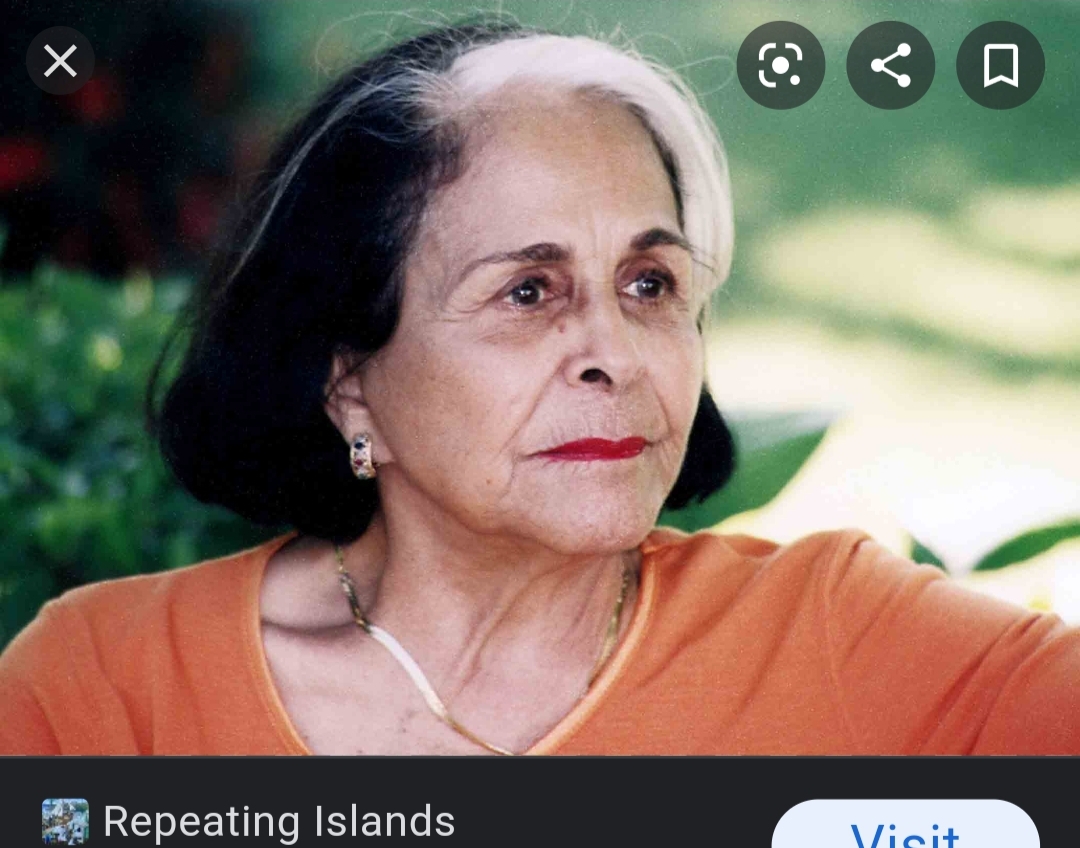
1029) Dedé Mirabal

Courtesy of Repeating Islands

"I stayed alive to tell their stories."

“We lived in fear, and there is nothing worse than living in fear.”

1029: Dedé Mirabal

Born: 1 March 1925, Salcedo, Dominican Republic

Died: 1 February 2014, Santa Domingo, Dominican Republic

Original Name: Bélgica Adela Mirabal Reyes

Dedé was the second oldest in her family.

Unlike her three sisters,  Dedé did her best to stay out of politics. She did not earn a college degree, and instead focused on staying home to take care of her family.

Dedé was one of four sisters, all of whom were raised in a small Conservative community. The four sisters, known collectively as Las Mariposas, fought back against their country’s brutal dictator and are seen as feminist icons and activists around the world today.

A dictator ruled the Dominican Republic for over thirty years, from 1930 to 1961, during which time thousands were imprisoned and thousands more massacred along the border with Haiti. His rule was described by History thusly:

Known as “El Jefe” (“the Boss”) or “el Chivo” (“the Goat”), T-------* was the commander in chief of the army before he seized power in 1930. The prosperity, modernization and stability his regime brought to the country came at a high price: T------- took over the country’s economy, including production of such goods as salt, meat, tobacco and rice, and channeled the profits to his own family and supporters. Civil and political liberties disappeared, and only one political party, the Dominican Party, was allowed to exist.

T-------’s fearsome secret police rooted out dissenters, using tactics of intimidation, imprisonment, torture, kidnapping and rape of women, and murder. His regime would ultimately be responsible for tens of thousands of deaths, including the massacre of an estimated 20,000 Haitians living near the border between Haiti and the Dominican Republic in 1937.

Dedé was married for thirty-four years; eighteen of which she described as good and happy. She also stated her husband was violent but attractive. According to some sources, the main reason Dedé didn’t join the fight was because her husband would not let her. Whenever her sisters were off doing their activism work, or in prison, Dedé watched their children.

In November of 1960, Patria, Minerva, and Maria Teresa were traveling with a driver when they were ambushed by the dictator’s soldiers. All four were removed from the car, taken to separate locations, and executed. The soldiers then put all four of the victims back in the car and pushed it off a ravine to make it look like an accident. However, no one in the country believed the story, and six months later the dictator himself was assassinated.

After Dedé’s sisters were killed, she raised all six of their children as well as her own three sons. She also vowed to carry on their fight to end the dictator’s regime, and then fought on to see her sisters’ memory preserved.

In 2009, Dedé released a memoir in which she recounted her memories of her sisters. Dedé also opened up their childhood home, turning it into a museum from which she gave tours until she died.

One of Dedé’s sons eventually went on to become vice president of the Dominican Republic.

Today, In the Dominican Republic, a large monument that once commemorated the dictator who ordered their deaths has been replaced by a mural of the four sisters. Their former home is now a museum dedicated to the sisters’ memory. In 1999, the UN dedicated November 25th as the International Day to Eliminate Violence Against Women, in honor of the Mirabal Sisters.

*The dictator’s name has been redacted by the author of this article. His name is readily available on all the sources listed below, but the author has decided to focus instead on the Mirabal sisters themselves and not the man who murdered them.

Badges Earned:

Located In My Personal Library:

Bygone Badass Broads by Mackenzi Lee

A Short History of the World in 50 Lies by Natasha Tidd

Who Knew? Women in History by Sarah Herman

National Geographic History Magazine Article "Three Brave Sisters Who Defied a Dictator" by Erin Blakemore (March/April 2026 Edition)

Time Magazine's 100 Women of the Year (Patria appears in the 1960 article, "The Mirabal Sisters”)

Sources:

https://www.nytimes.com/2021/01/13/obituaries/dede-mirabal-overlooked.html

https://www.history.com/news/mirabal-sisters-trujillo-dictator

https://www.thevintagenews.com/2017/04/19/the-mirabal-sisters-the-three-butterflies-who-were-killed-because-of-their-activities-against-the-dictatorship-of-rafael-trujillo/

1028) Minerva Mirabal

Courtesy of Pinterest

“It is a source of happiness to do whatever can be done for our country that suffers so many anguishes. It is sad to stay with arms crossed.”

1028: Minerva Mirabal

One of the Famed Las Mariposas

Born: 12 March 1926, Salcedo, Dominican Republic

Died: 25 November 1960, Dominican Republic

Full Name: María Argentina Minerva Mirabal Reyes de Tavárez

Minerva was one of four sisters, all of whom were raised in a small Conservative community. The four sisters, known collectively as Las Mariposas, fought back against their country’s brutal dictator and are seen as feminist icons and activists around the world today. One of the sisters, Dede, stayed home to care for the extended family, while the other three (Minerva, Patria, and Maria Teresa) stood on the forefront of opposition politics in the country.

Minerva was the most politically active in her family, and became the first in the family to get involved in the movement to depose her country’s dictator.

A dictator ruled the Dominican Republic for over thirty years, from 1930 to 1961, during which time thousands were imprisoned and thousands more massacred along the border with Haiti. His rule was described by History thusly:

Known as “El Jefe” (“the Boss”) or “el Chivo” (“the Goat”), T-------* was the commander in chief of the army before he seized power in 1930. The prosperity, modernization and stability his regime brought to the country came at a high price: T------- took over the country’s economy, including production of such goods as salt, meat, tobacco and rice, and channeled the profits to his own family and supporters. Civil and political liberties disappeared, and only one political party, the Dominican Party, was allowed to exist.

T-------’s fearsome secret police rooted out dissenters, using tactics of intimidation, imprisonment, torture, kidnapping and rape of women, and murder. His regime would ultimately be responsible for tens of thousands of deaths, including the massacre of an estimated 20,000 Haitians living near the border between Haiti and the Dominican Republic in 1937.

Minerva began her opposition work after hearing a classmate speak about a relative who was killed by the dictator. Then, in 1949, Minerva was hit on by the dictator at a party, and after rejecting his advances her father was arrested and imprisoned. Minerva herself and her mother were held under house arrest, and only released after Minerva agreed to write an apology letter to the dictator (she never actually wrote the letter!).

Minerva became one of the first women in the Dominican Republic to earn a law degree, but she was forbidden the chance to practice by the government, largely because of her earlier “slight” of the dictator. While still in school, Minerva married a like-minded man who was also active in the opposition movement against the dictator.

Minerva founded an opposition movement to prepare an uprising against the government. She and her sisters distributed pamphlets and spread ideas of revolution. Eventually, Minerva and Maria Teresa were arrested alongside their husbands. The sisters were released but their husbands remained in prison.

Because of Minerva’s activism against the dictator who controlled her country, her family’s property was seized and their lives harassed. She and her sisters were also arrested multiple times and had their lives threatened. In November of 1960, Patria, Minerva, and Maria Teresa were traveling with a driver when they were ambushed by the dictator’s soldiers. All four were removed from the car, taken to separate locations, and executed. The soldiers then put all four of the victims back in the car and pushed it off a ravine to make it look like an accident. However, no one in the country believed the story, and six months later the dictator himself was assassinated.

Sadly, the Mirabal sisters’ story was continually buried by the government for many years, and the full truth, despite the surviving sister Dede's insistence in the meantime, would not surface until the 1990's.

Two different films have been made about the Mirabal sisters. In one, Minerva is portrayed by Salma Hayek, while in the other she is played by Michelle Rodriguez.

Minerva’s daughter eventually became a member of the government in the Dominican Republic, as a congressional representative and foreign minister.

Today, In the Dominican Republic, a large monument that once commemorated the dictator who ordered their deaths has been replaced by a mural of the four sisters. Their former home is now a museum dedicated to the sisters’ memory. In 1999, the UN dedicated November 25th as the International Day to Eliminate Violence Against Women, in honor of the Mirabal Sisters. Minerva’s image appears on a banknote in the Dominican Republic today.

*The dictator’s name has been redacted by the author of this article. His name is readily available on all the sources listed below, but the author has decided to focus instead on the Mirabal sisters themselves and not the man who murdered them.

Badges Earned:

Find a Grave Marked

Located In My Personal Library:

Bygone Badass Broads by Mackenzi Lee

A Short History of the World in 50 Lies by Natasha Tidd

Who Knew? Women in History by Sarah Herman

National Geographic History Magazine Article "Three Brave Sisters Who Defied a Dictator" by Erin Blakemore (March/April 2026 Edition)

Time Magazine's 100 Women of the Year (Patria appears in the 1960 article, "The Mirabal Sisters”)

Sources:

https://prabook.com/web/minerva.mirabal/1720517

https://www.thevintagenews.com/2017/04/19/the-mirabal-sisters-the-three-butterflies-who-were-killed-because-of-their-activities-against-the-dictatorship-of-rafael-trujillo/

https://www.history.com/news/mirabal-sisters-trujillo-dictator

https://www.nytimes.com/2021/01/13/obituaries/dede-mirabal-overlooked.html

http://www.unesco.org/new/en/unesco/events/major-events/?tx_browser_pi1%5BshowUid%5D=2482&cHash=5acea5e644

https://www.findagrave.com/memorial/6023978/minerva-argentina-mirabal

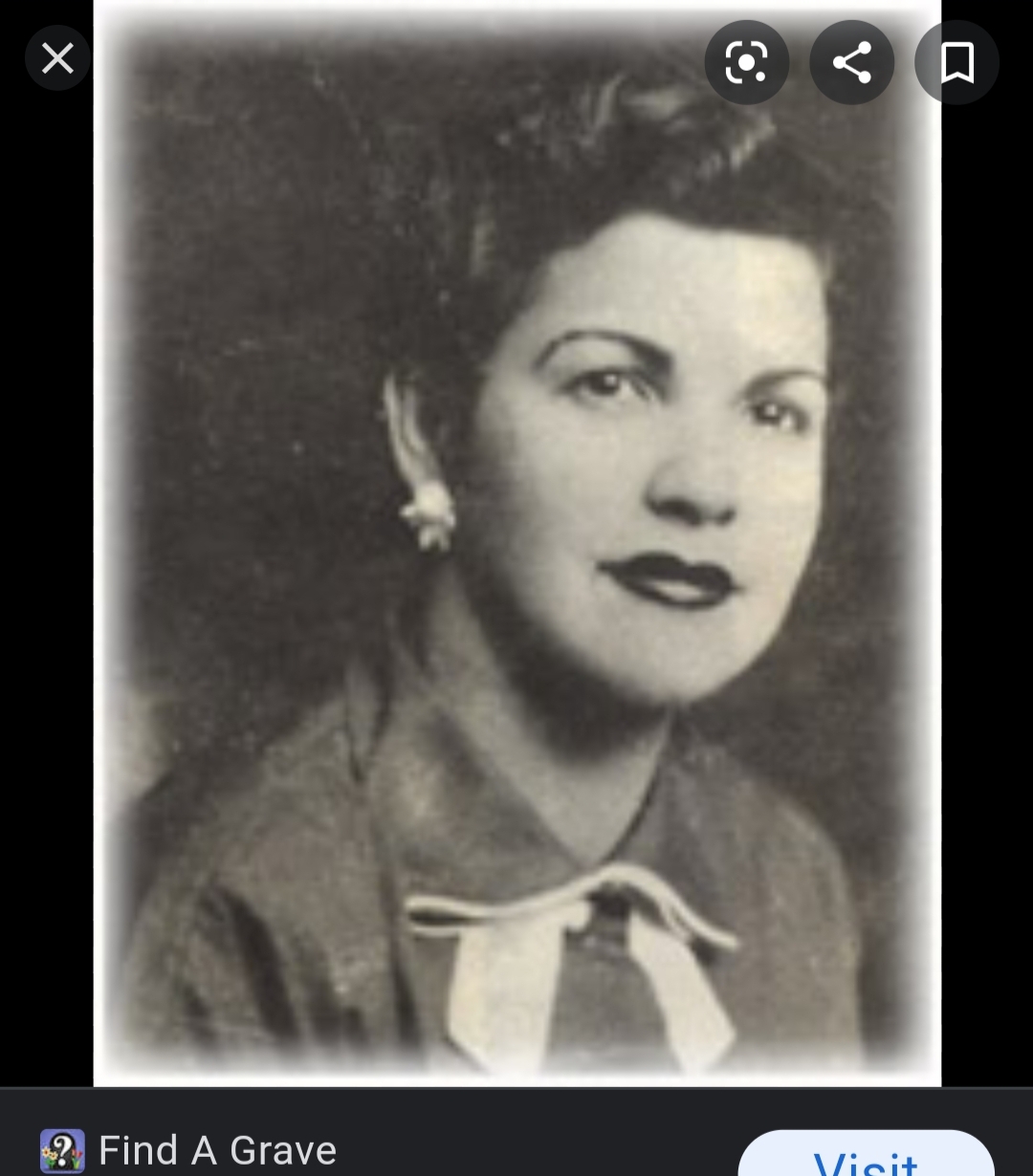
1027) Patria Mirabal

Courtesy of Find a Grave

"We cannot allow our children to grow up in this corrupt and tyrannical regime, we have to fight against it, and I am willing to give up everything, including my life if necessary."

1027: Patria Mirabal

One of the Famed Las Mariposas

Born: 27 February 1924, Salcedo, Dominican Republic

Died: 25 November 1960, Dominican Republic

Full Name: Patria Mercedes Mirabal Reyes de González

Patria’s name means “Fatherland.” Her parents gave her the name because her birthday, 27 February, is the Dominican Republic’s Independence Day.

Patria was an artist and loved to paint.

She was sent to a Catholic Boarding school at the age of fourteen, alongside her sisters Dede, Maria Teresa, and Minerva. Eventually, Patria went on to earn the equivalent of a bachelor’s degree in Social Studies.

When Patria was sixteen or seventeen (sources differ), she married a farmer. They had four children together (one of whom died at only five months old).

Patria was one of four sisters, all of whom were raised in a small Conservative community. The four sisters, known collectively as Las Mariposas, fought back against their country’s brutal dictator and are seen as feminist icons and activists around the world today. One of the sisters, Dede, stayed home to care for the extended family, while the other three stood on the forefront of opposition politics in the country.

A dictator ruled the Dominican Republic for over thirty years, from 1930 to 1961, during which time thousands were imprisoned and thousands more massacred along the border with Haiti. His rule was described by History thusly:

Known as “El Jefe” (“the Boss”) or “el Chivo” (“the Goat”), T-------* was the commander in chief of the army before he seized power in 1930. The prosperity, modernization and stability his regime brought to the country came at a high price: T------- took over the country’s economy, including production of such goods as salt, meat, tobacco and rice, and channeled the profits to his own family and supporters. Civil and political liberties disappeared, and only one political party, the Dominican Party, was allowed to exist.

T-------’s fearsome secret police rooted out dissenters, using tactics of intimidation, imprisonment, torture, kidnapping and rape of women, and murder. His regime would ultimately be responsible for tens of thousands of deaths, including the massacre of an estimated 20,000 Haitians living near the border between Haiti and the Dominican Republic in 1937.

Because of Patria’s activism against the dictator who controlled her country, her family’s property was seized and their lives harassed. She and her sisters were also arrested multiple times and had their lives threatened. In November of 1960, Patria, Minerva, and Maria Teresa were traveling with a driver when they were ambushed by the dictator’s soldiers. All four were removed from the car, taken to separate locations, and executed. The soldiers then put all four of the victims back in the car and pushed it off a ravine to make it look like an accident. However, no one in the country believed the story, and six months later the dictator himself was assassinated.

Sadly, the Mirabal sisters’ story was continually buried by the government for many years, and the full truth, despite the surviving sister Dede's insistence in the meantime, would not surface until the 1990's.

Today, a middle school in New York City has been named in Patria’s honor (MS 324). In the Dominican Republic, a large monument that once commemorated the dictator who ordered their deaths has been replaced by a mural of the four sisters. Their former home is now a museum dedicated to the sisters’ memory. In 1999, the UN dedicated November 25th as the International Day to Eliminate Violence Against Women, in honor of the Mirabal Sisters.

*The dictator’s name has been redacted by the author of this article. His name is readily available on all the sources listed below, but the author has decided to focus instead on the Mirabal sisters themselves and not the man who murdered them.

Badges Earned:

Find a Grave Marked

Located In My Personal Library:

Bygone Badass Broads by Mackenzi Lee

A Short History of the World in 50 Lies by Natasha Tidd

Who Knew? Women in History by Sarah Herman

National Geographic History Magazine Article "Three Brave Sisters Who Defied a Dictator" by Erin Blakemore (March/April 2026 Edition)

Time Magazine's 100 Women of the Year (Patria appears in the 1960 article, "The Mirabal Sisters”)

Sources:

http://www.learntoquestion.com/seevak/groups/2000/sites/mirabal/English/Cocoon/childhood2.html

https://www.encyclopedia.com/women/encyclopedias-almanacs-transcripts-and-maps/mirabal-sisters

https://prabook.com/web/patria.mirabal/1720516

https://www.history.com/news/mirabal-sisters-trujillo-dictator

https://www.thevintagenews.com/2017/04/19/the-mirabal-sisters-the-three-butterflies-who-were-killed-because-of-their-activities-against-the-dictatorship-of-rafael-trujillo/

https://www.schools.nyc.gov/schools/M324

https://www.findagrave.com/memorial/6023925/patria-mercedes-mirabal

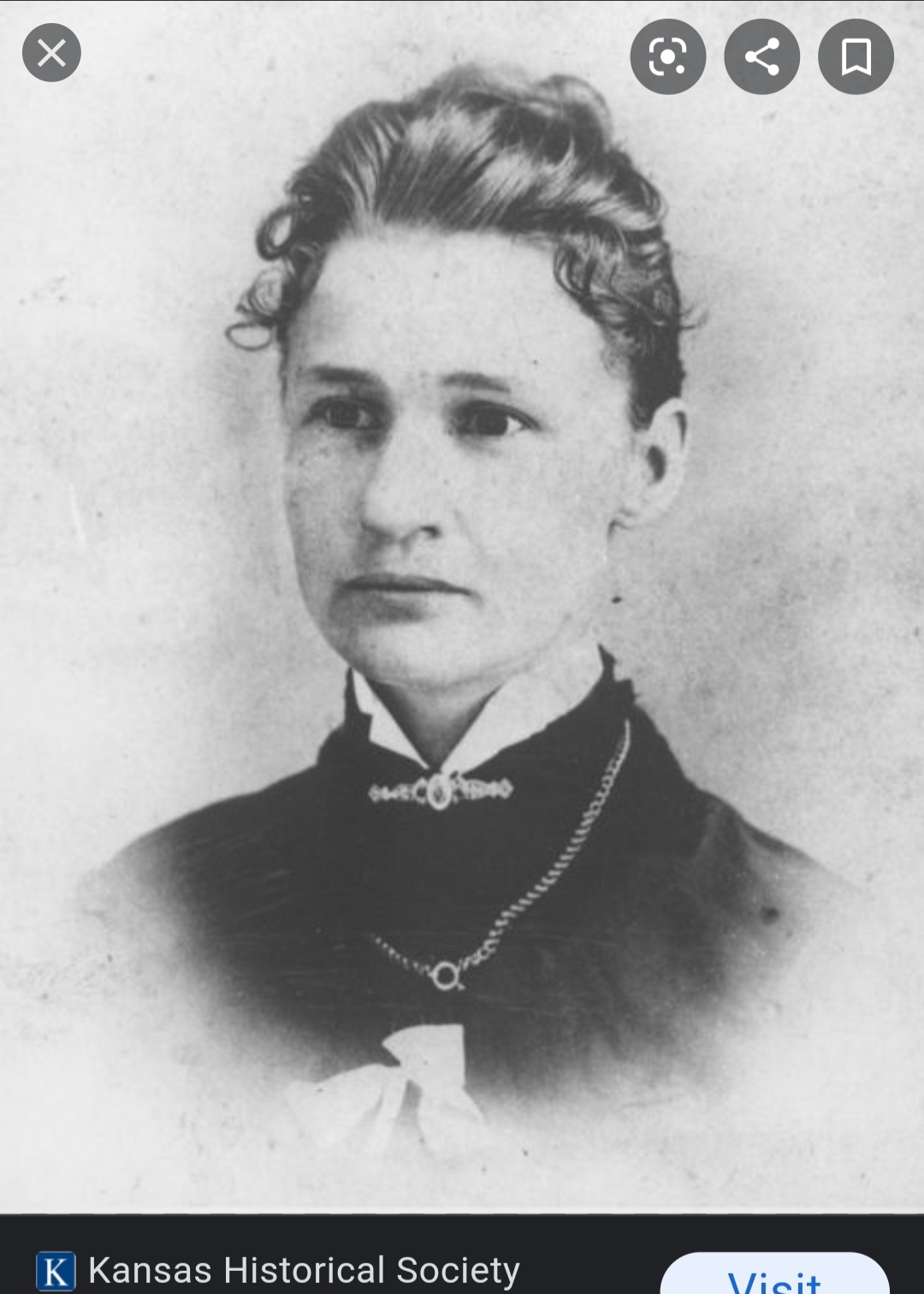
1006) Susanna Salter

Courtesy of the Kansas Historical Society
A Meme from Tumblr
A meme posted to Tumblr about Susanna Salter's story.

1006: Susanna Salter

The First Elected Female Mayor in United States History

Born: 2 March 1860, Belmont County, Ohio, United States of America

Died: 17 March 1961, Norman, Oklahoma, United States of America

Susanna served Argonia, Kansas after being elected in 1887. She was voted in thirty-two years before American women received universal suffrage with the passing of the nineteenth amendment.

Susanna attended college but had to leave six weeks before graduation after falling ill. She did meet her future husband while in school however, and they married in 1880.

Susanna and her husband moved to Argonia in 1882. Susanna’s father bought the hardware store where her husband worked to help out the growing family. Soon enough, Susanna’s husband began studying to pass the Kansas bar to practice as a lawyer.

Susanna’s father became the first mayor of Argonia, while her husband served as city clerk. Kansas voted to enfranchise women in certain cities and villages, including sleepy Argonia.

In 1884, Susanna became actively involved in politics. The local chapter of the Women’s Christian Temperance Union was interested in ensuring the already passed prohibition laws in Kansas were going to stay in enforcement. Susanna presided over the caucus for the WCTU as they decided who they would back in the local election.

Some of the men in town got a little miffed when they realized women were moving into the political sphere. In order to get back at those upstart women, these angry men decided to submit a list of candidates of their own for consideration. The men copied the WCTU’s list exactly; with one exception. The angry men placed Susanna’s name on the list for mayor. She was the only woman eligible to be a candidate from the WCTU because she was the only woman who lived within the town limits. The angry men assumed the women would vote the way the WCTU wanted, and that the other men would never dare vote for a woman.

The angry men were wrong.

Susanna had no idea her name had been placed on the ballots until the morning of the election. At the time, candidates didn’t actually have to be made aware they were literally up for political office. The angry men simply had ballots printed with her name on them, and come the morning of the election, the voters of Argonia were stunned to see Susanna’s name right there in black and white.

The Republican faction in Argonia spotted an opportunity when it was presented to them. A group of Republican men raced over to Susanna’s house, where they found her doing her family’s laundry. The Republicans asked Susanna if she would accept the mayoral position if she won the election. When she agreed to it, the Republicans vowed they would see Susanna elected to get back at the angry men who were trying to pull a dirty trick on her.

Susanna’s husband was incensed when he found out Susanna’s name was on the ballot. He was even more upset when she told him she was willing to serve if elected. Susanna refused to back down, and that afternoon she and her parents went down and voted. Susanna followed the rules of etiquette and refused to vote for herself, leaving the box for mayoral candidate blank.

The women of the WCTU decided to turn against their own candidate and voted for Susanna in droves. She ended up earning a two-thirds majority win for the position of mayor.

Now, to be fair, the entire population of Argonia was only around 500 to begin with, so its not like Susanna was bringing in thousands of votes, but even still, her win was remarkable.

Instead of embarrassing her and proving women had no place in politics, the angry men had just ensured the election of America’s first female mayor. Whoops.

Once her win was announced, Susanna’s husband checked his attitude and proudly announced he was the “Husband of the Mayor.”
Susanna’s term in office was one year and her salary one dollar (though she spent much more than her salary just answering fan mail). Instead of ruling over Argonia with an iron fist, Susanna reassured the council of men that she was merely their presiding officer.

Not much happened politically in Argonia that year. The council did arrest two men for refusing to purchase licenses and they warned a couple of teenagers to stop throwing rocks at vacant buildings. Otherwise Susanna managed to keep the town from spontaneously combusting, as I’m sure some of the angry men thought would happen if a woman ever rose to a place of political power.

Though not much actually happened in Argonia during that year Susanna was mayor, she did manage to capture the attention of reporters around the country. Correspondents from newspapers from coast to coast were sent to the sleepy town to interview residents and watch over council meetings, to see how Susanna conducted business. By and large, the country was impressed with how well Susanna kept everything together.

The newspapers were even more impressed when they learned America’s first female mayor had also managed to give birth to a child while in office. I know, hold everything people, a woman did something many many women around the world do—carried a child and given birth to it while still working at a day job. Shocking!

Susanna would actually have nine children in all (according to Wikipedia—seven are listed on Find a Grave). That to me is more impressive than giving birth while in office. She was also only twenty-seven when she was elected, only stood five feet three inches tall, only weighed one hundred and twenty-eight pounds, and most shocking of all (I’m using sarcasm here), some newspapers noted Susanna had never hired any domestic help for her household. Actually, the fact that she had nine kids and no help is really incredible, but that’s not actually why people were shocked as you can imagine.

Susanna wasn’t just famous in the United States. Her name and photo appeared in newspapers in South Africa, Sweden, and more. Susanna received congratulatory letters from people in Italy, France, Germany, Austria, and other places in Europe.

Susanna was even invited to speak at the Kansas Women’s Equal Suffrage Association. She was introduced at the event by Susan B Anthony, who introduced Susanna by saying, “Why, you look just like any other woman, don't you?"

After Susanna’s single year in office, she declined to run for re-election. Susanna and her family continued to live in Argonia until 1893, when they moved to Oklahoma. For ten years, the Salters homesteaded and farmed. After a decade of roughing it though, they moved to Augusta, where Susanna’s husband became a practicing lawyer and started a newspaper. In 1916, Susanna’s husband died, and the family moved closer to the state university so her younger children could continue going to school.

In 1933, Susanna returned to Argonia for a ceremony in which the citizens honored her with a bronze plaque. When Susanna turned ninety, she announced she would walk a mile on every birthday she had for the remainder of her life. At ninety-four, Susanna was still living alone in an apartment, cooking and cleaning up after herself. She had a hearing aid by then, but otherwise was unencumbered by her age.

Susanna passed away only days after her one hundred and first birthday. Now that’s a life worth celebrating.

Badges Earned:

Find a Grave Marked

Located In My Personal Library:

No Place for a Woman: The Struggle for Suffrage in the Wild West by Chris Enss

Who Knew? Women in History by Sarah Herman

Sources:

https://www.kshs.org/p/kansas-historical-quarterly-susanna-madora-salter/13106

https://www.kshs.org/kansapedia/susanna-madora-salter/12191

https://www.womenshistory.org/susanna-madora-salter

http://www.herhatwasinthering.org/biography.php?id=7639

https://kansasleadershipcenter.org/susanna-salter/

https://en.wikipedia.org/wiki/Susanna_M._Salter

https://www.findagrave.com/memorial/38837870/susanna-madora-salter


Celebrating 1,000 Women (And Counting!)

Posted on December 24, 2020January 16, 2022 by nickssquire12

Just a quick note to celebrate this historic milestone. After gathering data and stories for five years, I am now proud to say the first 1,000 women have been posted to this website, where their stories will live on forever. We have seen criminals, victims, scientists, mathematicians, lawyers, advocates, survivors, artists, musicians, actresses, innkeepers, warriors, royalty, and so much more.

I now know I have over six hundred more women to go, but I wanted to mark the date as the first 1,000 appeared. Today, Christmas Eve, 24 December 2020, officially marks that day. Entry number one, Hypatia of Alexandria, and entry number one thousand, Claressa Shields, have led completely different lives than just about anyone, but that's even more perfect in a way. These two women represent how varied and wonderful the human story is, and how each story impacts the world in such a different way.

Thank you, to anyone reading this, to anyone who has supported me over the years, and to everyone who will continue or begin to support me in the future. None of this would have been possible without you, and I will always be grateful.

To 1,000 more eventually! (And a special note of appreciation for the 200 men who have active profiles on this site as well. We won't forget you either, and I'm proud to say I have about twenty more on the way...)

-The Exasperated Historian Herself, Zoë

  • 1
  • 2
  • 3
  • 4
  • Next

Categories

Archives

  • July 2025 (10)
  • July 2024 (1)
  • January 2024 (1)
  • August 2023 (1)
  • June 2023 (2)
  • October 2022 (1)
  • July 2022 (1)
  • June 2021 (3)
  • December 2020 (3)
  • August 2019 (1)
  • July 2019 (2)

Search

© 2026 The Exasperated Historian | Powered by Minimalist Blog WordPress Theme