The Exasperated Historian
Menu
  • Home
  • The Women’s List (New)
  • The Men’s List
  • The Animal List
  • Collections
  • The Blog
  • Contact Us
  • FAQ
Menu

Category: Birth Locations

731) Anna Bågenholm

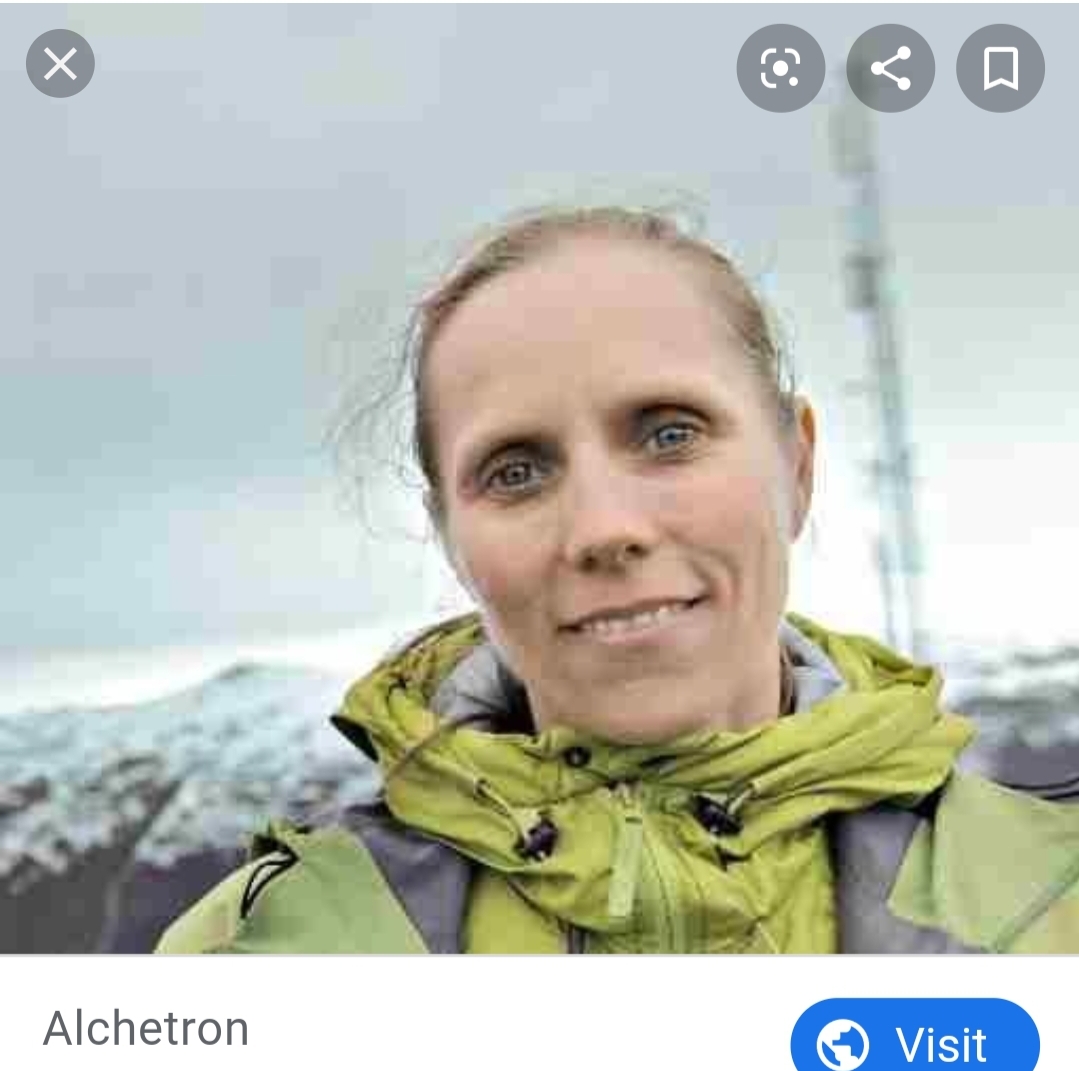
Courtesy of Alchetron

731: Anna E Bågenholm

Radiologist and World Record Holder

Born: 1970, Vänersborg, Sweden

Anna’s claim to fame is she is the previous record holder for lowest body temperature without dying (in 2010 a seven-year-old girl survived with 55.4-degree Fahrenheit temperature, beating Anna’s record, however Anna is still the only adult to survive such a low temperature).

Anna survived a skiing accident in 1999 where she was trapped under a layer of ice for eighty minutes in freezing water (she had fallen into circulatory arrest after 40 minutes and was not breathing when she was pulled from the water). Her body temperature had decreased to 56.7 degrees Fahrenheit (or 13.7 degrees Celsius).

When she arrived in the emergency department, Anna was declared clinically dead, but the doctors made an important decision. She wouldn’t be declared dead until she was warm and dead. That decision saved her life. Anna woke up after a twelve-day coma paralyzed from the neck down and spent two months in ICU.

At the time of the accident she had been studying to become an orthopedic surgeon.

By 2009, she had made an almost full recovery except for latent nerve damage in her hands and feet. However, Anna was eventually able to make a full recovery. She returned to work, and today works at the hospital that saved her life.

Anna’s story has led to therapeutic hypothermia around the world. Doctors and scientists have saved so many lives thanks to Anna’s accident, however, kids, don’t try this at home.

Sources:

https://www.sciencealert.com/this-woman-survived-the-lowest-body-temperature-ever-recorded

https://soshydration.com.au/anna-bagenholm-froze-to-death-but-lived/

https://www.theguardian.com/science/blog/2013/dec/10/life-death-therapeutic-hypothermia-anna-bagenholm

https://www.funeralwise.com/digital-dying/story-anna-bagenholm-coldest-woman-earth/

730) Alliyah Haughton

Courtesy of Biography

730: Aaliyah Houghton

Singer, Dancer, and Actress

Born: 16 January 1979, Brooklyn, New York, United States of America

Died: 25 August 2001, Marsh Harbor, Central Abaco, Bahamas

Aaliyah’s rise to fame is credited with the TV Program Star Search; she signed to a record label at only twelve years old.

Aaliyah’s first album was released when she was only fifteen. She went on to record two more albums, and singles for films like Anastasia and Dr. Doolittle.

Unfortunately, today Aaliyah is also remembered for being illegally married to fellow star R Kelly when she was still underage (she was fifteen and he was twenty-seven). Their scandalous marriage and relationship in general was chronicled in the docu-series Surviving R Kelly.

Aaliyah is also remembered for her roles in Romeo Must Die and as the vampire queen herself in Queen of the Damned. At the time of her death, she was in talks to star in other films and acting roles.

Aaliyah died in a plane crash when her star was on top of the world. All the other passengers also died in the crash, which is believed to have been caused by an overloaded plane.

Badges Earned:

Find a Grave Marked

Sources:

https://www.aaliyah.com/biography/

https://www.biography.com/musician/aaliyah

https://www.findagrave.com/memorial/5727911/aaliyah-dana-haughton

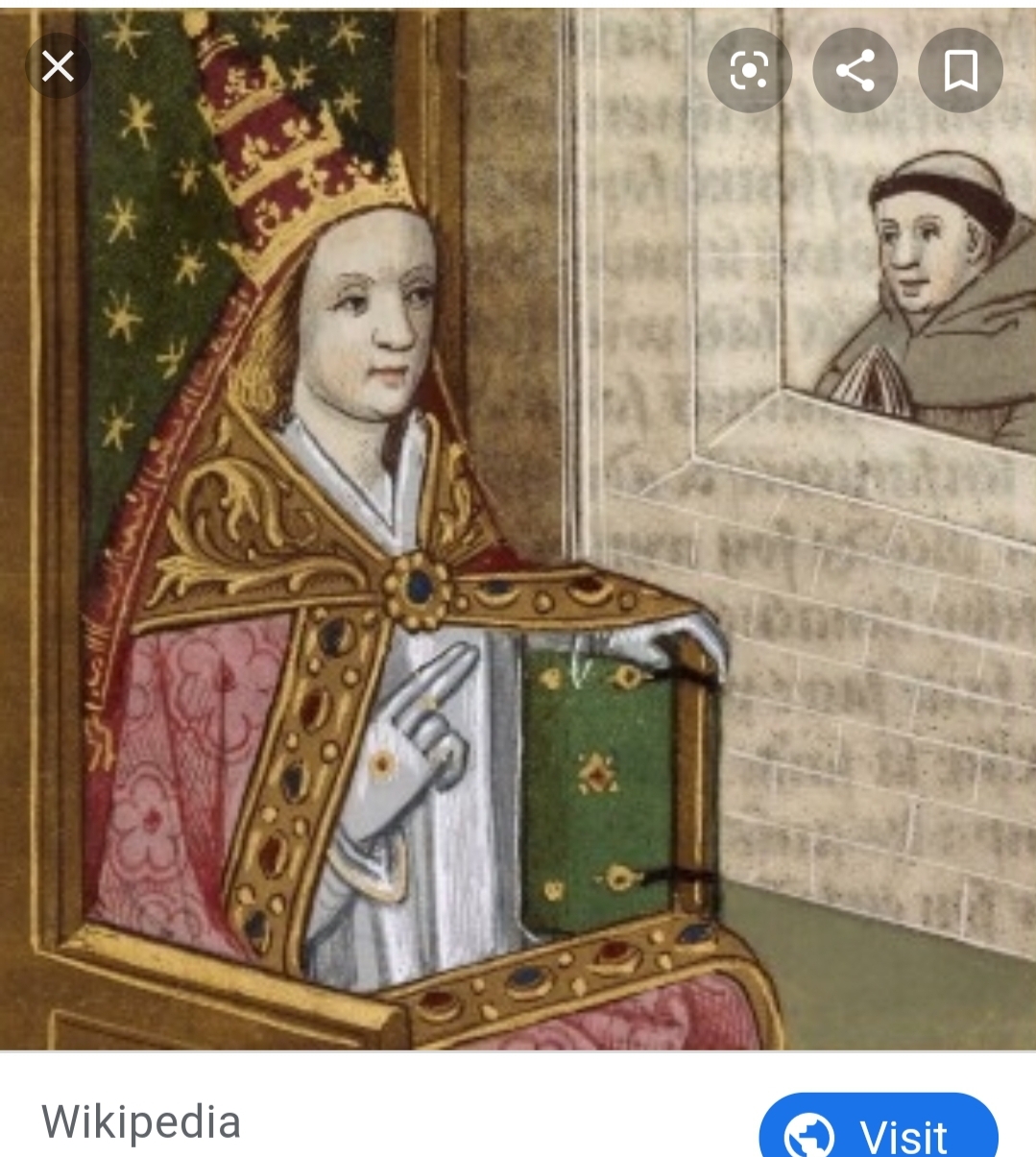
729) Pope Joan

Courtesy of Wikipedia

729: Pope Joan

The First Female Catholic Pope, Or Was She?

Also Known As: Pope John VIII

Joan may have served as the pope from 855 to 858 AD but there is no actual historical documentation to back up this claim. People who believe in the Joan story say she reigned as pontiff between Pope Leo IV and Pope Benedict III. Historical documentation proves that the gap between Leo IV and Benedict III was only a few weeks, and not the twenty-five months posited in the Joan legend.

The first written story about the legend of Pope Joan popped up in the 13th Century. In that account, Joan was supposedly found out after giving birth during a procession and she was dragged behind a horse for half a league and then stoned to death for her deceit. This story also states she served around the year 1100 however, and no name for the deceitful woman is given.

Later stories named her Joan and elaborated on the tale by saying the proof she was murdered after the procession stemmed from the fact that the pope no longer went down a particular street in Rome where her deceitful ways were discovered.

Yet another tale states Joan was of English parents born in the German city of Mainz. While living there, Joan fell in love with a monk and decided to dress as one herself and move in with him. After learning much, Joan moved to Rome, still in disguise, and was elected cardinal and later pope.

Joan’s story has been made into numerous films and other pop culture references over the centuries, but if she really did exist, there is next to no evidence to prove it. Joan is likely just a myth, but an interesting one to ponder at that.

Sources:

https://www.britannica.com/topic/Pope-Joan

https://www.history.com/news/who-was-pope-joan

http://www.newadvent.org/cathen/08407a.htm

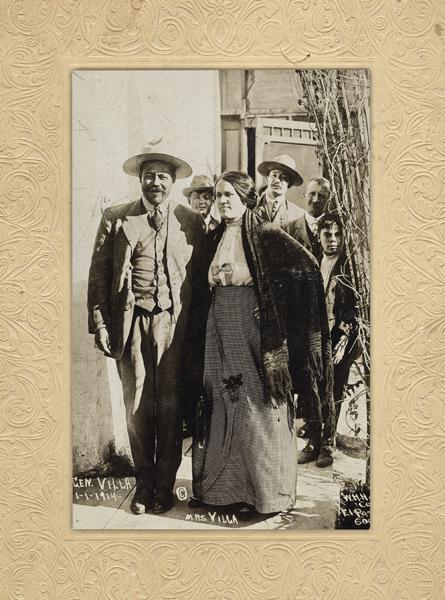
728) Señora Doña Maria Luz Corral de Villa

Courtesy of True West Magazine and the Library of Congress

 “Oh, I have no family of my own, but I have many families.”

728: Señora Doña Maria Luz Corral de Villa

Pancho Villa’s Wife

Born: July 2, 1892, San Andrés, Chihuahua, Mexico (Present-day Riva Palacio, Chihuahua, Mexico)

Died: 6 July 1981, Chihuahua City, Chihuahua, Mexico

Pancho Villa “married” multiple women throughout his life (some claiming as many as twenty-six), however, Maria Luz was the only woman who could produce a valid marriage certificate and was the first to claim to be Pancho Villa’s wife. They had one daughter together, who died in infancy, which was heartbreaking enough on its own, but the fact that Pancho had other children with other women, and left Maria Luz to raise them, was even worse.

When Pancho was assassinated in 1923, Maria Luz became a widow at only thirty-one. She was also left in charge of an orphanage of around fifty children. The government seized one of her properties for not paying taxes, but left Maria Luz the mansion in which she welcomed guests for decades.

Maria Luz provided autographs and showed visitors through her museum of the Mexican Revolution. Some of the artifacts included old photos and weapons that belonged to her husband, and even the bullet ridden car in which he’d been assassinated.

Maria Luz spent the last six decades of her life staking her husband’s legacy as a martyr of the poor. She herself earned a similar legacy after her death. Today, the museum Maria Luz opened and operated out of her own home is now owned by the Mexican Military.

Badges Earned:

Find a Grave Marked

Located In My Personal Library:

National Geographic History Magazine Article "Pancho Villa: From Bandit to Revolutionary Hero" by Isabel Bueno (September/October 2025 Edition)

Sources:

https://truewestmagazine.com/article/senora-dona-maria-luz-corral-de-villa/

https://www.cah.utexas.edu/db/dmr/image_lg.php?variable=e_ea_0592

https://www.geni.com/people/Maria-Luz-Fierro-Corral-De-Villa/6000000008692502255

https://www.chihuahuamexico.com/index.php?option=com_content&task=view&id=2407&Itemid=116

https://www.findagrave.com/memorial/138131624/maria-luz-corral

Entries Born in Luxembourg

These are the entries born in the country of Luxembourg.

Entries:

  • Charlotte von Nassau-Weilburg, Grand Duchess of Luxembourg

727: Charlotte von Nassau-Weilburg

Courtesy of Find a Grave

727: Charlotte von Nassau-Weilburg

Grand Duchess of Luxembourg

Born: 23 January 1896, Berg, Luxembourg

Died: 9 July 1985, Fischbach Castle, Luxembourg

Charlotte became Grand Duchess after her sister Marie-Adélaïde resigned from the same position. Before their father’s death, women were not allowed to rule Luxembourg, however, the Grand Duke changed the laws of succession to allow his daughters to succeed him. The Grand Duke had six daughters and no sons, and so, after his death in 1912, the oldest Marie-Adélaïde became grand duchess, the first ruler of Luxembourg to be born in the country since the thirteenth century.

Marie-Adélaïde abdicated in 1919 after her citizens and the world saw her as being too pro-German during World War I. Charlotte became Grand Duchess, but instead of staying in the position indefinitely, she called for a referendum to ensure her citizens would accept her rule. Three-quarters of voters were in favor of Charlotte continuing on as Grand Duchess.

Charlotte’s position as Grand Duchess was a Constitutional one, and she saw her country move from a small dot on the map to a social-democratic country ripe for expansion onto the world stage.

During World War II, Charlotte and her family were forced to flee Luxembourg after the Germans occupied her country. Though Charlotte and her children were safe, not all of her sisters could say the same. Princess Antonia was placed first in Sauchsenhausen and later Dachau concentration camps, and though she survived, her health was never the same.

Forced from her home, Charlotte first settled in France, then Portugal, then Great Britain, before making her way to the United States. Charlotte spent the first years of the war traveling the United States, making speeches and urging the American public to support the war effort, and help her people get their freedom back. Charlotte also made radio speeches that were broadcast over BBC radio frequencies in Luxembourg, allowing her people to hear her and know she was still thinking of them. In September 1944, Luxembourg was liberated from their German occupiers, with Prince Jean, Charlotte’s son, serving as one of the soldiers who helped save his country. In April 1945, Charlotte returned to Luxembourg triumphant.

Charlotte oversaw sweeping reforms across her country. Under her reign, Luxembourg and her citizens saw universal suffrage new labor laws, new social security provisions, and trade agreements that ensured Luxembourg had a place in the European landmark after World War II.

Charlotte married and had six children. In 1961, she began the process of abdicating her seat, and by 1964 her oldest, Jean, took over as leader of the country. He passed away in 2019 (at the time of his death he was the longest living monarch—passing away at age ninety-eight). Jean’s sister Princess Alix also died in 2019. Three of Charlotte’s other children died previously, and as of April 2020, Princess Marie Gabriele was still alive, Charlotte’s last living child.

The home Charlotte purchased in Washington DC during World War II remains the Luxembourg Embassy.

Badges Earned:

Find a Grave Marked

Sources:

https://www.britannica.com/biography/Charlotte-grand-duchess-of-Luxembourg

http://www.unofficialroyalty.com/grand-duchess-charlotte-of-luxembourg/

https://www.historyofroyalwomen.com/charlotte-of-luxembourg/charlotte-the-grand-duchess-who-saved-the-monarchy/

https://www.findagrave.com/memorial/20427/charlotte-von-nassau_weilburg

726) Emilie Sagee

726: Emilie Sagee

Mostly Ghostly

Born: 1813, Dijon, France

Died: Unknown

Also Known As: Octavie or Emilie Saget

Emilie claimed to have never seen her spectral doppelganger, but many others did in multiple locations.

She was a nineteenth century Frenchwoman who worked as a schoolteacher and was seen as pretty and likable. But according to the 1860 book in which her story appears, Emilie had been fired from at least nineteen jobs because of her ghostly follower in sixteen years. It wasn’t always right beside her either; apparently forty or so students saw it sitting in the teacher’s chair while Emilie was outside gardening! Emilie kept getting fired after parents found out about the ghost and pulled their students from the school over fears of the unknown.

Whether or not the story is actually true, or whether Emilie is a real person, is up for debate. Her story only appears in the one book, entitled Footfalls on the Boundary of Another World written in 1860. Every other story about Emilie derives from that one single source.

The author of the book interviewed some of the students who were taught by Emilie, but it was thirty years after she worked for the school. Modern day historical sleuths tried verifying the information provided in the book with documentation, but some holes quickly appeared. The only girl born in Dijon in 1813 with the Saget last named was named Octavie, not Emilie. If this is the same girl as our teacher, then she might have changed her name because of her illegitimate birth status, trying to distance herself from her parents’ indiscretions.

The supposed school named in the book is also elusive. Either the name, the location, or both were recorded incorrectly, and internet historians have been unable to track it down.

For these reasons, most historians have stated Emilie’s story is nothing more than a case of nineteenth century spiritualists at their best. Working hard to share stories of cases that likely aren’t true or are simply based on a tall tale.

Sources:

https://www.darkhistories.com/emilie-sagee-the-woman-who-wasnt-there/

https://coolinterestingstuff.com/the-very-strange-case-of-emilie-sagee

http://themutineer.org/the-double-life-of-emilie-sagee/

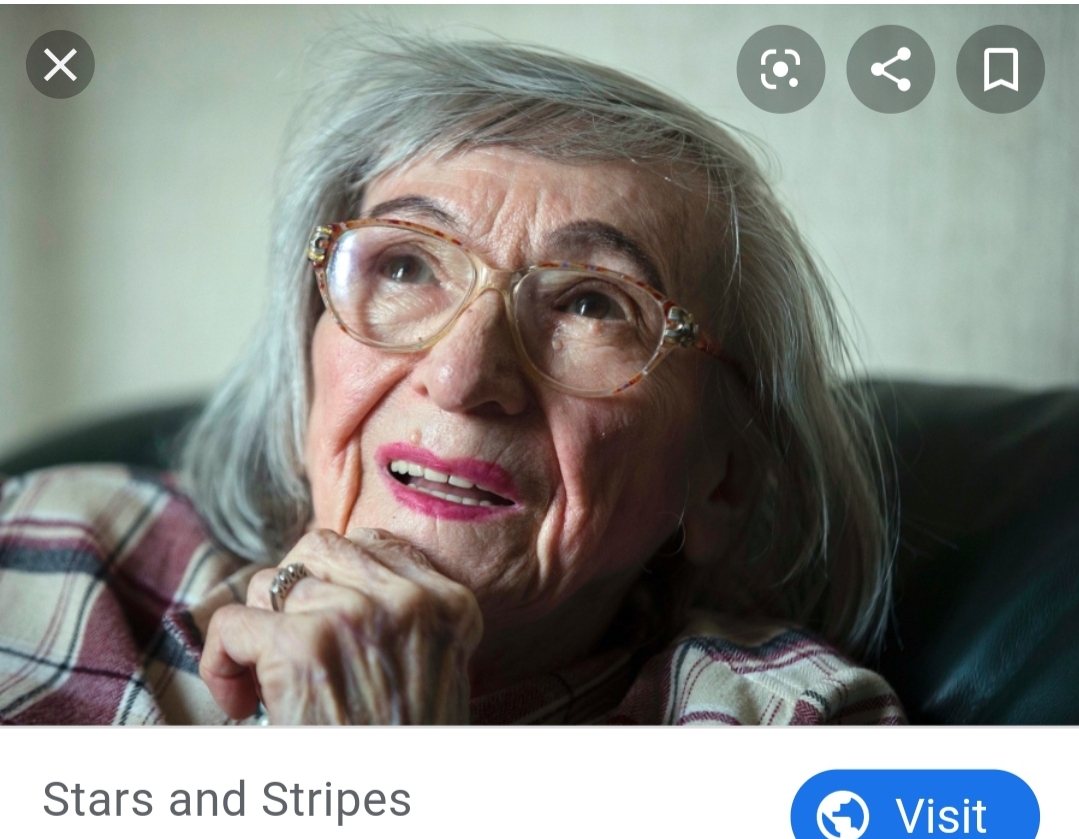
725) Margot Wölk

Courtesy of Stars and Stripes

"We had to eat it all up. Then we had to wait an hour, and every time we were frightened that we were going to be ill. We used to cry like dogs because we were so glad to have survived."

725: Margot Wölk

Only Surviving Food Tester for Hitler

Born: 27 December 1917, Berlin, Germany

Died: 2014, Most Likely Germany

Also Spelled: Woelk

Margot was working as a secretary when in 1942, she and fourteen other women were chosen to taste all of Hitler’s food in the Wolf’s Lair, his secret mountain retreat. Margot says she never even saw Hitler in person, even though she put her life on the line everyday testing food that could have been poisoned.

Margot had only moved to the city near the Wolf’s Lair after fleeing her home in a bombed-out Berlin. She had refused to join the BDM (or League of German Girls in English) and had watched her father get punished for refusing to join the Nazi Party. Now she was forced to help keep Hitler alive by tasting his food whenever he was in residence.

Until 1944, the girls were allowed to live in private residences and report for work by day. After the failed assassination plot in July though, the girls were forced to live in a barrack under tightened security. Margot was raped by an SS guard while living in the barrack and could do nothing to defend herself. She never received justice for the attack or for the job she was forced to do.

Margot escaped near the end of the war thanks to a decent soldier. Afterward, Margot learned the other fourteen food testers had been executed by Soviet Soldiers. Soon after, Margot was captured and raped repeatedly for two weeks by Soviet Soldiers. Her injuries were so great she was never able to bear children.

Finally, in 1946, Margot was reunited with her husband, whom she had believed had been killed earlier in the war. They had another thirty-four years together, both scarred deeply by the war.

She was so scared she kept her secret for decades, only revealing what had happened to her during the war in 2013.

In 2019, a historical fiction drama based on Margot’s story was released, however, The Jerusalem Post raises several good questions about the novel’s main character and Margot herself. Margot was a victim of abuse and rape, forced into her job, and was only able to escape at the end of the war. However, in the book, Rosa, as the character is named, apparently comes across as an air head with no regard for the people dying around her. She only has one moment of self-reflection, where she asks herself why she helped the Nazi Regime keep Hitler alive; why she didn’t help the Jews or others affected by the Shoah. Oh, and she apparently has an affair with an SS officer, so the book is also a romance novel, and that part comes across as cheap and a disservice to those actually involved. The Jerusalem Post is worried the novel, and Margot’s story, are more examples of Germans pivoting from accepting responsibility at the end of the war to claiming victim status themselves now.

Sometimes, not everything needs to be made into a book or a movie.

Sources:

https://www.abc.net.au/news/2019-04-04/hitler-food-taster-novel-at-the-wolfs-table-rosella-postorino/10959950

https://www.spiegel.de/international/germany/hitler-food-taster-margot-woelk-speaks-about-her-memories-a-892097.html

https://www.news.com.au/lifestyle/real-life/true-stories/the-disturbing-job-hitler-made-15-women-carry-out-during-the-war/news-story/c4ef07f0626a8d3fb40de8fc75c624ef

https://www.jpost.com/Magazine/Dining-for-the-devil-580586

724) The Other Magpie

724: The Other Magpie

Crow Woman who Fought with Osh-Tisch in the Battle of the Rosebud

Lived Around 1876, Crow Nation (Present-day Montana, United States of America)

But unlike Osh-Tisch, The Other Magpie had no gun and only a coup stick (some Native people would use decorative sticks instead of weapons in war [the more decorations on the stick the more people they’d hit in battle like an insane game of tag—The Other Magpie’s had one feather tied to it]). The Other Magpie rode into battle and used her coup stick to create a distraction, waving it around and yelling.

She was apparently remembered for screaming “My spit is my arrows” at the Lakota (who had recently killed her brother, explaining why she was fighting in The Battle of the Rosebud in the first place). The Battle took place with the Crow and the US Army on one side and the Cheyenne and Lakota on the other. Today, it is recognized as the precursor to the infamous Battle of Little Bighorn.

The Other Magpie was remembered as being unmarried, pretty, brave, and wild. Pretty Shield, another Crow woman, also described her as wearing a stuffed woodpecker on her head. The Other Magpie painted her forehead yellow and rode a black horse.

In the battle, she struck a Lakota warrior and Osh-Tisch shot him, as though The Other Magpie was pointing out a target. The Crow only collected ten or eleven scalps in the whole battle (sources differ), one of which was the man The Other Magpie and Osh-Tisch took out. After it was over, The Other Magpie cut the scalp into pieces and passed it around to other Crow warriors.

Other than knowing The Other Magpie was present at the battle, nothing else of her is known. It is unknown when she was born or when she died, who her parents were, if she ever married or had children of her own. All of this is unknown.

Today, the site of the Battle of the Rosebud is a Montana State Park, which can be explored by visitors.

Badges Earned:

Rejected Princess*

*She is briefly mentioned in Osh-Tisch’s entry (linked below)

Sources:

https://www.rejectedprincesses.com/princesses/osh-tisch

https://www.historynet.com/magpie-woman-chief-crow-warriors-weaker-sex.htm

http://historyheroines.com/2018/04/04/osh-tisch-and-the-other-magpie/

723) Yolande of Aragon

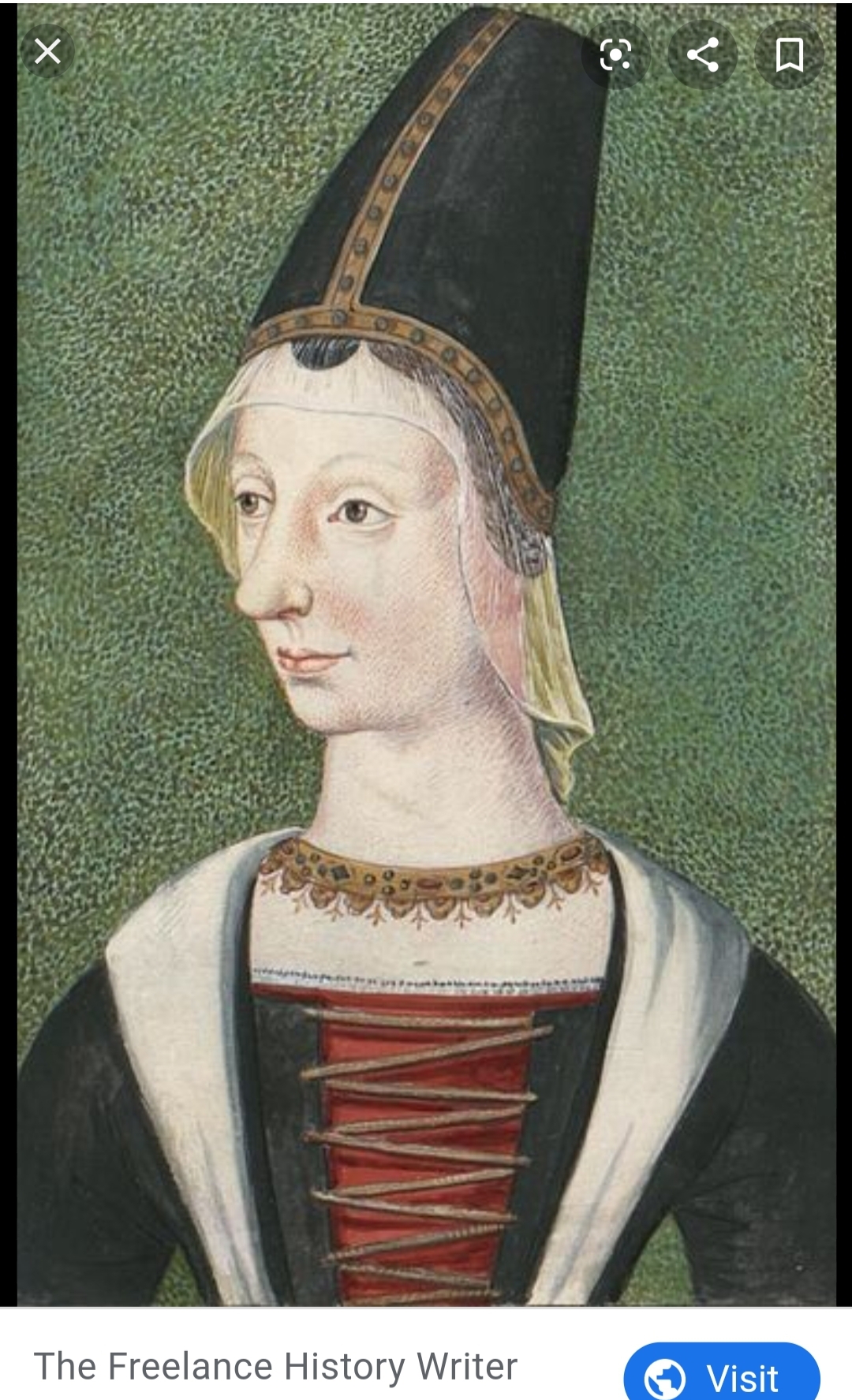
Courtesy of The Freelance History Writer

"We have not nurtured and cherished [Charles the Dauphin] for you to make him die like his brothers or to go mad like his father, or to become English like you. I keep him for my own. Come and take him away, if you dare." -Reportedly Yolande's Letter to Isabeau of Bavaria

723: Yolande of Aragon

Queen Consort of Naples, Duchess of Anjou, Regent of Sicily, Countess of Maine, Countess of Piedmont, & Countess of Provence & Forcalquier

Born: c. 1383, Saragossa, Kingdom of Aragon (Present-day Zaragoza, Spain)

Died: 14 November 1442, Chateau de Tuce-de-Saumur, Kingdom of France (Present-day Saumur, France)

Yolande was the regent of Provence during her son’s minority and claimant to the throne of Aragon, meaning she had ties to the present-day countries of France, Spain, and Italy. Her husband was tied to even more countries.

Even though Yolande’s cousin Ferdinand becoming King of Aragon she started calling herself the Queen of Aragon in protest. To be fair, Yolande was arguably the legitimate claimant to the throne. It was just her bad luck that A) of course—Yolande was a girl and B) her, male, cousin was also available for the job. Yolande would never legitimately reign Aragon, but as stated above, continued to call herself Queen.

When Yolande was set to be married to Louis II the Duke of Anjou, she at first refused. Their families had been historic enemies and the wedding was supposed to bring a sense of peace between them. Finally, Yolande agreed to the match, and grew to love her husband. They had five children and were aligned politically and intellectually. When Louis died, Yolande became regent for her son as Queen of Anjou. Yolande also became very protective and loyal to the French royal family in the final years of the Hundred Years’ War.

After the Battle of Agincourt, Yolande made the decision to move her children and the Dauphin Charles, who had been betrothed to her daughter Marie of Anjou, to Provence. After the move, Isabeau of Bavaria in her capacity as Queen of France, tried to insist Charles return to the French Court. Yolande would have none of it, suspicious of Isabeau and her courtiers. She also backed Joan of Arc to lead Charles’s army despite Charles’s skepticism. Yolande’s instincts would pay off, and she got to sit back and watch as Charles defeated his enemies and retook the throne. Yolande’s daughter became Queen of France.

Around 1435, Yolande decided to retire, and left for Paris. However, she continued to serve as an advisor to her children until her death. Though she had never ruled as queen regnant in her own right, Yolande was known as the queen of four kingdoms: Queen of Aragon (explained above), Queen Consort of Naples and Sicily thanks to her husband, and Queen of Jerusalem, again thanks to her husband.

Badges Earned:

Find a Grave Marked

Located in My Personal Library:

Blood Sisters: The Women Behind the Wars of the Roses by Sarah Gristwood

Sources:

https://www.encyclopedia.com/women/encyclopedias-almanacs-transcripts-and-maps/yolande-aragon-1379-1442

https://www.brooklynmuseum.org/eascfa/dinner_party/heritage_floor/yolanda_of_aragon

https://www.monstrousregimentofwomen.com/2019/08/yolande-of-aragon-queen-of-four-kingdoms.html

https://www.findagrave.com/memorial/91859834/yolande-of_aragon

  • Previous
  • 1
  • …
  • 52
  • 53
  • 54
  • 55
  • 56
  • 57
  • 58
  • …
  • 159
  • Next

Categories

Archives

  • July 2025 (10)
  • July 2024 (1)
  • January 2024 (1)
  • August 2023 (1)
  • June 2023 (2)
  • October 2022 (1)
  • July 2022 (1)
  • June 2021 (3)
  • December 2020 (3)
  • August 2019 (1)
  • July 2019 (2)

Search

© 2026 The Exasperated Historian | Powered by Minimalist Blog WordPress Theme