The Exasperated Historian
Menu
  • Home
  • The Women’s List (New)
  • The Men’s List
  • The Animal List
  • Collections
  • The Blog
  • Contact Us
  • FAQ
Menu

Category: Dazzling Daughters Collection

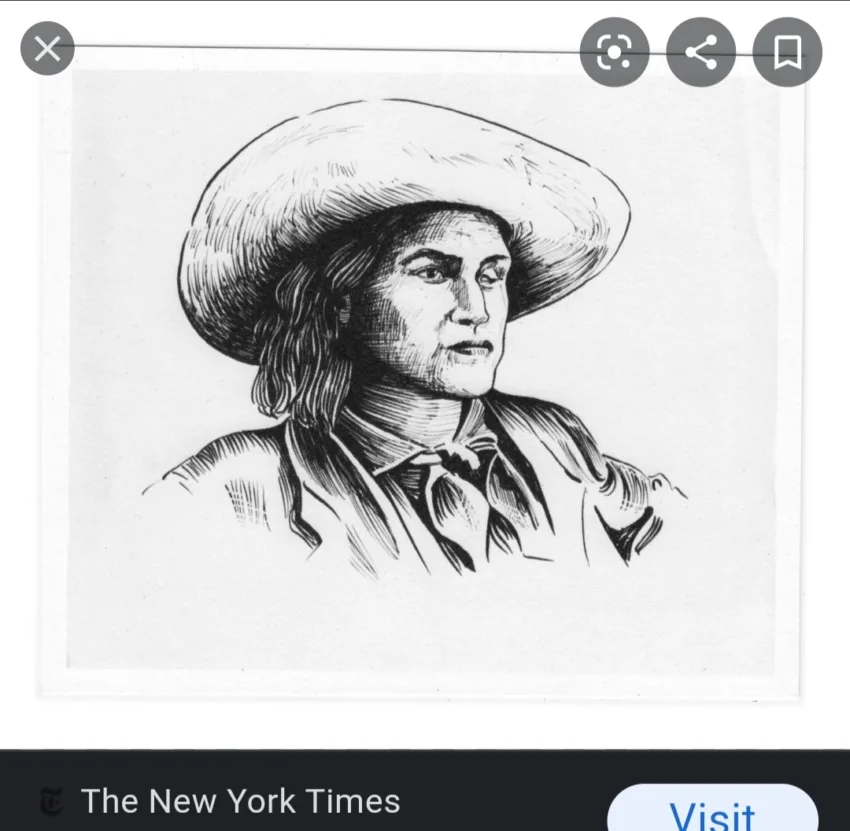
1194) Charlotte Parkhurst

1194: Charlotte “Charley” Parkhurst

California Stagecoach Driver

Born: 17 January 1812, Lebanon, New Hampshire, United States of America (or Possibly Sharon, Vermont, United States of America)*

Died: 18 or 28 December 1879, Watsonville, California, United States of America**

Also Known As: One-Eyed Charley or Six-Horse Charley

Charlotte was abandoned by her parents, according to some sources, and grew up in an orphanage. Around the age of twelve to fifteen (sources differ), she decided to run away and donned men’s clothing in order to do so. She maintained the persona for the rest of her life, building on it and making it more believable over time. Charlotte eventually found work in some stables, cleaning the stalls, and washing the carriages.

Charlotte moved to Rhode Island with the owner of the stables she worked at. While working for him, she also learned how to ride horses and drive stagecoaches, quickly becoming known as the best stagecoach driver on the East Coast.

In 1851, following the rush of miners who flocked to California during the Gold Rush, Charlotte moved across the country to join the crowds. She worked for several stagecoach companies over the years, including Wells Fargo. Charlotte drove routes all over the state, from Stockton to Mariposa, San Jose to Santa Cruz, Sacramento to Placerville, and more.

Around 1856, Charlotte was kicked in the head by a horse she was trying to shoe, and wore an eye patch the rest of her life as a result. She was known for being a rough and rowdy character who drank whiskey, chewed tobacco, and swore just like the rest of the men. In 1858, a bandit robbed Charlotte’s coach. When he tried to rob her again a few months later, she shot and killed him. To say Charlotte was one tough SOB—er lady that is!--would be an understatement.

In 1864, John Ross Browne, a journalist from Harper’s Monthly Magazine, rode a coach that was driven by Charlotte. A year later he summed up his experience for the magazine, immortalizing Charlotte forever under the name “Charlie.” Charlotte was attributed the following quote about her experiences on the road:

“Fact is I’ve traveled over these mountains so often I can tell where the road is by the sound of the wheels. When they rattle, I’m on hard ground; when they don’t rattle, I generally look over the side to see where she’s a going.”

Charlotte registered to vote in 1868 (although it is unknown if she ever actually cast a ballot). If she did ever vote, she could have been the first woman to vote in the United States (Sacagawea voted in newly acquired US territory and did not vote in a nationally balloted election).

In the 1870s, Charlotte stopped driving stagecoaches and moved on to operate a saloon for a time, as well as a way station (she sold both companies). Charlotte also owned a stake in a cattle ranch for a while, but she sold that as well. When she retired from the stagecoach, she was known as the “Best Damn Driver in the West” according to some.

She passed away from tongue and throat cancer. It is said that in the last few months of her life, she kept telling the family she was living with that she had a secret she wanted to share, but she always postponed actually telling them the secret.

Two articles I read note that the medical examiner viewing her body determined that she had given birth at one point in her life (one of the sources also states that the child had died at a young age—though how that could be determined by viewing the mother’s body I have no idea!). The only other source I found who noted this fact was her Wikipedia article. The Wikipedia article states that the source for the having given birth story is the Encyclopedia of Frontier Biography by Dan Thrapp. I’ve never read this book myself so I cannot verify this one specific fact, but I still thought it interesting enough to include.

Charlotte never revealed her secret and its only known because of her body being examined after her death. In this article, I have referred to her with female pronouns and her name at birth because there is no evidence she actually wished to become a man in the way we see transgender men do today. Charlotte socially transitioned to that of a male in order to survive and attain the job she loved, that of a stagecoach driver, because it would have been next to impossible for her to do so as a woman.

Charlotte has a Daughters of the American Revolution chapter named after her in Folsom and El Dorado Hills, California. The chapter was founded and organized in May of 2021.

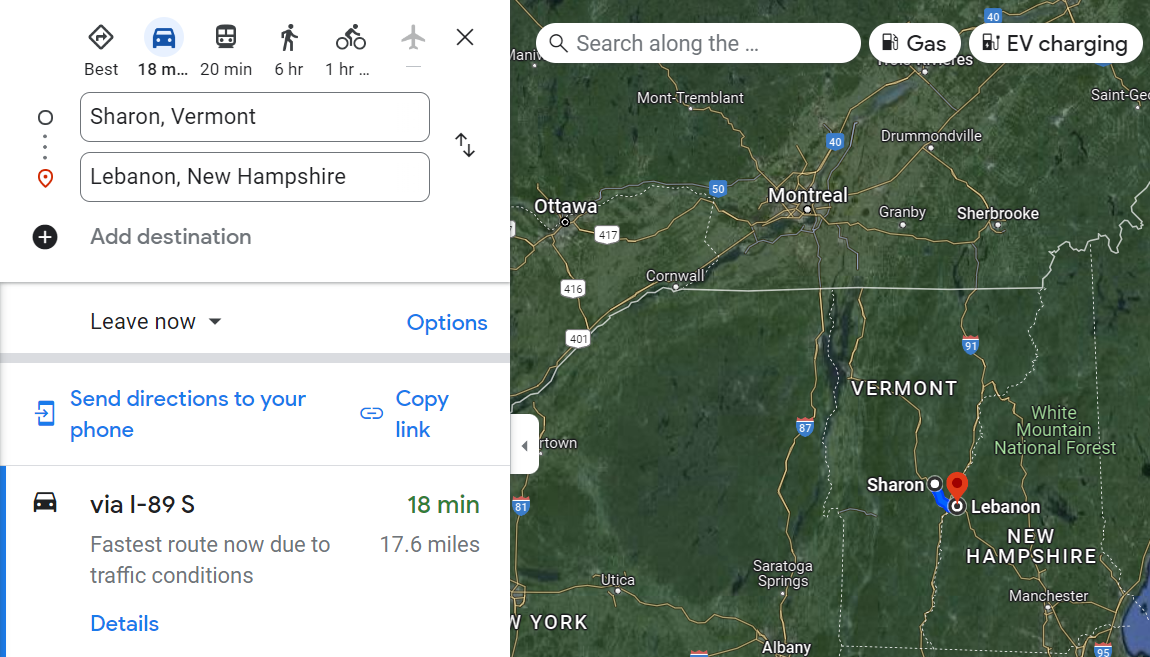
*The differing birth location is because it seems every other source I found listed either New Hampshire or Vermont. Wikipedia seems to think the differing opinions stems from the fact that Charlotte was born in Vermont, but the orphanage she was raised in was in New Hampshire, HOWEVER I went a little further and clicked on the sourced link Wikipedia used for this fact, and that article also states Charlotte was born in New Hampshire and not Vermont. I have no idea which state she was born in, but at least they are side by side. To cover my bases I will list Charley on both Vermont and New Hampshire’s listings, just in case. I also decided to do a quick search, and according to Google Maps the two cities (which still exist as of 2024) are less than eighteen miles (or around twenty-nine kilometers) apart. I included an image from Google Maps below.

**Sources also differ on whether she died on the 18th or the 28th of December, with the sources being split equally between the two dates.

Badges Earned:

Find a Grave Marked

Located In My Personal Library:

Haunted West: Legendary Tales From the Frontier (Magazine Published by Centennial Today, Fall 2020)

Tales Behind the Tombstones: The Deaths and Burials of the Old West’s Most Nefarious Outlaws, Notorious Women, and Celebrate Lawmen by Chris Enss

America's Women: 400 Years of Dolls, Drudges, Helpmates, and Heroines by Gail Collins

Stagecoach Women: Brave and Daring Women of the Wild West by Cheryl Mullenbach

Sources:

https://www.britannica.com/biography/Charley-Parkhurst

https://www.cdcr.ca.gov/insidecdcr/2019/06/13/unlocking-history-stagecoach-driver-charley-parkhurst-blazed-gender-nonconforming-trails/

https://www.legendsofamerica.com/charley-parkhurst/

https://thenovelhistorian.com/truth-and-fiction/

https://en.wikipedia.org/wiki/Charley_Parkhurst

https://www.parks.ca.gov/?page_id=25451

https://folsom.californiadar.org/index.php/about-us/chapter-history
https://www.findagrave.com/memorial/3818/charley-parkhurst

Showcases the distance between Charlotte's two possible birthplaces

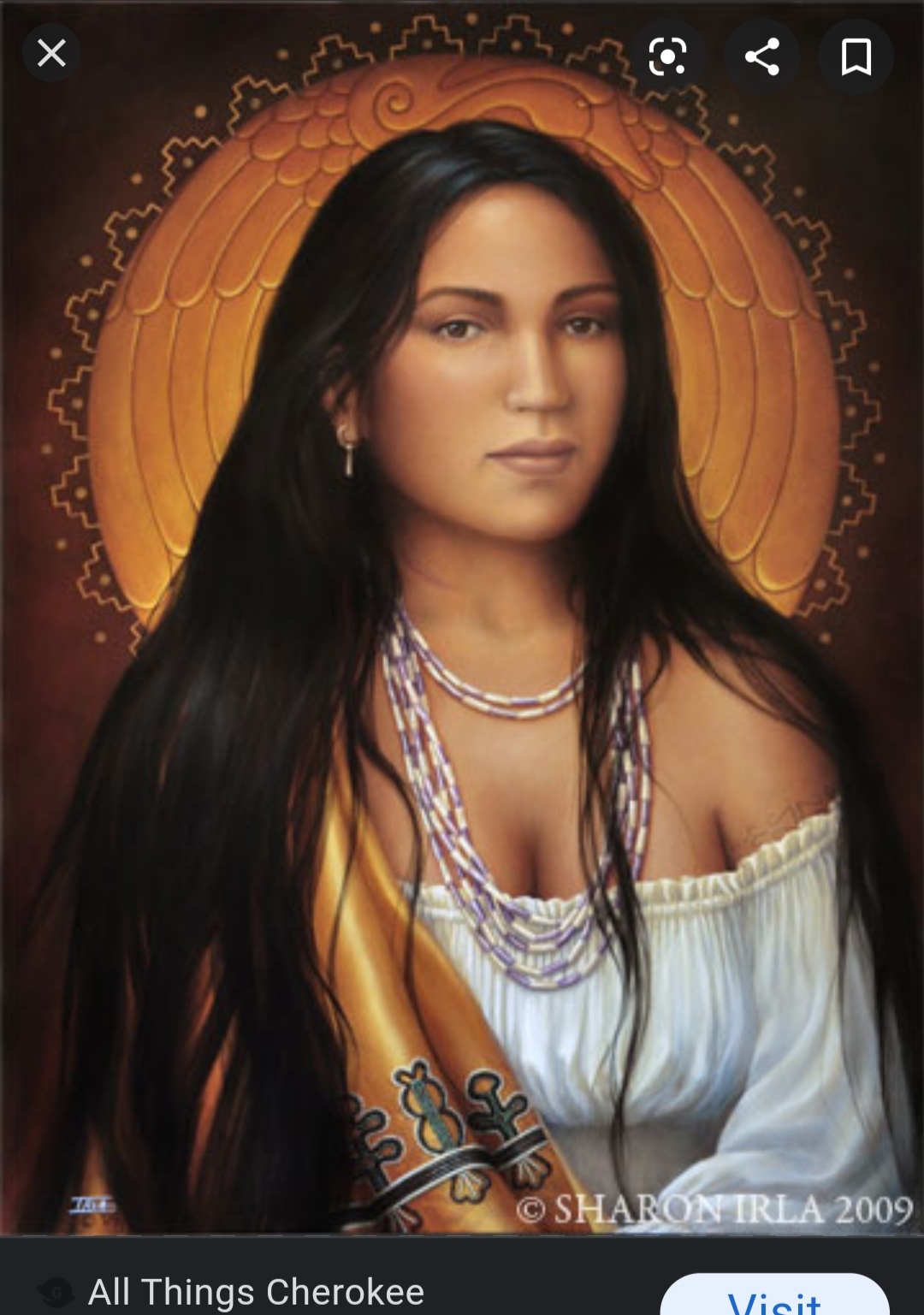
1126) Nancy Ward

Courtesy of All Things Cherokee

1126: Nancy Ward

The Last Beloved Woman of the Cherokee Nation

Born: c.1738, Chota, Cherokee Nation (Present-day Monroe County, Tennessee, United States of America)

Died: 1822, near Present-day Benton, Tennessee, United States of America

Also Known As: Nanye-hi (Translated as either One who Goes About or She who Walks Among the Spirits—sources differ)

Nancy has been hailed as the Pocahontas of Tennessee and a princess and prophetess of the Cherokee Nation.

Nancy’s maternal uncle was an important chief for his people (the Wolf Clan), and he personally believed finding a way to co-exist with the British colonizers gave his people the best chance to survive. His believes would make a lasting impression on Nancy.

By the time she was seventeen or eighteen (again, sources differ), Nancy was married with two children. Nancy fought in battle against the Creek Nation with her husband, and reportedly chewed the ends of his lead bullets to make them pointier and deadlier so…that’s nice. After her husband was killed in the fighting, Nancy took his rifle and led her people to victory, expanding Cherokee territory into northwest Georgia.

Because of her victory, Nancy was given the title of Ghigau or Beloved Woman. This meant she was able to sit in on councils with the chiefs, led the Woman’s Council of Clan Representatives, was given a vote in the general council (the only woman with this power), and was given total control of prisoners taken in raids or battles. The Cherokee also believed the Great Spirit spoke through the Beloved Woman and so she was also spiritually powerful. In a word, Nancy was a badass.

In the latter part of the 1750’s, Nancy married an English trader and took an Anglicized name to reflect her new status as the wife of an Englishman. Together, Nancy and her new husband had one daughter. After a few years, Nancy’s husband went home to his already existing English wife and family in South Carolina and evidently Nancy and her daughter would go visit them on occasion. The Cherokee did not see marriage as a lifelong institution and so this little detail wasn’t a hang up for Nancy of her people.

In 1776, after the outbreak of the American Revolution, Nancy decided she wanted to try and keep the peace with her new American neighbors even though part of the Cherokee Nation, including her cousin, wanted to drive the white settlers out. After learning of a planned raid on the white settlement, Nancy released three of her prisoners (who were white) and told them to warn their people. With sufficient time thanks to Nancy, the settlers were able to evacuate most of the women and children to safety before the Cherokee attack.

During the raid, the Cherokee managed to capture one white woman and bring her back to the Cherokee village. The warriors wanted to burn the woman alive, but Nancy managed to save her and eventually set the woman free to return to her people. This woman, along with the other prisoners Nancy had released earlier, began to spread the word of the Beloved Woman who wanted to keep the peace between her people and the settlers.

The following year, white settlers retaliated for the Cherokee attack by invading the Cherokee nation. All the Cherokee settlements were attacked, save the village where Nancy lived out of respect to her. Throughout the rest of the American Revolution battles between the Cherokee and the Americans continued. In 1781, Nancy spoke with the white leaders who were trying to negotiate a peace treaty between their people, and while these white leaders were confused by a woman having such a public role, especially a political one, Nancy made an impression. Her family was protected throughout the rest of the war.

In November 1785, Nancy and the new Cherokee chief signed a peace treaty with the newly formed United States of America. Soon after, Nancy’s daughter (that she shared with her white husband) married the Virginia Indian Commissioner.

In the years following, white settlers continually encroached on Cherokee land because the ground was perfect for growing cotton. Washington’s administration was aware of the problem but failed to act in any meaningful way to stop it. By the early 1820’s, the Cherokee had sold much of what remained of their land in order to at least turn some form of profit instead of losing everything. Nancy entered a written plea to try and stop the sales in 1819, realizing that after decades of advocating a peaceful co-existence it had all come crashing down. Nancy became an innkeeper after her homeland was sold off, and she was cared for her by her son in her final years.

Nancy is credited with introducing cattle ranching, dairy farming, spinning cloth, and slaveholding to the Cherokee society. She was instrumental in transitioning the Cherokee away from their traditional way of life and towards a more Western society, and so her legacy within the Cherokee culture and history is complicated to say the least.

The National Society Daughters of the American Revolution named a chapter in her honor, as well as building two monuments to her at her gravesite. The first was erected in 1923 and the second in 2018. Both can be viewed on her Find a Grave profile, which is linked below.

Badges Earned:

Find a Grave Marked

Located In My Personal Library:

Revolutionary Mothers by Carol Berkin

Revolutionary Women by Peter Pauper Press

Who Knew? Women in History by Sarah Herman

Women in American Indian Society by Rayna Green

Sources:

https://wams.nyhistory.org/settler-colonialism-and-revolution/the-american-revolution/nanyehi-nancy-ward/

https://tennesseeencyclopedia.net/entries/nancy-ward/

https://www.britannica.com/biography/Nancy-Ward

https://www.findagrave.com/memorial/2180/nancy-ward

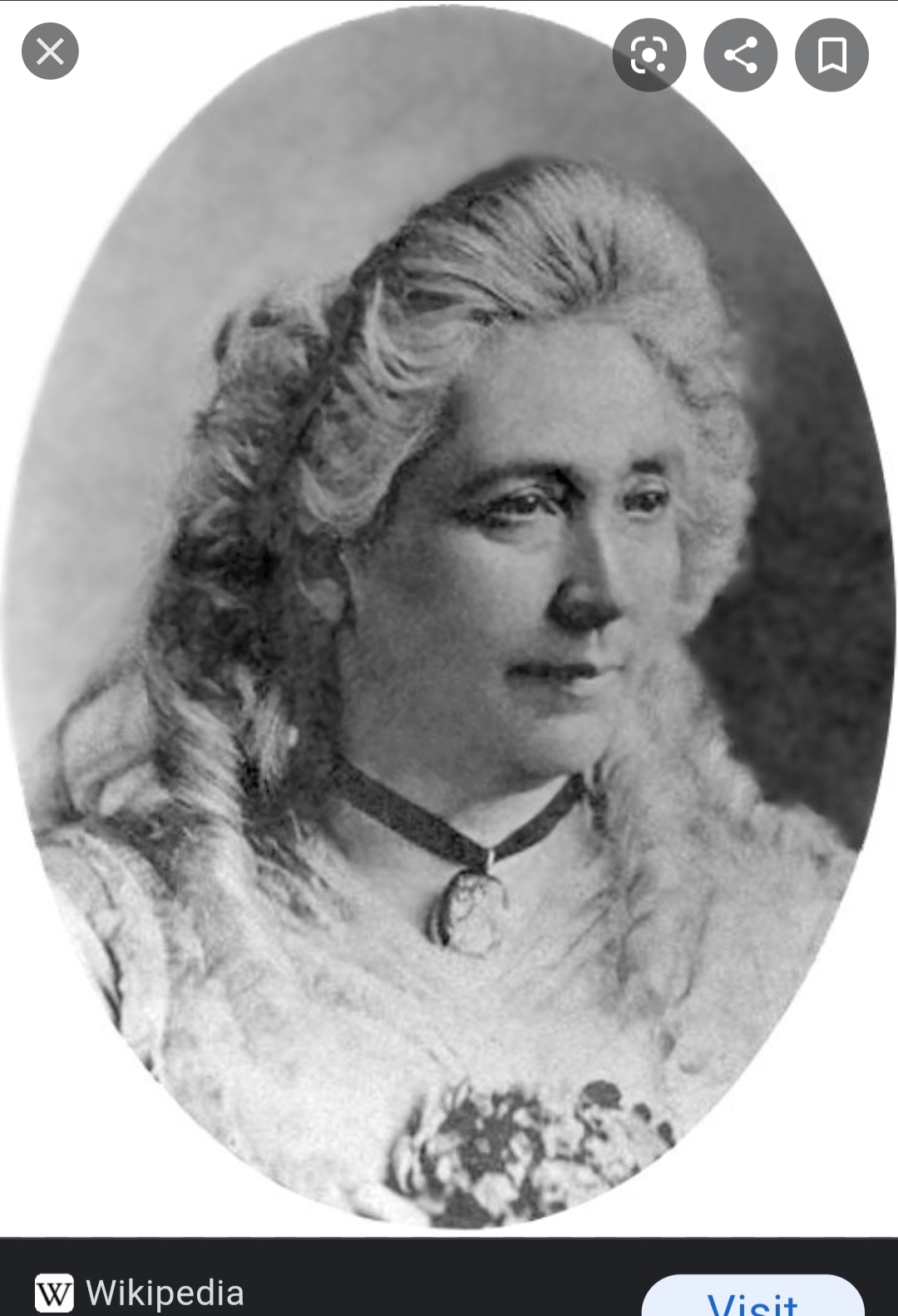
1064) Jessie Fremont

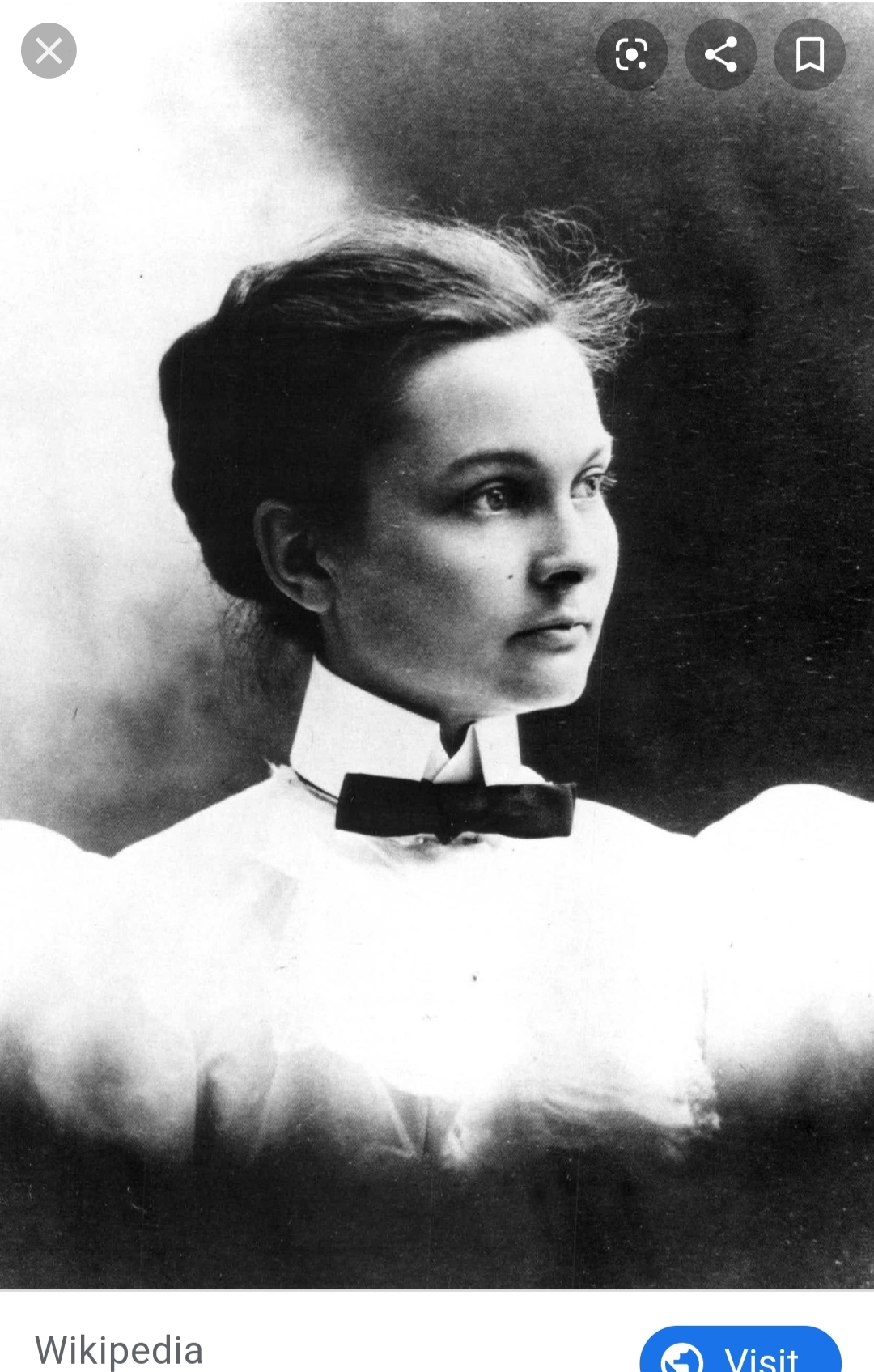
Courtesy of Wikipedia

“I am like a deeply built ship—I drive best under a strong wind.”

1064: Jessie Frémont

Author and Political Activist

Born: 31 May 1824, near Lexington, Virginia, United States of America

Died: 27 December 1902, Los Angeles, California, United States of America

Full Name: Jessie Ann Benton Frémont

Jessie is most known for being the wife of John C Frémont. John was a westward explorer and politician.

Jessie was the daughter of a senator. Her father educated her well, mainly at home, and she was known to have an adventurous and outgoing personality.

Jessie and John married in 1841, despite her father’s misgivings (Jessie was only seventeen at the time after all). Eventually Jessie’s father came around to the idea of his new son-in-law, and he used his position as a senator to further John’s career in his attempts to become a westward explorer.

Jessie published several accounts and memoirs of the time she spent with her husband and his friend and companion Kit Carson. It was Jessie’s writings that helped draw the national attention to John and Kit, making them both some of the most famous characters to come out of the West.

John was a polarizing figure in his own time. Most of America seemed to admire him, but he had his detractors as well. John was an Army officer, and his most well-known moment in history came when he managed to seize California from Mexican hands, giving the prosperous territory to the United States.

In 1856, Jessie became the first presidential candidate’s wife to play an active role in a campaign in United States history. John’s slogan was “Fremont and Jessie too.” Unfortunately for them, John’s candidacy did not result in a victory, but it was notable for one other reason as well: John was the first official presidential candidate for the newly formed Republican Party.

During the War Between the States, and according to The Atlantic (article linked below): “John Charles Frémont’s star gradually faded in later years, though his wife never stopped supporting him. When the Civil War came in 1861, President Abraham Lincoln appointed John as a general based in Missouri. John soon clashed with the commander in chief, issuing an order that freed some Missouri slaves before Lincoln was ready to do so. Refusing Lincoln’s request to modify the order, he instead sent his closest adviser to confer with the president: Jessie boarded an eastbound train to Washington. Standing face to face with the towering president, she tried to argue that John’s emancipation order was helpful in Missouri and would play well in Europe, too. “You are quite a female politician,” Lincoln replied. Jessie said afterward, “I felt the sneering tone and saw there was a foregone decision against all listening.” Lincoln soon relieved General Frémont of his command. He would not allow a general to make political decisions that belonged to him as the government’s civilian leader.” Jessie’s work also came under scrutiny. Detractors referred to her as “General Jessie” in the press and mocked her husband’s ineptitude as being her fault. John couldn’t keep up with his overbearing and energetic wife; hence the nickname.

Jessie spent the rest of the war, and most the rest of her life, trying to salvage her husband’s reputation through various publications. She also worked hard to improve the sanitation practices used by the Army to try and save the lives of as many men as possible.

Jessie and her husband John had at least two children, according to Find a Grave, though her Google page only lists one son.

Jessie was a member of the National Society Daughters of the American Revolution and is known as a “Dazzling Daughter” today.

Badges Earned:

Find a Grave Marked

Located In My Personal Library:

Uppity Women Speak Their Minds by Vicki Leon

The Old West by Stephen G Hyslop

Blood and Thunder: The Epic Story of Kit Carson and the Conquest of the American West by Hampton Sides

America's Women: 400 Years of Dolls, Drudges, Helpmates, and Heroines by Gail Collins

Sources:

https://www.britannica.com/biography/Jessie-Ann-Benton-Fremont

https://www.theatlantic.com/ideas/archive/2020/01/first-celebrity-first-lady/604003/

http://www.civilwarmo.org/educators/resources/info-sheets/jessie-benton-fremont

https://civilwar.vt.edu/jessie-benton-fremont-the-civil-war-stateswoman/

DAR Dazzling Daughter’s Fact Sheet (Provided during one of the classes new members can take. To see a copy please email me through the Contact Us page)

https://quotationsbywomen.com/authorq/10121/

https://www.findagrave.com/memorial/4963/jessie-fremont

1059) Emily Geiger

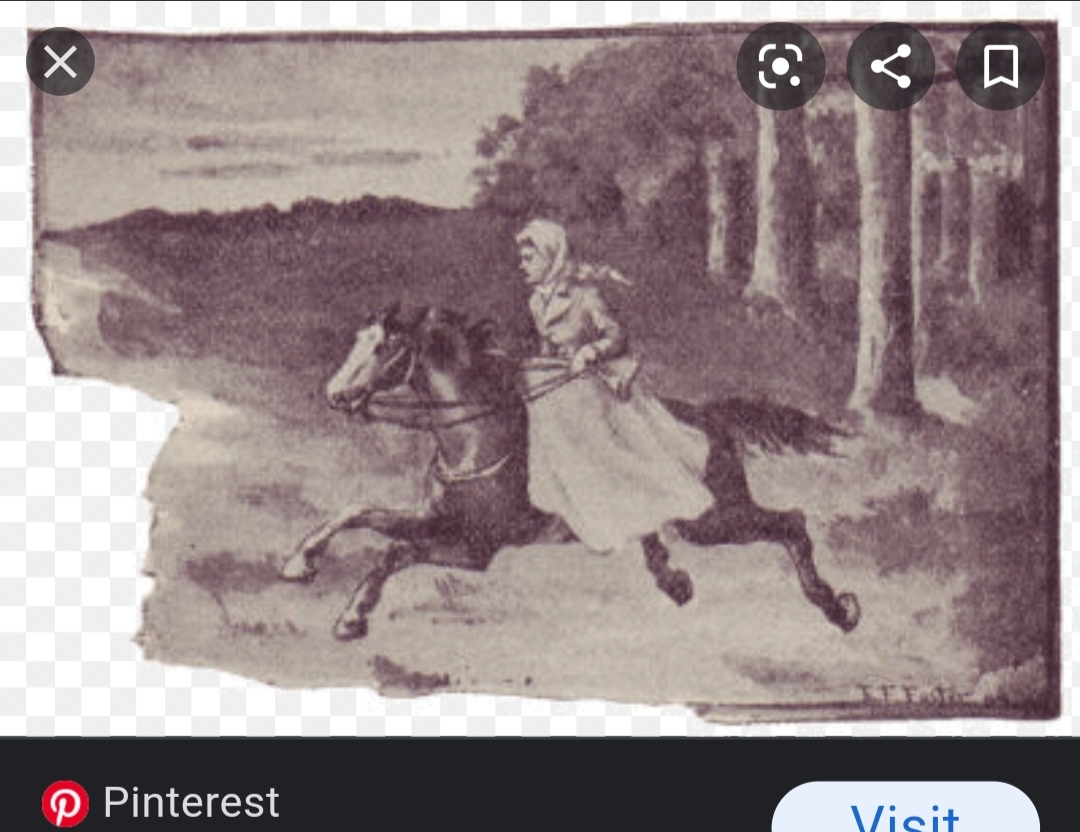
Courtesy of Pinterest

1059: Emily Geiger

Revolutionary War Patriot

Born: c.1765, The Colony of South Carolina (Present-day South Carolina, United States of America)

Died: c.1825, South Carolina, United States of America

Emily was a civilian volunteer who offered to ride across seventy miles of dangerous terrain to deliver a message during the war when she was only eighteen. It was June of 1778, and General Nathanael Greene needed a message delivered to General Thomas Sumter. Her incredible bravery is one of the few details known with certainty about her life.

The first night of the ride, Emily was almost captured by Tories but escaped and then later actually captured and questioned.

Before the message she carried could be found on her, Emily memorized and then ate it.

The soldiers had to release Emily after finding nothing suspicious on her.

She finished her journey and passed on the message successfully.

After the war, Emily got married, but her date of birth and death are unknown with certainty. No known images or depictions survive of Emily to this day. The drawing shown here is simply an artist's rendering of Emily's famed ride.

Emily has been honored with a National Society Daughters of the American Revolution dedicated marker in a small cemetery in South Carolina (though according to Find a Grave Emily herself is not buried there), indicating she is a Revolutionary Patriot in the DAR database. Today, Emily also has a DAR chapter named after her in the South Carolina state society.

Badges Earned:

Find a Grave Marked

Located In My Personal Library:

Women Heroes of the Revolution by Susan Casey

Sources:

https://www.scencyclopedia.org/sce/entries/geiger-emily/

https://www.emilygeigernsdar.org/emily-geiger

https://historyswomen.com/early-america/emily-geiger/

https://www.nps.gov/_cs_upload/kimo/learn/education/classrooms/539617_1.pdf

https://www.findagrave.com/memorial/33779258/emily-geiger

1056) Margaret Corbin

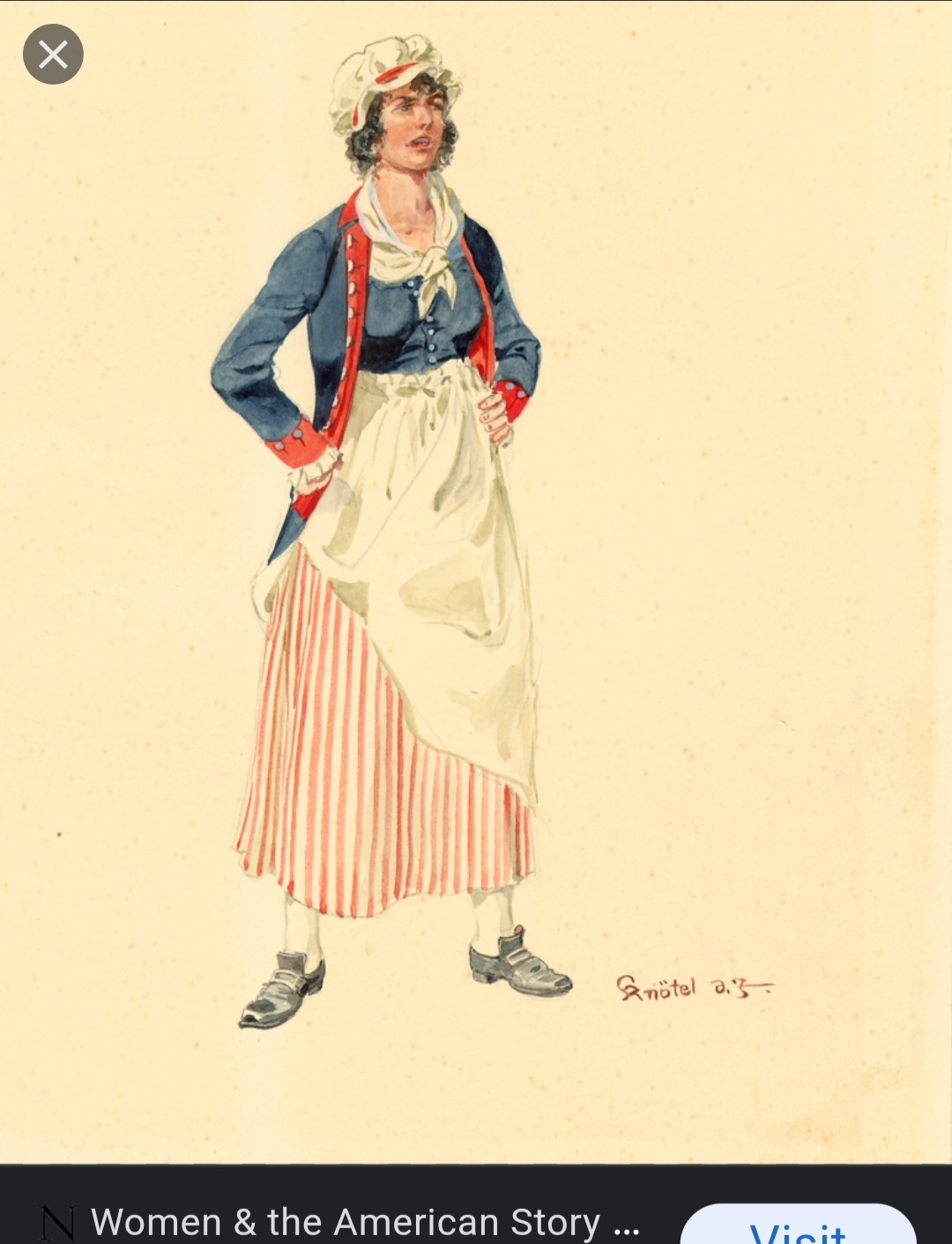
Courtesy of Women and the American Story

“She’s an army spouse, and then an army widow, and then she was a soldier, and then she was a wounded soldier, and then she was a prisoner of war, and then she was a veteran. I really think of her as that building block for women in the military.”

-Jennifer Minus, Veteran and Member of the National Society Daughters of the American Revolution (New York State Society)

1056: Margaret Cochran Corbin

The First Female United States Veteran to be Awarded a Military Pension

Born: 12 November 1751, The Colony of Pennsylvania (Present-day Franklin County, Pennsylvania, United States of America)

Died: 16 January 1800, Highland Falls, New York, United States of America

Margaret fought in the American Revolutionary War, but this was far from the first hardship she had faced in her life. When Margaret was four, the French and Indian War (otherwise known as the Seven Years’ War) broke out in the colonies—basically disrupting daily life for everyone on the Eastern seaboard. A year later, when Margaret was five, her father was reportedly killed by a band of Native American warriors. Margaret’s mother was kidnapped and was never seen or heard from again; meaning Margaret and her brother were both orphaned as small children and sent to be raised by their uncle.

Margaret lost complete use of her left arm due to being wounded during the Battle of Fort Washington in 1776 (the same battle where her husband was killed). Margaret’s husband John had been a matross, or cannon operator, while Margaret herself took on the more typical feminine role of camp follower. However, during the battle, Margaret had stayed by her husband’s side and immediately leapt into action after he was killed*. Margaret’s other injuries included wounds to her jaw and left shoulder, while a piece of grapeshot tore off a section of her breast. In spite of these injuries, Margaret was captured alongside more than 2,000 American soldiers when the fort was surrendered to British forces. One source goes so far as to claim Margaret’s cannon was the last to stop firing when the fort was surrendered; but that seems like a detail to be taken with a grain of salt to say the least.

Margaret was released from captivity soon after and she continued to try and help with the war effort. However, others living with Margaret soon noted she was very hard to have nearby, because she was irritable and angry most of the time. She also drank and swore like any other (male) soldier, which made her unpopular with polite society even more so than for her understandably bad attitude.

Her “bad attitude” is completely understandable considering she had literally seen her husband shot to death right in front of her. Combine that with her other wounds, and Margaret was most likely in constant physical and mental anguish. She was formerly discharged from the military in 1783.

Margaret struggled financially for the rest of her life. Her wounds made it so that working to support herself was easier said than done, and there is no concrete proof she ever remarried or had children (though some sources say she had a second husband who died a year after the nuptials). Then, on 6 July 1779, the United States Congress formally awarded Margaret a soldier’s pension for the rest of her natural life. She was awarded half of that of a male combatant, which is awful, but it was better than nothing. Her name was entered into the Congressional Record, proving beyond reasonable doubt that she definitely served. Congress was also nice enough to award her a new suit of clothes to replace the ones she was wearing during the battle.

When she died in 1800, Margaret was buried in a pauper’s grave. She was not yet fifty years old. No drawings or paintings of her have survived to modern day, but many artists’ interpretations of this brave woman have been crafted over the centuries, including the one shown here.

Today, Margaret is best remembered for the being the only woman (as of 2021), to have a monument dedicated to her in the West Point Military Cemetery. After Margaret’s death, her remains were “supposedly” dug up and reburied at West Point in 1926 after efforts were raised by the National Society Daughters of the American Revolution, hence the grave monument; which is described by Atlas Obscura thusly:

“The monument to Margaret Corbin is West Point’s only monument to a woman veteran, and it greets visitors near the main gate, just feet from a neoclassical chapel. It faces Washington Road, where the Academy’s top brass live, and depicts Corbin in a long dress, operating a cannon as her long hair and cape fly in the wind. She wears a powder horn and holds a rammer to load cannonballs; the rest of the rather cramped cemetery sprawls out behind her. The monument portrays the moments before Corbin became a prisoner of war,” (article linked below under sources tab).

Unfortunately, ninety years after the monument was placed, Margaret’s grave was accidentally disturbed during some construction work, and testing was done on the newly uncovered remains. Scientists discovered the person buried in Margaret’s grave is a man who could have been over six feet tall. While shocking at the outset, after looking further into the work that went into exhuming her remains almost a century before, the story starts to make a bit more sense. By the time the DAR got involved in the effort to move Margaret’s remains, her true burial site had been lost to history save for word-of-mouth suggestions on where it lie. The DAR was able to track down the great-grandson of the man who had claimed to dig the grave and they used the evidence presented by him to choose the remains they would move.

During the initial exhumation process, the grave digger accidentally put a shovel through the skull, but a forensic examination at the time decided the skeletal remains showed signs of being injured by grapeshot. The remains were dug up, placed in a new flag draped casket, and transported three miles down the road to the West Point Cemetery by a horse drawn hearse.

The first Tuesday of May for every year following, representatives from DAR honor the female veteran on Margaret Corbin Day. They stand by the gravesite, sing hymns, educate others on Margaret’s story, and stand by while soldiers perform a twenty-one-gun salute.

Sadly, all of this means Margaret’s true remains have been lost (the original cemetery has even begun routing a sewage plant through the graveyard, leaving little hope for Margaret’s true remains to be found) but her place in history will never be forgotten. The man’s remains who were found in her grave have since been relocated within West Point Cemetery to where other unidentified remains are also buried.

*Some claim Margaret is the inspiration behind the famed Molly Pitcher character all American school children know well, however Margaret’s story is less likely the main inspiration. That honor is usually given to Mary Ludwig Hayes McCauley, but it is entirely possibly Molly Pitcher was inspired by both women.

Badges Earned:

Find a Grave Marked

Located In My Personal Library:

Revolutionary Women by Carol Berkin

Women Heroes of the Revolution by Susan Casey

Women in the American Revolution by Jeanne M Bracken

Sources:

https://www.atlasobscura.com/articles/margaret-corbin-grave-west-point

https://www.womenshistory.org/education-resources/biographies/margaret-cochran-corbin

https://www.dar.org/national-society/who-margaret-cochran-corbin

https://www.dar.org/national-society/margaret-cochran-corbin

https://wams.nyhistory.org/settler-colonialism-and-revolution/the-american-revolution/margaret-corbin/

https://www.findagrave.com/memorial/231/margaret-corbin

869) Dr. Susan Anderson

Courtesy of Wikipedia

869: Dr. Susan ‘Doc Susie’ Anderson

One of the First Female Doctors in Colorado

Born: 31 January 1870, Fort Wayne, Indiana, United States of America

Died: 16 April 1960, Denver, Colorado, United States of America

Susie was the inspiration for TV’s Dr. Quinn Medicine Woman.

Susie practiced medicine for sixty years.

Susie’s family moved to Colorado during the Gold Rush in 1891. She graduated from the University of Michigan six years later, in 1897.

She had wanted to be a telegraph operator, but her father persuaded her to go to medical school instead. Susie then survived tuberculosis, her younger brother died, and her fiancé leaving her. She would never marry or have children.

One of Susie’s first patients was a man whose arm had been badly damaged in a mine explosion. The surgeon recommended amputation, but Susie was able to save the arm. Susie visited most of her patients in their own home, though she never owned a horse or a car. Susie would hitch a ride with friends or relatives of the patient to get to her far-off destinations.  Though Susie had many patients, she spent the majority of her life poor because her patients could not afford to pay her with money. Instead, they thanked Susie for her services with firewood or other supplies. Her financial situation only began to better after she became county coroner. The position provided Susie with a steady income for the first time in her years as a medical professional.

Susie would see many patients during the Spanish Flu Pandemic of 1918, risking her own life to treat the vast numbers who were dying. She also tended to many patients while the Moffat Tunnel was being blasted through the Rocky Mountains, a six-mile endeavor that left many workers gravely injured.

Susie is the only resident of Mt. Pigsah Cemetery to have two grave markers but only one grave. She was posthumously inducted into the Colorado Women’s Hall of Fame.

Susie now has a Daughters of the American Revolution chapter named after her in Colorado. The “Doctor Susan Anderson Chapter” is located in Arvada, and they have a wonderful website if you happen to be in that area and want to reach out and join the DAR.

Badges Earned:

Find a Grave Marked

Located In My Personal Library:

The Doctor Wore Petticoats: Women Physicians of the Old West by Chris Enss

Sources:

https://www.coloradovirtuallibrary.org/digital-colorado/colorado-histories/20th-century/susan-anderson-mountain-doctor/

https://www.cogreatwomen.org/project/susan-anderson-md/

https://www.legendsofamerica.com/we-drsusy/

https://docsusie.coloradodar.org/

https://www.findagrave.com/memorial/5351389/susan-anderson

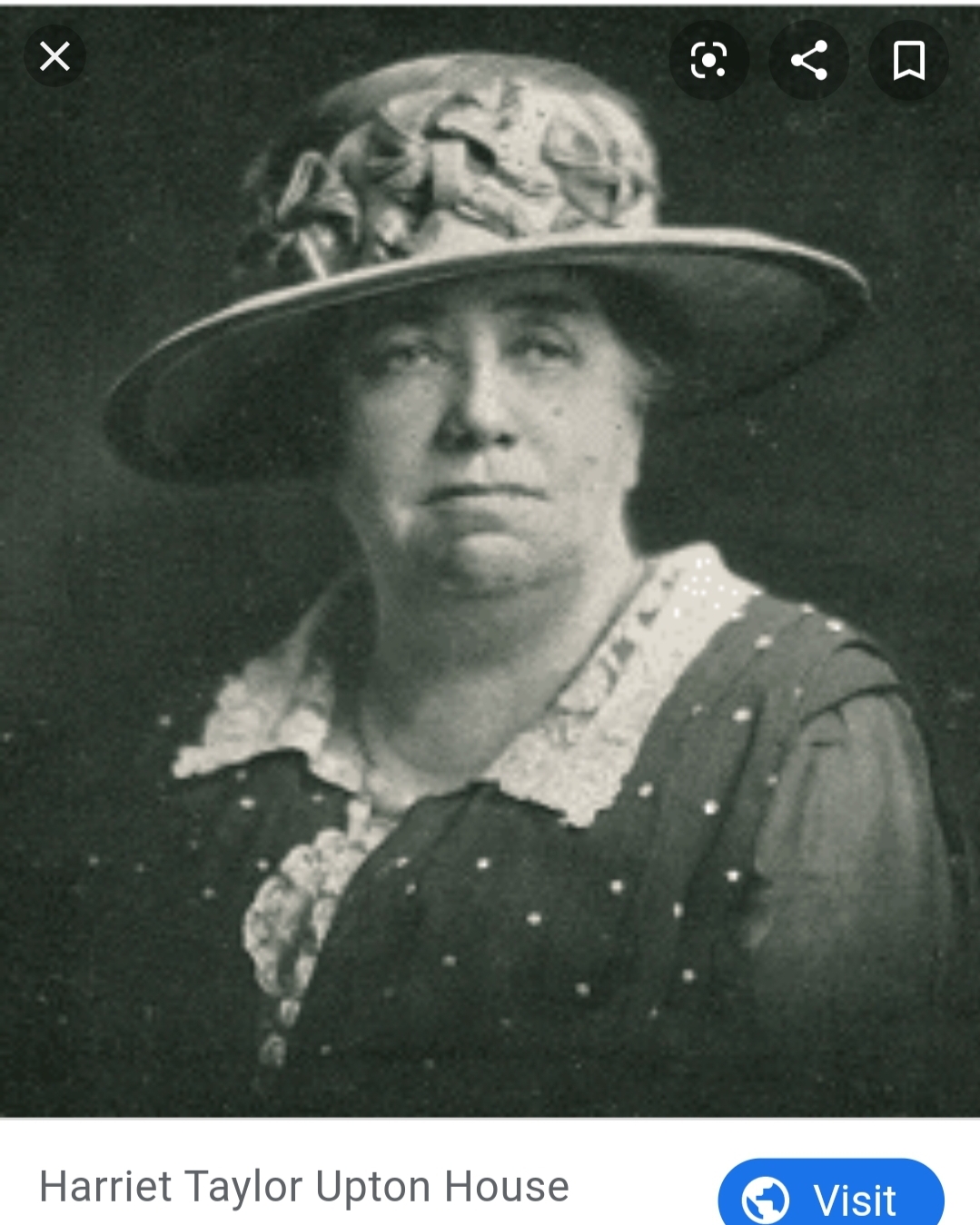
860) Harriet Taylor Upton

Courtesy of the Harriet Taylor Upton House

860: Harriet Taylor Upton

The First Female Vice Chairman of the National Republican Executive Committee

Born: 17 December 1853, Ravenna, Ohio, United States of America

Died: 2 November 1945, Pasadena, California, United States of America

Harriet was a Women’s Suffrage Movement leader and high society lady in Washington DC. Her mentor was Susan B Anthony. Back home in Ohio, she started the Ohio Women in Convention to further her activist work on the stateside.

Harriet first moved to Washington DC after her widowed father was appointed to congress. It was there that Harriet learned to work as a society lady as hostess for her father. She married in 1884 but would have no children.

Harriet served as Treasurer of the National Woman’s Suffrage Association for fifteen years. Harriet’s work in the suffrage movement was different from other renowned suffrage leaders. Far from being hated or despised, Harriet was described in the Washington Post thusly: "Mrs. Upton is without a doubt the best liked and wisest suffrage worker in the country.  Always in times of stress, the other state leaders have to call on Mrs. Upton."

She was involved with many other boards and societies as well from Red Cross Chapters to school boards. Her activism in Washington DC led her to know and become friends with Presidents Hayes, Garfield, McKinley, Harding, and Hoover.

Harriet was also an advocate for fair child labor laws; and she was instrumental in seeing the first law in the United States created to protect children workers.

Harriet was also an author. She wrote historical accounts and children’s books alike. As though she wasn’t busy enough with everything else, Harriet was also a member of the National Society Daughters of the American Revolution and founded the Warren Chapter in her home state of Ohio.

In 1926, Harriet also ran (albeit unsuccessfully) for the House of Representatives. She was also the first woman elected to the Warren, Ohio Board of Education, where she served for fifteen years, and was the first woman elected to the vestry of the Christ Episcopal Church.

Harriet lost her home of sixty years in an auction during the Great Depression but today the home is the location of the Upton House Museum.

Badges Earned:

Find a Grave Marked

Sources:

https://ohiohistorycentral.org/w/Harriet_T._Upton

http://www.uptonhouse.org/HTayor.html

http://www.herhatwasinthering.org/biography.php?id=7488

http://www.uptonhouse.org/index.html

https://www.findagrave.com/memorial/107020067/harriet-upton

830) Alice Paul

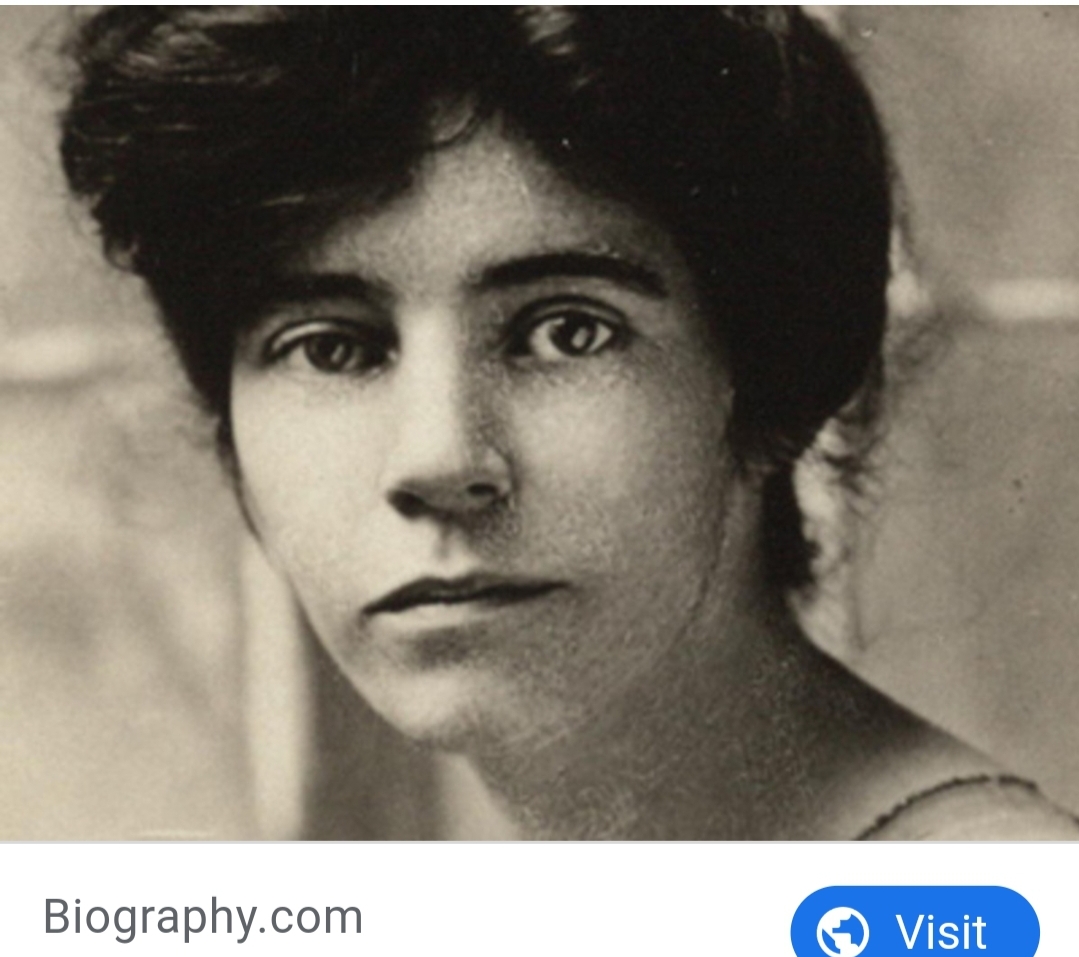
Courtesy of Biography

 “I never doubted that equal rights was the right direction. Most reforms, most problems are complicated. But to me there is nothing complicated about ordinary equality.”

830: Alice Paul

One of the Main Leaders and Strategists of the Campaign to Pass the 19th Amendment to the United States’ Constitution

Born: 11 January 1885, Mount Laurel, New Jersey, United States of America

Died: 9 July 1977, Moorestown, New Jersey, United States of America

Alice was raised fighting for gender equality from the start. Her parents believed in equality and her mother, a suffrage advocate herself, would bring Alice and her sisters to local suffrage meetings from the time they could walk.

Alice earned a master’s degree in Sociology before moving to the United Kingdom as a PhD student. This is where she attended a lecture that would launch her into the realm of campaigning for women’s rights.

Alice was such an ardent advocate that she would be arrested three times for the cause throughout her life.

One time she even went on a hunger strike with other women that resulted in them being force-fed. The harrowing account of their ordeal is now a black mark in the history of suffrage in the United States and will turn the stomach of anyone who studies it.

In 1910, Alice returned to the United States to fight for equality on the home front. In 1913, she co-founded the Congressional Union for Women’s Suffrage that was A-OK with using militant methods they’d seen in England to get their message across.

They picketed the White House daily, asking why President Wilson refused to pass suffrage. These pickets were the first of their kind in the United States and were met with open hostility from journalists and average people alike across the country. Starting in January 1917, the picket lines kept up for eighteen straight months. One of the most famous slogans the protestors used was, “Mr. President, How Long Must Women Wait for Liberty?” which were reportedly the last words of suffragist Inez Milholland.

Alice continued to picket during World War I and was imprisoned for seven months. This is when she went on a hunger strike and was later released. Alice and her fellow protestors were arrested by police officers while picketing on the charge of “Obstructing Traffic”. In actuality, they were using their first amendment right to peacefully protest.

Alice is credited with having drafted the Equal Rights Amendment and helping found the World Women’s Political Party, fighting till the very end. Oh, and she happened to be a member of the National Society Daughters of the American Revolution.

Badges Earned:

Find a Grave Marked

Located In My Personal Library:

America's Women: 400 Years of Dolls, Drudges, Helpmates, and Heroines by Gail Collins

Consuelo and Alva Vanderbilt: The Story of a Daughter and a Mother in the Gilded Age by Amanda Mackenzie Stuart

Suffragists in Washington DC: The 1913 Parade and the Fight for the Vote by Rebecca Boggs Roberts

National Geographic History Magazine’s July/August 2020 Edition: “The Silent Sentinels”

Time Magazine's 100 Women of the Year (Alice appears in the 1920 article, "the Suffragists")

Sources:

https://www.womenshistory.org/education-resources/biographies/alice-paul

https://www.alicepaul.org/who-was-alice-paul/

https://www.biography.com/activist/alice-paul

https://www.nps.gov/people/alice-paul.htm

https://www.dar.org/archives/suffrage-march-centennial-anniversary-online-exhibition

https://www.findagrave.com/memorial/6283941/alice-stokes-paul

822) Mary Edwards Walker

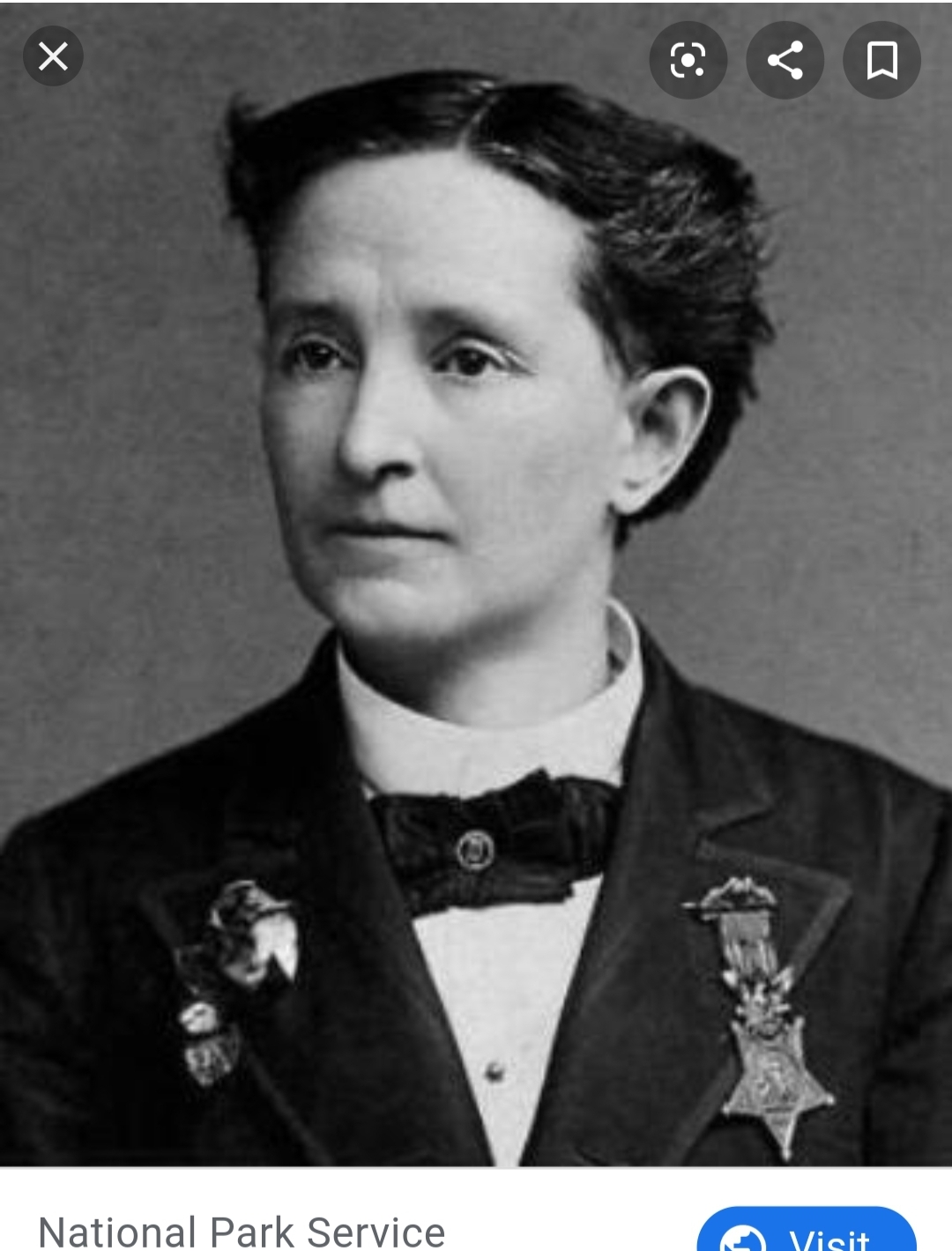
Courtesy of the National Park Service

"I don't wear men's clothes, I wear my own clothes."

822: Dr. Mary Edwards Walker

The Only Woman to Ever Receive the Medal of Honor (United States)

Born: 26 November 1832, Oswego, New York, United States of America

Died: 21 February 1919, Oswego, New York, United States of America

Mary was an abolitionist, women’s rights advocate, possible spy, and prisoner of war.

She served as a military surgeon during the War Between the States (serving the Union Army as the first female surgeon [the first female surgeon for the Confederate army was Dr. Oriana Moon Andrews]).

Mary wore female fitted outfits that looked like male clothing after her father told her and her sisters (of which there were five total) that he didn’t expect them to wear corsets. She had no desire to conceal her gender and simply dressed that way for practical reasons. One of the pieces of clothing Mary and her sisters wore were the now famous Bloomer costume, named after the trendsetter who made them popular, Amelia Bloomer. Mary’s parents were so forward thinking they founded their own school, the first of its kind in Oswego, simply so their daughters could be just as educated as their son.

Mary graduated from Syracuse Medical College in 1855; becoming the second woman to receive her medical degree from there after Elizabeth Blackwell. She was also a member of the National Society Daughters of the American Revolution.

At her wedding the word “obey” was deleted from her vows and Mary insisted on being called Dr. Miller-Walker. Mary even dressed in a short skirt with trousers underneath instead of a dress. However, she and her husband divorced after fourteen years, and she would never marry again, nor have any children.

For the first three years of the war Mary served as an army nurse, though the position was a volunteer one and she was not paid. In 1864, she was commissioned as the first woman assistant surgeon in the United States Army (though she was technically a civilian agent, the pay equivalent of her position was a lieutenant or captain). In 1864, Mary partook in a surgical case with a Confederate surgeon. Once the surgery was completed, Mary was captured by Confederate soldiers and held as a prisoner of war after being charged as a spy (According to one source, but there is little other evidence to back up this claim). They held her for four months, during which time she refused to dress in women’s attire because they were less hygienic than male clothing was at the time.

In 1865, President Johnson served Mary with the Medal of Honor and in 1907 she received a replacement medal and would proudly wear them together.

In 1871, Mary published a book entitled Hit. Throughout the 1870’s, Mary’s work advocated for women’s rights skyrocketed. She fought for overall dress reform and was even arrested in New Orleans in 1870 for refusing to dress like a woman. The following year, Mary unsuccessfully attempted to register to vote. She then ran for United States Senate in 1881 and the United States Congress in 1890 but failed to receive a nomination.

Mary continued to work for the cause of Suffrage. She testified before the US House of Representatives in 1912 and 1914; however, the mainstream suffrage movement began to distance themselves from her. Mary believed women had already been given the right to vote in the US Constitution, and simply needed an act of Congress to make it so. The mainstream Suffrage movement, on the other hand, wanted a constitutional amendment added for further clarification and protection.

In 1916, Mary’s name was stricken from the record of Medal of Honor Recipients alongside many others (because she was never a commissioned officer in the military) but she continued to wear both of hers until she died. This is particularly confusing considering some sources state Mary was officially ranked as a “First Lieutenant” by the end of the war but was still in fact a civilian agent. The same decision that revoked Mary’s medal also saw William “Buffalo Bill” Cody lose his as well for the same reasons.

Finally, in 1977 the records were corrected, and Mary’s medal was reinstated by President Jimmy Carter thanks to her family continuing to fight for what was right.

Mary was buried in a black frock suit, defying society conventions till the end.

In 2012, her hometown of Oswego, New York unveiled a statue in her honor.

Badges Earned:

Find a Grave Marked

Located In My Personal Library:

Legends & Lies: The Civil War by Bill O'Reilly and David Fisher

They Fought Like Demons: Women Soldiers in the American Civil War by DeAnne Blanton and Lauren M Cook

The Pinks: The First Women Detectives, Operatives, and Spies with the Pinkerton National Detective Agency by Chris Enss

Sources:

https://www.womenshistory.org/education-resources/biographies/mary-edwards-walker

https://cfmedicine.nlm.nih.gov/physicians/biography_325.html

https://www.army.mil/article/183800/meet_dr_mary_walker_the_only_female_medal_of_honor_recipient

https://www.nps.gov/people/mary-walker.htm

https://www.battlefields.org/learn/biographies/mary-e-walker

https://www.findagrave.com/memorial/23089/mary-edwards-walker

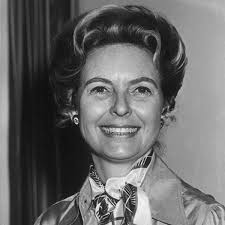
751) Phyllis Schlafly

Courtesy of Biography
“I want to thank my husband, Fred, for letting me come here...I like to say that, because I know it irritates women’s libbers more than anything else.”
“I simply didn’t believe we needed a constitutional amendment to protect women’s rights. I knew of only one law that was discriminatory toward women, a law in North Dakota stipulating that a wife had to have her husband’s permission to make wine.”

751: Phyllis Schlafly

The ERA? Who Needs That?

Born: 15 August 1924, St. Louis, Missouri, United States of America

Died: 5 September 2016, St. Louis, Missouri, United States of America

Phyllis is most known for her fight against the Equal Rights Amendment, but she also fought against Communism and legalized abortions.

Phyllis was known as the “First lady of the Conservative Movement” in the latter half of the twentieth century here in the United States. Her work was widespread but also drew many detractors.

Phyllis was one of two children, and her parents were hardworking and industrious. Her father was a staunch Republican, an inventor, and opponent of The New Deal, and her mother held multiple jobs over the years to help support the family. Some believe Phyllis’s ambition to ensure women were able to stay in the home if they wished stemmed from her mother. Phyllis’s mom supposedly regretted having to work six days a week; which kept her away from her family and housework.

Phyllis managed to graduate from college after three years, aged just nineteen. She had no time for a social life or friends, and instead worked nights to support her school efforts. After her early graduation, Phyllis went on to earn a master’s degree in only nine months. Surprisingly, in college, Phyllis was much more neutral in politics. She strived to work for the federal government in Washington DC, and even wrote papers supporting the United Nations. When no jobs appeared, Phyllis instead turned to working at a conservative think tank, and quickly became immersed in Republican ideals.

By 1946, Phyllis was working on congressional campaigns and was active in St. Louis politics. In 1949, she married Fred Schlafly, who was fifteen years her senior. Phyllis later said she did not promise to obey in her vows, only to cherish her husband. Once her eldest turned eighteen months, Phyllis was back on track with her hectic career, writing, campaigning, speaking, and traveling across the country. She would eventually have six kids with her husband.

In 1952, Phyllis’s husband declined to run for Congress after being asked. Phyllis ran in his stead, and though she lost in the general election, Phyllis had won in the primary. By 1958, Phyllis and Fred were actively working to educate American Catholics on the danger of Communism, brought on by the torture of Cardinal Midszenty. Four years later, she was hosting a fifteen-minute radio show called “America Wake Up.” You can guess what she wanted American’s to wake up about. Phyllis also actively campaigned for Barry Goldwater’s run for president. By 1971, Phyllis had educated herself and began the battle she is most remembered for today, stopping the ERA from being ratified and added to the United States Constitution.

In 1972, Phyllis founded a volunteer organization called Stop ERA, that eventually morphed into the Eagle Forum three years later. Phyllis’s main reasons for stopping the ERA was that she, and other women, were worried the ERA would counteract or cancel out other laws already in place to protect women; mainly the guarantee of alimony, the forceful obligation of women to provide financially for their family and forcing women to sign up for conscription. By 1973, her support skyrocketed across the country with the passing of Roe V Wade.

Phyllis was also a member of Daughters of the American Revolution and led several Republican women’s groups in Illinois. In her work for DAR, Phyllis served five three-year terms as National Chairman for the National Defense Committee. She also served as National Chairman of American History Month and National Chairman for the Bicentennial Committee. She also served two terms as regent of her chapter (Ninian Edwards in Alton, Illinois) and was an honorary chapter regent. She also worked for DAR on the state level, as State Chairman of National Defense, State Recording Secretary, and editor of the state yearbook.

One of her sons, John, was outed as being gay in 1992 by an LGBT activist. Both John and his mother Phyllis considered the act a breach of privacy, and John never condemned his mother for being against the legalization of gay marriage. One of her last political acts before she died was to endorse Donald Trump for the presidency in 2016.

Phyllis was so villainized by the left that Betty Friedan, a leader in the women's rights movement at the same time Phyllis was active, said Phyllis should have been burned at the stake for her opposition to the ERA. That’s nice. Phyllis and her followers were so powerful they have been credited with helping pave the way for the Reagan Revolution. Without Phyllis and her followers, the conservative right may have never regained power after the liberal revolution of the 1960’s and 70’s.

Phyllis’s story has been in the headlines in 2020 thanks to the FX Show “Mrs. America”, which is “supposedly” based on her life and her fight to eradicate support for the ERA. However, people who have actually studied Phyllis’s story have been quick to point out her portrayal is inaccurate at best and offensively wrong at worst. Basically, Hollywood directors and producers are trying to villainize a Conservative woman, who would have thought?!

Its no surprise Phyllis has been called a traitor to her sex for her work against the Equal Rights Amendment; but the sad thing so few seem to understand is that Phyllis wasn’t alone. She was a leader of the movement, and many women, myself included, do not want the ERA to ever pass, nor do we endorse or approve of the Feminist Movement as a whole.

Badges Earned:

Find a Grave Marked

Sources:

https://www.nytimes.com/2016/09/06/obituaries/phyllis-schlafly-conservative-leader-and-foe-of-era-dies-at-92.html

https://www.britannica.com/biography/Phyllis-Schlafly

https://eagleforum.org/about/bio.html

https://thefederalist.com/2020/04/27/in-mrs-america-hollywood-once-again-fails-to-understand-conservative-women/

https://thefederalist.com/2020/04/24/heres-10-things-you-didnt-know-about-phyllis-schlafly/

https://www.findagrave.com/memorial/169429833/phyllis-schlafly

  • 1
  • 2
  • 3
  • Next

Categories

Archives

  • July 2025 (10)
  • July 2024 (1)
  • January 2024 (1)
  • August 2023 (1)
  • June 2023 (2)
  • October 2022 (1)
  • July 2022 (1)
  • June 2021 (3)
  • December 2020 (3)
  • August 2019 (1)
  • July 2019 (2)

Search

© 2026 The Exasperated Historian | Powered by Minimalist Blog WordPress Theme