The Exasperated Historian
Menu
  • Home
  • The Women’s List (New)
  • The Men’s List
  • The Animal List
  • Collections
  • The Blog
  • Contact Us
  • FAQ
Menu

Category: Utah’s Own

Provo City, American Fork, and Sacajawea Cemeteries

Posted on June 27, 2021January 16, 2022 by nickssquire12

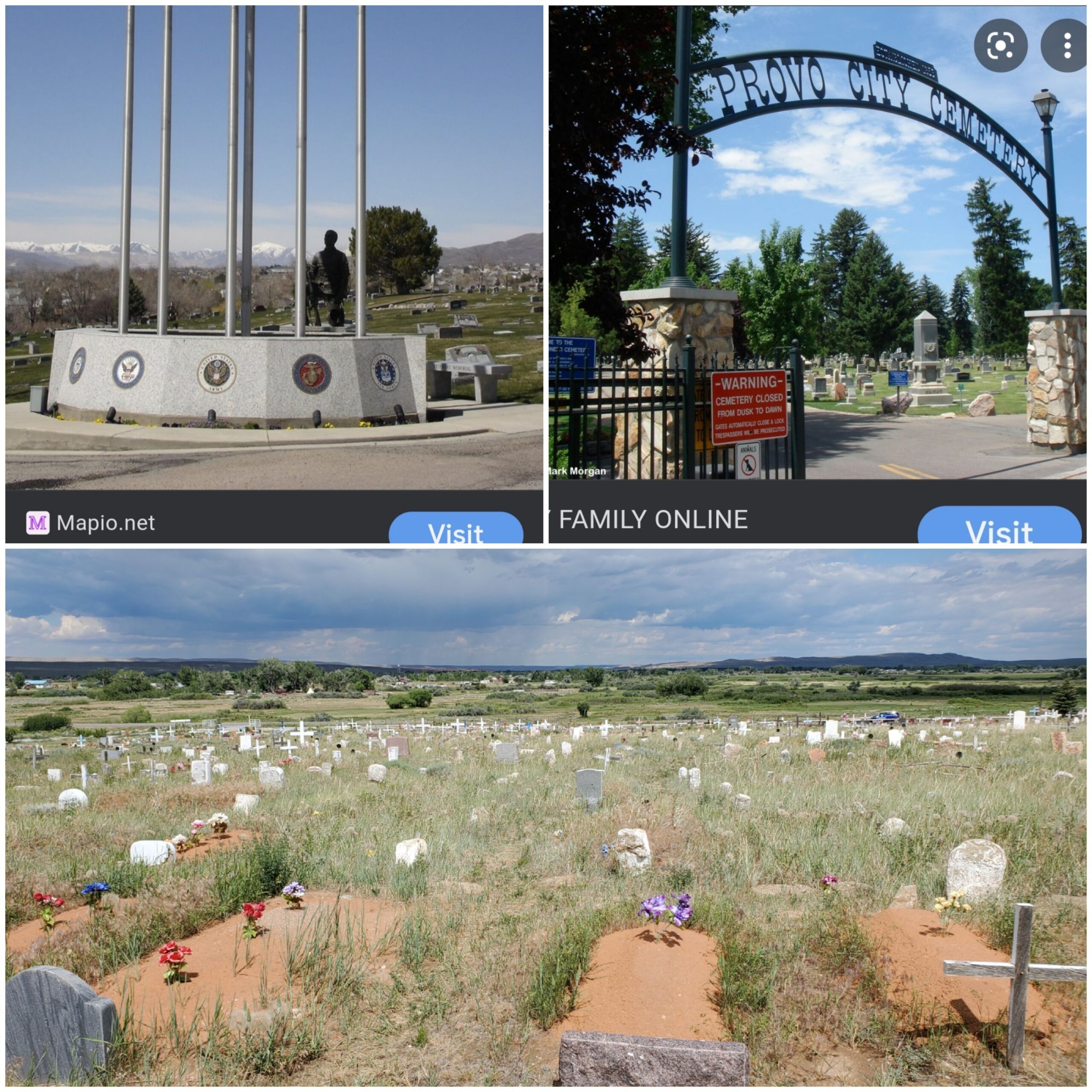
Over the past two days, my mother and I have visited three more cemeteries: Provo City (Provo, Utah), American Fork (American Fork, Utah), and Sacajawea (Fort Washakie, Wyoming--Located on the Wind River Reservation).

I wanted to visit each cemetery for a specific purpose; someone from my lists are buried in each one.

Provo City was first. This sleepy little cemetery is tucked away in the university town of Provo. When my mother and I visited, around five PM on a Saturday afternoon, only two other cars with other visitors were there with us. Provo is most well known today for being the home of Brigham Young University (BYU), and so of course the majority of folks who live, and have died, in the city are members of the Church of Jesus Christ of Latter Day Saints. Though not LDS (or more commonly known as Mormon) myself, my hometown is also largely populated by the LDS community and so their customs and iconography are familiar to me. My mother and I almost felt home when we saw the multitude of headstones engraved with an image of a temple; only in this case the majority of these grave markers showed the local LDS temple in Provo and not the one we are more familiar with--though there was one headstone in the Provo City Cemetery that showed the temple located in my hometown, so that was pretty cool.

With all that said, the person I most wanted to visit in Provo City Cemetery was Philo Farnsworth, the inventor of the all-electronic television and so much more. For a man who gave the world so much, his final resting place is fairly simple. Philo died in Salt Lake City, but is buried in Provo. The GPS coordinates listed on Find a Grave can be linked through Google Maps, and if you use that link you will get fairly close to his gravesite, but its not exact. In any case, my mother and I found Philo and his wife within a few minutes of arriving within the cemetery.
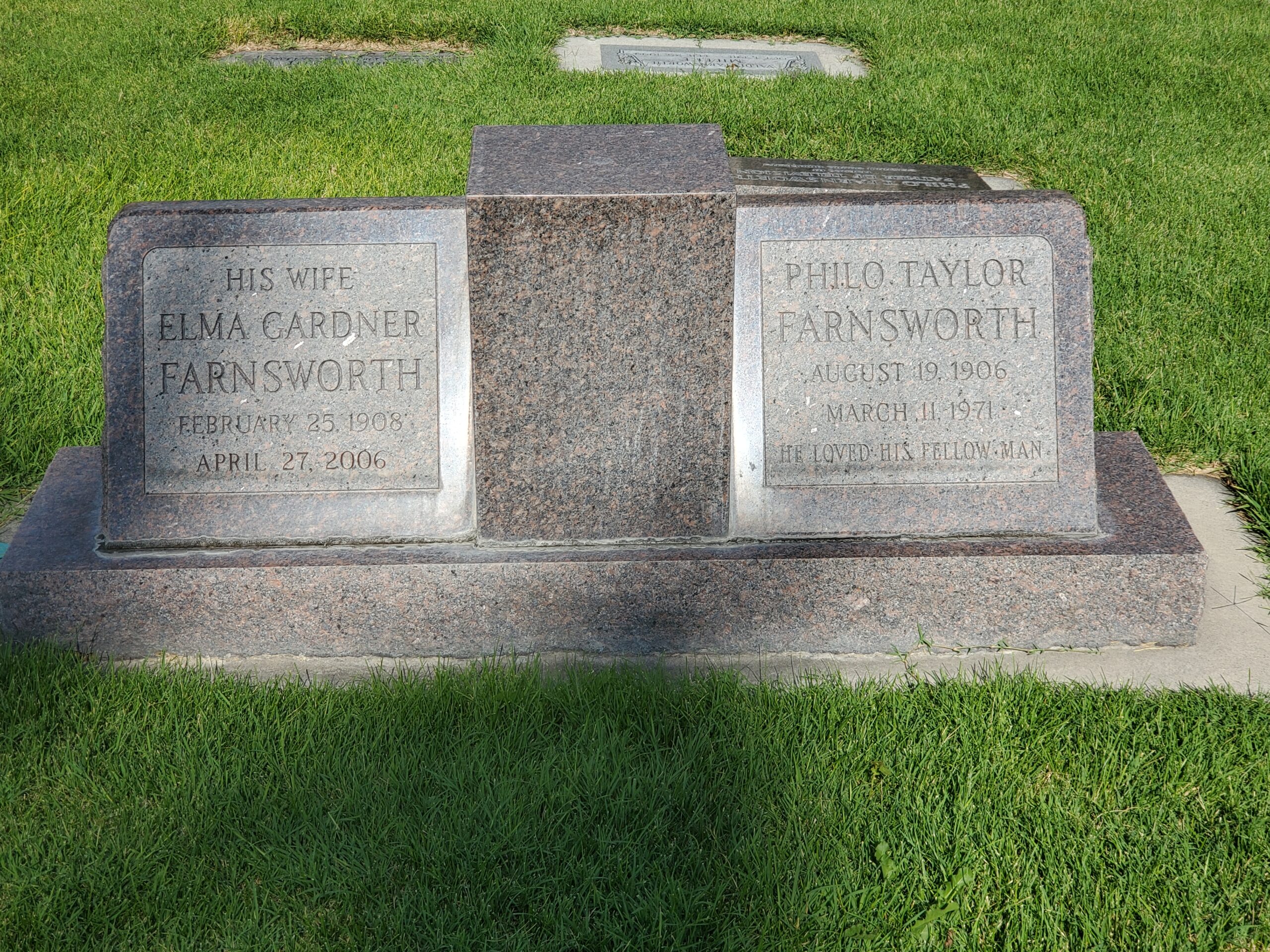
Philo Farnsworth Grave

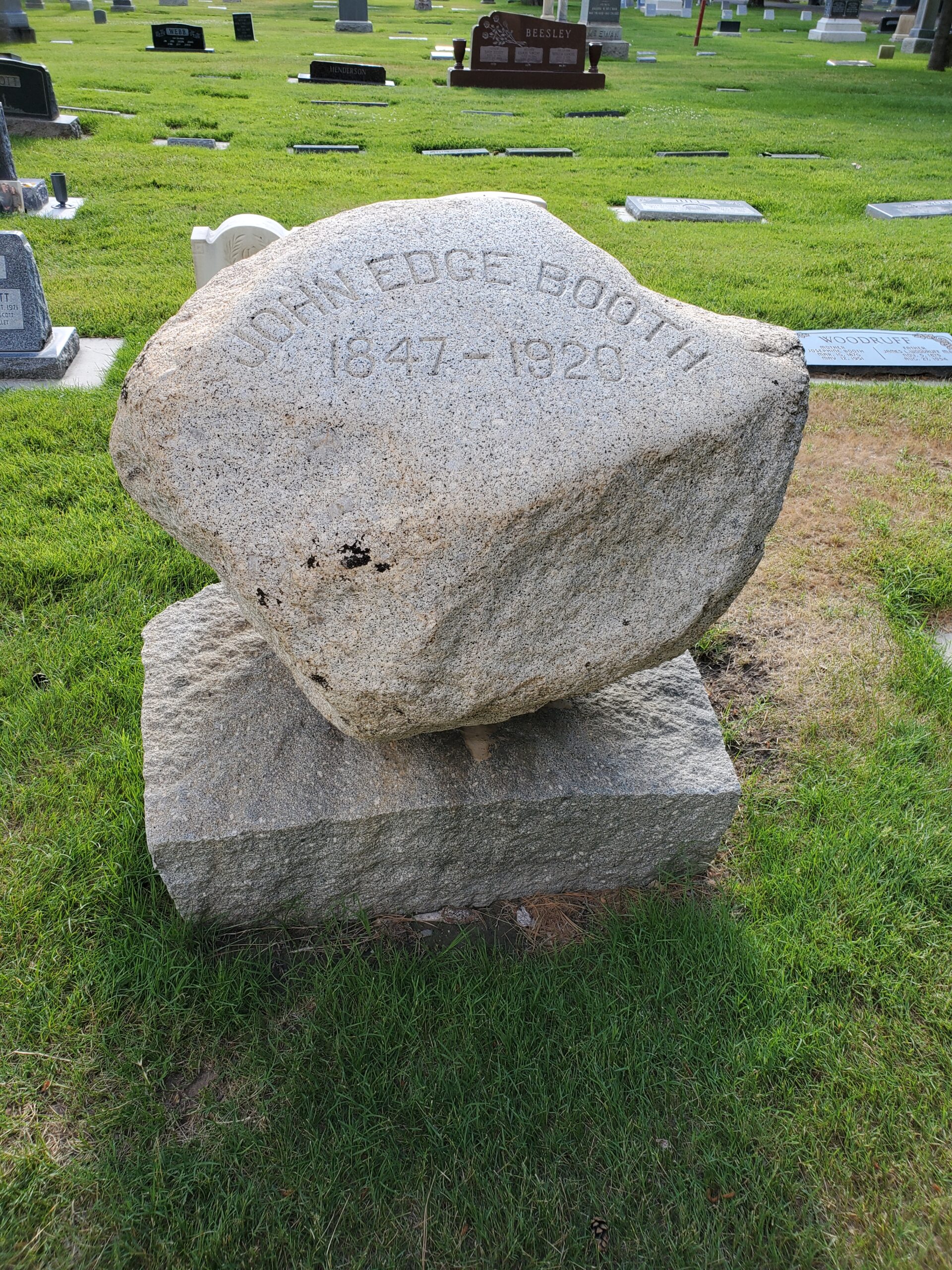
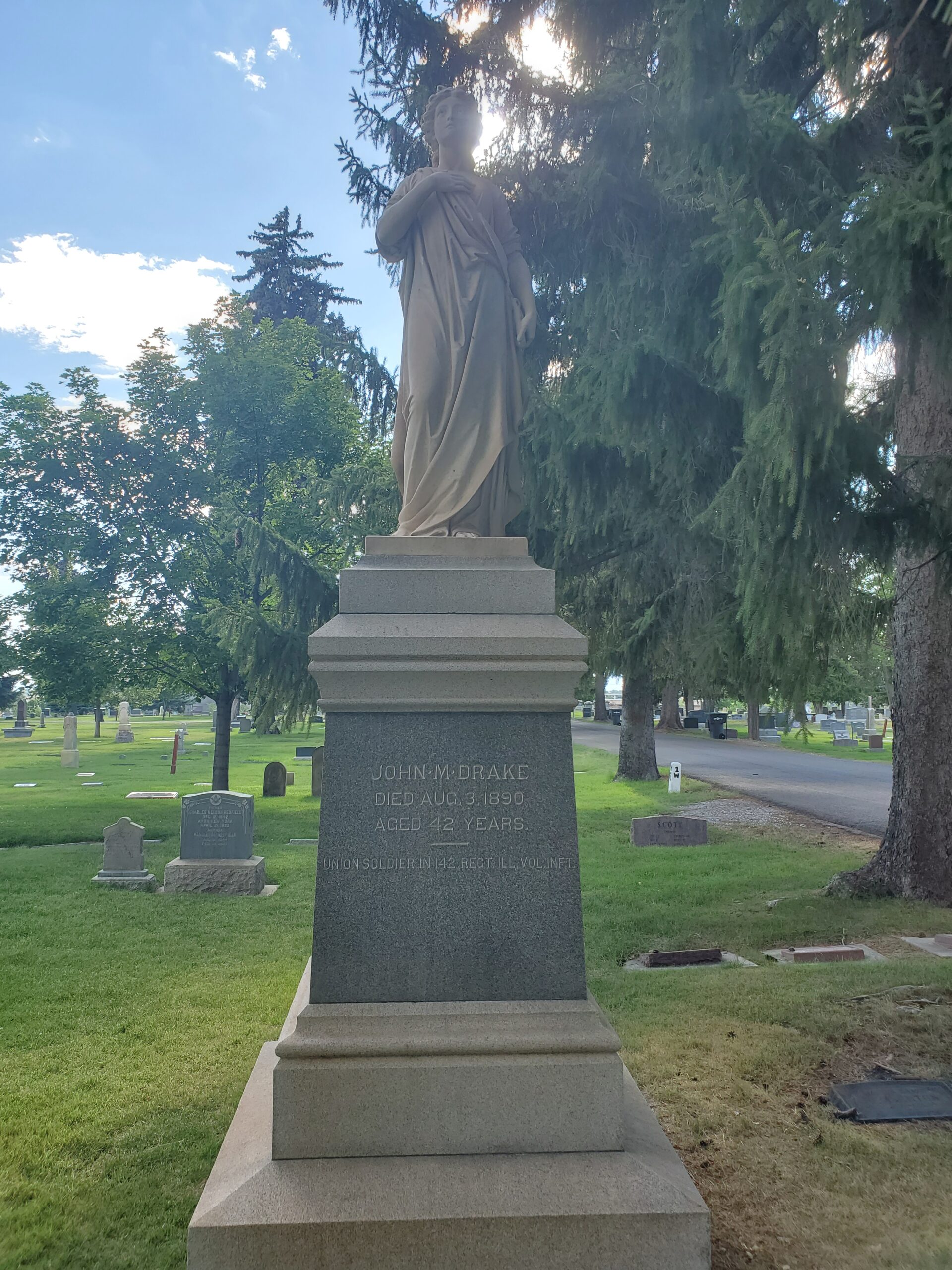
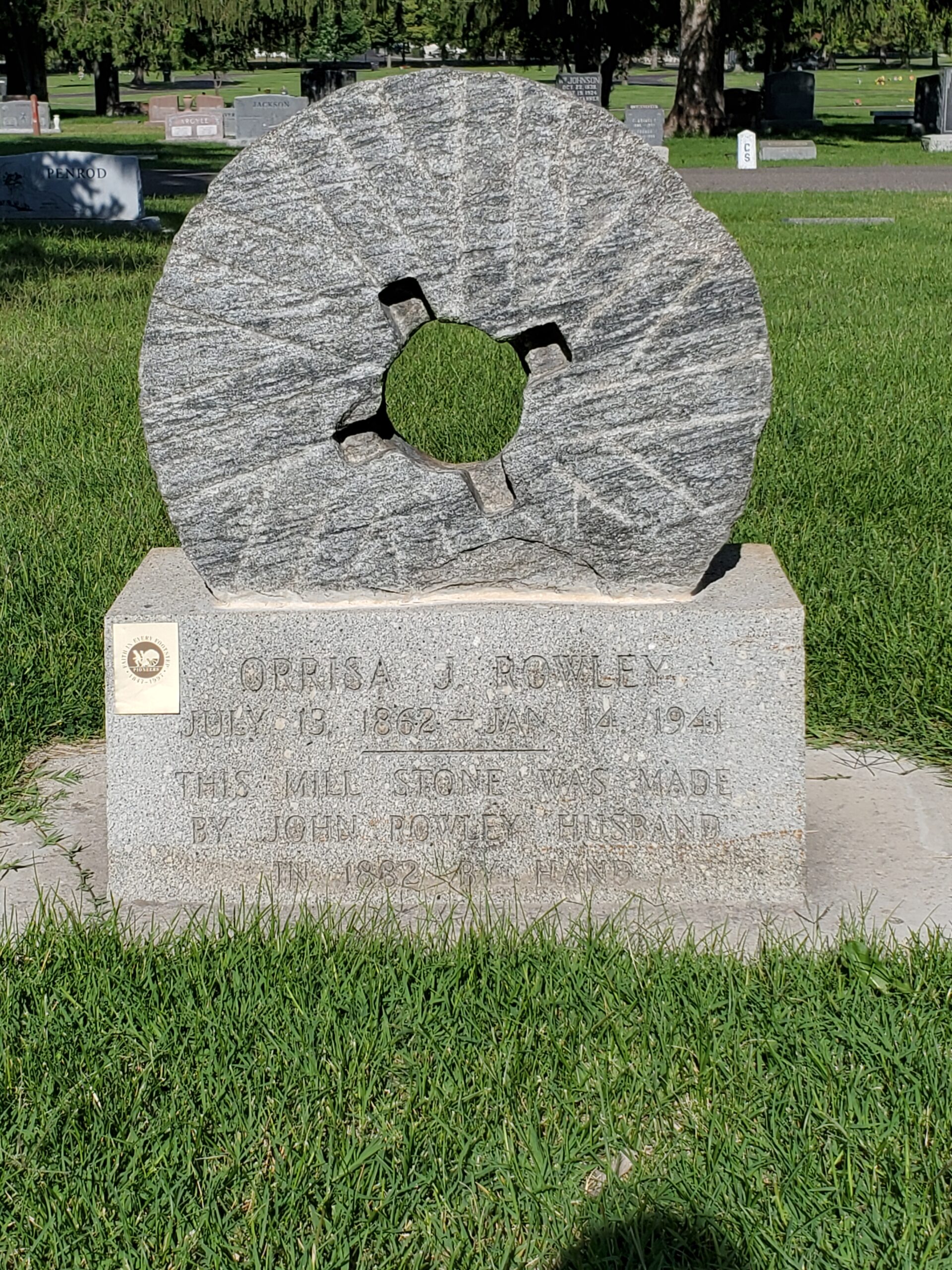
Provo City Cemetery is a good mix of different types of headstones and grave markers. Most traditional city cemeteries that are still allowing burials today have mostly flat along the ground or upright rectangular markers. Provo City does have a mix of these more traditional markers, but there was a variety of other sculptures and other works of art to designate a final resting spot within the cemetery as well. Here are a few of the more unique markers we spotted.
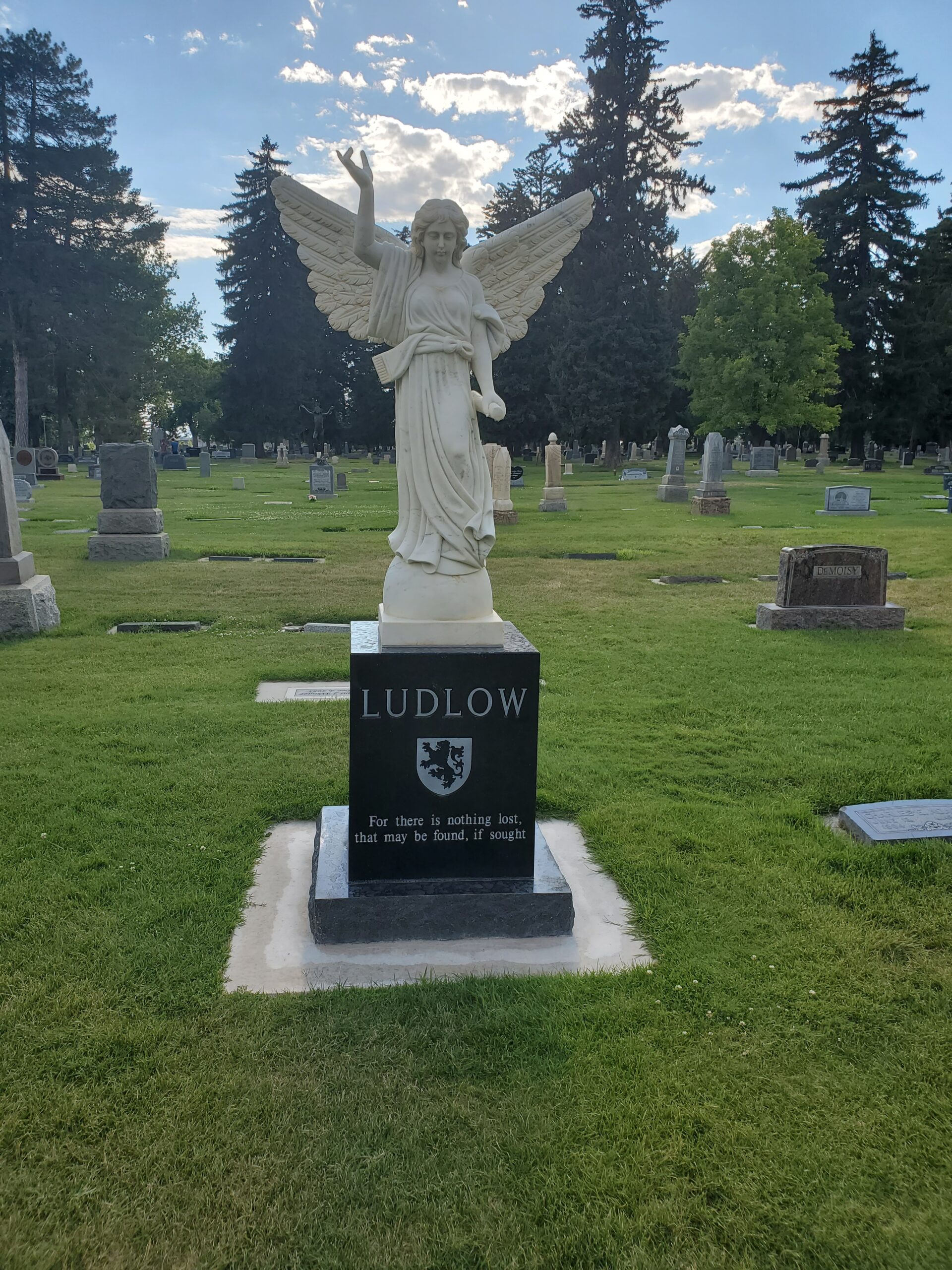
This grave was marked with a tall angel statue
This grave is marked with a millstone made by the deceased's husband in the 1800's
This grave marker is a simple boulder engraved with a name
This grave is adorned with a white statue to top it
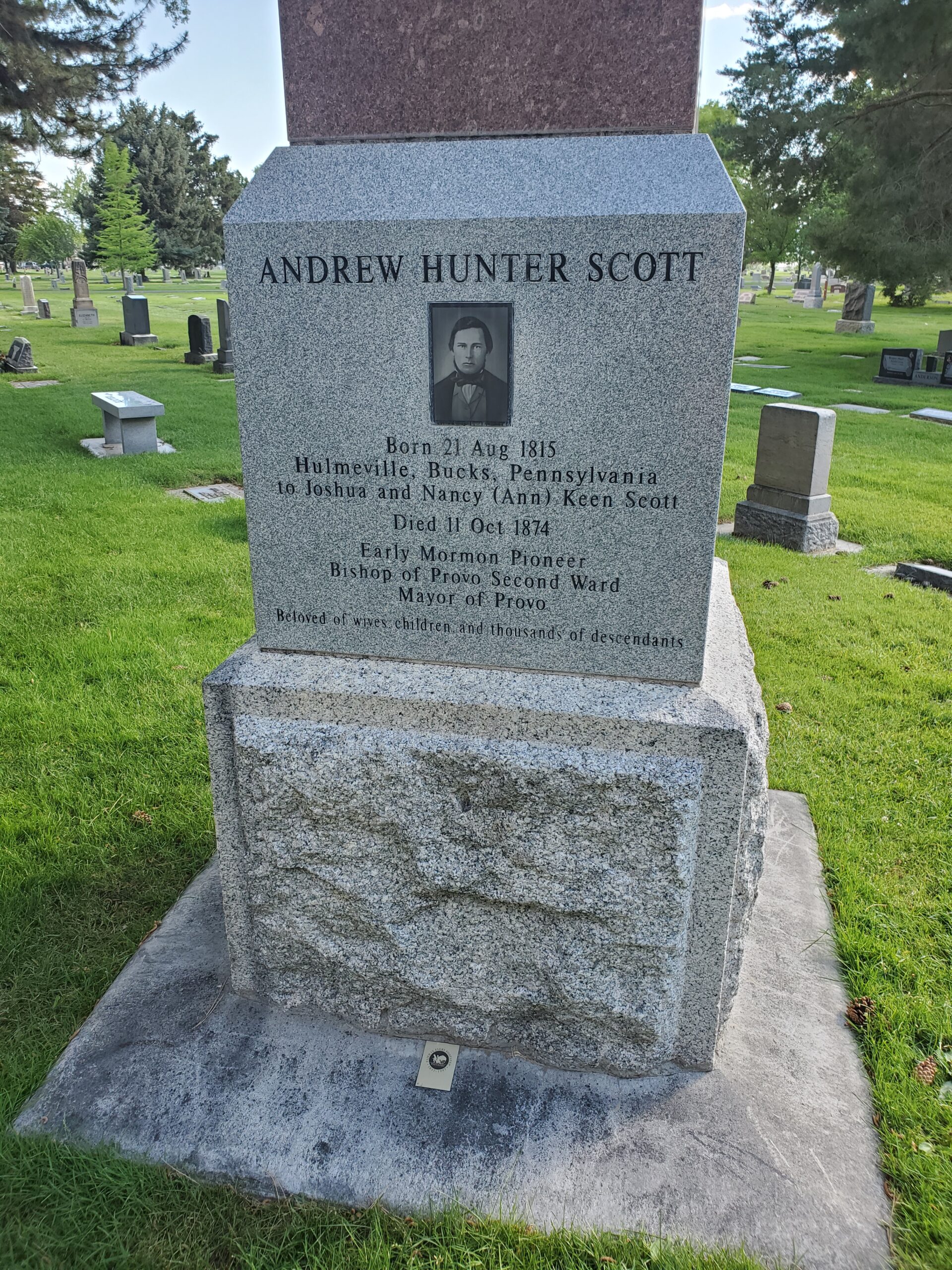
This is the grave of one of Provo's early pioneers

If you're passing through Provo during daylight hours, I highly recommend stopping by the cemetery for a quick walk around. The graves each tell a story and the artwork is unique, as you can see. Sadly, there are quite a few graves for children and young adults--many of whom are from recent years.


Twenty to thirty minutes down the road is the American Fork Cemetery, located in American Fork, Utah.

Like Provo City, American Fork is a unique blend of more traditional and very distinctive headstones. When my mother and I visited around nine AM on a Sunday (at the end of June), the weather was cool and windy but still perfect for wandering a cemetery. I didn't take as many photos here because a lot of the more unique graves are newer and I didn't feel comfortable photographing the graves of people whose family are still around to visit them--if that makes sense.

In any case, I wanted to visit American Fork for one reason: to visit the grave of Utah's first female Congresswoman, Reva Beck Bosone. Reva's grave is very easy to find. Go through the cemetery's main entrance and drive near the back. Halfway between the second to last and last drivable rows, park your car on the right hand side of the road. Several of Reva's relatives are all buried together, and a headstone that reads "Beck" is plainly visible from your car. Reva's headstone faces away from the road, low to the ground, but again is easy to find.
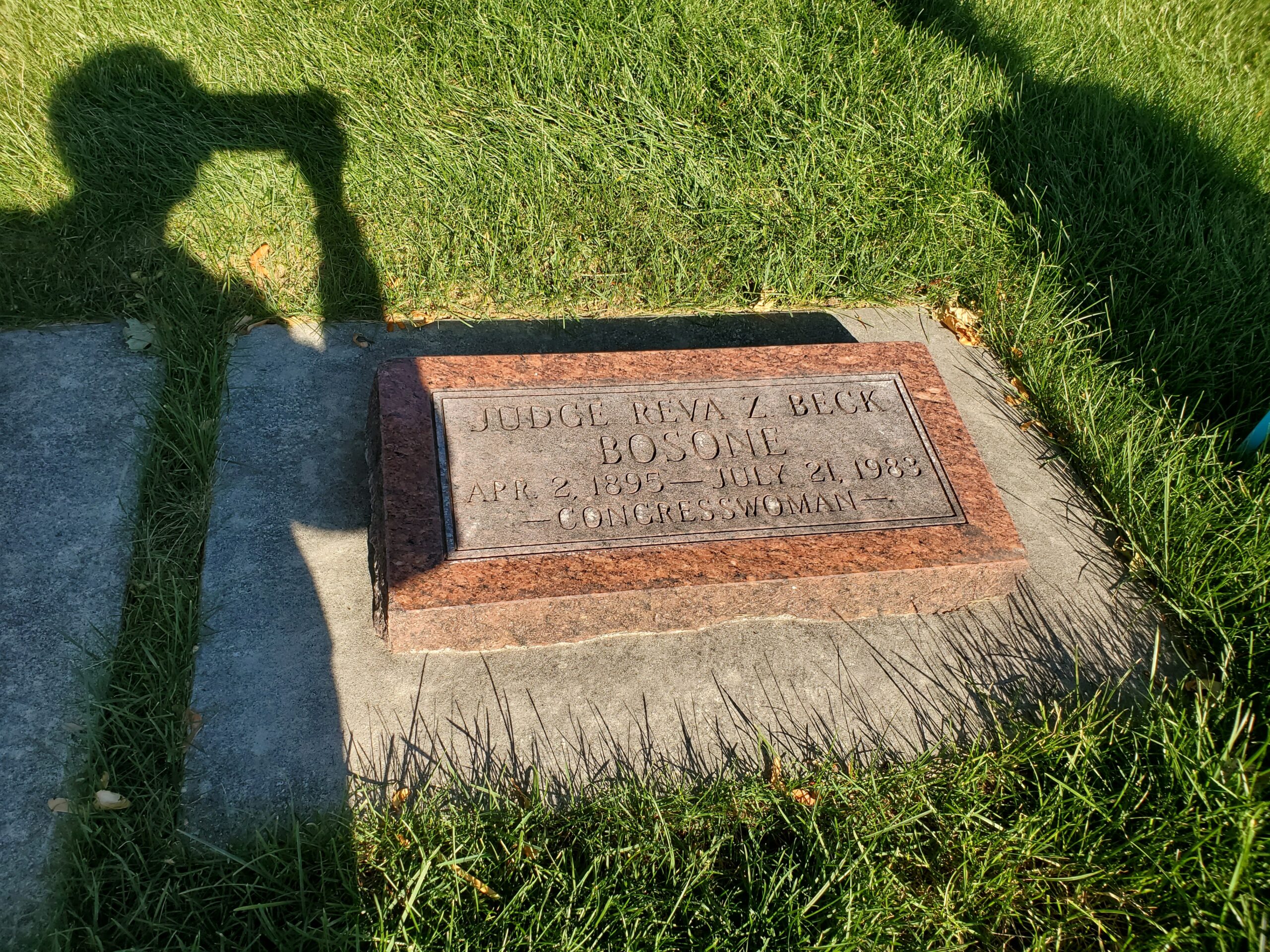
Reva Beck Bosone Grave

Here are the few other photos I snapped at American Fork.
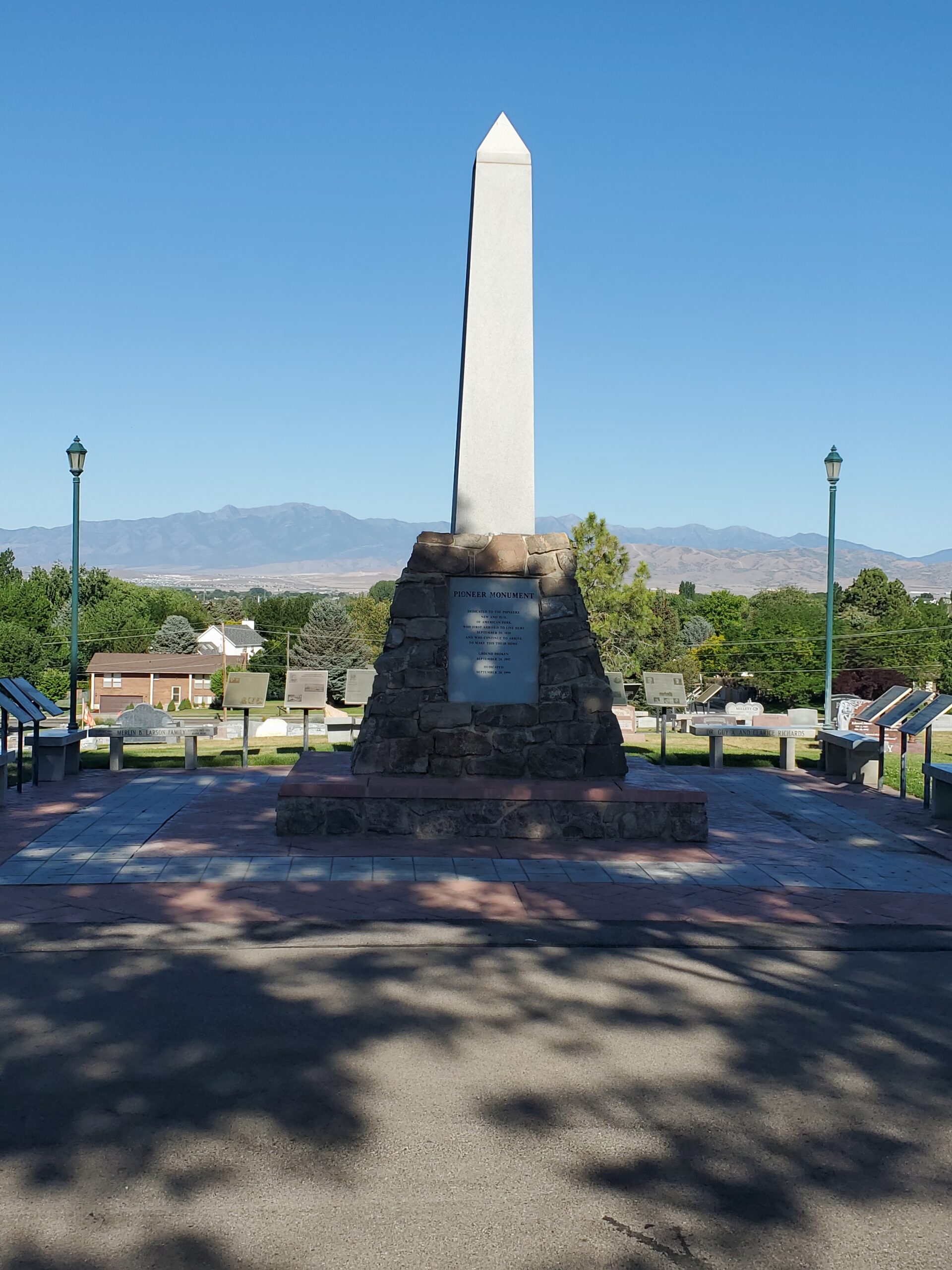
Monument to the Pioneers

The cemetery hosts a large monument to the Pioneers of the area. Several of their stories are located on the standing plaques around the sides of the monument (shown here).
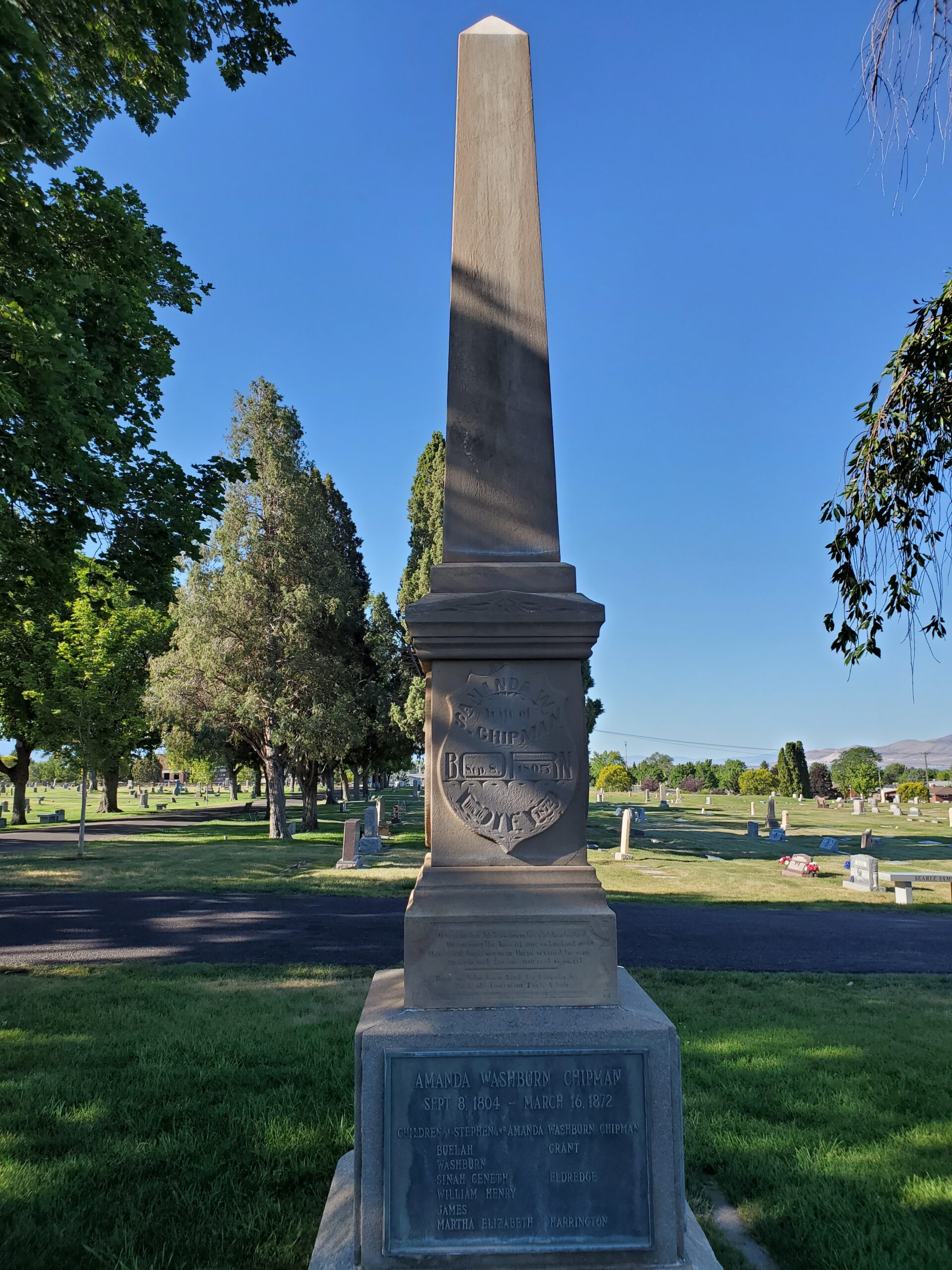
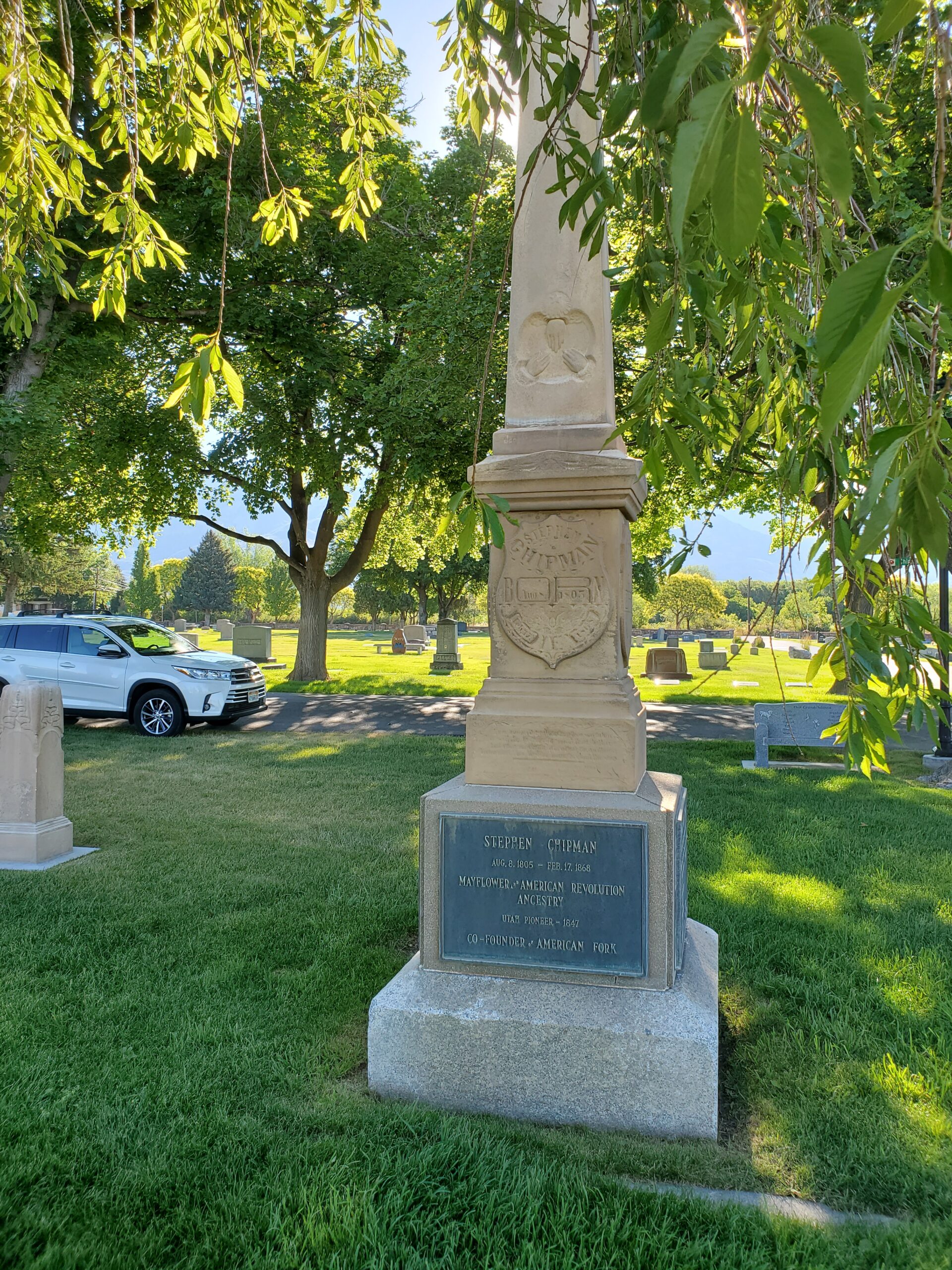
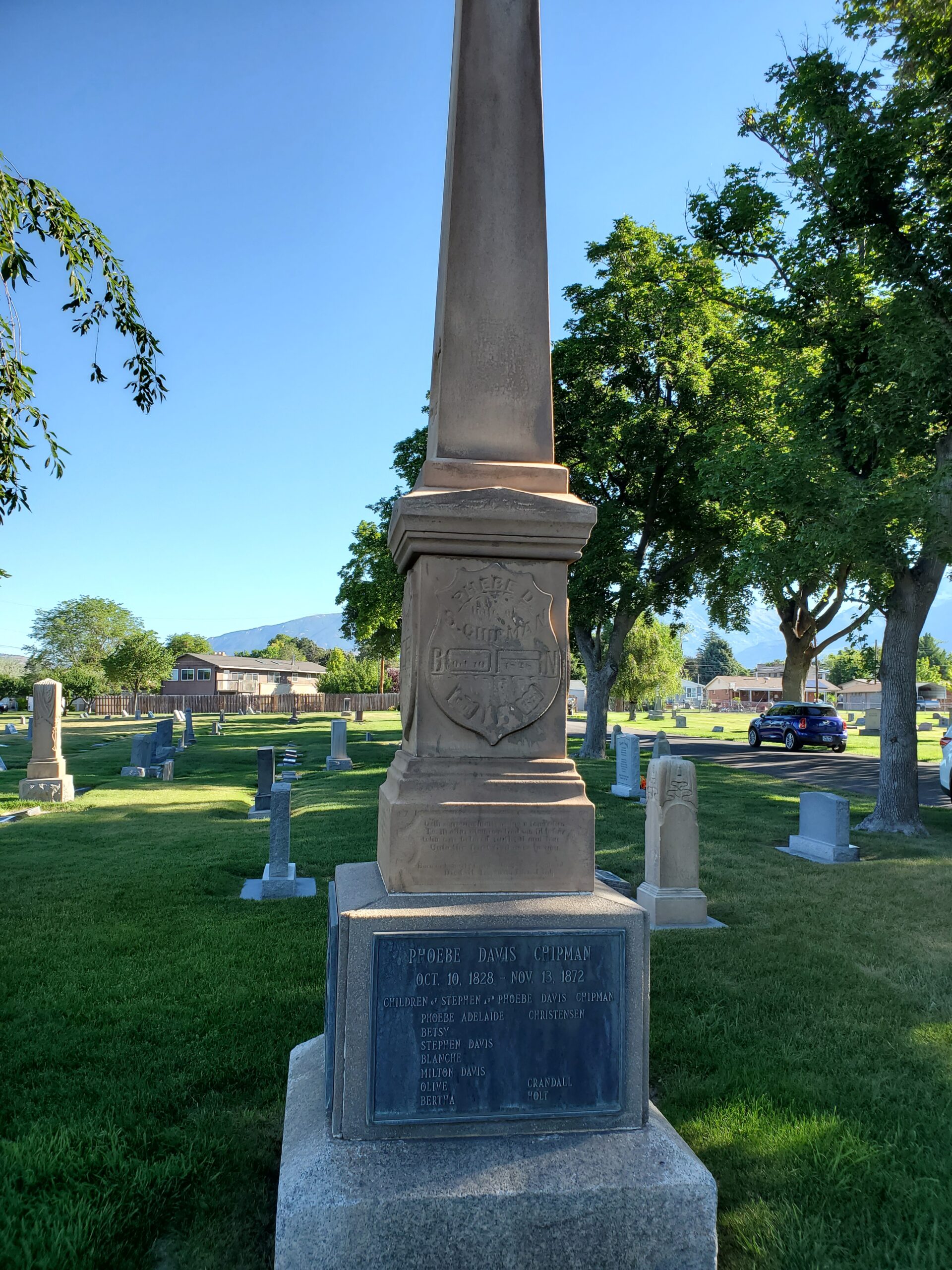
This large obelisk is a monument to the Chipman Family.
Another side of the Chipman Monument
The third side of the Chipman Monument

After leaving the American Fork Cemetery, my mother and I headed for Wyoming. Because we were visiting Utah on a Sunday, all of the museums and things we were planning on seeing in Ogden were closed. Well, hopefully we'll get a chance to visit again in the future.

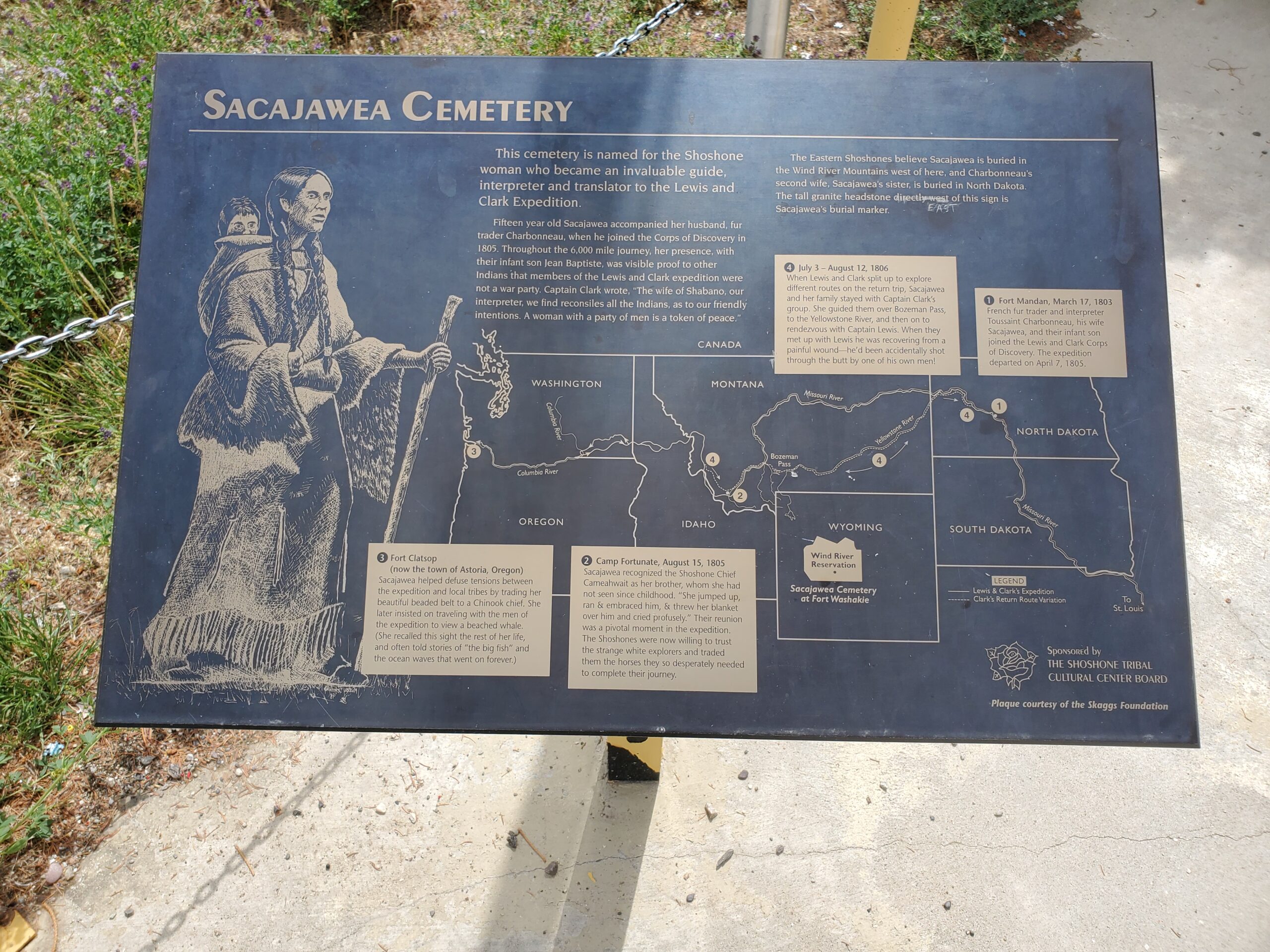
In any case, a few hours into Wyoming we found the Sacajawea Cemetery in Fort Washakie, Wyoming. This cemetery is a still active graveyard on the Wind River Reservation, meaning those buried in the cemetery are tribal members. Because of that fact, as well as the fact that, once again, a majority of the graves are actually new and still visited often, I didn't take many photos of those graves. Instead, I trained my camera instead on the reason the majority of people visit the cemetery in the first place--the grave of famed Shoshone guide Sacagawea.
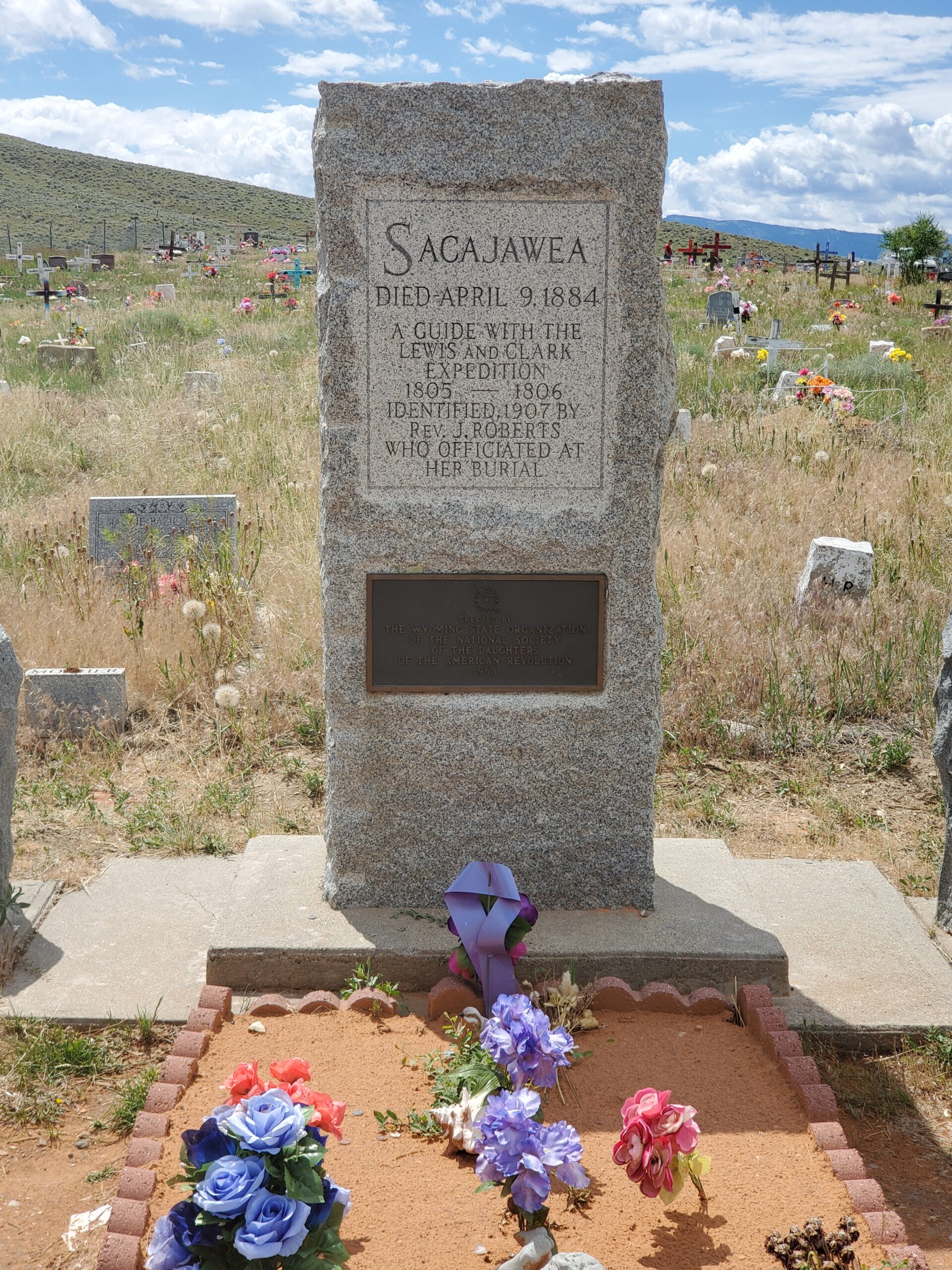
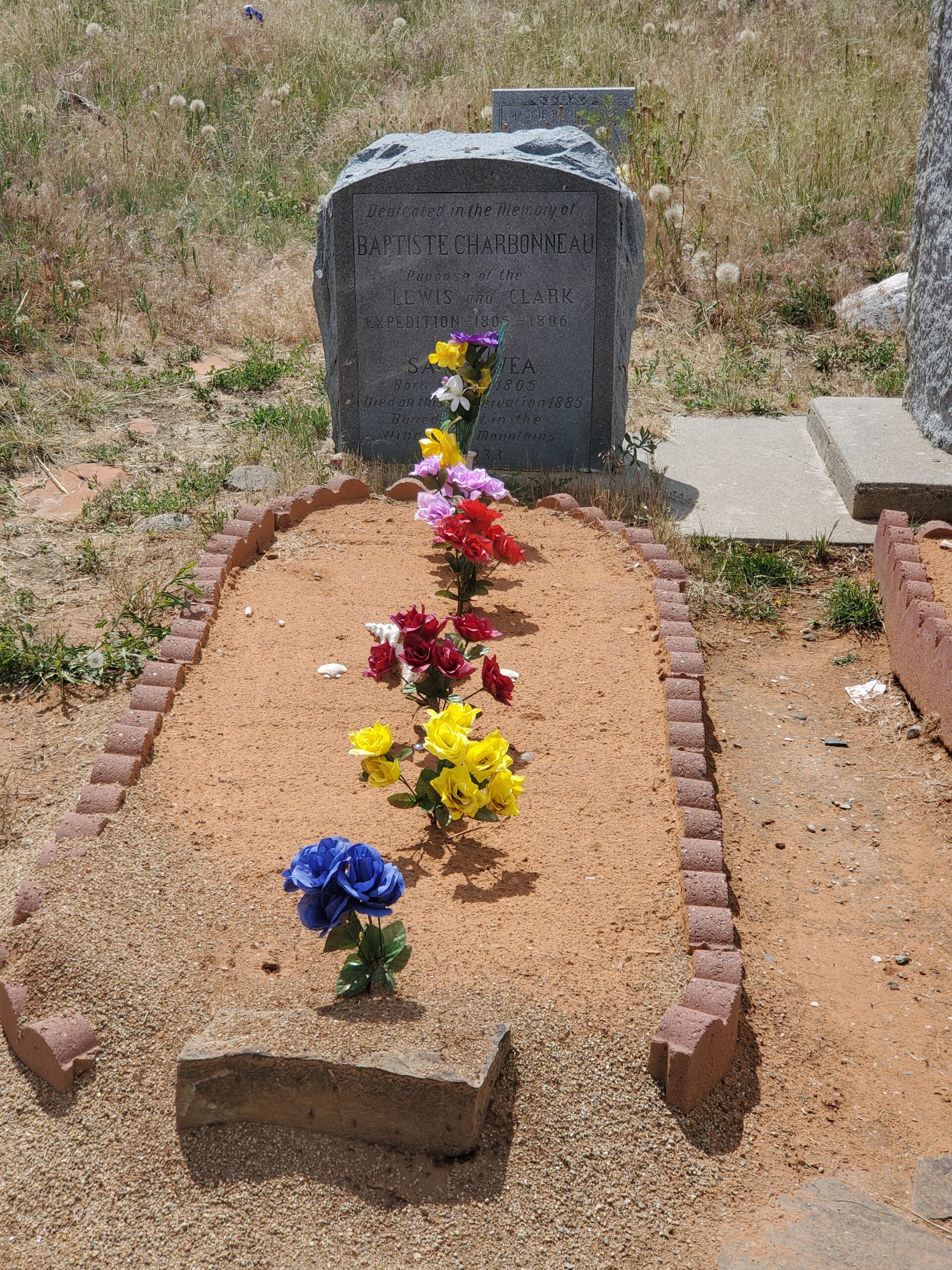
The monument to Sacagawea
Sacagawea's son Jean Baptiste is honored beside her

Now, in case you happen to be well versed in your history of Sacagawea, you may be vaguely remembering hearing at some point that the famed guide has two graves. If you remember hearing that, then you would be correct. The site my mother and I visited, in Wyoming, is the site Sacagawea's people claim is her burial site. According to their version of her story, Sacagawea left her French fur-trapping husband, moved away, married a Comanche man, and eventually made her way back to her people and her adopted son Bazil, before dying around the age of 100 in 1884. The woman who claimed to be Sacagawea is who is buried in this grave. But was she really?

The other version of the story is the one I, and most historians, believe today. According to the second story, Sacagawea died in 1812 soon after giving birth to her daughter Lizette. If this story is the correct one, than the second burial site for Sacagawea is located somewhere near where she died at Fort Mandan in South Dakota.

It makes sense that people would prefer the first story to be the accurate one; that the grave my mother and I saw today is where America's most famous Indigenous woman is buried after living a long and happy life. And who knows, maybe it really is the place where Sacagawea was laid to rest. To learn more, I have linked two articles from different sources at the bottom of this blog post.

As for the rest of the cemetery itself; its located on a hillside on an unmarked road, but once again Google Maps will take you straight to the graveyard. When my mother and I were there, about five or six other carloads of people were visiting as well, all of whom were clearly tourists.
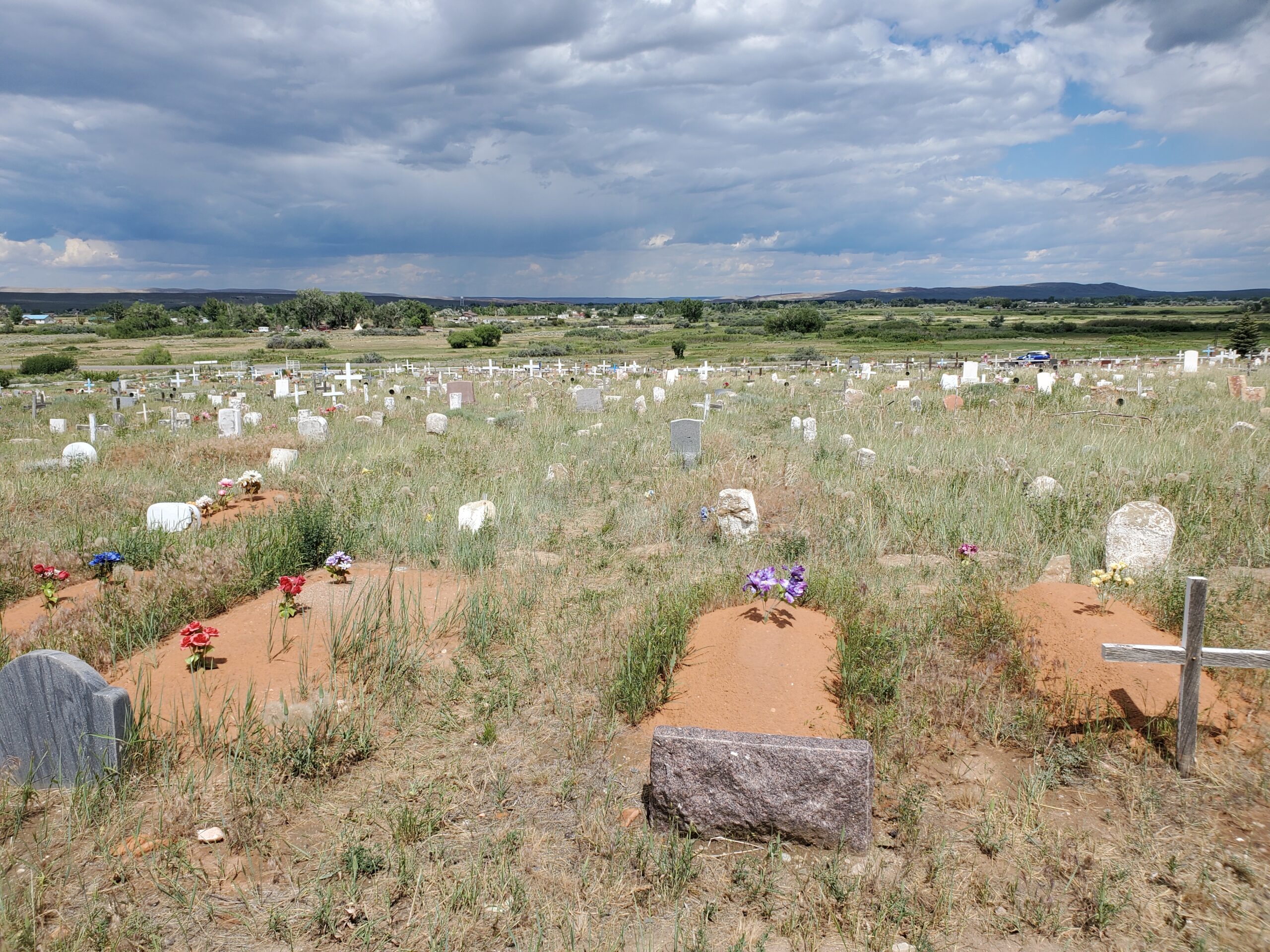
View of the cemetery from the top of the hill

Also on the property is an old church building that has been moved from its original site, as well as informational placards for more information.
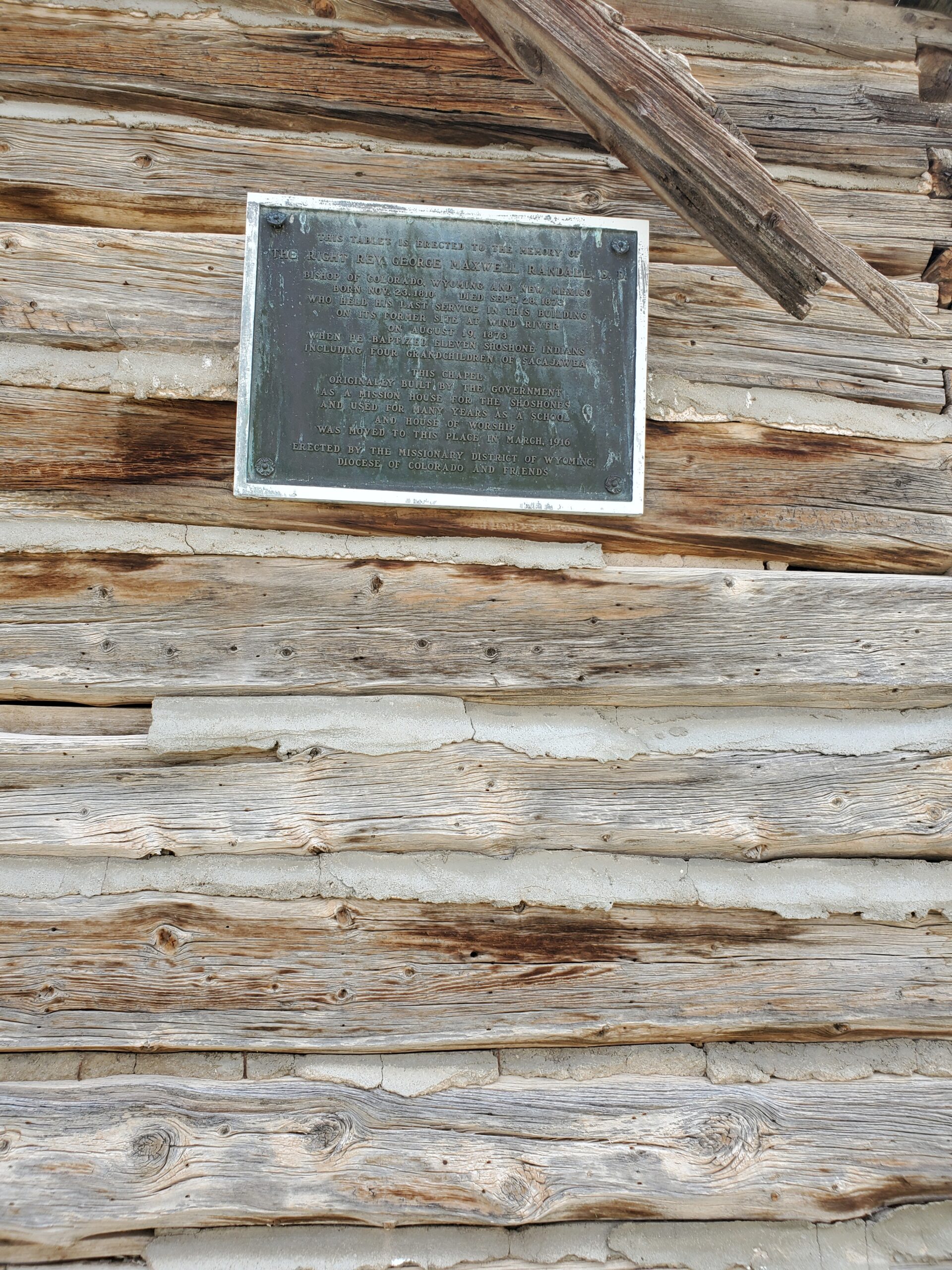
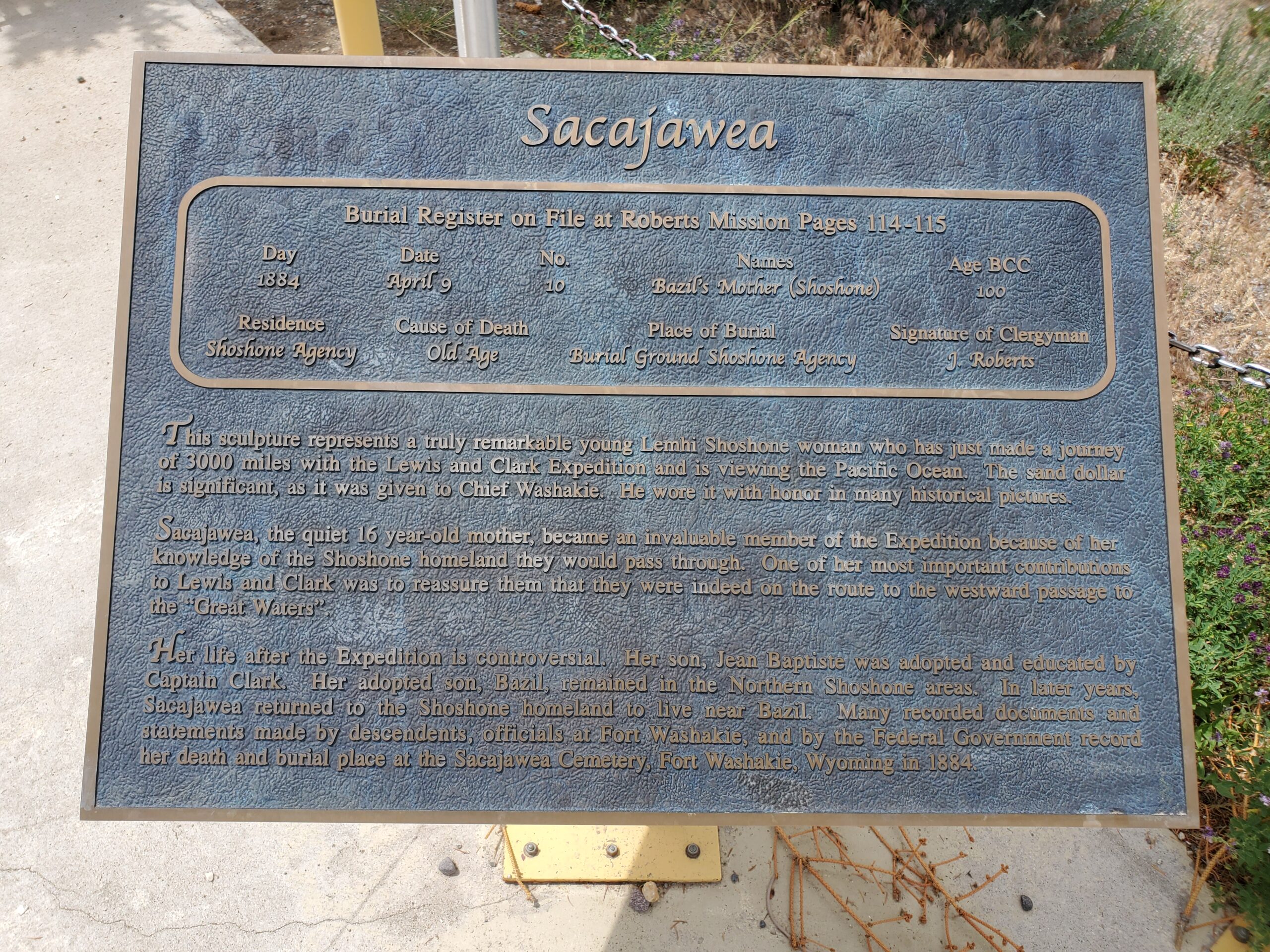
The old church building in the cemetery is marked with this placard
Information Placard 1
Informational Placard 2

The only other marker I took a photo of is this memorial stone to two pioneers who were killed during a raid on their homestead.
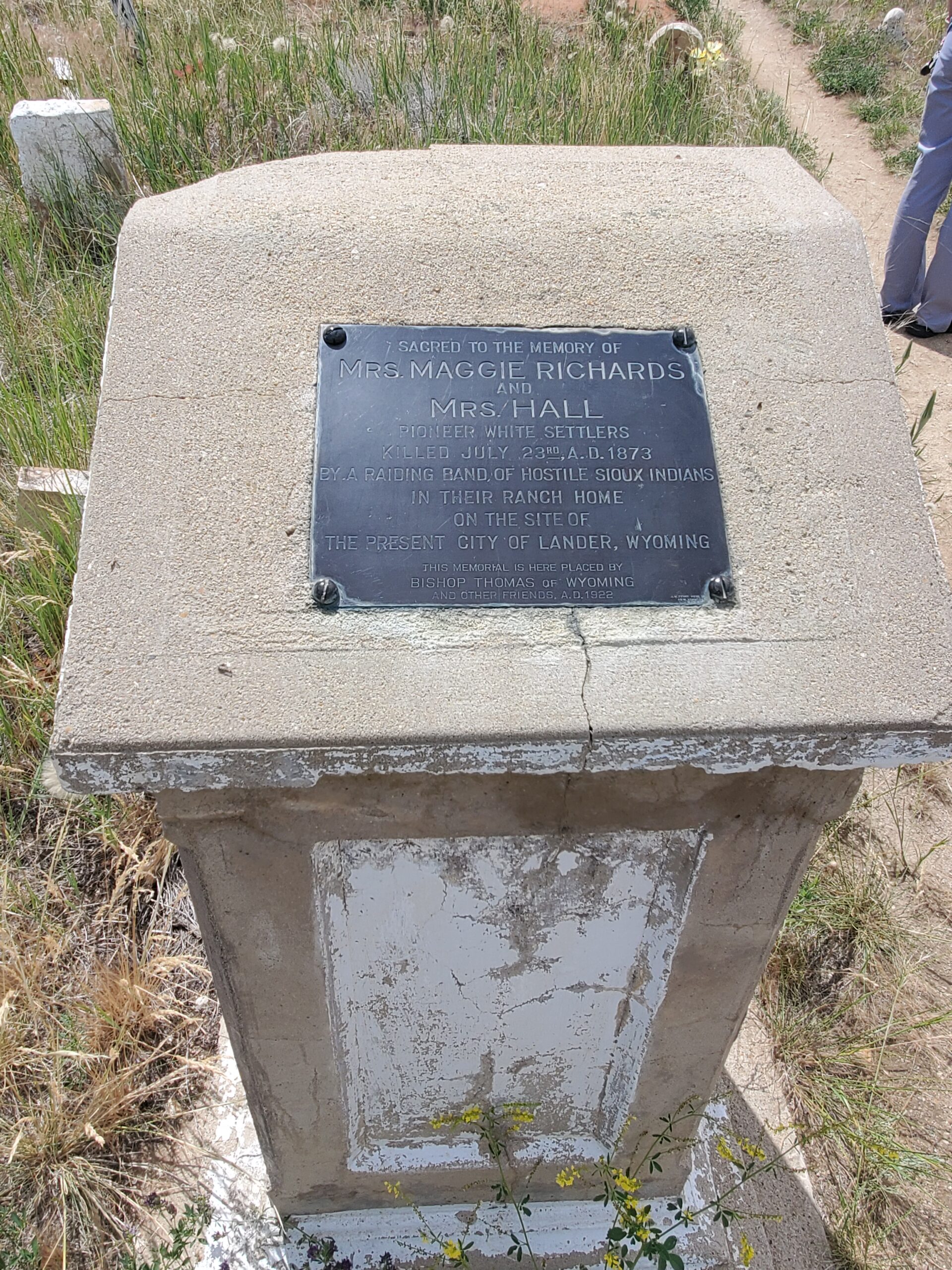
Memorial Placard

The Sacajawea Cemetery is a few miles off of the main freeways, but is still an important place to visit for anyone interested in Native American or Western history of the United States. Please remember that this burial ground is still in use by the tribe today and that appropriate precautions should be taken. Be respectful and kind, and behave as you would hope others would behave near the graves of your own family members. This goes for Grand Canyon Pioneer, Provo City, and American Fork cemeteries as well. Even graveyards that are no longer actively burying folks should be regarded with respect and kindness befitting the dead.


That's all for this post folks. Thanks for taking the time to read! Hopefully we'll be stopping by some other cemeteries in Colorado and New Mexico on this trip so look out for those posts in the future as well.


Further Reading:

https://news.prairiepublic.org/post/sitting-bull-sacagawea-graves

https://www.yellowstonepark.com/things-to-do/attractions/sacajawea-secret-gravesite/
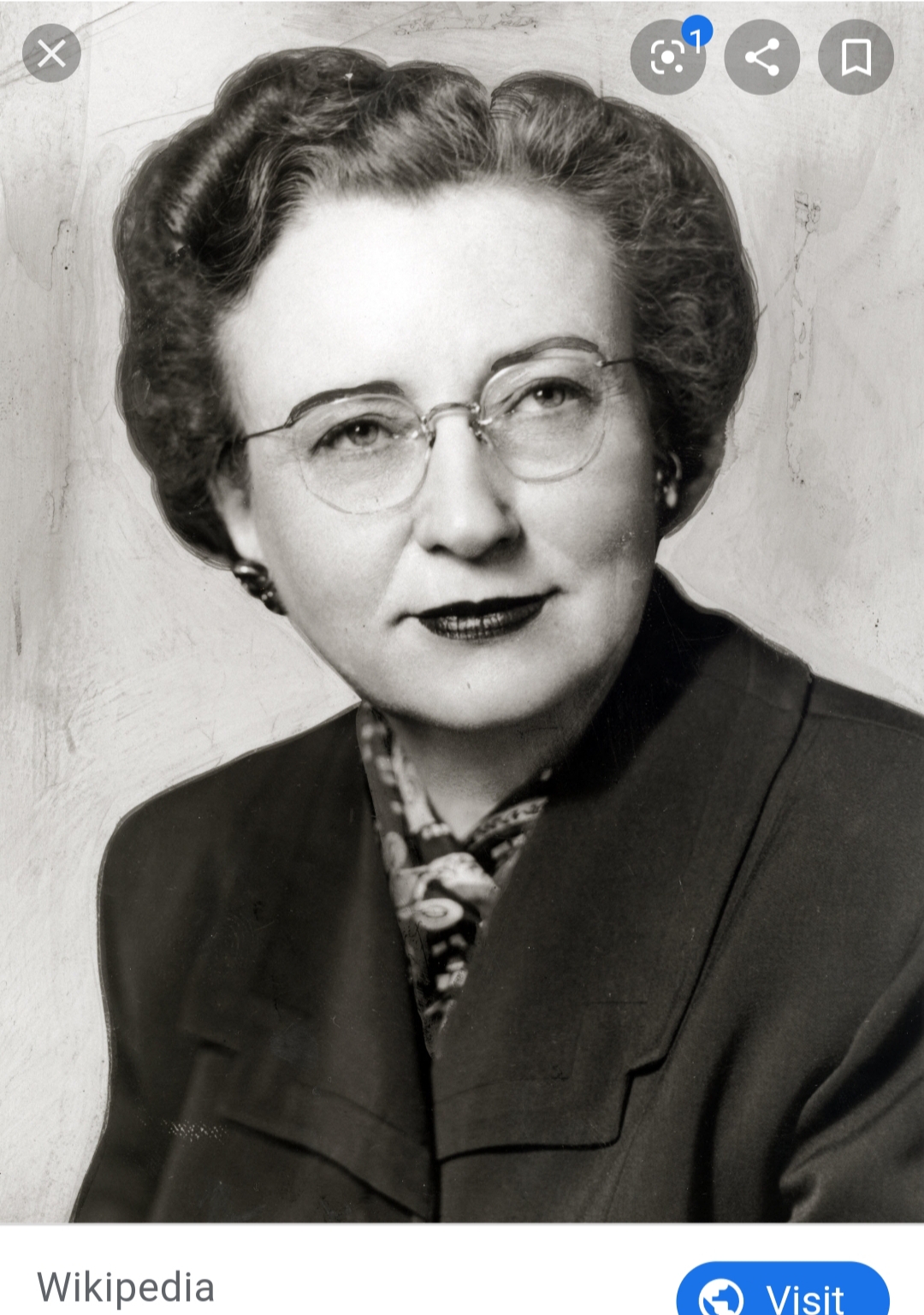
981) Reva Beck Bosone

Courtesy of Wikipedia

"The job should be done, whether the required course of action is popular or not. The biggest need in politics and government today is for people of integrity and courage, who will do what they believe is right and not worry about the political consequences to themselves.”

981: Reva Beck Bosone

The First Woman Elected to Congress from the State of Utah

Born: 2 April 1895, American Fork, Utah Territory, United States of America (Present-day American Fork, Utah, United States of America)

Died: 21 July 1983, Vienna, Virginia, United States of America

Reva served in the federal House of Representatives from 1949 to 1953.

Reva taught high school drama and speech classes for seven years after earning a Bachelor of Arts degree. In 1929, Reva earned her law degree just before the birth of her daughter Zilpha (whom she had with her second husband).

In 1932, Reva was elected to the Utah state House of Representatives. She was the first woman elected to the state legislature and was a member of the Democrat party. According to the Federal House of Representatives official biography on Reva (linked below) Reva, “secured passage of a women’s and children’s wage and hour law, a child labor amendment to the Utah constitution, and an unemployment insurance law.” After leaving the house in 1936, Reva became the first woman elected and able to hold a place on the bench as a judge in Salt Lake City (one source states she was the first female judge in Utah period).

Reva was the first Utah woman to serve as both a judge and in the state House of Representatives.

She was the first director of the Utah State Board of Education on Alcoholism (taking up the post in 1947) and had her own popular radio show. As a judge, Reva was able to greatly reduce the number of traffic collisions and was very tough on leveling fines and jailing repeat offenders. All of this made her loved by the majority of Salt Lake City’s citizens.

In 1948, Reva challenged the incumbent Republican member of Congress for her district. She raised $1,250; a miniscule number compared to today, but still managed to rake in fifty-seven percent of the vote. Reva was the first woman elected to federal congress from the state of Utah and helped the Democrats regain a majority in the House.

When Reva worked in the House of Representatives, she focused primarily on reforming the Indian Affairs Bureau and overseeing land reclamation and various water projects. She served for two terms (four years) before losing her reelection bid in 1952. That year, the entirety of the Utah legislature that was up for reelection swung to the Republican side, and the Democrats lost the majority hold on the house.

After leaving Washington DC, Reva returned to Salt Lake City, where she resumed her law practice and hosted a television show which aired four days a week. In 1954, Reva won the primary but lost during the general election after hoping to regain her seat in Congress. After that, Reva worked as legal counsel for one of the House subcommittees and as judicial officer to the US Postal Service. In 1963, Reva was a contender for but was not ultimately appointed to the Supreme Court.

She married twice, both ending in divorce, and had one daughter.

Badges Earned:

Find a Grave Marked

Located In My Personal Library:

Wild West Women by Erin Turner

Sources:

https://history.house.gov/People/Detail/9625

https://www.utahwomenshistory.org/bios/reva-beck-bosone/

https://ilovehistory.utah.gov/people/difference/bosone.html

https://www.findagrave.com/memorial/8218087/reva-zilpha-bosone

A Fun Update...(June 2021):

In late June of 2021, my mother and I took a road trip around some of the closer states to where we live. Along that journey, we were able to stop at the American Fork Cemetery, where Reva is laid to rest for all eternity, and I was able to snap this photo while we were there.

Reva Beck Bosone Grave

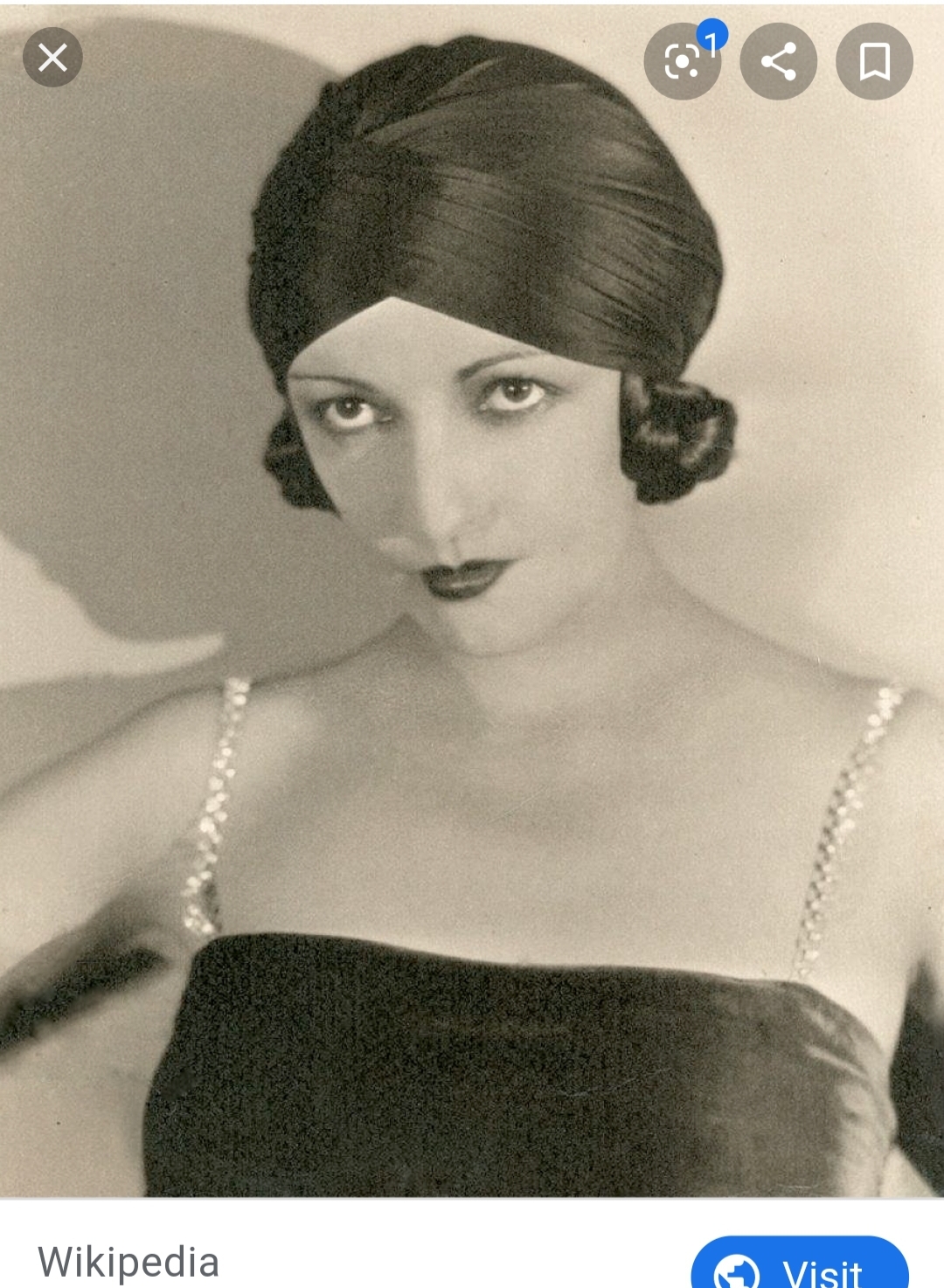
946) Natacha Rambova

Courtesy of Wikipedia

"I have been working since I was 17. Homes and babies are all very nice, but you can't have them and a career as well."

946: Natacha Rambova

Film & Costume Set Designer in Early Hollywood

Born: 19 January 1897, Salt Lake City, Utah, United States of America

Died: 5 June 1966, Pasadena, California, United States of America

Original Name: Winifred Kimball Shaughnessy

Natacha was also a silent-era actress.

When not working on movies, she was also an Egyptologist and Antiquities Collector. Oh, and she had previously been a principal dancer in a ballet company.

Natacha was the great-granddaughter of one of the founders of the Church of Jesus Christ of Latter-Day Saints, Heber Kimball. She didn’t stick to her Mormon roots long, however, and had changed her name from Winifred to Natacha before her twentieth birthday.

When she first began working in Hollywood, much of Natacha’s work went uncredited to her. Another male coworker took all the credit, and even after Natacha proved the designs were really hers, it was too late, the damage had been done. Many believe this early theft of her work has helped explain why so few know of Natacha and her work today.

Natacha’s designs were groundbreaking for several reasons. For one thing, she did her best to ensure everything was historically accurate (she had several projects that included Ancient Egyptian and other ancient cultures). Natacha also included feathers, draped fabrics, bangles, baubles, and other fun items to add to her costumes.

Natacha was married to Rudolph Valentino. The couple lived together for five years and were married for three of them. Reportedly at the time of their first wedding, Rudolph was still legally married to someone else and so he was charged with bigamy and the couple had to remarry a year later after his divorce went through. In the five years they were together, they made seven movies together. Natacha also worked as Rudolph’s manager during this time and helped him to sue a film company for mistreatment. Rudolph and Natacha would win the suit and gain complete creative control over their future works.

Despite working on many movies as a set designer, costume designer, and even producer and writer at times, Natacha was labeled by some as the most disliked woman in Hollywood at the time. She was too artistic, too weird, and was considered by many to be ruining Rudolph’s career by dragging him into her avant garde productions as well.

In 1925, Rudolph signed a new studio contract that stated he could only work if he removed Natacha from his career. Obviously, this upset Natacha and the contract was a contributing factor in their divorce proceedings. However, less than a year later Rudolph was dead, leaving the whole thing a moot point.

By 1928, Natacha left Hollywood entirely. Natacha began working as a set designer and actress for stage productions and also pivoted to writing as a journalist. She even operated her own clothing store for a time in New York City. She got remarried in the 1930’s but was divorced by the end of the decade. Reportedly both of Natacha’s marriages ended, in part anyway, because she did not want children and her husbands did.

In the 1950’s she actually became a published scholar in the field of Egyptology. Natacha had first traveled to Egypt with her second husband and quickly became interested in the field. She published articles, gave lectures, and was given grants to continue her studies on Egyptian symbolism and mythology.

When she died in 1965, reports state Natacha’s mental health had declined from malnutrition. Despite everything she had accomplished in her life, her death certificate reportedly lists her occupation in life as “housewife,” according to one source.

Natacha is portrayed by actress Alexandra Daddario in American Horror Story’s fourth season, Hotel.

Badges Earned:

Find a Grave Marked

Sources:

https://wfpp.columbia.edu/pioneer/ccp-natacha-rambova/

https://www.imdb.com/name/nm0708118/bio?ref_=nm_ov_bio_sm

https://www.utahwomenshistory.org/bios/natacha-rambova/

https://egyptology.yale.edu/collections/natacha-rambova-archive-yale-university/life-natacha-rambova

https://www.findagrave.com/memorial/10126189/natacha-rambova

The United States

This Page is a Directory Page For the States, Territories, and Other Places That Fall Under the Umbrella of the United States. If the entry is highlighted orange then that means entries who were born there have been uploaded. If they are grey, hopefully that means entries are coming soon!

States, Territories, and More:

  1. Alabama
  2. Alaska
  3. American Samoa
  4. Arizona
  5. Arkansas
  6. California
  7. Colorado
  8. Connecticut
  9. Delaware
  10. Florida
  11. Georgia
  12. Guam
  13. Hawaii
  14. Idaho
  15. Illinois
  16. Indiana
  17. Iowa
  18. Kansas
  19. Kentucky
  20. Louisiana
  21. Maine
  22. Maryland
  23. Massachusetts
  24. Michigan
  25. Minnesota
  26. Mississippi
  27. Missouri
  28. Montana
  29. Nebraska
  30. Nevada
  31. New Hampshire
  32. New Jersey
  33. New Mexico
  34. New York
  35. North Carolina
  36. North Dakota
  37. Northern Mariana Islands
  38. Ohio
  39. Oklahoma
  40. Oregon
  41. Pennsylvania
  42. Puerto Rico
  43. Rhode Island
  44. South Carolina
  45. South Dakota
  46. Tennessee
  47. Texas
  48. Utah
  49. Vermont
  50. Virgin Islands
  51. Virginia
  52. Washington DC
  53. Washington State
  54. West Virginia
  55. Wisconsin
  56. Wyoming

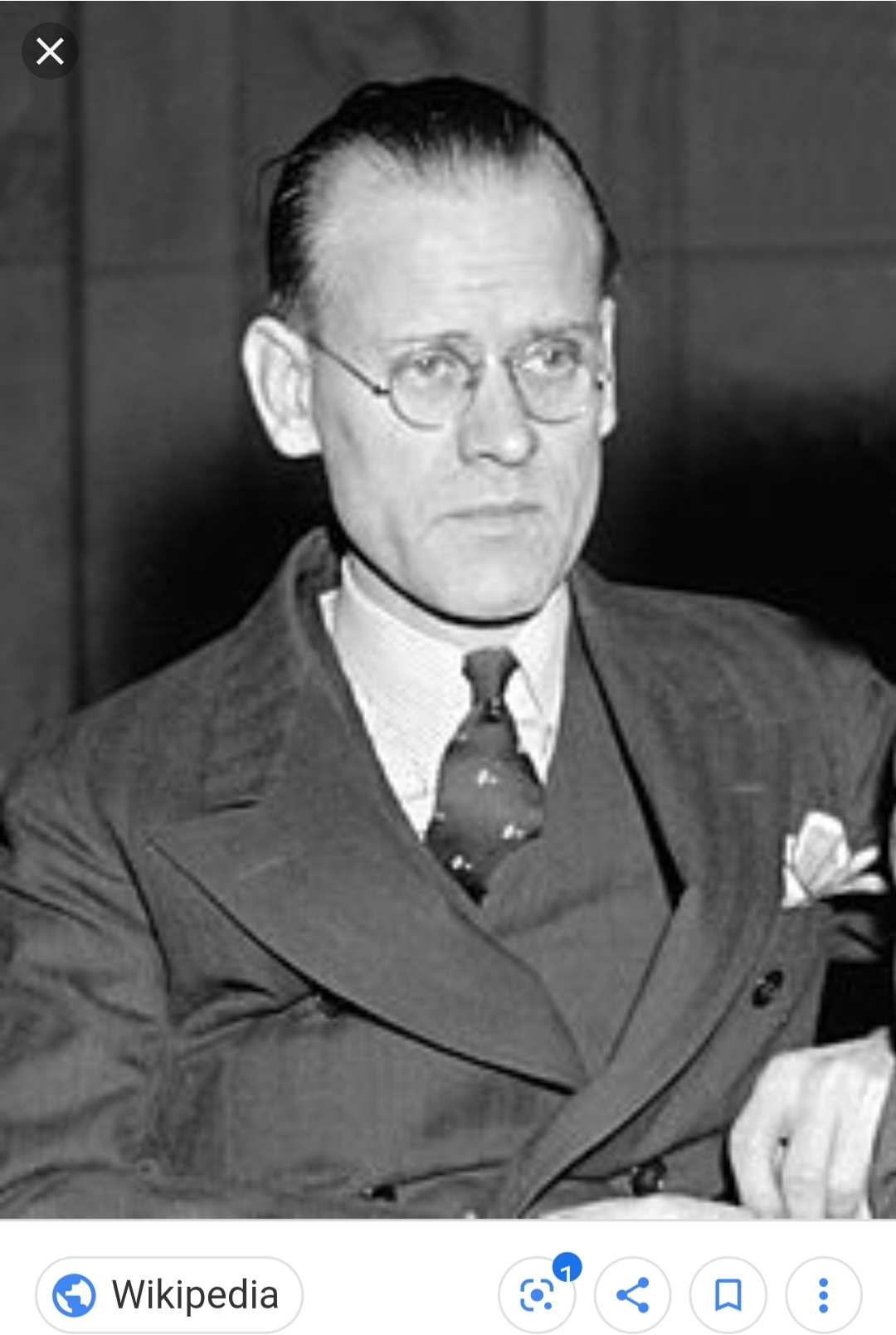
105) Philo Farnsworth

Courtesy of Wikipedia

105) Philo Farnsworth

Inventor of the All-Electronic Television

Born: 19 August 1906, Beaver, Utah, United States of America

Died: 11 March 1971, Salt Lake City, Utah, United States of America

Its important to note that the Nipkow-disc Television had already been invented, but the TV that’s sitting in your living room right now? That is all thanks to Philo.

He came up with the Idea when he was fifteen or sixteen years old and, oddly enough, he reportedly first saw the idea in his mind while working a potato field.

Philo was enrolled at Brigham Young University when he was sixteen as a special student, working simultaneously on college and high school credits, but left during his sophomore year after his father’s death.

He proved once and for all that television was possible in 1927 and made his first public demonstration in 1928. Soon after, his financially backers tried to turn him over to the Radio Corporation of America, but Philo turned them down.

Philo formed his own manufacturing company, but RCA sued him because they tried to claim someone else within their company had invented the concept that makes television work first. Luckily, Philo won the case after his high school science teacher produced a drawing he had made when he was sixteen.

Despite winning, RCA stopped paying Philo royalties after two years, and the US government halted television manufacturing for the duration of World War II.

Philo suffered a nervous breakdown in 1939 and moved to Maine to try and recover his mental health. By 1947, he had moved back down to civilization, and his company created their first television set. However, they were in deep financial trouble, and after a restructuring of shorts Philo was named vice president of research. The company quit producing televisions in 1965, never acquiring the same prestige of RCA.

Throughout his career he patented over 300 different devices for a variety of fields including of course, television, but also nuclear fusion.

Badges Earned:

Find a Grave Marked

Located In My Personal Library:

Here is Where: Discovering America’s Great Forgotten History by Andrew Carroll

Sources:

https://www.britannica.com/biography/Philo-Farnsworth

https://lemelson.mit.edu/resources/philo-farnsworth

https://www.findagrave.com/memorial/3661/philo-taylor-farnsworth

A Fun Update...(June 2021):

In late June of 2021, my mother and I took a road trip around some of the closer states to where we live. Along that journey, we were able to stop at the Provo City Cemetery, where Philo and his wife are laid to rest for all eternity, and I was able to snap this photo while we were there.

Philo Farnsworth Grave

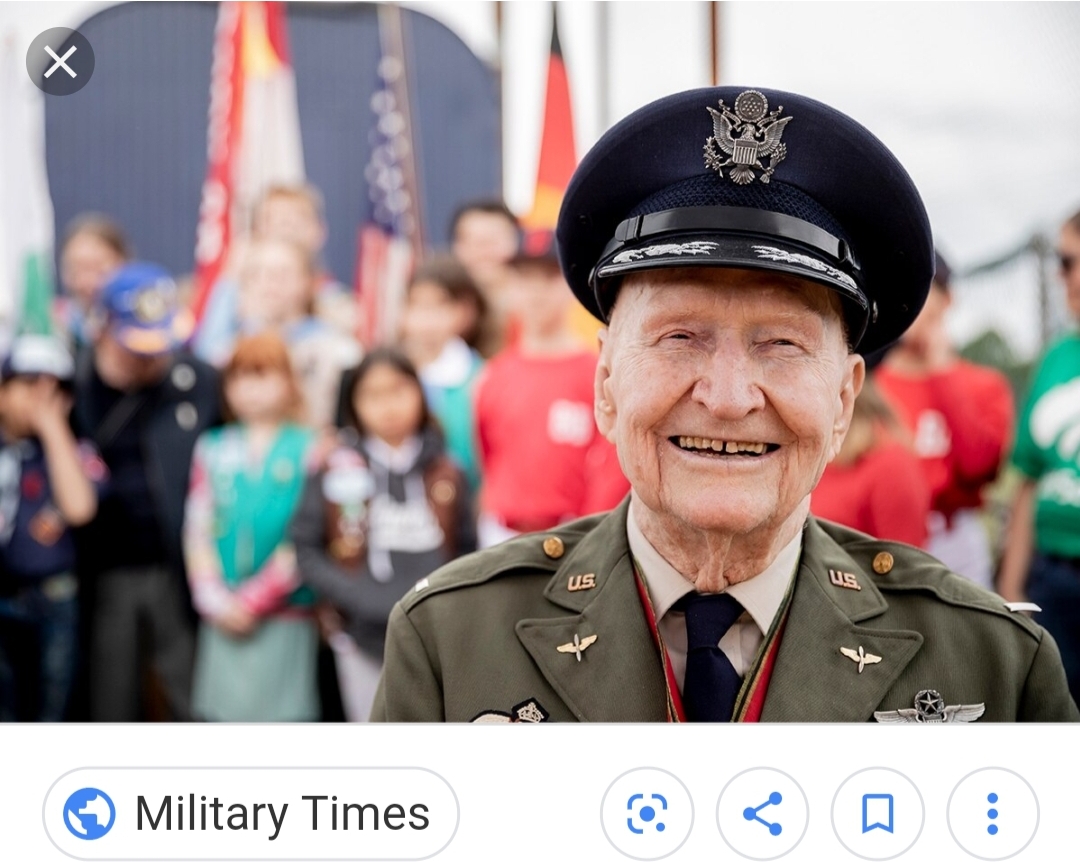
102) Colonel Gail Halvorsen

Courtesy of the Military Times

102) Colonel Gail Halvorsen

Also known as the Berlin Candy Bomber

Born: 10 October 1920, Salt Lake City, Utah, United States of America

Died: 16 February 2022, Provo, Utah, United States of America

He air dropped candy to the children in Berlin following World War II in what became known as the Berlin Airlift.

Gail would also drop food over Bosnia in 1994 and Albania in 1999.

He returned to Berlin in May of 2019 for a dedication ceremony. A baseball field at one of Berlin’s airports was named in his honor.

Badges Earned:

Find a Grave Marked

Sources:

https://www.militarytimes.com/2019/05/12/baseball-field-dedicated-to-98-year-old-us-wwii-veteran-as-germans-recall-berlin-airlift/

http://wigglywings.weebly.com/

https://www.nytimes.com/2022/02/17/us/gail-halvorsen-obituary.html

https://www.findagrave.com/memorial/236830588/gail-seymour-halvorsen 

Categories

Archives

  • July 2025 (10)
  • July 2024 (1)
  • January 2024 (1)
  • August 2023 (1)
  • June 2023 (2)
  • October 2022 (1)
  • July 2022 (1)
  • June 2021 (3)
  • December 2020 (3)
  • August 2019 (1)
  • July 2019 (2)

Search

© 2026 The Exasperated Historian | Powered by Minimalist Blog WordPress Theme